Sunday, July 20, 2025

GENDER APARTHEID OK 

Breaking The Ranks: Russia Legitimizes Its Former Foes – OpEd

By 

Afghanistan’s Taliban government announced late earlier this month that Russia has become the inaugural country to officially recognize their government— the Islamic Emirate of Afghanistan (IEA), a unique clerical dictatorship of its kind.


This mark a significant moment for the Taliban regime who were not formally recognized by a single nation, since toppling the US-backed republic in 2021. Their foreign minister Amir Khan Muttaqi called it a “courageous step” and hoped others will follow. Moscow said it would continue to support Kabul in security, counter-terrorism and combat against drug crime.

In April this year, Russia suspended its two decades long designation of Taliban as terrorist organization hoping it will boost their cooperation in security sector particularly against the regional chapter of Islamic State that attacked a concert hall near Moscow last year and killed 144 people. Four months after the attack, Russian President Putin called Taliban “allies” in the fight against terrorism at SCO summit in Astana and now his country has become the first to give official recognition to their government.

Interestingly, just three decades ago, Russia’s predecessor, the former Soviet Union, was famously fought and forced to withdraw its troops from Afghanistan by Afghan Mujahideen– many of whom or their second bread now constitute Taliban leadership, and their rank and file.

The Comrades and the Mullas:

Despite their complex past, this newfound rapprochement raises questions on how the two parties have reached this convergence? The answer is not simple. To put things in perspective, it needs assessment of the international, regional and domestic factors.

Several years before the Taliban takeover of Kabul, the comrades in Moscow started to establish contacts with the Mullas, when the latter had increased the prospects of their return to power by intensifying the brutal insurgency against Ashraf Ghani led government. 


There were and remains to be serious doubts on how the security vacuum left by collapse of the government in Afghanistan and the withdrawal of US led NATO forces from the country would be filled.

To this end, the Taliban has ruthlessly reinforced their regime on Afghanistan by introducing strict laws and policing, cracking down on dissent and banning political parties resulting in a hardcore exclusive set-up, attracting international criticism.

On the Taliban’s counter-terrorism commitements to the world, the latter is largely skeptical as reflected by the successive UN reports pointing out the presence of militant outfits in the Taliban-ruled Afghanistan.

To address these concerns, some countries especially in the neighborhood has exchanged diplomats to maintain channels of direct engagement with Kabul.

Russia faces security challenges from extremist militant groups especially the regional chapter of the Islamic State that also carries out sporadic attacks in Afghanistan including against the Taliban.

Moscow’s Taliban recognition is mainly triggered by the necessity of tackling these security threats. It is also in line with its broader geostrategic recalibration when it has locked its horns with the West in Ukraine.

Afghanistan’s other immediate neighbor and global giant China was the first country to appoint full ambassador to Taliban-controlled Kabul in 2023. It has been providing humanitarian help, and is working cautiously on some mining projects and vows to expand its business — including the promise of extending the multi-billion China-Pakistan Economic Corridor (CPEC) to Afghanistan.

Business over human rights:

The US and its European allies has withheld their recognition of the Taliban regime making it conditional to the regime’s reneging on their repressive policies especially against women which the UN calls as gender apartheid. The Taliban has refused to compromise, calling it interference in their internal policies.

This has likely driven the Taliban to focus on its neighbors who prioritize stability, cooperation on counter-terrorism, migration, trade, connectivity projects and anti-narcotic campaigns over the group’s governance style.

However, Taliban think—as once said by their interior minister Sirajuddin Haqqani, that the US, its allies and the Taliban have recently ended decades’ long brutal war against each other which makes it harder for the West to recognize their former adversary this soon.

Russia’s taking the lead in formally recognizing the Taliban could potentially encourage Afghanistan’s Central Asian neighbors, Iran and China, to follow Moscow’s steps giving regional legitimacy to Taliban. Beijing was quick to welcome Moscow’s decision next day saying it supports the international community in enhancing engagement and exchanges with the Taliban government.

The South Asian neighbors seems to be broadly inclined to align with US policy vis-a-vis Taliban, however, the possibility remains that individual states within this region, and in the Middle East, may pursue independent diplomatic trajectories based on their strategic calculations.

The latest developments will contribute to the normalization of the Taliban repression of Afghan women and political opposition. As international validation comes, they will continue to disregard the imperative for domestic legitimacy.

If others follow Moscow, it would boost the confidence of the Taliban especially of their pro-engagement quarters and bring unity among them.

This could also serve as a wake-up call for the Afghan political figures and groups to set aside their differences and form a genuine opposition.

The Vice:

Despite recognition, the Moscow-Kabul relationship willnot be an easy road. Russia’s latest decision will not be received positively in Washington and some European capitals. Russia and China doesn’t seem to be able or willing to fill in for the recent US aid cuts to Afghanistan. However, the exchanges between Russian and Afghan businesses would likely increase, slightly easing up the pressure on Afghan economy reeling from western isolation.

Taliban’s powerful supreme leader Hibatullah Akhundzada has long held the opinion that opening up to full engagements with international community would bind them by the international conventions that brings obligations particularly in human rights. Hibatullah is afraid that it would eventually make his government surrender the agenda of establishing a Sharia-based system based on their strict interpretation of Islam.

This hesitancy is further reinforced by Taliban’s narrative of drawing the lines on religious grounds which serve as a challenge to making friends outside the fragile and indecisive Muslim communities. A clear example of this policy is the so-called “virtues and vices” law, ratified by their supreme leader last year, that has officially designated “friendship with and helping the infidels” as a “vice”. This probably limits the scope of cooperation even after recognition unless Hibatullah push himself to commit a “vice.” However, for the moment, at least at first glance, Russia’s recognition of their regime seems a breakthrough for the Taliban.


Abdullah Hasrat

Abdullah Hasrat is an Afghan journalist who has been reporting on Afghanistan’s political, social, and humanitarian developments since the Taliban’s return to power in 2021. For three years, he served as a Kabul-based correspondent for Agence France-Presse (AFP), a leading international news agency. He holds a master’s degree in political science and previously served as Director of Communications at the Independent Directorate of Local Governance (IDLG) under the former Afghan government.



Kyrgyzstan: Attacks On Doctors Surge Amid Systemic Failures

Healthcare workers in Kyrgyzstan. Photo Credit: med.kg

By 

By Anton Chipegin


(TCA) — A recent spate of violent assaults on doctors in Kyrgyzstan has sparked growing concern within the healthcare sector. Over the past week alone, multiple incidents of medical staff being physically attacked have been reported at the National Hospital in Bishkek, with relatives of patients identified as the primary perpetrators.

The first major incident involved a young resident doctor who was providing emergency treatment to a patient suffering from a severe nosebleed. According to local media reports, the patient’s relatives attempted to interfere during the treatment and later assaulted the doctor as he accompanied the patient to a hospital ward. The doctor sustained a concussion, and his uniform was torn during the altercation.

In a controversial move, police officers responding to the scene did not detain the attackers. Instead, they arrested the injured doctor, citing his use of obscene language. A court later sentenced him to three days of administrative detention.

Human rights advocates say the doctor was denied legal counsel. Despite mobile phone video footage recorded by the doctor and corroborating statements from hospital staff, law enforcement agencies reportedly ignored this evidence.

“The patient is much better, he received the necessary treatment and has been stable since. His relatives, however, acted with arrogance and cruelty toward medical personnel, seemingly convinced of their own impunity,” said Barmet Baryktabasova, chair of the Medical Trade Union.


Just days later, a second assault occurred at the same hospital, this time targeting an emergency department physician. Although the attack was captured on CCTV, police again refrained from detaining the perpetrators, issuing only vague statements.

The Medical Trade Union has announced plans to file formal appeals to the President’s Office, the Ministry of Health, the Prosecutor General, and the State Committee for National Security. The union argues that violence against medical professionals is becoming systemic and poses a threat to the integrity of Kyrgyzstan’s already strained healthcare infrastructure.

Health Minister Erkin Checheibaev condemned the assaults in a public Facebook post:

“There is lawlessness against doctors! The man who attacked the doctor must be punished. This sets a dangerous precedent when attackers face no consequences.”

He emphasized the urgent need to protect the dignity and physical safety of medical personnel, warning that failure to act could lead to a severe staffing crisis in the coming years.

This is not the first wave of violence against healthcare workers in Kyrgyzstan. In 2023, following several incidents, the National Hospital briefly enhanced security by installing panic buttons, surveillance cameras, and hiring private guards. However, these measures were later rolled back due to budget constraints.

Currently, the average salary for public sector healthcare workers in Kyrgyzstan ranges from $300 to $400 per month. Combined with long hours and frequent high-stress situations, poor compensation is prompting many experienced professionals to exit the system. The government has pledged to implement healthcare funding reforms over the next three to four years, but many in the medical community fear those changes will come too late.

  • About the author: Anton Chipegin was born and grew up in Bishkek, Kyrgyzstan. He worked as a television correspondent, editor and TV presenter on the main television channels of the republic, such as NTS and MIR 24, and also as an economic observer at international news agencies and other media resources of Kyrgyzstan.


TCA

TCA is The Times of Central Asia. Founded in Bishkek in 1999 by Giorgio Fiacconi, who served as the First Honorary Consul of Italy to Kyrgyzstan for fifteen years, The Times of Central Asia was the first English language regional publication on the region. Building upon its extensive archive of stories, today the Times of Central Asia continues to cover politics, economics, culture, social issues, justice and foreign affairs across Eurasia.


Indian Court Orders State To Ensure Hindu Dalits’ Temple Entry

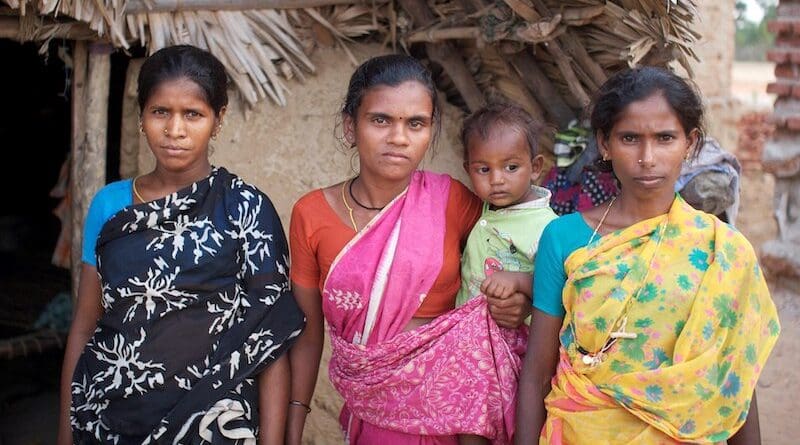
Dalit women in India. Photo Credit: Swasti Desai, Wikipedia Commons

By 

The High Court of southern Tamil Nadu has ordered the state government to ensure that socially poor Dalit people can enter Hindu temples, following a complaint against a temple violating Dalits’ right to worship.


The Madras High Court on July 17 also ordered the accused temple administration to permit Dalit Hindus–who are outside the four-tier Hindu caste system and formerly considered untouchable–to offer prayers in the temple.

The state government must ensure that “no law-and-order problem is created” in allowing the Dalit people to enter the temple, the court said, adding that denying them entry violates a state law–the Tamil Nadu Temple Entry Authorization Act, 1947.

The law makes it clear that “every Hindu, irrespective of the caste or sect to which he belongs, shall be entitled to enter any Hindu temple and offer worship therein… irrespective of the caste or community of the devotees,” said the state’s top court.

The court order was issued in response to a complaint filed by Venkatesan, who goes by one name, seeking court direction to allow his community members to enter the Arulmigu Puthukudi Ayyanar Temple in Ariyalur district and participate in ritual worship, including the temple’s car festival.

Venkatesan’s Hindu Dalit community, living near the temple, is traditionally barred from entering the temple and taking part in its festival, scheduled this year from July 16 to 31.


The court asked the head of the district police to ensure that “all classes of Hindus are permitted to enter the temple and participate in the festival.”

Church people in the state welcomed the order as progressive and aimed at eliminating caste discrimination, still prevalent in Indian society.

“The judgment is commendable not only for its legal soundness but also for its moral clarity. It calls attention to the spirit of a secular and inclusive India,” said Jesuit Father A. Santhanam, practicing law in the state, including in High Court.

“The decision is a judicial reminder that the rule of law must be an active agent in dismantling centuries-old oppressive practices,” the priest told UCA News on July 18.

The court has also made it clear, “access to spiritual spaces must be governed by law and justice, not prejudice or tradition”, he added.

He said socio-political leaders, who often present themselves as champions of Hindu interests, stay silent or evasive when it comes to caste-based discrimination to avoid offending their own caste members.

Mary John, president of the Dalit Christian Liberation Movement, termed the verdict a “very important and necessary order to wipe out the caste discrimination from religious worship places”.

He told UCA News on July 17 that such discrimination can be eliminated “only when the state strictly implements the law in letter and spirit.

Ganapragasam Mathew, leader of a Dalit Christian Coalition in Tamil Nadu, said that various forms of discrimination against Dalit people persist within Christian churches.

They include separate seating arrangements for Dalits in churches, segregating them in cemeteries, and excluding them from church festivals.


UCA News

The Union of Catholic Asian News (UCA News, UCAN) is the leading independent Catholic news source in Asia. A network of journalists and editors that spans East, South and Southeast Asia, UCA News has for four decades aimed to provide the most accurate and up-to-date news, feature, commentary and analysis, and multimedia content on social, political and religious developments that relate or are of interest to the Catholic Church in Asia.


By 

By Dan McCaleb


(The Center Square) – Director of National Intelligence Tulsi Gabbard wants the U.S. Department of Justice to investigate what she says is a “treasonous conspiracy” by former President Barack Obama and his senior advisors to concoct evidence that Russia interfered in the 2016 election.

Gabbard on Friday declassified documents that she said provides “overwhelming evidence” that Obama and his national security advisers conspired to create “a politicized piece of intelligence” to launch a years-long investigation into the now debunked Trump-Russia collusion claims.

“These documents detail a treasonous conspiracy by officials at the highest levels of the Obama White House to subvert the will of the American people and try to usurp the President from fulfilling his mandate,” Gabbard wrote on X.

Trump defeated Hillary Clinton in the 2016 presidential election.

In a news release, Gabbard said the intelligence community had concluded prior to the 2016 election that Russia was “probably not trying … to influence the election by using cyber means.”


After the election in early December, “talking points were prepared for DNI James Clapper stating, ‘Foreign adversaries did not use cyberattacks on election infrastructure to alter the US Presidential election outcome,’” the news release said, but after a top meeting of key Obama advisers, a new intelligence assessment was prepared, “per the President’s request,” that “directly contradicted the IC assessments that were made throughout the previous six months.” 

Gabbard said she is referring the matter to DOJ for further investigation.

“After months of investigation into this matter, the facts reveal this new assessment was based on information that was known by those involved to be manufactured i.e. the Steele Dossier or deemed as not credible,” the news release said. “This was politicized intelligence that was used as the basis for countless smears seeking to delegitimize President Trump’s victory, the years-long Mueller investigation, two Congressional impeachments, high level officials being investigated, arrested, and thrown in jail, heightened US-Russia tensions, and more.”

The long-debunked Steele dossier alleged that Trump worked with Russia to interfere in the 2016 presidential election.


The Center Square

The Center Square was launched in May 2019 to fulfill the need for high-quality statehouse and statewide news across the United States. The focus of their work is state- and local-level government and economic reporting.


Malaysia: Anwar Ibrahim’s Makes Political Appointments In Key Judiciary And Law Enforcement Positions – Analysis

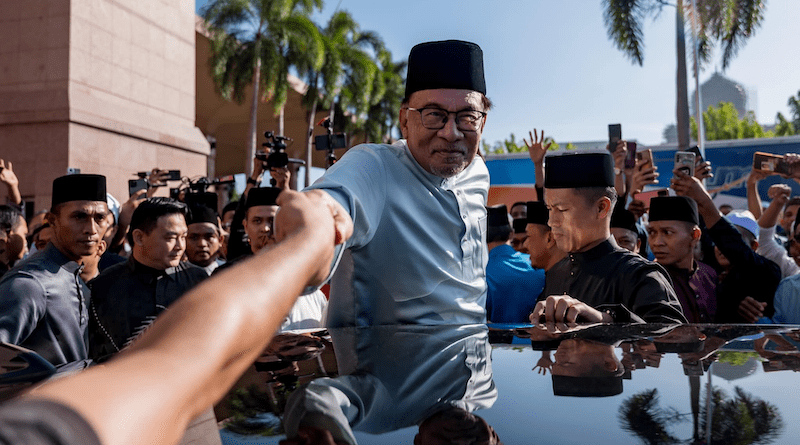
Malaysia's Prime Minister Anwar Ibrahim. Photo Credit: Malaysia PM Office

By 

Over the last month there has been much political controversy over the vacant position for chief justice of the Federal Court of Malaysia. The position became vacant on July 2, when the chief Justice Tengku Maimun tenure was not extended for 6 months, as statutory regulations permit. Prime Minister Anwar Ibrahim allowed the position to become vacant for a month, because of inaction in recommending a new candidate for the position to Malaysia’s king Sultan Ismail. 


Initially, there was much conjecture as it was rumored that Justice Ahmad Terrirudin Mohd Salleh, who was a former Attorney General of Malaysia had been nominated for the position. There were cries of political interference within the judiciary, if such as person was appointed. Forner minister Rafizi Ramli and a group of nine MPs from Anwar Ibrahim’s own Peoples Justice Party (PKR) had held a public meeting protesting about the lack of independence of the judiciary. In addition, the Malaysian Bar Association, the peak body of lawyers in Malaysia held a protest march from the Federal Court to the prime minister’s office in protest. Between 1,000-3,000 participated.

Anwar claimed that he personally had not interfered in the selection of the future chief justice and will not make any selection, even though Article 122B of the Malaysian Constitution specifically specifies that the chief justice will be appointed by the king, on advice from the prime minister and consultation of the Council of Rulers. 

Nevertheless, Anwar still succeeded in exercising influence over the CJ appointment, contrary to his claims that he would play no part in the appointment process of the nation’s judges. The recommendations of the Judicial Appointments Committee (JAC), set up by legislation in 2009 to advise the prime minister, wasn’t listened to.

Political Intrigue

Sometimes one pushes a candidate as a test. People reject the idea and a compromise becomes publicly acceptable. This appears just like the leaking of the name Justice Ahmad Terrirudin Mohd Salleh, who was a former Attorney General of Malaysia. This received great resistance as described above. 

However, there was a back-up name, Wan Ahmad Farid Wan Salleh, who was set to appear when there is too much resistance and outcry, as a pleasant surprise. Then Anwar was able to get up the person he may have wanted in the first place. A great piece of political maneuvering. 


Justice Wan Ahmad got both the approval of the king and Conference of Rulers, and is now chief justice designate. News of his appointment was released by the palace at 12.15 am on July 18. Local news in Malaysia portrayed this as a win for the independence of the judiciary. 

The appointment is unprecedented in Malaysia with Justice Wan Ahmad coming up from the Court of Appeal. Previous chief justice appointments have come from members of the Federal Court itself. This means Wan Ahmad jumped not only over 10 Federal Court judges, but 22 judges more senior than him within the High Court. That means Wan Ahmad jumped over 32 people more senior than him to get the job. This is unprecedented in any chief justice position within the British based legal world, including Britain, Australia, Canada, or New Zealand. 

Worries over impartiality 

Wan Ahmad Farid was a member of UMNO and served as deputy home minister from March 2008 to April 2009 under prime minister Ahmad Abdullah Badawi. Anwar most probably was recommended Wan Ahmad from Law Reform Minister Azalina Othman Said, who is reported to be a confident of the prime minister. Wan Ahmad was once a staunch UMNO man.

There are concerns that Wan Ahmad may not be able to be impartial over matters including UMNO politicians, including former prime minister Najib Razak, who is still on trial for 1MDB corruption cases, and Anwar’s own upcoming cases about to face the judicial system. 

Wan Ahmad presided over the application for a judicial review by the parents of Teoh Beng Hock against the police and Tun Daim Zainuddin’s challenge against his probe by the MACC. The question is, will Wan Ahmad excuse himself from any future political cases?

Concerns within the judiciary when meritocracy takes a back seat

Some members of the law profession told the writer that the appointment of Wan Ahmad over more senior judges can be considered a ‘slap in the face’ for those who have worked hard, created a good track record and have integrity. Anwar’s message to the judiciary is that political connection is more important than meritocracy. This is already leading to a loss of morale within the judiciary. 

Another concern is the failure to extend Tengku Maimun’s tenure for another six months means that integrity is not valued. Some are concerned the judiciary maybe heading back to the controversial days of the judiciary under Justic Mohd Eusoff Chin and Hamid Abdul Omar. The judiciary has regained trust and integrity since those days. 

Other political appointments by Anwar 

The appointment of Justice Wan Ahmad completes the law enforcement and judiciary troika. The appointment of Azam Baku as Commissioner General of the Malaysian Anti-Corruption Commission (MACC) is well documented, and has led to almost continuous persecution of opposition politicians. Azam has is now in his second contract extension. This is preventing the rise of other senior persons in the service. 

The appointment of Mohd Khalid as the new Inspector General of Police (IGP) last June also involved him leapfrogging over other people who were more senior than him. The current deputy IGP Ayob Khan had a great track record in fighting crime. The criminal community fears him. 

Now the ladder of promotion has been broken, not once but a number of times. This is demoralizing for police and members of the judiciary. Political cabals are now more important than experience, seniority and track records. IGP Mohd Khalid mixed with the elite, while serving with the home ministry. 

This compromises meritocracy in leadership with political hacks. If there were special reasons Wan Ahmad was appointed chief justice, then prime minister Anwar Ibrahim should be proudly calling a press conference to explain the reasons Wan Ahmad had inspired him so much for him to recommend to the Agong Wan Ahmad’s appointment. 

The real victim is public trust and apathy of Malaysians. They now see Madani as a purely political animal that is not safeguarding the culture, seniority, and morale of the civil service. Such appointments will discourage civil service trust in the prime minister, because he doesn’t care for them. This is another major blow to integrity. Madani rewards the politicians. 


Murray Hunter

Murray Hunter has been involved in Asia-Pacific business for the last 30 years as an entrepreneur, consultant, academic, and researcher. As an entrepreneur he was involved in numerous start-ups, developing a lot of patented technology, where one of his enterprises was listed in 1992 as the 5th fastest going company on the BRW/Price Waterhouse Fast100 list in Australia. Murray is now an associate professor at the University Malaysia Perlis, spending a lot of time consulting to Asian governments on community development and village biotechnology, both at the strategic level and “on the ground”. He is also a visiting professor at a number of universities and regular speaker at conferences and workshops in the region. Murray is the author of a number of books, numerous research and conceptual papers in referred journals, and commentator on the issues of entrepreneurship, development, and politics in a number of magazines and online news sites around the world. Murray takes a trans-disciplinary view of issues and events, trying to relate this to the enrichment and empowerment of people in the region.