Sunday, July 20, 2025


Sanctions Are Crushing Russia's Coal Industry

  • EU sanctions have cost Russia’s coal sector billions in revenue and crippled operations.

  • High debt, falling demand, and lost access to foreign equipment compound the crisis.

  • Over a quarter of Russian coal companies face closure as losses mount in 2025.


In 2022, the European Union slapped the Kremlin with sanctions on all coal exports, impacting a quarter of all Russian coal exports worldwide in response to Russian President Vladimir Putin’s invasion of Ukraine. The United States has also tightened its own sanctions on Russian coal companies in recent years as part of a unified Western front. Three years later, the Russian war in Ukraine rages on, but the coal sector is now showing serious cracks and is likely on the verge of collapse.

Russia has the 6th largest coal industry in the world, and is a major player in global fossil fuel markets. For this reason, Europe and the United States have specifically targeted Russian energy exports as a strategic vulnerability in order to condemn and undercut the Kremlin’s military operations in Ukraine. Coal is a much smaller economic sector than oil and gas in Russia, but it still has a considerable impact on the economy, and remains a “critical sector for dozens of single-industry towns where it employs hundreds of thousands of workers,” according to Newsweek.

The European Union’s sanctions on Russian coal have amounted to an?€8 billion?loss of revenue per year for Russia. This financial blow comes on top of extreme and intensifying challenges to access the necessary equipment to continue operations as usual. This is thanks to high borrowing costs (exceeding 20%) and compounding sanctions limiting the Kremlin’s access to critical technologies. Before 2022, Russia was reliant on the United States, Japan, and Europe for much of its mining equipment.

The Russian government has also pointed the finger at “high company debt of 1.2 trillion rubles ($15.34 billion) in loans, weak external demand, coal prices at a four-year low and an unfavorable ruble exchange rate,” according to a report from the Moscow Times. Natalya Zubarevich, a specialist in the region, told Bloomberg that "the coal industry faces what you'd call a perfect storm: all problems have converged at once".

On Tuesday, Russian Deputy Energy Minister Dmitry Islamov stated that altogether, these sanctions have taken a brutal toll on the sector, with losses totaling 112.6 billion rubles ($1.44 billion) by the end of 2024. On top of this critical decline, he said that, "unfortunately, the situation continues to deteriorate." Indeed, the crisis is picking up speed. Between January and May of 2025 alone, coal enterprises registered losses of 112 billion rubles ($1.43 billion), according to Dmitry Lopatin, deputy director of the coal department at the Energy Ministry.

As a result, only about half of Russia’s approximately 180 coal companies remained profitable in 2025, and more than a quarter of all Russian coal companies are at risk of closure. “Based on data from the Energy Ministry, 51 enterprises — both mines and open-pit operations — have either been halted or are on the verge of suspending activities,” Islamov said at a Federation Council Committee on Economic Policy meeting. 

In short, Russia’s coal sector is caught in a downward spiral. Russia is attempting to prop up the failing industry through measures like tax breaks and social insurance payouts, but the writing is on the wall. Exchange rates are untenable and companies would be lucky to break even. Plus, thanks to sanctions, Russia’s pool of buyers has shrunk considerably, making the Kremlin vulnerable to any shifts in a given buyer’s demand – especially if that buyer is China. "Any fluctuation in Chinese import activity could significantly impact the industry's recovery and pricing stability,” says Isaac Levi, CREA's Europe-Russia policy and energy analysis team lead.

Government subsidies and reforms may delay the inevitable, but analysts warn the industry faces sweeping consolidation or collapse. While Putin has historically crowed about the resilience of Russia’s economy in the face of sanctions, the coal industry is showing major cracks in that facade, which could be indicative of much deeper problems and an exhausted and beleaguered wartime economy. At minimum, it shows that the sanctions are working, slowly but surely.

By Haley Zaremba for Oilprice.com


Trump’s ‘America First’ Policies Are Diminishing U.S. Global Influence


  • These US withdrawals are creating a vacuum that China is actively filling, expanding its influence and media reach in various countries.

  • Recent polls indicate a decline in global perceptions of the US, while views of China have slightly improved in many surveyed countries, with some seeing China as the world's top economy.

As U.S. President Donald Trump has reignited the trade war with China, he is gutting federal government funding for foreign aid agencies and media outlets, in a move touted as an ‘America first’ approach by his Administration and slammed by Democrats and critics as damaging the U.S. soft power on the global stage. 

Following decades of efforts to build partnerships and influence, including with the promotion of democratic and free-economy values, the U.S. is now retreating, leaving a void that China would be happy to fill. 

The Trump Administration dismantled the US Agency for International Development (USAID). More than 80% of USAID programs were scrapped early this year, while the rest was formally absorbed by the State Department in early July.  

The U.S. Agency for Global Media (USAGM) was also dismantled, leaving only Chinese state media broadcasts in many Asian countries such as Indonesia, the biggest economy in Southeast Asia. 

The departure of Voice of America (VOA) from Indonesia and other countries including Thailand and Nigeria has led to Chinese state media expanding its reach in these countries, The Wall Street Journal reports.

The Trump Administration has gutted or shut down government-funded programs, citing “wasteful spending of taxpayer dollars by the federal government.”  

The withdrawal from the global stage is giving China another weapon to yield soft power and compete with the United States for global influence by the superpowers, critics of the Trump Administration’s moves say. They also criticize the defunding of many scientific and research programs and the withdrawal of the U.S. from global institutions such as the World Health Organization (WHO). 

Commenting on America’s withdrawal from global agencies and institution, White House spokesperson Anna Kelly said in a statement carried by Axios,

“President Trump and Secretary Rubio have made America respected again while ensuring that all actions align with the America First agenda that people voted for.” 

Yet, U.S.-based Pew Research Center published a new poll this week, showing that views of the U.S. have worsened while opinions of China have improved in many of the 24 countries surveyed this spring. 

In many of these countries, views of the U.S. have turned significantly more negative over the past year, while views of China have turned slightly more positive.  

People in Israel and countries in Asia such as Japan, South Korea, and India, are more likely to see the U.S. favorably compared to China. 

But in the top U.S. trade partners, Canada and Mexico, the sentiment has shifted negatively for America in recent months, largely due to President Trump’s trade policies. 

Moreover, a median of 41% of adults across the countries surveyed see China as the world’s top economy, while a slightly lower share, 39% median, say that of the U.S. 

“This is a marked departure from two years ago, when considerably more people saw the U.S. than China as the world’s leading economy,” Pew Research Center said.

Democratic members of the Senate Foreign Relations Committee published a report this week, slamming President Trump’s withdrawal from global institutions and agencies as inflicting damage to America’s image while offering “no viable alternative for the United States to counter Chinese propaganda.” 

“While President Trump retreats from every corner of the world—attacking allies, slashing America’s diplomatic tools and embracing adversaries—China is building influence, expanding relationships and reshaping the global order to its advantage,” Ranking Member Jeanne Shaheen said in a statement.

Meanwhile, President Trump has notably shifted his aggressive rhetoric against China, in an effort to secure a meeting with Chinese President Xi Jinping and a trade deal, people with knowledge of internal discussions told Bloomberg this week.

President Trump is likely to seek deals for purchase of American goods by China, according to Bloomberg’s sources. 

Referring to China, President Trump said in Pittsburgh this week that “we will be fighting them in a very friendly fashion.”
A trade deal with China could alleviate some of the oil market’s concerns about the global economy and global oil demand in the near to medium term.  

By Tsvetana Paraskova for Oilprice.com 


5 Little-Known Oil Giants Quietly Shaping Global Energy

  • The article highlights five influential oil companies that are not typically considered "supermajors" but wield significant power in global energy and geopolitics.

  • These companies, including state-owned entities and private firms, are shaping energy flows, regional alliances, and global trade through their operations and strategic moves.

  • Examples include India's ONGC expanding into refining, Mexico's Pemex remaining a global swing factor despite debt, Russia's Lukoil navigating sanctions, the U.S./Mexico's Talos Energy influencing cross-border assets, and Algeria's Sonatrach acting as a key gas supplier to Europe.

When people talk about oil majors, the same names always come up—Exxon, Chevron, Shell, Aramco. But geopolitics and barrel math don’t run solely on brand recognition. There’s a whole class of mid-tier players and state-run oil companies operating in the shadow of the supermajors—quietly shaping energy flows, regional alliances, and even global trade.

Here are 10 oil companies punching well above their weight—and why you should be paying attention.

  1. ONGC (India)
    India’s National Champion with a Refining Ambition

Oil and Natural Gas Corporation Limited (ONGC) isn’t a household name outside India, but it should be. As the country’s largest oil and gas explorer, ONGC is already a central player in Asia’s fastest-growing energy market. And it’s not content staying upstream.

This week, ONGC confirmed it’s conducting a pre-feasibility study for a brand-new refinery in Jamnagar, Gujarat, that could process 200,000 to 240,000 barrels per day. That’s a direct play in a region already dominated by Reliance Industries’ massive refining complex. The move signals ONGC’s ambition to stake out downstream territory and lock in market relevance as India prepares to become the world’s top driver of oil demand growth through 2050, according to OPEC.

India isn’t transitioning away from fossil fuels anytime soon. In fact, the country plans to expand its refining footprint to become a regional hub—supplying not just its surging middle class, but fuel-hungry neighbors, too. With ONGC now eyeing vertical integration, it’s clear this is more than a national oil company. It’s an emerging force with geopolitical clout and ambitions that extend far beyond the subcontinent.

  1. Pemex (Mexico)
    Debt-Burdened, Politically Entrenched—and Still a Global Swing Factor

Petróleos Mexicanos, better known as Pemex, is the financial equivalent of a piñata at a creditors' convention—but don’t write them off just yet. Despite losing $2 billion in Q1 and a staggering $9.1 billion the quarter before, Pemex still holds the keys to one of the Western Hemisphere’s largest reserves. And what it does—or fails to do—matters for the global market.

This year alone, Pemex has announced plans to cut 3,000 jobs, restructure its org chart, and reopen thousands of idled wells to reverse a decade-long production decline. With output slipping to 1.58 million bpd—down nearly 10% from a year ago—every extra barrel Pemex can coax from its aging fields is meaningful in a market that’s watching Latin American supply with growing interest.

Pemex, for all its fiscal chaos, remains a cornerstone of Mexico’s nationalist energy strategy—and a wildcard in oil geopolitics. It’s also one of the few NOCs that refinances losses through federal lifelines rather than privatization, which means policy—more than price—drives its behavior. That gives Pemex a uniquely volatile role on the world stage.

  1. Lukoil (Russia)
    A Sanctions Dodger Still Swinging in Global Markets

While Rosneft soaks up most of the geopolitical spotlight, Lukoil remains Russia’s largest private oil company—and a master of quiet influence. Despite not being sanctioned by the West, Lukoil’s trading arm Litasco was effectively paralyzed after the Ukraine invasion, blackballed by banks and insurers terrified of reputational risk.

Now in 2025, Litasco is staging a comeback—distancing itself from its Russian parent, pledging to avoid Russian-origin cargoes, and reestablishing trade across the Americas. It’s already secured $2 billion in fresh credit lines, giving it just enough runway to resume operations that were dormant for two years.

Meanwhile, rumors of a Rosneft-led megamerger were swatted away last fall, with both companies denying any talks—though the fact that the market took the idea seriously says a lot. Add in drone attacks on Russian refining assets, and Lukoil’s ability to stay operational and engaged in Western markets makes it a geopolitical tightrope act—and one that matters more than ever.

  1. Talos Energy (U.S./Mexico)
    The Gulf’s Most Politically Awkward Power Player

Talos is tiny compared to the majors, but its fingerprints are all over one of the Gulf’s most geopolitically sensitive assets: the Zama oil field, a billion-barrel prize straddling U.S.-Mexico waters. After years of legal battles, Talos was sidelined as operator by Pemex—but it still holds a 17.4% stake and a seat at the table through its Mexican subsidiary, Talos Mexico. Meanwhile, the company is expanding its reach via carbon capture partnerships and midstream acquisitions, making it a growing player in cross-border energy logistics. Talos may not be big, but it knows how to show up where it counts.

  1. Sonatrach (Algeria)
    Europe’s Quiet Gas Lifeline

When Russia turned off the taps, Europe turned to Algeria—and Sonatrach delivered. The state-owned firm ramped up exports to Italy and Spain, hiked prices, and secured new infrastructure deals while Brussels scrambled for LNG. With eyes on Sub-Saharan expansion and a firm grip on North African supply routes, Sonatrach now holds more sway over Europe’s energy mix than at any time in decades. It’s not flashy, but it doesn’t need to be. In a world short on swing producers, Sonatrach is suddenly indispensable.

They don’t get the headlines or the shareholder calls, but these companies move markets, sway policy, and quietly reshape global energy flows. Whether it’s a debt-addled dinosaur reopening ancient wells, a private Russian firm sidestepping sanctions, or a mid-size Gulf player wedged into international border drama, they all prove the same point: influence in the oil world isn’t about size—it’s about leverage. These are the names that matter, whether you’re watching barrels, borders, or balance sheets.

By Julianne Geiger for Oilprice.com 

The 9 Most Important Oil & Gas Pipelines in the World

By Editorial Dept - Jul 20, 2025,  Oilprice.com

Pipelines quietly transport most of the world’s oil and gas with unmatched efficiency and reliability.

Strategic pipelines influence geopolitics, bypass chokepoints, and secure energy supply routes.

Control over pipelines grants countries both economic leverage and political power.


Pipelines are the unsung backbone of the global energy system–quietly moving billions of barrels of oil and trillions of cubic feet of gas with unmatched efficiency, reliability, and scale. In the U.S., they handle nearly 70% of all petroleum shipments, or over 14 billion barrels annually, without the headlines or volatility of seaborne trade.

What makes pipelines indispensable isn’t just cost or carbon footprint; it’s continuity. Cross-border systems like Russia’s Druzhba and Canada’s Keystone aren’t just conduits; they are arteries of energy security, designed to bypass naval chokepoints and harden supply resilience. These corridors knit together producers and consumers across continents, often out of sight, but never out of play.

Yet pipelines also create friction lines. Infrastructure that cuts across borders or bottlenecks (Strait of Hormuz, Suez Canal, Strait of Malacca) can become geopolitical flashpoints. Disruptions in these zones don’t stay local. They echo globally in the form of price spikes, inventory swings, and rebalanced trade flows.

Control over these assets is power. It brings not just throughput revenue, but strategic influence, something increasingly visible in cross-continental projects like the Trans-Saharan Gas Pipeline, where infrastructure is both a commercial instrument and a geopolitical wager. As nations race to secure demand and derisk supply, pipeline politics is once again front and center.

Here are the 9 most geopolitically and economically significant oil and gas pipelines in the world:


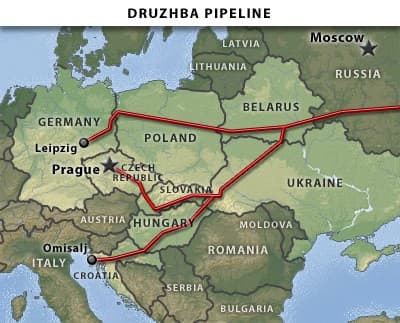
Druzhba Pipeline (Russia to Central Europe)

Crude oil: up to 1.2–1.4 million barrels/day


Ownership: Transneft (Russia)


Source: EJAtlas

The Druzhba Pipeline, also known as the “Friendship Pipeline”, remains one of the largest and most geopolitically sensitive crude transport corridors in the world. Completed in 1964 to link Soviet oil fields to Warsaw Pact markets, the system now stretches over 4,000 kilometers from Russia through Belarus, Ukraine, Poland, Hungary, Slovakia, and the Czech Republic, terminating in Germany.

With a peak capacity of approximately 1.4 million barrels per day, the network is supported by a series of mainline and intermediary pumping stations and tank farms totaling roughly 1.5 million cubic meters in crude storage.

Druzhba has outlived its Soviet political origins but not its strategic importance. It continues to anchor Russian crude flows into Central and Eastern Europe, even as war-related disruptions and EU diversification efforts steadily erode its reliability. Several branches have been repeatedly idled, rerouted, or mothballed due to physical sabotage, sanctions-related payment bottlenecks, and commercial realignment.

As of late June 2025, pipeline flows remain fractured. Reuters reported on June 26 that U.S. crude inventories had posted another unexpected drawdown, helping to lift Brent and WTI benchmarks, despite Druzhba-linked volumes to Germany falling sharply as Kazakhstan cut June deliveries to just 160,000 tonnes.


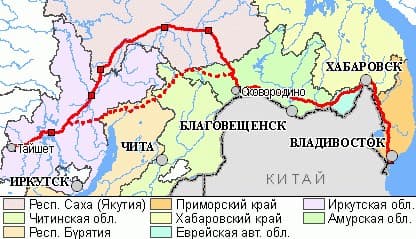
ESPO Pipeline (Russia to China and the Pacific)


Crude oil: ~1.0 million barrels/day to China


Ownership: Transneft and Rosneft


Source: EJAtlas

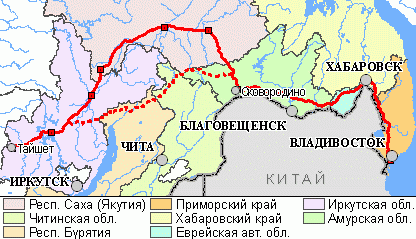
The ESPO (Eastern Siberia–Pacific Ocean) pipeline is a Russian crude oil pipeline system that transports oil from Eastern Siberia to the Asia-Pacific markets. It's operated by the Russian pipeline company Transneft. The pipeline consists of two main sections: the first connects Taishet to Skovorodino, and the second connects Skovorodino to an oil export terminal at Kozmino Bay on the Pacific coast. The Skovorodino branch extends through Mohe to Daqing, China.

Construction of the pipeline commenced in April 2006, with the section between Taishet and Talakan launched in reverse to pump oil from the Alinsky deposit in 2008. The initial capacity of the pipeline was 600,000 barrels per day, which increased to 1,000,000 bpd in 2016 with plans to expand it further to 1,600,000 bpd by 2025.

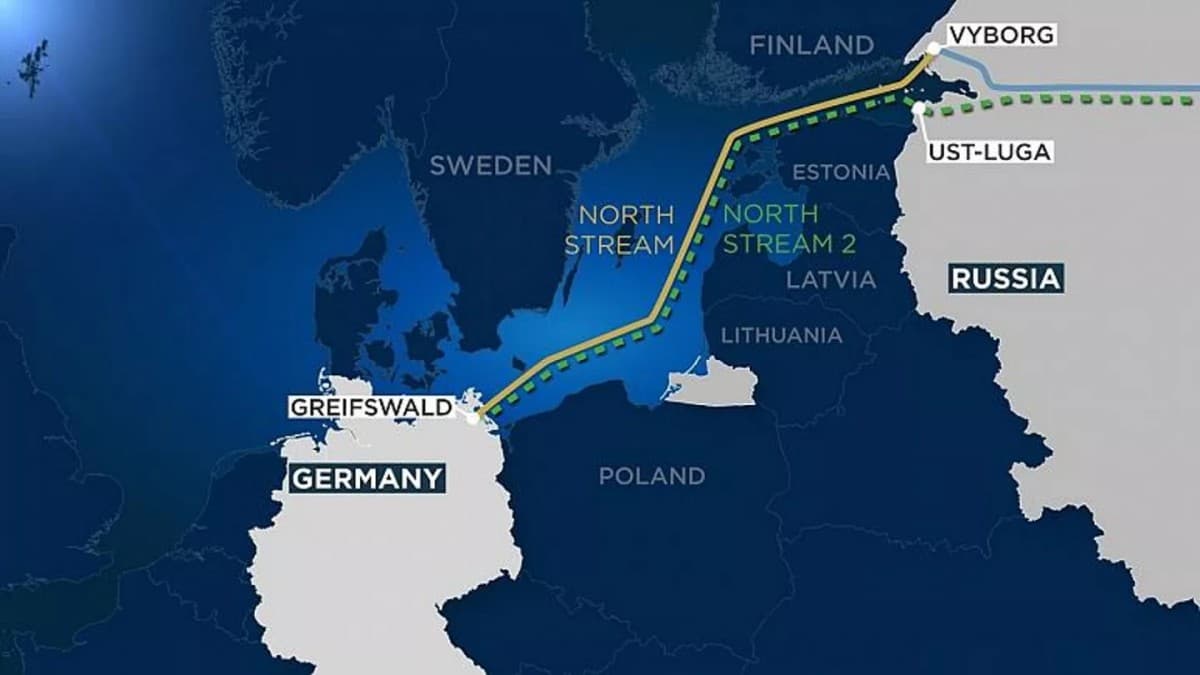
Nord Stream 1 & 2 (Russia to Germany)

Natural gas: 110 bcm/year (combined), both pipelines now inactive


Ownership: Gazprom + European energy firms


Source: Euronews

Nord Stream 1 and Nord Stream 2 are offshore natural gas pipelines that run from Russia to Germany under the Baltic Sea. The two 1,224-kilometre pipelines offer the most direct connection between Russia’s vast gas reserves and Europe’s energy-hungry markets. The twin pipelines have a combined capacity to transport 55 billion cubic metres (bcm) of gas per year. Located in Western Siberia on the Yamal Peninsula, the Bovanenkovo oil and gas condensate deposit supplies the bulk of the gas transported by the Nord Stream Pipelines. Bovanenkovo has estimated gas reserves of up to 4.9 trillion cubic meters.


Nord Stream 1 has been operational since 2011, while Nord Stream 2, though completed in 2021, never entered service. Both pipelines have been at the center of geopolitical debate regarding energy security and European dependence on Russian gas. In September 2022, explosions damaged three of the four pipelines, leading to significant gas leaks and raising questions about sabotage.

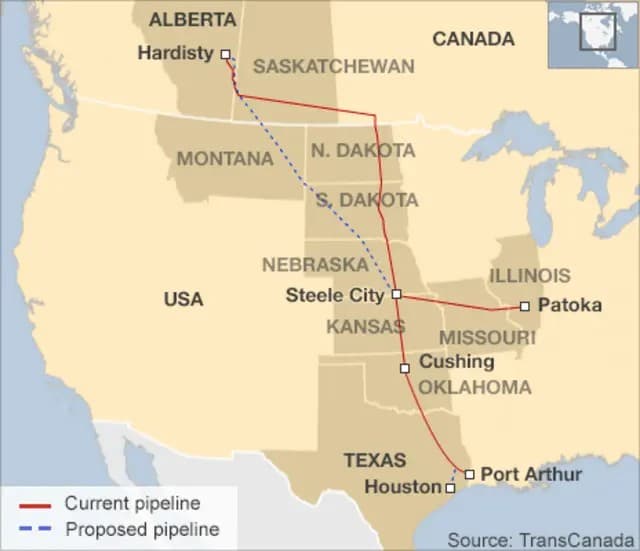
Keystone Pipeline System (Canada to U.S.)

Crude oil: ~590,000 barrels/day (existing system, excluding XL)

Ownership: TC Energy


Source: BBC

The Keystone Pipeline System is a critical and politically charged component of North America’s crude oil logistics network. Now operated by South Bow, a company spun off from TC Energy’s liquids division, Keystone transports crude and bitumen from Alberta’s oil sands deep into the U.S. refining heartland. Its core segments connect Hardisty, Alberta, to Steele City, Nebraska, and onward to key refining hubs in Illinois, Oklahoma, and the Gulf Coast.

Phase I of the system stretches over 2,100 miles, delivering up to 590,000 barrels per day to Midwestern refineries. The broader network reaches as far as Port Arthur and Houston, Texas, integrating with the U.S. Gulf Coast's export and processing infrastructure. The controversial Keystone XL expansion, once planned to add 830,000 bpd in capacity, was canceled in 2021 following sustained regulatory and political opposition.

Keystone has long stood at the intersection of energy strategy and environmental activism. Opponents argue that transporting diluted bitumen raises greater environmental and spill risks than conventional crude. Proponents counter that pipelines like Keystone enhance continental energy security, reduce reliance on seaborne imports, and support thousands of high-wage jobs in engineering, construction, and operations.


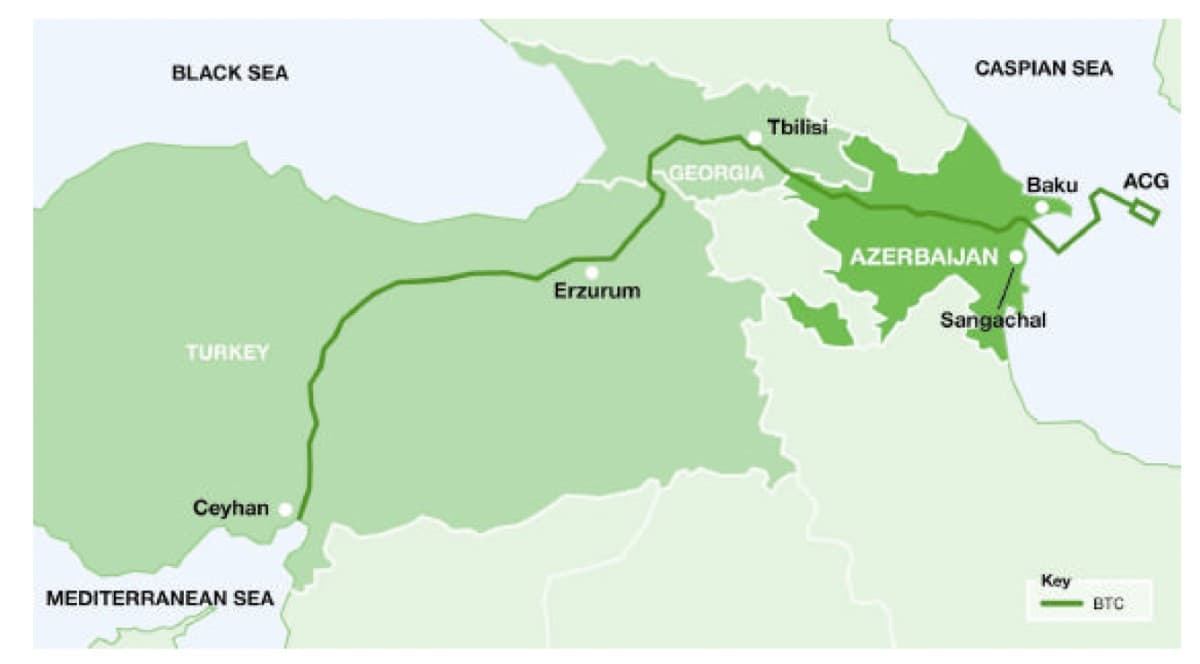
BTC Pipeline (Baku–Tbilisi–Ceyhan)

Crude oil: ~1.2 million barrels/day design capacity, ~600,000 actual


Ownership: BP-led consortium


Source: EBRD

The Baku-Tbilisi-Ceyhan (BTC) pipeline is a 1,768-kilometer-long pipeline spanning three countries that transports crude oil from the Caspian Sea to the Mediterranean Sea. It connects Baku, Azerbaijan, to Ceyhan, Turkey, passing through Tbilisi, Georgia. The pipeline became operational on May 25, 2005. The first phase of the pipeline was built by the Baku-Tbilisi-Ceyhan pipeline company (BTC Co) and became operational in June 2006. The Azerbaijan and Georgia sections of the pipeline are operated by BP Plc. (NYSE:BP) on behalf of its shareholders in BTC Co., while BOTAS International Limited (BIL) operates the third section.

BTC originally had a throughput capacity of one million barrels per day, which BP has since expanded to 1.2 million barrels per day by using chemicals that reduce drag along the pipeline, thus allowing higher flow rates. Last year, 305 tankers lifted 29 million tonnes of crude oil from Ceyhan.

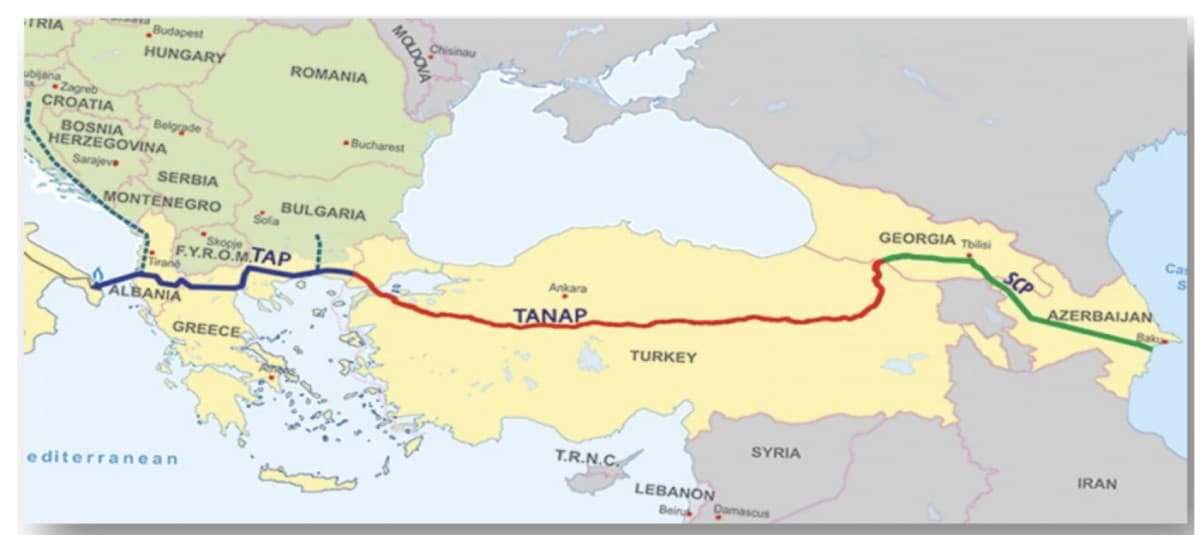
TANAP (Trans-Anatolian Natural Gas Pipeline)

Natural gas: 16 bcm/year current, expandable to 31 bcm

Ownership: SOCAR, BOTA?, BP, SGC


Source: Azerbaijan Ministry of Energy

The Trans-Anatolian Natural Gas Pipeline (TANAP) pipeline system is located in Turkey, stretching from the Turkey-Georgia border to the Turkey-Greece border, linking the South Caucasus Pipeline (SCP) and the Trans Adriatic Pipeline (TAP). The 1,811 km natural gas pipeline transports natural gas extracted in Azerbaijan to Turkey and then to Europe. The first phase of the pipeline was commissioned in June 2018, while the second phase of the pipeline was completed in November 2019. Back in 2020, Turkish President Recep Tayyip Erdogan christened TANAP a “regional peace project” before announcing that the pipeline had reached its maximum capacity of 32 billion cubic meters of gas annually.


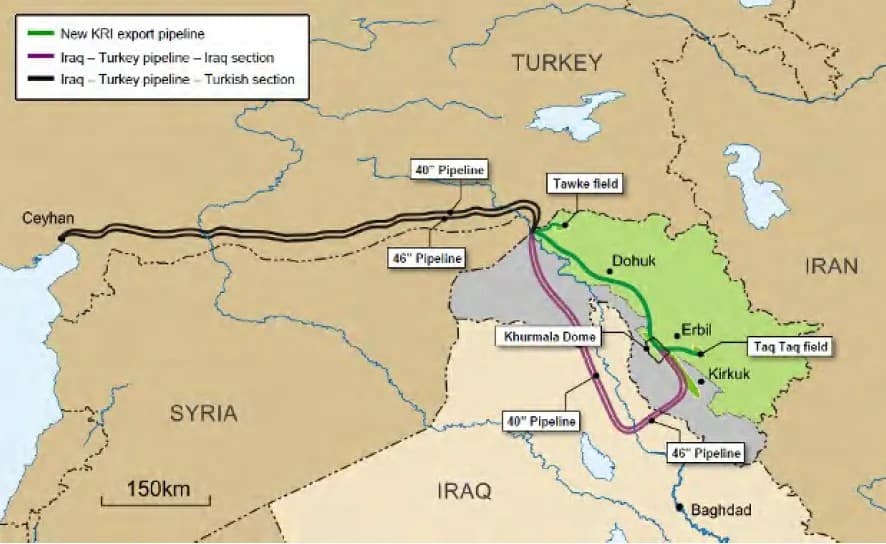
Iraq–Turkey Pipeline (ITP)

Crude oil: ~500,000–600,000 barrels/day when operational


Ownership: SOMO, Turkish Ministry of Energy


Source: ZERGOGCOS

Kirkuk-Ceyhan Oil Pipeline, also known as the Iraq–Turkey Crude Pipeline (ITP), is an operating oil pipeline that runs from the City of Kirkuk in northern Iraq to the Mediterranean terminal of Ceyhan in Turkey. The first phase of the 986-kilometer pipeline was completed in 1976, while the second parallel pipeline was completed in 1987. The pipeline system has a total capacity of 1.4 million bpd, effectively making Iraq the largest supplier of oil to Turkey while also providing an alternate route for the Middle Eastern producer to export its oil.

Unfortunately, last year, Turkey suspended oil flows through the ITP after the ICC ordered the country to pay Iraq ~ $1.5 billion for past oil deliveries and to suspend export of crude oil from Kurdistan transported through ITP. The pivotal pipeline has now remained closed for two years.

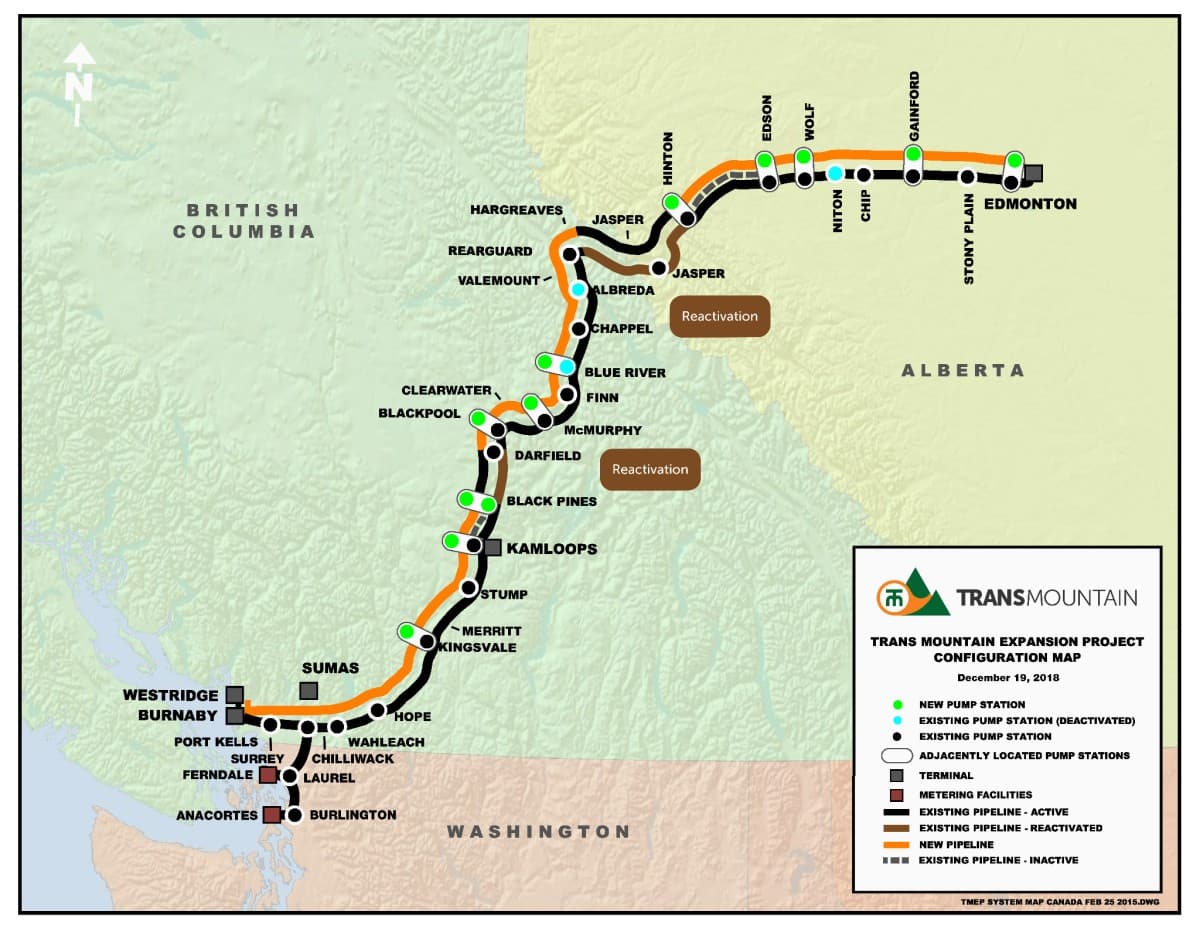
Trans Mountain Pipeline (Canada)

Crude oil and products: expanded to ~890,000 barrels/day (from 300,000)

Ownership: Government of Canada


Source: Trans Mountain

The Trans Mountain Pipeline is a Canadian pipeline system that carries crude and refined petroleum products from Edmonton, Alberta, to the coast of British Columbia, with delivery points in Kamloops, Sumas, and Burnaby. The Trans Mountain Expansion Project (TMX), which doubled the pipeline's capacity, became fully operational in May 2024


The expansion of TMX was intended to lower the Canadian oil industry’s reliance on US-bound pipelines and American refiners, which forced Canadian producers to accept deeper discounts for their crude as well as leaving them exposed to oil price shocks. However, TMX is facing fresh challenges. While the project has successfully opened new export markets for Canadian crude oil, particularly to Asia, some companies are hesitant to pay the higher tolls associated with the project's cost overruns. This has resulted in utilization rates below initial forecasts, though the pipeline continues to provide significant economic benefits to Canada.

China-Myanmar Oil and Gas Pipelines

Crude oil: ~440,000 barrels/day

Gas: ~12 bcm/year

Ownership: CNPC


Source: China Center

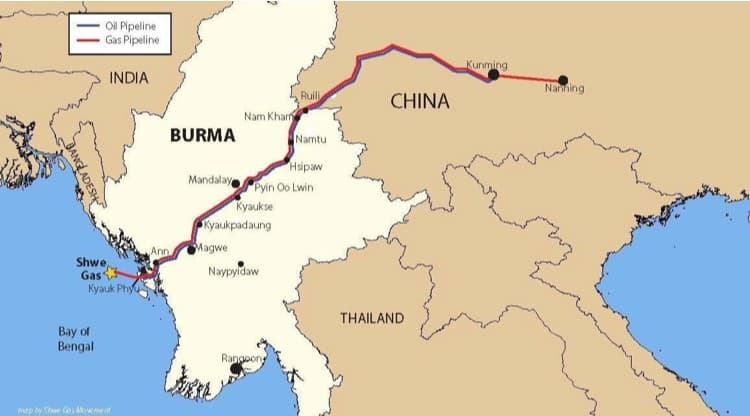
The China-Myanmar Oil and Gas Pipelines are a strategic bypass best considered as China’s engineered response to the so-called Malacca Dilemma. Stretching roughly 800 kilometers through Myanmar, the dual pipeline corridors allow Beijing to sidestep one of Asia’s most vulnerable maritime chokepoints. Crude oil sourced from the Middle East and Africa is offloaded at Myanmar’s Kyaukphyu port and piped directly into Yunnan Province, while a parallel gas line channels offshore natural gas to both China and domestic Myanmar markets.

This inland route offers Beijing a rare overland alternative to the heavily patrolled Strait of Malacca, through which over 80% of China’s oil imports have traditionally passed. More than just a hedge against naval disruption, the pipelines support four offtake stations within Myanmar, supplying local energy needs and reinforcing bilateral interdependence. For Myanmar’s government, the project has also become a vital revenue stream, anchored by steady transit fees and infrastructure payments from China.

The corridor illustrates the broader logic of China’s Belt and Road energy playbook: diversify routes, secure inland access, and extend regional leverage through fixed infrastructure. In an era of exposed sea lanes and shifting alliances, few links are as subtly significant.


By Alex Kimani for Oilprice.com


Northern Dynasty extends losses as it seeks court resolution on Pebble project veto


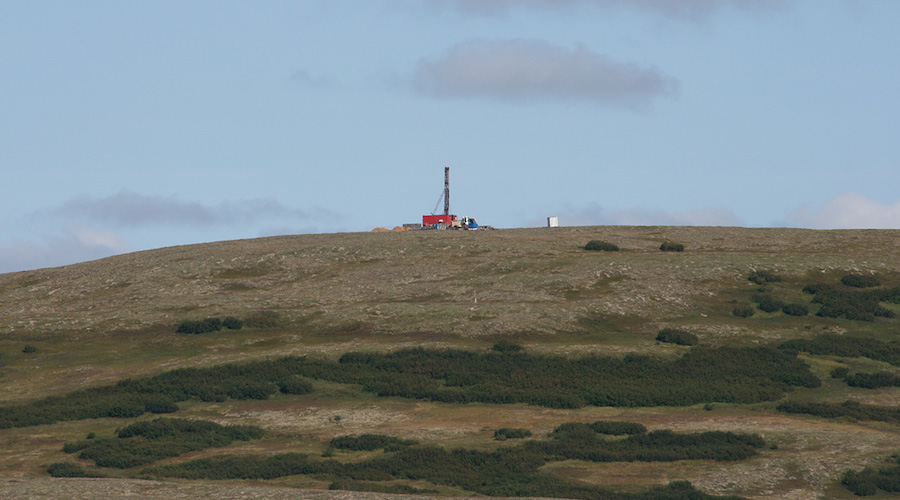
Drill at Pebble project site. Credit: Northern Dynasty Minerals Ltd.

Northern Dynasty Minerals (TSX: NDM; NYSE-A: NAK) says it has filed a motion in Alaska’s federal district court seeking a summary judgment briefing schedule with respect to its pending litigation over the veto of its flagship mine project during the Biden Administration.

For more than two decades, the Vancouver-based miner has been looking to develop its Pebble project, touted as one of the world’s largest copper-gold-molybdenum resources. However, the proposed mine has faced stern local opposition and undergone a protracted period of review due to its location near the Bristol Bay watershed, where some of the world’s largest sockeye salmon fisheries reside.

In January 2023, the US Environmental Protection Agency used its Clean Water Act authority to block the company’s Alaskan subsidiary from storing mine waste in the area, essentially killing the project. In its argument, the EPA said the mine would destroy more than 2,000 acres of wetlands.

If built, the Pebble mine would be the largest copper, gold and molybdenum extraction site in North America. A 2023 economic study estimated that it would produce 6.4 billion lb. of copper, 7.4 million oz. of gold and 300 million lb. of molybdenum, plus 37 million oz. of silver and 200,000 kg of rhenium, over 20 years.

In a bid to overturn the EPA’s decision, the Vancouver-headquartered miner filed in March 2025 two separate actions in federal courts. Two Alaska native villages also sued the EPA in June for the potential impacts its decision could have on the local economy.

Earlier this month, Northern Dynasty said it had begun talks with the EPA on potential settling the ongoing litigation, a move that it believes preents “the fastest path forward” to withdraw the Pebble project veto. It also confirmed that the EPA has “asked for additional information to assist in finalizing that decision.”

No settlement yet

However, in a press release issued this week, president and CEO Ron Thiessen stated that a settlement has yet to be reached, and as a result, the company has asked the federal court to set a briefing schedule for summary judgment motions.

“We now believe that will be the quickest, most direct avenue to get the veto removed,” Thiessen said. “We will continue to work with the relevant government agencies to resolve this issue. Meanwhile we are confident that the court will agree with our assessment that the issuance of the veto by the Biden administration was unlawful.”

Prior to issuing the press release on Thursday, shares of the company had plummeted by more than 55% — its largest single-day drop since 2020. The decline extended into Friday’s session, with the TSX-listed stock falling another 45% at the open, before paring some losses.

By 2 p.m. in Toronto, it traded at C$1.33 apiece — its lowest in two months — with a market capitalization of C$714.7 million.


US transfers acreage near proposed mining road to Alaska native group

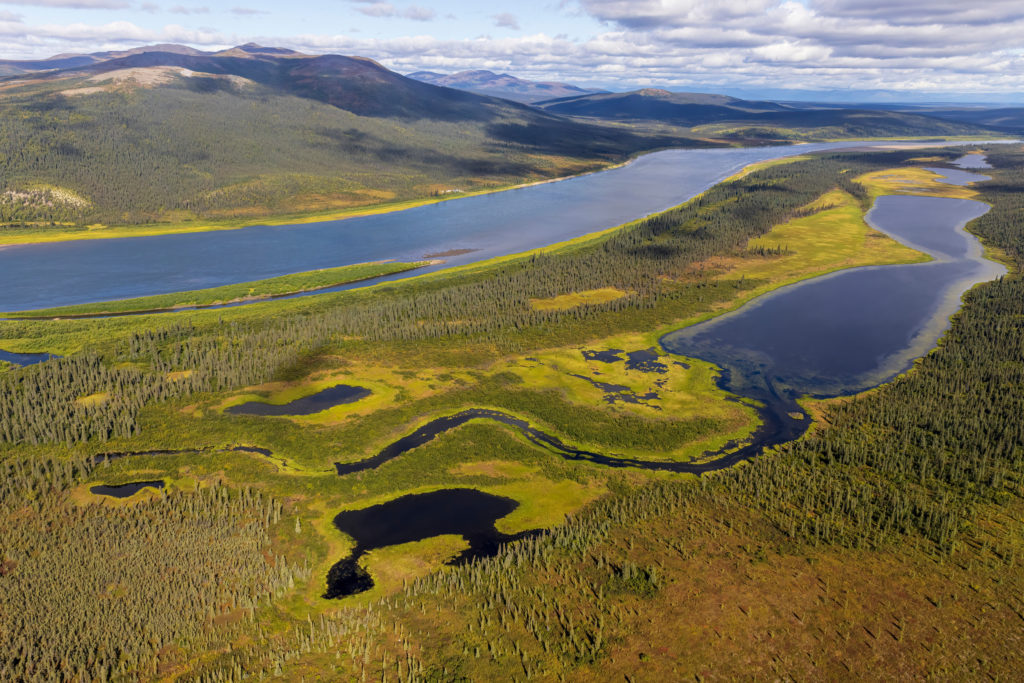
Kobuk Valley National Park in the arctic of Alaska. Stock image.

The Trump administration transferred 28,000 acres (11,331 hectares) in a remote part of Northwest Alaska to a native corporation, putting more land near a proposed mining road under local control.

The move is aligned with President Donald Trump’s pledge to remove barriers to energy and resource development in the state.

“By putting land into Alaska Native hands, we are advancing opportunity in Alaska, while reducing federal barriers to resource development,” Interior Secretary Doug Burgum said in a statement.

The acreage was conveyed to NANA Regional Corporation, which is based in Kotzebue, Alaska. The corporation is controlled by the Inupiat tribe. NANA was not immediately available for comment.

NANA supports construction of a road to the Ambler mining district, an area with copper, zinc and lead deposits, but severed ties last year to a project proposed by an Alaska state agency. The Biden administration later rejected that road, citing risks to caribou and fish populations and native communities.

(By Nichola Groom; Editing by Chris Reese and Sandra Maler)


Valterra profit hit by platinum mine flooding, spinoff costs


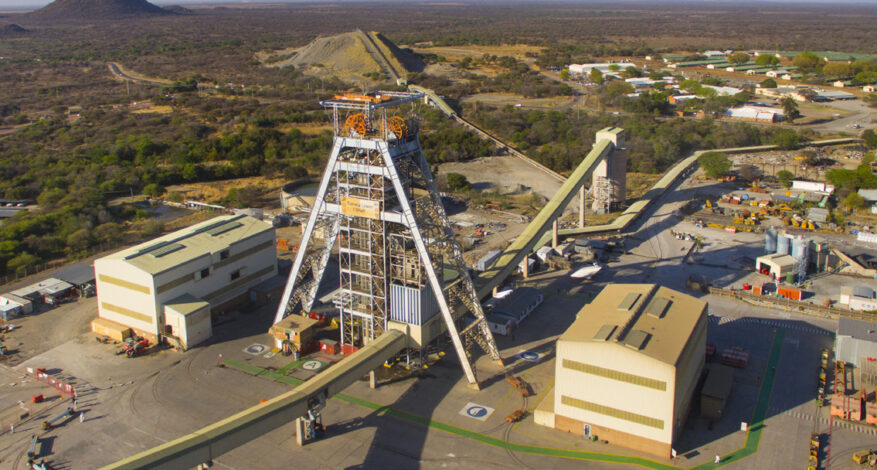
Amandelbult complex. Credit: Anglo American Platinum

Valterra Platinum Ltd. said first-half profit likely fell as much as 98% after flooding curbed mine output and it incurred costs related to its recent spinoff from Anglo American Plc.

Earnings declined as sales volumes of platinum-group metals dropped by 25%, the Johannesburg-based company – formerly known as Anglo American Platinum Ltd. – said Friday in a statement. Heavy rain and flooding in February disrupted operations at the firm’s Amandelbult mine.

Profit was also hit by 1.4 billion rand ($79 million) in one-off demerger-related costs when Valterra split from Anglo at the start of June, as part of the London-listed group’s ongoing restructuring process. Anglo last year committed to offloading its coal, nickel, platinum and diamond businesses to focus on its iron ore and copper assets.

While Valterra and its peers in South Africa – which is by far the world’s largest platinum producer – have been tackling a prolonged slump in PGM prices, there have been signs of improvement due to investment demand and jewelry fabrication in China. Platinum and palladium have risen 58% and 43%, respectively, this year – with most of those increases occurring since the beginning of May.

The platinum rally “has lifted the PGM basket price above cost support,” as the focus shifts “to market deficits,” analysts at UBS Group AG wrote in a note earlier this month.

Still, developments in the auto sector – the biggest consumer of PGMs – have created longer-term uncertainty around demand because electric vehicles don’t currently use the metals.

Valterra remains on track to meet its annual target for refined production of 3 million to 3.4 million ounces, albeit toward the bottom end of the range, the company said. The drop in earnings was partially offset by cost savings of 2.1 billion rand during the period, it said.

The miner’s shares rose as much as 5.5% in Johannesburg trading. Valterra has gained about 24% since the firm separated from Anglo.

(By Rene Vollgraaff and William Clowes)


China vows ‘zero tolerance’ for smuggling of critical minerals


Bags with unknown bulk contents readied for shipment. Stock image.

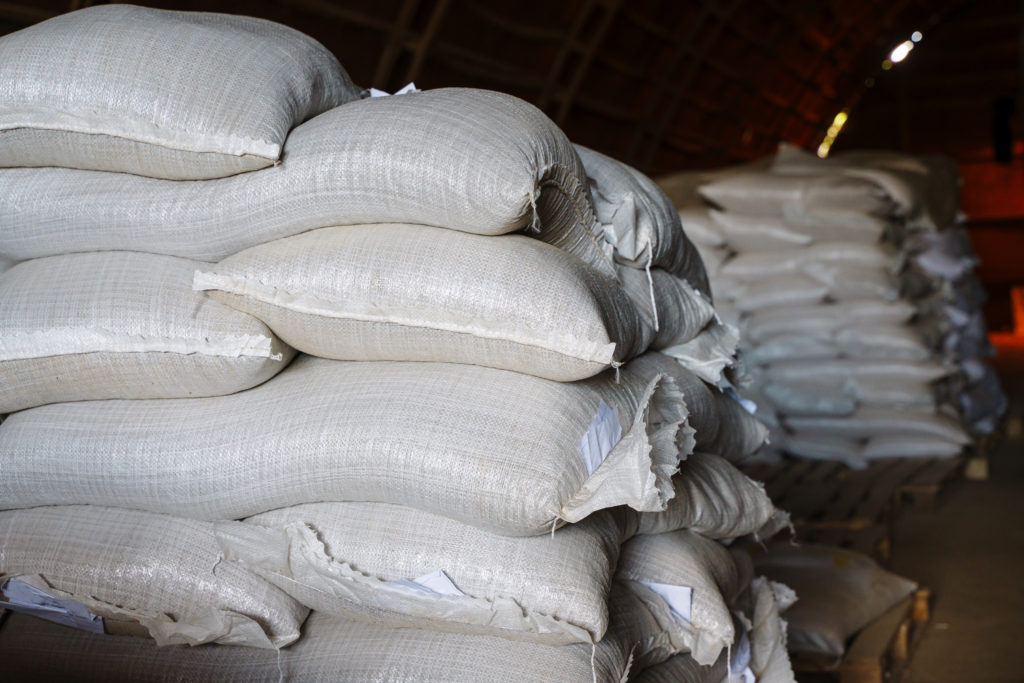
Chinese authorities vowed “zero tolerance” for the smuggling of strategic minerals and said it would strengthen law enforcement to crack down on illegal shipments and the unauthorized transfer of related technology.

At a meeting on Saturday, China’s coordination office on export control highlighted recent cases of critical mineral smuggling involving false declarations and transshipments through third countries, according to the state broadcaster CCTV.

China has leveraged its dominance in the production of critical minerals and rare earth magnets amid its trade war with the US. All shipments now need licenses from the Ministry of Commerce, impacting global supplies, with governments worldwide urging Beijing to boost flows. The Chinese government said it is speeding up approvals.

Saturday’s meeting was attended by the ministries of commerce, public security and state security, top court officials and prosecutors, as well as officials from the customs and postal agencies. Authorities were urged to “resolutely prevent” transshipments and blacklist companies that attempt to circumvent export controls.

Exporters will also be given guidance on due diligence to prevent products from reaching defense-related end users.

Separately, China’s spy officials have accused overseas intelligence agencies of stealing controlled rare earth materials by means of mail delivery. It claimed to have foiled an attempt by an unnamed country to illicitly acquire rare earths for stockpiling

China spy agency accuses foreign agents of stealing rare earths

Stock image.

China’s spy agency has accused overseas intelligence agencies of stealing controlled rare earth materials, reiterating its intent to curb smuggling even as Beijing agrees to review applications to export the vital industrial resource after trade talks with the US.

Without naming any country, the Chinese Ministry of State Security accused foreign entities of orchestrating the trafficking of these items, which Beijing sees as a strategic asset and has used as a bargaining chip in tariff negotiations with Washington.

“In recent years, foreign espionage and intelligence agencies and their agents have attempted to collude with and incite unlawful people in the country to steal our rare earth-related items by means of mail delivery, posing a serious danger to our national security,” the ministry said in a WeChat post Friday.

China leveraged its dominance in producing these metals and rare earth magnets in the trade war with the US, which relies on Chinese supply to make a wide range of products including electric vehicles. Ford Motor Co. had to cut output at one of its plants after Beijing tightened export controls, and the curbs have deepened tensions with the European Union, which similarly depends on exports from China.

The security ministry claimed to have foiled an attempt by an unnamed country to illicitly acquire rare earths for stockpiling. This involved a contractor mislabeling parcels as “not originally made in China” and misrepresenting product content and ingredients, according to the post.

The MSS also detailed other alleged smuggling tactics, such as hiding rare earth powders in ceramic tile ingredients or disguising them in water bottles labeled as “machinery parts” for export. The ministry urged citizens to report suspicious activities related to rare earth resources.

China and the US last month confirmed a deal to suspend drastic tariffs after Beijing vowed to process export licenses and the US agreed to lift its own controls on technology including some advanced AI chips. Signs of easing tensions have raised the chance of a broader deal and a meeting between President Donald Trump and Chinese leader Xi Jinping this year.