Wednesday, September 17, 2025


Construction Secrets Of Honeybees: How Bees Build Hives In Tricky Spots
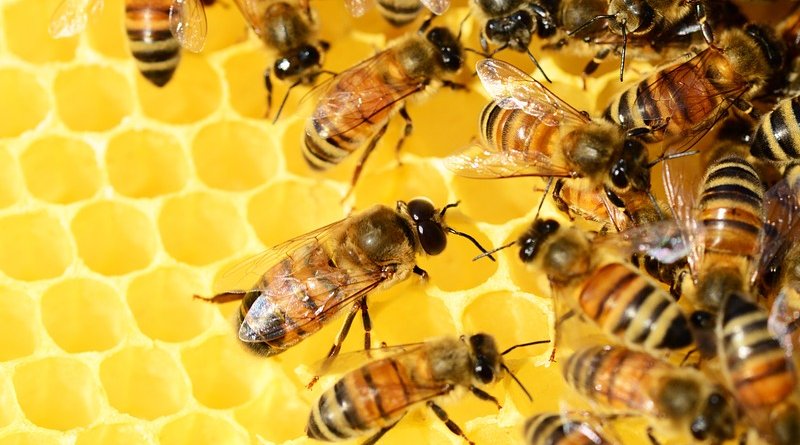
honey bees beehive


By 

On a hot summer day in Colorado, European honeybees (Apis mellifera L.) buzz around a cluster of hives near Boulder Creek. Worker bees taking off in search of water,  nectar and pollen mingle with bees that have just returned from the field. Inside the hives, walls of hexagons are beginning to take shape as the bees build their nests.


“Building a hive is a beautiful example of honeybees solving a problem collectively,” said Orit Peleg, associate professor in CU Boulder’s Department of Computer Science. “Each bee has a little bit of wax, and each bee knows where to deposit it, but we know very little about how they make these decisions.”

In an August 2025 study in PLOS Biology, Peleg’s research group collaborated with Francisco López Jiménez, associate professor in CU’s Ann and H.J. Smead Department of Aerospace Engineering Sciences, and his group to offer new insight into how bees work their hive-making magic—even in the most challenging of building sites.

The new findings could spark ideas for new bio-inspired structures or even new ways to approach 3D printing.

How and why bees build honeycomb

Honeybees can build nests in any number of places, whether it’s a manmade box, a hole in a tree trunk or an empty space inside someone’s attic. When a bee colony finds somewhere new to call home, the bees build their hive out of honeycomb—a waxy structure filled with hexagonal cells—on whatever surfaces are around.

Building a beehive is hard work, and it consumes a lot of resources. It all starts with honey, the nutrient-dense superfood that helps bee colonies survive the winter.


To make honey, bees spend the warmest months gathering nectar from flowers. The nectar mixes with enzymes in the bees’ saliva, and the bees store it in honeycomb cells until it dries and thickens.

It takes roughly 2 million visits to flowers for bees to gather enough nectar to make a pound of honey. Then, each worker bee must eat about 8 ounces of honey to produce a single ounce of the wax they need to build more honeycomb.

If the surface of their building site is irregular, the bees have to expend even more resources building it, and the resulting comb can be harder to use. So efficiency is key.

In an ideal world, bees try to build honeycomb with nearly perfect hexagonal cells that they use for storing food and raising young larvae into adults. Mathematically, the hexagonal shape is ideal for using as little wax as possible to create as much storage space as possible in each cell.

The honeycomb cells are usually a consistent size, but when bees are forced to build comb on odd surfaces, they start making irregular cells that take more wax to build and aren’t as optimal for storage or brood rearing.

Irregular surfaces: A puzzle for bees to solve

Golnar Gharooni Fard, the lead author of the new study and a former CU graduate student, said her main goal in the study was to understand how bees work together to solve the structural problems they might run into.

“We wanted to find the rules of decision-making in a distributed colony,” Fard said.

The researchers 3D printed panels, or foundations, for bees to build comb on. The team imprinted the foundations with shallow hexagonal patterns with differing cell sizes—some larger, some smaller, and some closer to an average cell size—and added the foundations to hives for the bees to use.

Next, the researchers used X-ray microscopy to analyze patterns in the comb the bees built on each type of foundation. Depending on which foundation they were given, the bees used strategies like merging cells together, tilting the cells at an angle or layering them on top of one another to build usable honeycomb.

Giving bees these different surfaces to work with was like giving them puzzles they had to solve, said López Jiménez.

“All those things happen in nature. If they’re building honeycomb on a tree, and at some point they get to the end of the branch, the branch might not be super flat, and they need to figure that out,” he said.

It’s still not clear why bees use the strategies they use in all situations. That’s a question the researchers hope to continue exploring.

Meanwhile, the team sees numerous possible applications for their findings. For example, honeycomb could inspire designs for efficient, lightweight structures such as those used in aerospace engineering.

López Jiménez also likened the honeycomb building process to 3D printing, where each bee gradually adds tiny bits of wax to the larger structure.

“The bees take turns, and they organize themselves, and we don’t know how that happens,” he said. “Can we learn from how the bees organize labor or how they distribute themselves?”


 

Wheat Disease Losses Total $2.9 Billion Across United States And Canada Between 2018 And 2021

Man Wheat Crops Barley Crops Cereals Food Grains

By 

A new multiyear study has revealed that between 2018 and 2021, wheat diseases caused the loss of approximately 560 million bushels—valued at US$2.9 billion, or $18.10 per acre, in farmer revenue—across 29 U.S. states and Ontario, Canada.


Published in Plant Health Progress™, the study was led by Andrew Friskop (Department of Plant Pathology, North Dakota State University) in collaboration with dozens of university-based specialists and the Crop Protection Network. It represents the most comprehensive survey of wheat-related losses to date. The findings underscore the widespread economic impact of crop diseases and offer critical insights to shape future disease management and research priorities.

Estimates presented in the study were based on annual surveys completed by Extension specialists and plant pathologists working directly with wheat growers across major production regions. These experts assessed yield losses tied to nearly 30 distinct diseases, offering a rare, field-level perspective of how disease pressure affects productivity across states and regions.

Fusarium head blight, stripe rust, and leaf rust emerged as the top three yield-reducing pathogens, although losses varied significantly from year to year depending on local weather patterns and environmental conditions. In 2019 alone, wheat growers saw approximately 188 million bushels lost to disease—the most severe single-year impact in the study.

Researchers say the multiyear scope and collaborative approach make this work especially valuable for understanding longer-term disease trends and guiding future investment. The data are expected to support decision making across multiple disciplines.

“Farming and food production are incredibly complex,” said Friskop. “This research helps us understand just one of the many invisible threats to crop productivity.”


Adam Sisson, Extension specialist with Iowa State University and a co-author on the study, emphasized the practical value of the findings: “Having this information helps us make smarter decisions—whether that’s guiding research funding, breeding for disease resistance, or advising farmers on management strategies.”

To complement the findings, the Crop Protection Network maintains a free online tool, the Field Crop Disease and Insect Loss Calculator, which allows users to explore estimated historical yield loss data for wheat, corn, soybean, and cotton. The interactive platform is updated annually and is increasingly being used by Extension professionals, industry agronomists, commodity groups, educators, and funding agencies to support planning and risk management.

As new disease threats emerge and growing conditions change, ongoing data collection will be critical. This study is just the beginning of an ongoing effort to track, understand, and reduce crop losses in real time—an essential step toward building more resilient agricultural systems.


Geopolitical Fracture And The Rewiring Of Global Trade – OpEd

network globe asia middle east binary


By 

When Washington tried to strong-arm New Delhi with punitive tariffs, India did not bend. Instead, it doubled down on self-reliance, diversified its markets beyond the United States, and emerged as a far larger export power than its critics had imagined. Today, the Ministry of Commerce’s export tables, the Ministry of Finance’s fiscal surveys, and global assessments from consultancies and think tanks converge on a single story: the fracture of global trade is not India’s loss, but India’s opportunity.


In fact, I had argued in my own Eurasia Review column a few months ago that America’s attempt to squeeze India with tariffs would end up creating the opposite effect. By trying to bully New Delhi, Washington would push India toward a harder embrace of self-reliance. That defiance, I wrote then, would not be a setback but a springboard: an opportunity for India to diversify markets, scale exports, and claim a firmer place in the world’s trading system. Today, the data pouring in from the Commerce and Finance Ministries bears that prediction out.

The rupture in trade flows that defines this decade did not begin in Delhi or Hanoi, but in Washington. As the United States widened its tariff arsenal — first against China, and then against India’s steel, aluminium, and technology services — it expected compliance. Instead, the Modi government drew a line. There would be no capitulation. The Ministry of Commerce’s 2024 report showed how India responded: by expanding bilateral exports with ASEAN, Africa, the Gulf, and Europe. Far from wilting, India’s export base reached an unprecedented $820 billion in goods and services in FY 2024–25, according to the Ministry of Finance. This was muscular diversification, not fragile growth. McKinsey, PwC, and NITI Aayog now note that India’s breadth of export partners has expanded faster than any other G20 nation.

When I spoke recently with a senior official in the Ministry of Finance, he underlined that the $820 billion export figure was not just a number on paper. It represented new shipping lanes to Africa, contracts inked in Gulf ports, and hundreds of smaller exporters filing returns for the first time. The Commerce Ministry’s own resources show that between 2019 and 2025, the number of active exporters has risen by nearly 40 percent — a statistic rarely highlighted in headlines.

The context is crucial: China’s share of US imports has plunged from about 18 percent in 2017 to barely 9 percent by mid-2025, according to China’s customs data. In the same period, Chinese shipments to the US in August 2025 collapsed by 33 percent year-on-year. The vacuum has not remained empty. Mexico, Vietnam, and India have absorbed the trade. Reuters reports that despite a tariff-induced dip in August shipments, India’s US exports over April–August 2025 still rose to about $40.39 billion, underscoring resilience. NITI Aayog further argues that the very tariff gaps created by Washington have made Indian products more competitive vis-à-vis China, Mexico, and Canada.

Diversification has now become doctrine. Five years ago, nearly a fifth of India’s merchandise exports were America-bound. That proportion has narrowed deliberately. The Gulf and ASEAN absorb India’s energy and engineering goods; Africa has emerged as the fastest-growing frontier for pharmaceuticals and two-wheelers; and Europe has been tied into long-term compacts such as the India–EFTA TEPA. The agreement promises $100 billion in pledged investment over 15 years — an unprecedented bundling of tariff relief with capital inflows. Meanwhile, the UAE CEPA has lifted gems and jewellery exports by more than 30 percent within three years. This is not accidental, but a design born from India’s refusal to remain tethered to any one power centre.


The smartphone story symbolises the new arc. Barely visible a decade ago, India exported over ₹2 lakh crore worth of smartphones in FY 2024–25. Apple alone assembled $22 billion worth of iPhones locally. Deloitte and PwC concur that India’s electronics value-addition has risen from about 12 percent to nearly 20 percent in three years, with official targets set at 35–40 percent by 2028. The ecosystem of printed circuit boards, camera modules, and precision enclosures has begun rooting itself. What began as tariff defiance has become industrial depth.

I recall a Commerce Ministry source telling me that this was the first time in memory that auto-components had swung into surplus — “a psychological turning point” was how he phrased it. The Finance Ministry’s quarterly bulletin quietly carried the same data: India now sells more parts to Detroit and Stuttgart than it imports from Shanghai.

Other sectors are quietly showing the same pattern. India’s auto components industry logged a trade surplus in FY25, with exports rising to about $23 billion, overtaking imports for the first time. The Ministry of Commerce’s annual report confirms that the overall trade deficit has improved from $121.6 billion in 2022–23 to $75.5 billion in 2023–24 — a 38 percent correction. These are not marginal numbers but structural shifts.

Even as America’s share of Indian exports narrows, India has gained in Africa and the Gulf. From Nairobi to Lagos, Indian engineering goods, solar technology, and affordable medicines are carving space. The Ministry of Finance calls Africa India’s ‘next frontier’ in its 2025 mid-year economic review. This is echoed by PricewaterhouseCoopers’ outlook, which forecasts that India’s exports to Africa could double within the decade. In parallel, Southeast Asia has become both a market and a partner: Vietnam and Indonesia are not merely conduits for Chinese rerouting, but active collaborators with India in electronics and energy.

Services, though less glamorous than goods, remain India’s silent surplus. IT, fintech compliance, design, and clinical data services consistently cushion trade volatility. The Ministry of Finance estimates an additional $50 billion in surplus by 2028. PwC calls India’s services trade ‘the invisible ballast’ that stabilises the ship even in stormy seas.

History rhymes here. Colonial India was shackled to monocultures; the IMF’s diktats in the 1990s bound liberalisation to external whims. Today’s India has seized autonomy: it is neither autarky nor subservience, but strategic self-reliance. By refusing to bow to tariff bullying, India has asserted sovereignty. By diversifying exports, it has widened opportunity. By leveraging services, it has built stability.

As someone who has tracked India’s trade story for three decades, from the shock of liberalisation to the new swagger of self-reliance, I sense a distinct change in tone within North Block. The Finance Ministry no longer explains away deficits; it talks about strategy. That change of vocabulary is itself a measure of India’s arrival in this rewired world.

The fracture of global trade has left many nations scrambling. China is bleeding market share in the US, its shipments plunging even as it reroutes through Southeast Asia. The US is struggling with higher consumer prices and uncertain supply chains. India, by contrast, has emerged as a net gainer. For the first time since independence, it is not merely a waypoint but a commanding node in the global network. The Ministry of Commerce’s ledgers, the Ministry of Finance’s surveys, and reports from McKinsey, PwC, and NITI Aayog all agree: India has turned adversity into advantage.

This is the self-reliance dividend. The world is redrawing its map of trade. India, at long last, holds the pen.

When America tried to bully India with tariffs, New Delhi charted its own course. Data from the Ministry of Commerce and Finance, reinforced by PwC, McKinsey, and NITI Aayog, show that India not only withstood the shock but converted it into a dividend of self-reliance. The fracture of global trade has become the foundation of India’s rise as a commanding node in a multipolar world.

This trajectory also finds resonance in comparative data: while China’s share of global exports has begun to decline from its 2020 peak of nearly 15 percent to around 13 percent by 2024, India’s share has inched upward. The WTO’s 2025 monitoring report observed that India now accounts for close to 2.4 percent of world merchandise exports, up from barely 1.6 percent a decade earlier. This incremental rise is not cosmetic; it reflects the cumulative effect of diversified markets, improved logistics, and tariff-defying resilience. In essence, India is beginning to do what China did in the early 2000s: translate political will and demographic scale into lasting commercial heft.


Manoranjana Gupta

Manoranjana Gupta is a Journalist, TV opinion leader, and a Special Advisor for GDKP in India, at the Center for Digital Future, Annenberg School of Communication and Journalism under the University of Southern California.

LIBERTARIAN ANTI IMPERIALIST

Ron Paul: Who Killed Charlie Kirk? – OpEd

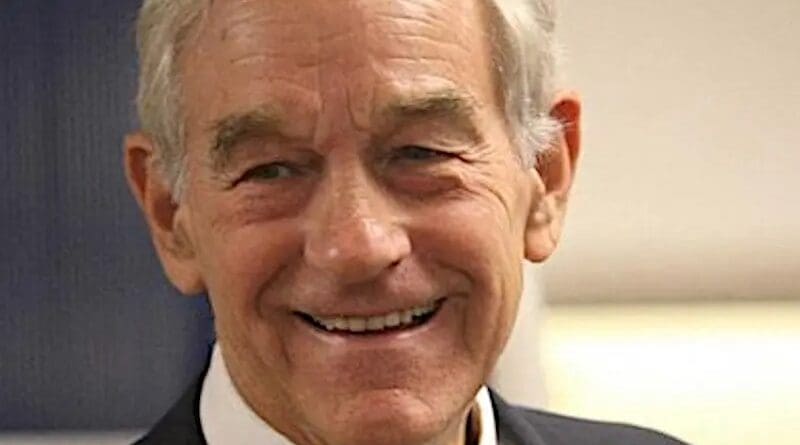
Dr. Ron Paul

By 

I had the pleasure of appearing on Charlie Kirk’s program a few times over the years and I always found him to be polite, respectful, and genuinely interested in ideas. Even in areas where we might not have agreed, he listened carefully. He was a strong advocate of free speech and he made a career of trying to convince the youth of the value of free speech and dialogue regardless of political differences.


At the young age of 31 years old, he had already founded and ran the largest conservative youth organization in the country and as such he had enormous influence over the future of the conservative movement and even the Republican party. As I discovered during my Republican presidential runs, the youth of this country are truly inspired by the ideas of liberty, peace, and prosperity.

I do not believe we have anything near the real story about the horrific murder of Charlie Kirk last week. The narrative presented by the FBI and other government agencies is wildly contradictory, with an ever-changing plotline that makes little sense.

Some individuals close to Kirk have reported that his foreign policy position was shifting away from the standard neoconservative militarism in favor of a more non-interventionist approach. Tucker Carlson recently recounted that Kirk had even gone personally to the White House to urge President Trump to refuse to take military action against Iran. He was rebuffed by President Trump, Carlson informed us.

Likewise, conservative podcaster Candace Owens, who was a close friend of Charlie Kirk, has stated on her program that Kirk was undergoing a “spiritual crisis” and was turning away from his past embrace of militarism and in favor of America-first non-interventionism, particularly regarding the current unrest in the Middle East.

Was Charlie Kirk murdered – directly or indirectly – by powerful forces who could not tolerate such a shift in views in such an influential leader? We don’t know.


If anything, those seeking to prevent the ideas of peace from breaking out would wish to cover it up, as they have done in so many past political killings. As I recounted in my most recent book, The Surreptitious Coup: Who Stole Western Civilization?, the turbulent 1960s saw several killings of major US figures, including JFK, RFK, and Martin Luther King, who were challenging the status quo and pushing for a shift away from the Cold War confrontationist mentality.

The real assassins of these peace leaders from last century were nihilists who did not believe in truth. They only believed in power – the power that comes from the barrel of a gun. Rather than compete in the marketplace of ideas they preferred to snuff out any challenges and therefore decapitate any possibility that our country could take a different course.

More than sixty years after the murder of President Kennedy, the vast majority of the American people do not believe the official story of how he was killed and why. Truth will eventually break through even when the wall of lies seems impenetrable.

If it is true that Charlie Kirk was preparing to shift his organization toward a foreign policy embraced by our Founders, the killing was even more tragic. But no army – or assassin – can stop an idea whose time has come. That may be his most important legacy. Rest in peace.


This article was published at Ron Paul Institute


Ron Paul

Ronald Ernest "Ron" Paul (born August 20, 1935) is an American physician, author, and politician who served for many years as a U.S. Representative for Texas. He was a three-time candidate for President of the United States, as a Libertarian in 1988 and as a Republican in 2008 and 2012.

 LIBERTARIAN ANTI IMPERIALISM

The US State Department’s Growing Thoughtcrimes Obsession – OpEd


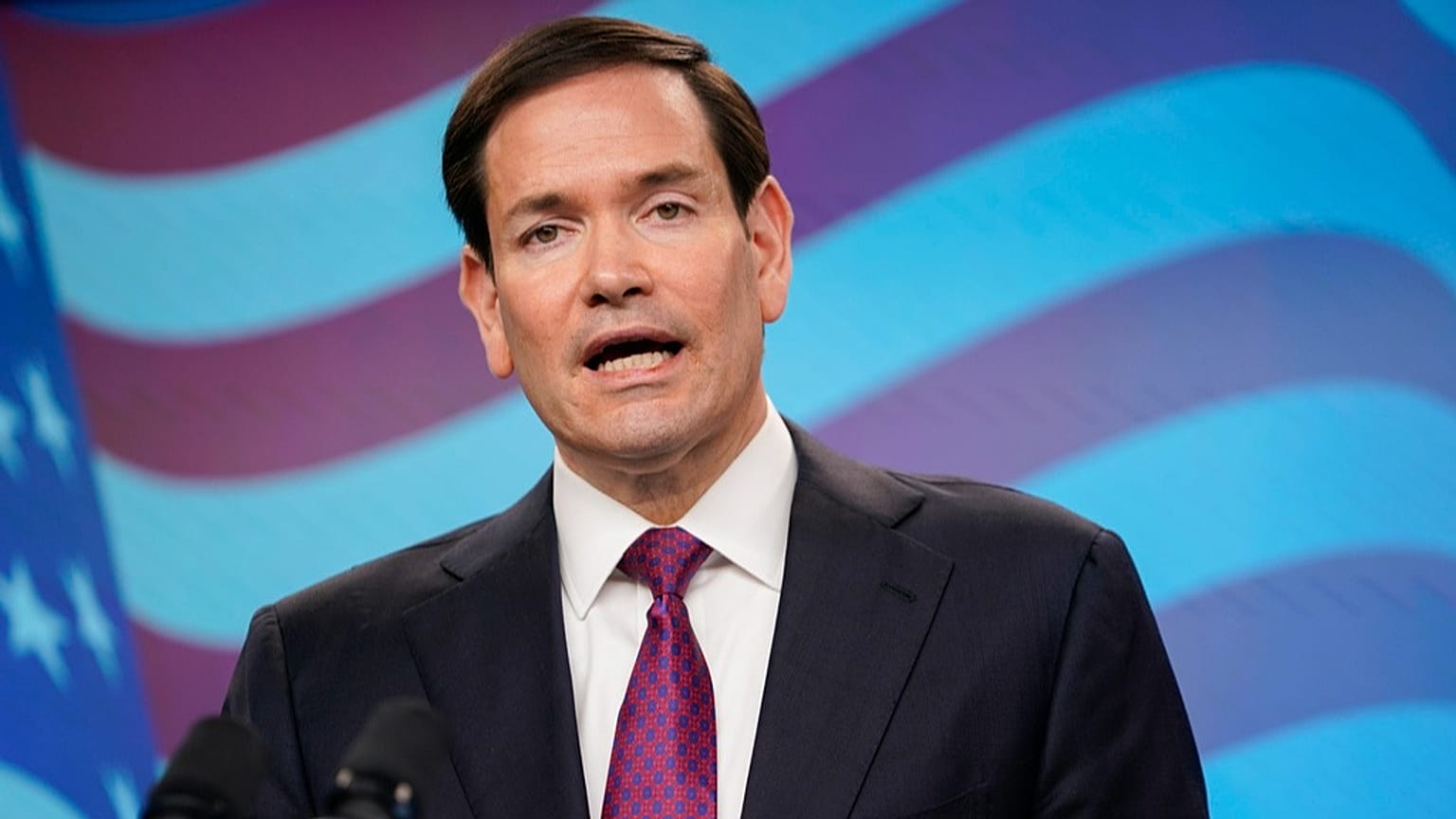
File photo Secretary Marco Rubio speaking with the press. (Official State Department photo by Freddie Everett)


By 

The Trump administration’s Department of State has been placing a high priority on denying the granting of visas to, and revoking visas from, people who have said things critical of the Israel government, including the Israel government’s war activities. 

That looks like it is an early step of a trend at the United States government department. In a new Fox News interview this week, Secretary of State Marco Rubio announced his desire that the State Department would make an addition to the list of thoughtcrimes for which visas may be denied and revoked.

Rubio stated: “We should not be giving visas to people who are gonna come to the United States and do things like celebrate the murder, the execution, the assassination of a political figure. We should not. And, if they’re already here, we should be revoking their visa.”

The strange thing is that the United States government and its tied-at-the-hip Israel government have a longtime penchant for undertaking just such murders, executions, and assassinations. People’s approval of those killings, though, should not be expected to cause much of a stir at the State Department. Don’t hold your breath for expressed approval of the assassination (ordered by Trump in his first presidential term) of Iran General Qassim Suleimani, for example, to result in denials or revocations of visas. The same goes for expressed approval of recent killings by the Israel government of “political figures” in Lebanon, Iran, and Yemen.

Rubio suggested immediately after his comment regarding changes in visas policy that the thoughtcrimes punished could expand into a much longer list. “Why would we want to bring people into our country that are gonna engage in negative and destructive behavior?” he declared. “Negative and destructive behavior” sure is a broad category. How close to qualifying to be Rubio’s bestie will someone have to come to make the visa cut?


Adam Dick

Adam Dick is a Senior Fellow at Ron Paul Institute for Peace and Prosperity. Adam worked from 2003 through 2013 as a legislative aide for Rep. Ron Paul. Previously, he was a member of the Wisconsin State Board of Elections, a co-manager of Ed Thompson's 2002 Wisconsin governor campaign, and a lawyer in New York and Connecticut.


US is cancelling visas for people 'celebrating' Charlie Kirk's death, Rubio says

FILE: U.S. Secretary of State Marco Rubio speaks during a press conference in Jerusalem, Monday, Sept. 15, 2025.
Copyright Nathan Howard/AP


By Kieran Guilbert
Published on 

"America will not host foreigners who celebrate the death of our fellow citizens," US Secretary of State Marco Rubio wrote in a post on X.

The United States has been revoking and denying visas to people celebrating the killing of conservative activist Charlie Kirk, according to US Secretary of State Marco Rubio.

"America will not host foreigners who celebrate the death of our fellow citizens," Rubio said in a post on X on Tuesday.

"Visa revocations are under way. If you are here on a visa and cheering on the public assassination of a political figure, prepare to be deported," he added.

Rubio's post followed a similar warning last week by US Deputy Secretary of State Christoper Landau.

"I want to underscore that foreigners who glorify violence and hatred are not welcome visitors to our country," Landau wrote on social media.

"I have been disgusted to see some on social media praising, rationalising, or making light of the event, and have directed our consular officials to undertake appropriate action," he added.

It is unclear how many visas have been revoked or denied, or on what grounds the State Department is taking such action. It also remains clear whether any European citizens were affected by Washington's latest policy.

Kirk, 31, was shot dead on 10 September while speaking to students at Utah Valley University. The suspect, 22-year-old Tyler Robinson, was taken into custody on Friday after a 33-hour manhunt.

Prosecutors brought a murder charge against Robinson on Tuesday. They allege that he shot Kirk in the neck with a bolt-action rifle from the roof of a nearby building on campus.

Following the fatal shooting, US conservatives have criticised people who disparaged Kirk or mocked his death.

Several individuals in sectors such as aviation, education and the media have lost their jobs or been suspended over their social media posts about Kirk, according to reports.

For example, US Transportation Secretary Sean Duffy said over the weekend that American Airlines had grounded pilots who he said were celebrating Kirk's death.

"This behaviour is disgusting and they should be fired," Duffy said in a post on X.

The Trump administration's threats to crack down on what it calls the "radical left" after Kirk's assassination raised fears that the US right is trying to harness anger over the killing to suppress political opposition

US Attorney General Pam Bondi has blamed "left-wing radicals" for the shooting and said "they will be held accountable".

"There's free speech and then there's hate speech," Bondi said in an interview this week.

"We will absolutely target you, go after you, if you are targeting anyone with hate speech."

Her interview quickly drew criticism from commentators on both the left and the right, who highlighted that there is no exception for hate speech under the First Amendment.