Friday, January 02, 2026

The Impending US Colonial Administration over Gaza, Palestine


Behind the diplomatic language of ‘reconstruction’ and ‘stabilisation’, a new colonial framework for Gaza is being assembled. The following is why the latest Security Council resolution matters and what it sets in motion.

On 17 November, the UN Security Council approved a draft resolution authored by the United States endorsing President Donald Trump’s plan for administering the devastated Gaza Strip.

The resolution mandates transferring control of Gaza to a so-called ‘Peace Council’ led by Washington, alongside another body called the ‘International Stabilisation Authority’ tasked with ‘security’ functions and likewise deployed in Gaza. Ultimately, both bodies fall under the authority of Trump and operate in constant and ongoing coordination with Israel.

The draft resolution faced no veto from any permanent members. Algeria voted in favour, giving the resolution thirteen supporting votes, while both Russia and China abstained.


Luis Felipe Noe (Argentina), Free Palestine, n.d.

Palestinian factions and political forces described the resolution as ‘an instrument of tutelage and international partnership in the extermination of our people’, stressing that it bypasses international legal frameworks and paves the way for field arrangements imposed outside the Palestinian national will. They warned that any international force in the proposed form would become ‘another form of foreign occupation’ and ‘a new instrument of aggression’.

Law for Palestine warned, in a policy brief, that the resolution does not rest on any international legal framework but instead aims to create a ‘parallel system’ based on security and foreign control.

International law expert Craig Mokhiber, former senior official at the UN Office of the High Commissioner for Human Rights, argued that the resolution ‘ignores international law, punishes Palestinians, and rewards those responsible for genocide’.

According to Mokhiber’s reading, the most troubling aspect of the resolution is that the Security Council hands control of Gaza – and of the survivors of genocide – to the United States, a partner in the commission of genocide, while stipulating Israeli participation in decision-making. Under this plan, Palestinians would not be permitted to take part in decisions concerning their rights, governance, or lives.

Mokhiber states: ‘The United Nations has not behaved in such a blatantly colonial manner (and beyond its legal authority), nor trampled so carelessly on the rights of a people, since it partitioned Palestine in 1947 against the will of the indigenous population, paving the way for 80 years of Nakba.’


Abdul Al Rahman Al Muzzian (Palestine), Untitled, n.d.

The resolution also disregards the recent findings of the International Court of Justice and rolls back Palestinians’ inalienable right to self-determination. A vague, excessively conditional, and non-binding clause states that after the bodies led by Trump decide that Palestinians have met unspecified ‘reform and development’ criteria, ‘conditions may finally be available for a credible path towards self-determination and Palestinian statehood’.

Instead of recognising the Palestinian people’s right to self-determination as a binding legal right – as affirmed by the International Court of Justice’s (ICJ) 2024 Advisory Opinion and UN General Assembly Resolution 10/24 – the plan presents it merely as ‘aspirations of the Palestinian people’, tied to reconstruction and reform as judged by external actors. At the same time, the resolution entrenches Israeli impunity for the crime of genocide it has committed.

The resolution enables the Trump-chaired Peace Council to operate as a transitional administration governing the entirety of Gaza: controlling services, aid, and movement of people; overseeing reconstruction frameworks; and managing Gaza’s financing. It grants the council a dangerously broad mandate to carry out ‘any other tasks that may be required’ and gives prior authorisation to establish undefined ‘operational bodies’ and ‘transaction authorities’ at its discretion.

Law for Palestine emphasises that the inclusion of unelected Palestinian figures in this Peace Council does not change its imposed foreign character; throughout history, all occupying powers have cooperated with local representatives.


Sliman Mansour (Palestine), Prison, 1982.

To grasp the scale of the contradictions in the Security Council’s action, the resolution also establishes what Mokhiber describes as an outsourced armed occupation force – the ‘International Stabilisation Force’. This force would operate under the supervision of the Trump-chaired Peace Council. Its leadership must be approved by the council, its membership determined ‘in cooperation with’ Israel, and its function would be to exert control over the Palestinian survivors in Gaza.

The force would be tasked with securing borders (effectively imprisoning Palestinians), stabilising the security environment in Gaza (suppressing resistance to occupation, apartheid, or genocide), disarming Gaza (but not Israel), destroying Gaza’s defensive military capabilities (but not Israel’s), dismantling Palestinian resistance weapons (but not those of Israel), and training Palestinian police to maintain control over the population.

The International Stabilisation Force would also ‘monitor the ceasefire’ – a US-guaranteed arrangement under which Israeli attacks on Gaza have continued daily since its announcement. Monitoring by such a force would focus primarily on Palestinians rather than on Israel as the occupying power.

Mokhiber notes that the resolution grants both the colonial Peace Council and its proxy occupation force, the International Stabilisation Force, a two-year mandate, with the possibility of renewal through consultation with Israel (and Egypt) – but not with Palestine.

The resolution contradicts the substance of international law itself. The Security Council derives all its authority from the UN Charter. This charter, as a treaty, forms part of international law; it is not above it. The council is therefore bound by the rules of international law, including, in particular, the highest rules known as peremptory norms (jus cogens) and obligations owed to all (erga omnes), such as the right to self-determination and the prohibition on acquiring territory by force. The council’s blatant disregard of the ICJ’s findings on these issues reveals to what extent many of the resolution’s provisions are unlawful and ultra vires (beyond the council’s authority).


Sliman Mansour (Palestine), And The Convoy Keeps Going, 2016.

Mokhiber, who resigned from the UN Human Rights Office in 2023 after issuing a letter condemning the UN’s failure to protect civilians in Gaza and accusing Israel of committing genocide, observes that the consequences of the Security Council’s rogue behaviour extend far beyond Palestine. If the council does not abide by international law, it becomes a dangerous instrument of repression and injustice. This is precisely what has unfolded here: the council ignored international law and effectively handed the survivors in Gaza over to the partners in the genocide.

He concludes that such schemes are fundamentally flawed from the outset, as they seek to impose outcomes that are unlawful (under international law), illegitimate (by excluding Palestinian agency), and devoid of any practical chance of success (given their near-universal rejection in Palestine and across the world). For those committed to justice, human rights, and the rule of law, the task is clear. This plan must be opposed in every capital and at every turn.

  • Madaar — a progressive media platform that seeks the truth and exposes corruption and tyranny in all their forms and wherever they exist. It defends the working people and aims to make the voices of the excluded and those whose rights are violated heard, in pursuit of freedom, social justice and equality.
Tricontinental: Institute for Social Research seeks to build a bridge between academic production and political and social movements to promote critical critical thinking and stimulate debates. Read other articles by Tricontinental Asia.
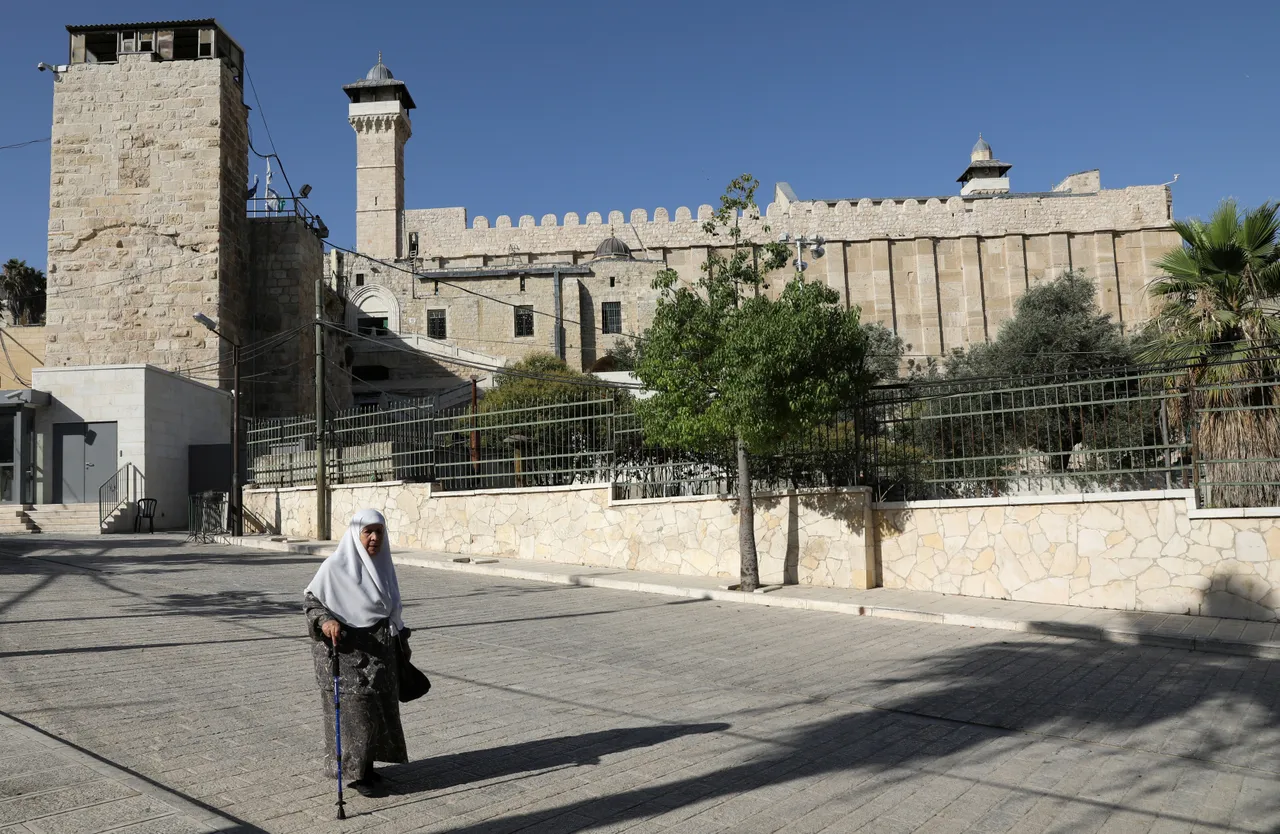
'Grave escalation': Israel strips Hebron municipality of authority over Ibrahimi Mosque

Palestinian officials say Israel's move violates international law and threatens the historic and legal status of one of Islam’s holiest sites.

The Palestinian Foreign Ministry called Israel’s move illegal and vowed to act internationally to protect the mosque. / Reuters

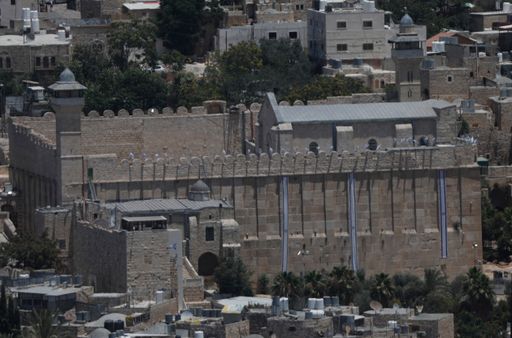
Israel has decided to remove Hebron Municipality’s authority over the Ibrahimi Mosque, transferring planning and construction powers to Israeli bodies, a move Palestinians say deepens Israel’s control over the occupied West Bank city and risks permanently altering the status of the historic site.

The Palestinian Ministry of Foreign Affairs and Expatriates condemned on Thursday the decision as a “grave escalation,” warning it represents a direct violation of the legal and historical status quo at the Ibrahimi Mosque.

The Ibrahimi Mosque is considered a holy site by Muslims, Jews and Christians alike as the birthplace of Prophet Abraham.

According to WAFA news agency, the ministry said Israel’s revocation of municipal and Islamic Waqf jurisdiction is part of a broader effort to impose unilateral control over the compound.

Palestinian officials also denounced Israel’s immediate approval of a project to construct a ceiling over the mosque’s courtyard, calling it an unlawful act that contravenes international law, UN resolutions, and Israel’s obligations as an occupying power.

The ministry stressed that the move has nothing to do with regulation or development, but rather reflects a deliberate attempt to entrench occupation and forcibly change the character of the Ibrahimi Mosque. It warned that such actions threaten one of Palestine’s most significant religious and cultural landmarks.


RelatedTRT World - Türkiye condemns Israeli actions at Ibrahimi Mosque, calls for respect for sacred sites


Tightened control

Recalling a 2017 UNESCO decision that listed Hebron’s Old City and the Ibrahimi Mosque as a World Heritage Site in Danger under the name of the State of Palestine, the ministry said international law affirms Palestinian sovereignty over the site and protects it from unilateral Israeli measures.

The Palestinian Foreign Ministry described Israel’s decision as legally and historically invalid, pledging to pursue diplomatic and legal action with international institutions to safeguard the mosque and defend Palestinian rights and heritage.

Israel divided the mosque in 1994, allocating 63 percent for Jewish worship and 37 percent for Muslims, after an illegal settler massacre killed 29 Palestinian worshippers. The section designated for Jewish worship includes the Muslim call-to-prayer room.

Under unilateral Israeli arrangements, the mosque is fully closed to Muslims 10 days a year for Jewish religious holidays and fully closed to Jews on 10 Islamic occasions. However, Israel has not honoured full access for Muslims during their holidays since the start of the Gaza war in October 2023.
Opinion

Israel’s recognition of the State of Somaliland: Why now?

January 2, 2026
MIDDLE EAST MONITOR


A group of Somalis, carrying Somali flags and chanting slogans against Israeli Prime Minister Benjamin Netanyahu and Israel, protest Israel’s decision to recognize Somaliland, gathering in Mogadishu, the capital of Somalia, on December 28, 2025. [Abuukar Mohamed Muhidin – Anadolu Agency]

by Tamer Ajrami

On 26 December, Israel took the unprecedented step of officially recognizing Somaliland as an independent state. This decision, ending decades of hesitation, makes Israel the first UN member state to grant legitimacy to the breakaway region. For many observers, this might seem like a distant diplomatic manoeuvre in the Horn of Africa. However, for those of us watching the unfolding genocide in Gaza and the escalating tensions in the Red Sea, this move is not merely diplomatic. But it is a dangerous strategic escalation with grave reflection for Palestine, Yemen, and the entire Arab world.

Everyone is asking: Why now?

Why, after more than 30 years of Somaliland seeking recognition, has Tel Aviv decided to break the international consensus and the African Union’s charter on respecting colonial borders?

To understand the answer, we must look beyond the official statements and into the darker reality of Israel’s post-October 7 strategy.

A new base for aggression

The timing is no coincidence. The ongoing war on Gaza has expanded into a regional confrontation, particularly with the Houthi movement in Yemen effectively blockading Israeli shipping in the Red Sea. Somaliland, with its 740-kilometer coastline on the Gulf of Aden, is located just 300 to 500 kilometers from the Yemeni coast.

By recognizing Somaliland, Israel is not acting out of benevolence toward the Somali people. It is securing a forward operating base. Reports from the Institute for National Security Studies (INSS) in Tel Aviv suggest that Somaliland could serve a role similar to Azerbaijan (a strategic ally on the border of an enemy). From this advantage point, Israel can monitor maritime traffic, gather intelligence information on Yemen, and potentially launch direct strikes. So, Israel can control the Horn of Africa and can turn it into a new theatre of war.

READ: Somalia’s president says Somaliland agreed to resettle Palestinians, host Israeli base for recognition

How is it connected to Gaza?

Perhaps the most alarming motive is the one linked to the ethnic cleansing of Gaza. For months, Israeli intelligence and political figures have floated the concept of “voluntary migration”. It is just a make-up for the forced displacement of Palestinians.

Leaked reports and discussions in Israeli media have indicated that Somaliland’s desperation for international recognition makes it vulnerable to transactional diplomacy. The equation being whispered in diplomatic corridors is chilling: recognition in exchange for accepting Palestinian refugees. While the government in Hargeisa denies this, the very existence of such discussions highlights how the far-right Israeli government views Palestinians not as humans with rights to their land, but as a surplus population to be bartered away to the poorest regions of the world.

So, Israel seeks a displacement by another name and takes Somaliland as a bridge for the plan to come true.

An Israel Unbound

Finally, this move signifies a shift in the very nature of the Zionist state. The Israel that once sought to present itself to the West as a “law-abiding democracy” that respects international norms is gone. It has been replaced by a reckless entity that bombs diplomatic missions, defies the International Court of Justice, and now unilaterally redraws maps in Africa.

Apparently, Israel signals that it no longer cares about diplomatic fallout. This appears in the ignoring of the sovereignty of the Federal Republic of Somalia and in the warnings of nations like Egypt and Turkey. It is willing to destabilize the entire African continent and the Red Sea basin to secure its short-term military goals.

Therefore, the recognition of Somaliland is not a story about African independence. It is a story about the expansion of Israeli military hegemony into the Red Sea and a desperate attempt to find new locations to exile the people of Gaza. We must see this for what it is. Simply, it is a new front in the war against the Palestinians and the stability of the region.

At the end, I want to add that Israel has a decisive reason in this assessment. I mean, Israel itself has changed. It has become more impulsive and aggressive, and less concerned with international law. Consequently, it no longer fears the contradiction in its positions. For example, Israel refuses to recognize Palestine while accepts the recognition of Somaliland.

The views expressed in this article belong to the author and do not necessarily reflect the editorial policy of Middle East Monitor.

Lebanon PM Pledges State Authority, Vows to End Israeli Attacks


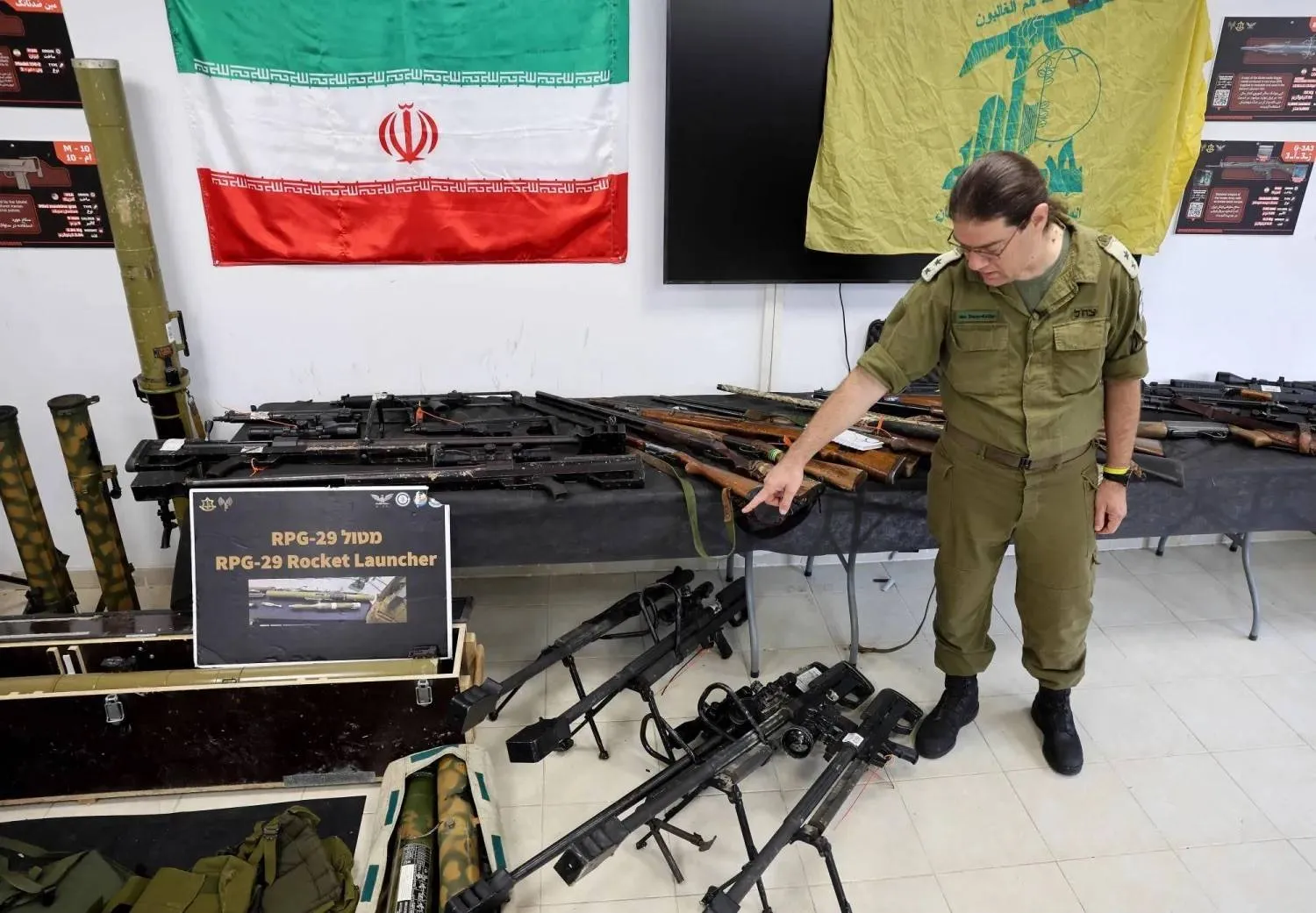
An Israeli officer displays weapons seized by the army in Gaza, Lebanon and Syria during a media tour (AFP).

Beirut: Asharq Al Awsat
2 January 2026 AD ـ 13 Rajab 1447 AH

Lebanon’s Prime Minister Nawaf Salam has pledged to press ahead with reforms, extend the authority of the state, and work to end Israeli attacks and remove the occupation, even as Israel signals preparations for a “measured” military action against Hezbollah.

In a New Year message posted on X, Salam wished Lebanese a year marked by hope, continued state recovery, and restored public trust.

“We promise to continue together the path of reform and the extension of state authority,” he wrote. He added a renewed pledge “to keep working to end Israeli attacks, remove the occupation, and secure the return of our detainees,” saluting the Lebanese army and security forces deployed nationwide to safeguard public safety.

Lebanon has maintained diplomatic contacts with the sponsors of the ceasefire with Israel, which took effect in November 2024 and ended 66 days of fighting between Hezbollah and the Israeli army.

Beirut says diplomacy and steps by the Lebanese army have prevented a renewed war. Israel, however, still occupies five border points inside Lebanese territory, holds around 20 detainees, including civilians, and continues to violate the agreement through intermittent strikes and targeted killings inside Lebanon.

In parallel, Israeli media report heightened security readiness for possible action against Hezbollah, citing Israeli assessments that recent Lebanese measures fall short of ceasefire terms.

The daily Maariv said security chiefs are preparing to brief Prime Minister Benjamin Netanyahu on readiness levels, pointing to what Israel describes as Lebanon’s failure to dismantle Hezbollah’s military infrastructure south and north of the Litani River.

According to the report, Lebanon may soon declare the end of army operations to disarm Hezbollah south of the Litani without extending them northward, an outcome Israel deems a breach. Israeli assessments suggest this could prompt unilateral action if Lebanon is seen as unable or unwilling to comply.

Israel accuses Hezbollah of rebuilding capabilities, including precision missiles, and says recent airstrikes targeted training sites linked to the Radwan Forces. Israeli officials argue Hezbollah is currently in a weakened operational state, enabling “calibrated” options aimed at pressuring the group while preserving the ceasefire framework.
Hundreds in Sweden cancel New Year’s celebrations to rally in support of Palestine

January 1, 2026 


People gather for a demonstration in support of Palestinians in Stockholm the capital of Sweden on December 31, 2025. [Atila Altuntaş – Anadolu Agency]

Hundreds of people in Sweden canceled New Year’s celebrations and rallied late Wednesday in the capital Stockholm in solidarity with the people of Gaza, Anadolu reports.

Despite freezing temperatures, protesters assembled at Segels Torg Square following a call by numerous civil society organizations, choosing to mourn children and civilians killed by Israel instead of celebrating the New Year.

Carrying banners reading “Children are being killed in Gaza,” “Schools and hospitals are being bombed,” “Comply with an immediate ceasefire,” and “End food shortages,” the crowd demanded an end to what they described as Israel’s genocide in Gaza and called on Sweden to halt arms sales to Israel.

In a statement made on behalf of the organizers, the protesters said: “In the new year, we reject the mass deaths, sieges in Palestine, and the silence toward these events. We refuse to begin a new year by turning a blind eye to injustice.”

The statement also emphasized that Israel was not adhering to peace commitments with Palestine.

“As the world enters the new year, genocide continues in Palestine. Despite the ceasefire, Palestinians are being killed, the siege continues, and people are freezing to death while left without shelter in tents,” it said.

Waving Palestinian flags and carrying torches, demonstrators later marched toward the Swedish Parliament.

Palestinians have accused Israel of repeatedly violating a ceasefire agreement, which halted a two-year Israeli war that has killed more than 71,000 people, mostly women and children, and injured over 171,000 others since October 2023.

Since the Oct. 10 ceasefire deal that halted the two-year Israeli war, at least 414 people have been killed and over 1,100 others injured, according to Gaza’s Health Ministry.
Dozens of settlers storm Al Aqsa Mosque

QNA/Jerusalem
Published on January 01, 2026 


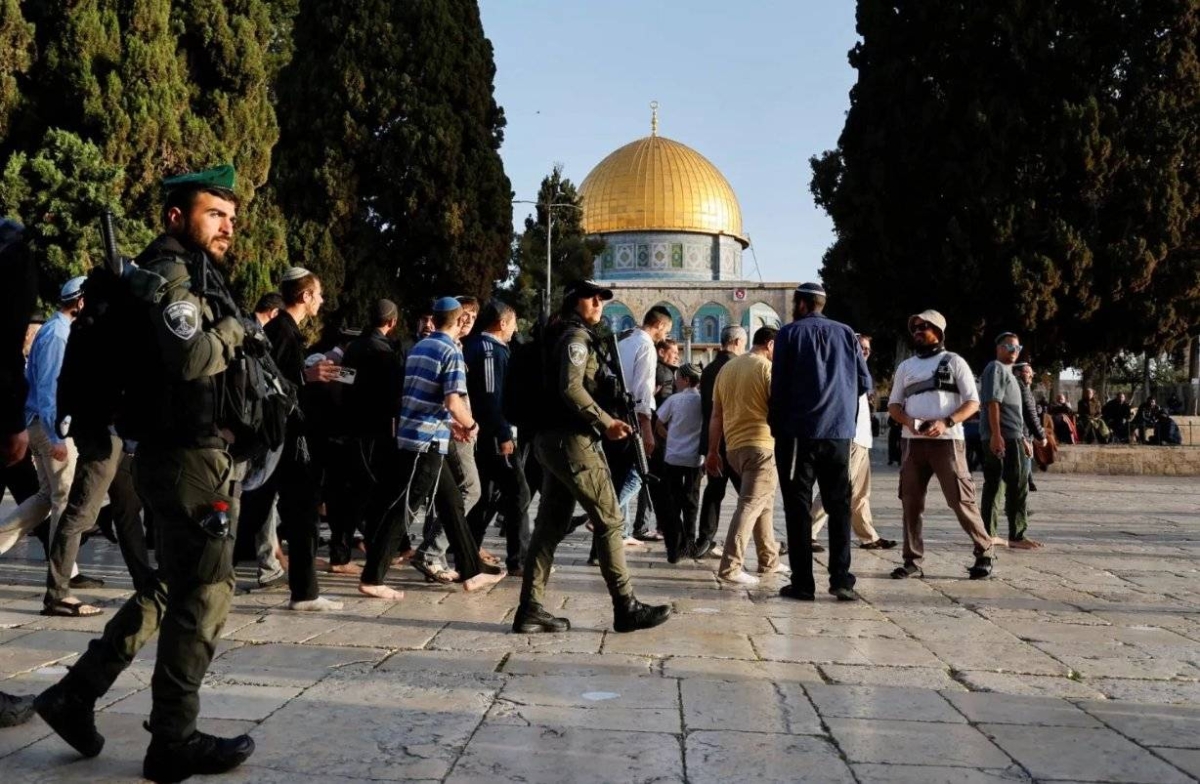
Dozens of settlers stormed the courtyards of Al Aqsa Mosque on Thursday under the protection of the Israeli occupation police.Sources in Jerusalem said that groups of settlers stormed Al Aqsa Mosque in the morning through the Mughrabi Gate, under the protection of the occupation police, carrying out provocative tours in the mosque's courtyards, during which they performed public Talmudic rituals.Settler groups continue their daily incursions into Al Aqsa Mosque, except on Fridays and Saturdays, in two periods, morning and evening, as part of ongoing attempts to impose a temporal and spatial division of the mosque.2025 ended in Jerusalem with a widespread escalation in Israeli occupation violations that affected both people and places, with December being one of the most dangerous months, especially in terms of demolition operations and attacks on Al Aqsa Mosque and Jerusalemites.
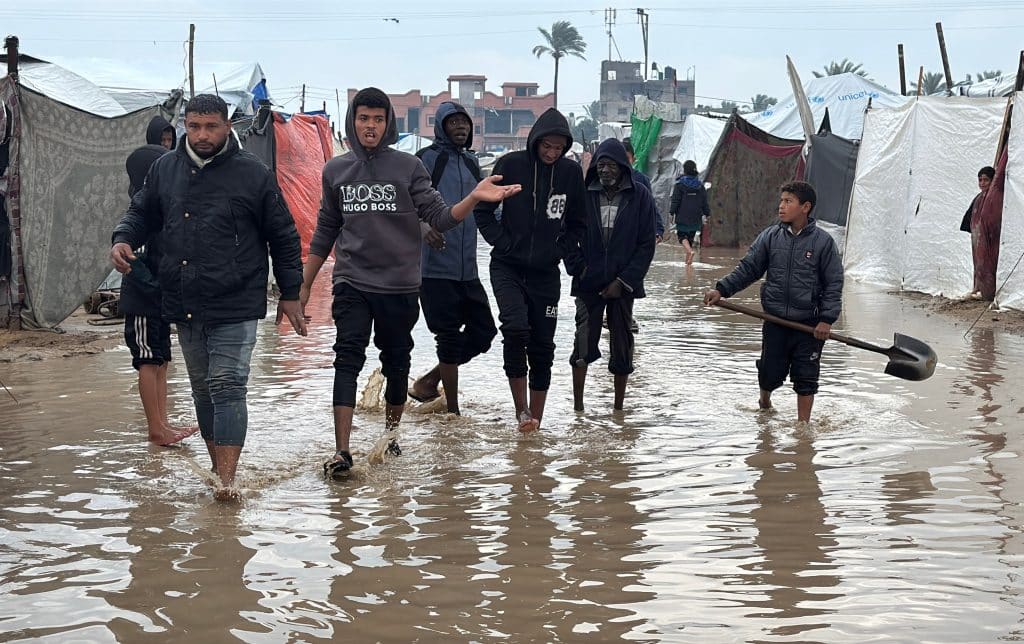
Amid disastrous flooding of displacement camps in Gaza, Israel bans humanitarian organizations providing relief

As winter storms batter Gaza and cause catastrophic flooding for millions of displaced Palestinians, Israel has banned 37 international humanitarian organizations from working in the Strip, which is reliant on these organizations for survival.
January 1, 2026 
MONDOWEISS


Palestinians struggle with flooding after heavy rain hits Deir al-Balah, central Gaza, December 11, 2025. (Photo: Ahmed Ibrahim/APA Images)


When Yahya Oweis, 28, learned that severe weather was expected to hit the Gaza Strip, including heavy rain and strong winds, he did everything he could to secure his tent to prevent it from being torn from the ground or collapsing on him and his family of five. But within the first hours of the storm on Sunday evening, his tent was uprooted. Oweis and his children were forced to seek shelter in a relative’s tent to ride out the storm.

For the third consecutive time this winter, the tents of displaced Palestinians across the Gaza Strip have been battered and flooded by strong winds and rain. With tens of thousands forced to live in makeshift shelters, the rainfall has come to mirror the violence of Israel’s genocide, which Palestinians in Gaza say has continued in a new form during the ongoing ceasefire between Israel and Hamas.

Oweis says that he hadn’t expected the severe cold front that arrived in Gaza early last week would be this bad. “At the start of the cold front, I thought it would be mild and that we would be able to stay in our tent without having to seek shelter elsewhere,” he told Mondoweiss. “I thought I could keep my family and children safe. But within the first hours, the wind tore the tent from the ground, and rain poured down on my children. I didn’t know what to do or how to protect my family.”

He said he spent several hours trying to re-erect and secure the tent, but his children’s cries from the cold and rain ultimately forced him to abandon it and move to nearby family tents.

What is unfolding across Gaza is not simply the result of winter storms, but the product of Israel’s continued policy of denying access to humanitarian aid meant to provide Palestinians with shelter, food, medicine, and other forms of relief. Now Israel is also curtailing the work of 37 international humanitarian organizations attempting to provide relief to the people of Gaza, who have endured over two years of genocidal war and live in conditions designed to bring about their destruction.

Israel’s continued closure of border crossings, its restrictions on the entry of aid needed for reconstruction, and its ban on prefabricated homes and tents are the primary drivers of the recurring disasters that continue to result from severe weather in Gaza. In addition, local aid workers in Gaza told Mondoweiss that the Israeli army deliberately opened dams inside Israel that ended up flooding Gaza, further exacerbating humanitarian conditions.

“For many years, the occupation has opened dams and water-collection areas on the Israeli side toward the Gaza Strip,” said Amjad Al-Shawa, head of the Network of Local NGOs in the Gaza Strip. “In recent days, during the heavy rains that hit Gaza, and as reservoirs inside Israel filled up, the Israeli army opened the dams toward the Wadi Gaza area, which is home to thousands of tents. This triggered a new wave of displacement, leaving many families without their belongings or shelter.”

Al-Shawa explains that displaced Palestinians are concentrated primarily in Gaza’s western coastal areas, while Israeli forces control the higher-elevation eastern regions, from which floodwaters naturally flow westward.

“In the absence of equipment and materials to prevent flooding, combined with the destruction of sewage networks and Israel’s ban on the entry of tents and caravans, the Gaza Strip still needs around 300,000 tents,” Shawa added. “Only 60,000 tents have been allowed to enter.”

Shawa stresses that tents in and of themselves are not sufficient solutions, yet Israel continues to block even these minimal forms of shelter to Gaza’s population.

Shawa explains that the Israeli army also restricts the entry of heating materials needed by residents living in their makeshift shelters. “There is a complete lack of heating in Gaza. There is no electricity or gas to cope with the severe cold,” he said. “Many families have lost their clothes and blankets and have no alternatives. A large number of children have already died because of the drop in temperatures.”

“This scene will continue to repeat itself as long as Israel prevents the entry of essential aid and maintains control over the crossings,” he added.
New restrictions on international organizations

On the first day of 2026, Israel barred 37 international humanitarian organizations from obtaining permits to operate in the West Bank and Gaza. All of the affected organizations provide humanitarian services, delivering essential and, in many cases, life-saving services to the population of Gaza. Even before the genocide, roughly 80 percent of Gazans depended on aid to fulfill basic needs, according to pre-war figures.

But since last March, Israel has attempted to impose a new regime for registering international organizations through what it describes as the “security screening” of Palestinian staff employed by these institutions, Shawa says.

According to a mid-December statement by the United Nations Office for the Coordination of Humanitarian Affairs (OCHA), this new registration system “relies on vague, arbitrary, and highly politicized criteria and imposes requirements that humanitarian organizations cannot meet without violating international legal obligations or compromising core humanitarian principles.”

“This constitutes a violation of humanitarian work and international law,” Shawa said. “It endangers the lives of local staff and represents blatant interference in the work of these institutions, as the criteria imposed by the occupation are security-based rather than professional. Requiring the sharing of this information is also a violation of employees’ privacy.”

Al-Shawa noted that the decision coincides with the implementation of the second phase of the ceasefire announced by U.S. President Donald Trump, further constraining humanitarian operations in Gaza and compounding an already catastrophic situation.

“This will also lead to Israel blocking dozens of aid trucks belonging to these organizations at a time when Gaza’s population is already facing multiple and severe crises,” Shawa said, adding that international organizations have largely refused to comply with Israeli demands. Israel is now moving to silence them and shut down their offices in Jerusalem, he explains.

The consequences, Shawa maintains, are life-threatening, since international organizations operate core medical and relief systems across Gaza. According to OCHA, “INGOs run or support the majority of field hospitals, primary healthcare centers, emergency shelter responses, water and sanitation services, nutrition stabilization centers for children with acute malnutrition, and critical mine action activities.”

Shawa says that their removal would severely undermine efforts to address widespread malnutrition, with new cases detected daily as the long-term effects of the famine Israel imposed on Gaza over the better part of a year continue to reverberate into the present.

“Without these centers and institutions, tens of thousands of people in the Gaza Strip would face a direct threat to their lives,” Shawa warned.
Hamas congratulates Fatah on 61st anniversary, calls for stronger national unity

January 2, 2026 
https://www.middleeastmonitor.com/


Fatah Commissioner of National Affairs and Fatah Central Committee member Azzam Al-Ahmad (2nd R) and Hamas Political Bureau member Saleh Aruri (2nd L) sign an agreement on building a consensus in Cairo, Egypt [Ahmed Gamil/Anadolu Agency]

The Islamic Resistance Movement (Hamas) has congratulated the Palestinian National Liberation Movement (Fatah) on the 61st anniversary of its founding, calling for strengthened joint national action.

In a statement issued on Thursday, Hamas spokesman Hazem Qassem said the founding of Fatah marked a pivotal moment in the Palestinian national struggle and played a significant role in advancing the Palestinian people’s fight for freedom, independence and the right of return.

Qassem stressed the importance of translating slogans of national unity into concrete action on the ground, particularly in light of what he described as escalating threats facing the Palestinian cause, most notably in the Gaza Strip.

He concluded by paying tribute to Fatah’s martyrs, foremost among them the late Palestinian president Yasser Arafat, as well as all martyrs of the Palestinian people.


Israel and International Football: A Breaking Point?

02.JAN.2026 


Introduction

It is a rare occurrence for the International Federation of Association Football (FIFA) to exclude a nation from the World Cup; it is rarer for a participating country to boycott the World Cup. Both were on the table with the upcoming World Cup in the United States in the summer of 2026, concerning the nation of Israel. For this article, the main root of this conflict started in 2023. Israel’s conduct in the war has prompted widespread international criticism, with some governments, legal scholars, and human rights organizations alleging violations of international humanitarian law, including claims of genocidal intent — claims Israel strongly disputes. International responses to Israel’s military campaigns have become increasingly fragmented, with several United Nations bodies and officials condemning Israel’s conduct in Gaza, while others, including key member states, continue to defend its actions.

As part of this backlash, a Spanish lawmaker, Patxi López, stated that there is a possibility that Spain will reconsider its participation in the 2026 World Cup if Israel participates. Coming off their recent European Championship in 2024, Spain has a high position in world football, and its absence in this tournament would have been second only to Argentina, the standing World Cup champions. The discussion of whether Israel should be excluded from the 2026 tournament was extensive, but a loss to Italy ultimately ended Israel’s World Cup aspirations. Yet, the topic remains relevant. FIFA did not need to make an immediate decision on Israel’s status, as it was made for them, but perhaps they should have acted anyway.

Background

While rare, the exclusion of nations from the World Cup has a historical precedent on a case-by-case basis. There had been renewed calls for also banning Israel from this edition of the World Cup, including a statement by Spanish Prime Minister Sánchez, who cited the exclusion of Russia from the 2022 and 2026 World Cups due to the nation’s invasion of Ukraine. The first nation to be banned was Germany in 1950, following broader post-war sanctions after  World War II. Japan was banned for the same reason. South Africa was excluded because of Apartheid, and Yugoslavia for conflicts during its breakup. Mexico, Chile, and Myanmar were all banned for non-political issues: Mexico for having overage players, Chile for player misconduct, and Myanmar for an unjustified withdrawal in the qualifying rounds. In the last ten years, Kuwait, Indonesia, Russia twice, Pakistan, and Congo have all been banned; the last three all for the 2026 World Cup. While most of these were not nearly as political a situation as Israel’s, the exclusions of Germany, Japan, and Russia were all conflict-related.

The Conflict at Hand

This raises the question of how international football governing bodies determine when allegations of severe violations of international law warrant exclusion from competition. The move to ban Israel from football competitions had been growing, especially within the Union of European Football Associations (UEFA), which hosts competitions like the European Championship and the annual Champions League. In fact, over 30 legal experts had requested that UEFA prohibit Israel and Israeli clubs from engaging in current competitions. On the national level, beyond Spain, “twelve Middle Eastern football associations have called for Israel’s national team to be banned over the war,” and the Turkish Football Federation specifically sent a letter to FIFA, UEFA, and leaders of the world’s football federations, demanding Israel be banned from all sporting events. Ireland, Scotland, Slovenia, and Norway all similarly refuse to play in Israel. While this isn’t specific to the World Cup, global boycotting of Israel in football is widespread. Israel was facing backlash and exclusion from the tournament entirely, and, if the nation had not qualified for the World Cup and were not banned, boycotts from numerous nations would have remained a possibility.

Such boycotts would have posed significant challenges for the World Cup, a cultural and global phenomenon, raising difficult questions about whether disruptions can serve as a tool of political pressure. It is clear that to many nations, international issues take precedent; for instance, the Turkish Football Federation’s president, Haciosmanoglu, stated that “football has always been far more important than a sport.” For Haciosmanoglu, “it’s a universal language that brings together different cultures, fosters friendships, and strengthens the bonds of solidarity among people. Guided by these values, we feel compelled to raise our deep concern regarding the unlawful situation being carried out by the State of Israel in Gaza and its surrounding areas.” Sports have long been used as a social and political tool, from Jackie Robinson breaking baseball’s color barrier to Didier Drogba pleading for peace in Côte d'Ivoire in the 2006 World Cup. International sports have served as a platform for political expression before global audiences. Spain’s position in the World Cup makes this even more of a relevant issue and one that does not seem to have a resolution soon.

In the Wider World

In the world of geopolitics, Israel’s potential exclusion represents a larger global system of public action and outrage. The conflict in Gaza, including allegations of genocide that remain legally contested, is an issue first between Israel, Hamas, and the Palestinian people, and second between those players and other global actors that play a role, like the United States or Lebanon. As technology and, hence, information accessibility, enhance, the world is more aware of global tensions. Most nations don’t play a direct role in this conflict, yet with their awareness of the conflict in Gaza, those nations, and especially their people, feel a responsibility to take action for what’s aligned with those nations’ values. Middle Eastern countries, sharing a Muslim identity with the Palestinians, took up the issue and called for Israel’s exclusion, but the primary mover of the issue was the non-Muslim nation, Spain, which may be attributed in some sense to its pro-Palestinian stance and its history of politicizing sports. Cultural backgrounds certainly help, but these issues are appealing to audiences vastly disconnected.

While the potential Israel and 2026 World Cup tension has now disappeared, this sort of conflict could arise again in the future. Football, as one of the most uniting global events, provides an outlet for nations not directly involved in the war to express symbolic discontent when otherwise it’s difficult to make a public stand for an issue. Israel is heavily scrutinized, and its role in future competitions could still be endangered.

Yet, not the entire world is fighting against Israel; some are defending the nation. Before Israel lost to Italy, Trump’s administration expressed a commitment to stopping FIFA from banning Israel from its competitions. A spokesperson from the State Department signaled opposition to efforts to exclude Israel from international sports competitions. As a global superpower, the United States’ word holds weight in FIFA; this sort of international pressure could stop FIFA from taking action against Israel. Especially in regard to this tournament, the United States, as the host, would have had great leverage if Israel had qualified for the tournament. The divergence between US policy and positions held by other states highlights broader tensions between great powers and multilateral institutions. The US-Israel-FIFA tensions and potential tensions could represent a global stand against great power influence.

The next few years of global football will be shaped by geo-political tensions relating to Israel from both sides, though it seems geo-political tensions in general could play a large role in the future of the world’s sport. With calls from various nations around the world for Israel’s exclusion from this World Cup and continued protests against Israeli football, this issue is only going to rise. The sport continues to become more politicized, and Israel’s situation continues to become a higher point of tension. It’s up to the world’s nations and world football to decide the line, if there is one, between politics and the everyday sport of football.

2025: Illegal Israeli settlement expansion in occupied West Bank hits record high

Israel approves plans for 41 new illegal settlements in the occupied West Bank in 2025, the highest number on record, according to Peace Now


Rabia Ali |02.01.2026 - TRT/AA


ISTANBUL

2025 closed as a record-breaking year for illegal Israeli settlement expansion in the occupied West Bank, with Israel’s far-right coalition approving an unprecedented number of new settlements and housing projects – a push rights groups say is aimed at annexing the territory and blocking Palestinian statehood.

According to Israeli settlement watchdog Peace Now, the approvals finalized this year capped an acceleration that began under the current government, surpassing any period since the Oslo Accords were signed in 1993.

“This is nothing to compare to previous governments,” Yonatan Mizrachi of Peace Now’s Settlement Watch Team told Anadolu.

“The goal of this government … is to prevent a political solution based on a two-state solution,” he said.

41 settlements approved in 2025


Peace Now said plans for 41 new illegal settlements were approved in 2025, making it the most extensive single year of settlement approvals on record. The figure includes both newly announced settlements and the retroactive legalization of previously unauthorized outposts.

In May, Israel’s Security Cabinet approved the construction of 22 new illegal settlements on Palestinian land in the occupied West Bank – the largest expansion in decades.

The move included the reestablishment of settlements in Homesh and Sa-Nur, which were dismantled under Israel’s 2005 unilateral disengagement from the Gaza Strip.

On Dec. 21, the Security Cabinet approved an additional plan to legalize 19 more settlements in the occupied West Bank, some newly established and others long-standing outposts now granted formal status.

Mizrachi said the current government moved quickly after taking office, legalizing 10 outposts in early 2023 and transforming nine of them into settlements.

Outposts are illegal even under Israeli law, while settlements are considered legal by Israel despite being illegal under international law.

Altogether, 68 settlements have been approved, legalized or initiated over the past three years, Peace Now said.

“This does not mean that all 68 settlements have already been established” Mizrachi said. “It means the process has begun – with government support, different planning committees and authorities."

Spread across entire West Bank

The expansion is geographically wide-ranging, extending into areas where no settlements previously existed.

"Sixty-eight settlements that will be built according to the Israeli plan from the south to the north or from the north to the south,” said Mizrachi. “Including areas that today we don't have any settlements like areas around Jenin, around Hebron.”

"It's all over the West Bank actually,” he added.

In early 2023, there were more or less 140 settlements in the occupied West Bank, Mizrachi said. With recent approvals, that number has risen to 208.

The total number of Israeli settlers in East Jerusalem and the West Bank now stands at about 750,000.

Settlement expansion has also accelerated through construction approvals.

Peace Now on its website said Israeli authorities advanced plans for 28,163 settler housing units in 2025 – the highest figure ever recorded.

On the final day of the year, Israeli authorities approved a plan allowing settlers to return to Sa-Nur, greenlighting 126 housing units at the site evacuated in 2005, according to Israeli media.

The move was enabled by amendments introduced by the current government to the Disengagement Law, lifting restrictions on Israeli presence in parts of the northern West Bank.

Peace Now said the approval marks a return to settlement activity deep inside the northern West Bank, in densely populated Palestinian areas where settlers had not previously been present.

Blocking Palestinian statehood

Mizrachi said settlement expansion is central to the government’s strategy to prevent Palestinian statehood without formally declaring annexation.

“In the last three years, Israel has taken many steps – bureaucratic steps, advancing settlements, developing the West Bank – to increase the number of Israeli settlers,” he said.

“The aim is to prevent a Palestinian state in any political solution, because there will be so many settlements and so many locations with an Israeli presence that it would be much more difficult to evacuate.”

He said pressure from settler movements has intensified, pushing the government toward de facto annexation while avoiding a formal declaration due to international and US pressure.

B’Tselem, the Israeli Information Center for Human Rights in the Occupied Territories, spokesperson Yair Dvir said the settlement drive is accompanied by the forcible displacement of Palestinians.

"Israel continues to advance ethnic cleansing in the West Bank, both through the construction and retroactive legalization of outposts and new settlements, and through the forcible displacement of Palestinian communities and the violent takeover of vast areas of Palestinian lands,” he told Anadolu.

Concerns for 2026

Looking ahead, Mizrachi said settlement expansion is likely to continue into 2026, an election year in Israel.

"We are assuming that the advancing of settlement, house units, financial support to the settlers will continue in 2026 – it might increase or might not,” he said. “But definitely, the pattern that we have seen in the last three years will continue."

He added that since October 2023, dozens of Palestinian communities have been forced to flee due to settler violence.

"Many times, an outpost is built next to the Palestinian community, making it more tense for the Palestinians to stay there,” he said. “We still see a lot of settler violence, much of it coming from illegal outposts."

Mizrachi warned the trajectory is deepening instability.

“Instead of going toward a political solution that would mean withdrawing from the West Bank,” he said, “we are just going deeper into a more problematic situation.”