Showing posts sorted by relevance for query ENVIRONMENTAL POISONING AGENCY. Sort by date Show all posts

Monday, May 13, 2024

Northern Ireland Assembly supports calls for an independent environment agency

Shauna Corr
Mon, 13 May 2024 

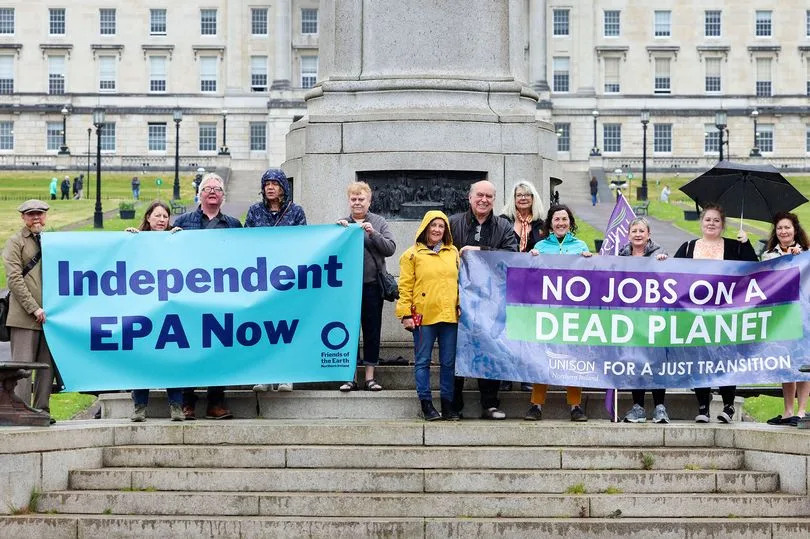
Campaigners calling for an independent environment agency ahead of Stormont debate -Credit:Justin Kernoghan


Stormont's environment minister has been urged to bring forward legislation to establish an independent environmental protection agency for Northern Ireland.

Campaigners gathered outside Stormont ahead of Monday's Assembly debate on a motion put forward by opposition party the SDLP.

In 2020’s New Decade New Approach deal, it was promised “the Executive will establish an Independent Environmental Protection Agency” to oversee issues like the climate crisis, plastic pollution and our transition to a zero-carbon society.

Read more: Belfast cllr wants minister to reinstate higher fines for farm pollution

But instead of forming a specific body here, former DAERA minister Edwin Poots instead opted to bring Northern Ireland under the UK Office for Environmental Protection.

While the OEP is investigating NI issues like ammonia advice to councils it has not been able to probe DAERA’s environmental assessment regime because of funding cuts.

Campaigners, environmental NGOs and some politicians have long been calling for an independent EPA to fully hold government to account on all environmental issues, including the crisis now facing Lough Neagh.

The SDLP’s motion urged the Assembly to “declare an ecological and biodiversity crisis” and acknowledge and address ongoing issues like agricultural run-off, wastewater infrastructure, invasive species and address Lough Neagh management.

SDLP MLA Patsy McGlone ‘moved the motion’. He said: “It’s with some disappointment that I bring forward this motion today.... because we should have had an independent environmental protection agency in place already.”

He said the SDLP has supported an independent environmental protections agency for around 20 years and hit out at DUP opposition to the group and a UUP amendment to the motion, adding: “What’s strange is that the Ulster Unionist Party used to support an independent environmental protection agency.”

Tom Elliot moved an amendment for the UUP calling for a review of agencies already in place. He said he welcomes the motion and that the party has not changed its position.

He added: “All I’m asking is that we have a proper organised and structured review to see what agencies we don’t need.

“It’s going to take a lot more than an independent EPA to stop... blue green algae... or indeed getting the sale of Lough Neagh from a private owner.”

The chamber heard how NI’s water quality has been declining since 2015 while species numbers are declining and natue is under increasing pressure.

Linda Dillon spoke in support of the motion for Sinn Fein, saying: “Declines in biodiversity are intrinsically linked to climate change.”

She added: “Establishing an independent environmental protection agency... is the right thing to do.

“The OEP is simply not fit for purpose as an environmental watchdog here.”

The DUP’s Michelle McIlveen supported the UUP’s amendment calling for a review of bodies already in place, she added: “Before we add another body on top of what we have, we need to have a proper review of our environmental governance.

“Only then can we make a determination on where the gaps are and how those can best be filled.”

Alliance Party’s John Blair said they are “content to support the motion” and that every policy and pratice impacting Lough Neagh should be reviewed - including sand dredging which was approved by an SDLP minister.

He added: “Northern Ireland remains the only part of the UK and Ireland without an independent environmental protection agency.”

People Before Profit MLA Gerry Carroll said: “The reason we need an Independent Environmental Protection Agency is simple.

“People do not trust Stormont to hold those poisoning Lough Neagh and elsewhere to account.”

Friends of the Earth led the calls outside Stormont for an independent EPA.

Its director, James Orr, said: “We have been waiting over 20 years for legislation to be brought before the Assembly and we can’t wait any longer. Our land, water and soils are at breaking point.

“Communities who love where they live are losing faith in politics.

“We are at a crossroads. There can be no more excuses.

“The Minister must introduce legislation to the Assembly without delay.”
Minister responds

Patsy McGlone introducing his motion

Stormont’s Environment Minister, Andrew Muir, says he has been a long time advocate of an independent environment agency in NI but that “good environmental governance is more than a single issue... and taking a whole system approach”.

He says his officials have completed a report on the issue which he is currently considering.

In relation to the issues facing Lough Neagh, he said he requested the reallocation of resources within his department to ensure prioritisation of efforts to tackle its environmental problems.

He added: “I received £1.6 million of capital (funding in the budget) but I didn’t receive any resource, so the budget allocation to my department was disappointing, but I’m not going to just stop there.”

“What I’m doing is engaging officials to see how we can reallocate resources within the department so we can put the necessary resources into this area.

“We need to invest in turning the situation round in Lough Neagh.”

The minister said ownership models are being explored for the lough and that he prefers a community ownership model. He told the Assembly he has commissioned scientific research to assess the effect of removing sand from Lough Neagh.

The amendment fell and the motion passed.

Thursday, August 06, 2020

TRUMP REGIME IS A CRIME AGAINST HUMANITY

Inconsistent EPA regulations increase lead poisoning risk to kids, study finds

BROWN UNIVERSITY
PROVIDENCE, R.I. [Brown University] -- Two federal environmental standards regulating lead hazards in homes and child care facilities have different maximum thresholds, a discrepancy putting more than 35,000 kids in the United States at increased risk of lead poisoning.
That's according to a new study led by a Brown University researcher as the U.S. Environmental Protection Agency (EPA) moves to revise protective standards for dust lead levels on floors and windowsills in buildings constructed before 1978. 
"Lead exposure presents a major risk to hundreds of thousands of children across the nation, and it's imperative that federal EPA regulations offer a clear and consistent standard to reduce that risk," said Joseph Braun, an associate professor of epidemiology at Brown. "Currently, these standards are counterproductive to public health."
In 2019, the EPA tightened the standard for the amount of residential dust lead considered hazardous to children from 40 micrograms per square foot (μg/ft2) to 10 on floors, and from 250 μg/ft2 to 100 on windowsills. The change came after a federal appeals court ordered the agency to reduce dust lead hazard standards after a 2016 lawsuit filed by environmental groups.
Traditionally, the residential standard had been the same as the clearance standard for dust lead levels after completing lead abatement work -- yet despite the more aggressive standard imposed after the court's order, the EPA left the post-abatement clearance standard where it has stood since 2001. Both standards fall under the Toxic Substances Control Act, which authorizes EPA to impose restrictions related to chemical substances.
Conceivably, a risk assessment could identify a dust lead hazard above 10 μg/ft2 but below 40 μg/ft2 on the floor of a home where there is a child with lead poisoning. Braun, an expert on children's environmental health, said an abatement contractor could theoretically do nothing, but given the discrepancy in standards, the unit would pass the clearance. 
"When I read this, initially, I thought this is absolutely crazy," Braun said. 
So Braun and his coauthors wanted to find out how many extra cases of lead poisoning would result from the post-abatement clearance standard being higher than the dust lead hazard standard. 
Their study, published on July 28 in Pediatric Research, found that children in homes with floor dust lead loadings between 10 and 40 μg/ft2 had nearly four times the risk of lead poisoning compared to children from homes with floor dust lead loadings at or under 10 μg/ft2. They estimated that 36,700 cases of childhood lead poisoning - nearly 7% of U.S. children between the ages of 1 and 5 with lead poisoning -- were attributable to this regulatory discrepancy. 
Dust from lead-based paint is a common cause of lead poisoning in young children, Braun said, and so the implications of the double standard are significant. Their greater hand-to-mouth behavior makes them vulnerable to lead exposure.
"I have a two-and-a half year old who puts everything in his mouth," Braun said. "That's how they explore their environment at this age."
Lead poisoning can cause learning disabilities and behavioral problems that last a lifetime and affect kids from all social and economic levels, though those living at or below the poverty line in older housing are at greatest risk. Earlier work by Braun and his colleagues found higher blood lead levels and risk of lead poisoning among Black children compared to white.
For the new study, the researchers looked at 250 children from Cincinnati living in homes built before 1978 -- the year lead-based paints were banned for residential use -- whose mothers participated in a longitudinal pregnancy and birth cohort study between 2003 and 2006. 
Researchers took samples of floor and interior windowsill dust lead loadings with wipes over a 1-square foot area when participants joined the study, when their children turned 1 year old and again when they turned 2. Blood samples were also collected from the children at these same times.
The study adds to a vast body of scientific research guiding housing and environmental policymakers. But Braun points out that the bulk of these studies were completed 20 and 30 years ago when lead exposure was much higher.
"The fact that we're still seeing these relationships at contemporary levels of lead exposure indicates that this is still a significant problem, so that's the real contribution here," Braun said.
The EPA has issued a proposed rule to align the post-abatement clearance standard with the tighter standard revised in 2019. Its two-month public comment period ends on Aug. 24. An EPA spokeswoman said Braun's study will be considered when developing a final rule along with all other feedback received.
Braun said the proposed change still won't go far enough to protect children. In 2012, the U.S. Centers for Disease Control and Prevention acknowledged there is no known safe blood lead level.
The study found children were at 45% higher risk of having blood poisoning at the newly revised floor dust lead hazards of 10 μg/ft2 compared to a more stringent standard of 5 μg/ft2.
"Reducing sources of lead exposure in children is imperative to optimize children's health," Braun said. 
###
Braun's coauthors included researchers from University of Cincinnati College of Medicine, National Center for Healthy Housing, University of Illinois at Chicago, Macquarie University and Simon Fraser University. The Cincinnati-based longitudinal study was supported by grants from National Institutes of Environmental Health Sciences (P01-ES011261 and R01-ES014575) and U.S. Environmental Protection Agency (RD-83544201).

Tuesday, August 12, 2025

ENVIRONMENTAL POISONING AGENCY

The EPA Is Abandoning the 10 Commandments of Climate Policy

By repealing the Endangerment Finding, Administrator Lee Zeldin is disabling the central moral and legal framework designed to keep us safe and healthy.


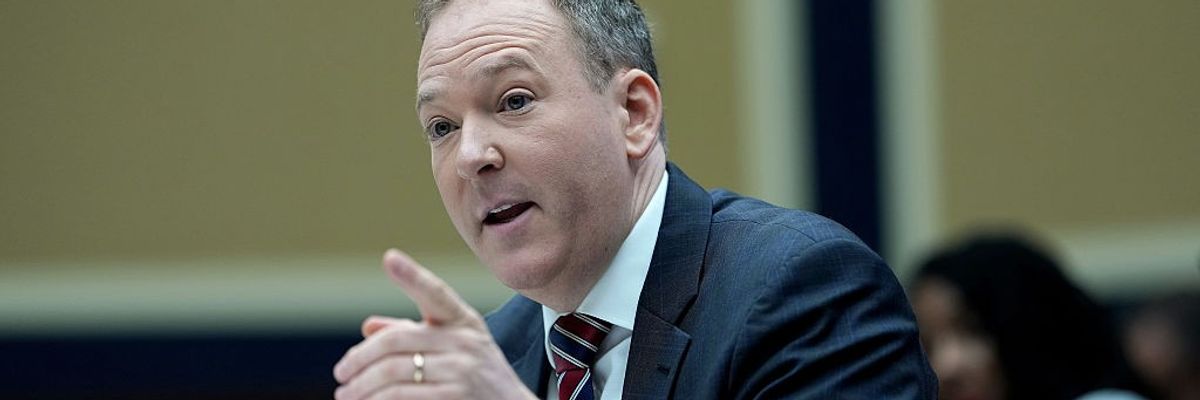
Environmental Protection Agency Administrator Lee Zeldin testifies before the House Committee on Energy and Commerce Subcommittee on Environment in the Rayburn House Office Building on May 20, 2025 in Washington, D.C.
(Photo: Kevin Dietsch/Getty Images)

Rabbi Jennie Rosenn
Aug 12, 2025
Common Dreams

The Environmental Protection Agency’s decision last month to repeal the Endangerment Finding is like tossing out the 10 Commandments.

That might sound hyperbolic. But sadly, it isn’t. After months of relentless anti-environmental regulatory efforts at the EPA, Administrator Lee Zeldin is now tearing out the foundation of our country’s climate regulatory framework. Known as the “Endangerment Finding,” this 2009 document is the scientific basis for regulating greenhouse gas emissions. By abrogating that finding, Zeldin and the EPA are essentially stripping away our government’s ability to regulate the emissions that are heating our planet. It is not only a profoundly misguided decision, it is one aimed at destroying the legal framework our country has developed to drive a coherent climate policy.

Interestingly, back when he was a congressman, Administrator Zeldin supported some climate regulations. At Dayenu, the leading Jewish climate organization that I direct, we had actually hoped that the first Jewish head of the EPA might honor the most basic of Jewish values—like pikuach nefesh (saving a life)—and pursue environmental policies that support a more livable future in the face of a fast accelerating climate crisis.

Instead, Administrator Zeldin has embarked on an almost unconceivable path. Since taking office earlier this year, he’s overseen the wholesale dismantling of the environmental policy framework designed to keep Americans safe. Scores of regulations have been repealed, imploding the basic legal and regulatory structure of American environmental policy. The coup de grace, though, has been his decision last month to abandon the Endangerment Finding.

The Endangerment Finding translates the lived reality of the climate threat—namely, that greenhouse gas emissions pose a threat to our health and well-being—into a legal framework that has enabled us to begin mounting a substantive response.

Like the 10 Commandments, the Endangerment Finding is not only a legal framework, it is also a codification of basic truths. The commandment not to murder (lo tirzah), for example reflects a truth: that it is wrong to wantonly kill another human being. The commandment institutionalizes a basic moral precept. The same goes for the Endangerment Finding. By now, it should be blindingly obvious to us all that the threat to our climate is here and real. Whether or not we choose to accept that truth, we are all being impacted by climate change. From wildfire smoke in New York, to ravaging hurricanes in Florida, to the wildfires in Los Angeles, to floods in Texas, to summers that are each hotter than the last. We now know, at the most intrinsic level, that our world is not the same as it was five years ago. Or 50. The climate is changing, and we as humans are responsible.

The Endangerment Finding translates the lived reality of the climate threat—namely, that greenhouse gas emissions pose a threat to our health and well-being—into a legal framework that has enabled us to begin mounting a substantive response. True, climate regulations have oftentimes not gone far enough. The first Trump administration did terrific damage to crucial pieces of environmental policy passed under the Obama administration. But what is happening under Administrator Zeldin takes our nation to an infinitely more reckless place.

Administrator Zeldin claimed that the Endangerment Finding was “the holy grail of climate change religion.” This not only makes a mockery of religion, it distorts the objective science and obvious moral framework at hand. As people of faith, we are concerned with the fundamental principles and values of our society. Administrator Zeldin is weaponizing the very concept of religion to suggest that those of us confronting the climate crisis are fearmongers, that the lived realities of millions of Americans harmed by climate change can simply be ignored. But his language is a smokescreen. We know what the truth is here. The EPA is essentially taking the 10 Commandments out of the Bible—they are disabling the central moral and legal framework designed to keep us safe and healthy.

Administrator Zeldin is knowingly courting disaster. As an administrator, as an American, and as a Jew, he must do better. It is not too late to reverse course.

Friday, April 15, 2022

Lead toxicity risk factors in Philadelphia

Two studies led by the University of Pennsylvania identify factors that correlate with high blood-lead levels in children, pointing to environmental justice issues that disproportionately fall on children of color and poorer communities in the city.

Peer-Reviewed Publication

UNIVERSITY OF PENNSYLVANIA

Philadelphia is the poorest large city in the United States. It’s also unusual in having a high proportion of homeowners compared to renters. Taken together, this means that poorer homeowners may lack the funds to maintain and make needed repairs to their homes, leaving them at risk of a variety of related health issues, including exposure to lead.

Two papers led by a group at the University of Pennsylvania explore how factors such as household income, building age, building code violations, proximity to former lead smelters, and other factors align with lead-toxicity risk, as evidenced by elevated blood-lead levels in children 6 years old and younger and lead content in soil samples from around the city.

In the first study, published in 2021 in the International Journal of Environmental Research and Public Health, the researchers used geospatial tools to develop a lead-toxicity-risk index that identified eight ZIP codes, mainly in North and West Philadelphia, as the most burdened by lead toxicity. The second study, published earlier this year in GeoHealth, took a finer-scale look at some of those at-risk communities, using census tract data. That analysis underscored the link between housing code violations and demolition of older homes to higher lead-exposure risks.

“More than 80% of the housing stock in Philadelphia was built before 1980, meaning that they likely contain lead paint,” says Reto Gieré, senior author on both papers and a professor in Penn’s Department of Earth and Environmental Science in the School of Arts & Sciences. The United States banned lead paint for residential use in 1978.

“Also, the city has had special policies to build affordable homes for low-income residents, so the rate of private homeownership is much higher than in most other cities,” he says. “While that is beneficial in some regards, we also found a correlation between the percentage of children with high blood-lead levels and homeownership.”

The findings underscore the role of economic and racial disparities when it comes to lead toxicity. The U.S. Centers for Disease Control and Prevention recognizes that communities of color and low-income populations are at a higher risk of lead poisoning.

“Our data clearly show that lead exposure and poisoning are not only an environmental health problem but also an environmental-justice issue,” Gieré says.

Lead risks, from the ground up

Not only are children more susceptible than adults to lead’s toxic effects, they are also more likely to get exposed, playing outside in soil that may contain lead, or on the floor inside near lead-containing dust. In addition, young children often put objects or their hands in their mouths, increasing the likelihood of ingesting lead.

In Philadelphia, the percentage of children with elevated blood-lead levels (a concentration above 5 micrograms of lead per deciliter of blood) appears to be on the decline, with rates falling by half or more since 2008. Yet the lasting harm of lead poisoning to children’s cognitive capacities and other aspects of their development, as well as the unequal racial impact—Black children are more likely to have elevated blood-lead levels than other children—make it an issue that demands action, the researchers say.

For years, Richard Pepino, an instructor at Penn and coauthor on the recent studies, has taught an Academically Based Community Service course on lead in Philadelphia. His students have visited schools and other sites in the city, collecting soil samples and testing them for lead content. In addition, Penn’s Center of Excellence in Environmental Toxicology has led soil sample collection and testing across the city, mapping the results.

Combining these 1,300-plus samples with more than 1,270 soil samples from the U.S. Environmental Protection Agency (EPA) soil library, Penn researchers and a team from Haverford College analyzed them with respect to other publicly available data such as household median income, percentage of homes built before 1980, and rates of elevated blood-lead levels in children age 6 and younger. The group investigated the datasets for possible correlations and created a series of thematic maps of Philadelphia to highlight areas with highest risks of lead exposure.

A major outcome of the first paper, led by Michael O’Shea, Gieré’s former graduate student who now works for the EPA, was the clear connection between demographic factors like household income and race with elevated blood-lead levels. According to the lead index, newly developed during this research, the highest-risk ZIP codes were 19121, 19132, 19133, 19134, 19140, 19141, 19143, and 19144 in North and West/Southwest Philadelphia.

The study also revealed certain limitations of the researchers’ dataset of soil samples, including unevenness in terms of numbers: Some ZIP codes had nearly 200 samples each, whereas others had fewer than five.

“What came out very clearly was that we need to do more testing,” says Gieré. “Some areas, like the Strawberry Mansion neighborhood, had fairly few soil datapoints but are high-risk zones.”

Unequal burdens

Building on those results, the GeoHealth paper focused on the high-risk ZIP codes, this time using census tract data to see whether new patterns would turn up on this finer-scale view. Led by Haverford undergraduate Hasibe Caballero-Gómez, the study found that high rates of housing code violations and demolitions were strongly correlated with elevated blood-lead levels.

“Demolition is an interesting risk factor that has not previously been carefully considered,” says Marilyn Howarth, a study co-author and director of community engagement at the Center foir Excellence in Environmental Toxicology. “Demolition liberates all kinds of particulates from the contents of building materials, and in this case those building materials include many layers of lead paint, and that lead paint may already be in disrepair or fragmented. That gives the material a head start, allowing it to travel to adjacent properties, to streets and sidewalks, to people’s backyards and front porches, and it has the ability to be tracked into homes.”

Gieré describes this as a vicious circle: Poverty prevents residents from completing necessary home maintenance, which leads to housing code violations and exposed lead paint, in some cases triggering demolitions that increase the amount of lead dust in the local environment. 

Both studies also examined the influence of a historic network of smelters, known sources of lead, but lacked the sampling strength to tie their impact to current public health metrics and soil-lead levels. Future effort will go into collecting samples from currently undersampled but high-risk areas of the city. But for now, the researchers say their findings point to specific and localized communities in Philadelphia that require support and intervention to reduce exposure to lead.

Pepino is proud of what Penn has accomplished working with citywide collaborators to address the dangers of lead exposure. But, as he reminds his students, “childhood lead poisoning is a life-long burden that leaves a permanent mark on vulnerable children of color and society at large.”

The team believe their reports should inspire action.

"My hope is that the city will read this article and then specifically direct resources to the identified high-risk areas, which should be the priority of future lead-poisoning prevention intiatives,” says Gieré.

Reto Gieré is a professor in the School of Arts & Sciences’ Department of Earth and Environmental Science.

Marilyn Howarth is a physician and an adjunct associate professor of systems pharmacology and translational therapeutics. She is also director of community engagement at the Center of Excellence in Environmental Toxicology (CEET) and deputy director of the Philadelphia Regional Center for Children’s Environmental Health, both in Penn’s Perelman School of Medicine.

Richard Pepino is deputy director of the community engagement core of CEET and coordinator of the Academically Based Community Service courses in the School of Arts & Sciences’ Department of Earth and Environmental Science at Penn.

Gieré, Pepino, and Howarth’s co-authors on the International Journal of Environmental Research and Public Health paper were Penn’s Michael O’Shea, Jonas Toupal, and Thomas McKeon, and Haverford College’s Hasibe Caballero-Gómez. O’Shea, now with the U.S. Environmental Protection Agency, who was first author on the work.

That study was supported, in part, by the National Institute of Environmental Health Sciences (NIEHS) (Grant ES013508), Penn’s Benjamin Franklin Fellowship, and the Greg and Susan Walker Foundation.

Gieré, Pepino, and Howarth’s co-authors on the GeoHealth article were O’Shea and Haverford College’s Caballero-Gómez and Helen White. Caballero-Gómez was first author.

That study was supported, in part, by the NIEHS (Grant ES013508)

Disclaimer: AAAS and Eur

Tuesday, October 17, 2023

‘Sacrifice Zones’: The New ‘Jim Crow’ That’s Sickening and Killing People of Color 

by Reynard Loki — 13/10/2023


A product of entrenched, historic racism, “sacrifice zones”—designed to site pollution hot spots within communities of color—are a front line in a largely silent, often deadly, and steadily growing health crisis across the United States.


The Black Lives Matter movement and the COVID-19 pandemic have highlighted how systemic racism disproportionately places danger and harm on low-income and minority populations. One harsh reality of this systemic racism is the existence of “sacrifice zones”: Communities located near pollution hot spots that have been permanently impaired by intensive and concentrated industrial activity, such as factorieschemical plantspower plantsoil and gas refinerieslandfills, and factory farms.

As noted by the Climate Reality Project, an environmental nonprofit based in Washington, D.C., “These areas are called ‘sacrifice zones’ because the health and safety of people in these communities [are] being effectively sacrificed for the economic gains and prosperity of others.”

Designated by corporations and policymakers, these areas are a product of environmental racism: the systemic social, economic, and political structures—including weak laws, lack of enforcement, corporate negligence, and limited access to health care—that place disproportionate environmental health burdens on specific communities based on race and ethnicity.

Because people of color and low-income groups in the United States are most likely to live in sacrifice zones, they breathe polluted airdrink contaminated water, and are exposed to a variety of toxic chemicals and particulate matter. More than 50 percent of residents who live near hazardous waste are people of color, with Black Americans 75 percent more likely to live near these sites. Considering these facts, it is no surprise that communities of color have a higher chance of dying from environmental causes than white people.

“Thirty-nine percent of the people living near coal-fired power plants are people of color, so what’s absolutely true is that there are a disproportionate number of people of color living next to these plants,” then-senior director of the environmental and climate justice program at the NAACP, Jacqueline Patterson, told Yale Environment 360 in June 2013. Speaking after the release of an NAACP report on the disproportionate effects of coal-fired plants on minorities, Patterson further added that “[s]eventy-eight percent of African Americans live within 30 miles of a coal-fired power plant. We also discovered that Latino communities, as well as Indigenous communities and low-income communities, are more likely to live next to coal-fired plants.”

Entrenched Inequity

Sacrifice zones are a consequence of an “extractive development model” supported by self-serving government officials who want to create job and income opportunities provided by polluting industries rather than avoiding irreversible damage caused by these industries to communities of color. “Sacrifice zones are the result of many deeply rooted inequities in our society. One of these inequities takes the form of unwise (or biased) land use decisions, dictated by local or state officials, intent on attracting big industries to the town, county, or state, in an effort to create jobs and raise tax revenues,” wrote Steve Lerner in his 2012 book Sacrifice Zones: The Front Lines of Toxic Chemical Exposure in the United States. “When decisions are made about where to locate heavily polluting industries, they often end up sited in low-income communities of color where people are so busy trying to survive that they have little time to protest the building of a plant next door. Those who make the land use decisions that govern sacrifice zones typically designate these areas as residential/industrial areas, a particularly pernicious type of zoning ordinance.”

“In these areas, industrial facilities and residential homes are built side by side, and few localities have adequate buffer zone regulations to provide breathing room between heavy industries and residential areas,” Lerner continued.

The polluting environment results in an increased prevalence of health problems among residents living near heavy industries. “The health impact of this patently unwise zoning formula is predictable: [R]esidents along the fenceline with heavy industry often experience elevated rates of respiratory disease, cancer, reproductive disorders, birth defects, learning disabilities, psychiatric disorders, eye problems, headaches, nosebleeds, skin rashes, and early death. In effect, the health of these Americans is sacrificed, or, more precisely, their health is not protected to the same degree as citizens who can afford to live in exclusively residential neighborhoods,” stated the book.

The Center for Health, Environment & Justice, a nonprofit environmental activism group based in Falls Church, Virginia, asserted that “[d]ue to redlining, low property values, and other social factors, these communities have historically consisted of [low-income] and/or minority populations.”

The group pointed out that “federal air policies regulate facility emissions one stack at a time and one chemical at a time. Impacted communities, however, are exposed to the cumulative impact of multiple pollutants released over an extended period of time from a cluster of facilities.”

Executive Action

President Joe Biden has made environmental justice a priority in his administration, issuing an executive order on how to tackle climate change on January 20, 2021, his first day in office. In the order, Biden directed the federal government to “advance environmental justice” where agencies “failed to meet that commitment in the past.”

On January 27, 2021, Biden signed another executive order that created a White House Environmental Justice Advisory Council to address the environmental impacts of systemic racism specifically. “We must deliver environmental justice in communities all across America,” the order said. “To secure an equitable economic future, the United States must ensure that environmental and economic justice are key considerations in how we govern.”

separate executive order directed federal agencies to prioritize racial equity in their work, which incorporates racial and environmental justice across the federal government. However, without congressional action on the legislative front, another president could reverse these orders.

Biden’s $2 trillion bipartisan infrastructure plan includes provisions that address longstanding racial inequities, including “$20 billion to ‘reconnect’ communities of color to economic opportunity.” In addition, the proposal provides for funds to replace lead water pipes that have harmed communities of color in cities like Flint, Michigan, and to clean up environmental hazards that have harmed Hispanic and tribal communities.

Launched in January 2021, Biden’s Justice40 Initiative encompasses 146 programs within the Department of Energy (DOE)—far more than any other federal department. Together, these programs instruct the DOE to make decisions and fund renewable and fossil fuel projects with the consideration of how they will affect historically disadvantaged communities.

“We at the Department of Energy historically have done a terrible job, honestly,” said Energy Secretary Jennifer Granholm at Greentown Labs, a Houston incubator for startups, in March 2023. “Only 1 percent of funding has gone to small, minority, and disadvantaged businesses.” She added, “We have had these structural inequalities, inequities in the past, and we’re trying to remedy that through embedding sort of structural equity into these programs.”

“We’ll create good jobs for millions of Americans… and we’ll do it all to withstand the devastating effects of climate change and promote environmental justice,” Biden said in his 2022 State of the Union address.

Progress at the federal level has been slow, even though the executive branch has been aware of the systemic issues for decades. In a 2004 report, the U.S. Environmental Protection Agency (EPA) said that “the solution to unequal protection lies in the realm of environmental justice for all Americans. No community, rich or poor, [B]lack or white, should be allowed to become a ‘sacrifice zone,’” while quoting Robert D. Bullard, who was then a professor at Clark Atlanta University.

On April 21, 2023, President Biden signed an executive order directing all federal agencies to work toward “environmental justice for all” and improve the lives of communities across the nation that have been most impacted by climate change and toxic pollution. The order established a new White House Office of Environmental Justice to coordinate revitalized efforts across the government meant to achieve environmental justice.

“For far too long, communities across our country have faced persistent environmental injustice through toxic pollution, underinvestment in infrastructure and critical services, and other disproportionate environmental harms often due to a legacy of racial discrimination including redlining. These communities with environmental justice concerns face even greater burdens due to climate change,” the April 21 order stated.

Kristine Stratton, president and CEO of the National Recreation and Park Association (NRPA), praised the order. “NRPA commends the Biden administration for its action that prioritizes a renewed commitment to the climate, ensuring healthy communities and environmental resilience for all,” Stratton said in a press statement. “We are thrilled to learn of the establishment of the Office of Environmental Justice at the White House, to help coordinate efforts toward protecting vulnerable communities impacted by environmental injustice. We must ensure all people benefit from spaces that are not only resilient and regenerative but also transformative at the community level.”

Criticism of Federal Regulation

In an opinion piece published by the Houston Chronicle on April 2, 2023, Robert D. Bullard, the founding director of the Bullard Center for Environmental and Climate Justice, criticized federal regulators for paying lip service to impacted communities of color. He wrote: “Communities of color and low-income communities have long felt the adverse impacts of the fossil fuel industry and the climate crisis it caused, but most of those communities didn’t have a seat at the environmental justice roundtable,” referring to a March 2023 meeting of stakeholders organized by the Federal Energy Regulatory Commission (FERC) “to better incorporate environmental justice and equity considerations into its decisions.”

Bullard pointed out that FERC—an independent federal agency within the Department of Energy that regulates the interstate transmission of electricity, gas, and oil, as well as natural gas terminals and hydropower projects—has approved “roughly 20 new or expanded gas export terminals… slated to come online in communities across the Gulf Coast within the next decade.” These projects will only worsen the already heavily polluted, hazardous, and unhealthy region known as “Cancer Alley” (named for the region’s elevated cancer rates) for the minority groups living in these fenceline communities.

Using data processing software and Environmental Protection Agency modeling tool, ProPublica mapped the spread of cancer-causing chemicals from various sources throughout the U.S. between 2014 and 2018. It found that areas where a majority of the residents were people of color experienced 40 percent “more cancer-causing industrial air pollution on average than tracts where the residents are mostly white.”

“The commission [FERC] offers little more than pleasantries with regard to justice and equity as it races to approve more polluting facilities in Black, Indigenous, Latino, and other communities of color across the country. Nothing has changed. Our communities are still being sacrificed,” wrote Bullard. According to him, if FERC’s actions were truly fair and equitable, then the farce of holding an environmental justice roundtable wouldn’t be needed, and the commission would not be approving export gas projects if it were actually serious about mitigating the negative ecological impacts suffered by the BIPOC communities as a result of these projects.

Calls for Legislation

On April 6, 2021, the Hip Hop Caucus, a nonprofit advocacy group that tackles issues relating to health care, education, and environmental and social justice, launched a public petition urging Congress to pass legislation that protects communities of color from the health risks posed by environmental degradation.

The petition is cosponsored by several other advocacy groups, including Progress AmericaFriends of the Earth ActionCoalition on Human NeedsEvergreen Action, and Progressive Reform Network. “Corporate polluters demand human sacrifices,” wrote Mike Phelan, a spokesman for Progress America, in an email about the petition sent on April 3, 2021. “They each have a choice between profits and pollution―and every time, they choose profits.”

In her 2014 book This Changes Everything, Naomi Klein wrote about sacrifice zones, stating that “running an economy on energy sources that release poisons as an unavoidable part of their extraction and refining has always required sacrifice zones—whole subsets of humanity categorized as less than fully human, which made their poisoning in the name of progress somehow acceptable.”

Natural Disasters Increase Racial Inequality

Natural disasters like earthquakes and those tied to climate change, like wildfires, floods, and hurricanes, actually increase racial inequality.

A 2018 study by sociologists Junia Howell of the University of Pittsburgh and James R. Elliott of Rice University in Houston, Texas, found that white Americans who experience disaster accumulate significantly more wealth than any other group after experiencing a natural disaster.

“If you’re white, over time, you’re actually going to accumulate more than if you never had that disaster in the first place. But for [B]lack people, for Latinos, for Asians—it’s not true,” said Howell to LAist.

Ironically, while people of color are more likely to experience the negative impacts of climate change, they support and participate in climate action more than white people.

Environmental Racism: Clear and Present Danger

In 2018, scientists at the EPA’s National Center for Environmental Assessment released a study in the American Journal of Public Health (AJPH) called “Disparities in Distribution of Particulate Matter Emission Sources by Race and Poverty Status.” The report confirmed that environmental racism presents a clear and present danger to people of color across the United States, as they are much more likely to live near polluters.

The study found that poor communities (those living below the poverty line) have a 35 percent higher burden from particulate matter emissions than the overall U.S. population. The health burden carried by nonwhites was 28 percent higher than the overall population, while African Americans had a 54 percent higher burden. The researchers cited economic inequality and historic racism as significant factors that determined the location of facilities emitting particulate pollution.

Particles less than 10 micrometers in diameter that are inhaled can become embedded deep in the lungs and enter the bloodstream. Such particle pollution exposure can cause a number of health impacts, including aggravated asthmadecreased lung functionirregular heartbeat, and heart attacks. For people with heart or lung disease, inhaling these particles can even lead to premature death.

Referring to the study published in the AJPH, then-director of the Environmental Justice Program at the Sierra Club, Leslie Fields said, “This report illustrates how people of color and people with limited means have been grossly taken advantage of by polluters who don’t care about the misery they cause,” according to a statement issued by the environmental nonprofit in 2018. “The disadvantages that come with those health issues, like missing school, create a cycle of poverty and lack of access to opportunity that spans generations and shapes every part of the experience of being a person of color or low-income person in the United States.”

Examining the study in an article for Colorlines, Ayana Byrd wrote that environmental racism “has been called the new Jim Crow and continues to target Black, Latinx, Native, Asian, and other communities of color, subjecting them to generations of poor health outcomes.”

While executive actions from the White House can help to tackle environmental racism and bring the issue into the national conversation, eliminating the existence of sacrifice zones beyond a presidential term requires strong legislation from local, state, and federal lawmakers.

Reynard Loki is a co-founder of the Observatory, where he is the environment and animal rights editor. He is also a writing fellow at the Independent Media Institute, where he serves as the editor and chief correspondent for Earth | Food | Life. He previously served as the environment, food, and animal rights editor at AlterNet and as a reporter for Justmeans/3BL Media covering sustainability and corporate social responsibility. He was named one of FilterBuy’s Top 50 Health and Environmental Journalists to Follow in 2016. His work has been published by Yes! Magazine, Salon, Truthout, BillMoyers.com, Asia Times, Pressenza, and EcoWatch, among others. He volunteers with New York City Pigeon Rescue Central.

This article was produced by Earth | Food | Life, a project of the Independent Media Institute.
Friday, October 13, 2023

‘Sacrifice Zones’: The New ‘Jim Crow’ That’s Sickening and Killing People of Colour in US


Reynard Loki 

A product of entrenched, historic racism, “sacrifice zones”—designed to site pollution hot spots within communities of colour—are a front line in a largely silent, often deadly, and steadily growing health crisis across the US.

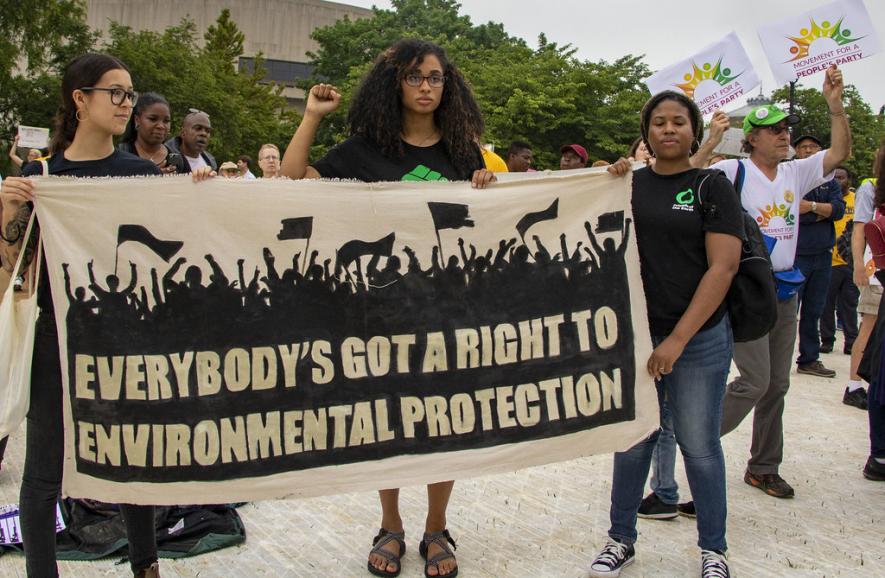
Image for representational purpose. Credit: Salud America.

The Black Lives Matter movement and the COVID-19 pandemic have highlighted how systemic racism disproportionately places danger and harm on low-income and minority populations. One harsh reality of this systemic racism is the existence of “sacrifice zones”: Communities located near pollution hot spots that have been permanently impaired by intensive and concentrated industrial activity, such as factorieschemical plantspower plantsoil and gas refinerieslandfills, and factory farms.

As noted by the Climate Reality Project, an environmental non-profit based in Washington, D.C., “These areas are called ‘sacrifice zones’ because the health and safety of people in these communities [are] being effectively sacrificed for the economic gains and prosperity of others.”

Designated by corporations and policymakers, these areas are a product of environmental racism: the systemic social, economic, and political structures—including weak laws, lack of enforcement, corporate negligence, and limited access to health care—that place disproportionate environmental health burdens on specific communities based on race and ethnicity.

Because people of colour and low-income groups in the United States are most likely to live in sacrifice zones, they breathe polluted airdrink contaminated water, and are exposed to a variety of toxic chemicals and particulate matter.

More than 50 percent of residents who live near hazardous waste are people of colour, with Black Americans 75 percent more likely to live near these sites. Considering these facts, it is no surprise that communities of colour have a higher chance of dying from environmental causes than white people.

“Thirty-nine percent of the people living near coal-fired power plants are people of colour, so what’s absolutely true is that there are a disproportionate number of people of colour living next to these plants,” then-senior director of the environmental and climate justice programme at the NAACP, Jacqueline Patterson, told Yale Environment 360 in June 2013.

Speaking after the release of an NAACP report on the disproportionate effects of coal-fired plants on minorities, Patterson further added that “[s]eventy-eight percent of African Americans live within 30 miles of a coal-fired power plant. We also discovered that Latino communities, as well as Indigenous communities and low-income communities, are more likely to live next to coal-fired plants.”


Entrenched Inequity

Sacrifice zones are a consequence of an “extractive development model” supported by self-serving government officials who want to create job and income opportunities provided by polluting industries rather than avoiding irreversible damage caused by these industries to communities of colour.

“Sacrifice zones are the result of many deeply rooted inequities in our society. One of these inequities takes the form of unwise (or biased) land use decisions, dictated by local or state officials, intent on attracting big industries to the town, county, or state, in an effort to create jobs and raise tax revenues,” wrote Steve Lerner in his 2012 book Sacrifice Zones: The Front Lines of Toxic Chemical Exposure in the United States.

“When decisions are made about where to locate heavily polluting industries, they often end up sited in low-income communities of color where people are so busy trying to survive that they have little time to protest the building of a plant next door. Those who make the land use decisions that govern sacrifice zones typically designate these areas as residential/industrial areas, a particularly pernicious type of zoning ordinance.”

“In these areas, industrial facilities and residential homes are built side by side, and few localities have adequate buffer zone regulations to provide breathing room between heavy industries and residential areas,” Lerner continued.

The polluting environment results in an increased prevalence of health problems among residents living near heavy industries. “The health impact of this patently unwise zoning formula is predictable: [R]esidents along the fenceline with heavy industry often experience elevated rates of respiratory disease, cancer, reproductive disorders, birth defects, learning disabilities, psychiatric disorders, eye problems, headaches, nosebleeds, skin rashes, and early death. In effect, the health of these Americans is sacrificed, or, more precisely, their health is not protected to the same degree as citizens who can afford to live in exclusively residential neighborhoods,” stated the book.

The Center for Health, Environment & Justice, a non-profit environmental activism group based in Falls Church, Virginia, asserted that “[d]ue to redlining, low property values, and other social factors, these communities have historically consisted of [low-income] and/or minority populations.”

The group pointed out that “federal air policies regulate facility emissions one stack at a time and one chemical at a time. Impacted communities, however, are exposed to the cumulative impact of multiple pollutants released over an extended period of time from a cluster of facilities.”


Executive Action

President Joe Biden has made environmental justice a priority in his administration, issuing an executive order on how to tackle climate change on January 20, 2021, his first day in office. In the order, Biden directed the federal government to “advance environmental justice” where agencies “failed to meet that commitment in the past.”

On January 27, 2021, Biden signed another executive order that created a White House Environmental Justice Advisory Council to address the environmental impacts of systemic racism specifically. “We must deliver environmental justice in communities all across America,” the order said. “To secure an equitable economic future, the United States must ensure that environmental and economic justice are key considerations in how we govern.”

separate executive order directed federal agencies to prioritise racial equity in their work, which incorporates racial and environmental justice across the federal government. However, without congressional action on the legislative front, another president could reverse these orders.

Biden’s $2 trillion bipartisan infrastructure plan includes provisions that address longstanding racial inequities, including “$20 billion to ‘reconnect’ communities of color to economic opportunity.” In addition, the proposal provides for funds to replace lead water pipes that have harmed communities of colour in cities like Flint, Michigan, and to clean up environmental hazards that have harmed Hispanic and tribal communities.

Launched in January 2021, Biden’s Justice40 Initiative encompasses 146 programmes within the Department of Energy (DOE)—far more than any other federal department. Together, these programmes instruct the DOE to make decisions and fund renewable and fossil fuel projects with the consideration of how they will affect historically disadvantaged communities.

“We at the Department of Energy historically have done a terrible job, honestly,” said Energy Secretary Jennifer Granholm at Greentown Labs, a Houston incubator for startups, in March 2023. “Only 1 percent of funding has gone to small, minority, and disadvantaged businesses.” She added, “We have had these structural inequalities, inequities in the past, and we’re trying to remedy that through embedding sort of structural equity into these programs.”

“We’ll create good jobs for millions of Americans… and we’ll do it all to withstand the devastating effects of climate change and promote environmental justice,” Biden said in his 2022 State of the Union address.

Progress at the federal level has been slow, even though the executive branch has been aware of the systemic issues for decades. In a 2004 report, the U.S. Environmental Protection Agency (EPA) said that “the solution to unequal protection lies in the realm of environmental justice for all Americans. No community, rich or poor, [B]lack or white, should be allowed to become a ‘sacrifice zone,’” while quoting Robert D. Bullard, who was then a professor at Clark Atlanta University.

On April 21, 2023, President Biden signed an executive order directing all federal agencies to work toward “environmental justice for all” and improve the lives of communities across the nation that have been most impacted by climate change and toxic pollution. The order established a new White House Office of Environmental Justice to coordinate revitalised efforts across the government meant to achieve environmental justice.

“For far too long, communities across our country have faced persistent environmental injustice through toxic pollution, underinvestment in infrastructure and critical services, and other disproportionate environmental harms often due to a legacy of racial discrimination including redlining. These communities with environmental justice concerns face even greater burdens due to climate change,” the April 21 order stated.

Kristine Stratton, president and CEO of the National Recreation and Park Association (NRPA), praised the order. “NRPA commends the Biden administration for its action that prioritizes a renewed commitment to the climate, ensuring healthy communities and environmental resilience for all,” Stratton said in a press statement.

“We are thrilled to learn of the establishment of the Office of Environmental Justice at the White House, to help coordinate efforts toward protecting vulnerable communities impacted by environmental injustice. We must ensure all people benefit from spaces that are not only resilient and regenerative but also transformative at the community level.”


Criticism of Federal Regulation

In an opinion piece published by the Houston Chronicle on April 2, 2023, Robert D. Bullard, the founding director of the Bullard Center for Environmental and Climate Justice, criticised federal regulators for paying lip service to impacted communities of colour. He wrote: “Communities of colour and low-income communities have long felt the adverse impacts of the fossil fuel industry and the climate crisis it caused, but most of those communities didn’t have a seat at the environmental justice roundtable,” referring to a March 2023 meeting of stakeholders organised by the Federal Energy Regulatory Commission (FERC) “to better incorporate environmental justice and equity considerations into its decisions.”

Bullard pointed out that FERC—an independent federal agency within the Department of Energy that regulates the interstate transmission of electricity, gas, and oil, as well as natural gas terminals and hydropower projects—has approved “roughly 20 new or expanded gas export terminals… slated to come online in communities across the Gulf Coast within the next decade.”

These projects will only worsen the already heavily polluted, hazardous, and unhealthy region known as “Cancer Alley” (named for the region’s elevated cancer rates) for the minority groups living in these fenceline communities.

Using data processing software and Environmental Protection Agency modelling tool, ProPublica mapped the spread of cancer-causing chemicals from various sources throughout the US between 2014 and 2018. It found that areas where a majority of the residents were people of colour experienced 40 percent “more cancer-causing industrial air pollution on average than tracts where the residents are mostly white.”

“The commission [FERC] offers little more than pleasantries with regard to justice and equity as it races to approve more polluting facilities in Black, Indigenous, Latino, and other communities of color across the country. Nothing has changed. Our communities are still being sacrificed,” wrote Bullard.

According to him, if FERC’s actions were truly fair and equitable, then the farce of holding an environmental justice roundtable wouldn’t be needed, and the commission would not be approving export gas projects if it were actually serious about mitigating the negative ecological impacts suffered by the BIPOC communities as a result of these projects.


Calls for Legislation

On April 6, 2021, the Hip Hop Caucus, a nonprofit advocacy group that tackles issues relating to health care, education, and environmental and social justice, launched a public petition urging Congress to pass legislation that protects communities of colour from the health risks posed by environmental degradation.

The petition is co-sponsored by several other advocacy groups, including Progress AmericaFriends of the Earth ActionCoalition on Human NeedsEvergreen Action, and Progressive Reform Network. “Corporate polluters demand human sacrifices,” wrote Mike Phelan, a spokesman for Progress America, in an email about the petition sent on April 3, 2021. “They each have a choice between profits and pollutionand every time, they choose profits.”

In her 2014 book This Changes Everything, Naomi Klein wrote about sacrifice zones, stating that “running an economy on energy sources that release poisons as an unavoidable part of their extraction and refining has always required sacrifice zones—whole subsets of humanity categorized as less than fully human, which made their poisoning in the name of progress somehow acceptable.”


Natural Disasters Increase Racial Inequality

Natural disasters like earthquakes and those tied to climate change, like wildfires, floods, and hurricanes, actually increase racial inequality.

A 2018 study by sociologists Junia Howell of the University of Pittsburgh and James R. Elliott of Rice University in Houston, Texas, found that white Americans who experience disaster accumulate significantly more wealth than any other group after experiencing a natural disaster.

“If you’re white, over time, you’re actually going to accumulate more than if you never had that disaster in the first place. But for [B]lack people, for Latinos, for Asians—it’s not true,” said Howell to LAist.

Ironically, while people of colour are more likely to experience the negative impacts of climate change, they support and participate in climate action more than white people.


Environmental Racism: Clear and Present Danger

In 2018, scientists at the EPA’s National Center for Environmental Assessment released a study in the American Journal of Public Health (AJPH) called “Disparities in Distribution of Particulate Matter Emission Sources by Race and Poverty Status.” The report confirmed that environmental racism presents a clear and present danger to people of colour across the United States, as they are much more likely to live near polluters.

The study found that poor communities (those living below the poverty line) have a 35 percent higher burden from particulate matter emissions than the overall US population. The health burden carried by non-whites was 28 percent higher than the overall population, while African Americans had a 54 percent higher burden. The researchers cited economic inequality and historic racism as significant factors that determined the location of facilities emitting particulate pollution.

Particles less than 10 micrometers in diameter that are inhaled can become embedded deep in the lungs and enter the bloodstream. Such particle pollution exposure can cause a number of health impacts, including aggravated asthmadecreased lung functionirregular heartbeat, and heart attacks. For people with heart or lung disease, inhaling these particles can even lead to premature death.

Referring to the study published in the AJPH, then-director of the Environmental Justice Program at the Sierra Club, Leslie Fields said, “This report illustrates how people of colour and people with limited means have been grossly taken advantage of by polluters who don’t care about the misery they cause,” according to a statement issued by the environmental nonprofit in 2018. “The disadvantages that come with those health issues, like missing school, create a cycle of poverty and lack of access to opportunity that spans generations and shapes every part of the experience of being a person of color or low-income person in the United States.”

Examining the study in an article for Colorlines, Ayana Byrd wrote that environmental racism “has been called the new Jim Crow and continues to target Black, Latinx, Native, Asian, and other communities of color, subjecting them to generations of poor health outcomes.”

While executive actions from the White House can help to tackle environmental racism and bring the issue into the national conversation, eliminating the existence of sacrifice zones beyond a presidential term requires strong legislation from local, state, and federal lawmakers. 

Reynard Loki is a co-founder of the Observatory, where he is the environment and animal rights editor. He is also a writing fellow at the Independent Media Institute, where he serves as the editor and chief correspondent for Earth | Food | Life. He previously served as the environment, food, and animal rights editor at AlterNet and as a reporter for Justmeans/3BL Media covering sustainability and corporate social responsibility.


SOURCE: Independent Media Institute

This article was produced by Earth | Food | Life, a project of the Independent Media Institute.