
Hands off Venezuela: defend international law! – Party of the European Left

Featured image: “No war on Venezuela – no blood for oil” placard at the protest outside downing street against Trump’s military attack on Venezuela. 6 January 2025. Photo credit: Stop the War
By the Party of the European Left
The US military invasion of Venezuela and the abduction of its president constitute a blatant violation of international law and a dangerous escalation of imperial aggression. This act is not only an attack on Venezuela’s sovereignty—it is a threat to all peoples who believe in self-determination, peace, and the rule of law.
Donald Trump’s declaration that Venezuela should be turned into a US colony drags the world back to the darkest chapters of history. It revives the logic of the Monroe Doctrine, where might makes right and entire nations are treated as possessions. It replaces international law with anarchy and the law of the jungle.
Only the people of Venezuela have the legitimate right to decide how their country is governed and how its natural resources are used, in the interest of all its citizens. Any external attempt to dictate these decisions reflects a neo-colonial mindset that must be firmly rejected. This principle is universal and applies to all countries, in the Americas and beyond.
Across the globe, people are rising up. In cities around the world, protesters are gathering in front of US embassies and public squares to express their solidarity with the Venezuelan people and their right to decide their own future, free from foreign intervention. We stand shoulder to shoulder with the US peace movement, which is courageously bringing this protest to the streets of major cities across the United States.
The European Left calls on its members, supporters, and all forces committed to peace and justice to join these protests. Silence is complicity.
In this context, the ambiguous and evasive statements made by leading figures of the European Union amount to silent approval of aggression. This is unacceptable. At a moment when international law is being openly trampled, Europe must choose where it stands.
We demand that EU institutions and national governments clearly and unequivocally condemn the US aggression against Venezuela. Those responsible must be held accountable, and sanctions must be imposed on those who violate international law and threaten global peace.
This is a defining moment. Either we accept a world ruled by force, or we stand up for sovereignty, peace, and solidarity among peoples.
- You can follow the Party of the European Left on Facebook, Twitter/X, Instagram and TikTok.
- This article was originally published by the European Left in January 2026.
- If you support Labour Outlook’s work amplifying the voices of left movements and struggles here and internationally, please consider becoming a supporter on Patreon.
By the Party of the European Left
The US military invasion of Venezuela and the abduction of its president constitute a blatant violation of international law and a dangerous escalation of imperial aggression. This act is not only an attack on Venezuela’s sovereignty—it is a threat to all peoples who believe in self-determination, peace, and the rule of law.
Donald Trump’s declaration that Venezuela should be turned into a US colony drags the world back to the darkest chapters of history. It revives the logic of the Monroe Doctrine, where might makes right and entire nations are treated as possessions. It replaces international law with anarchy and the law of the jungle.
Only the people of Venezuela have the legitimate right to decide how their country is governed and how its natural resources are used, in the interest of all its citizens. Any external attempt to dictate these decisions reflects a neo-colonial mindset that must be firmly rejected. This principle is universal and applies to all countries, in the Americas and beyond.
Across the globe, people are rising up. In cities around the world, protesters are gathering in front of US embassies and public squares to express their solidarity with the Venezuelan people and their right to decide their own future, free from foreign intervention. We stand shoulder to shoulder with the US peace movement, which is courageously bringing this protest to the streets of major cities across the United States.
The European Left calls on its members, supporters, and all forces committed to peace and justice to join these protests. Silence is complicity.
In this context, the ambiguous and evasive statements made by leading figures of the European Union amount to silent approval of aggression. This is unacceptable. At a moment when international law is being openly trampled, Europe must choose where it stands.
We demand that EU institutions and national governments clearly and unequivocally condemn the US aggression against Venezuela. Those responsible must be held accountable, and sanctions must be imposed on those who violate international law and threaten global peace.
This is a defining moment. Either we accept a world ruled by force, or we stand up for sovereignty, peace, and solidarity among peoples.
- You can follow the Party of the European Left on Facebook, Twitter/X, Instagram and TikTok.
- This article was originally published by the European Left in January 2026.
- If you support Labour Outlook’s work amplifying the voices of left movements and struggles here and internationally, please consider becoming a supporter on Patreon.
Redemocratise society and politics to overcome the colonial situation
Friday 6 February 2026, by Luís Bonilla-Molina
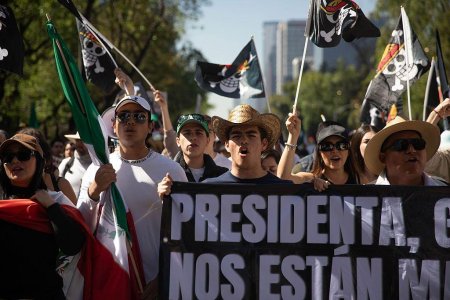
Maduro’s regime not only buried the progressive elements of Chavismo but also destroyed democracy. The events of January 3rd, with the US aggression, represented a profound blow to the Republic and ushered in a colonial situation that clearly demonstrates the historic defeat of the Bolivarian project and the 21st-century socialism embodied by Hugo Chávez Frías. This is a concrete reality that demands a reformulation of politics from the perspective of democratic, popular, progressive, and left-wing sectors.
This defeat is expressed in the lack of an autonomous, popular and self-organised response in the streets against the military aggression and the colonial situation that the United States intends to impose. The government has managed to organise, from the apparatus of power, diminished mobilisations without a combative spirit; the right wing was immobilised by Trump’s recognition of the colonial administration board led by Delcy Rodríguez; the radical, anti-capitalist, and anti-colonial left wing also failed to mobilise popular sectors; whilst the popular movement was activated this February 2 in response to its most deeply felt demand: wages and better material living conditions. To tell the truth, however painful it may be, there are no possibilities at this time for unified mobilisations that demonstrate anti-imperialist national unity. Maduro’s regime has led us to this disaster.
The release of political prisoners has restored hope, although fear has not dissipated because those freed are subject to precautionary measures that prevent them from speaking out or expressing their opinions. The perseverance of the mothers and families of political prisoners has achieved the most significant democratic victory in recent years. This has brought the democratic agenda to the forefront.
However, public life, the exercise of citizenship, has reached its lowest point, leading to collective despair. This is expressed politically in the fact that a significant segment of the population, not only on the right, believes that US tutelage might be better than Maduro’s misrule. That is why we don’t see large-scale mobilisations or a national anti-imperialist front; to deny this is to misunderstand the current political moment.
Consequently, the struggle to redemocratise the country’s social and political life must be the priority on the national agenda, which involves the reinstitutionalisation of public powers and a space to address urgent social demands. This is the only possible path to open channels for anti-colonial consciousness and struggle. Without the democratisation of Venezuelan society, it will be impossible to recover the Republic.
In previous colonialist experiences, the aggressor fosters the formation of puppet political parties, due to their acceptance of the colonial condition, whom they consider valid interlocutors; today, a significant part of the political class, those in government and sectors of the opposition that are functional to the status quo, strive to fulfill that role. Consequently, the challenge is to build democratic political parties that truly fulfill the intermediary role necessary to constructively restore the Republic. This implies creating spaces for convergence amidst differences and organising pluralistic political instruments, as the only way to prevent redemocratisation from leading to the rise of parties that perpetuate a colonial situation.
It is not easy, because we come from decades of polarisation, discord, and abandonment of politics as the art of making the impossible possible to benefit the majority. For the non-Madurist left, this implies overcoming subjectivism, sectarianism, and radical posturing without the capacity to connect with the mass movement, but it also means defending identity, preserving the right to exist as a power option for the humble, for the popular sectors, within the framework of an imperial agenda that may promote the proscription of any political instrument referenced in socialism. Reinventing oneself to avoid making mistakes is the biggest challenge for the Venezuelan left in such a complex time as the present.
3 February 2026
Translated by David Fagan for International Viewpoint.
Attached documentsredemocratise-society-and-politics-to-overcome-the-colonial_a9403.pdf (PDF - 1020.5 KiB)
Extraction PDF [->article9403]
Venezuela
Epitaph for a Revolution?
Venezuelan trade unionists speak to us
Trumpist recolonization and the coming resistance in Venezuela
On the Situation in Venezuela
Build solidarity with the people of Venezuela - Reject US imperialist aggression
Luís Bonilla-Molina is a Venezuelan critical pedagogue and president of the Venezuelan Society of Comparative Education. He is currently a visiting professor at the Federal University of Sergipe (UFS), in Brazil. He coordinated President Chávez’s international advisors team from 2004 to 2006 and served as director of the Miranda International Centre in Caracas from 2006 to 2019.
Maduro’s regime not only buried the progressive elements of Chavismo but also destroyed democracy. The events of January 3rd, with the US aggression, represented a profound blow to the Republic and ushered in a colonial situation that clearly demonstrates the historic defeat of the Bolivarian project and the 21st-century socialism embodied by Hugo Chávez Frías. This is a concrete reality that demands a reformulation of politics from the perspective of democratic, popular, progressive, and left-wing sectors.
This defeat is expressed in the lack of an autonomous, popular and self-organised response in the streets against the military aggression and the colonial situation that the United States intends to impose. The government has managed to organise, from the apparatus of power, diminished mobilisations without a combative spirit; the right wing was immobilised by Trump’s recognition of the colonial administration board led by Delcy Rodríguez; the radical, anti-capitalist, and anti-colonial left wing also failed to mobilise popular sectors; whilst the popular movement was activated this February 2 in response to its most deeply felt demand: wages and better material living conditions. To tell the truth, however painful it may be, there are no possibilities at this time for unified mobilisations that demonstrate anti-imperialist national unity. Maduro’s regime has led us to this disaster.
The release of political prisoners has restored hope, although fear has not dissipated because those freed are subject to precautionary measures that prevent them from speaking out or expressing their opinions. The perseverance of the mothers and families of political prisoners has achieved the most significant democratic victory in recent years. This has brought the democratic agenda to the forefront.
However, public life, the exercise of citizenship, has reached its lowest point, leading to collective despair. This is expressed politically in the fact that a significant segment of the population, not only on the right, believes that US tutelage might be better than Maduro’s misrule. That is why we don’t see large-scale mobilisations or a national anti-imperialist front; to deny this is to misunderstand the current political moment.
Consequently, the struggle to redemocratise the country’s social and political life must be the priority on the national agenda, which involves the reinstitutionalisation of public powers and a space to address urgent social demands. This is the only possible path to open channels for anti-colonial consciousness and struggle. Without the democratisation of Venezuelan society, it will be impossible to recover the Republic.
In previous colonialist experiences, the aggressor fosters the formation of puppet political parties, due to their acceptance of the colonial condition, whom they consider valid interlocutors; today, a significant part of the political class, those in government and sectors of the opposition that are functional to the status quo, strive to fulfill that role. Consequently, the challenge is to build democratic political parties that truly fulfill the intermediary role necessary to constructively restore the Republic. This implies creating spaces for convergence amidst differences and organising pluralistic political instruments, as the only way to prevent redemocratisation from leading to the rise of parties that perpetuate a colonial situation.
It is not easy, because we come from decades of polarisation, discord, and abandonment of politics as the art of making the impossible possible to benefit the majority. For the non-Madurist left, this implies overcoming subjectivism, sectarianism, and radical posturing without the capacity to connect with the mass movement, but it also means defending identity, preserving the right to exist as a power option for the humble, for the popular sectors, within the framework of an imperial agenda that may promote the proscription of any political instrument referenced in socialism. Reinventing oneself to avoid making mistakes is the biggest challenge for the Venezuelan left in such a complex time as the present.
3 February 2026
Translated by David Fagan for International Viewpoint.
Attached documentsredemocratise-society-and-politics-to-overcome-the-colonial_a9403.pdf (PDF - 1020.5 KiB)
Extraction PDF [->article9403]
Venezuela
Epitaph for a Revolution?
Venezuelan trade unionists speak to us
Trumpist recolonization and the coming resistance in Venezuela
On the Situation in Venezuela
Build solidarity with the people of Venezuela - Reject US imperialist aggression
Luís Bonilla-Molina is a Venezuelan critical pedagogue and president of the Venezuelan Society of Comparative Education. He is currently a visiting professor at the Federal University of Sergipe (UFS), in Brazil. He coordinated President Chávez’s international advisors team from 2004 to 2006 and served as director of the Miranda International Centre in Caracas from 2006 to 2019.
How Venezuela Poses an “Unusual and Extraordinary Threat” to the U.S. Agenda
February 6, 2026
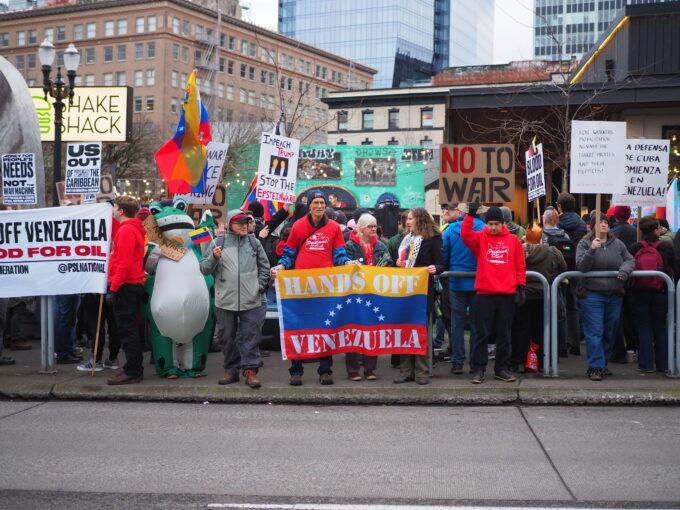
Photograph by Nathaniel St. Clair
U.S. President Donald Trump has not shied away from admitting his thirst for Venezuelan oil. On 16 December 2025, in the leadup to the 3 January bombing of Caracas and kidnapping of the country’s president and first lady, Nicolás Maduro and Cilia Flores, he claimed ownership over Venezuela resources, stating that “America will not… allow a hostile regime to take our Oil, Land, or any other Assets, all of which must be returned to the United States, IMMEDIATELY”. In his previous administration, he echoed the same obsession with resource-driven regime change, decrying in June 2023 that “When I left [office], Venezuela was ready to collapse. We would have taken it over. We would have gotten all that oil. It would have been right next door.” Yet Venezuela is not only home to the world’s largest known oil reserve, but also the continent’s largest gold reserves and an ample supply of bauxite, diamonds, iron ore, nickel, and coal… And, not least of all, hope.
Trouble at Home
Within his own borders, Trump faces heightened civil unrest, with over 100,000 people in Minneapolis alone taking to the streets (roughly a quarter of the city’s population) during a 23 January general strike—an action that has not been seen on this scale for decades—and again during a 30 January nationwide shutdown. Similar uprisings have spread across the country, from Los Angeles to New York, following ICE’s murder of Renée Good and Alex Pretti. This massive outpouring follows a year of discontent and marches decrying Trump’s anti-immigrant, anti-poor policies.
The escalation of ICE’s tactics under the Trump administration has cost U.S. taxpayers, reaching an all-time high of $85 billion in allocated funds (compared to annual spending that has hovered around $10 billion or less for the past decade). Much of these funds go to benefit private corporations: for instance, 86 percent of detainees are held in private, for-profit prisons (whose stocks skyrocketed as a result of Trump’s election and subsequent policies), and the cost of deportation flights, also run by private companies, is astronomically higher than commercial flights (the per-person cost of a deportation flight from El Paso to Guatemala, for example, is $4,675—five times higher than a commercial first-class ticket for the same route). At the same time, Trump’s administration has slashed social spending, with a $186-billion reduction to Supplemental Nutrition Assistance Program (SNAP) benefits alone (a program that, up to that point, helped 1 in 8 people in the U.S. with the basic provision of food).
In the United States, and the West in general, there is a deep-seated narrative that this is just the way things are. Perhaps we can tone back the violence—swap out a Donald Trump for a Joe Biden who is more cautious with his tactics and open to mild concessions but no less interested in protecting capitalist profits at all costs. Even key figures in Trump’s own party, fromSenators Josh Hawley (R-MO) and Todd Young (R-IN) to Trump’s former Vice President Mike Pence, have sought to distance themselves from his extreme tactics and distaste for liberal democracy (a general audacity that risks backfiring lest it create sufficient dissent and turmoil to provoke a mass uprising and turn to the left). Yet neither party is willing to allow anything further than a meek liberal democracy beholden to the interest of a small but powerful elite, at most with enough provisions to keep the general population at bay.
Venezuela’s Break With the End of History
The U.S. population, like much of the world, has been told, time and time again, that History has ended. We may be able to eke out higher wages, and certainly demand that the heightened assault on liberal democracy through ICE and the openly fascistic declarations by Donald Trump be brought under control, but anything beyond that is painted as impractical at best, and perilous at worst. Just look at the Soviet Union, we are told—it just doesn’t work. Socialism sounds nice, but look at the suffering in Venezuela and Cuba. You don’t want that, do you?
Yet this way of understanding the past, present, and future not only seeks to protect the interests of capital, tricking many working-class people into betraying their own interests, but is wildly inaccurate both by omission and by outright lies. And it seeks to cover up another extraordinary resource that Venezuela represents: a living example of hope, of unmovable dignity, of the success of a revolution that has not only brought a population out of extreme poverty but has lifted up its confidence and consciousness. In a country under extreme siege by more than 1,000 U.S.-led unilateral coercive measures, there are nonetheless a fraction as many homeless people as in the U.S. (where there are roughly 28 vacant homes to every 1 homeless person and 60 people froze to death in the streets during the most recent winter storm alone).
Even at the height of the crisis in Venezuela, as Trump ramped up his maximum pressure campaign and 40,000 Venezuelans died in a single year (2017-2018) due to the lack of medicines and healthcare that had previously been provided freely to the population, the vast majority of Venezuelans have continued to fight to defend not only their right to self-determination, but also to revolution and transformation. What exactly are the Venezuelan people fighting for that the U.S. government tries so hard to cover up? What is the source of resiliency and loyalty to the Bolivarian Revolution, despite the tremendous human cost of U.S.-led efforts to overthrow it? And, what is the “unusual and extraordinary threat” that Venezuela poses to the U.S.—as then President Barack Obama decreed in a 2015 executive order that paved the way for the economic siege?
When President Hugo Chávez came to power in 1999, a revolutionary process began that would set out to repay the “social debt” owed to the Venezuelan people, beginning by dedicating 75 percent of national spending to social investment—funds, importantly, generated by the country’s historically predominant oil sector. Through missions that began the year Chávez was elected, the country elevated its population out of poverty and illiteracy, reaching a 100 percent literacy rate, with more than three million people learning how to read and write (Mission Robinson); training 6,000 professionals in universities and graduating one million high school students (Mission Sucre); granting nearly 5 million homes to families across the country (Mission Vivienda); building health clinics in 320 of Venezuela’s 355 municipalities (Mission Barrio Adentro); and restoring the eyesight of some 300,000 Venezuelans while providing eye surgery to 1 million (Mission Milagro).
President Nicolás Maduro has continued this legacy, despite the duress imposed by the U.S.-led unilateral coercive measures imposed in the years following Chávez’s death, ensuring not only that the country’s resources benefit the well-being of the majority, but also that power is given back to the people through a model of direct democracy. Weeks before he was kidnapped, for instance, Maduro convened the Constitutional Congress of the Working Class, the culmination of 22,110 assemblies in workplaces across the country in which delegates debated and made proposals to the president about the future of the country’s labor sector and productive processes, such as strengthening domestic production of machinery components in order to reduce external technological dependency. Aprobada (‘approved’), Maduro told delegate María Alejandra Grimán Rondón as she presented him with the conclusions of the congress in front of a packed auditorium; for another proposal, “the method still needs to be refined”, he replied, outlining next steps for further debate. Furthermore, communes (grassroots organisations at the heart of Venezuela’s direct democracy through which communities exercise self-governance) have engaged in quarterly national consults since 2024, with millions voting on the allocation of government funding for thousands of projects that most need attention in their communities, from updating medical equipment in their local health clinics to investing in water filtration supplies to ensure access to potable water.
Both of these processes are part of a model of direct democracy that, in the 27 years of the Bolivarian Revolution, has held 31 elections, carried out constitutional reform, and created structures for everyday people to make direct decisions about the path of the country. In short, while the accomplishments of the revolution are far too numerous to list here, at their core is a people who have reclaimed their dignity, taken control of their future, and made the irreversible decision to stand upright.
Unlike social democratic projects in the West, Venezuela’s Bolivarian Revolution has set out to fundamentally transform society and build a socialist project rooted in class struggle and run by its people. That means that the social advances are also tied to a process of raising consciousness among the population, whereby people become the protagonists of their own struggle in a process that ultimately seeks to give them the power and tools to run the country, replacing the bourgeois state with a communal one. In this system, decisions are made by the population which is organized into communes and various social and political movements across the country. Through these processes, people learn how to run productive processes, from coffee to construction materials, and be effective owners of their own means of production; how to engage in popular decision-making processes across thousands of households; run communications teams; carry out education programs; identify, prioritize, and fix issues in their communities; and other elements that are necessary for a productive society that prioritizes the well-being of its people. All of this is done in line with core principals such as protecting the planet (with some communes collecting recyclable plastics and turning them into playgrounds, benches and chairs for the elderly and schoolchildren, and other needs expressed by the community) and centering the leadership and rights of women and marginalized sectors.
What Does the Future Hold for the Nobodies?
This dynamic process is a continuation of the path set out by Chávez, one that called upon the “nobodies” to be the makers of their own destiny. These “nobodies”—today the protagonists of one of the world’s most resilient and equitable democracies—have shown, time and time again, that they will not sacrifice their dignity nor sovereignty at any cost, no matter how severe the threat. This example is no less valuable a resource than the country’s oil, nor any less of a threat to the Trump regime and U.S. agenda at large. The example set by the Bolivarian Revolution and its people creates a fissure in the narrative that the U.S.—and the world—population must make the best of what we have, go to work every day with our heads down and spirits crushed, and forfeit our dreams of a better world. It opens a window for the nobodies of the world—and especially of the U.S.—to see that on the other side of events like the mass uprisings sweeping the country, they, too, could live in a society where the wealth that they themselves generate is reinvested into the common good rather than paying for bombs and lining the pockets of the few.
How Venezuela Poses an “Unusual and Extraordinary Threat” to the U.S. Agenda
Photograph by Nathaniel St. Clair
U.S. President Donald Trump has not shied away from admitting his thirst for Venezuelan oil. On 16 December 2025, in the leadup to the 3 January bombing of Caracas and kidnapping of the country’s president and first lady, Nicolás Maduro and Cilia Flores, he claimed ownership over Venezuela resources, stating that “America will not… allow a hostile regime to take our Oil, Land, or any other Assets, all of which must be returned to the United States, IMMEDIATELY”. In his previous administration, he echoed the same obsession with resource-driven regime change, decrying in June 2023 that “When I left [office], Venezuela was ready to collapse. We would have taken it over. We would have gotten all that oil. It would have been right next door.” Yet Venezuela is not only home to the world’s largest known oil reserve, but also the continent’s largest gold reserves and an ample supply of bauxite, diamonds, iron ore, nickel, and coal… And, not least of all, hope.
Trouble at Home
Within his own borders, Trump faces heightened civil unrest, with over 100,000 people in Minneapolis alone taking to the streets (roughly a quarter of the city’s population) during a 23 January general strike—an action that has not been seen on this scale for decades—and again during a 30 January nationwide shutdown. Similar uprisings have spread across the country, from Los Angeles to New York, following ICE’s murder of Renée Good and Alex Pretti. This massive outpouring follows a year of discontent and marches decrying Trump’s anti-immigrant, anti-poor policies.
The escalation of ICE’s tactics under the Trump administration has cost U.S. taxpayers, reaching an all-time high of $85 billion in allocated funds (compared to annual spending that has hovered around $10 billion or less for the past decade). Much of these funds go to benefit private corporations: for instance, 86 percent of detainees are held in private, for-profit prisons (whose stocks skyrocketed as a result of Trump’s election and subsequent policies), and the cost of deportation flights, also run by private companies, is astronomically higher than commercial flights (the per-person cost of a deportation flight from El Paso to Guatemala, for example, is $4,675—five times higher than a commercial first-class ticket for the same route). At the same time, Trump’s administration has slashed social spending, with a $186-billion reduction to Supplemental Nutrition Assistance Program (SNAP) benefits alone (a program that, up to that point, helped 1 in 8 people in the U.S. with the basic provision of food).
In the United States, and the West in general, there is a deep-seated narrative that this is just the way things are. Perhaps we can tone back the violence—swap out a Donald Trump for a Joe Biden who is more cautious with his tactics and open to mild concessions but no less interested in protecting capitalist profits at all costs. Even key figures in Trump’s own party, fromSenators Josh Hawley (R-MO) and Todd Young (R-IN) to Trump’s former Vice President Mike Pence, have sought to distance themselves from his extreme tactics and distaste for liberal democracy (a general audacity that risks backfiring lest it create sufficient dissent and turmoil to provoke a mass uprising and turn to the left). Yet neither party is willing to allow anything further than a meek liberal democracy beholden to the interest of a small but powerful elite, at most with enough provisions to keep the general population at bay.
Venezuela’s Break With the End of History
The U.S. population, like much of the world, has been told, time and time again, that History has ended. We may be able to eke out higher wages, and certainly demand that the heightened assault on liberal democracy through ICE and the openly fascistic declarations by Donald Trump be brought under control, but anything beyond that is painted as impractical at best, and perilous at worst. Just look at the Soviet Union, we are told—it just doesn’t work. Socialism sounds nice, but look at the suffering in Venezuela and Cuba. You don’t want that, do you?
Yet this way of understanding the past, present, and future not only seeks to protect the interests of capital, tricking many working-class people into betraying their own interests, but is wildly inaccurate both by omission and by outright lies. And it seeks to cover up another extraordinary resource that Venezuela represents: a living example of hope, of unmovable dignity, of the success of a revolution that has not only brought a population out of extreme poverty but has lifted up its confidence and consciousness. In a country under extreme siege by more than 1,000 U.S.-led unilateral coercive measures, there are nonetheless a fraction as many homeless people as in the U.S. (where there are roughly 28 vacant homes to every 1 homeless person and 60 people froze to death in the streets during the most recent winter storm alone).
Even at the height of the crisis in Venezuela, as Trump ramped up his maximum pressure campaign and 40,000 Venezuelans died in a single year (2017-2018) due to the lack of medicines and healthcare that had previously been provided freely to the population, the vast majority of Venezuelans have continued to fight to defend not only their right to self-determination, but also to revolution and transformation. What exactly are the Venezuelan people fighting for that the U.S. government tries so hard to cover up? What is the source of resiliency and loyalty to the Bolivarian Revolution, despite the tremendous human cost of U.S.-led efforts to overthrow it? And, what is the “unusual and extraordinary threat” that Venezuela poses to the U.S.—as then President Barack Obama decreed in a 2015 executive order that paved the way for the economic siege?
When President Hugo Chávez came to power in 1999, a revolutionary process began that would set out to repay the “social debt” owed to the Venezuelan people, beginning by dedicating 75 percent of national spending to social investment—funds, importantly, generated by the country’s historically predominant oil sector. Through missions that began the year Chávez was elected, the country elevated its population out of poverty and illiteracy, reaching a 100 percent literacy rate, with more than three million people learning how to read and write (Mission Robinson); training 6,000 professionals in universities and graduating one million high school students (Mission Sucre); granting nearly 5 million homes to families across the country (Mission Vivienda); building health clinics in 320 of Venezuela’s 355 municipalities (Mission Barrio Adentro); and restoring the eyesight of some 300,000 Venezuelans while providing eye surgery to 1 million (Mission Milagro).
President Nicolás Maduro has continued this legacy, despite the duress imposed by the U.S.-led unilateral coercive measures imposed in the years following Chávez’s death, ensuring not only that the country’s resources benefit the well-being of the majority, but also that power is given back to the people through a model of direct democracy. Weeks before he was kidnapped, for instance, Maduro convened the Constitutional Congress of the Working Class, the culmination of 22,110 assemblies in workplaces across the country in which delegates debated and made proposals to the president about the future of the country’s labor sector and productive processes, such as strengthening domestic production of machinery components in order to reduce external technological dependency. Aprobada (‘approved’), Maduro told delegate María Alejandra Grimán Rondón as she presented him with the conclusions of the congress in front of a packed auditorium; for another proposal, “the method still needs to be refined”, he replied, outlining next steps for further debate. Furthermore, communes (grassroots organisations at the heart of Venezuela’s direct democracy through which communities exercise self-governance) have engaged in quarterly national consults since 2024, with millions voting on the allocation of government funding for thousands of projects that most need attention in their communities, from updating medical equipment in their local health clinics to investing in water filtration supplies to ensure access to potable water.
Both of these processes are part of a model of direct democracy that, in the 27 years of the Bolivarian Revolution, has held 31 elections, carried out constitutional reform, and created structures for everyday people to make direct decisions about the path of the country. In short, while the accomplishments of the revolution are far too numerous to list here, at their core is a people who have reclaimed their dignity, taken control of their future, and made the irreversible decision to stand upright.
Unlike social democratic projects in the West, Venezuela’s Bolivarian Revolution has set out to fundamentally transform society and build a socialist project rooted in class struggle and run by its people. That means that the social advances are also tied to a process of raising consciousness among the population, whereby people become the protagonists of their own struggle in a process that ultimately seeks to give them the power and tools to run the country, replacing the bourgeois state with a communal one. In this system, decisions are made by the population which is organized into communes and various social and political movements across the country. Through these processes, people learn how to run productive processes, from coffee to construction materials, and be effective owners of their own means of production; how to engage in popular decision-making processes across thousands of households; run communications teams; carry out education programs; identify, prioritize, and fix issues in their communities; and other elements that are necessary for a productive society that prioritizes the well-being of its people. All of this is done in line with core principals such as protecting the planet (with some communes collecting recyclable plastics and turning them into playgrounds, benches and chairs for the elderly and schoolchildren, and other needs expressed by the community) and centering the leadership and rights of women and marginalized sectors.
What Does the Future Hold for the Nobodies?
This dynamic process is a continuation of the path set out by Chávez, one that called upon the “nobodies” to be the makers of their own destiny. These “nobodies”—today the protagonists of one of the world’s most resilient and equitable democracies—have shown, time and time again, that they will not sacrifice their dignity nor sovereignty at any cost, no matter how severe the threat. This example is no less valuable a resource than the country’s oil, nor any less of a threat to the Trump regime and U.S. agenda at large. The example set by the Bolivarian Revolution and its people creates a fissure in the narrative that the U.S.—and the world—population must make the best of what we have, go to work every day with our heads down and spirits crushed, and forfeit our dreams of a better world. It opens a window for the nobodies of the world—and especially of the U.S.—to see that on the other side of events like the mass uprisings sweeping the country, they, too, could live in a society where the wealth that they themselves generate is reinvested into the common good rather than paying for bombs and lining the pockets of the few.
Venezuela after the coup
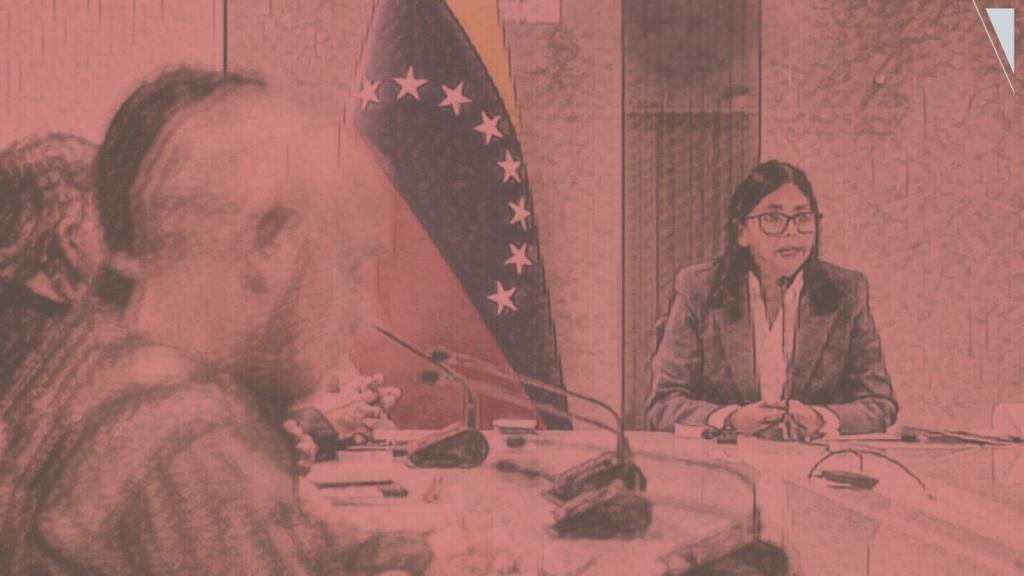
First published at Tempest.
President Donald Trump implemented his National Security Strategy’s Donroe Doctrine by carrying out a coup in Venezuela. His aim is to carve out an exclusive sphere of influence in the Western Hemisphere, impose imperial rule over its countries, and push out rivals, especially China. In the first move of this strategy, Trump concocted false allegations of drug trafficking against Nicolás Maduro’s regime, used those to justify a wave of state terrorist attacks on boats off Venezuela’s coast, then sent his special forces in to kidnap Maduro and his wife, Cilia Flores, and imprisoned them in New York to stand trial. In their press briefing about the coup, Trump and his cabinet members openly declared their real imperial aims — seizing control of Venezuela’s oil.
But, instead of installing the right wing opposition led by María Corina Machado in office, the administration left Maduro’s regime intact. It is now led by Delcy Rodríguez. Despite her anti-imperialist rhetoric, she is collaborating with the Trump administration. Now Trump has his sights set on further interventions and regime changes from Colombia to Nicaragua, Cuba, and Greenland to bring the Western Hemisphere under Washington’s thumb.
In this interview, Tempest’s Ashley Smith speaks with Federico Fuentes about the coup, Maduro’s regime, and the urgency of building anti-imperialist resistance against Trump’s vicious new imperialism. Fuentes is a longtime Venezuela solidarity activist who lived in Caracas for several years during the Hugo Chávez government as a correspondent for Green Left and investigator at the Centro Internacional Miranda. He is editor of LINKS International Journal of Socialist Renewal.
Trump’s coup in Venezuela shocked the world. It is clearly the first shot of his New Monroe Doctrine to declare the Western Hemisphere as Washington’s exclusive sphere of influence, something that puts a target on all governments opposed to the U.S. or resisting its dictates. But it’s also surprising. Before the coup Maduro was offering the U.S. all sorts of concessions and deals, but Trump opted to kidnap him anyway. Why?
Negotiations between the Donald Trump and Nicolás Maduro governments trace back to the start of Trump’s second term, when he sent his special envoy, Richard Grenell, to meet with Maduro in Caracas. It seems that, at least for a period of time, Trump was open to the idea of reframing relations with Maduro’s Venezuela.
This was based on an acknowledgement that while Washington’s traditional allies in the right-wing opposition were too weak to dislodge Maduro from power or provide stable governance, the Maduro government could meet Trump’s needs, particularly with regards to deportations and access to oil. And Trump was proven right: the Maduro government accepted deportation flights, released several U.S. citizens in its custody, and publicly offered the U.S. access to its oil. The only thing it was not willing to offer up was one of its own.
Trump warned several times that if Maduro did not step down and leave the country, some kind of military action would be taken. Maduro thought he could call Trump’s bluff. In the end, we got the dramatic military assault on Venezuelan territory, that not only led to the kidnapping of Maduro and former National Assembly president Cilia Flores, but the deaths of a still untold number of Venezuelan citizens and 32 Cubans. An imperialist intervention that must be denounced.
The reason for this is that Trump realized it was untenable to simultaneously launch his new “ Trump corollary” to the Monroe Doctrine — which, as his National Security Strategy states, seeks “to restore American preeminence in the Western Hemisphere” — while allowing Maduro to stay in power and negotiate with his government. So, we got an operation that removed Maduro but kept his government. The dramatic military assault acted as the official start of the enacting of the “Trump corollary”.
Having achieved this, Trump’s government is now dealing with the new government, headed by Acting President Delcy Rodríguez, on a fundamentally different footing: one in which all the cards are in Trump’s hands. He plans to use this to humiliate the government and essentially convert Venezuela into a twenty-first century protectorate.
Trump’s coup was not a regime change. He left the regime in place, minus Maduro and his wife. Why? Why did he not install Machado and the right wing opposition?
For the two reasons. First, the understanding that Machado and the right-wing opposition could not stably govern the country, primarily because it has no influence in the military and security forces. Moreover, while those who support the government are a minority, they represent an important section of society and would have mobilized against the imposition of such a government. The most likely scenarios would have been street mobilization and maybe even civil war.
Second, the Trump government assessed that any new government sans Maduro would maintain Maduro’s policy of seeking accommodation with the United States. It recognized that the Maduro government had already been dramatically weakened by the loss of support and legitimacy inflicted in the 2024 presidential elections — where the government refused to publish verifiable results, strongly indicating fraud was committed.
Any new government would therefore be highly dependent on the U.S. for maintaining power. Given the Maduro government’s control over the military, and the role it had played in dismantling the radical process of change led by Chávez — commonly referred to as the Bolivarian revolution — Trump officials assessed a new dependent “Madurismo without Maduro” government would best provide stability while securing its interests.
There are two other points worth making. First, my belief had always been that successive U.S. administrations preferred to replace the Chávez and then Maduro governments with an undemocratic transitional authority. For a long time, this was essentially a necessity, as the opposition was unable to win popular support at elections.
More importantly, such an authority would be best placed to completely wind back the remaining gains of the Bolivarian revolution. An unelected authority would not be encumbered with concerns about popularity or electorate mandate and would therefore be less beholden to pressure from below. Instead, it could swiftly implement what the U.S. sought (and apply the repression required), so that by the time any elections came about, all the main decisions had been made.
What I failed to foresee was that such an authority could ultimately be best run by figures that maintained the rhetoric of the Bolivarian revolution (even if they had presided over its destruction), and not the opposition. Ironically, the Rodríguez government has an advantage over a Machado government in that the latter would almost certainly be subject to more popular pressure, given the large vote that her preferred candidate, Edmundo González Urrutia, seemingly obtained in the last presidential election, as indicated by voting tally sheets collected by the opposition.
The other point is that we should focus on content and not form. Some on the Right (and Left) have argued that as the government is still largely intact, nothing has fundamentally changed. But that misses a crucial element: the balance of forces on which this government rests has fundamentally changed.
When Chávez was elected in 1998, he came to power on a progressive platform but found it difficult to implement many of his proposed reforms. The old capitalist class, spearheaded by the main big business chamber of commerce, Fedecamaras, still had the upper hand in terms of the balance of forces, particularly through its control of the military and the state oil company, PDVSA.
These crucial levers of power were used to try and overthrow Chávez in 2002-03. However, the defeat of the April 2002 military coup attempt and December 2002-January 2003 oil bosses’ lockout — both through the mass mobilization of the poor majority, the working class (particularly oil workers) and patriotic sectors of the military — fundamentally altered the balance of power. In form, the Chávez government was the same before and after these events, but in content it was fundamentally different.
The same is true now, though somewhat in reverse. The balance of forces has not shifted away from the working class and poor, whom the Maduro government pushed aside and repressed. Instead, it has shifted away from the new base it relied on to government; namely the military and security forces, the new capitalist class it nurtured through access to state funds, and, in more recent years, the old capitalist class (with even Fedecamaras making its peace with the government).
Today, the government’s main base of support is the U.S. government. The dramatic loss of popular support exposed in the 2024 presidential elections revealed the regime’s fragility. The January 3 U.S. military assault completely pulled the rug from under the government.
The result is a transitional authority with no popular mandate and whose hold on power ultimately depends on Washington: a tremendously dangerous situation for the Venezuelan people and their sovereignty.
Many have pointed out the obvious collaboration between the regime under Rodríguez and the U.S. after the coup. Some have argued that she made a deal with Trump to give up Maduro and offer oil concessions to preserve the regime. Is this true? How does Rodríguez’s deal-making square with her anti-imperialist posturing? What will she try to do now?
While a deal cannot be ruled out, no definitive evidence has been provided, Moreover, there are two strong arguments against such a deal being made.
First, it is more likely that those in the government thought they could call Trump’s bluff, believing he would not go so far or ultimately accept a deal that kept Maduro in power. This helps explain why the Venezuelan armed forces were so ill-prepared for the January 3 assault, despite months of warnings.
More importantly, a key factor in the Maduro (and now Rodríguez) government’s hold on power has been the ability to keep the quite diverse factions within it united. A deal to hand over one leader would have caused great concerns among all factions, worried about who might be next, potentially fracturing this unity that was so vital for them until now—and will be moving forward.
That said, whether a deal was or was not made, it does not change much in terms of the Rodríguez government’s policies or discourse.
For starters, the Maduro government, for a while now but particularly since Trump’s re-election, had been downplaying its anti-imperialist discourse. He might have used anti-imperialist rhetoric when addressing foreign leftists at forums hosted by the government in Caracas, or rallies of his support base for whom such rhetoric is an important glue that binds them together. But even as the U.S. ramped up its military deployment in the Caribbean, Maduro went to great lengths to play down the situation and avoid directly speaking out against Trump and his actions.
First he claimed the videos of boats being bombed in the Caribbean were simply AI. Then he sought to blame Secretary of State Marco Rubio for leading Trump astray. Then he sent Trump a private letter explaining how he had “publicly acknowledged the significant efforts [Trump is] making to bring an end to the war [sic] [he] inherited in other regions” and hoped that “together we can defeat the falsehoods that have sullied our relationship”. And just days before his kidnapping, Maduro once again publicly offered to grant U.S. access to Venezuela’s oil.
This discourse has essentially continued under Rodríguez who, less than two weeks after Maduro’s kidnapping, met with the CIA director and posted on her social media about “a long and courteous” phone call with Trump regarding “a bilateral work agenda for the benefit of our peoples.” She has justified the reestablishment of diplomatic ties and the reopening of embassies in both countries as the means by which the government will pursue Maduro and Flores’ freedom.
Regarding the last part of your question, it is not so much an issue of what Rodríguez wants to do as what she will be allowed to do. Again, Washington is now calling all the shots.
Take the oil industry: Trump has seized large stores of Venezuelan oil, sold it via foreign intermediaries, placed the proceeds in Qatari bank accounts and told Venezuela how its share must be used, namely as funds to private banks to sell as foreign currency.
In response, the Rodríguez government has sought to portray this as some kind of victory, rather than an act of international piracy and extreme violation of sovereignty. At the same time, the National Assembly has just held its first vote to partially reform Chávez’s hydrocarbon law, which will legalize Trump’s plans for the sector, including essentially handing over control of oil extraction, production and sales to foreign companies.
Ultimately, Rodríguez has little choice in the matter, though a case can be made that she (and Maduro) would have been happy to proceed in this manner — though clearly not under these conditions of extreme duress.
How have Venezuela’s various classes, social groups, and political forces both within the country and in the diaspora responded to the coup?
The main response across the board has been one of shock, mourning and a mix of uncertainty and expectation.
Right-wing leaders, such as Machado, spoke out in support of the military assault and kidnapping, and among the diaspora there were rallies celebrating the January 3 intervention. But these rallies should be put in context: Millions of Venezuelans have been forced, in one way or another, to leave the country — in contrast, the rallies were quite small.
These rallies largely reflect the more right-wing elements of the diaspora, removed from the daily realities of their country (particularly the bombings). Much like their leadership, they had placed all their hopes in some kind of U.S. intervention to remove the government, believing this would allow them to return. But those protests were short-lived, particularly after they realized the same government was still in place and their preferred leader, Machado, was being sidelined by Trump.
Within the country, the government has made sure that no similar mobilizations could occur. Moderate right-wing politicians have spoken out against the attack. But there have also not been signs of spontaneous mobilizations against it.
It took several days for the government to recover from the shock and start organizing protests. Participation at these rallies have been largely limited to the governing party’s support base and been relatively small — in the thousands or, at most, several tens of thousands.
This is because, for many years now, most Venezuelans have withdrawn from politics and turned their back on the entire political class, both the section in government and the opposition. Many may have voted for the opposition in 2024, but primarily with the determination to vote out the government rather than to support the opposition, much less its political program.
One thing worth pointing out is how this is a clear example of the fallacy of the argument, put forward by some leftists, that we should politically support any government in conflict with imperialism. Of course, we need to continue to oppose imperialist interventions that seek to undermine foreign governments.
But we cannot turn a blind eye to the actions of those governments, which fundamentally weaken anti-imperialist sentiment in their own country. The lack of response to the January 3 imperialist intervention is a direct result of the Maduro government’s anti-worker and anti-democratic policies, which have alienated the precise base required to resist imperialism.
Today, most Venezuelans believe things cannot continue as they were. That explains both the lack of mobilization and a sense of anxious hope among a significant section of the population that things might get better, as they seemingly could not get worse — even though imperialist intervention will only ultimately make matters worse.
The lack of response by the people of Venezuela is in stark contrast to the previous attempted coup against Chávez. Then the people rose up and restored him to office. Why the different response this time?
The difference reflects how the working class and poor viewed the Chávez government in 2002, compared with the Maduro government in 2026. When Chávez was overthrown, there was a real sense that it was their government and their rights that were being taken away, sparking widespread organized and spontaneous mobilizations.
Fast forward to 2026, the majority views the Maduro government, rightly or wrongly, as the main problem. This does not mean they all supported the military attack; many felt a deep opposition or profound sense of complete demoralization in the face of this imperialist attack. Yet they did not mobilize against it. Instead, they largely preferred to sit on the sidelines — as they have for most of the past decade — and see what happens next, hoping something good might come out of this tragedy.
Clearly the regime has transformed from the days of Chávez, when it seemed to offer a great deal of hope for not only Venezuelans but also Latin America and more broadly the international Left. What has changed and why? How much of this is the result of the collapse in oil prices? How much is the result of U.S. sanctions? And how much is the result of the regime itself?
Regarding the last part of the question, it is a result of all these, to which I would add an important fourth factor: the undemocratic and violent actions of the right-wing opposition, above all figures such as Machado, which contributed to the political crisis and profound depoliticization. How much weight should be given to each factor, and the order in which they began to affect the situation, are a big part of the debate among the left inside (and outside) Venezuela in terms of drawing up a balance sheet of the Maduro government. But any assessment that ignores any of these factors inevitably leads to faulty conclusions.
Importantly, these factors explain the most important change: that of the character of the Maduro government. As I mentioned before, sometime during the Maduro government, between 2015-17, it became clear that the section of society for whom it governed was shifting. A combination of circumstances and choices led it to break with the poor majority and working class base that had supported the Chávez government and formed the backbone of the Bolivarian revolution. Instead, it consolidated a new base among the military, security forces and the new capitalist class, and started a process of counter-revolution.
That is why I argue that although the sanctions may not have succeeded in terms of regime change — if we understand this as a change in the personnel running the state — they did succeed in helping to change the class basis and political project of the existing regime.
What was the nature of Maduro’s regime before he was abducted? What class interests did it represent? How repressive and dictatorial had it become?
Unlike the Chávez government, the Maduro government was undeniably a pro-capitalist government. It represented both the interests of the new capitalist class, which had enriched itself through its connections to the “Bolivarian” state (the so-called Bolivarian bourgeoisie that Chávez denounced), but also the traditional capitalist class. The Maduro government ultimately won over the support of Fedecamaras, while the head of the Caracas Stock Exchange said after the 2024 presidential elections that the government, not the opposition, best represented economic stability.
The Maduro government was also decidedly anti-worker. Often sections of the Left excuse the government, saying its policy decisions were due to the sanctions. But this ignores that government policies led to a dramatic upward redistribution of wealth even before the sanctions, Moreover, even under the sanctions, it is not the case that the Maduro government had no other options. From 2018 onwards, it deliberately chose to shift the burden of the crisis onto the working class.
The pro-Maduro Left counters this with claims that the government has not privatized public services, provides subsidies, and supports the building of communes, therefore meaning it is still progressive. This ignores the privatizations (full and partial) that have occurred in various sectors, most importantly agriculture, but even in the strategic oil industry, where privatization-by-stealth has been enacted under the guise of the Anti-Blockade Law.
At the same time, while state companies have been established under Maduro, particularly in the minerals sector, these were set up as vehicles for incorporating the military into circuits of capital accumulation, and have been responsible for environmental destruction and dispossession of indigenous lands, not wealth redistribution. History is replete with examples of state companies benefitting capitalists — starting with PDVSA, which was state-owned right through the neoliberal period that preceded Chavez.
The same is true for policies such as food, transport and fuel subsidies, which even reactionary governments such as those in Egypt and Indonesia maintain. More often than not they serve as clientilistic means for maintaining some level of social support (as the Maduro government has done with its food packages distributed by local governing party officials). In other cases, they are too difficult to roll back without facing substantive resistance. Overall, the impact of these subsidies have been far outweighed by the deliberate policy of pulverising workers’ wages as a means for dealing with hyperinflation.
As for the promotion of communal councils and communes as evidence of the Maduro government’s progressive nature, these leftists ignore the government’s own data, which show that far from having promoted “thousands of communes” as vehicles for self-government, the government presided over their cooptation and decline. The Minister of Communes’ figures shows a sharp, consistent decline over the past four years in the number of communal councils re-electing their authorities (down from about 19,000 in 2022 to just over 2000 last year). Meanwhile, of the almost 4000 communes that have been registered over the past more than a decade, less than 20 percent have been able to maintain at least one functioning body, such as a communal government or communal bank. A big factor for this has been government attempts to subordinate them by placing them under the control of local party officials.
The reality is that the policies the pro-Maduro Left point to are largely legacies of the Chavez era, which have since been transformed into channels for corruption, clientelism, and capital accumulation; been completely nullified by the depression of workers’ wages; or remain in place because the political cost of reversing would be too high — though, as the proposed oil industry reform indicates, even measures considered taboos yesterday may no longer be considered sacred tomorrow.
Of course, such a turn in economic policy had to be accompanied by a ramping up of repression. Outside Venezuela, we hear about repression against the right-wing opposition — though never about their anti-democratic, violent and illegal actions. But the Left and working class forces in Venezuela have arguably faced greater repression.
In terms of workers’ rights, there are hundreds of trade unionists in jail for protesting, new trade unions cannot be registered, strikes are illegal, and collective bargaining is essentially banned. As for the left, every single left-wing party in the country has either been stripped of its electoral registration or denied the right to register for elections. The last presidential election was the first since the fall of the military dictatorship in 1958 in which the left was completely barred from standing a candidate.
When we add to this that the Venezuelan people were denied their right to have their votes counted and verified (arguably one of the most basic democratic right, but which some on the Left seem to want to deny to the Venezuelan people, claiming nothing untoward happened in those elections), we get a sense of just how far democracy had been wound back. Not just in terms of the Chávez era (when the left rightly pointed to Venezuela as a world leader in transparent elections) but even in terms of minimum bourgeois democratic rights.
There is a further component that needs to be considered; namely the use of security forces to terrorize working class and poor communities. As discontent with the government rose among traditional Chávez-voting sectors, the Maduro government stepped up its policing of these neighborhoods through its “Operation Liberate the People” and creation of the elite death squad, FAES (Special Action Forces).
The result was a dramatic rise in police killings of predominately young Black men in those neighborhoods: from about 1500-2500 a year in 2014-15 to 5000-5500 a year between 2016-18, making Venezuela’s security forces the deadliest in the region on a per capita basis. Though not strictly a political operation, this repressive policing had the effect of terrorizing communities which had begun to step out of line.
Given all this, it is hardly surprising that even strong Chávez voting areas eventually turned against Maduro and did not rush onto the streets to defend him after his kidnapping.
Trump clearly is not done imposing the New Monroe Doctrine on the region. What will he try and do in Colombia, Cuba, and especially Greenland? How will targeted countries respond? How will China, which has massive investments and trade relations throughout the Western Hemisphere respond? How will Russia respond? Europe? Does this augur new inter-imperial rivalries over division of global capitalism, despite its deep integration, into new spheres of influence?
It is difficult to give a comprehensive answer to such a big question. But, in simple terms, the impact will likely be two-fold.
On one hand, a clear message has been sent to smaller countries that if you dare step out of line, you will be next. Therefore, the most likely response from countries such as Colombia and Mexico will be to seek to negotiate the best terms possible from the U.S. in order to avoid a worse fate. The likelihood of U.S. imperialist interventions against small countries has dramatically increased.
On the other hand, Trump’s actions in Venezuela have sent a message to great powers, such as China and Russia, that this is how the world will operate from now on. This will only encourage them to act accordingly in their own spheres of influence. Of course, Russia was already doing this, particularly in Ukraine. But China may look to do the same with Taiwan.
Last question is about the international Left. Far too much of the Left has put on, to put it generously, rose-tinted glasses about Maduro and his regime. They defend it as ant-imperialist and even socialist, despite its repressive anti-working class nature. Such a position, if adopted as a point of unity, for an anti-war movement will alienate not only regular working class people in various countries but also Venezuelan workers and refugees who are victims of the regime. So, what position should the international Left take on Maduro and Rodríguez’s regime? And what position should we advocate as the central rallying cry for the anti-war movement?
There are two dangers here. The first is to lose sight of the bigger picture and simply believe that because Maduro was bad and many Venezuelans were happy to see him go, that we should hold a neutral position towards his (and Flores) kidnapping.
Anti-imperialists need to recognize that Trump’s actions have made the world a much more dangerous place, and pose a serious threat to human rights, international law, democracy, and sovereignty everywhere. Furthermore, these actions have done nothing to restore democratic rights in Venezuela (Trump has said any elections will be postponed until the “third” phase of his recolonization project, at some undefined time in the future).
Therefore, we must continue to condemn the January 3 military assault and demand Maduro and Flores’ immediate release. If they have committed a crime (such as stealing the last elections), then it should be the Venezuelan people who judge them.
A movement solely focused on this demand, however, is unlikely to mobilize the kind of broad movement we need to push Trump back. Few working class people (inside and outside Venezuela) see a simple return to the status quo as a great step forward. So, there are some other important elements we can campaign on.
For example, it is self-evident that Venezuela is rapidly losing sovereignty over its natural resources. We need to speak out against this violation of Venezuela’s sovereignty and open theft of its natural resources.
Campaigning against the ongoing U.S. sanctions and naval blockade is part of that, as these tools are being used to further coerce the Rodríguez government into complete submission. We should also demand an end to the U.S. military deployment in the Caribbean, which has been used to pressure various other governments, not just the Venezuelan one.
The Left as a whole should be able to unite behind such demands, irrespective of their position on the Maduro and Rodríguez governments. But the movement does need to separate out this defense of Venezuela’s national sovereignty from political support for the Rodríguez government. Failing to do so is the second danger the Left can fall into.
When it comes to basic democratic rights in Venezuela, we cannot be neutral, ignore that they have been greatly undermined, or pretend the government’s actions are solely the fault of U.S. actions. This is obviously untrue and workers in our country will rightly not believe it — making it all the harder for us to win them over to an anti-imperialist position.
Just as importantly, as I explained before, the government’s anti-worker and anti-democratic policies have undermined anti-imperialism in Venezuela. Defending such rights in Venezuela not only helps us build the broadest possible response at home; it also helps create space for genuine anti-imperialist working class mobilization in Venezuela.
Finally, an important part of our solidarity has to be linking up with Venezuelan workers and the Left and seeing how we can coordinate our joint struggles. Far too often, discussions center exclusively on the government and the right-wing opposition. Squeezed out are Left and working class voices — or the voices of the majority, for that matter, who support neither Maduro/Rodríguez nor Machado. While some leftists prefer to deny their existence or denounce them, we should instead help their voices be heard, so that workers in our countries can know about their struggles and act in solidarity with them.
If we seriously believe that only Venezuelans can decide their fate, then that has to involve supporting Venezuelans in their struggles for the rights needed to make that a reality; namely, the same rights we fight for at home. That includes the right to choose their own government — free of foreign interference and fraud.
Federico Fuentes is a longtime Venezuela solidarity activist who lived in Caracas for several years during the Hugo Chávez government as a correspondent for Green Left and investigator at the Centro Internacional Miranda. He is co-author of Latin America's Turbulent Transitions: The Future of Twenty-First Century Socialism and editor of LINKS International Journal of Socialist Renewal, which has hosted a discussion on Maduro’s Venezuela primarily with articles by and interviews with Venezuelan leftists.
Ashley Smith is a member of the Tempest Collective in Burlington, Vermont. He has written in numerous publications including Spectre, Truthout, Jacobin, New Politics, and many other online and print publications.

No comments:
Post a Comment