As Pakistan battles Afghan Taliban, fears of major war rise
Haroon Janjua in Islamabad
Both Pakistani forces and the Taliban in Afghanistan are reeling after deadly clashes. Observers warn that border violence could escalate into a full-blown conflict.

Fierce fighting erupted between the Pakistani military and Afghan Taliban forces over the weekend, marking the deadliest conflict between the neighbors since the Taliban returned to power in Kabul in 2021.
Both Pakistani officials and the Taliban regime in Afghanistan claim to have inflicted heavy losses on the opposing side.
The Taliban said on Sunday that they had killed 58 Pakistani soldiers in overnight border operations. Pakistan's army gave far lower casualty figures, saying 23 of its troops were killed. The Taliban also claimed to have captured 25 Pakistani army posts.
Pakistan's military claimed to have killed more than 200 Afghan fighters. The Taliban said only nine soldiers on its side were killed.
Claims from both sides could not be independently verified. Access to the border region remains heavily restricted.
Pakistan, Afghan Taliban border clashes: What's next? 05:28
Why are Pakistan and Afghan Taliban fighting?
Tensions between the countries, which were once allies, increased after Islamabad demanded that Kabul take action against the Tehreek-e-Taliban Pakistan (TTP), a separate group closely linked to the Afghan Taliban.
The TTP seeks to impose a hard-line interpretation of Islam, particularly on Pakistan's northwestern Khyber Pakhtunkhwa province, which borders Afghanistan.
According to Pakistan's government, the group operates from Afghan soil with impunity. The Afghan Taliban deny that.
TTP militants have stepped up attacks against Pakistani security forces in recent years.
A UN report this year found that the TTP "receive substantial logistical and operational support from the de facto authorities," referring to the Taliban government in Kabul.
More than 500 people, including 311 troops and 73 policemen, were killed in attacks from January through September 15, the AFP news agency reported, citing a Pakistan military spokesman.
Pakistan's government has also accused India of backing the Pakistani Taliban and other insurgent outfits in a bid to destabilize Pakistan. India denies such accusations and says Pakistan itself is involved in supporting secessionist militant groups operating in India-administered Kashmir.
Fragile cross-border situation
Last week, the Afghan Taliban accused Pakistan of bombing Kabul and a market in the country's east.
Pakistan's government did not confirm or deny the airstrikes. But Pakistan has repeatedly stressed the right to defend itself against what it said is a surging cross-border militancy.
Afghan Taliban forces said they launched attacks on Pakistani troops late Saturday as a "retaliation for airstrikes carried out by the Pakistani army on Kabul."
Michael Kugelman, a Washington-based South Asia analyst, told DW that the latest clashes between Pakistan and Afghanistan are "driven by Islamabad's failure to curb Afghanistan-based anti-Pakistan terrorism."
"Despite trying various strategies, including talks and limited military operations primarily within Pakistan, success has been elusive," Kugelman said. He added that "intensified counterterrorism operations" against targets in Afghanistan by Pakistan have now sparked a Taliban response, leading to the escalation.
Though the fighting seems to have largely ended for now, the situation remains fragile and tensions run deep.
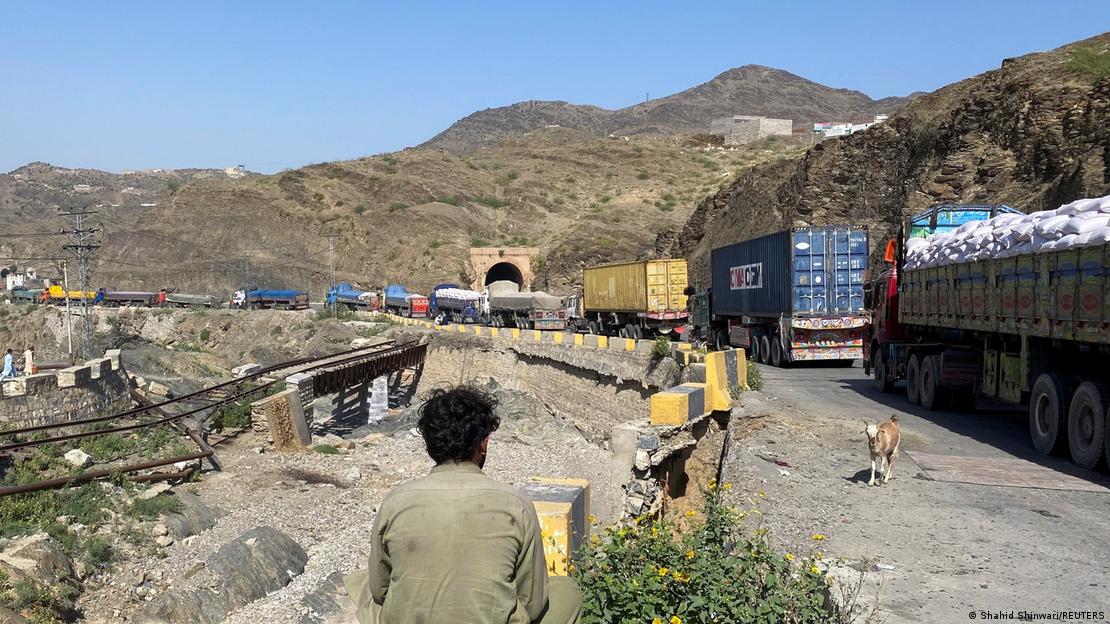
The clashes also prompted a halt in border trade between the countries as Pakistan closed crossings along the 2,600-kilometer (1,600-mile) frontier.
The move stranded scores of loaded goods vehicles on either side, a Pakistani industry representative told the Reuters news agency.
Will TTP increase attacks?
Omar Samad, former ambassador of Afghanistan to Canada and a nonresident senior fellow at the Atlantic Council, told DW that hostility between the two sides "can escalate into widespread violence and military action beyond what we are experiencing" and cause irreparable damage to the relationship between the countries.
"Tensions between the Pakistan military establishment and the de facto Afghan government have been rising for the past two years, partly caused by missteps, misunderstandings and mismanagement," Samad said.
Kugelman is of the view that one consequence of the crisis could be increased reprisal attacks by the TTP, "which has a strong presence in Pakistan despite its main base in Afghanistan."
He said the Afghan Taliban were not a match for Pakistan's military, despite being capable of staging operations at border posts.
"Thus, TTP reprisals, possibly encouraged by the Afghan Taliban, remain a major concern for Pakistan's future," he said.
Imtiaz Gul, a security expert and executive director of Center for Research and Security Studies in Islamabad, had a similar view.
"Pakistan will now face a growing threat of increased militancy from TTP more than ever after the clashes with Afghanistan," he told DW. "It now requires a strengthening of counterterrorism operations and intelligence capabilities to combat these threats and eliminate terrorism."
Is it time to deescalate?
Despite the rocky relationship between the governments, the neighbors have made attempts over the past year to improve ties.
In May, Pakistan's government announced that it would upgrade its diplomatic ties with the Afghan Taliban and designate an ambassador to Kabul, even though Islamabad has yet to formally recognize the Taliban government.
The neighboring nations also share close historical, cultural and people-to-people ties.
Millions of Afghans who fled their war-ravaged country over the past 40 years have found shelter in Pakistan.
But, amid strained ties with the Afghan Taliban, Pakistan's government started a massive initiative to repatriate approximately 4 million Afghans living in the country in 2023.
Pakistan's government has since deported more than 800,000 Afghans, creating another source of tension with Kabul.
'No time for deception'
Samad said both sides should hold constructive talks to resolve their issues instead of engaging in belligerent tactics.
"Despite bravado and hubris, both countries have vulnerabilities and strengths that are unmatched and contradictory," Samad said. "Afghans have little to lose against overwhelming military odds, but Pakistan is fragile from within."
"Now is the time for statesmanship, caution and honest dialogue," Samad said. "There is no time for deception, spin and bluster," he added.
Under Taliban shadow, Afghans in Pakistan look to Germany 03:52
Edited by: Srinivas Mazumdaru

Haroon Janjua Journalist based in Islamabad, focusing on Pakistani politics and societyJanjuaHaroon
Afghanistan-India-Pakistan: Renewed Flashpoint – Analysis
October 14, 2025
By SATP
By Ajit Kumar Singh
The overnight clashes of October 11–12, 2025, along the volatile 2,640-kilometre Durand Line between Afghanistan and Pakistan marked one of the deadliest confrontations in recent years, resulting in several deaths and reigniting deep-seated tensions across South Asia. The violence followed Pakistan’s controversial airstrike in Kabul on October 9, 2025, which Islamabad claimed targeted Tehreek-e-Taliban Pakistan (TTP) chief Noor Wali Mehsud. The attack, however, allegedly struck a crowded civilian market, killing at least 15 non-combatants.
The incident triggered a spiral of artillery exchanges, drone strikes, and cross-border incursions across Pakistan’s northern sectors, particularly in Afghanistan’s Kunar and Paktika provinces. By dawn on October 12, heavy smoke was visible over Pakistan’s Bajaur and Khyber districts, as satellite imagery captured destroyed outposts and damaged fencing. The fighting also paralyzed vital trade arteries, including the Torkham and Spin Boldak crossings that handle over USD 2.5 billion in annual bilateral commerce, leaving thousands of traders stranded and compounding the economic distress in both countries. As of October 13, a fragile ceasefire mediated by Saudi and Qatari officials was in place, but hostility persisted.
Pakistan’s military swiftly characterised its actions as defensive operations, framing its response as a legitimate countermeasure to what it called “unprovoked Taliban aggression” against more than 20 border checkpoints. The Inter-Services Public Relations detailed a series of precision airstrikes and commando raids that reportedly neutralised over 200 Taliban fighters and associated TTP operatives, while dismantling 21 Afghan positions and several terrorist training camps inside Afghan territory. Islamabad confirmed the deaths of 23 Pakistani Security Force (SF) personnel and injuries to 29 others.
Pakistan’s Interior Minister Mohsin Naqvi denounced the Afghan actions as “barbaric and unprovoked,” vowing a calibrated response. Pakistan’s Foreign Ministry summoned the Afghan Ambassador, condemning Kabul for providing sanctuary to TTP cadres, while denying that its October 9 airstrike had violated Afghan airspace. Pakistan further invoked Article 51 of the UN Charter, asserting that its cross-border actions constituted legitimate self-defence.
The Taliban administration in Kabul offered a starkly different account, depicting the clashes as a justified retaliation against blatant Pakistani violations of Afghan sovereignty. The Defense Ministry confirmed retaliatory strikes on Pakistani border outposts as a response to the October 9 bombing that killed civilians. Taliban spokesperson Zabihullah Mujahid claimed that their forces eliminated 58 Pakistani soldiers while sustaining only nine fatalities, portraying the outcome as proof of Afghan military superiority. The Taliban described the confrontation as a defence of the Islamic Emirate’s territorial integrity against Islamabad’s “imperialist encroachments,” vowing to protect the Afghan side of the Durand Line, which they continue to reject as an artificial colonial boundary. While independent verification remains limited, reports from local Pashtun networks indicated that Taliban units briefly overran some Pakistani border posts.
By midday on October 12, artillery exchanges subsided following urgent mediation by Saudi Arabia and Qatar. Riyadh, leveraging its extensive financial and religious influence, pressured both sides to cease hostilities, warning that instability could jeopardise Hajj pilgrim logistics and USD 10 billion in Gulf remittances to the region. Qatar complemented these efforts by hosting virtual talks, invoking its past role in the Doha Accords. Both Kabul and Islamabad accepted the ceasefire, with Taliban Acting Foreign Minister Amir Khan Muttaqi crediting Saudi and Qatari diplomacy for “averting a greater calamity.” Nevertheless, the truce remained fragile. On October 13, Torkham remained closed, halting an estimated USD 50 million in daily truck traffic. United Nations observers reported approximately 5,000 displaced civilians, primarily Pashtuns, caught in the crossfire.
The record of Afghanistan–Pakistan border clashes dates back to April 2007, when the first SF-to-SF confrontation erupted over disputed outposts, establishing a pattern of recurring violence driven by fencing disputes and militant infiltration. According to South Asia Terrorism Portal (SATP) data, at least 39 such incidents occurred up to October 10, 2025, causing 60 deaths on the Pakistani side — 41 SF personnel and 19 civilians. The Durand Line continues to represent one of South Asia’s most combustible borders. As of 2025, Pakistan reports 98 per cent completion of its border fence, a project that has repeatedly triggered Afghan opposition. In 2024 alone, 16 SF-to-SF confrontations were documented, resulting in eight Pakistani deaths (five SF personnel and three civilians) and 24 persons injured – all SF personnel. Afghanistan acknowledged 19 deaths (eight SF and 11 civilians) and 25 military personnel injured in 2024.
United Nations High Commissioner for Refugees assessments highlight that such periodic exchanges have displaced thousands of civilians annually, further eroding confidence in bilateral security arrangements. The first nine months of 2025 recorded 12 SF-to-SF clashes before the October 11 escalation, resulting in three Pakistani SF fatalities and nine injured (six SF and three civilians). Kabul’s official tallies for the same period included one SF fatality and six injured (three civilian and three military). Analysts correlate the Taliban’s 2021 return to power with a 25 per cent uptick in such encounters, attributed to Pakistan’s USD 500 million fencing project.
Beyond state-on-state engagements, cross-border militant infiltration from Afghan territory into Pakistan has surged, primarily involving TTP operatives. SATP data shows 17 infiltration attempts in 2025 (up to October 10), resulting in 202 fatalities – 194 militants killed during counter-operations and eight Pakistani SF deaths – along with 33 injured (25 SF and eight militants). This represents a marked escalation from 2024, which recorded 19 attacks causing 74 deaths (68 militants and six SF personnel) and 14 injured (nine SF and five militants).
These infiltration attempts, largely launched from Afghan provinces such as Kunar and Nangarhar, embody Pakistan’s core grievance that Kabul tolerates TTP sanctuaries. Islamabad cites this evidence to justify its “hot pursuit” doctrine of limited cross-border strikes. The persistent threat has also imposed economic costs: repeated Torkham closures in 2025 have already inflicted USD 300 million in trade losses. While Pashtun leaders denounce the fencing as a “wall of shame,” Pakistani military officials insist it is a defensive necessity.
Saudi Arabia’s and Qatar’s mediation has proven central to preventing further escalation. Building on earlier interventions, Riyadh dispatched senior envoys, linking restraint to prospective USD 1.5 billion in bailout funding and Afghan wheat support. Kabul reciprocated by promising to restrict TTP cross-border movement. Qatar hosted a trilateral video dialogue, proposing the establishment of joint border monitors. Both Pakistan and Afghanistan publicly thanked the Gulf mediators. However, as of October 13, the implementation of joint patrols had yet to begin, illustrating the ceasefire’s fragility. Analysts interpret the Gulf mediation as motivated partly by the protection of Gulf investments in the China-Pakistan Economic Corridor, and regional Hajj security concerns.
At the centre of these developments was the ongoing visit of Taliban Acting Foreign Minister Amir Khan Muttaqi to India, which ran from October 9 to 16, 2025. The visit, the highest-level Taliban delegation to India since 2021, took place amid the border crisis and underscored Kabul’s attempt to diversify its diplomatic ties. Muttaqi met External Affairs Minister S. Jaishankar in New Delhi, where both sides agreed to elevate India’s Kabul mission to full embassy status and reopen USD 500 million in humanitarian corridors for Afghan aid. In joint statements, Muttaqi expressed Afghanistan’s “enduring affinity” for India and interest in channelling USD three billion investments through Iran’s Chabahar Port to bypass Pakistani trade routes.
During an October 12 Press Conference, Muttaqi criticised Pakistan’s “rogue elements” for fostering Islamic State-Khorasan Province networks and warned that Afghanistan would safeguard its sovereignty if Islamabad rejected dialogue. His remarks drew sharp reactions in Pakistan, where officials accused India of orchestrating Kabul’s rhetoric to isolate Islamabad diplomatically.
The Taliban regime in Afghanistan has intensified accusations against Pakistan for sponsoring Islamic State-Khorasan Province (IS-KP) terrorism to destabilize the country, alleging that Pakistan’s Inter-Services Intelligence provides safe havens, training camps, and logistical aid across the porous Durand Line border, particularly in Balochistan and Khyber Pakhtunkhwa. These claims escalated amid 2025 border clashes, with Taliban spokesperson Zabihullah Mujahid warning on October 12, 2025, that Pakistan ignores Islamic State presence on its soil, demanding expulsion of key members and revealing recruit funnelling through Karachi and Islamabad airports for attacks planned from there.
On September 11, Taliban’s intelligence chief Abdul Haq Wasiq stated that ‘foreign powers’, implying Pakistan, dispatch IS-KP operatives abroad, noting that the group holds no Afghan territory but poses an external threat warranting international action. According to reports, IS-KP mounted 24 attacks in Afghanistan in 2024, killing 135 civilians and 22 Taliban fighters; 16 IS fighters were also killed in these operations. These attacks dropped to 11 in 2025 (till October 12), with two civilian and 35 Taliban fatalities, as well as 11 IS terrorists – signalling reduced civilian tolls but persistent regime assaults, amid bolstered defences. Pakistan counters that Taliban-controlled Afghanistan harbours TTP militants, fuelling mutual reprisals and proxy war fears that threaten regional stability.
Muttaqi’s visit signalled a strategic recalibration in Afghanistan’s regional posture, shifting from historical dependence on Pakistan toward engagement with India. Pakistan denounced the India–Afghanistan joint communiqué as a “malign diversion” and expelled several Afghan diplomats in protest. The timing of the visit, coinciding with the Durand Line clashes, amplified its geopolitical weight.
The diplomatic shifts now risk redefining South Asia’s security equilibrium. Pakistan, once the principal sponsor of the Taliban, finds itself in open confrontation with the forces it helped ascend to power in Kabul. Economically, India’s renewed engagement with Afghanistan offers Kabul a pathway to bypass Pakistani toll routes. Yet the regional security fallout has already been tangible: TTP attacks in Pakistan surged following Muttaqi’s India meetings. Observers note that, while Saudi and Qatari diplomacy may temporarily calm tensions, lasting peace along the Durand Line will require verifiable Taliban action against TTP sanctuaries and sustained bilateral dialogue, including talks reopening the issue of the permanent border between Afghanistan and Pakistan.
The October 2025 border crisis encapsulates the fragility of Afghan–Pakistani relations, where overlapping insurgencies, disputed borders, and external alignments perpetuate instability. The Saudi-Qatari ceasefire has temporarily halted escalation, yet structural grievances remain unresolved. A Pakistan increasingly isolated by an Afghan–Indian rapprochement may intensify counter-insurgency as well as covert operations, risking wider regional repercussions. As Torkham’s gates tentatively reopened on October 13, a semblance of normalcy returned. However, until Kabul and Islamabad reconcile their divergent approaches to the Durand Line, terrorist sanctuaries, and trade sovereignty, the frontier will remain a powder keg. In the words of Amir Khan Muttaqi from New Delhi, “Afghanistan craves peace first — but its resolve is eternal.”
Senior Fellow; Institute for Conflict Management
SATP
SATP, or the South Asia Terrorism Portal (SATP) publishes the South Asia Intelligence Review, and is a product of The Institute for Conflict Management, a non-Profit Society set up in 1997 in New Delhi, and which is committed to the continuous evaluation and resolution of problems of internal security in South Asia. The Institute was set up on the initiative of, and is presently headed by, its President, Mr. K.P.S. Gill, IPS (Retd).
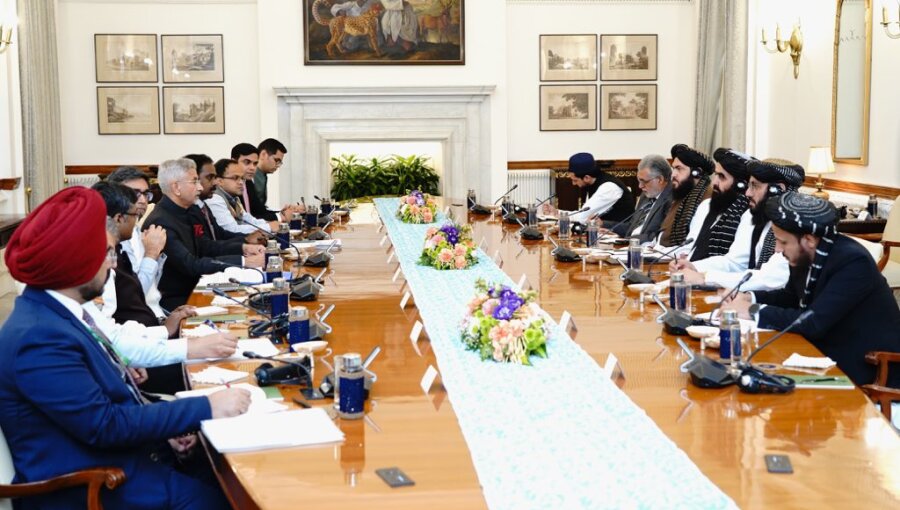
India’s hosting of the Taliban’s Foreign Minister Amir Khan Muttaqi marked a pivotal moment in New Delhi’s pragmatic realignment of its Afghan policy, reflecting a calculated effort to secure national interests amid shifting regional dynamics and ongoing security challenges.
The visit, notable for its diplomatic symbolism and the controversy surrounding a press conference, took place against the backdrop of violent border clashes between Pakistan and the Tehreek-e-Taliban Pakistan (TTP), as well as mounting scrutiny over women’s rights in Afghanistan and India’s diplomatic engagement standards. Until recently, India’s interaction with the Taliban regime was limited to humanitarian aid and emergency support managed by a small technical team at its shuttered Kabul embassy.
Muttaqi’s visit, made possible through a temporary UN travel exemption, marked a shift from this cautious stance. India announced that its technical mission would be upgraded to a fully operational embassy during the minister’s stay, while unveiling six new development projects and expanding trade opportunities. This engagement came without extending formal diplomatic recognition to the Taliban government.
The decision to open diplomatic channels likely reflects recognition of the realities on the ground rather than endorsement of the regime. The Afghan foreign minister expressed similar pragmatism, encouraging Indian firms to invest in mining and reconstruction, and pledging that Afghan territory would not be used for hostile activities against other nations. The joint statement issued after prolonged discussions outlined several key commitments.
India reaffirmed its support for Afghanistan’s sovereignty, independence, and territorial integrity, and promised assistance for forcibly repatriated Afghan refugees. Both sides condemned all forms of cross-border terrorism, avoiding direct reference to Pakistan but clearly alluding to recent attacks and border incidents linked to Islamabad.
Development cooperation was expanded, with India resuming infrastructure and humanitarian projects across Afghan provinces. The Taliban assured India of security guarantees, stating that no group would be allowed to plan or launch attacks against third countries from Afghan soil. Both governments also agreed to maintain dialogue aimed at promoting regional peace, stability, and mutual trust, signalling their rejection of external interference.
These commitments directly address India’s national security concerns, particularly after the Pahalgam attack earlier this year, which reportedly involved coordination from Afghan territory. The timing of Muttaqi’s visit coincided with rising violence between Pakistani forces and the Taliban’s affiliate group in Pakistan, the Tehrik-i-Taliban Pakistan(TTP).
Coinciding with Muttaqi’s visit, Pakistan conducted military operations targeting TTP leaders inside Afghanistan, followed by airstrikes on multiple border towns. The TTP retaliated by attacking police training facilities and border outposts, causing heavy casualties on both sides. As hostilities intensified, Pakistan accused Afghanistan of harbouring TTP militants and launched further artillery and airstrikes along the Durand Line.
The Taliban claimed to have inflicted several Pakistani casualties and captured a number of border posts, underscoring the deteriorating situation and complicating both India’s outreach and Pakistan’s regional calculations. In New Delhi, Amir Khan Muttaqi’s first press conference at the Afghan embassy drew widespread criticism after female journalists were barred from attending.
The exclusion triggered condemnation from Indian media associations, opposition parties, and international observers. Indian opposition leaders described it as gender discrimination, while journalist unions called it deeply concerning. The Indian Ministry of External Affairs distanced itself from the event, clarifying that it was organised independently by the Afghan embassy.
At a subsequent press conference attended by female journalists, Muttaqi attributed the incident to a technical oversight rather than deliberate intent. He stated that girls’s education was not prohibited in Afghanistan, claiming that 2.8mn out of 10mn schoolchildren were girls in his country. The controversy, however, renewed global attention on restrictions facing Afghan women and raised questions about India’s commitment to gender equality in its diplomatic engagements.
Muttaqi’s visit and India’s recalibrated approach highlight New Delhi’s attempt to safeguard its strategic interests in Afghanistan from both Pakistani interference and the influence of regional militant groups. India’s goals include restoring its presence in Afghan development and mining sectors to counter Pakistan and China, ensuring Afghan soil is not used for cross-border attacks, maintaining open diplomatic channels for crisis management and humanitarian coordination, and reaffirming its rights-based approach by publicly responding to gender exclusion.
Critics, however, argued that India’s response to the press controversy was too restrained. This pragmatic engagement reflects India’s evolving foreign policy in a region defined by fluid alliances and enduring instability. By reopening its embassy, India is neither endorsing the Taliban regime nor retreating from Afghanistan. Rather, it is positioning itself to influence outcomes in Central Asia while countering Pakistani and Chinese ambitions.
For the Taliban, the visit offered a platform to seek legitimacy, investment, and diplomatic credibility. For Pakistan, it was viewed with unease as India refrained from supporting its claims of Afghan complicity with the TTP and avoided direct criticism of Islamabad in the joint communiqué. The future of India-Taliban relations remains uncertain and will depend on the Taliban’s ability to uphold its security assurances and gradually expand women’s participation in public life. India’s continued engagement will test whether it can balance strategic pragmatism with its stated democratic principles.
The visit marked the emergence of a new phase in Indian diplomacy, characterised by engagement without recognition, investment without illusion, and cautious advocacy for rights within the confines of regional power politics. It is a policy born of necessity but pursued with quiet determination.

No comments:
Post a Comment