LONG READ
The Trump administration’s unapologetic stance on territorial expansion and the plunder of resources goes hand in hand with its rejection of the postwar global order and its disdain for European nations perceived as being in civilisational decline. Historians warn it also harks back to an age of colonial land grabs and great-power rivalry that ultimately led to catastrophic wars.
Issued on: 25/01/2026 -
FRANCE24
By: Benjamin DODMAN
Western ‘self-punishment’
Immerwahr says the focus on the Western Hemisphere shows that Trump “has a narrower vision of US power than his predecessors”, all of whom came to accept the notion that “US security interests are so extensive that anything, anywhere is relevant to the United States”. In contrast, “Trump feels constrained and oppressed” by America’s traditional engagements, he adds, pointing to his disregard for European alliances and his hostility towards NATO.
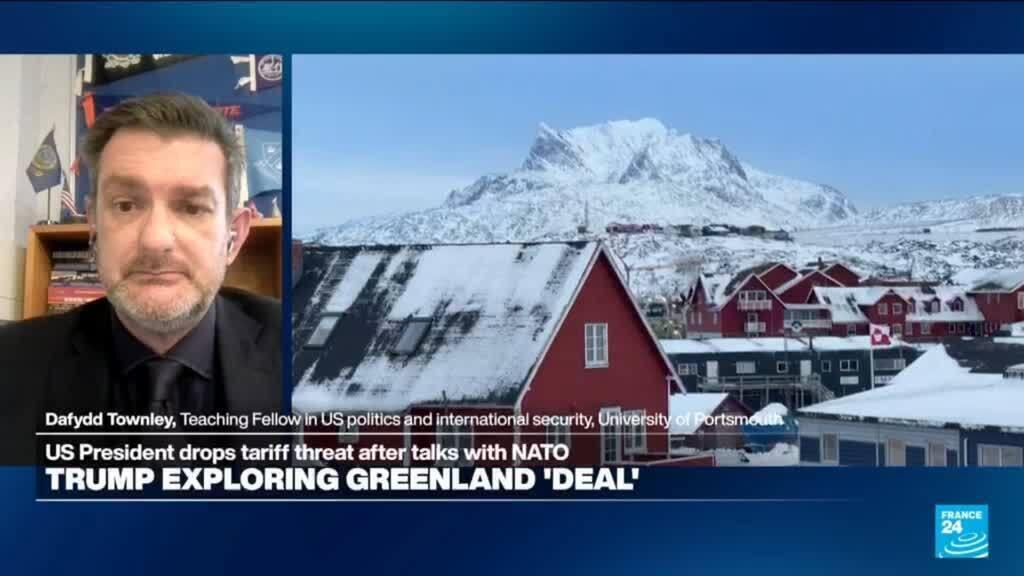
Dafydd Townley, an expert in US politics and international security at the University of Portsmouth, likens Trump to a “spreadsheet president” in that he “doesn’t see the political, economic and soft power, benefits that the US has gained from its position in NATO – he only sees the costs”.
The same could be said for much of the postwar order that the US has sought to uphold until Trump’s arrival at the White House. While left-wing critics of the post-1945 global order have long accused it of enshrining Western domination, this has sometimes concealed the fact that the system is also despised by the far right.
“Trump is a right-wing critic of US hegemony, and his argument is that it doesn’t pay off for the United States," says Immerwahr. “He’s not interested in the United States playing the role of managing a global system (...) Whereas in the past the US has asserted itself as an umpire that can call plays as fair or foul, Trump has very little interest in that. He wants to be a player and he wants to win.”
In a social media post shortly after Maduro’s capture, White House Deputy Chief of Staff Stephen Miller pointed to another, more ideological motive behind this repudiation of the postwar order.
“Not long after World War II the West dissolved its empires and colonies and began sending colossal sums of taxpayer-funded aid to these former territories (despite have [sic] already made them far wealthier and more successful),” wrote Miller, who has emerged as a key ideologue of the second Trump administration.
"The neoliberal experiment, at its core, has been a long self-punishment of the places and peoples that built the modern world,” he added.
Miller’s talk of the West suffering “reverse colonisation” through immigration is akin to far-right theories of a purported “great replacement” of native Europeans by non-white immigrants – a theory largely embraced by the Trump administration’s National Security Strategy (NSS) published last November.
Throughout the past year, members of the Trump administration have voiced support for European far-right, “patriotic” parties that share its illiberal, anti-immigrant agenda – and its tendency to belittle the threat posed by Russia.
In stark contrast to previous versions of the strategy, the most recent NSS has very little to say about Russian expansionism, warning instead that the main threat to Europe is one of “civilisational erasure”. It advocates interfering with internal politics on the continent by “cultivating resistance to Europe’s current trajectory within European nations”.
In analysis of the NSS published by the Brookings Institution, Visiting Fellow Tara Varma described it as a “clear plan for subversion in Europe”, noting that US support for the transatlantic alliance "is now conditioned on full ideological alignment across the Atlantic”. The document, wrote Senior Fellow Daniel Hamilton, “makes clear that the major transatlantic divide these days is not between the United States and Europe; it is between transatlantic liberals and transatlantic illiberals”.
The administration’s blistering critique of European politics “sounds almost exactly like the way in which they critique the American left”, adds Sexton. “The culture wars are being exported to Europe itself.”
Imperial plunder
At the heart of this illiberal thinking is the notion that might is right – and an unapologetic stance on imperial plunder.
Immerwahr points to a long history of imperial powers seeking to lock down territories for resources, “and being fairly explicit about it”, while also framing their actions as legal or benevolent. “What’s unusual about Trump is just how quickly he will allow the mask to fall,” he adds.
Trump makes no secret of the way he covets the mineral wealth of other countries, having previously sought to extract profit from Ukraine’s resources in return for assistance. His real-estate mindset appears to inform his foreign policy, most notably his plan to turn war-shattered Gaza into a glitzy Riviera largely emptied of its Palestinian population. It also helps to explain his insistence on “ownership” of Greenland rather than any leasing agreement like the one Britain negotiated for Diego Garcia.
“It’s not even about national interests,” says Sexton, noting that existing agreements with Denmark already allow the US to develop its military presence in Greenland and mine minerals there. “It’s more about the personal interests of the administration and its players.”
Commerce Secretary Howard Lutnick is one of several Trump allies who have held or explored potential mining investments on the island. Other supporters who have ties to investments in Greenland include Silicon Valley investor Marc Andreessen, tech entrepreneur Sam Altman and Amazon founder Jeff Bezos.
Addressing reporters after Maduro’s capture, Trump wasted no time before boasting that the US would "run” Venezuela and exploit its vast oil reserves, which he called “our oil”. His focus on oil raised questions about his administration's efforts to frame its brazen actions as a law enforcement operation aimed at choking off drug shipments to the US.
Trump notably made no mention of democracy, traditionally the official goal of US-led regime change. He dismissed the idea that the Venezuelan opposition leader María Corina Machado, who won the 2025 Nobel Peace Prize, should lead the country, and made no mention of Edmundo González, who many Venezuelans believe was the rightful winner of elections in 2024.
“Even when ruthlessly pursuing its material interests in the 20th century, the United States at least talked about promoting democracy, and I think it’s meaningful that it felt it needed to present things that way,” says Sexton. “That’s now completely gone.”
So has America’s professed commitment to international law, adds Immerwahr. “Until now, the US always felt a need to honour the rulebook even when breaking some of those rules. Trump is clearly not doing that.”
‘Dawn of a brutal reality’
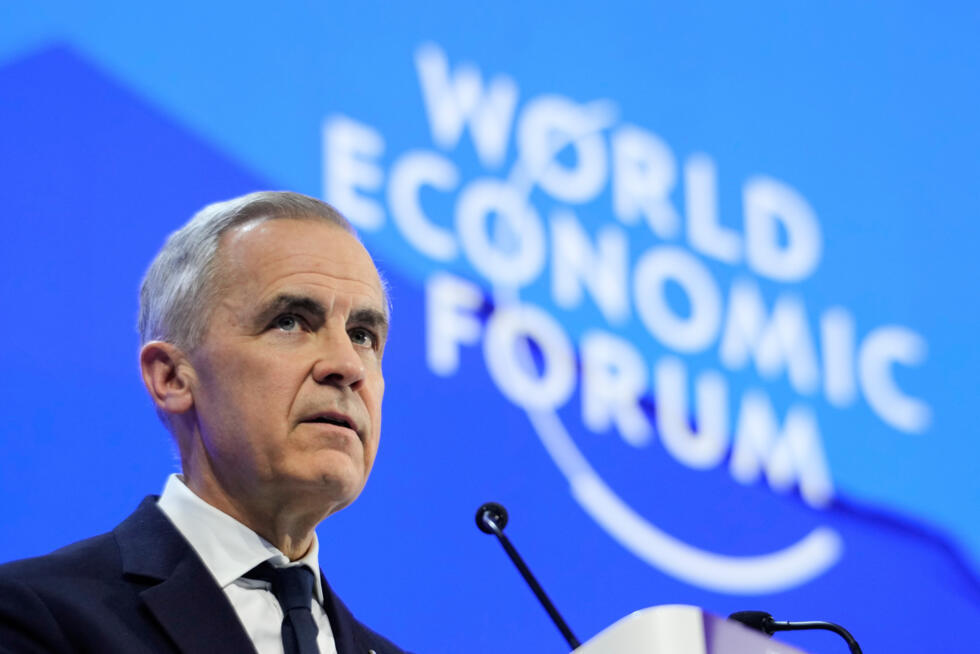
In a speech in Davos this week, Canada’s Prime Minister Mark Carney noted that honouring the rulebook, at least rhetorically, has for decades been a cornerstone of American hegemony. “The fiction was useful”, he said, helping to provide financial stability, collective security and a framework to resolve disputes.
Without naming him, Carney made clear that Trump had precipitated a “rupture in the world order, the end of the pleasant fiction and the dawn of a brutal reality in which great-power geopolitics is unconstrained”. Middle powers like Canada, he added, “must act together because if we’re not at the table, we’re on the menu”.
The Trump administration’s unapologetic stance on territorial expansion and the plunder of resources goes hand in hand with its rejection of the postwar global order and its disdain for European nations perceived as being in civilisational decline. Historians warn it also harks back to an age of colonial land grabs and great-power rivalry that ultimately led to catastrophic wars.
Issued on: 25/01/2026 -
FRANCE24
By: Benjamin DODMAN
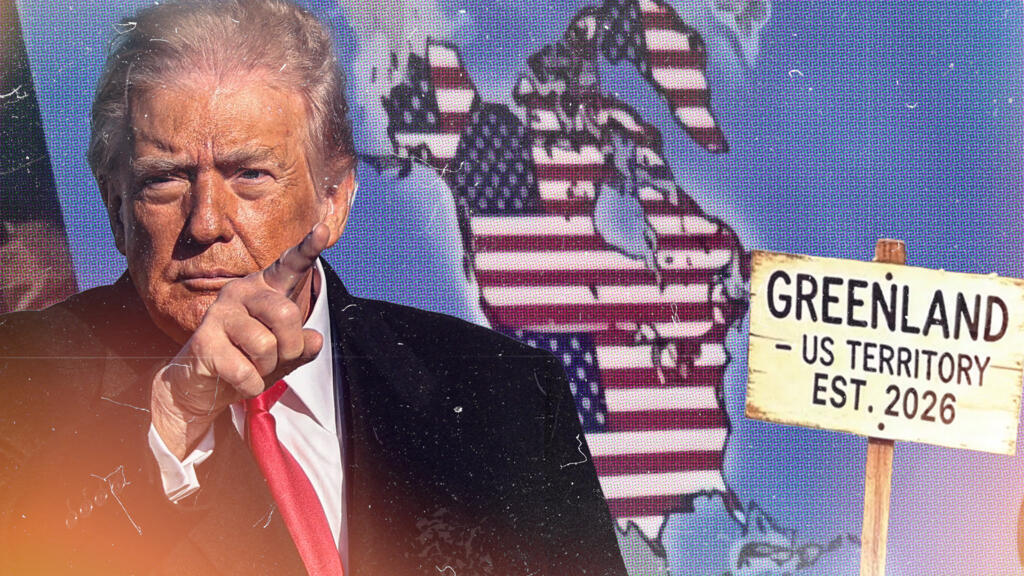
A montage of social media posts by US President Donald Trump touting his desire to acquire swaths of the Western Hemisphere and Greenland. © France Médias Monde Graphic Studio. Source images by Reuters, Donald Trump/Truth Social
As he raged at European leaders this week for resisting his claim to Greenland, US President Donald Trump brought up another island territory – located 12,000 kilometres away – for a dig at one of America’s closest allies.
In a typically virulent social media post, Trump berated Britain for agreeing to transfer sovereignty of the Indian Ocean island of Diego Garcia to Mauritius and lease back a key US-UK military base there, a move he labelled “an act of great stupidity”.
A relic of empire with a dark history of colonial abuse, Diego Garcia is part of the Chagos Islands archipelago, which Britain held on to after Mauritius gained independence in 1968. Since then, various international tribunals have ruled that the islands belong to Mauritius, saddling the UK with a diplomatic boil it has long been eager to lance.
When Britain and Mauritius finally settled the dispute last year, UN Secretary-General Antonio Guterres said it showed "the value of diplomacy in addressing historical grievances".
Trump, however, has shown scarce interest in international law, let alone colonial grievances. In his mind, Britain surrendered a strategic asset “for no reason whatsoever”, thereby projecting “total weakness”.
His swipe at a key ally underlined the erratic nature of a president who just months ago gave his blessing to the Chagos deal, and whose Secretary of State Marco Rubio called it a “monumental achievement”. It also underscored his administration's unapologetic stance on territorial acquisition, and contempt for what it perceives as European self-punishment.
‘Donroe Doctrine’
The 47th US president has expressed similar views about some of his predecessors’ actions, not least Jimmy Carter’s decision to transfer ownership of the Panama Canal to Panama – a move he branded a “disgrace”.
The canal has featured prominently on Trump’s territorial wish list, along with key ally Canada, which he claims should become America’s 51st state, and Greenland. Talk of territorial expansion is a throwback to American empire-building from more than a century ago, and a clear break from US policy since at least World War II.
“Trump is opposed to post-1945 forms of power projection. He is very eager to do something his predecessors have not done, which is to claim territory,” says historian Daniel Immerwahr, a humanities professor at Northwestern University and the author of “How to Hide an Empire: A History of the Greater United States”.
Trump’s favourite president is William McKinley, whose imperialist drive in the late 19th century saw the US take over a host of territories including Cuba, Puerto Rico and the Philippines. Another reason Trump likes the 25th president is because he authored the McKinley Tariff, says Jay Sexton, director of the Kinder Institute on Constitutional Democracy at the University of Missouri and author of “The Monroe Doctrine: Empire and Nation in Nineteenth-Century America”.
“There’s high tariffs in that period. There’s imperial expansion and very lightly regulated, if not unregulated, development of the United States. There’s also the emergence of the Gilded Age elite [a period roughly covering the 1870s through to the late 1890s], with a massive asymmetry in the distribution of wealth and power,” says Sexton. “The late 19th century fits with a lot of the Trump team’s vision and objectives both at home and in foreign policy.”
Named after former president James Monroe, the 1823 “Monroe Doctrine” was originally intended as a barrier to European colonial ambitions in the Americas. Trump has now repackaged it as a more muscular “Donroe Doctrine” aimed at shutting out US rivals from the western hemisphere, described by his administration as "OUR hemisphere”.
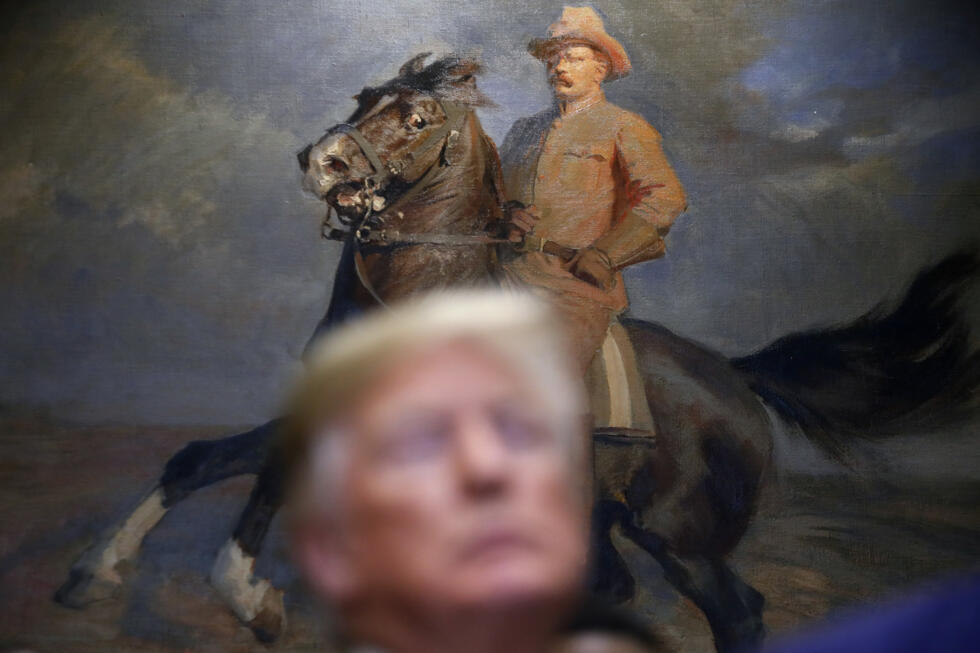
The administration’s talk of a “Trump corollary” to the doctrine references another former president, Theodore Roosevelt, whose 1904 “Roosevelt corollary” established Washington’s right to prevent “wrongdoing” anywhere in the region.
As he raged at European leaders this week for resisting his claim to Greenland, US President Donald Trump brought up another island territory – located 12,000 kilometres away – for a dig at one of America’s closest allies.
In a typically virulent social media post, Trump berated Britain for agreeing to transfer sovereignty of the Indian Ocean island of Diego Garcia to Mauritius and lease back a key US-UK military base there, a move he labelled “an act of great stupidity”.
A relic of empire with a dark history of colonial abuse, Diego Garcia is part of the Chagos Islands archipelago, which Britain held on to after Mauritius gained independence in 1968. Since then, various international tribunals have ruled that the islands belong to Mauritius, saddling the UK with a diplomatic boil it has long been eager to lance.
When Britain and Mauritius finally settled the dispute last year, UN Secretary-General Antonio Guterres said it showed "the value of diplomacy in addressing historical grievances".
Trump, however, has shown scarce interest in international law, let alone colonial grievances. In his mind, Britain surrendered a strategic asset “for no reason whatsoever”, thereby projecting “total weakness”.
His swipe at a key ally underlined the erratic nature of a president who just months ago gave his blessing to the Chagos deal, and whose Secretary of State Marco Rubio called it a “monumental achievement”. It also underscored his administration's unapologetic stance on territorial acquisition, and contempt for what it perceives as European self-punishment.
‘Donroe Doctrine’
The 47th US president has expressed similar views about some of his predecessors’ actions, not least Jimmy Carter’s decision to transfer ownership of the Panama Canal to Panama – a move he branded a “disgrace”.
The canal has featured prominently on Trump’s territorial wish list, along with key ally Canada, which he claims should become America’s 51st state, and Greenland. Talk of territorial expansion is a throwback to American empire-building from more than a century ago, and a clear break from US policy since at least World War II.
“Trump is opposed to post-1945 forms of power projection. He is very eager to do something his predecessors have not done, which is to claim territory,” says historian Daniel Immerwahr, a humanities professor at Northwestern University and the author of “How to Hide an Empire: A History of the Greater United States”.
Trump’s favourite president is William McKinley, whose imperialist drive in the late 19th century saw the US take over a host of territories including Cuba, Puerto Rico and the Philippines. Another reason Trump likes the 25th president is because he authored the McKinley Tariff, says Jay Sexton, director of the Kinder Institute on Constitutional Democracy at the University of Missouri and author of “The Monroe Doctrine: Empire and Nation in Nineteenth-Century America”.
“There’s high tariffs in that period. There’s imperial expansion and very lightly regulated, if not unregulated, development of the United States. There’s also the emergence of the Gilded Age elite [a period roughly covering the 1870s through to the late 1890s], with a massive asymmetry in the distribution of wealth and power,” says Sexton. “The late 19th century fits with a lot of the Trump team’s vision and objectives both at home and in foreign policy.”
Named after former president James Monroe, the 1823 “Monroe Doctrine” was originally intended as a barrier to European colonial ambitions in the Americas. Trump has now repackaged it as a more muscular “Donroe Doctrine” aimed at shutting out US rivals from the western hemisphere, described by his administration as "OUR hemisphere”.
The administration’s talk of a “Trump corollary” to the doctrine references another former president, Theodore Roosevelt, whose 1904 “Roosevelt corollary” established Washington’s right to prevent “wrongdoing” anywhere in the region.
Trump has adopted Theodore Roosevelt's "big stick" motto, without the "speak softly" part. © Jacquelyn Martin, AP
Roosevelt’s approach is typically associated with the adage “speak softly and carry a big stick”. Trump’s actions, however, suggest he is only interested in the “big stick” part.
In the 12 months since he took office, the US has attacked Venezuela and seized its president, carried out extrajudicial killings in international waters in the Caribbean and Eastern Pacific, and threatened military strikes on Mexico to target drug cartels. The US president has also imposed sanctions on his Colombian counterpart, decisively meddled with elections in Argentina and Honduras, and sought to interfere with Brazilian justice.
“He’s very drawn to threat and menace as an axis of interaction,” says Immerwahr. “And he’s always interested in the United States bombing places.”
The irony with this newfound focus on the Western Hemisphere, coming from a president who promises to make America “great again”, is that it harks back to an age preceding the country’s great power status.
“The United States was a rising power at the time, staking its claim to a sphere of influence as a first step to becoming a global power,” says Sexton. “What we’re seeing now is the reverse, like America is a contracting power, globalism is gone, and spheres of influence are back.”
Roosevelt’s approach is typically associated with the adage “speak softly and carry a big stick”. Trump’s actions, however, suggest he is only interested in the “big stick” part.
In the 12 months since he took office, the US has attacked Venezuela and seized its president, carried out extrajudicial killings in international waters in the Caribbean and Eastern Pacific, and threatened military strikes on Mexico to target drug cartels. The US president has also imposed sanctions on his Colombian counterpart, decisively meddled with elections in Argentina and Honduras, and sought to interfere with Brazilian justice.
“He’s very drawn to threat and menace as an axis of interaction,” says Immerwahr. “And he’s always interested in the United States bombing places.”
The irony with this newfound focus on the Western Hemisphere, coming from a president who promises to make America “great again”, is that it harks back to an age preceding the country’s great power status.
“The United States was a rising power at the time, staking its claim to a sphere of influence as a first step to becoming a global power,” says Sexton. “What we’re seeing now is the reverse, like America is a contracting power, globalism is gone, and spheres of influence are back.”
Western ‘self-punishment’
Immerwahr says the focus on the Western Hemisphere shows that Trump “has a narrower vision of US power than his predecessors”, all of whom came to accept the notion that “US security interests are so extensive that anything, anywhere is relevant to the United States”. In contrast, “Trump feels constrained and oppressed” by America’s traditional engagements, he adds, pointing to his disregard for European alliances and his hostility towards NATO.
Dafydd Townley, an expert in US politics and international security at the University of Portsmouth, likens Trump to a “spreadsheet president” in that he “doesn’t see the political, economic and soft power, benefits that the US has gained from its position in NATO – he only sees the costs”.
© France 24
11:28
11:28
The same could be said for much of the postwar order that the US has sought to uphold until Trump’s arrival at the White House. While left-wing critics of the post-1945 global order have long accused it of enshrining Western domination, this has sometimes concealed the fact that the system is also despised by the far right.
“Trump is a right-wing critic of US hegemony, and his argument is that it doesn’t pay off for the United States," says Immerwahr. “He’s not interested in the United States playing the role of managing a global system (...) Whereas in the past the US has asserted itself as an umpire that can call plays as fair or foul, Trump has very little interest in that. He wants to be a player and he wants to win.”
In a social media post shortly after Maduro’s capture, White House Deputy Chief of Staff Stephen Miller pointed to another, more ideological motive behind this repudiation of the postwar order.
“Not long after World War II the West dissolved its empires and colonies and began sending colossal sums of taxpayer-funded aid to these former territories (despite have [sic] already made them far wealthier and more successful),” wrote Miller, who has emerged as a key ideologue of the second Trump administration.
"The neoliberal experiment, at its core, has been a long self-punishment of the places and peoples that built the modern world,” he added.
Miller’s talk of the West suffering “reverse colonisation” through immigration is akin to far-right theories of a purported “great replacement” of native Europeans by non-white immigrants – a theory largely embraced by the Trump administration’s National Security Strategy (NSS) published last November.
Throughout the past year, members of the Trump administration have voiced support for European far-right, “patriotic” parties that share its illiberal, anti-immigrant agenda – and its tendency to belittle the threat posed by Russia.
In stark contrast to previous versions of the strategy, the most recent NSS has very little to say about Russian expansionism, warning instead that the main threat to Europe is one of “civilisational erasure”. It advocates interfering with internal politics on the continent by “cultivating resistance to Europe’s current trajectory within European nations”.
In analysis of the NSS published by the Brookings Institution, Visiting Fellow Tara Varma described it as a “clear plan for subversion in Europe”, noting that US support for the transatlantic alliance "is now conditioned on full ideological alignment across the Atlantic”. The document, wrote Senior Fellow Daniel Hamilton, “makes clear that the major transatlantic divide these days is not between the United States and Europe; it is between transatlantic liberals and transatlantic illiberals”.
The administration’s blistering critique of European politics “sounds almost exactly like the way in which they critique the American left”, adds Sexton. “The culture wars are being exported to Europe itself.”
Imperial plunder
At the heart of this illiberal thinking is the notion that might is right – and an unapologetic stance on imperial plunder.
Immerwahr points to a long history of imperial powers seeking to lock down territories for resources, “and being fairly explicit about it”, while also framing their actions as legal or benevolent. “What’s unusual about Trump is just how quickly he will allow the mask to fall,” he adds.
Trump makes no secret of the way he covets the mineral wealth of other countries, having previously sought to extract profit from Ukraine’s resources in return for assistance. His real-estate mindset appears to inform his foreign policy, most notably his plan to turn war-shattered Gaza into a glitzy Riviera largely emptied of its Palestinian population. It also helps to explain his insistence on “ownership” of Greenland rather than any leasing agreement like the one Britain negotiated for Diego Garcia.
“It’s not even about national interests,” says Sexton, noting that existing agreements with Denmark already allow the US to develop its military presence in Greenland and mine minerals there. “It’s more about the personal interests of the administration and its players.”
Commerce Secretary Howard Lutnick is one of several Trump allies who have held or explored potential mining investments on the island. Other supporters who have ties to investments in Greenland include Silicon Valley investor Marc Andreessen, tech entrepreneur Sam Altman and Amazon founder Jeff Bezos.
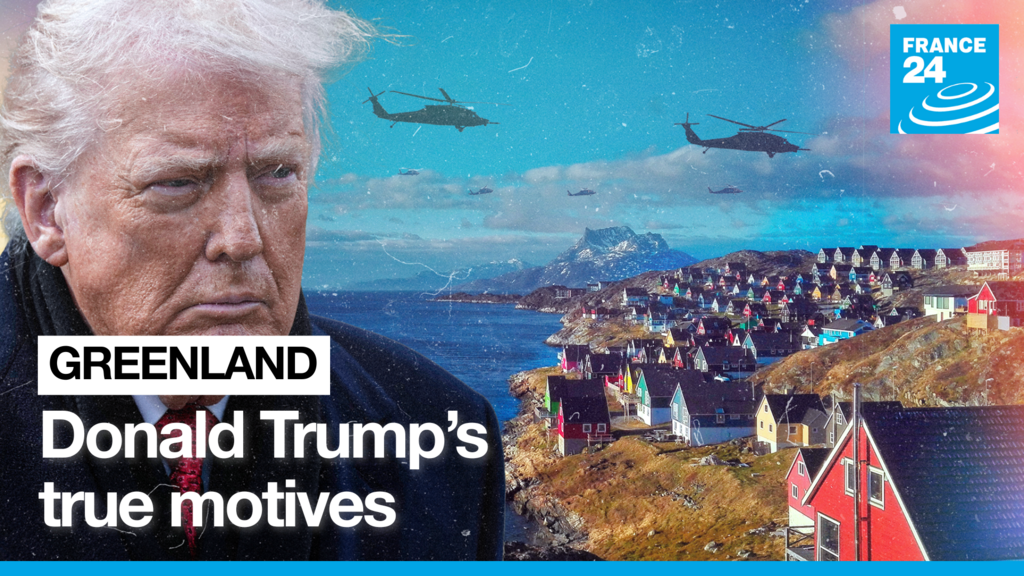
Trump’s obsession with Greenland: The real reasons behind his threats
© Studio Graphique France 24
16:08
16:08
Addressing reporters after Maduro’s capture, Trump wasted no time before boasting that the US would "run” Venezuela and exploit its vast oil reserves, which he called “our oil”. His focus on oil raised questions about his administration's efforts to frame its brazen actions as a law enforcement operation aimed at choking off drug shipments to the US.
Trump notably made no mention of democracy, traditionally the official goal of US-led regime change. He dismissed the idea that the Venezuelan opposition leader María Corina Machado, who won the 2025 Nobel Peace Prize, should lead the country, and made no mention of Edmundo González, who many Venezuelans believe was the rightful winner of elections in 2024.
“Even when ruthlessly pursuing its material interests in the 20th century, the United States at least talked about promoting democracy, and I think it’s meaningful that it felt it needed to present things that way,” says Sexton. “That’s now completely gone.”
So has America’s professed commitment to international law, adds Immerwahr. “Until now, the US always felt a need to honour the rulebook even when breaking some of those rules. Trump is clearly not doing that.”
‘Dawn of a brutal reality’
In a speech in Davos this week, Canada’s Prime Minister Mark Carney noted that honouring the rulebook, at least rhetorically, has for decades been a cornerstone of American hegemony. “The fiction was useful”, he said, helping to provide financial stability, collective security and a framework to resolve disputes.
Without naming him, Carney made clear that Trump had precipitated a “rupture in the world order, the end of the pleasant fiction and the dawn of a brutal reality in which great-power geopolitics is unconstrained”. Middle powers like Canada, he added, “must act together because if we’re not at the table, we’re on the menu”.
Mark Carney’s Davos address – standing ovation included – did not go down well with Trump. © Markus Schreiber, AP
European leaders in Davos also rued the demise of the rules-based international order and the rise of what France’s President Emmanuel Macron described as a “new imperialism” on the world stage. Their thinly veiled criticism of Trump signalled mounting exasperation with a mercurial ally they spent much of the past year cajoling, only to be showered with insults in return.
Trump’s refusal, until this week, to rule out military action against NATO allies to acquire Greenland has also led to pushback at home, including rare criticism from Republicans in Congress. Surveys suggest there is very little public backing for Trump’s expansionism, including among supporters who cheered at Maduro’s capture.
“American voters love the military. They love the Black Ops chopper coming down and taking Maduro,” says Sexton. “They do not love raising taxes to pay for boots on the ground in protracted colonial wars. And that was learned the hard way in the early 20th century.”
The revisionist rhetoric coming from Washington suggests some of those lessons from history have been unlearned.
Analysts have warned that Trump’s unprovoked attack on Venezuela could inspire similar action from Russia and China. “If the norms are busted and the United States is going to stake its claim to its sphere, there's really nothing to stop the Chinese or Russians from doing it in theirs,” says Sexton.
Russia under Vladimir Putin has already expanded into Georgia and Ukraine while China’s Xi Jinping has repeatedly threatened to use force to acquire Taiwan. Both leaders share with Trump an aspiration to restore past grandeur.
“They all have some story to tell about how the ‘liberal’ international order has not been kind to them,” notes Immerwahr. “Trump shares with them a sense that there are past privileges that powerful countries used to have that he would like to see restored.”
With the US president now openly pursuing expansionist aims, he adds, the fear is that “we may be tilting back to a world of colonial land grabs”, in which great powers race to lock down territories and resources – and threaten to close off markets, as Trump has already done.
Colonial powers’ late-19th century scramble for territories was accompanied by murderous campaigns to subjugate populations, while imperial rivalry eventually led to two world wars.
“Both turned out to be incredibly bloody forms of war,” says Immerwahr. “I do not want to see us revisit those, especially in the age of nuclear weapons.”
European leaders in Davos also rued the demise of the rules-based international order and the rise of what France’s President Emmanuel Macron described as a “new imperialism” on the world stage. Their thinly veiled criticism of Trump signalled mounting exasperation with a mercurial ally they spent much of the past year cajoling, only to be showered with insults in return.
Trump’s refusal, until this week, to rule out military action against NATO allies to acquire Greenland has also led to pushback at home, including rare criticism from Republicans in Congress. Surveys suggest there is very little public backing for Trump’s expansionism, including among supporters who cheered at Maduro’s capture.
“American voters love the military. They love the Black Ops chopper coming down and taking Maduro,” says Sexton. “They do not love raising taxes to pay for boots on the ground in protracted colonial wars. And that was learned the hard way in the early 20th century.”
The revisionist rhetoric coming from Washington suggests some of those lessons from history have been unlearned.
Analysts have warned that Trump’s unprovoked attack on Venezuela could inspire similar action from Russia and China. “If the norms are busted and the United States is going to stake its claim to its sphere, there's really nothing to stop the Chinese or Russians from doing it in theirs,” says Sexton.
Russia under Vladimir Putin has already expanded into Georgia and Ukraine while China’s Xi Jinping has repeatedly threatened to use force to acquire Taiwan. Both leaders share with Trump an aspiration to restore past grandeur.
“They all have some story to tell about how the ‘liberal’ international order has not been kind to them,” notes Immerwahr. “Trump shares with them a sense that there are past privileges that powerful countries used to have that he would like to see restored.”
With the US president now openly pursuing expansionist aims, he adds, the fear is that “we may be tilting back to a world of colonial land grabs”, in which great powers race to lock down territories and resources – and threaten to close off markets, as Trump has already done.
Colonial powers’ late-19th century scramble for territories was accompanied by murderous campaigns to subjugate populations, while imperial rivalry eventually led to two world wars.
“Both turned out to be incredibly bloody forms of war,” says Immerwahr. “I do not want to see us revisit those, especially in the age of nuclear weapons.”


No comments:
Post a Comment