THE GLOBAL EPSTEIN CLASS

Former US secretary of state Hillary Clinton accused President Donald Trump of staging a "cover-up" over files related to sex offender Jeffrey Epstein. Days before her scheduled deposition before a Congressional committee, Clinton said the Republicans probing her are trying to deflect attention away from President Donald Trump, whose name is also mentioned in the files.
Issued on: 17/02/2026
By: FRANCE 24

Former US secretary of state Hillary Clinton has accused President Donald Trump of orchestrating a "cover-up" over files related to sex offender Jeffrey Epstein, according to an interview with the BBC published Monday.
"Get the files out. They are slow-walking it," Clinton, who is due to testify before a Congressional committee on the issue, told the British broadcaster in an interview in Berlin.
The Justice Department last month released the latest cache of so-called Epstein files – more than three million documents, photos and videos related to its investigation into sex criminal Epstein, who died from what was determined to be suicide while in custody in 2019.
Clinton's husband, former president Bill Clinton, features regularly in the files, but no evidence has come to light implicating either Clinton in criminal activity.
The couple has been ordered to give closed-door depositions before the House Oversight Committee, which is probing the deceased financier's connections to powerful figures and how information about his crimes was handled.
"We will show up but we think it would be better to have it in public," Hillary Clinton told the BBC.
"I just want it to be fair," she said. "I want everybody treated the same way."
The former secretary of state said she and her husband "have nothing to hide. We have called for the full release of these files repeatedly."
The Department of Justice has said it has no more files to release, though lawmakers have criticised it for not publishing internal government memos, notes and emails on Epstein.
Clinton said the Republicans probing her are trying to deflect attention away from Trump, whose name is also mentioned in the files many times.
"Look at this shiny object. We're going to have the Clintons, even Hillary Clinton, who never met the guy," she said.
Trump denies any wrongdoing. Mere mention in the files is not proof of having committed a crime.
Former president Clinton has acknowledged flying on Epstein's plane in the early 2000s for Clinton Foundation-related humanitarian work, but said he never visited Epstein's private island.
Hillary Clinton, who ran against Trump for president in 2016, has said she had no meaningful interactions with Epstein, never flew on his plane and never visited his island.
In the interview with the BBC, she said she had met Ghislaine Maxwell, an Epstein associate who was convicted of conspiring with him to sexually abuse minors, "on a few occasions".
Responding to Clinton's comment that the congressional testimony was a bid to create a distraction, Trump denied it, telling reporters Monday evening he had been "totally exonerated".
Hillary Clinton will appear for her deposition on February 26, while Bill Clinton will appear on February 27.
(FRANCE 24 with AFP)
Epstein files: ‘Releasing documents in their raw state can be counterproductive’
The release by the US administration of more than 3 million documents linked to convicted sex offender Jeffrey Epstein has put dozens of high-profile figures under scrutiny over their correspondence with him. RFI spoke to Frédérique Sandretto, a professor of American civilisation at Sciences Po university, who says while this move was meant to dispel doubts, it has instead enabled conspiracy theorists.
Issued on: 14/02/2026

The United States Justice Department on 30 January published nearly 3 million government documents related to Epstein, who was convicted in 2008 for soliciting a minor and died by suicide in custody in 2019 while awaiting trial for sex trafficking.
The mention of a name in the files does not, in itself, imply wrongdoing by that individual. However, the material has shown how Epstein embedded himself in elite international circles – through introductions, group emails and investment activity.
While some of the public figures named have stepped down from their positions, others have downplayed or denied ties to Epstein.
For Frédérique Sandretto, a professor of American civilisation at Sciences Po university in Paris, the release of such a large number of documents could do more harm than good without proper analysis.
RFI: How has the publication of these documents by the US administration been received by the public?
Frédérique Sandretto: It was eagerly awaited. It was something [US President Donald] Trump had announced, but he had always backed down, fuelling conspiracy theories that there was something to hide. Finally, the Transparency Act was passed in 2025, with unprecedented consensus between Republicans and Democrats. When you see the documents, there are more than 3 million of them. And you don't know where to start. You feel like you have access to declassified data, which is true. So the gesture is good, but the question is: what do we do with this material?
RFI: How has their publication reignited conspiracy theories surrounding the Epstein case?
FS: It's very visible on social media. We are seeing a resurgence of old conspiracy theories, such as "Pizzagate", which claimed that the campaign manager of presidential candidate Hillary Clinton had organised child sex trafficking in a pizzeria.
On platforms such as Reddit, if you type in the word "pizza" you'll see all sorts of conspiracy theories pop up based on the idea of a network of elites working together against the people and a paedophile ring.
Why? Because in the files leaked in recent days, the word "pizza" appears 911 times. It is indeed strange. Some see it as a code word. And that's enough to revive “pizzagate”, a conspiracy theory that emerged nearly 10 years ago, leading some to say, ‘we told you so, that's what it was'.
RFI: What are the particulars of the Epstein case that fuel such conspiracy theories?
FS: Conspiracy theories surrounding Epstein really began after his death. Many people said to themselves: this man knew too much, he could have blown up the planet, he couldn't have committed suicide, it must have been a disguised suicide...
Added to this are his connections with powerful figures in Silicon Valley, Bill Gates, [the former] Prince Andrew and politicians in Europe. This fuels the idea of a transnational conspiracy, led by powerful elites against the people – especially since the victims were often young girls from disadvantaged backgrounds.
Here we see classic conspiracy theory patterns: the idea of a deep state, a radical opposition between elites and the people, and an anti-Semitic narrative superimposed on top of it all. This has led to theories claiming that Epstein was a Mossad agent.
Finally, the mass declassification of documents gives the impression of a vast web of connections, with new names emerging every day, further fuelling the conspiracy sphere.
RFI: Has the release of the documents, without full context, fuelled conspiracy theories, even if it was intended as a move towards transparency?
FS: There is a very strong desire for transparency, with the declassification of 3 million documents, which is a first in the United States. But what we are seeing is that releasing documents like this, in their raw state, can be counterproductive. It has also reignited all the conspiracy theories.
At the same time, everyone wanted these files and it is very good that the US Department of Justice has published them. They should have been sorted through. Now, anyone can log on and do a search. There are photos that may be shocking, and people whose names are mentioned who are not necessarily connected to Epstein. This can create an association between the name referenced and Epstein. And that can quickly turn into a witch hunt.
The fact that certain passages have been redacted also fuels the conspiracy theory: we are being given information, but not all of it. So we are really on the borderline between the US Congress's desire for transparency and the conspiracy theorists who say, ‘see, these documents prove we were right'. It's all very well to have a right to information, but we also have a right to be cautious. The question remains: what do we do with all this?
RFI: Is it still possible to dispel the climate of suspicion surrounding the Epstein case?
FS: Trump said that now that he has given everything he had, he hoped we could turn the page. I don't think that's the case.
On the contrary, I think this is the beginning of something much bigger. Everyone wants to find out, to tell themselves that it's not possible that all this has been published without there being something to discover.
I just think that what we're seeing is the tip of the iceberg, and that there will be many more names that will be [thrown about], much more evidence that will come out. It's just a matter of time. All these documents need to be analysed.
This article was adapted from the original version in French by Aurore Lartigue.
Former French culture minister's offices raided in Epstein files fallout
French investigators raided the offices of former Culture Minister Jack Lang, 86, on Monday, as prosecutors step up efforts to examine potential links between French nationals and the crimes of US financier and convicted sex offender Jeffrey Epstein.
Issued on: 16/02/2026 - RFI

The national financial prosecutor’s office said it had opened a preliminary investigation into alleged aggravated tax fraud and money laundering involving Jack Lang and his daughter Caroline Lang.
Lang resigned earlier this month as president of the Arab World Institute, a position he had held for over a decade, after it was revealed that he had corresponded numerous times with the sexual predator.
Lang had previously requested favours from Jeffrey Epstein, including use of the financier’s car or private plane for himself or family members.The former minister's name also appeared in the statutes of an offshore company founded by Epstein in 2016.
Lang has denied any wrongdoing, saying he was “shocked” to learn of the news. The former minister has insisted that he had known nothing of Epstein’s 2008 conviction of "procuring a girl below the age of 18 for prostitution".
In a recent interview with a French newspaper, he described himself as “white as snow” and denounced what he called a “tsunami of lies.”

Special team of judges
Monday's office raid comes as Paris prosecutors confirmed over the weekend that they are establishing a special team of judges to study material released by US authorities concerning Jeffrey Epstein’s network.
The Paris prosecutor’s office said the new team will work closely with the police and with prosecutors from the national financial crimes unit to determine whether any French citizens had committed crimes.
The aim, according to prosecutors, is to extract any piece of evidence from the Epstein files that could be reused in new investigations.
Members of France's political and cultural elite named in Epstein files
French prosecutors have also announced that they will revisit the case of Jean-Luc Brunel, a former modelling agency executive and close Epstein associate who died in custody in Paris in 2022 after being charged with raping minors. The case against him was dropped in 2023 in the wake of his death.
Prosecutors said Brunel had offered modelling jobs to young girls from disadvantaged backgrounds and had engaged in sexual acts with underage girls in multiple locations including the United States, the US Virgin Islands and France.
Ten women have brought accusations against him, including being subjected to forced sexual penetration.
Jeffrey Epstein died in a US prison in 2019 while awaiting trial on sex-trafficking charges. US authorities ruled his death a suicide.
(with newswires)
DP World Changes Leadership Responding to Pressure Over Epstein Scandal

Port and logistics powerhouse DP World reported on Friday, February 13, that it is changing its management leadership as pressure grew from the investment community over its long-time chairman and CEO’s ties to convicted sex offender Jeffrey Epstein. The company named one of the leaders of the Dubai financial community as its new chairman while elevating its Group Deputy CEO and Chief Financial Officer to the role of CEO.
The company simply stated that the long-time head of the company, Sultan Ahmed bin Sulayem, had “resigned from the company, effective immediately.” He had been in the leadership role first as Chairman since 2007 and Chairman and CEO since 2016.
He is one of the most prominent executives and political leaders to lose his position as the ties to Jeffrey Epstein emerged in the released documents from the U.S. Department of Justice. CNN reports bin Sulayem’s name appeared “thousands of times” in the most recent batch of documents, and he was referred to as a “best and trusted friend.” There were business discussions between him and Epstein, but much of it appears to be sexually explicit material.
As more documents became public, it was revealed that the relationship between the two men had lasted well over a decade. Further, bin Sulayem continued the contact after Epstein’s 2009 conviction and until shortly before his death while in jail in New York.
Investors had increased pressure on the company to address “the situation and take the necessary actions.” The UK’s British International Investment said earlier this week that it was suspending its investment activity with DP World. Long-time partner and investor Canada’s La Caisse, operators of Quebec’s pension and the largest pension fund in Canada, also said it would pause additional capital deployment until the company responded.
Both investors reportedly told Reuters today that they welcomed the company’s actions. BII said it looked forward to continuing its partnership, and Caisse said it would work with the new leadership of the company.
One of the prominent leaders of the Dubai financial community, Essa Kazim, was named Chairman of DP World. Since 2014, he has served as Governor of the Dubai International Finance Center, which oversees the country’s business environment and closely interacts with all the companies in the emirate. He also serves as Deputy Chairman of the Supreme Legislation Committee in Dubai.
Long-time executive Yuvraj Narayan was elevated to the role of CEO. He has been with the company since 2004 and has been in the role of Group CFO since 2005. As such, he was working closely with bin Sulayem as DP World grew rapidly from the operator of the Jebel Ali port to one of the leaders in the industry.
DP World rose in prominence in 2006 when it acquired the venerable British shipping company P&O for $6.8 billion. The company also made investments, including Imperial Logistics and Syncreon, and recently announced it would be unifying its operations under the DP World brand.
The company’s profile says that it contributes more than 36 percent to the GDP of Dubai and about 12 percent to the GDP of the UAE. It operates in more than 80 countries. Last year, it reported nearly $20 billion in revenues.
15/02/2026
By: FRANCE 24

The Paris prosecutor's office on Saturday announced it was setting up a special team of magistrates to analyse evidence that could implicate French nationals in the crimes of the convicted US sex offender Jeffrey Epstein.
With Epstein's known circle now extending to prominent French figures after the release of documents by the US authorities, the prosecutor's office said it would also thoroughly re-examine the case of a former French modelling agency executive Jean-Luc Brunel, a close associate of the American financier, who died in custody in 2022.
The new team will work closely with prosecutors from the national financial crimes unit and police with a view to opening investigations into any suspected crimes involving French nationals, the Paris prosecutor's office told AFP.
The aim is "to be able to extract any piece that could be usefully reused in a new investigative framework", it said.
Brunel was found dead in his cell in a Paris prison in 2022 after having been charged with raping minors. The case against him was dropped in 2023 in the wake of his death, with no other person charged.
Prosecutors said an investigation had showed Brunel was "a close friend of Jeffrey Epstein" who had offered modelling jobs to young girls from poor backgrounds.
He had engaged in sexual acts with underage girls in the United States, the US Virgin Islands, Paris and the south of France, they said.
Ten women had made accusations against Brunel, several describing how they had been led to drink alcohol and had been subjected to forced sexual penetration, according to the prosecutor's office.
New cases
Several French public figures feature in the latest US Department of Justice release of material from the Epstein files, though being mentioned there does not in itself mean any offence has been committed.
The prosecutor's office said it had been asked to look into three new specific cases involving a French diplomat, a modelling agent and a musician.
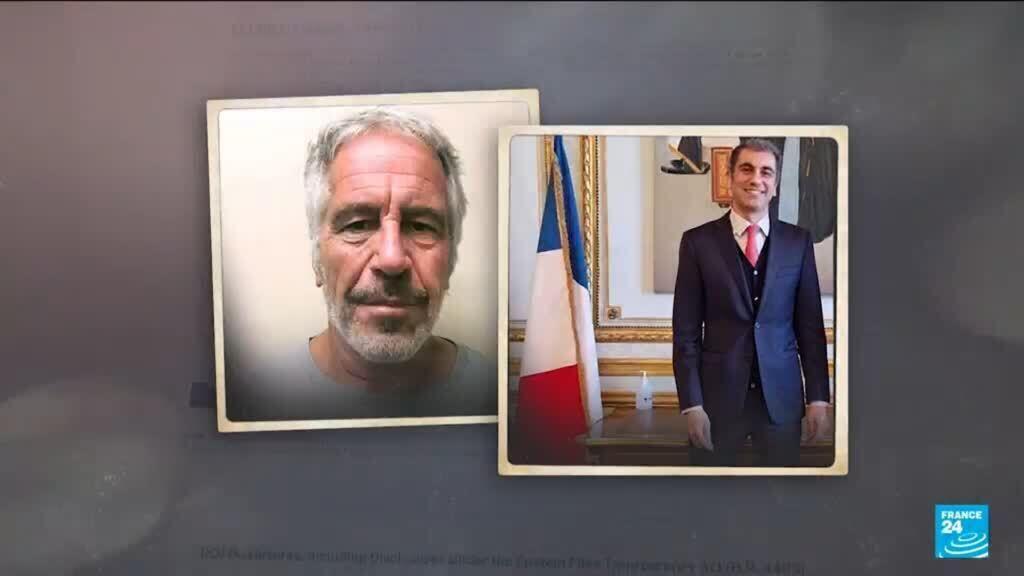
At the request of the French foreign ministry it was looking into the reported appearance of senior diplomat Fabrice Aidan in the cache of Epstein-related documents published by the US authorities.
"An investigation is underway to gather various pieces of evidence that could substantiate this report," the prosecutor's office stated.
01:25
The prosecutor's office has also received a complaint filed by a Swedish woman against Daniel Siad, a model recruiter with close ties to Epstein. She accused him of "sexual acts that she describes as rape and that may have been committed in France in 1990".
The office has also received a complaint filed against French conductor Frédéric Chaslin alleging acts of sexual harassment allegedly committed in 2016, it said.
The latest release of Epstein files has led to French former minister Jack Lang resigning from his position as the head of a top cultural body, the Arab World Institute.
Lang has however denied any wrongdoing, saying he was "shocked" that his name appeared in the statutes of an offshore company Epstein founded in 2016.
The office of the national financial prosecutor said it had opened a preliminary investigation for "aggravated tax fraud and money laundering" against Lang and his daughter Caroline Lang.
Following this announcement, Lang resigned from the presidency of the Arab World Institute.
Epstein died in prison in 2019 while awaiting trial for trafficking children, in what the US authorities ruled was a suicide.
(FRANCE 24 with AFP)
French police on Monday searched the Arab World Institute in Paris in connection with an investigation into its former head, France's ex-culture minister Jack Lang, and his alleged ties with the late financier and convicted sex offender Jeffrey Epstein.
Issued on: 16/02/2026
By: FRANCE 24

02:47
French police conducted raids at various locations, including the Arab World Institute (IMA) in Paris, on Monday as part of the investigation into the institution's former head Jack Lang for his alleged financial ties to Jeffrey Epstein, Pascal Prache, head of the national financial prosecutor's office, said in a statement.
Lang, a former French culture minister under socialist president François Mitterrand, resigned earlier this month from the organisation which he had led since 2013.
The Arab World Institute is a Paris-based cultural and research institution under the supervision of France's foreign ministry that promotes understanding of the Arab world.
Lang, who corresponded with Epstein from 2012 and 2019, has denied any wrongdoing, saying he was "shocked" that his name appeared in the statutes of an offshore company Epstein founded in 2016.
Lang's daughter Caroline, who allegedly owned half the shares in the company, has resigned from two positions.
The raid, announced by the national financial prosecutor's office, occurred as he said goodbye to former colleagues in a ceremony at the institute after more than a decade as its president.
"I'm pleased to see the financial judiciary is at work," he said during his speech.
"I'm delighted because I have nothing to hide."
French prosecutors announce special team for Epstein files
The raids came after French prosecutors opened a preliminary investigation into alleged tax fraud against Lang and his daughter following the release of documents by the US Department of Justice.
The Paris prosecutor's office on Saturday announced that it was setting up a special team of magistrates to analyse evidence that could implicate French nationals in the crimes of the convicted sex offender Epstein.
With Epstein's known circle now extending to prominent French figures after the release of documents by the US authorities, the prosecutor's office said it would also thoroughly re-examine the case of a former French modelling agency executive, Jean-Luc Brunel, a close associate of the American financier who died in custody in 2022.
The new team will work closely with prosecutors from the national financial crimes unit and police with a view to opening investigations into any suspected crimes involving French nationals, the Paris prosecutor's office told AFP.
The aim is "to be able to extract any piece that could be usefully reused in a new investigative framework", it said.
Brunel was found dead in his cell in a Paris prison in 2022 after having been charged with raping minors. The case against him was dropped in 2023 in the wake of his death, with no other person charged.
Prosecutors said an investigation had shown Brunel was "a close friend of Jeffrey Epstein" who had offered modelling jobs to young girls from poor backgrounds.
Brunel had engaged in sexual acts with underage girls in the United States, the US Virgin Islands, Paris and the south of France, they said.
Ten women had made accusations against Brunel, several describing how they had been led to drink alcohol and had been subjected to forced sexual penetration, according to the prosecutor's office.
Senior diplomat under scrutiny
Several French public figures feature in the latest US Department of Justice release of material from the Epstein files, though being mentioned there does not in itself mean any offence has been committed.
The prosecutor's office said it had been asked to look into three new specific cases involving a French diplomat, a modelling agent and a musician.
At the request of the French foreign ministry it was looking into the reported appearance of senior diplomat Fabrice Aidan in the cache of Epstein-related documents published by the US authorities.
READ MOREFrance demands investigation into diplomat cited in Epstein files
"An investigation is underway to gather various pieces of evidence that could substantiate this report," the prosecutor's office stated.
(FRANCE 24 with AFP and Reuters)

No comments:
Post a Comment