
‘Yet Another Trump Grift’: Congress Called to Stop US Takeover of Venezuelan Oil Fields
“Handing over Venezuela’s oil wealth to the US contravenes the Constitution and is not in the interest of the Venezuelan people—much more when it is done at gunpoint,” said one analyst.
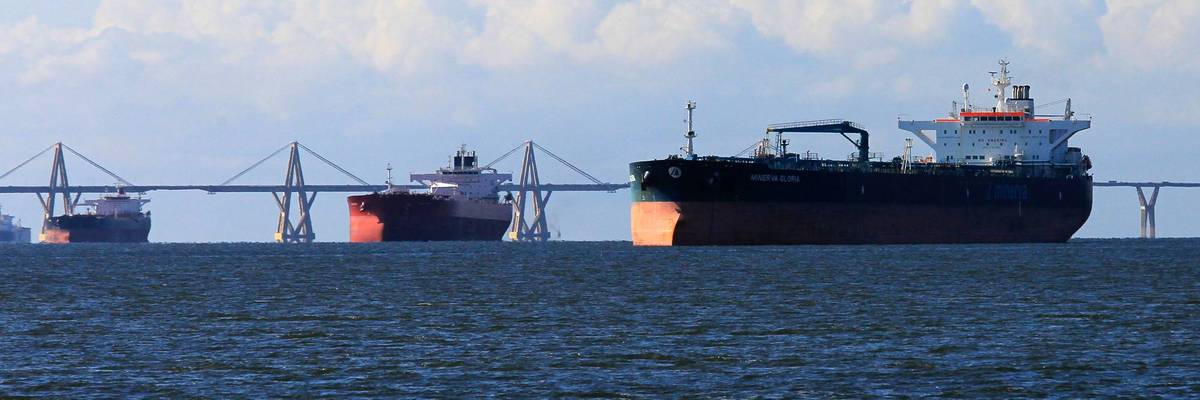
Oil tankers are seen anchored in Lake Maracaibo, Venezuela after loading crude oil at the Bajo Grande Refinery port.
(Photo by Jose Bula Urrutia/UCG/Universal Images Group via Getty Images)
Aug 28, 2026
COMMON DREAMS
Trump administration officials are claiming that talks between US Secretary of State Marco Rubio and the Venezuelan government regarding control of the country’s oil fields will ultimately secure “America’s energy future for generations to come”—but analysts on Friday called on lawmakers to halt President Donald Trump’s “colonial” push to take over the reserves.
As Axios reported, officials including Rubio and Deputy White House Chief of Staff Stephen Miller have been involved in talks with Venezuelan acting President Delcy Rodriguez about taking an ownership stake in more than a dozen oil fields in the Orinoco Belt and Lake Maracaibo regions, which have about 90 billion barrels of oil reserves. In all, Venezuela’s vast reserves—the world’s largest—contain about 300 billion barrels.
The deal would double US oil reserves at a time when Americans have seen gas prices skyrocket and oil firms reap profits as a result of Trump’s war on Iran and the closure of the Strait of Hormuz—events to which countries that have expanded renewable energy sources have proven far more resilient, according to data from JP Morgan Commodities research.
Despite that resilience, the Trump administration has reportedly approached the talks as a way to lock the US into generations of continued reliance on planet-heating oil extraction. According to Bloomberg, one deal under consideration is a 100-year lease on the oil fields.
Axios reported that in return for giving the US an ownership stake—something Trump began privately discussing before US forces invaded Venezuela and abducted President Nicolás Maduro in January—Venezuela “would benefit from private companies, including American firms, developing the fields and returning more oil revenue” to the South American country.
Tyler Slocum, director of Public Citizen’s energy program, said that if the deal is finalized, “Trump will likely transfer operational control to US oil companies,” which donated heavily to his campaign.
The proposed deal would open “the door to Trump’s typical bilateral transactional corruption” and bestow “lucrative opportunities for the oil companies he chooses to reward,” said Slocum.
“In the nearly eight months since Trump’s illegal January 2026 Venezuelan invasion, the Trump administration has managed a $13 billion slush fund gleaned from its control over Venezuelan oil sales, with zero transparency, and little to no public oversight or accounting,” Slocum continued. “The president has no authority to negotiate a deal where the federal government takes control over foreign oil production facilities, and Congress must intervene and put an end to Trump’s oil-fueled imperialism.”
One opposition leader in Venezuela, where Energy Secretary Chris Wright is expected to travel next week to discuss increasing oil production by US companies, said the deals currently being discussed amount to “a land grab—a massive land grab.”
Francisco Rodríguez, a senior research fellow at the Center for Economic and Policy Research and author of The Collapse of Venezuela, said the country’s National Assembly “should deny authorization for this predatory deal.”
Following Trump’s invasion of Venezuela in January, energy historian and Eurasia Group analyst Gregory Brew told The Guardian, “US dominance over Venezuelan oil reserves allows the US to regard Venezuelan reserves as its own reserves: a source of oil from which the United States can draw and that nobody else has access to.”
“I think that’s how the administration is conceiving of this—excluding China, excluding Russia, but I think also excluding other potential customers for Venezuelan oil,” Brew said. “It sounds colonial, because it is.”
The president’s “effort to establish a South American kleptocracy is an outrage,” said Slocum. “There’s been no improvement in human rights in Venezuela, so Trump’s move is further evidence that his illegal actions in Venezuela are all about controlling oil with no public accounting, transparency, or oversight. This is yet another Trump gift for Big Oil.”
US strikes deal to control 65 billion barrels of Venezuela's oil reserves, Trump says
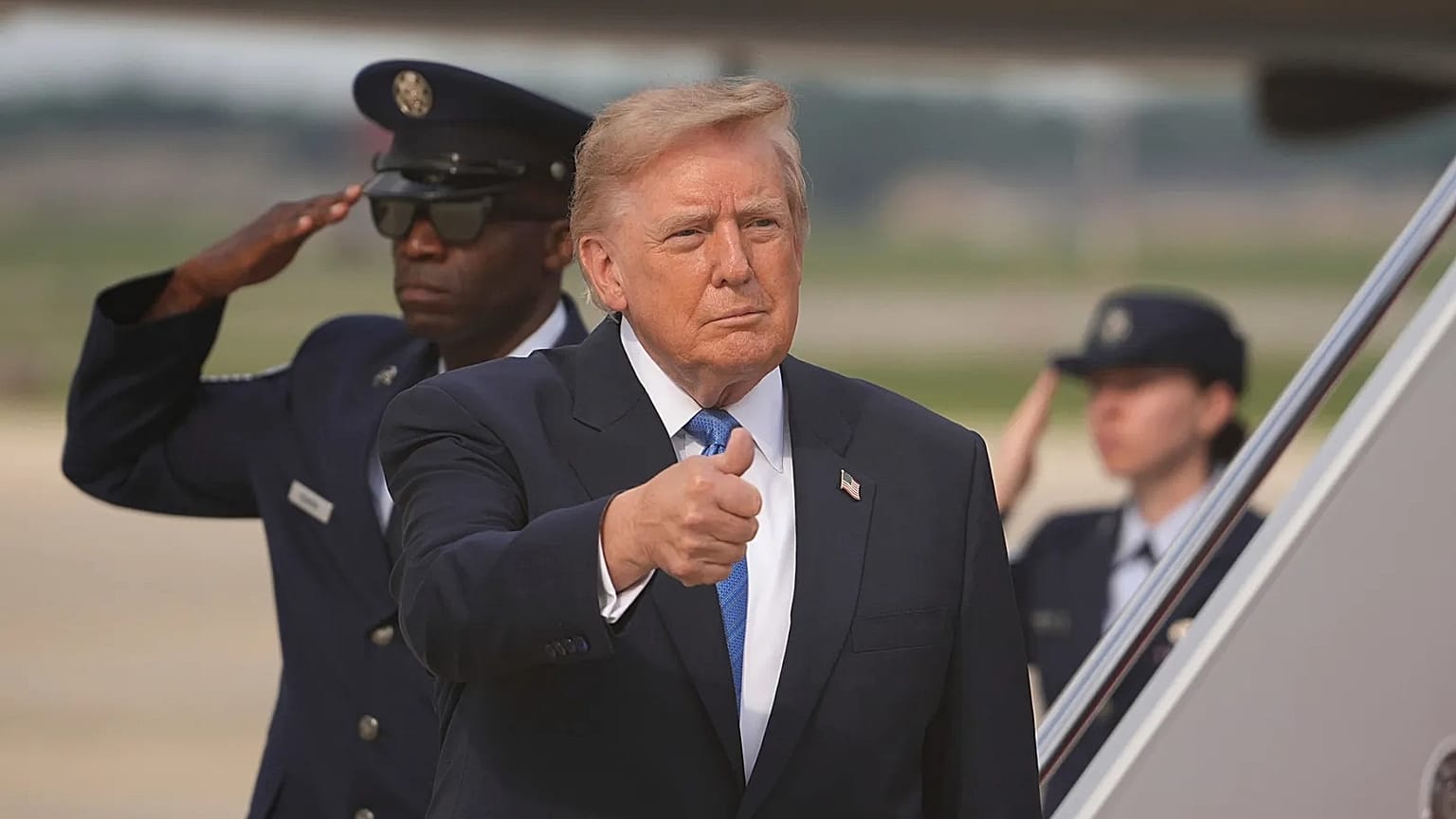
Trump has long been candid about his desire for the US to secure Venezuelan oil and has urged oil companies to invest in the South American nation.
The US and Venezuela have agreed terms on a huge oil deal that could see Washington take control of more than 65 billion barrels Venezuela's oil reserves.
US President Donald Trump had announced the agreement on Friday in a post on Truth Social, calling it the "biggest oil deal in world history."
"This Historic Transaction MORE THAN DOUBLES American Oil Reserves, greatly increases our Oil Supply, and will substantially lower Gas Prices for all Americans," he wrote, adding that it would also help "set Venezuela on a course toward Tremendous Success and Great Prosperity."
Delcy Rodríguez, the acting president of Venezuela - which has the world's largest proven oil reserves - later confirmed the "historic" deal in a statement posted to social media.
According to Rodríguez, the agreement "calls for the development of 17 strategic fields" and could see investment of "more than $100 billion, and more than $209 billion in taxes for the state."
Trump has long been candid about his desire for the US to secure Venezuelan oil and has urged oil companies to invest in the South American nation.
Many firms have remained wary, however, with concerns over aging infrastructure and political uncertainty both at home and in Venezuela.
In a post on X, US Secretary of State Marco Rubio hailed the deal as a "huge win for both the American and Venezuelan people."
"It demonstrates how President Trump's bold foreign policy is driving America First wins: securing stable reserves and low-cost oil in our Hemisphere and lowering gas prices here at home," he wrote.
"For the Venezuelan people, this deal will bring nearly $100 billion in private investment, support thousands of high-paying jobs, and drive the reconstruction of Venezuela's economy," Rubio added.
Washington has been keeping a close watch on Caracas since US forces conducted an operation to capture former leader Nicolás Maduro in January. Following the operation, Trump pledged to pump billions into Venezuela and said US firms would rebuild the country's oil industry.
Trump's big oil deal lambasted across the
board: 'Corruption at epic scale'
Kathleen Culliton
August 29, 2026
Call it socialism, imperialism, corruption or theft — senators, conservatives, journalists, former ambassadors and economists all agree President Donald Trump's "deal" to control 65 billion barrels of Venezuelan oil is a very bad move.
Trump's Truth Social announcement on Friday of a deal with Delcy Rodríguez — who became Venezuela's acting president in January after the U.S. military captured former President Nicolás Maduro — spurred an uproar over cries of corruption.
"Using our troops for a private oil grab is corruption at epic scale," said Sen. Tim Kaine (D-VA). "Here’s a guarantee—this will pad the pockets of Trump family and Big Oil companies and delay transition to cleaner energy."
Kaine was not the only U.S. senator to condemn Trump's deal with Venezuela — or to claim corruption was the cause.
"This isn't a win," said Sen. Chris Van Hollen (D-MD). "This is proof Trump put our service members at risk to get Venezuelan oil for his billionaire buddies. Putting our soldiers’ lives on the line for private profit is a gross dereliction of his constitutional duty."
Independent journalist Juliet Jeske of Decoding Fox News also looked at the deal from a humanitarian perspective.
"Trump is stealing oil from country that just had a catastrophic earthquake and where most of the populace lives in extreme poverty," Jeske wrote on X. "I don’t think he ever really cared about Maduro. He just wanted their oil."
This perspective was shared by Michael McFaul, a Stanford University professor of political science who served as U.S. Ambassador to Russia from 2012 to 2014.
"Delcy Rodriguez is a dictator," McFaul wrote. "Cutting a deal with her to steal Venezuelan oil to benefit Americans is both immoral and impractical. The Venezuelan people will never go along with this deal."
McFaul fumed that Trump had yanked the U.S. back to the 19th century and the age of imperialism.
"We are now acting like a typical imperialist empire," McFaul said. "His Venezuelan oil deal is just that- straight-up imperialism, using military force to seize the assets of a country in the south. Deeply regrettable."
CNN's Jim Acosta echoed this concern — arguing the president had taken the U.S. back to the 1700s — but added a jab at Trump's rising gas-price problems.
"Trump is desperate," Acosta wrote. "Trump is choosing oil over freedom for the Venezuelan people. Experts say this won’t lower gas prices right away."
Even some conservatives fumed at Trump's fuel fix, among them conservative think tank Cato Institute economics expert Scott Lincicome.
"So, after taking 31 US government equity stakes in private companies over the last year, Trump just announced a MAJORITY-STATE-OWNED oil company?" wrote Lincicome. "This isn't even 'creeping' socialism anymore."
Independent journalist Aaron Rupar likened the "deal" to a form of socialism as well — National Socialism.
"Nazi Germany also pillaged the natural resources of countries it conquered," Rupar wrote.

No comments:
Post a Comment