Tuesday, January 14, 2020


Russia ‘hacked Ukrainian energy company’ at centre of Trump impeachment scandal

The firm is linked to Joe Biden – who polls suggest is best placed to beat Trump in 2020


Oliver Carroll Moscow @olliecarroll
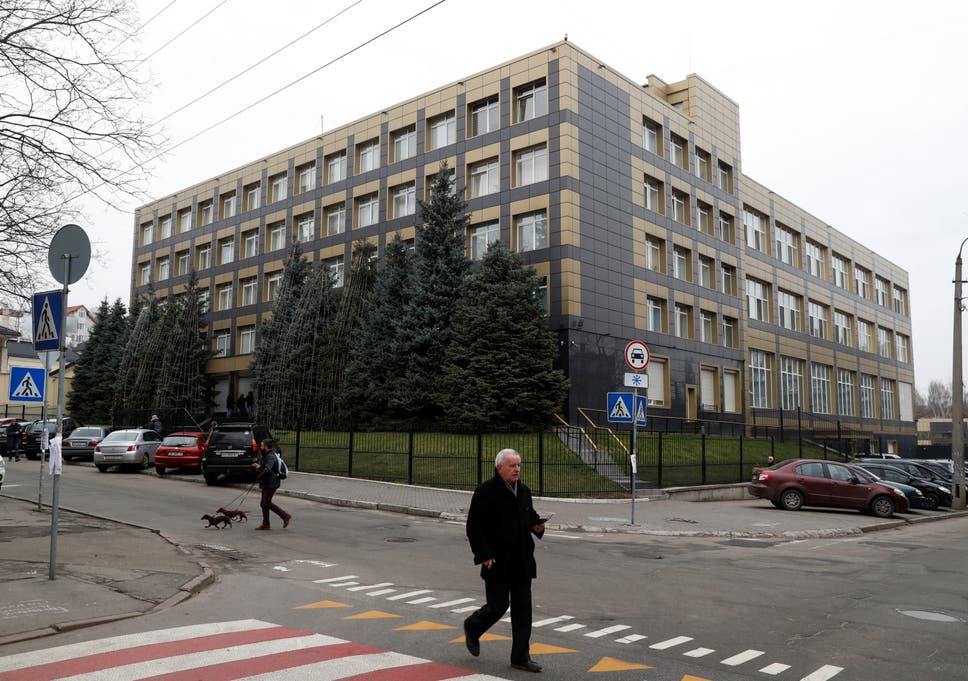
An office belonging to Burisma gas company in Kiev ( Reuters )

As an impeachment inquiry turned up the heat on Donald Trump over his irregular efforts to investigate rival Joe Biden, Russian military intelligence got to work hacking the Ukrainian gas company that once employed his son Hunter Biden.

Those, at least, are the conclusions of a US cybersecurity firm published this week.

According to Area 1 Security, the Russian campaign to target Burisma Holdings in Kiev began in November.

The mechanism they used was a fairly unsophisticated phishing tactic. First, they created fake web domains imitating the sites of Burisma’s subsidiaries (for example: kub-gas.com instead of kub-gas.com.ua). Then they sent emails to employees inviting them to visit the fake sites and enter their credentials.

According to the security firm’s report, the tactics were successful – the hackers broke into one of Burisma’s servers. It was unclear if they found what they were looking for. Or indeed what that was. But the timing and the scale of the interventions suggested they were looking for information that could be used to undermine the Bidens.

Trump impeachment: Who's who in the Ukraine scandal
Show all 26


The tactics also seemed to mirror those used against employees of the US Democratic Party in the run-up to the 2016 presidential election. Then, two hacking groups connected with the Russian state, “Cozy Bear” and “Fancy Bear”, gained access to emails from Democratic Party servers. Compromising material was then leaked and promoted via a network of trolls.

The former group, linked to Russia’s foreign intelligence service, was particularly successful at hacking, evading detection for several months.

Read more
 
Russia behind Fancy Bears hacks, claims UK government report

According to the authors of the report, the discovery was an “early warning” of significant Russian interventions into the forthcoming 2020 campaign.

The cyber campaign only showed up on the security firm’s monitoring network on New Year’s Eve. According to an American security source quoted in The New York Times, it ran “in parallel” to a more conventional spy operation in Ukraine itself. Burisma, and the Bidens’ connection to it, are obvious targets for dirt digging.

Read more
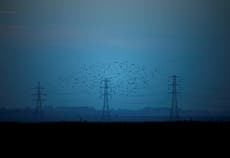
 
Did the US really try to override the Russian power grid?

According to some polls, Joe Biden is best placed to beat Donald Trump in 2020. It seems likely this is why president Donald Trump lent his weight to a conspiracy theory alleging that Mr Biden, when he was vice president, tried to fire a Ukrainian prosecutor who was allegedly investigating Burisma.

While the conspiracy theory is bunk, business in Ukraine is rarely entirely clean. Burisma would likely not have appreciated unfriendly investigators rummaging around for possible skeletons.

Burisma Holdings and the Russian Ministry of Defence had not responded to requests for comment by the time of publication.

Australia fires: Smoke to make ‘full circuit’ around globe, Nasa says

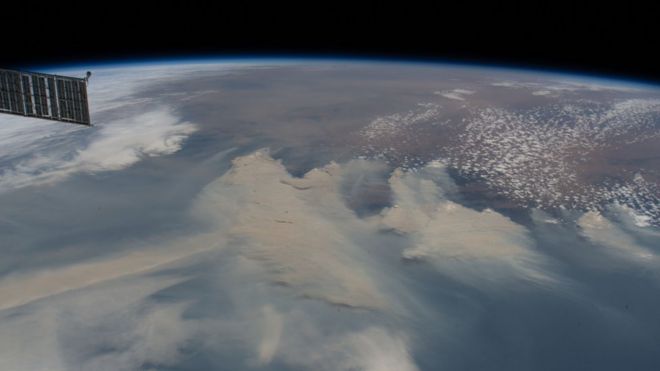
Smoke from bushfires blankets the southeast coastline of Australia on 8 January 2020 as the International Space Station orbited 269 miles above the above the Tasman Sea.
‘We have observed an extraordinary amount injected into the atmosphere,’ space agency says

Jon Sharman Tuesday 14 January 2020

Smoke from the wildfires that have devastated swathes of Australia is so extensive it will circle the planet to blight the country again, Nasa has said.

Experts said the volume of atmospheric debris generated by the months-long fires was “extraordinary”, and had already had a severe impact on nearby New Zealand.

The smoke has so far travelled more than 4,000 miles – with hazy skies reported as far away as Chile – and risen into the lower stratosphere, tens of thousands of feet up, a UV index created by Nasa from satellite data showed.

“The smoke is expected to make at least one full circuit around the globe, returning once again to the skies over Australia,” the US space agency said in a statement.

“Over the past week, Nasa satellites have observed an extraordinary amount of smoke injected into the atmosphere from the Australian fires and its subsequent eastward dispersal.”

The warning came as a tennis player collapsed on court and was forced to retire from Australian Open qualifying, after suffering a coughing fit brought on by wildfire-linked poor air quality. Slovenian Dalila Jakupovic retired at 6-5, 5-6 against Switzerland’s Stefanie Vogele, while the Canadian Eugenie Bouchard was also forced to take a medical time-out because of a sore chest.

Exacerbating problems on the ground and in the air are storms known as pyrocumulonimbus events, which the wildfires have generated. They occur when moisture becomes trapped in smoke in the cold upper air and forms a cloud that produces dry lightning.

These fire-induced thunderstorms have pushed smoke into the stratosphere, allowing it to travel much further and affect atmospheric conditions around the world.

“The effects of those events – whether the smoke provides a net atmospheric cooling or warming, what happens to underlying clouds – is currently the subject of intense study,” Nasa said.

The agency added that there had been noticeable impacts on Australia’s neighbour New Zealand, saying: “The smoke is ... causing severe air quality issues across the county and visibly darkening mountaintop snow.”

The fire threat in Australia is most acute in rural communities but low air quality continues to plague the major cities, with Victoria Health saying Melbourne’s air was the worst in the world early on Tuesday.

Blazes have been burning since September and have killed 28 people, destroyed more than 2,000 homes and led to the evacuations of thousands of people. Animals, including koalas, kangaroos and bats, have died in their hundreds of millions.

Thousands more attended demonstrations in Sydney and Melbourne late on Friday, calling for the country’s prime minister Scott Morrison to be sacked and for Australia to take tougher action on climate change.

Mr Morrison has admitted that his personal response to the wildfire crisis has been lacking, saying: “There are things I could have handled on the ground much better.”

The Liberal Party PM has been given a frosty reception by people he visited, having gone on holiday in Hawaii while blazes swept his country


NASA Goddard @NASAGoddard

https://twitter.com/i/status/1215370818156466190
A fleet of NASA satellites working together has been analyzing the aerosols and smoke from the massive fires burning in Australia. https://go.nasa.gov/2NavsuY
1:32 PM · Jan 9, 2020·


Additional reporting by Press Association

SPLIT IN THE MURDOCH MEDIA EMPIRE OVER CLIMATE CHANGE

James Murdoch criticises father's news outlets for climate crisis denial Rupert Murdoch’s News Corp and Fox cited for ‘frustrating’ coverage of Australian bushfires 

Jim Waterson Media editor Tue 14 Jan 2020
  
James and Kathryn Murdoch have issued a statement criticising Rupert Murdoch’s firms for ‘ongoing denial’ on the climate crisis. Photograph: Joel Ryan/Invision/AP

Rupert Murdoch’s son has strongly criticised his family’s news outlets for downplaying the impact of the climate crisis, as bushfires continue to burn in Australia.

James Murdoch and his wife, Kathryn, issued a rare joint statement directly criticising his father’s businesses for their “ongoing denial” on the issue, which has been reflected in the family’s newspapers repeatedly casting doubt on the link between the climate emergency and the bushfires.

“Kathryn and James’s views on climate are well-established and their frustration with some of the News Corp and Fox coverage of the topic is also well-known,” a spokesperson for the couple said, confirming a report in the Daily Beast. “They are particularly disappointed with the ongoing denial among the news outlets in Australia given obvious evidence to the contrary.”

James Murdoch was most recently the chief executive of the family’s 21st Century Fox entertainment business, leaving when it merged with Disney. He is making media investments through his own Lupa Systems company but continues to sit on the board of the family’s newspaper business, News Corp, which also owns the Times and the Sun.

The bushfires have focused attention on the likes of Andrew Bolt, a political commentator for News Corp’s Australian newspapers who is known for promoting the views of climate science deniers, and for his own attacks on “alarmists” and his derision of climate change science.


James Murdoch: 'There are views I really disagree with' on Fox News

He also has a programme on the Murdoch-owned Sky News Australia, where he has criticised the “constant stream of propaganda” on the public broadcaster ABC about the role of the climate crisis in the bushfires.

“Politicians who should do better are out there feeding the fear and misinformation,” he said in a recent broadcast criticising politicians who said carbon emissions needed to be cut to avoid future fires. “As if that would stop a fire. You’d have to be a child like Greta Thunberg to believe that fairytale.”

US viewers have also heard commentary from Fox News presenters such as Laura Ingraham, who has said that “celebrities in the media have been pressing the narrative that the wildfires in Australia are caused by climate change”, before introducing guests who cast doubt on this interpretation.

James Murdoch’s criticism sheds light on the family’s internal rifts, amid speculation over his 88-year-old father’s succession plans. James’s older brother Lachlan is still actively involved in the family businesses as the US-based chairman and chief executive of the slimmed-down Fox Corporation, which owns Fox News.

Last year, Rupert Murdoch told shareholders “there are no climate change deniers” around his company and said his business was early to commit to “science-based targets to limit climate change” and was working to reduce its climate emissions.

However, he has been publicly critical about the “alarmist” approach to the issue. In 2015, he used his Twitter account to describe himself as a “climate change sceptic not a denier”.
Rupert Murdoch(@rupertmurdoch)

A climate change skeptic not a denier. Sept UN meets in NY with endless alarmist nonsense from u know whom! Pessimists always seen as sagesAugust 27, 2015

Lachlan Murdoch, Rupert Murdoch and News Corp have all separately donated millions of dollars to bushfire recovery efforts in recent days, although the Daily Beast claimed the donations were made after it requested comment about James Murdoch’s statement.


James Murdoch has a long history of advocacy on environmental issues, inviting the former US vice-president Al Gore to present a version of his An Inconvenient Truth slideshow to Fox executives in 2006. At the time he was the heir apparent to the media empire and had been trusted with running BSkyB in London, where he would push environmental issues to the fore, working on ways to reduce the power used by Sky’s set-top boxes and insisting on using hybrid taxis long before such things were standard corporate behaviour.

Since stepping back from day-to-day roles with the family business at the end of 2018, the multibillionaire has made clear he feels uncomfortable about much of Fox News’ output and was unsuccessful in an attempt to cash-in his stock completely and make a clean break with the company – an effort that failed after Lachlan declined to buy him out.

Kathryn Murdoch has already set out the couple’s vision, telling the New York Times last year that she was increasingly focused on the issue of global heating: “There hasn’t been a Republican answer on climate change. There’s just been denial and walking away from the problem. There needs to be one.”

She said she was particularly moved to act after seeing Al Gore’s speech at the Fox event in 2006: “I decided to switch everything I was doing. I wanted to be able to look my children in the eye and say ‘I did everything I could.’”

---30---
Saudi Arabia executed record number of people in 2019, human rights group says
SAUDI ARABIA BIGGEST FUNDER AND SUPPORTER OF TERRORISM
SUNNI JIHADISTS DAESH, INCLUDING 9/11, OSAMA BIN LADEN INC. AND
THE RECENT MILITARY STUDENT KILLING IN USA
Conrad Duncan,The Independent•January 14, 2020
A handout picture provided by the Saudi Royal Palace on January 12, 2020: AFP via Getty Images

Saudi Arabia executed 184 people in 2019, the highest number of killings since records began six years ago, according to human rights campaigners.

Research by Reprieve, an organisation which tracks human rights abuses, showed a record number of executions compiled from reports by the official Saudi Press Agency, including one example where 37 people were executed in a single day.

Press reports showed 90 of those killed were foreign nationals, while 88 were Saudi nationals and 6 were of unknown nationality.

The figures also showed that executions have more than doubled in Saudi Arabia since 2014, when 88 people were killed, with 2019 being comfortably the worst year for killings.

In comparison, 149 people were executed in 2018 and 146 people were killed in 2017, according to Reprieve.

The research come after Saudi Crown Prince Mohammed bin Salman said his government was trying to “minimise” the use of capital punishment in the country in 2018.

“These latest execution figures expose the gap between the reformist rhetoric and bloody reality of Mohammed bin Salman's Saudi Arabia,” Maya Foa, the director of Reprieve, told The Independent.

“As the Crown Prince travels the world meeting heads of state, his regime has been executing young men arrested as children for the 'crime' of standing up for democracy.”

Ms Foa also criticised the upcoming G20 summit in the capital of Riyadh which is set to take place in November this year.

“2020 must be the year that the Kingdom's partners stop falling for the Saudi charm offensive and insist on an end to these egregious human rights abuses and violations of international law,” she added.

The event has already drawn criticism from the human rights group Amnesty International, who have refused to attend C20 meetings in preparation for the annual summit.

“We cannot participate in a process which is being abused by a state which censors all free speech, criminalises activism for women’s and minority rights, as well as homosexuality, and tortures and executes critics,” the group said in a statement.

Saudi Arabia has sought to improve its international reputation in recent years with “expensive PR campaigns” and high-profile sporting events, Amnesty added.

In a 2018 interview for Time magazine, the Saudi crown prince claimed his government was looking into reducing the number of executions and said he believe it would take about one year to introduce reforms.

However, the following year saw no reductions in the number of executions.

In April, the country carried out one of the largest mass executions in its history, in which 37 people were sentenced to death.

CNN reported that many of the men who were condemned to death had been sentenced on the basis of confessions which were obtained by coercion and torture.
Justin Trudeau says Iran plane crash victims would still be alive if not for heightened tensions

Catherine Garcia, The Week•January 13, 2020


Canadian Prime Minister Justin Trudeau said Monday that the victims on a Ukraine International Airlines plane that was shot down over Tehran last week would still be alive if not for heightened tensions between the U.S. and Iran.

Early last Wednesday, Iran fired ballistic missiles at Iraqi bases housing U.S. troops. This was in response to President Trump authorizing an airstrike in Baghdad that killed Iranian Maj. Gen. Qassem Soleimani. Just a few hours after the Iranian retaliatory strikes, Iran's military accidently shot down the Ukrainian plane, killing all 176 passengers and crew. Of the victims, 57 were Canadians. After initial denials, the Iranian government acknowledged this weekend that it had made a "disastrous mistake."

"I think if there were no tensions, if there was no escalation recently in the region, those Canadians would be right now home with their families," Trudeau told Global News TV. The U.S. did not tell Canada in advance it was planning on targeting Soleimani, and Trudeau said "obviously" he would have liked advance notice.

"The U.S. makes its determinations," he added. "We attempt to work as an international community on big issues. But sometimes countries take actions without informing their allies."

---30---
Bernie Sanders says his potential running mate 'will not be an old white guy'

I AM THE ONLY OLD WHITE GUY ALLOWED ON THE TICKET 

January 13, 2020

Scott Olson/Getty Images


Sen. Bernie Sanders (I-Vt.) doesn't know who he'd pick to be his running mate if he wins the Democratic presidential nomination, but he definitely knows who it won't be.

In an interview with The New York Times editorial board published Monday, Sanders was reluctant to declare who he'd pick as vice president. Considering, the Iowa caucus hasn't even happened yet, Sanders called choosing someone to round out his hypothetical ticket "a little bit premature," but he did say the person "will not be an old white guy."

The 78-year-old Sanders said he believes in diversity and promised his cabinet "will look like what America looks like," adding that "the country is long overdue for the kind of diversity that we're going to bring to the White House."

That's all he was willing to reveal for now, acknowledging his campaign hasn't considered any specific names at this point.

He did rule out one person though — former Vice President Joe Biden. The senator said Biden's eight years as President Obama's right-hand man was "probably enough." Read the full interview at The New York Times. Tim O'Donnell
The Trump administration is warning allies to stay away from Huawei — but not everyone's listening

insider@insider.com (Isobel Asher Hamilton),Business Insider•January 13, 2020
 
Trump Ren Zhengfei
AP/Evan Vucci/Vincent Yu/Business Insider composite


The US and Chinese phone giant Huawei are at each other's throats.


America claims Huawei is used as a backdoor for the Chinese government to spy. Huawei denies this.


The US has been lobbying allies to reject Huawei's 5G technology, but not everyone's listening.


For over a year the US has been in a political dogfight with Chinese tech giant Huawei over claims the company acts as a proxy for the Chinese government to spy.

Although US officials have long cautioned against the company, tensions heightened in December 2018 when Huawei CFO Meng Wanzhou was arrested in Canada, and subsequently indicted by the US for alleged bank and wire fraud. Meng and Huawei deny any wrongdoing, and the CFO is currently fighting extradition to the US.

Read more: What you need to know about Meng Wanzhou, a Chinese tech founder's daughter whose arrest could set fire to US-China relations

Initially, Huawei struck a conciliatory tone, with CEO Ren Zhengfei (who is also Meng Wanzhou's father) breaking a long press silence to call Donald Trump a "great president." Since then, however, a fight has erupted between the company and the Trump administration, with Huawei denying any claims of spying and accusing the US of orchestrating Meng Wanzhou's arrest for political reasons.

The US has been furiously lobbying its allies to freeze out Huawei's 5G network equipment, citing national security concerns. Secretary of State Mike Pompeo warned allied countries in mid-February 2019 that it would be "more difficult" for the US to partner with countries that didn't distance themselves from Huawei.

President Trump ramped up the pressure yet further in May last year by signing an executive order declaring a national emergency over "threats against information and communications technology and services," a move expected to precede a ban on US businesses buying equipment from Huawei. Since then the company has received three 90-day licenses, so the blacklisting has yet to fully kick in.

Still America continues to lobby against the company, but its efforts have been met with mixed success. Here is a run-down of how allies have reacted.

Britain
 
Boris Johnson
Spencer Platt/Getty Images

Multiple reports surfaced on April 24 that Prime Minister Theresa May had given the order allowing Huawei to build "non-core" parts of the UK's 5G infrastructure.

The Financial Times reported in February that the British government decided it could "mitigate the risks" associated with using Huawei's 5G technology, and in the same month head of GCHQ Jeremy Fleming said the UK had to be wary of the security threats posed by Chinese tech companies.

In March, Britain's government-led board in charge of vetting Huawei criticised the company's mobile network equipment for "major [security] defects," but added that it did not believe the defects were the result of state interference, but rather poor engineering.

The UK delayed making a decision on whether to exclude Huawei from its 5G network on July 23, a move which Huawei Vice President Victor Zhang said gave the company "confidence." Culture Secretary Jeremy Wright said the government was "not yet in a position" because of a lack of clarity from the US.

In January 2020 the US ratcheted up the pressure on the UK. Mike Pompeo met with Foreign Secretary Dominic Raab in Washington to discuss Huawei, and a delegation of US officials were sent to Britain to push for a total ban.

In the midst of the fresh onslaught of US lobbying head of MI5 Andrew Parker told the Financial Times he wasn't worried about the US cutting Britain off from intelligence-sharing.

In an interview with the BBC, Huawei CEO Ren Zhengfei hinted that the UK could benefit from the vacuum left by the US.

"We will invest even more in the UK. Because if the US doesn't trust us, then we will shift our investment from the US to the UK on an even bigger scale," he said.

Canada
justin trudeau
Lintao Zhang/Getty Images

Canada's relationship with the US has been a major factor in its battle with Huawei. In December 2018, Huawei CFO Meng Wanzhou was arrested in Vancouver. The Canadian government approved Meng's extradition in March, prompting rage from China. Meng is suing Canada over her arrest, claiming her rights were violated.

On the issue of 5G however, Canada's stance remains uncertain. Sources told Bloomberg in January that the Canadian government was conducting a security review, and was months away from reaching a decision about whether to restrict or ban Huawei.

China's ambassador to Canada Lu Shaye issued a warning in January, saying he believed there would be "repercussions" if the country froze Huawei out. Just before Trump signed the executive order declaring a national emergency, Canada's Public Safety Minister Ralph Goodale told reporters:

"We obviously pay careful attention to what our allies are saying and doing. Some have expressed views, others have not... We'll take all that into account, but we want to make the very best decision for Canada with respect to the technology and also on national security. Our national security will not be compromised."

Huawei has also been on a PR charm offensive. the New York Times reported in February 2019 that Huawei was trying to woo Canada, becoming a prominent sponsor of the sports show "Hockey Night."

Germany
 
Angela Merkel
Dario Pignatelli/Reuters

Several unnamed German officials told The Wall Street Journal in February 2019 that Germany was leaning towards allowing Huawei to take part in building 5G networks in the country.

Officials told the Journal that the agreement was preliminary, and still had to be approved by the full cabinet and Parliament, which won't happen for several weeks.

The Wall Street Journal then reported in March that the US ambassador had upped the pressure on Germany. In a letter to the country's economics minister, the ambassador warned that if the country allowed Huawei or other Chinese partners to take part in its 5G plans, the US would have to reduce the amount of information it shares with German security forces.

Just days later, Chancellor Angela Merkel said that Germany would set its own security standards for 5G.


Japan
 
Shinzo Abe
Shizuo Kambayashi/AP

Japan effectively banned Huawei, along with fellow Chinese tech company ZTE, from winning any government contracts back December 2018, shortly after CFO Meng Wanzhou was arrested in Canada. The Washington Post reported at the time that Japan's three biggest telecom operators planned to follow suit.

India
 
Narendra Modi
REUTERS/Wolfgang Rattay

A Wall Street Journal report from February 2019 suggested that the US is not having much luck in convincing India to freeze Huawei out.

Read more: The US is having a tough time persuading the world's biggest democracy to ditch Huawei

"Huawei is today at the frontier on 5G and so can't be ignored," an unnamed Indian official told the Journal. The same official added that India would select 5G vendors on its own terms, "not under pressure" from the US.

India is a rapidly expanding online market, and will be a major win for Huawei if it can start selling its 5G kit in the country, and conversely a huge blow to the US.

United Arab Emirates
Sheikh Abdullah bin Zayed Al Nahyan and Mike Pompeo.JPG
Andrew Harnik/Pool via REUTERS

The United Arab Emirates, a major ally of the US in the Middle East, announced in February 2019 that it will deploy a 5G network built by Huawei this year, signifying a major setback in America's lobbying efforts.

An unnamed American official told the Wall Street Journal that the US will watch the UAE-Huawei partnership closely.

Poland
 
Mike Pence and Polish President Andrzej Duda
REUTERS/Kacper Pempel

After Polish security services arrested a Chinese Huawei employee on allegations of spying in January 2019, both Huawei and the US seem to have stepped up their game in courting the country.

A month later US Vice President Mike Pence praised the country for its commitment to "protecting the telecoms sector from China."

Poland is considering excluding Huawei, and the company has been furiously trying to win back favor, even offering to build a "cybersecurity center" there.

Australia
 
Scott Morrisson
AP Photos/Rod McGuirk

Australia banned Huawei and ZTE from supplying tech for the country's networks in August 2018. In response, China said Australia was using "various excuses to artificially erect barriers," and called on it to "abandon ideological prejudices and provide a fair competitive environment for Chinese companies."

New Zealand
 
Jacinda Ardern
REUTERS/Arnd Wiegmann/File Photo

In November 2018, New Zealand blocked Huawei's 5G technology. Its intelligence agency shot down a proposal from one of the country's biggest telecom carriers Spark to use Huawei equipment in its 5G network, citing "significant security risks."

The following February Huawei reacted by taking out full-page ads in New Zealand newspapers saying "5G without Huawei is like rugby without New Zealand," trying to draw a parallel between its own 5G tech and New Zealand's All Blacks rugby team.

By November 2019 Huawei had managed to wangle its way back in. Spark announced Huawei as one of its preferred 5G vendors alongside Samsung and Nokia, per Nikkei Asian Review.

The European Union
  
Julian King EU Commission
Alexandros Michailidis/Shutterstock

The European Commission released its recommendations to member states on March 26, 2019 regarding the security of 5G networks — and its advice did not include banning Huawei. It recommended that member states conduct their own risk assessments by the end of June 2019.

Commissioner Julian King told reporters that Europe needs to reach its own conclusions about 5G security, "not because anybody else has suggested that we need to do this or because we are reacting to steps taken anywhere else," CNN reported.

Huawei praised the Commission's advice, saying it was "objective and proportionate."

However the Commission did not rule Huawei out as a threat entirely. Vice President Andrus Ansip told reporters:

"We have some kind of specific concerns connected with some producers, so everybody knows I'm talking about China and Huawei... Do we have to worry about this, or not? I think we have to be worried about this."

---30---

Guatemala's new president takes office under U.S. pressure on asylum

By Jeff Abbott,
Reuters•January 13, 2020

Mexico weighs bringing Mexican asylum seekers sent to Guatemala back home: Interior minister

Under U.S. rules made public this
month, Mexicans requesting protection at
the U.S.-Mexican border can be flown to
Guatemala to seek refuge there instead.


By Jeff Abbott

GUATEMALA CITY (Reuters) - Guatemala's new president takes office on Tuesday under pressure from the Trump administration on immigration and security and must decide his government's stance quickly on a U.S. asylum agreement he previously opposed.

A conservative former surgeon and ex-prison chief, Alejandro Giammattei, 63, ran for top office three times before his victory in an August runoff on a tough-on-crime platform that included returning the death penalty.

"We will bring back the peace this country so dearly needs," he told reporters on Monday, promising to overhaul the Central American nation's security forces and restructure ministries.
- ADVERTISEMENT -


But at the top of his to-do list will be a decision on whether to roll back or expand an agreement with the United States forged by outgoing President Jimmy Morales that makes Guatemala a buffer zone to reduce U.S. asylum claims.

Acting U.S. Homeland Security Secretary Chad Wolf, part of the U.S. delegation headed by Commerce Secretary Wilbur Ross for the inauguration, is expected to push Giammattei to expand the agreement to include Mexicans.

Giammattei, who in the past has suggested he would seek to change the Asylum Cooperation Agreement (ACA), appeared to soften his stance on Monday, saying he had not yet seen the deal's details.

Guatemala is central to U.S. President Donald Trump's escalating efforts to end illegal immigration and asylum claims from people making their way to the southwestern U.S. border.

Guatemala is one of Latin America's poorest and unequal nations, with poverty increasing since 2000 despite strong economic growth rates, according to the World Bank. U.S. officials have threatened it with economic consequences if it fails to accept the ACA.

Under the deal, implemented in November, the United States sends Hondurans and El Salvadorans seeking asylum at the U.S.-Mexico border to Guatemala to ask for refuge there instead.

As of Friday, 128 Salvadoran and Honduran asylum seekers had been sent as part of the agreement, according to the Guatemalan Migration Institute. Only a handful have applied for asylum in a country that is itself a major source of U.S. bound migrants. Others have returned home.

CRIME AND CORRUPTION

Giammattei inherits a nation suffering from the corrosive effects of drug trafficking on politics and the distrust sowed by last year's forced departure of a United Nations-backed anti-corruption body.

Another looming decision will be whether to act on the recommendation of a congressional panel last week that judges and investigators who worked with the anti-corruption body, known as CICIG, be arrested.

CICIG helped topple sitting President Otto Perez Molina on corruption charges in 2015 and put dozens of politicians and businessmen behind bars, before a backlash led Morales to drive the body from Guatemala in September.

Morales, himself investigated by the agency on election financing charges he denies, is due to be sworn into the Central American parliament a few hours after he leaves office, in a position offering him immunity.

On the bright side, Guatemala’s homicide rate is down - to 22 murders per 100,000 in 2018 residents from 45 per 100,000 in 2009.

But the freedom with which drug traffickers influence politics is a challenge. Ahead of last year's election, presidential candidate and occasional Morales ally Mario Estrada was arrested in Miami on charges of seeking funding from drug cartels and conspiring to assassinate rivals.

"We realized that narco-trafficking here is among the most intense in the region," Luis Hernandez Azmitia, an outgoing congressional representative of the Movimiento Reformador party told Reuters.

Last year, 49 drug-smuggling aircraft used by cartels were found in Guatemala, according to local media reports. Authorities invoked emergency powers to regain control of one area of the country, where coca plantations and cocaine laboratories were discovered hidden in the hills.


(Reporting by Jeff Abbott, additional reporting by Sofia Menchu; Editing by Tom Brown)
Indian police officer arrested for helping Kashmir militants

#KASHMIR IS #INDIA'S #GAZA
#FREEKASHMIR

AFP•January 12, 2020


The officer was apprehended along with three militants at a police checkpoint in Kashmir (AFP Photo/Tauseef MUSTAFA)More

A decorated Indian officer has been arrested for helping to transport rebel militants in Kashmir, the police chief of the restive and highly-militarised Himalayan province said Sunday.

Deputy superintendent Davinder Singh had worked for the police for decades and was a member of an elite counter-insurgency force in the disputed territory, which both India and Pakistan claim in full.

He was apprehended late on Saturday when his vehicle was pulled over at a police checkpoint south of Srinigar, the region's main city.

"The fast moving car was stopped and searched. Two wanted militants and our officer... and a third person were arrested in the operation," Kashmir police chief Vijay Kumar told reporters.

Kumar said police and intelligence agencies were questioning Singh, accusing the officer of a "heinous crime".

Security forces recovered guns and ammunition from several locations in the follow up to the arrests, including from Singh's residence in Srinagar.

Hours after the four men were detained, police killed three alleged rebels during a gunfight in southern Kashmir's Tral district, where the arrested militants were based.

One of those arrested was Naveed Baba, the deputy commander of the local rebel outfit Hizbul Mujahideen.

Baba had stolen four assault rifles and deserted the police force to join the militant group in 2017, according to police.

Singh had risen steadily through the ranks of the Kashmir security apparatus during his career and was last year awarded a medal by the Indian president for his service.

But years earlier he was accused of forcing a man to help armed militants travel to New Delhi in a deadly attack on the Indian parliament in 2001.

Twelve people including five attackers were killed in the attack, which India blamed on Pakistan-based militant groups -- prompting a months-long military stand-off that brought the two nuclear-armed countries to the brink of war.

India had accused Pakistan based militant groups of launching the attack and resulted in a months-long military stand-off at the border with Pakistan before both the armies retreated under international pressure.

Singh acknowledged in 2006 he had tortured his accuser, Mohammad Afzal Guru, while he was in custody, but the claims were not taken seriously by investigators. Guru was later convicted for his part in the attack and hanged.

Kumar told Sunday's press conference that the allegations would now be revisited.

"We will ask him about the attack in the interrogation," the police chief said.

- Decades of rebellion -

Scores of militant groups in Kashmir have fought India's administration of the territory since an armed rebellion broke out more than three decades ago.


Police and Indian troops are routinely accused of human rights abuses against the local population.

Security across the territory has been tightened since August 5, when India revoked Kashmir's semi-autonomous status, arrested the region's top political leaders and imposed a security and communications blockade.

Some restrictions have since been slowly eased but internet services for the public remain blocked.

---30---
China could flex military muscles to pressure Taiwan post-election

By Ben Blanchard and Yimou Lee, Reuters•January 13, 2020

Taiwan president wins by landslide in stinging rebuke to China

A landslide victory of almost 8.2 million votes for Taiwanese

By Ben Blanchard and Yimou Lee

TAIPEI (Reuters) - His policies rejected by Taiwan voters in a landslide re-election for President Tsai Ing-wen, Chinese President Xi Jinping will most likely continue to tighten the screws on the island, with state media already floating shows of force.

China took center stage in the campaign after Xi sought in a major speech a year ago to get Taiwan to sign on to the same sort of "one country, two systems" model as Hong Kong.

Tsai immediately rejected the idea. Six months later, Hong Kong erupted in anti-government protests, giving a huge boost to Tsai in her efforts to portray China as an existential threat to Taiwan's democracy and freedoms.

But rather than recognize that its pressure on Taiwan had failed, Beijing's immediate reaction to the election was to double down on "one country, two systems" and say it would not change policy.

"This administration of Xi Jinping, but I would say more broadly the DNA of the Communist Party, does not do well to reflect and recalibrate in a way that signals reconciliation, compromise or what they would frame as weakness," said Jude Blanchette, the Freeman Chair in China Studies at the Center for Strategic and International Studies in Washington.

"I thoroughly expect that the conversation right now in Beijing is about turning the screws even more," Blanchette added.

China says Taiwan is its territory. Taiwan says it is an independent country called the Republic of China, its formal name.

Options for increasing pressure post-election include many of the actions China was taking before: stepped up military drills around the island or picking off more of Taiwan's 15 remaining diplomatic allies. It could also withdraw from a key trade agreement reached a decade ago.

Widely read Chinese state-backed tabloid the Global Times said in a Monday editorial that military flexing may be the next step.

"We need to plan to crack down on Tsai's new provocative actions, including imposing military pressure," it wrote.

China already sailed its newest aircraft carrier through the Taiwan Strait twice in the run-up to the election, and during Tsai's first administration regularly flew bomber jets around the island.

Zheng Zhenqing,a Taiwan expert at Beijing's elite Tsinghua University, said China using even more military coercion against Taiwan was "a realistic thing to do".

"For the mainland, 'one country, two systems' is a basic policy of the state. How can it be changed just because of one election on Taiwan?" he said.

CREATING 'POISON'

Since Xi took power in late 2012, he has overseen a sweeping crackdown on dissent at home, locking up political rivals in the name of fighting corruption and tightening Communist Party control at every level of society.

Internationally, China has faced opprobrium for locking up Muslims in its far western region of Xinjiang as part of what it calls an anti-radicalisation program.

And in Hong Kong, Beijing has shown no sign of giving into demands for greater democracy there, and continues to face censure from Western countries for how it has dealt with the protests.

This month Beijing replaced its top man in the former British colony with an official known for enforcing party discipline in coal-rich Shanxi, where corruption was once likened to cancer.

Alongside strident calls to use force to take Taiwan, there has been some rare criticism on China's Twitter-like Weibo site of China's Taiwan Affairs Office's failure to win over the island.

"You officials there please step down as soon as possible. From dawn to dusk you slam Taiwan, but the more you do this the more poison you create," wrote one user.

The Taiwan Affairs Office did not respond to a request for comment on whether its head, former Chinese ambassador to the United Nations Liu Jieyi, would be replaced in light of Tsai's huge win.

One diplomatic source, familiar with policy making in China and Taiwan, said it was possible Xi was not being given the true picture of what was happening in Taiwan because officials under him were scared to report bad news.

"In the current atmosphere in Beijing, who wants to be the one to tell the boss that he's on the wrong track?" the diplomat said, speaking on condition of anonymity.


(Reporting by Ben Blanchard. Editing by Gerry Doyle)