Leaders of both sides exchanged the draft of the finalised agreement on Tuesday in New Delhi. It includes a gradual reduction in import duties on motor vehicles from the current 110% to as low as 10%, subject to an annual quota of 2,50,000 cars
Vikash Tripathi
27 January 2026
OUTLOOK BUSINESS, INDIA
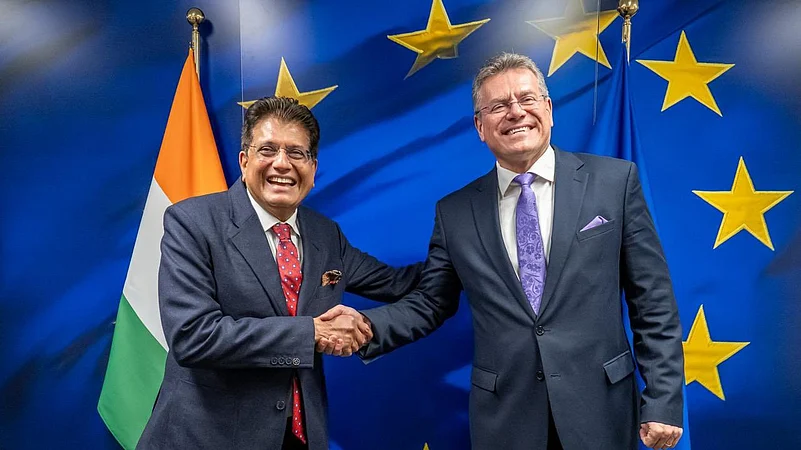
CIM PIyush Goyal meets EU Trade and Economic Security Commissioner, Maros Sefcovic in Brussels Photo: X/@PiyushGoyal
Summary of this article
Luxury European carmakers have welcomed the finalisation of the India–EU Free Trade Agreement (FTA).
The draft of the agreement was exchanged on Tuesday in New Delhi by leaders from both sides.
The deal provides for a gradual reduction of import duties on motor vehicles from 110% to as low as 10%, subject to an annual quota.
Luxury European carmakers, including Mercedes-Benz, BMW and Audi, have welcomed the finalisation of the Free Trade Agreement (FTA) between India and the European Union (EU). However, they do not foresee any immediate reduction in car prices despite lower import duties under the deal.
Leaders of both sides exchanged the draft of the finalised agreement on Tuesday in New Delhi. It includes a gradual reduction in import duties on motor vehicles from the current 110% to as low as 10%, subject to an annual quota of 2,50,000 cars. The trade deal will be implemented after being ratified by legislator of both India and European Commission.
1 January 2026
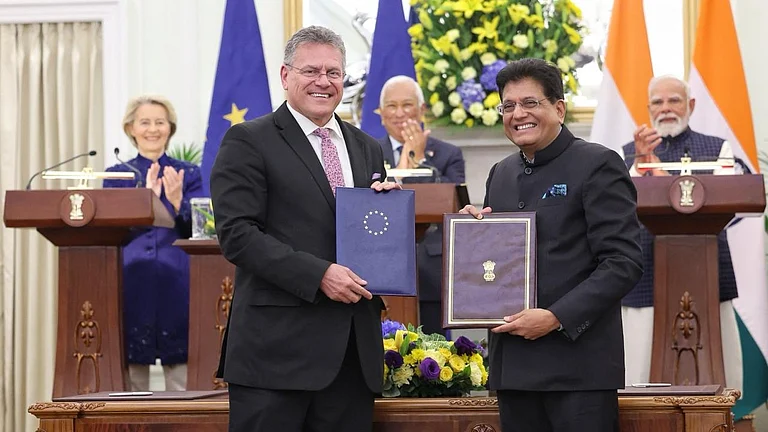
India-EU FTA Opens European Doors for 12 Key States; Check Full List Here
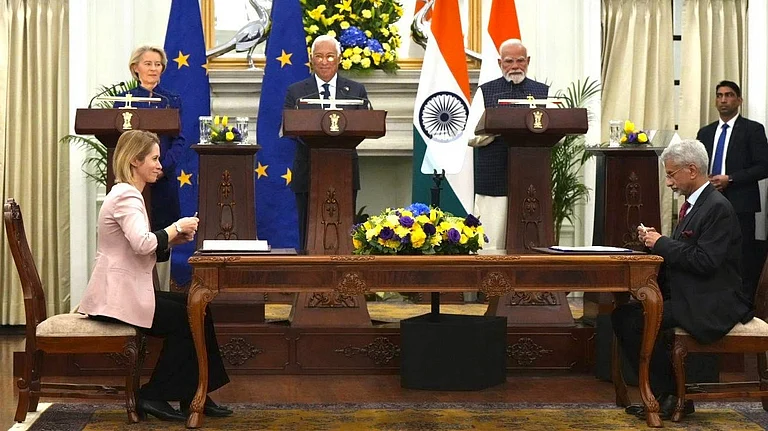
India, EU Seal ‘Mother of All Deals’ Covering 144 Sectors, €4 Bn Tariff Cuts
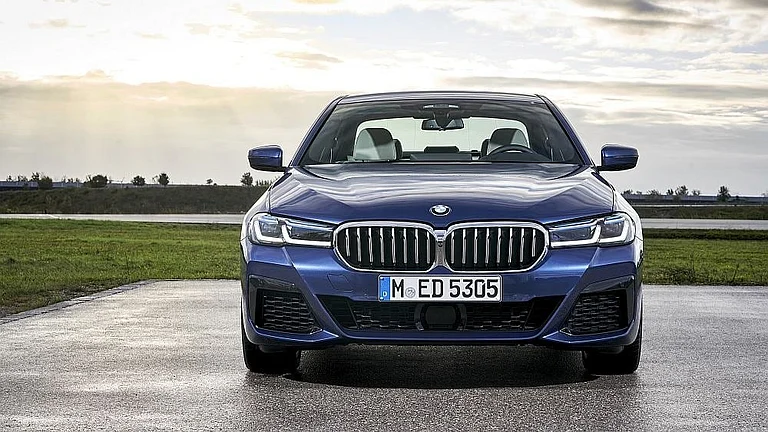
Fast Lane Opens for European Cars as India–EU FTA Slashes Import Duties from 110% to 10%
What Major Auto Makers Said?
“Mercedes-Benz welcomes the India-EU FTA as it will have a positive cascading effect on customer sentiment in the luxury segment, supported by overall economic growth. A gradual tariff reduction on vehicles and fully liberalised automotive parts are strategically important decisions in the FTA for the automotive industry,” said Santosh Iyer, MD and CEO, Mercedes-Benz India.
He added that the deal opens new avenues for customers through improved vehicle allocations, faster access to the latest technology and the creation of a stronger luxury car ecosystem. However, he noted that the company will continue to add value for customers through local production.
Mercedes-Benz sold 19,007 cars in the 2025 calendar year and manufactures around 90% of its models in India. This trend is echoed across most European automakers operating in the country, where years of high import duties have driven localisation and reduced dependence on parent companies. In recent years, the premiumisation of Indian market has helped luxury carmakers grow their market shares.
In 2025, India’s luxury car market, comprising vehicles priced above ₹50 lakh, saw modest growth, with total sales estimated at around 52,000 units, up 1.6% from 2024. BMW and Jaguar Land Rover posted solid performances, contributing to a combined total of 48,849 units sold by the top five luxury carmakers in FY25.
“The proposed phased reduction of tariffs on cars and auto components has the potential to positively impact consumer confidence, enable greater product choice, and foster technological innovation and sustainable growth within the Indian automotive sector, particularly in future mobility,” said Hardeep Singh Brar, President and CEO, BMW Group India.
He added that completely built units (CBUs) currently account for about 5% of BMW’s sales in India, and said the deal would allow BMW to broaden its product portfolio, introduce globally popular models and test new offerings.
According to Balbir Singh Dhillon, Brand Director, Audi India, any implications for pricing and the market can only be assessed once the final terms are available and reviewed in detail.
“Until then, it would be premature to draw conclusions on specific commercial or product strategies,” he said, adding that Audi is positive that the India-EU FTA will create a stable and predictable environment for European automakers to invest, innovate and better serve customers in India.
According to Puneet Gupta, Director, S&P Global Mobility, India & ASEAN, the deal will mark the next phase of growth for the Indian auto industry.
“It will create strong business case for OEMs with European parent companies in India. We may see the entry of new brands, including non-European brands manufacturing in Europe. The quota is very attractive at close to 2.5 lakh vehicles, and we could see a significant push for premium cars in India,” said Puneet Gupta, Director, S&P Global Mobility.

Cheers for Booze! India–EU FTA Brings 20–50% Tariff Cuts on Beers, Spirits
Impact on Indian Carmakers
While European carmakers expect India’s luxury car market to grow, auto industry body FADA said the agreement also opens reciprocal export opportunities for Indian OEMs and strengthens the Make-in-India initiative.
“With over 95% of European OEM sales already locally manufactured, this FTA strengthens Make-in-India, expands consumer choice and opens reciprocal export opportunities for Indian OEMs,” said CS Vigneshwar, President, FADA.
The BMW Group India CEO also noted that luxury vehicles account for only about 1% of India’s passenger vehicle market, adding that the deal would benefit consumers without impacting mass-market players, making it a win-win for both India and the EU.
The agreement does not include duty changes for electric vehicles, which currently attract import duties of up to 100%, depending on price.
“The calibrated tariff glide path, TRQ safeguards and protection for India’s EV trajectory announced today closely reflect the balanced recommendations we had placed on record,” Vigneshwar said.
Meanwhile, Automotive Component Manufacturers Association of India (ACMA) expects the deal to “unlock new opportunities for exports, technology partnerships, and investment-led growth.”
“As global OEMs and suppliers look to build resilient supply chains, a well-balanced and pragmatic FTA can position India as a reliable manufacturing and sourcing partner for Europe, while strengthening our long-standing industrial partnership,” said Vikrampati Singhania, President, ACMA and Vice Chairman & MD, JK Fenner (India).
Trade in auto components between India and the EU has shown steady growth over recent years. India’s exports to the EU rose from $4.30 billion in FY21 to $6.89 billion in FY24, before easing slightly to $6.75 billion in FY25, with exports reaching $3.73 billion in the first half of FY26.
CIM PIyush Goyal meets EU Trade and Economic Security Commissioner, Maros Sefcovic in Brussels Photo: X/@PiyushGoyal
Summary of this article
Luxury European carmakers have welcomed the finalisation of the India–EU Free Trade Agreement (FTA).
The draft of the agreement was exchanged on Tuesday in New Delhi by leaders from both sides.
The deal provides for a gradual reduction of import duties on motor vehicles from 110% to as low as 10%, subject to an annual quota.
Luxury European carmakers, including Mercedes-Benz, BMW and Audi, have welcomed the finalisation of the Free Trade Agreement (FTA) between India and the European Union (EU). However, they do not foresee any immediate reduction in car prices despite lower import duties under the deal.
Leaders of both sides exchanged the draft of the finalised agreement on Tuesday in New Delhi. It includes a gradual reduction in import duties on motor vehicles from the current 110% to as low as 10%, subject to an annual quota of 2,50,000 cars. The trade deal will be implemented after being ratified by legislator of both India and European Commission.
1 January 2026
India-EU FTA Opens European Doors for 12 Key States; Check Full List Here
India, EU Seal ‘Mother of All Deals’ Covering 144 Sectors, €4 Bn Tariff Cuts
Fast Lane Opens for European Cars as India–EU FTA Slashes Import Duties from 110% to 10%
What Major Auto Makers Said?
“Mercedes-Benz welcomes the India-EU FTA as it will have a positive cascading effect on customer sentiment in the luxury segment, supported by overall economic growth. A gradual tariff reduction on vehicles and fully liberalised automotive parts are strategically important decisions in the FTA for the automotive industry,” said Santosh Iyer, MD and CEO, Mercedes-Benz India.
He added that the deal opens new avenues for customers through improved vehicle allocations, faster access to the latest technology and the creation of a stronger luxury car ecosystem. However, he noted that the company will continue to add value for customers through local production.
Mercedes-Benz sold 19,007 cars in the 2025 calendar year and manufactures around 90% of its models in India. This trend is echoed across most European automakers operating in the country, where years of high import duties have driven localisation and reduced dependence on parent companies. In recent years, the premiumisation of Indian market has helped luxury carmakers grow their market shares.
In 2025, India’s luxury car market, comprising vehicles priced above ₹50 lakh, saw modest growth, with total sales estimated at around 52,000 units, up 1.6% from 2024. BMW and Jaguar Land Rover posted solid performances, contributing to a combined total of 48,849 units sold by the top five luxury carmakers in FY25.
“The proposed phased reduction of tariffs on cars and auto components has the potential to positively impact consumer confidence, enable greater product choice, and foster technological innovation and sustainable growth within the Indian automotive sector, particularly in future mobility,” said Hardeep Singh Brar, President and CEO, BMW Group India.
He added that completely built units (CBUs) currently account for about 5% of BMW’s sales in India, and said the deal would allow BMW to broaden its product portfolio, introduce globally popular models and test new offerings.
According to Balbir Singh Dhillon, Brand Director, Audi India, any implications for pricing and the market can only be assessed once the final terms are available and reviewed in detail.
“Until then, it would be premature to draw conclusions on specific commercial or product strategies,” he said, adding that Audi is positive that the India-EU FTA will create a stable and predictable environment for European automakers to invest, innovate and better serve customers in India.
According to Puneet Gupta, Director, S&P Global Mobility, India & ASEAN, the deal will mark the next phase of growth for the Indian auto industry.
“It will create strong business case for OEMs with European parent companies in India. We may see the entry of new brands, including non-European brands manufacturing in Europe. The quota is very attractive at close to 2.5 lakh vehicles, and we could see a significant push for premium cars in India,” said Puneet Gupta, Director, S&P Global Mobility.
Cheers for Booze! India–EU FTA Brings 20–50% Tariff Cuts on Beers, Spirits
Impact on Indian Carmakers
While European carmakers expect India’s luxury car market to grow, auto industry body FADA said the agreement also opens reciprocal export opportunities for Indian OEMs and strengthens the Make-in-India initiative.
“With over 95% of European OEM sales already locally manufactured, this FTA strengthens Make-in-India, expands consumer choice and opens reciprocal export opportunities for Indian OEMs,” said CS Vigneshwar, President, FADA.
The BMW Group India CEO also noted that luxury vehicles account for only about 1% of India’s passenger vehicle market, adding that the deal would benefit consumers without impacting mass-market players, making it a win-win for both India and the EU.
The agreement does not include duty changes for electric vehicles, which currently attract import duties of up to 100%, depending on price.
“The calibrated tariff glide path, TRQ safeguards and protection for India’s EV trajectory announced today closely reflect the balanced recommendations we had placed on record,” Vigneshwar said.
Meanwhile, Automotive Component Manufacturers Association of India (ACMA) expects the deal to “unlock new opportunities for exports, technology partnerships, and investment-led growth.”
“As global OEMs and suppliers look to build resilient supply chains, a well-balanced and pragmatic FTA can position India as a reliable manufacturing and sourcing partner for Europe, while strengthening our long-standing industrial partnership,” said Vikrampati Singhania, President, ACMA and Vice Chairman & MD, JK Fenner (India).
Trade in auto components between India and the EU has shown steady growth over recent years. India’s exports to the EU rose from $4.30 billion in FY21 to $6.89 billion in FY24, before easing slightly to $6.75 billion in FY25, with exports reaching $3.73 billion in the first half of FY26.

No comments:
Post a Comment