Saturday, March 07, 2020

DOJ to take DNA samples from immigrants in U.S. illegally

HUGS NOT DYING #HUGSNOTDYING
Families embrace between El Paso, Texas, and Ciudad Juarez, 
Mexico, on October 26, 2019. The Justice Department 
announced a plan Friday to enforce a law requiring that a
 DNA sample be taken, and stored by the FBI, from all
 people entering the United States illegally.
 File Photo by Justin Hamel/UPI | License Photo


March 6 (UPI) -- DNA samples will soon be taken from migrants crossing the U.S. border and stored in a federal criminal database, the Justice Department ruled Friday.

The move, a significant expansion of immigration law, is likely to be challenged in court.

The ruling authorizes the Department of Homeland Security to collect DNA samples from immigrants who illegally enter the country and are in federal custody. The collection is authorized by the DNA Fingerprint Act, a law passed in 2005. It requires a DNA sample, typically done with a simple swabbing of the mouth, from anyone arrested, facing charges or convicted, as well as from any non-U.S. citizen detained under federal authority.

Although 15 years old, the law has been only sporadically enforced. DHS, during the Obama administration, said it lacked appropriate manpower and sought an exemption from the law. In October, the Trump administration disclosed plans to enforce it, adding the technology and process is now easier and less expensive. The results will be sent to the FBI's Combined DNA Index System, known as CODIS, which the FBI defines as "the generic term used to describe the FBI's program of support for criminal justice DNA databases."

RELATED Supreme Court weighs due process rights of asylum seekers

It is similar to the FBI's fingerprint database, which is used to identify suspects through fingerprints found at crime scenes. Pilot programs for DNA collection began in January in Detroit and at the Eagle Pass entry port in Texas.

Rep. Rashida Tlaib, D-Mich., Rep. Veronica Escobar, D-Mich., and Rep. Joaquin Castro, D-Texas, are critical of the DNA collection process, saying it "reinforces the xenophobic myth that undocumented immigrants are more likely to commit crimes."
US & SCOTUS Court rulings on crosses favor history over religion

CHRISTIANS CLAIM THEIR RELIGIOUS SYMBOL THE CROSS 
IS SECULAR FOR VETERANS PUBLIC MEMORIALS

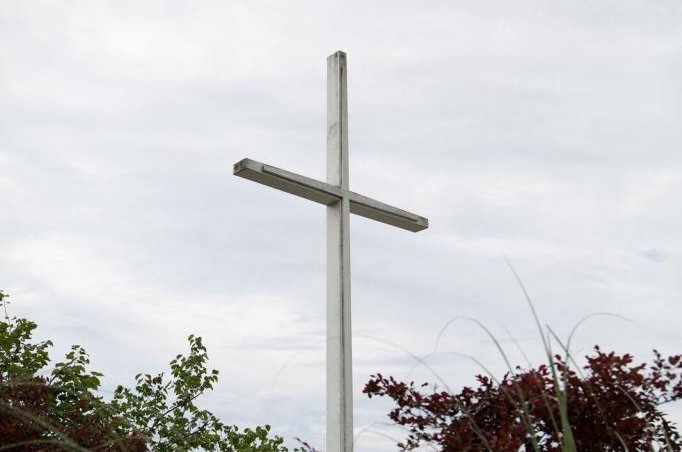
An appeals court said the message conveyed by this cross 
in Bayview Park in Pensacola, Fla., has evolved into a neutral
 one since its erection in 1941.
 Photo courtesy of Becket Fund for Religious Liberty

March 6 (UPI) -- Recent court rulings favoring historic preservation over religious implications may turn the tide in legal battles across the United States over crosses depicted on public property.

In Pensacola, Fla., an appeals court ruled that a 34-foot-tall cross can remain in a park, rejecting an argument that the display should be removed because its maintenance by the city violates the U.S. Constitution's Establishment Clause, which prohibits the government from favoring one religion over others.
In a 3-0 opinion, the 11th U.S. Circuit Court of Appeals said the message conveyed by the cross has evolved into a neutral one since its erection in 1941 in Bayview Park. Furthermore, the passage of time has imbued the cross with historical significance. Removing it might appear to be hostile, rather than neutral, toward religion, according to the Feb. 19 ruling.

In finding the cross constitutional, the 11th Circuit was guided by a 2019 U.S. Supreme Court opinion that allowed a 40-foot-tall cross that commemorates area residents who died in World War I to remain on public land in Bladensburg, Md. That ruling -- in American Legion vs. American Humanist Association, which said the Bladensburg cross has taken on a secular purpose and acquired historical importance -- also was the basis of a decision permitting Lehigh County, Pa., to keep a Latin cross on its seal.

RELATED Supreme Court: WWI memorial cross doesn't violate church-state clause

Sam Gerard, a communications associate for the AHA, said the crosses are "explicitly religious" and violate the separation of church and state. The association, which, along with the Freedom From Religion Foundation, filed a lawsuit on behalf of four plaintiffs seeking removal of the Pensacola cross, is weighing whether to appeal.

The impact of the Supreme Court opinion will be felt in other cases, said Luke Goodrich, vice president and senior counsel for the Becket Fund for Religious Liberty, which represented Pensacola and Lehigh County in their battles over the crosses.

Courts will increasingly rely on the history of religious symbols in deciding challenges to their constitutionality, "which will produce more objective and religion-friendly results," Goodrich told UPI in an email.

RELATED Supreme Court to hear Philadelphia case on same-sex foster parents

"Bladensburg will lead to more rulings allowing religious displays (especially longstanding ones) in public places," Goodrich said.

Rebecca Markert, the foundation's legal director, said Bladensburg has opened the door to symbols that would have been considered religious a few years ago. She said the Bayview Park cross was built to serve as the centerpiece of annual Easter sunrise services.

"It's a blow to religious liberty," Markert said.

The ruling is a double blow, she added, because it will not lead to a lot of minority religious symbols on public property. Instead, the government, which decides what to display, will likely maintain traditional Christian symbols, Markert said.

'Presumption of constitutionality'

Construction of the Bladensburg cross -- called the Peace Cross -- began in 1918. The Maryland-National Capital Park and Planning Commission acquired the cross and the land in 1961 and uses public funds for maintenance.

In 2012, the AHA and three residents of Washington, D. C., and Maryland, sued the commission in federal court. The plaintiffs alleged the cross's presence on public land and the commission's maintenance of it violate the Establishment Clause.

A district court judge ruled in favor of the commission and the American Legion, which had intervened in the suit to defend the cross. The 4th U.S. Circuit Court of Appeals reversed, and the case was appealed to the Supreme Court, which issued its 7-2 opinion June 20, giving a "presumption of constitutionality for longstanding monuments, symbols and practices."

"Even if the original purpose of a monument was infused with religion, the passage of time may obscure that sentiment," Justice Samuel Alito wrote in the majority opinion. "As our society becomes more and more religiously diverse, a community may preserve such monuments, symbols and practices for the sake of their historical significance or their place in a common cultural heritage."

Lehigh County's seal was adopted in 1944 and depicts images reflecting its history, including a cross that honors the Christians who settled the area. Other images that reflect the county's history and culture are cement silos, textiles, a farm, the Liberty Bell and a lamp with books that represents schools.

The Wisconsin-based foundation and four of its members sued in 2016 to get the cross removed, and a federal judge ruled in their favor, saying the cross lacked a secular purpose and was unconstitutional.

The case went to the 3rd U.S. Circuit Court of Appeals, which put it on hold until the decision in the Bladensburg case was issued. On Aug. 8, the 3rd Circuit ruled 3-0 that the seal does not violate the Establishment Clause.

The ruling says the Latin cross on the seal "no doubt carries religious significance."

"But more than seven decades after its adoption, the seal has become a familiar, embedded feature of Lehigh County, attaining a broader meaning than any one of its many symbols," Judge Thomas Hardiman wrote for the court.

Religious and secular space

In Florida, the National Youth Administration erected a wooden cross in 1941 in the eastern corner of Bayview Park, and the Jaycees organized an annual Easter program that became a tradition. During World War II, people gathered there to pray for "the divine guidance of our leaders," the 11th Circuit decision says.

A small stage was built at the site in 1949, and the cross was replaced with a concrete version in 1969. The Jaycees later donated the cross to the city, which lights and maintains it at a cost of about $233 a year.

The suit challenging the cross as unconstitutional was filed in 2016. After a U.S. District Court judge ordered the cross's removalm and the 11th Circuit upheld that decision, Pensacola appealed to the U.S. Supreme Court.

While the Pensacola matter was pending, the Supreme Court issued its ruling in Bladensburg. The high court vacated the 11th Circuit ruling upholding the removal order and sent the case back for reconsideration.

Writing for the 11th Circuit, Judge Kevin Newsom notes that a variety of religious and secular events have been held in the area of the cross and said the city made the space available on a neutral basis.

"The surest proof of that fact: Just two months before the filing of this lawsuit, the city granted plaintiff David Suhor's request to reserve the cross for his own 'satanic purposes,' which required a church that had already reserved it to move to another area of the park," the ruling says.

(Markert said the event never took place.)

The 11th Circuit also says the cross "has become embedded in the fabric of the Pensacola community."

"Removal of the Bayview Park cross at this point -- more than 75 years after its original erection and more than 50 years after its replacement with the current concrete version -- could well, in the Supreme Court's words, 'strike many as aggressively hostile to religion,' " as Justice Sam Alito said.


Friday, March 06, 2020

Watchdog: Trump officials ignored warnings about family separations

The inspector general for the Department of Health and Human Services
said senior Trump administration officials failed to prepare for migrant
 family separations, making the reunification process more complicated. 
File Photo by Jim Ruymen/UPI | License Photo

March 5 (UPI) -- Senior Health and Human Services Department officials didn't act on staff's warnings of an increase in family separations at the border, leaving the department unable to provide adequate care for separated migrant children, a watchdog report released Thursday said.

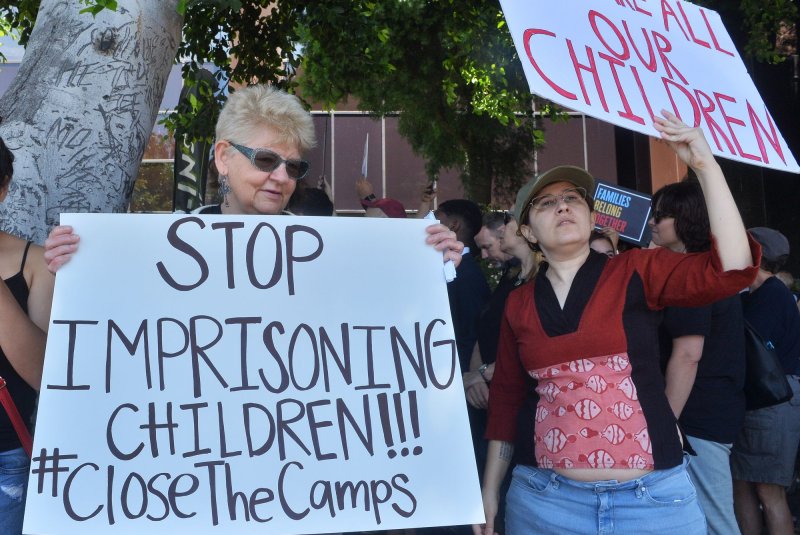
The HHS inspector general's office conducted the study in response to the Trump administration's so-called zero-tolerance policy implemented in spring 2018 in which all adults accused of illegally crossing the southern border were prosecuted. Because of that, officials separated children from their detained parents and housed them at facilities across the United States.

Court battles later required the federal government to reunify migrant children with their parents. The inspector general's office said it investigated how the government responded to the zero-tolerance policy and the order to reunite families.

It found that a lack of communication across interagency channels meant there was a lack of planning for how to handle a larger number of children separated from their parents.

RELATED Court allows Trump administration to block migrants in Texas, N.M.

This "left the department unable to provide prompt and appropriate care for separated children when the zero-tolerance policy was implemented," the report said.

"Further, because no procedures or systems had been established to track separated families across HHS and [the Department of Homeland Security] for later reunification, HHS struggled to identify separated children."

One Office of Refugee Resettlement staff member told inspector general investigators they noticed an increase in children being separated from their parents a full year before zero-tolerance became the Trump administration's official policy.

RELATED Supreme Court weighs due process rights of asylum seekers

"I said ORR was seeing much higher levels of separation, and that those separations were impacting particularly babies and young children," the staffer said. "I said this so many times that I was called a broken record.

Another ORR staffer told the inspector general: "I told them it was going to traumatize children to separate them unnecessarily. I said that to anyone I could."

HHS officials declined to act on the warnings, though, the inspector general report said.

RELATED Judge rules Ken Cuccinelli was unlawfully appointed to head U.S. immigration agency

During the reunification process, the inspector general report said it found "significant operational challenges," which were complicated by poor guidance from the HHS. Manual processes made the reunification vulnerable to error, the report said.

The report recommended that the HHS take steps to prioritize children's interests and well-being. The agency also recommended the department enter into formal agreements with the Departments of Homeland Security and Justice to ensure better communication going forward.

The inspector general based its findings on case reviews, more than 5,000 documents, and interviews with staff, officials and provider facilities.
Exclusive: Guatemala seeks to limit migrants returned under U.S. asylum agreement


GUATEMALA CITY (Reuters) - Guatemala’s new government is trying to limit the number of foreign migrants the United States sends its way under an agreement that makes the Central American nation a buffer zone to reduce U.S. asylum claims.


The United States has sent hundreds of Honduran and El Salvadoran asylum seekers to Guatemala under the agreement implemented in November and is now seeking to expand the program.

However, Guatemala’s priority in ongoing talks with U.S. officials is to make sure the number sent back daily does not exceed its “very limited” capacity to process new arrivals, deputy foreign minister Eduardo Hernandez told Reuters.

“We have only one runway” and one migrant reception center, Hernandez said in an interview last week. The agreement “cannot exceed our installed capacity.”


As it stands, the deal is one of a series of overlapping measures the Trump administration sees as key to bringing down irregular migration into the United States. U.S. President Donald Trump has made his performance on controlling immigration a plank of his 2020 re-election campaign.

Known as an Asylum Cooperative Agreement and signed by the previous Guatemalan government, the deal is similar to the safe third country agreement under which asylum seekers who pass through Canada must apply for refuge there rather than in the United States.

Critics of the arrangement, and similar U.S. deals with Honduras and El Salvador, say those countries do not offer adequate conditions for protecting at-risk migrants and that their asylum systems are too rudimentary to cope.

Under President Alejandro Giammattei, who took office in January, the Guatemalan government has promised to give more information about the deal, which was negotiated behind closed doors and was only partially made public.

Hernandez said the government was working with U.S. counterparts to produce clear implementation rules governing issues such as how many families with children Guatemala accepts, whether to extend the deal to more nationalities, and how many foreign asylum seekers it would take per day.

“If it is possible, we want to add an annex, something succinct, simple, direct, clear and that leaves no space for interpretation,” he told Reuters last week.

Under the initial agreement, the United States agreed to only include individual adults, but Hernandez said it was later extended to include families with children.

Casa de Migrante, a non-governmental shelter that receives the returned foreign migrants, say pregnant women and young children showing signs of chronic stress were among the people U.S. officials had placed in the program.

Data released by the Guatemalan Immigration Institute, a government agency, show that through March 3 a total of 789 people have been returned, including 311 children.

The Trump administration on Thursday announced it set aside 10,000 H2-B temporary non-agricultural work visas for Guatemalans, El Salvadorans and Hondurans, as part of a broader expansion of such visas.

The nationality-specific set-aside is unusual for such programs, and appeared to be in recognition of the asylum deals.

The deal with Honduras could be implemented imminently, acting U.S. Customs and Border Protection Commissioner Mark Morgan said on Thursday. Morgan said the United States continued to negotiate to increase the number of asylum seekers taken by Guatemala.
Guatemala court overturns government's civil society restrictions

MARCH 6, 2020 

GUATEMALA CITY (Reuters) - Guatemala’s government on Friday said it will respect a ruling by the nation’s Constitutional Court that overturns a law allowing the government to pry into the affairs of and even dissolve non-governmental organizations (NGOs).

Congress passed the law on Feb. 12 with the support of the ruling party and other conservative lawmakers who argue that foreign-backed NGOs violate national sovereignty.

The law had been questioned by the United States and human rights groups. The U.S. State Department had described the bill as putting “onerous” requirements on NGOs in Guatemala, saying such groups play key roles in functioning democracies.

Several civil rights organizations sued to overturn the law, saying it violated human rights. The court sided with the organizations.

The law forced NGOs to register, report their donations and allow their accounts to be inspected. Under certain circumstances, it would also allow NGOs to be dissolved, controlled and monitored.

“We will respect the ruling and call on Guatemalans to unite, to promote a culture of transparency, prosperity and development,” Guatemala’s government said.

Although the court’s ruling is provisional if Congress and the government want to re-impose the rules, the legislative process would need to start from scratch, former congressional legislative director Ana Isabel Antillon told Reuters.

Governments around the world, including Turkey and India, in recent years have made regulations more burdensome for civil society groups. In 2019, rights group Amnesty International released a report warning of a “global assault” on NGOs.

In Guatemala, civil society has often been at odds with governments, the army and business groups by seeking justice for victims of a 36-year-long civil war, as well as supporting anti-corruption efforts and peasant farmer and land-rights activists.
Migrants are boon for poor Roma villagers on Turkey-Greece border

BOOMTOWN ON THE BORDERLANDS


KARAAGAC, Turkey (Reuters) - For members of the Roma minority in the Turkish village of Karaagac on the border with Greece, the arrival of thousands of migrants desperately seeking to cross into the European Union could not have been better news.


Sevgi Katirci rides a horse cart in the town of Karaagac near the Turkish-Greek border in Edirne, Turkey, March 6, 2020. REUTERS/Joseph Nasr

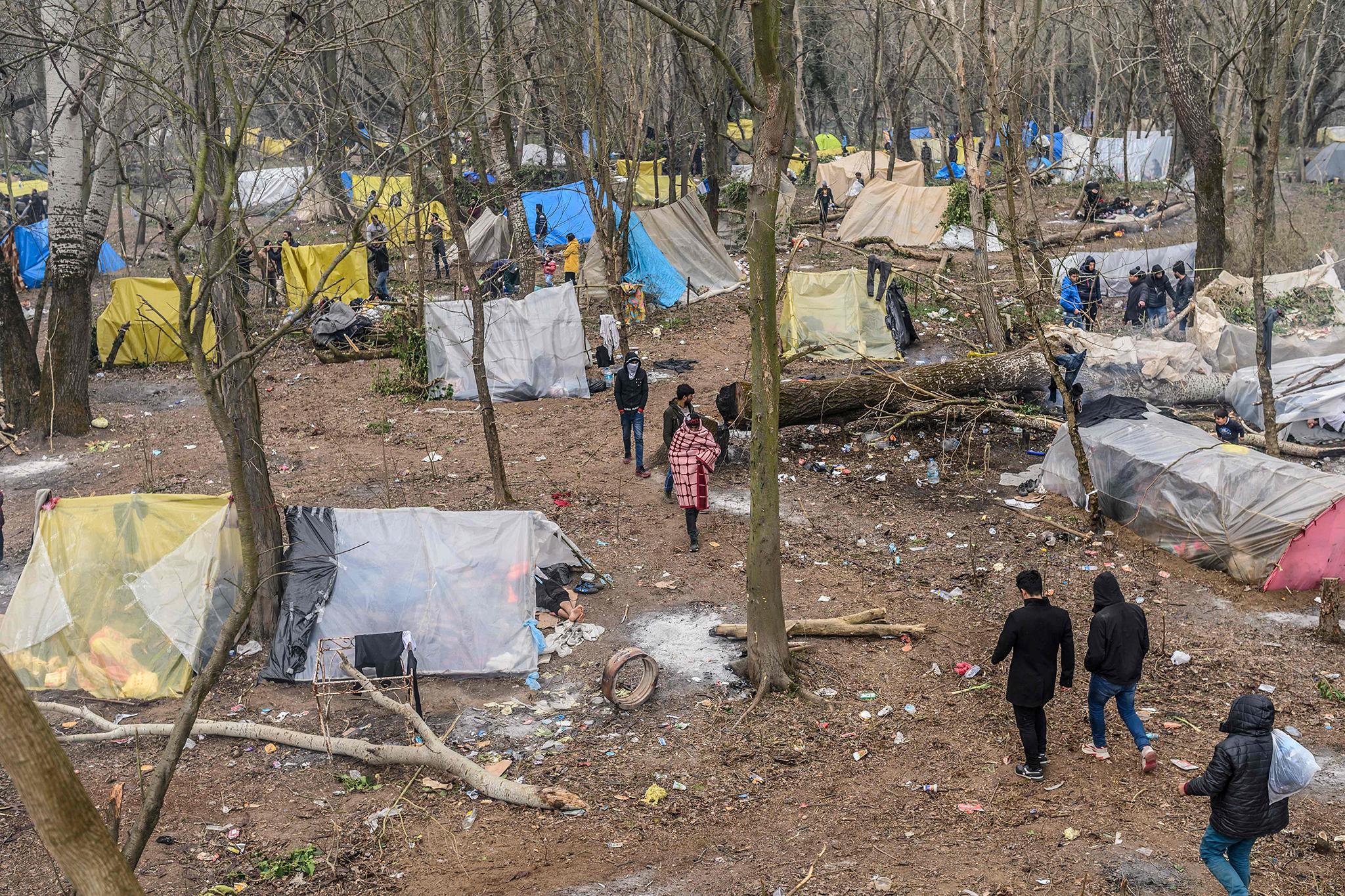
Poor and living mainly from cultivating their gardens and collecting cardboard and plastics for recycling, Roma families are now looking to cash in catering to the needs of 4,000 migrants now in a makeshift tent camp at the frontier.

Farmers set up stands selling everything from tomatoes and cucumbers to quince and pomegranate. Others sold mineral water, bread, yoghurt and tinned teapots.

A few turned their horse-drawn carts into taxis to ferry exhausted migrants and their shopping to the border.


Among all the Roma scrambling to make more money on the edge of the village overlooking fields and a dirt road running to the Pazarkule border crossing, teenager Sevgi Katirci stood out.

She was the only woman riding a horse cart and her clients were solely men. Wearing a green jacket and black jeans, she would gracefully whip her horse and race to the border as her passengers held tight.

“The migrants are here today, but they could be gone tomorrow,” said her father Mehmet, operating his own cart and watching his hard-working daughter with pride. “So we have to make the best of it.”

Like many children of Roma in Turkey, Sevgi doesn’t go to school. Her work helps her family earn about 150 Turkish liras ($25) a day, charging 10-15 liras per passenger.


The Roma and their foreign clients have turned the dirt road to the border into a multicultural market where migrants compare notes on their experiences and discuss what to do next.

Hassan Tunai, who was selling water bottles, fruit juice and yoghurt, said earning money from the migrants left him with a bad feeling.

“I wish it would not be like this,” he said, wearing sunglasses and hoisting the Turkish flag on his stand. “When we see them (the migrants), the money that we earned loses its meaning. It does not make us happy.”

5 March 2020

5 March 2020

Migrants prepare for the coming night in a forest in the buffer zone at the Turkey-Greece border a crossing point


In Canada, doctors broadened coronavirus testing, and made an unlikely save
TORONTO (Reuters) - Canada’s official guidance on the novel coronavirus has been to test patients who recently traveled to affected areas, but some doctors and hospitals have expanded testing on their own, finding the first in a series of patients linked to Iran before the scale of the Iranian outbreak was known.


FILE PHOTO: Staff and visitors walk past a sign indicating to
 wash hands on the elevator doors at the Jewish General Hospital
 in Montreal, Quebec, Canada March 2, 2020. 
REUTERS/Christinne Muschi/File Photo

The Canadian approach, which let front-line staff exercise judgment in looking for the virus, diverged from the United States, which said only on Tuesday that any American could be tested.

One unlikely catch was British Columbia’s sixth patient, a woman in her 30s whose test results were announced on Feb. 20. She had recently traveled from Iran, but as the country had only disclosed its first cases on Feb. 19, she would not have been flagged under federal guidelines in use at the time.

But the woman had been on multiple international flights, so a clinician in Vancouver tested anyway, said the province’s health officer Bonnie Henry at a recent press conference.

“We have always said that if a clinician has a concern about somebody and they have symptoms that could be COVID-19, that we would allow that testing,” she said.

The day after the case was found, Theresa Tam, Canada’s chief medical officer, told reporters “imported cases linked to Iran could be an indicator that there is more widespread transmission than we know about.”

By March 3, BC had found five more cases linked to Iran, and more were identified in Ontario.


Every case that is caught can prevent a chain of new infections. Even so, on Thursday BC said it had what could be Canada’s first case of community spread. Canada has confirmed 45 cases by Friday.

Canada’s federal government testing guidance is currently focused on travel to a list of locations that has lagged the spread of the virus. On Friday, Washington state was not listed, even as it battled an outbreak that has killed 12 people.

But provinces are not bound by the guideline. BC, which shares a border with Washington, is now telling healthcare providers that anyone who would usually be tested for influenza or respiratory syncytial virus, another common illness, should also be tested for the novel coronavirus.

Ontario has stuck with the federal government’s list of affected areas, but says clinicians can test other patients they feel are at risk.

Surveillance testing, a separate process focused on patients who no one has identified as at risk, is also ramping up. BC has added the virus to its flu surveillance program, which tests a sample of patients seen by a selected group of clinicians to better understand how the flu spreads. Ontario is piloting a similar program.

Kevin Katz, medical director of Toronto’s Shared Hospital Laboratory, who is participating in the Ontario pilot, said on Thursday his site had sent 20 to 30 samples a day for just under a week and so far all were negative, uncovering no evidence of widespread community transmission.

Lab capacity has made testing possible. Canada has three government labs that can confirm infection, and Ontario has said its lab alone could handle up to 1,000 samples a day. Washington state said on Wednesday its state lab can only test about 100 patients a day.

In Ontario, several major hospitals said they are also running diagnostic tests more broadly than the province requires.

“The people who are having to respond to this on the front lines are always going to have to be more nimble,” said Susy Hota, director of infection control at the University Health Network. “We’re going to see things shifting a little bit quicker.”

Reporting by Allison Martell; Editing by Nick Zieminski
Climate change or coronavirus? 'Pick your evil', protesters say

BRUSSELS (Reuters) - Protesters at a rally led by climate activist Greta Thunberg on Friday denounced governments for taking urgent action against the coronavirus outbreak but failing to treat global warming as an emergency.

VIDEO https://www.reuters.com/video/?videoId=OVC3X6TPB

Several thousand people braved the rain in Brussels with the 17-year-old Swede, marching through the city that is home to the European Union’s main institutions.

“It is shameful that for so long the climate and environmental emergency has been ignored. We are still in a crisis that has never once been treated like a crisis,” Thunberg told the demonstrators in a speech.


Some supporters said they had put aside concerns about being infected with the coronavirus in a crowd to join the march.

“It’s pick your evil. Do you want to die from global warming or from coronavirus?” said Gorkem, 40, wearing a face mask.

“One of them gets much more attention than the other, so we are trying to raise a bit more awareness about what is already affecting all our lives.”

Flo, a filmmaker from the Belgian city of Ghent who attended with her baby daughter, said the rapid spread of the coronavirus had demonstrated that governments can respond to crises.

“You see people all crazy with coronavirus and you see that governments can do things to make everybody aware about a situation, to make things happen ... But they do so little about climate change,” she said.
Organisers said some 4,000 people attended the event, fewer than expected, probably because of the weather and concerns about the spread of the virus in large crowds.

Andaga, 25, a marine biology student from Ghent, said some of her friends stayed away because of worries about the virus.

“I thought, okay, maybe I should carry hand sanitizer, but it was sold out everywhere ... Yes, it was a concern of mine but not enough to stop me from coming out and marching,” she said.

While the protest went ahead, some events in the European Union’s hub have been canceled as a precaution.

The European Parliament has banned external visitors for the next three weeks, although it waived its own rule on Thursday to allow Thunberg to give a speech.

Other climate events have fallen victim to the virus. The United Nations on Friday postponed a week of climate change events in Kampala, Uganda, which had been scheduled for next month


Exclusive: U.S. discussing non-renewal of Chevron's Venezuela waiver, moves to cut oil trade - sources

(Reuters) - The U.S. government is preparing to impose new measures as soon as next week to stifle Venezuela’s oil exports, including a move not to renew Chevron Corp’s (CVX.N) license to do business with state-run company PDVSA, sources familiar with the matter said.


The United States imposed harsh sanctions on Venezuela in early 2019, in an effort to oust socialist President Nicolas Maduro, whose 2018 re-election was considered a sham by most Western countries.

Venezuela’s oil exports have dropped by one-third since then, but more than a year on, Maduro remains in power, backed by Venezuela’s military as well as Russia, China and Cuba.

Frustrated by the socialist leader’s grip on power, the Trump administration has increased pressure on Venezuela’s oil industry in recent weeks.

The U.S. Treasury Department last month blacklisted Geneva-based Rosneft Trading, a unit of Russia’s oil giant Rosneft (ROSN.MM), for conducting business with PDVSA and warned global energy firms that more such measures were expected.

Now, U.S. officials are targeting oil-for-fuel swaps and loan repayments through oil deliveries, threatening to close off the last areas left open by the government for firms still dealing with PDVSA.

According to the sources, who spoke on condition of anonymity, Washington has already told some of PDVSA’s customers to stop oil-for-fuel swaps if they want to fully comply with new sanctions. Companies taking Venezuelan oil as repayment for debt could also have to cease those transactions.

A 90-day period set by Washington to wind down foreign purchases of Venezuelan oil ends on May 20.


“The United States is asking us to follow a policy of zero Venezuelan crude going out, zero fuel going in. So swaps so far allowed would have to end by the wind-down period deadline,” an executive from one PDVSA customer said.

One of the sources said the measures were likely to come late next week but another cautioned a final announcement could still be several weeks away.

Chevron is the largest U.S. company still in the country, operating with a waiver that allows it to continue producing oil with PDVSA in several joint ventures, and also trade cargoes of Venezuelan crude in international markets. Its license expires in April.

Chevron spokesman Ray Fohr said the company is “hopeful” its license can be renewed.

PDVSA and the White House did not immediately respond to requests for comment. U.S. special envoy for Venezuela, Elliott Abrams, declined to comment. The U.S. Treasury did not comment beyond repeating that the license expires on April 22.

“Chevron is a positive presence in Venezuela,” Fohr said. The company’s share of production from its joint ventures with PDVSA averaged some 35,300 barrels of oil equivalent per day in 2019, representing about 6% of the country’s total production.

“If Chevron is forced to leave Venezuela, non-U.S. companies will fill the void and oil production will continue,” he said.

Senior State Department officials had argued against cancelling Chevron’s license for now, but the White House has backed the idea of taking action, one of the sources told Reuters.


Buyers in China, India and Europe continued importing after sanctions last year, so Venezuela’s oil exports did not fall as much as some U.S. officials expected. Washington recently said it will go after customers in Asia, as well as intermediary firms that have helped hide the origin of the crude.

In recent days, major Indian refiners Reliance Industries (RELI.NS) and Nayara Energy began planning a reduction in purchases of Venezuelan oil starting next month.

The United States in January 2019 recognized Venezuelan opposition leader Juan Guaido as the OPEC nation’s legitimate interim president. Maduro has dismissed Guaido as a puppet of the United States.


ITALY CORONAVIRUS FASHION STATEMENT

REUTERS