Saturday, March 07, 2020

'Fear of the unknown': U.S. pregnant women worried by lack of virus research

Gabriella Borter

(Reuters) - After the first two cases of the novel coronavirus in the state of Georgia were confirmed this week, Leigh Creel, who is 20 weeks pregnant and lives outside Atlanta, made a nervous phone call to her doctor to ask about the risk to her and her fetus.


FILE PHOTO: A woman in a face mask walks in the downtown area of Manhattan, New York City, after further cases of coronavirus were confirmed in New York, U.S., March 5, 2020. REUTERS/Andrew Kelly/File Photo
THIS IS NOT THE RECOMMENDED 3M N95 RESPIRATOR FACE MASK THIS IS A HOSPITAL MASK FOR PROTECTING OTHERS FROM YOUR COUGH

The response she got was not comforting. Health experts do not know if pregnant women are more susceptible to the virus or if contracting it will increase the likelihood of adverse pregnancy outcomes, such as pre-term labor or transmission of the virus in utero.

They are racing to learn more about the sometimes fatal respiratory disease that has rapidly spread worldwide from China, including how it might uniquely affect pregnant women.

For expectant mothers, the mystery surrounding the virus is worrying.

“It’s concerning to me when I feel like I know as much as the healthcare professionals,” said Creel, who works in sales and lives with her husband and toddler.

The U.S. death toll from COVID-19 now stands at 14, most of them in Washington state, where 12 people have died in a cluster of at least 50 infections in the Seattle area. More than 3,400 people have died worldwide.

Public health officials in Washington’s Seattle and King Counties have advised that people at “higher risk of severe illness,” including pregnant women, should avoid physical contact and going out in public.

Dr. Laura Sienas, an obstetrician-gynecologist at the University of Washington Medical Center, said most of her pregnant patients have asked what they can do to protect themselves.

Sienas said her hospital has stopped short of urging pregnant women to quarantine themselves, contrary to local public health official guidelines.

Instead, she has emphasized diligent hygiene and avoiding close contact with others, the same guidance the U.S. Centers for Disease Control has offered on its website.

To that end, Sienas has tried to arrange check-ups via telephone, aiming to limit the number of in-person visits pregnant patients make to the hospital.


“There’s definitely that fear of the unknown, and pregnancy is a time when there are a lot of things that you don’t know and can’t control,” Sienas told Reuters. “Trying to give people small steps that they are able to control, like handwashing, has been a bit reassuring to patients.”

‘WE DON’T REALLY KNOW’

Scientists have not yet developed a vaccine against the virus, and research on its transmission and effects on pregnant women has been limited.

A narrow study of nine coronavirus-positive pregnant women in the Wuhan region of China, all in their third trimester, found no evidence that COVID-19 was transferred in utero. The women showed symptoms similar to non-pregnant adult patients.

The World Health Organization published an analysis of 147 pregnant women (64 of whom were confirmed to have COVID-19, 82 who were suspected and 1 who was asymptomatic) and found that 8% had a severe condition and 1% were critically ill.

“There’s some suggestion from other coronaviruses such as SARS that pregnant women may have a more severe disease, but we really don’t know,” said Dr. Denise Jamieson, chief of gynecology and obstetrics at Emory Healthcare in Atlanta and a former epidemic intelligence officer at the CDC.

Normal immunologic and physiologic changes in pregnant women might make them more susceptible to viral infections, including COVID-19, according to the CDC.

“There doesn’t seem to be any great answers out there for anyone, so your mind can really run wild with the possibilities,” said Rachel Storniolo, 36, who lives in Philadelphia and is due to give birth in May.

The study of the Chinese women, published in the scientific magazine The Lancet, found no traces of the virus in breast milk. Still, Jamieson said she would warn coronavirus-positive mothers that they risk transmitting the virus to their infants through respiratory droplets if they choose to breastfeed.

“If a woman has confirmed coronavirus, the safest thing in terms of ensuring that the infant does not get infected from the mother is to separate the mom and baby,” she said, adding that separation might be necessary for several days until the mother is asymptomatic.

Officials have not reported any cases of pregnant women with coronavirus in the United States, and they believe pregnant women - and the rest of the general public - who live outside the outbreak areas are at low risk.


But some women, like Brandi Cornelius, 36, of Portland, Oregon, who is 23 weeks pregnant, are not taking any chances.

“I went to the bank and I used hand sanitizer three times while I was there,” she said. “It helps my body to go to prenatal yoga, for example, but do I want to be in a room full of people?”


---30---
REUTERS INSIDE STORY: Metalor’s gold was used in phones including those from Apple and Samsung.

How suspect gold reached top brands

PHOTO ESSAY LONG READ

Sleeping Beauty

In the Peruvian highlands, a Swiss refinery said it had a sustainable source of artisanal gold. Prosecutors suspect its main supplier was a front for dirty money. What went
wrong?


By BRENNA HUGHES NEGHAIWI, MITRA TAJ and PETER HOBSON March 6, 2020


From the Andes mountains, thousands of artisanal gold diggers for years sent fragments of metal to a Swiss valley. There, a refinery purified the gold to sell to banks, watchmakers, fine jewelers and electronics companies. It circulated as ingots, phones and trinkets - some branded with names including Apple and Tiffany & Co.

A trade worth billions of dollars, it was championed by the Swiss refinery, Metalor Technologies, as part of a program with Peru’s government to integrate gold prospectors into the economy.

In early 2018, Metalor stopped taking the gold. The reason: It couldn’t be sure where the metal came from. Peruvian prosecutors had come to suspect Metalor’s main supplier was a front used by criminals to filter illegally produced gold into the world market.

RELATED CONTENT

Video: Life in La Rinconada, a “forgotten zone”


Video: “The Big Iron” is one of the hazards


Photo essay: Meet the women gold-pickers of Peru


What is artisanal gold and why is it booming?


Metalor is not under investigation in Peru, and there is no suggestion of illegality by the refiner. But the story of the project - and of how it was monitored by the companies and regulators involved - illustrates the risks of illicit commerce that lie beneath gold’s glamor.

Peruvian authorities are exploring criminal charges against Metalor’s supplier, a trading firm named Minerales del Sur, after seizing a cargo worth nearly $4 million destined for Metalor in 2018, prosecutorial and customs documents seen by Reuters show. Customs inspectors found some participants in the program were selling more gold than they could produce, according to customs reports. The prosecutors allege these inflated volumes suggest Minerales del Sur was a cover to launder metal from illegal sources, such as mines financed by narcotics dealers or in banned sites in the Amazon rainforest.

Minerales del Sur, which declined to comment for this article, has told Peruvian authorities it obtained gold legally.
RICH ROCK: Miners in one of the gold tunnels in La Rinconada. 
REUTERS/Nacho Doce


Bullets Through the Head

As global hunger for gold accelerates, so too do problems in its production.

Industrial mines have long been accused of depriving indigenous people of land, polluting their homes and breeding crime. Now, high gold prices are making it attractive for individuals to try what the industry calls artisanal and small-scale mining. Every year around 500 tonnes, worth $25 billion at current prices, of gold is dug in this way, according to industry estimates - 15% of all the gold that is mined.

Metalor is one of at least five major refineries, including two in the United States, which have come under legal scrutiny in the last two decades after taking artisanal gold from countries including Colombia and Peru, where most of the world’s cocaine is produced and narcotics gangs have invested in gold production. One U.S. refinery closed after its employees were jailed for trading illegal and smuggled gold.
People of La Rinconada’s “forgotten zone.”

This Metalor program was supposed to be part of the solution - a state-backed scheme to bring informal diggers into the formal market and improve their conditions.

Minerales del Sur was hired to collect and check gold from small miners across the highland region of Puno, which extends from the fringes of the Amazon to Lake Titicaca. The region’s apex, and the source of some of the gold, is a shantytown of about 50,000 people located 16,700 feet above sea-level. Called La Rinconada, it sits below a glacier-capped mountain known as La Bella Durmiente, or Sleeping Beauty.

Said to be the highest permanent human settlement in the world, La Rinconada is no fairytale. Last year, authorities reported rescuing at least 68 trafficking victims from the shantytown’s nightclubs. Last April, seven gold miners were found in a tunnel beneath the mountain with bullets through the head.

Media organizations and NGOs repeatedly published reports that Metalor’s Peruvian gold suppliers may have been infiltrated by criminals. The Swiss company - which prosecutors estimated processed about 106 tonnes of gold worth $3.5 billion from Minerales del Sur since 2001 - said it was confident of the checks it imposed on its suppliers.


“We believe this was done in a proper way.”Metalor CEO Antoine de Montmollin

“To our knowledge, we believe that this was done in a proper way,” said Metalor CEO Antoine de Montmollin. “But due to the complexity of the supply chain, we cannot have 100% certainty. We await the conclusion of the current investigation.”

In 2018, Metalor supplied gold to firms including Tiffany, Samsung Electronics Co. and Apple Inc. Gold is used to conduct electricity in phones and other electronic devices.

Apple said it is committed to setting the highest standards for responsible sourcing, and has stopped working with 60 gold refiners since 2015 because they were unable or unwilling to meet its standards. It declined comment on whether it continued to accept gold from Metalor.

Tiffany said it upheld industry-leading standards aligned with its commitment to responsible sourcing. It said Metalor was among several refiners which provided gold used in non-jewelry items. Its website shows these include $375 golden drinking straws and $1,500 paper-clips.

Samsung declined to comment.

INSIDE STORY: Metalor’s gold was used in phones including those from Apple and Samsung. REUTERS/Elijah Nouvelage
TRINKET TROUBLE: Tiffany & Co. was another customer for the metal. REUTERS/Gonzalo Fuentes

Metalor said its executives and local staff made dozens of visits, including to Minerales del Sur’s offices, to ensure suppliers were operating legally. Each time gold was shipped, it also verified documentation to ensure the metal came only from members of the state formalization program.

But Metalor told Reuters it did not inspect mines. And its executives were not aware of two independent audit reports, produced for a Peruvian state firm involved in the program and seen by Reuters, that found flaws which made it easy for gold from unknown sources to be slipped into shipments.
$4 billion


Worth of gold traded illegally in Peru in 2015

Peruvian prosecutors have said their investigation will remain open in a preliminary phase through 2020. No charges have been issued, and the case may be closed if not enough evidence is assembled.

Peru’s Energy and Mining Ministry said it was working on improvements to the program, which it said has helped hundreds of thousands of people. In 2014, the incomes of as many as 600,000 people in Peru depended on artisanal and small-scale mining, according to estimates accessed on Delve, a global platform for information on such mines.

“You’re not going to find any country where traceability of small-scale mining is 100% trustworthy,” Lenin Valencia, director of mining formalization in the ministry, told Reuters. Small-scale mining is so important to society and the economy that compromises have to be made, he said. “If we stuck to the law, there probably wouldn’t be enough jails in the country to imprison so many people.”

Minerales del Sur declined to comment. A company representative told a judge in Lima its gold was all sourced legally. Daniel Jo Villalobos, attorney for Minerales owner Francisco Quintano Mendez, did not respond to emails.

Metalor has been owned since 2016 by Japan’s biggest gold retailer, Tanaka Kikinzoku, which said it had nothing to add.

EXCERPT READ THE REST HERE


Malaysia's Malindo Air asks staff to take up to 50% pay cut to cushion coronavirus blow

KUALA LUMPUR (Reuters) - Malindo Air has ordered its staff to take up to a 50% pay cut and two weeks unpaid leave as the coroanvirus epidemic hurts air travel demand and the broader industry, according to a memo sighted by Reuters.

In a company-wide memo sent on Friday, chief executive officer Mushafiz Mustafa Bakri said the airlines have implemented several measures to cope with the revenue shortfall, including suspending flights, appealing to suppliers to defer payments, and asking staff to volunteer for unpaid leave.

“With a heavy heart, with not much of any further concrete options, we are now left with no choice but to ask each one of you to take a pay cut of your basic pay of up to 50% for the next several months until normalcy returns,” Mushafiz said in the memo.


As part of the pay cut, employees were asked to reduce their number of working days by up to 15 days a month.

Malindo Air, the Malaysian arm of Indonesia’s Lion Air, did not immediately respond to requests for comment.


Airlines around the world have halted flights and launched promotional campaigns to boost demand to trouble-free routes after the spread of the coronavirus, which originated late last year in China and have now infected over 100,000 people worldwide in a massive blow to businesses.

Malindo Air is the first airline in Malaysia to cut employee salary, but national carrier Malaysia Airlines, flagship budget carrier AirAsia Group Bhd (AIRA.KL) and its long-haul arm AirAsia X Bhd (AIRX.KL) have also taken a beating.

AirAsia X said last month its ticket sales to Japan, Korea and Australia were impacted but the Chinese market was hit the hardest by the virus outbreak.

---30---

Factbox: Four on trial over shooting down of flight #MH17 in #Ukraine


AMSTERDAM (Reuters) - The first hearing in the criminal trial of four men accused of murder for their roles in the 2014 downing of Malaysia Airlines Flight 17 in Ukraine is due to start in the Netherlands on Monday:


FILE PHOTO: Relatives attend a commemoration ceremony in memory of the victims of the Malaysia Airlines flight MH17 plane crash on the fifth anniversary of the accident, in Vijfhuizen, Netherlands June 17, 2019. Frank Van Beek/Pool via REUTERS

WHAT HAPPENED?

MH17 was flying from Amsterdam to Kuala Lumpur on July 17 2014 over an area where Ukrainian government forces were fighting Russian-backed rebels. Prosecutors say the plane was shot down by a surface-to-air missile fired from rebel-held territory. All 298 passengers and crew were killed, 198 of them Dutch citizens. The Netherlands and Australia have said they hold Russia responsible as it supplied the missile system used to shoot down the plane. Moscow denies involvement.


WHY IS THE TRIAL IN THE NETHERLANDS?

In August 2014, the Netherlands, Ukraine, Malaysia, Australia and Belgium set up a joint team to investigate possible criminal wrongdoing in the plane’s downing. In 2017 the countries agreed that prosecutions would take place in the Netherlands under Dutch law.
WHAT IS ALLEGED?

Prosecutors say the missile system that brought down the plane came from the Russian 53rd Anti-Aircraft Brigade, based in the Russian city of Kursk. Moscow denies this. The suspects are charged with “causing flight MH17 to crash, with the death of all aboard” and with the murder of 298 people.

WHO ARE THE DEFENDANTS?

In June 2019 prosecutors named a first group of suspects: Russians Sergey Dubinsky, Oleg Pulatov and Igor Girkin, and Ukrainian Leonid Kharchenko. Prosecutors have identified them as having participated in arranging and delivering the missile system that brought down the plane.
WHO WILL SHOW UP IN COURT?

That is not clear. Although the Netherlands has issued an international arrest warrant for the suspects, believed to be in Russia, Russia will not cooperate with the court or extradite its subjects. It is possible that the suspects have hired lawyers or intend to participate in the hearings by video link. Victims’ representatives are expected to attend.
HOW WILL THE TRIAL WORK?

That depends on how the suspects choose to conduct their defense. If they have appointed lawyers, the trial may proceed with or without the suspects present. If they do not turn up and have not appointed lawyers, under Dutch law they can be tried in absentia and judges would appoint a lawyer to safeguard their interests.
WHAT IS THE POSSIBLE OUTCOME?

Mass murder could carry a sentence of up to life in prison. If the suspects are convicted and sentenced in absentia, without participating in the trial, they would have a chance for a retrial if they ever came into Dutch custody.

WHAT HAPPENS IN COURT?

The court has set aside two weeks in the first round of hearings for prosecutors to outline progress in their investigation and to check whether additional evidence or witness interviews are needed, and to address other procedural issues. The court will then either set a date for further hearings or schedule opening statements, likely not until late this year.
WHERE IS THIS HAPPENING?

The hearings are taking place at the Hague District Court, with sessions located at a high security courthouse next to Amsterdam’s Schiphol airport.

---30---

Ethiopian investigators set to blame Boeing for plane crash: Bloomberg News

THERE WERE CANADIANS THAT DIED ON THAT FLIGHT


(Reuters) - Ethiopian crash investigators have tentatively concluded that the crash of a Boeing Co 737 MAX last year was caused by the plane’s design, Bloomberg News reported on Friday, citing a draft report being circulated to participants in the probe.

The conclusions say little or nothing about the performance of Ethiopian Airlines or its flight crew and that has raised concern with some participants in the investigation, Bloomberg News said bloom.bg/2InQ4gu, citing people familiar with the matter.

It is possible the U.S. National Transportation Safety Board (NTSB), which has received a copy of the draft interim report, could request changes or offer a dissenting opinion, Bloomberg News said.

Boeing, NTSB and Ethiopian Airlines did not respond to a request for comment. Ethiopian Transport Ministry could not immediately be reached.

A preliminary accident report by Ethiopian authorities released in April last year said faulty sensor readings and multiple automatic commands to push down the nose of a Boeing plane contributed to the fatal crash.

The Boeing 737 MAX has been grounded worldwide for nearly a year after the fatal crashes in Indonesia and Ethiopia, which killed 346 people.

---30---


Two Russians detained in Sweden over hammer attack on Chechen blogger
STOCKHOLM (Reuters) - Two Russians are being held in Sweden suspected of the attempted murder of a prominent blogger and critic of the Chechen government last month, authorities said on Friday.

Tumso Abdurakhmanov, who fled Russia several years ago, said he survived the Feb. 26 attack in the town of Gavle by overpowering an assailant armed with a hammer, according to local prosecutor Therese Stensson.

It was the third attack this month on a critic of Chechnya’s Kremlin-backed leader Ramzan Kadyrov, after the murder of blogger Imran Aliyev in France and an assault on journalist Yelena Milashina in the Chechen capital Grozny.

Abdurakhmanov live-streamed the aftermath of the attack, standing over a bloodied man on the ground, asking him in Russian: “Who sent you? Where are you from?”

The man replies: “From Moscow ... They have my mother.”

Stensson told Reuters the prosecution was working from the video, which was widely shared on social media but could not be independently verified.

A 29-year-old Russian man has been detained since Sunday on suspicion of attempted murder, the prosecutor said, while Gavle District Court remanded in custody on Friday an alleged accomplice, a 30-year-old woman also from Russia.

In online posts and videos, Abdurakhmanov has been highly critical of Kadyrov for oppressing opponents.

A former executive at an electricity company, he fled Chechnya after a dispute sparked by a road incident when his car accidentally blocked the motorcade of a Kadyrov family member in 2015, the Kommersant newspaper reported.

The blogger could not be reached for comment.

Kremlin spokesman Dmitry Peskov last week played down the incident and the attacks on critics of the Chechen leader, saying: “We are not inclined to draw parallels.”

The incident was first reported by a Chechen rights group, though it had given the location as Poland.

Human rights workers have accused Kadyrov of widespread abuses in the region, allegations he denies. Supporters credit him with bringing relative calm to a region dogged for years by a simmering insurgency following two wars between Moscow and separatists after the 1991 break-up of the Soviet Union.

---30---

Judge orders deportation of ex-Nazi camp guard

March 5 (UPI) -- An immigration judge ordered the deportation of a Tennessee man who served as an armed guard of concentration camp prisoners in Nazi Germany during World War II.

Judge Rebecca L. Holt found German citizen Friedrich Karl Berger to be eligible for removal from the United States to Germany under the 1978 Holtzman Amendment to the Immigration and Nationality Act citing his "willing service as an armed guard for prisoners at a concentration camp where persecution took place," the U.S. Department of Justice said Thursday.

"Berger was part of the SS machinery of oppression that kept concentration camp prisoners in atrocious conditions of confinement," said Assistant Attorney General Brian Benczkowski of the Justice Department's criminal division. "This ruling shows the department's continued commitment to obtaining a measure of justice, however late, for the victims of wartime Nazi persecution."

The court found that Berger said he guarded prisoners to prevent them from escaping as they worked dawn to dusk and while they traveled to and from worksites and their Neuengamme sub-camp near Meppen, Germany.

He also said he never requested a transfer from concentration camp guard service and continues to receive a pension from Germany based on his employment there "including his wartime services."

The court also found that Berger had helped guard prisoners during their forced two-week evacuation from the site to the Neuengamme main camp as the Nazis were abandoning the location in March 1945 amid advancing British and Canadian forces.

The prisoners were evacuated under "inhumane conditions," resulting in the deaths of some 70 prisoners, the Justice Department said

The head of the Meppen sub-camps, SS Obersturmfuhrer Hans Griem, along with other Meppen personnel were charged with war crimes by British occupation authorities in Germany in 1946 for "ill-treatment and murder of Allied nationals."

"We will continue to pursue these types of cases so that justice may be served," said Assistant Director David C. Shaw of U.S. Immigration and Customs Enforcement's Homeland Security Investigations.


Putin signs 15-year plan to invest in Arctic with jobs, military upgrades
By Ed Adamczyk
Part of the strategy aims to create tens of thousands of new jobs in Russia's Arctic, which will lead to a significant population shift. File Photo by Norwegian Polar Institute/UPI
Part of the strategy aims to create tens of thousands of new jobs in Russia's Arctic, which will lead to a significant population shift. File Photo by Norwegian Polar Institute/UPI | License Photo

March 6 (UPI) -- Russian President Vladimir Putin has approved a 15-year plan to develop Russia's Arctic region, which will involve upgrading infrastructure and new military deployments.

The Kremlin said Putin signed the 17-page executive order, titled "Principles of Russian Federation State Policy in the Arctic to 2035," on Thursday.

The plan calls for private investment in Arctic energy projects, a population shift into the area via tens of thousands of new jobs and road developments. It also plans upgrades to Russian surveillance systems and construction of new military infrastructure. There is no mention of the plan's cost.

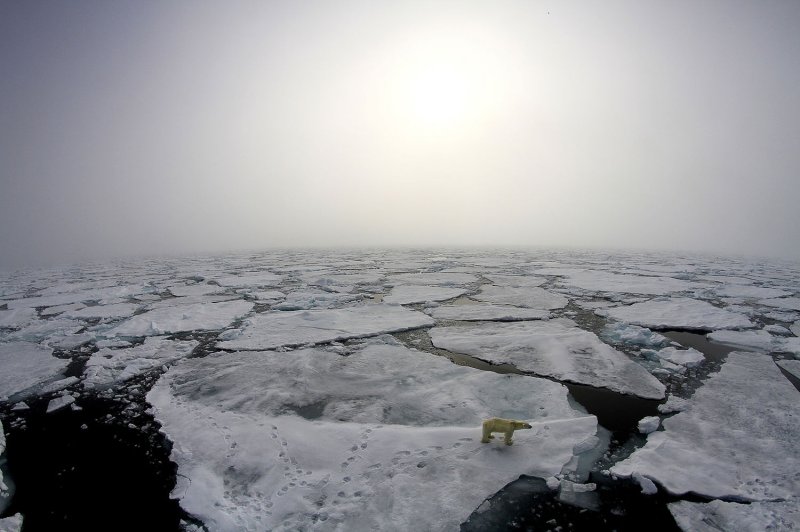
The status of Russia's mineral-rich Arctic area was elevated last year when an agency in charge of Far East development took charge of similar improvements. The Arctic Ocean is increasingly ice-free due to climate change and shipping natural gas and minerals through the Northern Sea route is now more attainable.

"The framework is a document of strategic planning ... for the purpose of protecting national interests of the Russian Federation in the Arctic," the order states.

Russia has invested heavily in the Arctic for years, as new shipping lanes have opened and more mineral deposits have been discovered.

Read More
Agriculture secretary says no more trade aid after Trump raises possibility

President Donald Trump (R) said on Twitter that farmers would get more aid payments but Agriculture Secretary Sonny Perdue (L) said this weekthat more aid is unlikely. Photo by Kevin Dietsch/UPI | License Photo
ANOTHER CLASH BETWEEN PERDUE AND TRUMP, SONNY'S DAYS ARE NUMBERED 
EVANSVILLE, Ind., March 6 (UPI) -- Farmers were left bewildered this week after Agricultural Secretary Sonny Perdue reiterated that another round of trade aid payments this year was unlikely despite what the president has said.

The announcement, made at a House Agriculture Committee meeting Wednesday, came less than two weeks after President Donald Trump tweeted that if farmers needed aid before the administration's new trade deals are fully implemented, "that aid will be provided by the federal government."

The mixed messages have left farmers uncertain what the year will bring.

"I don't think we can plan on [trade aid] happening," said Scott VanderWal, a South Dakota soybean grower and the president of the South Dakota Farm Bureau. "We have to put our budgets together without it."

RELATED Coronavirus could prevent China from meeting $80B agriculture trade pledge

That means a lot of uncertainty will prevail within the farming community this year, VanderWal said.

Commodity prices remain low as trade with China has yet to resume in earnest. China has promised under the phase one deal to buy large quantities of American agricultural products -- $80 billion over the next two years-- but industry experts question whether it is capable of fulfilling the promise.

Early signs are not good.

RELATED China suspends import tariffs for dozens of U.S. products


The outbreak of coronavirus in China has dramatically slowed trade and reduced demand. The movement of goods in and out of ports is slow as workers stay home.

"We've still not made one real sale [of soybeans] to China," said Mark Watne, president of the North Dakota Farmers Union.

It could be some time before China makes a large soybean purchase, Watne said. The phase one deal stipulates that China will make purchases based on market considerations. Currently, Brazilian soybeans are cheaper.

RELATED Coronavirus could impede U.S. trade with China, experts say

China might increase purchases of other agricultural products, such as dairy, meat and fresh produce, but that also is unclear. And until the coronavirus threat passes and normal trade resumes, little will be moving in and out of the country.

"Is the trade situation solved? It doesn't appear to be," said Mike Stranz, policy director for the National Farmers Union. "And if it isn't, why are we turning away from trade aid this year?"

The Trump administration has given farmers roughly $28 billion in assistance since the trade war with China began in summer 2018. High retaliatory tariffs on farm goods severely reduced trade between the two countries, causing commodity prices to plummet and leaving some goods -- like soybeans -- sitting in farm grain bins waiting for a buyer.

"The [Market Facilitation Program] payments made quite a difference for a lot of us," soybean grower VanderWal said. "For some, it was the difference between making a profit or not. For some, it just made the loss smaller. It might have kept some people in business."

Farms struggled despite the aid, he said. Farm bankruptcies in 2019 rose 20 percent, according to the American Farm Bureau Federation.

"The phase one deal is a good sign," said Josh Gackle, a soybean grower in North Dakota. "But now we really need the beans to start moving. Prior to 2018, 70 percent of North Dakota's soybeans went to China. We need the ships to start moving. And that's not happening yet."

Despite Perdue's comments, Stranz said he believes that -- unless China suddenly starts making large purchases before summer -- the Trump administration will offer more trade assistance.

"The [United States Department of Agriculture] has to be a little more sensitive to making announcements that may or may not impact the market," Stranz said.
Wild horse killings leave Arizona community on edge
RANCHERS WANT FREE ACCESS TO PUBLIC LANDS FOR GRAZING THEIR ANIMALS  
THE HORSES ARE AN IMPEDIMENT, LIKE WOLVES AND OTHER PREDATORS RANCHERS WHINE ABOUT


More than 35 horses have died, mostly from gunshot wounds, near the Heber Wild Horse Territory in Arizona over the past 16 months. Photo courtesy of U.S. Department of Agriculture

DENVER, March 6 (UPI) -- Someone has been shooting wild horses in a national forest near Heber-Obergaard, Ariz., for the last 16 months, and the unsolved crimes are tearing apart the small community.

Some 35 horses have been found dead in the Apache-Sitgreaves National Forest, with most of them killed by bullets, authorities said. Local horse advocates and those who don't like the horses' presence blame each other for the deaths.

Most recently, 15 horses were found shot between Jan. 9 and 12, said Kacy Ellsworth, spokeswoman for the U.S Forest Service.

No arrests have been made, and authorities declined to say if they believe the same person or multiple shooters have been committing the crimes.

RELATED Wild horse and burro numbers must be slashed, advisory board says

"The investigation is ongoing," Ellsworth said. A $5,000 reward is offered for information leading to the arrest and conviction of the shooter or shooters.

"The series of horse deaths in the vicinity of the Heber Wild Horse Territory, about 110 miles northeast of Phoenix, is an issue we are taking seriously and diligently investigating," the Forest Service said in a statement.

The horses are wild animals, but protected by the Wild and Free-Roaming Horses and Burros Act of 1971. Killing a wild horse can lead to a fine of up to $2,000 and a maximum of one year in prison, or both.
RELATED New rules for managing wild horses, burros on horizon

Residents say the vacation and retirement Heber-Overgaard community, with a year-round population around 2,400, is rattled by the shootings. The most recent incidents took place behind a subdivision and off a local highway.

"These shootings are bringing out the worst in people," said Realtor Robin Crawford, who lives near the forest and spends hours every week photographing the animals.

Wild horses have been controversial in the area for decades because cattle producers consider them a threat to forest grazing lands and want them gone.

RELATED U.S. proposes rules that could cause faster destruction of national forests

Now, horse advocates and ranch-affiliated townsfolk are trading insults online like "whacktivist" for horse lovers and "welfare ranchers" for cattle ranchers who graze their cows on subsidized public rangeland.

Both sides say they've received veiled threats and taunts online, including recipes for horse meat and surveillance-style photos of their properties and livestock.

But some residents think fighting about the horses is bad for business.

"People come up here for recreation to escape from the heat. They come up to enjoy the mountains. If we put panic in the forest, that stops people from coming into the community," Navajo County Supervisor Daryl Seymore said.

"We have to be inviting. When we're fighting among ourselves, who wants to go into that hostile environment?"

But the most upsetting part of the battle is the dead horses, local residents said.

"It's been heartbreaking when I have come across the carcasses of the dead horses, a couple of which I had just videotaped the day before," said Betty Nixon, a retired U.S. Army intelligence officer and fraud analyst who said she spends about 30 hours a week in the Apache-Sitgreaves forest.

Nixon said many of the animals had been shot in the abdomen or neck.

"The cruelty of shooting them in the gut, that is just cruel. The shooter was not interested in killing them humanely," Nixon said.

The shootings began in October 2018, according to the Forest Service. Twelve horses were killed that fall, and four more were found dead in February 2019. Most had gunshot wounds, and some were too decomposed to determine the cause of death, the Forest Service said.

In April 2019, a locally famous stallion, Old Buck, was found shot to death. Two more dead horses were found in fall 2019.

In this January's incidents, two family bands of horses were shot in groups of eight and seven. The dead horses included foals and adults.

Some residents say they are frustrated by what they perceive is a lack of commitment by investigating agencies.

Bullets whizzed past the head of wild horse photographer Kathie Reidhead, of Payson, Ariz., last May as she was photographing horses near a watering hole. She said she saw a man with ear protection standing in front of a parked silver pickup truck with Kentucky license plates shooting a rifle toward the horses.

"I hid behind a big log, and then I jumped up with my hands in the air," she said, adding that the man stopped shooting and hurriedly put his rifle back in the truck.

Reidhead said she captured several videos and photos of the man, his truck and fleeing horses. But she said the Navajo County Sheriff's Office and Forest Service investigators were not interested in her eyewitness account.

"Nobody cares. It just seems like they don't want to solve this," Reidhead said. "It seems like there's a big good-ole-boys club in Heber."

The Forest Service is following through on tips that are received, spokeswoman Ellsworth said.

A spokeswoman at the Navajo County Sheriff's Office declined to discuss the horse deaths, saying the investigation was being led by the U.S. Forest Service.

Meanwhile, local ranchers who want the horses gone say they have been frustrated by the federal agencies and federal judges who have prevented removal of horses, which were formerly sold or slaughtered.

The number of horses has increased significantly over the past decades, county supervisor Seymore said.

"Some of those horses could have been turned loose by irresponsible animal owners who couldn't afford to keep them," he said. "We need to control that horse population for safety. Hitting a horse on the highway is more dangerous than a deer or elk."

After federal lawsuits from several animal rights and conservation groups, the District Court for the District of Arizona ruled in 2005 to grant an injunction that stops the Forest Service from selling or removing horses without first developing a wild horse management plan.

"I'm not advocating for killing of horses, but the land management agency's hands are tied and they are not allowed to manage them," said Kathy Gibson Boatman, granddaughter of a local rancher.

In February, the agency proposed its first wild-horse plan for the 19,700-acre Heber Wild Horse Territory. The public can comment through March 15 whether the Forest Service should reduce the herd to between 50 and 104 animals through a combination of bait-and-trap capture, birth control and sterilization.

The forest holds between 270 and 420 animals, according to the agency's counts, which are several years old.

The Forest Service has ruled all of the horses qualify for protection as wild. But the agency acknowledges that many of the animals are descended from escaped domestic horses that moved onto forest land from the Fort Apache Indian reservation nearby after a 2002 forest fire.

Resident Boatman bristled when she hears rumors that someone affiliated with ranchers might be shooting the horses. She called horse advocates the "bullies of the forest."

"Multiple local people here, whose families have been here since the 1800s, feel that it's a whacktivist killing the horses," Boatman said.

"The ranchers want the horses gone, but I don't think any of them would shoot them. They have too much to lose," Realtor Crawford said. "The locals are just trying to keep their way of life, and I get that, but why not just leave the horses alone? What is the big deal?"

The investigation is frustrating, she said, because so little information has been released.

"But we're not going to stop asking about it, and we're not going to let it go," Crawford said.


upi.com/6989281