Monday, April 06, 2020

'Smart toilet' monitors for signs of disease
toilet bowl
Credit: CC0 Public Domain
There's a new disease-detecting technology in the lab of Sanjiv "Sam" Gambhir, MD Ph.D., and its No. 1 source of data is number one. And number two.
It's a smart . But not the kind that lifts its own lid in preparation for use; this toilet is fitted with technology that can detect a range of disease markers in stool and urine, including those of some cancers, such as colorectal or urologic cancers. The device could be particularly appealing to individuals who are genetically predisposed to certain conditions, such as irritable bowel syndrome, prostate cancer or kidney failure, and want to keep on top of their health.
"Our concept dates back well over 15 years," said Gambhir, professor and chair of radiology. "When I'd bring it up, people would sort of laugh because it seemed like an interesting idea, but also a bit odd." With a pilot study of 21 participants now completed, Gambhir and his team have made their vision of a precision health-focused smart toilet a reality.
Gambhir's toilet is an ordinary toilet outfitted with gadgets inside the bowl. These tools, a suite of different technologies, use motion sensing to deploy a mixture of tests that assess the health of any deposits. Urine samples undergo physical and molecular analysis; stool assessment is based on physical characteristics.
The toilet automatically sends data extracted from any sample to a secure, cloud-based system for safekeeping. In the future, Gambhir said, the system could be integrated into any health care provider's record-keeping system for quick and easy access.
A paper describing the research will be published April 6 in Nature Biomedical Engineering. Gambhir is the senior author. Seung-min Park, Ph.D., senior research scientist; David Won, MD, Ph.D., former visiting scholar in the Molecular Imaging Program at Stanford; and postdoctoral scholar Brian Lee, Ph.D., share lead authorship.
Pulling double duty
The toilet falls into a category of technology known as continuous health monitoring, which encompasses wearables like smart watches. "The thing about a smart toilet, though, is that unlike wearables, you can't take it off," Gambhir said. "Everyone uses the bathroom—there's really no avoiding it—and that enhances its value as a disease-detecting device."
Although the idea may take some getting used to, Gambhir, who holds the Virginia and D.K. Ludwig Professorship for Clinical Investigation in Cancer Research, envisions the smart toilet as part of the average home bathroom. In facilitating that broad adaption, Gambhir designed the "smart" aspect as an add-on—a piece of technology that's readily integrated into any old porcelain bowl. "It's sort of like buying a bidet add-on that can be mounted right into your existing toilet," he said. "And like a bidet, it has little extensions that carry out different purposes."
These extensions sport an array of health-monitoring technologies that look for signs of disease. Both urine and stool samples are captured on video and are then processed by a set of algorithms that can distinguish normal "urodynamics" (, stream time and total volume, among other parameters) and stool consistencies from those that are unhealthy.
Alongside physical stream analysis, the toilet also deploys uranalysis strips, or "dipstick tests," to measure certain molecular features. White blood cell count, consistent blood contamination, certain levels of proteins and more can point to a spectrum of diseases, from infection to bladder cancer to kidney failure. In its current stage of development, Gambhir said, the toilet can measure 10 different biomarkers.
It's still early days, though, with a total of 21 participants having tested the toilet over the course of several months. To get a better feel for "user acceptance" more broadly, the team surveyed 300 prospective smart-toilet users. About 37% said they were "somewhat comfortable" with the idea, and 15% said they were "very comfortable" with the idea of baring it all in the name of precision health.
ID please
One of the most important aspects of the smart toilet may well be one of the most surprising—and perhaps unnerving: It has a built-in identification system. "The whole point is to provide precise, individualized health feedback, so we needed to make sure the toilet could discern between users," Gambhir said. "To do so, we made a flush lever that reads fingerprints." The team realized, however, that fingerprints aren't quite foolproof. What if one person uses the toilet, but someone else flushes it? Or what if the toilet is of the auto-flush variety?
They added a small scanner that images a rather camera-shy part of the body. You might call it the polar opposite of facial recognition. In other words, to fully reap the benefits of the smart toilet, users must make their peace with a camera that scans their anus.
"We know it seems weird, but as it turns out, your anal print is unique," Gambhir said. The scans—both finger and nonfinger—are used purely as a recognition system to match users to their specific data. No one, not you or your doctor, will see the scans.
By no means is this toilet a replacement for a doctor, or even a diagnosis, Gambhir said. In fact, in many cases, the toilet won't ever report data to the individual user. In an ideal scenario, should something questionable arise—like blood in the urine—an app fitted with privacy protection would send an alert to the user's health care team, allowing professionals to determine the next steps for a proper diagnosis. The data would be stored in a secure, cloud-based system. Data protection, both in terms of identification and sample analyses, is a crucial piece of this research, Gambhir said. "We have taken rigorous steps to ensure that all the information is de-identified when it's sent to the cloud and that the information—when sent to health care providers—is protected under HIPAA," he said, referring to the Health Insurance Portability and Accountability Act, which restricts the disclosure of health care records.
Smart toilet 2.0
As Gambhir and his team continue to develop the smart toilet, they're focusing on a few things: increasing the number of participants, integrating molecular features into stool analysis and refining the technologies that are already working. They're even individualizing the tests deployed by the toilet. For example, someone with diabetes may need his or her urine monitored for glucose, whereas someone else who is predisposed to bladder or kidney cancer might want the toilet to monitor for blood.
Gambhir's other goal is to further develop molecular analysis for stool samples. "That's a bit trickier, but we're working toward it," Gambhir said. "The smart toilet is the perfect way to harness a source of data that's typically ignored—and the user doesn't have to do anything differently."
German toilet paper calculator takes aim at virus panic-buying

More information: A mountable toilet system for personalized health monitoring via the analysis of excreta, Nature Biomedical Engineering (2020). DOI: 10.1038/s41551-020-0534-9 , https://nature.com/articles/s41551-020-0534-9
Journal information: Nature Biomedical Engineering 
Link between air pollution and corona mortality in Italy could be possibleby Aarhus University

Credit: CC0 Public Domain

4/6/2020 

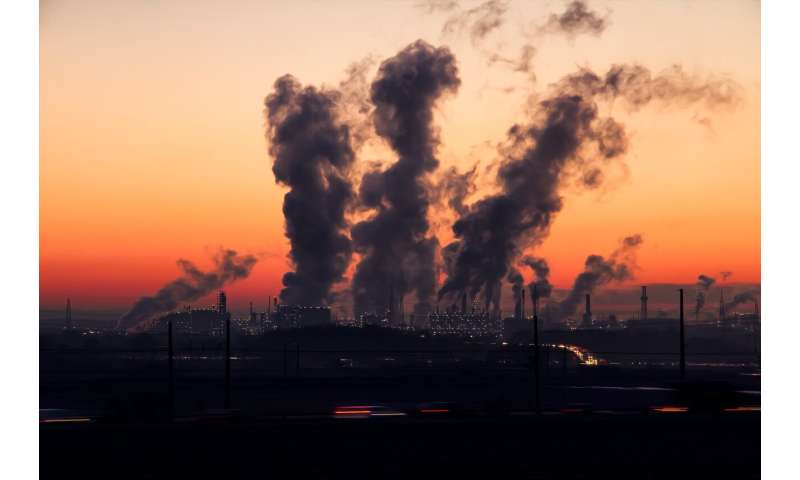
The world has been hit hard by coronavirus, and health services and authorities everywhere are struggling to reduce the spread, combat the disease and protect the population. Nevertheless, the pandemic will cost lives throughout the world. An environmental researcher from Aarhus University has studied whether there could be a link between the high mortality rate seen in northern Italy, and the level of air pollution in the same region. The short answer is "yes possibly." The long answer is in the article below.

The outbreak of Severe Acute Respiratory Syndrome CoronaVirus2 had its source in the Wuhan Province in China in December 2019. Since then, the coronavirus has spread to the rest of the globe, and the world is now treating patients with the disease that follows virus infection: COVID-19. The course of the disease differs for patients the world over: many experience flu-like symptoms, while many others need hospital treatment for acute respiratory infection that, in some cases, leads to death.

However, what factors affect the course of the disease and the possibilities to combat COVID-19 remains unclear, as long as there is no medical treatment or vaccine. At the moment, there are more questions than answers, and researchers all over the world are therefore working to find new insights into the global pandemic.

At Aarhus University, the environmental scientist Dario Caro from the Department of Environmental Science, and two health researchers, prof. Bruno Frediani and Dr. Edoardo Conticini, from the University of Siena in Italy have found yet another small piece in the puzzle of understanding the deadly disease. They have focused on examining why the mortality rate is up to 12% in the northern part of Italy, while it is only approx. 4.5% in the rest of the country.

They have just published an article entitled "Can Atmospheric pollution be considered as a co-factor in the extremely high level of SARS-CoV-2 lethality in Northern Italy?", in which they demonstrate a probable correlation between air pollution and mortality in two of the worst affected regions in northern Italy: Lombardy and Emilia Romagna.

The research project has been published in the scientific journal Environmental Pollution.

"There are several factors affecting the course of patients' illness, and all over the world we're finding links and explanations of what is important. It's very important to stress that our results are not a counter-argument to the findings already made. At the moment, all new knowledge is valuable for science and the authorities, and I consider our work as a supplement to the pool of knowledge about the factors that are important for the course of patients' illness," says environmental scientist Dario Caro, and clarifies that there are a number of other factors that could possibly play a role in the Italian situation:
"Our considerations must not let us neglect other factors responsible of the high lethality recorded: important co-factors such as the elevated median age of the Italian population, the wide differences among Italian regional health systems, ICUs capacity and how the infects and deaths has been reported have had a paramount role in the lethality of SARS-CoV-2, presumably also more than pollution itself," he explains.

Different datasets show a link


The two northern Italian regions are among the most air-polluted regions in Europe. The recently published article took its outset in data from the NASA Aura satellite, which has demonstrated very high levels of air pollution across precisely these two regions. The group compared these data with the so-called Air Quality Index; a measurement of air quality developed by the European Environment Agency. The index gathers data from several thousand measuring stations all over Europe, providing a geographical insight into the prevalence of a number of pollutant sources in the EU.

The figures speak for themselves. The population of the northern Italian regions lives in a higher level of air pollution, and this may lead to a number of complications for patients with COVID-19 in the regions, simply because their bodies may have already been weakened by the accumulated exposure to air pollution when they contract the disease.

Dario Caro explains that the situation in the Italian regions has been a challenge for several years, with high levels of air pollution that have accumulated over a long period of time in the population. It is therefore unlikely that there is any reason to imagine that people in Denmark are exposed to the same factors or the same levels of pollution as people in northern Italy, where the authorities have been trying to reduce pollution levels for many years.

"All over the world, we're seeing different approaches from countries' authorities, in countries' general public health outset and in the standards and readiness of different countries' national healthcare systems. But this doesn't explain the prevalence and mortality rates that we're seeing in northern Italy compared with the rest of Italy. This feeds hope that we may have found yet another factor in understanding the high mortality rate of the disease in northern Italy," says Dario Caro.

Explore further 
Air pollution 'likely' to cut COVID19 survival: experts
More information: Edoardo Conticini et al, Can atmospheric pollution be considered a co-factor in extremely high level of SARS-CoV-2 lethality in Northern Italy?, Environmental Pollution (2020). DOI: 10.1016/j.envpol.2020.114465
Journal information: Environmental Pollution

Provided by Aarhus University

A framework for indoor robot navigation among humans

by Ingrid Fadelli , Tech Xplore

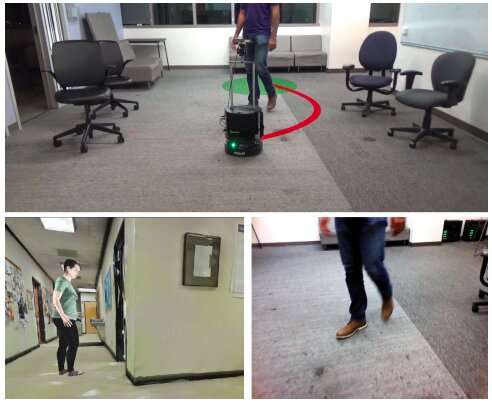
(Top) An autonomous visual navigation scenario considered by the researchers, in a previously unknown, indoor environment with humans, using monocular RGB images (bottom right). To teach machines how to navigate indoor environments containing humans, the researchers created HumANav, a dataset that allows for photorealistic rendering in simulated environments (e.g. bottom left). Credit: Tolani et al.

I
n order to tackle the tasks that they are designed to complete, mobile robots should be able to navigate real world environments efficiently, avoiding humans or other obstacles in their surroundings. While static objects are typically fairly easy for robots to detect and circumvent, avoiding humans can be more challenging, as it entails predicting their future movements and planning accordingly.

Researchers at the University of California, Berkeley, have recently developed a new framework that could enhance robot navigation among humans in indoor environments such as offices, homes or museums. Their model, presented in a paper pre-published on arXiv, was trained on a newly compiled dataset of photorealistic images called HumANav.

"We propose a novel framework for navigation around humans that combines learning-based perception with model-based optimal control," the researchers wrote in their paper.

The new framework these researchers developed, dubbed LB-WayPtNav-DH, has three key components: a perception, a planning, and a control module. The perception module is based on a convolutional neural network (CNN) that was trained to map the robot's visual input into a waypoint (i.e., the next desired state) using supervised learning.

The waypoint mapped by the CNN is then fed to the framework's planning and control modules. Combined, these two modules ensure that the robot moves to its target location safely, avoiding any obstacles and humans in its surroundings.
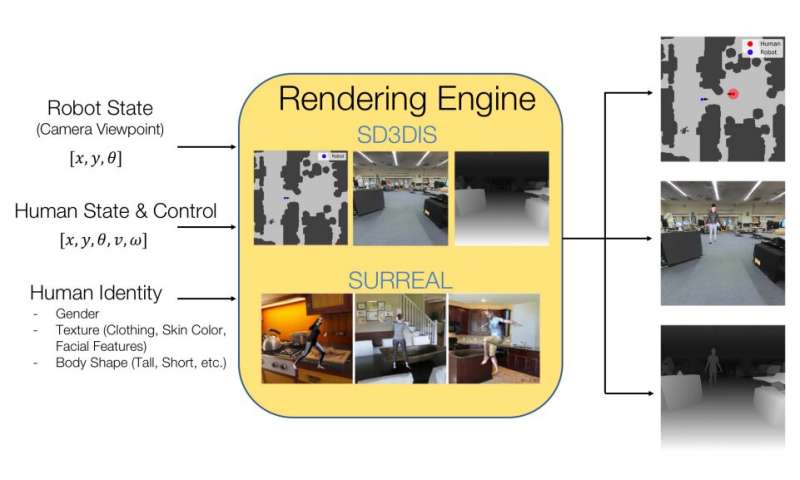
Image explaining what the HumANav dataset contains and how it achieves photorealistic rendering of indoor environments containing humans. Credit: Tolani et al.

The researchers trained their CNN on images included in a dataset they compiled, dubbed HumANav. HumANav contains photorealistic, rendered images of simulated building environments in which humans are moving around, adapted from another dataset called SURREAL. These images portray 6000 walking, textured human meshes, arranged by body shape, gender and velocity.

"The proposed framework learns to anticipate and react to peoples' motion based only on a monocular RGB image, without explicitly predicting future human motion," the researchers wrote in their paper.

The researchers evaluated LB-WayPtNav-DH in a series of experiments, both in simulations and in the real world. In real-world experiments, they applied it to Turtlebot 2, a low-cost mobile robot with open-source software. The researchers report that the robot navigation framework generalizes well to unseen buildings, effectively circumventing humans both in simulated and real-world environments.

"Our experiments demonstrate that combining model-based control and learning leads to better and more data-efficient navigational behaviors as compared to a purely learning based approach," the researchers wrote in their paper.

The new framework could ultimately be applied to a variety of mobile robots, enhancing their navigation in indoor environments. So far, their approach has proved to perform remarkably well, transferring policies developed in simulation to real-world environments.

In their future studies, the researchers plan to train their framework on images of more complex or crowded environments. In addition, they would like to broaden the training dataset they compiled, including a more diverse set of images.

Explore furtherWayPtNav: A new approach for robot navigation in novel environments
More information: Visual navigation among humans with optical control as a supervisor. arXiv:2003.09354 [cs.RO]. arxiv.org/abs/2003.09354

smlbansal.github.io/LB-WayPtNav-DH/

© 2020 Science X Network

How Google is teaching a robot dog to learn to move like a real dog

YOU KNOW ITS REAL WHEN IT LEARNS TO SNIFF BUTTS

How Google is teaching a robot dog to learn to move like a real dog
Robot imitating various skills from a dog. Credit: Google
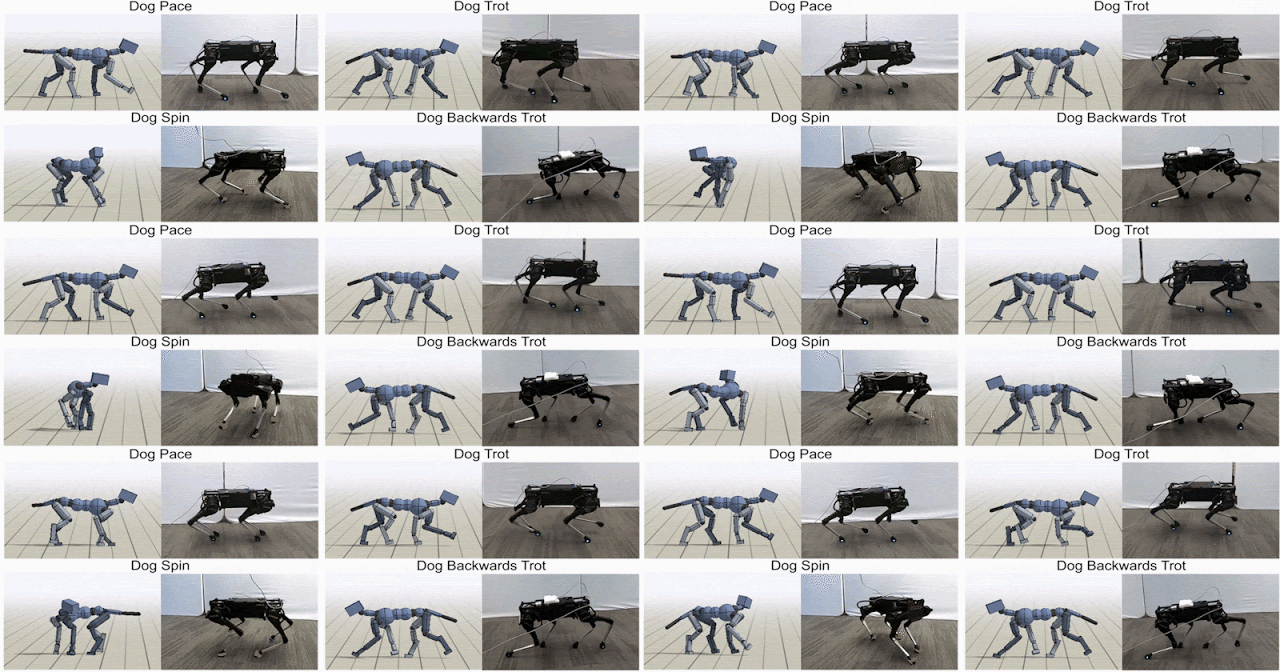
A team of researchers at Google's AI lab is seeing results in its effort to develop a dog-like robot quadruped that learns dog behavior by studying how real dogs move. The team has posted an outline of the work they are doing on the Google AI blog.
Training a  to perform tasks by mimicking the movements of a living creature is not new— that build cars, for example, are taught how to spot weld or tighten bolts by mimicking the desired action as performed by a human arm. But teaching a robot by showing it video of a real dog is definitely new. And that is just what Google is doing. The robot in this case is a quadruped called Laikago (after Laika, the first dog in space)—it is being trained to walk, run and even chase its tail like a real dog by showing it motion-capture footage of a real dog in action.
In practice, the video is actually first processed by an AI system that translates the action in the video into an animated version of Laikago. To work out possible interpretation errors (because the digital dog is made from metal and wire and motors instead of bones, muscles and sinews), the team shows the AI system multiple stop-action videos of a real dog in action. The AI system builds up a toolset of possible moves depending on scenarios that might be encountered in the real world. Once the simulation has built up a , its "brain" is uploaded to Laikago, who then uses what the simulation has learned as a starting point for its own behavior.
Video of Laikago in action shows that the technique works—the robotic dog is able to walk and trot very much like a real dog—and even simulates chasing its tail. But it also has some deficiencies compared to other advanced robotic animals, such as those from Boston Dynamics,which get their skills through programming—getting back on its feet after stumbling or tripping, for example, is still troublesome. But the researchers at Google are undaunted, believing more research will lead to ever more lifelike behavior by their robot.
Researchers use gait primitives from real animals to simulate movement in robots (w/ video)

More information: ai.googleblog.com/2020/04/expl … d-robot-agility.html
Learning Agile Robotic Locomotion Skills by Imitating Animals, arXiv:2004.00784 [cs.RO] arxiv.org/abs/2004.00784

Study explores the effects of bilingualism on the developing brain

Study explores the effects of bilingualism on the developing brain
Credit: Jerry Wang, Unslplash
Recent research in the field of neuroscience suggests that knowing and speaking more than one language could impact the speaker's brain structure. Some studies, for instance, have found differences in the cortical regions and subcortical grey matter structures of bilingual or multilingual adults, compared to those of monolinguals.
These findings are aligned with other observations highlighting changes in the  of those who mastered a new skill, such as juggling, playing the piano or handling specific tools. As these changes have typically been observed in  associated with the acquired skills, bilingualism and multilingualism are expected to affect  areas associated with  processing, learning and control.
Researchers at the University of Reading and Georgetown University have recently carried out a new study exploring the effects on brain development of knowing more than one language from  to young adulthood. Their paper, pre-published on PsyArXiv and currently under review for publication in Brain Structure & Function, is based on a large repository of past imaging and behavioral data.
"The regions of the brain affected by bilingualism are those involved in how we acquire and process language, as well as in how we control what language we use each time, if we know more than one," Christos Pliatsikas, lead researcher on the study, told Medical Xpress. "These structural changes are thought to make the brain more efficient in handling these demanding tasks, which become more intensive if you are a bilingual."
In their past research, Pliatsikas and his colleagues found that the structural brain changes that take place in the developing brain of bilinguals and multilinguals often vary, depending on how frequently they speak the languages they know. Their new study was aimed at investigating these changes further, by observing brain development in bilingual and monolingual individuals from childhood to early adulthood.
"We used a large, publicly available, dataset of MRI structural brain images from participants aged three to 21, including those reporting speaking more than one language," Pliatsikas explained. "This dataset provided measures of brain structure (e.g. volume) for the entire brain, separated into smaller regions."
The researchers analyzed MRI brain images looking for changes that take place during development, then checked whether these changes differed between bilinguals and monolinguals. They particularly examined the thickness, volume and surface area of grey matter in 41 cortical and subcortical brain regions, as well as characteristics of white matter in 20 brain tracts.
"We used advanced statistics that take into account the particular shapes of the trajectories over development (e.g. peaks at certain ages followed by drops), which are more appropriate than more traditional methods that would treat  as a continuous straight line," Michael Ullman, senior researcher on this study, told TechXplore.
The analyses carried out by Pliatsikas, Ullman, and their colleagues yielded a number of interesting results. First, the researchers found that the developmental trajectories of some brain regions were indeed affected by bilingualism. For instance, while past research consistently found that the brain gets slightly smaller during childhood, this shrinking process appeared to be slower for bilinguals, particularly in some brain regions.
The brain regions that did not appear to shrink as much in bilinguals were all previously found to be associated with language processing and control. This ultimately suggests that bilingualism and potentially even multilingualism makes areas of the brain that acquire, process and control language more 'resilient' to developmental effects.
"Our findings not only corroborate previous suggestions that the structure of the bilingual brain differs to that of the monolingual one, but also show that some of the effects found in adults might have their roots in development," Ullman said.
In addition to broadening the current understanding of how bilingualism can impact the brain, the new findings gathered by the researchers could have important implications for future neuroscience studies. In fact, the variance that Pliatsikas, Ullman and their colleagues identified in how the bilingual brain develops during childhood could be ultimately linked to or explain the structural differences observed in the brain of bilingual adults.
"In my next studies, I am particularly interested in exploring the long-term effects of bilingualism in the brain, and especially the ageing brain," Pliatsikas said. "If bilingualism changes the structure of the brain to make it more efficient, does it have the potential to make it more resilient to age-related decline, both in healthy bilinguals and in bilingual patients?"
Being bilingual may help protect cognitive decline in multiple sclerosis patients

More information: Christos Pliatsikas et al. The effect of bilingualism on brain development from early childhood to young adulthood, psyarxiv (2020). DOI: 10.31234/osf.io/kjq6m
On “Bullshit Jobs” by David Graeber

REVIEW By Chris Wright

Referring to cultural Marxism, especially the Frankfurt School, Noam Chomsky once said
, “I don’tfind that kind of work very illuminating… The ideas that seem useful also seem pretty simple, andI don’t understand what all the verbiage is for.” While I think there’s much of value in the so -called Western Marxist tradition—for instance, I’m partial to Georg Lukács (more so than to Adorno and others in the Frankfurt School)

I have to admit I strongly sympathize with Chomsky.But his criticism generalizes, and is even truer in other areas: since well before the mid-twentieth century, a large amount of work in the humanities has been prone to unnecessary and sometimes incomprehensible verbiage. Later this tendency came to be associated with postmodernism, for itwas most pronounced in the writings of such luminaries as Derrida, Lacan, Kristeva, Deleuze, and Foucault, as well as their hordes of epigones. By the end of the twentieth century, a vast field of “Theory ” had reached maturity, encompassing much of philosophy, anthropology, psychoanalysis,and literary, film, and cultural studies.As an anthropologist, David Graeber works in this broadly conceived “interpretive” tradition (I call it that because it consists essentially of endless cultural and social “interpretations” or “theories,” often playful and highly verbose conceptual exercises). He has an advantage over many of his peers in that, while not a particularly great writer, he can at least write clearly and informally   enough to be widely read. Presumably this lucidity helps account for his fame as do, more importantly, his heterodox ideas, his ability to capture a cultural mood even in the titles of his books (Debt ,The Utopia of Rules,Bullshit Jobs), and his impressive productivity.

Perhaps he’s too productive: while reading his latest book, I couldn’t help thinking
it would have packed a greater punch if he had shortened it by a third. It meanders and meanders, repeats and repeats, and,well, I didn’tunderstand what all the verbiage was for. The full title of his book is  Bullshit Jobs: A Theory I wasn’t able to find the “theory,” unless it be that bullshit jobs do in fact exist. And Graeber marshals abundant evidence to test and confirm that theory. The most entertaining, and probably the most valuable, parts of the book are the many testimonies he presents from poor souls who spend their lives in a bullshit job, which is to say a job they think shouldn’t exist because it contributes nothing to the world.

The numbers of people who believe this are incredibly high. One poll in the United Kingdom found that only 50 percent of people with full-time jobs were sure their job made a meaningful contribution to the world, while 37 percent were sure theirs didn’t. A poll in Holland put the latter number at 40 percent.

Even jobs that aren’t bullshit, like nurses and professors, are being increasingly bullshitized, as paperwork, meetings, and other administrative duties crowd out more meaningful tasks like taking care of patients and teaching. (Nurses reported to Graeber that as much as 80 percent of their time is now taken up with meetings, filling out forms, and the like.) Considering these facts, as well as the existence of many second-order bullshit jobs (jobs done in support of those directly engaged in bullshit), Graeber estimates that well over half of all work being done in society could be eliminated without making any real difference.What sorts of jobs are we talking about? Not most lower-tier jobs: not street cleaners, bus drivers,repairmen, restaurant workers, store clerks, gardeners, construction workers, etc. These people make a contribution to the world. Graeber suggests a rough five-fold classification of bullshit jobs.


MY CLASSIFICATION OF A BULLSHIT JOB HAS ALWAYS BEEN THERE IS NO SUCH THING AS AN ANARCHIST ACADEMIC, GRAEBER PROVES IT AS DO OTHERS IN THE ACADEMY  BY BEING ACADEMIC ANARCHISTS, THEY ARE ALL THEORY AND "THEY SPEAK IN LANGUAGE NO ONE UNDERSTANDS OF THE RIGHTS WE HAVE GRABBED WITH OUR OWN BLEEDING HANDS"....ONCE AGAIN THE ANSWER IS RIGHT IN FRONT OF HIS NOSE, HIS JOB IS USELESS, HIERARCHICAL, PRIVILEGED, AND IN THE AGE OF THE INTERNET IRRELEVANT, I CAN TEACH MYSELF THANKS, FIRST LESSON OF DIY.


David Graeber: "Will we then pretend that everything was just a dream?"

3/31/2020
Which jobs are bullshit and which are systemically important: We shouldn't forget that after the Corona crisis, says capitalism critic David Graeber.


Is Occupy Homeoffice coming to Occupy Wall Street? A call in London to anthropologist and capitalism critic David Graeber - who hopes that our working life and our economic system will never be the same as before the Corona crisis.

ZEIT ONLINE: Mr. Graeber, suddenly home office is possible and supermarket cashiers are systemically relevant. Is the Corona crisis turning our working world upside down forever?

David Graeber: Here in Great Britain, the government has compiled a list of the systemically relevant professions - those who work in them can continue to send their children to school, where they are looked after. The list captivates with the amazing absence of management consultants and hedge fund managers! Those who earn the most don't show up there. The basic rule is: the more useful a job, the worse it is paid. An exception are, of course, doctors. But even there you could argue: As far as health is concerned, the cleaning staff in hospitals contributes just as much as the doctors, and much of the progress in the past 150 years has come from better hygiene.

ZEIT ONLINE: In France, the supermarket employees who are particularly challenged now receive a bonus payment - at the urging of the government. The market does not regulate this on its own.

David Graeber: Because the market is not so much based on supply and demand as we are always told - who makes how much is a question of political power. The current crisis makes it even clearer that my wages do not depend on how much my profession is actually used.

"Some people now contact me and say: I always suspected that I could do my job two hours a week, but now I actually know it is." David Graeber

ZEIT ONLINE: This is the issue in your current book Bullshit Jobs : Many socially indispensable jobs are poorly paid - while well-paid employees often doubt whether their office work makes any sense at all or whether they are only doing a "bullshit job".

Graeber: What is important to me: I would never contradict people who feel that they are making an important contribution with their work. For my book, however, I have collected voices from people who do not have exactly this feeling: They are sometimes deeply frustrated because they want to contribute to the good of all of us. But to make enough money for their families, they have to do the jobs that don't work for anyone. People said to me: I worked as a kindergarten teacher, it was great and fulfilling and important work, but I couldn't pay my bills anymore. And now I'm working for some subcontractor that provides health insurance with information. I tag some forms all day, no one reads my reports, but I earn twenty times as much.


ZEIT ONLINE: What happens to these office workers who are now doing their bullshit jobs because of the corona virus from their home office?

Graeber: Some people now contact me and say: I always suspected that I could do my job two hours a week, but now I actually know that it is. Because as soon as you do this from home, for example, the meetings that don't do anything are often dropped.

ZEIT ONLINE: After the financial crisis in 2008, you were involved in the Occupy Wall Street protest movement, including activists occupying a park near the New York Stock Exchange. Could the corona crisis produce a similar left movement? An occupy home office?

Graeber: If so, the motto is rather: Occupy the apartment you live in and no longer pay rent. There is a lot of talk about renting strikes right now because people can no longer pay their rent because of the corona crisis. And then the real point is to support the systemically important workers who are not provided with the equipment they need to do their job. It is in all of our interests that medical personnel and delivery drivers have protective equipment.

ZEIT ONLINE: At the same time, in this crisis we learn very clearly how central work is for our society: No matter how many places people are no longer allowed to visit, they should often continue to work.

Graeber: You can see that with restrictions in public transport: if you close it, then first at the weekend. You can no longer go to the park. But God forbid that you can no longer go to work! Although we have long since noticed that a large part of the work does not have to be done in the office at all.

"It is important that we do not suppress what we finally admit to ourselves in times of crisis - for example, which jobs are systemically important and which are not."

ZEIT ONLINE: That would actually be an insight from the current situation, right?

Graeber: Yes. The only question is: when the crisis is over, will people pretend that it was just a dream? Similar things could be observed after the financial crisis in 2008: For a few weeks everyone said: "Oh, everything we thought was true is not true!" Fundamental questions have finally been asked: What is money? What are debts? But at some point you suddenly decided: "Stop, we're going to leave it now. Let's pretend that nothing has ever happened! Let's do it all again before!" And neoliberal politics and the financial industry just kept going. That is why it is so important that we do not suppress what we finally admit to ourselves in times of crisis - for example, which jobs are systemically important and which are not.

Source: zeit


Debt : the first 5,000 years / David Graeber. p. cm. Includes bibliographical references and index. ISBN 978-1-933633-86-2 (alk. paper) 1. Debt-History. 2.
Covid-19: a clinical trial with sea worm blood begins in France

A French laboratory launches a clinical trial to relieve patients affected by Covid-19 from hemoglobin in the arenicola. The blood of this sea worm present can carry 40 times p…
4/6/2020

In France, ten Covid-19 patients will be administered a solution from the blood of a sea worm as part of a clinical trial. "We obtained the two administrative green lights to be able to start," announced on Saturday April 4, Doctor Franck Zal, head of the Breton company Hemarina, at the origin of the product.

Intended for patients affected by Acute Respiratory Distress Syndrome (ARDS), the solution to be administered is created from the hemoglobin of a sea worm, measuring between 10 and 15 cm, named arenicole. It has red blood cells capable of carrying 40 times more oxygen than the hemoglobin of human red blood cells.

This "molecular respirator", whose project is codenamed "Monaco", is a "perspective of hope to relieve resuscitation", commented the director of the company Hermarina.

Green light from the Personal Protection Committee

After the agreement of the French National Agency for Medicines and Health Products (ANSM), the Hemarina company announced on Saturday that it had obtained the necessary green light from the Personal Protection Committee (CPP) to start its research. The test must take place in one of the two Parisian hospitals, at the Pitié-Salpêtrière (13th arrondissment) or at Georges-Pompidou (15th), which will have these products.

"First, we will have a safety and effectiveness test to be able to see a sign of oxygenation for people who are going to fall into intensive care," said the boss of Hemarina. It is about "avoiding, trying to avoid, that patients arrive too quickly in intensive care".

"Open source is the rule"

"We would like the research to be open source, for the data to be published and open to the international community", underlined Franck Zal.

"Our results will be published in accordance with scientific rules and the people receiving the molecule. In this time of crisis, open source is the rule", reacted Laurent Lantieri, one of the scientific managers of the Monaco project, on Twitter.

Based in Morlaix, Hemarina has its own sea worm breeding farm in Vendée, and had 5,000 doses immediately available at the end of March with the capacity to produce 15,000 others "fairly quickly".

With AFP
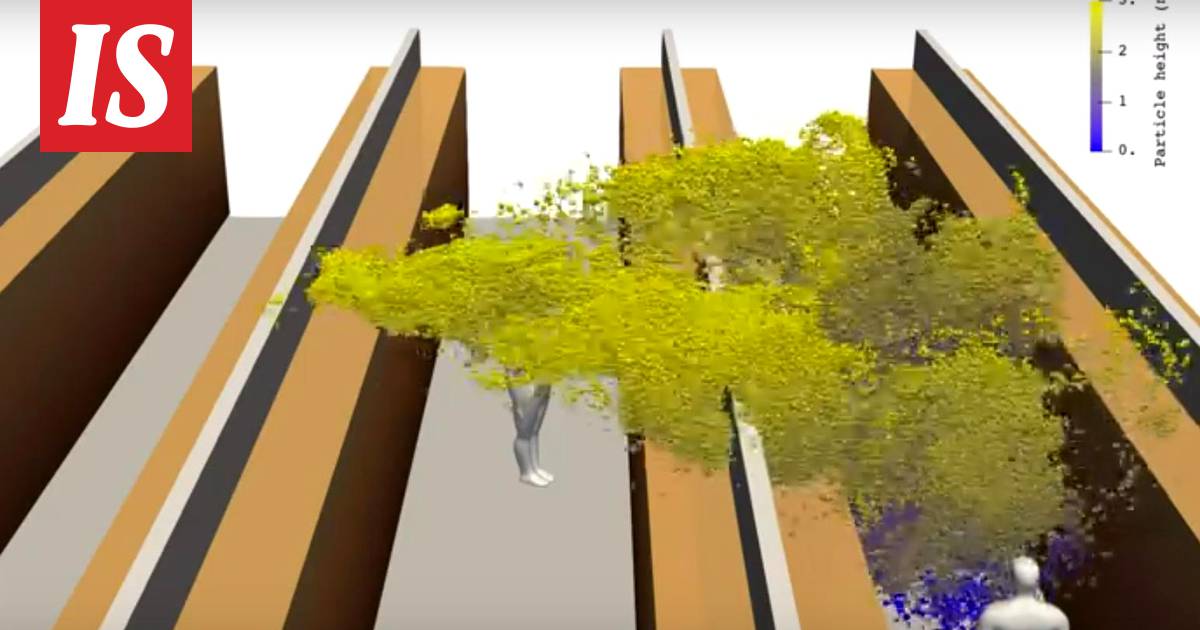
Particles carrying a coronavirus can remain in the air and end up in another person - a new Finnish study

Preliminary research results from four Finnish research bodies show that aerosol particles carrying the coronavirus can persist in the air longer than previously thought. Researchers say it is important to avoid busy public interiors.

4/6/2020

Aalto University, the Finnish Meteorological Institute, VTT and the University of Helsinki have studied how extremely small aerosol particles floating in the air travel with the air flow. Aerosol particles escape from the airways when coughing, sneezing or even talking. They also carry pathogens such as coronaviruses.

According to a press release released on Monday, the researchers came to the same preliminary result: in the situation under study, the aerosol cloud also spreads to the immediate area outside the immediate vicinity of the coughing person. On the other hand, the cloud dilutes at the same time, but it takes up to minutes for the cloud to spread and dilute.

- If a cough infected with a coronavirus walks away and another person arrives near the same place, extremely small aerosol particles containing coronavirus in the air can end up in this other person's airways, says Ville Vuorinen, an assistant professor at Aalto University.

According to THL, new recommendations cannot yet be made directly on the basis of modeling.

- The preliminary results of the consortium underline the importance of our recommendations. The Department of Health and Welfare THL recommends staying at home sick and everyone taking physical distance. Our instructions are also to cough up a sleeve or handkerchief and take care of good hand hygiene, says leading expert Jussi Sane from THL, according to the press release.

https://www.tellerreport.com/news/2020-04-06---particles-carrying-a-coronavirus-can-remain-in-the-air-and-end-up-in-another-person---a-new-finnish-study-.ByBJSfqdvU.html


When someone coughs between a store shelf, particles that carry such a crown can spread - watch the researchers' muting video (in Finnish but its an animation so it's easy to understand)
4/6/2020

A new Finnish study has examined how small aerosol particles spread during coughing. This provides an interesting perspective on the possible spread of the coronavirus.

Watch the modeling done by researchers at Aalto University, VTT, the Finnish Meteorological Institute and the University of Helsinki in the video above.
Read more about the study here: Particles carrying the coronavirus can remain in the air and end up in another person - a new Finnish study
Pandemic effect: why the global economic downturn due to coronavirus may be worse than the 2008 crisis


3/26/2020

The head of the World Trade Organization predicts that the global economic slowdown caused by the coronavirus may be larger than the 2008 crisis. A pandemic and massive closure of borders provoked a decrease in trade and passenger traffic, as well as weakened business activity in most countries. As a result, the collapse of world GDP may exceed 4% and become the largest in 60 years. Analysts estimate the total financial losses from the consequences of the infection at $ 5 trillion. The threat of recession has already been recognized in the United States. At the same time, experts fear that, as in 2008, a large-scale economic crisis may again begin with the American mortgage market.


In 2020, the recession of the world economy as a result of the effects of coronavirus may be worse than the financial crisis of 2008. This was stated by the Director General of the World Trade Organization (WTO) Roberto Azevedo.

“A pandemic will undoubtedly have a very serious impact on the economy, trade and, consequently, on jobs and human well-being. Recent forecasts predict a recession and job loss worse than during the global financial crisis 12 years ago, ”Azevedo emphasized.

A similar assessment was previously voiced by the head of the International Monetary Fund (IMF) Kristalina Georgieva. According to her, from the beginning of the spread of the disease, global investors withdrew about $ 83 billion from emerging markets. Capital outflows have become the largest for the entire time of observation.

According to the forecast of the Institute of International Finance (IIF), in 2020 the volume of world GDP can immediately decline by 4.1%. According to World Bank statistics, such a recession in the global economy risks becoming the largest in the past 59 years. For comparison, during the global financial crisis, the decline was only 1.68%.

“The crisis of 2008 was not accompanied by the destruction of technological and logistics chains around the world, did not create a situation where production stops and borders between countries are closed. In addition, the volume of world debt in 2008 was not as huge as it is now. Today, the amount is almost three times the volume of the world economy, ”said Pavel Sigal, First Vice President of the All-Russian public organization of small and medium-sized enterprises“ Support of Russia ”, RT.

According to official data from the World Health Organization (WHO), the total number of coronavirus infected in the world exceeds 416 thousand, of which more than 18 thousand died. Most infected were registered in China (about 82 thousand), Italy (69.1 thousand), USA (about 52 thousand), Spain (39.6 thousand), Germany (31.5 thousand), Iran ( 27 thousand) and France (22 thousand).

The spread of the disease has already provoked a massive reduction in trade and passenger traffic in the world. As previously estimated by the UN Conference on Trade and Development (UNCTAD), due to the effects of coronavirus in 2020, the global economy could lose up to $ 2 trillion. However, according to the assessment of RT analysts surveyed, the total amount will be several times higher.

“Only the world tourism industry by the end of the year can lose about $ 1 trillion and lose 50 million jobs. At the same time, about 60 sectors of the economy are somehow tied to tourism. As a result, the total global losses of the global economy may exceed $ 5 trillion. It is expected that global trade can be halved, and unemployment can grow by 30-50%, ”said Pavel Sigal.


By old memory

According to the IIF, in 2020 the GDP of developing countries can drop by 3.1%, and that of developed countries by 4.8%. In this case, the United States and Europe risk the most serious losses, according to the organization. So, analysts predict a decrease in US GDP by 4.9%, and the eurozone - by 5.9%.

“At the moment, the most vulnerable countries will be those with the largest number of infected. In addition, the United States is at risk because, unlike other countries, they are much more dependent on domestic consumption. Plus, in the United States there were already difficulties with corporate debt even before the whole history of coronavirus, ”said Arseniy Dadashev, director of the Academy of Financial and Investment Management, in a conversation with RT.

The threat of economic recession has already been recognized in Washington. So, on March 26, Jerome Powell, the head of the US Federal Reserve System (an analogue of the central bank), made the possibility of an economic recession in the country. Earlier, similar statements were made by the largest banks in the country.


“To the internal problems due to the virus, the negative impact of a global pandemic and a decrease in business activity is being added. For example, the leading American financial companies - Goldman Sachs, JP Morgan, Morgan Stanley - forecast a decrease in US GDP in the I quarter by 6%, and in the II quarter - even by 24-30%. Unemployment in the country, according to the Minister of Finance Stephen Mnuchin, can exceed 20%, which is twice as much as during the peak of the 2008 crisis, ”said Mark Goikhman, chief analyst of TeleTrade, RT.

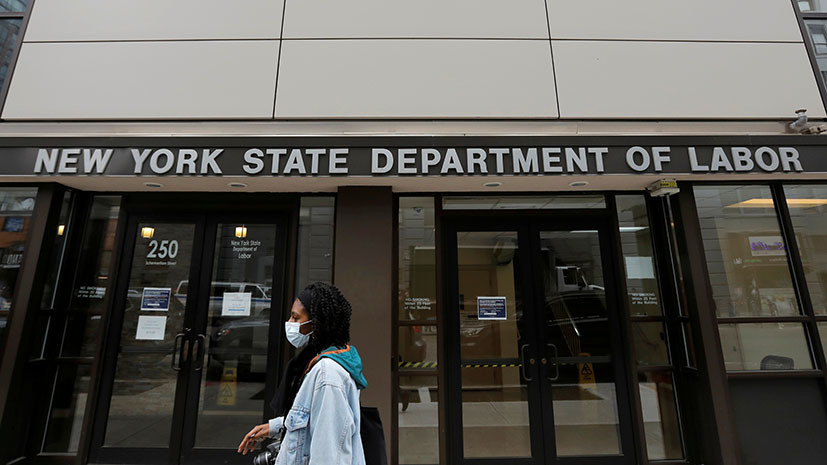
According to the latest data from the US Department of Labor, for the week ending March 21, the number of initial applications for unemployment benefits in the country jumped almost 12 times - up to 3.28 million. The value was the highest in the entire history of observations.

As a senior analyst at BCS Premier Sergey Suverov explained in an interview with RT, a sharp increase in unemployment will reduce the ability of many borrowers to pay on loans, especially housing. Against this background, experts do not exclude the possibility that, as in 2008, a large-scale economic crisis may again begin with the mortgage market.

The words of specialists are confirmed by the official statistics of the Association of Mortgage Banks (MBA) of the USA. According to the organization, for the week ending March 20, the number of mortgage applications in the country fell by 29% - the largest drop since 2009.

Source: russiart