Monday, April 06, 2020

Pandemic underscores gross inequalities in South Africa, and the need to fix them

south africa children
Credit: CC0 Public Domain
Now more than ever, South Africans are painfully aware of the inequalities that continue to play out in the country. In people's pre-COVID-19 lives, the realities of living in a country that is among the most unequal in the world were easily overlooked. The pandemic shines a very bright light on this reality. It asks us to fundamentally address them—not just at this time of the pandemic, but as a social justice imperative.

As messaging about preventing the coronavirus ramped up, the consequences of inequalities in the provision of basic service provision in the country have become clear. These disparities between rich and poor are reflected across a range of interventions that have been put in place to manage the pandemic and its social and economic consequences. These include access to water, housing circumstances, as well as people's very high dependence on social grants and the informal sector for income.
Five areas where inequality is starkest
Living circumstances: The  have highlighted inequalities in living circumstances. Take the case of hand washing. The 1.1 to 1.4 million people who live in informal settlements in South Africa don't have access to water in their homes or in their yards. An estimated 19% of the nearly 19 million people living in rural areas lack access to reliable supply of clean water; 33% do not have basic sanitation. This makes regular hand washing difficult. And social distancing or quarantining is near impossible when water access and ablutions are communal, and where settlements are overcrowded.
Livelihoods: For many people at the upper end of the wage spectrum, working remotely has been relatively easy, with limited impact on their ability to earn a living. Such workers are in the formal labor market. They are protected by both a legal and social contract as well as a safety net of unemployment benefits.
Small business owners will be under significant pressure in the coming weeks and months. But they will be partially cushioned by the business support measures announced by the government.
In contrast, the most vulnerable workers will struggle without support at this time. Casual workers (like many domestic workers), those who are self-employed (such as Uber drivers), and those working in the informal economy are not protected by legal contracts.
In general these workers, who make up over 20% of South Africa's workforce, cannot access unemployment benefits. They will be under enormous pressure financially, potentially unable to feed themselves and their families.
President Cyril Ramaphosa has made it clear that the government is aware of these challenges and will move to ensure support. But it remains to be seen what that entails.
Education: Inequalities in education were also immediately evident when school were closed. While  and many suburban public schools were able to switch to technology-supported learning relatively easily, most public schools were not.
The directive by the Department of Basic Education was to ensure that learning continued by providing workbooks and worksheets online. But, many parents will be facing the very real struggle of supporting their families in a locked down economy. This, and other problems, including limited access to technology and data, means that many parents will struggle to supervise their children's learning.
Equally concerning is how this will affect education outcomes in the longer term. Analysis already shows how learning backlogs in the early years, forged in an unequal education system, are compounded over time. Further backlogs under the current situation are likely to have long-term effects.
Access to the internet: Manuel Castells, a sociologist concerned with the internet age and , notes in his book The Internet Galaxy: "The fundamental digital divide is not measured by the number of connections to the Internet, but by the consequences of both connection and lack of connection."
At universities and other higher education institutions, wealthier students have been able to switch to online learning quickly, while poorer students battle with high data costs.
Inequalities in access to data further entrench existing inequalities in education and livelihoods during the COVID-19 crisis.
Food security: The effects of panic buying on the  of people with limited income has received attention. But a less well-known impact of the measures is that over 9 million children will not receive a daily, nutritious meal while schools remain closed.
The National School Nutrition Programme potentially has positive effects on reducing stunting and obesity. In the face of prolonged school closures, these children face increased food insecurity, with potential long-term consequences for their health.
There have been heartwarming responses from the public to ensure that food packs are provided to children. But it is simply not possible to reach the over 9 million children who depend on this meal.
What can be done?
The measures announced by President Ramaphosa to mitigate the problem reflect an understanding of how existing inequalities will affect especially the most vulnerable people, and a willingness to address the problem.
Social protection measures that can quickly provide a safety net are crucial at this time. But, the current social protection system provides a safety net only to those outside of the labour market—children, older people, and people with disabilities. Unemployment benefits accrue to those in formal employment who contribute to the Unemployment Insurance Fund. This leaves the vast majority of working-age adults without a safety net at this time.
While there have been relatively quick changes to existing mechanisms to provide support to small, medium and micro enterprises there are, as yet, no measures to protect informal and casual workers and ensure cash injections into vulnerable households.
The country needs to devise a social contract to better address the vulnerabilities that low-wage, casual and informal workers face daily.
The country must also move towards having low-cost, reliable internet access that can open up opportunities for learning and work for its most vulnerable citizens. Basic services—such as clean water, electricity and sanitation—must also be of a quality that not only promotes people's right to dignity, but also help protect people from the effects of such a pandemic as COVID-19.
This pandemic highlights how crucial it is to fundamentally address the inequalities that exist in South African society. If a social justice imperative does not push us to do so, perhaps the realization of mutual connections, borne of a pandemic that knows no class or race lines, will.How the COVID-19 pandemic will affect informal workers. Insights from Kenya
Provided by The Conversation 
Great apes and COVID-19: Experts raise the alarm for endangered species

by Carol Clark, Emory University 6/4/2020
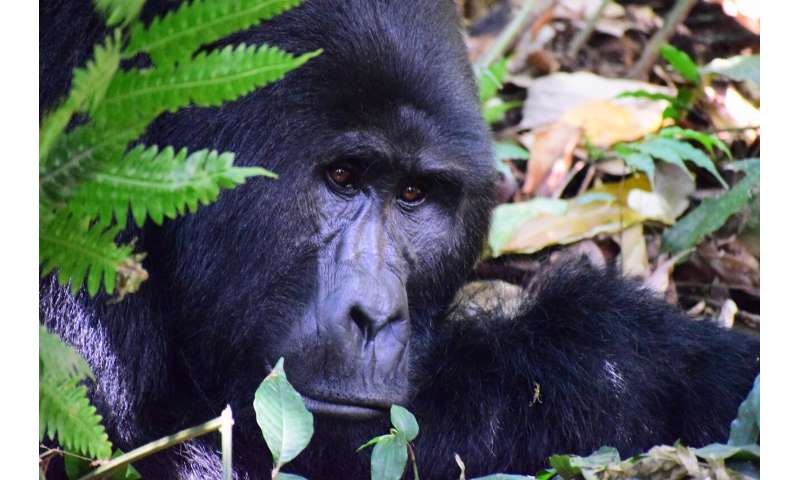
A mountain gorilla in the wild. Endangered great apes are susceptible to human respiratory diseases, warns Emory disease ecologist Thomas Gillespie. CC0 Public Domain

Primate experts warn that the global human health emergency of COVID-19 also threatens our closest living relatives—endangered great apes.

Nature published their commentary raising the alarm that non-human great apes are susceptible to human respiratory diseases. The 25 authors call for urgent discussions on the need to severely limit human interaction with great apes in the wild, and in sanctuaries and zoos, until the risk of COVID-19 subsides.

"The COVID-19 pandemic is a critical situation for humans, our health and our economies," says Thomas Gillespie, a disease ecologist at Emory University, and a lead author of the commentary. "It's also a potentially dire situation for great apes. There is a lot at stake for those in danger of extinction."

Some countries have already suspended great ape tourism, and others with ape tourism and field research need to seriously consider following suit, the authors write. They add that the same applies to sanctuaries and zoos where great apes and humans are in closer contact.

While great ape tourism will inevitably plummet due to the pandemic, all it takes is one infected visitor to spark catastrophe, the experts warn.

The non-human great apes include chimpanzees, bonobos and gorillas, which live in parts of Sub-Saharan Africa, and orangutans, which are native to the rainforests of Indonesia and Malaysia. The International Union for Conservation of Nature (IUCN) lists chimpanzees and bonobos as endangered species, while gorillas and orangutans are critically endangered.

Habitat loss, poaching and disease are the primary threats to the remaining great apes.

Even exposure to viruses that have mild effects in people, such as those causing the common cold, have been associated with mortality events in wild primates. Because the coronavirus that causes COVID-19 is fatal for some humans, experts fear it could potentially prove devastating to great apes. Evidence suggests COVID-19 may be transmitted by people who have only mild symptoms, and perhaps even those who are asymptomatic.

"People who are younger, who may be less at risk for severe illness from COVID-19, are the ones who are more apt to be hiking into the national parks of Africa and Asia to see great apes in the wild," Gillespie says. "It would be extremely difficult to monitor whether they were infected with COVID-19 since they may not have obvious symptoms."

Great ape tourism has contributed to conservation in many positive ways, providing an economic incentive for governments and individuals to support their protection. Donors are needed to help shore up marginal economies facing the loss of tourism dollars and to continue to protect the health of people and the great apes in the wild, Gillespie says.

Tourism has habituated wild great apes to not fear humans, he adds. Without staff to patrol and protect them, the animals would become even more vulnerable to poachers.

"Essential staff needs to remain in place," Gillespie says. "But we need to make sure that staff numbers are low and that they are engaged in proper processes to protect themselves, and the apes, from exposure to COVID-19."

Gillespie studies how germs jump between wild animals, domesticated animals and people. Through this "One Health" approach, he aims to protect humans, ecosystems and biodiversity. As a member of the IUCN, Gillespie helped develop the organization's "Best Practice Guidelines for Health Monitoring and Disease Control in Great Ape Populations." In 2017, Gillespie co-authored a landmark report detailing that 60 percent of the more than 500 primate species worldwide are threatened with extinction, while 75 percent have declining populations.

Fabian Leendertz, from the Robert Koch-Institute, Germany, is co-lead author of the Nature commentary. Additional authors include experts involved in primate research, conservation and policymaking from around the world.

"As professionals working with great apes," the authors conclude, "we bear a responsibility to protect them from our pathogens. We hope for the best but should prepare for the worst and critically consider the impact of our activities on these endangered species."


Explore further

Gabon bans tourists from seeing gorillas over coronavirus fears
More information: Thomas R. Gillespie et al. COVID-19: protect great apes during human pandemics, Nature (2020). DOI: 10.1038/d41586-020-00859-y
WAKE UP AMERICA
Study finds self-isolation would dramatically reduce ICU bed demand

by Brita Belli, Yale University  
APRIL 6, 2020
Credit: CC0 Public Domain

As soon as Alison Galvani learned of the COVID-19 virus in China and its devastating spread there, she foresaw what might happen to healthcare facilities in the United States. The Yale professor and colleagues at the Center for Infectious Disease Modeling and Analysis (CIDMA) quickly began analyzing various scenarios for COVID-19's spread in the U.S.—and how self-isolation rates by symptomatic individuals could affect demand for Intensive Care Unit (ICU) beds.

Their findings appear in the current edition of the Proceedings of the National Academy of Sciences, and the bottom line is clear: Without dramatic action, there won't be enough beds for the sickest patients.

If the United States is to avoid the catastrophic scenes in Italy, where patients fill hospital hallways and doctors face agonizing choices over who receives care and who is left to die, even "mildly symptomatic" people must self-isolate to minimize disease transmission, according to the researchers. And expansion of hospital equipment must accelerate.

"It is crucial in terms of minimizing the imbalance of supply and demand for ICU beds for people to stay home and stem transmission," said Galvani, the Burnett and Stender Families Professor of Epidemiology at the Yale School of Public Health and CIDMA's director. "In the absence of self-isolation, the health care system will be overwhelmed. We are already seeing that happen in New York City."

Galvani and team assessed a number of possible scenarios in which the primary variables were the number of people experiencing COVID-19-related symptoms of any degree, the likelihood of the virus spreading to others if symptomatic individuals self-isolate, and the subsequent impact on available ICU beds as the outbreak peaks.

In the worst scenario—in which no one with symptoms self-isolates—the study projected the country would need almost four times more ICU beds specifically for people who become critically ill with COVID-19—or about 130,000 in all—than would be available. Sixty-five percent of the nation's 98,000 ICU bed supply is routinely occupied by other patients. If 20% of mildly symptomatic people were to self-isolate within 24 hours of symptom onset, the need for ICU beds would fall by nearly half—though need would still exceed capacity.

"The U.S. is the only major country in the world that does not guarantee paid sick leave and paid family sick leave," said Galvani. "Our results underscore the importance of giving everyone the means to stay at home if they or their children feel unwell."

"Mildly symptomatic" refers to people experiencing a range of cold- and flu-like symptoms, said Galvani, from a slight cough to weakness requiring bed rest—in other words, all people with any signs of illness but who do not require hospitalization.

Preserving available ICU beds for the most severe COVID-19 patients, and limiting how many people get the virus, is essential, said Galvani.

"The majority of ICU beds are already occupied, and you can't discharge people with other serious illnesses who also need intensive care," she added. "A shortage of ICU beds affects the mortality from other diseases too."

Galvani stressed that ICU beds involve more equipment and staff than traditional hospital beds.

While people in the U.S. generally seem to be adhering to calls for social distancing, emphasizing the importance of the measure is necessary to avoid overwhelming hospitals and to ensure critically ill patients receive timely treatment, she said.

"Self-isolation reduces and delays the peaks, both of which are fundamental to minimizing the number of deaths from COVID-19," she said.

Delaying disease spread also allows more time for the production of additional ICU beds and ventilators, which must happen in parallel with self-isolation efforts, Galvani said.

"We need all hands on deck to ramp up production now," she said.

The study is titled "Projecting hospital utilization during the COVID-19 outbreaks in the United States."


Explore further

Thirty-six percent of available hospital beds unoccupied on typical day
More information: Seyed M. Moghadas et al. Projecting hospital utilization during the COVID-19 outbreaks in the United States, Proceedings of the National Academy of Sciences (2020). DOI: 10.1073/pnas.2004064117
Insect wings hold antimicrobial clues for improved medical implants
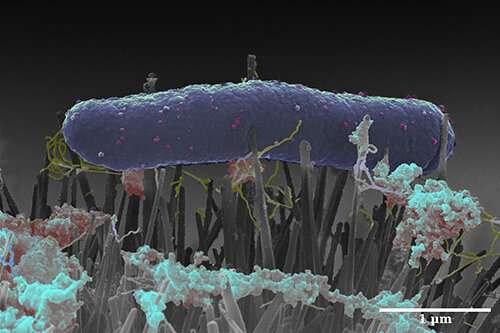
E. coli bacteria lying on a bed of nano-nails. Credit: Professor Bo Su, University of Bristol
Some insect wings such as cicada and dragonfly possess nanopillar structures that kill bacteria upon contact. However, to date, the precise mechanisms that cause bacterial death have been unknown.
Using a range of advanced imaging tools, functional assays and proteomic analyses, a study by the University of Bristol has identified new ways in which nanopillars can damage bacteria.
These important findings, published in Nature Communications, will aid the design of better antimicrobial surfaces for potential biomedical applications such as medical implants and devices that are not reliant on antibiotics.
Bo Su, Professor of Biomedical Materials at the University of Bristol's Dental School, who authored the research said:
"In this work, we sought to better understand nanopillar-mediated bactericidal mechanisms. The current dogma is that nanopillars kill bacteria by puncturing , resulting in lysis. However, our study shows that the antibacterial effects of nanopillars are actually multifactorial, nanotopography- and species-dependent.
"Alongside deformation and subsequent penetration of the bacterial cell envelope by nanopillars, particularly for Gram-negative bacteria, we found the key to the antibacterial properties of these nanopillars might also be the cumulative effects of physical impedance and induction of oxidative stress.
"We can now hopefully translate this expanded understanding of -bacteria interactions into the design of improved biomaterials for use in real world applications."
Funded by the Medical Research Council, the implications of the research are far-reaching. Prof. Su explains:
"Now we understand the mechanisms by which nanopillars damage , the next step is to apply this knowledge to the rational design and fabrication of nanopatterned surfaces with enhanced antimicrobial properties.
"Additionally, we will investigate the human stem cell response to these nanopillars, so as to develop truly cell-instructive implants that not only prevent bacterial infection but also facilitate tissue integration."Insect wings inspire antibacterial surfaces for corneal transplants, other medical devices

More information: J. Jenkins et al, Antibacterial effects of nanopillar surfaces are mediated by cell impedance, penetration and induction of oxidative stress, Nature Communications (2020). DOI: 10.1038/s41467-020-15471-x
Journal information: Nature Communications 
Making stronger concrete with ‘sewage-enhanced’ steel slag
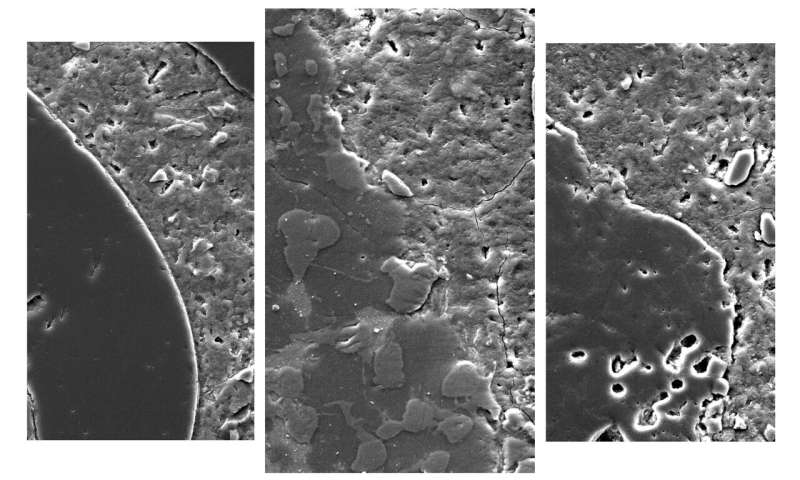
Magnified images showing concrete made with treated slag (centre), conventional 
aggregates (left) and raw slag (right). The treated slag forms a more seamless bond with 
the cement paste, making the concrete stronger. Credit: RMIT University
Researchers have shown how a by-product of steel making can be used to both treat wastewater and make stronger concrete, in a zero-waste approach to help advance the circular economy.
Produced during the separation of molten steel from impurities, steel slag is often used as a substitute aggregate material for making concrete.
Steel slag can also be used to absorb contaminants like phosphate, magnesium, iron, calcium, silica and aluminum in the  treatment process, but loses its effectiveness over time.
Engineering researchers at RMIT University examined whether slag that had been used to treat wastewater could then be recycled as an aggregate material for concrete.
The concrete made with post-treatment steel slag was about 17% stronger than concrete made with conventional aggregates, and 8% stronger than raw steel slag.
Water engineer Dr. Biplob Pramanik said the study was the first to investigate potential applications for "sewage-enhanced" slag in construction material.
"The global steel making industry produces over 130 million tons of steel slag every year," Pramanik said.
"A lot of this by-product already goes into concrete, but we're missing the opportunity to wring out the full benefits of this material.
"Making stronger concrete could be as simple as enhancing the steel slag by first using it to treat our wastewater.
"While there are  to overcome, we hope this research moves us one step closer to the ultimate goal of an integrated, no-waste approach to all our raw materials and by-products."
In the study, civil and water engineering researchers found the chemical properties of the slag are enhanced through the wastewater treatment, so it performed better when used in concrete.
"The things that we want to remove from water are actually beneficial when it comes to concrete, so it's a perfect match," Pramanik said.
Civil engineer Dr. Rajeev Roychand said the initial study was promising but further research was needed to implement the approach at a larger-scale, including investigating the long-term mechanical and durability properties of enhanced slag.
"Steel slag is currently not in widespread use in the wastewater treatment industry—just one plant based in New Zealand uses this by-product in its treatment approach," he said.
"But there is great potential here for three industries to work together—steel making, wastewater treatment and construction—and reap the maximum benefits of this by-product."
The study, "Recycling  slag from municipal wastewater treatment plants into concrete applications—A step towards circular economy," with RMIT School of Engineering co-authors Professor Sujeeva Setunge and Professor Kevin Zhang, is published in Resources, Conservation and Recycling.Cement made from steel production by-product can lead to a huge CO2 reduction

More information: Rajeev Roychand et al. Recycling steel slag from municipal wastewater treatment plants into concrete applications – A step towards circular economy, Resources, Conservation and Recycling (2019). DOI: 10.1016/j.resconrec.2019.104533
mask

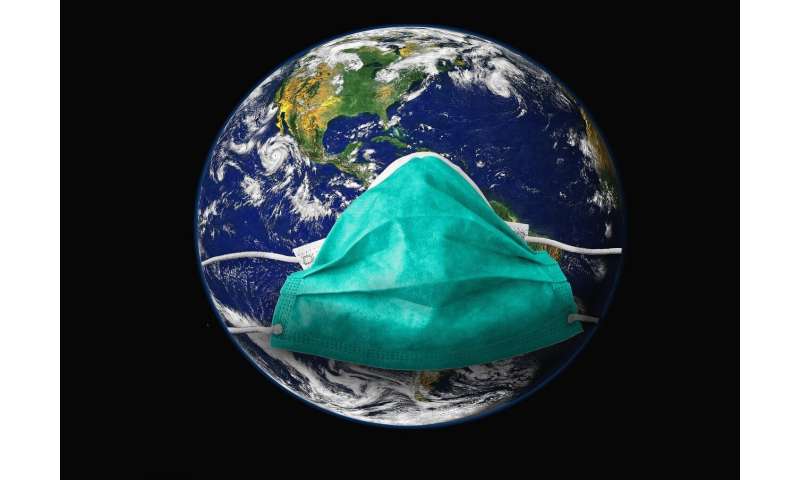
Credit: CC0 Public Domain
Wearing a face-mask while out-and-about on public transport, in shops and in crowded places could help protect vulnerable people from COVID-19—according to a new systematic review from the University of East Anglia.
However, the researchers say the evidence is not strong enough to recommend widespread use of masks in the general population.
Researchers studied all existing data about whether using a face mask reduces the spread of illnesses with COVID-19-like symptoms such as fever and cough/sore throat or other respiratory infection symptoms.
They found 31 studies that had analysed whether wearing  stopped people getting symptoms. The UEA researchers found that masks had a consistent but small protective effect—particularly in shared public spaces.
While the evidence is not strong enough to recommend widespread use of masks in the general population, the researchers say that there is enough evidence to support vulnerable people deciding to use them for short periods when in temporary higher risk situations—such as on public transport, visiting shops or in healthcare settings.
Due to the rapid-response nature of this research, it has not yet been peer-reviewed.
Study author Prof Paul Hunter from UEA's Norwich Medical School, and an expert in infectious diseases, said: "There has been a lot of debate about whether wearing a face-mask could help protect people from COVID-19 and reduce the spread of the disease.
"We wanted to evaluate all the available evidence to see what the best advice for people is.
"We studied when respiratory symptoms appeared that were similar to COVID-19—fever and cough or sore throat. But it's important to remember that we have not been able to look specifically at COVID-19 because there have been no specific studies to date."
Lead researcher Dr. Julii Brainard, also from UEA's Norwich Medical School, said: "We found that using a face mask and other face coverings had a consistent but small protective effect against influenza-type symptoms while people are out-and-about in the community.
"People who wore masks, usually surgical grade, were less likely to get respiratory symptoms from casual exposure in the community. Something like a sneeze or cough near you would become less likely to cause infection. It's a small reduction in risk, but might be very important to especially vulnerable people.
"Wearing masks at home also seemed to reduce the odds of well housemates become ill. The risk reduction was greatest, a 19 percent reduction, if both an ill person and their well contacts wore masks.
"The protective effect is probably small within a home setting because people have lots of repeated types of contact, so there are many ways for the germs to transmit. This is why washing hands remains so important. Washing hands well only requires 20 seconds of concentration occasionally throughout the day.
"In contrast, it is difficult to wear masks correctly for many hours over many days. They can be uncomfortable, hot, cause skin reactions or simply feel anti-social. Masks also need to be disposed of correctly to prevent transmission.
"And of course, wearing a mask interferes with things like sleep, eating and brushing teeth. It's impossible to keep them on all the time.
"We found that wearing face masks was also not that protective during large gatherings. But something to consider is that the only studies available on mass events were based on people attending the Islamic Hajj pilgrimage to Mecca, Saudi Arabia—which is especially large and crowded and lasts for many days. It may not be comparable to other large group gatherings.
"Overall, we found that the evidence was too uncertain to support the widespread use of face masks as a protective measure against COVID-19. However there is enough evidence to endorse the use of face masks for short periods of time by vulnerable individuals when in transient higher risk situations—such as on public transport or visiting shops.
"Although we can support vulnerable people who choose to wear masks to avoid infection, we want to remind everyone that the people who most need to wear masks, to protect us all, are health care workers. We are all in more danger from COVID-19 if health care workers cannot obtain the safety equipment they need, which could happen if community demand for face masks becomes too high."
'Facemasks and similar barriers to prevent respiratory illness such as COVID-19: A rapid systematic review' is published on the preprint server MedRvix, on April XXX, 2020.
Frequently asked questions, based on this research:
Should we all be wearing masks?
No. Overall, the study found that the evidence was too uncertain and the possible protective effects too small to recommend widespread use of face masks to protect against COVID-19.
For the —the best way to protect yourself and others is to follow the government guidelines for social distance and wash your hands regularly.
Masks are currently in very short supply and it is important that the people who are most at risk of catching the infection and possibly spreading it to others are health care workers. We are all in danger if doctors and nurses can't wear masks because the general public bought up all available supplies.
What about vulnerable people?
The best way for vulnerable people to stay protected is to follow the government's guidelines on self-isolation.
However, there is enough evidence to endorse the use of face masks for short periods of time by vulnerable individuals when in transient higher risk situations—such as on crowded public transport or visiting busy shops.
Should I wear a mask for appointments at doctors surgeries, hospitals, dentists, or when visiting a pharmacy?
If these are not crowded environments then there is little chance of protecting yourself by wearing a mask. If you do have symptoms of respiratory illness, then wearing a mask could help protect others from your germs, especially if the place is crowded.
What about frontline NHS staff and carers?
The people who most need to wear masks, to protect us all, are health care workers dealing with possibly infectious patients. We are all in more danger from COVID-19 if health care workers cannot obtain the safety equipment they need. This could happen if community demand for face masks becomes too high.
When should face masks be worn?
Wearing a face mask while out-and-about on busy , in shops and other crowded places could help protect people from respiratory infections like COVID-19.
The study conclusions are that people who wore masks, usually surgical grade, were less likely to get respiratory symptoms from casual exposure in the community. Something like a sneeze or cough near you would become less likely to cause infection.
It's a small reduction in risk, but it might be important to especially  who may choose to wear face masks.
Masks are currently in very short supply and it is important that the people who are most at risk of catching the infection and possibly spreading it to others, especially doctors and nurses, are not stopped from wearing them because supplies have run out due to the general public buying up available supplies.
We also need to remind everyone that the reduction in risk from wearing a mask may be fairly small. So people need to be vigilant about all their habits, and not rely on face masks.
What about at home?
Wearing masks at home seemed to reduce the odds of well housemates become ill. The risk reduction was greatest, at 19 percent, if both an ill person and the well people in the home wore masks.
The protective effect is not large within a home setting because people have lots of repeated types of contact, so there are many ways for the germs to transmit.
Also, it's hard to wear masks correctly for many days at home. Wearing a mask correctly is difficult because masks interfere with things like sleep, eating and brushing teeth. It's usually unrealistic to keep them on all the time. They can be uncomfortable, hot, cause skin reactions or simply feel anti-social. Masks also need to be disposed of correctly to prevent transmission. Most of the original controlled experiments reported that people who were assigned in the experiment to wear masks most of the time found this difficult.
This is why washing hands remains so important. Washing hands well only requires 20 seconds of concentration occasionally throughout the day. In contrast, it is difficult to wear masks correctly for many hours over many days.
What's the correct way to use a face mask?
It actually depends on the design of the mask and what kinds of activities you have been doing. Each mask comes with its own instructions. A very general rule would be to assume a mask is no longer protective after wearing it for three hours. Wearers should wash their hands before they put on a mask, and importantly after they take it off and dispose of it.
What about non disposable masks (eg made from cloth, and veils?)
Face veils did not prevent developing respiratory symptoms at the Hajj (a very large annual religious mass gathering). But surgical masks weren't that protective at the Hajj, either. There is no evidence about whether other types of cloth face coverings have ever helped to prevent respiratory infections when worn by ordinary people doing ordinary activities. In laboratory experiments, the cloth alternatives didn't seem to perform as well as surgical masks could to stop transmission droplets.
Are disposable respirator masks much better than surgical masks?
In lab experiments or when health professionals wear them: Yes. When people in households and the community wore inexpensive respirators, the respirators were only about as protective as an ordinary surgical mask. Wearing a respirator correctly is harder than wearing a surgical mask correctly. There's probably no advantage to wearing a respirator if it hasn't been fitted correctly to your individual face.
What about using masks for large gatherings?
The study found that wearing face  was not that protective during large gatherings.
However the only studies available on mass events were based on people attending the Islamic Hajj pilgrimage to Mecca, Saudi Arabia—which is especially large and crowded and lasts for many days. It may not be comparable to other large group gatherings.
Advice to health staff suffering skin damage from face masks

More information: Julii Suzanne Brainard et al. Facemasks and similar barriers to prevent respiratory illness such as COVID-19: A rapid systematic review, (2020). DOI: 10.1101/2020.04.01.20049528

New species of ancient horsetail with gall reveals relationship between plants and parasitoid insects about 300 million

April 6, 2020 by Pedro Correia
New species of ancient horsetail with gall reveals relationship between plants and parasitoid insects about 300 million
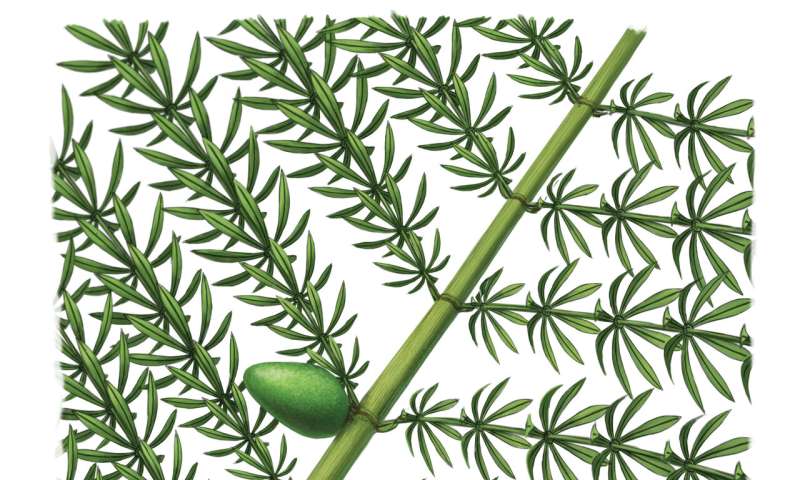
Artistic reconstruction of the calamitalean sphenopsid Annularia paisii sp. nov. showing an insect-induced gall, Paleogallus carpannularites ichnosp. nov. Credit: Correia et al. 2020 (Artwork: Andrey Atuchin)
We have published an article describing a new calamitalean species named Annularia paisii with an insect gall about 303 million years old. This new fossil species was discovered in the region of São Pedro da Cova, municipality of Gondomar, in the Douro Carboniferous Basin of the Upper Pennsylvanian of Portugal. Our study also includes a report of the worldwide record of arthropod herbivory on sphenophytes.
Evolutionary history of ecological interactions between terrestrial arthropods and vascular plants
The interactions between terrestrial arthropods and vascular plants encompass complex and intriguing terrestrial ecosystems that have persisted from Early Devonian times until today. These interactions are diverse, with multiple species of arthropods, mainly insects, and host plants interacting over a range of trophic levels through predation (i.e., herbivory), parasitism and pollination. The features, intensity and diversity of these interactions are mainly influenced by climatic and environmental conditions.
Galling represents the most biologically complex of all major arthropod–plant interactions, consisting of parasitic relationships characterized by the endophytic insect-induced plant tissue damage that can occur on all major plant organs. The insect-induced galling damage consists of atypically enlarged plant structures that are three-dimensional, conspicuous, generally of bilateral or radial symmetry and externally hardened. This offers to the encapsulated insect larvae a suitable microclimate, nutrition and protection from natural enemies. Insect galls usually affect plants only locally, but in some instances, can cause systemic effects.
New species of ancient horsetail with gall reveals relationship between plants and parasitoid insects about 300 million
Annularia paisii sp. nov. (holotype UP-MHNFCP-155167), from the São Pedro da Cova region, Douro Carboniferous Basin (DCB), northwestern Portugal. Credit: Correia et al. 2020
Insect galls have a long evolutionary history, and the earliest fossil records of galls are known from the Pennsylvanian strata. These occurred on stems of arborescent ferns and calamitalean sphenopsids. Although insect galls have been well-documented in a wide range of host plant species, about 80% of extant galls occur on leaves. The Pennsylvanian-age galls are very poorly known because they are rarely found and only occasionally reported in the fossil record.
Ancient "horsetail" host shows insect gall preserved in situ
Horsetails are plants with a very old historical lineage, occurring in the fossil record from the Late Devonian to the present day, existing in abundance in Portugal. The new species Annularia paisii shows an insect gall induced by parasitoid insects (popularly known as galling insects), an a previously unknown ichnospecies that received a name Paleogallus carpannularites. This shows the existence of complex insect-plant relationships 303 million years ago, and reiterates the importance of the fossil record of the Portuguese Carboniferous. The patterns of herbivory of insects and other arthropods on horsetails are little known. In our paper, recently published in the International Journal of Plant Sciences, we addressed this subject, documenting 315 million years of sphenophyte herbivory relationships by arthropod.
  • New species of ancient horsetail with gall reveals relationship between plants and parasitoid insects about 300 million
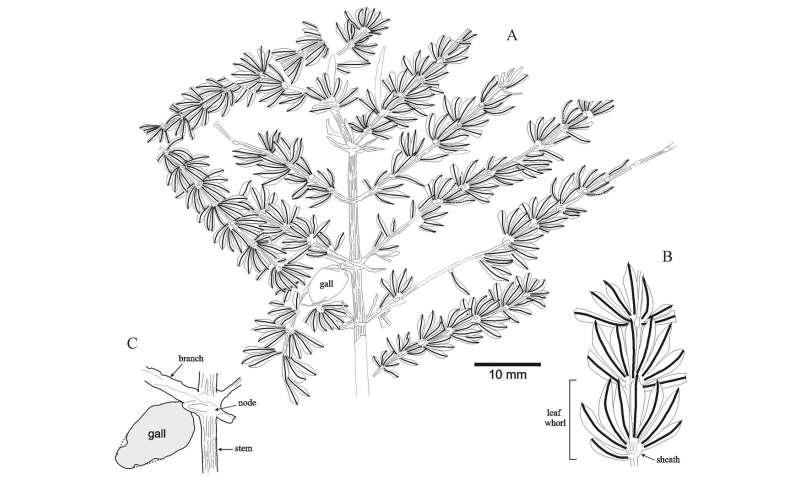
    Structure of the insect-induced gall Paleogallus carpannularites ichnosp. nov. and its attachment to host Annularia paisii sp. nov. Credit: Correia et al. 2020
  • New species of ancient horsetail with gall reveals relationship between plants and parasitoid insects about 300 million
    Annularia paisii sp. nov. (paratype UP-MHNFCP-155168), from the São Pedro da Cova region, Douro Carboniferous Basin, northwestern Portugal. Credit: Correia et al. 2020
  • New species of ancient horsetail with gall reveals relationship between plants and parasitoid insects about 300 million
    Structure of the insect-induced gall Paleogallus carpannularites ichnosp. nov. and its attachment to host Annularia paisii sp. nov. Credit: Correia et al. 2020
  • New species of ancient horsetail with gall reveals relationship between plants and parasitoid insects about 300 million
    Annularia paisii sp. nov. (paratype UP-MHNFCP-155168), from the São Pedro da Cova region, Douro Carboniferous Basin, northwestern Portugal. Credit: Correia et al. 2020
New species of ancient horsetail with gall reveals relationship between plants and parasitoid insects about 300 million
Interpretative view drawing of the holotype specimen of Annularia paisii sp. nov. and Paleogallus carpannularites ichnosp. nov. (UP-MHNFCP-155167). Credit: Correia et al. 2020
Ecological adaptation of Annularia paisii
The arrangement of the leaves of Annularia paisii appears anomalous for a species of Annularia. Its leaves are arranged in cup-shaped whorls, a typical characteristic of other calamitalean sphenopsid-like fossil genus Asterophyllites. Several explanations can account for this condition. The leaves of Annularia paisii were perhaps retracted into a cup shape during their burial. Alternatively, the cup shape could have been an induced feature resulting from their sensitivity to sunlight or an external tactile stimulus similar to the modern sensitive plant, Mimosa pudica. Another possibility is a physiological reaction from an herbivorous insect, such as a gall antagonism.
Annularia paisii is named in honor of the Portuguese paleobotanist João Pais (1949–2016) from Nova University in Lisbon (Portugal).
This story is part of Science X Dialog, where researchers can report findings from their published research articles. Visit this page for information about ScienceX Dialog and how to participate.
More information: Pedro Correia et al. The History of Herbivory on Sphenophytes: A New Calamitalean with an Insect Gall from the Upper Pennsylvanian of Portugal and a Review of Arthropod Herbivory on an Ancient Lineage, International Journal of Plant Sciences (2020). DOI: 10.1086/707105
Bio:
I am a PhD paleontologist and naturalist from Portugal. My research focus on Paleozoic paleobotany, paleoentomology, paleoclimate, paleogeography of Euramerica.

RESIST KENNEY'S CUTS

We are weeks into the global health pandemic caused by COVID-19 and our lives, workplaces and how we function continues to change. As we watch how the crisis is impacting our communities, we are monitoring responses from different levels of government, workplaces and approaches from different jurisdictions. The AFL wants to continue to share some of this work we are doing with you and keep you informed about how the crisis is being handled.
Please join AFL President, Gil McGowan, for a Facebook Live session next Tuesday, April 7, 2020 at 1:30 p.m. MST. He will discuss the impact of the UCP's austerity policies during a crisis and ask the question: Is enough being done to protect the health of people still working during the pandemic?

Email your MLA

Jason Kenney fired 25,000 workers last weekend. Laying people off during a global pandemic is heartless, reckless and cruel. We can't let it happen.
Please add your voice by emailing your MLA using our email tool here.

TELL THE UCP: STOP FIRING WORKERS

Kenney just fired 25,000 education workers

Just two weeks ago, Adriana LaGrange, Minister of Education for the Kenney government, said:
“My department and I will work with school authorities throughout this process, and school authorities will receive their full allotment of funding for the 2019-2020 school year.”
They lied.
Now, 25,000 education assistants, bus drivers, administrators, substitute teachers, and custodial workers have been thrown out of work by this government at a time when families are struggling to make ends meet because of COVID-19.
This is on top of lay-offs in the provincial government, at post-secondary institutions, and by our municipal governments due to Kenney’s budget cuts.
Laying people off during a global pandemic is heartless, reckless, and cruel. We can’t let it happen.
Email your MLA to demand they stop firing workers.

Public Education During A Crisis - Part 1 - COVID-19 Arrives in Alberta - 31MAR20 .png