Monday, August 10, 2020

Native mascots still a sticking point in high school sports

NOT JUST IN THE USA, CANADA TOO
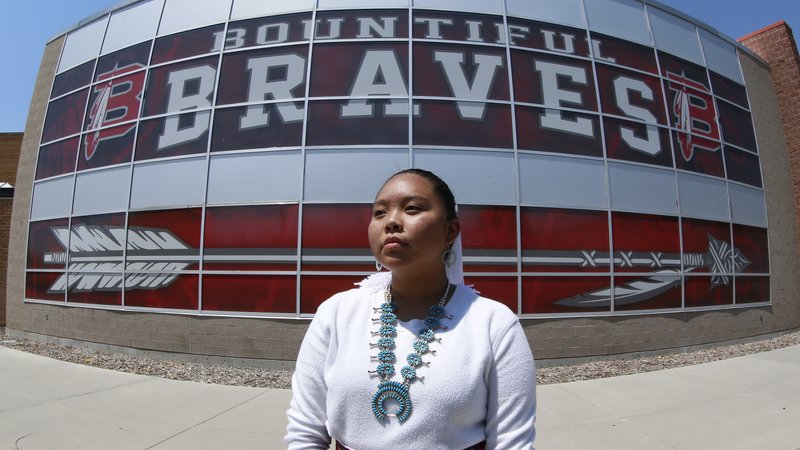
Lemiley Lane, a Bountiful junior who grew up in the Navajo Nation in Arizona, poses for a photograph at Bountiful High School, July 21, 2020, in Bountiful, Utah. While advocates have made strides in getting Native American symbols and names changed in sports, they say there's still work to do mainly at the high school level, where mascots like Braves, Indians, Warriors, Chiefs and Redskins persist. (AP Photo/Rick Bowmer)
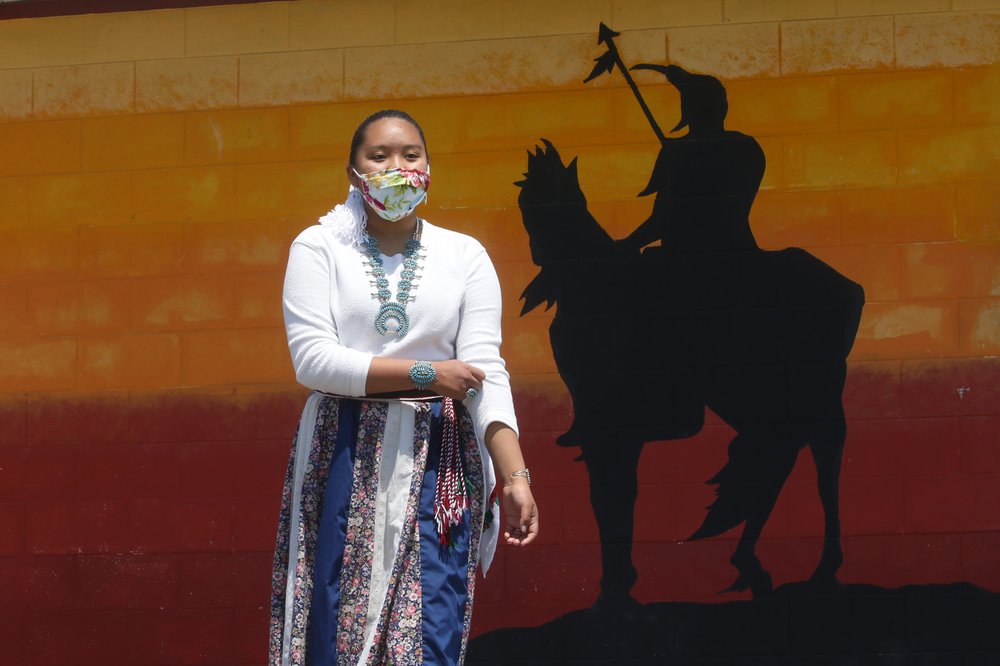

Lemiley Lane, a Bountiful junior who grew up in the Navajo Nation in Arizona, walks along the campus near a a mural of an Indigenous man meant to represent the Braves mascot at Bountiful High School, July 21, 2020, in Bountiful, Utah.
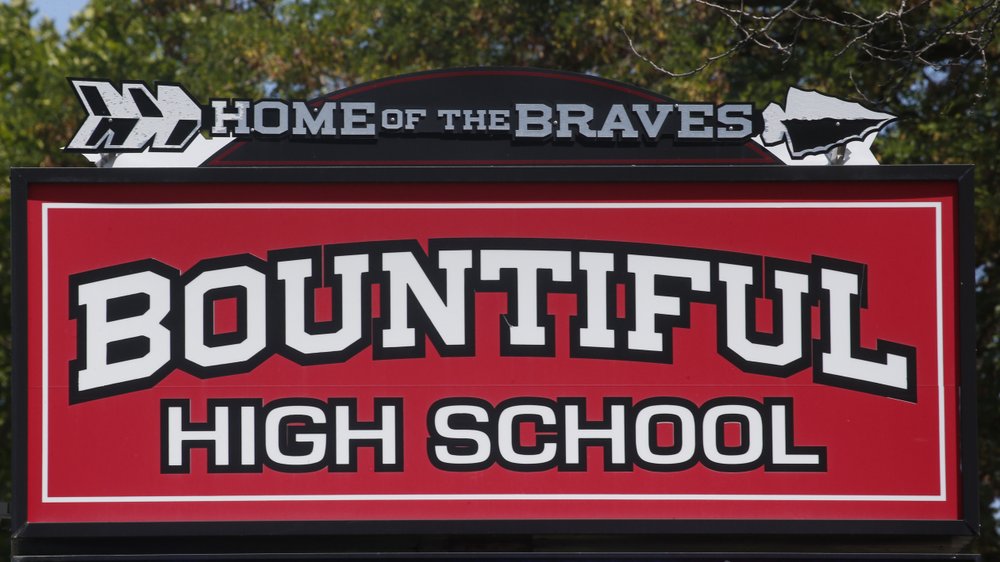

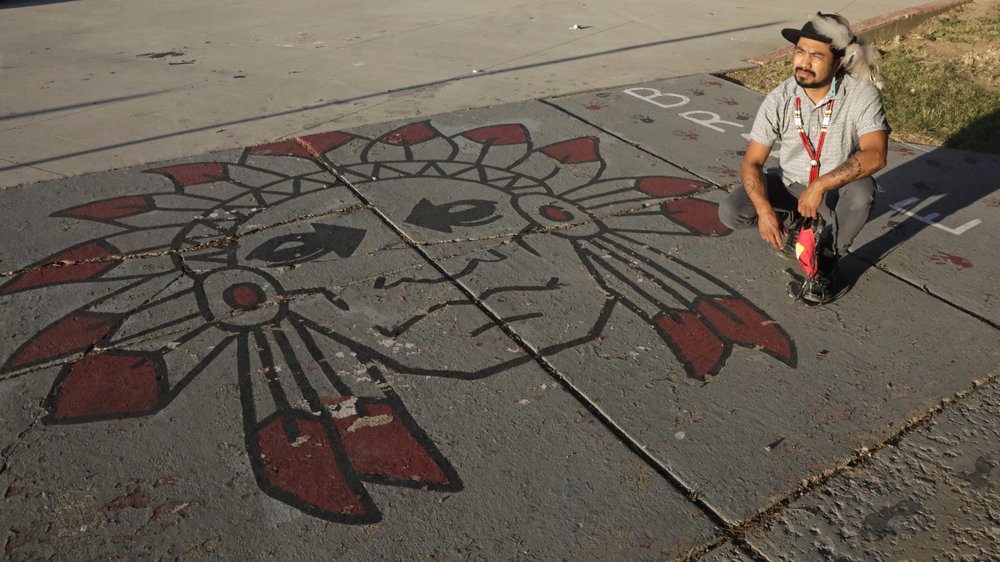
BOUNTIFUL, Utah (AP) — At a mostly white high school near Salt Lake City, the steps leading to the football field are covered in red handprints, arrows and drawings of Native American men in headdresses meant to represent the mascot, the Braves. “Welcome to the Dark Side” and “Fight like a Brave” are scrawled next to images of teepees, a tomahawk and a dream catcher.

While advocates have made strides in getting Native American symbols and names changed in sports, they say there’s still work to do mainly at the high school level, where mascots like Braves, Indians, Warriors, Chiefs and Redskins persist. Momentum is building during a nationwide push for racial justice following the death of George Floyd in Minneapolis and the NFL team in Washington dropping the Redskins name.

At Bountiful High School, there’s nostalgia for the Braves name that’s been used for nearly 70 years and comes with an informal mascot — a student dressed up in feathers. Fans point to tradition when rhythmically extending their forearms for the tomahawk chop, wearing face paint and chanting at football games.

It’s an honor, they say, but not to many Native Americans who see the portrayals throughout high school, collegiate and professional sports. The depictions can affect the psyches of younger Native Americans and create the image of a monolith that doesn’t exist, advocates say.


“There is no tribe that can make a claim to it,” said James Singer, co-founder of the Utah League of Native American Voters. “Nevertheless, many tribal governments, using their tribal sovereignty, have issued statements saying they don’t want these kinds of mascots for school teams.”

It’s not clear how many high schools have built their sports team imagery around Native Americans, but advocates say it’s in the hundreds — down significantly from decades ago.

Schools in Ohio, Michigan, Idaho, New York, Massachusetts and California are changing names, often at the urging of Native Americans. Schools in Tulsa, Oklahoma, and Red Mesa on the Navajo Nation are discussing their Redskins mascots.
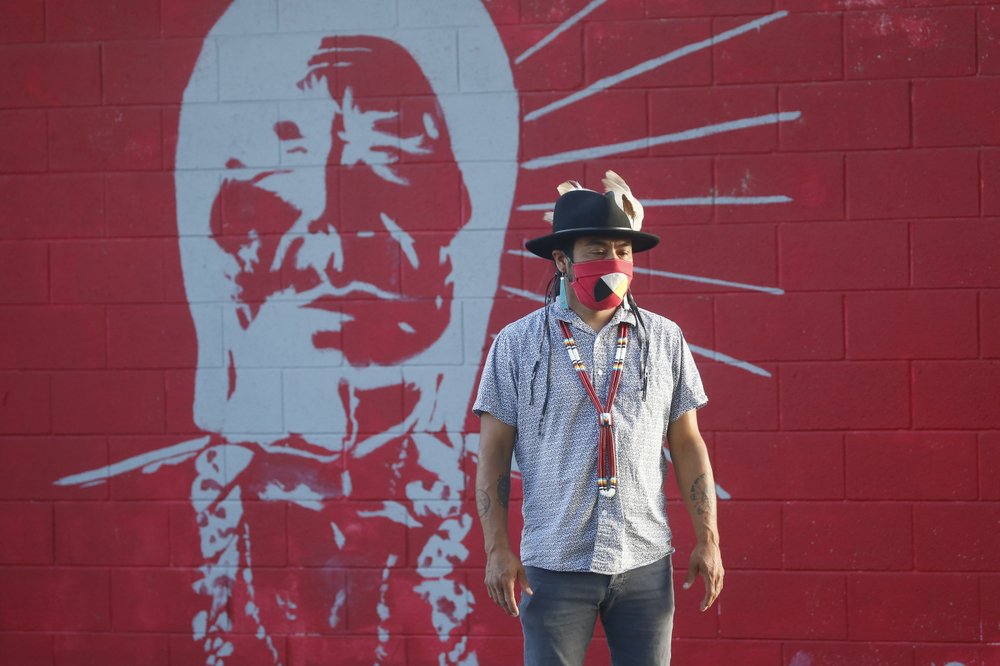
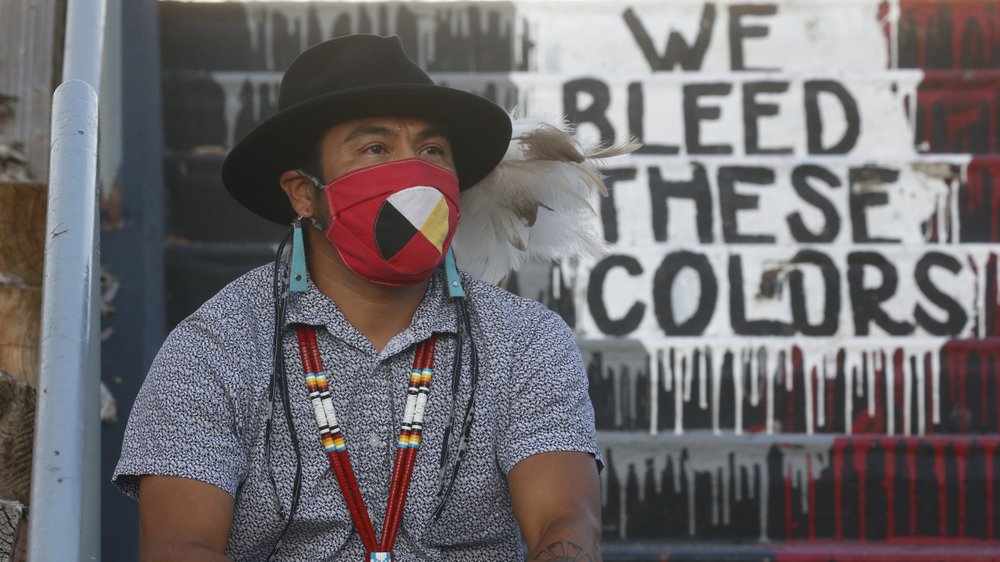
Native American advocate Carl Moore sits near the phrase "We Bleed These Colors" along a walkway which leads from the Bountiful High School parking lot up to the football field Tuesday, July 28, 2020, in Bountiful, Utah.
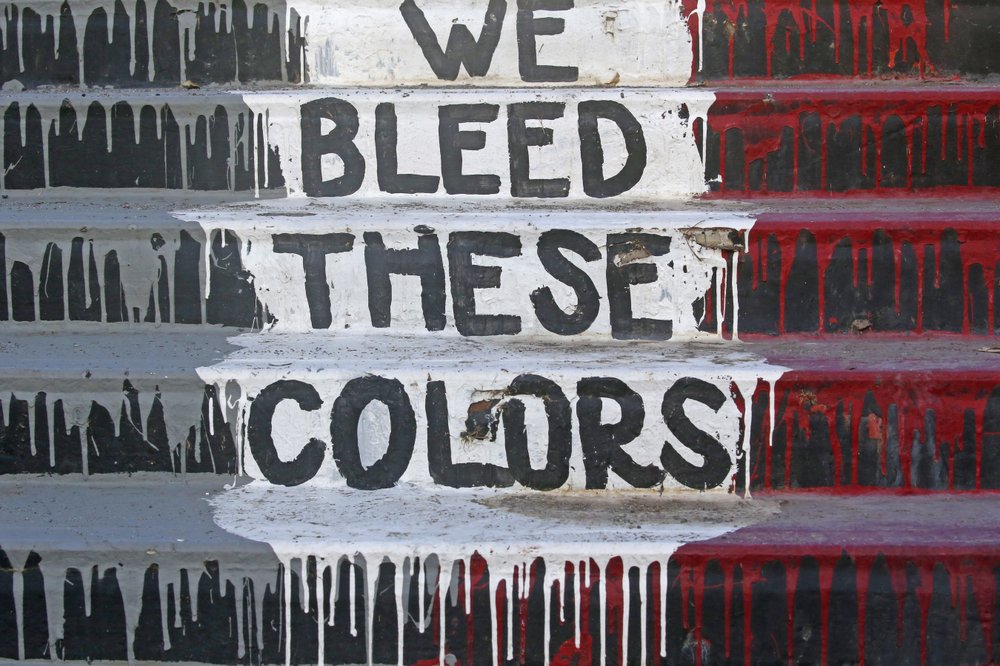

“I understand the issue, and then at the same time, you just have to listen to the students who take pride in this but give them the information about why the other side is concerned, too,” said Timothy Benally, who’s on the Red Mesa Unified School District board in Arizona and is Navajo.

On a practical level, getting rid of a mascot means new uniforms, signs on fields and imagery on merchandise.

Dr. Jason Black, a communication studies professor at the University of North Carolina, Charlotte, who co-wrote “Mascot Nation,” said the changes aren’t too costly but finding replacements can take time.

“You’re getting what you pay for, and what you get is respect of human beings and ... rebirth of a community that truly understands how to be responsible with its members,” said Black, who is not Native American. “It is an investment in people, and that’s who matters.”

Only three states have laws either prohibiting or limiting these symbols at public institutions. Maine lawmakers last year banned Native American mascots in public schools. In Oregon, public schools and universities cannot use names, symbols or images that depict Native Americans unless they have an agreement with a local federally recognized tribe. California forbids “Redskins” as a team name or mascot.

Attempts in other states to govern the use of Native American mascots have failed in recent years. At least three — Illinois, Massachusetts and Minnesota — are considering legislation this year, according to the National Conference of State Legislatures.

At the college level, Native American mascots seen as “hostile and abusive” have been banned in championship play since 2005. Some schools, including the University of Utah and Florida State University, have agreements with local tribes to use their names and imagery.

Luke Duncan, a Ute tribal official, recently rebuked calls for the University of Utah to stop using the tribe’s name, calling the agreement a “source of pride” for tribal members.



Native American advocate Carl Moore sits next to red handprint painted along a walkway which leads from the Bountiful High School parking lot up to the football field Tuesday, July 28, 2020, in Bountiful, Utah. 


A red handprint is painted along a walkway which leads from the Bountiful High School parking lot up to the football field Tuesday, July 28, 2020, in Bountiful, Utah.


Native American advocate Carl Moore walks along a walkway which leads from the Bountiful High School parking lot up to the football field Tuesday, July 28, 2020, in Bountiful, Utah.
 

Native American imagery is painted along a walkway which leads from the Bountiful High School parking lot up to the football field Tuesday, July 28, 2020, in Bountiful, Utah. 

Native American advocate Carl Moore sits next to Native American imagery painted along a walkway which leads from the Bountiful High School parking lot up to the football field Tuesday, July 28, 2020, in Bountiful, Utah.
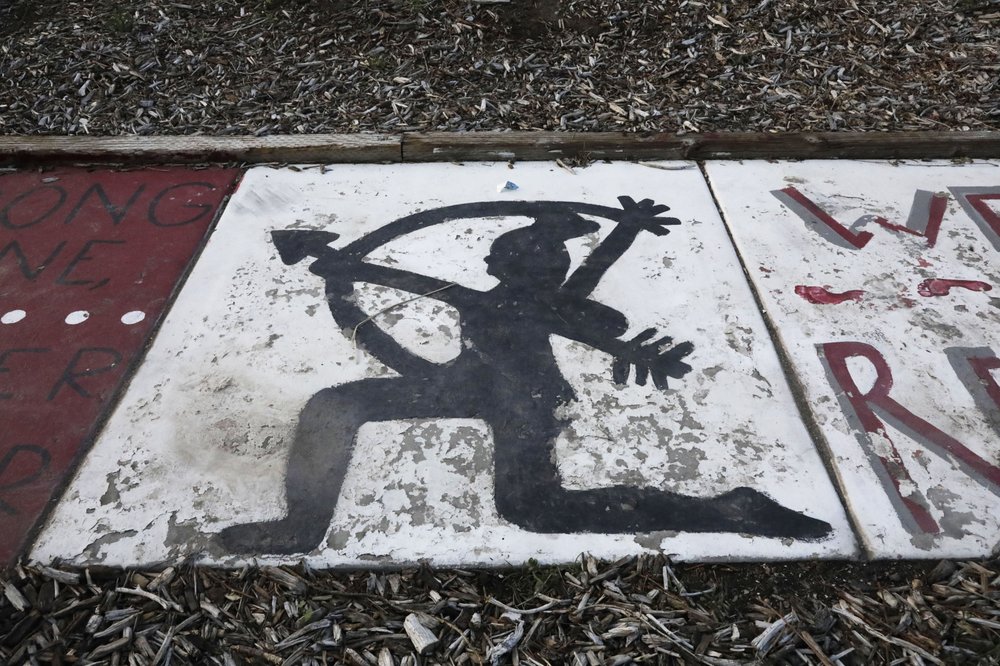
Professional sports teams that have Native American-themed names and mascots increasingly are facing backlash, including baseball’s Atlanta Braves and the Super Bowl champion Kansas City Chiefs. The Cleveland Indians baseball team recently said it would talk with Native Americans as it considers a name change.

Last week, the Chicago Blackhawks said hockey fans would be banned from wearing headdresses when home games resume but would keep its name in honor of Black Hawk, a Sac and Fox Nation leader.

At Bountiful High School in Utah, many alumni support the Braves name. Kurt Gentry, who graduated in 1976, said the mascot was treated with “tremendous respect and honor and power” when he was a student.

“There’s a lot of misinformation and oversensitivity that is frankly being propagated by those who have zero understanding of the culture,” said Gentry, noting he had a Navajo foster daughter.

Lemiley Lane, who’s Navajo, transferred to Bountiful last year as a sophomore and said she was the only Native American student at the school. She was excited for the first assembly but left when she saw the “Brave Man” — a white student wearing a headdress. After that, she skipped school assemblies and sports games.

“I couldn’t stay there because I felt uncomfortable; I felt unwelcome,” Lane said. “I wanted to go home.”

The mascot is no longer allowed at school events, Davis County School District spokesman Chris Williams said. Bountiful’s logo was changed in recent years from a Native American man to the letter “B” with a feather or arrow on it, he said.

The fate of the Braves name and logo won’t be known before the first football game this month, Williams said.

Carl Moore of Peaceful Advocates for Native Dialogue and Organizing Support said real change won’t come without the school educating students about Native American history.

“They change the logo, but it doesn’t change the culture,” Moore said. “The culture is still racist when you walk up those steps.”

___

Fonseca reported from Flagstaff, Arizona. Eppolito is a corps member for the Associated Press/Report for America Statehouse News Initiative. Report for America is a nonprofit national service program that places journalists in local newsrooms to report on undercovered issues.


IN EDMONTON WE HAVE VICTORIA SCHOOL OF THE PERFORMING ARTS, ONE OF MY ALUMNI HIGH SCHOOLS WHOSE SPORTS TEAMS ARE CALLED THE REDMEN 

For pandemic jobless, the only real certainty is uncertainty


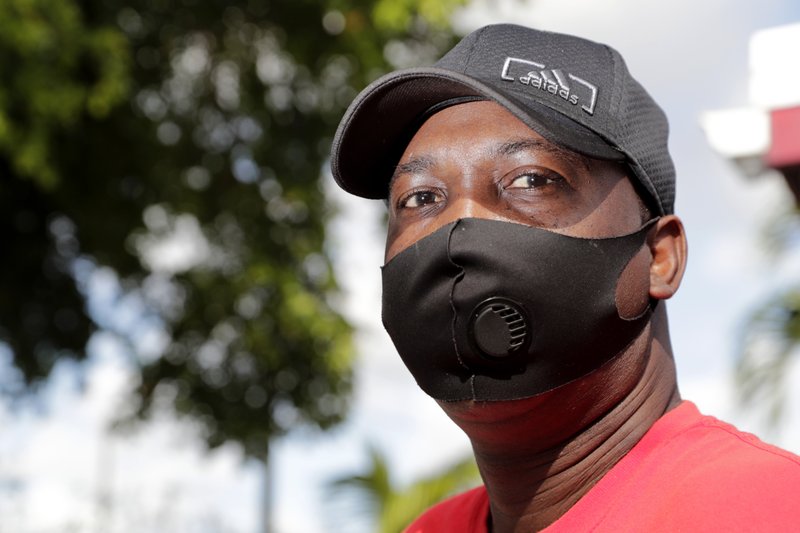
James Jackson poses for a photograph outside his home during the coronavirus pandemic, Thursday, July 30, 2020, in West Park, Fla. Jackson is among the tens of thousands hospitality workers fighting for survival in the age of the pandemic. Jackson's employer, the Diplomat Beach Resort, in Hollywood, Fla., was forced to close in March because of the outbreak. (AP Photo/Lynne Sladky)


CHICAGO (AP) — For three decades, Kelly Flint flourished as a corporate travel agent, sending everyone from business titans to oil riggers around the planet. Then came the worst pandemic in a century, leaving her jobless and marooned in an uncertain economy.

Furloughed since March, Flint has dipped into her retirement account to pay her bills, frustrated that her $600 weekly emergency federal aid payments have expired. She yearns, too, for an end to the twin disasters that now dominate her life: recession and pandemic.

“I don’t deal well with the unknowns,” she says. “I never have.”

Across America are legions of Kelly Flints, women and men who don’t know when they’ll receive another paycheck — or if.

The coronavirus outbreak and resulting economic upheaval have thrown millions of lives into disarray. Industries have collapsed, businesses closed, jobs disappeared. Compounding the misery is a question no one can answer: When will this all be over?

(Kelly Flint via AP)

In recent congressional testimony, Federal Reserve Chairman Jerome Powell repeated his earlier warning: The strength of any recovery will rely on the nation’s ability to contain the virus. The outlook for the U.S. economy, he said, is “extraordinarily uncertain.”

Uncertain. If 2020 had to be condensed into a single word — and there are many, many words to describe it — uncertainty would hover at the top of the list. Uncertainty about health. About the future. About the country itself. And uncertainty about livelihoods and jobs and economic security in a historical moment where each day seems to bring a fresh wave of unwanted developments.

America has faced economic calamity before, most recently during the recession of 2008, when the jobless rate soared to 10%. That pales in comparison to the two crises that have cost more than 160,000 American lives and ushered in spiraling unemployment — 30 million job losses, of which 17.5 million people remain unemployed.

“It’s not just the scope of the losses,” says Martha Gimbel, an economist at Schmidt Futures. “Until we have solved the public health crisis or have a timeline ... none of us is going to know what’s going on.”

Uncertainty, painted onto the landscape by the numbers. And behind each one, a human being.

___

LISA VINES

When she lost her job, she wrestled with a flood of emotions: shock, panic, then determination.

“I went into survival mode,” Vines says. “My faith kicked in like a ninja.”

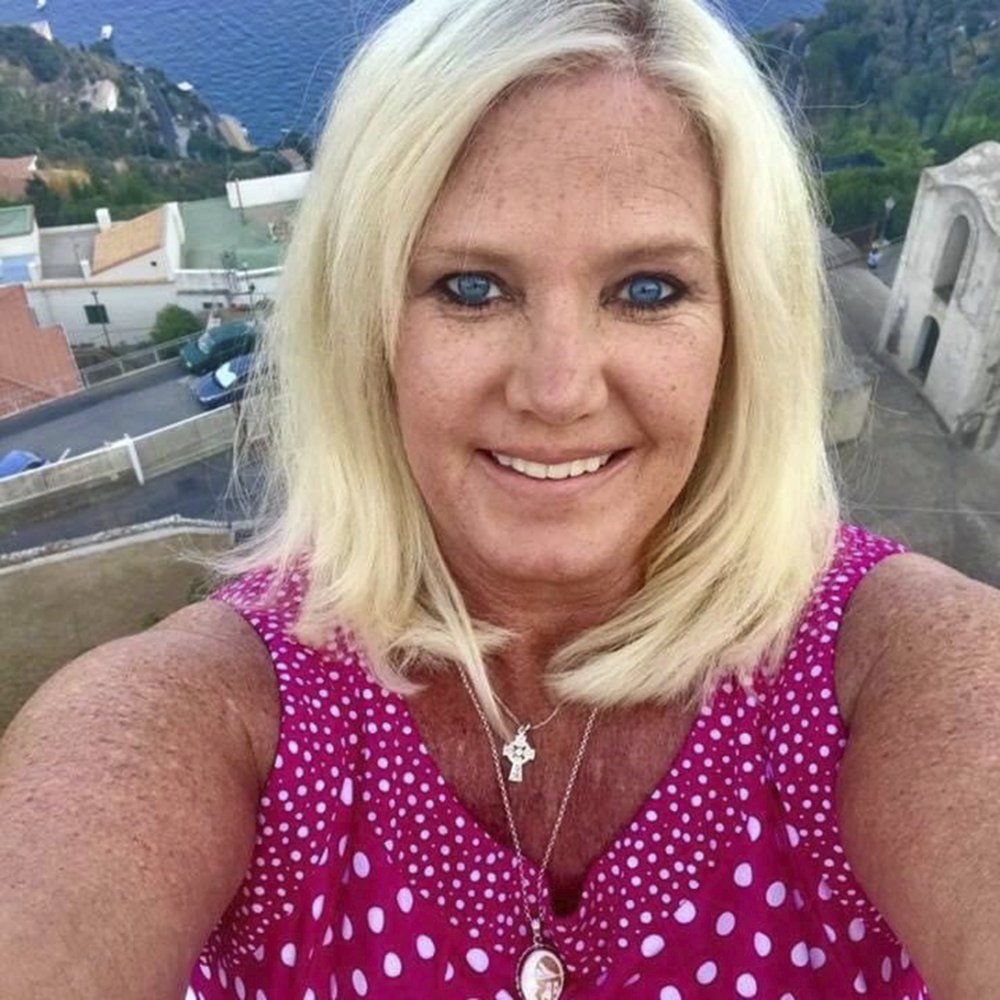
Her first task was to research every possible government benefit. But even with that, she turned to food banks to provide for herself and her 8-year-old granddaughter, who shares her home in Memphis, Tennessee.

Vines was stunned when she was laid off in March from her sales job at a promotional product company. She’d worked there 20 years. “You think you’re going to be taken care of,” she says.

Lisa Vines of Memphis, Tennessee. (AP Photo/Adrian Sainz)

A calm set in as Vines inventoried her life, knowing she had a small savings and a home she could sell. “I looked at my granddaughter and said, ‘OK, we’re to get through it,’” she says.

She doesn’t know what the future holds. One possibility: working for the same company, but on a commission basis. But at 56, she has a philosophy: “You learn what to worry about and what to pray about.”

She’s confident a way forward will emerge. “I’ll either be here or I’ll build my peace elsewhere,” Vines says. “I can’t get wrapped up in the unknowns when I have blessings in front of me.”

___

JARED SAIGH

He had a road map for his future. A new job in his hometown in rural Michigan. A chance to use his marketing skills. The comfort of living with his parents.

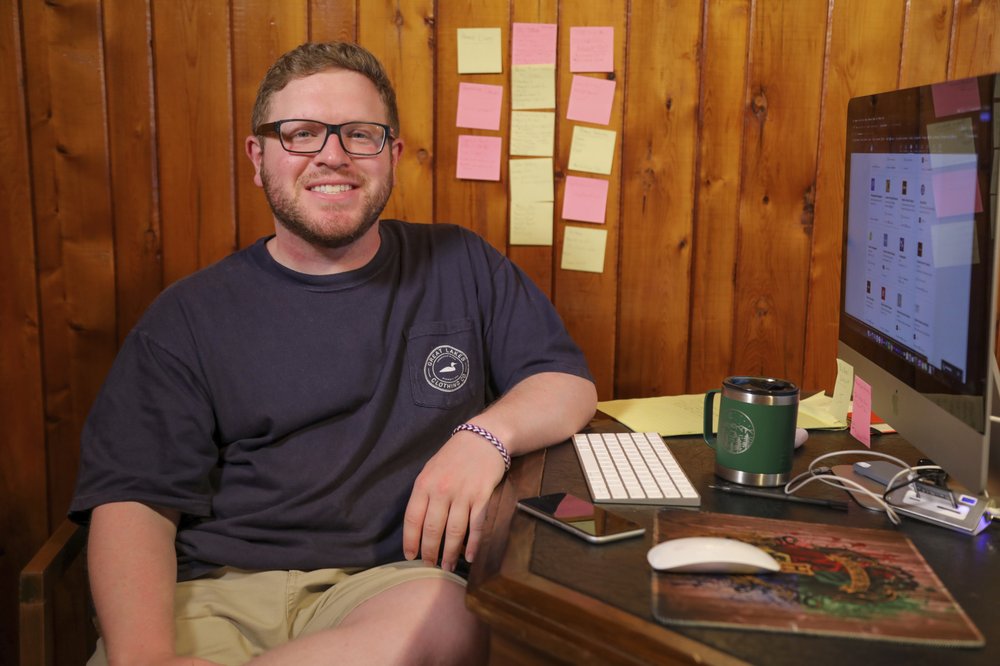
Saigh was eager to start over after being laid off in 2019 from a Detroit-area marketing company. After a half-year of searching for work, Saigh decided it would be cheaper to continue his quest from home. He moved in with his parents in Iron River, in Michigan’ s Upper Peninsula.

A few months later, Saigh was hired to lead a nonprofit attached to his local hospital. He’d be working 5 miles from home, reuniting with friends in Iron River, population 3,000 — and doing something positive for his community.

“It was just perfect,” he says. “It was like, “Wow! Everything is falling in place.”

Then the pandemic swooped in. Hospitals faced new financial pressures. The offer was rescinded. Saigh went from dream job to no job.

It was back to sending out resumes, checking LinkedIn, canvassing for interviews during one of the most brutal job markets in decades. “It can be overwhelming at times just to go through this again,” he says.

(Jared Saigh via AP)

He considers himself lucky, avoiding rent and other expenses living with his parents. He recently turned down a job offer to head a local economic organization; it didn’t seem like the right fit, and he feared there might not be money for the position beyond the end of the year.

Now, Saigh plans to do some photo and video freelance work as he tries to land another job. He’s adjusted to an economy where so much remains unknown.

“I’ve learned that you can’t possibly plan for everything and, though it’s a cliche, you’ve just got to roll with the punches,” he says. “And I’ve learned to go where the next thing leads me. Hopefully, that will be soon.”

___

JAMES JACKSON

Every day, he confronts the realities of too many bills, not enough money, a job that’s on hold — and no timetable for when any of it will change.

Jackson is among tens of thousands of hospitality workers who’ve been sidelined in an industry devastated by the pandemic. His employer, the Diplomat Beach resort in Hollywood, Florida, closed in March because of the outbreak. That left Jackson, an assistant to the bartender and server at a hotel restaurant, and his wife, an elementary school teacher, scrambling to provide for their three asthmatic children.

They’ve tried to shield them from money troubles. “It’s not their job to go out and make things happen,” Jackson says. “As a parent, you don’t want to give kids the perception that the ground is crumbling under your feet.”

Complicating the situation is Florida’s unemployment system, which has been marred by computer glitches and lengthy delays. Despite countless calls over the months, Jackson, 51, says he has yet to receive a single $275 weekly state unemployment check — even though his last day of work was March 21. That cap is among the stingiest in the nation.

ames Jackson. (AP Photo/Lynne Sladky)

The stress has frayed his nerves. His doctor, who waived copayments for visits, prescribed medicine for his high blood pressure, but he can’t afford it. His hair is thinning. He gets migraines.

Jackson and his wife have traditionally depended on help from her teaching salary, but she’s been off during the summer. With $3,200 in monthly bills, the two regularly face tough choices. “If you do have money,” he says, “do you spend it on gas or do you get food?”

Jackson is hoping to find a warehouse job for now. He worries about having enough food for his kids — 8 to 18 — and being able to afford school supplies, clothes and everything else they’ll need in coming months.

He refuses to look too far ahead. “This is a day-to-day process,” he says, “and I can’t worry about the things I cannot change.”

___

BRETT LIPSHUTZ

He can’t help but think he was a victim of bad timing.

Last year, after tiring of being an educator, he gave up a job teaching French in a private school in suburban Milwaukee. He was recruited to become a bilingual software trainer, traveling to Canada three weeks a month. In the spring, he rushed back to the U.S. as the border was about to close.

Then suddenly, at 46, Lipshutz was out of work — something entirely new for him. He filed for unemployment and joined a support group of jobless workers in Wisconsin. He began figuring out how much to dip into savings that had taken years to amass.

“Not having enough money can paralyze you,” he says. It’s a lesson he learned at a young age.

“I grew up with a single mom on welfare in the ’80s,” Lipshutz says. “And I know what it’s like to collect government cheese and free lunch and to live paycheck to paycheck and feel that stress of financial instability. .... It brings back trauma from that time of, ‘Oh, my God, am I going to have to live like that again?’”

(Brett Lipshutz via AP)

Lipshutz’s second software project was canceled because of budget cuts. He’s now starting a tofu business with friends. He also expects to be back in the classroom this fall, teaching French to Milwaukee public high school students.

Lipshutz has become more comfortable, too, accepting the limitations of this chaotic environment.

“There are certain things you can’t control, and you have to let it go,” he says. “I can’t control the pandemic. I can’t control the job market.”

“In the back of my mind,” he adds, “there’s still a tiny drawer of anxiety and worry. ... But I’m starting to tell myself, ‘Listen, you’re going to be fine.’”

___

MORGAN GITHMARK

For her, the pandemic has been a health risk and a job destroyer.

Last March, she had to quit her job at a marketing company in North Carolina because face-to-face encounters with customers at big-box stores were potentially dangerous. A diabetic, Githmark, 24, has an increased chance of becoming seriously ill if she contracts the coronavirus.

“I feel like I don’t have very much of a purpose now,” she says. She feels as if she’s “floating around in life” as she searches for work, with her father helping retool her resume. She knows her job possibilities are limited because she can’t be exposed to large groups of people.

Githmark plans to enroll in grad school, though she hasn’t chosen a field of study. She taught in a charter school in Durham, North Carolina, before moving into marketing. She may return to education.

Meanwhile, gardening and writing help relieve the tension. “It’s just been a very stressful time,” she says, and sighs.

___

MICAH ANDERSON

When the Portland, Oregon, club where he tended bar was forced to close in the pandemic’s early days, he had no time to plan how he’d pay his bills. But he knew some routine expenses would have to wait.

At the top of the list were $250 monthly payments he’d been making for more than a decade to whittle down $45,000 in student loans. There was no way he could shoulder that. His immediate worries were food and shelter, and he was pleasantly surprised when he was given some leeway in paying rent and utilities.

For the past six months, Anderson, 37, has relied on state unemployment and $600-a-week pandemic-related federal benefits that just expired. In Washington, Democrats and Republicans are clashing over how much of that aid should continue and for how long.

Anderson has been cautious about spending. He walks almost everywhere. He has reduced his food budget to essentials. He doesn’t go out with friends. He’s become politically active, calling the offices of federal lawmakers, urging them to back a bill creating a $120 billion fund to help rescue restaurants and bars.

And as stressful days give way to sleepless nights, he and his friends commiserate over their shared predicament.

“You’ve got kind of overwhelming sense of dread,” he says, echoing the sentiments of a friend who said being caught in the pandemic is “like standing on the shore and you’re looking at this huge tsunami wave coming in. and you know it’s going to hit. But there’s not a whole lot I can really do about it.”

___

DEANNA KOUSKOULAS

She isn’t one to point fingers. She knows many others who’ve looked at the staggering numbers of unemployed and don’t feel the same way.

“I see a lot of people blaming companies, saying, ‘How dare they lay off their employees!’” she says. “But those decisions have to be made.”

Kouskoulas, 30, was laid off in April, about six months after being hired for a copywriting-marketing job at a suburban Detroit construction company.

She’s now interviewing for jobs, preparing for the post-pandemic era. She spends part of every morning sharpening and expanding her skills, studying graphic design on YouTube, among other things, “so I can come out strong when things do go back to normal.” And she speaks regularly with a CEO she once worked for who acts as her mentor.

Shortly after Kouskoulas lost her job, she thought she had a lucky break: She was hired to do marketing at a software firm. She worked 60-hour weeks, she says, but was repeatedly rebuffed when she asked for a paycheck. After four weeks, she’d had enough.

In recent weeks, Kouskoulas says she senses the “quietness in the economy” that existed a few month ago has lifted and there are more opportunities. But she also worries some employers will be consolidating roles, producing fewer jobs with more responsibilities.

She’s prepared, too, for what she expects will be “a long haul.”

“At the end of the day,” she says, “the only person who’s going to get me out of this is me.”

___

Uncertainty ripples outward. There are so many things that, because of it, simply can’t be done.

It spreads to those who’ve permanently lost jobs as well as furloughed workers wondering if they’ll be called back. “People may tell you to retrain,” says Gimbel, the economist. “What are you supposed to retrain for? You don’t know what the economy is going to look like. Everyone is frozen because it’s so unclear how the situation is going to evolve.”

And long-term planning? Even murkier — impossible, really, says Adam Ozimek, chief economist at Upwork.

“We don’t know whether at the end of the year there are going to be 15 million people without a job or 5 million people,” he says. “From top to bottom, every single person in the economy is affected by this uncertainty in one way or another.”

Job uncertainty is new for Flint, 53, the travel agent. She’s never been unemployed, and it’s “doubly scary,” she says, because she’s single. Her furlough is up at the end of October, but there’s no guarantee she won’t be laid off before then. Every week, she sends out fresh resumes from her home in Galveston, Texas. And every day, she fends off scam artists who call with bogus job offers as they try to ferret out her private information.

“I’ve had anxiety that I’ve never had before. I’ve even had panic attacks. I’ve had crazy dreams of zombies,” she says. “It has worn on me.”

For Micah Anderson, the uncertainty has been the hardest part — “having zero idea of what next week is going to even look like.”

“I’m the type of person who, if I if I have an idea of what I’m facing, I can try to make a plan that makes sense,” Anderson says. “But you don’t really know what it is you need to do.”

“You just have no clue. You make decisions the best you can. And you hope that they turn out OK.”

___

Contributing to this report were Desiree Mathurin and Haleluya Hadero in Atlanta. Sharon Cohen, a Chicago-based national writer for The Associated Press, can be reached at scohen@ap.org or on Twitter at http://twitter.com/SCohenAP
Postal Service emerges as flash point heading into election

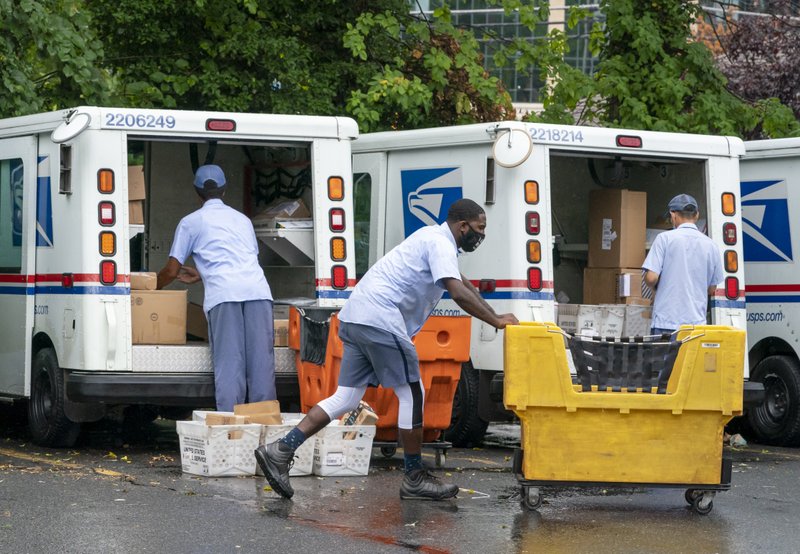
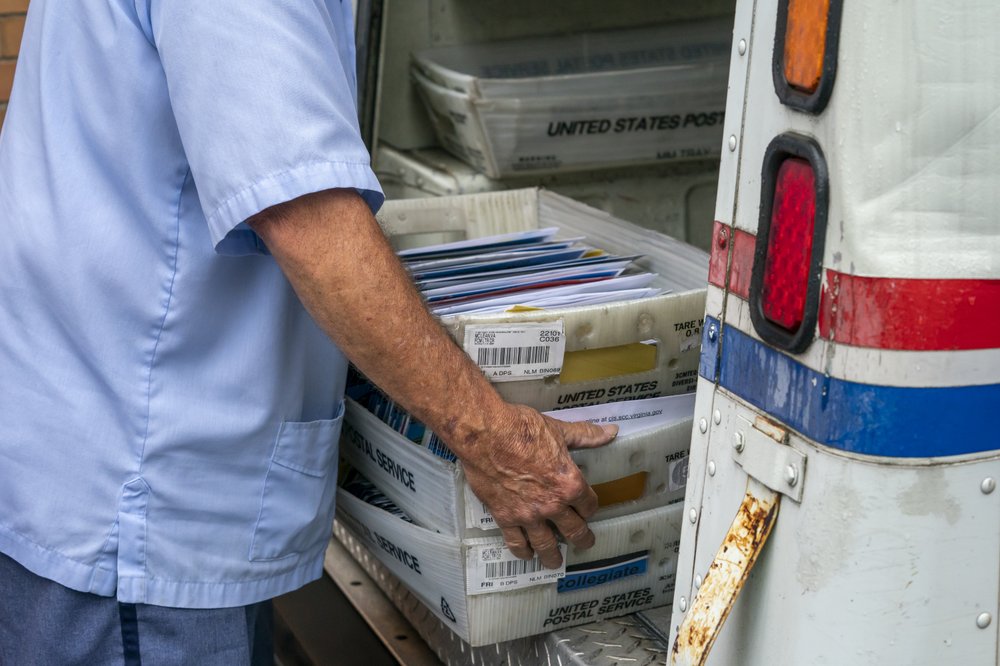
FILE - In this July 31, 2020, file photo, letter carriers load mail trucks for deliveries at a U.S. Postal Service facility in McLean, Va. The success of the 2020 presidential election could come down to a most unlikely government agency: the U.S. Postal Service. (AP Photo/J. Scott Applewhite, File)


WASHINGTON (AP) — Mail piling up. Constant attacks from the president. Cuts to overtime as record numbers of ballots are expected to pass through post offices this fall.

The success of the 2020 presidential election could hinge on a most unlikely government agency: the U.S. Postal Service. Current signs are not promising.

The Postal Service already was facing questions over how it would handle the expected spike of mail-in ballots due to the coronavirus pandemic, but several operational changes imposed by its new leader have led to mail backlogs across the United States as rumors of additional cutbacks swirl, fueling worries about the November vote.

“It seems like they’re just trying to turn customers away from the post office,” said Jim Sizemore, president of the American Postal Workers Union chapter in the Cincinnati region. He said his offices are behind on deliveries because of new rules specifying when mail can go out.

The pandemic has forced states to expand voting by mail as a safe alternative to in-person polling places. Some states are opting to send ballots to voters or allowing people to use fear of the virus as a reason to cast an absentee ballot. That’s led to predictions of an an unprecedented amount of mail voting in the presidential election.

Trailing in the polls, President Donald Trump has been sowing public distrust in the Postal Service’s ability to adequately deliver ballots and has, without evidence, said allowing more people to vote by mail will result in rampant corruption.

The agency’s new leader, Postmaster General Louis DeJoy, a former supply-chain CEO and a major donor to Trump and other Republicans, has pushed cost-cutting measures to eliminate overtime pay and hold mail until the next day if postal distribution centers are running late.

DeJoy, 63, of North Carolina, was tapped to head the service by a Trump-appointed board of governors and started in June. He is the first postmaster general in nearly two decades who is not a career postal employee.

DeJoy has said repeatedly that the Postal Service is in a financially untenable position and needs to rein in expenses. This past week, it reported $2.2 billion in losses during the three months that ended in June.

Postal leaders want at least a $10 billion infusion from Congress as well as regulatory changes that would end a costly mandate that they fund in advance billions of dollars in retiree health benefits.

“Without dramatic change, there is no end in sight, and we face an impending liquidity crisis,” DeJoy told the Postal Service’s governing board Friday.

Memos from post office leadership, obtained by The Associated Press, detailed an elimination of overtime and a halting of late delivery trips that are sometimes needed to make sure deliveries arrive on time. One document said if distribution centers are running behind, “they will keep the mail for the next day.” Another said: “One aspect of these changes that may be difficult for employees is that — temporarily — we may see mail left behind or mail on the workroom floor or docks.”

Additional records obtained by AP outline upcoming reductions of hours at post offices, including closures during lunch and on Saturdays. Rumors have also circulated about the potential for entire offices to shutter, after the Postal Service told Sen. Joe Manchin, D-W.Va., that regional managers there have identified 12 offices for “feasibility studies.” Postal employees have been recently instructed not to talk to news media while on duty, according to another memo obtained by AP.

The changes have taken their toll on the Postal Service’s 630,000 employees.

“As they risk their health each day along with other front-line essential workers, letter carriers have become angry, frustrated and embarrassed by various USPS management initiatives that are now resulting in delayed mail and undelivered routes in many areas of the country,” said Fredric Rolando, president of the National Association of Letter Carriers, which represents nearly 300,000 carriers nationwide.

The new policies have angered lawmakers from both parties and drawn criticism from former President Barack Obama, who said the current administration is “undermining the Postal Service in an election that’s going to be dependent on mail-in ballots.”

DeJoy has been the target of multiple letters from members of Congress who have called on the postmaster general to rescind his measures and have complained about a lack of transparency from the agency. Eighty-four House members, including four Republicans, signed a letter that said it is “vital that the Postal Service does not reduce mail delivery hours, which could harm rural communities, seniors, small businesses and millions of Americans who rely on the mail for critical letters and packages.″

House Speaker Nancy Pelosi, D-Calif., and Senate Minority Leader Chuck Schumer, D-N.Y., had a closed-door meeting with DeJoy this past week to discuss the agency’s worsening performance and need for emergency funding. Schumer later described it as “a heated discussion.″

Pelosi and Schumer followed up with a letter to DeJoy that said the operational changes “threaten the timely delivery of mail — including medicines for seniors, paychecks for workers, and absentee ballots for voters — that is essential to millions of Americans.”

During a meeting Friday with the Postal Service governing board, DeJoy said the agency is not slowing down election mail and remains committed to fulfilling its role in elections.

“Although there will likely be an unprecedented increase in election mail volume due to the pandemic, the Postal Service has ample capacity to deliver all election mail securely and on-time in accordance with our delivery standards, and we will do so,” he said. “However, as discussed, we cannot correct the errors of the Election Boards if they fail to deploy processes that take our normal processing and delivery standards into account.”

In West Virginia, Sini Melvin, president of an American Postal Workers Union chapter in a northern part of the state, said she has serious concerns about the post office’s ability to deliver ballots on time this fall if current policies hold.

“It’s like they’re setting us up for failure,” she said,

___

Izaguirre reported from Charleston, West Virginia. The Associated Press produced this coverage with support from the Carnegie Corporation of New York.
Nine People Have Tested Positive For COVID-19 At The Georgia School That Went Viral For Crowded Hallway Photos

The school suspended in-person classes for two days after six students and three staff members tested positive for the virus.
Stephanie K. Baer BuzzFeed News Reporter
Last updated on August 9, 2020,

Hannah Watters


Six students and three staff members tested positive for the coronavirus at North Paulding High School after photos of crowded hallways with maskless students at the Georgia school went viral.

Principal Gabe Carmona confirmed the positive COVID-19 cases in a letter sent to parents Saturday that was first reported on by the Atlanta Journal-Constitution and ABC News.

The students and staff who tested positive were in school "for at least some time last week" when the photos of crowded hallways went viral, Saturday's letter stated. Carmona said the affected students and staff reported their test results to school officials.

On Sunday, Paulding County School District Superintendent Brian Otott announced that there will be no in-person instruction at the school on Monday and Tuesday owing to the nine cases "along with the possibility that that number could increase," according to a letter posted to Twitter by Hannah Watters, one of the students who were initially suspended for sharing the photos.

Ottot said that the school will be "thoroughly cleansed and disinfected" on Monday and Tuesday and that parents and students would be notified on Tuesday if in-person classes would resume or not.

"This is not what I have been stressing," Watters, 15, tweeted. "Shutting down has never been what I wanted. This letter could have easily said that they made masks mandatory, but no."

hannah@ihateiceman

This is not what I have been stressing. Shutting down has never been what I wanted. This letter could have easily said that they made masks mandatory, but no. Paulding hasn’t made masks mandatory due to Gov. Kemp. If we had opened safely, with masks, we could still go to school.09:20 PM - 09 Aug 2020
Reply Retweet Favorite

The school district has chosen not to enforce mask-wearing, calling it a "personal choice," even though the CDC now recommends their use. The letter did not mention any changes to that policy or guidance on wearing face coverings.

"I apologize for any convenience this schedule change may cause, but hopefully we all can agree that the health and safety of our students and staff takes precedence over any other considerations at this time," Ottot wrote in the letter.

In Saturday's letter, Carmona wrote that the school was "continuing to adjust and improve our protocols for in-person instruction to make our school the safest possible learning environment."

"In each case we are following DPH recommendations for reporting. Our custodial staff continues to thoroughly clean and disinfect the school building daily, and especially affected areas," Carmona wrote.

The letter did not include additional information about the cases. Students and staff who have tested positive, as well as "any identified close contacts, must quarantine for at least 14 days and cannot return to school until they have completed all the requirements of the DPH's guidance for persons infected with COVID-19," the letter said.

Carmona and representatives for the school district did not immediately respond to BuzzFeed News' request for comment Sunday.

The district initially suspended Watters and a second student for posting the images that went viral but reversed the suspensions on Friday following backlash.


MORE ON THIS
A Georgia School Undid A Student's Suspension For Viral Hallway Photos
Lauren Strapagiel · Aug. 7, 2020
Lauren Strapagiel · Aug. 6, 2020
Molly Hensley-Clancy · Aug. 5, 2020


Stephanie Baer is a reporter with BuzzFeed News and is based in Los Angeles.


UK could stop official Covid death count over claims of 'exaggeration'

THE HOME OF ORWELL PLAYS HIDE THE SAUSAGE

Issued on: 10/08/2020 - 00:30

FILE PHOTO: Nurses care for victims of the coronavirus in Surrey, Britain, May 22, 2020. © Steve Parsons/Pool, Reuters

Text by:
NEWS WIRES


The UK's official COVID-19 daily death count could be scrapped following an investigation into Public Health England's method of counting the toll, The Telegraph newspaper reported.

The conclusions of the investigation, which was ordered by Health Secretary Matt Hancock after it emerged officials were "exaggerating" virus deaths, are expected this week, the newspaper said.


One recommendation could be to move to a weekly official death toll instead, a government source told the Telegraph.

Britain paused its daily update of the death toll last month and the government ordered a review into how Public Health England reports coronavirus deaths, after academics said the daily figures may include people who died of other causes.

Academics in a blog post had warned that the way the government health agency calculated the figures was skewed as patients who tested positive for coronavirus, but are successfully treated, will still be counted as dying from the virus "even if they had a heart attack or were run over by a bus three months later".

England's death figures vary substantially from day to day due to this reason, the academics had argued.


In contrast, the other parts of the United Kingdom do not follow the same approach. There is a cut-off threshold of 28 days in Scotland after a positive test, after which a patient is not automatically considered to have died from the virus.

Britain, one of the countries hardest hit by the virus, reported more than 1,000 new COVID-19 infections on Sunday, its highest daily increase since June, taking the total number of cases past 310,000.

(REUTERS)


#BOLSONAROVIRUS
Bolsonaro assails Brazil network blaming him for virus deaths


Issued on: 09/08/2020 -
A message projected on a building in Rio de Janeiro on August 9, 2020 honored the 100,000 Brazilians killed so far by the novel coronavirus, calling them 'victims of Bolsonaro' Mauro PIMENTEL AFP/File

Rio de Janeiro (AFP)

President Jair Bolsonaro lashed out Sunday at the "cowardice" of Brazil's most widely viewed TV network for suggesting he bore heavy blame for the nation's more than 100,000 coronavirus deaths.

The far-right president accused TV Globo of treating the death milestone as if it were "a World Cup final," saying on Twitter that it had been both "cowardly and disrespectful of the dead."

On Saturday night, shortly after the official announcement that the 100,000-death mark had been passed, TV Globo opened its news report with a long editorial highly critical of Bolsonaro's handling of the health crisis.


News anchors pointedly noted that an article in the Brazilian constitution states that "health is the right of all and the duty of the National Government."

They then asked, "Has the president of the republic done his duty?"


Bolsonaro said in his tweet Sunday that "disinformation kills more than the virus." He suggested that TV Globo was using COVID-19 for political purposes, which itself could lead to deaths.

Bolsonaro has played down the coronavirus from the beginning, dismissing it as a "little flu," questioning the lockdowns ordered by some state governors and saying their economic impact could be "more deadly than the virus."

Bolsonaro said Sunday that he has a "clear conscience," adding that "we have done everything possible to save lives."

On Saturday, numerous politicians sent messages of comfort to the families of the 100,000 people who died and criticized the government's handling of the crisis. Congress and the Supreme Court announced a period of mourning.

But Bolsonaro simply shared a tweet from a government spokesman emphasizing the number of people who have recovered from the virus -- he is actually one of them -- and making no mention of the death toll.

© 2020 AFP
VIDEO
WHAT HAVE THE YELLOW VESTS IN PARIS BEEN UP TO?
DIY DIRECT ACTION SABOTAGE OF TOLL BRIDGES

Algerian journalist who covered protests faces verdict

Issued on: 10/08/2020 -
Algerian journalist Khaled Drareni, 40, was arrested on March 29 on charges of 'inciting an unarmed gathering' and 'endangering national unity' after covering demonstrations by anti-government protesters RYAD KRAMDI AFP

Algiers (AFP)

An Algerian journalist faces years in prison if convicted on Monday in a trial rights groups call a test of press freedom in a country recently rocked by anti-government protests.

Khaled Drareni, 40, was arrested on March 29 on charges of "inciting an unarmed gathering" and "endangering national unity" after covering demonstrations by the "Hirak" protest movement.

Weekly protests rocked Algeria for more than a year and only came to a halt in March due to the novel coronavirus crisis.

The prosecutor called for Drareni to be sentenced to four years in prison, fined 100,000 dinars ($784) and stripped of his civil rights at the opening of his trial at the Sidi M'hamed court in Algiers on August 3.

Drareni, editor of the Casbah Tribune news site and correspondent for French-language channel TV5 Monde, denied the charges when he appeared via video-conference due to coronavirus measures.

"I just did my job as an independent journalist," he said, according to a statement by press freedom watchdog Reporters Without Borders (RSF), for which Drareni also works.

He added he had exercised his "right to inform as a journalist and citizen".

RSF, part of an international support committee for Drareni, condemned the charges and said "a prison sentence would be proof of a shift to authoritarianism" in Algeria.

If judges "accept this absurd indictment, it would show that Algeria's judiciary and executive have turned their back on the ideals of the country's independence," RSF secretary-general Christophe Deloire said.

The US-based Committee for the Protection of Journalists joined calls that have multiplied in recent weeks to release journalists in Algeria.

"Algerian authorities should immediately and unconditionally release journalist Khaled Drareni, especially as there is no evidence he did anything except his job as a journalist," said CPJ regional programme coordinator Sherif Mansour.

The Algerian judiciary has stepped up prosecutions and convictions of journalists, Hirak activists, political opponents and bloggers in recent months.

Drareni was charged along with protest members Samir Benlarbi and Slimane Hamitouche, who were released on bail in July and also face jail time, fines and loss of their civil rights.

Some journalists have been accused of sowing discord, threatening national interests and being on the payroll of "foreign parties", with several in prison and trials under way.

In July, Ali Djamel Toubal, a correspondent for the privately-owned media group Ennahar, was sentenced to 15 months in prison for, among other things, broadcasting footage showing police officers mistreating anti-regime demonstrators.

RSF ranked Algeria 146 out of 180 countries and territories in its 2020 World Press Freedom Index, five places lower than in 2019.

© 2020 AFP
Indonesia's Mt. Sinabung blasts tower of smoke and ash into sky

Issued on: 10/08/2020 
AFP

Medan (Indonesia) (AFP)

Indonesia's Mount Sinabung erupted Monday, belching a massive column of ash and smoke 5,000 metres (16,400 feet) into the air and coating local communities in debris.

The volcano on Sumatra island has been rumbling since 2010 and saw a deadly eruption in 2016.

Activity had picked up in recent days, including a pair of smaller eruptions at the weekend.

There were no reports of injuries or deaths, but authorities warned of possible lava flows.

"People living nearby are advised to be on alert for the potential appearance of lava," Indonesia's Volcanology and Geological Hazard Mitigation Centre said in a statement.

The crater's alert status remained at the second-highest level.

No one lives inside a previously announced no-go zone around the volcano, but small communities nearby were coated in a layer of thick ash from Monday's eruption.

Sinabung roared back to life in 2010 for the first time in 400 years. After another period of inactivity it erupted once more in 2013, and has remained highly active since.

In 2016, seven people died in one of Sinabung's eruptions, while a 2014 eruption killed 16.

In late 2018, a volcano in the strait between Java and Sumatra islands erupted, causing an underwater landslide that unleashed a tsunami which killed more than 400 people.

Indonesia is home to about 130 active volcanoes due to its position on the "Ring of Fire", a belt of tectonic plate boundaries circling the Pacific Ocean where frequent seismic activity occurs.

© 2020 AFP
Lebanon government on brink over blast fallout

Issued on: 10/08/2020
Protesters demand an end to an entrenched political system dominated by sectarian interests and family dynasties JOSEPH EID AFP

Beirut (AFP)

Lebanon's government was teetering Monday as two ministers' resignations over the deadly Beirut port explosion threatened to snowball and protesters' fury on the scarred streets showed no sign of abating.

The under-fire cabinet, struggling to weather the political storm, was due to meet in the afternoon amid widespread demands for an end to an entrenched political system dominated by sectarian interests and family dynasties.

Six days after the enormous chemical blast, which wreaked destruction across swathes of the capital and was felt as far away as the island of Cyprus, residents and volunteers were still clearing the debris off the streets.

International rescue teams with sniffer dogs and specialised equipment remained at work at the disaster's fire-charred "ground zero", where the search was now for bodies and not survivors.

According to the health ministry, at least 158 people were killed in Lebanon's worst peacetime disaster, 6,000 were wounded and around 20 remained missing.

The Lebanese want heads to roll over the tragedy and are asking how a massive stockpile of volatile ammonium nitrate, a compound used primarily as a fertiliser, was left unsecured at the port for years.

The country's top officials have promised a swift and thorough investigation -- but they have stopped short of agreeing to an independent probe led by foreign experts.

Two ministers have already decided they could no longer stand with a government that has shown little willingness to take the blame or to put state resources at the service of the victims.

- Resignations -

Environment Minister Damianos Kattar criticised the "sterile regime" when he announced his resignation on Sunday, hours after Information Minister Manal Abdel Samad became the first to quit.

At least nine lawmakers have also announced they would step down in protest, as have two senior members of the Beirut municipality.

The August 4 blast, which drew comparisons with the Hiroshima atom bomb, was so enormous that it altered the shape of not only of Beirut's skyline but even of its Mediterranean coastline.

But it remained to be seen whether the disaster will also have a lasting impact on Lebanon's political landscape, whose masters were widely seen as being primarily bent on self-preservation and buck-passing.

Prime Minister Hassan Diab gave a short televised address on Saturday evening to suggest early elections, but protesters were utterly unconvinced and ransacked several ministries even as he spoke.

During a second evening of protests on Sunday, the rage sparked by the explosion that disfigured Beirut and scarred so many of its residents had not relented, and violent street clashes flared again.

"The resignation of ministers is not enough. Those who are responsible for the explosion should be held accountable," said Michelle, a demonstrator in her early twenties.

She carried a poster of a friend who was killed in the explosion, inscribed with the message "My government killed me".

- 'Direct' aid -

Demonstrators lamented that security forces were using tear gas against blast victims instead of helping them clean their wrecked homes and find a roof.

"We need an international investigation and trial to tell us who killed our friends and all the other victims, because they might try to conceal the truth," said Michelle.

French President Emmanuel Macron supported the idea when he visited last Thursday, but his calls for reform and transparency appeared to receive less attention among Lebanese officialdom than his offer to raise aid money.

An online emergency support conference Macron chaired Sunday, attended virtually by a slew of world leaders including US President Donald Trump, came up with pledges for more than 250 million euros.

Macron, who was given a hero's welcome when he trudged through the rubble of ravaged old Beirut to meet distressed residents, stressed the aid would go "directly" to the population.

Many Lebanese are sceptically waiting to see how the aid delivery will navigate a sophisticated and deeply entrenched system of local and sectarian patronage organised by the country's party barons.

Lebanese aid groups have warned foreign donors that any financial assistance risked being syphoned away.

The Beirut disaster compounded what has become Lebanon's annus horribilis, deepening a dire economic crisis which had dragged half of the country into poverty in recent months.

The obliteration of the port and its huge grain silos in a country hugely reliant on imports has sparked fears of food shortages in the coming weeks.

Adding to Lebanon's woes, coronavirus cases are reaching new highs almost every day, putting further strain on hospitals that are treating blast victims and the dozens wounded in the repression of the protests.

© 2020 AFP

Beirut protestors call for fall of government on second day of demonstrations


Lebanese police fired tear gas to try to disperse rock-throwing protesters blocking a road near parliament in Beirut on Sunday in a second day of anti-government demonstrations triggered by last week's devastating explosion.

Fire broke out at an entrance to Parliament Square as demonstrators tried to break into a cordoned-off area, TV footage showed. Protesters also broke into the housing and transport ministry offices.

Tuesday's blast of more than 2,000 tonnes of ammonium nitrate killed 158 people and injured more than 6,000, compounding months of political and economic collapse and prompting furious calls for the government to quit.

Riot police wearing body armour and carrying batons clashed with demonstrators as thousands converged on Parliament Square and nearby Martyrs' Square, a Reuters correspondent said.

Big protests in #beirut demanding the goverment and parliament to resign. https://t.co/UbaQn98v7J— louay kadri (@louaykadri) August 9, 2020

"We gave these leaders so many chances to help us and they always failed. We want them all out, especially Hezbollah, because it's a militia and just intimidates people with its weapons," Walid Jamal, an unemployed demonstrator, said, referring to the country's most influential Iran-backed armed grouping that has ministers in the government.

Lebanon's top Christian Maronite cleric, Patriarch Bechara Boutros al-Rai, said the cabinet should resign as it cannot "change the way it governs".

"The resignation of an MP or a minister is not enough ... the whole government should resign as it is unable to help the country recover," he said in his Sunday sermon.

Information Minister Manal Abdel Samad said she was resigning from Prime Minister Hassan Diab's government on Sunday, citing the explosion and the failure of the government to carry out reforms.

Her departure was followed on Sunday by the resignation of Lebanon's environment minister, Damianos Kattar.

"In light of the enormous catastrophe... I have decided to hand in my resignation from government," Kattar announced in a statement, saying he had lost hope in a "sterile regime that botched several opportunities."

(FRANCE 24 with REUTERS)