Saturday, April 17, 2021


Four members of Indianapolis Sikh community among those killed in FedEx mass shooting
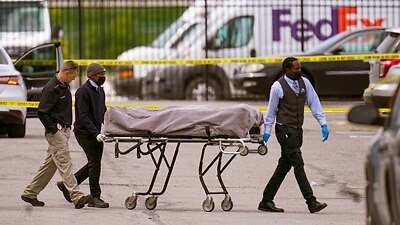


A body is taken from the scene of a shooting at a FedEx Ground facility in Indianapolis, Friday, 16 April, 2021. Source: AP via AAP


The Sikh Coalition, which announced "that at least four of those killed" in the mass shooting were members of the Indianapolis Sikh community, said it expected "authorities will conduct a full investigation - including the possibility of bias as a factor."

This article contains references to suicide.

A former FedEx employee fatally shot eight people and wounded several others at the delivery company's facility in the US city of Indianapolis before killing himself, authorities said Friday after the latest mass shooting to jolt the country.

Four of the dead were followers of the South Asian Sikh religion, a Sikh organisation confirmed, raising questions about whether the gunman's motivation was in any way racially or ethnically motivated.

The Thursday night slayings came a week after President Joe Biden branded US gun violence an "epidemic" and an "international embarrassment" as he waded into the tense debate over firearms control, a sensitive American political issue.

After this latest tragedy he again ordered flags flown at half staff at the White House and other public buildings.

Police in Indiana's capital city identified the gunman as 19-year-old Brandon Hole.

"FedEx officials have confirmed that Mr Hole was a former employee at the facility, and he was last employed in 2020," deputy police chief Craig McCartt told reporters.

Authorities searched multiple locations and seized evidence in their effort to learn more about the shooter and a possible motive.

The Sikh Coalition, which announced "that at least four of those killed" were members of the Indianapolis Sikh community, said it expected "authorities will conduct a full investigation - including the possibility of bias as a factor."

"While we don't yet know the motive of the shooter, he targeted a facility known to be heavily populated by Sikh employees," said the coalition's executive director Satjeet Kaur.

Komal Chohan, whose grandmother was killed, described being "heartbroken" over the loss, adding that "our families should not feel unsafe at work, at their place of worship, or anywhere. Enough is enough."

FBI special agent Paul Keenan said Hole was interviewed by the FBI in April 2020 and had a shotgun seized by authorities, the Indianapolis Star reported.

It was not immediately clear whether Hole had been fired or left his job voluntarily, or if he knew the victims.

"He got out of his car and pretty quickly started some random shooting outside the facility. There was no confrontation with anyone that was there. There was no disturbance. There was no argument," Mr McCartt said.
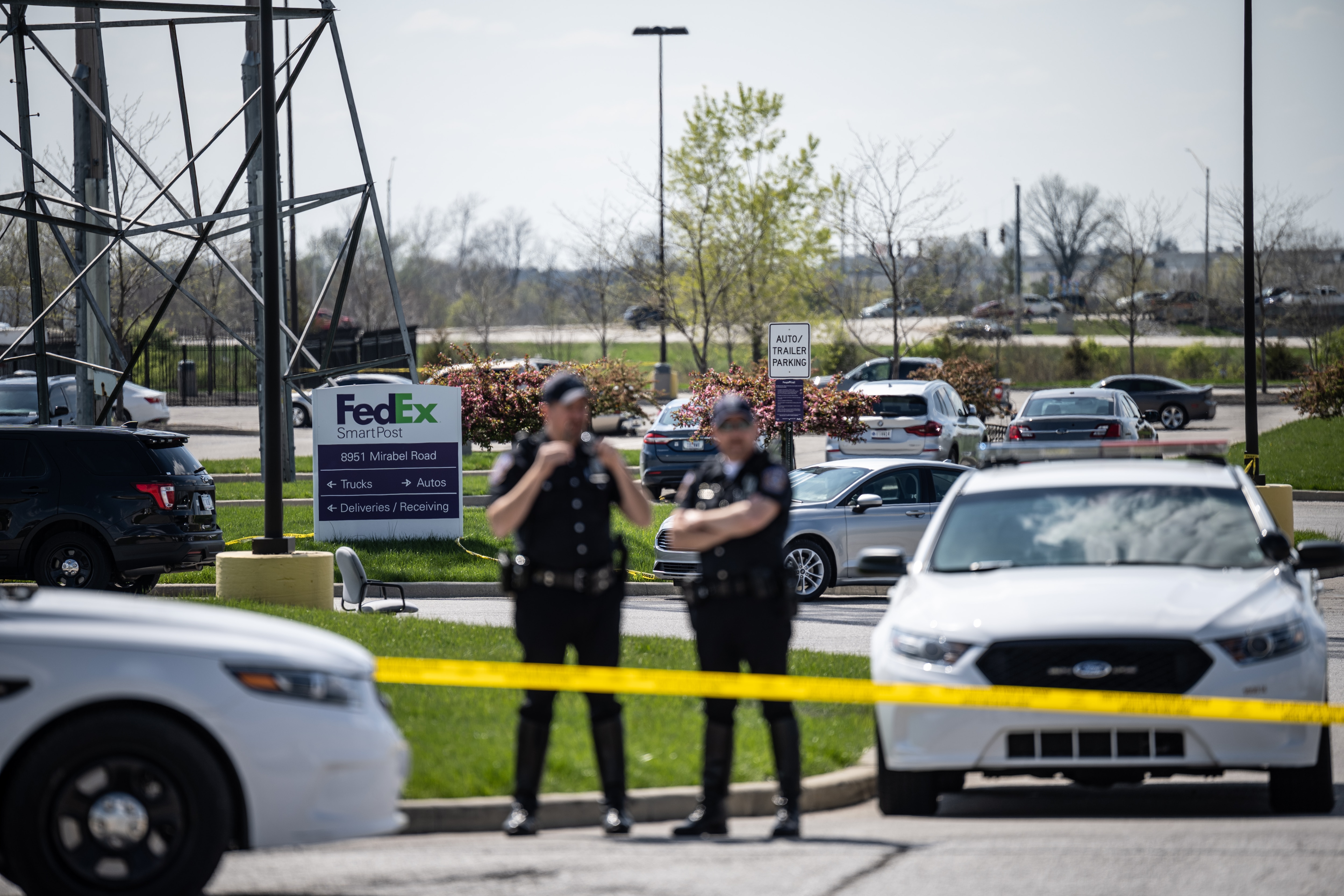

Police officers stand behind caution tape near the scene of the Indianapolis shooting on 16 April, 2021.
Getty Images

The shooting "began in the parking lot and then he did go into the building... for a brief period of time before he took his own life."

Mr McCartt said the gunman was armed with a rifle.

"This is a devastating day and words are hard to describe the emotion we feel," said FedEx chairman Frederick Smith in a letter to employees, adding that the company was working with law enforcement.

Immediately 'got scared'

Four people with gunshot wounds were transported by ambulance, including one in critical condition, while five people suffered other injuries, police said.

One man who was working a twilight shift at the FedEx Ground station, which reportedly employs more than 4,000 people, told local broadcaster WISH he saw the gunman start shooting and heard more than 10 shots.

"I saw a man with a sub-machine gun of some sort, an automatic rifle, and he was firing in the open. I immediately ducked down and got scared," Jeremiah Miller said.

Spate of shootings

The Indianapolis carnage follows a spate of mass shootings across the US in recent weeks, including at an office building in southern California, a grocery store in Boulder, Colorado and at several spas in Atlanta, Georgia where eight people, including six women of Asian descent, were killed.

Thursday's rampage was the third mass shooting in Indianapolis this year.

Mr Biden this month announced six executive measures aimed at stemming gun violence.

The move was immediately attacked by Republicans, with House Minority Leader Kevin McCarthy warning of "unconstitutional overreach."

In a statement Friday after the new shooting Mr Biden said "we must act" to end the scourge of violence killing too many Americans.

"It stains our character and pierces the very soul of our nation," Mr Biden said.

Senate Majority Leader Chuck Schumer vowed to bring gun violence prevention legislation to the Senate floor.

"We must break this cycle of suffering in America," he tweeted.

SOURCE AFP - SBS

IT WAS PART OF GOWANDA
Billions of T. rexes walked on North America during the Age of the Dinosaurs


At their peak, North America's Tyrannosaurus rex population numbered 20,000,000 according to a new study. File Photo by John Angelillo/UPI | License Phot

April 15 (UPI) -- Paleontologist Charles Marshall had long wondered how many Tyrannosaurus rex dinosaurs populated the North American continent. A few years ago, finally tired of asking his colleagues for answers, Marshall decided to find out for himself.

With the help of his students, Marshall determined North America's T. rex population peaked at 20,000. That means that over the course of their 2.5 million-year reign atop the Cretaceous food chain, 2.5 billion lived and died on the continent


Marshall and his research partners detailed their novel calculations in a new paper, published Thursday in the journal Science.

"Fossils are rare, but how rare?" Marshall told UPI in an email, speaking to the questions that inspired his investigation. "When I see a T. rex fossil, is it 1 in a million, a billion, a trillion?

RELATED Bite of juvenile T. rex was less ferocious than an adult tyrannosaurus

"And then there is the more general issue of just how much can we know about extinct animals, and how do we go about knowing it," Marshall said. "Finally, why study T. rex in particular? Because it turns out it is one of the best understood dinosaurs!"

Though T. rex is one of the most well understood dinosaur species, the remains of only 100 adults have been discovered, and more than two-thirds of those are represented only by a single bone.

To figure out how many T. rex were living in North America at any given time, Marshall and his research partners couldn't simply make inferences based on the abundance -- or lack -- of T. rex fossils. Instead, the scientists used what they knew about the dinosaur's ecology to establish robust constraints on the variables relevant to the species' abundance.

RELATED Teenage tyrannosaurs, 'megatheropods' limited diversity of smaller dinos

Those variables included: average adult body weight, geographic range, generation time, geological longevity and physiology.

"Most important by far is the relationship among living animus between population density and body mass -- bigger animals are on average rarer," Marshall said. "This relationship is called Damuth's Law, and to apply you also have to know what its trophic level was (carnivore, herbivore) and its physiology, how warm-blooded it is. Without this relationship, the study would have been impossible -- we needed data from the living to make this go."

Body temperature dictates an animal's metabolism, and the higher a species' metabolism, the lower its population density. Lizards, for example, have a slow metabolism, and as a result, their population densities are often 30 to 35 times greater than similarly sized mammals.

RELATED T. rex had big growth spurts, but other theropods matured more steadily

How warm-blooded T. rex was remains a matter of debate, and thus, a significant source of uncertainty in Marshall's calculations.

"The general consensus is that T. rex was warm-blooded, but not as warm-blooded as lions or tigers," Marshall said. "Some have suggested it might be as 'cool' as Komodo dragons (which are hot-blooded compared with regular lizards), but many dinosaur workers disagree, so we split the difference between the average flesh-eating mammals and the Komodo dragon."

The new calculations provide interesting context for the few T. rex fossils that have been recovered from ancient rock deposits. If Marshall's estimates are accurate, that would mean paleontologists have found about 1 in 16,000 of the T. rexes that were perished and buried within Montana's Hell Creek Formation.

Even if Marshall's estimates are a bit off, the calculations offer a roadmap for analyzing the abundance of long-extinct species.

Moving forward, Marshall said he and his research partners plan to repeat their analysis for all of the dinosaur species that were part of the T. rex ecosystem.

"So we can see what that ecosystem looked like, and to begin to see if we can use the preservation rate to estimate how many species of dinosaur the fossil record might have missed."

upi.com/7090669


‘Like Godzilla, but actually real’: study shows T. rex numbered 2.5 billion

Will Dunham

2.5 billion T. rex roamed Earth, study finds

If one Tyrannosaurus rex - the school bus-sized meat-eating dinosaur that stalked the Cretaceous Period landscape - seems impressive, how about 2.5 billion of them?

Researchers on Thursday unveiled the first calculation of the total T. rex population during the estimated 2.4 million years that this fearsome species inhabited western North America during the twilight of the age of dinosaurs.

They considered factors including the size of its geographic range, its body mass, growth pattern, age at sexual maturity, life expectancy, duration of a single generation and the total time that T. rex existed before extinction 66 million years ago. They also heeded a doctrine called Damuth's law linking population to body mass: the bigger the animal, the fewer the individuals.

Their analysis put the total number of T. rex individuals that ever existed at about 2.5 billion, including approximately 20,000 adults alive at any one time.


Fossils of more than 40 T. rex individuals have been found since it was first described in 1905, providing a wealth of information about a beast that thrives in the popular imagination.

"Why iconic?" asked paleontologist Charles Marshall, who led the study published in the journal Science.

"Heck, a hugely massive killer with super-huge teeth, one that you would never dream up on your own if we didn't have the fossil record. So not only super-cool and beyond the imagination, but real. Like Godzilla, but actually real. And I think we like feeling small, and T. rex sure makes us feel small and vulnerable," Marshall said.

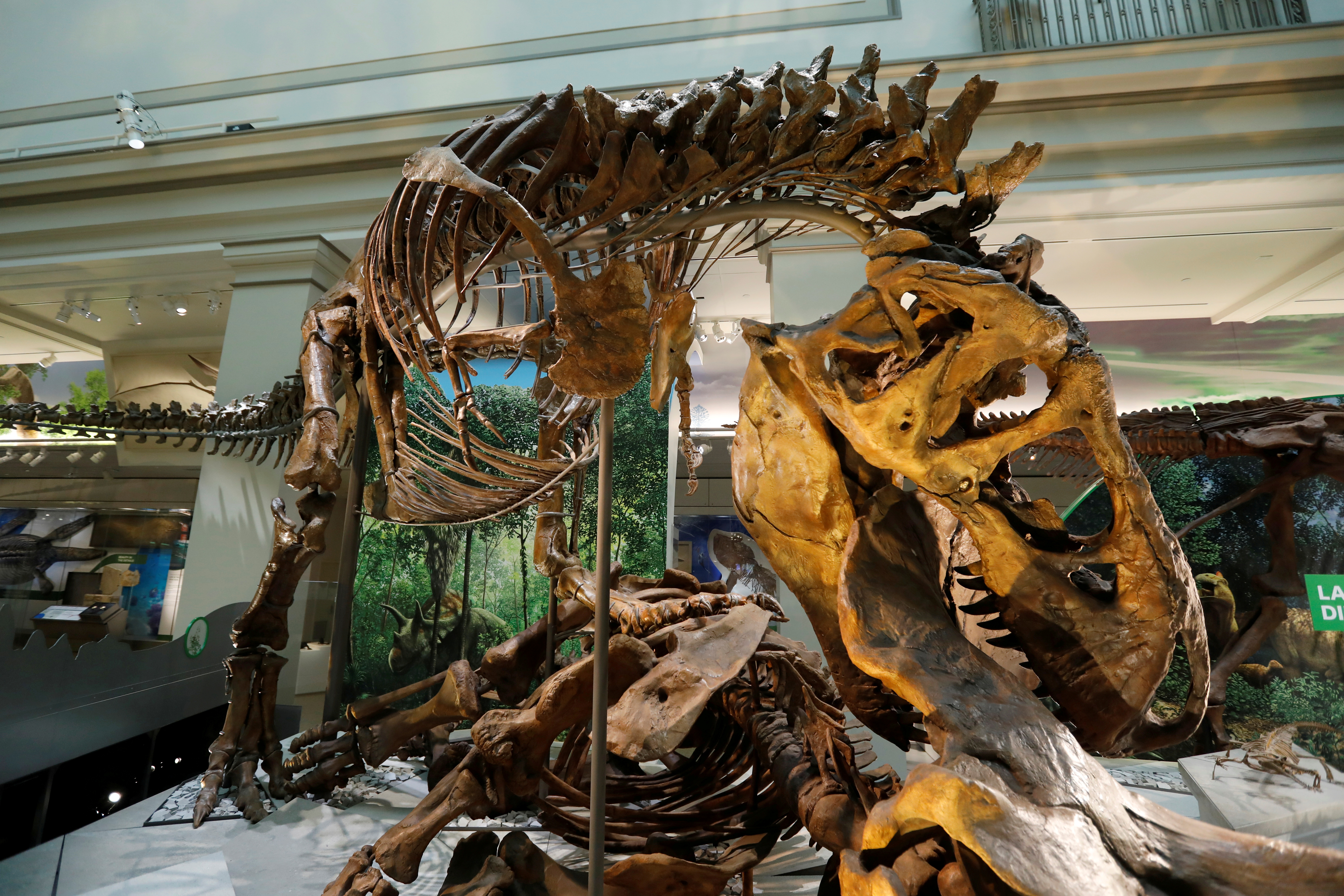
It was among the largest carnivorous dinosaurs, possessing a skull about 5 feet (1.5 meters) long, massive and muscular jaws with a bite force capable of crushing bone, a mouthful of banana-sized serrated teeth, a keen sense of smell, strong legs and puny arms with hands boasting just two fingers.


5
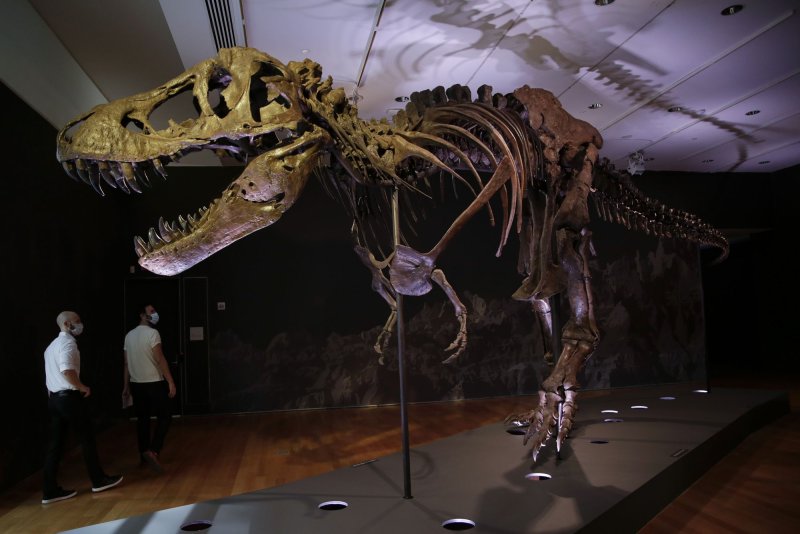
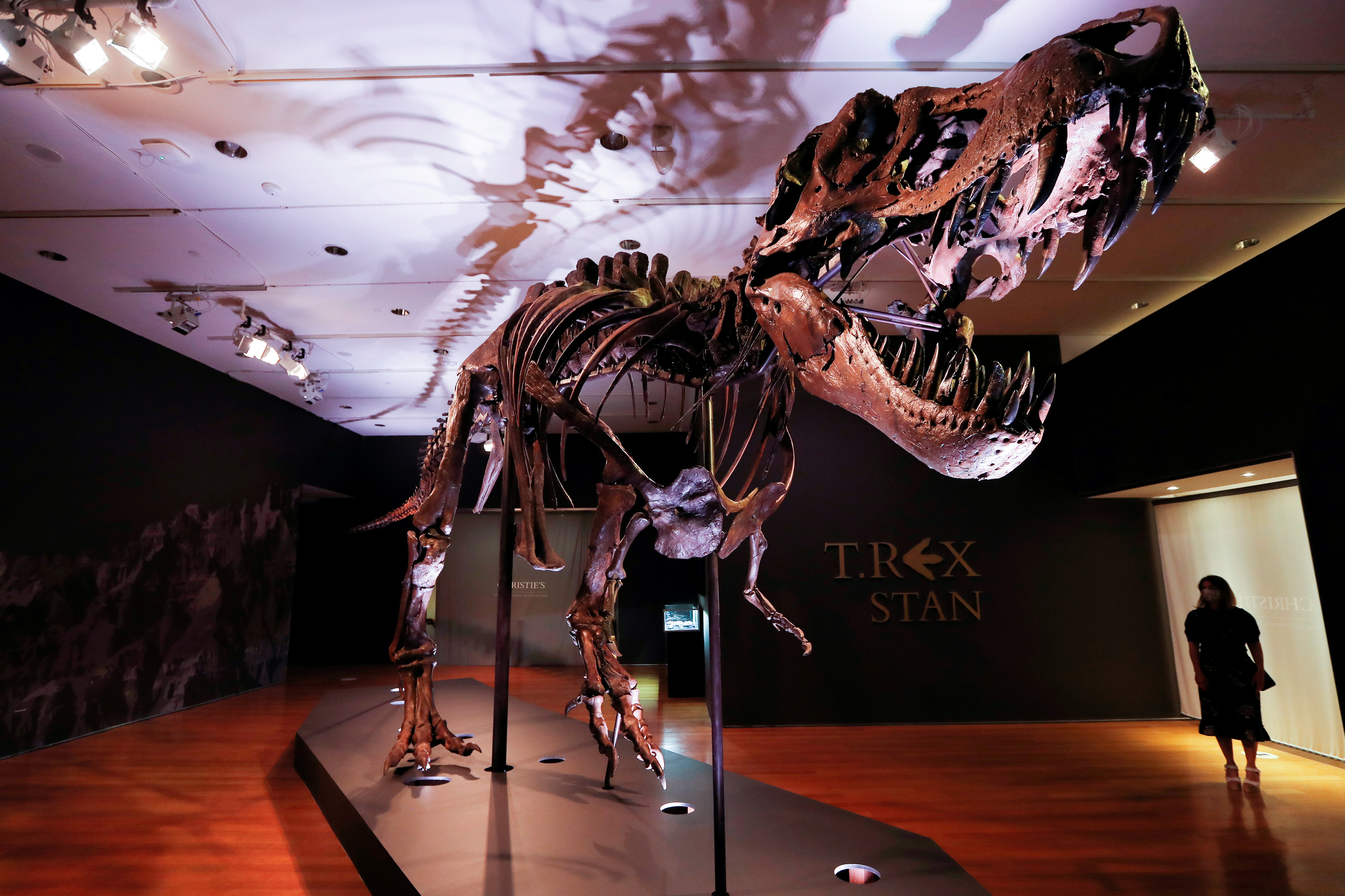
An approximately 67 million-year-old Tyrannosaurus rex skeleton, one of the largest, most complete ever discovered and named "STAN" after paleontologist Stan Sacrison who first found it, is seen on display ahead of its public auction at Christie's in New York City, New York, U.S., September 15, 2020. REUTERS/Mike Segar


Perhaps the largest-known T. rex is a specimen named Sue at the Field Museum in Chicago, measuring 40-1/2-foot-long (12.3-meters), weighing an estimated 9 tons and living about 33 years.

The new study put the weight of the average adult T. rex at 5.2 tons, average lifespan at 28 years, generation time at 19 years, total number of generations of the species at about 125,000, and its geographic range at roughly 890,000 square miles (2.3 million square kilometers).

They calculated an average population density of about one T. rex for every roughly 40 square miles (100 square kilometers).

T. rex fossils have been found in Canada's Alberta and Saskatchewan provinces and the U.S. states of Montana, Wyoming, South Dakota, North Dakota, Utah, Colorado, New Mexico and Texas. T. rex apparently met a fiery end when an asteroid slammed into Mexico, exterminating three quarters of Earth's species.


While the uncertainties in the estimates were large and some of the assumptions may be challenged by other paleontologists, the study was a worthwhile effort to expand the understanding of this famous dinosaur, said Marshall, director of the University of California Museum of Paleontology and a University of California, Berkeley professor of integrative biology.


The formula could be applied to other extinct animals, Marshall added.

Paleontologist and study co-author Ashley Poust of the San Diego Natural History Museum said while 2.5 billion is a lot, it represents only about a third of Earth's current human population - and 20,000 is merely the size of a small town.

“They’d have to meet up over possibly long distances to mate, or maybe even care for their young,” Poust said of Tyrannosaurus. “The numbers can seem big and cold, but I guess I see them as a pretty intimate window into their lives.”
Jerry Falwell Jr.'s Blackmailer Has Cache of Compromising Photos, Lawsuit Says
ON 4/17/21 


QualitFullscreen
Jerry Falwell Resigns As President of Liberty University: What To Know
Jerry Falwell Jr.'s Blackmailer Has Cache of Compromising Photos, Lawsuit Says 

Jerry Falwell Jr.'s alleged blackmailer possesses compromising photos and communications that would be "harmful" to his family, according to a lawsuit filed by Liberty University against its former president.

On Thursday, Liberty University filed a civil suit in Virginia's Lynchburg Circuit Court alleging that Falwell broke an employment contract and withheld details of a personal scandal from the school. Falwell called the lawsuit, which is seeking tens of millions in damages, a "power grab" that's "full of lies and half-truths" in a series of tweets on Saturday.

Falwell left his role as president of the university last August after a man named Giancarlo Granda alleged that he had an affair with Falwell's wife, Becki Falwell. Granda also accused Falwell of having knowledge of the affair and participating as a voyeur.


The Falwell family admitted the affair, but denied all other allegations and claimed that Granda had blackmailed the family for money.


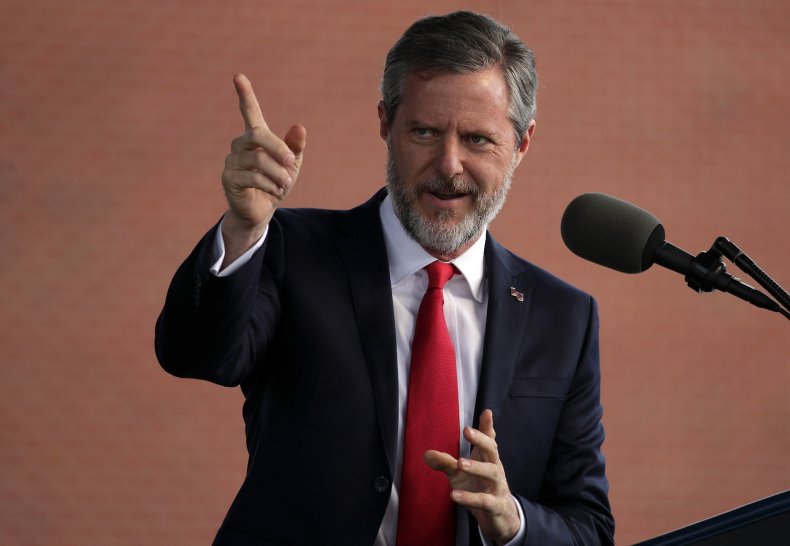
Jerry Falwell, former President of Liberty University, speaks during a commencement at Liberty University May 13, 2017 in Lynchburg, Virginia.ALEX WONG/GETTY IMAGES

"Granda threatened to use the surreptitious sexual intimacy, and surrounding conduct, to 'embarrass the Falwells and Liberty University,'" the lawsuit read. "Granda had amassed considerable leverage over the Falwells, and, accordingly, they worked to keep Granda pacified and quiet."

The lawsuit also claimed that Granda took racy photos and recorded his phone calls and FaceTime communications with Falwell's wife "for the purpose of enhancing 'extortion attempts.'"

"Granda had access to plenty of material that could have been deeply damaging to Falwell Jr. in the eyes of the evangelical community," according to the suit. "Falwell Jr. and Granda both knew that matters of infidelity, immodesty and acceptance of a loose lifestyle would stand in stark contrast to the conduct expected of leaders at Liberty.

The university accused Falwell of endangering and damaging its reputation by keeping the affair and extortion a secret. "Despite his clear duties as an executive and officer at Liberty, Falwell Jr. chose personal protection," the lawsuit stated.

This hydrogen fuel machine could be the ultimate guide to self-improveme

Study co-led by Berkeley Lab uncovers secret behind humble material's surprise performance as an artificial photosynthesis device

DOE/LAWRENCE BERKELEY NATIONAL LABORATORY

Research News

IMAGE

IMAGE: GUOSONG ZENG, A POSTDOCTORAL SCHOLAR IN BERKELEY LAB'S CHEMICAL SCIENCES DIVISION, AT WORK TESTING AN ARTIFICIAL PHOTOSYNTHESIS DEVICE MADE OF GALLIUM NITRIDE. ZENG, ALONG WITH BERKELEY LAB STAFF SCIENTIST FRANCESCA... view more 

CREDIT: THOR SWIFT/BERKELEY LABree years ago, scientists at the University of Michigan discovered an artificial photosynthesis device made of silicon and gallium nitride (Si/GaN) that harnesses sunlight into carbon-free hydrogen for fuel cells with twice the efficiency and stability of some previous technologies.

Now, scientists at the Department of Energy's (DOE's) Lawrence Berkeley National Laboratory (Berkeley Lab) - in collaboration with the University of Michigan and Lawrence Livermore National Laboratory (LLNL) - have uncovered a surprising, self-improving property in Si/GaN that contributes to the material's highly efficient and stable performance in converting light and water into carbon-free hydrogen. Their findings, reported in the journal Nature Materials, could help radically accelerate the commercialization of artificial photosynthesis technologies and hydrogen fuel cells.

"Our discovery is a real game-changer," said senior author Francesca Toma, a staff scientist in the Chemical Sciences Division at the Department of Energy's Lawrence Berkeley National Laboratory (Berkeley Lab). Usually, materials in solar fuels systems degrade, become less stable and thus produce hydrogen less efficiently, she said. "But we discovered an unusual property in Si/GaN that somehow enables it to become more efficient and stable. I've never seen such stability."

Previous artificial photosynthesis materials are either excellent light absorbers that lack durability; or they're durable materials that lack light-absorption efficiency.

But silicon and gallium nitride are abundant and cheap materials that are widely used as semiconductors in everyday electronics such as LEDs (light-emitting diodes) and solar cells, said co-author Zetian Mi, a professor of electrical and computer engineering at the University of Michigan who invented Si/GaN artificial photosynthesis devices a decade ago.

When Mi's Si/GaN device achieved a record-breaking 3 percent solar-to-hydrogen efficiency, he wondered how such ordinary materials could perform so extraordinarily well in an exotic artificial photosynthesis device - so he turned to Toma for help.

HydroGEN: Taking a Team Science approach to solar fuels

Mi had learned of Toma's expertise in advanced microscopy techniques for probing the nanoscale (billionths of a meter) properties of artificial photosynthesis materials through HydroGEN, a five-national lab consortium supported by the DOE's Hydrogen and Fuel Cell Technologies Office, and led by the National Renewable Energy Laboratory to facilitate collaborations between National Labs, academia, and industry for the development of advanced water-splitting materials. "These interactions of supporting industry and academia on advanced water-splitting materials with the capabilities of the National Labs are precisely why HydroGEN was formed - so that we can move the needle on clean hydrogen production technology," said Adam Weber, Berkeley Lab's Hydrogen and Fuel Cell Technologies Lab Program Manager and Co-Deputy Director of HydroGEN.

Toma and lead author Guosong Zeng, a postdoctoral scholar in Berkeley Lab's Chemical Sciences Division, suspected that GaN might be playing a role in the device's unusual potential for hydrogen production efficiency and stability.

To find out, Zeng carried out a photoconductive atomic force microscopy experiment at Toma's lab to test how GaN photocathodes could efficiently convert absorbed photons into electrons, and then recruit those free electrons to split water into hydrogen, before the material started to degrade and become less stable and efficient.

They expected to see a steep decline in the material's photon absorption efficiency and stability after just a few hours. To their astonishment, they observed a 2-3 orders of magnitude improvement in the material's photocurrent coming from tiny facets along the "sidewall" of the GaN grain, Zeng said. Even more perplexing was that the material had increased its efficiency over time, even though the overall surface of the material didn't change that much, Zeng said. "In other words, instead of getting worse, the material got better," he said.

To gather more clues, the researchers recruited scanning transmission electron microscopy (STEM) at the National Center for Electron Microscopy in Berkeley Lab's Molecular Foundry, and angle-dependent X-ray photon spectroscopy (XPS).

Those experiments revealed that a 1 nanometer layer mixed with gallium, nitrogen, and oxygen - or gallium oxynitride - had formed along some of the sidewalls. A chemical reaction had taken place, adding "active catalytic sites for hydrogen production reactions," Toma said.

Density functional theory (DFT) simulations carried out by co-authors Tadashi Ogitsu and Tuan Anh Pham at LLNL confirmed their observations. "By calculating the change of distribution of chemical species at specific parts of the material's surface, we successfully found a surface structure that correlates with the development of gallium oxynitride as a hydrogen evolution reaction site," Ogitsu said. "We hope that our findings and approach - a tightly integrated theory-experiments collaboration enabled by the HydroGEN consortium - will be used to further improve the renewable hydrogen production technologies."

Mi added: "We've been working on this material for over 10 years - we know it's stable and efficient. But this collaboration helped to identify the fundamental mechanisms behind why it gets more robust and efficient instead of degrading. The findings from this work will help us build more efficient artificial photosynthesis devices at a lower cost."

Looking ahead, Toma said that she and her team would like to test the Si/GaN photocathode in a water-splitting photoelectrochemical cell, and that Zeng will experiment with similar materials to get a better understanding of how nitrides contribute to stability in artificial photosynthesis devices - which is something they never thought would be possible.

"It was totally surprising," said Zeng. "It didn't make sense - but Pham's DFT calculations gave us the explanation we needed to validate our observations. Our findings will help us design even better artificial photosynthesis devices."

"This was an unprecedented network of collaboration between National Labs and a research university," said Toma. "The HydroGEN consortium brought us together - our work demonstrates how the National Labs' Team Science approach can help solve big problems that affect the entire world."


CAPTION

Guosong Zeng, a postdoctoral scholar, and Francesca Toma, a staff scientist, both in Berkeley Lab's Chemical Sciences Division, test an artificial photosynthesis device made of gallium nitride. Rather than degrading over time, which is typical for devices that turn water and light into hydrogen fuel, Toma and Zeng discovered that this device improves.

CREDIT

Thor Swift/Berkeley Lab 

Co-authors on the paper include Guiji Liu, Jason Cooper, and Chengyu Song at Berkeley Lab; and Srinivas Vanka at the University of Michigan.

The Molecular Foundry is a DOE Office of Science user facility at Berkeley Lab.

This work was supported by the HydroGEN Advanced Water Splitting Materials Consortium, established as part of the Energy Materials Network under DOE's Office of Energy Efficiency and Renewable Energy.

Founded in 1931 on the belief that the biggest scientific challenges are best addressed by teams, Lawrence Berkeley National Laboratory and its scientists have been recognized with 14 Nobel Prizes. Today, Berkeley Lab researchers develop sustainable energy and environmental solutions, create useful new materials, advance the frontiers of computing, and probe the mysteries of life, matter, and the universe. Scientists from around the world rely on the Lab's facilities for their own discovery science. Berkeley Lab is a multiprogram national laboratory, managed by the University of California for the U.S. Department of Energy's Office of Science.

DOE's Office of Science is the single largest supporter of basic research in the physical sciences in the United States, and is working to address some of the most pressing challenges of our time. For more information, please visit energy.gov/science.

Disclaimer: AAAS and EurekAlert! are not responsible for the accuracy of news rel

Incidence of 30-Day Venous Thromboembolism in Adults Tested for SARS-CoV-2 Infection in an Integrated Health Care System in Northern California

JAMA Intern Med. Published online April 5, 2021. doi:10.1001/jamainternmed.2021.0488

Hospitalization for COVID-19 is associated with high rates of venous thromboembolism (VTE).1 Whether SARS-CoV-2 infection affects the risk of VTE outside of the hospital setting remains poorly understood. We report on the 30-day incidence of outpatient and hospital-associated VTE following SARS-CoV-2 testing among adult members of the Kaiser Permanente Northern California health plan.

Methods

We performed a retrospective cohort study of 220 588 adult members of the Kaiser Permanente Northern California health plan who were tested for SARS-CoV-2 by polymerase chain reaction from February 25 through August 31, 2020. For participants with multiple SARS-CoV-2 tests, the index date was the first test date with a positive result or the first test date with a negative result if all tests were negative. We characterized study participants by demographic information, comorbidities, testing location, and level of care, excluding participants who were asymptomatic at the time of testing or had received anticoagulation in the prior year. We assessed incidence and timing of 30-day VTE using diagnosis codes, new anticoagulant prescriptions, and VTE encounters with a centralized anticoagulation management service.2 We identified inpatient anticoagulation based on consecutive-day administration of VTE treatment dosing of oral, intravenous, or subcutaneous anticoagulants. We defined VTE as outpatient events when diagnosed in outpatient or emergency department settings and as hospital-associated events when diagnosed during or after hospitalization. The Kaiser Permanente Northern California institutional review board approved the study and waived informed consent according to the Common Rule. Analyses were performed using SAS, version 9.4 (SAS Institute Inc); 2-sided χ2 and Kruskal-Wallis tests with P < .05 were considered to be statistically significant.

Results

Of the 220 588 patients with symptoms who were tested for SARS-CoV-2 (mean [SD] age, 47.1 [17.3] years; 131 075 [59.4%] women), 26 104 (11.8%) had a positive result (Table 1). Within 30 days of testing, a VTE was diagnosed in 198 (0.8%) of the patients with a positive SARS-CoV-2 result and 1008 (0.5%) of patients with a negative result (P < .001). Viral testing took place in an outpatient setting for most of the patients (117 of 198; 59.1%) who had a positive SARS-CoV-2 test result and later developed VTE. Of these 117 patients, 89 (76.1%) required subsequent hospitalization. Among those patients who underwent outpatient viral testing, 30-day VTE incidence was higher among those with a positive SARS-CoV-2 result than among those with a negative result (4.7 vs 1.6 cases per 1000 individuals tested; P < .001). Compared with patients with a negative SARS-CoV-2 test result, those with a positive result had a higher 30-day incidence of hospital-associated (5.8 vs 3.0 cases per 1000 individuals tested; P < .001) but not outpatient VTE (1.8 vs 2.2 cases per 1000 tested; P = .16; Table 2). Posthospital VTE occurred with similar frequency among participants with positive and negative SARS-CoV-2 test results (1.0 vs 1.1 cases per 1000 tested; P = .51). In patients with a positive result, the median (interquartile range) number of days (11 [4-21] vs 11 [1-25]; P = .67) from viral testing to anticoagulation was comparable for outpatient and posthospital VTE.

Discussion

The incidence of outpatient VTE among symptomatic patients with positive SARS-CoV-2 test results was similar to that of patients with negative results. In parallel to recent reports, posthospital VTE incidence did not differ by SARS-CoV-2 status and was comparable with that seen in clinical trials of thromboprophylaxis.3,4 A VTE is a potentially preventable complication of SARS-CoV-2 infection, especially in outpatients with risk factors for thrombosis or severe COVID-19. Ongoing randomized clinical trials will determine whether the risks and benefits of prophylactic anticoagulation in outpatients with COVID-19 will improve clinical outcomes.5 Recognizing that the timing of outpatient VTE paralleled that of posthospital events, the 30-day duration of outpatient thromboprophylaxis proposed in clinical trials may be sufficient to mitigate virally mediated thromboinflammation.6

Limitations of VTE diagnosis include changes in diagnostic testing patterns because of possible infection transmission or recognition of VTE risk with SARS-CoV-2, as well as increased use of empirical anticoagulation and/or anti-inflammatory agents. Our approach to case identification may have missed VTE; however, incidence in hospitalized patients paralleled that identified using natural language processing methods.1 Lastly, outpatient VTE burden may have been underestimated if diagnostic imaging occurred shortly after hospitalization.

These findings suggest that VTE incidence outside of the hospital is not significantly increased with SARS-CoV-2 infection and argue against the routine use of outpatient thromboprophylaxis outside of clinical trials. Recognizing that COVID-19–associated symptoms and disability may persist for months, clinical trials and additional longitudinal studies are needed to understand the role of outpatient and hospital treatment in 90-day VTE.

Back to top
Article Information

Accepted for Publication: February 1, 2021.

Published Online: April 5, 2021. doi:10.1001/jamainternmed.2021.0488

Corresponding Author: Nareg H. Roubinian, MD, Division of Research, Kaiser Permanente Northern California, 2000 Broadway, Oakland, CA 94612 (nareg.n.roubinian@kp.org).

Author Contributions: Dr Roubinian and Ms Dusendang had full access to all of the data in the study and take responsibility for the integrity of the data and the accuracy of the data analysis.

Concept and design: All authors.

Acquisition, analysis, or interpretation of data: Roubinian, Dusendang, Mark, Vinson, Schmittdiel, Pai.

Drafting of the manuscript: Roubinian, Dusendang, Liu.

Critical revision of the manuscript for important intellectual content: Roubinian, Dusendang, Mark, Vinson, Schmittdiel, Pai.

Statistical analysis: Roubinian, Dusendang, Schmittdiel.

Obtained funding: Roubinian.

Administrative, technical, or material support: Liu, Schmittdiel, Pai.

Supervision: Roubinian, Schmittdiel.

Conflict of Interest Disclosures: Dr Roubinian reported grants from the National Institutes of Health and the National Heart, Lung, and Blood Institute (R01HL126130) during the conduct of the study. Dr Liu reported grants from the National Institute of General Medical Sciences (R35GM128672) during the conduct of the study. No other disclosures were reported.

Funding/Support: Funding for this work was provided by The Permanente Medical Group Delivery Science and Applied Research Program.

Role of the Funder/Sponsor: The funder had no role in the design and conduct of the study; collection, management, analysis, and interpretation of the data; preparation, review, or approval of the manuscript; and decision to submit the manuscript for publication.

References
1.
Bilaloglu  S, Aphinyanaphongs  Y, Jones  S, Iturrate  E, Hochman  J, Berger  JS.  Thrombosis in hospitalized patients with COVID-19 in a New York City health system.   JAMA. 2020;324(8):799-801. doi:10.1001/jama.2020.13372
ArticlePubMedGoogle ScholarCrossref
2.
Packard  A, Delate  T, Martinez  K, Clark  NP.  Adherence to and persistence with direct oral anticoagulant therapy among patients with new onset venous thromboembolism receiving extended anticoagulant therapy and followed by a centralized anticoagulation service.   Thromb Res. 2020;193:40-44. doi:10.1016/j.thromres.2020.05.036PubMedGoogle ScholarCrossref
3.
Spyropoulos  AC, Ageno  W, Albers  GW,  et al; MARINER Investigators.  Rivaroxaban for thromboprophylaxis after hospitalization for medical illness.   N Engl J Med. 2018;379(12):1118-1127. doi:10.1056/NEJMoa1805090PubMedGoogle ScholarCrossref
4.
Roberts  LN, Whyte  MB, Georgiou  L,  et al.  Postdischarge venous thromboembolism following hospital admission with COVID-19.   Blood. 2020;136(11):1347-1350. doi:10.1182/blood.2020008086PubMedGoogle ScholarCrossref
5.
Moores  LK, Tritschler  T, Brosnahan  S,  et al.  Prevention, diagnosis, and treatment of VTE in patients with coronavirus disease 2019: CHEST guideline and expert panel report.   Chest. 2020;158(3):1143-1163. doi:10.1016/j.chest.2020.05.559PubMedGoogle ScholarCrossref
6.
Gerotziafas  GT, Catalano  M, Colgan  MP,  et al; Scientific Reviewer Committee.  Guidance for the management of patients with vascular disease or cardiovascular risk factors and COVID-19: position paper from VAS-European Independent Foundation in Angiology/Vascular Medicine.   Thromb Haemost. 2020;120(12):1597-1628. doi:10.1055/s-0040-1715798PubMedGoogle ScholarCrossref

Fireflies have a potential -- protective 'musical armor' against bats

How do fireflies defend themselves against predators?

TEL-AVIV UNIVERSITY

Research News

IMAGE

IMAGE: NEW STUDY REVEALS: FIREFLIES PRODUCE STRONG ULTRASONIC SOUNDS THAT MIGHT DETER BATS, POTENTIALLY SERVING AS A KIND OF 'MUSICAL ARMOR' AGAINST THESE PREDATORS. view more 

CREDIT: BRANDON ALMS

A new study at Tel Aviv University reveals a possible defense mechanism developed by fireflies for protection against bats that might prey on them. According to the study, fireflies produce strong ultrasonic sounds - soundwaves that the human ear, and more importantly the fireflies themselves, cannot detect. The researchers hypothesize that these sounds are meant for the ears of bats, keeping them away from the poisonous fireflies, and thereby serving as a kind of 'musical armor'. The study was led by Prof. Yossi Yovel, Head of the Sagol School of Neuroscience, and a member of the School of Mechanical Engineering and the School of Zoology at the George S. Wise Faculty of Life Sciences. It was conducted in collaboration with the Vietnam Academy of Science and Technology (VAST). The paper was published in iScience.

Fireflies are known for their unique glow, used as a mating signal. Since their bodies contain poison, the light flashes probably also serve as an aposematic signal (a warning to potential predators). This signal is also the firefly's weakness, simply because it makes it an easy target for predators. Bats are among the fireflies' most prevalent potential predators, and some bats have poor vision, rendering the flashing signal ineffective. This led the researchers to check whether fireflies had some additional layer of protection against bats.

Prof. Yossi Yovel explains that the idea for this study came up accidentally, during a study that tracked bats' echolocation. "We were wandering around a tropical forest with microphones capable of recording bats' high frequencies, when suddenly, we detected unfamiliar sounds at similar frequencies, coming from fireflies," he recalls. "In-depth research using high-speed video revealed that the fireflies produce the sound by moving their wings, and that the fireflies themselves can't hear this frequency. Consequently we hypothesized that the sound is not intended for any internal communication within the species," adds Ksenia Krivoruchku, the PhD student who led the study.

Following the accidental discovery, the team at Prof. Yovel's laboratory examined three different species of fireflies that are common in Vietnam (Curtos Luciola, Sclerotia) plus one Israeli species (Lampyroidea), and found that they all produce these unique ultrasonic sounds, but cannot hear them.

Can it be concluded that fireflies have developed a special defense mechanism specifically for bats? Prof. Yovel emphasizes that this claim was not proved in the study, but several features do point to this conclusion. First of all, the fact that the fireflies themselves can't hear the sound, while bats can both hear it and use it to find the fireflies - so it's more likely that it serves as a warning signal. Krivoruochku adds that the discovery of ultrasonic sounds in fireflies is in itself an important contribution to the study of predator-prey relations: "The idea of warning signals that the sender itself cannot detect is known from the world of plants but is quite rare among animals. Our discovery of the 'musical battle' between fireflies and bats may pave the way for further research, and possibly the discovery of a new defense mechanism developed by animals against potential predators."

###