Sunday, April 18, 2021

Minnesota governor expresses regret for mistreatment of journalists during Daunte Wright demonstrations


By Hollie Silverman and Andy Rose, CNN

Updated Sun April 18, 2021

Minnesota National Guard on alert amid tensions over police shooting of Daunte Wright, looming Chauvin trial verdict 00:53

(CNN)Minnesota's governor expressed regret Saturday after the alleged mistreatment of journalists covering demonstrations in Brooklyn Center by law enforcement, as attorneys representing news organizations released a letter calling out several examples throughout the week -- including the arrest of a CNN producer.

At least 100 demonstrators have been arrested during protests over the death of Daunte Wright, who was shot and killed on April 11 by a Brooklyn Center police officer during a traffic stop. Some journalists at the demonstrations, including those with credentials, were also detained and photographed by police before later being released.

During an hour-long phone conference with law enforcement officials and an attorney representing media outlets -- including CNN -- Minnesota Gov. Tim Walz said he was embarrassed about the treatment of reporters after police ordered the crowd to disperse, according to a participant in the meeting.

"A free press is foundational to our democracy. Reporters worked tirelessly during this tumultuous year to keep Minnesotans informed. I convened a meeting today with media and law enforcement to determine a better path forward to protect the journalists covering civil unrest," the governor said on Twitter Saturday.



At least 100 people arrested on tense sixth night of protests as Daunte Wright's loved ones mourn for his son

Attorney Leita Walker, writing on behalf of more than two dozen journalism and media outlets, sent a letter to Gov. Walz and public safety officials after the meeting. The letter alleges multiple instances of journalists being harassed, assaulted, or arrested by law enforcement officers while covering protests in Minnesota.

CNN producer Carolyn Sung was grabbed by her backpack and thrown to the ground by state troopers while trying to comply with a dispersal order, the letter said.

Her hands were zip-tied behind her back, she did not resist and repeatedly identified herself as a journalist working for CNN while showing her credentials, according to the letter. The male security agent hired to work with her was also detained but then released after he showed his credentials.

A trooper yelled at Sung, "Do you speak English?" despite her identifying herself several times as a journalist and telling the troopers that the zip-ties on her wrists were too tight. Sung was transported to Hennepin County Jail in a prisoner-transport bus where she was processed, the letter said.

"She was patted down and searched by a female officer who put her hands down Sung's pants and in her bra, fingerprinted, electronically body-scanned, and ordered to strip and put on an orange uniform before attorneys working on her behalf were able to locate her and secure her release, a process that took more than two hours," the letter said.


Law enforcement officers pepper spray freelance photographer Tim Evans (L) as he identifies himself a working journalist outside the Brooklyn Center police station on April 16.

In another instance, several media members, including one from the New York Times, were assaulted by police officers, according to the letter. The officers surrounded their car, banging on windows and doors with wooden sticks before dragging the driver out and arresting them. Officers allegedly hit the New York Times journalist repeatedly and tried to break his camera, the letter said.

The letter includes a photo of an unidentified law enforcement officer spraying chemical agents on journalists, clearly identifiable by their equipment and clothing.

In a press release after Saturday's meeting, the Minnesota State Patrol acknowledged that, in accordance with a federal judge's order, a dispersal order does not apply to members of the media covering the protest.

"MSP is prohibited from seizing equipment from or ordering someone to stop recording or observing who we know or have reason to know is a member of the media," the statement says.

The State Patrol also says it is instructing troopers not to threaten to arrest members of the media unless they are suspected of committing a crime.

CNN's Travis Caldwell contributed to this report.

Good Morning Britain correspondent shares dramatic moment crew was detained by police in Minnesota

 Kim Novak Saturday 17 Apr 2021 

Good Morning Britain’s US correspondent Noel Phillips has revealed he and the TV crew he was with were detained by police during the protests in Minnesota. Protests have been ongoing in Brooklyn Center for six days following the shooting of Daunte Wright by police around 10 miles from where George Floyd died last year.

 Wright, 20, was fatally shot by police officer Kim Potter – who has been charged with second-degree manslaughter – after she claimed to mistake her gun for a Taser.  

Phillips, who has been covering the protests, shared dramatic footage of the moment he and the crew were detained but later released by police.  He wrote alongside the clips: ‘Sixth day of protests in #Minnesota. This is the moment our crew were detained but later released.’ In the video clip, police can be heard instructing them: ‘Get down! Put your hands up. Take a knee.’ 

Phillps’s legs can just be seen in the clip as he kneels down, before the clip cuts to show protestors milling around with sounds that appear to be gunshots heard in the background. 

 Police in riot gear can also be seen standing by groups of protesters as lights from their vehicles flash in the background.  

The current protests come after similar scenes last year following the death of George Floyd after a police officer knelt on his neck for nine minutes during his arrest.  

The death of Wright also sparked protests outside the police department in Minnesota, with demonstrators throwing rocks and water bottles at cops, with Minnesota National Guard members and State Patrol troopers using tear gas and rubber bullets to control the crowd. 

VIDEO: https://metro.co.uk/2021/04/17/gmb-correspondent-reveals-tv-crew-were-detained-by-police-in-minnesota-14425658/?ito=newsnow-feed?ito=cbshare

 https://www.facebook.com/MetroUK/

SECURITY

Cybercriminals get bolder as impact from SolarWinds and ransomware grows


BY MARK ALBERTSON

UPDATED APRIL 15 2021

In 2006, then-U.S. Senator Barack Obama published a book, “The Audacity of Hope,” on his way to winning the White House in 2008. If the cybersecurity community were to write a similar treatise today, the appropriate title would most likely be “The Audacity of Hacks.”

FireEye Inc. held a series of sessions this month to offer a “state of cybersecurity” picture timed with the release of its Mandiant M-Trends 2021 report. One conclusion from the sessions and the report’s findings is that nation states and cybercriminals have become increasingly emboldened over the past year. Hacking has morphed from annoyance and inconvenience into extortion and social disruption on a global scale.

FireEye itself received confirmation of the perilous state of cybersecurity in December when the firm realized that hackers managed to steal its closely guarded Red Team assessment tools used to test customer security. The company’s analysis of how a portion of its crown jewels could be breached led to the discovery of what is now known as the SolarWinds exploit, a sophisticated malware campaign which allowed hackers to infiltrate systems involving at least 100 private companies and multiple U.S. government agencies.

The breach, which reflected extraordinary tradecraft and sophistication according to FireEye, is believed to have been led by the Russian government. The audacious hack has captured the attention of security analysts and government officials around the world, and it has set the stage for what may well be a rocky year ahead.

“What’s different now is the audacity that nation states are using, against a backdrop of a global pandemic,” Sandra Joyce, executive vice president and head of global intelligence at FireEye Mandiant, said during one of the company’s sessions this month. “For everything we see nation states do, the cybercriminals are carefully watching.”
Dwell times decrease

This year’s Mandiant report offered a mix of good news and bad. On the positive side, 59% of security incident investigations by the firm were initially detected by its customers, a 12% increase over the previous year.

In addition, global median dwell time or the duration between when a cybersecurity intrusion begins and when it is discovered, has declined significantly. Back in 2011, dwell time was documented at over a year and now stands at 24 days.

While the pace of detection and security awareness may be improving, the threats themselves have taken on a more ominous tone. Joyce noted that the global pandemic generated a cyber espionage response from nation states, with private patient data being breached in a number of health organizations. When a cyberattack disrupted emergency care at one German hospital last year, a patient died.

“We’ve seen some red lines crossed with attacks on hospitals,” said Joyce. “Now we’re moving into threats against the cloud.”

Vulnerabilities in cloud systems are not new. Yet, what the SolarWinds breach exposed was an ability for attackers to acquire privileged access to run software already installed across platforms, including on-premises servers and virtual machines in the cloud.

The threat actors used a technique that targeted the Security Assertion Markup Language or SAML authentication standard, commonly used to create a trustworthy link between cloud and on-premises systems.

“This is that golden SAML process, it’s basically a golden ticket that can have access throughout the system,” Joyce explained. “What happens now is that attackers grab credentials and start pivoting around in cloud environments. It’s an incredible tactic and not something we’re going to see the end of.”
Ransomware and extortion

Another exploit not likely to end anytime soon is ransomware. The latest M-Trends report documented how cybercriminals were escalating ransomware attacks, which grew from 14% of FireEye’s investigations to 25% in just one year.

The consequences of a successful ransomware attack are rising as well. FireEye believes that ransomware has evolved into multifaceted extortion where bad actors are using a variety of techniques to infiltrate systems, carefully identify the most valuable data assets and coerce payment for the release of encrypted files. Threats for nonpayment include posting stolen data on public websites or providing proprietary information to competitors.

“Ransomware extortion is the latest trend we are seeing right now,” said Yihao Lim, a cyberthreat intelligence analyst for Mandiant Threat Intelligence in Singapore. “This has proven to be very effective. The attacker will take time to study the victim, they are not in a rush.”

One of the key contributors to the rise in ransomware attacks has been that, as with a wide range of tech industry software, the malware is now widely obtainable as-a-service.

Like software-as-a service, RaaS represents the new business model for enterprising hackers. The exploits are often developed by professional programmers with legitimate jobs seeking money on the side, according to one group of security researchers.

Ransomware services are available for monthly or one-time license fees, or on an affiliate basis where the as-a-service provider will receive 25% of the ransom. Some RaaS platforms even offer troubleshooting help desks for support, according to Yihao.

“It reduces the barrier to entry for a lot of bad guys, you can just use the ransomware that’s already available on the platform,” he said. “It’s like a hosting company and you have clients who use the hosting company services. Each of them can hit a number of victims by themselves.”
On the brink

One of the last live technology conferences held in the U.S. in 2020, before the global pandemic closed everything down, was the annual RSA Cybersecurity gathering in San Francisco. Mandiant’s Joyce recalled a feeling at the event that the security industry was teetering on the brink, where the threats had become so serious and sophisticated, it would take a momentous coming together of the private and public sectors to marshal the kind of defense that was needed.

COVID-19 intervened and such a joint effort did not materialize. Joyce and the rest of the cybersecurity community are now left wondering if it ever will.

“It really truly has been unprecedented times,” Joyce said. “This industry is getting burned out. When are governments around the world going to make it harder for threat actors to carry out these missions?”
Image: Pixabay Commons

Earlier this week, FireEye publicly advised that a highly sophisticated state-sponsored actor had accessed their network and taken a copy of the FireEye Red Team tools. Red Team tools are often used by cyber security organisations to evaluate the security of networks. These same tools could be used to gain unauthorised access to victim networks.

The ACSC is working closely with FireEye and other cyber security partners to understand the risks facing Australian systems. To date there is no evidence these tools have been used against Australians.

FireEye has provided a repository of signatures to detect whether these tools may have been used against a network. Ensuring an effective patching strategy, focusing on internet-facing systems, is the most effective mitigation against these tools. We recommend organisations follow advice provided in existing ACSC publications such as Summary of Tactics, Techniques and Procedures Used to Target Australian Networks and ASD’s Essential Eight.


Did Someone at the Commerce Dept. Find a SolarWinds Backdoor in Aug. 2020?


April 16, 2021


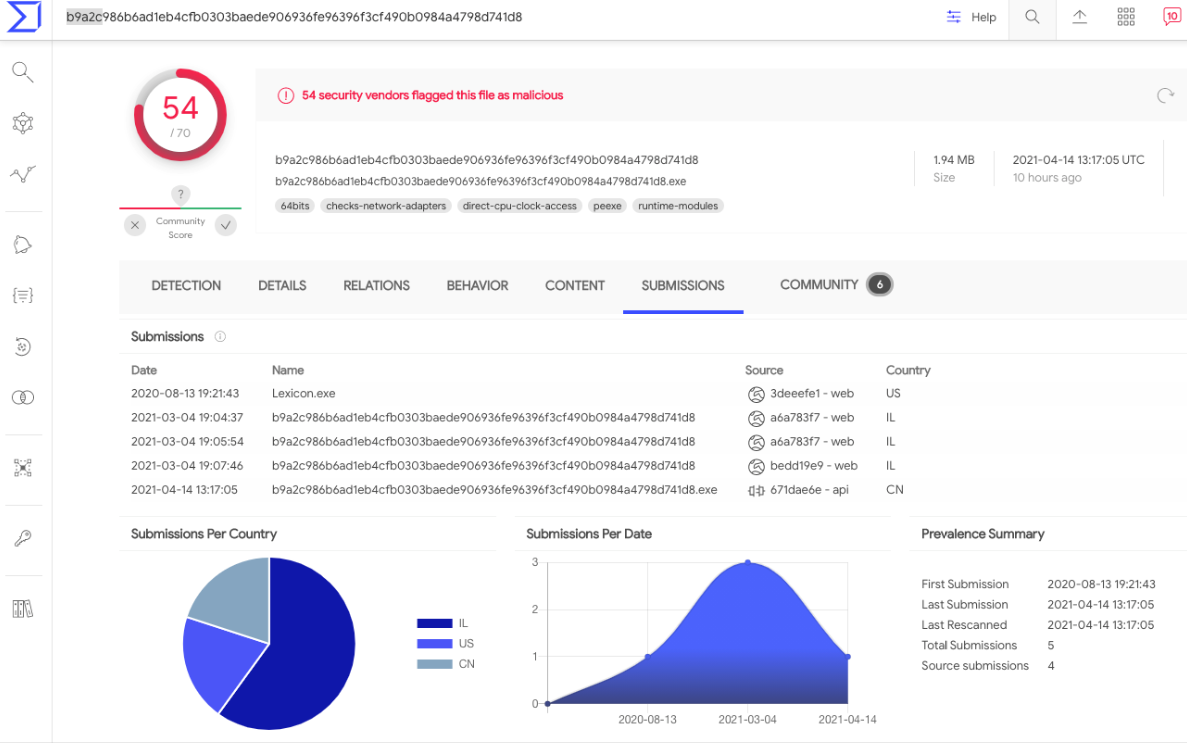
On Aug. 13, 2020, someone uploaded a suspected malicious file to VirusTotal, a service that scans submitted files against more than five dozen antivirus and security products. Last month, Microsoft and FireEye identified that file as a newly-discovered fourth malware backdoor used in the sprawling SolarWinds supply chain hack. An analysis of the malicious file and other submissions by the same VirusTotal user suggest the account that initially flagged the backdoor as suspicious belongs to IT personnel at the National Telecommunications and Information Administration (NTIA), a division of the U.S. Commerce Department that handles telecommunications and Internet policy.

Both Microsoft and FireEye published blog posts on Mar. 4 concerning a new backdoor found on high-value targets that were compromised by the SolarWinds attackers. FireEye refers to the backdoor as “Sunshuttle,” whereas Microsoft calls it “GoldMax.” FireEye says the Sunshuttle backdoor was named “Lexicon.exe,” and had the unique file signatures or “hashes” of “9466c865f7498a35e4e1a8f48ef1dffd” (MD5) and b9a2c986b6ad1eb4cfb0303baede906936fe96396f3cf490b0984a4798d741d8 (SHA-1).

“In August 2020, a U.S.-based entity uploaded a new backdoor that we have named SUNSHUTTLE to a public malware repository,” FireEye wrote.


The “Sunshuttle” or “GoldMax” backdoor, as identified by FireEye and Microsoft, respectively. Image: VirusTotal.com.

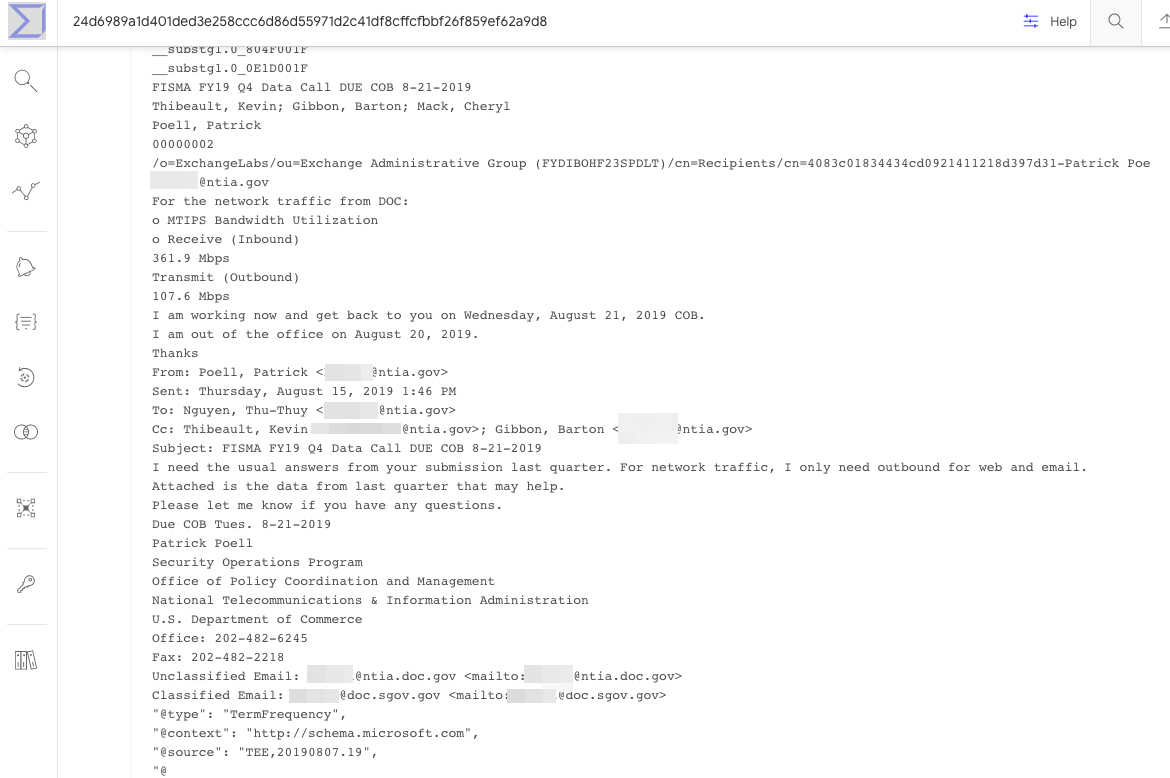
A search in VirusTotal’s malware repository shows that on Aug. 13, 2020 someone uploaded a file with that same name and file hashes. It’s often not hard to look through VirusTotal and find files submitted by specific users over time, and several of those submitted by the same user over nearly two years include messages and files sent to email addresses for people currently working in NTIA’s information technology department.


An apparently internal email that got uploaded to VirusTotal in Feb. 2020 by the same account that uploaded the Sunshuttle backdoor malware to VirusTotal in August 2020.

The NTIA did not respond to requests for comment. But in December 2020, The Wall Street Journal reported the NTIA was among multiple federal agencies that had email and files plundered by the SolarWinds attackers. “The hackers broke into about three dozen email accounts since June at the NTIA, including accounts belonging to the agency’s senior leadership, according to a U.S. official familiar with the matter,” The Journal wrote.

It’s unclear what, if anything, NTIA’s IT staff did in response to scanning the backdoor file back in Aug. 2020. But the world would not find out about the SolarWinds debacle until early December 2020, when FireEye first disclosed the extent of its own compromise from the SolarWinds malware and published details about the tools and techniques used by the perpetrators.

The SolarWinds attack involved malicious code being surreptitiously inserted into updates shipped by SolarWinds for some 18,000 users of its Orion network management software. Beginning in March 2020, the attackers then used the access afforded by the compromised SolarWinds software to push additional backdoors and tools to targets when they wanted deeper access to email and network communications.

U.S. intelligence agencies have attributed the SolarWinds hack to an arm of the Russian state intelligence known as the SVR, which also was determined to have been involved in the hacking of the Democratic National Committee six years ago. On Thursday, the White House issued long-expected sanctions against Russia in response to the SolarWinds attack and other malicious cyber activity, leveling economic sanctions against 32 entities and individuals for disinformation efforts and for carrying out the Russian government’s interference in the 2020 presidential election.

The U.S. Treasury Department (which also was hit with second-stage malware that let the SolarWinds attackers read Treasury email communications) has posted a full list of those targeted, including six Russian companies for providing support to the cyber activities of the Russian intelligence service.

Also on Thursday, the FBI, National Security Agency (NSA), and the Cybersecurity Infrastructure Security Administration (CISA) issued a joint advisory on several vulnerabilities in widely-used software products that the same Russian intelligence units have been attacking to further their exploits in the SolarWinds hack. Among those is CVE-2020-4006, a security hole in VMWare Workspace One Access that VMware patched in December 2020 after hearing about it from the NSA.

On December 18, VMWare saw its stock price dip 5.5 percent after KrebsOnSecurity published a report linking the flaw to NSA reports about the Russian cyberspies behind the SolarWinds attack. At the time, VMWare was saying it had received “no notification or indication that CVE-2020-4006 was used in conjunction with the SolarWinds supply chain compromise.” As a result, a number of readers responded that making this connection was tenuous, circumstantial and speculative.

But the joint advisory makes clear the VMWare flaw was in fact used by SolarWinds attackers to further their exploits.

“Recent Russian SVR activities include compromising SolarWinds Orion software updates, targeting COVID-19 research facilities through deploying WellMess malware, and leveraging a VMware vulnerability that was a zero-day at the time for follow-on Security Assertion Markup Language (SAML) authentication abuse,” the NSA’s advisory (PDF) reads. “SVR cyber actors also used authentication abuse tactics following SolarWinds-based breaches.”

Officials within the Biden administration have told media outlets that a portion of the United States’ response to the SolarWinds hack would not be discussed publicly. But some security experts are concerned that Russian intelligence officials may still have access to networks that ran the backdoored SolarWinds software, and that the Russians could use that access to affect a destructive or disruptive network response of their own, The New York Times reports.

“Inside American intelligence agencies, there have been warnings that the SolarWinds attack — which enabled the SVR to place ‘back doors’ in the computer networks — could give Russia a pathway for malicious activity against government agencies and corporations,” The Times observed.

This entry was posted on Friday 16th of April 2021 08:57 AM


A Budding Issue in the NFT Space: Classifying and Taxing These Valuable Tokens


April 15, 2021 - By Victoria Hine


The last few weeks have seen a number of cryptoasset milestones reach the mainstream press. One subset of cryptoasset in particular – Non-Fungible Tokens or “NFTs” – has made the headlines on seemingly countless occasions, as Christie’s recently sold their first purely-digital artwork in the form of Beeple’s nearly $70 million-generating “First 500 Days” compilation), the first digital NFT home – Krista Kim Studio’s futuristic “Mars house” – sold for 288 Ether (the equivalent of $514,558), and British artist Damien Hirst announced a project with Palm, the new “environmentally-focused” digital marketplace created by Ethereum co-founder Joe Lubin, which will see him offer up a series of 10,000 unique oil paintings tied to corresponding NFTs.

Like a cryptocurrency “coin,” an NFT is a unique token that exists on a blockchain, such as Etherium, and is governed by a smart contract that records its origins and transaction history. One of the key elements is that, unlike cryptocurrencies – or normal currencies, for that matter – NFTs are non-fungible, hence, the name. This means two NFTs can use the same smart contract but have different values, depending on their particular characteristics. That uniqueness is recorded in the NFT’s metadata, and it is part of what makes NFTs attractive as a secure way of tracking the provenance of physical luxury goods, such as paintings, sculpture or diamonds, essentially replacing paper certificates of authenticity.

Despite the allure of NFTs from a provenance-tracing perspective for rare or otherwise unique physical goods, this budding technology is also increasingly used to reflect digital assets that have no physical existence at all. This is achieved by including a “token ID” within the NFT metadata that points to a specific digital resource – such as, in true internet form, virtual kittens. The Dapper Labs-created, blockchain-based game, Crypotkitties – which has been likened to “a digital version of Pokemon cards but based on the Ethereum blockchain” – was, of course, one of the first recreational uses of NFTs when it launched in November 2017.
What’s the problem?

It has already been established that cryptocurrencies are both difficult to define and challenging to shoehorn into pre-existing legislative regimes designed to deal with fundamentally different assets. With that in mind, NFTs present some of the same difficulties as cryptocurrencies. It is possible for holders to remain anonymous, for instance. The assets themselves are prone to hybridity and mutability and, more fundamentally, there is so far no consensus on how to classify NFTs: are they intangible assets, commodities, financial instruments – or something else entirely?

And there is yet another layer of complexity. Unlike cryptocurrencies, which are indistinguishable from the value they represent, NFTs represent the holder’s right to claim a separate, distinguishable asset. Put another way, a cryptocurrency holder might lose access to their cryptocurrency wallet, in which case HMRC may allow them to crystallize a loss, but an NFT holder may find themselves holding a token that points to nothing at all. The underlying asset could be moved, duplicated, swapped, or even destroyed. Whether the NFT holder has any enforceable rights in that situation – and therefore, whether they can crystallize a loss in the same way – depends on the specific terms of the smart contract.
What’s this got to do with tax?

So, what does this have to do with tax? Simply put, when it becomes difficult to determine what an asset is, where it is, and how much it is worth, it also becomes pretty difficult to tax that asset – and while the NFT boom seems to be subsiding for the time being, digital assets are not going away any time soon. In fact, these questions are starting to appear before the commercial courts. Recent cases have determined that cryptocurrencies are indeed property, that speculating on cryptocurrencies is not inherently a business activity, and (albeit only at first instance and placing significant reliance on academic texts) that the lex situs of cryptocurrencies is the place of domicile of the holder. It’s also clear from the cryptoassets manual that the tax treatment will depend heavily on the characteristics of the particular cryptoasset in question – potentially even the specific token.

As cryptoassets become more widespread and more varied (and if, as seems likely, guidance struggles to keep up) it surely will not take too long for issues of this nature to begin to crop up before the courts in various jurisdictions.

Of course, the other element that may be relevant to how we tax NFTs is the impact on the environment. With a number of governments and international organizations discussing how best to use tax – whether as a stick or a carrot – to incentivize progress towards carbon neutrality, the higher carbon footprint of an NFT over a physical asset is likely to have a real tax impact on the nascent NFT economy.

Victoria Hine is a tax associate at Slaughter and May with a particular interest in employment and incentives taxation, corporate responsibility, and legal technology.


Non-Fungible Tokens (NFTs) as Art Loan Collateral

Carlton Fields

[co-author: David Sofge, Holland & Knight]

April 16, 2021

Digital art represented by NFTs (non-fungible tokens) made a spectacular arrival in March with the $69.3 million (in Ether) auction sale by Christie’s of a collage by digital artist Beeple.[1] The buyer is founder of an NFT fund in Singapore. In the scramble to get up to speed on the phenomenon, NFTs have been denounced as a scam based on blockchain hype, advocated as a way to improve the economic standing of struggling non-celebrity artists[2], or heralded as a sign that the ‘Metaverse’ depicted in Neal Stephenson’s 1992 novel Snow Crash is fast becoming a reality. Regardless of the varied reactions to NFTs, it seems inevitable that financial institution lenders will be approached by customers seeking to put up newly minted NFT-linked art collections as collateral.

Real-world art loans most often take the form of revolving lines of credit using works of creative visual art as collateral. These loans use a number of techniques to mitigate the art world’s perennial issues with authentication, changes in market value, the need to obtain a first-priority security interest in the artwork, and the risk of theft or casualty loss. Historically, the default risks on these loans have been generally perceived to be relatively low in view of the affluent nature and often prominent identity of the borrowers under these credit facilities.

For institutional lenders to achieve a sufficient comfort level to consider making NFT-secured loans, a number of real-world techniques for evaluating requests for an extension of credit will need to be rethought and somehow accommodated. These considerations include ways to address risks related to provenance and authenticity, periodic appraisals to monitor changes in value, perfection of security interests, and insurance for theft or loss. 

First, as to authentication, real-world certifications will be of little use. An NFT is by definition a unique “crypto asset,” but this does not mean that each NFT represents a unique work of art – indeed, multiple NFTs may be sold based on a single work, just as a real-world artist may authorize and sign a limited number or prints of an original work.[3] To authenticate an NFT, the artist may include an e-signature in the software code that is the basis of the NFT.[4] It is also important to keep in mind that an NFT is not itself the digital artwork, but it is instead a crypto asset consisting of a “smart contract” based on a specified blockchain which “points to” the asset, which may be a JPEG or other image file or a video recording.  Many NFTs do not include any ownership interest in the underlying work, and do not transfer copyright, although they may include rights to non-commercial display on the web. In the case of Cristie’s Beeple sale, the artwork itself, in the form of a JPEG of the collage artwork, was transferred to the purchaser.[5] Tokens generally provide a kind of verifiable provenance only of the NFT itself, but not of the underlying artwork. An NFT may also impose licensing conditions on the NFT purchaser, such as a 10% royalty payable to the artist on any future resales of the NFT at a profit. The specific “bundle of rights” and obligations transferred by an NFT will have to be parsed by a lender with specificity.   

Second, appraisals of NFT assets will likely be a challenge, in view of the volatility of prices in the crypto environment. Offsetting this is the possibility that rapidly expanding secondary markets for trading NFTs may be useful in establishing a “market” price. 

Third, as to perfection of a security interest in NFT collateral, a lender may choose to perfect by treating an NFT as a “general intangible” under a local enactment of the Uniform Commercial Code (UCC) and filing a UCC-1 Financing Statement. Where a proposed borrower reaches out to a lender on the web or a blockchain, it may be challenging to identify a debtor’s precise location for purposes of a UCC filing. In addition, enforcement of a security interest perfected only by filing is less certain: Because an NFT lives only on a blockchain where the guiding principle is that “code is law,” an irreversible on-chain transfer by the borrower, even if done in violation of the terms of a security agreement, may put a crypto asset effectively beyond the reach of a conventional UCC foreclosure action on general intangibles. (Terms used here have their common meaning under most local enactments of UCC Articles 2, 8 and 9.) In addition, a security interest perfected only by filing will be inferior in priority to a security interest perfected by “control,” as discussed below.

Lenders do have other options under Articles 8 and 9 of the UCC for perfecting and enforcing a security interest in an NFT, drawing on techniques originally devised for investment securities and more recently applied to cryptocurrency and other digital assets. The lender could for instance have the crypto asset registered in the lender’s name under the terms of a security agreement, but this is often not acceptable to borrowers. 

A lender may wish to consider an approach currently in use for loans secured by cryptocurrency collateral. Looking to procedures originally devised for equity securities in the indirect holding system, a lender may require a proposed borrower to transfer the NFT or other digital asset to a “securities account” with a “securities intermediary,” generally a bank or trust company. Under a three-way account control agreement (ACA) between the lender, securities intermediary, and borrower, the securities intermediary agrees to treat the NFT as a “financial asset” under Article 8 (usefully, any property, including a real-world asset, may be a “financial asset” under Article 8 if the securities intermediary expressly so agrees). With an ACA in place, a security interest in the account and/or the financial assets held in it can be perfected in favor of the lender where the securities intermediary agrees that it will comply with orders (“entitlement orders”) from the lender “without further consent,” thus giving the lender “control” within the meaning of Articles 8 and 9. Perfection by “control” will generally provide a secured lender with priority over any other security interest perfected by filing. In addition, the risk of an irreversible transfer of the asset on-chain may be mitigated by undertakings from the securities intermediary in the tripartite agreement that it will not transfer the asset (in our example an NFT) except in strict accordance with the terms of the ACA.[6]

As for casualty loss, theft, and the other vicissitudes that may befall works of art, it may be noted that in the case of the $69.3 million Christies/Beeple sale, instead of being locked up in a museum vault, the “original” JPEG was stored on the blockchain-based Interplanetary File System (IPFS)The NFT itself resides on an Ethereum blockchain maintained by the platform that generated it for the creator of the work, and there are already reports that some other platforms have disappeared from the Web inexplicably.[7] There are also reports of NFT art heists on a popular platform[8], and a new industry of fraudsters has sprung up to form and sell NFTs based on works of art in which the NFT minters themselves have no ownership interest.[9] There will likely be a need for new and expanded types of cyber insurance to insure against such contingencies. The Metaverse may indeed be closer, but the hazards that attend the glamor and brilliance of the existing art world will find undoubtedly find new expression in the new one.

-----

[1] An NFT is a digital asset existing on a blockchain.  A blockchain is a digital ledger verified by the consent of its users without the need for a trusted authority.  Most digital assets, including cryptocurrencies like Bitcoin, are fungible in the sense that units representing equivalent value are widely accepted in exchange, just as five pennies may be exchanged for a nickel. By contrast, each NFT has unique characteristics and is marked by a specific digital signature from the originator which is embedded in its underlying code.  Please see, e.g., “Explainer: NFTs are hot.  So what are they?” and The Atlantic, “What Critics Don’t Understand About NFTs” (comparing valuations of NFT and traditional artwork).

[2] CNN, “NFTs have completely transformed these digital artists' lives.”

[3] “Digital asset,” “smart contract” (as defined on page 23), and other terms relating to blockchain-based assets are used as defined in the ABA Derivatives and Futures Law Committee Innovative Digital Products and Processes Subcommittee (IDDPS) Jurisdiction Working Group’s White Paper, as updated December 2020.

[4] The Christie’s Beeple NFT was “encrypted with the artist’s unforgeable signature and uniquely identified on the blockchain.”  See Beeple: A Visionary Digital Artist at the Forefront of NFTs | Christie's.

[5] Id.

[6] This article does not address a range of other issues that should be considered in connection with digital asset collateral. There are reports that tokens representing fractional interests in some art-linked NFTs are in some instances held by other persons. Such transactions raise, inter alia, a number of legal and compliance concerns relating to offers and sales of securities under US or foreign law, regulation of exchanges if traded assets are deemed be “securities,” investment company regulation, broker-dealer and investment adviser regulation, tax, and BSA/KYC/AML compliance.

[7] The Atlantic, “What Critics Don’t Understand About NFTs.

[8] The Verge, “Hackers stole NFTs from Nifty Gateway users.

[9] ArtNet, “A Collective Made NFTs of Masterpieces Without Telling the Museums That Owned the Originals. Was It a Digital Art Heist or Fair Game?


The cost of a single tulip bulb surged to the same price as 
a mansion 400 years ago: 
Are NFTs the ‘tulipmania’ of the 21st century?

Similarities between the new digital technology craze in the art world and the surge in value of tulips in 17th-century Holland suggest that it could all end in (real) tears


SCOTT REYBURN
16th April 2021
THE ART NEWSPAPER

At tulipmania’s peak in 17th-century Holland, specimens cost the same as a mansion Norton Simon Art Foundation

It is not often that the commercial churn of the art world produces a moment that feels truly seismic. Plenty of people thought that moment had come on 11 March when the digital artist Beeple’s non-fungible token (NFT) sold at Christie’s in an online auction for $69.3m, a price far higher than anything yet paid for works by canonical greats such as Georgia O’Keeffe, Eugene Delacroix, Francisco Goya, Jackson Pollock and Marcel Duchamp.

For the first time, Christie’s accepted payment in Ethereum cryptocurrency—including for its own fees. The work, which has no physical existence, was bought by Metakovan, a pseudonymous crypto investor who already owns numerous Beeple works, for 42,329.453 Ether, including Christie’s buyer’s premium.

“It’s like Duchamp. We’re dealing with the same kind of conceptual leap,” says Candace Worth, a New York-based art adviser. “Are we just the wrong generation?” adds an uncomprehending Worth, who wonders whether Beeple’s jpeg could turn out to be the 21st-century equivalent of Duchamp’s Fountain readymade, which proved equally baffling when first exhibited in 1917.

Beeple’s Everydays: The First 5000 Days was a digital collage of all the images he had posted online since 2007. NFTs are essentially digital files in which authenticity and ownership are certified, at considerable environmental expense, by blockchain computer networks. They can turn almost anything into a virtual collectible: cars, tweets, land, sneakers, music, even video clips of basketball shots. During the past few months, these tokens have been traded at heady prices on specialist platforms by speculators who have made digital fortunes from cryptocurrencies such as Bitcoin and Ethereum. The aggregate value of this virtual money has soared to more than $1trn after backing from Elon Musk’s Tesla group, hedge funds and other major investors.

As a stunned analogue art world is now realising, the crypto-wealthy are paying the headiest prices of all for NFT art. As well as tokens by Beeple, CryptoPunks, a collection of 10,000 algorithm-generated characters made since 2017 by Larva Labs, have also been selling at mind-altering levels. On 11 March, Punk no. 7804, one of only nine rare “alien” CryptoPunks, sold for 4,200 Ether, around $7.5m at the time.

That price, given for a computer file containing a Space Invader-like image comprising just 576 pixels, was way above the latest auction highs for works by in-demand analogue artists such as Amoako Boafo and Matthew Wong. Just three years earlier, Punk no. 7804 had sold for 12 Ether, or about $15,000.


Taking the pixel: Larva Labs’s Punk no. 7804 sold for around $7.5m last month Larva Labs

“In 30 years, I’ve never seen such a reaction in the art world. It’s nothing less than an earthquake,” says the New York-based writer, collector, dealer and NFT convert Kenny Schachter, who in recent months has himself become a successful digital token artist, selling more than $200,000 of works on Nifty Gateway, the online sales platform owned by the Bitcoin billionaire twins, Tyler and Cameron Winklevoss. “This is a whole new audience. They don’t know about the art world, and they don’t care about it,” Schachter says.

Do NFTs represent a truly significant cultural shift? Or is this just the speculative madness of the crypto-crowd, like the mania for tulips in the mid-1630s or South Sea Company stock in 1720?

Christine Bourron, the chief executive of the London-based art market analysts Pi-eX, has a simple explanation. “Ether has gone from $100 a year ago to $1,800. A group of people have become millionaires and billionaires in cryptocurrency,” Bourron says. “It’s very complicated to turn it back into dollars or another fiat currency, and they don’t have many options for spending their ether.” And NFTs are one of those few options.


Ether is the key

Bourron also points out that the Christie’s Beeple sale of one NFT grossed 44% more than the $48m the auction house had turned over from all its January and February auctions combined, comprising some 3,000 lots.

No wonder auction houses, along with others in the analogue art world, suddenly see NFTs as financial El Dorado. This is art that is made online, viewed online, bought online and owned online, incurring no transportation, storage, photography or insurance costs. And it makes huge prices. What’s not to like?

Well, the problem is that most NFT art, like Beeple’s Everydays is traded in Ether, a highly volatile cryptocurrency that is not widely accepted for consumer payments.

“Many cryptocurrency payment apps have been created in recent years to promote its use,” Chi Lo, an economist at BNP Paribas, recently pointed out in Investors’ Corner, the official blog of the French bank’s asset management division. “But none of them has made it to the core of the world’s daily transactions and payments, except for some underworld transactions.”

The value of an NFT work, having no physical existence, is umbilically dependent on the price of Ethereum. If Ether is on a high, then Ether art is on a high. It’s all about the digital money.

“Christie’s auction wouldn’t have been a success if it hadn’t accepted Ether,” Bourron says. “That was the key.”

For the moment at least, with the price of Ether having more than doubled since the beginning of the year, it is onwards and upwards for NFT art.

Sotheby’s collaborated with the digital artist Pak on an NFT sale this week that totalled $16.8m. In a statement, the auction house said that ultimately it is “looking to expand upon this first venture in the months to come with new ideas and concepts, such as introducing well-known contemporary artists into the digital art space”.


500 cubes from Pak's Fungible collection Courtesy of Sotheby's and Pak

Buy an NFT, get a painting free

The potential of using cryptocurrency to lever the price of analogue works of art has also been spotted by Mintable, a specialist online NFT marketplace. In March, Mintable held what it billed as the “greatest NFT auction ever”, consisting of Abstract Composition (around 1925) by the Russian avant-garde artist Wladimir Baranoff-Rossiné and an accompanying digital certificate to be purchased in Ether.

The choice of a work by Baranoff-Rossiné as the focus of this seven-day hybrid offering might have struck many in the mainstream art world as a bold move. Russian avant-garde art is a sector of the market notorious for the proliferation of fakes, many of which carry bogus provenance and certificates of authentication.

The possibilities of this kind of buy-an-NFT, get-real-art-free (Bangraf) offer are virtually endless, given the $1trn of digital cash looking for something to buy.

If, for instance, Christie’s had offered all of those 3,000 analogue lots it auctioned in January and February with accompanying digital tokens, purchasable in Ether, then maybe they might have sold for $4.8bn, rather than a paltry $48m. Admittedly the blockchain computing of that many NFT transactions would use energy equivalent to the average daily consumption of 6,000 American homes, but it would at least transform the auction house’s Covid-battered turnover figures.

It is surely this kind of combination and confusion of the crypto and analogue that represents the biggest threat to the equilibrium of the wider art economy.

Back in January 1637 in Holland, at the height of tulipmania, a single bulb of the most coveted Semper Augustus flower had an asking price of 10,000 guilders—the cost of a mansion in one of Amsterdam’s smartest districts. The market for the colourful flowers collapsed the following month, leading to prices falling by as much as 90%.

Five years later in Amsterdam, Rembrandt was paid about 1,600 guilders by a company of musketeers, the Kloveniersdoelen, to paint his monumental masterpiece, The Night Watch, now in the Rijksmuseum.

Though plenty of wonderful paintings of flowers were made and sold in Holland in the 17th century, the markets for flowers and art remained distinct. In the 21st century, societies are under enormous economic and cultural pressure to regard digital technology as the solution to everything. To be sure, new technology has brought us enormous benefits, but certain aspects, such as speculation in cryptocurrencies, also bring risk. The Nobel Prize-winning economist Paul Krugman, writing in the New York Times, has called Bitcoin “a bubble wrapped in techno-mysticism inside a cocoon of libertarian ideology”.

Selling tangible works of art in virtual currencies could well end in tears. And they won’t be digital.
What a Deb Haaland-led Interior Department may mean for Colorado’s public lands

Many are expecting some major policy shifts


Colorado Public Radio
12:30 AM MDT on Apr 18, 2021

Interior Sec. Deb Haaland talks with a small group of supporters, who waited in the rain, to welcome her on her second day as Secretary of the Interior, March 18, 2021. (Caitlyn Kim/CPR News)


By Caitlyn Kim, CPR News

On Interior Secretary Deb Haaland’s second day on the job, a small group of supporters parked a video screen outside the department’s headquarters in Washington, D.C., to flash messages of encouragement and thanks. Under a light rain, Haaland — the first Native American secretary of the Interior — came out for a look.

“I’m so humbled by the opportunity that President Biden has given me,” she said.There are a lot of expectations riding on Haaland’s shoulders. In Colorado, where almost a third of the land is federally owned, the Department of the Interior can have an outsized influence.

It is required to consider multiple uses for the lands it owns — juggling fossil fuel development, recreation, conservation, ranching and much more. But different administrations often have different priorities, which changes up how multiple uses are balanced. During former President Donald Trump’s term, a goal of ‘energy dominance’ drove a push to open more public lands to production. So far, the Biden administration has signaled it’s ready to move in a very different direction.

Haaland touched on this tension in management priorities at a virtual forum on the future of oil and gas development on public lands.

“Now is the time for all of us to have a frank conversation about the future of our shared resources,” she said. “I will not pretend that this moment of reflection will be easy, or that we have all the right answers. But I can promise you that I will listen to you, and I will be honest and transparent.”

So, what does this mean for Colorado? Many are expecting some major policy shifts.

Advocates in the conservation and environmental world in Colorado are excited about the administration’s change in focus to include climate change and environmental justice. And they strongly support Biden’s 30 by 30 plan — conserving 30 percent of U.S. land by 2030.
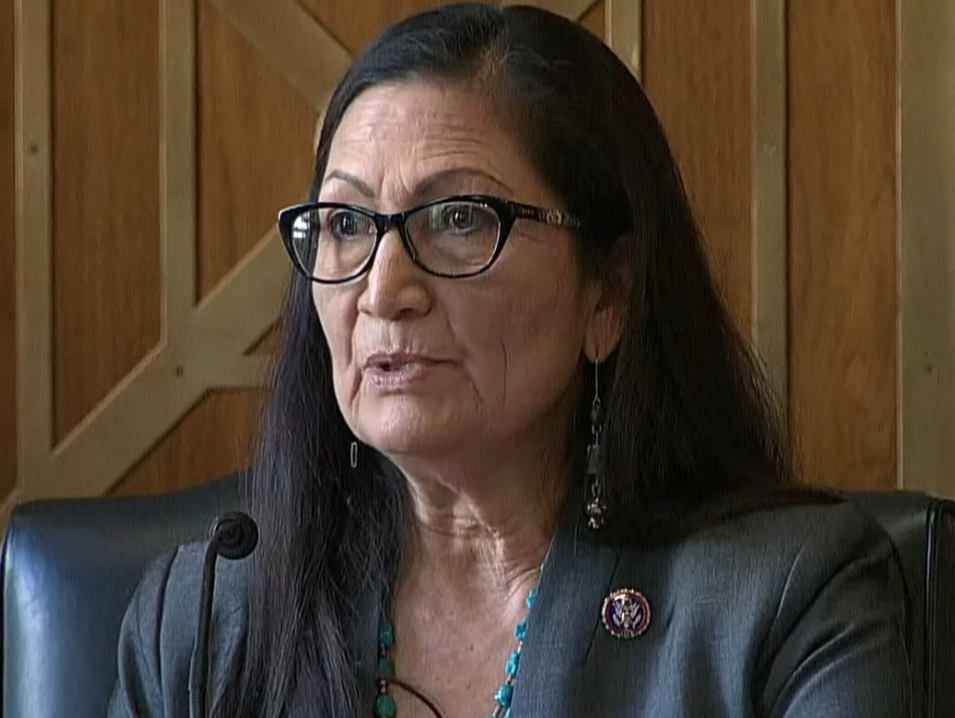
Deb Haaland (congressional photo)

Scott Braden, director of the Colorado Wildlands Project, calls it “a new day and a chance to really rebalance.”

He wants to see legislative initiatives like the Colorado public lands bill, the CORE Act, move through Congress. A compendium of public lands bills passed the U.S. House earlier this year but has not made much progress so far in the Senate.

“Is Deb Haaland going to be good for Colorado and our public lands and environmental and climate issues? I think absolutely and I think she’ll be keyed into the issues that folks in our state care about,” said Will Roush, executive director of the Wilderness Workshop, a public lands watchdog organization based out of Carbondale.

Roush said the discussion about possible reform of the oil and natural gas leasing system on public lands is long overdue.

“We’re not pretending there won’t be folks who object to it. At the same time, I think it’s great to see the administration — you know they ran on these issues and now they’re acting on them. And that seems to be the right move.”

The most concrete — and controversial — move President Joe Biden has made so far with public lands is his executive order temporarily halting oil and gas leasing, signed as part of a slate of orders addressing climate change.

The Western Energy Alliance has sued to undo it, as have a number of states. Colorado has not joined that lawsuit.

Kathleen Sgamma, president of the Western Energy Alliance, said she’s glad to hear Haaland say “the right things” about oil and gas remaining part of the US energy mix. Sgamma said royalties from oil and natural gas on federal lands help pay for conservation efforts through the Land and Water Conservation Fund, and more importantly, the law requires land managers to sell leases for appropriate areas.

But because of the lack of a timeline for the pause, Sgamma fears Biden’s temporary leasing halt is anything but.

“When you start to look at the impacts of those policies in the west,” she said, “it looks like it’s a sacrifice of Western jobs and economic opportunity to satisfy the environmental left.”  
  
North Apostle, West Apostle and more of the Sawatch range visible through a curtain of smoke from Taylor Park Reservoir on August 17, 2020. (Eric Lubbers, The Colorado Sun)

Sgamma points to an industry-funded study that shows Colorado could lose $586 million a year if the leasing moratorium stretches out for all of Biden’s first term. The state might also lose thousands of jobs — most of that felt in the Western Slope.

Haaland’s support for the Green New Deal during her time in Congress has made her a target of some Republicans, including Colorado Rep. Doug Lamborn who said via a tweet that Haaland is “an extremist.” But Democratic Sen. Michael Bennet is confident that Haaland will strike a balance similar to the approach Colorado has taken in recent years.

“I think if we’re going to continue oil and gas development on our public lands, then we need to do it the right way,” Bennet explained, “with high standards and low emissions and with individuals and local governments having a say in the process. I believe that’s what Colorado wants and I think that’s what Secretary Haaland will deliver.”

Like many previous Interior secretaries, including Coloradans David Bernhardt and Ken Salazar, Haaland is a Westerner. But unlike her predecessors, she also brings a tribal perspective to the table as a member of the Laguna Pueblo.

Bennet said he’s heard from leaders of the Southern Ute and the Ute Mountain Ute that they are excited about a future Haaland visit to listen to their concerns and priorities. Last week, Haaland traveled to Utah to meet with tribal leaders and others about the future of two contested National Monuments.

Ernest House Jr. is also looking forward to having different voices heard when it comes to public lands.

Want exclusive Colorado political news and analysis? Subscribe here to get The Unaffiliated, the twice-weekly political newsletter from The Colorado Sun.

House wears many hats: senior policy director for the Keystone Policy Center, a board member of Conservation Colorado and a member of the Ute Mountain Ute tribe.

“The consultation is really the big effort and opportunity, to intently listen, to bridge the gaps and meet with all the stakeholders at the table and ensure that the right voices are around the table. And I think that’s what she’ll bring to the position,” House said.

After the Trump administration, House also wants benchmarks for the Biden administration to be set high.

“We have taken so many steps back, in my opinion,” he explained, “So I think there’s so much we need to get back on track. We have lost time and we’re trying to make up for that time.”

But calls for action by some groups inevitably bring up concerns for others. For example, any new or expanded wilderness designations could come at the expense of grazing permit holders.

Still, if Coloradans hope Haaland keeps an open mind, many of them are keeping an open mind about a Haaland-led Interior.

Mark Roeber is a fourth-generation rancher whose family has been grazing cows and calves on public lands in west-central Colorado since before they were public lands. He’s also vice president of the Public Lands Council, an advocacy group for grazing leaseholders.

“We’ll just have to see how it goes. I’m not going to put out a verdict yet. but we are hopeful,” he said.

Roeber said he’s a strong advocate for multiple uses on public lands and he wants that to continue. He said ranchers see themselves as part of the solution, not the problem, when it comes to issues like climate change or 30-by-30, but it means having conversations and keeping an open mind about possible solutions.

He wants the Interior Department, regardless of who leads it or what administration is in the White House, to work in partnership with different stakeholders.

Democratic Sen. Bennet agrees, adding a balanced approach is all Coloradans are looking for. He’s hopeful that will be reflected in discussions about keeping BLM headquarters in Grand Junction or the future of the controversial Trump-era Uncompahgre Resource Management Plan, which Colorado and other groups are suing to invalidate.

“Our public lands are a national treasure,” Bennet said. “And we’ve got to take care of them because, I think, we’ve got a moral responsibility to pass [them] on to the next generation of Coloradans and Americans, just like our parents and grandparents passed them on to us.


Interior Secretary Deb Haaland

WASHINGTON — U.S. Dept. of the Interior Secretary Deb Haaland on Friday issued two Secretarial Orders that will prioritize action on climate change throughout the Department.

The first Secretarial Order, SO 3399, establishes a Climate Task Force to coordinate work across the Interior Department, including accelerating renewable energy development and identifying actions to foster investments in energy communities. The Order also provides guidance on how science should be used in the decision-making process and improves transparency and public engagement in the Department’s decision-making process. 

One key component of SO 3399 is the directive for the Interior Department to engage with tribes to seek their input through tribal consultation. The Order says, “Tribal consultation is a means to rectify this by recognizing the government-to-government relationship and considering Tribal interests in decision making.”

The Order additionally provides policy instruction to ensure that the level of National Environmental Policy Act (NEPA) analysis across DOI bureaus is not diminished, that climate change is appropriately analyzed, and that Tribes and environmental justice communities are appropriately engaged.  

"From day one, President Biden was clear that we must take a whole-of-government approach to tackle the climate crisis, strengthen the economy, and address environmental justice,” Interior Secretary Deb Haaland said. “At the Department of the Interior, I believe we have a unique opportunity to make our communities more resilient to climate change and to help lead the transition to a clean energy economy. These steps will align the Interior Department with the President’s priorities and better position the team to be a part of the climate solution.” 

The second Secretarial Order, SO 3398, seeks to rectify the reckless Secretarial Orders issued during the Trump administration. SO 3398 revokes a series of Secretarial Orders issued in recent years that are inconsistent with the Department’s commitment to protect public health; conserve land, water, and wildlife; and elevate science. Collectively, those Orders tilted the balance of public land and ocean management without regard for climate change, equity, or community engagement. The new Order does not impact the Interior Department’s ongoing review of proposals for oil, gas, coal, and renewable energy development on public lands and waters.

“I know that signing Secretarial Orders alone won’t address the urgency of the climate crisis. But I’m hopeful that these steps will help make clear that we, as a Department, have a mandate to act,” added Secretary Haaland. “With the vast experience, talent, and ingenuity of our public servants at the Department of the Interior, I’m optimistic about what we can accomplish together to care for our natural resources for the benefit of current and future generations.” 

Interior head Haaland revokes Trump-era orders on energy


BY MATTHEW DALY ASSOCIATED PRESS
APRIL 16, 2021


In this April 6, 2021, file photo, U.S. Interior Secretary Deb Haaland listens to tribal leaders and jots down notes during a round-table discussion at the Indian Pueblo Cultural Center in Albuquerque, N.M. Secretary Haaland will visit Utah this week before submitting a review on national monuments in the state. She's expected to submit a report to President Joe Biden after she meets with tribes and elected leaders at Bears Ears National Monument on Thursday, April 8, 2021. (AP Photo/Susan Montoya Bryan, File) SUSAN MONTOYA BRYAN AP


WASHINGTON

Interior Secretary Deb Haaland on Friday revoked a series of Trump administration orders that promoted fossil fuel development on public lands and waters, and issued a separate directive that prioritizes climate change in agency decisions.

The moves are part of a government-wide effort by the Biden administration to address climate change ahead of a virtual global summit on climate change that President Joe Biden is hosting next week.

“From day one, President Biden was clear that we must take a whole-of-government approach to tackle the climate crisis, strengthen the economy and address environmental justice,” Haaland said in a statement. The new orders will “make our communities more resilient to climate change and ... help lead the transition to a clean energy economy,'' she added.


The orders revoke Trump-era directives that boosted coal, oil and gas leasing on federal lands and promoted what Trump called “energy dominance” in the United States. Haaland also rescinded a Trump administration order intended to increase oil drilling in Alaska's National Petroleum Reserve.

Haaland called the orders by her predecessors, Ryan Zinke and David Bernhardt, “inconsistent with the department’s commitment to protect public health; conserve land, water, and wildlife; and elevate science.''

Collectively, the previous orders “tilted the balance of public land and ocean management without regard for climate change, equity or community engagement,'' Haaland said.

The new orders do not affect Interior's ongoing review of proposals for oil, gas, coal and renewable energy development on public lands and waters, she said.

Environmental groups heralded the orders and pledged to work with Haaland to ensure Interior Department decisions are guided by science and respect for Indigenous communities, wildlife, outdoor recreation and other uses.

More than 25% of all U.S. greenhouse gas emissions originate on public lands, and Interior has “unrivaled opportunities to restore natural carbon sinks, responsibly deploy clean energy and reduce existing emissions,'' said Collin O’Mara, president and CEO of the National Wildlife Federation.

“Rescinding the previous administration’s orders that encouraged unfettered drilling in ecologically and culturally sensitive areas and establishing a climate task force will help ensure wise management of our natural resources for people and wildlife alike,'' O'Mara said.

One of the orders issued by Haaland cancels a 2017 action that revoked a moratorium on federal coal reserve sales that had been imposed under President Barack Obama to deal with climate change.

Agency spokeswoman Melissa Schwartz said Friday’s move does not automatically resurrect the coal moratorium. “Today’s announcement does not take any action on coal development. We are continuing to review an appropriate path going forward,” she said.

The coal moratorium brought a sharp backlash by Republicans, who said it was evidence of a “war on coal” by Obama and other Democrats. The moratorium had little practical effect, however, since interest among companies in leasing large tracts of federal land dried up when coal markets collapsed over the last decade amid competition with cheaper natural gas.

The American Petroleum Institute, the oil industry's top lobbying group, warned that policies aimed at slowing or stopping oil and natural gas production on federal lands and waters could harm national security, environmental progress and the economy.

“Banning or greatly hindering federal leasing ... would threaten decades of American energy and climate progress and return us to greater reliance on foreign energy with lower environmental standards,'' said Kevin O’Scannlain, an API vice president.