Sunday, April 18, 2021

Suez Canal compensation claim is simply outrageous

For the sake of all involved, there must be a just — and rapid — settlement of insurance issues arising from the Ever Given grounding. A deliberately inflated demand helps nobody

16 Apr 2021

OPINION
Lloyd's List

Egypt is wrong to use the crew of the now world famous ship Ever Given as bargaining chips in the insurance claim related to the vessel becoming stranded in the Suez Can
al

Source: ITAR-TASS News Agency / Alamy Stock Photo


OFF THE RECORD, MANY MARINE INSURANCE PROFESSIONALS HAVE EXPRESSED ASTONISHMENT AT THE CHUTZPAH OF THE CLAIM BEING MADE BY EGYPT OVER THE EVER GIVEN.

THE television cameras — and with them the public gaze — have moved on from the Suez Canal.

With traffic flows back to normal, owners and operators not directly involved can be forgiven for thinking no more of the grounding of Ever Given last month.

But marine insurers have been left aghast at the Suez Canal Authority’s arrest of the boxship, as a means of putting leverage behind its blockbuster $916m compensation bill.

Given the delicacy of the situation, public comment is impossible, and the underwriting equivalent of omerta prevails.

Yet behind the scenes, the feeling is very much that the sum sought is not just silly, but simply outrageous.

What we are seeing may be, in sales parlance, a highball bid, proffered tactically in the expectation that insurers will try to beat it down.

There may also be an element of national pride at stake, not to mention genuine penury.

Egypt’s need for dollars is particularly acute now the pandemic has trashed tourism, leaving the key waterway as the country’s biggest foreign exchange earner.

As a publication based in London, also home to some of the insurers involved, it would be tone deaf not to factor in potential historical resonances.

Britain colonised Egypt in all but name after 1882, precisely on account of the canal, and invaded again in 1956, exemplifying Marx’s famous dictum that great events often recur the second time as farce.

The days when pith helmet-clad Brits with double-barrel surnames called the shots while blithely plundering the country’s immense architectural treasures are long gone, and there can be no question of dictating terms. Egypt is legally and morally entitled to a fair deal.

But the quest for close on a billion bucks is taking the mickey, to euphemistically paraphrase some of the comments marine insurance professionals have made in private.

Suez Canal revenue last year was $5.6bn. Divide that by 365, and that works out at around $15m a day.

The six-day shutdown caused by the Ever Given grounding does not necessarily mean six days’ loss of revenue, as most of the backed-up traffic eventually made the transit and paid the toll. But let’s not quibble; $100m should meet the tab.

Legitimate salvage expenses must be met. Let the SCA present an itemised account, which will presumably be in the order of tens of millions.

Some element by way of saying sorry for the aggro and the inconvenience is also arguably reasonable.

Tot everything up, and this is nothing that, say, $225m shouldn’t comfortably cover. Asking for four times that figure — including a $300m for a ‘salvage bonus’, whatever that might be, and a further $300m for ‘loss of reputation’ — is transparently petulant.

The sense that SCA is grandstanding is only heightened by the news that the crew are not able to leave the ship.

This is a row between the Egyptian government, the vessel’s owner, the vessel’s charterer, the cargo interests and the insurers.

It has nothing whatsoever to do with regular guys who work hard for a living, who could now be stuck on board for an extended period while wrangling between desk jockeys of various stripes goes on over their heads.

Unless there are any grounds to suggest culpable navigational error — and no-one has mentioned this possibility so far — they should be allowed to take recreation ashore, and fly home once their tour is concluded.

Seafarers are human beings, not bargaining chips. Most of them are Indian nationals in this instance, and we trust the Indian government will make suitable representations.

From a technical standpoint, American Bureau of Shipping has completed the necessary class surveys and declared Ever Given is fit to sail.

Now the industry now needs to know what happened and what lessons are to be learned. Accident investigations are ongoing, and flag state Panama must complete it with alacrity, and publish the findings as soon as possible.

General average has been declared, and the cargo interests have one hell of a legitimate grievance. Some 20,000 teu-worth of goods are still sitting in the Great Bitter Lake when they should have arrived at destination long ago.

It is in the interests of all concerned to seek rapid resolution of all outstanding concerns.

The UK Club has tabled what it describes as a carefully considered and generous counteroffer. Its size is undivulged, although it may be of the order we suggest above.

The constructive way forward stares everybody in the face; post suitable security; let the vessel finish its voyage; get the cargoes to the consignees; sign the crew off; get the arbitrators on the case; and work out a settlement everybody can live with.

What no rational person should want is for is for the matter to become needlessly politicised, dragging on for months or even years, to the common detriment of all. We can only urge Egypt not to go down that road.
Taiwan's Evergreen weighs options to transfer arrested Ever Given cargo

Author Sameer C Mohindru
Editor Norazlina Jumaat
Commodity Shipping
Topic Suez Canal

16 Apr 2021 | 08:48 UTC


HIGHLIGHTS

Cargo, ship insured separately

Indian crew stranded on ship

Ship fully operational


Singapore — Taiwan's Evergreen Marine Corp, operator of the containership arrested by the Suez Canal authorities and whose thousands of containers are stranded on it, is exploring the possibility of transferring the cargo to another ship, while compensation claims are presently disputed and sub judice.

Not registered?

Receive daily email alerts, subscriber notes & personalize your experience.Register Now

The Ever Given, an ultra large containership that was stuck in the Suez Canal for around six days last month, was formally arrested by the authorities there on April 13 over non-payment of claims of around $916 million.

"Evergreen is investigating the scope of [the] court order and studying the possibility of the vessel and the cargo on board being treated separately," the company said in a statement late April 15.

The Taoyuan-based container transportation and shipping company's plans are very important because if successful, will enable the release of millions of dollars worth of goods, which are meant to be delivered all over northern Europe.

However, maritime lawyers and insurance executives pointed out that such a segregation between the cargo and its ship, or even its crew is not easy. Typically, the insurer will prefer that the ship, cargo and also its crew be treated as a single entity instead of adopting a piecemeal approach. The ship has a protection and indemnity cover from the UK Protection and Indemnity Club.

"All stakeholders have to be on the same page, or else the entire matter will get more complicated," a maritime lawyer said.

Even if the Suez Canal Authority, or SCA, agrees to release the cargo against a security deposit or bank guarantee, eventually the Ever Given's owner, Shoei Kisen Kaisha, has to acquiesce as well, a maritime insurance executive added.


"The cargo is onboard the ship, and it can only be discharged with the owner's permission," he added.

The owner and the SCA could not be reached for comment.

POTENTIAL AGREEMENT

In order to lift the arrest order as soon as possible, Evergreen is urging all concerned parties to facilitate a settlement agreement, the company's statement said.

Prior to the arrest, such a settlement agreement could not be reached because the owner and its insurer considered the magnitude of the claim as very high and not fully supported -- including $300 million for notional damage on reputation, sources said.

"A carefully considered and generous offer was made to the SCA to settle their claim," the UK P&I Club said in a statement.

Evergreen's delivery of goods is indefinitely delayed and so the operator-cum-charterer wants the containers to be off-loaded and delivered to their intended destinations. The Ever Given's scheduled ports of call are Rotterdam, Antwerp and Hamburg and the containers were destined for locations across northern Europe.

However, according to protection and indemnity experts, such enroute discharge and reloading from a stranded ship usually happens if it is damaged in an accident. In this case, Ever Given's classification society, the American Bureau of Shipping, has issued a fitness certificate for it to move from Great Bitter Lake to Port Said where it is to be inspected again before proceeding with its voyage, sources said.

On the other hand, the charterer wants to meet its delivery commitments and generally the vessel itself and its cargo are insured separately.

Evergreen is doing its utmost to complete the deliveries entrusted by its customers and keep adverse impact at its minimum, its statement said. The UK P&I Club has insured the owner of Ever Given for certain third party liabilities that might arise from such incidents.

The ship is loaded almost to its capacity of just over 20,000 TEU, or Twenty-foot Equivalent Units, though most of the containers onboard are of 40 foot each.

DISPUTED CLAIM

A major concern, the reason why insurers avoid segregation of the cargo and ship, is the fate of the crew.

"Hypothetically, if a large security amount is deposited and the cargo is released and later something similar is done for the ship, it is the crew which will be held back until full and final payment," an insurance executive tracking such disputes said.

There have been instances in the past where a crew has been stuck at port for years due to such disputes as complete processing of such claims take a long time.

The UK P&I Club has stated that its priority is "fair and swift resolution of this claim to ensure the release of the vessel and cargo and, more importantly, her crew of 25 who remain on board".

During the meeting between the shipowner and SCA on April 12, no consensus was reached on the claims that are largely unsupported and lack detailed justification, Evergreen's statement said, citing information from the insurer.

When the grounding occurred, the vessel was fully operational with no defects in her machinery and equipment, and was manned by a competent and professional crew, UK P&I Club's statement added.
POLICE BRUTALITY

Anti-Black police brutality may lead to an armed insurgency in the US

To avoid violence, the country needs urgent reforms criminal justice system.
TEACHES SOCIOLOGY UNIVERSITY OF ALBERTA
4/17/2021


After George Floyd’s death at the hands of police in Minneapolis, protestors all over the United States demonstrated against police brutality. | Eduardo Munoz / Reuters

The killings of African Americans at the hands of police officers has continued unabated in the United States. In the past year, the deaths of Breonna Taylor in her bed and George Floyd by public asphyxiation are two of the most egregious.

As the officer who knelt on Floyd’s neck was being tried for the killing in court, another officer shot and killed Daunte Wright.

Scholarly research has begun to document the traumatic consequences of police killings on African Americans. One study finds the effects on Black males meet the “criteria for trauma exposure”, based on the latest edition of the Diagnostic and Statistical Manual of Mental Disorders, used for psychiatric diagnoses.

Besides police use of force in North America, one of the trajectories of my research focuses on armed insurgency in sub-Saharan Africa. I am beginning to observe in the United States some of the social conditions necessary for the maturation and rise of an armed insurgency. The United States is at risk of armed insurgencies within the next five years if the current wave of killings of unarmed Black people continues.
Conditions for insurgency

To begin, the armed insurgencies would not have a defined organisational structure. They may look like Mexico’s Zapatista movement or the Movement for the Emancipation of the Niger Delta in Nigeria.

Entities operating independently will spring up, but over time, a loose coalition may form to take credit for actions of organisationally disparate groups for maximum effect. There will likely be no single leader to neutralise at the onset. Like the US global counter-terrorism efforts, neutralising leaders will only worsen matters.


Using research and contextual experience from the developing world to make predictions about the US in this regard is apt. There are many interrelated conditions for the rise of an armed insurgency. None of them in and of itself can lead to an armed insurgency but requires a host of variables within social and political processes.

Transgenerational oppression of an identifiable group is one of the pre-conditions for an armed insurgency, but this is hardly news. What the US has managed to institute on a national and comprehensive scale is what sociologist Jock Young calls “cultural inclusion and structural exclusion”.

A strong sense of injustice, along with significant moments, events and episodes – like the killings of Taylor and Floyd – are also important.

Historically, police officers are not held to account for the extra-judicial killings of Black people.

The racialised trauma from police killings adds to the growing sense of alienation and frustration felt by African Americans, but police killings are not the only way they experience disproportionate death rates.

African Americans have the second-highest per capita death toll from the Covid-19 pandemic: 179.8 deaths per 100,000 (second only to Indigenous Americans with 256.0 deaths per 100,000). They are also at a higher risk of death from cancer, for example. The pandemic has compounded these deaths, adding to the disproportionately high unemployment rate and the impact of layoffs during the pandemic.
Potential insurgents

There is another, related variable: the availability of people willing and able to participate in such insurgency. The US has potential candidates in abundance. Criminal records – sometimes for relatively minor offences – that mar Black males for life, have taken care of this critical supply. One study estimates that while eight per cent of the U.S. general population has felony convictions, the figure is 33% among African American males.

Some of these men may gradually be reaching the point where they believe they have nothing to lose. Some will join for revenge, others for the thrill of it and many for the dignity of the people they feel have been trampled on for too long. Although 93% of protest against police brutality is peaceful and involves no major harm to people and property, there is no guarantee that future protests about new police killings will remain peaceful.

The legitimacy of grievances of Black Americans among their fellow citizens is also an important variable. Their grievances appear to have found strong resonance and increasing sympathy within the broader population. Many Latino, Native American and white people see the injustices against Black people and are appalled. Black Lives Matter protests are now major multicultural events, particularly among young adults.

A sense that there are no legitimate channels to address the grievances or that those channels have been exhausted is also crucial. This is evident in the failure to convict or even try police officers involved in several of the incidents. A grand jury could not indict the officer whose chokehold led to the death of Eric Garner, despite video evidence. Such cases have led to a troubling loss of trust in the criminal justice system.
Mode of operation

Any anti-police insurgency in the US will likely start as an urban-based guerrilla-style movement. Attacks may be carried out on sites and symbols of law enforcement.

Small arms and improvised explosive devices will likely be weapons of choice, which are relatively easy to acquire and build, respectively. The US has the highest number of civilian firearms in the world with 120.5 guns per 100 persons or more than 393 million guns.

Critical infrastructure and government buildings may be targeted after business hours. The various groups will initially seek to avoid civilian casualties, and this may help to garner a level of support among the socially marginal from various backgrounds. The public would be concerned but relatively secure in understanding that only the police are being targeted. Escalation may ensue through copycat attacks.

The US government will seem to have a handle on the insurgency at first but will gradually come to recognise that this is different. African American leaders will likely be helpless to stop the insurgency. Anyone who strongly denounces it in public may lose credibility among the people. Authenticity would mean developing a way to accommodate the insurgents in public rhetoric while condemning them in private.
Moving forward

I am often amazed that many people appear unaware that Nelson Mandela was co-founder of uMkhonto we Sizwe, the violent youth wing of the African National Congress, which carried out bombings in South Africa. The rationale provided in court by Mandela regarding his use of violence is instructive.

Mandela told a South African court in 1963:

I did not plan it in a spirit of recklessness, nor because I have any love of violence. I planned it as a result of a calm and sober assessment of the political situation that had arisen after many years of tyranny, exploitation, and oppression of my people…. We chose to defy the law. We first broke the law in a way which avoided any recourse to violence; when this form was legislated against, and then the government resorted to a show of force to crush opposition to its policies, only then did we decide to answer violence with violence.

To predict that an armed insurgency may happen in the US is not the same as wishing for it to happen: it is not inevitable and it can and should be avoided.


Police reform is a first step. A comprehensive criminal justice overhaul is overdue, including addressing the flaws inherent in trial by jury, which tends to produce mind-boggling results in cases involving police killings. Finally, the judgment in the trial of Derek Chauvin for George Floyd’s death will have an impact on the trajectory of any possible future events.


        Report: US at Risk of Armed Anti-Police Insurgency within Five Years

TEHRAN (FNA)- Temitope Oriola, an expert in armed insurgency in sub-Saharan Africa, issued a chilling warning that the US may soon witness its own armed insurgency if significant police and criminal justice reform is not enacted quickly.

Oriola is the joint Editor-in-Chief of the African Security journal and associate professor at the University of Alberta. Based on his years of experience studying armed uprisings across the globe, he now believes that the US is potentially on the brink of disaster. 

In an article published in The Conversation, he cites recent examples including the shooting death of Breonna Taylor, the asphyxiation death of George Floyd and the shooting death of Daunte Wright during a traffic stop as examples of deteriorating sociopolitical conditions for African Americans.

Without significant intervention and reform, Oriola believes the social conditions in the US may well lead to an armed insurgency within the next five years, and posits an anti-police insurgency as the most likely to occur.

After examining the development of the Zapatista uprising in Mexico, or militant insurgencies in the Niger Delta in Nigeria, Oriola believes were such an armed uprising to take place in the US, it would begin with disparate groups who would gradually form some sort of loose coalition with no centralized leadership. This decentralized power structure already exists in social justice movements like Antifa, for example.

Oriola highlights the fact that one direct root cause is insufficient for such armed uprisings to take shape, rather that a number of social, political and economic factors must coalesce simultaneously in order for the balance to tip in favor of organised insurgency. 

He points to “transgenerational oppression of an identifiable group” as one such precursor which, combined with an overriding sense of ongoing injustice and numerous flashpoints of police brutality, provides sufficient kindling for the situation to reach the point of armed conflict. 

Repeated group “radicalized” trauma in the form of police killings and other forms of brutality, combined with disproportionately bad healthcare outcomes for African Americans, in areas such as COVID-19 and cancer survival rates, add further fuel to the fire, in Oriola's estimation.

These poor healthcare outcomes exacerbate the already precarious employment numbers among the African American community, which has consistently struggled economically throughout US history. 

Oriola next highlights the disproportionately high rate of incarceration among the African American community as providing a willing and able source of recruits for any potential insurgency.

Some estimates indicate that eight percent of the overall US population has felony convictions on their records, but this skyrockets to 33 percent when examining the African American community in isolation. 

“Any anti-police insurgency in the US will likely start as an urban-based guerrilla-style movement,” Oriola suggests.

He adds that attacks would be sporadic at first, and would employ small arms and Improvised Explosive Devices, predominantly targeting symbols of law enforcement. 

This was to a certain extent already foreshadowed in the summer of 2020 in the wake of the murder of Floyd, with numerous “autonomous zones” established in cities like New York, Seattle and Portland (Oregon), on top of months of riots sprawled across media coverage of the wider, mostly peaceful BLM protests. 

To make matters worse, Oriola highlights the fact that the US has “the highest number of civilian firearms in the world, with 120.5 guns per 100 persons or more than 393 million guns”.

Worryingly, Oriola posits that, as the situation deteriorates, African American leaders will be powerless to stop the escalating violence as the government slowly comes to grips with the outbreak of an armed insurgency.

Oriola cites the words of Nelson Mandela during his trial in a South African court in 1963 as precedent for what may be about to occur in the US in the coming years.

“I did not plan it in a spirit of recklessness, nor because I have any love of violence. I planned it as a result of a calm and sober assessment of the political situation that had arisen after many years of tyranny, exploitation, and oppression of my people….” Mandela said, prior to his incarceration. 

“We chose to defy the law. We first broke the law in a way which avoided any recourse to violence; when this form was legislated against, and then the government resorted to a show of force to crush opposition to its policies, only then did we decide to answer violence with violence,” he continued.

Oriola cautions, however, that such a (for now) hypothetical US insurgency is not inevitable and is, in fact, avoidable with sufficient police and criminal justice system reform. He also suggests that the outcome of the Derek Chauvin trial for the alleged murder of Floyd will prove crucial to the trajectory of the socio-political situation in the US for years to come.


Defense expert in Derek Chauvin trial faces Maryland lawsuit

The former chief medical examiner for Maryland who testified on behalf of the officer accused of killing George Floyd is a defendant in a federal lawsuit over the death of a man who died under circumstances similar to Floyd

VIDEO Closing arguments set for Monday in Derek Chauvin’s trial

BALTIMORE -- The former chief medical examiner for Maryland who testified on behalf of the officer accused of killing George Floyd is a defendant in a federal lawsuit over the death of a man who died under circumstances similar to Floyd.

Dr. David Fowler was chief medical examiner in Maryland for 17 years before retiring in 2019.

He served as a key defense witness for Officer Derek Chauvin. Fowler testified that he would have ruled Floyd's cause of death as “undetermined” rather than homicide. He also testified that Floyd's heart disease contributed to his death, contradicting prosecution experts who cited asphyxiation as a result of Chauvin's knee being pressed into Floyd's neck for more than nine minutes.

The case bears similarities to that of 19-year-old Anton Black, who died in 2018 while in police custody on Maryland's Eastern Shore. A federal lawsuit filed in Baltimore alleges that officers with the Greensboro police department and nearby agencies kept their weight on Black for several minutes even after he was prone and handcuffed.

The lawsuit alleges that the officers' actions caused Black to die of asphyxiation. It alleges that Fowler and the medical examiner who conducted Black's autopsy intentionally covered up for police by ignoring evidence of asphyxiation and playing up other factors that supported the police narrative.

The Maryland Attorney General's Office is representing Fowler and filed a motion earlier this month seeking to have the lawsuit against him dismissed. A hearing has not yet been scheduled.

FedEx’s Phone Policy Meant Workers Were Unable to Reach Families After Shooting
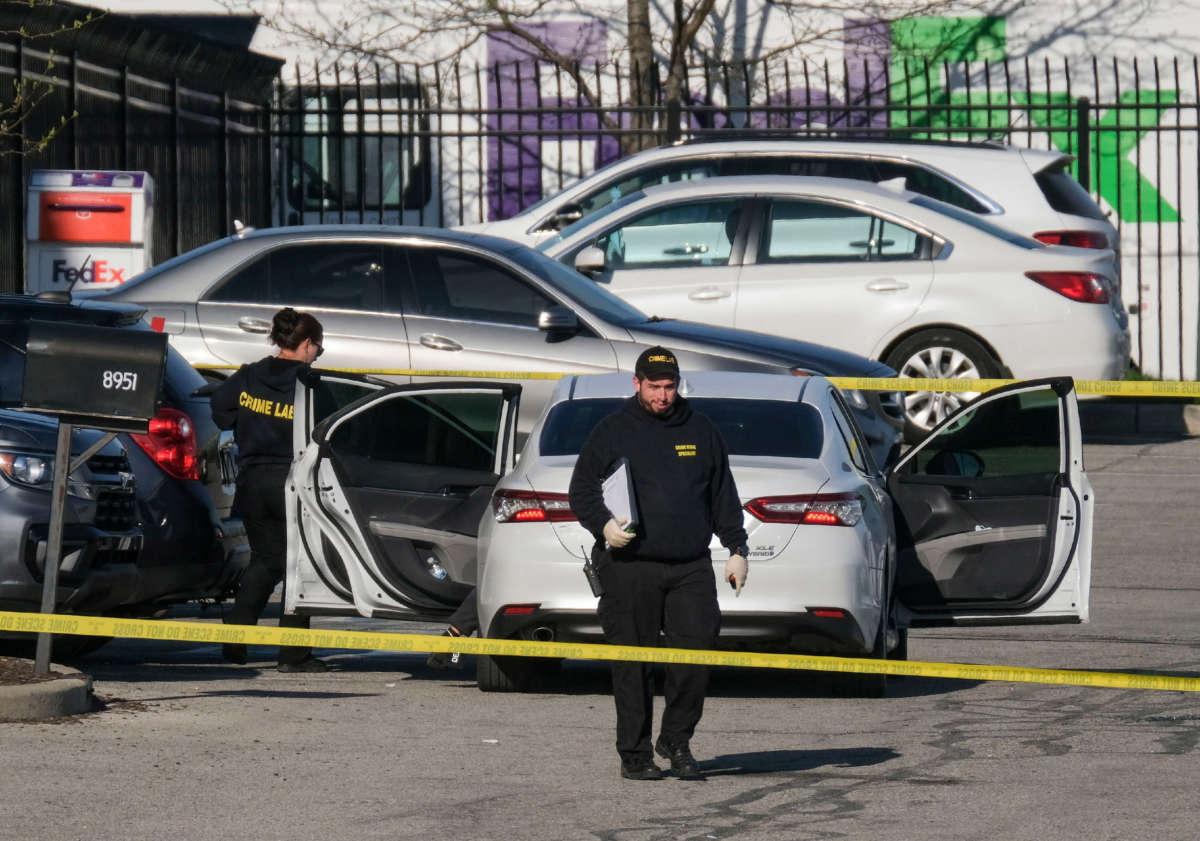
Crime scene investigators walk through the parking lot of the mass shooting site at a FedEx facility in Indianapolis, Indiana, on April 16, 2021.
JEFF DEAN / AFP VIA GETTY IMAGES

PUBLISHED
April 16, 2021

A gunman opened fire at a FedEx facility in Indianapolis, Indiana, Thursday evening, killing at least eight individuals.

All eight who were killed were employees of the company. Multiple other individuals were also injured in the shooting and taken to hospitals in the area. The gunman reportedly died of a self-inflicted gunshot wound, authorities said.

The shooting happened around 11 pm Thursday evening. The shooter’s motives and connection to the facility were not immediately clear. “With less than 12 hours since the shooting, it would be premature to speculate” on what the shooter’s motive was at this time, said Paul Keenan, special agent in charge of the FBI Indianapolis Field Office.

One witness described the shooter as using an automatic weapon of some kind. It’s believed that the individual was acting alone.

For some time, loved ones of the FedEx workers were unable to find out whether their friends or family members were victims of the shooting, The Indianapolis Star reported, because of a FedEx policy prohibiting employees from carrying cell phones with them at work.

“It is hard because if my friend had a phone, he would be able to contact me right away,” said Jose Lopez, a friend of someone who works at the Indianapolis FedEx facility. “Even if it’s a message with one letter, you know he is living.”

The company has said it is reviewing the policy in the aftermath of the mass shooting that took place on Thursday night.

According to analysis from CNN, which defines a mass shooting as a “shooting incident that results in four or more casualties (dead or wounded),” there have been 45 such shooting events in the U.S. over the past month.

Attorney General Merrick Garland has been briefed on the situation, a source in the Justice Department told ABC News. President Joe Biden was also briefed on the matter on Friday morning, and issued a statement later in the day regarding the tragedy.

Biden ordered the nation’s flags lowered out of remembrance of the victims, noting he had taken the same action very recently for a different mass shooting.

“I have the solemn duty of ordering the flag lowered at half-staff at the White House, public buildings and grounds, and military posts and embassies, just two weeks after I gave the last such order,” Biden said in his statement.
Indianapolis’ Sikh community calls for U.S. gun reforms after FedEx shooting

By Casey Smith And Rick Callahan The Associated Press
Posted April 17, 2021 

‘What is going on?’: Family members react after shooting at FedEx facility in Indianapolis leaves 9 dead, several injured


Members of Indianapolis’ tight-knit Sikh community joined with city officials to call for gun reforms Saturday as they mourned the deaths of four Sikhs who were among the eight people killed in a mass shooting at a FedEx warehouse.

At a vigil attended by more than 200 at an Indianapolis park Saturday evening, Aasees Kaur, who represented the Sikh Coalition, spoke out alongside the city’s mayor and other elected officials to demand action that would prevent such attacks from happening again.

“We must support one another, not just in grief, but in calling our policymakers and elected officials to make meaningful change,” Kaur said. “The time to act is not later, but now. We are far too many tragedies, too late, in doing so.”

The attack was another blow to the Asian American community a month after authorities said six people of Asian descent were killed by a gunman in the Atlanta area and amid ongoing attacks against Asian Americans during the coronavirus pandemic.

About 90% of the workers at the FedEx warehouse near the Indianapolis International Airport are members of the local Sikh community, police said Friday.


READ MORE: 9 dead, including gunman in shooting at Indianapolis FedEx facility: police

Kiran Deol, who attended the vigil in support of family members affected by the shooting, said loopholes in the law that make it easier for individuals to buy guns “need to be closed now,” and emphasized that anyone who tries to buy a firearm should be required to have their background checked.

“The gun violence is unacceptable. Look at what’s happened … it needs to be stopped,” Deol said. “We need more reform. We need gun laws to be harder, stronger, so that responsible people are the ones that have guns. That’s what we want to bring awareness to.”

Satjeet Kaur, the Sikh Coalition’s executive director, said the entire community was traumatized by the “senseless” violence.

“While we don’t yet know the motive of the shooter, he targeted a facility known to be heavily populated by Sikh employees,” Kaur said.

 
There are between 8,000 and 10,000 Sikh Americans in Indiana, according to the coalition. Members of the religion, which began in India in the 15th century, began settling in Indiana more than 50 years ago.

One of the victims of Thursday night’s shooting was Amarjit Sekhon, a 48-year-old Sikh mother of two sons who was the breadwinner of her family.

Kuldip Sekhon said his sister-in-law began working at the FedEx facility in November and was a dedicated worker whose husband was disabled.

“She was a workaholic, she always was working, working,” he said. “She would never sit still … the other day she had the (COVID-19) shot and she was really sick, but she still went to work.”

In addition to Sekhon, the Marion County Coroner’s office identified the dead as: Matthew R. Alexander, 32; Samaria Blackwell, 19; Amarjeet Johal, 66; Jasvinder Kaur, 50; Jaswinder Singh, 68; Karli Smith, 19; and John Weisert, 74.

Kuldip Sekhon said his family lost another relative in the shooting — Kaur, who was his son’s mother-in-law. He said both Kaur and Amarjit Sekhon both began working at the FedEx facility last year.


READ MORE: Former FedEx worker behind Indianapolis mass shooting was on FBI’s radar last year

“We were planning to have a birthday party tonight, but now we’re here instead. This … this is tough for us,” Sukhpreet Rai, who is also related to Kaur and Sehkon, said Saturday. “They were both very charming.”

Komal Chohan, who said Amarjeet Johal was her grandmother, said in a statement issued by the Sikh Coalition that her family members, including several who work at the FedEx warehouse, are “traumatized” by the killings.

“My nani, my family, and our families should not feel unsafe at work, at their place of worship, or anywhere. Enough is enough — our community has been through enough trauma,” she said in the statement.

The coalition says about 500,000 Sikhs live in the U.S. Many practicing Sikhs are visually distinguishable by their articles of faith, which include the unshorn hair and turban.

The shooting is the deadliest incident of violence collectively in the Sikh community in the U.S. since 2012, when a white supremacist burst into a Sikh temple in Wisconsin and shot 10 people, killing seven.

In Indianapolis, police said Brandon Scott Hole, 19, a former worker at the FedEx facility killed eight people there before killing himself. Authorities have not released a motive.

Police: Suspect in FedEx Shooting Used Two Assault Rifles He Bought Legally


2021-April-18 

TEHRAN (FNA)- The suspect in a mass shooting at a FedEx facility in Indianapolis, Ind., used two assault rifles during the attack that he purchased legally, police announced Saturday.

Brandon Scott Hole, 19, allegedly open fire on a Fedex facility late Thursday evening, resulting in the deaths of eight people. He was identified as the suspect by Friday afternoon, The Hill reported.

The Indianapolis Metropolitan Police Department confirmed on Twitter that Hole was “witnessed using assault rifles in the assault”.

The Bureau of Alcohol, Tobacco, Firearms and Explosives (ATF) traced the two weapons, and found that Hole legally purchased them in July and September of 2020.

The update comes after the FBI revealed that Hole's mother in March of 2020 warned that her son might try to commit "suicide by cop".

The Indianapolis Metro Police Department last year placed Hole “on an immediate detention mental health temporary hold” after officials received the warning, according to the FBI.

The FBI investigated after a shotgun was uncovered in Hole's bedroom, which was not returned to him following interviews.

Indianapolis Police Chief Randal Taylor told The New York Times that Hole's ability to legally purchase a gun despite his mother's warning meant that he was not subjected to the state's "red flag" law, which prohibits those deemed a risk by a judge from possessing a firearm.

Hole, a former FedEx employee, drove into the parking lot of the facility and began opening fire. He then went inside the building, where he shot himself before officers arrived, according to police.

Deputy Police Chief Craig McCartt noted Friday that about 100 employees were present at the facility during the shooting.

The victims were identified as 32-year-old Matthew Alexander, 19-year-old Samaria Blackwell, 66-year-old Amarjeet Johal, 64-year-old Jaswinder Kaur, 68-year-old Jaswinder Singh, 48-year-old Amarjit Sekhon, 19-year-old Karlie Smith and 74-year-old John Weisert.

Four members of the Sikh community were killed, prompting the Sikh Coalition to call for an investigation into whether racial bias played a role in the attack.

Hole’s family issued a statement on Saturday apologizing for the “pain and hurt” the victims' families feel.

The shooting in Indianapolis came after a mass shooting in Boulder, Colo., left ten dead in March.

The Gun Violence Archive on Friday recorded 45 shootings in the US in the past month alone, and 147 overall this year.

President Joe Biden has previously called on Congress to pass gun control legislation, including banning assault-style weapons. Earlier this month, he unveiled multiple executive actions addressing the issue.


There is No Substitute for the Rank and File: Thoughts on Amazon Unionization


The Bessemer Amazon union was defeated by an almost 2-1 margin. This wasn’t just due to tactical mistakes. It’s due to a top-down, bureaucratic union model. To take on Amazon’s colossal strength, there is no substitute for the power of a combative rank-and-file movement.


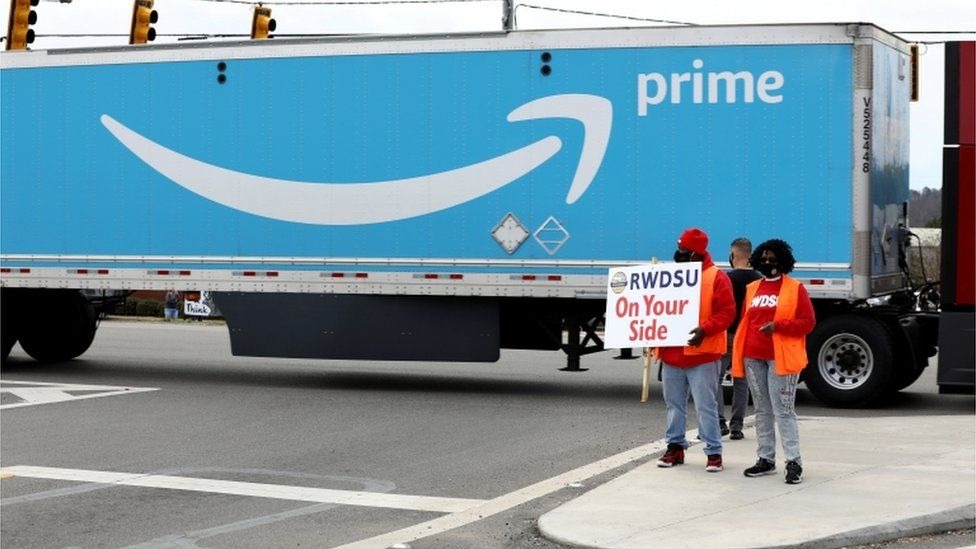
Photo credit: Reuters.

The Bessemer Amazon unionization effort was full of potential. It held the promise of a union bringing together the Black Lives Matter movement and a struggle for labor rights in order to take on one of the biggest, most odious corporations in the country. Maybe a Southern state would set off a movement again, like West Virginia and Oklahoma kicked off the teachers’ spring. 

Alongside Left Voice comrades, I decided to go to Bessemer, Alabama the week before voting ended. As I prepared to go, I had a weird feeling. I kept looking at interviews and I saw just two Amazon workers, over and over and over. They were great spokespeople, no doubt. But where were the other 5,698 workers? 

I know what a dynamic workers struggle looks like. There are usually worker-led actions with tons of workers full of rage and willing to talk about their fight. That certainly was the case at some of the workers’ struggles I reported from over the past few years: the Hunts Point strike in New York City, the Oklahoma teachers’ strike, and the Hilton unionization effort before that. And when I lived in Brazil, I saw workers take more radicalized action: a bus drivers strike where the bus drivers broke the mirrors of the buses driven by scabs and blocked a major highway. Whether more radicalized or not, the air around all these struggles is the same: workers full of class hatred and conviction in their strength in the fight and in solidarity with each other. 

Left Voice is hosting a panel with Bessemer Amazon worker and Black liberation activist and Robin D.G. Kelly, author of Hammer and Hoe to Black struggle and the labor movement.  Sign up and RSVP to the Facebook event.

In the weeks prior to my arrival in Alabama, I emailed the Retail, Wholesale, and Department Store Union (RWDSU) to ask for an interview with a worker. No response. While the big press was getting interviews, independent media didn’t seem to. Even Jacobin didn’t have one. Where were the workers? And if the workers weren’t activated, this didn’t bode well for the union. 

Upon arrival, I went canvassing with DSA and Socialist Alternative members. I was impressed — it’s not everyday a union allows leftists to organize their canvassing. I saw tons of support in the community, especially the Black community. 

But I didn’t see any workers canvassing.

The next day, I went to the door of the Amazon warehouse. We stood outside and waved signs in solidarity with the union. I noticed how quickly the traffic lights changed, making it hard to cross the street and certainly to talk to workers. After all, Amazon had petitioned the city to change the timing of the traffic lights, an absurd example of the state “managing the common affairs of the whole bourgeoisie,” as Marx and Engels put it in The Communist Manifesto. By law, we were only allowed to stand three people to a curb. I noticed the cops circling the warehouse. The next day, some of my Left Voice comrades got harassed by the police for stepping on the grass in front of Amazon. Turns out Amazon hired off duty cops to patrol the facility. 

There is a lot of repression, I thought. What must it be like inside the warehouse? And also, where are the workers? Shouldn’t they be standing out here, in a show of strength? I asked one of the staffers who said it’s the explicit strategy of the RWDSU not to have very many workers in the forefront. After all, Amazon may fire someone or retaliate.

Maybe that’s true. Maybe organizers want to play closer to the chest. Sometimes you have to organize in secret, especially when there is so much repression. Maybe there were workers canvassing at every workers’ house. Maybe there are secret Zoom meetings by shift with hundreds, even thousands of workers. Maybe the rank and file is mobilized behind the scenes. But I remember my comrade who unionized his own workplace saying, “The most important thing before a union vote is for the anger at the bosses to be stronger than the fear.” The RWDSU was accepting the fear as natural and organizing around the fear. The union seemed to be organizing to just sneak by, not mobilize workers to stand up to the bosses together and fight together. In fact, the opposite from what the RWDSU staffer said is often true — the more public demonstrations, the less likely it is the boss can retaliate.

That’s especially true with all the national support, all the workers who traveled to Alabama — shouldn’t they be speaking to the Amazon workers? A comrade who is a nurse had traveled to Bessemer a few weeks prior to stand in solidarity. He wasn’t introduced to any workers. Why didn’t the union take an active role in making connections between essential workers? Why didn’t it create mobilizations of other RWDSU rank-and-file workers and Bessemer Amazon workers to stand together in solidarity, discuss and engage in actions together? It would strengthen the struggle to know that workers across the country are standing with them.

It was really difficult to find Amazon workers to speak to. 

I asked around for Amazon workers, and folks directed me to the union, and the union was giving us the runaround. And we didn’t want to hear just from the leaders. We wanted to hear from the rank and file of the movement as well. But we weren’t able to get in touch with either. 

Maybe we could go to the Waffle House near the Amazon warehouse and just camp out all day? Maybe that way we’ll meet workers. This plan almost happened. But a friend was able to put us in contact with a family member dating an Amazon worker. Success. And then an activist we met in Birmingham had a friend, an activist from the movement who works at Amazon — Frances Wallace. We scheduled the interviews.

Later, it was  announced that Bernie Sanders was coming to town. Part of me was surprised the event was in Birmingham, about 30 minutes away from the warehouse in Bessemer. But as everyone seems to have a car in Alabama, maybe it wasn’t a big deal. Surely there will be a lot of workers at this, my comrades and I think. 

But when we went to the event, there was a huge crowd of reporters, folks from Our Revolution, DSA, and Socialist Alternative. There were only about a dozen workers. After the speeches, we rushed to try to talk to some of the workers, who were quickly whisked away by union leaders for a meeting with Sanders. I got yelled at by a reporter who was talking to another worker. Apparently, she wanted an “exclusive.” My first competitive labor reporting experience. And it was competitive because there were way more reporters than workers. 

In fact, in the press, there seemed to be a normalization of the fact that the workers weren’t the faces of the movement. Staffers and even members of Our Revolution ended up on New York Times covers. Go back and check — most of the images of the Amazon unionization in Bessemer aren’t actually of Amazon workers. 

Finally, we spoke to two Amazon workers. Both voted yes on the union, but neither had any contact with the union other than text messages. Neither had a house visit or a face-to-face discussion with some of the core organizers. They didn’t know of any organizing the union did other than standing outside the warehouse.

We spoke with Frances, who is on medical leave and is an activist in the Black Lives Matter movement. They have been arrested almost a dozen times and is an activist and self-identified revolutionary. They are 20 years old and a born leader and organizer. Among the nearly 1,000 workers who did vote for the union, there must be a dozen workers like Frances that could have been engaged in a more militant campaign.

Our second interview was anonymous. They and their partner drove out to our Airbnb from Bessemer. Their partner is supportive of the union and of speaking out — that’s why they made the time. They watch the kids in the car while the Amazon worker sat with a few comrades and me to chat. The Amazon worker chose to be completely anonymous. Their partner balked and protested, but they say, “I got kids, you know. I can’t do just anything.” The fear of retribution is real.

I ask Frances and the anonymous Amazon worker if they can hook us up with co-workers. They don’t know their co-workers. Between Covid restrictions and the revolving door of employees, they don’t know their co-workers. It’s a stark difference with the miners that went on strike just a week later. One of the miners we interviewed said, “We had New Year’s Eve dinner underground, Christmas dinner underground, me and my friends, me and my brothers.” The brutal labor conditions in the mine bring them into physical proximity. In the past, that created a combative miners’ movement. The brutal labor conditions at Amazon keep them apart. 

And even on the last day of the vote, people were still far apart from each other. 

A Postmortem

After the union’s staggering defeat in the vote count, union president Stuart Applebaum is still painting the unionization effort with rose-colored glasses. He’s wrong. This was a defeat, and it’s a high-profile setback for the labor movement as a whole. That doesn’t mean the labor movement is crushed forever, or that Amazon will never be unionized. But let’s call a spade a spade. 

We shouldn’t, however, normalize or underestimate the kitchen sink of legal and illegal mechanisms thrown at the workers. After all, Amazon, like Walmart, has become one of the biggest and wealthiest corporations in the United States by having a revolving door of non-unionized labor. It’s a central part of their labor model, of the way they extract surplus value from workers. It’s what made them the wealthiest corporations in the world. 

It’s disgusting, really, that the wealthiest man in the world and the second-largest corporation in the United States have workers peeing in bottles, working in the Alabama heat without so much as fans, breaking their bodies for the profits of Jeff Bezos. It’s dystopian to hear Amazon say Black Lives Matter while Black workers destroy their bodies for Bezos’ profits; it’s the most repulsive gaslighting to hear the Wall Street Journal say that workers like their working conditions and just didn’t see the need for a union. 

It’s so hard to unionize as a result of incredibly restrictive labor laws. This is the direct result of decades of Democrats and Republicans passing and upholding anti-union laws. These laws are passed without resistance,and have undermined unions and unionization efforts for decades. This is the direct result of the fact that the union leaderships are tied to the Democratic Party. These laws came alongside a strong ideological offensive against unions that treats workers’ organizations as if they are little more than the sum of their bureaucratic leaderships and demonizes the collective organization of the labor force. This is in large part the result of tying labor to the state through the National Labor Relations Act. As James Hoff explains in Left Voice, the impact of the NLRA was “the creation of a legalistic framework that brought labor and labor unions into the fold of the maintenance of capitalist production … Because the continued existence of unions had been made into a largely legislative issue, union nationals and their bureaucratic leaderships began to pour untold amounts of energy, money, and ideological efforts into lobbying and supporting imperialist Democratic Party politicians to maintain and increase legal rights for unions.” The legalistic framework of the NLRA and the Taft-Hartley Act that amended it has resulted in a weakened labor movement, and by adding untold levels of bureaucratization to the process of unionization has ultimately made it harder for workers to form unions.

As Charlie Post put it, the NLRB has “overseen, and often facilitated, the near total collapse of private sector unionism, and state legislators across the country have launched a new offensive against the last bastion of unionism in the United States — the public sector.”

While Biden wants to act like the most pro-union president in history, he can’t hide from his neoliberal past or that of his party. In the past year, shit really hit the fan — people went out burning police stations and right-wingers tried to storm the Capitol. As unions have shrunk in size and influence, sectors of the working class have deserted the Democratic Party, either not voting or voting for Donald Trump. Neoliberalism created left and right polarization and Biden sees it as his job to create a new center. And what better way to do that than top-down unions that funnel people back into the Democratic Party and tame the most radical elements of the labor movement? Of course, unions don’t need to be that way, but they certainly have been over the past decades. 

There is No Substitute for the Working Class 

The truth is that Amazon workers were notably absent from the unionization struggle. The thousands of workers in the warehouse — or even a vanguard of hundreds — just weren’t mobilized in any noticeable way. Jane McAlevey has the much-shared postmortem in The Nation. But in her assessment it seems like a list of tactical problems — like the union just forgot to mobilize the workers. I think the problem is deeper.

Business unionism has become the model since the post-World War II era — creating unions focused on providing services for workers. Workers are, at best, clients. Unions, on the one hand, provide services, and on the other tell workers that their power is not in their ability to strike, but in their ability to vote for the Democrats. Unions have become a wing of the Democratic Party — using vast resources to tie the fate of the working class to the Democrats. This is what Mike Davis calls the “barren marriage of American labor and the Democratic Party.” In Prisoners of the American Dream he explains, “The harnessing of industrial unionism to renovate the vote-gathering machinery of the Democratic Party was an effective instrumental relationship in one direction only.” And we all know what direction that is. This comes with a radical shift away from almost any form of militant action — since the appeal is to the Democratic Party, militancy is off the table. 

The unions have built an army of staffers; many genuinely want to play a role in the labor movement and want to empower the rank and file. But instead, they end up overworked and stuck organizing workers to canvass for Democrats. One of my comrades told me that UNITE HERE union had much of its unionized workforce laid off during the pandemic. The union didn’t pour resources into fighting those layoffs. Instead, it flew workers to other states to campaign for Biden.

This barren marriage between labor and the Democratic Party is exemplified by this Amazon unionization campaign. It substituted the protagonism of rank-and-file workers with big-name Democrats. Again, the RWDSU attempted to teach workers the same lesson: that their power is with the Democrats, with Joe Biden or Stacey Abrams. It was explicit, with the countless signs of Stacey Abrams flexing her muscle telling workers to vote yes at a picket line with no workers. And this is a losing strategy for workers. It has been a losing strategy since the beginning. It isn’t a loss for Democrats, though, who now can pretend they are on the side of the working class in an immensely popular labor struggle. 

But of course, union leadership knows this. McAlevey’s article is a unionizing 101 manual. And yet, the RWDSU leadership didn’t organize that way. Perhaps it is because an organized, combative, Black workforce isn’t so easy to reign in. But what we do know is that this is a strategy that has lost over and over — and continuing to use it against Amazon’s sophisticated anti-union campaign just invites a loss. 

If you read Jacobin, with the exception of some articles you would think the solution isn’t to mobilize the rank and file more but that it’s the PRO Act. This is another problematic conclusion that is not based on developing class struggle or the self-organization of a combative working class. It doesn’t pose the perspective or organization to overcome the narrow confines of the NLRB that ties the labor movement to the state. Or worse, the DSA is calling to vote for progressive Democrats who support the PRO Act — more faith in the barren marriage of Democrats and labor. 

But to win, there is just no substitute for the working class. 

Now What? 

Jacobin article explains that there is a phenomena of “laborism without labor” — a phrase that perfectly embodies the Amazon unionization struggle. Hundreds of progressives all over the country held solidarity rallies. Even the capitalist media wrote favorably about this unionization effort. But it didn’t help advance the self-organization of workers. It didn’t leave behind a network of hundreds of Amazon workers in Bessemer connected to workers all over the country. It didn’t leave behind the bonds of hundreds of Amazon workers who know all of the workers on their shift, and who are thus ready to mobilize each other when needed. It didn’t leave behind the bonds of collective discussion and decision making.

And that’s the biggest loss in this Amazon unionization effort.

My comrades went back to Alabama to cover the miners strike — with an active rank and file at picket lines every day. While they were there, they attended the rally called by the RWDSU and several other unions. Again, about a dozen workers were in attendance. A few more than usual. The staffers spoke, and union leaders from other sectors spoke, along with two Amazon workers. The rank and file was missing — both from Amazon in Bessemer and from other sectors of workers. 

The RWDSU is contesting the results of the unionization effort with the NLRB. It is correct to do that — Amazon used legal and illegal mechanisms to try to crush this unionization effort. But it’s unlikely the union will win a second round, much less a good contract, if it doesn’t make a drastic change. 

Likely more than 1,000 workers stood strong in the face of all of Amazon’s anti-union bullying and voted yes on the union. These workers can be the vanguard of the struggle against Amazon and the foundation of a union. They can and could begin organizing house visits and shift-based assemblies of workers to share concerns and organize actions. And the outside support certainly can help — speaking out against any retaliation or even attempted retaliation. Frances said, “This is just round 1. We tried the easy way and they didn’t want it the easy way. So we gonna do it the hard way. They aren’t going to give it to you unless you take it from them. We need to show them we mean business, whether that means a strike or walkout.” 

They are right. But to organize for that, there needs to be — first and foremost — rank-and-file organization.

Even though defeated, the effort did have an impact. There is a national conversation — and indeed, national hatred towards Amazon and its horrendous working conditions. A 2018 survey named Amazon as the second-most trusted institution in the country — and that’s just not the case anymore, thanks in part to the national phenomena around this unionization campaign.  While it wasn’t just Bessemer, the unionization effort did help highlight these horrendous conditions. And already, workers around the country have reached out to unions, planning on organizing their own warehouses. The fight against Amazon is also rearing its head in Chicago, where workers walked out of a warehouse.

There is potential here. But potential is not enough. We must learn lessons from this loss. The old business-unionism model, the old begging at the table of the NLRB for a union — a strategy tied to union leaders tied to the Democratic Party — is a failed strategy. Even overwhelmingly good press can’t fix this broken strategy. 

But with an organized, combative, and militant rank and file connected to the wide networks of working-class solidarity, it is possible to defeat Amazon. It won’t be easy. A miner we interviewed said it best: “ When the [miners’ unions] was formed, it took blood. It took literally a war to start the united mine workers. It’s so hard to start a union … If [the working class] stands together, maybe we can start to change it.”

There are chapters of labor history yet to be written in which the united working class can and will do spectacular things, but only if workers are organized democratically at the rank-and-file level, independent of the capitalists and their parties, to fight for their own interests and the interests of their commun

Presidential historian lays out the reasons why George Floyd’s death sealed Trump’s fate as a one-term president

Alex Henderson, AlterNet
April 17, 2021

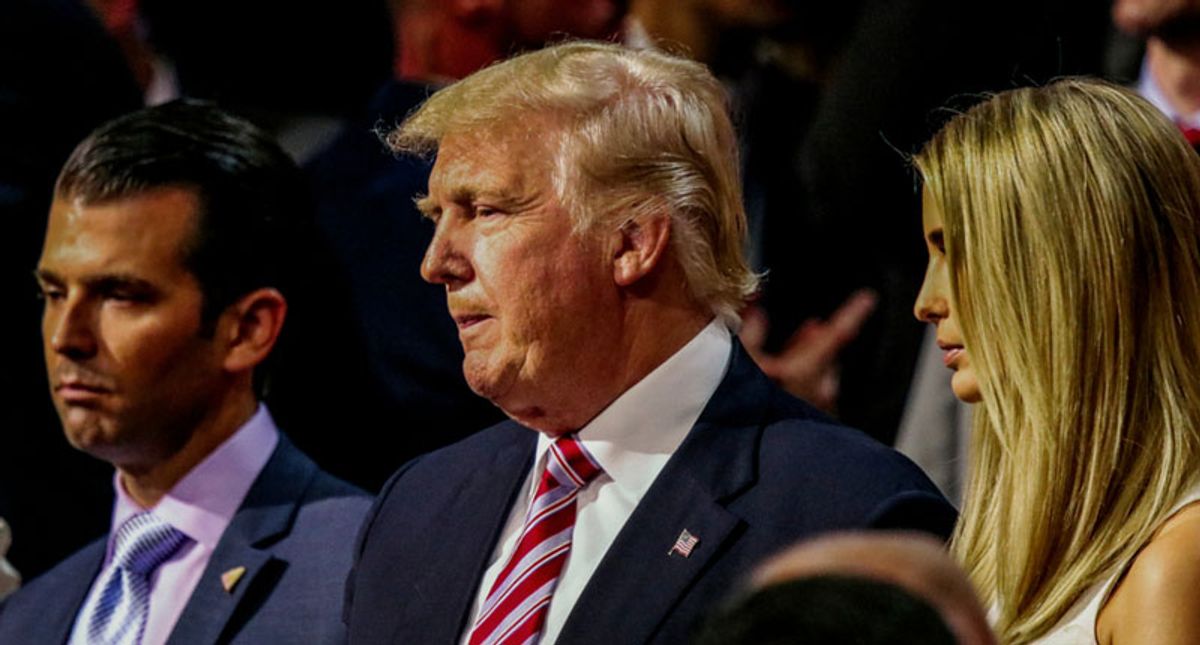
Donald Trump Jr., Donald Trump and Ivanka Trump stand together during the Republican National Convention. (Shutterstock)


Historian Jon Meacham is great at explaining how modern events fit into the big picture and how events of the past offer insights on the present, and he did exactly that when — during an April 16 appearance on MSNBC's "Morning Joe" — he weighed in on Derek Chauvin's trial and far-right evangelical Pat Robertson's response to it.

Chauvin is the Minneapolis police officer who has faced murder charges because of his role in the death of George Floyd on May 25, 2020. The defense rested its case in Chauvin's trial on April 15, and Robertson — the long-time host of "The 700 Club" and founder of the Christian Broadcasting Network — shocked viewers by being highly critical of Chauvin and citing him as a glaring example of someone who never should have been in police work. Robertson is a very divisive figure who is disliked by many liberals and progressives as well as right-wing libertarians, but his comments on Chauvin have been applauded by some of his most vehement critics.

Meacham, an Episcopalian, said of the 91-year-old Robertson, "If somebody does something right, you welcome him — and you welcome it." And Meacham stressed that the videos of Chauvin's knee on Floyd's neck were shocking even to Robertson.

Noting Robertson's influence on the Republican Party, Meacham explained, "Robertson was kind of the official embodiment of the rise of the Religious Right. I think it began with the school prayer decision in 1962. It was slow in developing. A lot of White evangelicals stayed out of politics in the mid-1960s because they were uncomfortable with civil rights, which was a space that was clearly associated with the Black church."

The historian told "Morning Joe" hosts Joe Scarborough and Mika Brzezinski that Floyd's death intensified a "conversation" that Americans have been having for generations — a "conversation on race" — and served as a painful reminder that "systemic racism exists" in the United States and "police reforming is necessary." And Meacham also argued that Floyd's death led to the end of Donald Trump's presidency.

A week after Floyd's death, on June 1, 2020, nonviolent protesters in Washington, D.C.'s Lafayette Square were demanding justice for him when they were violently removed by police so that Trump and his allies could walk from the White House to St. John's Episcopal Church — where Trump gave a speech and had his much maligned "Bible photo-op."

That day, Meacham argued, sealed Trump's fate in the 2020 presidential election and convinced millions of Americans and "a lot of White people" to vote against Trump and reject "a culture of White supremacy."

"The death of George Floyd, in many ways — if you look back on the year of 2020 — in a lot of ways, Lafayette Square, the events that unfolded in that terrible period really brought home to people…. that the Trump era had come to manifest many, many of our worst impulses," Meacham told Scarborough and Brzezinski. "I have a theory that in the national mind, to some extent, Joe Biden kind of became president-elect during Lafayette Square.


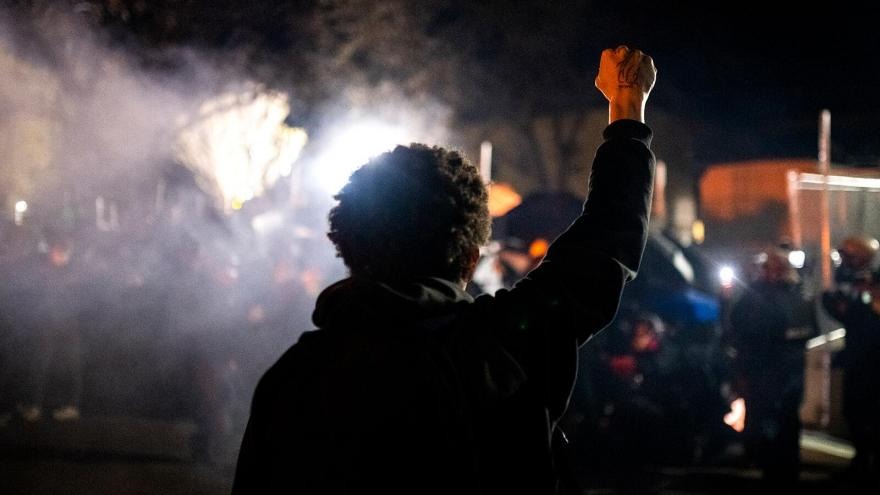
“It Felt Like War”: Tear Gas, Rubber Bullets, and 100 Arrests in Brooklyn Center Protest

The police and National Guard used tear gas and rubber bullets against protesters demanding justice for Daunte Wright. Over 100 people were arrested.


Image: ABC 57

On Sunday, the police brutally murdered 20-year-old Daunte Wright in Brooklyn Center, Minnesota. This is less than a 20 minute drive from Minneapolis, where Derek Chauvin murdered George Floyd. Now the cops are arresting, tear gassing and shooting rubber bullets at peaceful protesters. 

Minneapolis and the surrounding area was already highly militarized, as Chauvin has been on trial for the past several weeks. Protests calling for Justice for Daunte Wright have been ongoing since Sunday. A curfew has been imposed, and the National Guard was called in to repress protesters. 

Last night was the largest, and most repressive, night of protests so far. There was originally supposed to be no curfew on Friday night, but  in anticipation of the size of the crowd, the city issued a last-minute city curfew from 11 p.m. to 6 in the morning. 

Both the National Guard and police tear gassed a peaceful vigil and shot rubber bullets into the crowd. “It felt like war… We were in trenches and they were shooting at us” said Satura Dudley, leader of Cell A65, who was among the protesters in Brooklyn Center. Daunte Wright’s brother was also among the crowd, holding a prayer vigil for his brother. 

100 protesters were arrested and held overnight. Lawyers and friends were originally told they would be held for 36 hours, although some have already been released. No charges have been announced. One of those arrested was Frances Wallace, an Amazon worker from Bessemer Alabama. 

The murder of Daunte Wright has sparked protests all over the country. The cop who murdered him was a 26-year verteran of the force and a police union representative. She claims that she mistook her gun for her bright yellow taser and that she had supposedly meant to taser Wright. It’s an unlikely story. She is currently being charged with second degree manslaughter.

This is occurring only 20 minutes away from where Derek Chauvin is currently on trial. While some police have spoken out against Chauvin, this latest murder makes it clear: Chauvin wasn’t a bad apple. The role of the police in capitalist society is to terrorize and brutalize people of color and working class people. That’s what they did to Daunte Wright and to 13 year old Adam Toledo. That’s what they do to anyone who says Black Lives Matter. 

Dudley explains, “They didn’t give us a curfew warning. We didn’t get a message, it was not curfew… 15 cops tackled us… I was shot by a rubber bullet in the knee and it hurts.” 

“I have never experienced anything like this in my life,” she went on, “I’ve protested before. I’ve been arrested 13 times. This was not the same. They just attacked us.” 

We demand the immediate release of all protesters and for all charges against them to be dropped. We demand justice for Daunte Wright, Adam Toledo, and all other victims of the racist police.