Tuesday, November 09, 2021

'Every day we pray for rain': Fuel shortage brings Haiti to brink of water crisis

In many parts of Haiti, securing enough water to drink, wash and clean can be a daily struggle, with only half of the population having access to potable water, according to the World Bank. Now though, severe fuel shortages – the result of armed groups blocking access to ports – mean that Haiti's water authority may soon no longer be able to operate water pumps, cutting off the supply to communities around the country


Chile lower house OKs impeachment trial for President Pinera


Chile lower house OKs impeachment trial for President PineraChilean lawmakers have approved the impeachment trial of President Sebastian Pinera over allegations of corruption (AFP/JAVIER TORRES)


Paula Bustamante
Tue, November 9, 2021

Chile's lower house of congress on Tuesday approved an impeachment trial for President Sebastian Pinera over corruption allegations originating from the Pandora Papers leaks.

Lawmakers in the Chamber of Deputies garnered the 78 votes required to seek impeachment and advance proceedings to the Senate over Pinera's alleged involvement in the controversial sale of a mining company.

The call for the impeachment of Pinera -- who is in the final stretch of a second non-consecutive term that began in March 2018 -- was presented in early October by members of the opposition, including socialist deputy Jaime Naranjo.


Naranjo took 15 hours on the floor Monday to read from the 1,300-page accusation against the president, arguing Pinera's "impunity" should end in the South American nation rattled by social unrest that broke out in 2019.

The marathon speech was apparently designed to allow another left-wing lawmaker, Giorgio Jackson, to complete a period of quarantine and join the process before it ended so he could vote.

"What we saw was a show," said Juan Jose Ossa, the minister general-secretary of the presidency, an equivalent to the chief of staff.

The case grew as new details emerged about a deal first revealed in the Pandora Papers document leak, which highlighted offshore transactions involving political figures.

Naranjo highlighted potential corruption around the 2010 sale of the huge Dominga mine in Chile when Pinera, a wealthy businessman, was a first-term president.

The Pandora Papers linked Pinera to the sale of Dominga, through a company owned by his children, to businessman Carlos Delano -- a close friend of the president -- for $152 million.

The papers said a large part of the operation was carried out in the British Virgin Islands, a tax haven.

"Acting as president, he benefited (himself) and his family in a direct way, with information that he had in the exercise of his office," said Naranjo, adding that Pinera's involvement pushed up the sale price.

Pinera's lawyer Jorge Galvez brought the embattled president's defense to a close before the chamber, saying: "I beg you, honorable deputies, to reject this improper constitutional accusation."

The case now moves to the Senate, where the effort to remove Pinera from office does not appear to have the necessary votes.

However, the president is barred from leaving the country while the process is under way.

Pinera risks up to five years in jail.


- Controversial clause -

The government in a statement said it hoped the Senate would dismiss the "unjust" accusations it said had "no basis, either in the facts or in law".

Pinera, one of the richest men in Chile, has denied the claims and said he was absolved in a 2017 investigation.

It is the second impeachment case brought against Pinera after an unsuccessful attempt to remove him from office in 2019 over an at-times brutal crackdown on anti-inequality protesters.

The Pandora Papers said a controversial clause was included in the Dominga deal that made the final payment of the sale conditional on "not establishing an area of environmental protection in the area of operations of the mining company, as demanded by environmental groups."

According to the investigation, the Pinera government at the time decided not to protect the area around the mine.

Galvez denied Pinera "intervened in the decision to sell" the mine, or that the decision to not protect the area was linked to the sale.

Dominga owns two open-air mines in the Atacama desert, 500 kilometers (310 miles) north of Santiago, that are yet to be exploited.

A mining project to do so was approved by a regional court but has yet to be ratified by the Supreme Court due to appeals.

The project included the construction of a cargo port close to an archipelago that is home to a national park reserve hosting protected species including 80 percent of the world's Humboldt penguins.

pb/lm/ssy-bc/mlr/jh
Israel Using Facial Recognition Surveillance In Palestinian City


By Ben Simon
11/09/21

Israel's army has deployed a sweeping personal data collection programme using facial recognition technology targeting Palestinians in parts of the occupied West Bank, an organisation working with former soldiers said Tuesday.

The programme sees Israeli troops collecting data of Palestinians in the flashpoint city of Hebron. It was first reported by The Washington Post based on soldier testimony given to the Breaking the Silence organisation.

Soldiers on patrol equipped with specialised devices "take photos of every Palestinian that they see, completely arbitrarily," Breaking the Silence advocacy director Ori Givati told AFP.

After the picture is taken, the system known as "Blue Wolf" generates four possible results, according to Givati who said the findings were based on testimony from six soldiers who participated in the surveillance effort.

A man points at surveillance cameras in the Palestinian city of Hebron, where an organisation working with former soldiers says facial recognition technology is targeting Palestinians
 Photo: AFP / HAZEM BADER

A red result means the individual should be arrested, yellow means the Palestinian should be detained while an army superior is consulted, and green indicates the individual is free to go.

But no result means the Palestinian is not yet in the Blue Wolf system. That prompts the soldier to collect more data.

Asked for comment on the reports about Blue Wolf, Israel's army said it "conducts routine security operations" in the West Bank as part of its "fight against terrorism."

"Naturally, we cannot comment on the IDF's operational capabilities in this context," a spokesman said, referring to the Israeli Defense Forces.

Hebron is the only Palestinian city with Jewish settlers living inside it, making the city "the best place" to test Blue Wolf, Breaking the Silence deputy director Nadav Weiman told AFP.

Israeli soldiers walk past surveillance cameras in Hebon, the only Palestinian city with Jewish settlers living inside it
 Photo: AFP / HAZEM BADER

He spoke in central Hebron near the holy site known to Muslims as the Ibrahimi mosque and to Jews as the Cave of the Patriarchs.

The settlers are guarded by heavy military protection in an urban area, which increases contact between soldiers and Palestinian residents, and the city's vast network of security cameras has been integrated into Blue Wolf, Weiman said.

According to Givati, soldiers have competed for prizes over who takes the most pictures.

"We are talking about another layer of control. Another layer of things that we allow ourselves to do to the Palestinian people," Givati said.

Speaking to AFP from her apartment that overlooks Hebron's Al-Shuhada street -- once a bustling market area but closed to Palestinians for more than 20 years -- Zulaikha Muhtaseb said her neighbourhood was "surrounded by cameras."

She spoke through a door that once opened onto Al-Shuhada street but was welded shut after Israel closed the street, citing security concerns, after Jewish extremist Baruch Goldstein murdered 29 Palestinians in Hebron in 1994.

Muhtaseb said she had not knowingly had direct exposure to Blue Wolf. But as a Palestinian Hebron resident she felt the perpetual nature of Israeli surveillance.

"For the Palestinians it is a kind of violation. Nobody likes to be watched all the time," she said.

Israel has occupied the West Bank -- where more than two million Palestinians live -- since the 1967 Six Day War. Roughly 475,000 Jewish settlers now live in the Palestinian territory, in communities widely regarded as illegal under international law.
Copyright AFP. All rights reserved.
Famine-stricken Madagascar calls for 'climate empathy' at COP26


Famine-stricken Madagascar calls for 'climate empathy' at COP26The UN has said people in Madagascar have resorted to eating cactus, wild leaves and locusts (AFP/RIJASOLO)

Kelly MACNAMARA
Tue, November 9, 2021, 

As the world's first climate change-driven famine ravages her tropical island homeland, Madagascar's environment minister is in Scotland to warn that other countries could find themselves suffering a similar fate.

A multi-year drought has desiccated farmland across the southern part of the Indian Ocean island known for its rich biodiversity, with no end to the crisis in sight.

More than 1.3 million people are severely hungry and tens of thousands are facing famine conditions that the United Nations says are driven by global heating.

In desperation, many are eating locusts, wild leaves and cactus that normally serve as food for cattle, according to the World Food Programme.

"The situation is critical," said Environment Minister Baomiavotse Vahinala Raharinirina.

But in a year where disasters magnified by climate change have touched every continent on the planet, she wants the nations gathered for UN climate talks to realise that this is just the beginning.

"We appeal for climate solidarity," she told AFP, calling on nations to act to halt the march of calamities across the world.

"What we are living through now, others could experience," she told AFP.

"Desertification, islands under water -- a large part of the lands in the south will disappear but so will cities here in the northern hemisphere.

"We must take decisions and act to prevent this type of situation from happening in other countries."

- 'Question of behaviour' -


Already people are faced with desertification and temperatures of 45 degrees Celsius "throughout the year", said Raharinirina.

"The lack of water, the women who now travel 20 kilometres to fetch a container of water, these are the realities," she said.

Madagascar has always suffered prolonged dry spells, but now they are intensifying and if global heating is not halted, she said these punishing droughts could scorch three-quarters of the country by 2080, affecting some 20 million people.

To have a hope of avoiding this fate, energy intensive lifestyles in the rich world -- from taking cheap flights for holidays to using gas heaters on outside terraces -- will have to change.

"This rise in temperature will only be stopped if there is also a change in consumption and production patterns in the so-called polluting countries," she said, adding people and governments all need to play a part.

But she is worried that there is a "psychological distance" that prevents those who have not experienced a situation like Madagascar's from understanding the realities of these climate change-driven calamities.

"It's called empathy, climate empathy, maybe it's a new term but that's what it takes -- empathy from north to south, and between citizens," she said.

"It means telling yourself that your own act of purchase, of consumption, can impact others."

- Children wasting away -


Across Madagascar's vast southern tip, the worst drought in decades has transformed fields into desolate dust bowls. Some villages have been abandoned.

Last week the UN said nearly 30,000 people were now officially affected by famine in the country, and more than 1.3 million others were considered to be in a food security crisis or emergency.

Half a million children are acutely malnourished, including 110,000 suffering from severe acute malnutrition.

Officials described "heartbreaking" scenes of children wasting away.

And things could get worse.

The "lean season" has only just begun and people face another six months before the next harvest. If it comes in.

There is scant hope in the weather forecast. Only 450 millimetres of rain is expected for the whole year, according to Raharinirina, the equivalent of a month's worth.

- Empathy, not pity -


The biting drought is also worsening threats for Madagascar's unique biodiversity, including lemurs and the baobab tree she said, as people leave their homes and move into other regions.

"We are perhaps the only generation able to save this unique part of the world, which we must bequeath to future generations," she said.

She is hoping that the international community will show "climate solidarity to help Madagascar preserve what remains, to reforest, to restore what is damaged".

The COP26 meeting in Glasgow has been rocked by tensions over delays in promises of funding from rich countries historically responsible for the greenhouse gasses driving climate change, to developing nations with low emissions.

But Raharinirina said the conference was able to give voices from a nation like Madagascar a platform they might not otherwise have.

"We still believe in the ability of the world to come together and make intelligent decisions collectively," she said.

And she is adamant that climate "empathy does not mean pity".

"It is how I can access levers to change things so that others can project themselves for the future."

abd-klm/mh/jxb
Facebook will no longer allow advertisers to target political beliefs, religion, sexual orientation
Amanda Silberling@asilbwrites / •November 9, 2021


Facebook announced today that it will no longer allow advertisers to target users based on potentially “sensitive” topics like health, sexual orientation, or religious and political beliefs. “Lung cancer awareness,” “LGBT culture” and “Jewish holidays” are just some of the interest categories that will no longer be targeted starting early next year.

“The decision to remove these Detailed Targeting options was not easy and we know this change may negatively impact some businesses and organizations,” the company wrote in a blog post, saying input from civil rights experts, policymakers and other stakeholders contributed to its decision. Advertising revenue is Facebook’s leading source of income, so any major change to ad policy can have significant ramifications.

Facebook can target users based on information provided in their profile, like their age, location or gender. But the platform never made it possible to target people based on the sexual orientation listed in their profile, a representative from the company told TechCrunch. Rather, the advertising that will be removed refers to ads that are served based on your profile’s interest categories.


Facebook assigns these interest categories to your profile based on your activity. Based on how you engage with Facebook content, you might be assigned categories that Facebook would call “sensitive,” like “American Jewish culture,” “LGBT rights” or “Barack Obama.” Starting January 19, advertisers will no longer be able to target their ads based interests like these. Other interest groups like “rock climbing” and “knitting,” not being sensitive, will still be targetable — there are tens of thousands of these categories, sensitive or not.

Users can see their profile’s interest groups by navigating on desktop to Settings and Privacy > Settings > Ads > Ad Settings > Categories used to reach you > Interest Categories. If you don’t want to receive ads based on a certain interest, you can opt out.

This change in ad policy comes as Meta — the newly renamed parent company to the Facebook platform — faces increased scrutiny after a series of senate hearings related to documents leaked by whistleblower Frances Haugen. As more documents are leaked to the press, Meta has gone on the defensive, claiming that some journalists’ reporting has misrepresented its actions.

But Facebook’s ad policy has been a topic of concern for years. Leading up to the US Presidential election in 2020, Facebook placed limitations on the kinds of political ads that could be created. In 2018, Facebook conducted a similar removal of over 5,000 targeting options for ads after the U.S. Department of Housing and Urban Development (HUD) filed a complaint against Facebook that accused it of helping landlords and home sellers violate the Fair Housing Act. Before that, in 2016, Facebook disabled “ethnic affinity” targeting for housing, employment and credit-related ads after a ProPublica report suggested that these capabilities could be used for discriminatory advertising. When it comes to housing and employment, it’s illegal to target ads based on certain demographics. Another report from ProPublica spurred Facebook to remove ad targeting based on anti-Semitic interest categories.
BP REMAINS A MEMBER OF THE BIG OIL LOBBY IN THE US

London (CNN Business)French oil giant Total made waves early this year when it broke with the American Petroleum Institute, the largest and most powerful oil lobby in the United States, because of its stance on climate issues.

BP's (BP) pledge to slash oil production by 40% this decade has put it ahead of many industry peers in the transition to greener energy. But it doesn't plan to follow Total's lead and quit the API.

"There are areas of difference [with the API]," BP CEO Bernard Looney told CNN's Christiane Amanpour in an interview Monday. Still, it's "better [to] be inside and influencing than outside," he added.

BP and the API diverge on certain issues, Looney said, emphasizing that the company enthusiastically backs the shift to electric cars, for example.

InfluenceMap, a London-based think tank focused on energy and climate change, has said the API "appears to be broadly hostile to progressive climate policy." The lobby came under fire at a Congressional hearing last month for opposing a federal fee on methane, a major contributor to global warming.

Yet Looney pushed back on the notion that BP and the group should cut ties.
"Some of the things that they do [are] actually not about lobbying," Looney said. "They actually develop safety standards for the entire industry. I think it's important that we would be partaking in that."

Oil and gas companies are under huge pressure to slash production of fossil fuels for the world to have a shot at limiting the global temperature rise to 1.5 degrees Celsius and avoid the worst effects of climate change.

BP said last year that it would pursue net-zero carbon emissions by 2050 in what Looney described as the "biggest restructuring in our history." The company also set shorter-term targets as it tries to pivot its business away from oil and gas, promising a 10-fold increase in annual low carbon investments by 2030.

In the meantime, however, BP is benefiting from higher oil and gas prices, with crude trading above $80 per barrel and natural gas hitting record highs in Europe.

"We're a cash machine at these types of prices," Looney said on a call with analysts when the company reported bumper quarterly profits.

Looney told Amanpour on Monday that it remains important for a company like BP to have "a seat at the table" during the energy transition given its commitment to that transition. Few firms are in a position to meet society's need for a complex system of clean, reliable and affordable energy.

"We are predominantly an oil and gas company today," Looney said. "Equally, we have an ambition to become an integrated energy company. Unless we transition, the world's not going to transition."

— Wesley Oliver and Emmet Lyons contributed reporting.
Oklahoma Supreme Court reverses court decision to have Johnson & Johnson pay $465M to state for its role in opioid crisis


by Sonia Moghe, CNN
Tue November 9, 2021


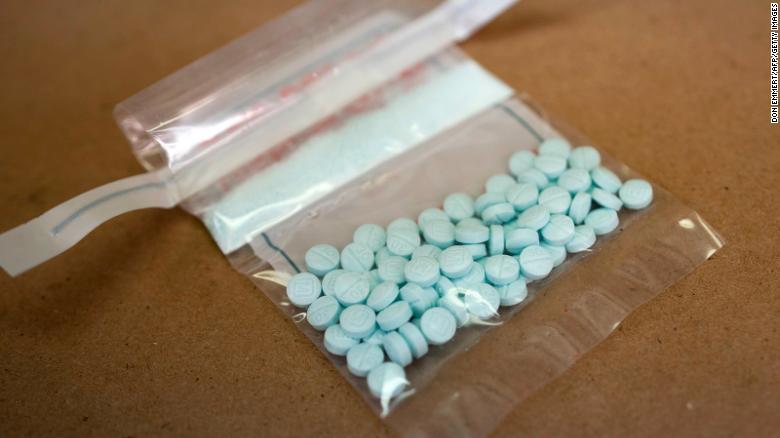
(CNN Business)Oklahoma Supreme Court justices have reversed a district court decision that ordered Johnson & Johnson to pay $465 million to the state for its role in the opioid crisis.

In the justices' decision filed Tuesday, they wrote that the district court "erred" by holding Johnson & Johnson liable under the state's public nuisance statute for its opioid prescription marketing campaign.

"We hold that the district court's expansion of public nuisance law went too far. Oklahoma public nuisance law does not extend to the manufacturing, marketing, and selling of prescription opioids," Oklahoma Supreme Court Justice James Winchester wrote in his opinion.

The opinion states that the manufacture and distribution of products "rarely causes a violation of a public right" and that a manufacturer generally does not have control over a product once its sold, and that if the public nuisance law were allowed to be used to hold a company liable for its products "a manufacturer could be held perpetually liable."

"In reaching this decision, we do not minimize the severity of the harm that thousands of Oklahoma citizens have suffered because of opioids," the opinion states. "However grave the problem of opioid addiction is in Oklahoma, public nuisance law does not provide a remedy for this harm."

In a statement to CNN, Johnson & Johnson called its actions relating to the marketing and promotion of the prescription pain medications "appropriate and responsible."

"We recognize the opioid crisis is a tremendously complex public health issue, and we have deep sympathy for everyone affected," the statement said. "Today the Oklahoma State Supreme Court appropriately and categorically rejected the misguided and unprecedented expansion of the public nuisance law as a means to regulate the manufacture, marketing, and sale of products, including the Company's prescription opioid medications."

Oklahoma Attorney General John O'Connor said he was "disappointed" by the state supreme court's decision.

"The Judgment holding Johnson & Johnson accountable for their deceptive actions was a huge victory for Oklahoma citizens and their families who have been ravaged by opioids," O'Connor said in a statement to CNN. "Our staff will be exploring options. We are still pursuing our other pending claims against opioid distributors who have flooded our communities with these highly addictive drugs for decades. Oklahomans deserve nothing less."

One state supreme court judge wrote in a dissenting opinion that the district court's decision should be reversed and the matter sent back to the court for a "correct" determination of damages.
13 Trump Officials Violated Hatch Act
By Ben Scheffer on November 10 2021 


A report published by the U.S. Office of Special Counsel found that 13 Trump administration officials violated the Hatch Act, which prohibits government employees from engaging in campaign activity.

"Taken together, the report concludes that the violations demonstrate both a willingness by some in the Trump administration to leverage the power of the executive branch to promote President Trump's reelection and the limits of OSC's enforcement power," the OSC said in a release.

“The president’s refusal to require compliance with the law laid the foundation for the violations. In each of these instances, senior administration officials used their official authority or influence to campaign for President Trump. Based upon the Trump administration’s reaction to the violations, OSC concludes that the most logical inference is that the administration approved of these taxpayer-funded campaign activities,” the report says.

The 60-page report found that numerous members of the Trump administration illegally participated in the 2020 Republican National Convention. The report found that then-Secretary of State Mike Pompeo and then-Homeland Security Secretary Chad Wolf violated the law by pre-recording speeches that aired during the convention.

The report found that Pompeo and Wolf repeatedly ignored warnings from ethics officials saying that their actions would violate the law.

Other Trump administration officials who were in violation of the 1939 campaigning law were former Energy Secretary Dan Brouillette; former White House communications director Alyssa Farah; former press secretary Kayleigh McEnany; then-White House chief of staff Mark Meadows; former Trump senior advisers Stephen Miller and Jared Kushner; Marc Short, the former chief of staff to then-Vice President Mike Pence; national security adviser Robert O'Brien; and White House counselor Kellyanne Conway.

The probe began during the final months of the Trump administration and no punishment is expected to take place because the president in office at the time is the only one who can reprimand his own administration officials.


Prince Harry Says He Warned Twitter Boss About 'Coup' On Eve Of US Capitol Attack

Duke of Sussex told a misinformation panel he was emailing CEO Jack Dorsey about how the social media platform was being used.


By Graeme Demianyk
09/11/2021

Britain's Prince Harry attends the 2021 Global Citizen Live concert at Central Park in New York, U.S., September 25, 2021. Picture taken September 25, 2021. 
REUTERS/Caitlin Ochs

Prince Harry has said he warned Twitter’s boss before the US Capitol attack that his social media platform was being used to stage a coup.

The Duke of Sussex was speaking during an appearance in the US on a panel discussing misinformation and said the problem pre-dated social media.

He said he warned Twitter CEO Jack Dorsey the social media giant was “allowing a coup to be staged” a day before the January 6 riots.

Asked if he has spoken to Facebook founder Mark Zuckerberg or Twitter CEO Dorsey, Harry said he warned the latter his website was facilitating a coup on the eve of the attack.

He said: “Jack and I were emailing each other prior to January 6 when I warned him his platform was allowing a coup to be staged. That email was sent the day before.

“And then it happened and I haven’t heard from him since.”

A group of Donald Trump supporters stormed the US Capitol building in Washington DC over claims the presidential election was rigged and the role social media giants played in enabling the attack is being investigated.

Harry, who was listed as the co-founder of Archewell at the RE:WIRED summit, works at think tank the Aspen Institute and looks into misinformation and disinformation in the media.

The 37-year-old, who lives in Southern California with Meghan and the couple’s two children, said the internet is “being defined by hate, division and lies”.

“That can’t be right,” he told the panel. “Especially for anyone who has children, we’re allowing this future to be defined by the very here and now. By exactly that which is greed and profit and growth.

“I would hope as human beings, as individuals with the ability of choice and decision-making they would worry more about people now, the safety of people but also what this means for the internet, a free internet but also what it means for the next generation and the generation after that and that and that and that.”

In his latest broadside at the British press, Harry invoked the memory of his mother, Diana, Princess of Wales and again said his wife, the Duchess of Sussex, was receiving similar treatment.

He said: “They don’t report the news, they create it and they’ve successfully turned fact-based news into opinion-based gossip with devastating consequences for the country.

“So I know the story all too well. I lost my mother to this self-manufactured rabidness and obviously I’m determined not to lose the mother to my children to the same thing.”

Harry nodded to comments he made in a mental health series he appeared in earlier this year and said “they won’t stop until she’s dead” – a reference to Meghan.

He added: “It was more of a warning, not a challenge.”

Harry said “the scale of misinformation now is terrifying” and warned families are being “destroyed” by the problem.

Asked if users should delete their social media accounts, Harry noted he and Meghan are not on any platforms and will not return until changes are made.

He said it “simply isn’t true” that the challenge of misinformation “is too big to fix, it’s too big to solve”.

The duke said from his own experience, he and his wife are targeted by a small group of accounts.

He said: “More than 70% of the hate speech about my wife on Twitter could be traced to fewer than 50 accounts.”

Megxit – a word used to described the couple’s departure from royal duties – is a “misogynistic term” that was created by an online troll before it entered mainstream usage, Harry said.
Robinhood says millions of customer names and email addresses taken in data breach

Zack Whittaker@zackwhittaker •November 9, 2021


Online stock trading platform Robinhood has confirmed it was hacked last week with more than five million customer email addresses and two million customer names taken, as well as a much smaller set of more specific customer data.

The company said in a blog post that a malicious hacker had socially engineered a customer service representative over the phone November 3 to get access to customer support systems. That allowed the hacker to obtain customer names and email addresses, but also the additional full names, dates of birth and ZIP codes of 310 customers.

Robinhood said that 10 customers had “more extensive account details revealed.” Robinhood did not say what information specifically, though no Social Security numbers, bank account numbers or debit card numbers were exposed and caused no immediate financial loss to customers.

But it’s precisely that kind of information that malicious hackers can use to facilitate further attacks against victims, like targeted phishing emails, since names and dates of birth can often be used to verify a person’s identity.

The company said once it secured its systems the hacker then “demanded an extortion payment.” Robinhood instead notified law enforcement and security firm Mandiant to investigate the breach.

It’s a similar breach to how Twitter was hacked in July 2020. A then-teenage hacker used social engineering techniques to trick some of Twitter’s employees into thinking the hacker was an employee, allowing the hacker access to an internal Twitter “admin” tool, which he used to hijack high-profile accounts and spread a cryptocurrency scam. The attack netted the hacker just over $100,000 in cryptocurrency. In its aftermath, Twitter rolled out security keys to its staff to toughen its defenses against attacks that prevent these kinds of attacks from working in the future.

Whatever lacking security controls that allowed a hacker to trick a Robinhood customer service representative into granting them access to an internal system is a likely focus for its investigation.