Thursday, May 05, 2022

Oil has long been used as a geopolitical weapon. Could electrified transport change that?

Petroleum industry associated with wild price swings and armed conflict

(Illustration: CBC; Photos: CBC Photo Archives, Reuters, The Canadian Press)

Our planet is changing. So is our journalism. This story is part of a CBC News initiative entitled "Our Changing Planet" to show and explain the effects of climate change. Keep up with the latest news on our Climate and Environment page.


Climate scientists have been clear that if we want to reduce carbon emissions and slow the pace of global warming, one crucial step is moving from a transportation system run on fossil fuels to one powered by electricity.

But it's possible that doing so might neutralize other toxic aspects of the petroleum industry, such as volatile prices and armed conflict.

"The ability to electrify transportation and get off combusting fossil fuels, and oil specifically, means we would solve massive geopolitical problems, which have been just a plague for the last 100 years," said Adam Scott, executive director of Shift, a Toronto-based charity that advocates for sustainable investing.

Oil has always been an impetuous commodity, susceptible to wild price swings owing to a variety of economic and political factors. But between the COVID-19 pandemic and Russia's invasion of Ukraine, the last couple of years have been especially nervy

On one day in April 2020, the price of a barrel of oil briefly went negative (-$37 US). Since then, it's flirted with all-time highs, reaching $119 last month. And consumers feel it when they fill up.

The current surge in the price of oil has been a key driver of inflation around the world, but the cost of this commodity can be measured in more than just dollars. Oil has long been a lever for political change, as well as a pretext for war.

Oil has a variety of applications, including in home heating and the manufacture of plastics. But it's predominantly used to make transportation fuels. So what happens when society at large moves away from such a mercurial, morally fraught commodity and starts to rely on electricity to power vehicles instead?

WATCH | Everything you ever wanted to know about electric vehicles:

If you are thinking about getting off gas and buying an electric vehicle, or EV, you probably have a few questions. We went for a drive with an expert, and got some answers. 2:13

Oil as a weapon

One of the chief problems with oil, Scott says, is that it's priced globally.

"Everybody in Canada is angry about energy prices all of the time, but there's very little we can do about it," said Scott. "Even as the world's fourth-largest exporter of oil, we have no influence over the price at all."

The same goes for our southern neighbour. Despite being the biggest oil producer, the United States leans on other petroleum-rich countries when the price at the pumps becomes a political liability.

"We see the U.S. president begging the king in Saudi Arabia to produce more oil," Scott said. "It's painful to watch."

Much of the world depends on Saudi Arabia's vast oil reserves, which provides Crown Prince Mohammed bin Salman with a lot of geopolitical leverage. (Amr Nabil/The Associated Press)

Because it has been so lucrative, oil production has been a well-known source of conflict, from the CIA-assisted coup in Iran in 1953 to the independence struggles of South Sudan. A 2013 policy brief by the Belfer Center for Science and International Affairs at Harvard states bluntly that "oil is a leading cause of war," estimating that "between one-quarter and one-half of interstate wars since 1973 have been linked to oil."

Countries that are generously endowed with oil and gas deposits — sometimes called "petro-states" — often wield this over other nations.

Take Russia. In his new book, Price Wars: How the Commodities Markets Made Our Chaotic World, Rupert Russell explains how in the '70s and '80s, the Soviet Union manipulated the price of its petroleum exports to Eastern Bloc countries in order to ensure their loyalty during the Cold War. More recently, Russia has used such tactics with former Soviet states like Belarus and Ukraine.

If you're using the "gas weapon," Russell told CBC News, you "don't have to mobilize armies. The whole system is set up. All you have to do is change the price and you can exercise this political lever."

Russell also demonstrates a connection between high oil prices and militarism. Citing research by University of Denver professor Cullen Hendrix, Russell writes that rises in oil prices increase the chances that petro-states like Venezuela or Iran will engage in a militarized dispute (usually on their border). 

Higher oil prices provide these countries with more money, which they use to strengthen their armed forces. To hedge against any political blowback, they also build up their holdings of foreign currencies and buy off their domestic opposition, Russell says.

Russia's incursions into Georgia in 2008 and Ukraine in 2014 coincided with high oil prices. The invasion in Ukraine in February began when oil prices were hovering around $100 a barrel for the first time since 2014. 

(Illustration: CBC; Photos: Reuters)

Russian President Vladimir Putin "was just waiting for the commodities prices to go up again," said Russell. 

He said that even in the face of strong international sanctions, a petro-state like Russia can still sell oil and gas — either through loopholes or by smuggling it out — because high prices are a sign there's "strong global demand for those commodities."

Decentralized energy

Electric power as a transportation fuel can be produced anywhere, in a variety of sustainable ways, which removes the geopolitical leverage that a lot of oil producers currently enjoy. 

"Right now, for example, you have oil and gas in the North Sea, in the [Alberta] tarsands, in Russia, in the Middle East. There's a lot of power concentrated there, and those are centralized resources," said Marie Claire Brisbois, a senior lecturer in energy policy at the University of Sussex in the U.K. 

With renewable energy sources, "it's no longer possible to control energy resources the same way," given that the actual energy source "is the sun, it's the wind, it's the waves."

Electricity's major benefit, Scott said, is that it's "a local commodity."

This sort of energy independence, established on a large scale, would not only remove some of the dubious aspects of the oil industry, but eliminate the financial and environmental costs of shipping.

One of the promises of electrified transportation is that the 'fuel' can be produced locally and transmitted through existing infrastructure, like this utility tower. (Travis Golby/CBC)

Scott acknowledges there's a lot of hand-wringing about the extra load that electrical vehicles will put on existing power grids, but he says that a lot of what is needed is already in place.

"People are always saying, 'There's not enough charging infrastructure,' [but] there's electricity in every building," said Scott. 

He emphasizes that a fuel system based on electricity rather than gasoline will be set up differently. For one thing, there won't be as many gas stations, because the majority of fuelling will happen at home.

A "dramatic scale-up" of fast chargers is still required for long-distance trips on major highways and in rural areas, but "there's no technical reason why we can't build out that infrastructure — it's existing technology," he said.

"The utilities will be the first to tell you, 'Yeah, this can be done.'"

Russell Baker, a spokesperson for Toronto Hydro, said the utility wants "to make owning an EV easier and more accessible for all residents" and recognizes that "we have a critical role to perform in supporting transportation electrification in Toronto by preparing the local grid for increased electricity demand."

WATCH | How Russia's invasion of Ukraine is impacting the environment:

A group of investigators is documenting the environmental impact of the Russian invasion in Ukraine — fearful of the irreversible ecological damage caused by warfare. 2:12

Setting the price

While gasoline has reigned supreme as the world's automotive fuel, drivers have become inured to seemingly arbitrary price changes at the pumps — famously at the beginning of a long weekend.

Scott says electricity pricing is more transparent. While utilities across the country are a mix of market-based and regulated ones, changing the base rate typically requires consultation with various stakeholders, including residents. As a result, Scott thinks there's less opportunity for price gouging.

In fact, some utilities are looking for ways to save customers money when charging their vehicles. Toronto Hydro is kicking off a pilot project in partnership with EV advocacy group Plug'n Drive and Elocity Technologies Inc. that will enable selected EV drivers to use a smartphone app to control their charging schedule, by charging when there's less demand on the grid and electricity prices are at their lowest.

Brisbois points out that the relative ease with which residents can generate their own power — by installing solar panels on their roof, for example — will put added pressure on service stations to keep the cost of electric charging low.
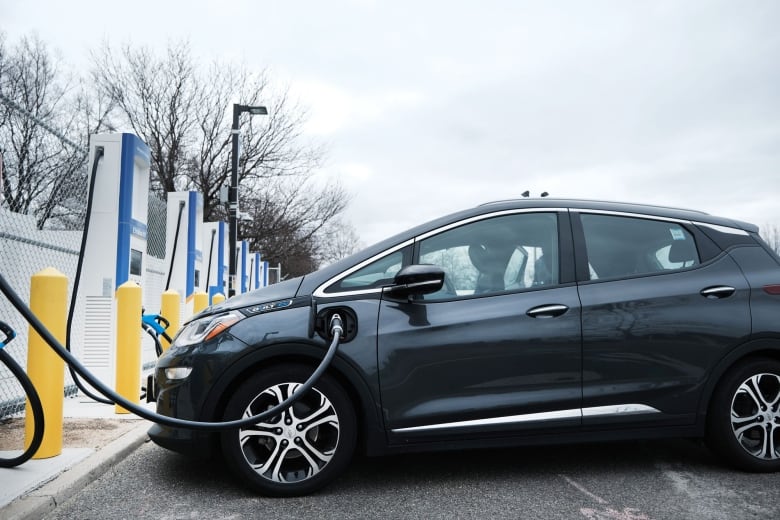
The transition to electric vehicles will also change how we think about 'filling up' our cars. (Spencer Platt/Getty Images)

Brisbois agrees that there's less chance of profiteering in this new model of fuelling — and says the oil and gas industry knows it.

She recently attended a meeting on the carbon transition hosted by the London-based think-tank Chatham House, and said the consensus among oil and gas representatives "was that they will never again be as profitable as they are right now, in exploiting oil resources." 

"They talk about oil as being super-profitable. It's a constrained resource. You can control access to it, you can manipulate prices in a way that you will never, ever be able to do with solar or wind."

WATCH | Canada needs more EV charging stations, advocates say:

Advocates say Canada’s climate plan needs significantly more investment in providing enough charging stations and incentives to spur consumer demand for electric vehicles. 2:02

The problem of extraction

While it seems like the transition to electrified transportation might have benefits beyond reducing carbon emissions, it is unlikely to eliminate all geopolitical tension. 

For one thing, there is a strong push to develop hydrogen for fuel-cell electric vehicles, with countries like China, Japan and Germany, among others, hoping to corner the market.

At the same time, while clean electricity can be produced just about anywhere, EV motors are made of materials — such as lithium, cobalt and nickel — that are still geographically concentrated and need to be mined.

"These are all extractive sectors, they're all traded as commodities and they have geopolitical, economic but also environmental and social impact characteristics that have some parallels with oil," said Thea Riofrancos, an associate professor of political science at Providence College in Rhode Island.

A worker assembles a Volkswagen ID.5 electric car at the company's plant in Zwickau, Germany, in January. (Jens Schlueter/Getty Images)

Riofrancos, the author of an upcoming book entitled Extraction: The Frontiers of Green Capitalism, said mining these resources can still lead to the contamination of soil, water and air; loss of biodiversity; and dispossess people who live on the land. 

Riofrancos said what also concerns her is "a different kind of geopolitical tension." Given the urgency of climate change, many countries, particularly in the Global North, are framing the energy transition as a matter of national security and incentivizing exploration for so-called critical minerals both domestically and abroad.

This could lead to a weakening of social, environmental and labour considerations, as well as consultation with Indigenous populations, Riofrancos says.

"I don't think most ordinary people, including those who buy Teslas, are aware of the whole supply chain."

While electrified transportation is not as "clean" as it's often touted to be, Brisbois thinks it will change the longstanding global dynamic around fuel.

"It becomes much more possible to have very different politics around energy, because you're not just going to have a few companies controlling the resources.


EVEN ON MARS SOLAR POWER RULES

For Human Settlements on Mars, Solar Power May Beat Nuclear Energy

First Humans on Mars

This artist’s concept depicts astronauts and human habitats on Mars. Credit: NASA

Photovoltaics may be more practical for long stays on Mars thanks to today’s light, flexible solar panels.

According to new research by scientists at the University of California, Berkeley, the high efficiency, lightweight, and flexibility of the current solar cell technology means photovoltaics could provide all the electricity needed for a protracted expedition to Mars, or even for a permanent settlement on the Red Planet.

Most scientists and engineers who have considered the logistics of living on the surface of Mars have assumed that nuclear power is the best option, owing in large part to its reliability and 24/7 operation. Miniaturized Kilopower nuclear fission reactors have improved over the last decade to the point where NASA considers them to be a safe, efficient, and plentiful source of energy, as well as a key to future robotic and human exploration.

Solar power, on the other hand, must be stored for use at night, which lasts about the same length of time on Mars as it does on Earth. And the persistent red dust that covers everything on Mars can limit the power production of solar panels. After a massive dust storm on Mars in 2019, NASA’s almost 15-year-old Opportunity rover, which was powered by solar panels, stopped working.

Self Sustaining Mars Settlement

An artist’s rendering of a crewed Martian biomanufactory powered by photovoltaics and capable of synthesizing food and pharmaceuticals, manufacturing biopolymers and recycling biological waste. Credit: Artwork by Davian Ho

The new study, published on April 27, 2022, in the journal Frontiers in Astronomy and Space Sciences, uses a systems approach to actually compare these two technologies head-to-head for a six-person extended mission to Mars involving a 480-day stay on the planet’s surface before returning to Earth. That is the most likely scenario for a mission that reduces the transit time between the two planets and extends time on the surface beyond a 30-day window.

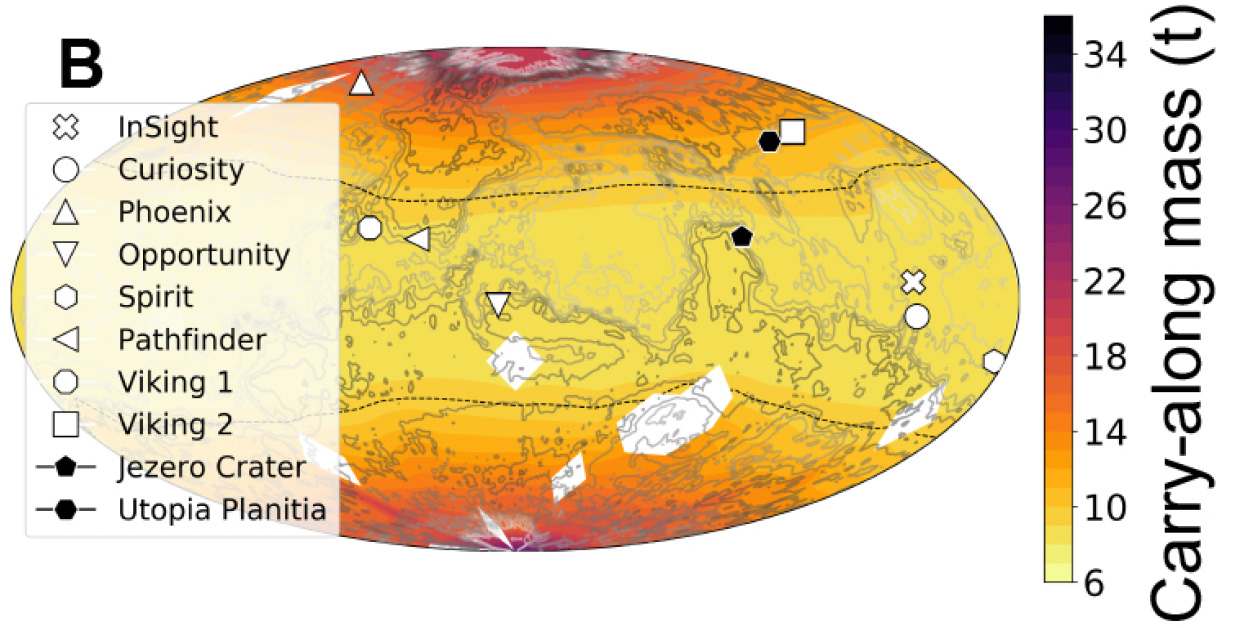
Their analysis found that for settlement sites over nearly half the Martian surface, solar is comparable or better than nuclear, if you take into account the weight of the solar panels and their efficiency — as long as some daytime energy is used to produce hydrogen gas for use in fuel cells to power the colony at night or during sandstorms.

“Photovoltaic energy generation coupled to certain energy storage configurations in molecular hydrogen outperforms nuclear fusion reactors over 50% of the planet’s surface, mainly within those regions around the equatorial band, which is in fairly sharp contrast to what has been proposed over and over again in the literature, which is that it will be nuclear power,” said UC Berkeley bioengineering doctoral student Aaron Berliner, one of two first authors of the study.

Areas on Mars Suitable for Photovoltaic Power Systems

Astronauts traveling to Mars will need to minimize the weight of the power system they take with them from Earth. Photovoltaics would be the best choice if their planned settlement site is in the yellow area on this flattened map of Mars. Also shown are the sites of previous missions that have landed on Mars, including Jezero Crater (upper right), which NASA’s rover Perseverance is now exploring. Credit: Image by Anthony Abel and Aaron Berliner, UC Berkeley

The study gives a new perspective on Mars colonization and provides a road map for deciding which other technologies to deploy when planning manned missions to other planets or moons.

“This paper takes a global view of what power technologies are available and how we might deploy them, what are the best-use cases for them and where do they come up short,” said co-first author Anthony Abel, a graduate student in the Department of Chemical and Biomolecular Engineering. “If humanity collectively decides that we want to go to Mars, this kind of systems-level approach is necessary to accomplish it safely and minimize cost in a way that’s ethical. We want to have a clear-eyed comparison between options, whether we’re deciding which technologies to use, which locations to go to on Mars, how to go and whom to bring.”

Longer missions have greater power needs

In the past, NASA’s estimates of the power needs of astronauts on Mars have generally focused on short stays, which don’t require power-hungry processes for growing food, manufacturing construction materials or producing chemicals. But as NASA and leaders of companies now building rockets that could go to Mars — including Elon Musk, CEO of SpaceX, and Jeff Bezos, founder of Blue Origin — talk up the idea of long-term, off-planet settlements, larger and more reliable sources of power need to be considered.

The complication is that all of these materials must be carried from Earth to Mars at a cost of hundreds of thousands of dollars per pound, making low weight essential.

Martian Settlement Manufacturing Process Flow Chart

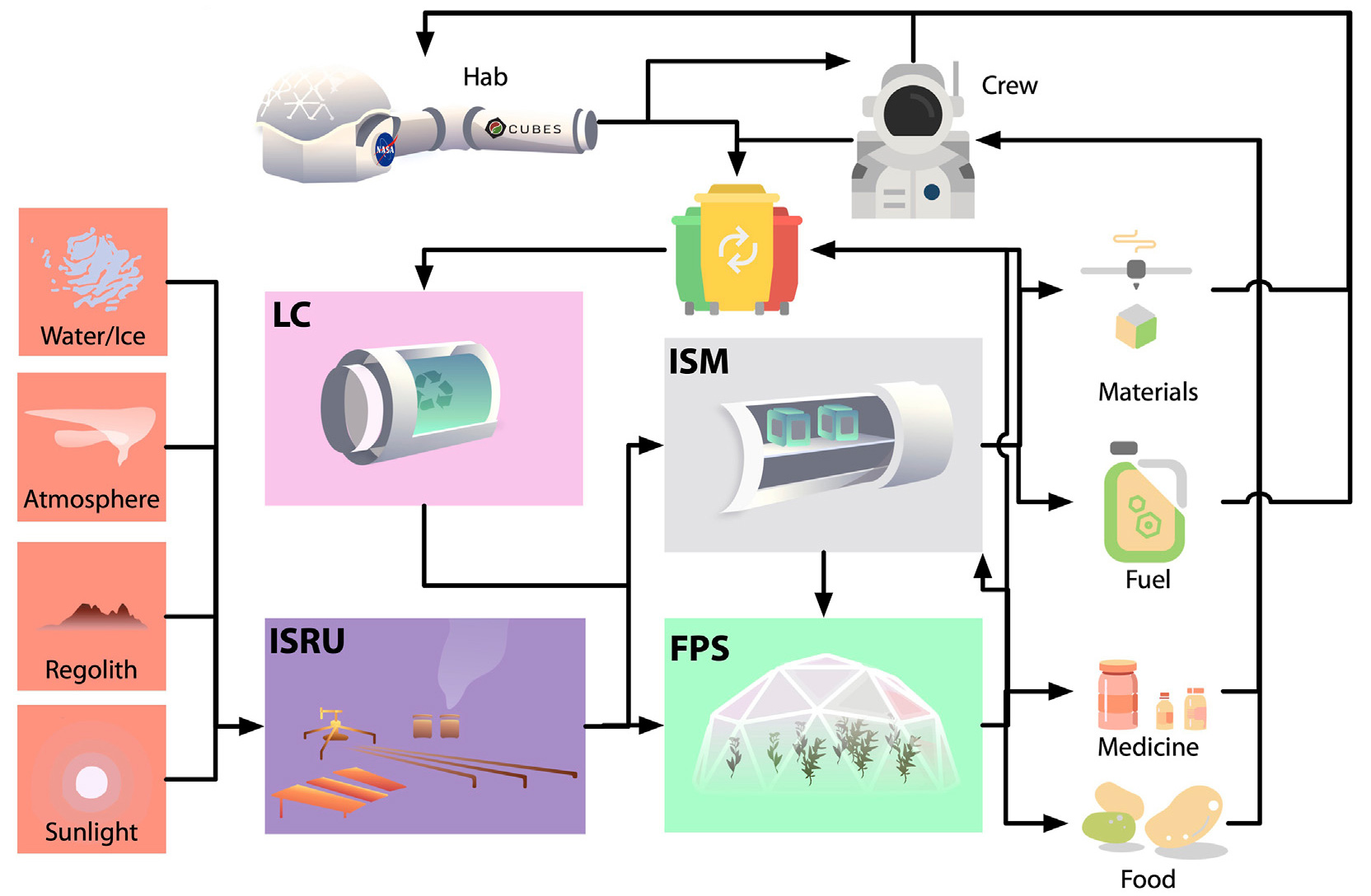
Humans on Mars would need to use the only raw materials available — water ice, atmospheric gases, the Martian soil and sunlight — to make everything they need for survival. Researchers like those in CUBES, based at UC Berkeley, are working on ways to turn these raw materials into food, medicine, fuel and structural materials. This flow chart shows how in situ resource utilization (ISRU) turns the raw materials into a form that can be used to synthesize food and pharmaceuticals (FPS) and manufacture biopolymers (ISM) for use by the crew. Waste is collected and reused (loop closure, or LC) to maximize efficiency and reduce the cost of supply logistics from Earth. Credit: Illustration by Aaron Berliner and Davian Ho, UC Berkeley

One key need is power for biomanufacturing facilities that use genetically engineered microbes to produce food, rocket fuel, plastic materials and chemicals, including drugs. Abel, Berliner and their co-authors are members of the Center for the Utilization of Biological Engineering in Space (CUBES), a multi-university effort to tweak microbes using the gene-insertion techniques of synthetic biology to supply necessary supplies for a colony.

The two researchers discovered, however, that without knowing how much power will be available for an extended mission, it was impossible to assess the practicality of many biomanufacturing processes. So, they set out to create a computerized model of various power supply scenarios and likely power demands, such as habitat maintenance — which includes temperature and pressure control — fertilizer production for agriculture, methane production for rocket propellant to return to Earth, and bioplastics production for manufacturing spare parts.

Pitted against a Kilopower nuclear system were photovoltaics with three power storage options: batteries and two different techniques for producing hydrogen gas from solar energy — by electolysis and directly by photoelectrochemical cells. In the latter cases, the hydrogen is pressurized and stored for later use in a fuel cell to produce power when the solar panels are not.

Only photovoltaic power with electrolysis — using electricity to split water into hydrogen and oxygen — was competitive with nuclear power: It proved more cost-effective per kilogram than nuclear over nearly half the planet’s surface.

The main criterion was weight. The researchers assumed that a rocket ferrying a crew to Mars could carry a payload of about 100 tons, exclusive of fuel, and calculated how much of that payload would need to be devoted to a power system for use on the planet’s surface. A journey to and from Mars would take about 420 days — 210 days each way. Surprisingly, they found that the weight of a power system would be less than 10% of the entire payload.

For a landing site near the equator, for example, they estimated that the weight of solar panels plus hydrogen storage would be about 8.3 tons, versus 9.5 tons for a Kilopower nuclear reactor system.

Their model also specifies how to tweak photovoltaic panels to maximize efficiency for the different conditions at sites on Mars. Latitude affects the intensity of sunlight, for example, while dust and ice in the atmosphere can scatter longer wavelengths of light.

Advances in photovoltaics

Abel said that photovoltaics are now highly efficient at converting sunlight into electricity, though the best performers are still expensive. The most crucial new innovation, however, is a lightweight and flexible solar panel, which makes storage on the outbound rocket easier and the cost of transport less.

“The silicon panels that you have on your roof, with steel construction, glass backing, et cetera, just won’t compete with the new and improved nuclear, but newer lightweight, flexible panels all of a sudden really, really change that conversation,” Abel said.

He noted, too, that lighter weight means more panels can be transported to Mars, providing backup for any panels that fail. While kilowatt nuclear power plants provide more power, fewer are needed, so if one goes down, the colony would lose a significant proportion of its power.

Berliner, who is also pursuing a degree in nuclear engineering, came into the project with a bias toward nuclear power, while Abel, whose undergraduate thesis was about new innovations in photovoltaics, was more in favor of solar power.

“I feel like this paper really stems from a healthy scientific and engineering disagreement on the merits of nuclear versus solar power, and that really the work is just us trying to figure out and settle a bet,” Berliner said. “which I think I lost, based on the configurations we chose in order to publish this. But it’s a happy loss, for sure.”

Reference: “Photovoltaics-Driven Power Production Can Support Human Exploration on Mars” by Anthony J. Abel, Aaron J. Berliner, Mia Mirkovic, William D. Collins, Adam P. Arkin and Douglas S. Clark, 27 April 2022, Frontiers in Astronomy and Space Sciences.
DOI: 10.3389/fspas.2022.868519

Other co-authors of the paper are Mia Mirkovic, a researcher at UC Berkeley at the Berkeley Sensor and Actuator Center; William Collins, UC Berkeley professor-in-residence of earth and planetary science and senior scientist at Lawrence Berkeley National Laboratory (Berkeley Lab); Adam Arkin, CUBES director and the Dean A. Richard Newton Memorial Professor in UC Berkeley’s Department of Bioengineering; and Douglas Clark, the Gilbert Newton Lewis Professor in the Department of Chemical and Biomolecular Engineering and dean of the College of Chemistry. Arkin and Clark are also senior faculty scientists at Berkeley Lab.

The work was funded by NASA (NNX17AJ31G) and graduate research fellowships from the National Science Foundation (DGE1752814).

A Ukranian top talent in Hamburg
by ChessBase

5/3/2022 – "There were few moments in the course of a conversation that leave one speechless – if our profession did not require us to ask questions," writes Björn Jensen, reporter of Hamburg's major daily newspaper. He visited Tykhon Cherniaiev, the 12-year-old chess supertalent from Ukraine, who fled his country and is now staying in Hamburg, Germany, where he is attending school and pursuing his chess career. |


 Photo of Tykhon with his coach GM Dorian Rogozenco by Michael Rauhe/FUNKE Foto Services.


After fleeing the war, twelve-year-old chess talent Tykhon Cherniaiev has found a new home at the elite School of Sport

By Björn Jensen

Hamburg. When Tykhon Cherniaiev, in his still childlike effervescence, tells us how he tries to make his father laugh in the daily telephone conversations, one has to pause for a moment. A twelve-year-old who does everything he can to pass his cheerfulness on to his father, who is helping to stop the Russian invasion in Kharkiv, Ukraine's second largest city – it is deeply touching.

The boy arrived in Hamburg on March 8, accompanied by his mother, grandmother and sister, who is five years younger than him. After a six-day harrowing and exhausting escape from the war, a flight he had himself organised for the family, with the help of his contacts from all over the world. It ended in a two-room flat in Hamburg. Tykhon Cherniaiev has a talent that stands out among his others.
Chess talent, known from internet stream

The Ukrainian is one of the world's greatest chess talents in the U12 age group. He was the blitz and rapid chess world champion under ten – and therefore already generated interest in Hamburg before Russia unleashed its war of aggression. Rainer Woisin, the managing director of the Hamburg-based company ChessBase, which develops chess software and maintains a chess database, says: "We became aware of Tykhon because he has been running an internet stream for several years. We had already done several small film projects with him,"

When the situation in Kharkiv escalated at the beginning of March, ChessBase offered this top talent and his family the use of their office flat in Hamburg. "I didn't know anything about the city, but I'm very happy to be here," Tykhon says in excellent English, a language he taught himself through online chats with chess and gaming partners around the world. The support he has received since arriving in Hamburg is "just great".

Chess fan brings Tykhon to elite school

In fact, a whole network has come together to offer the war refugee opportunities to develop his chess career. Through the connection between Woisin and the chess-loving school headmaster Björn Lengwenus, Tykhon has been given a place in class six at an elite sports school.

There, for the first time in his life, he is studying together with fellow students. Because of his strict training schedule he only had remote schooling in Ukraine. "It was unusual at first, but I'm getting used to it and like it," he says. The teachers translate large parts of the lessons into English, and he is also receiving language support in German.

Young talent inspires former national coach


Especially important, however, is the integration of chess training into lesson time. He works six hours a week together with former national coach Dorian Rogozenco, who was contacted by the elite school. Rogozenco comes from Moldova and speaks Russian with Tykhon. They train another six hours in the afternoon. In addition, there are some hours every day on the laptop, where the highly gifted player, who was enrolled in the chess club by his father at the age of three and a half, works voluntarily. "He is very motivated, and almost does too much," says grandmaster Rogozenco.

Special care will be taken to ensure that Tykhon’s talent is not drained, says Christian Andresen, sports coordinator at the elite school, which has taken in another Ukrainian athlete, U-15 basketball player Anja Didchuk. "He is really an exceptional kid who is very well received in his class and inspires us all with his nature," he says.
The chess talent should be able to return home

Tykhon, who is already a member of the Hamburg Sports Club, is in discussion with the German Chess Federation regarding a sponsorship program, who are urgently looking for more sponsors. He could already compete for Germany at the European U-12 Team Championships in the summer, since it is possible to change federations in chess without having to change citizenship.

In this context, it is particularly important for all parties to emphasize that this is in no way about taking advantage of the plight of Ukraine or grabbing a super talent. "It is solely about guaranteeing the best possible assistance," says Rainer Woisin. All sides would be happy if Tykhon Cherniaiev will be able to his homeland after the end of the war. Until then, however, he will do everything in his power to pursue his dream of "becoming a grandmaster and the best" – and bring a laugh to the face of his father.

If you have comments on this story, or wish to assist this lad in achieving his goals, please contact us here: Feedback and support. We are looking for donations for his professional training and tournament participation!

 Don’t cheat at chess. Odds are, you’ll get caught

Ever since 16th-century chess master Ruy Lopez advised players to position the board so that the sun was in their opponent’s eyes, dirty tricks and cheating have been a part of chess.

In pre-computer days, arbiters would have to be vigilant that players were not sneaking books or written notes into the tournament hall. The advent of smartphones and chess-playing programs has made enforcement more difficult.

And with the massive growth of online tournaments during the pandemic, an even more vexing problem has arisen. How do you stop players from cheating in the comfort of their own homes?

In serious events, organizers have come up with techniques. Using one or two cameras, detecting eye movements, and post-game computer analysis of games are key tools. It regularly exposes cheaters at all levels.

The most ridiculous example came last year when Indian billionaire Nikhil Kamath lost a pawn on the first move against Viswanathan Anand in a charity simultaneous exhibition. But Kamath proceeded to crush the former world champion, playing near-flawless moves.

When computers showed his accuracy rate was near 99 per cent, Kamath quickly admitted he had cheated. “In hindsight, it was quite silly,” he said.

Viswanathan Anand v Nikhil Kamath, Online Simul, 2021

HANDOUT

Black plays a computer-like move to gain an advantage. What is it?

Black played 28. … Bg4! Most humans would see that 29.Bxg4 Nxg4 30.Qe8+ Kh7 31.Qe4+ wins either Rook or Knight, forcing Qg6 and equality. But the computer sees Black can play 31. … g6 which wins. For example, 32.Qxc2 Qxh2+ 33.Kf1 Ne3+ or 32.Qxg4 Qc5+ 33.Kh1 Rc1+ 34.Nd1 Qxd5.

New study reveals how microscopic algae became exceptionally nutritious over time, driving evolution forward

new study reveals how microscopic algae became exceptionally nutritious over time, driving evolution forward
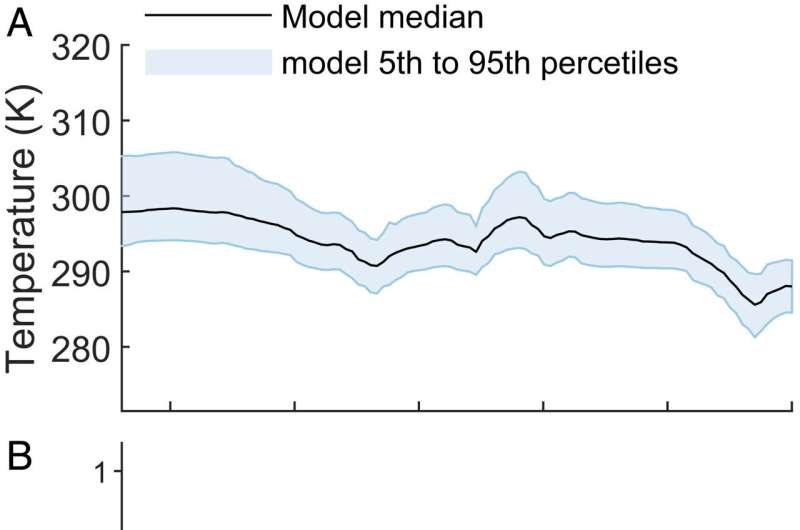
Global temperature and surface-ocean phosphate concentration throughout the 
Phanerozoic (adapted from ref. 29). (A and B) The evolution of (A) temperature (K) and 
(B) surface-ocean phosphate concentration (µM P) obtained in ∼106 default model
 simulations (5th to 95th percentiles of the results) where input parameters and
 time-dependent forcings were drawn from probability distributions that represent
 uncertainty in their values. 
Credit: Sharoni et al, Proceedings of the National Academy of Sciences (2021).

Even the smallest organism can have a major influence on the evolution of life on Earth. Microscopic algae that inhabit the sunlit waters of the ocean surface are not only responsible for about half of the photosynthesis on the planet but are also valuable as a nutrient-rich food source sustaining the entire marine ecosystem. In their study, recently published in Proceedings of the National Academy of Sciences, Prof. Itay Halevy and Dr. Shlomit Sharoni from the Weizmann Institute of Science's Earth and Planetary Sciences Department reveal the processes that made these miniscule organisms such a good source of nutrition for others higher up the food chain—and how this in turn advanced evolutionary change over the past half a billion years.

Microscopic algae, also called phytoplankton, produce large amounts of life-sustaining compounds through photosynthesis. Other tiny creatures then "graze" on this bountiful smorgasbord, and larger organisms, such as fish and crustaceans, feed on the tiny grazers. Consequently, the essential nutrients ingested by the  cascade across the food web to nourish all known marine life forms. But what determines the amount of nutrients the microalgae ingest and pass on to higher life forms? The answer to this question has remained elusive.

Halevy and his former doctoral student Sharoni have focused in recent years on the different geophysical and geochemical aspects that affect just how nutritious microalgae are. The scientists have shown in the past, for example, that the average nutrient content depends on the type of algae producing it: Some algal species are nutrient-rich; others are nutrient-poor, having smaller amounts of the major nutrients important for biological systems, such as phosphate. It is no surprise, then, that wherever environmental conditions favor nutrient-rich algal species, the  as a whole will be nutrient-rich, and vice versa. "The very cold and nutrient-rich waters near Antarctica sustain a population of fast-growing  that harvest a lot of nutrients, more than in warmer parts of the ocean, and this results in a nutrient-rich marine ecosystem," says Sharoni.

In the present study the researchers were interested in assessing how these environmental conditions—the temperature and nutrient concentrations of the ocean surface—varied over Earth's history, and more specifically, over the last 540 million years. This time interval is known as the Phanerozoic Eon, or the eon of "visible life," which is characterized by a particular geological footprint: fossils trapped in . The petrified remains of long-gone organisms, fossils offer researchers a great way to track evolutionary events and then compare these events to geochemical measurements and models, thus producing a holistic image of the processes that shaped our planet.

To accomplish this the researchers developed a computational model that couples several —the constant exchange and turnover of chemical substances between Earth's living and nonliving spheres. The scientists particularly focused on the interplay between the cycles of the four elements that define the chemistry of life: carbon, oxygen, nitrogen and phosphorus. Their proposed model uses estimates of geological processes, from volcanic activity to precipitation patterns, to infer the fluxes of these elements into and out of the ocean. Together, these fluxes determine the evolving concentration of carbon dioxide in the atmosphere—and thus Earth's climate—and the concentration of phosphate in seawater. With climate and phosphate availability computed in their model, the researchers were able to derive the overall nutrient content of microalgae over time.

By comparing their model's predictions with relevant fossil records, Halevy and Sharoni were able to explain several key evolutionary patterns of the Phanerozoic Eon. While past estimates often regarded the nutrient content of microalgae to have been constant through the ages, this model suggests that the nutrient content of microalgae has, in fact, almost doubled over the past 540 million years. This prediction agrees with the succession of different microalgal groups in the ocean over this time interval, from early nutrient-poor species to present assemblages of faster-growing, nutrient-loving algae. "It would seem that the quality of marine microalgae as a food source increased over time," says Halevy. "This may be part of the reason for the progressive evolution of larger, more complex and more motile organisms that—needing greater amounts of readily available nutrients—fed on the algae."

Using this approach, the researchers were also able to point toward major evolutionary and tectonic events as the main drivers for the increase in algal nutrient content. Until about 350 million years ago, photosynthesis occurred almost exclusively in the ocean. Only around that time did plants begin to colonize the continents, setting up a massive-scale photosynthetic "factory." Since terrestrial plants have long been recognized as making land more susceptible to chemical weathering, meaning the extraction of nutrients from rocks, the colonization of the continents significantly increased the flow of nutrients to the ocean. In addition, the breakup of the prehistoric supercontinent Pangaea, about 200 million years ago, further boosted this flux. "Taken together, these events increased the availability of phosphate, which is naturally found in some rocks and minerals, in the ocean. Marine microalgae evolved to exploit these extra nutrients," explains Sharoni. As microalgae had more available nutrients to metabolize, they gradually became a more nutritious food source, sustaining and contributing to the accelerated development of marine fauna.

"By accounting for both major geological and evolutionary events, we were able to reconstruct the geological history of nutrient availability in the ocean—and the response of marine life to this history," concludes Halevy.

In addition to compiling a more accurate history of life on Earth, this approach could be used to better understand the response of life in the ocean to present and future human activity. The nutrient content of microalgae, still the basis of the entire marine ecosystem, is affected by the global increase in temperature, driven by greenhouse gas emissions. Humans are also affecting the marine availability of the essential  phosphate and nitrate by spilling sewage and agricultural and industrial waste into the . The effects of human activity on both temperature and nutrient availability may in turn have a direct effect on the activity and prosperity of different algal species, and consequently on all species further up the food chain.Plankton are more resilient to nutrient stress than previously thought

More information: Shlomit Sharoni et al, Geologic controls on phytoplankton elemental composition, Proceedings of the National Academy of Sciences (2021). DOI: 10.1073/pnas.2113263118

Journal information: Proceedings of the National Academy of Sciences 

Provided by Weizmann Institute of Science