Thursday, May 05, 2022

The Shadowy Russian Scheme That Dumped Nazis Into Ukraine


David Volodzko
Tue, May 3, 2022, 

Dmitry Serebryakov/AFP via Getty

Russian President Vladimir Putin claims he invaded Ukraine to “de-nazify” the country and “protect people” from “bullying and genocide.” Russians apparently believe him, too; about 68 percent think the purpose of the invasion is self-defense, while 21 percent say it has to do with de-nazification. Though some have been careful to acknowledge that Ukraine does indeed have a Nazi problem, the West has mostly responded to such claims with eye-rolling, rightly arguing that Putin’s so-called de-nazification is nothing more than an excuse for a blatant land-grab.

But there is one glaring point that has been largely overlooked in the discussion about Nazism in Ukraine: the fact that the country’s Nazi problem can be traced right back to Russia.

Moscow recently released a shady video of FSB forces allegedly “thwarting” an assassination attempt by Ukrainian neo-Nazis. The so-called assassins’ lair contained plenty of “evidence” that appears to have been planted, like a new-looking Nazi T-shirt and Sims games, apparently a mistake by Russian agents who had been instructed to bring Sim cards into the apartment but planted the video games instead.

Another item that was “discovered” was a book with a handwritten note, signed with “signature illegible,” suggesting the FSB had erroneously signed those words after having been told to leave an illegible signature. Like everything else, the book was probably a plant, but the signature isn’t as dumb as it looks.

That phrase has special meaning in the Russian ultra-nationalist community. It’s even the title of a grossly antisemitic animated film about a rat (a metaphorical Jew) who gets a job at an office using a reference with an illegible signature. Leonid Volkov, chief of staff for opposition leader Alexei Navalny, wrote on Twitter that the phrase is also tied to Vasily Fedorovich, author of the 2011 fascist manifesto and hate-crime how-to “White Laces.” As Die Welt reported in 2008: “Ukrainian hate groups are believed to be inspired by their counterparts in Russia... Russian skinheads help the local groups, sharing tips and video clips on how to attack and torture victims and how to safely leave the crime scene.”

Holocaust Memorial and TV Tower Attacked in Putin’s Sham ‘Anti-Nazi’ War

There are other forms of ultra-nationalist cultural inspiration that have bled into Ukraine from Russia over the years, including neo-Nazi football fan groups, mixed martial arts (MMA), and underground metal bands. The Russian neo-Nazi football hooligan and far-right MMA figure Denis Nikitin has been living in Ukraine for years, where he has been organizing MMA fights in Kyiv, and allegedly using MMA as a neo-Nazi recruitment tool. Another avenue for Russian neo-Nazis to meet and recruit Ukrainians has been the music scene, including the Russian metal band M8L8TX (Hitler’s Hammer), which frequently toured the Kharkiv area. “When you talk to the Nazis themselves,” said independent journalist Leonid Ragozin, “it turns out that they frequently attended those concerts.”


Russian nationalist Dmitry Dyomushkin at a press conference held by the Movement Against Illegal Immigration (DPNI) in Moscow on Feb. 16, 2011.
Alexey Sazonov/AFP via Getty

The Russian government has also allegedly played a direct role in sending neo-Nazi mercenaries to Ukraine. That includes Dmitry Demushkin, who has claimed that in February 2014, then-Russian Deputy Prime Minister Dmitry Rogozin offered to make him the mayor of a city in Donbas if he would agree to lead his followers to fight in Ukraine. A year later, Wagner-affiliated mercenary and neo-Nazi Alexei Milchakov also claimed that he, fellow Russian neo-Nazi Yan Petrovsky, and others were paid by the Russian government to do mercenary work in Ukraine, where he has since founded the neo-Nazi mercenary group Rusich and made headlines by cutting the ears off enemy corpses.

To be fair, Ukraine does have a Nazi history all its own. The nation’s founding fathers were Nazi collaborators: Stepan Bandera was the leader of the far-right Organization of Ukrainian Nationalists (OUN), Roman Shukhevych was a Nazi auxiliary police captain, and Yaroslav Stetsko once said he supported the “destruction of the Jews.”

The remnants of that kind of historical antisemitism linger to this day: There has been a recent spike in antisemitism in Ukraine over the past few years, including a neo-Nazi march in Kyiv in May 2021. But to the extent that such issues exist, there has been a targeted effort to address them—including in early February of this year, when the Ukrainian government passed a law criminalizing antisemitism.


The Azov battalion demonstrates in Kiev on Oct. 14, 2014, to mark the founding of the Ukrainian Insurgent Army (UPA), a paramilitary partisan movement formed in 1943 to battle for independence against Polish, Soviet, and German forces in western Ukraine.
Genya Savilov/AFP via GettyMore

Then there’s Ukraine’s Azov Battalion, whose founding leader once said Ukraine’s purpose is to “lead the white races of the world in a final crusade … against Semite-led Untermenschen [subhumans].” But if Azov is an antisemitic, ultra-nationalist group, and ultra-nationalist influence comes from Russia, why is Azov fighting Russia?

“Throughout the aught years in Russia there were mass beatings of people with the ‘wrong’ skin color or eye shape,” Igor Eidman, the Russian sociologist and political commentator, wrote in September 2020. “But there were practically no political attempts on security officers, officials, oligarchs.”

That was until 2007, when “the Nazi golem began to get out of control of its creator. The Nazis actually switched to mass terror, destabilizing the country. They began to blow up and smash markets,” Eidman wrote. As a result, Russian authorities decided to shut down their pet Nazi project during the Euromaidan uprisings in Ukraine, because “the Kremlin decided that the nationalists could become a fighting force of protests not only in Kyiv, but also in Moscow. Therefore, in 2014, they tried to ship them to the slaughterhouse in the Donbas. And those who refused were imprisoned.”

This rhymes with statements by Demushkin, Milchakov, and others.

Eidman concludes that almost all Russian ultra-nationalist leaders suddenly became enemies of the state and were imprisoned from 2014 to 2015. Many subsequently fled to Ukraine. Alexander Parinov, who is wanted for planning the murder of a lawyer and journalist, is now reportedly a member of Azov. Sergey Korotkikh, who founded Russia’s largest ultra-nationalist group the National Socialist Society, is now a top Azov member. Roman Zheleznov of the far-right Restrukt movement, which hunted gays in Russia, also reportedly serves in Azov. Alexei Korshunov, a member of the neo-Nazi Combat Organization of Russian Nationalists (BORN), which is responsible for many killings, was suspected of killing antifa activist Ivan Khutorskoi and fled to Zaporizhzhia, Ukraine.


Ukrainian ultra-nationalists march through the center of Lviv on April 28, 2013, to mark the 70th anniversary of 14th SS-Volunteer Division “Galician” foundation.

Yuriy Dyachyshyn/AFP via Getty

So Russia helped foster and encourage ultra-nationalist groups to destabilize Ukraine, but when the Kremlin realized these same groups could be a destabilizing force in Moscow and cracked down on them, many fled to neighboring Ukraine. The end result being that you now have anti-Russian neo-Nazis in Ukraine of Russian origin.

“The Kremlin found that the ultra-right may pose a threat to political stability, not only to migrant workers and African students,” Alexander Verkhovsky, the director of the Russian think tank SOVA Center, which focuses on nationalism and racism in post-Soviet Russia, told the Daily Beast. “There were several waves of crackdowns. My hypothesis is that our authorities had some fears related to those who participated in the war [in Ukraine] and were returning back very frustrated.”

White Nationalists Are Tearing Each Other Apart Over Ukraine

Verkhovsky says while Russia has influenced Ukrainian groups, they did not create them. “Many Russian neo-Nazis and other ultraright leaders and activists, including militant ones, fled to Ukraine in various years,” he added. “Some of them, not all of them, became a part of the Ukrainian neo-Nazi milieu. But all Ukrainian neo-Nazi groups were created by Ukrainians.”

Political betrayal is only part of the problem. There’s a deep-seated ideological rift as well. “Our ultra-rights are white racists above all,” said Verkhovsky, adding, “Putin is seen as an enemy because he invites millions of non-Slavs from other countries, which is seen as an invasion. So he is seen as a national traitor.”


A soldier from the Azov battalion patrolling in Shyrokyne, Ukraine.
NurPhoto/Getty

This explains why, in a 2014 report by the Guardian, one Azov fighter was quoted as saying, “I have nothing against Russian nationalists, or a great Russia. But Putin’s not even a Russian. Putin’s a Jew.”

In a nutshell, this is how you end up with Putin claiming he wants to de-nazify Ukraine and remove its Jewish president, while also having Russian neo-Nazis in Ukraine claiming Putin is a Jew. Either way, Putin’s claim is clearly a case of the Nazi kettle calling the Nazi pot black.

CAPITALI$M IS CRISIS

Putin, nukes, and markets


·Senior Columnist

Nuclear war is a tail risk.

The financiers and policymakers who gather for the Milken Institute's Global Conference in Beverly Hills each year normally debate on monetary policy, political trends and investment opportunities. This year, they’re gauging the likelihood of Armageddon.

The Russia-Ukraine war is an obvious headline issue for financial markets, with Russian forces committing alleged atrocities reminiscent of the Holocaust and many western nations now providing billions of dollars of weapons to the underdog Ukrainians. The war has driven oil prices above $100 per barrel and disrupted Ukrainian grain shipments to many nations, which could soon cause food shortages. With no end to the war in sight, the human and economic toll could go much higher.

Russian President Vladimir Putin has hinted he could use nuclear weapons from Russia’s vast arsenal to regain battlefield momentum in Ukraine. Would he really do it?

“I don’t think it’s the most likely outcome,” Michèle Flournoy, a senior Pentagon official in the Obama administration, said at the conference. “But if he really feels he’s going to suffer a catastrophic loss, the most likely nuclear use would be a demonstration shot, not actually using it on the battlefield in Ukraine but exploding a nuclear weapon somewhere, to shock everybody, surprise everybody and create fear, and say, ‘I’ve just broken a 70-year taboo and we have to negotiate on my terms.’ That’s one of the things the U.S. and NATO have to think through — how would they respond to that?”

Former Defense Undersecretary for Policy Michele Flournoy, CEO of the Center for a New American Security, participates in a panel discussion at the Center for Strategic and International Studies (CSIS) in Washington, June 2, 2014. REUTERS/Yuri Gripas (UNITED STATES - Tags: POLITICS)

“If he did that, there would be no good options,” Democratic Rep. Adam Smith of Washington, who chairs the House Armed Services Committee, said in response to Flournoy. “If he does it, obviously we have to come in and fight.”

But Smith emphasizes the best way to approach Putin’s nuclear impulses is to make sure he never feels so threatened he’d resort to nukes: “We need to make very clear this is not an existential threat to Putin and give him that off-ramp. Putin does not want NATO engaged in the fight in Ukraine. If you know NATO’s military capability, the U.S. military capability, if we actually got engaged, Russia would be done in a week. He doesn’t want that so we can play on that.”

Smith is referring to bellicose comments from people like Republican Sen. Lindsey Graham of South Carolina, who has called for “somebody in Russia to take this guy out.” Even President Biden has said Putin “can’t remain in power.” While both politicians may have been calling for Putin’s opponents in Russia to depose him, Putin could interpret it as a U.S. offer to help end his reign, fueling the type of desperation that might lead to Putin using nukes.

Is Putin deluded or mentally ill?

One of the biggest questions hanging over Putin’s invasion of Ukraine, which is obviously going badly, is whether Putin is deluded or sick. “A healthy person wouldn’t start a war like that,” Mikhail Khodorkovsky, a Putin foe who was once the richest businessman in Russia, said through an interpreter at the Milken conference. But he thinks Putin likes to keep foes on edge, similar to the way President Richard Nixon famously employed the “madman theory.”

“He wants to show that he’s almost crazy, and that the Russian people are almost crazy,” Khodorkovsky said. “But that’s not the case at all. People want to live. Putin wants to live. Nobody wants suicide."

Putin's personal calculus probably depends on the cost he thinks he would pay for setting off a nuke. Biden has vowed NATO and the United States will respond “in kind” if Putin uses a nuke, which would be exactly the sort of Western involvement Putin dreads.

A person walks next to a mural of Russian President Vladimir Putin, which has been vandalised with red spray paint and the word
A person walks next to a mural of Russian President Vladimir Putin, which has been vandalised with red spray paint and the word "War" written instead of the original text reading: "Brother", following Russia's invasion of Ukraine, in Belgrade, Serbia, April 29, 2022. REUTERS/Marko Djurica TPX IMAGES OF THE DAY

“Biden saying there would be a corresponding response was a very serious braking mechanism on Vladimir Putin,” Khodorkovsky said. “Could Putin use tactical nukes in Ukraine on principle? Of course he could. If you ask me whether he would if he knows he would be met with appropriate response, I don’t believe he would.”

Sanctions on Russia may get tighter, meanwhile, while Congress seems poised to grant a Biden request for a massive increase in U.S. weapons shipments to China. At the Milken conference, former Treasury Secretary Steven Mnuchin called for Europe to impose an immediate embargo on Russia oil, to slash the energy revenue Putin uses to build and sustain Russia’s military. Europe is debating such a move and seems likely to phase in an embargo, to limit the immediate damage to a European economy that now seems be tilting toward a modest recession.

Khodorkovsky suggests Putin himself could be phased out in a way that is less threatening than the threat of a coup. “If after this war ends, you’re going to facilitate his ability to rearm himself, you’re only going to get the same thing once again," Khodorkovsky said. "An exit strategy is actually very simple. The exit strategy should be we don’t want to see you in power, but we don’t necessarily need to see you leave power right now. This is an adequate enough exit strategy for him.”

When Putin says Russia and Ukraine share one faith, he's leaving out a lot of the story

Kathryn David, Mellon Assistant Professor of Russian and East European Studies, Vanderbilt University
Tue, May 3, 2022, 

A Ukrainian service member takes a photograph of a damaged church after shelling in a residential district in Mariupol, Ukraine, March 10, 2022.
  AP Photo/Evgeniy Maloletka

Russian President Vladimir Putin has often asserted that Russians and Ukrainians are “one people.” He points to a few factors: the Russian language spoken widely in both countries, their similar cultures, and the two countries’ political connections, which date back to medieval times. But there is one more factor that ties all these together: religion.

Grand Prince Volodymyr, leader of the kingdom of Kyiv, converted to Christianity in the 10th century and forced his subjects to do the same. As Putin sees it, Orthodox Christianity established a religious and cultural foundation that outlasted the kingdom itself, creating a shared heritage among the people who live in present-day Russia, Ukraine and Belarus.

As a historian of religion and nationalism in Ukraine and Russia, I see Russia’s invasion as, in part, an attempt to restore this imagined “Russian World.” More than 7 in 10 Ukrainians identify as Orthodox Christians, similar to the percentage in Russia.


But what Putin’s claims ignore is a uniquely Ukrainian religious heritage that transcends church institutions and has long nourished Ukrainians’ sense of nationhood. Many Ukrainians throughout history have seen religion as something that asserts their separateness from Russia, not their commonality.


Kyiv vs. Moscow

Under imperial Russia, the Russian Orthodox Church was often a tool of assimilation, with officials eager to use the power of the church to make newly conquered peoples Russian subjects.

Beginning in 1654, when Ukrainian lands were being absorbed into imperial Russia, clergy from Moscow had to decide how to accommodate distinct religious texts, practices and ideas from Kyiv that differed from Moscow’s in subtle yet significant ways. Believing some of the Kyivan practices to be more closely aligned with the Byzantine roots of the Orthodox Church, Russian clergy decided to integrate Ukrainian rituals and priests into the Russian Orthodox Church.

Later, some members of the clergy helped promote the idea of Russian and Ukrainian unity, rooted in Orthodox faith. Yet 19th-century Ukrainian activists took a different view of this history. They saw the Russian Orthodox Church as a tool of empire. In these activists’ view, the church had adopted Ukrainian traditions in the name of spiritual unity while actually denying Ukrainians’ distinct identity.

These nationalist activists did not abandon Orthodox Christianity, however. As they pushed for an autonomous Ukraine, they asserted there was a difference between the politics of the church institution and the everyday religion that foregrounded Ukrainian life.


In the shadow of empire


Not all Ukrainians lived in the spiritual realm of Moscow. A Ukrainian national movement also grew in the west, in former Kyivan lands that ended up in the Austro-Hungarian Empire. Here many in the population were members of a hybrid religious institution, the Greek Catholic Church, which practiced Orthodox rituals but followed the pope.

Local parishes in the Greek Catholic Church became important in the national movement as religious institutions that distinguished Ukrainians from not only Russian neighbors to the east, but also from the local Polish population in Austria-Hungary. But Ukrainian activists grappled with how to build a nation that was split between these two main faiths: the Russian Orthodox Church and the Greek Catholic Church.

When imperial Russia collapsed in 1917, one of the first acts of the new Ukrainian government formed in Kyiv was declaring its own Orthodox Church, separate from Moscow: the Ukrainian Autocephalous Church. The church was intended to use the Ukrainian language and to empower local parishes more than the Russian Orthodox Church had allowed.

As the Austro-Hungarian Empire collapsed, the leader of the Ukrainian Greek Catholic Church, Andrei Sheptytsky, put forward a plan for a unified Ukrainian Church under the Vatican but grounded in Orthodox ritual. He hoped such a church could bring Ukrainians together.

But these plans never materialized. The independent government in Kyiv was defeated by the Bolsheviks by 1921, and the Ukrainian Orthodox Church based in Kyiv was banned by the Soviet Union.


Crackdown on ‘nationalist’ prayers

In the first decades of the Soviet Union, the Bolsheviks mounted a campaign against religious institutions, especially the Russian Orthodox Church. They viewed Russian Orthodoxy, in particular, as an instrument of the old regime and a potential source of opposition.

During World War II, however, the Soviet Union revived the Russian Orthodox Church, hoping to use it as a tool to promote Russian nationalism at home and abroad.

In western Ukraine, which the Soviet Union annexed from Poland in 1939, this meant forcibly converting 3 million Ukrainian Greek Catholics to Russian Orthodoxy.

Many Ukrainians proved resilient in adapting religious life to these circumstances. Some formed an underground Greek Catholic Church, while others found ways to maintain their traditions despite participating in the Soviet-sanctioned Russian Orthodox Church.

In Soviet secret police records, officers documented what they called “nationalist” practices at church: believers remaining silent when the Moscow patriarch’s name was to be commemorated, for example, or using prayer books that predated Soviet rule.

Thousands of people attend a mass prayer in front of St. Sophia Cathedral in Kyiv on Oct. 14, 2018, to give thanks after the Orthodox Church in Ukraine gained autocephaly. 

Hopes for change


When the Soviet Union collapsed, Ukraine found itself in a position to redefine the religious landscape. Some Christians became part of the Greek Catholic Church after it was relegalized. Other Christians saw this moment as a time to declare an “autocephalous” Ukrainian church, meaning they would still be in communion with other Orthodox churches around the world, but not under Moscow’s control. Still others wanted to remain part of the Russian Orthodox Church based in Moscow.

In 2019, a Ukrainian Orthodox church was recognized as autocephalous by Ecumenical Patriarch Bartholomew, the spiritual head of Orthodoxy worldwide, forming the Orthodox Church of Ukraine.

In Ukraine today, only 13% of people say they are affiliated with the Orthodox Church based in Moscow, while 24% follow the Orthodox Church based in Ukraine, and a similar percentage call themselves “simply Orthodox.”

Some Ukrainians have treated the Moscow-based church with suspicion, recognizing its close ties to Putin’s government. Yet it would be a mistake to assume that all who attend this church agree with its politics.

Putin and other leaders in Moscow have their own ideas about Orthodoxy. But in Ukraine, sacred spaces have long been where many Ukrainians fought for, and won, their right to self-determination.


This article is republished from The Conversation, a nonprofit news site dedicated to sharing ideas from academic experts. It was written by: Kathryn David, Vanderbilt University.

Read more:

Ukraine’s economy went from Soviet chaos to oligarch domination to vital global trader of wheat and neon – and now Russian devastation


Why is Russia’s church backing Putin’s war? Church-state history gives a clue


Ukraine’s women fighters reflect a cultural tradition of feminist independence
Brazil’s Most Popular President Returns From Political Exile With a Promise to Save the Nation

Ciara Nugent/São Paulo, Brazil
Wed, May 4, 2022, 

Luiz Inácio Lula da Silva gives a speech to union workers at Praça Charles Muller, São Paulo, on International Workers' day, May 1, 2022.
 Credit - Luisa Dörr for TIME

The genre we assign to a life story depends a lot on how it ends. Luiz Inácio Lula da Silva’s life has already completed several dramatic arcs. First, the hero’s journey: a child born into poverty moves to the big city, rises to lead a labor union, and then becomes the most popular President in the history of modern Brazil. Then the tragedy: a celebrated statesman is fingered in a staggering corruption scheme, sent to prison, and forced to watch from the sidelines while rivals dismantle his legacy.

The endings don’t seem to stick, though. In April 2021, Brazil’s Supreme Court annulled the corruption convictions that had excluded Lula—as he’s universally known—from politics in 2018, saying a biased judge on his case had compromised his right to a fair trial. The bombshell decision set Brazil on course for a showdown between the leftist Lula and current far-right President Jair Bolsonaro in the October 2022 elections. Polls now put the challenger at 45% and the incumbent at 31%, with more centrist candidates all but out of the running.

Read More: Lula Conversa com TIME Sobre Ucrânia, Bolsonaro e a Frágil Democracia Brasileira

For Lula, who is 76 and had been preparing for a quieter life away from the halls of power, this new twist in his story was a surprise. But he didn’t hesitate to return to frontline politics. “In truth, I never gave up,” he rumbles in his famously gravelly voice, made hoarser by age. “Politics lives in every cell of my body, because I have a cause. And in the 12 years since I left office, I see that all the policies I created to benefit the poor have been destroyed.”

It’s late March, six weeks before Lula launches his campaign, and he’s sitting in a studio in the São Paulo headquarters of his Workers’ Party (PT). Chuckling and griping that no one knows how to design a comfortable chair these days, he comes off as a jovial grandfather. But at his allusion to the current government, his back stiffens and the deeper, gruffer notes of his voice take over. Lula becomes the fiery young union leader he was in the 1970s, and launches into a soapbox-ready tirade.

The dream of Brazil that Lula pursued during his presidency from 2003 to 2010 lies in tatters, he says. Through progressive social programs, paid for by a boom in Brazilian products like steel, soy, and oil, Lula’s government lifted millions out of poverty and transformed life for the country’s Black majority and Indigenous minority. Bolsonaro has taken a hammer to all that, scrapping policies that expanded poor people’s access to education, limited police violence against Black communities, and protected Indigenous lands and the Amazon rain forest. COVID-19 has killed at least 660,000 Brazilians. The toll, the second highest in the world, was likely worsened by Bolsonaro, who called the virus “a little flu,” dubbed people who followed isolation guidance “idiots,” and refused to get a vaccine himself and to buy doses for Brazilians when they first became available. A December 2020 national survey showed more than 55% of Brazilians were living in food insecurity, up from 23% in 2013.

Read More: Why 2022 Might Be the Year Brazil Says Goodbye to President Bolsonaro

Even Brazil’s young democracy feels less than secure. Bolsonaro, a defender of the nation’s 20th century military dictatorship, has called mass rallies against judges who displease him and attacked critical journalists. He has also spent months warning of electoral fraud in Brazil, in an echo of President Donald Trump’s behavior before the 2020 U.S. election. In April, he suggested elections could be “suspended” if “something abnormal happens.” If he loses, analysts warn, a Brazilian version of a Jan. 6 riot is likely. If he wins, Brazil’s institutions may not withstand another four years of his rule.

Riding out of his political exile like a white knight, Lula claims that he can save Brazil from that nightmare. But it may no longer be the same country he once ruled. Its economy is reeling from the pandemic, with double-digit inflation and no commodities boom on the horizon. A six-year political crisis has bitterly divided society. Geopolitical rifts that Brazil once straddled have widened, and the West is in a new hot-and-cold war with Russia.

Lula, though, believes lightning will strike twice. “In American football, there is a player—as it happens he’s ended up with a Brazilian model,” he says, referring to Tom Brady and his wife Gisele Bündchen. “He’s been the best player in the world for a long time, but in each game, his fans demand that he plays better than he did in the last one. For me, with the presidency, it’s the same thing. I am only running because I can do better than I did before.”

Lula, who will run in October's presidential elections, takes part in a labor union event during International Workers' Day in São Paulo.
Luisa Dörr for TIME

The crowd has been waiting for hours. Children sit restlessly on white plastic chairs, crammed together with their parents under a marquee to keep out the searing midday sun. Many wear red T-shirts with the logo of the Homeless Workers’ Movement (MTST), which fights for public housing and has organized this rally in a parking lot in the working-class outskirts of São Paulo. “It’s been a long time,” Lula finally begins over chants of his name, “that I’ve been missing the microphone.”

Neighborhoods like this are Lula’s home turf. When he was 7 years old, in 1952, his mother brought him and his seven siblings from Brazil’s desert-like northeast, traveling two weeks in an open truck bed, to São Paulo. They lived in the back room of a bar, and Lula left school at 12 to help support them. By 17, he was making door handles at a factory, and on one night shift, he lost his left pinkie in a machine. At 23, Lula married a neighbor, Maria de Lourdes. But she died two years later from a hepatitis infection while eight months pregnant with their first son, who also died—victims, Lula would later say, of the low-quality health care offered to Brazil’s poor. A few years later, in 1975, he was elected leader of the Steel Workers’ Union of São Bernardo do Campo, a São Paulo district a few miles from the site of this rally.

Many in Brazil know that story, which was immortalized in a syrupy 2009 film, Lula, Son of Brazil. “Lula’s trajectory has a very strong mythic quality for everyone who fights for social justice in Brazil,” says Guilherme Boulos, 39, coordinator of the MTST, who is often considered Lula’s political heir. “But he himself isn’t a distant, ceremonial person. He still speaks the language of the people.” Lula says the secret to his success lies in his ability to relate to working-class Brazilians—an unusual feat in a country where politicians are prone to price-of-milk gaffes. “I feel proud to have proven that a metal-worker without a university diploma is more competent to govern this country than the elite of Brazil,” he says. “Because the art of government is to use your heart, not only your head.”


Lula at an event in Sao Bernardo Do Campo during his 1989 presidential campaign.
Antonio Ribeiro—Gamma-Rapho/Getty Images

Bolsonaro, a former army captain devoted to the “says what he really thinks” political style, would probably agree on the importance of connecting emotionally with voters. But Lula’s populism conceals a shrewd pragmatism that has allowed him to navigate Brazil’s choppy political waters. As President, Lula maintained the fiscal conservatism of his center-right predecessor, Fernando Henrique Cardoso, sticking to Brazil’s agreements with the International Monetary Fund and satisfying investors. At the same time, his flagship Bolsa Família program boosted the income of poorer families, while other policies expanded access to education and health care. “If I can tell you that I have a daughter with a law degree, it’s because of programs created by the Lula government,” says Mel Nogueira, 39, at the São Paulo rally. “He represents hope itself.” In 2009, two years before Lula left office with an 83% approval rating, President Barack Obama called him “the most popular politician on earth.”

Then it all came crashing down. In 2014, Brazilian investigators uncovered a vast kickbacks-for-contracts scheme, centered on the state oil giant Petrobras, with billions in public funds pilfered. The probe was dubbed Car Wash. Lula was no longer in office, but opposition parties in Congress took advantage of anger at the scandal, and an economic crisis in Brazil, to impeach his PT protégé President Dilma Rousseff. She was not directly implicated in Car Wash, but lawmakers voted her out on the pretext that she had fudged numbers to make public accounts look better ahead of an election, and replaced her with a right-wing interim President. Two weeks later, prosecutors alleged that Lula was the graft scheme’s “mastermind.” The formal charge was that he had received a beachfront apartment as a bribe from a construction company. Lula denied that he had ever owned the property, but in 2017 federal judge Sergio Moro sentenced him to nearly 10 years in prison.

From behind bars the following year, Lula mounted a new campaign for October’s presidential race. He was ahead in the polls when Brazil’s top electoral court ruled that he could not be a candidate. Lula detected the logic of that: “It made no sense to impeach Dilma, if two years later, I would be President again. So they had to take me out of the game.” Bolsonaro defeated Lula’s PT replacement by 55.2% to 44.8%. Moro would serve as Justice Minister in Bolsonaro’s government.


Lula is seen on television giving a speech responding to accusations of corruption against his government, inside a shop in São Paulo in 2004.
Alex Majoli—Magnum Photos

Read More: Brazil’s Star Justice Minister Sergio Moro on His Resignation and Clash With President Bolsonaro

For the Brazilian left, Rousseff’s impeachment amounted to a coup, an attack not on corruption—Car Wash implicated politicians across the political spectrum—but on the social progress that Lula and Rousseff had tried to achieve. Yet some supporters remained unsure about what had taken place under Lula’s watch. “I wish the investigation had convinced me whether he was guilty or innocent,” left-wing filmmaker Petra Costa said in her 2019 documentary The Edge of Democracy. “But instead, I was seeing prosecutors making a spectacle to present their case.”

Lula had spent 18 months in prison when the Supreme Court ruled, in November 2019, that defendants can’t be jailed before exhausting their appeal options. (In April 2022, the U.N.’s human-rights committee said Lula’s trial had been biased and violated due process.)It was a dark period in his life. Publications that had once celebrated his accomplishments were describing him as a criminal. His second wife, of 43 years, Marisa Letícia, had died from a stroke during his prosecution, and while he was in jail his 7-year-old grandson Arthur died of meningitis.

Lula deflects questions about his state of mind during that time. He says he drew strength from calls of “Good morning, President” from supporters who maintained a vigil outside the jail. “I was prepared to leave prison without feeling any resentment, only remembering that it was a part of history. I cannot forget it,” he says. “But I can’t put it on the table every day. I want to think about the future.”

For all his talk of the future, Lula’s campaign has so far run on nostalgia. When he was President, his Facebook ads point out, unemployment was lower, wages were higher, and fuel was cheap. “Lula hasn’t really presented a plan for the future. For the time being, he is only presenting the idea that he was a better President than Bolsonaro,” says Thomas Traumann, a political consultant and former Brazilian communications secretary.

Bolsonaro’s pandemic mismanagement and attacks on democratic institutions have allowed Lula to command a broad unity coalition. Geraldo Alckmin, a center-right former São Paulo governor who was Lula’s rival in the 2006 election, will be his running mate. Other former critics are backing his campaign, including Felipe Neto, a popular YouTuber who was a fierce voice against the PT during the Car Wash probe. “I’m not a member of the PT, and I have hard criticism about a lot of matters related to Lula. But those criticisms are in the political field, not about human rights,” he says. “I would like to oppose a legitimate leader; I can’t stand doing it against a murderer any longer.”

In a country where per capita GDP has been cut almost in half since 2014, even elites, many of whom supported Bolsonaro in 2018, have warmed to the idea that Lula may be better for business. “I am the only candidate with whom people should not be concerned about [economic policy],” Lula says. “Because I’ve been a President twice already. We don’t discuss economic policies before winning the elections. First, you have to win the elections.” That will come as a surprise to many, since the economy has usually been at the center of Brazil’s presidential campaigns. But Lula doubles down, citing stats from Brazil’s 2000s boom. “You have to understand that instead of asking what I will do, just look at what I’ve done.”

If he wins, though, Lula would inherit a darker economic outlook than he did in 2003. “It’s hard to quantify how much of the economic success of Lula’s first administration was due to the incredible conditions that he was fortunate to have,” says Gustavo Ribeiro, a political analyst. “It’s going to be a much more daunting task ahead of him.”


Lula, former Brazilian President and 2022 presidential candidate, photographed in São Paulo on March 23.
Luisa Dörr for TIME

That is perhaps most evident in the issue of oil. During the PT’s rule, offshore discoveries by Petrobras bolstered state budgets and kept fuel prices low in Brazil. Today the global oil price is surging, driving inflation in Brazil, while efforts to fight the climate crisis have cast a shadow over the future of the oil sector, which makes up 11.5% of Brazil’s exports. In Colombia, Gustavo Petro, the left-wing front runner in its upcoming election, has pledged an immediate halt to oil exploration in his country—in line with recommendations of the International Energy Agency. He expressed hope that Lula and other progressive allies would join him in an anti-oil bloc.

Read More: The Amazon Rain Forest Is Nearly Gone. We Went to the Front Lines to See If It Could Be Saved

Lula’s response will disappoint environmentalists. “Look, Petro has the right to propose whatever he wants. But in the case of Brazil, this is not for real,” he says. “In the case of the world, it’s not for real.” Might he stop exploration for new oil deposits while extracting the oil Brazil has already located? “No, as long as you don’t have alternative energy, you will continue to use the energy that you have.”

Though Lula says his administration would scale up Brazil’s production of clean energy, he has also pledged to invest in new oil-refinery infrastructure in an effort to decouple Brazil’s oil from the global market. He frames it as a sovereignty issue. “Think of our dear Germany: Angela Merkel decided to close all the nuclear power plants. She did not count on the war in Ukraine. And today, Europe depends on Russia for energy.”

Lula’s views on foreign policy put him against the prevailing wind today. As President, he refused to take a side in the West’s arguments with its rivals, and prided himself on speaking with Venezuela’s Hugo Chávez or Iran’s Mahmoud Ahmadinejad the same week as George W. Bush or Barack Obama. He says he was “very concerned” when the U.S. and many Latin American countries recognized Juan Guaidó, Venezuela’s center-left opposition leader, as President in 2019, in a bid to force Nicolás Maduro, Chávez’s authoritarian successor, from power. Even today, after Venezuela’s collapse into kleptocracy, Lula refuses to call Maduro a dictator.

Lula remains a die-hard believer that “two elected heads of state, sitting at a table, looking each other in the eye,” can resolve any differences. He claims that President Joe Biden and E.U. leaders failed to do that enough in the run-up to Russia’s invasion of its neighbor in February. “The United States has a lot of political clout. And Biden could have avoided [the war], not incited it,” he says. “He could have participated more. Biden could have taken a plane to Moscow to talk to Putin. This is the kind of attitude you expect from a leader.”


A street vendor sells towels with images of Bolsonaro and Lula near Eldorado dos Carajás in September 2021.
Jonne Roriz—Bloomberg/Getty Images

Most Western analysts argue that Vladimir Putin’s invasion was fueled by an imperialistic desire to seize territory, rather than any provocations from Ukraine. But in Lula’s view, even Ukrainian President Volodymyr Zelensky, who faced a months-long buildup of troops at his borders before the outbreak of war in February, shares blame. “I see the President of Ukraine, speaking on television, being applauded, getting a standing ovation by all the [European] parliamentarians,” he says, shaking his head angrily. “This guy is as responsible as Putin for the war. Because in the war, there’s not just one person guilty.” He argues that it is irresponsible for Western leaders to celebrate Zelensky rather than focusing on closed-door negotiations. “You are encouraging this guy, and then he thinks he is the cherry on your cake. We should be having a serious conversation. OK, you were a nice comedian. But let us not make war for you to show up on TV.”

Read More: Inside Zelensky’s World

The U.S. and the E.U. should have assured Putin that Ukraine would not join NATO, Lula says, drawing a comparison with the 1962 Cuban missile crisis, when the U.S. and Russia agreed to remove missile deployments from each other’s backyards. Western sanctions on Russia have unfairly impacted other regions’ economies, he adds. “War is no solution,” he says. “And now we are going to have to foot the bill because of the war on Ukraine. Argentina, Bolivia will also have to pay. You’re not punishing Putin. You’re punishing many different countries, you’re punishing mankind.”

The conflict underscores the need to renew global institutions, he says. “Today’s United Nations doesn’t represent anything anymore. Governments don’t take the U.N. seriously today, because they make decisions without respecting it,” Lula says. “We need to create a new global governance.” However difficult that may be in today’s fractured world, many leaders and diplomats would welcome Lula’s return: over the past four years, Bolsonaro has burned countless bridges, angering China with racist jokes about COVID-19 and mocking E.U. leaders. “Brazil will again become a protagonist on the international stage,” Lula pledges, “and we will prove that it’s possible to have a better world.”

If Lula’s stance on Ukraine, or his refusal to acknowledge any corruption-related mistakes by his party, suggest stubbornness, his supporters say he is willing to evolve where it matters.

For example, Brazil’s conversation on systemic racism has advanced since 2010. According to Douglas Belchior, an organizer for the nation’s Black Coalition for Rights, Lula’s antipoverty and education-access programs gave him a strong record on improving life for Black and mixed-race Brazilians, who make up 56% of the population and 75% of the country’s poorest. But today, Black and Indigenous Brazilians are calling for more targeted action to undo the pervasive legacy of slavery and colonialism. Lula’s next administration will need to put more emphasis on antiracism, and correct “some serious failings” by past PT governments on policing, Belchior says. “Going back to the point immediately before Bolsonaro isn’t enough for us. We have to move forward from where the PT governments stopped,” he says. “And Lula has listened to many Black activists, intellectuals, and politicians. He knows that the reconstruction of Brazil requires tackling racism.”

Read More: How Black Brazilians Are Looking to a Slavery-Era Form of Resistance to Fight Racial Injustice Today

There also are signs of movement on environmental issues. Though Lula is less ambitious about phasing out fossil fuels, his administrations were successful in curbing deforestation. Now he is centering the shifts Brazil needs to make on food to fight climate change—arguably more important in a country where agriculture and land use make up 61.5% of annual greenhouse-gas emissions. “I have improved how I speak. Now I’m not only talking about [ensuring that people can afford] a barbecue, but also about vegetarians,” he tweeted in February. “So we can stimulate a healthier agriculture in our country.”

Brazilian media attributes some of Lula’s new talking points—which also include an emphasis on gender equality and animal rights—to the influence of his fiancée Rosângela da Silva (no relation). In 2019, Lula announced his engagement to da Silva, a 55-year-old sociologist and PT activist, and they plan to wed in May. He’s hesitant to talk about her—“She can speak for herself!”—but he has “learned from her,” he says. “When you lose your wife, you think, well, my life has no more meaning. Then suddenly this person appears who makes you feel like you want to live again. I’m in love as if I were 20 years old, as if it were my first girlfriend.”

Lula believes the marriage will shape the tone of his next political chapter. “A guy as happy as I am doesn’t have to rage—let your opponents do what they want,” he says. “If I can, on the campaign, I will speak only about love. I don’t think it’s possible to be a good President if you only feel hate inside you, if all you want is revenge. No, the past is over. I will build a new Brazil.”

With reporting by Eloise Barry/London

Lula Talks to TIME About Ukraine, Bolsonaro, and Brazil's Fragile Democracy

Ciara Nugent/São Paulo, Brazil
Wed, May 4, 2022,


Credit - Photograph by Luisa Dörr for TIME

Luiz Inácio Lula da Silva’s return to frontline politics was a bombshell for Brazil. In April 2021, the Brazilian Supreme Court annulled a series of corruption convictions that had excluded the leftist former President from national elections in 2018, saying a biased judge on his case had compromised his right to a fair trial. The decision set Brazil on course for a showdown between Lula—as he is universally known—and current far-right President Jair Bolsonaro in the October 2022 elections.

Lula, who officially launches his campaign on May 7, promises to bring Brazil back to the good old days of his 2003-2010 presidency, which he wrapped with an 83% approval rating. That would mean reviving an ailing economy, saving a threatened democracy, and healing a nation scarred by the world’s second-highest COVID-19 death toll and two years of chaotic pandemic mismanagement. So far, his promises are resonating: Lula is polling at 45% compared to Bolsonaro’s 31%. But the gap is narrowing.

TIME staff writer Ciara Nugent sat down with Lula in late March, in the São Paulo headquarters of his Workers’ Party (PT), to speak about his time in prison, the war in Ukraine, and whether his plans for the country are based on more than nostalgia. This transcript has been condensed and edited for clarity.

TIME: When the Supreme Court restored your political rights last year, you were already preparing for a quieter life away from politics, according to Brazilian media. Did you immediately decide to return?

In truth, I never gave up. Politics lives in every cell of my body, in my blood, in my head. Because the issue is not politics itself, but the cause that brings you to politics. And I have a cause.

When I left the presidency in 2010, I was not planning to be a presidential candidate again. But in the 12 years since I left office, I see that all the policies I created to benefit the poor—all our social inclusion policies, everything we did to improve universities, technical schools, improving salaries, improving the quality of jobs—all that was destroyed, dismantled. Because the people who started to occupy the government after the coup that took Dilma [Rousseff] out, were people who wanted to destroy all of the things that the Brazilian people had won after 1943.

There is an expectation that I would become President of Brazil, again, because people have good memories of the time when I was President. Because people had jobs. Because people had better wages, because they had wage increases above inflation. So I think people miss that, and they want those things improved.

Brazil is facing a very different situation today than when you won the presidency for the first time in 2002—in terms of the economy, political polarization, the international situation. Can you do as good a job as you did the first time?


In American football, there is a player. As it happens he’s ended up with a Brazilian woman. A model. And he’s been the best player in the world for a long time. In each game he’s going to play, his fans demand that he plays better than he did in the last one. With the presidency it’s the same thing. I am only running because I can do better than I did before.

I’m sure that I can resolve [Brazil’s] problems. I’m certain that our problems will only be solved when poor people are participating actively in the economy, when poor people participate in the budget, when poor people are working, when poor people can eat. That is only possible if you have a government that is dedicated to the poor.

Many people in Brazil say that there were many incarnations of Lula, particularly on economic policy. Which Lula do we have today?


Look, I am the only candidate with whom people should not be concerned about that. You know why? Because I’ve been a President twice already. And we don’t discuss economic policies before winning the elections. First, you have to win the elections. And then you have to know who you will have in your team and what you will do. But if you have questions about me, look at what happened in Brazil when I was President of the Republic. Look at how the market grew. Brazil was only doing [a few] IPOs. Under my government, we had 250. Brazil had a debt of $30 billion, and after my government, we started loaning money to the IMF. Brazil didn’t have a single dollar of hard currency reserves. Today, we have $370 billion in hard currency reserves. […] So you have to understand that instead of asking what I will do, just look at what I’ve done.

During your first presidency, oil, among other products, powered a lot of that economic success. Now, with the climate crisis, we’re trying to use less oil. The front runner in Colombia’s May election, Gustavo Petro, has proposed an anti-oil bloc, in which countries would immediately stop exploration for oil. Would you join?


Look, Petro has the right to propose whatever he wants. But, in the case of Brazil, this is not for real. In the case of the world, it’s not for real. We still need oil for a while, you can’t just…

But the idea is to continue extracting and using the oil they’ve already found, and stop exploring for new deposits. Would you consider that?

No, as long as you don’t have alternative energy, you will continue to use the energy that you have. Think of our dear Germany: Angela Merkel decided to close all the nuclear power plants. She did not count on the war in Ukraine. And today, Europe depends on Russia for energy. What you can do is begin a long-term process to reduce [the need for oil] as you scale up other alternatives. You cannot imagine the United States stopping its use of oil from one day to the next.

I want to speak about the war in Ukraine. You have always prided yourself on being able to speak to everyone—Hugo Chavez as much as George Bush. But the world today is very fragmented diplomatically. I want to know if your approach still works. Could you speak to Vladimir Putin after what he’s done in Ukraine?

We politicians reap what we sow. If I sow fraternity, solidarity, harmony, I’ll reap good things. If I sow discord, I’ll reap quarrels. Putin shouldn’t have invaded Ukraine. But it’s not just Putin who is guilty. The U.S. and the E.U. are also guilty. What was the reason for the Ukraine invasion? NATO? Then the U.S. and Europe should have said: “Ukraine won’t join NATO.” That would have solved the problem.

Do you think the threat of Ukraine joining NATO was Russia’s real reason for invading?


That’s the argument they put forward. If they have a secret one, we don’t know. The other issue was Ukraine joining the E.U. The Europeans could have said: “No, now is not the moment for Ukraine to join the E.U., we’ll wait.” They didn’t have to encourage the confrontation.

But I think they did try to speak to Russia.


No, they didn’t. The conversations were very few. If you want peace, you have to have patience. They could have sat at a negotiating table for 10, 15, 20 days, a whole month, trying to find a solution. I think dialogue only works when it is taken seriously.

If you were President right now, what would you do? Would you have been able to avoid the conflict?

I don’t know if I’d be able to. If I was President, I would have phoned [Joe] Biden, and Putin, and Germany, and [Emmanuel] Macron. Because war is not the solution. I think the problem is that if you don’t try, you don’t fix things. And you have to try.

I sometimes get worried. I was very concerned when the U.S. and the E.U. adopted [Juan] Guaidó [then leader of Venezuela’s parliament] as President of the country [in 2019]. You don’t play with democracy. For Guaidó to be President, he would have to be elected. Bureaucracy can’t substitute politics. In politics, it’s two heads of state who are governing, both elected by their people, who have to sit down at the negotiating table and look each other in the eye and talk.

And now, sometimes I sit and watch the President of Ukraine speaking on television, being applauded, getting a standing ovation by all the [European] parliamentarians. This guy is as responsible as Putin for the war. Because in the war, there’s not just one person guilty. Saddam Hussein was as guilty as Bush [for the outbreak of the 2003 Iraq war]. Because Saddam Hussein could have said, “You can come here and check and I will prove that I do not have mass destruction weapons.” But he lied to his people. And now, this President of Ukraine could have said, “Come on, let’s stop talking about this NATO business, about joining the E.U. for a while. Let’s discuss a bit more first.”

So Volodomyr Zelensky should have talked to Putin more, even with 100,000 Russian troops at his border?


I don’t know the President of Ukraine. But his behavior is a bit weird. It seems like he’s part of the spectacle. He is on television morning, noon, and night. He is in the U.K. parliament, the German parliament, the French parliament, the Italian parliament, as if he were waging a political campaign. He should be at the negotiating table.

Can you really say that to Zelensky? He didn’t want a war, it came to him.


He did want war. If he didn’t want war, he would have negotiated a little more. That’s it. I criticized Putin when I was in Mexico City [in March], saying that it was a mistake to invade. But I don’t think anyone is trying to help create peace. People are stimulating hate against Putin. That won’t solve things! We need to reach an agreement. But people are encouraging [the war]. You are encouraging this guy [Zelensky], and then he thinks he is the cherry on your cake. We should be having a serious conversation: “OK, you were a nice comedian. But let us not make war for you to show up on TV.” And we should say to Putin: “You have a lot of weapons, but you don’t need to use them on Ukraine. Let’s talk!”

What do you think of Joe Biden?


I actually made a speech praising Biden when he announced his economic program. The problem is it’s not enough to announce the program, you’ve got to execute it. And I think Biden is going through a difficult moment.

And I don’t think he has taken the right decision on the war between Russia and Ukraine. The U.S. has a lot of political clout. And Biden could have avoided [the war], not incited it. He could have talked more, participated more. Biden could have taken a plane to Moscow to talk to Putin. This is the kind of attitude you expect from a leader. To intervene so that things don’t go off the rails. I don’t think he did that.

Should Biden have made concessions to Putin?


No. In the same way that the Americans persuaded the Russians not to put missiles in Cuba in 1961, Biden could have said: “We’re going to speak a bit more. We don’t want Ukraine in NATO, full stop.” That’s not a concession. Let me tell you something: if I were President of Brazil and they said to me, “Brazil can join NATO,” I’d say no.

Why?


Because I’m a guy who only thinks about peace, not war. […] Brazil doesn’t have disputes with any country: not with the U.S., not China, nor Russia, nor Bolivia, nor Argentina, nor Mexico. And the fact that Brazil is a peaceful country will allow us to reestablish the relationships we created between 2003 and 2010. Brazil will once again become a protagonist on the world stage, because we will prove it’s possible to have a better world.

How will you do that?


We need to create a new global governance. Today’s United Nations doesn’t represent anything anymore. The U.N. isn’t taken seriously by governments today, because each one makes decisions without respecting it. Putin invaded Ukraine unilaterally, without consulting the U.N. The U.S. is used to invading countries without asking anyone and without respecting the Security Council. So we need to rebuild the U.N., to include more countries and more people. If we do that, we can start to improve the world.

In Brazil, during the pandemic, the Black population had a higher risk of death than white people, and a higher unemployment rate because of the pandemic as well. And Brazil’s police-violence problem has only worsened during the Bolsonaro government. What will you do to improve the world for Black Brazilians specifically?

I read a lot about slavery when I was in prison. And sometimes it’s difficult for me to understand what it means to have had 350 years of slavery. It’s difficult for me to understand that slavery is in people’s minds. And on the outskirts of Brazilian cities, we have thousands of young people dying almost every month, every year. It cannot continue. When I was President, we enacted a law to tell African history in Brazilian schools. So we would not see Africans as inferior people. So you know, we have to have this type of education at home and in schools. But Bolsonaro woke up hatred, prejudice. And there are other Presidents in Europe, in Hungary. A lot of fascists, Nazis, are popping up across the world.

Is Bolsonaro to blame for racism in Brazil?

No, I wouldn’t say he is to blame for Brazil’s racism. It is chronic in Brazil. But he stimulates it.

You have gone through a lot of personal tragedies in the last five years. Has that changed you in any way?


No. I would be lying if I told you I wasn’t wounded, that it didn’t make me very nervous when the liars mounted this scheme to convict me. I was aware of what was happening in Brazil, I knew that the reason for Dilma’s impeachment had to continue. I mean, it made no sense to impeach Dilma, and two years later, I would be President again. So of course, they had to take me out of the game. But they had no reason. They cannot stop me from running for President. So what did they do? They set me up, they framed me using lies. To put me in jail. Now I am free and all of my trials have been annulled.

Yes, the convictions have been annulled. But how did that period impact you?

I spent 580 days in jail. I read a lot. I reflected a lot. I was prepared to leave prison without feeling any resentment, only remembering that it was a part of history. I cannot forget it. But I can’t put it on the table every day. I want to think about the future.

For you to understand my life, I only ate bread for the first time when I was 7 years old. My mother, many times, didn’t have anything to put on the stove for us. And I never saw her desperate. She always said: “Tomorrow we’ll have enough. Tomorrow will be better.” And that was ingrained in my consciousness, in my blood. That’s how I am. There are no problems you can’t overcome.

I feel proud to have proven that a metalworker without a university diploma is more competent to govern this country than the elite of Brazil. Because the art of government is to use your heart, not only your head.

You’re getting married soon. Can you talk a bit about your fiancée?


I don’t like to talk about her. She can speak for herself.

Have you learned anything from her?


I have. When you lose your wife, and you think, well, my life has no more meaning. Then suddenly, this person appears who makes you feel like you want to live again. I’m in love as if I were 20 years old, as if it were my first girlfriend. I am going to get married in the most peaceful way possible, and I’m going to run a happy campaign.

A guy as happy as I am doesn’t have to rage, doesn’t have to speak badly about his opponents—let them do what they want. If I can, on the campaign, I will speak only about love. I don’t think it’s possible to be a good President if you only feel hate inside you, if all you want is revenge. No, you have to think about the future. The past is over. I will build a new Brazil.

AUSTRALIA
Why Scott Johnson’s brother fears more killers of gay men may not be brought to justice


If not for Steve Johnson’s 15-year private investigation into his brother’s 1988 death, which did not always endear him to police, NSW would not be about to embark on the judicial inquiry announced last month into many potential gay-hate murders.


Justice Helen Wilson was unable to conclude – to the standard of evidence required by criminal law – that Scott Johnson’s murder was motivated by hatred of gays. However, the Supreme Court judge did accept the evidence of Helen White, former wife of Johnson’s killer, Scott White, that he had bragged to her about bashing gay men and that when she challenged him about Johnson’s death, he had told her: “The only good poofter is a dead poofter.”


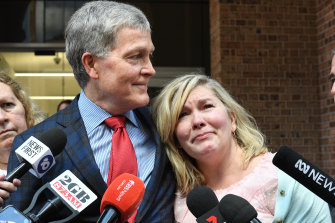
Steve Johnson and sister Rebecca outside the court on Tuesday
.Credit:Peter Rae

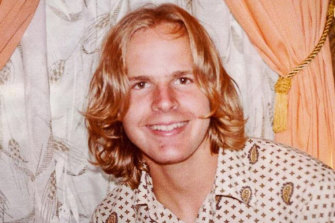
It was a coroner’s finding in 2005 that two and probably three gay men were killed on the cliffs around a Bondi-Tamarama park in the 1980s that motivated Steve Johnson, an American IT entrepreneur, to ask: did the same thing happen to his brother, the 27-year-old mathematician and PhD student whose naked body was found at the base of a 60-metre cliff at North Head near Manly on December 10, 1988?

Police dismissed Scott Johnson’s death as a suicide on that first day, a conclusion soon confirmed by a coroner. Steve Johnson’s self-funded investigation led to a second inquest in 2012 – which threw out the suicide finding but left the cause of death open – and to a third inquest in 2017 which found Scott was pushed, hounded or frightened off the cliff.

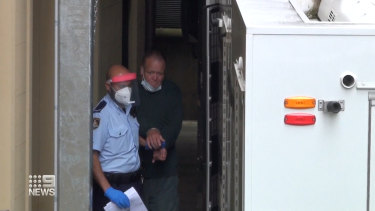
This finding spurred the “fresh eyes” police investigation that led to Scott White, the man who has confessed to killing Scott Johnson more than three decades later, although White now claims he is innocent and is seeking an appeal against his own guilty plea.

As Steve Johnson reiterated to The Sydney Morning Herald on Tuesday, when White was sentenced to a maximum of 12 years and seven months in prison for the murder, his campaign was not only about finding justice for his brother but also for the many other gay murder victims.

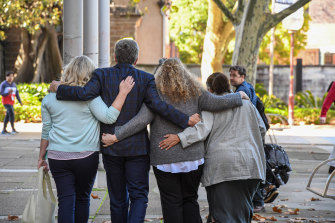
Scott Johnson’s family leaving the court for the final time after the sentence was handed down.
Credit: Peter Rae

Among the experts he recruited to help him in that campaign was Sue Thompson, a former police gay liaison consultant. It was Thompson and Stephen Tomsen, a professor of criminology, who compiled a list of 88 deaths they regarded as potential gay-hate killings that will be considered by a special commission of inquiry led by Justice John Sackar, following recommendations by a lengthy NSW upper house inquiry.

Sackar’s task is to consider the unsolved cases among those 88, between 1970 and 2010. His load will be vastly reduced if he is to follow the statistical findings of NSW Police’s Strike Force Parrabell, which was formed following the public outcry that arose from Johnson’s campaign.


Of the 86 cases Parrabell reviewed (two were not in NSW), it found 63 had already been solved. Twenty-three remained unsolved. Of all 86, it found solid evidence of a “bias crime” – a gay-hate killing – in just eight cases, although it found a further 19 were “suspected bias crimes”. That is, police believed 27 people were probably killed because they were gay. Scott Johnson was among Parrabell’s suspected bias crimes.

Parrabell found no evidence of a gay-hate killing in 34 cases. And it found insufficient information to make a determination in 25 cases.


US mathematician Scott Johnson’s death was initially declared a suicide.

Of the 23 deaths that remained unsolved, it found solid evidence of a gay-hate crime in not a single case. It did find that five of the 23 were “suspected” bias crimes. Other than Johnson, they also included Ross Warren and John Russell, about whom the former deputy state coroner Jacqueline Milledge made a more definitive judgment in 2005; she found both were murdered in 1989 around the Bondi-Tamarama cliff walk. Russell’s body was found at the base of a cliff; Warren’s was never found.

Importantly, when delivering the Parrabell report in 2018, Assistant Commissioner Tony Crandell acknowledged it was possible that many in the “insufficient information” category might well have been gay-hate crimes. That category includes the 1986 death of William Rooney in a Wollongong lane. While it was written off as a drunken fall, some local detectives believed Rooney was murdered by a man who was jailed for assaults on 12 other men, most of them gay, who he bashed with a rock and raped. Parrabell concludes the coronial finding on Rooney was likely incorrect, but it could find insufficient evidence to elevate it from “insufficient information” to “suspected bias crime”.


Parrabell also found insufficient information in the case of Giles Mattaini, a Frenchman who disappeared while walking along the Bondi-Tamarama cliffs around Marks Park, a gay beat, in 1985. Milledge left the cause of his death open, but she said there was a strong possibility that Mattaini met a similar fate to Warren and Russell.

Parrabell had three years to review the 86 cases. Sackar has a little over a year to report.


Scott Phillip White pleaded guilty to the murder of Scott Johnson but is now appealing against his own plea.


Sue Thompson says the problem lies in NSW police adopting the FBI’s methodology for identifying bias crimes, which she says was designed for collating statistics on the likes of terrorists and white supremacists. She argues it is not fit for the purpose of police – when starting with insufficient evidence – keeping an open mind on the possibility that a death may have been a gay-hate-related crime. Thompson says the FBI criteria is “far too narrow, not suited to open-minded police investigation but geared to excluding cases using strict evidentiary standards for national uniform crime reports to Congress. That is foolish and wrong for policing.”

She points out that the Australian Institute of Criminology assessed 44 cases she had collated over just 10 years from 1989 to 1999 and found at least 37 could be confidently considered as possible gay-hate crimes.

“Using the FBI methodology,” Thompson says, “Scott Johnson’s case would never have been called a bias crime, or even reported as such.”

Steve Johnson has the same apprehension. He stressed on Tuesday that Wilson had treated the case with fairness and had restored Scott’s dignity. He had no complaint about her inability to identify the murder as a gay-hate killing.

But for more than a decade, he confronted a police force that resisted murder as the likely explanation for Scott’s death. Only after the third coroner found it was indeed a crime motivated by gay hatred did then-police commissioner Mick Fuller assign Detective Chief Inspector Peter Yeomans’ team to the “fresh eyes” investigation, which soon arrested Scott White.

“It was those fresh eyes that made the difference,” Steve Johnson told the Herald. “I hope this special commission of inquiry can consider the many neglected cases in that spirit.”

Johnson was hugely grateful for the “fairness” with which the case had been handled by Wilson, and outside court on Tuesday, he elaborated: “I sat in court today hoping the spirit of my brother will inspire this commission of inquiry ... I think bringing Scott White to justice should bring hope to the other families, but it’s also an example to the commission that these 30-year-old cases can still be solved and that it matters to bring perpetrators to justice after this length of time. We’re not so old yet that we can’t feel peace and relief.”