Saturday, July 23, 2022

Keystone Force Majeure Cuts Oil Flows To U.S.

  • TC Energy, the operator of the Keystone Pipeline, declared force majeure on Monday.
  • The operator cited a power outage in South Dakota as the main reason for the force majeure status.
  • The company did not provide a timeline for restoring crude flows to full capacity.

TC Energy, the operator of the Keystone Pipeline, declared force majeure on Monday following a power outage in South Dakota, which reduced the flows on the link carrying crude from Canada to the U.S.

TC Energy said in a statement late on Monday that it was made aware of a non-operational incident resulting from third-party damage to the power supply to a facility on the Keystone Pipeline System near Huron, South Dakota. The system continues to operate safely, but it is operating at a reduced rate due to damage to the third-party power utility.

“Initial damage assessments have been completed with no material impact to TC Energy owned facilities,” the company said.

As a result of the power outage, TC Energy declared force majeure on the Keystone Pipeline, but did not provide a timeline for restoring crude flows to full capacity.   

“Repairs are being undertaken and we are working to restore full service as soon as possible. A timeline for full-service restoration is not available at this time,” the company said.

The 2,687-mile Keystone Pipeline System plays a key role in connecting Alberta’s crude oil supplies to U.S. refining markets in Illinois, Oklahoma, and Texas, as well as connecting U.S. crude oil supplies from the Cushing, Oklahoma, hub to refining markets in the U.S. Gulf Coast through the Marketlink Pipeline System.

The reduced flows of crude from Canada to the United States comes days after U.S. President Joe Biden returned from his trip to the Middle Eastern without receiving a specific commitment from the top OPEC producers to boost oil supply in the near term.

Meanwhile, gasoline prices in the U.S. continued to fall for a fifth consecutive week, to a national average of $4.51 per gallon as of July 18, according to data compiled by fuel-savings app GasBuddy. 

“Barring major hurricanes, outages or unexpected disruptions, I forecast the national average to fall to $3.99/gal by mid-August,” said Patrick De Haan, head of petroleum analysis at GasBuddy.

In the past three days, South Carolina and Texas became the first two states to see state average gasoline prices return to below $4 per gallon, according to GasBuddy.

By Tsvetana Paraskova for Oilprice.com


Too Hot For Solar Power: Europe's Heat Wave Makes Solar Panels Less Efficient

  • Extreme heat is reducing the efficiency of solar panels in Europe.
  • Power output during the heat wave has dropped below the levels that are typically reached during the spring.
  • While solar output has been relatively high in recent days, it hasn't broken any records.

The record-breaking heat wave in Europe doesn't mean record solar power generation, as extremely high temperatures actually reduce the efficiency of solar panels.  

As temperatures in the UK hit the highest-ever on record at over 40 degrees Celsius (104 F) this week, solar power output hasn't set records and is unlikely to do so amid very high temperatures, scientists say.

On Tuesday, a provisional temperature of 40.3 C (104.54 F) was recorded at Coningsby in the UK, the UK's Met Office said, adding that it was the first time on record temperatures in the UK have exceeded 40°C.  

However, power output during the heat wave has dropped below the levels that are typically reached during the spring when there is sunshine, but temperatures are cooler.

"It's because of this balance between irradiance and temperature that the record for peak half-hourly generation is always in April or May, because that's when we get sunny but relatively cool weather," Jamie Taylor, a senior data scientist at Sheffield University, told the BBC.

While solar output has been relatively high in recent days, it hasn't broken any records, according to trade association Solar Energy UK.

"The heat itself brings down the efficiency of solar panels slightly," Solar Energy UK's chief executive Chris Hewett told the BBC.

"So don't expect to see records set," Hewett added.

During very high temperatures, a very high number of the electrons on the solar panel are excited, which reduces the generated voltage and the panel's efficiency.

Hot weather could reduce the efficiency of solar panels by between 10 percent and 25 percent, according to U.S. solar equipment distributor CED Greentech.

"It may seem counter-intuitive, but solar panel efficiency is affected negatively by temperature increases. Photovoltaic modules are tested at a temperature of 25 degrees C (STC) – about 77 degrees F., and depending on their installed location, heat can reduce output efficiency by 10-25%. As the temperature of the solar panel increases, its output current increases exponentially, while the voltage output is reduced linearly," CED Greentech notes. 

By Tsvetana Paraskova for Oilprice.com

THE G IS FOR GREENWASHING

Even ESG Funds Are Now Buying Big Oil Stocks

  • Some ESG funds have started to include traditional energy stocks in their portfolios.
  • ESG-focused U.S. mutual funds saw in May the first net withdrawals from funds since December 2018.
  • Especially in Europe, funds have an increased appetite for big oil companies.

After years of shunning and demonizing the oil and gas industry as the main culprit of rising global temperatures, some investors are now warming up to the sector as they realize that the international majors will have a role to play in the energy transition.   Years of underinvestment in new supply, the energy crisis, and the Russian invasion of Ukraine have thrown into sharp relief energy security and affordability. As Europe scrambles to avoid gas and energy rationing in three months’ time, some investors have realized that oil and gas firms who invest in clean energy technologies shouldn’t be immediately cast aside as unfit for their righteous environmental, social, and governance (ESG) criteria and portfolios.  

Recent analyses suggest that some ESG funds now include traditional energy stocks in their portfolios—an unimaginable thing just two years ago. 

But over the past two years, the international oil and gas majors have vowed to become net-zero energy companies by 2050 and have boosted investment and participation in many offshore wind, solar, hydrogen, carbon capture, and EV charging projects. 

Sure, environmental zealots continue to accuse Big Oil of greenwashing as usual. 

Yet, it’s Big Oil, with its deep pockets, high credit ratings, and record cash flows this year, that could make the difference in an orderly energy transition, in which growth in clean energy sources doesn’t preclude supplying the oil and gas that the world needs now.

Energy Vastly Outperforms Market 

Due to the high oil and gas prices in the aftermath of the Russian invasion of Ukraine and growing concerns about energy security, energy has been the top performing sector in the S&P 500 index year to date. Not only is energy the largest gainer, but it’s also been the only sector with gains so far this year, according to market data compiled by Yardeni Research. The energy sector in the S&P 500 had gained 26.5 percent year to date to July 18. In comparison, S&P 500 is down 19.6 percent, and all other sectors have also lost ground since January. 

In the energy sector, the integrated oil and gas subsector has jumped by 34.4 percent year to date, and oil & gas refining and marketing has surged by 29.4 percent. 

Related: How Many Countries Are Actually Capable Of Space Travel?

Meanwhile, ESG-focused U.S. mutual funds saw in May the first net withdrawals from funds since December 2018, per Morningstar research, due to deteriorating equity market conditions amid growing fears of recession.  

“It just so happens that we had a really great five-year stretch for investors that focused on sustainability. But over the past six months, we’ve been in a period where that is not the case,” Paul Arnold, portfolio manager and co-head of asset allocation strategies at Morningstar Investment Management, told Morningstar, commenting on a difficult quarter for sustainable investing.  

European ESG Funds Now Hold Oil Majors’ Stocks 

In Europe, funds focused on ESG have slowly started to favor traditional energy stocks, fund managers tell the Financial Times.

Investors have seen that many majors are serious about investing in clean energy technology. 

“Sentiment is definitely moving in favour of energy companies, even among investors that thought they would never want to be involved in the sector,” Mark Lacey, lead manager of Schroders’ ISF Global Energy and Energy Transition strategies, told FT. 

A Bank of America analysis has recently shown that 6 percent of 1,200 European ESG active and passive funds are currently holding shares of supermajor Shell. At the end of 2021, this percentage was zero. Europe’s ESG-focused funds have also slightly raised their holdings in other European energy firms such as Repsol, Galp, Neste, and Aker BP, according to BofA data cited by FT. 

“Energy has been the most underweight sector by ESG [environmental/social/governance] funds since last year, due to its [supposedly] ‘poor’ ESG profile,” BofA analysts said last month, as carried by TheStreet. U.S. supermajor Chevron, for example, is part of a BofA list of energy stocks with ‘buy’ ratings and high BofA ESG Meter scores, but underweighted by ESG funds.  

The ESG trend is here to stay—investors won’t stop demanding accountability and reduction in greenhouse gas emissions. But they could begin to accept that the energy transition will take decades and that the ‘Big Bad Oil’ is doing some things right in this transition. Such as supplying the current acute need for oil and gas amid soaring energy prices and growing concerns about energy security in places few have thought would resort to rationing energy. Germany, Europe’s biggest economy, could be one of those countries in three months. 

The international oil and gas majors are also increasingly investing in cleaner energy solutions. Over the past month alone, Shell said it would start building Europe’s largest renewable hydrogen plant, while BP announced it would become the operator of one of the world’s largest renewables and green hydrogen energy hubs, based in Western Australia. 

By Tsvetana Paraskova for Oilprice.com

How Many Countries Are Actually Capable Of Space Travel?

  • Only 11 state-sponsored space travel programs are active in the world today. 
  • Asian rocket programs are actually among the oldest active programs in the world.
  • South Korea shares the ambition to (re)land on the moon with the United States, Russia, India, Japan, China, the United Arab Emirates and Turkey.

South Korea last month joined the quite exclusive club of countries that have the capability of launching space rockets using homegrown technology.

Rocket Nuri, officially named the Korea Space Launch Vehicle-II, successfully took off from Goheung in Southern Korea on June 21 carrying smaller satellites as well as a 1.3 tons dummy one, demonstrating the ability to payload satellites above the one-ton mark.

According to the Korean Herald, only seven countries in the world have ever developed this capability. According to Statista research, only 13 countries and the European Space Agency have historically developed space-going rockets.

You will find more infographics at Statista

Only 11 of these programs are active today, including the Russian and Ukrainian programs which are continuations of the former Soviet space program – the first to ever launch a rocket into Earth’s orbit. European programs in the UK and France have ended and countries in the region have been collaborating on the ESA program since 1979.

Asian rocket programs are actually among the oldest active programs in the world, with the Chinese and Japanese programs hailing back to 1970 and the Indian one to 1980.

South Korea shares the ambition to (re)land on the moon with the United States, Russia, India, Japan, China, the United Arab Emirates and Turkey.

By Zerohedge.com

Codelco, unions to launch safety talks after worker deaths
Reuters | July 21, 2022 | 

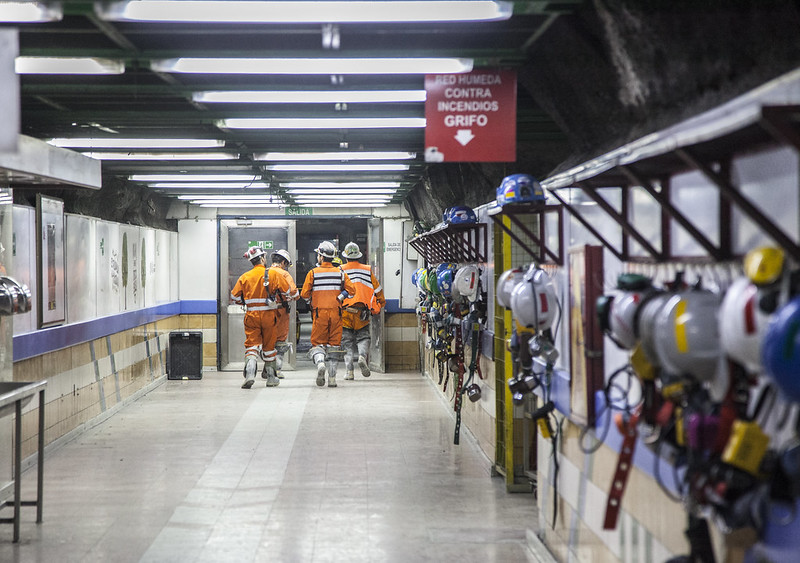
Workers at Codelco’s El Teniente mine in central Chile. Image courtesy of Codelco.

Chile’s state-owned miner Codelco and its employee unions agreed to safety talks via a newly-created committee after two workers died this month in accidents, a union leader said on Thursday.


The company, the world’s top copper producer, announced on Wednesday a halt to construction projects after reporting the death of a worker at its Chuqui Subterranea project, which followed another fatal accident earlier this month.

“We’ve proposed to start a process, more than just an audit, and decided to create an ad-hoc committee,” said Amador Pantoja, president of the FTC Copper Workers Federation, which represents all company unions.

Pantoja said the joint committee’s safety talks will begin next week focusing on project development and company operations, pointing to a “large number” of accidents.

Investigations into the cause of the fatal accidents are ongoing. Mining regulator Sernageomin signaled this week that it found some safety standard irregularities.

Pantoja faulted the lack of explanations from company management regarding the root causes of the accidents, and suggested that cost-cutting might be a factor.

“We’ve stopped doing things because of worries over costs,” he said. “Today we’re working with minimal crews.”

In recent years, the state-run miner has focused on reducing costs while also executing multi-million dollar investments aimed at maintaining production levels.

Pantoja complained that over the past four years, workers have not been sufficiently included in key safety discussions, something the new committee aims to correct.

“We feel this is really affecting us and you can see the consequences of this lack of dialogue,” he said.

(By Fabian Cambero and David Alire Garcia; Editing by Marguerita Choy)
Portuguese community files legal action against Savannah Resources
Reuters | July 22, 2022 | 

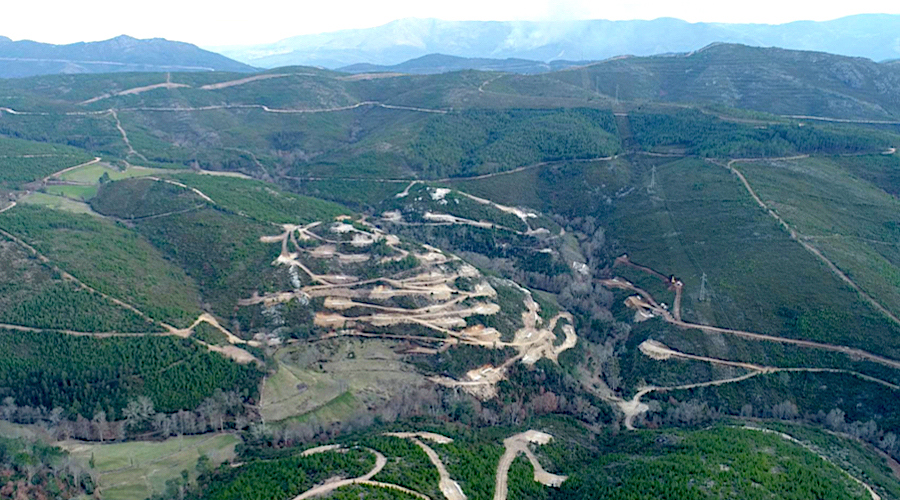
The Mina do Barroso mine could become the first European supplier of spodumene, a lithium-bearing mineral. (Image courtesy of Savannah Resources.)

A community group in a lithium-rich area of northern Portugal said on Friday it had filed a legal suit against a subsidiary of London-based mining company Savannah Resources for alleged encroachment on communal land.


In a statement, a group – the Local Community of Common Land of Covas do Barroso – accused Savannah Resources’ subsidiary Savannah Lithium of alleged “improper appropriation” of land assigned to the community for farming or hunting use near its Mina do Barroso project 145 km northeast of the city of Porto.

Savannah Resources did not immediately reply to a Reuters request for comment.

Portugal is Europe’s biggest lithium producer but its miners sell almost exclusively to the ceramics industry and are only now preparing to produce the higher-grade lithium that is in demand globally for use in electric cars and electronic devices.

The southern European nation, which has 60,000 tonnes of known lithium reserves, is central to Europe’s bid to secure more of the battery value chain and cut reliance on imports.

But projects in Portugal, such as Savannah’s, face strong opposition from environmentalists and local communities who are demanding stronger regulation and more transparency.

Much of the land thought to contain lithium in Portugal is classified as common land whose use is determined by local associations.

The Barroso community group claims Savannah Lithium, which already mines feldspar, quartz, and pegmatite in the area, broke the law by buying land based on topographical surveys it ordered that “in no way correspond to well-known (common land) limits established generations ago”.

“We were forced to resort to legal action when faced with (land purchase) deals based on records that … do not correspond to the truth,” it said, calling for those purchases to be declared annulled and void.

Savannah submitted an environmental impact assessment for an open-pit mine to Portuguese regulator APA in May 2020 and received preliminary approval a year later but said last month a “political process” was delaying its plans.

Earlier this month, Savannah’s chief executive David Archer stepped down on the same day APA told the company to complete an additional environmental licensing process for Barroso.

(By Catarina Demony; Editing by Aislinn Laing and David Evans)
Peru indigenous communities say no progress in talks with Las Bambas copper mine

Reuters | July 21, 2022 |

A 2021 meeting with farming communities protesting MMG’s Las Bambas copper mine in Peru. (Reference image by Peru’s Presidency of the Ministers’ Council, Flickr).

A group of indigenous Peruvian communities that have been protesting MMG Ltd’s Las Bambas copper mine said on Thursday there has been no progress after a full month of talks, risking the end of a precarious truce.


“In my community, there is no progress,” said Romualdo Ochoa, the President of the Huancuire community, which is opposing a planned expansion by Las Bambas into its territory. “This is disappointing.”

The remarks took place at a crucial meeting between Huancuire and five other neighboring communities with representatives from the mine and the Peruvian government.

Together, the six communities staged earlier this year the most significant protest in the history of Chinese-owned Las Bambas, forcing the mine to suspend operations for over a month.

The indigenous communities say Las Bambas has not fulfilled all of its commitments with them and also say that the company has failed to benefit them financially.

Las Bambas executive Ivo Zhao said at the meeting that the company is willing to continue the talks. “It is necessary to continue negotiating,” Zhao said.

In June the communities agreed to lift their protest, granting a 30-day truce that ends this week. But the communities suggested at the meeting that they might restart the protest in the next few days.

Las Bambas is one of the world’s largest copper mines, normally accounting for 2% of the world’s supply of the red metal. Peru is the world’s No. 2 copper producer and mining is a significant source of tax revenue.

The suspension of operations at Las Bambas, as well as a separate suspension at Southern Copper Corp’s Cuajone mine this year have weighed on the Peruvian economy, which is already under pressure to meet growth expectations due to falling commodity prices and worries about a worldwide recession.

(By Marcelo Rochabrun and Marco Aquino; Editing by Sandra Maler)

Domino's Pizza's delivery driver shortage

is so bad that 40% of stores are

'utilizing call centers'


·Anchor, Editor-at-Large

If you call a local Domino's Pizza (DPZ) to place an order, you may be routed to a call center.

Domino's says the practice has freed up workers to deliver pizzas amid a driver shortage that has plagued the company for well over a year.

Utilizing call centers "allows team members to focus on making and delivering pizzas without having to worry about answering phones, especially during the busiest times of the store," Domino's Pizza new CEO Russell Wiener told analysts on an earnings call Thursday. "At the end of the [second] quarter, around 40% of our U.S. stores were utilizing call centers in some capacity."

A pizza comes out of the oven at Domino's Pizza restaurant in Los Angeles, California, U.S. July 18, 2018. REUTERS/Lucy Nicholson

The effort, while clever, may be having a minimal impact in terms of addressing lost sales from the labor shortage. Domino's reported delivery sales crashed 11.7% in the second quarter versus a year ago.

The company's U.S. same-store sales fell 2.9%, a sharp reversal from a 3.5% increase during the same quarter last year. Same-store sales at company-operated U.S. stores dropped 9.2% while franchise-owned stores dropped 2.5%.

International sales also fell 2.2%, worse than the 13.9% gain a year earlier.

"The decline in the U.S. same-store sales in Q2 was driven by declining order counts, which continued to be pressured by the challenging staffing environment, which had certain operational impacts such as shortened store hours and customer service challenges in many stores, both company-owned and franchise," Weiner explained.

That sales weakness led Domino to miss analyst profit estimates for the quarter. Adjusted earnings came in at $2.82 per share, down 7% year over year and below estimates for $2.89 per share.

Domino's Pizza stock fell on the news and is down 27% year to date.

"Existing challenges persisted during the quarter (e.g., labor availability, especially for drivers, and food cost inflation)," Jon Tower, analyst at Citi, said in a note to clients, adding, "although new pain points arose during the quarter (international same-store sales slowdown, FX headwinds mounting), these new pressures should come as little surprise to investors."