It’s possible that I shall make an ass of myself. But in that case one can always get out of it with a little dialectic. I have, of course, so worded my proposition as to be right either way (K.Marx, Letter to F.Engels on the Indian Mutiny)
Tuesday, August 02, 2022
3D printing process created by Rutgers researchers is faster and more precise than conventional methods
Known as Multiplexed Fused Filament Fabrication, the technique “could be a game changer for the 3D-printing industry,” says lead author of study
“We have more tests to run to understand the strength and geometric potential of the parts we can make, but as long as those elements are there, we believe this could be a game changer for the industry,” said Jeremy Cleeman, a graduate student researcher at the Rutgers School of Engineering and the lead author of the study.
The new approach, called Multiplexed Fused Filament Fabrication (MF3), uses a single gantry, the sliding structure on a 3D printer, to print individual or multiple parts simultaneously. By programming their prototype to move in efficient patterns, and by using a series of small nozzles – rather than a single large nozzle, as is common in conventional printing – to deposit molten material, the researchers were able to increase printing resolution and size as well as significantly decrease printing time.
“MF3 will change how thermo-plastic printing is done,” said Cleeman, noting his team has applied for a U.S. patent for their technology.
The 3D-printing industry has struggled with what is known as the throughput-resolution tradeoff – the speed at which 3D printers deposit material versus the resolution of the finished product. Larger-diameter nozzles are faster than smaller ones but generate more ridges and contours that must be smoothed out later, adding significant post-production costs.
By contrast, smaller nozzles deposit material with greater resolution, but current methods with conventional software are too slow to be cost effective.
At the heart of MF3’s innovation is its software. To program a 3D printer, engineers use a software tool called a slicer – computer code that maps an object into the virtual “slices,” or layers, that will be printed. Rutgers researchers wrote slicer software that optimized the gantry arm’s movement and determined when the nozzles should be turned on and off to achieve the highest efficiency. MF3’s new “toolpath strategy” makes it possible to “concurrently print multiple, geometrically distinct, non-contiguous parts of varying sizes” using a single printer, the researchers wrote in their study.
Cleeman said he sees numerous benefits to this technology. For one, the hardware used in MF3 can be purchased off the shelf and doesn’t need to be customized, making potential adoption easier.
Additionally, because the nozzles can be turned on and off independently, an MF3 printer has built-in resiliency, making it less prone to costly downtime, Cleeman said. For instance, when a nozzle fails in a conventional printer, the printing process must be halted. In MF3 printing, the work of a malfunctioning nozzle can be assumed by another nozzle on the same arm.
As 3D printing increases in popularity – for manufacturing and particularly for the prototyping of new products – resolving the throughput-resolution trade-off is essential, said Cleeman, adding that MF3 is a major contribution to this effort.
Scalable, flexible and resilient parallelization of fused filament fabrication: Breaking endemic tradeoffs in material extrusion additive manufacturing
NASA SENT A SELF REPLICATING 3D PRINTER TO ISS
New molecule developed at Hebrew U. may prevent age-related diseases and increase life expectancy and wellness
With a constant renewal of cell vitality in diseased tissues, this new drug will hopefully lead to the treatment or prevention of diseases, such as Alzheimer’s and Parkinson’s
While breakthroughs in the world of medicine and technology account for the global increase in life expectancy, improvements in quality of life for the elderly population lag far behind. Longevity without a decline in health is one of the major challenges that faces the world of medicine. A new study led by Professors Einav Gross and Shmuel Ben-Sasson of the Faculty of Medicine at the Hebrew University of Jerusalem (HU) has identified a group of molecules that enable cells to repair damaged components, making it possible for those tissues to retain proper function. The efficacy of the molecules was demonstrated on a model-organism. The research team examined the effect of various therapies on longevity and quality of life, and successfully proved they can protect the organism’s and human cells from damage. Their findings were published in Autophagy.
Currently, a major factor in aging tissues is the reduced effectiveness of the cell’s quality-control mechanism, which leads to the accumulation of defective mitochondria. As Gross explained, “mitochondria, the cell’s ‘power plants,’ are responsible for energy production. They can be compared to tiny electric batteries that help cells function properly. Although these ‘batteries’ wear out constantly, our cells have a sophisticated mechanism that removes defective mitochondria and replaces them with new ones.” However, this mechanism declines with age, leading to cell dysfunction and deterioration in tissue activity.
This degenerative process lies at the heart of many age-related diseases, such as Alzheimer’s disease, Parkinson’s disease, heart failure and sarcopenia, which are on the rise. Gross and Ben-Sasson’s study may have far-reaching practical applications since their new technology, developed at Hebrew U., helped create innovative compounds to treat diseases that are currently incurable. The study also showed that these molecules can be used preventively. “In the future, we hope we will be able to significantly delay the development of many age-related diseases and improve people’ quality of life,” shared Ben-Sasson. Further, these compounds are user-friendly and can be taken orally.
To advance their important research and translate it into medical treatment for a variety of patients, the research team, together with Yissum, Hebrew University’s tech transfer company, established Vitalunga, a startup that is currently developing this drug. “Ben-Sasson’s and Gross’s findings have significant value for the global aging population,” noted Itzik Goldwaser, CEO of Yissum. “As Vitalunga advances towards pre-clinical studies, they’re closer than ever to minimizing the unbearable burden that aging-related diseases, such as Alzheimer’s and Parkinson’s, has on individuals, their families and our health care systems.”
IMAGE: THE RADIATION RESIDUE FROM THE BIG BANG, DISTORTED BY DARK MATTER 12 BILLION YEARS AGO.view more
CREDIT: REIKO MATSUSHITA
A collaboration led by scientists at Nagoya University in Japan has investigated the nature of dark matter surrounding galaxies seen as they were 12 billion years ago, billions of years further back in time than ever before. Their findings, published in Physical Review Letters, offer the tantalizing possibility that the fundamental rules of cosmology may differ when examining the early history of our universe.
Seeing something that happened such a long time ago is difficult. Because of the finite speed of light, we see distant galaxies not as they are today, but as they were billions of years ago. But even more challenging is observing dark matter, which does not emit light.
Consider a distant source galaxy, even further away than the galaxy whose dark matter one wants to investigate. The gravitational pull of the foreground galaxy, including its dark matter, distorts the surrounding space and time, as predicted by Einstein’s theory of general relativity. As the light from the source galaxy travels through this distortion, it bends, changing the apparent shape of the galaxy. The greater the amount of dark matter, the greater the distortion. Thus, scientists can measure the amount of dark matter around the foreground galaxy (the “lens” galaxy) from the distortion.
However, beyond a certain point scientists encounter a problem. The galaxies in the deepest reaches of the universe are incredibly faint. As a result, the further away from Earth we look, the less effective this technique becomes. The lensing distortion is subtle and difficult to detect in most cases, so many background galaxies are necessary to detect the signal.
Most previous studies have remained stuck at the same limits. Unable to detect enough distant source galaxies to measure the distortion, they could only analyze dark matter from no more than 8-10 billion years ago. These limitations left open the question of the distribution of dark matter between this time and 13.7 billion years ago, around the beginning of our universe.
To overcome these challenges and observe dark matter from the furthest reaches of the universe, a research team led by Hironao Miyatake from Nagoya University, in collaboration with the University of Tokyo, the National Astronomical Observatory of Japan, and Princeton University, used a different source of background light, the microwaves released from the Big Bang itself.
First, using data from the observations of the Subaru Hyper Suprime-Cam Survey (HSC), the team identified 1.5 million lens galaxies using visible light, selected to be seen 12 billion years ago.
Next, to overcome the lack of galaxy light even further away, they employed microwaves from the cosmic microwave background (CMB), the radiation residue from the Big Bang. Using microwaves observed by the European Space Agency’s Planck satellite, the team measured how the dark matter around the lens galaxies distorted the microwaves.
“Look at dark matter around distant galaxies?” asked Professor Masami Ouchi of the University of Tokyo, who made many of the observations. “It was a crazy idea. No one realized we could do this. But after I gave a talk about a large distant galaxy sample, Hironao came to me and said it may be possible to look at dark matter around these galaxies with the CMB.”
“Most researchers use source galaxies to measure dark matter distribution from the present to eight billion years ago”, added Assistant Professor Yuichi Harikane of the Institute for Cosmic Ray Research, University of Tokyo. “However, we could look further back into the past because we used the more distant CMB to measure dark matter. For the first time, we were measuring dark matter from almost the earliest moments of the universe.”
After a preliminary analysis, the researchers soon realized that they had a large enough sample to detect the distribution of dark matter. Combining the large distant galaxy sample and the lensing distortions in CMB, they detected dark matter even further back in time, from 12 billion years ago. This is only 1.7 billion years after the beginning of the universe, and thus these galaxies are seen soon after they first formed.
“I was happy that we opened a new window into that era,” Miyatake said. "12 billion years ago, things were very different. You see more galaxies that are in the process of formation than at the present; the first galaxy clusters are starting to form as well.” Galaxy clusters comprise 100-1000 galaxies bound by gravity with large amounts of dark matter.
“This result gives a very consistent picture of galaxies and their evolution, as well as the dark matter in and around galaxies, and how this picture evolves with time,” said Neta Bahcall, Eugene Higgins Professor of Astronomy, professor of astrophysical sciences, and director of undergraduate studies at Princeton University.
One of the most exciting findings of the researchers was related to the clumpiness of dark matter. According to the standard theory of cosmology, the Lambda-CDM model, subtle fluctuations in the CMB form pools of densely packed matter by attracting surrounding matter through gravity. This creates inhomogeneous clumps that form stars and galaxies in these dense regions. The group’s findings suggest that their clumpiness measurement was lower than predicted by the Lambda-CDM model.
Miyatake is enthusiastic about the possibilities. “Our finding is still uncertain”, he said. “But if it is true, it would suggest that the entire model is flawed as you go further back in time. This is exciting because if the result holds after the uncertainties are reduced, it could suggest an improvement of the model that may provide insight into the nature of dark matter itself.”
“At this point, we will try to get better data to see if the Lambda-CDM model is actually able to explain the observations that we have in the universe,” said Andrés Plazas Malagón, associate research scholar at Princeton University. “And the consequence may be that we need to revisit the assumptions that went into this model.”
“One of the strengths of looking at the universe using large-scale surveys, such as the ones used in this research, is that you can study everything that you see in the resulting images, from nearby asteroids in our solar system to the most distant galaxies from the early universe. You can use the same data to explore a lot of new questions,” said Michael Strauss, professor and chair of the Department of Astrophysical Sciences at Princeton University.
This study used data available from existing telescopes, including Planck and Subaru. The group has only reviewed a third of the Subaru Hyper Suprime-Cam Survey data. The next step will be to analyze the entire data set, which should allow for a more precise measurement of the dark matter distribution. In the future, the team expects to use an advanced data set like the Vera C. Rubin Observatory's Legacy Survey of Space and Time (LSST) to explore more of the earliest parts of space. “LSST will allow us to observe half the sky,” Harikane said. “I don’t see any reason we couldn’t see the dark matter distribution 13 billion years ago next.”
JOURNAL
Physical Review Letters
ARTICLE PUBLICATION DATE
1-Aug-2022
New dog food? Study shows Fido's gut bacteria could turn over within a week
UNIVERSITY OF ILLINOIS COLLEGE OF AGRICULTURAL, CONSUMER AND ENVIRONMENTAL SCIENCES
URBANA, Ill. – When a dog starts a new diet, the community of microbes in its gut changes. Wallflower bacteria multiply to dominate the scene, with the old guard slinking off in defeat. As microbial species jostle for control, their metabolic byproducts, many of which are critical for Fido’s overall health, change as well.
The dynamic dance between nutrients, microbes, and their chemical products is well documented in dogs and other mammals, but until now, scientists were only guessing at the timeframe for microbial turnover. A new study from University of Illinois animal scientists documents the change takes place in less than a week.
“As long as I've been doing animal nutrition research, we’ve argued over how long we need to feed a new diet before collecting samples, when everything's stabilized,” says Kelly Swanson, Kraft Heinz Company Endowed Professor in Human Nutrition in the Department of Animal Sciences and the Division of Nutritional Sciences at U of I and co-author of the new study. “No one has ever tested it definitively.”
It turns out microbes stabilize very quickly. They begin making entirely new chemical products within two days after dogs start a new diet. And it only takes six days for microbial communities to shift and stabilize.
“Metabolites change really quickly, within a couple days. Bacteria responsively metabolize and deal with the substrates they're given in the new diet. Then it takes a few more days to sort out the microbial pecking order, if you will,” Swanson says. “Our data show everything stabilizes by day six, so animal nutrition researchers could confidently sample and find a stable microbiome within 10 days.”
Swanson’s team fed dogs a common dry kibble diet for two weeks before abruptly switching to new diets for an additional 14 days. Half the dogs ate a high-fat, high-protein canned diet and the other half ate a high-fiber kibble. Meanwhile, researchers collected poop two days after the diet change and every four days after that. Because science demands replication, the researchers did it all twice, switching dogs to the opposite experimental diet the second time around.
The team extracted microbial metabolites from each fecal sample, those chemical products of microbial metabolism that can impact a dog’s overall health. They also identified bacterial species in the fecal samples to show how the microbial community changed over time. Finally, they correlated metabolites with bacterial species, something that hasn’t been done before for most bacteria.
“Oftentimes, we feed a diet and collect the feces, but there's kind of a black box in terms of what’s going on in the gut. We know what some bacterial species metabolize, but definitely a lot of it is unknown,” Swanson says. “Our correlations are the starting point to connect some of the dots, but more targeted research still has to be done.”
The primary goal was to track microbial changes over time, but the research also corroborated previous findings indicating greater health benefits of a high-fiber diet over a high-fat, high-protein diet for dogs. Those findings weren’t a surprise, but the fact that the two diet extremes reached an equilibrium on the same timeframe was unexpected. For both diets, the team detected metabolite changes on day two and bacterial community changes by day six.
Swanson says broad strokes of the study may be applicable to other mammalian microbiome systems, especially those like pets and livestock that eat the same controlled diet every day. For example, the speed at which the gut microbiome responds and stabilizes after a nutritional change may be universal. And although particular bacterial species and strains may differ among dogs, people, and other mammals, metabolite/species correlations may be similar across hosts.
Is there a takeaway for dog owners? Swanson says although his study tested a very abrupt diet change, his results support the common guidance to shift to a new dog food brand gradually.
“People usually suggest moving pets over to a new diet over a seven-day period. Our study suggests the microbes can completely change over in that timeframe,” he says. “When you switch diets, the body has to adjust, but the microbes have to change as well. If they’re not in a happy situation, you end up with loose stools or flatulence. So it’s probably good to do it a bit more gradually at home than we did in the lab.”
This study was done in partnership with NomNomNow, Inc. a direct-to-consumer producer of fresh pet food and health products. Nom Nom has an extensive pet health and microbiome database, which allows them to engage in a variety of microbiome-focused studies in the pet population.
“We’re really excited about the outcomes of this trial,” says Ryan Honaker, Nom Nom’s Director of Microbiology. “Understanding the microbiome is central to our efforts in improving pet health, and this study brings us another step closer uncovering how the canine gut actually responds to a new diet.”
The article, “Longitudinal fecal microbiome and metabolite data demonstrate rapid shifts and subsequent stabilization after an abrupt dietary change in healthy adult dogs,” is published in Animal Microbiome [DOI: 10.1186/s42523-022-00194-9]. Authors include Kelly Swanson, Ching-Yen Lin, Jha Aashish, Patricia Oba, Sofia Yotis, Justin Shmalberg, and Ryan Honaker. The study was funded by USDA’s National Institute of Food and Agriculture and NomNomNow, Inc.
Aerosol particles in the atmosphere have a bigger impact on cloud cover – but less effect on cloud brightness – than previously thought, new research shows.
Aerosols are tiny particles suspended in the atmosphere, and they play a key role in the formation of clouds.
With aerosols increasing due to human activities, numerous assessments by the Intergovernmental Panel on Climate Change (IPCC) have suggested they could have an important impact on climate change because clouds reflect sunlight and therefore keep temperatures cooler.
However, this cooling impact of aerosols on clouds is difficult to measure, and this has led to significant uncertainty climate change projections.
The new study – led by the University of Exeter, with national and international academic partners and the UK’s Met Office – used the 2014 Icelandic volcano eruption to investigate this.
"This massive aerosol plume in an otherwise near-pristine environment provided an ideal natural experiment to quantify cloud responses to aerosol changes, namely the aerosol’s fingerprint on clouds" said lead author Dr Ying Chen.
"Our analysis shows that aerosols from the eruption increased cloud cover by approximately 10%.
"Based on these findings, we can see that more than 60% of the climate cooling effect of cloud-aerosol interactions is caused by increased cloud cover.
"Volcanic aerosols also brightened clouds by reducing water droplet size, but this had a significantly smaller impact than cloud-cover changes in reflecting solar radiation."
Previous models and observations suggested this brightening accounted for the majority of the cooling caused by cloud-aerosol interactions.
Water droplets usually form in the atmosphere around aerosol particles, so a higher concentration of these particles makes it easier for cloud droplets to form.
However, as these cloud droplets are smaller and more numerous, the resulting clouds can hold more water before rainfall occurs – so, more aerosols in the atmosphere can lead to more cloud cover but less rain.
The study used satellite data and computer learning to study cloud cover and brightness.
It used 20 years of satellite cloud images from two different satellite platforms from the region to compare the periods before and after the volcano eruption.
The findings will provide observational evidence of aerosols' climate impacts to improve the models used by scientists to predict climate change.
Jim Haywood, Professor of Atmospheric Science at the University of Exeter and part of the Global Systems Institute, and a Met Office Research Fellow, said: "Our earlier work had showed that model simulations could be used to disentangle the relative contribution of aerosol-cloud-climate impacts and potentially confounding meteorological variability.
"This work is radically different as it does not rely on models; it uses state-of-the-art machine learning techniques applied to satellite observations to simulate what the cloud would look like in the absence of the aerosols.
"Clear differences are observed between the predicted and observed cloud properties which can be used to assess aerosol-cloud-climate impacts."
The study was funded by the Natural Environment Research Council (NERC) through the ADVANCE project, and the EU's Horizon 2020 research and innovation programme under the CONSTRAIN grant.
The paper, published in the journal Nature Geoscience, is entitled: "Machine-learning reveals climate forcing from aerosols is dominated by increased cloud cover."
Black people and women with severe heart failure who might be good candidates for surgery to implant a heart-assisting device have a lower chance of actually getting that operation than white patients, or male patients, a new study finds.
The differences for Black patients cropped up mainly in patients whose chances of benefiting from a left-ventricular assist device (LVAD) were less clear-cut, usually because they had less severe heart failure. That meant it was up to their health care team and the patient to decide if they wanted to have the operation or continue with non-surgical treatment.
The patterns of LVAD use in women, meanwhile, suggests lower access no matter how severe their heart failure.
Differences by race and gender persisted even after the researchers took into account a raft of factors, from patients’ incomes and distance from the hospital to what their neighborhood population mix was like.
That raises the strong possibility that for these patients, the chance of getting an LVAD was influenced by conscious or unconscious race and gender bias on the part of health care providers, the researchers conclude.
And that means hospitals and heart failure teams need to take steps to ensure more equal access to LVAD care for all patients who might benefit, the authors say.
The study shows no racial differences in LVAD use among the sickest heart failure patients, those who are the most clear-cut candidates.
Instead, the differences in LVAD use for Black patients clustered among those with a less clear-cut need for the device. That need, based on specific clinical characteristics, is measured with what’s called an LVAD propensity score. In the group whose scores were “on the bubble”, Black patients had much lower chances of getting an LVAD than white or male patients.
The researchers also looked at what happened after patients received an LVAD. Overall, patients survived for at least a year at equal rates, no matter what their race or gender. Black patients in the “on the bubble” group actually had a higher chance of surviving at least a year than white patients (84% vs. 77%), even though they had a slightly higher chance of needing another hospital stay.
“These data show clear racial disparities in cases where there is ‘wiggle room’ for clinicians to decide which patients are most likely to benefit from an LVAD,” says lead author Thomas Cascino, M.D., M.S., a cardiologist and health equity researcher at Michigan Medicine, U-M’s academic medical center. “There is less aggressive use of this life-saving therapy among a subgroup of Black patients and all women with heart failure. While we also need to study the role of patient preference in LVAD decision-making for this group of patients, heart failure providers need to be cognizant of their potential for bias and how it might influence the recommendations we make to patients.”
Racial and Sex Inequities in the Use of and Outcomes After Left Ventricular Assist Device Implantation Among Medicare Beneficiaries, JAMA Netw Open. 2022;5(7):e2223080. doi:10.1001/jamanetworkopen.2022.23080 https://jamanetwork.com/journals/jamanetworkopen/fullarticle/2794707
South Korea is training government and industry professionals from a dozen low- and middle-income countries to manufacture vaccines under a program launched with the WHO.
Photo by Thomas Maresca/UPI
SEOUL, Aug. 1 (UPI) -- While more than 12 billion doses of COVID-19 vaccines have gone into arms around the world and two-thirds of the global population has received at least one shot, the inequity between richer and poorer countries remains wide.
Just 20% of people in low-income countries have received even a single dose -- an imbalance that is not only a "catastrophic moral failure," as World Health Organization chief Tedros Adhanom Ghebreyesus warned last year, but one that is prolonging the pandemic and increasing the risk of new and possibly more dangerous variants.
South Korea, a rising power on the world health stage, is trying to bridge the inequality gap with a special focus: teaching people from less-developed countries to make vaccines on their own as the WHO's global biomanufacturing training hub.
"We felt the need to tackle this imbalance and chose fostering the workforce as a means to address the problem," South Korean Deputy Health Minister Lee Kang-ho, who is leading the vaccine hub program, told UPI.
"The issue of vaccine inequity goes beyond just a matter of fairness," he said. "It ultimately serves as a barrier to end the pandemic."
The project's first pilot training course kicked off in early June with 30 international students from 12 low- and middle-income Asian countries, including Bangladesh, Cambodia, the Philippines, Uzbekistan and Vietnam.
The students, who come from a mix of government, manufacturing and academic backgrounds, are learning classroom and hands-on skills in an eight-week program that covers everything from making vaccines to packaging, storing and shipping them.
All major vaccine platforms are included in the training, including Messenger RNA, or mRNA, the cutting-edge technology behind the Moderna and Pfizer COVID-19 vaccines.
Many of the trainees said the COVID-19 pandemic underscored the need for self-sufficiency as their countries struggled desperately to access vaccines.
"Although we had money, we suffered a lot due to non-availability of COVID vaccines for our people," Muhammed Shahabuddin, a production manager at a state-owned pharmaceutical company in Bangladesh, said.
His government is working to set up a biomanufacturing company and research institute but Shahabuddin said there is an enormous need for practical training of the sort he is receiving in South Korea.
"We still don't have enough people with the required biotechnology education, skills and experience," he said.
Muzaffar Muminov, a microbiology researcher from Uzbekistan, said his government also realized that producing vaccines locally would be crucial in dealing with future pandemics but soon ran into barriers when trying to set up its own manufacturing project.
"Since most of us were involved in biotechnology at the research level and lacked in-depth manufacturing experience, designing bioprocesses was quite challenging," he said.
The pilot course is being held in the classrooms and labs of the Korea National Institute for Bioprocessing Research and Training center at Yonsei University's international campus in Incheon, the port city and international airport site west of Seoul. Funding for the program is coming largely from the Asian Development Bank.
The trainees have also been able to visit local biopharmaceutical companies, including vaccine developer EuBiologics, as well as multinationals such Janssen and Merck.
South Korea is looking to biotech as one of its key future growth industries and has emerged as a major COVID-19 vaccine contract producer during the pandemic, with giants such as Samsung Biologic producing Moderna vaccines and SK Bioscience making AstraZeneca and Novavax jabs.
At the end of June, health authorities gave final approval for use of the country's first homegrown COVID-19 vaccine, SK Bioscence's SKYCovione.
Jeong Jin-hyun, director the K-NIBRT education center at Yonsei, said South Korea is the ideal country to bridge the gap between the world's vaccine haves and have-nots.
"We were very poor but became a developed country quite fast," Jeong said. "So I think Korea has a really big advantage because we understand what some of these other countries are dealing with. We can be in the middle between developing and developed countries."
The K-NIBRT program will train a total of 120 students in pilot programs this year and next before expanding its operations further in 2024, Jeong said.
Another training course under the WHO partnership was launched in July, a two-week introductory vaccine manufacturing program for 106 participants from 24 countries conducted by the Seoul-based International Vaccine Institute. In October, a second IVI-led course will host 200 international trainees, Lee said.
South Korea ultimately plans to "provide end-to-end training that covers the entire cycle of vaccines and biologics manufacturing process," Lee said. "It can be put onto the shop floor immediately when [trainees] go back to their home countries."
The ongoing spread of COVID-19 through the highly contagious BA.5 variant alongside the scarcity of vaccines for monkeypox, designated a global health emergency by the WHO last week, only highlights the need for greater equality.
"It is critical that key biologics manufacturing capacity, such as that of vaccines, should not be a privilege of richer countries," Lee said. "For that, a skilled bio-workforce is a must."
Earth spun faster June 29, causing shortest day since 1960s
Earth's spin has actually been slowing down over time,
causing days to get longer rather than shorter.
Photo courtesy of NASA
Aug. 1 (UPI) -- The Earth spun faster around its axis on June 29, making it the shortest day since the planet's rotation began being measured with atomic clocks in the 1960s.
Earth completed one spin in 1.59 milliseconds shy of the typical 24 hours on June 29, according to Time and Date and The Guardian. The record comes as Earth has seen consistently shorter days in the past few years.
Earth's spin has actually been slowing down over time, causing days to get longer rather than shorter. A single day would pass in less than 19 hours around 1.4 billion years ago.
The United Nations' International Telecommunication Union will occasionally add seconds to the world clock in June or December to make up for the longer days, most recently in 2016.
It may now be unlikely that the ITU will add time during the next opportunity to do so this December, The Guardian reported.
Leonid Zotov, a professor of mathematics, is expected to suggest that the recent trend of shorter days could be explained by a phenomenon known as the "Chandler wobble" at annual meeting of the Asia Oceania Geosciences Society next week. The Chandler wobble was first spotted in the late 1880s when astronomer Seth Carlo Chandler noticed the poles wobbled over a 14-month period.
"The normal amplitude of the Chandler wobble is about three to four meters at Earth's surface but from 2017 to 2020 it disappeared," Zotov told Time and Date.
Natural disasters and weather effects such as El Nino can also influence the speed of the Earth's spin, The Guardian reported. An earthquake in the Indian Ocean in 2004 shortened the length of the day by nearly three microseconds.
What led to the downfall of the Roman Empire?
Two thousand years ago, the Roman Empire was at the zenith of its power. How could such a big empire collapse? An exhibition in Trier looks for answers in the turmoil of late antiquity.
The Roman Empire declined over the course of several centuries
"Romam salvete": Welcome to the Roman Empire. The ancient kingdom stretched from Britain to the Black Sea and from Spain to Egypt. Its military capabilities and technical and cultural achievements had no contemporary comparison. Its residents profited from sanitation and fresh water transported through aqueducts and lived in houses with heated flooring. Even in distant regions of the provinces, there were proper roads, and trade flourished. The public refreshed itself through thermal springs and enjoyed exquisite food, while being entertained in theaters and circus arenas.
Even today, there is proof around the globe of the numerous legacies of the once-booming empire. Trier, founded in 17 B.C. and the oldest city in Germany, is one such example. Known as "Augusta Trevorum" in the fourth century, it was the seat of the Roman Empire for many decades. The Porta Nigra (Latin for black gate), which can be seen even today, has been a UNESCO Cultural Heritage Site since 1986 and is a testimony to the legacy of the Roman Empire north of the Alps.
Trier is, therefore, the perfect choice for the exhibition "The Fall of the Roman Empire." Three museums in the city deal with the interesting question of how the enormous kingdom faded into oblivion.
HOW ROMANS LIVED IN XANTEN ON THE RHINE RIVER
Temple devoted to an unknown deity
The port temple is one of the highlights of the Xanten Archaeological Park. Selected pieces have been reconstructed on a three-meter-high panel, which had once risen 27 meters into the sky. It is still unknown which deity the luxurious lime and marble building was devoted to. The original wall from the 2nd century can be admired beneath the panel
The Rheinisches Landesmuseum has several archaeological exhibits in its display, including objects borrowed from the Louvre in Paris, the Uffizi in Florence and from the Musee Public National des Antiques in Algiers. The exhibition shows how the church entered into the political void left by the Romans, and the Stadtmuseum Simeonstift Trier shows the legacy of the Roman Empire in art and cultural history.
One thing is clear: There was no flash of thunder that destroyed the empire. "If it were so easy, then we wouldn't have this big exhibition, and researchers would not have been engaging with the topic for centuries," art historian and project manager Anne Kurtze of the Landesmuseum Trier said, adding that the downfall was a "chain of events."
Image from the exhibition 'The Fall of the Roman Empire'
Did Rome collapse because of its size?
"Obviously, the sheer size of the Roman Empire was always an insane challenge," Kurtze says. Roman generals annexed more and more countries, which became the empire's provinces. High military expenditure was the order of the day, so that the outer borders of the kingdom that stretched from the Atlantic Ocean to the Euphrates with a length of around 15,000 km (9,321 miles) could be secured. In the north, Hadrian's Wall, and in central Europe, Limes, were created to protect the kingdom from Germanic tribes. Construction and upkeep swallowed huge sums of money, as did paying the Roman legions.
Wild Germanic peoples, Goths and uncivilized vandals: Often, the image of barbarians breaking in and hollowing out Roman territories through migration was conjured up. But museum curators are wary of the idea. It is a fact that there were refugees running from the invading Huns, but the Romans were also unable to protect their borders by themselves, because their numbers were falling: the well-being of people in the kingdom had led to a sinking birth rate and there was a need to fill up places in the military.
Foreign soldiers were recruited from the ranks of the "barbarians" in order to strengthen Roman armies. But the newcomers did not really become "Romans." In their hearts, they remained Germanic or Gothic and did not always follow the orders of their Roman legionnaires. They even started civil wars, mostly about payment or their status within the Roman Empire. These internal conflicts greatly weakened the empire.
What about high taxes and the decadent upper classes?
From 2 CE onwards, the empire did not expand. That meant that the state treasury did not fill up with war loot, nor did new slaves enrich the labor market. Between 429 and 439 CE, vandals gained victory over the most important province of the Roman Empire: North Africa, the breadbasket of the Romans. The income from this rich province was lost, and the rulers substituted for their expenditure from elsewhere.
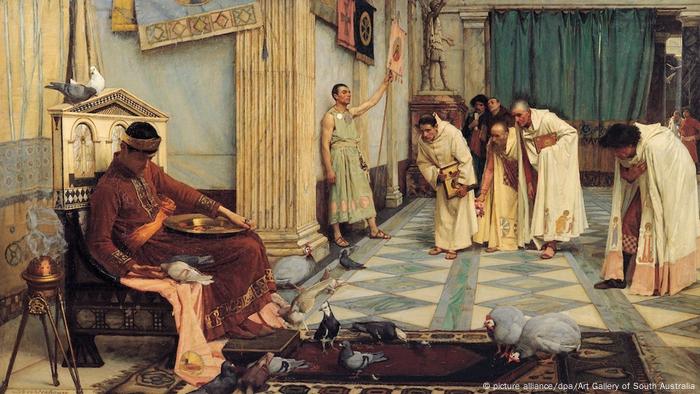
No interest in the dignitaries: Emperor Honorius
This meant Rome kept increasing taxes, which brought many residents to the brink of starvation. At the same time, the decadent upper class lived in plenty and had little or no interest in politics. A famous example of the eccentricities of the ruling classes is the emperor Caligula. According to historiographers Sueton and Cassius Dio, Caligula named his horse "Consul" and presented him with his own palace and slaves.
The exhibition in Trier also features the famous painting, "The Favorites of Emperor Honorius," by John William Waterhouse (1849-1917). "It shows that the kings were not interested in their tasks as statesmen. But does such a painting depict reality or is it only a cliché that posterity is making of this empire?" Kurtze asks.
Christianity and the division of the empire
For many centuries, Romans believed in different gods and ascribed values. Under Emperor Theodosius, however, Christianity was proclaimed as the sole religion of the state in 380 CE, weakening Roman ideas.
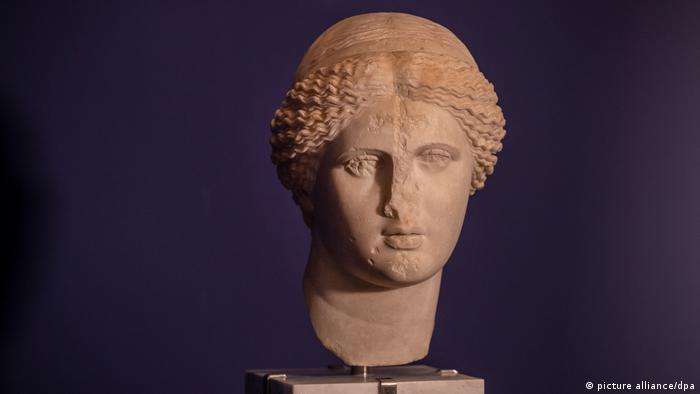
Time's up: The Roman goddess of love, Venus, with a cross carved on her face
"The young institution of the church took over many tasks that were being done by the administration of the Roman Empire," Anne Kurtze explains. "However, that was not the reason for the collapse, but a process of change in the crumbling Roman Empire."
In 395 CE, after the death of Emperor Theodosius the Great, the empire was divided among his sons: into western and eastern Rome. In the east, Constantinople became the emperor's residence; in the west, Milan, then Ravenna and sometimes Rome. It was still considered a kingdom but was governed by two emperors. But Eastern Rome went down only in 1453 after Sultan Mehmed II conquered Constantinople; the western part was seized from emperor Romulus Augustulus in 476 by the Germanic tribe leader Odoaker.
The leftovers
According to Kurtze, initially little of the crisis was visible in the kingdom in the fourth century. Even in late antiquity, there were many trade relations that helped the city to flourish.
The division of the empire: Two enthroned emperors hold the globe as a sign of joint rule
But instead of the Roman Empire, there were smaller kingdoms, governed by Franks, Burgundians or Goths. The Roman Empire neither had an effective administration nor any maintenance mechanism for the infrastructure. Slowly, changes became visible, especially in the cities. The aqueducts fell into disrepair because no one knew how to maintain them. Instead of decorative gardens, the Germanic tribes planted vegetables; marble statues were destroyed because the material was needed to build houses. Step by step, Roman culture also began to disappear.
The exhibition "The Fall of the Roman Empire" will continue in Trier until November 27. The event also seeks to link to the present, because climate change with disappearing harvests and starvation could also have influenced Rome's fate and created incentives to migrate in late antiquity, Anne Kurtze says. And just like COVID has ravaged us, there may have been similar diseases that attacked the Romans.
Graphic designer @jan_kamensky is on a mission to show people what cities could look like if they were "human-friendly places again." By removing cars and adding greenery, he allows people to see their cities in a whole new light