IF EATEN DAILY
Study: How red meat's digested may help explain heart risks
New research suggests gut microbes may cause part of the higher risk of cardiovascular disease from eating red meat.
WASHINGTON, Aug. 1 (UPI) -- New research suggests chemicals produced in the digestive tract by gut microbes may help explain the higher risk of cardiovascular disease from a diet of steak and hamburgers.
This flies in the face of most scientific studies on the harmful effects of red meat on heart health, which have focused on dietary saturated fat and blood cholesterol levels.
The study was published Monday in Arteriosclerosis, Thrombosis, and Vascular Biology, the American Heart Association's peer-reviewed journal.
Heart disease is the leading cause of death in the United States. Nationwide, nearly 700,000 people died from it in 2020, accounting for 1 in every 5 deaths, the Centers for Disease Control and Prevention says.
The risk of developing cardiovascular disease, including heart attack and stroke, increases with age. But experts say heart health may be improved by lifestyle factors such as regular exercise, good sleep, healthy body weight -- and eating healthy foods.
Meng Wang, the study's co-lead author, told UPI in an email that the new evidence reinforces longstanding American Heart Association recommendations that Americans should limit their intake of red meat and processed meat to reduce heart disease risk.
According to Wang, a postdoctoral fellow at Tufts University's Friedman School of Nutrition Science and Policy in Boston, the new research "helps us better understand why meat intake [is] associated with a higher cardiovascular risk."
Previous research has found that certain metabolites -- chemical byproducts of food digestion -- are associated with a greater risk of cardiovascular disease, a news release said.
One such metabolite is TMAO, or trimethylamine N-oxide, which is produced by gut bacteria to digest red meat and contains high amounts of the chemical L-carnitine .
However, the extent to which TMAO and related metabolites derived from L-carnitine may contribute to cardiovascular risk associated with red meat consumption is unclear.
So, the researchers measured levels of the metabolites in blood samples, and also examined whether blood sugar, inflammation, blood pressure and blood cholesterol may account for elevated cardiovascular risk associated with red meat consumption.
According to Wang, "The novel set of metabolites generated by our gut microbes, as well as pathways related to blood sugar and general inflammation, appeared to explain much of this elevated risk -- more so than blood cholesterol or blood pressure."
These findings suggest that when making dietary recommendations, "it may be less important to focus on saturated fat or cholesterol content in red meat," Wang said. "Other components like L-carnitine and heme iron in red meat may play a more important role and need to be better studied."
Wang said in a press release that, based on the study's findings, "novel interventions may be helpful to target the interactions between red meat and the gut microbiome to help us find ways to reduce cardiovascular risk."
One example of "novel interventions," she explained to UPI, is "medications to inhibit the generation of TMAO-related metabolites. It could potentially be used in people with high TMAO levels."
Could this result in a person taking a pill along with their steak in the future?
Said Wang, "Theoretically what you described is possible. However, I would say that following healthy eating behaviors is still an important first step to reduce cardiovascular risk, since it is safer and likely also more cost-effective compared to medications and can be applied to everyone."
She added: "Medications are usually used when lifestyle modifications alone cannot successfully manage the risk."
Study participants included nearly 4,000 of 5,888 adults initially recruited more than three decades ago for the Cardiovascular Health Study: federally funded research looking at risk factors for cardiovascular disease in adults aged 65 or older.
Participants' average age was 73, nearly two-thirds were female, and 88% self-identified as white.
Over the course of the study, participants provided blood samples and answered questionnaires about their dietary habits.
For the new study, the researchers compared the risk of cardiovascular disease among participants who ate different amounts of animal source foods, including red meat, processed meat, fish, chicken and eggs.
They found that eating more meat, especially red meat and processed meat, was linked to a higher risk of atherosclerotic cardiovascular disease: a 22% higher risk for about every 1.1 servings per day, the release said.
The scientists said the increase in TMAO and related metabolites found in the blood explained roughly one-tenth of this elevated risk.
They also noted that blood sugar and inflammation appear to be more important in linking red meat intake and cardiovascular disease than pathways related to blood cholesterol or blood pressure.
And the researchers concluded that eating fish, poultry and eggs was not significantly linked to higher risk of cardiovascular disease.
Wang noted the significance of having older adults participate in the study, though the findings may not apply to populations that are younger or more racially diverse.
She said "there haven't been many studies of animal source food intake and cardiovascular disease specifically focusing on this age group. So our study provides an important piece of evidence for older adults."
Christopher Gardner, chair of the American Heart Association's Nutrition Committee, told UPI in an email these findings "won't change anything for the vegan or vegetarian, other than further reinforcing their convictions and practices."
Gardner, professor of medicine at Stanford University and director of nutrition studies at the Stanford Prevention Research Center, said he will assume "the committed carnivore will brush this off as sounding too complex to move them to make a change."
However, the nutrition scientist said he thinks the target audience for this new finding is "the many people" who are considering eating less red meat.
"Maybe this is the added finding that convinces the on-the-fence flexitarian that despite some of the misinformation campaigns and social media confusion created around saturated fat, cholesterol, and fiber ... there is yet another scientifically plausible explanation for harm to health from red meat, published in a peer-reviewed, high-impact medical journal," Gardner said.
Research links red meat intake, gut microbiome, and cardiovascular disease in older adults
Microbiome-related metabolites like TMAO, as well as blood sugar and general inflammation, appear more important than blood cholesterol or blood pressure in mediating heart disease risk
Peer-Reviewed PublicationDoes eating more meat—especially red meat and processed meat—raise the risk of cardiovascular disease, and if so, why? Despite intense study, the impact of animal source foods on atherosclerotic cardiovascular disease (ASCVD) is vigorously debated, and the mechanisms underlying potential effects of animal proteins remain unclear. Understanding the impacts of meat consumption is particularly important in older adults, because they are the most vulnerable to heart disease yet may benefit from intake of protein to offset age-related loss of muscle mass and strength.
Over the years, scientists have investigated the relationship between heart disease and saturated fat, dietary cholesterol, sodium, nitrites, and even high-temperature cooking, but evidence supporting many of these mechanisms has not been robust. Recent evidence suggests that the underlying culprits may include specialized metabolites created by our gut bacteria when we eat meat.
A new study led by researchers at the Friedman School of Nutrition Science and Policy at Tufts University and Cleveland Clinic Lerner Research Institute quantifies the risk of ASCVD associated with meat intake and identifies underlying biologic pathways that may help explain this risk. The study of almost 4,000 U.S. men and women over age 65 shows that higher meat consumption is linked to higher risk of ASCVD—22 percent higher risk for about every 1.1 serving per day—and that about 10 percent of this elevated risk is explained by increased levels of three metabolites produced by gut bacteria from nutrients abundant in meat. Higher risk and interlinkages with gut bacterial metabolites were found for red meat but not poultry, eggs, or fish.
The study, published in the journal Arteriosclerosis, Thrombosis, and Vascular Biology (ATVB) on August 1, is the first to investigate the interrelationships between animal source foods and risk of ASCVD events, and the mediation of this risk by gut microbiota-generated compounds as well as by traditional ASCVD risk pathways such as blood cholesterol, blood pressure, and blood sugar.
The research drew on years of data from the National Institutes of Health’s (NIH’s) Cardiovascular Health Study (CHS), a long-term observational study of risk factors for cardiovascular disease in Americans age 65 and older. Several blood biomarkers were measured at baseline and again during follow-up, including levels of the gut-microbiome generated trimethylamine N-oxide (TMAO) and two of its key intermediates, gamma-butyrobetaine and crotonobetaine, derived from L-carnitine, abundant in red meat.
Highlights
- In this community-based cohort of older U.S. men and women, higher intakes of unprocessed red meat, total meat (unprocessed red meat plus processed meat), and total animal source foods were prospectively associated with a higher incidence of ASCVD during a median follow-up of 12.5 years.
- The positive associations with ASCVD were partly mediated (8-11 percent of excess risk) by plasma levels of TMAO, gamma-butyrobetaine, and crotonobetaine.
- The higher risk of ASCVD associated with meat intake was also partly mediated by levels of blood glucose and insulin and, for processed meats, by systematic inflammation but not by blood pressure or blood cholesterol levels.
- Intakes of fish, poultry, and eggs were not significantly associated with ASCVD.
“These findings help answer long-standing questions on mechanisms linking meats to risk of cardiovascular diseases,” said the paper’s co-first author Meng Wang, a post-doctoral fellow at the Friedman School. “The interactions between red meat, our gut microbiome, and the bioactive metabolites they generate seem to be an important pathway for risk, which creates a new target for possible interventions to reduce heart disease.”
The 3,931 study subjects were followed for a median of 12.5 years, and their average age at baseline was 73. The study adjusted for established risk factors such as age, sex, race/ethnicity, education, smoking, physical activity, other dietary habits, and many additional risk factors.
“Interestingly, we identified three major pathways that help explain the links between red and processed meat and cardiovascular disease—microbiome-related metabolites like TMAO, blood glucose levels, and general inflammation—and each of these appeared more important than pathways related to blood cholesterol or blood pressure,” said co-senior author, Dariush Mozaffarian, dean for policy at the Friedman School. “This suggests that, when choosing animal-source foods, it’s less important to focus on differences in total fat, saturated fat, or cholesterol, and more important to better understand the health effects of other components in these foods, like L-carnitine and heme iron.”
By leveraging extensive clinical and dietary data among a large elderly community, the research “links the gut microbial TMAO pathway to animal source foods and heightened atherosclerotic cardiovascular disease risks,” said co-senior author Stanley L. Hazen, section head of preventive cardiology and rehabilitation at Cleveland Clinic. “The study also argues for dietary efforts as a means of reducing that risk, since dietary interventions can significantly lower TMAO.”
More study is needed to determine if the findings are generalizable across ages and nationalities. The authors also noted that while microbiome biomarkers were directly measured in the blood, the dietary habits of study participants were self-reported, and study findings are observational and cannot prove cause-and-effect.
Ahmed Hasan, a medical officer and program director in the Atherothrombosis & Coronary Artery Disease Branch at the National Heart, Lung, and Blood Institute, part of the NIH, agrees. “While more studies are needed, the current reports provide a potential new target for preventing or treating heart disease in a subgroup of people who consume excessive amounts of red meat,” said Hasan, who was not a part of the study.
For now, consumers are encouraged to follow current recommendations for a heart-healthy lifestyle, including adapting a healthy diet that is rich in vegetables, fruits, whole grains, and other heart-healthy foods, NHLBI’s Hasan said. Other heart-healthy lifestyle changes also include aiming for a healthy weight, managing stress, managing blood pressure, getting more exercise, getting adequate sleep, and quitting smoking, he added.
Higher Levels of TMAO, Related Metabolites Linked to Higher Risk of Death
The ATVB study is part of ongoing collaboration among scientists at the Friedman School and Cleveland Clinic to uncover the role that the gut microbiome plays in human health, especially cardiovascular health. In a paper in JAMA Network Open in May, many of the same researchers reported that TMAO and related metabolites in older adults are positively associated with a higher risk of death whether deaths were related to cardiovascular disease or another disease. Participants with the highest levels of plasma TMAO and its biomarkers had a 20 to 30 percent higher risk of death compared with those having the lowest levels.
This study included more than 5,000 participants from the CHS. Findings were notable because there have been few studies of TMAO and risk of death in the general population; previous research typically looked at clinical patients with underlying conditions such as diabetes, kidney disease, and heart disease. While identified risk factors are concerning, the good news is that TMAO levels are potentially modifiable. “Now that we know more about the severity of risks associated with TMAO, we can explore effective approaches to change these levels in the body,” said the paper’s co-first author, Amanda Fretts of the University of Washington Department of Epidemiology.
Both the ATVB and JAMA Network Open studies support the importance of the microbiome and specific metabolites to human health, with the ATVB paper specifically linking the gut microbiome with meat intake, and impacts on heart health.
On the ATVB paper, Zeneng Wang of Cleveland Clinic was co-first author. On the JAMA Network Open paper, Hazen was co-first author; Rozenn Lemaitre of the University of Washington and Mozaffarian were co-senior authors. Work was supported by awards from the National Heart, Lung, and Blood Institute of the National Institutes of Health (R01HL135920, R01HL103866, and R01HL130819). Complete information on authors, funders, and conflicts of interest is available in the published papers.
DISCLAIMER: This content is solely the responsibility of the authors and does not necessarily represent the official views of the National Institutes of Health.
JOURNAL
Arteriosclerosis Thrombosis and Vascular Biology
METHOD OF RESEARCH
Observational study
SUBJECT OF RESEARCH
People
ARTICLE TITLE
Dietary Meat, Trimethylamine N-Oxide-Related Metabolites, and Incident Cardiovascular Disease Among Older Adults: The Cardiovascular Health Study
ARTICLE PUBLICATION DATE
1-Aug-2022
COI STATEMENT
D. Mozaffarian reports research funding from the National Institutes of Health, the Gates Foundation, The Rockefeller Foundation, Vail Innovative Global Research, and Kaiser Permanente; personal fees from Acasti Pharma, Barilla, Danone, and Motif FoodWorks; scientific advisory board, Beren Therapeutics, Brightseed, Calibrate, Discern Dx, Elysium Health, Filtricine, HumanCo, January Inc, Perfect Day, Tiny Organics, and (ended) Day Two and Season Health; stock ownership in Calibrate and HumanCo; and chapter royalties from UpToDate. Z. Wang and S.L. Hazen report being named as coinventor on pending and issued patents held by the Cleveland Clinic relating to cardiovascular diagnostics and therapeutics. S.L. Hazen also reports being a paid consultant for Zehna Therapeutics and having received research funds from Procter & Gamble, Zehna Therapeutics and Roche Diagnostics. Z. Wang and S.L. Hazen report being eligible to receive royalty payments for inventions or discoveries related to cardiovascular diagnostics or therapeutics from Cleveland Heart Lab, and Procter & Gamble, and S.L. Hazen from Zehna Therapeutics. B.M. Psaty serves on the Steering Committee of the Yale Open Data Access Project funded by Johnson & Johnson. The other authors report no conflicts.
Increased heart disease risk from red meat may stem from gut microbe response to digestion
ATVB News release
Peer-Reviewed PublicationDALLAS, August 1, 2022 — Chemicals produced in the digestive tract by gut microbes after eating red meat may help explain part of the higher risk of cardiovascular disease associated with red meat consumption, according to new research published today in the American Heart Association’s peer-reviewed journal Arteriosclerosis, Thrombosis, and Vascular Biology (ATVB).
In the United States and around the world, cardiovascular disease is the leading cause of death. While the risk of developing cardiovascular disease, including heart attack and stroke, increases with age, other risk factors are influenced by lifestyle. Lifestyle and behaviors that are known to improve cardiovascular health include eating healthy foods, especially fruits and vegetables; regular physical activity; obtaining sufficient sleep; maintaining a healthy body weight; stopping smoking; and controlling high blood pressure, high cholesterol and high blood sugar.
“Most of the focus on red meat intake and health has been around dietary saturated fat and blood cholesterol levels,” said co-lead author of the study Meng Wang, Ph.D., a postdoctoral fellow at the Friedman School of Nutrition Science and Policy at Tufts University in Boston. “Based on our findings, novel interventions may be helpful to target the interactions between red meat and the gut microbiome to help us find ways to reduce cardiovascular risk.”
Previous research has found that certain metabolites — chemical byproducts of food digestion — are associated with a greater risk of cardiovascular disease . One of these metabolites is TMAO, or trimethylamine N-oxide, which is produced by gut bacteria to digest red meat that contains high amounts of the chemical L-carnitine .
High blood levels of TMAO in humans may be associated with higher risks of CVD, chronic kidney disease and Type 2 diabetes. However, whether TMAO and related metabolites derived from L-carnitine may help explain the effects of red meat intake on cardiovascular risk, and to what extent they may contribute to cardiovascular risk associated with meat consumption, are still unknown.
To understand these questions, the researchers conducting this study measured levels of the metabolites in blood samples. They also examined whether blood sugar, inflammation, blood pressure and blood cholesterol may account for the elevated cardiovascular risk associated with red meat consumption.
Study participants included nearly 4,000 of the 5,888 adults initially recruited from 1989 to 1990 for the Cardiovascular Health Study (CHS). The participants selected for the current study were free of clinical cardiovascular disease at time of enrollment in the CHS, an observational study of risk factors for cardiovascular disease in adults aged 65 or older. The CHS follows 5,888 participants recruited from four communities: Sacramento, California; Hagerstown, Maryland; Winston-Salem, North Carolina; and Pittsburgh, Pennsylvania. The average age of participants at enrollment was 73, nearly two-thirds of participants were female and 88% of participants self-identified as white. The median follow-up time for participants was 12.5 years, and up to 26 years in some cases. At follow-up appointment, participants’ medical history, lifestyle, health conditions and sociodemographic characteristics — such as household income, education and age — were assessed.
Several blood biomarkers were measured at the start of the study and again in 1996-1997. The fasting blood samples stored frozen at -80 ˚C were tested for levels of several gut-microbiome linked to red meat consumption including TMAO, gamma-butyrobetaine and crotonobetaine.
Additionally, all study participants answered two validated food-frequency questionnaires about their usual dietary habits, including intake of red meat, processed meat, fish, poultry and eggs, at the start of the study and again from 1995 to 1996. For the first questionnaire, participants indicated how often, on average in the previous 12 months, they had eaten given amounts of various foods, ranging from “never” to “almost every day or at least five times per week,” based on medium portion sizes, which varied based on the food source. The second questionnaire used a ten-category frequency of average intake over the past 12 months, ranging from “never or less than once per month” to “six+ servings per day,” with defined standard portion sizes.
For the current analyses, the researchers compared the risk of cardiovascular disease among participants who ate different amounts of animal source foods (i.e., red meat, processed meat, fish, chicken and eggs). They found that eating more meat, especially red meat and processed meat, was linked to a higher risk of atherosclerotic cardiovascular disease - a 22% higher risk for about every 1.1 serving per day .
According to the authors, the increase in TMAO and related metabolites found in the blood explained roughly one-tenth of this elevated risk. They also noted that blood sugar and general inflammation pathways may help explain the links between red meat intake and cardiovascular disease. Blood sugar and inflammation also appear to be more important in linking red meat intake and cardiovascular disease than pathways related to blood cholesterol or blood pressure. Intake of fish, poultry and eggs were not significantly linked to higher risk of cardiovascular disease.
“Research efforts are needed to better understand the potential health effects of L-carnitine and other substances in red meat such as heme iron, which has been associated with Type 2 diabetes, rather than just focusing on saturated fat,” Wang said.
The study had several limitations that may have affected its results. The study was observational, meaning it could not control for all risk factors for cardiovascular disease, and may not prove cause and effect between meat consumption and cardiovascular disease or its mediation by gut microbe-generated chemicals. Additionally, food consumption was self-reported, so errors in reporting were possible. And, as most of the study participants were older, white men and women in the United States, the findings may not apply to populations that are younger or more racially diverse.
The co-lead author is Zeneng Wang, Ph.D. Co-authors are Yujin Lee, Ph.D.; Heidi T.M. Lai, Ph.D.; Marcia C. de Oliveira Otto, Ph.D.; Rozenn N. Lemaitre, Ph.D., M.P.H.; Amanda Fretts, Ph.D., M.P.H.; Nona Sotoodehnia, M.D., M.P.H.; Matthew Budoff, M.D.; Joseph A. DiDonato, Ph.D.; Barbara McKnight, Ph.D.; W. H. Wilson Tang, M.D.; Bruce M. Psaty, M.D., Ph.D.; David S. Siscovick, M.D., M.P.H.; Stanley L. Hazen, M.D., Ph.D.; and Dariush Mozaffarian, M.D., Dr.Ph. Authors’ disclosures are listed in the manuscript.
The study was funded by the National Heart, Lung, and Blood Institute, with additional support from the National Institutes of Health, the National Institute of Neurological Disorders and Stroke, and the National Institute on Aging.
Studies published in the American Heart Association’s scientific journals are peer-reviewed. The statements and conclusions in each manuscript are solely those of the study authors and do not necessarily reflect the Association’s policy or position. The Association makes no representation or guarantee as to their accuracy or reliability. The Association receives funding primarily from individuals; foundations and corporations (including pharmaceutical, device manufacturers and other companies) also make donations and fund specific Association programs and events. The Association has strict policies to prevent these relationships from influencing the science content. Revenues from pharmaceutical and biotech companies, device manufacturers and health insurance providers and the Association’s overall financial information are available here.
Additional Resources:
- After August 1, view the manuscript online : https://newsroom.heart.org/news/increased-heart-disease-risk-from-red-meat-may-stem-from-gut-microbe-response-to-digestion?preview=0fd5e9bc554d43ed9d4b5619a314bab3
- AHA news release: Eating protein from a greater variety of sources may lower risk of high blood pressure (April 2022)
- AHA news release: Eating more plant foods may lower heart disease risk in young adults, older women (August 2021)
- AHA Scientific Statement: 2021 Dietary Guidance to Improve Cardiovascular Health: A Scientific Statement From the American Heart Association (November 2021)
- Follow AHA/ASA news on Twitter @HeartNews
- Follow news from the AHA’s Arteriosclerosis, Thrombosis, and Vascular Biology (ATVB) journal @atvbahajournals
About the American Heart Association
The American Heart Association is a relentless force for a world of longer, healthier lives. We are dedicated to ensuring equitable health in all communities. Through collaboration with numerous organizations, and powered by millions of volunteers, we fund innovative research, advocate for the public’s health and share lifesaving resources. The Dallas-based organization has been a leading source of health information for nearly a century. Connect with us on heart.org, Facebook, Twitter or by calling 1-800-AHA-USA1.
###
JOURNAL
Arteriosclerosis Thrombosis and Vascular Biology

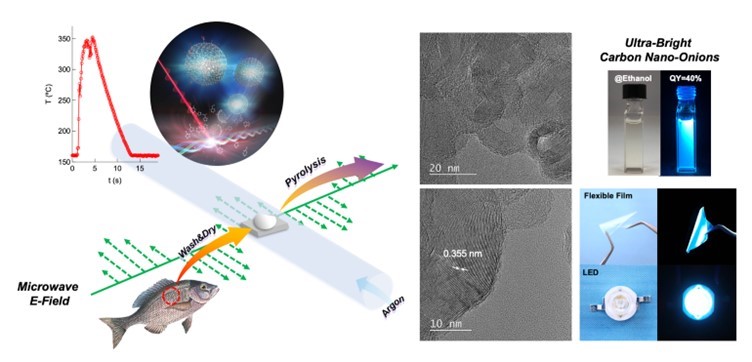
 (available online on April 25, 2022, and published in issue 10 on May 21, 2022), a team of scientists from Nagoya Institute of Technology in Japan found a simple and convenient way to turn fish waste into extremely high-quality CNOs. The team, which included Assistant Professor Yunzi Xin, Master's student Kai Odachi, and Associate Professor Takashi Shirai, developed a synthesis route in which fish scales extracted from fish waste after cleaning are converted into CNOs in mere seconds through microwave pyrolysis.