Tuesday, August 02, 2022

U.S. judge rejects parts of Boy Scouts' $2.7 billion sex abuse deal

By Dietrich Knauth


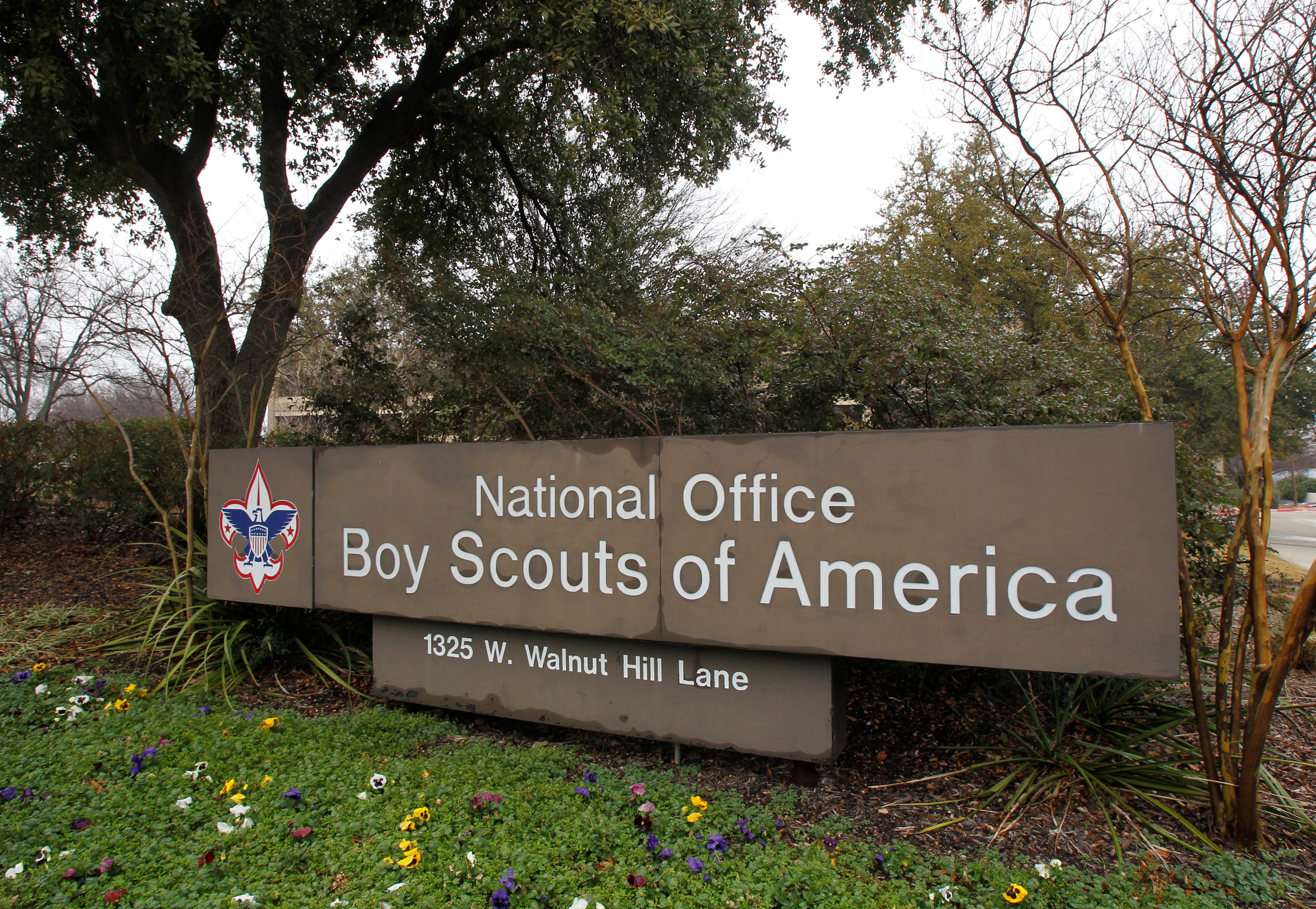
July 29 (Reuters) - A U.S. judge on Friday rejected key aspects of the Boy Scouts of America's reorganization plan and its underlying sex abuse settlement, delaying the national youth organization's ability to emerge from bankruptcy.

U.S. Bankruptcy Judge Laurie Selber Silverstein in Wilmington, Delaware, ruled she could not approve all aspects of the plan and settlement, which would establish a $2.7 billion trust to compensate more than 80,000 men who say they were sexually abused as children by troop leaders.

While the ruling blocks the settlement from moving forward as is, the Boy Scouts organization called it a "significant milestone" in the case. Silverstein approved most aspects of the settlement framework, while overruling many objections to the deal, the Boy Scouts said.

"We are committed to working with all constituents to make the necessary changes required by the ruling to drive this process forward and we remain optimistic about securing approval of a final Plan as soon as possible," the Boy Scouts of America said in a statement.

The Coalition of Abused Scouts for Justice, which represents many victims in the bankruptcy case, said the decision would protect future Scouts from abuse.

“Throughout this case, what we’ve heard time and again from survivors is that it’s not only about the money, because no amount of money in the world will make up for being sexually abused as a child," the coalition said in a press release.

Ricky Mason, an attorney representing local Boy Scouts councils in the case, said he was pleased that Silverstein's decision recognized "the importance of both bringing closure to survivors and preserving the Scouting mission through the global settlement," even if she did not outright approve the current restructuring plan.

Silverstein approved many aspects of the settlement, but wrote she could not approve a $250 million settlement between the Boy Scouts and the Church of Jesus Christ of Latter-day Saints, and could not make determinations related to the Boy Scouts' insurance coverage.

The judge suggested the overall deal was going to take significant time to rework, writing that the Boy Scouts "have some decisions to make."

Silverstein's ruling follows more than two years of Chapter 11 proceedings for the youth group, which filed for bankruptcy in February 2020 after being hit by a flood of sexual abuse lawsuits when several U.S. states passed laws allowing accusers to sue over allegations dating back decades. Since the outset of the case, more than 82,000 abuse claims have been filed.

Those claimants became creditors of the organization, who had to sign off on any plans to restructure and exit bankruptcy.

The amount of money claimants stood to gain from the $2.7 billion trust would depend on the severity of the alleged abuse, as well as where and when it occurred, among other factors. Claimants could receive as little as $3,500 or up to $2.7 million for the most severe cases, according to court papers.

The Boy Scouts has apologized and said the organization is committed to fulfilling their "social and moral responsibility to equitably compensate survivors."
OUR PEACE LOVING ARCTIC NEIGHBOUR
Russian President Vladimir Putin says no one can win a nuclear war

By REUTERS - Yesterday 

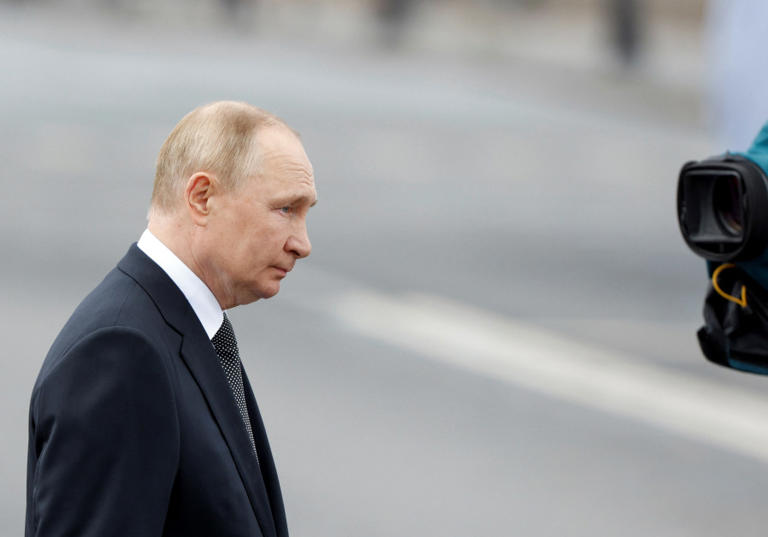
Russian President Vladimir Putin said on Monday there could be no winners in a nuclear war and no such war should ever be started.

© (photo credit: REUTERS/MAXIM SHEMETOV)Russia

Putin made the comment in a letter to participants of a conference on the nuclear non-proliferation treaty (NPT), more than five months into his war on Ukraine.

"We proceed from the fact that there can be no winners in a nuclear war and it should never be unleashed, and we stand for equal and indivisible security for all members of the world community," he said.


"We proceed from the fact that there can be no winners in a nuclear war and it should never be unleashed, and we stand for equal and indivisible security for all members of the world community"Russian President Vladimir Putin

International concern about the risk of a nuclear confrontation has heightened since Russia invaded Ukraine on Feb. 24. In a speech at the time, Putin pointedly referred to Russia's nuclear arsenal and warned outside powers against any attempt to interfere.


Prime Minister of Japan Fumio Kishida addresses the United Nations General Assembly during the Nuclear Non-Proliferation Treaty review conference in New York City, New York, US, August 1, 2022.
(credit: REUTERS/DAVID 'DEE' DELGADO)

"Whoever tries to hinder us... should know that Russia's response will be immediate. And it will lead you to such consequences that you have never encountered in your history," he said.

Days later, he ordered Russia's nuclear forces to be put on high alert.

The war in Ukraine has raised geopolitical tensions to levels not seen since the 1962 Cuban Missile Crisis.

United Nations Secretary-General Antonio Guterres said in March: "The prospect of nuclear conflict, once unthinkable, is now back within the realm of possibility."

Politicians in both Russia and the United States have spoken publicly of the risk of World War Three. CIA director William Burns said in April that given the setbacks Russia had suffered in Ukraine, "none of us can take lightly the threat posed by a potential resort to tactical nuclear weapons or low-yield nuclear weapons."

Russia, whose military doctrine allows for the use of nuclear weapons in the event of an existential threat to the Russian state, has accused the West of waging a "proxy war" against it by arming Ukraine and imposing sanctions on Moscow.


The prospect of nuclear conflict, once unthinkable, is now back within the realm of possibility"Antonio Guterres, United Nations Secretary-General


United Nations Secretary-General Antonio Guterres addresses the media prior to the Nuclear Non-Proliferation Treaty review conference in New York City, New York, US, August 1, 2022.
 (credit: REUTERS/DAVID 'DEE' DELGADO)

Earlier on Monday, a Russian foreign ministry source questioned the seriousness of comments by US President Joe Biden calling for talks on a nuclear arms control framework to replace a treaty expiring in 2026.

In April, Russia conducted a first test launch of its new Sarmat intercontinental ballistic missile, capable of mounting nuclear strikes against the United States, and said it planned to deploy the weapons by autumn.

Urging the nuclear states to act "responsibly"


Japanese Prime Minister Fumio Kishida on Monday urged all nuclear states to conduct themselves "responsibly" in non-proliferation efforts at a time when he said the road to a world without nuclear arms had become much more difficult.

Kishida, the leader of the only nation to have suffered wartime nuclear attacks, warned that global divisions were deepening, particularly since Russia's invasion of Ukraine, with Putin at the start of the conflict obliquely raising the possibility of a nuclear strike.

North Korea, which has carried out numerous missile tests this year, is also believed to be preparing for a nuclear test.


Prime Minister of Japan Fumio Kishida addresses the United Nations General Assembly during the Nuclear Non-Proliferation Treaty review conference in New York City, New York, US, August 1, 2022.
(credit: REUTERS/DAVID 'DEE' DELGADO)


"The world is worried that the threat of the catastrophe of use of nuclear weapons has emerged once again"Fumio Kishida, Japanese Prime Minister

"The world is worried that the threat of the catastrophe of use of nuclear weapons has emerged once again," he said in a speech.

"It must be said that the path to a world without nuclear weapons has suddenly become even harder."

Kishida was speaking at the Review Conference of the Parties to the Treaty on the Non-Proliferation of Nuclear Weapons (NPT) at the United Nations in New York City, the first Japanese leader to do so.

A native of Hiroshima, which on Aug. 6, 1945 became the first city in the world to suffer a nuclear bombing during the waning days of World War Two, Kishida has made nuclear non-proliferation something of a cause.

The second nuclear bombing, of Nagasaki, came three days later.

Kishida was foreign minister when US President Barack Obama visited Hiroshima in 2016 as the first sitting US president to do so, and has selected Hiroshima as the site for next year's Group of Seven nations summit.

UN Secretary-General Antonio Guterres said on Monday he will visit Hiroshima for the Aug. 6 anniversary.

"We call for all nuclear states to conduct themselves responsibly," regarding non-proliferation efforts, Kishida said.

"From this standpoint, we support negotiations on arms control and nuclear reduction between the United States and Russia, and encourage similar talks between the United States and China."

He said other efforts should include boosting transparency regarding nuclear weapons, strengthening efforts such as the non-proliferation treaty, and announced the establishment of a $10 million fund to educate youth leaders about the dangers of nuclear weapons.

"Nagasaki must become the last bombed city," Kishida said.

He also said peaceful uses of nuclear energy should be promoted while maintaining its safety, lessons learned from the 2011 Fukushima nuclear disaster.

Following a surge in fuel prices and a June heat wave in which Japan skirted a power shortage, Kishima has promoted nuclear power and and has said he has asked for nine reactors to be online by the end of the year, up from the current five.

The nuclear deal is best for the US, Iran the world


US Secretary of State Antony Blinken speaks at a sideline meeting of the Nuclear Non-Proliferation Treaty review conference in New York City, New York, US, August 1, 2022
.
 (credit: REUTERS/DAVID 'DEE' DELGADO)

A return to the 2015 nuclear deal remains the best outcome for the United States, Iran and the world, US Secretary of State Antony Blinken said at global nonproliferation discussions at the United Nations on Monday.

Blinken also repeated a US warning that North Korea is preparing to conduct its seventh nuclear test.

US President Joe Biden said earlier that Washington was ready to outline a new nuclear arms deal with Russia and called on Moscow to demonstrate its ability to negotiate in good faith at the talks that began on Monday.
US Cities face crisis as fewer kids enroll and schools shrink

By MILA KOUMPILOVA 
and MATT BARNUM of Chalkbeat, 
and COLLIN BINKLEY of The Associated Press
yesterday

1 of 17
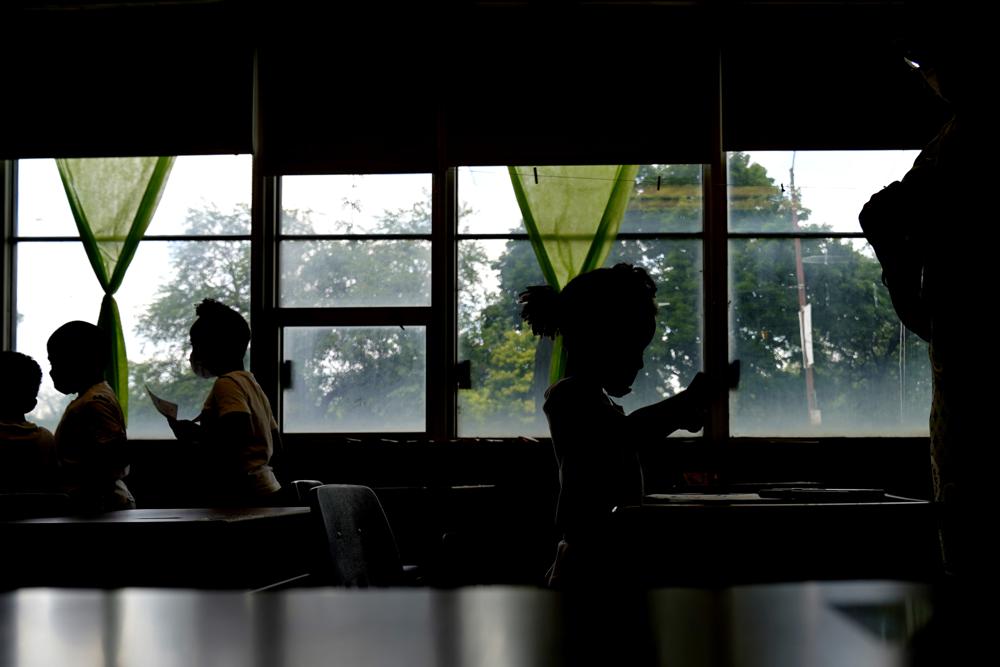
Students attend a class at Chalmers Elementary school in Chicago, Wednesday, July 13, 2022. America's big cities are seeing their schools shrink, with more and more of their schools serving small numbers of students. Those small schools are expensive to run and often still can't offer everything students need (now more than ever), like nurses and music programs. Chicago and New York City are among the places that have spent COVID relief money to keep schools open, prioritizing stability for students and families. But that has come with tradeoffs. And as federal funds dry up and enrollment falls, it may not be enough to prevent districts from closing schools. (AP Photo/Nam Y. Huh)


CHICAGO (AP) — On a recent morning inside Chalmers School of Excellence on Chicago’s West Side, five preschool and kindergarten students finished up drawings. Four staffers, including a teacher and a tutor, chatted with them about colors and shapes.

The summer program offers the kind of one-on-one support parents love. But behind the scenes, Principal Romian Crockett worries the school is becoming precariously small.

Chalmers lost almost a third of its enrollment during the pandemic, shrinking to 215 students. In Chicago, COVID-19 worsened declines that preceded the virus: Predominantly Black neighborhoods like Chalmers’ North Lawndale, long plagued by disinvestment, have seen an exodus of families over the past decade.

The number of small schools like Chalmers is growing in many American cities as public school enrollment declines. More than one in five New York City elementary schools had fewer than 300 students last school year. In Los Angeles, that figure was over one in four. In Chicago it has grown to nearly one in three, and in Boston it’s approaching one in two, according to a Chalkbeat/AP analysis

Most of these schools were not originally designed to be small, and educators worry coming years will bring tighter budgets even as schools are recovering from the pandemic’s disruption.

“When you lose kids, you lose resources,” said Crockett, the Chalmers principal. “That impacts your ability to serve kids with very high needs.”

A state law prohibits Chicago from closing or consolidating schools until 2025. And across the U.S., COVID-19 relief money is helping subsidize shrinking schools. But when the money runs out in a few years, officials will face a difficult choice: Keep the schools open despite the financial strain, or close them, upsetting communities looking for stability for their children.

“My worry is that we will shut down when we have all worked so hard,” said Yvonne Wooden, who serves on Chalmers’ school council. Her children went to the pre-K through eighth-grade school, and two grandchildren attend now. “That would really hurt our neighborhood.”

The pandemic accelerated enrollment declines in many districts as families switched to homeschooling, charter schools and other options. Students moved away or vanished from school rolls for unknown reasons.


Many districts like Chicago give schools money for each student. That means small schools sometimes struggle to pay for fixed costs — the principal, a counselor and building upkeep.

To address that, many allocate extra money to small schools, diverting dollars from larger schools. In Chicago, the district spends an average of $19,000 annually per student at small high schools, while students at larger ones get $10,000, according to the Chalkbeat/AP analysis.

“I love small schools, but small schools are very expensive,” Chicago schools chief Pedro Martinez told the school board recently. “We can get some really creative, innovative models, but we need the funding.”

At the same time, these schools are often stretched thin. Very small schools offer fewer clubs, sports and arts programs. Some elementary schools group students from different grades in the same classroom, although Martinez has vowed that won’t happen next year.

Manley Career Academy High School on Chicago’s West Side illustrates the paradox. It now serves 65 students, and the cost per student has shot up to $40,000, even though schools like Manley offer few elective courses, sports and extracurricular activities.

“We’re spending $40,000 per pupil just to offer the bare minimum,” said Hal Woods of the advocacy group Kids First Chicago, which has studied declining enrollment in the district. “It’s not really a $40,000-per-pupil student experience.”

Small schools are popular with families, teachers and community members because of their tight-knit, supportive feel. Some argue districts should pour more dollars into these schools, many in predominantly Black and Latino neighborhoods hard hit by the pandemic. Schools serve as community hubs and points of local pride even as they lose students — as is the case in North Lawndale.

Race also looms large. Nationally, schools with more students of color are more likely to be closed, and those in affected communities often feel unfairly targeted.

The prospect of closing schools is particularly fraught in Chicago, where 50 schools were shuttered in 2013, most in predominantly Black neighborhoods. The move frayed trust between residents and the district and, according to University of Chicago research, markedly disrupted learning for low-income students.

In Boston, where the district had been losing students well before the pandemic, families are skeptical of closures.

Among the schools most at risk is P.A. Shaw Elementary School in Boston’s Dorchester neighborhood. Revived from a previous closure in 2014, the school had just over 150 students last year, down from 250 in 2018. After making plans to eliminate two classrooms earlier this year — seen by some as a harbinger of closure — the district faced blowback from parents and teachers.

Parents rallying behind the school included Brenda Ramsey, whose 7-year-old daughter, Emersyn Wise, is entering second grade. When Ramsey became homeless and went to stay with family during the pandemic, teachers from Shaw drove half an hour to deliver schoolwork. Later, the school’s staff helped Ramsey find permanent housing.

Ramsey, 32, still remembers the joy she felt when she and her two daughters first visited Shaw.

“The principal looked like them — she was a young Black woman who was excited to see them,” she said.“ They were really big on family engagement, family involvement, and that’s just something you don’t see that often.”

Now, with the school’s fate in question, Ramsey is debating whether to keep Emersyn there.

Ramsey’s dilemma illustrates what the district calls its “cycle of declining enrollment”: Schools’ enrollment falls, leading to financial instability — which prompts even more families to leave. The problem is often worse at schools with more students of color.

And when schools face closure, it’s “devastating” for families, said Suleika Soto, acting director of the Boston Education Justice Alliance, which advocates for underrepresented students.

“It means you have to uproot,” she said. “And then if parents don’t like it, then they’ll remove their children from the public school system, which again adds to the toxic cycle.”

Nevertheless, some urban school districts that are losing students, including Denver, Indianapolis, and Kansas City, Missouri, are considering school closures. Earlier this year, the Oakland, California, school board voted to close several small schools despite furious protests.

“School budgets have been cut as a way to keep more schools open,” said former Oakland board member Shanthi Gonzales, who resigned in May soon after voting to support school closures. “There are really awful tradeoffs.”

Elsewhere, leaders — buoyed by federal COVID-19 relief funds — have continued to invest in these schools.

Chicago will use about $140 million of the $2.8 billion in COVID-19 relief it got to help prop up small schools this school year, officials said. Martinez, who took over as schools chief last fall, has sidestepped talk of closures, saying he wants to study how the district can make its campuses more attractive to families — and push for more money from the state.

In Los Angeles and New York City, officials say they’re focused on luring students back into the system, not school closures.

But federal relief money will run out soon: districts must budget that money by September 2024. When it does, districts may be hard pressed to keep all of their small schools afloat.

“It’s a huge problem,” said Bruce Fuller, an education researcher at University of California, Berkeley. “It’s going to be increasingly difficult for superintendents to justify keeping these places open as the number of these schools continues to rise.”

___

Barnum reported from New York and Binkley from Boston. Chalkbeat journalists Kaitlyn Radde in Washington and Thomas Wilburn in Chicago, and AP journalist Sharon Lurye in New Orleans contributed.

___

The Associated Press education team receives support from the Carnegie Corporation of New York. The AP is solely responsible for all content.
Germany argues over nuclear shutdown amid gas supply worries

By GEIR MOULSON
August 1, 2022

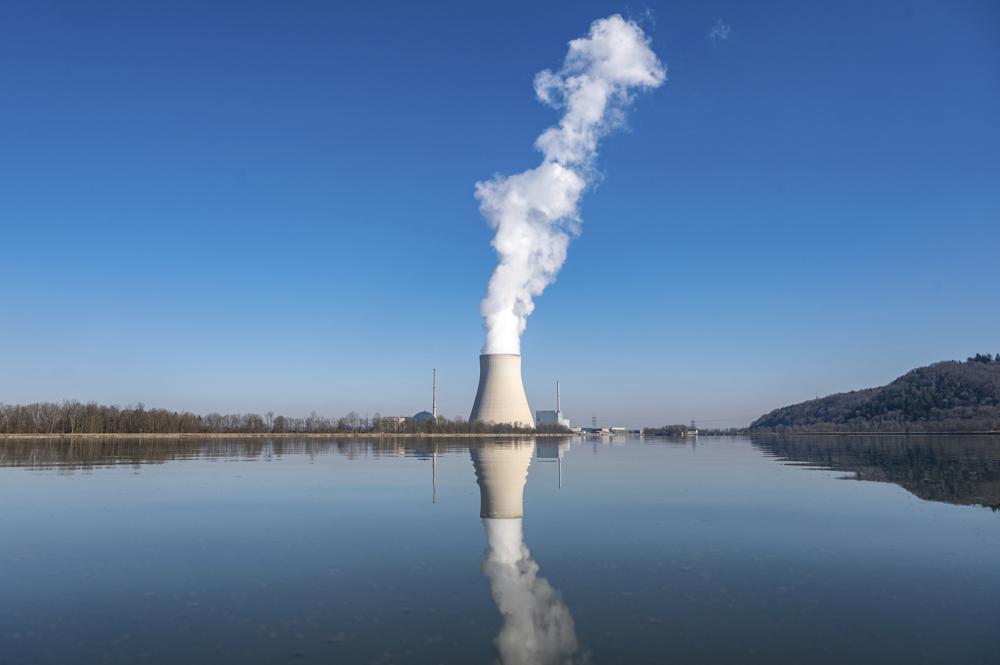
The nuclear power plant (NPP) Isar 2 is pictured in Essenbach, Germany, Thursday, March 3, 2022. Rising concern over the impact of a potential Russian gas cutoff is fueling an intensifying debate in Germany over whether the country should switch off its last three nuclear power plants as planned at the end of this year.
(Armin Weigel/dpa via AP, File)


BERLIN (AP) — Rising concern over the impact of a potential Russian gas cutoff is fueling the debate in Germany over whether the country should switch off its last three nuclear power plants as planned at the end of this year.

The door to some kind of extension appeared to open a crack after the Economy Ministry in mid-July announced a new “stress test” on the security of electricity supplies. It’s supposed to take into account a tougher scenario than a previous test, concluded in May, that found supplies were assured.

Since then, Russia has reduced natural gas supplies through the Nord Stream 1 pipeline to Germany to 20% of capacity amid tensions over the war in Ukraine. It cited technical issues that Germany says are only an excuse for a political power play. Russia recently has accounted for about a third of Germany’s gas supply, and there are concerns it could turn off the tap altogether.

The main opposition Union bloc has made increasingly frequent demands for an extension of the nuclear plants’ lives. Similar calls are coming from the smallest party in Chancellor Olaf Scholz’s coalition government, the pro-business Free Democrats.

“A lot speaks for not switching off the safe and climate-friendly nuclear power plants, but if necessary using them until 2024,” Finance Minister Christian Lindner, the Free Democrats’ leader, told Sunday’s Bild am Sonntag newspaper. He called for Economy Minister Robert Habeck, who is responsible for energy, to stop the use of gas to generate electricity.

Calls for extending the use of nuclear power are awkward for the other two governing parties, Scholz’s center-left Social Democrats and, particularly, Habeck’s environmentalist Greens. Opposition to nuclear power is a cornerstone of the Greens’ identity; a Social Democrat-Green government launched Germany’s exit from nuclear power two decades ago.

A government made up of then-Chancellor Angela Merkel’s center-right Union and the Free Democrats set the nuclear exit’s current form in 2011, shortly after the Fukushima nuclear disaster in Japan. It calls for the three still-operational reactors to go offline at the end of December.

Habeck has long argued that keeping those reactors running would be legally and technically complex and do little to address the problems caused by a shortfall of gas, arguing that natural gas isn’t so much a factor in generating electricity as in fueling industrial processes and providing heating.

“We have a heating problem or an industry problem, but not an electricity problem — at least not generally throughout the country,” he said in early July.

In this year’s first quarter, nuclear plants accounted for 6% of Germany’s electricity generation and gas for 13%. Lindner said “we must work to ensure that an electricity crisis doesn’t come on top of the gas crisis.”


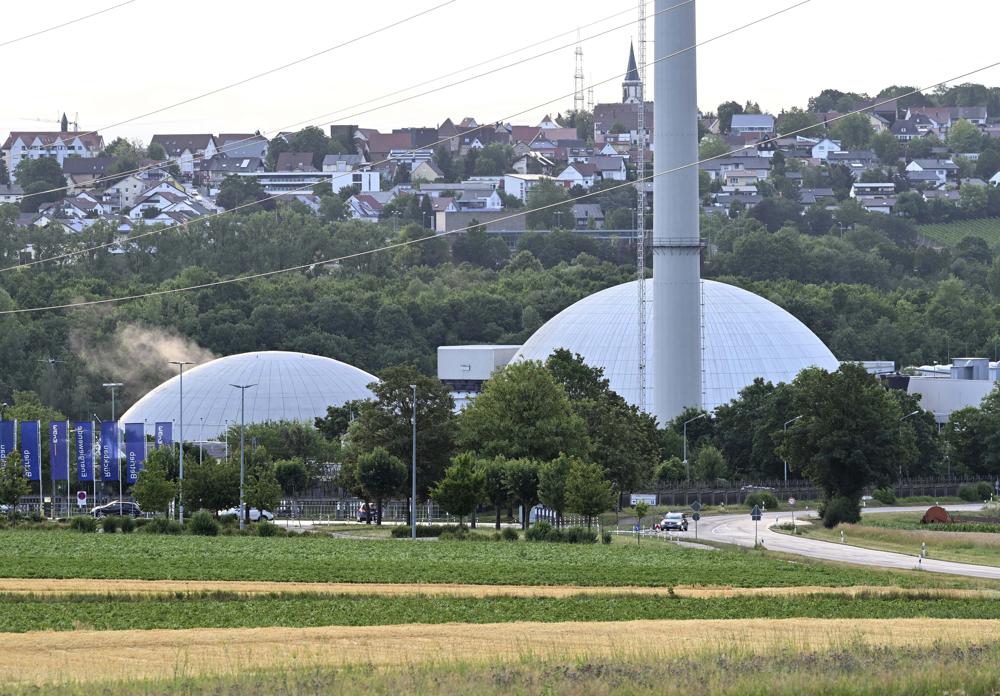
A view of the Neckarwestheim nuclear power plant on June 27, 2022. Rising concern over the impact of a potential Russian gas cutoff is fueling an intensifying debate in Germany over whether the country should switch off its last three nuclear power plants as planned at the end of this year. 
(Bernd Weissbrod/dpa via AP, file)

Some Greens have indicated a degree of openness in recent days to allowing one or more reactors to keep running for a short period with their existing fuel rods, if the country faces a power supply emergency — though not to a longer extension.

Others aren’t impressed by the idea. That “is also a lifetime extension” for the reactors that would require a change to the existing law, “and we won’t touch that,” prominent Green lawmaker Juergen Trittin — Germany’s environment minister when the nuclear phaseout was first drawn up — told Saturday’s Tagesspiegel newspaper.

Critics say that isn’t enough anyway. Opposition leader Friedrich Merz has urged the government to order new fuel rods for the remaining reactors immediately. Senior opposition lawmaker Alexander Dobrindt called for three already-shut reactors to be reactivated and told the Welt am Sonntag newspaper that “in this situation, lifetime extensions for nuclear energy of at least five more years are conceivable.”

And Scholz’s position? Government spokeswoman Christiane Hoffmann said last week that he is waiting for the results of the “stress test,” which are expected in the coming weeks.

The government has already given the green light for utility companies to fire up 10 dormant coal-fired power plants and six that are oil-fueled, and plans also to clear the way for dormant lignite-fired plants to be reactivated. Another 11 coal-fired power plants scheduled to be shut down in November will be allowed to keep operating.
ARACHNOPHOBIC PYRO
Utah man accused of causing wildfire by burning a spider
yesterday

1 of 4
Firefighters battle a wildfire from the ground as a helicopter drops water above them in Springville on Monday, Aug. 1, 2022. The fire started when a man tried to burn a spider with a lighter. (Kristin Murphy/The Deseret News via AP)


SALT LAKE CITY (AP) — A Utah man has been arrested on accusations he started a wildfire while trying to burn a spider with his lighter.

Cory Allan Martin, 26, told deputies that he spotted the spider Monday while he was in a hiking area in the foothills south of Salt Lake City near the city of Springville, shows a probable cause statement. He acknowledged starting the fire, but didn’t explain why he was trying to burn the spider.

Deputies found a jar of marijuana in his belongings, but he didn’t appear to be high, said Utah County Sheriff’s Sgt. Spencer Cannon.

There is no evidence to suggest he intentionally started the blaze, said Cannon, but he called it a reckless and puzzling decision. This area and most of Utah are bone dry amid extreme drought conditions.

“What led him to stop and notice a spider and decide to try to burn it, we don’t know,” Cannon said. “There may not be a why. He might not even know a why.”


Martin was arrested on suspicion of reckless burn and possession of marijuana and drug paraphernalia, court documents show.

He was in the Utah County jail Tuesday on nearly $2,000 bail. It was unknown if he had an attorney.

The wildfire quickly spread up the mountain and had burned less than 1 square mile (1 square kilometer) as of Tuesday, according to fire officials. No homes had been damaged.


SLAP ON WRIST
Eavesdropping probe finds Israeli police exceeded authority

By EMILY ROS

JERUSALEM (AP) — An Israeli government investigation into the use of powerful eavesdropping technology by the police found that they only used it after securing a judicial warrant but that the flood of information exceeded the limits of their authority.

The probe was launched after Calcalist, a local business daily, published an explosive report that the police had used Pegasus, a controversial technology developed by Israel’s NSO Group, to spy on public figures. The Justice Ministry rejected those claims in February, saying there was no evidence police had illegally hacked the mobile phones of those mentioned in the report.

The investigative team, led by Deputy Attorney General Amit Marari, released additional findings on Monday. It said there was “no indication” that police had used sophisticated technology to penetrate personal phones without a judicial order. But it said that when the technology was used, police received excess information not covered by the warrants.

It said that while there was no sign that the excess information was used, its acquisition was a “violation of authority.” The statement did not identify the technology.

The Calcalist report had prompted a public uproar, with then-prime minister Naftali Bennett calling the allegations “very serious.” The Justice Ministry launched its investigation shortly after the report came out in January.

The police welcomed Monday’s findings, saying they proved that “no deliberate activity was carried out in violation of the law.”

“Serious allegations against the conduct of the police turned out to be wrong, but unfortunately they caused great damage to the public’s trust in the police,” a police statement said.

Pegasus is a powerful tool that allows its operator to infiltrate a target’s phone and sweep up its contents, including messages, photos, contacts and location history — without the target being aware or taking any action.

NSO has been linked to snooping on human rights activists, journalists and politicians in several countries. In November, the U.S. blacklisted the company, saying its tools had been used to “conduct transnational repression.”

NSO says it sells the product only to government entities to fight crime and terrorism, with all sales regulated by the Israeli government. The company does not identify its clients and says it has no knowledge of who is targeted. Although it says it has safeguards in place to prevent abuse, it says it ultimately does not control how its clients use the software.

The Association for Civil Rights in Israel said the latest findings show “major failures” that raise concerns about privacy and the rights of suspects. It called on authorities to bar police from employing such technology until detailed legislation is implemented to govern its use.

___

Associated Press writer Joseph Krauss in Ottawa, Ontario, contributed to this report.
High-risk Colombians say GPS devices only add to dangers

By FRANK BAJAK
August 1, 2022

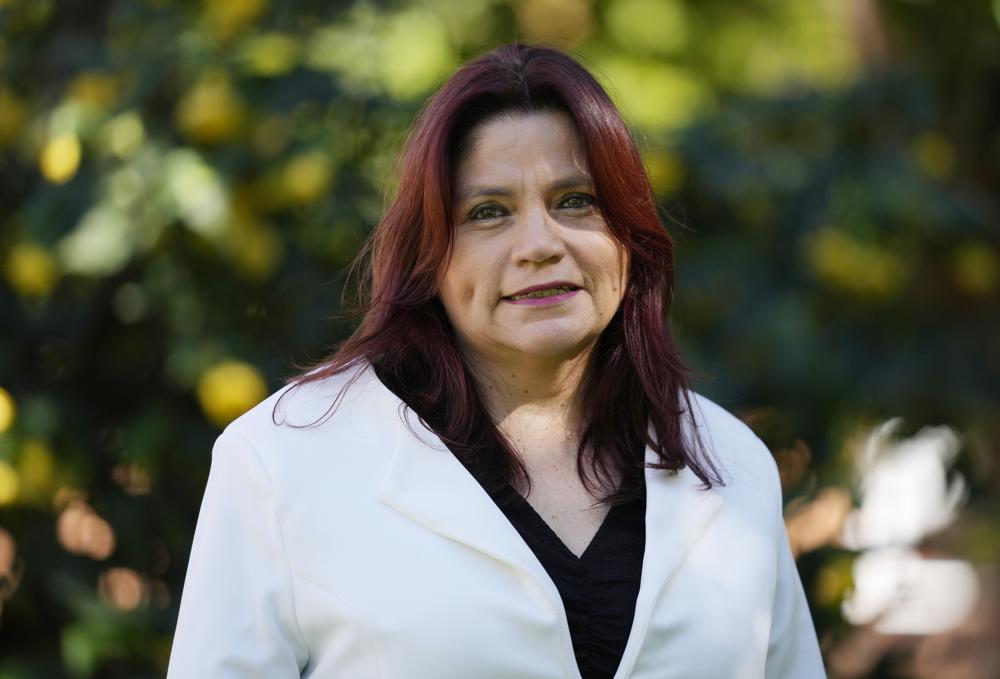
Journalist Claudia Julieta Duque poses for a portrait in Bogota, Colombia, Friday, July 29, 2022. Colombia has for a decade been quietly installing trackers in the armored vehicles of at-risk individuals as well as VIPs, including presidents, government ministers, senators, and Duque herself.
(AP Photo/Fernando Vergara)

The bulletproof vehicles that Colombia’s government assigns to hundreds of high-risk individuals are supposed to make them safer. But when an investigative reporter discovered they all had GPS trackers, she only felt more vulnerable — and outraged.

No one had informed Claudia Julieta Duque — or apparently any of the 3,700-plus journalists, rights activists and labor and indigenous leaders who use the vehicles — that the devices were keeping constant tabs on their whereabouts. In Duque’s case, it happened as often as every 30 seconds. The system could also remotely cut off the SUV’s engine.

Colombia is among the world’s most dangerous countries for human rights defenders — with more than 500 killed since 2016. It is also a country where right-wing extremists have a track record of infiltrating national security bodies. For Duque, the GPS revelation was chilling: Movements of people already at risk of political assassination were being tracked with technology that bad actors could weaponize against them.

“It’s something super invasive,” said Duque, who has been a persistent target of rogue security agents. “And the state doesn’t seem to care.”

The government agency responsible has said the trackers were installed to help prevent theft, to track the bodyguards who often drive the vehicles and to help respond to dangerous situations.

For a decade, Colombia had been installing trackers in the armored vehicles of at-risk individuals as well as VIPs, including presidents, government ministers and senators. The agency’s director made that disclosure after Duque learned last year through a public records request that the system was recording her SUV’s location an average of five times an hour.

The director dismissed privacy concerns and called the practice “fundamental” to guaranteeing security.

Considering the tracker a danger to her and her sources, Duque pressed for details on its exact features. But the National Protection Unit, known as UNP in Spanish, offered little. She then demanded the agency remove the device. It refused. So in February, Duque returned the vehicle, left the country and filed a legal challenge.

Now back in Bogotá, she is hoping for satisfaction when Gustavo Petro, Colombia’s first leftist president, takes office Aug. 7.

Petro’s domestic security transition team did not respond to questions from The Associated Press on the matter.

Whatever action the new administration takes will reflect on its avowed commitment to human rights and its ability to reform a national security establishment long run by bitter political foes.

The UNP is a pillar of that establishment. It employs, mostly as bodyguards, dozens of ex-agents of the disgraced DAS domestic security agency, which was dissolved in 2011 after the government of former President Alvaro Uribe abused it to spy on Supreme Court justices, journalists and political opponents.

Prominent among them were Petro himselfand Duque.

She was surveilled, threatened and bullied by DAS operatives after uncovering evidence that the 1999 assassination of beloved humorist and peace activist Jaime Garzon was a crime of the state. Duque’s reporting eventually helped convict a former DAS deputy director in the killing, and three other ex-DAS officials have been convicted of psychological torture for threatening the lives of Duque and her daughter.

Trials against eight others are pending. Through it all, threats forced her into temporary exile nearly a dozen times.

The questions about the GPS devices added to growing concerns about an agency that once ranked among Latin America’s most effective in human rights protection. Adam Isacson, an analyst with the Washington Office on Latin America, said the UNP became less responsive, more politicized and more penetrated by criminality under the outgoing conservative government.

“With social leaders being killed nearly every other day during the past four years, this was the worst time for the unit to fall into disarray,” he said. Right-wing death squad activity spiked following a historic 2016 peace pact with leftist rebels.

Duque says she was tipped to the GPS trackers in early 2020 when she learned of a planned attempt on her life, but when she asked about them, the government stonewalled for a year.

When she finally got documents with the aid of the InterAmerican Human Rights Commission, they showed her location was recorded 25,183 times over 209 days from February to August of last year alone. A software manual described a panoply of other control options, including remotely operating cameras and door locks managed through vehicles’ computers.

Duque asked if any such features were active in the government-leased vehicles but said she got no answer. The general manager of the company that provides the GPS software told the AP that it only tracks location and speed and enables engine cutoff.


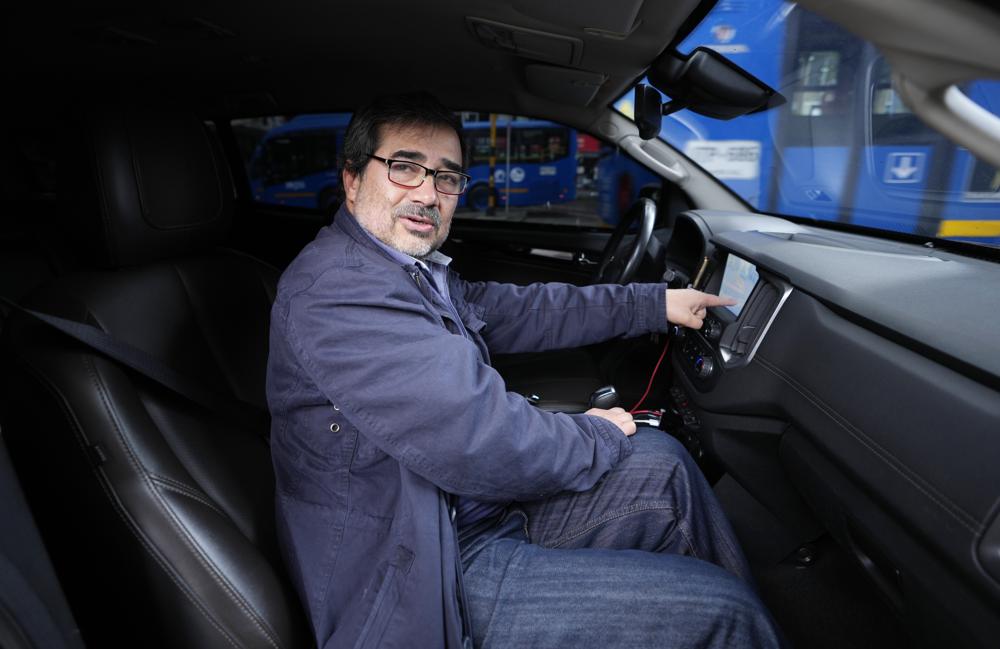
Alberto Yepes a leading human rights activist point to a part of his government assigned vehicle where he found hidden cell phone circuitry, in Bogota, Colombia, Friday, July 22, 2022. Yepes said he also found a GPS tracker after a random caller dialed the wrong number, mistakenly causing the SUV's dashboard to ring. (AP Photo/Fernando Vergara)

A 2021 contract with the vehicle-leasing company obtained by Duque stipulates that a UNP official must approve any engine cutoff and that collected data be kept a minimum of two years. Nothing in the contract supports the claim made by the UNP that the system tracks bodyguards and enables quick reactions in dangerous situations.

UNP officials declined to respond to questions from the AP. There is no evidence the GPS tracking led to any harm to any of the people under protection.

Agency officials took offense last year when Duque questioned their intentions.

“We don’t persecute or follow anyone illegally,” Director Alfonso Campo tweeted in October. “The information compiled by GPS is private” and only handed over to a judge or judicial authority when required in a case or for security reasons. The AP asked the chief prosecutor’s office if had made any requests, but it did not respond.

Privacy experts consider the Colombian government’s tracking illegal and disproportionate and say it poses an unnecessary hacking risk.

Under the country’s 2012 privacy law, affected individuals must consent for such data to be retained. But they were never asked, said Emmanuel Vargas, a privacy law expert helping Duque.

There is no indication that GPS helped protect the indigenous leader Miller Correa, who was kidnapped and killed in mid-March while driving alone on a rural highway. The tracker served afterward to retrieve his government-issued car, which was not armor-plated.

A June 2021 letter from the government to the InterAmerican commission said the UNP took “all measures necessary” to ensure data on protected individuals was “not accessible to (agency) functionaries.” But in a December letter to Duque, the agency indicated it does not directly administer the data-protection efforts. A contractor is responsible.

After Duque publicized her findings, several other high-risk Colombians publicly voiced distrust of their government-provided security details.

One was investigative journalist Julian Martinez, whose book about the infiltration of DAS by corrupt narco-paramilitaries won a 2017 national journalism award.

Martinez’s government-assigned bodyguards didn’t just spy on him after he published articles on alleged drug corruption involving the outgoing government. He accuses them of collecting material for a smear campaign organized by their boss – an outside contractor and former DAS official.

In February, Martinez’s armored vehicle was attacked in Bogota by armed men who were reportedly repelled by his bodyguards. He was nearby at the time, and no one was hurt. Martinez doesn’t believe it was a robbery attempt, as investigators have said they suspect.

“The protection scheme has become a scheme of control,” he said from Argentina, where he fled last month after denouncing an alleged plot to strip him of protection by claiming he was abusing it.

Alberto Yepes, a leading rights activist who assists victims of extrajudicial killings by Colombia’s military, is certain the UNP is being used to spy on him. He suspects cellphone circuitry he discovered in September in his government-provided vehicle could be used to eavesdrop on conversations.

Yepes is not sure Petro can succeed in overhauling the protection unit due to the heavy involvement of contractors with military backgrounds.

“It will be difficult for the new government to change,” he said. “They’re going to have to negotiate.”

___

Associated Press Writer Astrid Suarez in Bogota contributed to this report.
ICYMI
Chances of climate catastrophe are ignored, scientists say

By SETH BORENSTEIN
August 1, 2022

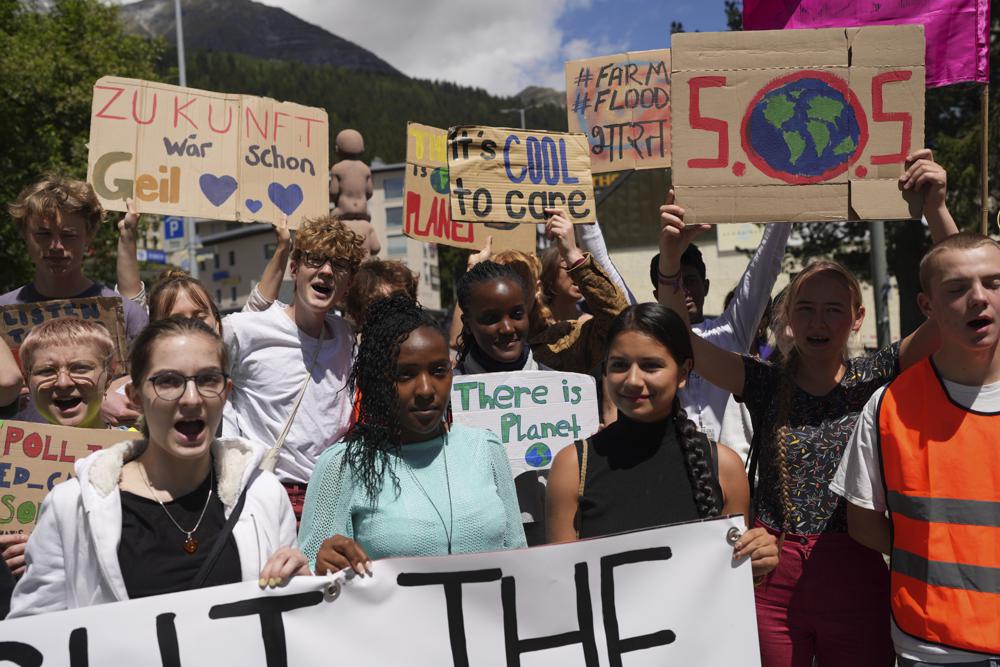
 Climate activists Elizabeth Wathuti of Kenia, Vanessa Nakate of Uganda and Helena Gualinga of Ecuador attend the climate protest alongside the World Economic Forum in Davos, Switzerland, May 26, 2022. A group of top climate scientists say the world needs to think about the ultimate climate catastrophe, human extinction, and how possible it is. They are calling on the world's main climate science body to look at the ultimate climate catastrophes, no matter how remotely unlikely they are. 
(AP Photo/Evgeniy Maloletka, File)


Experts are ignoring the worst possible climate change catastrophic scenarios, including collapse of society or the potential extinction of humans, however unlikely, a group of top scientists claim.

Eleven scientists from around the world are calling on the United Nations’ Intergovernmental Panel on Climate Change, the world’s authoritative climate science organization, to do a special science report on “catastrophic climate change” to “bring into focus how much is at stake in a worst-case scenario.” In their perspective piece in Monday’s Proceedings of the National Academy of Sciences they raise the idea of human extinction and worldwide societal collapse in the third sentence, calling it “a dangerously underexplored topic.”

The scientists said they aren’t saying that worst is going to happen. They say the trouble is no one knows how likely or unlikely a “climate endgame” is and the world needs those calculations to battle global warming.

“I think it’s highly unlikely you are going to see anything close to even extinction over the next century simply because humans are incredibly resilient,” said study lead author Luke Kemp at the Center for the Study of Existential Risk at the University of Cambridge in England. “Even if we have a 1% chance of having a global catastrophe, going extinct over the coming century, that 1%, that is way too high.”

Catastrophic climate scenarios “appear likely enough to warrant attention” and can lead to prevention and warning systems, Kemp said.

Good risk analyses consider both what’s most likely and what’s the worst that could happen, study authors said. But because of push back from non-scientists who reject climate change, mainstream climate science has concentrated on looking at what’s most likely and also disproportionately on low-temperature warming scenarios that come close to international goals, said co-author Tim Lenton, director of the Global Systems Institute at the University of Exeter in England.

There is, Lenton said, “not enough emphasis on how things, the risks, the big risks, could go plausibly badly wrong.”

It’s like an airplane, Lenton said. It’s overwhelmingly likely that it will land safely, but it’s only because so much attention was made to calculate the worst case scenario and then figure out how to avoid a crash. It only works if you research what could go badly wrong and that isn’t being done enough with climate change, he said.

“The stakes may be higher than we thought,” said University of Michigan environment dean Jonathan Overpeck, who wasn’t part of the study. He worries that the world “may stumble” upon climate risks it doesn’t know about.

When global science organizations look at climate change they tend to just look at what happens in the world: extreme weather, higher temperatures, melting ice sheets, rising seas and plant and animal extinctions. But they aren’t factoring enough how these reverberate in human societies and interact with existing problems — like war, hunger and disease — study authors said.

“If we don’t look at the intersecting risks, we’ll be painfully surprised,” said University of Washington public health and climate professor Kristie Ebi, a co-author who like Lenton has been part of United Nations global climate assessments.

It was a mistake health professionals made before COVID-19 when assessing possible pandemics, Ebi said. They talked about disease spread, but not lockdowns, supply chain problems and spiraling economies.

Study authors said they worry about societal collapse — war, famine, economic crises — linked to climate change more than the physical changes to Earth itself.

Outside climate scientists and risk experts were both welcoming and wary of focusing on the worst of the worst, even as many reject climate doom talk.

“I do not believe civilization as we know it will make it out of this century,” University of Victoria climate scientist Andrew Weaver, a former British Columbia legislator for the Green Party, said in an email. “Resilient humans will survive, but our societies that have urbanized and are supported by rural agriculture will not.”

Climate scientist Zeke Hausfather of the tech company Stripe and Berkeley Earth has criticized climate scientists in the past for using future scenarios of greatly increasing carbon pollution when the world is no longer on those paths to more rapid warming. Yet, he said it does make sense to look at catastrophic scenarios “as long as we are careful not to conflate the worst case with the most likely outcome.”

Talking about extinction of humans is not “a very effective communications device,” said Brown University climate scientist Kim Cobb. “People tend to immediately say, well, that’s just, you know, arm waving or doomsday mongering.”

What’s happening short of extinction is bad enough, she said.

Co-author Tim Lenton said researching worst case scenarios could find nothing to worry about: “Maybe it’s that you can thoroughly rule out a number of these bad scenarios. Well, that’s actually really well worth spending your time doing that. Then we should all cheer up a bit.”

___

Follow AP’s climate and environment coverage at https://apnews.com/hub/climate-and-environment

___

Follow Seth Borenstein on Twitter at @borenbears

___

Associated Press climate and environmental coverage receives support from several private foundations. See more about AP’s climate initiative here. The AP is solely responsible for all content.
EU court limits national checks for migrant rescue ships
August 1, 2022

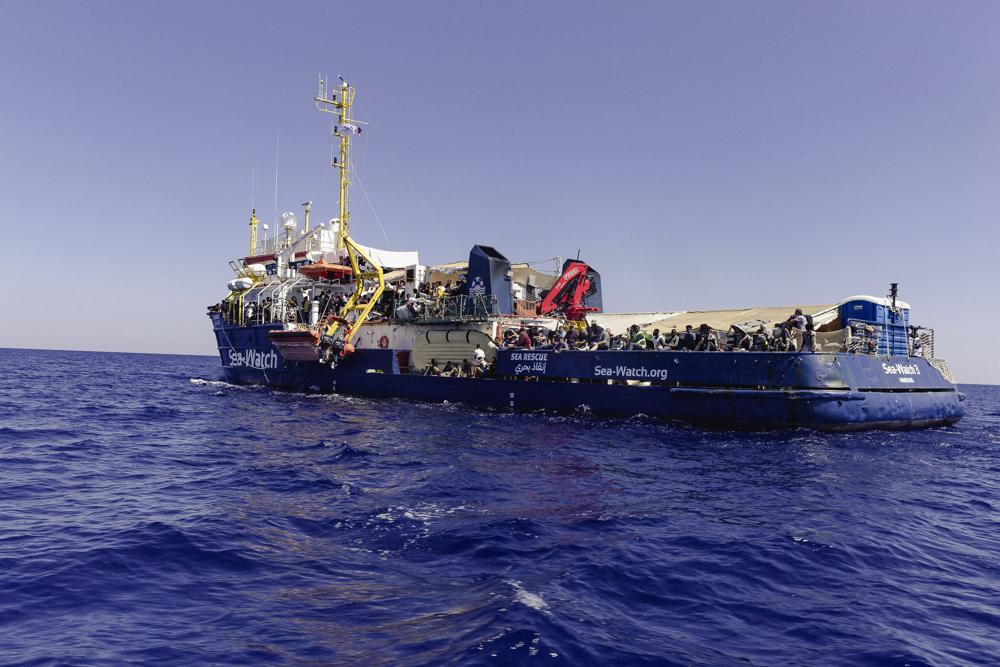
The German charity Sea-Watch 3 with 444 people on board in the central Mediterranean on Sunday, July 24, 2022. Ships in the Mediterranean Sea have rescued over 1,100 people struggling to reach Europe in rickety smugglers boats and found five bodies. The Italian Coast Guard says Sunday that Italian vessels recovered the bodies Saturday as it rescued 674 people packed on a fishing boat adrift in the Mediterranean off the Libyan coast. (Nora Boerding/Sea-Watch via AP)


BRUSSELS (AP) — The European Union’s top court ruled Monday that national maritime authorities cannot impound ships involved in search-and-rescue work on suspicion that they might be overloaded due to the number of migrants they plucked from the sea.

The European Court of Justice ruling came in response to an appeal by German migrant aid group Sea-Watch. Two of the German group’s ships were forced to undergo inspections in Sicily in 2020 after disembarking migrants for taking aboard more people than they were authorized to carry.

Italian harbor authorities also considered that the ships were not certified for search-and-rescue missions.

But the court said that rescued people “must not be taken into account when verifying whether the rules on safety at sea have been complied with. The number of persons on board, even if greater than that which is authorized, cannot therefore, in itself, constitute a ground for a control.”

The Luxembourg-based ECJ also said national port authorities have the right to inspect ships to assess whether rules on working conditions, health and safety, and the environment are being respected.

But it added that they do “not have the power to demand proof that those ships hold certificates other than those issued by the flag state,” which in the case of the Sea-Watch vessels was Germany.

Sea-Watch described the court decision as a victory that means that port authorities can’t arbitrarily detain ships and prevent them from doing their work.

“The ruling provides clear legal security for NGOs and is a victory for sea rescue. In the future, ships will thus continue to do what they do best: Rescue people instead of being arbitrarily stuck in port,” the organization said in a tweet.

Neither the EU nor any of its 27 nations are actively searching for people in danger in the Mediterranean Sea, where more than 1,000 people have died or are missing so far this year, many of whom tried to reach Europe from North Africa in unseaworthy smugglers’ boats.

But ships are bound by international law to respond to any distress call near them.

Most Europe-bound migrants hope to reach family or find work, but many of them are denied asylum because they fled poverty and not persecution or war.

Migration is a key issue in Italy’s early parliamentary election on Sept. 25. Right-wing League party leader Matteo Salvini has promised to take a hard line on migration if his party comes to power in a center-right alliance.

___

Follow all AP stories on global migration at https://apnews.com/hub/migration.
Italians ask if immigrant’s slaying could have been stopped
By FRANCES D'EMILIOJuly 31, 2022


1 of 5
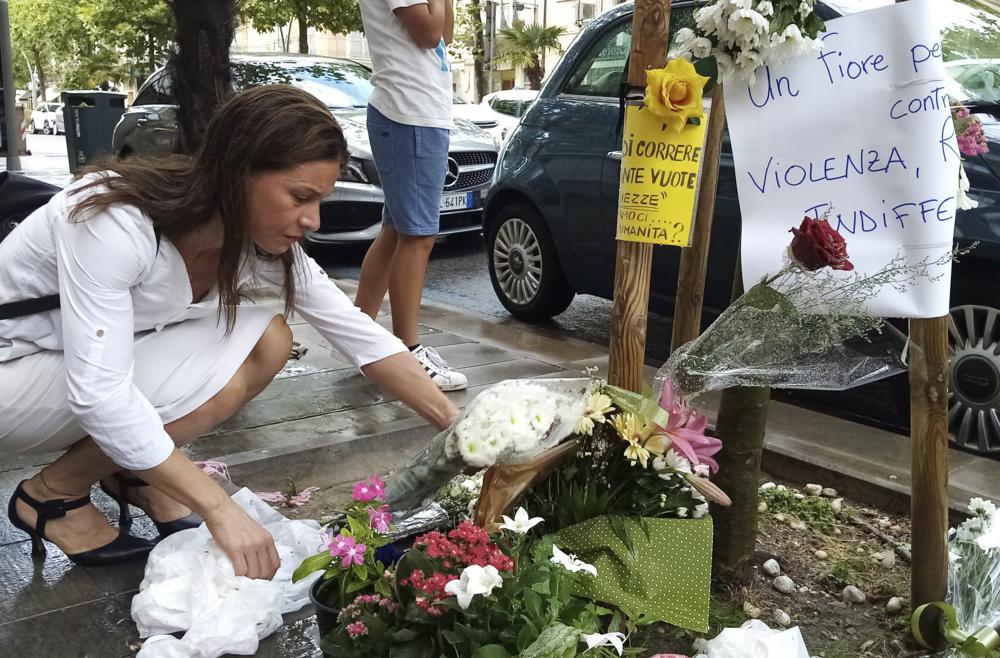
A woman places a bouquet of flowers where the Nigerian street vendor Alika Ogorchukwu has been murdered, in Civitanova Marche, Italy, Saturday, July 30, 2022. (AP Photo/Chiara Gabrielli)


ROME (AP) — Italians debated Sunday whether a Nigerian street vendor could have been saved from a fatal attack by an enraged Italian man that played out in public as bystanders watched. Mourners left flowers and placards denouncing the violence and the indifference of those nearby.

On Friday, as strollers promenaded along a bustling shopping street in Civitanova Marche, an Italian town on the Adriatic Sea, Alika Ogorchukwu, 39, was left for dead after first being struck with his own crutch and then pummeled furiously by the suspect.

“Four-minute long horror,″ headlined Corriere della Sera, noting that other Nigerian immigrants in the town had decried the indifference and racism seen in the killing.

Video footage of the attack has circulated on Italian news websites and social media.

A judge on Monday will rule if the alleged attacker, identified by police as Filippo Claudio Giuseppe Ferlazzo, 32, should remain jailed during the investigation.

Police investigator Matteo Luconi told reporters on Saturday that the assailant went after the vendor following “insistent” requests by Ogorchukwu to the suspect and his female companion for pocket change. The slain man’s lawyer said he was attacked after complimenting the woman’s beauty.

An autopsy will help determine if Ogorchukwu died from the beating or possibly was strangled as he lay on his back, his attacker on top of him and striking him.

Ogorchukwu frequently peddled packets of tissues or cigarette lighters to customers, local shopkeepers said.

During a popular talk show on Italian state radio Sunday, listeners called in to decry the indifference of at least two bystanders who filmed the event and the fear the attack generated..

One listener recalled a young man beaten to death by a gang of Italian youths near Rome in 2020 when he tried to defend a friend and subdue a fight. A court recently convicted four Italians, sentencing two of them to life in prison, for the killing of Willy Monteiro Duarte, a cook whose family originated from Cape Verde.

On Sunday, people paused at the spot where Ogorchukwu died, leaving flowers and tying placards to a tree, including one denouncing “violence, racism, indifference.”

Some radio listeners were indignant that two bystanders used their phones to film the attack and no one apparently tried to pull the suspect off his victim. The police said some did call to report an attack in progress, but by the time help arrived, Ogorchukwu was dead.

One caller asked the host what would he have done if he were there.

“I would have kicked him,” replied Mario Sechi, director of the Italian news agency AGI.

The attack comes as Italian politicians begin campaigning for an early parliamentary election on Sept. 25. The anti-migrant head of the right-wing League party, Matteo Salvini, has made immigration as well as protecting citizens from violent crime his top issues.

On Sunday, Salvini in a tweet contended that his center-left opponents were exploiting the Nigerian’s death to “accuse me, the League and millions of Italians of racism. Squalid.”

Archbishop Rocco Pennacchio, whose diocese includes Civitanova Marche, decided that in place of homilies, several minutes of silence would be held at Sunday’s Masses.

The mayor of the nearby San Severino Marche, where Ogorchukwu lived with his wife, son and a niece, said the town would pay for the funeral. Italian media said local citizens also started fundraising to help his widow.