Wednesday, December 28, 2022

PM-designate Netanyahu vows not to allow anti-LGBT laws in Israel

Xinhua   2022-12-26       

Israel's Prime Minister-designate Benjamin Netanyahu pledged on Sunday that his coalition government will not pass bills allowing discrimination against LGBTs and denying them access to services.

His remarks came in response to statements by two of his extreme-right partners, in which they vowed to pass laws allowing physicians and business owners to discriminate against LGBT people.

Orit Struck, a lawmaker with the pro-settler Religious Zionist Party, said in an interview with the state-owned Kan radio that her party is determined to change Israel's anti-discrimination law so that it would permit doctors to avoid acts that contradict their religious beliefs.

Simcha Rotman, another lawmaker with the party, told Kan radio that owners of private businesses, such as hotels and restaurants, would be allowed to refuse service to LGBTQ people "if it harms their religious sentiments."

In a rare rebuke of his extreme-right partners, Netanyahu issued a video statement, saying that the remarks were "unacceptable."

According to Netanyahu, "the coalition agreements do not permit discrimination against LGBTs or to harm their rights to receive services as any other citizen in Israel."

Netanyahu announced last week that he succeeded in forming a new coalition government with three far-right parties and two Jewish ultra-Orthodox parties. The new government, which is expected to be sworn in by Thursday, will be the most rightist in Israeli history and includes many members who openly oppose LGBT rights.

Netanyahu issues rare rebuke of his own far-

right coalition partners

By Ilan Ben Zion
December 26, 2022 — 

Jerusalem: Designated Israeli Prime Minister Benjamin Netanyahu issued a rare rebuke of his new coalition allies for saying they would advance laws allowing discrimination against LGBTQ people, pledging there would be no harm to their rights by his upcoming government.

Netanyahu is set to form the most ultranationalist and religious government in Israel’s history between his Likud movement and several openly anti-LGBTQ parties. This has raised fears among Israel’s LGBTQ community that the new government, expected to take office in the coming week, will roll back gains they have made in recent years.


Israel’s designated PM Benjamin Netanyahu is at odds with members of his own ruling coalition. CREDIT:AP

Orit Struck, a Religious Zionist member of the Knesset, Israel’s parliament, said on Sunday (Tel Aviv-time) her party seeks a change to the country’s anti-discrimination law that would include permitting people to avoid acts that go against their religious beliefs — including discriminating against LGBTQ people in hospitals.

Struck said in an interview on Sunday with Kan public radio that “so long as there are enough other doctors to provide care,” religious healthcare providers should be able refuse to treat LGBTQ patients.

Simcha Rotman, another member of the party, said that private business owners, such as hotel operators, should be allowed to refuse service to LGBTQ “if it harms their religious feelings”.

Netanyahu issued a pair of statements repudiating Struck’s comments.



Israeli Prime Minister Yair Lapid, center, Likud Party leader Benjamin Netanyahu, left, far-right Israeli lawmaker Bezalel Smotrich after the swearing-in ceremony for Israeli lawmakers at the Knesset, Israel’s parliament in November.CREDIT:AP

Netanyahu said that Struck’s remarks “are unacceptable to me and to members of Likud,” and that the coalition agreement “does not allow discrimination against LGBTQ or harming their right to receive services like all other Israeli citizens”.

As the controversy continued to rage, he later issued a second videotaped statement saying he “completely rejects” Struck’s remarks.

“In the country that I will lead, there will be no situation where a person, whether he is LGBT, Arab or ultra-Orthodox or any other person, will enter a hotel and not receive service, enter [a doctor’s office] and not receive service,” he said.


The controversy came days after the Yediot Ahronot daily reported that another member of the Religious Zionism alliance, the far-right Noam faction, once compiled a list of LGBTQ journalists and claimed the “LGBT media” amounted to a lobby of “incomparable strength”.

Sunday’s uproar prompted Israel’s president, Isaac Herzog, to express his own concerns. The president is a largely figurehead position who is meant to serve as a moral compass and unifying force for the country.

“A situation in which Israeli citizens feel threatened due to their identity or faith undermines the basic democratic and moral values of the State of Israel,” Herzog said. “The racist statements heard in recent days against the LGBT community and in general against different sectors and publics - worry and disturb me a lot.”

It was the latest sign of trouble for Netanyahu’s emerging coalition, which is dominated by far-right and ultra-Orthodox partners pushing for dramatic changes that could alienate large swaths of the Israeli public, raise the risk of conflict with the Palestinians and put Israel on a collision course with some of its closest supporters, including the United States and the Jewish American community.

The outgoing government took several small steps to advance LGBTQ rights, including rescinding a ban on blood donations by gay men, streamlining access to gender reassignment surgery and taking a clear stand against “conversion therapy,” the scientifically discredited practice of using therapy to “convert” LGBTQ people to heterosexuality or traditional gender expectations.

The incoming government includes two ultra-Orthodox parties that do not allow female candidates, and Religious Zionism, an umbrella movement whose leaders are vocally homophobic.

Members of the LGBTQ community serve openly in Israel’s military and parliament, and many popular artists and entertainers as well as several former government ministers are openly gay. But leaders of the LGBTQ community say Israel has a long way to go to promote equality.

Netanyahu and his religious and nationalist parties captured a majority of seats in the Knesset in November 1 elections. Last week, he said he had successfully formed a new coalition. The government, however, has not yet been sworn into office, and Netanyahu and his partners are still finalising their power-sharing agreements.

Netanyahu served for 12 years as Israel’s prime minister before he was ousted from power last year.

AP
Iranian chess player appears at tournament without hijab for second day: Report


Sara Khadem of Iran sits in front of a chess board at the FIDE World Rapid and Blitz Chess Championships in Almaty, Kazakhstan on December 28, 2022. (Reuters)

Reuters, Almaty
Published: 28 December ,2022: 05:09 PM GSTUpdated: 28 December ,2022: 05:47 PM GST

An Iranian chess player on Wednesday took part in an international tournament in Kazakhstan without a hijab for the second day running, according to a Reuters journalist present.

A Reuters witness at the FIDE World Rapid and Blitz Chess Championships in Almaty, Kazakhstan, saw Sara Khadem competing without a headscarf, a violation of Iran’s laws governing female dress code.

Iran has been swept by demonstrations against the country’s clerical leadership since mid-September, when 22-year-old Iranian Kurdish woman Mahsa Amini died in the custody of morality police who detained her for “inappropriate attire.”

Laws enforcing mandatory hijab wearing have become a flashpoint during the protests, with a string of sportswomen competing overseas appearing without their headscarves in public.

Khadem, born in 1997 and also known as Sarasadat Khademalsharieh, is ranked 804 in the world, according to the International Chess Federation website. The website for the December 25-30 event listed her as a participant in both the Rapid and Blitz competitions.

Iranian news outlets Khabarvarzeshi and Etemad in reports on Monday said that Khadem had competed at the championship in Almaty without a hijab.

Iran’s Clerical Leaders To Grapple With Deepening Dissent – Analysis


By 

(EurActiv) — Nationwide protests sparked by the death in custody of Iranian Kurdish woman Mahsa Amini have ushered Iran into a new era of deepening crisis between the clerical leadership and society at large.

Amini’s family said she was beaten after being arrested by the morality police on 13 September for violating the Islamic Republic’s imposed dress code. Amini died three days later. Authorities have blamed the 22-year-old’s death on preexisting medical problems.

Her death unleashed years of pent-up grievances in Iranian society, over issues ranging from tightening social and political controls to economic misery and discrimination against ethnic minorities.

Facing their worst legitimacy crisis since the 1979 Islamic Revolution, Iran’s religious leaders have tried to portray the unrest as breakaway uprisings by ethnic minorities threatening national unity rather than its clerical rule.

Those efforts by authorities have been undermined by solidarity between Iran’s different ethnic groups during the protests, according to activists and rights groups, with protesters chanting slogans in support of minorities.

Protesters from all walks of life have taken to the streets, calling for the downfall of the Islamic Republic. Women have torn off and burned the compulsory headscarves in fury.

Iran’s rulers have accused a coalition of “anarchists, terrorists and foreign foes” of orchestrating the protests in which the activist HRANA news agency said 506 protesters had been killed as of 21 December, including 69 minors.

HRANA said 66 members of the security forces had also been killed. Two protesters have been executed, drawing strong Western condemnation, and thousands have been arrested.

Why it matters

The turmoil, with women and youth in the forefront, poses a grave threat to the priority that has defined Supreme Leader Ayatollah Ali Khamenei’s rule since 1989 – the survival of the Islamic Republic and its religious establishment, at any cost.

However, the persistent unrest does not mean the four-decade-old Islamic Republic will disappear any time soon given the power wielded by its security apparatus. The protest movement is leaderless, a challenge to forcing a new political order.

But the unrest has shown the establishment’s vulnerability to popular anger, raising concerns among top leaders that a misstep could mean more trouble ahead, even if current protests subside.

There is no guarantee greater force will end the unrest, as so far the violent crackdown has only stoked more protests.

The clampdown on the protests and Iran’s suspected transfer of drones and missiles to Russia to help Moscow in its war in Ukraine have made Western leaders reluctant to push for the revival of a 2015 nuclear pact that would provide Tehran billions of dollars worth of extra resources.

Alarmed by popular discontent, the clerical leaders fear economic misery could alienate core supporters among middle and lower-income Iranians should the nuclear deal remain on ice.

What does it mean for 2023?

The Islamic Republic will be engulfed by what analysts call a “revolutionary process” that will likely fuel more protests into 2023, with neither side backing down.

With Khamenei, 83, believing compromise on the republic’s ideological pillars such as hijab would bring its collapse, the establishment will double down on repression, resulting in more anger among the 85 million population, 70% of whom are under 30.

The question of who will eventually succeed him as supreme leader, a role with vast power, may intensify jockeying among the elite, potentially widening rifts in the establishment.

Four years of sanctions have not stopped Iran’s expansion of its nuclear programme or curtailed its support for proxies abroad. But its domestic crisis will likely give Western powers more scope to increase pressure on Tehran.

FASCIST WAR AGAINST THE LEFT
Camps of election-denying protesters in Brazil seen as threat ahead of Lula inauguration

Sun, 25 December 2022 

© Sergio Lima, AFP

Election-denying protesters camping outside Brazilian army bases have become "incubators of terrorism," Brazil's incoming justice minister said on Sunday, a day after police detonated an explosive device and arrested a suspect they accused of links to the Brasilia camp.

Supporters of President Jair Bolsonaro have been camped outside army bases in Brazil for weeks, urging the military to overturn the victory of leftist President-elect Luiz Inacio Lula da Silva, who takes office on January 1st.

"Yesterday's serious events in Brasilia prove that the so-called 'patriotic' camps have become incubators for terrorists," tweeted Flavio Dino, the incoming minister. "There will be no amnesty for terrorists, their supporters and financiers."

Dino said arrangements for Lula's inauguration would be "re-evaluated, with a view to tightening security."

In another tweet, Dino said he would propose the creation of "special groups to combat terrorism and irresponsible weaponry. The rule of law is not compatible with these political militias."

News of the bomb added a new dimension to post-election violence in Brazil, where tensions remain high after the most fraught election in a generation.

Jair Bolsonaro has not conceded defeat in October election


The Brasilia camp, outside the army headquarters, has become one of the country's most extreme. On December 12th, the day Lula's victory was certified, some of the camp dwellers attacked the federal police HQ in Brasilia.

"We've never had bombs here in Brazil," he said.

(Reuters)

Suspect in failed Brazil bomb attack: I wanted to halt Lula’s inauguration

Rio de Janeiro, Dec 25 (EFE).- The supporter of Brazilian ultrarightist President Jair Bolsonaro who was arrested on the weekend after trying to detonate a bomb in Brasilia and from whom authorities seized an arsenal of weaponry admitted that his aim was to cause chaos to prevent the inauguration of President-elect Luiz Inacio Lula da Silva.

According to excerpts from his questioning released Sunday by the Federal District Civil Police, the accused admitted that he had planned to detonate the bomb with other Bolsonaro supporters who are camped out in front of the Brazilian army’s general headquarters to call upon the soldiers to stage a coup d’etat to prevent the leftist Lula’s investiture on Jan. 1.

He added that the aim of the two attacks that the group had planned was to “start chaos” that would force the authorities to declare a “state of siege” and enable the army to launch the coup.

“I decided to work out a plan with the demonstrators at the Army General Headquarters to provoke an intervention by the armed forces and the declaration of a state of siege to prevent the inauguration of communism in Brazil,” the suspect said.

Businessman George Washington de Oliveira Sousa, 54, was formally charged with terrorism after admitting that he built the bomb that was placed inside a fuel tanker truck but deactivated on Saturday by police before the vehicle could be driven to Brasilia’s international airport.

Sousa said that he lives in the Amazon state of Para and that he has been in Brasilia since Nov. 12 as part of the groups of Bolsonaro followers camped out in front of the barracks, adding that they do not recognize Lula’s election victory in last October’s presidential election.

“What motivated me to acquire the weapons (seized at his home) were the words of President Bolsonaro, who always emphasizes the importance of civilian armament,” he added.

Lula’s future attorney general, Flavio Dino, said that the camps set up by the Bolsonaro supporters in front of the military barracks where they have been calling for a coup have been transformed into terrorist “incubators” and he called on the authorities to break them up.

“The serious events of Saturday in Brasilia prove that such ‘patriotic’ camps have become incubators for terrorists,” he said.

“No political deal is possible (with such people) and there will be no amnesty for terrorists, their supporters and financiers,” he warned.

At the home of the accused, authorities found two shotguns, a rifle, two revolvers, three automatic pistols, about 1,000 rounds of ammunition, camouflage uniforms and five explosive devices used in mining and similar to what was used to prepare the bomb that police defused.

The deactivation of the tanker truck bomb and the seizure of the arsenal inside the suspect’s home came just eight days before Lula is scheduled to be inaugurated and have sparked fears of possible violent acts during his swearing-in.

So far, at least 17 heads of state or government – including Spain’s King Felipe VI and the leaders of Germany, Portugal, Argentina and Uruguay – have confirmed that they will attend the inauguration ceremony for the leader and founder of the leftist Workers Party (PT)

Some 300,000 people are expected to attend the musical festival organized so that the public can celebrate Lula’s taking office. About 30 singers and musical groups will perform at the extravaganza.

EFE –/bp

Fox News host concerned after 'opinionated' artificial intelligence 'denounces the Nazis'
David Edwards
December 25, 2022

Fox News/screen grab

Fox News host Howard Kurtz expressed alarm on Sunday at an artificial intelligence system that can imitate the style of Fox News hosts and also denounces Nazis.

On his Christmas day program, Kurtz aired an interview with Fox News host Steve Hilton about OpenAI's ChatGPT experiment that allows internet users to converse with artificial intelligence.

Hilton explained that he had used the system to write a monologue for his show.

"Where this will go will just be an extraordinary change, a real revolution," Hilton promised.

"Both exciting and unnerving," Kurtz said. "It's also opinionated. If you ask it a question about Nazis, it denounces the Nazis! So where is AI going?"

Watch the video below from Fox News or at the link.


Clean Energy or New Weapons: What the Fusion Breakthrough Really Means


 Facebook

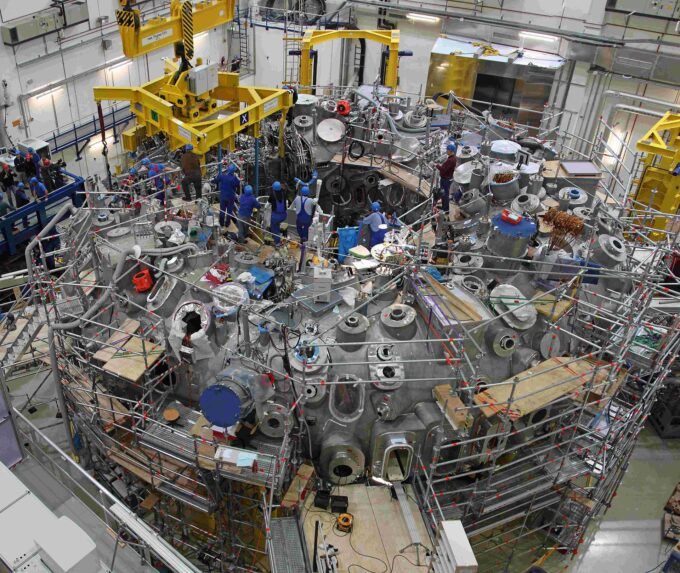
Photograph Source: Max-Planck-Institut für Plasmaphysik, Tino Schulz – CC BY-SA 3.0

On December 13, the US Department of Energy (DOE) announced that the National Ignition Facility (NIF) at the Lawrence Livermore National Laboratory had reached a “milestone”: the achievement of “ignition” in nuclear fusion earlier in the month. That announcement was hailed by many as a step into a fossil fuel-free energy future. US Senate majority leader Charles Schumer, for example, claimed that we were “on the precipice of a future no longer reliant on fossil fuels but instead powered by new clean fusion energy”.

But in truth, generating electrical power from fusion commercially or at an industrial scale is likely unattainable in any realistic sense, at least within the lifetimes of most readers of this article. At the same time, this experiment will contribute far more to US efforts to further develop its terrifyingly destructive nuclear weapons arsenal.

Over the last decade or so, there have been many similar announcements featuring breathless language about breakthroughsmilestones, and advances. These statements have come with unfailing regularity from NIF (for example, in 2013) and the larger set of laboratories and commercial firms pursuing the idea of nuclear fusion. Apart from the United States, similar announcements have come from Germany,  China and the United Kingdom. France is expected to take its turn once the International Thermonuclear Experimental Reactor (ITER) starts operating. The reactor is currently being built in Cadarache, France, at an estimated cost of somewhere between $25 billion to as high as $65 billion, much higher than the original estimate of $5.6 billion.

These incredibly high costs also explain why such announcements are made in the first place: without the excitement created by these hyped-up statements, it would be impossible to get funded for the decades it takes to plan and build these facilities. Conceptual design work on ITER began in 1988.

The preamplifiers of the National Ignition Facility. Photo: Damien Jemison/LLNL CC BY SA 3.0
Of course, that timescale pales in comparison to the time period of the first major announcement about fusion-generated electricity. That took place in 1955 when Homi Bhabha, the architect of India’s nuclear programme, told the first International Conference on Peaceful Uses of Atomic Energy in Geneva:

“I venture to predict that a method will be found for liberating fusion energy in a controlled manner within the next two decades. When that happens the energy problems of the world will have been solved for ever.”

That would not be the last prediction about the imminence of fusion power that would be wrong.

Three challenges for nuclear fusion

The recent “breakthrough” that NIF announced pertains to what I would term “physics challenges”. One can identify three stages of physics challenges.

The first challenge is to have enough fusion reactions in the pellet that is blasted by lasers to produce more energy than is put into the target. That was what seems to have been seen at NIF: the reports say that the lasers pumped in 2.05 megajoules of energy and about 3.15 megajoules came out. All of this over a time period of a few nanoseconds (a nanosecond is one billionth of a second). The figure of 3.15 megajoules might seem like a lot but it is only 0.875 kilowatt-hours, that too of heat, which would produce perhaps 0.3 kilowatt-hours of electricity if it was used to boil water and drive a turbine. (For comparison, a rooftop solar panel that costs under Rs 30,000 in Delhi could generate around 5,000 times more electrical energy in a year.)

The second physics challenge is to produce more energy than is used by the facility as a whole. NIF is far from meeting this challenge. It admitted that just the 192 lasers consumed around 400 megajoules in the process of blasting the pellet. To this, we have to add all the energy that goes into running the other equipment and the facility as a whole.

The final physics challenge is to produce more energy than what is required to construct the facility and all the equipment. In the case of the ITER experiment, for example, it has been estimated that “the tokamak itself will weigh as much as three Eiffel towers [and the] total weight of the central ITER facility is around 400,000 tons”. As Daniel Jassby, a retired physicist from the Princeton Plasma Physics Lab, put it, all this “must appear on the negative side of the energy accounting ledger”.

If these physics challenges are not met, of course, then one has a permanent loss-making facility in energy terms. NIF is far from meeting the latter challenges.

The next stage can be called an “engineering challenge” and that revolves around the question: how do you convert this experimental set up that produces energy for a microscopic fraction of a second into a continuous source of electricity that operates 24 hours a day and 365 days per year? To do that, these fusion reactions should occur several times each second, each second of the day, each day of the year. As of now, the lasers can fire only once a day, at a single target. To move from that state to what is required will need an improvement by a factor of over 500,000 (assuming around six shots per second).

But it is not just firing the laser. Each of these explosions produces a large amount of debris, which would have to be cleared. And then a new pellet has to be placed with utmost precision at the very spot where the lasers can focus their beams.

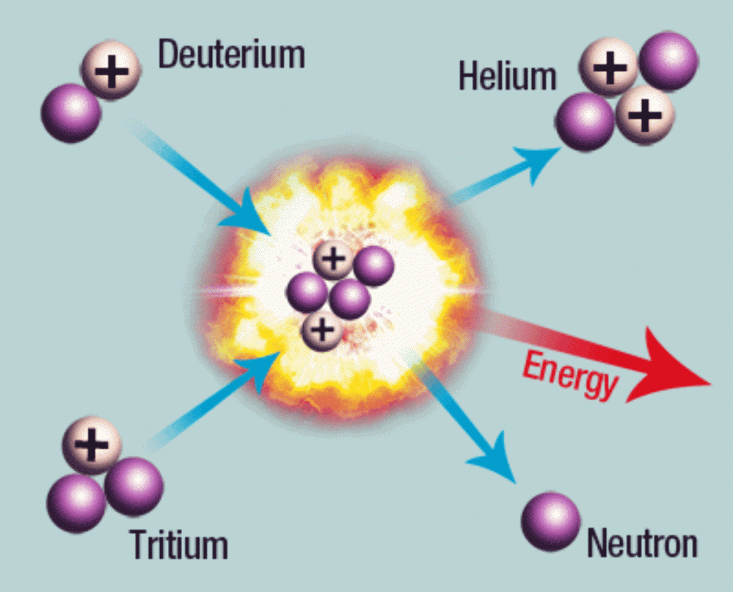
If all of this is not trouble enough, there is fuel procurement. NIF uses a “gold cylinder with a frozen pellet of the hydrogen isotopes deuterium and tritium”. Deuterium and tritium are isotopes of hydrogen. Deuterium is quite common but tritium is very scarce, because it decays radioactively with a half-life of only around 12 years. Fusion proponents often talk about generating tritium in situ, but this is an exceedingly difficult task, as Jasby has explained.

Even if one were to adopt the approach of watching superhero movies and willingly suspend disbelief to assume that all these engineering challenges are solved, then there is an even more difficult challenge: to make this incredibly complicated process into an economically competitive way of generating electricity. If one goes by history, the last could be a killer as has been the case with nuclear fission power, which is a far easier process in comparison to fusion.

Thus, these advances can better be described as “micron-stones”, to coin a term, rather than milestones, and that too on a path that might never lead to economical electricity generation. In the meanwhile, this recent experiment is far more likely to be useful to nuclear weapons designers.

NIF and nuclear weapons

NIF’s chief purpose is not generating electricity or even finding a way to do so. NIF was set up as part of the Science Based Stockpile Stewardship Program, which was the ransom paid to the US nuclear weapons laboratories for forgoing the right to test after the United States signed the Comprehensive Test Ban Treaty. This is a purpose NIF can start fulfilling without ever generating any electricity.

An illustration showing the process of nuclear fusion. Photo: Someone/Wikimedia Commons CC BY-SA 3.0

The main utility that NIF offers nuclear weapons designers and planners is by providing a greater understanding of the underlying science. As the Lawrence Livermore National Laboratory’s webpage proudly proclaims:

“NIF’s high energy density and inertial confinement fusion experiments, coupled with the increasingly sophisticated simulations available from some of the world’s most powerful supercomputers, increase our understanding of weapon physics, including the properties and survivability of weapons-relevant materials”.

Another 1995 document explains that NIF would provide lots of “neutrons with the very short pulse widths characteristic of low-yield nuclear intercepts, that can be used to establish lethal criteria for chemical/biological agents and nuclear warhead targets”. In other words, NIF could help with modelling the use of nuclear weapons to destroy chemical, biological and nuclear weapons.

NIF might even help with developing new kinds of nuclear weapons. Back in 1998, Arjun Makhijani, who has a PhD in nuclear fusion, and Hisham Zeriffi suggested that NIF could help with the development of pure fusion weapons, i.e., thermonuclear weapons that do not need a nuclear fission primary. If that were to happen – and that is a big if, as is the case with most fusion activities – that would obviate the need for highly enriched uranium or plutonium, which are currently the main obstacles to making nuclear weapons.

NIF, then, is a way to continue investment into modernising nuclear weapons, albeit without explosive tests, and dressing it up as a means to produce “clean” energy. The managers of NIF and the larger laboratory in which it is housed are careful to highlight different promises based on the circumstance they are speaking at. When anthropologist Hugh Gusterson asked a senior official about the purpose of the laser programme, the official replied, “It depends who I’m talking to…One moment it’s an energy program, the next it’s a weapons programme. It just depends on the audience”.

Dangerous distraction

The tremendous media attention paid to NIF and ignition amounts to a distraction – and a dangerous one at that.

As the history of nuclear fusion since the 1950s shows, this complicated technology is not going to produce cheap and reliable electricity to light bulbs or power computers anytime in the foreseeable future.

But nuclear fusion falls even shorter when we consider climate change, and the need to cut carbon emissions drastically and rapidly. The Intergovernmental Panel on Climate Change has warned that to stop irreversible damage from climate change, the world will have to achieve zero net emissions by 2050. Given this relatively short timeline to turn around our economies and ways of living, spending billions of dollars on this sure-to-fail attempt to develop fusion power only amounts to diverting money and resources away from proven and safer renewable energy sources and associated technologies. Investment in research and development into fusion is bad news for the climate.

Meanwhile, nuclear fusion experiments like those at NIF will further the risk posed by the nuclear arsenal of the US, and, indirectly, the arsenals of the eight other countries known to possess nuclear weapons. The world has been lucky so far to avoid nuclear war. But this luck will not hold up forever. We need nuclear weapons abolition, but programmes like NIF offer nuclear weapons modernisation, which is just a means to assure destruction forever.

M.V. Ramana is the Simons Chair in Disarmament, Global and Human Security and Professor at the School of Public Policy and Global Affairs, University of British Columbia, Vancouver, Canada, and the author of The Power Of Promise: Examining Nuclear Energy In India.

This article was first published by Science: The Wire (India).

M. V. Ramana is the Simons Chair in Disarmament, Global and Human Security at the School of Public Policy and Global Affairs, University of British Columbia and the author of The Power of Promise: Examining Nuclear Energy in India.

Scientists are closer to understanding the “Mandela Effect” – the bizarre phenomenon of shared false memories

2022/12/25


Imagine the Monopoly Man. Is he wearing a monocle or not?

If you pictured the character from the popular board game wearing one, you’d be wrong. In fact, he has never worn one.

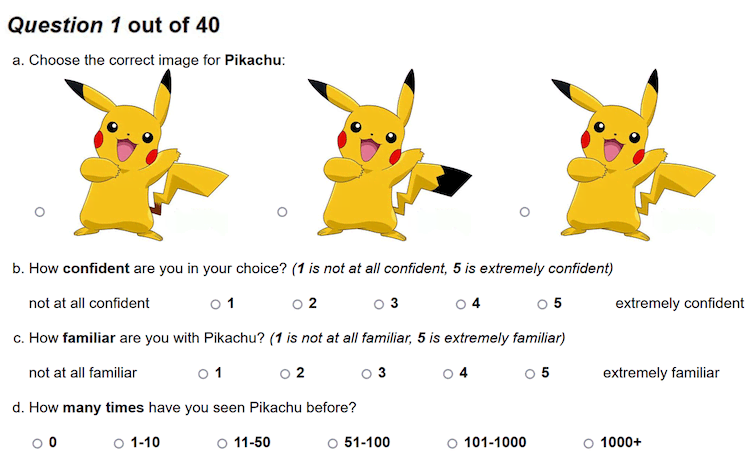
If you’re surprised by this, you’re not alone. Many people possess the same false memory of this character. This phenomenon takes place for other characters, logos and quotes, too. For example, Pikachu from Pokémon is often thought to have a black tip on his tail, which he doesn’t have. And many people are convinced that the Fruit of the Loom logo includes a cornucopia. It doesn’t.

We call this phenomenon of shared false memories for certain cultural icons the “visual Mandela Effect.”

People tend to be puzzled when they learn that they share the same false memories with other people. That’s partly because they assume that what they remember and forget ought to be subjective and based on their own personal experiences.

However, research we have conducted shows that people tend to remember and forget the same images as one another, regardless of the diversity of their individual experiences. Recently, we have shown these similarities in our memories even extend to our false memories.


What is the Mandela Effect?


The term “Mandela Effect” was coined by Fiona Broome, a self-described paranormal researcher, to describe her false memory of former South African president Nelson Mandela dying in prison in the 1980s. She realized that many other people also shared this same false memory and wrote an article about her experience on her website. The concept of shared false memories spread to other forums and websites, including Reddit.

Since then, examples of the Mandela Effect have been widely shared on the internet. These include names like “the Berenstain Bears,” a children’s book series that is falsely remembered as spelled “-ein” instead of “-ain,” and characters like Star Wars’ C-3PO, who is falsely remembered with two gold legs instead of one gold and one silver leg.

The Mandela Effect became fodder for conspiracists – the false memories so strong and so specific that some people see them as evidence of an alternate dimension.

Because of that, scientific research has only studied the Mandela Effect as an example of how conspiracy theories spread on the internet. There has been very little research looking into the Mandela Effect as a memory phenomenon.

But understanding why these icons trigger such specific false memories might give us more insight into how false memories form. The visual Mandela Effect, which affects icons specifically, was a perfect way to study this.


A robust false memory phenomenon

To see whether the visual Mandela Effect really exists, we ran an experiment in which we presented people with three versions of the same icon. One was correct and two were manipulated, and we asked them to select the correct one. There were 40 sets of icons, and they included C-3PO from the Star Wars franchise, the Fruit of the Loom logo and the Monopoly Man from the board game.

In the results, which have been accepted for publication in the journal Psychological Sciences, we found that people fared very poorly on seven of them, only choosing the correct one around or less than 33% of the time. For these seven images, people consistently identified the same incorrect version, not just randomly choosing one of the two incorrect versions. In addition, participants reported being very confident in their choices and having high familiarity with these icons despite being wrong.

Put together, it’s clear evidence of the phenomenon that people on the internet have talked about for years: The visual Mandela Effect is a real and consistent memory error.

The correct version of Pikachu is the one on the left. Most participants in the study not only chose a wrong version of the popular cartoon character, but they also chose the same wrong one – the Pikachu with the black tip on its tail. (Wilma Bainbridge and Deepasri Prasad)

We found that this false memory effect was incredibly strong, across multiple different ways of testing memory. Even when people saw the correct version of the icon, they still chose the incorrect version just a few minutes later.

And when asked to freely draw the icons from their memory, people also included the same incorrect features.

No universal cause

What causes this shared false memory for specific icons?

We found that visual features like color and brightness could not explain the effect. We also tracked participants’ mouse movements as they viewed the images on a computer screen to see if they simply didn’t scan over a particular part, such as Pikachu’s tail. But even when people directly viewed the correct part of the image, they still chose the false version immediately afterward. We also found that for most icons, it was unlikely people had seen the false version beforehand and were just remembering that version, rather than the correct version.

It may be that there is no one universal cause. Different images may elicit the visual Mandela Effect for different reasons. Some could be related to prior expectations for an image, some might be related to prior visual experience with an image and others could have to do with something entirely different than the images themselves. For example, we found that, for the most part, people only see C-3PO’s upper body depicted in media. The falsely remembered gold leg might be a result of them using prior knowledge – bodies are usually only one color – to fill in this gap.

But the fact that we can demonstrate consistencies in false memories for certain icons suggests that part of what drives false memories is dependent on our environment – and independent of our subjective experiences with the world.

This article is republished from The Conversation under a Creative Commons license. Read the original article.

The Christmas tree is a tradition older than Christmas

The Conversation
December 24, 2022


Why, every Christmas, do so many people endure the mess of dried pine needles, the risk of a fire hazard and impossibly tangled strings of lights?

Strapping a fir tree to the hood of my car and worrying about the strength of the twine, I sometimes wonder if I should just buy an artificial tree and do away with all the hassle. Then my inner historian scolds me – I have to remind myself that I’m taking part in one of the world’s oldest religious traditions. To give up the tree would be to give up a ritual that predates Christmas itself.

A symbol of life in a time of darkness


Almost all agrarian societies independently venerated the Sun in their pantheon of gods at one time or another – there was the Sol of the Norse, the Aztec Huitzilopochtli, the Greek Helios.

The solstices, when the Sun is at its highest and lowest points in the sky, were major events. The winter solstice, when the sky is its darkest, has been a notable day of celebration in agrarian societies throughout human history. The Persian Shab-e Yalda, Dongzhi in China and the North American Hopi Soyal all independently mark the occasion.

The favored décor for ancient winter solstices? Evergreen plants.

Whether as palm branches gathered in Egypt in the celebration of Ra or wreaths for the Roman feast of Saturnalia, evergreens have long served as symbols of the perseverance of life during the bleakness of winter, and the promise of the Sun’s return.

Christmas slowly emerges


Christmas came much later. The date was not fixed on liturgical calendars until centuries after Jesus’ birth, and the English word Christmas – an abbreviation of “Christ’s Mass” – would not appear until over 1,000 years after the original event.

While Dec. 25 was ostensibly a Christian holiday, many Europeans simply carried over traditions from winter solstice celebrations, which were notoriously raucous affairs. For example, the 12 days of Christmas commemorated in the popular carol actually originated in ancient Germanic Yule celebrations.

The continued use of evergreens, most notably the Christmas tree, is the most visible remnant of those ancient solstice celebrations. Although Ernst Anschütz’s well-known 1824 carol dedicated to the tree is translated into English as “O Christmas Tree,” the title of the original German tune is simply “Tannenbaum,” meaning fir tree. There is no reference to Christmas in the carol, which Anschütz based on a much older Silesian folk love song. In keeping with old solstice celebrations, the song praises the tree’s faithful hardiness during the dark and cold winter.

Bacchanal backlash


Sixteenth-century German Protestants, eager to remove the iconography and relics of the Roman Catholic Church, gave the Christmas tree a huge boost when they used it to replace Nativity scenes. The religious reformer Martin Luther supposedly adopted the practice and added candles.

But a century later, the English Puritans frowned upon the disorderly holiday for lacking biblical legitimacy. They banned it in the 1650s, with soldiers patrolling London’s streets looking for anyone daring to celebrate the day. Puritan colonists in Massachusetts did the same, fining “whosoever shall be found observing Christmas or the like, either by forbearing of labor, feasting, or any other way.”

German immigration to the American colonies ensured that the practice of trees would take root in the New World. Benjamin Franklin estimated that at least one-third of Pennsylvania’s white population was German before the American Revolution.

Yet, the German tradition of the Christmas tree blossomed in the United States largely due to Britain’s German royal lineage.

Taking a cue from the queen


Since 1701, English kings had been forbidden from becoming or marrying Catholics. Germany, which was made up of a patchwork of kingdoms, had eligible Protestant princes and princesses to spare. Many British royals privately maintained the familiar custom of a Christmas tree, but Queen Victoria – who had a German mother as well as a German grandmother on her father’s side – made the practice public and fashionable.

Victoria’s style of rule both reflected and shaped the outwardly stern, family-centered morality that dominated middle-class life during the era. In the 1840s, Christmas became the target of reformers like novelist Charles Dickens, who sought to transform the raucous celebrations of the largely sidelined holiday into a family day in which the people of the rapidly industrialized nation could relax, rejoice and give thanks.

His 1843 novella, “A Christmas Carol,” in which the miserly Ebenezer Scrooge found redemption by embracing Dickens’ prescriptions for the holiday, was a hit with the public. While the evergreen décor is evident in the hand-colored illustrations Dickens specially commissioned for the book, there are no Christmas trees in those pictures.

Victoria added the fir tree to family celebrations five years later. Although Christmas trees had been part of private royal celebrations for decades, an 1848 issue of the London Illustrated News depicted Victoria with her German husband and children decorating one as a family at Windsor Castle.

The cultural impact was almost instantaneous. Christmas trees started appearing in homes throughout England, its colonies and the rest of the English-speaking world. Dickens followed with his short story “A Christmas Tree” two years later.

Adopting the tradition in America


During this period, America’s middle classes generally embraced all things Victorian, from architecture to moral reform societies.

Sarah Hale, the author most famous for her children’s poem “Mary had a Little Lamb,” used her position as editor of the best-selling magazine Godey’s Ladies Book to advance a reformist agenda that included the abolition of slavery and the creation of holidays that promoted pious family values. The adoption of Thanksgiving as a national holiday in 1863 was perhaps her most lasting achievement.

It is closely followed by the Christmas tree.

While trees sporadically adorned the homes of German immigrants in the U.S., it became a mainstream middle-class practice when, in 1850, Godey’s published an engraving of Victoria and her Christmas tree. A supporter of Dickens and the movement to reinvent Christmas, Hale helped to popularize the family Christmas tree across the pond.

Only in 1870 did the United States recognize Christmas as a federal holiday.

The practice of erecting public Christmas trees emerged in the U.S. in the 20th century. In 1923, the first one appeared on the White House’s South Lawn. During the Great Depression, famous sites such as New York’s Rockefeller Center began erecting increasingly larger trees.Christmas trees go global

As both American and British cultures extended their influence around the world, Christmas trees started to appear in communal spaces even in countries that are not predominately Christian. Shopping districts in Dubai, United Arab Emirates, Hong Kong and Tokyo now regularly erect trees.

The modern Christmas tree is a universal symbol that carries meanings both religious and secular. Adorned with lights, they promote hope and offer brightness in literally the darkest time of year for half of the world.

In that sense, the modern Christmas tree has come full circle.

Troy Bickham, Professor of History, Texas A&M University

This article is republished from The Conversation under a Creative Commons license. Read the original article.