It’s possible that I shall make an ass of myself. But in that case one can always get out of it with a little dialectic. I have, of course, so worded my proposition as to be right either way (K.Marx, Letter to F.Engels on the Indian Mutiny)
Thursday, January 12, 2023
Coinbase eliminates 20% of staff in latest round of layoffsFIRINGS
Philip Lagerkranser and Yueqi Yang, Bloomberg News
A company logo at the Coinbase Global Inc. event in Bengaluru, India, on Thursday, April 7, 2022. Coinbase, the U.S. cryptocurrency exchange operator, plans to more than triple its number of employees in India this year to around 1,000, according to Armstrong. Photographer: Samyukta Lakshmi/Bloomberg , Bloomberg
COINBASE GLOBAL INC -CLASS A (COIN:UN)
43.830.57 (1.32%)
As of: 01/12/23 6:54:08 am (delayed at least 15 minutes)
Coinbase Global Inc. is firing about 950 employees, or 20 per cent of its workforce, as the worsening crypto slump spurs another round of layoffs at the biggest US digital-asset exchange.
Co-founder and Chief Executive Officer Brian Armstrong announced the job reductions in a blog post Tuesday, saying the steps were needed to weather the industry downturn. In June, Coinbase announced it would lay off 18 per cent of its workforce, the equivalent of roughly 1,200 employees. It eliminated another 60 positions in November. It will now shut down several projects.
“This is the first time we’ve seen a crypto cycle coincide with a broader economic downturn,” Armstrong wrote in the blog. “We also reduced headcount last year as the market started to correct, and in hindsight, we could have cut further at that time.”
The company expects to book US$149 million to US$163 million of restructuring charges, according to a statement on Tuesday. The overhaul will be “substantially complete” by the end of the second quarter, it said. As a result, adjusted EBITDA for the full year ended Dec. 31 is expected to be around negative US$500 million, within its guidance.
“Coinbase is doing another round of cut because trading volume remains very weak, especially after the FTX fallout,” said Owen Lau, analyst at Oppenheimer. While rising rate helps its interest income, the company is trying to maintain a certain loss guardrail so that it can survive through this period and emerge stronger on the other side, he said.
Crypto’s bear market is entering its second year, and the industry has suffered a series of meltdowns that hurt its outlook, most lately the bankruptcy of rival exchange FTX. With revenues falling and profits evaporating, companies across the sector have resorted to steep cost cuts in past months.
Genesis, the troubled crypto brokerage under Barry Silbert’s Digital Currency Group, also made another round of job cuts this month, cutting about 30 per cent of workforce. Crypto exchange Huobi is cutting 20 per cent of jobs, while Silvergate Capital Corp., a crypto-friendly bank, laid off 40 per cent of its staff.
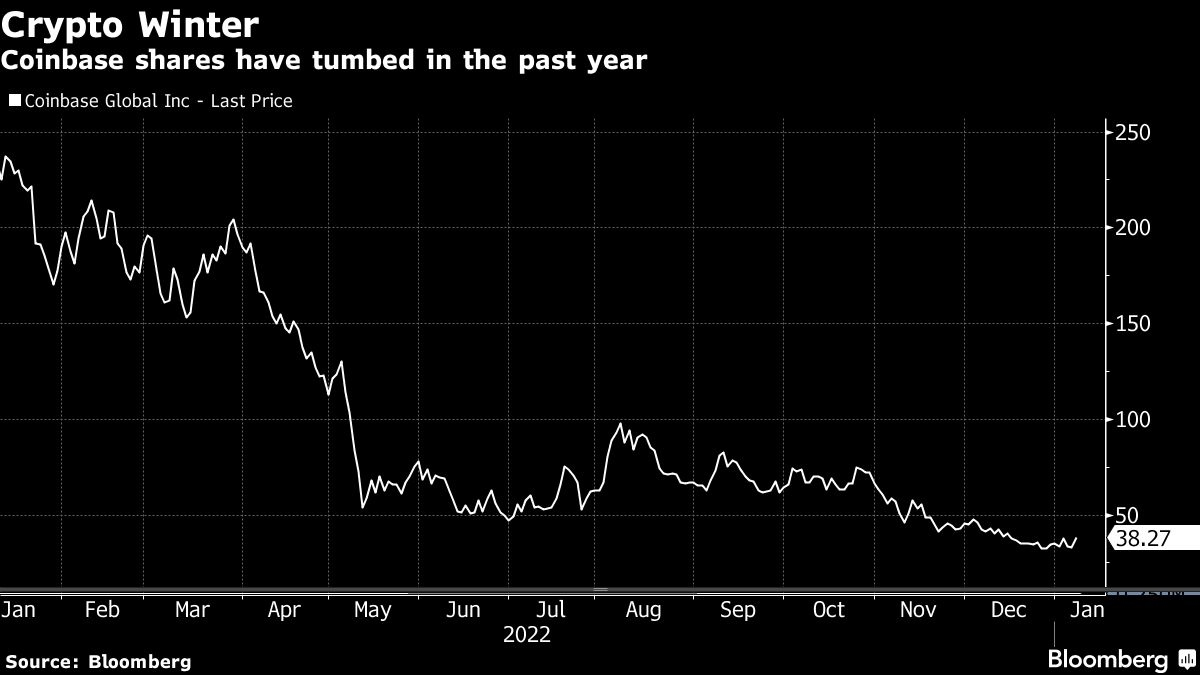
Coinbase’s shares tumbled 86 per cent last year, dropping more than the market bellwether Bitcoin, which slumped 64 per cent. The stock rose 1.4 per cent on Tuesday. The company ended the third quarter with US$5 billion in cash and cash equivalents.
“Our preliminary view is that the announcement today will help soften the impact of the challenging environment,” Kyle Voigt, an analyst at Keefe Bruyette & Woods, wrote in a note. But this “likely will not move the company into profitable territory yet.”
Union prepares strike votes for 35,000 tax workers in Canada
Randy Thanthong-Knight, Bloomberg News
A Canada Revenue Agency mailbox stands in Toronto, Ontario, Canada, on Monday, July 29, 2019. The office vacancy rate is expected to more than double in Toronto and Vancouver by 2023 as companies are lured to shiny new buildings, according to research firm CoStar Group Inc. , Bloomberg
Federal workers are launching nationwide strike votes for more than 35,000 employees at Canada Revenue Agency after talks broke down over wages and remote work.
Votes will be held from Jan. 31 to April 7, and the union will be in a legal strike position if its members approve a strike mandate, according to a joint statement from the Public Service Alliance of Canada and the Union of Taxation Employees.
“Workers’ wages have stalled while the cost of living has continued to rise,” PSAC President Chris Aylward said. “We’ve been clear negotiating wages that keep up with inflation and a sensible remote work policy are critical to reach a deal, but the Agency has refused to respond to our wage offer.”
The strike votes will occur ahead of Canada’s April 30 tax filing deadline. They highlight the persistence of union demands for bigger pay increases even as consumer price gains begin to retreat from a four-decade high.
High inflation has historically led to increased work stoppages as employees try to catch up with prices, and unions in Canada have been ramping up their demands over the past several months. The taxation workers, for example, demanded a 30 per cent wage increase over three years.
“A strong strike mandate is the best way to ramp up pressure to reach a fair contract for our members,” said Marc Brière, president of the tax workers union.
Light-driven CO2 assimilation by photosystem II and its relation to photosynthesis
DALIAN INSTITUTE OF CHEMICAL PHYSICS, CHINESE ACADEMY SCIENCES
IMAGE: PHOTOSYNTHESIS IS THE GREATEST NATURAL PROCESS ON EARTH. IT HAS BEEN WIDELY ACCEPTED THAT CO2 ASSIMILATION TAKES PLACE IN LIGHT-INDEPENDENT REACTIONS, FOR EXAMPLE, THROUGH THE CALVIN-BENSON CYCLE IN THE STROMA. HERE, AN UNUSUAL LIGHT-DRIVEN CO2 ASSIMILATION (INTO METHANOL) BY THE PSII CORE COMPLEX IN PHOTOSYNTHESIS WAS REPORTED. THE EXTRAORDINARY FINDING IS LIKELY TO BE A SIMULTANEOUS EVENT ALONG WITH THE USUAL ELECTRON TRANSFER OCCURRING IN NORMAL LIGHT-INDEPENDENT ASSIMILATION.view more
CREDIT: CHINESE JOURNAL OF CATALYSIS
Photosynthesis is the greatest natural process converting sunlight into chemical energy on a massive scale and maintaining the life on Earth. There are basically two successive stages of oxygenic photosynthesis, of which the light-dependent reactions in photosystem II (PSII), and in photosystem I (PSI), enable the oxidation of H2O into molecular oxygen, and production of reducing power (NADPH and ATP), while CO2 assimilation is generally known to take place long after oxygen evolution and NADP+ reduction, via light-independent reactions in the stroma.
Meanwhile, there is wide consensus that during light dependent reactions CO2 (or bicarbonate) is not reduced as a substrate, but plays a unique stimulatory role in O2 evolution, namely the so-called “bicarbonate effect”. The role of bicarbonate effect as well as the bicarbonate binding sites in PSII have been intensively studied since the 1970s, with some important conclusions reached thus far. However, CO2 (or bicarbonate) in PSII is thought to only play supporting roles during water oxidation, rather than being “assimilated” by PSII.
Recently, a team of researchers from Dalian University of Technology, Dalian Institute of Chemical Physics, Chinese Academy of Sciences, China, and University of Illinois at Urbana-Champaign, USA, for the first time reported a light-driven CO2 assimilation by PSII core complex, where the formation of methanol (CH3OH), along with the oxygen evolution, is validated by in-situ mass spectrometry, gas chromatography and isotopic labeling experiments. Such an unusual CO2 assimilation is likely to be a simultaneous event along with the usual electron transfer occurring in normal light-independent assimilation. This discovery is extraordinary and is of great significance as it may substantially modify our understanding of the mechanism of photosynthesis. The results were published in Chinese Journal of Catalysis (https://doi.org/10.1016/S1872-2067(22)64170-6).
###
About the Journal
Chinese Journal of Catalysis is co-sponsored by Dalian Institute of Chemical Physics, Chinese Academy of Sciences and Chinese Chemical Society, and it is currently published by Elsevier group. This monthly journal publishes in English timely contributions of original and rigorously reviewed manuscripts covering all areas of catalysis. The journal publishes Reviews, Accounts, Communications, Articles, Highlights, Perspectives, and Viewpoints of highly scientific values that help understanding and defining of new concepts in both fundamental issues and practical applications of catalysis. Chinese Journal of Catalysis ranks among the top two journals in Applied Chemistry with a current SCI impact factor of 12.92. The Editors-in-Chief are Profs. Can Li and Tao Zhang.
IMAGE: BACK ROW, LEFT TO RIGHT: URI YERMIYAHU, MAYA BAR, YIGAL ELAD FRONT ROW, LEFT TO RIGHT: GAUTAM ANAND, DALIA RAV-DAVID, RUPALI GUPTA, MEIRAV LEIBMAN-MARKUSview more
CREDIT: MAYA BAR
Just like humans can’t subsist on a diet of only French fries and brownies, plants must also consume a balanced diet to maintain optimal health and bolster their immune responses. Nutrient element uptake is necessary for plant growth, development, and reproduction. In some cases, treatment with essential elements has been shown to induce plant disease resistance, but conclusive research on the molecular basis of this remedy has been limited.
In one of the few studies to directly investigate the mechanism underlying the effect of essential elements on plant disease resistance, Rupali Gupta of Volcani Institute and colleagues demonstrate that nutrient elements activate immune responses in tomato plants through different defense signaling pathways.
Their paper, recently published in Phytopathology, outlines the molecular mode of action that potassium, calcium, magnesium, and sodium take to minimize both fungal and bacterial plant diseases. Using straightforward laboratory methods, the authors demonstrate that essential element spray treatment sufficiently activates immune responses in tomato—including defense gene expression, cellular leakage, reactive oxygen species production, and ethylene production—leading to disease resistance. Their results suggest that different defense signaling pathways are required for induction of immunity in response to different elements.
Understanding the genetic mechanism underlying this process may provide new insights into crop improvement. Corresponding author Maya Bar comments, “We are excited to probe the molecular basis of this phenomenon, define another facet of induced resistance, and provide data that will assist in applying this principle to agricultural systems in a more purposeful, reproducible manner.”
The tenets of mineral nutrient-induced disease resistance discovered in this study can be exploited in agricultural practices—benefiting growers/farmers and protecting valuable crops.
Nutrient Elements Promote Disease Resistance in Tomato by Differentially Activating Immune Pathways
New UCF-developed battery could prevent post-hurricane electric vehicle fires
The technology replaces the volatile and highly flammable organic solvents found in electric vehicle lithium-ion batteries with saltwater to create a safer and more efficient battery
ORLANDO, Jan. 10, 2023 – A University of Central Florida researcher has developed technology that could prevent electric vehicle fires, like those caused by saltwater flooding from Hurricane Ian.
The technology, an aqueous battery, replaces the volatile and highly flammable organic solvents found in electric vehicle lithium-ion batteries with saltwater to create a battery that is safer, faster charging, just as powerful and won’t short circuit during flooding.
“During Hurricane Ian, a lot of electric cars caught fire after they were soaked in floodwater,” says Yang Yang, an associate professor in UCF’s NanoScience Technology Center who led the research. “That is because the saltwater corrodes the battery and causes a short circuit, which ignites the flammable solvents and other components. Our battery uses saltwater as an electrolyte, eliminating the highly volatile solvents.”
Also key to the battery’s design is its novel, nano-engineering that allows the battery to overcome limitations of previous aqueous batteries, such as slow charging times and poor stability.
The UCF-designed battery is fast charging, reaching full charge in three minutes, compared to the hours it takes lithium-ion batteries.
The issue of electric vehicle fires after saltwater flooding surfaced during Hurricane Sandy in 2012 and Hurricane Isaias in 2020.
As a result, the U.S. Fire Administration and the National Highway Traffic Safety Administration have issued special guidance for responding to electric vehicle fires caused by saltwater flooding.
The fires require copious amounts of water to douse, with the International Association of Fire Chiefs recommending firefighters secure a continuous and sustainable water supply of 3,000 to 8,000 gallons.
At least 12 electric vehicle fires were reported in Collier and Lee counties in Florida after Hurricane Ian, where many cars were submerged at least partially in saltwater, according to the US. Fire Administration.
Designing the Battery
Previous aqueous battery designs have suffered from low energy output, instability, the growth of harmful metallic structures called dendrites on the negative electrode and corrosion.
By using saltwater as the battery’s liquid electrolyte, the UCF researchers were able to use naturally occurring metal ions found in the saltwater, such as sodium, potassium, calcium and magnesium, to create a dual-cation battery that stores more energy. This implementation allowed them to overcome the sluggishness of previous single-cation aqueous battery designs.
To solve problems with instability, dendrite growth and corrosion, the researchers engineered a forest-like 3D zinc-copper anode containing a thin zinc-oxide protective layer on top.
The novel, nano-engineered surface, which looks like a birds-eye-view of a forest, allows the researchers to precisely control electrochemical reactions, thereby increasing the battery’s stability and quick charging ability.
Furthermore, the zinc-oxide layer prevented dendritic growth of zinc, which was confirmed using optical microscopy.
“These batteries using the novel materials developed in my lab will remain safe even if they are used improperly or are flooded in saltwater,” Yang says. “Our work can help improve electric vehicle technology and continue to advance it as reliable and safe form of travel.”
Licensing and Acknowledgements
The patent-pending technology is available for licensing through UCF’s Office of Technology Transfer.
The research was supported with funding from the U.S. National Science Foundation and American Chemical Society Petroleum Research Fund.
Vaccine and prior SARS-CoV-2 infection confer long-lasting protection against omicron BA.5
Study in the population living in Portugal shows that immunity conferred by infection of people vaccinated against COVID-19 confers up to 8 months of protection against omicron BA.5
Vaccine and prior SARS-CoV-2 infection confer long-lasting protection against omicron BA.5
Study in the population living in Portugal shows that immunity conferred by infection of people vaccinated against COVID-19 confers up to 8 months of protection against omicron BA.5
A new study led by Luís Graça, group leader at the Instituto de Medicina Molecular João Lobo Antunes (iMM, Lisbon) and full professor at the Medical School of the University of Lisbon, and Manuel Carmo Gomes, associate professor with aggregation at the Faculty of Sciences of the University of Lisbon (Ciências ULisboa), both members of the Direção Geral de Saúde (DGS) Technical Committee for Vaccination against COVID-19 (CTVC), and published today in the scientific journal Lancet Infectious Diseases*, shows that the protection conferred by hybrid immunity against the SARS-CoV-2 subvariant omicron BA.5, obtained by the infection of vaccinated people, lasts for at least eight months after the first infection.
This study follows the results published in September by the same researchers in the New England Journal of Medicine** where they showed, by studying the widely vaccinated Portuguese population, that infection by the first omicron subvariants of SARS-CoV-2, circulating in January and February 2022, conferred considerable protection against the omicron BA.5 subvariant circulating in Portugal since June and which remains the predominant variant in many countries. However, the stability of the protection conferred by the so-called hybrid immunity, the immunity conferred by the combination of vaccination and infection, was not yet known.
"In September, we had observed that infection by the first omicron subvariants conferred protection for the BA.5 subvariant about four times higher than vaccinated people who were not infected on any occasion, showing the importance of hybrid immunity for protection against new infections. Now, we show that this protection conferred by vaccination together with previous infections is stable and maintained until at least eight months after the first infection", explains Luís Graça, co-leader of the study.
As in the previous study, the researchers used the national COVID-19 case registry until September 2022, which is especially comprehensive due to the legal requirement to register all cases of SARS-CoV-2 infection at the time to gain access to sick leave during mandatory isolation days. "We used the national COVID-19 case registry to obtain the information of all cases of SARS-CoV-2 infections in the population over 12 years old residing in Portugal. These data from the Portuguese population allows us to conclude about hybrid immunity because vaccination had already covered 98% of this population by the end of 2021. The virus variant of each infection was determined considering the date of infection and the dominant variant at that time", explains Manuel Carmo Gomes, co-leader of the study.
About the calculations performed with these data, João Malato, first author of the study, explains: "With these data, we calculated the relative risk of reinfection over time in people vaccinated with previous infections by the first omicron subvariants of SARS-CoV-2, allowing us to conclude on the level of protection against reinfection. We found that protection remains high 8 months after contact with the virus."
"The protection afforded by hybrid immunity is initially about 90%, reducing after 5 months to about 70%, and showing a tendency to stabilize at a value of around 65% after 8 months, compared to the protection in vaccinated persons that were never infected by the virus. These results show that hybrid immunity conferred by infection with previous subvariants of SARS-CoV-2 in vaccinated people is quite stable", adds Luís Graça about the protection conferred by hybrid immunity.
This study shows that infection by previous subvariants of the SARS-CoV-2 virus, which causes COVID-19, has the ability to confer additional protection compared to the protection conferred by vaccination alone, and that this protection is stable.
This work was developed at the Instituto de Medicina Molecular João Lobo Antunes (iMM, Lisboa) and the Direção Geral de Saúde, in colaboration with researchers from the Centro de Estatística e Aplicações da Universidade de Lisboa, the Faculdade de Ciências da Universidade de Lisboa and Los Alamos National Laboratory (USA). This work was funded by the Horizon 2020 research and innovationfrom the European Union, Fundação para a Ciência e a Tecnologia (FCT, Portugal) and the National Institute of Health.
* João Malato, Ruy M Ribeiro, Eugénia Fernandes, Pedro P Leite, Pedro Casaca, Carlos Antunes, Válter R Fonseca, Manuel Carmo Gomes, Luís Graça. (2022) Stability of hybrid vs. vaccine immunity against BA.5 infection over 8 months. Lancet Infectious Diseases.
** João Malato, Ruy M Ribeiro, Pedro P Leite, Pedro Casaca, Eugénia Fernandes, Carlos Antunes, Válter R Fonseca, Manuel C Gomes, Luís Graça. (2022) Risk of BA.5 Infection among Persons Exposed to Previous SARS-CoV-2 Variants. New England Journal of Medicine.387(10):953-954. Doi: 10.1056/NEJMc2209479.
Scientists have designed a mathematical model that can predict COVID-19 vaccines’ effectiveness over the long term in healthy individuals and those who have cancer or suppressed immune responses
The model also considers the potential of the vaccines—including new bivalent vaccines—for protecting against hypothetical future viral variants
BOSTON – Researchers have designed a mathematical model that can predict the course of vaccine-induced immunity against COVID-19 in different patient populations—including otherwise healthy individuals and those who have cancer or suppressed immune responses—over the long term.
The model, which was developed by a team led by investigators at Massachusetts General Hospital (MGH), a founding member of the Mass General Brigham healthcare system, in collaboration with scientists at the University of Cyprus, also makes predictions under potential future scenarios (such as the emergence of SARS-CoV-2 variants with greater immune evasion) and reveals the benefits of the new bivalent vaccines.
The model builds on the investigators’ previously developed mathematical framework that they used to understand why treatment responses vary widely among people with COVID-19 and to identify biological markers related to these different responses, published in PNAS in 2021.
In this latest work, which is also published in PNAS, the scientists addressed the need for predictions of vaccine effectiveness over time.
“We used this model to simulate how differences in viral, patient, and vaccine characteristics may affect COVID-19 outcomes,” says senior author Rakesh K. Jain, PhD, director of the E.L. Steele Laboratories for Tumor Biology at MGH and the Andrew Werk Cook Professor of Radiation Oncology at Harvard Medical School.
For example, the model incorporates different variants of SARS-CoV-2 (including hypothetical ones), original and bivalent forms of the vaccine, and different considerations for certain patients—such as interactions between the virus, immune cells, and tumor cells in individuals with cancer.
The model predicted that a booster dose of either the Pfizer-BioNTech or Moderna mRNA vaccines can induce robustly enhanced antibody- and immune cell–based responses against SARS-CoV-2 to provide sufficient protection for more than 1 year in healthy individuals.
However, the model suggested that for people with suppressed immune responses or those with cancer receiving immunosuppressive treatments, the booster effect may wane fairly quickly. These patients should therefore be given booster vaccines on a more frequent basis.
For people receiving the Johnson & Johnson/Janssen vector vaccine, additional booster doses should be considered for everyone. The analysis also revealed that the optimal schedule for vaccine booster doses is not the same for all SARS-CoV-2 variants.
“Our results could help inform the timing of booster vaccinations in individuals with different characteristics and comorbidities, as well as for novel viral variants,” says Jain.
“As we approach an endemic phase of SARS-CoV-2, a rational approach to vaccine booster utilization may help ensure equitable access to vaccines and help prevent further outbreaks and development of new variants.”
Co-corresponding authors are Lance L. Munn, MGH, and Triantafyllos Stylianopoulos, University of Cyprus. Other MGH authors are Chrysovalantis Voutouri, C. Corey Hardin, Vivek Naranbhai, Mohammad R. Nikmaneshi, Melin J. Khandekar, and Justin F. Gainor.
Jain’s research is supported by grants from National Institutes of Health, the National Foundation for Cancer Research, Jane’s Trust Foundation, Niles Albright Research Foundation and Harvard Ludwig Cancer Center. Munn’s research is supported by a National Institutes of Health grant. Stylianopoulos’s research is supported by the European Research Council and Cyprus Research and Innovation Foundation.
About the Massachusetts General Hospital
Massachusetts General Hospital, founded in 1811, is the original and largest teaching hospital of Harvard Medical School. The Mass General Research Institute conducts the largest hospital-based research program in the nation, with annual research operations of more than $1 billion and comprises more than 9,500 researchers working across more than 30 institutes, centers and departments. In July 2022, Mass General was named #8 in the U.S. News & World Report list of "America’s Best Hospitals." MGH is a founding member of the Mass General Brigham healthcare system.
Joint press release by Charité and the Einstein Foundation Berlin
A new platform for global health is being created within Berlin’s university medicine landscape in the form of the Charité Center for Global Health (CCGH). At its center is the Institute of International Health of Charité – Universitätsmedizin Berlin, formerly known as the Institute of Tropical Medicine and International Health, which has been headed since the beginning of this year by Einstein Professor for Global Health, Prof. Beate Kampmann. The renowned expert in international child health will lead the CCGH with Prof. Christian Drosten, who heads Charité’s Institute of Virology, with both of them working together to sharpen its scientific focus and leverage the enormous potential in Berlin and beyond. The CCGH will be supported by the Global Engagement unit, which will serve as a focal point for global health activities at Charité and, in cooperation with the World Health Summit (WHS) and national and international partners, will pioneer and advance strategic global health initiatives. The Einstein Strategic Professorship program enables Berlin universities to recruit top international scientists. It is made possible by the Einstein Foundation Berlin through a generous donation by the Damp Stiftung.
Health must increasingly be understood in global terms – especially given that infectious agents do not stop at national borders. Be it pandemics, epidemics, wars, or the consequences of climate change, new and current challenges to the health of large segments of the population can only be met through international cooperation, new ideas, and global health research. Even before the COVID-19 pandemic, many actors in Germany had begun to get more involved in global health issues. The Berlin University Alliance (BUA), for example, identified global health as a key global challenge, naming it one of its “Grand Challenges.” In addition, Charité’s more than one hundred departments and institutes have a wide range of experience in global health research and practice. International forums for networking and the exchange of knowledge have emerged at the suggestion of Charité or in its ecosystem, including the World Health Summit (WHS), the German Alliance for Global Health Research (GLOHRA), and the WHO Hub for Pandemic and Epidemic Intelligence.
It is time to bring together Berlin’s numerous initiatives and individual disciplines, says Prof. Kampmann, who has been teaching and researching at the London School of Hygiene & Tropical Medicine (LSHTM) as Professor of Pediatric Infection & Immunity for the past four and a half years. The international health expert also served as Director of The Vaccine Center at LSHTM, which develops new vaccines and evaluates their safety and efficacy. The clinician-scientist is now returning to Germany to reposition Charité’s Institute of International Health (formerly the Institute of Tropical Medicine and International Health) as well as the field of global health in Berlin in general, while also aiming to use the German metropolis as a base for advancing global collaboration. “There are already strong research programs, international clinical partnerships, and many good approaches here – we want to bring together and intensify these efforts. Going forward, we will provide an umbrella at Charité for all those working on global health issues. Affiliated researchers and associated institutions as well as the Berlin University Alliance’s members and non-university institutions can also get involved,” says Prof. Kampmann. “Alongside networking and structural development measures, we will primarily focus on activities such as monitoring and combating infectious diseases around the world, including the role played by vaccines in these efforts as well as the field of pandemic preparedness – topics that we will address in a multidisciplinary manner and beyond the boundaries of the institute.” In addition to her work at Charité, Prof. Kampmann will remain affiliated with LSHTM. She will continue to direct research projects in Africa and the UK and will set up a partnership between Charité and LSHTM, one of the most influential institutions in the field of public health and infectious diseases. Clinical services provided by Charité’s Institute of International Health, such as travel medicine and the outpatient clinic for travelers returning home, will be continue to be managed by the same proven team under her new leadership.
Prof. Kampmann is one of the world’s leading researchers into childhood tuberculosis (TB) and vaccines to improve global health. She has demonstrated that Bacille Calmette-Guérin (BCG), a live anti-TB vaccine, not only protects against TB disease but also infection. For over twelve years, she has served as the Theme Leader for Vaccines & Immunity research at the Medical Research Council Unit The Gambia (MRC Unit The Gambia; part of LSHTM since 2018), overseeing all research activities in infant immunology, childhood TB, and molecular diagnostics. In addition to basic research into innate and acquired immune responses to infection and vaccination in pregnant women and infants, the clinician-scientist has in recent years conducted numerous clinical trials of novel vaccines, adjuvants, and administration modalities. The impact of her research and international advocacy has been far reaching. Her work, for example, has resulted in a 50 percent increase in the detection of childhood TB in The Gambia. The vaccination expert has also established a platform for immunization during pregnancy in the West African country as a tool to decrease neonatal morbidity and mortality. This is just one example of how vaccines – one of the most effective medical tools available – can help improve global health.
“In Prof. Kampmann, Charité is gaining an outstanding expert in international health who has extensive experience in translational research, in teaching and training, and in interdisciplinary work and intercultural exchange,” says Prof. Axel Radlach Pries, President of the WHS and Dean of Charité until December 31, 2022. “The newly created Charité Center for Global Health will strengthen and increase the visibility of Charité’s role and activities in this important field. Under the scientific leadership of Prof. Kampmann and Prof. Drosten, Charité will work with partner institutions across the globe to launch new initiatives and set new emphases. The goal is to assume greater responsibility, to forge strong partnerships in the field of global health, and to advance collaboration and cooperation among science and policymakers as well as all other stakeholders.” Prof. Kampmann adds that it is essential is to engage in partnerships on equal footing, especially when working with colleagues from the Global South.
Going forward, Prof. Kampmann will continue her research at the MRC Unit The Gambia. She plans to incorporate the cooperation with the sub-Saharan partner site into her work at Charité and to facilitate the formation of new study partnerships. Over 80 scientists and support staff are currently part of her global research program that addresses immunization issues, such as through the conduct of clinical trials or by applying cutting-edge systems vaccinology tools. What immunization is appropriate at what time? What is the level of acceptance among the population? What can we learn about the developing immune system from vaccination studies? How does vaccination affect pregnancy? Pursuing answers to these questions is important to the researcher in order to enable the provision of evidence-based care to children across the globe. In addition, the internationally recognized expert has a strong track record of training young, primarily African, clinician-scientists, including mentoring them in their own clinical and scientific careers. To facilitate the international exchange of staff, PhD students, and research ideas, she has established an “open lab” approach in The Gambia, which she will also incorporate into her teaching and research at Charité. Facilitating bilateral exchange and international cooperation is an issue that is close to Prof. Kampmann’s heart: “In Germany the available programs for those seeking to build partnerships mostly rely on small-scale funding, and to date there are only a few partner sites outside the country – a structural weakness that we aim to address in incremental steps so as to become more competitive internationally in global health research.”
The appointment of Prof. Kampmann opens up a special opportunity at Charité and throughout Berlin: the chance to re-establish global health as an academic discipline at this scientific and research location. This is a discipline that is more necessary than ever in our current time characterized by international mobility, but which for historical reasons has barely developed in Germany. The Institute of International Health in the new Charité Center for Global Health now wants to be an “open house,” and this principle must be put into practice, according to Prof. Kampmann, who says: “I feel the dynamics are right. There is currently a new focus in this country and also within Europe, as evident in the global health strategies of Germany and the European Union. Equal partnerships and the cultivation of young talent in international health care have clearly moved to center stage.” Prof. Martin Rennert, Chair of the Executive Board of the Einstein Foundation Berlin, adds: “We are delighted that Charité, through the support of the Einstein Foundation, has succeeded in attracting one of the most renowned scientists in the field of global health to Berlin in order to further establish this important discipline in Germany and in Berlin.” By working closely with national and international actors – with institutions such as the Robert Koch Institute (RKI) and the Deutsche Gesellschaft für Internationale Zusammenarbeit (GIZ), with various government ministries, with the World Health Organization (WHO) and the WHS, with the Bill and Melinda Gates Foundation, and with the early career scientists’ association GLOHRA as well as the worldwide network of research funders GloPID-R – Berlin’s university medicine should be able to succeed in making a new start in the pursuit of global health. Sustainable collaboration in global health research, such as between clinical research, basic research, and systems biology, but also with non-medical disciplines such as the social sciences in Berlin, will help pave the way.
Short biography of Prof. Beate Kampmann Beate Kampmann studied medicine in Cologne. She specialized in the field of infectious diseases and completed advanced training in pediatric and infectious disease medicine at the Royal College of Physicians in London in the early 1990s. This was followed by research stays in the United States, France, and South Africa, which eventually led her to Imperial College London. The clinician-scientist was named a Wellcome Trust Training Fellow in Clinical Tropical Medicine and later became a Wellcome Trust Career Development Fellow. In 2000, she obtained her postgraduate lecturing qualification with a PhD thesis on the human immune response to the TB pathogen. In mid-2010, Prof. Kampmann was appointed as Theme Leader for Vaccines & Immunity research at the MRC Unit The Gambia. As part of this role, she directs a comprehensive research program on pediatric infection and immunity in both the UK and Africa. In 2015, she was awarded the President’s Medal for Excellence in Research Supervision at Imperial College London. In 2018, after more than 25 years of service, Prof. Kampmann moved from Imperial College to the London School of Hygiene & Tropical Medicine (LSHTM), where she became Professor in Pediatric Infection & Immunity and Director of The Vaccine Center. In 2020, she was elected a Fellow of the Academy of Medical Sciences, the British equivalent of the German National Academy of Sciences Leopoldina, and was inducted as a Fellow of the West African College of Physicians. She remained an active member of the Imperial College’s pediatric consultant team during this time. She has led numerous projects funded by the Bill and Melinda Gates Foundation, UK Research and Innovation, the European Union, the European & Developing Countries Clinical Trials Partnership, and the Wellcome Trust. Prof. Kampmann’s main areas of research are childhood TB, HIV co-infection, and vaccinology. She and her team conduct laboratory and clinical studies to understand age-related immune responses to infection and vaccination. Over the last few years, she has led a number of studies in both UK and West Africa investigating the scientific and implementation challenges of maternal immunization. She is the Director of IMPRINT– the IMmunizing PRegnant women and INfants network, one of the 5 MRC-funded networks for vaccines – and is one of the organizers of the International Neonatal and Maternal Immunization Symposium (INMIS). On January 1, 2023, Prof. Kampmann took up a tenured W3 Professorship for Global Health at Charité – Universitätsmedizin Berlin and will head Charité’s Institute of International Health. She will also assume the scientific leadership of the newly created Charité Center for Global Health together with Prof. Christian Drosten, who heads Charité’s Institute of Virology.
About the Einstein Foundation Berlin The Einstein Foundation Berlin is an independent, non-profit, science-led organization established as a foundation under civil law in 2009. It promotes international cutting-edge science and research across disciplines and institutions in and for Berlin. It has so far funded some 200 researchers — including three Nobel laureates — more than 70 projects, and seven Einstein Centers. The Einstein Foundation Berlin receives public funding from the State of Berlin, as well as support from private donors such as the Damp Stiftung. The Damp Stiftung was established by Dr. Walter Wübben, the former majority owner of the Klinikgruppe Damp, to fund medical research and teaching as well as social projects.