Friday, January 13, 2023

Harris navigates double standard in unscripted moments as VP


Amie Parnes
Thu, January 12, 2023

Before Vice President Harris swore in Sen. Michael Bennet (D-Colo.) last week, she offered a rare glimpse of levity.

“Hello, Madame Vice President!” Bennet said in his classic baritone voice as he walked into the Old Senate Chamber.

“Hello, Senator Bennet!” Harris replied, echoing Bennet’s pitch to a T.

The moment went viral on Twitter, with some commenters on the social media platform asking to see more of those lighter, organic moments from Harris.

Since taking office two years ago, Harris — the nation’s first female vice president — has largely stuck to the script, and taken care to avoid missteps or “hot mic” moments that might undermine President Biden and the administration.

Harris has been careful — some allies say “too careful” — about giving the public a window into her more personal side since becoming vice president.

It’s been an intentional move to ensure that the role is taken seriously.

“She has never wanted to go off message in any way,” one ally said, highlighting Harris’s position not only as the first female vice president but the first Black and South Asian to hold that office. “She knows what the significance of her role means to so many people. She was very aware of that coming in.”

Allies of the vice president also point out that as a woman, Harris faces the same double standard as other high-profile female politicians, including former Democratic presidential nominee Hillary Clinton, that can force one to think twice between offering a joking or playful tone.

Strategists and political observers — both male and female — acknowledge that it’s more difficult for women — from politicians to chief executives and other public figures — to show their more personal side without being scrutinized or mocked. While Biden, for example, can brush off moments like when he described the passage of the Affordable Care Act as a “big f—— deal” on camera, it can be difficult for women to do the same.

Ahead of the 2020 election, Clinton herself warned Harris and Sen. Elizabeth Warren (D-Mass.) about the double standard that she said is “alive and well” and “endemic to our political system, to business, to the media, to every part of society.”

“Just be prepared … to have the most horrible things said about you,” Clinton said at a book event in 2017, Politico reported at the time. “There’s a particular level of vitriol, from both the right and the left, directed at women. Make no mistake about that.”

Katherine Jellison, a professor at Ohio University who focuses on gender in politics, suggested that Harris faces challenges that are different than those the men who previously served in her role didn’t see.

“She has to show that she’s up to the job at a time when people want their leaders to show more of their human side, but for a woman politician it is a tightrope,” Jellison said. “She needs to come across as a decisive leader and show a personal side but not be too personable and stereotypically maternal or sisterly, because that might chip away at her credibility as a political leader.”

Amanda Hunter, the executive director of the Barbara Lee Family Foundation, a nonpartisan organization that seeks to increase women’s representation in politics, said Harris is “challenging stereotypes every day by simply doing the job.”

“Men can tell, but women have to show,” she added.

Like Biden, Harris’s approval ratings in polls remain underwater, with more people disapproving of her job as vice president than approving. Some Harris fans wonder if she should make more changes and let the public see more glimpses of the real Harris to try to improve those numbers.

Those who know her say Harris is funny. And she’s relatable.

She loves to cook and likes to throw in an f-bomb when talking to friends and family. When she’s not wearing a suit, she dons her Chuck Taylors. She loves surprising associates — and even reporters — on birthdays and for the birth of children.

“She needs to embrace it,” one Democratic strategist said. “She needs to take some risks.”

In the past year, Harris has sought to highlight more of her personal side.

In October, she made her first, and only, foray as vice president into the comedy talk show circuit, when she appeared on NBC’s “Late Night with Seth Meyers.”

In her interview, she talked about how family group text chats are “no longer a thing” because of security protocols. The messages she does send and receive are also emoji-less. “High-class problems,” she quipped.

In April, she did an interview with The Ringer on her love for Wordle, The New York Times’s five-letter word puzzle, where she revealed that she starts with the same word, NOTES, every day.

Harris allies say these examples show she’s breaking through.

“A better 360-degree view of the vice president is emerging,” one ally said.

“She travels a lot, she does a lot of social media, little by little this stuff is breaking through,” the ally continued, highlighting the vice president’s role and voice in abortion, immigration and voting rights. “You’re starting to see those returns tally up. It shows that different sides of her are breaking through.”

Democratic strategist Christy Setzer pointed to Rep. Alexandria Ocasio-Cortez (D-N.Y.) as an example of a woman who has successfully threaded the needle, allowing the public to see her lighter side, particularly with her mastery of social media.

“In general, women can be funny, quirky, even sexy, and be politicians, but it’s so much more likely to be misinterpreted and not given the benefit of the doubt,” Setzer said.

“The obvious answer for most women? Taking few chances, sticking to the script,” she added. “It’s really a difficult tightrope to walk, and the downsides of getting it wrong are large.”

Nayyera Haq, a communications strategist and Obama administration veteran, said one of the big advantages of the disaggregation of media “is an ability to engage directly with a rising generation of voters.”

She pointed to the Instagram video Harris did in 2020 when she taught Sen. Mark Warner (D-Va.) how to make a proper tuna melt sandwich and the impromptu video she did in less than a minute when she explained to The Washington Post’s Jonathan Capehart how to brine a turkey.

“I would love to know what she nerds out on,” Haq said. “People want a leader to be someone they can find a connection to.”

 The Hill.
How California could save up its rain to ease future droughts — instead of watching epic atmospheric river rainfall drain into the Pacific

Andrew Fisher, 
Professor of Earth and Planetary Sciences, University of California, Santa Cruz
Thu, January 12, 2023

Heavy rain from a series of atmospheric rivers flooded large parts of California from late December 2022 into early January 2023. 
Tayfun Coskun/Anadolu Agency via Getty Images

California has seen so much rain over the past few weeks that farm fields are inundated and normally dry creeks and drainage ditches have become torrents of water racing toward the ocean. Yet, most of the state remains in drought.

All that runoff in the middle of a drought begs the question — why can’t more rainwater be collected and stored for the long, dry spring and summer when it’s needed?

As a hydrogeologist at the University of California at Santa Cruz, I’m interested in what can be done to collect runoff from storms like this on a large scale. There are two primary sources of large-scale water storage that could help make a dent in the drought: holding that water behind dams and putting it in the ground.

Why isn’t California capturing more runoff now?


When California gets storms like the atmospheric rivers that hit in December 2022 and January 2023, water managers around the state probably shake their heads and ask why they can’t hold on to more of that water. The reality is, it’s a complicated issue.

California has big dams and reservoirs that can store large volumes of water, but they tend to be in the mountains. And once they’re near capacity, water has to be released to be ready for the next storm. Unless there’s another reservoir downstream, a lot of that water is going out to the ocean.

In more populated areas, one of the reasons storm water runoff isn’t automatically collected for use on a large scale is because the first runoff from roads is often contaminated. Flooding can also cause septic system overflows. So, that water would have to be treated.


You might say, well, the captured water doesn’t have to be drinking water, we could just use it on golf courses. But then you would need a place to store the water, and you would need a way to distribute it, with separate pipes and pumps, because you can’t put it in the same pipes as drinking water.

Putting water in the ground

There’s another option, and that’s to put it in the ground, where it could help to replenish groundwater supplies.

Managed recharge has been used for decades in many areas to actively replenish groundwater supplies. But the techniques have been gaining more attention lately as wells run dry amid the long-running drought. Local agencies have proposed more than 340 recharge projects in California, and the state estimates those could recharge an additional 500,000 acre-feet of water a year on average if all were built.

One method being discussed by the state Department of Water Resources and others is Flood-MAR, or flood-managed aquifer recharge. During big flows in rivers, water managers could potentially divert some of that flow onto large parts of the landscape and inundate thousands of acres to recharge the aquifers below. The concept is to flood the land in winter and then farm in summer.

Flood-managed aquifer recharge methods. California Department of Water Resources

Flood-MAR is promising, provided we can find people who are willing to inundate their land and can secure water rights. In addition, not every part of the landscape is prepared to take that water.

You could inundate 1,000 acres on a ranch, and a lot of it might stay flooded for days or weeks. Depending on how quickly that water soaks in, some crops will be OK, but other crops could be harmed. There are also concerns about creating habitat that encourages pests or risks food safety.

Another challenge is that most of the big river flows are in the northern part of the state, and many of the areas experiencing the worst groundwater deficits are in central and southern California. To get that excess water to the places that need it requires transport and distribution, which can be complex and expensive.

Encouraging landowners to get involved


In the Pajaro Valley, an important agricultural region at the edge of Monterey Bay, regional colleagues and I are trying a different type of groundwater recharge project where there is a lot of runoff from hill slopes during big storms.

The idea is to siphon off some of that runoff and divert it to infiltration basins, occupying a few acres, where the water can pool and percolate into the ground. That might be on agricultural land or open space with the right soil conditions. We look for coarse soils that make it easier for water to percolate through gaps between grains. But much of the landscape is covered or underlain by finer soils that don’t allow rapid infiltration, so careful site selection is important.

One program in the Pajaro Valley encourages landowners to participate in recharge projects by giving them a rebate on the fee they pay for water use through a “recharge net metering” mechanism.


We did a cost-benefit analysis of this approach and found that even when you add in all the capital costs for construction and hauling away some soil, the costs are competitive with finding alternative supplies of water, and it is cheaper than desalination or water recycling.

Is the rain enough to end the drought?

It’s going to take many methods and several wet years to make up for the region’s long period of low rainfall. One storm certainly doesn’t do it, and even one wet year doesn’t do it.

For basins that are dependent on groundwater, the recharge process takes years. If this is the last rainstorm of this season, a month from now we could be in trouble again.

This article is republished from The Conversation, a nonprofit news site dedicated to sharing ideas from academic experts. The Conversation is trustworthy news from experts, by an independent nonprofit. 

It was written by: Andrew Fisher, University of California, Santa Cruz.


Read more:

California’s water supplies are in trouble as climate change worsens natural dry spells, especially in the Sierra Nevada


Desalinating seawater sounds easy, but there are cheaper and more sustainable ways to meet people’s water needs


Farmers are depleting the Ogallala Aquifer because the government pays them to do it

Funding: U.S. National Science Foundation, U.S. Department of Agriculture, National Aeronautics and Space Administration, Gordon and Betty Moore Foundation, Santa Clara Valley Water District, U.S. Geologic Survey Affiliation: Research Network with the Public Policy Institute of California
Crisis-hit Ghana increases public servant salaries by 30%


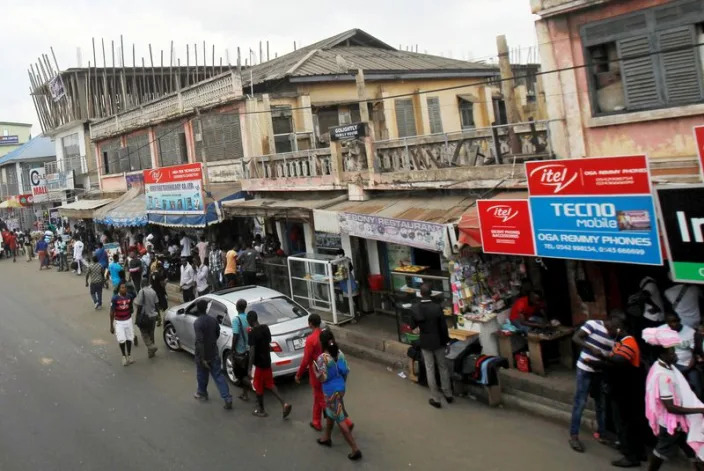
People walk on the street around Kwame Nkrumah circle in Accra

Thu, January 12, 2023 

ACCRA (Reuters) - Ghana's government and trade unions on Thursday agreed to increase all public servants' salaries by 30% for 2023, they said in a joint statement, as the country struggles to reduce debt and tackle rampant inflation.

The West African gold, oil and cocoa producer is battling its worst economic crisis in a generation.

The local cedi dropped heavily against the dollar last year as government spending cuts and central bank interest rate hikes failed to tame inflation, which rose to a new high of 54% last month.

Trade unions representing public service employees started negotiating salary rises with the government in November, a few months after hardship spurred street protests that pushed the government to seek help from the International Monetary Fund (IMF).

The two parties on Thursday settled on a 30% increase to base pay across board, effective from Jan. 1, 2023.

Ghana's government announced sweeping spending cuts in March, including a lowering of ministers' salaries, to reduce the deficit, contain inflation and slow the cedi's slide.

But it also increased a cost of living allowance for public workers by 15% in July, citing the impact of "global challenges" on citizens.

Ghana secured a staff-level agreement with the IMF for a $3 billion, three-year support package in December, but needs to restructure its debt to access the funds.

The government launched a domestic debt exchange programme last month and later said it would default on nearly all of its $28.4 billion of external debts.

It asked to restructure its bilateral debt under the G20 common framework platform this week.

(Reporting by Christian Akorlie; Writing by Sofia Christensen; Editing by Alex Richardson)
Comic book follows Brittney Griner from college hoops to Russian jail


: U.S. basketball player Griner back in Russian court on drugs charges

Thu, January 12, 2023
By Alicia Powell

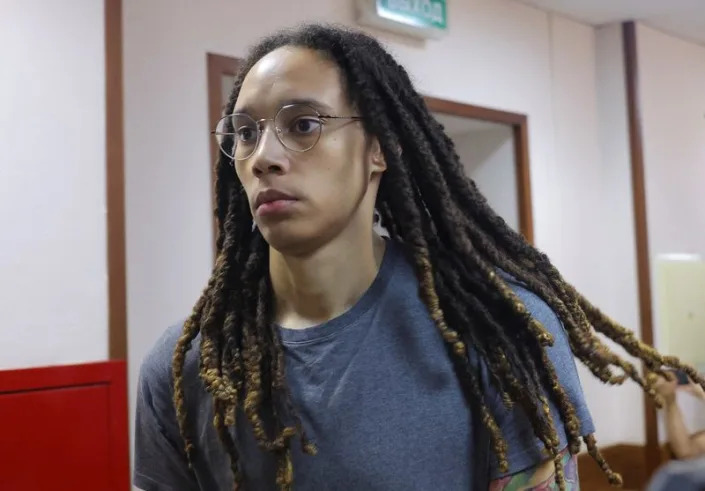
(Reuters) - From college hoops to a Russian jail cell, the life of basketball star Brittney Griner is being told in a new comic book from TidalWave Comics.

Griner is part of the publisher’s Female Force series that celebrates women with inspirational stories.

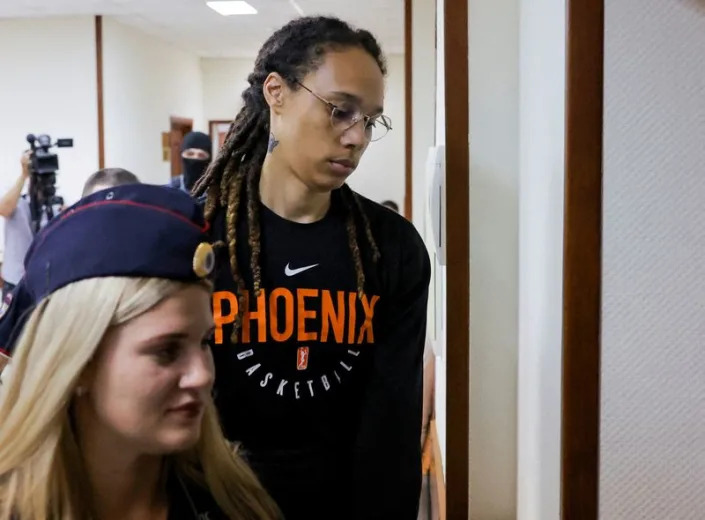
Griner was arrested on Feb. 17 at an airport outside Moscow for carrying vape cartridges containing hashish oil in her luggage. She was subsequently convicted of drug smuggling and later transferred to one of Russia’s most notorious penal colonies before being released in a prison swap in December.

Griner, a two-time Olympic gold medalist and eight-time Women's National Basketball Association (WNBA) All-Star, said she plans to return to her WNBA team.

Writer Michael Frizell said they began working on the comic book before Griner’s arrest and had a focus on “her growth as an athlete and person.” Adding that he “found Brittney's story fascinating despite not knowing much about the WNBA.”

Frizell hopes readers understand “the person behind the headlines.”

The comic book will be released Jan. 18 in print and digital form.

ADL warns ‘antisemitism in its classical fascist form’ reemerging in US


Gianna Melillo
Thu, January 12, 2023 

The research assessed participants’ perceptions of Jewish stereotypes.

Responses showed 85 percent of Americans think at least one anti-Jewish trope is somewhat true.

The tropes focused on common anti-Jewish conspiracy theories, including that Jews are “clannish.”


A new report from the Anti-Defamation League (ADL) highlights widespread antisemitic beliefs among the American public.

Eighty-five percent of Americans think at least one anti-Jewish trope is somewhat true compared with 61 percent who said the same in 2019, according to survey responses from 4,000 individuals collected in the fall of 2022.

The 20 percent of Americans who believe six or more tropes marks the highest level measured in decades, the ADL found, with authors classifying topline results as “cause for concern.” In 2019, just 11 percent of respondents believed six or more anti-Jewish tropes.

Taken together, the report shows “antisemitism in its classical fascist form is emerging again in American society, where Jews are too secretive and powerful, working against interests of others, not sharing values, exploiting — the classic conspiratorial tropes,” said Matt Williams, vice president of the ADL’s Center for Antisemitism Research in an interview with The Washington Post.

America is changing faster than ever! Add Changing America to your Facebook or Twitter feed to stay on top of the news.

The survey follows an updated process developed by the ADL to measure more specific aspects of antisemitism, which included crafting more nuanced questions for participants.

Young adults tended to hold less belief in anti-Jewish tropes than their older counterparts, though they tended to hold significantly more anti-Israel sentiment than older adults, responses showed.

But authors note the difference in young adults holding less belief in anti-Jewish tropes compared with older adults “is substantially less than measured in previous studies.”

The authors cited a survey carried out in 1992 which revealed a 19-percentage point gap between those under 40 and those over 40 with regard to belief in anti-Jewish tropes. At the time, researchers wrote “the steady influx of younger, more tolerant Americans into the adult population” contributed to an overall decrease in antisemitism.

The new results suggest “antisemitism in that classic, conspiratorial sense is far more widespread than anti-Israel sentiment,” Williams told The Washington Post.

The vast majority of Americans (90 percent) believe Israel has a right to “defend itself against those who want to destroy it,” while 79 percent consider Israel a strong U.S. ally.


But 40 percent of respondents at least somewhat agreed “that Israel treats Palestinians like Nazis treated the Jews.” Nearly 20 percent at least slightly agreed with the statement “I am not comfortable spending time with people who openly support Israel.”


The latest findings follow additional research showing half of Americans feel antisemitism has increased in the past few years, in the wake of several high-profile events.

In 2017, neo-Nazis marched in the deadly Charlottesville, Va., Unite the Right rally, and in 2018, a shooting at a Pittsburgh synagogue marked the deadliest attack on Jews in the United States’ history.

As part of the ADL’s survey, respondents were asked to rate the truthfulness of 14 statements containing anti-Jewish tropes, including “Jews have too much power in the business world” and “Jews don’t care what happens to anyone but their own kind.”

Seventy percent of Americans said they feel Jewish people stick together more than others, while 53 percent believe Jews go out of their way to hire other Jews.

Nearly 40 percent of Americans said Jews are more loyal to Israel than the United States. Nearly a quarter believe “Jews have too much control and influence on Wall Street.”

The ADL has been measuring belief in 11 anti-Jewish tropes since 1964. The latest findings show 3 percent of all Americans in 2022 believe in all 11 of these tropes, corresponding to around 8 million people.

Changes in survey response options along with how well respondents were sampled makes it difficult to assess if antisemitic views have increased over time, however.

Most armies ignore autistic people. Israel is calling them up.

Joshua Zitser
Thu, January 12, 2023

Ro'im Rachok students at Ono Academic College in Kiryat Ono. The IDF blurred some parts of the image, citing the need to obscure classified information.
Israel Defense Forces/ Insider

Inside the program encouraging autistic volunteers to join
the Israel Defense Forces.

TEL AVIV, Israel — Each day, Sgt. I. scours the internet to find elusive intelligence that could help Israel fight its enemies.

He is a web specialist for an elite unit of the Israel Defense Forces, focused on open-source research that informs high-level decision-making and can even reach the prime minister's desk.

He is also autistic.

Sgt. I., like some 150 others, isn't in the IDF by chance. He signed up to serve through Ro'im Rachok, a first-of-its-kind program that places autistic people in the military to utilize their valuable skills.


Speaking to Insider from inside HaKirya, the sprawling headquarters of the IDF, he said he was able to cope with long, exhausting intelligence work better than many others and that he was most productive when given to-do lists.

He couldn't elaborate on the specifics of what he does. The IDF and Ro'im Rachok members spoke on the condition that Insider use initials or only their first names, citing the secrecy of their work.

A typical IDF open-source project might involve trawling social media and obscure sites for intel on everything from the effect of sanctions on the Iranian economy to the size of Hezbollah's arsenal.

An IDF minder sat in the meeting room throughout, ready to intervene if Sgt. I. accidentally divulged anything classified.

On occasion, Sgt. I. said, his daily work routine is interrupted by "stimming" — a behavior often associated with autism that can involve repeating words, sounds, or movements to cope with stress.

Sgt. I. tends to flap his hands when he's excited or overwhelmed. "It's an urge, like blinking," he said.

He'd always been taught in special-education settings, so he wasn't self-conscious about doing this before he joined the IDF and started working in an office alongside neurotypical soldiers. "So, yes, I've had to adapt," he said.
Many autistic teenagers are exempt from military service

Sgt. I. is a graduate of Ro'im Rachok — an innovative Israeli program founded in 2013 to match young adults on the autism spectrum with military professions that need manpower.

Unlike most Jewish Israelis who are conscripted to join the army, usually at 18, many autistic teenagers are exempt.

Ro'im Rachok, however, allows them to sign up as volunteers.

Speaking to Insider from his office at the Ono Academic College in Kiryat Ono, Tal Vardi, a Mossad veteran who helped found the program, said he wanted to make something clear: It's not an act of charity.

"Nobody wants somebody to do them a favor," Vardi said, describing the program as mutually beneficial for the IDF, people with autism, and their families.


Tal Vardi, the cofounder of Ro'im Rachok, in front of a banner for the program.Israel Defense Forces/ Insider

Autistic volunteers are assigned to units where they are deemed to have a comparative advantage — usually military intelligence.

Though military intelligence and analysis are vital to every modern army, Israel places a particularly high value on it, Nimrod Goren, a senior fellow for Israeli affairs at the Middle East Institute in Washington, DC, told Insider.

Countries like Israel that "feel that they're under existential threat" put a premium on intelligence-gathering, he said, so skilled recruits are highly coveted.

In return for volunteering, recruits with autism are offered the skills and connections that could help ease them into an independent future working in civilian professions.

"The idea is to put together real needs with real capabilities to create this win-win," Vardi said.

Military divisions in the UK, the US, and Singapore, as well as civilian industries in Israel, have shown interest in developing the model, he added.

So far, more than 300 soldiers have been recruited from the program to the IDF and serve across 27 different units.
Unit 9900 is the 'eye of the country'

The first unit to recruit from the program was the classified Unit 9900 — a prestigious visual-intelligence outfit.

Unit 9900's Maj. R. was approached a decade ago about including graduates of Ro'im Rachok's aerial-photo-analysis course.

He said he agreed even though he didn't really know what autism was at the time. His unit, he said, needed strong photo analyzers to support its secretive work.

Maj. R. described his unit as "the eye of the country." Unit 9900 collects, analyzes, and interprets visual intelligence and provides it to commanders on the field and other security forces.

These images can come from satellite images, drone footage, and reconnaissance flights over areas like the Gaza Strip and Syria, The Jerusalem Post reported.

An IDF spokesperson told Insider that the unit played a part in Operation Breaking Dawn — the Israeli name for the Gaza-Israel clashes in August 2022.

During this three-day operation, 49 Palestinians in Gaza were killed, at least 22 of whom were civilians, and around 360 Palestinians injured, per the United Nations Office for the Coordination of Humanitarian Affairs.

Israeli authorities said that 70 Israelis were injured by mortars and rockets launched by Palestinian militants.

The IDF spokesperson said Unit 9900 "helped protect civilians" and provided operational support in the clashes. Amnesty International described the operation as unleashing "fresh trauma and destruction" on Palestinians.


Smoke billows from an Israeli airstrike in Gaza on August 7, 2022.Majdi Fathi/NurPhoto via Getty Images

Maj. R. said he noticed early on that many autistic soldiers seemed to have a natural aptitude for aerial-photo analysis.

His neurotypical soldiers easily got distracted, he said, whereas the autistic soldiers seemed able to hyperfocus on the tasks at hand.

Research from the Wellcome Trust indicates that many people with autism have a "higher perceptual capacity" and show an increased ability to focus their attention on certain tasks.

"Most of them aren't interested in their surroundings. They don't want to talk to their friends, they want to sit and work," Maj. R. said. "They are very focused on what they are doing."
Intensive training

Although Ro'im Rachok's first training course was in photo analysis, it now offers courses in data tagging, GIS mapping, and electronics.

Each course sets up students to serve in specific IDF units, but at this stage, they participate in the training courses as civilians.

Insider was granted rare access to the electronics course of Ro'im Rachok's intensive training program, which lasts up to four months at Ono Academic College.

Ro'im Rachok students sit in a circle during a class at Ono Academic College. The IDF blurred some parts of the image, citing the need to obscure classified information.Israel Defense Forces/ Insider

It's November, and students of the Ro'im Rachok electronics course are approaching the final month of their training.

Sitting in a circle, surrounded by computers and maps of Israel, the students are reflecting on why they signed up for the training program, which, if completed successfully, will allow them to become full-fledged members of the IDF.

There's unanimous agreement that employability plays a big part. Even though it's technically illegal for an employer to ask directly about military experience, in practice, it does matter.

"If not for the army, it would be very difficult to make a future, get a job, make rent, buy an apartment," says Natir, an 18-year-old from Holon, as his classmates nod.

Roni, a 19-year-old from Rishon LeZion, raises her hand to speak. "I'm joining the IDF to have better chances in the future," she says.

It's not only the addition to her résumé that will make her more employable, she adds, but also the skills she and her classmates develop along the way. "It makes a lot of people more confident in what we're doing and more communicative in language," she says.

A commander speaks with a Ro'im Rachok student at Ono Academic College. The IDF blurred some parts of the image, citing the need to obscure classified information.Israel Defense Forces/ Insider

Ron, an 18-year-old from Givatayim, says the course has helped him work on his "short fuse" and has been vital to his personal development.

The skills and unique perspectives that autistic people can bring to the table are advantageous to the army because "we see the world in a different way," he says, "that offers creative solutions."

For example, Ron says his intense and highly focused interests, which are common among people with autism, make him a dedicated worker and a quick learner.

"I know when I'm fixated on something, when something really gets my interest, it's hard for me to stop thinking about it and enjoying it," he adds.

Cmdr. A., Unit 9900

The training program can be challenging for students, said Cmdr. A of Unit 9900.

"At their schools or home, many of them were getting adjustments," he said. "Here, we're not making it easier for them. I can't change the whole army, so I need to face it with them."

This could involve bracing them for situations they haven't encountered before, from teaching would-be recruits how to navigate public transportation to preparing them for possible interrogation by enemy forces.

Students in the program work with therapists to help them understand and embrace their autism. Some students were diagnosed with autism when they received a military exemption; others have known for most of their life.

Roughly 10% of students in each course don't graduate. But the vast majority go on to take part in a four-month-trial period with the IDF before being formally recruited.

Usually, for conscripted soldiers, men are expected to serve for a minimum of 32 months, and women are expected to serve for at least 24 months. But because Ro'im Rachok enlistees are volunteers, they can drop out after a year.

Cmdr. A. looks at a map in Ono Academic College's classroom.Israel Defense Forces/ Insider

Pvt. E., an autistic soldier in Unit 9900, has been in the IDF longer than a year and decided to continue.

He said that he finds his work for the IDF enjoyable, and it's easier for him than many of his neurotypical colleagues.

"I don't want to say I'm slightly superior, because that's condescending, but it sometimes really is annoying when you can clearly see something that others don't," he said.

Sgt. I.

Sgt. I., the web specialist in the open-source-research unit, also said he finds specific tasks easier than his neurotypical colleagues, but that's balanced out by things he struggles with.

"If the average person has things that they're good at and bad at that, then for a person with autism, it's more extreme," he explained.

His strengths, Sgt. I. said, involve following long lists and instructions. "My brain works best when there's this sort of structure and order," he said. "No matter how tiring it can be for someone else, like some of my coworkers, I would have an easier time on average."

However, he said he doesn't think his skills are exceptional or that he's a "super genius" — a "dehumanizing" stereotype that "others" autistic people.

"To be honest, I don't really feel like I have a special skill set that is so incredible that I need to be like some grand asset," he said. "I'm just another soldier."

AUTISTIC SUPERCHILDREN SF NOVEL


India iPhone Breakthrough Masks Struggle to Be Next China


Karthikeyan Sundaram, Eltaf Najafizada and Anup Roy
Thu, January 12, 2023 

(Bloomberg) -- On paper, India’s chances of attracting global manufacturers look rosy.

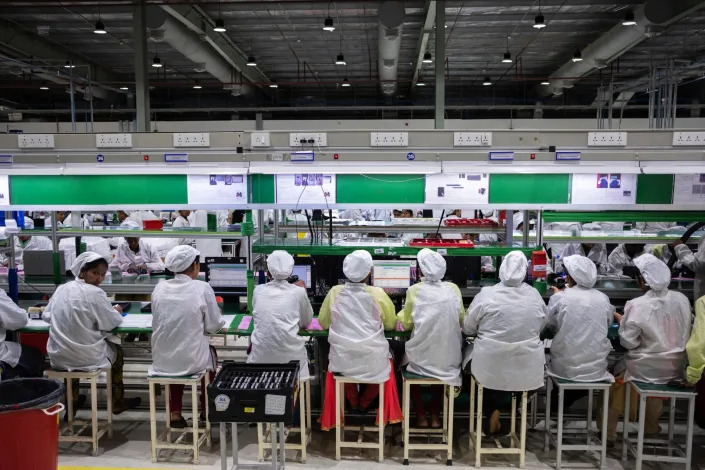
Apple Inc. began assembling its latest iPhone models in the South Asian nation in a significant break from its practice of reserving much of that for giant Chinese factories run by its main Taiwanese assemblers, a key win for Prime Minister Narendra Modi’s “Make in India” campaign.

Among India’s advantages are rising geopolitical tensions between Western nations and China, and a growing friendship with the US, Australia and Japan, which form part of the Quad, a grouping of democracies to counter Beijing’s economic and military ambitions.

The country’s presidency of Group of 20 nations this year could also boost investor confidence. India is poised to hold the title of the world’s fastest-growing large economy in the next three years. Its gross domestic product is set to become the world’s third-largest before the end of the decade.

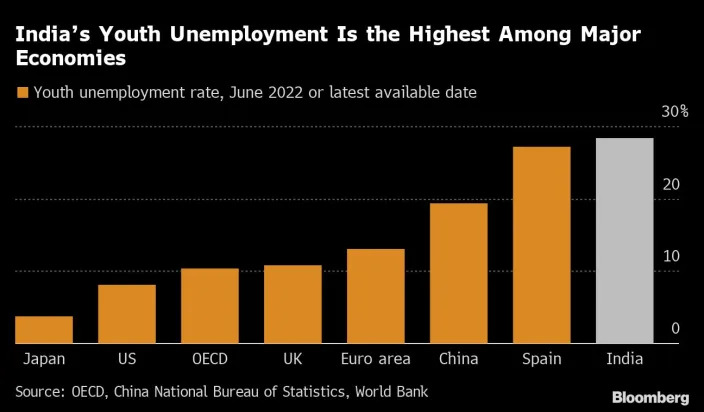
But experts warn that lasting gains to improve a sluggish manufacturing sector are still a ways off for India, soon to overtake China as the most-populous nation. Modi’s Make in India campaign, which aims to increase exports and create jobs, hasn’t quite panned out. Manufacturing accounts for 14% of the economy, a figure that’s barely budged in decades. And despite India’s massive demographic dividend, unemployment remains stubbornly high.

Since Make in India launched in 2014, the deadline for one of its key goals — to lift the share of manufacturing in GDP to 25% — has been pushed back three times, from 2020 to 2022 to 2025.

Amitendu Palit, an economist specializing in international trade and investment at the National University of Singapore, said decoupling from China has “not yet been pronounced.” In other words, for any meaningful relocation of supply chains, Palit said Modi’s government will need to prove that India is a cheaper and easier place to conduct business, rather than simply relying on political or security factors to lure companies.

While recent financial incentives under Modi offered Apple a cost-efficient path to set up shop in India, the California-based company is still making a fraction of its iPhones in the nation. And for every success, there are many companies that have quit India because of long-running challenges such as dealing with the country’s bureaucracy, including General Motors Co., Ford Motor Co. and Harley-Davidson Inc.

Tesla Inc., which had previously said it would consider setting up a factory in India provided the country first allows the company to sell imported cars by lowering duties, is now nearing a deal for a plant in Indonesia.

To meet expectations of a transformed India, Modi must continue to cut red tape and streamline labor laws. Ensuring businesses can obtain land is another hurdle.

Take the case of ArcelorMittal SA. The world’s largest steel producer attempted to build a steel plant in the eastern state of Odisha more than a decade ago, but ditched the plan in 2013 because executives couldn’t obtain land and permits needed to mine iron ore, a key raw material. The company has once again returned to Odisha, with plans to build a 24-million-ton a year plant through a joint venture with Nippon Steel Corp.

“It’s a difficult reform,” said Nada Choueiri, Mission Chief for India at the International Monetary Fund. “But needs to be advanced because when companies come and establish themselves, they need land.”

Employment is another headache. Delays in boosting manufacturing and a broader decline in agriculture mean that the 12 or so million Indians entering the workforce every year must rely largely on services for opportunities. But India is struggling to create enough jobs even in that sector, despite growing at a pace that few major economies can match. China solved the jobs problem by transitioning from farms to becoming the world’s factory.

Jobs are an important piece of the puzzle if India wants to increase its per capita income, which is currently below neighboring Bangladesh’s $2,723. Higher incomes will boost consumption, prompt businesses to invest even more and create new jobs, setting off a so-called virtuous economic cycle.

Though India continues to make headlines as the fastest-growing major economy, “it’s disappointing in terms of the progress on the ground,” said Shumita Deveshwar, chief India economist at consultancy TS Lombard.

Deveshwar listed problems that are mostly self-inflicted: weak infrastructure, a shortage of skilled labor and failure to implement policies that can attract enough investment. Even as India is inking major business deals — with Apple just one high-profile example — the consistency and type of investments worries some.

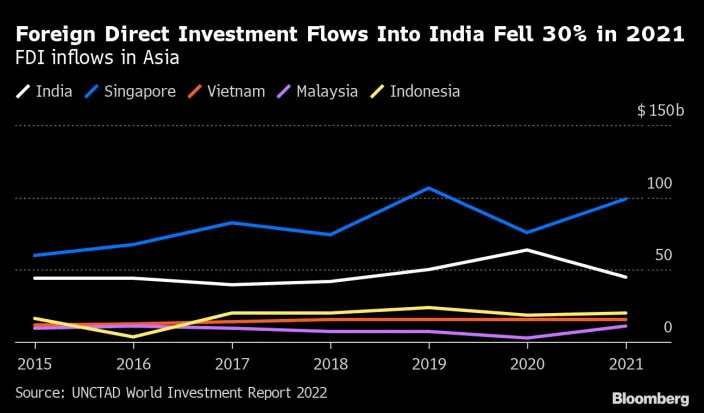
In recent years, a large portion of foreign capital has trickled into the services sector instead of production, according to Deloitte. Inflows slowed in 2021, and beginning in 2020 India has fallen off the top 25 rankings in Kearney’s FDI Confidence Index.

Kearney’s index measures the three-years-ahead confidence of companies investing in a certain market. China, the United Arab Emirates, Brazil and Qatar were the only emerging markets to make the 2022 list.

“Since the outbreak of the pandemic, our index has shown a strong preference from investors for developed over emerging markets,” said Terry Toland from Kearney. “This may suggest a perception of safety in developed over emerging markets.”

Modi is betting that the G-20 presidency will create the right opportunity to change that perception and beat back competition from other Asian economies such as Vietnam and Malaysia.

“2023 is going to be different, assuming no new unexpected shocks — global or domestic,” said Abhishek Gupta, senior India economist at Bloomberg Economics. “The country has pretty much put in place a structure already that should help kick-start an industrial recovery and boost manufacturing,” he added.

Friend-shoring, in which allies invest in each other, and a wider pivot away from China could benefit India — though the speed of change is far from clear.

“There is a lot of inertia,” said V. Anantha Nageswaran, India’s chief economic adviser. Leaving China is not a call that companies will take lightly, he said, since “they have invested so much in a big market.”

Still, East Asian countries will eventually run into capacity constraints at some point. “So I think we need to wait for these things to play out,” Nageswaran said.

--With assistance from Anurag Kotoky, Swansy Afonso, Sankalp Phartiyal and Zoe Schneeweiss.
A proposed H-1B visa fee increase threatens to kneecap Silicon Valley's ability to hire the foreign talent it needs to compete

Paayal Zaveri
Thu, January 12, 2023 

Popartic/Shutterstock

The tech industry relies on skilled-work visas for foreign hires in a system critics say is broken.


Now the USCIS is proposing fee hikes for visa applications, at a time when it's already challenging.


It would be another hurdle on top of recent tech layoffs and scarce visa availability, experts say.


Strict rules around the system for H-1B visas — which the tech industry relies on to hire skilled foreign workers to fill critical roles in fields like engineering and data science — already stymie the American tech industry's ability to remain competitive on the global stage, especially amid the recent wave of layoffs.

Now, US Citizenship and Immigration Services plans to hike the fees that companies have to pay to sponsor those visas by as much as $600 an applicant. It would be the first such fee increase since 2016, but experts and industry insiders say that the timing couldn't be worse, likening the situation to pouring gasoline on a burning fire.

"We are already operating in an environment where there are very, very few jobs. We're already existing in an environment where jobs are at risk," Hiba Mona Anver, an immigration attorney at Erickson Immigration Group, said. "We are really hoping that things will start to get better, but this sort of increase in filing fees is only going to be another step in discouraging companies from sponsoring foreign talent."

While the proposed fee hikes are presented as a solution to end backlogs and address bureaucratic headaches, experts say they would make it more difficult to hire foreign talent. That would especially affect smaller companies, universities, and startups, which would, in turn, undermine Silicon Valley's innovation pipeline.

The proposal is in the middle of a 60-day comment period for people to officially weigh in on the idea. Immigration lawyers are encouraging their corporate clients to submit comments about how this would hurt their ability to hire people on these skilled-work visas.

"Businesses are getting back to normal right now right after COVID, and really, I think this could impact the amount of workforce and potentially foreign employees that they want to hire," Cristina Perez, an immigration lawyer at the law firm Leech Tishman, said. "I think that's not a good thing. There's study after study that shows H-1B beneficiaries really are a benefit to this country."

Why the USCIS wants to raise fees — and why experts are skeptical


Experts aren't surprised that the USCIS wants to raise fees, especially since it's been so long since the last increase.

Under President Donald Trump's administration, the USCIS attempted to dramatically raise fees for naturalization and looked to collect $50 from asylum seekers. The changes would have also ended many fee-waiver programs for low-income visa applicants. Those changes were blocked in federal court in 2020.

The Biden administration is taking a different approach, with the USCIS now saying that it intends to use the $600 in additional fees for specialized visa programs like H-1B to keep the process free for those seeking asylum at the border.
Critics say the fee hikes wouldn't solve any problems

Critics say the planned fee increase would make life harder for visa seekers, without addressing any of the problems with the immigration process, including the massive backlog of visa applicants.

"Our system is definitely not working. It is not efficient. It is riddled with inconsistencies," Perez said. "Fix the problem first, then raise the fees."


Some in the industry hope it starts a discussion about what it takes to retain global talent. Sunny Shuoyang Zhang, a founding partner at Born Global Ventures, said she hoped this could be used to educate employers about what it takes to keep global talent in the US, when they have the option to go places with friendlier immigration policies, like Canada.

Manan Mehta of Unshackled Ventures, which helps immigrants found companies, had a more-positive outlook. He said given that people on H-1B and other specialized visas often earned high salaries, the fee hikes for visa applications could just be factored into that overall cost.

The timing of it all is what presents a challenge, given the state of the economy. Additionally, lawyers are skeptical that the USCIS would be able to turn things around and fix broken systems with the additional money it would be bringing in.
"I just don't see how this breaks the vicious cycle that we're in right now," Anver of Erickson Immigration Group said.


WATCH THEM BLOW UP
El Salvador Passes Key Bitcoin Legislation, Making Way for 'Volcano Bonds'


Andrew Asmakov
Thu, January 12, 2023

El Salvador approved a digital assets law aimed at creating legal protection for transfers or issuances of debt with cryptocurrencies.

The bill also provides the legal framework for Bitcoin-backed bonds, also known as the “Volcano Bonds,” that the Latin American nation wants to use to pay sovereign debt and fund the construction of the proposed Bitcoin City.

The bill was passed with 62 votes for and 16 against and is set to become law after it is ratified by president Nayib Bukele.

Bukele took to Twitter shortly afterward to praise the move, saying “El Salvador’s Legislative Assembly has just approved, by an overwhelming majority, the new Digital Securities Law! Forward, always forward…”

First announced at the end of November last year, the new bill will enable El Salvador to “offer unprecedented consumer protection from bad actors in the 'crypto' space while also firmly establishing that we are open for business to all those who wish to build the future with us on bitcoin,” according to the statement by the National Bitcoin Office (ONBTC) of El Salvador under president Bukele.

The bill separates cryptocurrencies from all other assets and financial products, including central bank digital currencies (CBDCs)—the digital versions of fiat currencies regulated according to each country's financial guidelines.

Importantly, it also separates Bitcoin from the rest of the crypto market, identifying them as digital securities.

The new legislation also creates the National Digital Assets Commission, a regulating agency in charge of applying the securities law and protecting the rights of digital asset purchasers as well as issuers in El Salvador, and deterring fraudsters from operating in the country.

El Salvador became the first country in the world to make Bitcoin legal tender in 2021, with the move praised by many in the Bitcoin community but criticized by the World Bank, the IMF, and global credit rating agencies. Citizens have also protested against the Bitcoin law on several occasions.

The country is also known for its purchases of Bitcoin, with president Bukele announcing last November that his government would buy one Bitcoin per day, without specifying for how long though.

Crypto Paradise? El Salvador Preps New Law To Pave Way for All Crypto

El Salvador’s Bitcoin 'volcano' bonds

El Salvador’s Bitcoin bonds project was tabled by president Bukele in November 2021 and would see the Latin American nation issue $1 billion in bonds on Blockstream's Liquid Network, a federated Bitcoin sidechain.

The idea is to invest half of the money into Bitcoin and to use the other half for the infrastructure necessary to build out a Bitcoin City—a tax-free enclave for Bitcoin advocates in the east of the country powered by geothermal energy from nearby volcanoes.

Volcano-Powered ‘Bitcoin City’ Coming to El Salvador, Says President Bukele

Under the government’s initial proposal, these Volcano bonds would be denominated in U.S. dollars and pay 6.5% annually for 10 years with a five-year lock-up period, while also fast tracking investors to land citizenship in the country.

The project was initially expected to be launched in March last year but was repeatedly postponed amid the crashing markets.

Now, with the new bill passed, El Salvador comes within a touching distance from finally kickstarting the project, with ONBTC saying the issuance of the Volcano bonds “will soon begin.”
CRIMINAL CRYPTO CAPITALI$M TOO
Genesis, Winklevoss twins’ Gemini crypto venture, charged by SEC with selling unregistered securities

Story by Claudia Assis • 

Genesis, Winklevoss twins’ Gemini crypto venture, charged by SEC with selling unregistered securities© AFP via Getty Images

U.S. securities regulators on Thursday charged Genesis Global Capital and crypto exchange Gemini Trust Co. with offering and selling of unregistered securities to retail investors, bypassing disclosures and other requirements aimed at protecting market participants.

Related video: Genesis Reportedly Owes Creditors Over $3B; Blockchain.com Lays Off 28% of Workforce (CoinDesk)   View on Watch


BloombergSEC Sues Crypto Brokerages Gemini and Genesis
4:52


CoinDesk SEC Charges Gemini, Genesis For Allegedly Selling Unregistered Securities
9:53


CoinDesk Gemini's Cameron Winklevoss Says Barry Silbert Is 'Unfit to Run DCG'
3:48


Genesis and Gemini raised billions of dollars’ worth of crypto assets from hundreds of thousands of investors through unregistered offers, using a crypto asset-lending program called Gemini Earn, the Securities and Exchange Commission said.

The complaint seeks the return of any “ill-gotten gains” plus interest, and any civil penalties, the SEC said.

The SEC is also investigating whether other securities-law violations were committed and whether there are other companies or people relating to the alleged misconduct.

Twins Tyler and Cameron Winklevoss are the founders of Gemini. The crypto exchange was sued late last year by investors alleging that the company sold interest-bearing accounts without registering them as securities, also through the Gemini Earn program.

Also see: ‘Super lame,’ says Gemini co-founder Tyler Winklevoss about SEC charges

The Winklevoss twins were early champions of cryptocurrencies, using the money and fame they won in legal wrangling with Facebook parent Meta Platforms Inc. and Meta’s founder Mark Zuckerberg over their role in creating the social-media giant to launch Gemini.

According to the SEC complaint, the Gemini Earn agreement between Genesis, part of a subsidiary of Digital Currency Group, and Gemini started in December 2020.

Gemini customers, including U.S. retail investors, were to have an opportunity to loan their crypto assets to Genesis in exchange for Genesis’ promise to pay a high interest rate.

Gemini deducted agent fees that were as high as 4.29%, the SEC alleges.

“Genesis then exercised its discretion in how to use investors’ crypto assets to generate revenue and pay interest to Gemini Earn investors,” the SEC said.

By November, however, Genesis announced it would not allow the Gemini Earn investors to withdraw their crypto assets because of a liquidity crunch following volatility in the crypto market after FTX’s bankruptcy filing, the SEC said.

Also read: Gemini’s Cameron Winklevoss accuses crypto exec Barry Silbert of ‘bad faith’ stalling over frozen funds

At the time, Genesis held about $900 million in investor assets from 340,000 Gemini Earn investors, the SEC said. Gemini ended the Gemini Earn program earlier this month.

“As of today, the Gemini Earn retail investors have still not been able to withdraw their crypto assets,” the SEC said in a statement.

“We allege that Genesis and Gemini offered unregistered securities to the public, bypassing disclosure requirements designed to protect investors,” SEC Chair Gary Gensler said in a statement.

The charges “build on previous actions to make clear to the marketplace and the investing public that crypto-lending platforms and other intermediaries need to comply with our time-tested securities laws,” Gensler said.

The SEC’s complaint was filed in the U.S. District Court for the Southern District of New York

SEC charges Genesis, Gemini with selling unregistered securities

Jennifer Schonberger
·Senior Reporter
Thu, January 12, 2023 at 3:00 PM MST·3 min read

The Securities and Exchange Commission on Thursday charged Genesis Global Capital and Gemini, the cryptocurrency exchange founded by Tyler and Cameron Winklevoss, for selling unregistered securities to investors through Gemini's Earn crypto asset lending program.

The SEC alleges the Gemini Earn program constituted an offer and sale of securities under SEC law, raising billions of dollars of crypto assets from hundreds of thousands of investors, and should have registered with the SEC.

"We allege that Genesis and Gemini offered unregistered securities to the public, bypassing disclosure requirements designed to protect investors," SEC Chair Gary Gensler said in a statement.

"Today’s charges build on previous actions to make clear to the marketplace and the investing public that crypto lending platforms and other intermediaries need to comply with our time-tested securities laws. Doing so best protects investors. It promotes trust in markets. It’s not optional. It’s the law."

According to the complaint, in December 2020, Genesis entered into an agreement with Gemini to offer Gemini customers the ability to loan their crypto assets to Genesis in exchange for interest payments.

Beginning in February 2021, Genesis and Gemini began offering the program to investors.

Gemini facilitated the transaction and deducted for itself an agent fee, sometimes as high as 4.29%, from the returns it received from Genesis, according to the SEC.

The SEC alleges Genesis then exercised its discretion in how to use investors' crypto assets to generate revenue and pay interest to investors.

Last November, Genesis, which is a wholly-owned subsidiary of Barry Silbert's Digital Currency Group (DCG), announced it would pause withdrawals on its lending platform as it lacked sufficient liquidity to meet requests amid volatility in the crypto market in the wake of FTX's collapse. At the time Genesis held approximately $900 million Gemini customer deposits, which remain frozen on the platform.

The SEC's announcement comes as Genesis and Gemini have been engaged in a war of words, with Cameron Winklevoss earlier this week calling for DCG CEO Barry Silbert to step down and accusing Silbert and others at DCG of making "false statements and misrepresentations to Gemini."


Cameron Winklevoss, co-founder of crypto exchange Gemini Trust Co., attends the crypto-currency conference Bitcoin 2021 Convention at the Mana Convention Center in Miami, Florida, on June 4, 2021. (Photo by Marco BELLO / AFP) 


Investigations continue

“The recent collapse of crypto asset lending programs and the suspension of Genesis’ program underscore the critical need for platforms offering securities to retail investors to comply with the federal securities laws,” said Gurbir Grewal, Director of the SEC’s Division of Enforcement. “As we’ve seen time and again, the failure to do so denies investors the basic information they need to make informed investment decisions.

Investigations into other securities law violations and other entities and persons relating to alleged misconduct are ongoing, according to the SEC.

Grewal encouraged anyone with information about this case or others to come forward and, if necessary, do so under the SEC’s Whistleblower Program.

The SEC is filing a litigated action and part of the requested relief from the Federal District Court will be a monetary civil penalty, plus disgorgement of any ill gotten gains.

The SEC’s action comes after investors brought a class action lawsuit against Gemini, alleging they were duped into investing in the exchange's interest-bearing accounts without being informed that they were unregistered securities.

Gensler has warned for months the agency would take enforcement action if firms didn't comply with SEC rules.

Gensler told Yahoo Finance in an interview in December he has one goal when it comes to regulating crypto markets in 2023: Make crypto exchanges and lending platforms come into compliance with existing rules.

"They can do that appropriately, working with the SEC, or we can continue on a course with more enforcement actions, and I would have to say that the runway's getting shorter," Gensler said.

U.S. securities regulator charges Genesis, Gemini with unregistered offerings


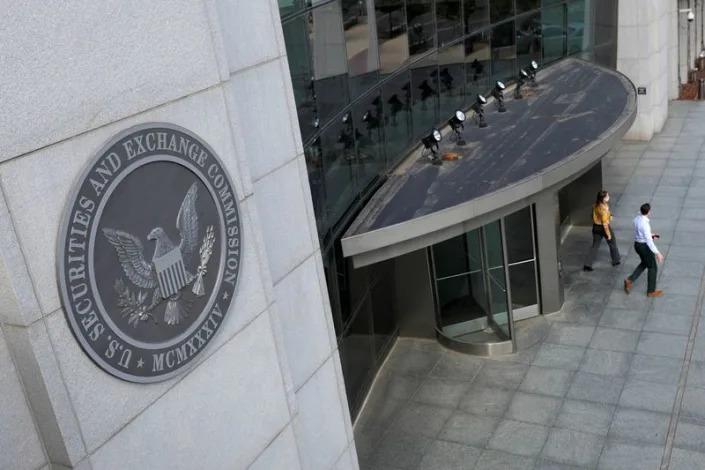
People exit the headquarters of the U.S. Securities and Exchange Commission (SEC) in Washington, D.C.

Thu, January 12, 2023 
By Hannah Lang and Chris Prentice

WASHINGTON/NEW YORK (Reuters) -The U.S. Securities and Exchange Commission (SEC) on Thursday said it has charged Genesis Global Capital LLC and Gemini Trust Company LLC with illegally selling securities to hundreds of thousands of investors through their crypto lending program.

Genesis, a part of Digital Currency Group, entered into a deal with Gemini in December 2020 to offer Gemini customers the chance to loan their crypto assets to Genesis in exchange for earning interest, the SEC said. Beginning in February 2021, they raised billions of dollars' worth of crypto assets from investors, the SEC said.

The firms violated securities laws through the offer and sale of crypto assets through their Gemini Earn product, the SEC said.

In a Twitter post, Gemini co-founder and Chief Executive Officer Tyler Winklevoss called the complaint disappointing and said the company looks forward to defending itself.

"This action does nothing to further our efforts and help Earn users get their assets back. Their behavior is totally counterproductive," he said.

Genesis did not immediately respond to a request for comment.

In November 2022, Genesis told investors they could not withdraw their crypto assets as volatility in the crypto markets prompted a liquidity crunch. At the time, Genesis had about $900 million in assets from 340,000 Gemini Earn investors. The investors have been unable to withdraw their assets, the regulator said.

Investigations into other, related violations are ongoing, the agency said.

In February 2022, a subsidiary of rival crypto firm BlockFi Inc. agreed to pay $100 million to the SEC and 32 states to settle charges related to their offering of a similar interest-bearing product.

Gemini and other Genesis creditors have been agitating for a solution to avoid a situation similar to FTX's rapid descent into bankruptcy. Genesis owes creditors more than $3 billion, according to a person familiar with the matter.

Gemini co-founder Cameron Winklevoss publicly called for the ouster of DCG Chief Executive Barry Silbert on Tuesday, accusing Silbert of defrauding creditors and engaging in "bad faith stall tactics." DCG has called Winklevoss' allegations false and defamatory.

(Reporting by Chris Prentice and Hannah Lang; Editing by Daniel Wallis)