Thursday, February 16, 2023

Increasing food security with desert crops is no novelty project

Farmers in Sharjah are preparing to harvest wheat grown with cutting-edge technology that will help the UAE supply local markets

Almost every culture celebrates harvest time in some form. From the Ewe people of Ghana welcoming the year’s first appearance of yams to the Moon Festival in East Asia, people across the world like to give thanks for a moment of plenty and enjoy the feeling of security that a reliable supply of food brings.

That sense of security underpinned this week’s news of a special harvest in rural Sharjah, where The National visited farmers and engineers getting ready to welcome the first fruits of a pioneering and high-tech wheat-growing project.

Next month, harvesting machines will roll out across a 400-hectare farm complex in Mleiha. In just four months, this desert land at the base of rocky mountains has been transformed into a green oasis, ready to yield up to 1,700 tonnes of wheat.

The crop has been grown without pesticides, chemicals or genetically modified seeds and the produce is destined for local markets in Sharjah and across the country. The project’s state-of-the-art technology includes satellites that can take thermal images of the site as well as soil sensors that measure the amount of water in the ground to avoid waste.

For a country that currently imports 1.7 million tonnes of this essential foodstuff, growing wheat in the desert is no novelty project. Rather, it is an important step on the UAE’s ambitious journey to increasing food security for its people.

The need to strive for self-sufficiency was starkly illustrated last year when the conflict in Ukraine – often referred to as a “bread basket”, given the enormous amount of wheat it grows and exports – threatened global supply chains.

Countries such as Egypt, the world’s largest importer of wheat, were faced with the prospect of running out of supplies from Ukraine and Russia as tonnes of grain sat idle in silos and transport ships were unable to sail through the Black Sea to deliver supplies.

Although globalisation presents many opportunities, this interconnectedness can also result in vulnerabilities when one part of the chain breaks. That the Sharjah farm focuses on wheat makes sense. One official involved in the project pointed out how the crop is a “strategic commodity with high nutritional value that can be stored for a long time”.

The dream of growing food in the desert is not a new one. From the Emirates’ modern beginnings, the UAE’s Founding Father, the late Sheikh Zayed bin Sultan Al Nahyan, welcomed experts and technology from across the world to establish mass agriculture.

Since then, food security has been high on the country’s agenda. Last year Sheikh Mansour bin Zayed, Deputy Prime Minister and Minister of Presidential Affairs, issued a directive on biosecurity requirements for farms and livestock holdings in Abu Dhabi to contribute to sustainable agriculture.

Last March, President Sheikh Mohamed attended the launch of a food loss and waste initiative, called Ne'ma — Arabic for blessing — that encourages the public and private sectors to cut waste and improve responsible consumption.

The UAE also takes a long-term approach to protecting and maximising its food supply. The country’s National Food Security Strategy 2051, launched five years ago by then Minister of State for Food Security Mariam Al Mheiri, now Minister of Climate Change and Environment, has 38 short and long-term key initiatives as well as five strategic goals to boost local production, identify alternative supply chains and reduce waste.

What the Sharjah wheat project offers is a realistic, practical and innovative way to grow more organic, nutritious and plentiful food in the UAE – and that’s something everyone can celebrate.

PEOPLE AFRAID OF MURDER BY CROWS
Singapore’s NParks to euthanize crows following attacks in Bishan
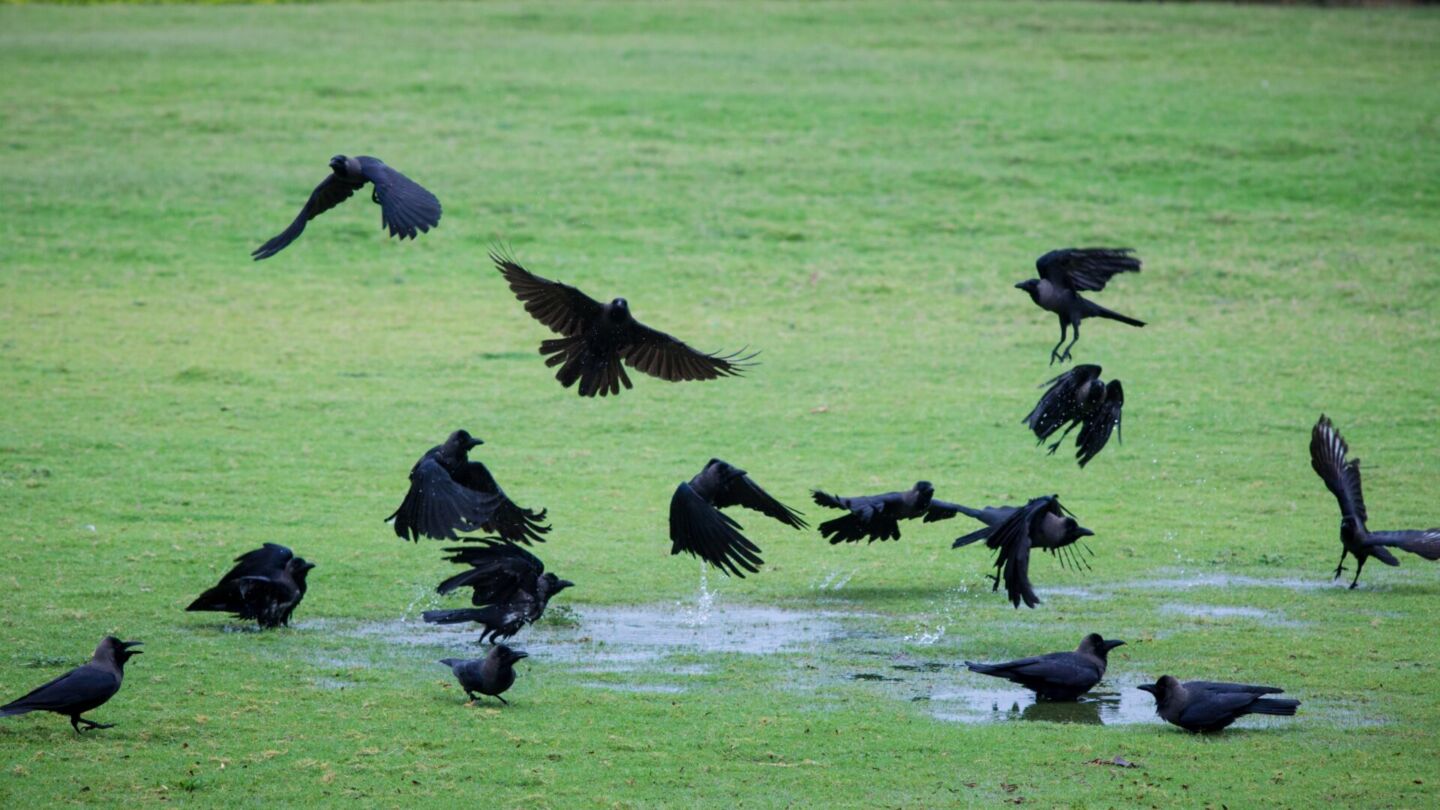
A murder of crows in a field. Photo: Unsplash

By Coconuts Singapore
Feb 16, 2023 | 

The National Parks Board told reporters last night that they are trapping crows near Block 110 Bishan Street 12 following several reports of attacks from at least three birds since last week.

The trapped crows will be euthanized to manage their population.

A Tuesday report by Shin Min Daily News said that the Bishan crows had attacked 10 people within 20 minutes on Monday.

Photos and videos showed the crows swooping down and pecking on people’s heads while they were walking down a pedestrian path. Some victims were shocked while others acted like it wasn’t the first time it happened to them.

The Board added they will be removing nests and pruning trees to further discourage crows from nesting there. They are also working with the Bishan-Toa Payoh Town Council.

Adrian Loo, group director of wildlife management at NParks, said the crows are an “invasive species” and a “threat” to native biodiversity.


The crows’ bad behavior could be due to the protective nature of their babies in the nests when they sense danger.

Crows were frequently culled by shooting decades ago but ways to mitigate its population have now shifted to discouraging the public from feeding them and disposing of food scraps properly.

In a video by the Straits Times, one of the residents Tan Soo How who was attacked and had witnessed the crows attack others said that initially he wanted to alert the authorities earlier but was worried that they would “catch them and kill them.”

“That’s what I don’t want,” he added.

Prigozhin hints at the end of Wagner mission in Ukraine, accuses Putin's generals of failure at Bakhmut

Wednesday, February 15, 2023

The Russian private military company the Wagner group, which has been taking active part in Russia’s aggression against Ukraine, is going through a rough patch.

Rumors about the likely withdrawal of the Wagner PMC from Ukraine were confirmed by the Wagner’s head, Yevgeny Prigozhin.

Prigozhin made it clear that his mercenaries could not capture the Ukrainian town of Bakhmut. He accused the Russian Defense Ministry of impeding the operations of his PMC in Ukraine.

"Advance is not going as fast as we would like. I think they [Wagner mercenaries] would have already taken Bakhmut before the New Year, if not for our monstrous military bureaucracy and not the roadblocks that are set every day. Today we have a certain number of structural changes. The admission of prisoners to our ranks has been stopped," Prigozhin said.

According to Prigozhin, number of fighters in his PMC is going down due to losses and contract terminations.

"Of course, at some point the number of personnel will decrease. Accordingly, we will not be able to perform the tasks which we would like," said Prigozhin.

He also complained that the regular troops have no success in other parts of the front.

"If today there were 3-5 PMCs like Wagner in different directions, I think we would already rinse our socks in the Dnipro river," Prigozhin assured.

According to Russian human rights activists, Wagner recruited about 50,000 prisoners for the war in Ukraine. 85-90% of them have been killed in battles for Bakhmut. The group managed to achieve very modest successes in this area while losing almost all its personnel.

Since February 1, the recruitment of inmates to the Wagner PMC has been stopped. The Russian Defense Ministry is going to take over the recruitment of the prisoners


Putin, Wagner Group Target Serbian Government as Protests Hit Capital


Vucic (AP)
By Marisa Herman | Wednesday, 15 February 2023

Russian President Vladimir Putin – who continues to lose allies as his invasion of Ukraine drags into a second year – is using an infamous mercenary outfit to foment discord in Serbia as President Aleksandar Vucic has become increasingly aligned with Western nations.

On Wednesday Moscow’s long reach rocked Belgrade as pro-Russian protesters and hardline Serb nationalists protested across the capital.

The protesters said they opposed the Vucic government’s efforts to reduced tensions over Kovoso, a disputed territory that remains for nationalists part of Serbia’s historic heartland,

The Serbian government sees Kosovo as a pretext used by Russia and its paramilitary Wagner Group to ramp up influence operations in an effort to undermine Vucic’s government.

The Wagner Group appears closely aligned with the People’s Patrol, a Serbian nationalist organization which has referred to Vucic and his party as traitors and threatened to overthrow the government.

Putin has reason to be angered by Vucic, who has moved his country closer to the EU and the United States.

Vucic voted to support several UN resolutions condemning Russia’s invasion of Ukraine and its annexation of eastern territories.

"We, from the very beginning, said that we were not able and we could not support Russia's invasion against Ukraine," Vucic told Bloomberg in January. "For us, Crimea is Ukraine, Donbas is Ukraine, and it'll remain so."

According to press reports, the Wagner Group and its proxies set up operations in Belgrade in December, including efforts to recruit mercenaries to join the Russian war effort.

The Serbian government moved to close down those efforts, but now say they see the group’s hand in the current protests.

“Russia's Wagner Group and its proxies in Serbia are trying to destabilize the Serbian government,” a senior Serbian security official told Newsmax.

“We need our friends and partners to understand the threats and challenges that Serbia faces from Russia. These are serious threats directed at the Serbian government, especially President Vucic and his personal safety.”

Vucic has stated that the Wagner Group has no business maintaining a Serbian presence let along interfering in its politics.

When the People’s Patrol was chiefly protesting migrants in 2020, Vucic said he was “disgusted by fascist politics,” a slap in the face to the ultra-nationalists.

Wednesday’s protests came as Putin called Serbia an “important and reliable partner of Russia” in a letter to Vucic that congratulated Serbia on its statehood day on Wednesday.

But the U.S. government believes the Kremlin is unhappy with Vucic and sees Serbia’s pro-Western tilt as a serious threat to its goals in the region.

“The cables show how U.S. officials are tracking the movements and activities of Wagner on the ground in the Central African Republic and Serbia, and the extent to which the group poses threats to local forces and officials,” Politico reported last month.

An estimated 200,000 Russians have fled to Serbia since the outbreak of its war with Ukraine, with many said to be young dissenters opposed to the invasion and evading Putin’s mobilizations.

Intelligence agencies say the Wagner Group is being used to surveil and threaten Putin’s critics living in Serbia.

Reuters reported that protesters held up signs reading “Kosovo-No Surrender” and cheered “Serbia-Russia” when ultranationalist Damjan Knezevic, who has ties to the Wagner Group, called for rioting if Belgrade caves to the Western-backed plan on Kosovo.

“You (government) are fearing riots. I swear to you, we are ready for more than that,” he said.

Referring to Vucic, he told the crowd that if “state leadership fails to prevent Kosovo from joining the UN, we are asking the Russian leadership to use its veto and to give us at least a month to remove this traitor.”

The threats from the pro-Russian groups come as Vucic has publicly stated that Serbia “must remain on its EU path.”

With EU membership on the line, he said, “we would be lost without it, economically and politically. If we were to be alone and isolated, that is not something I would accept as a president.”

Newsmax
Tunisia journalists accuse state of intimidation

Issued on: 16/02/2023 - 

Tunis (AFP) – Dozens of journalists and rights activists protested in the Tunisian capital on Thursday, accusing the state of "repression" and attempts to intimidate the media.

The protest, organised by the SNJT journalists' union, came three days after police arrested Noureddine Boutar, the director of popular private radio station Mosaique FM.

The station has often been critical of President Kais Saied, who in 2021 sacked the government, froze parliament and seized almost total power in moves rivals have called a coup.

The demonstrators gathered outside government headquarters in Tunis, some wearing red tape across their mouths.

Others shouted "No to repression of journalists" and "We demand an independent free press".

"The authorities want to bring both private and public media into line, and (Boutar's) arrest is an attempt to intimidate the whole sector," SNJT director Mahdi Jlassi said at the protest, which had been organised prior to Boutar's arrest.

Large numbers of police were deployed to prevent the demonstrators from gathering directly in front of the prime minister's office in the North African nation.

Boutar is one of 10 public figures arrested since Saturday -- mainly critics of Saied, including members of the Islamist-inspired Ennahdha party.

Since Saied's power grab, several high-profile critics of the Tunisian leader have faced trial in military courts.

But the latest wave of detentions sparked fears the president is escalating against his opponents in the crisis-hit birthplace of the 2011 Arab uprisings.

'Defend their freedom'


Journalists' union chief Jlassi said authorities were "irked by the content of Mosaique FM's programmes, but this repression will not affect the will of journalists to defend their freedom".

The powerful UGTT trade union federation said Saied's government was trying to "snuff out every independent or opposition voice" by targeting the media.

It called on unions to "mobilise and prepare to defend the rights of Tunisians".

But Saied hit back at what he called "lies", telling Prime Minister Najla Bouden that the administration was acting with "full respect for the law".

"Has a single newspaper been shut down? Has a single programme been banned? Has a single journalist been prosecuted for anything relating to journalism?" he asked in a video posted on the presidency's Facebook page on Thursday.

Saied also hit back at criticism by unnamed foreign powers.

"We're not occupied or a protectorate, we're a sovereign state, and we know very well what we're doing," he said.

The United States said Wednesday it was "deeply concerned" by the spate of arrests.

"We respect the aspirations of the Tunisian people for an independent and transparent judiciary that is able to protect fundamental freedoms for all," said State Department spokesman Ned Price.

© 2023 AFP
MILITANT ANTI MONARCHISTS OF MILTON KEYNES

King Charles faces 'not my king' protest on walkabout

Issued on: 16/02/2023 - 

London (AFP) – King Charles III on Thursday encountered a group of anti-monarchy activists while on walkabout in the city of Milton Keynes north of London.

A group of protesters held up distinctive yellow placards with the message "Not my king", joining a crowd waving Union Jack flags.

The demonstration was organised by "Republic", a group calling for an end to the monarchy and an elected head of state in Britain.

Local newspaper the Milton Keynes Citizen reported that Charles "ignored the small banner-waving group" of 20 or so protesters.

Republic's leader Graham Smith wrote on Twitter: "I asked Charles why he's wasting money on the coronation. He didn't want to answer."

"We're determined to get the message across that it's OK to protest against the royals," he added.

Republic has announced it will hold a protest at the coronation on May 6.

The death of Elizabeth II in September has prompted questions over the future of the royals under Charles and his queen consort Camilla, as the family has been rocked by criticism from Prince Harry and Meghan Markle and sex crime allegations against Prince Andrew.

Since the queen's death, several anti-royal protesters have been arrested for holding solo pickets, after legislation on protests was made tougher.

Charles was attending a reception at a church to mark Milton Keynes becoming a city as part of celebrations for Queen Elizabeth II's Platinum Jubilee.

He also visited a food bank.


‘Why are they being hush-hush?’ Ohio villagers anxious, enraged after toxic train spill

Issued on: 16/02/2023 -

Residents of an Ohio village upended by a freight train derailment packed a gymnasium demanding reassurances after toxic chemicals spilled and burned in a huge plume over their homes and businesses.

“I have three grandbabies,” said Kathy Dyke, who came with hundreds of her neighbors to a meeting Wednesday where representatives of Norfolk Southern were conspicuously absent. “Are they going to grow up here in five years and have cancer?”

State officials insisted yet again that testing shows the air is safe to breathe around East Palestine, where just under 5,000 people live near the Pennsylvania state line. They promised that air and water monitoring would continue.

Many who had waited in a long line snaking outside the gym came away frustrated that they didn't hear anything new. Some booed or laughed each time they heard the village mayor or state health director assure them that lingering odors from the the huge plumes of smoke aren't dangerous and the water is fine to drink.

In the nearly two weeks since the derailment forced evacuations, residents have complained about suffering from headaches and irritated eyes and finding their cars and lawns covered in soot. The hazardous chemicals that spilled from the train killed thousands of fish, and residents have talked about finding dying or sick pets and wildlife.

With the community in the national spotlight, U.S. Environmental Protection Agency Administrator Michael Regan prepared to visit Thursday to assess the ongoing response and hear from residents.

Those attending Wednesday's informational session, originally billed as a town hall meeting, had many questions over health hazards, and demanded more transparency from the railroad operator, which did not attend, citing safety concerns for its staff.

“They just danced around the questions a lot," said Danielle Deal, who lives a few miles from the derailment site. “Norfolk needed to be here.”

In a statement, Norfolk Southern said it didn't attend alongside local, state and federal officials because of a “growing physical threat to our employees and members of the community around this event."

Deal called that a “copout." She and her two children left home to stay with her mother, 13 miles (20 kilometers) away “and we could still see the mushroom cloud, plain as day,” she said.

Even with school back in session and trains rolling again, the people remain worried.

“Why are they being hush-hush?" Dyke said of the railroad. “They’re not out here supporting, they’re not out here answering questions. For three days we didn’t even know what was on the train."

The hundreds of families who evacuated said they want assistance figuring out how to get the financial help the railroad has offered. Beyond that, they want to know whether the railroad will be held responsible.

Ohio Attorney General Dave Yost advised Norfolk Southern on Wednesday that his office is considering legal action.

“The pollution, which continues to contaminate the area around East Palestine, created a nuisance, damage to natural resources and caused environmental harm,” Yost said in a letter to the company.

Norfolk Southern announced Tuesday that it is creating a $1 million fund to help the community of some 4,700 people while continuing remediation work, including removing spilled contaminants from the ground and streams and monitoring air quality. It also will expand how many residents can be reimbursed for their evacuation costs, covering the entire village and surrounding area.

“We will be judged by our actions," Norfolk Southern President and CEO Alan Shaw said in a statement that also said the company is "cleaning up the site in an environmentally responsible way.”

At least five lawsuits have been filed against the railroad and attorneys from several firms met with dozens of residents this week at an information session to offer advice.

Ohio Gov. Mike DeWine on Thursday asked the White House for on-the-ground help from a federal health and emergency response team and the Centers for Disease Control and Prevention.

No one was injured when about 50 cars derailed in a fiery, mangled mess on the outskirts of East Palestine on Feb. 3. As fears grew about a potential explosion, officials seeking to avoid an uncontrolled blast had the area evacuated and opted to release and burn toxic vinyl chloride from five rail cars, sending flames and black smoke billowing into the sky again.

The state’s Environmental Protection Agency said the latest tests show five wells supplying the village’s drinking water are free from contaminants, but recommended testing private water wells that are closer to the surface.

The Ohio Department of Natural Resources estimates spilled contaminants affected more than 7 miles (11 kilometers) of streams and killed some 3,500 fish, mostly small ones such as minnows and darters. Precautions are being taken to ensure contaminants that reached the Ohio River don’t make it into drinking water, officials said.

There have been anecdotal reports that pets or livestock have been sickened. No related animal deaths have been confirmed, state officials said, but that confirmation would require necropsies and lab work.

The suspected cause of the derailment is a mechanical issue with a rail car axle. The National Transportation Safety Board said it has video appearing to show a wheel bearing overheating just beforehand. The NTSB expects to issue its preliminary report in about two weeks.

Misinformation and exaggerations spread online, and state and federal officials have repeatedly offered assurances that air monitoring hasn't detected any remaining concerns. Even low levels of contaminants that aren’t considered hazardous can create lingering odors or symptoms such as headaches, Ohio’s health director said Tuesday.

(AP)

EPA seeks to calm fears over toxic chemicals in Ohio train derailment

Environmental Protection Agency administrator visits site as rail operator Norfolk Southern faces 'potential liability' over incident


Michael Regan, head of the Environmental Protection Agency, sought on Thursday to quell mounting frustration with the Biden administration's response to a freight train derailment that unleashed toxic chemicals in eastern Ohio earlier this month, vowing in a visit to the site to “be here as long as it takes to ensure the health and safety of this community”.

“EPA will exercise our oversight and our enforcement authority under the law to be sure we’re getting the result that the community deserves,” Mr Regan said in a news conference in East Palestine, Ohio, following meetings with local officials and residents.

“We are absolutely going to hold Norfolk Southern Corp accountable — and I can promise you that.”

READ MORE
More chemicals found at site of Ohio train derailment

The EPA already notified Norfolk Southern of its “potential liability” to pay for clean-up and the agency’s response costs under federal law.

Monitoring so far shows the air does not contain hazardous levels of chemicals, Mr Regan said, including vinyl chloride that was vented from one rail car in a controlled release on February 5.

Indoor air screenings are available to local residents, and round-the-clock monitoring of the air and water also will continue.

President Joe Biden's administration and state officials have come under scrutiny amid lingering odours, reports of animal deaths and continued complaints of headaches and other ailments potentially tied to the hazardous chemical release in the community near the Ohio-Pennsylvania border.

Senator Joe Manchin, a West Virginia Democrat, lashed out on Thursday, calling Mr Regan’s visit overdue.

“While I am glad EPA Administrator Regan will visit the site today, it is unacceptable that it took nearly two weeks for a senior administration official to show up,” Mr Manchin said in a news release.

Updated: February 16, 2023


Climate, ice sheets & sea level: the news is not good

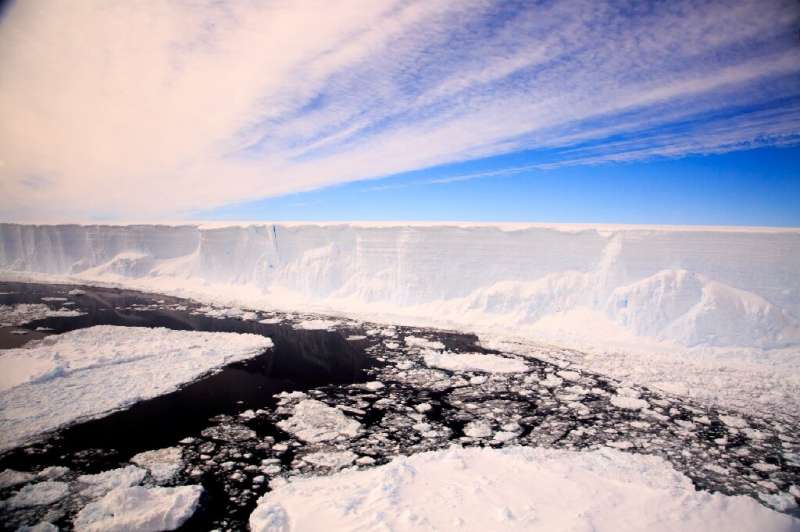
Ice sheets in Greenland and Antarctica have shed more than half-a-trillion tonnes annually since 2000 -- six icy Olympic pools e
Ice sheets in Greenland and Antarctica have shed more than half-a-trillion tonnes 
annually since 2000 -- six icy Olympic pools every second.

Parts of Earth's ice sheets that could lift global oceans by meters will likely crumble with another half degree Celsius of warming, and are fragile in ways not previously understood, according to new research.

The risk, which will play out over centuries, may also be greater than expected for a significant portion of the world's population in .

New research suggests that the number of people threatened by  has been underestimated by tens of millions because of poorly-interpreted satellite data and a lack of scientific resources in developing countries.

Ice sheets in Greenland and Antarctica have shed more than half-a-trillion metric tons annually since 2000—six icy Olympic pools every second.

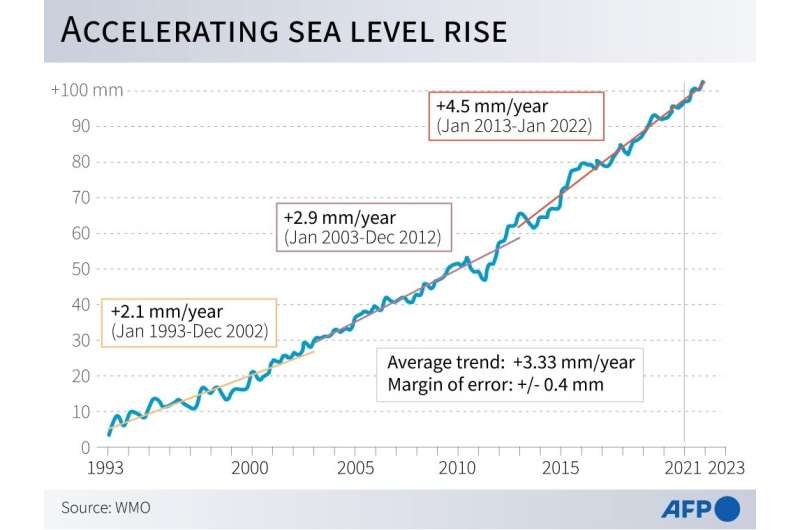
These kilometers-thick ice cubes have replaced  as the single biggest source of sea level rise, which has accelerated three-fold over the last decades compared to most of the 20th century.

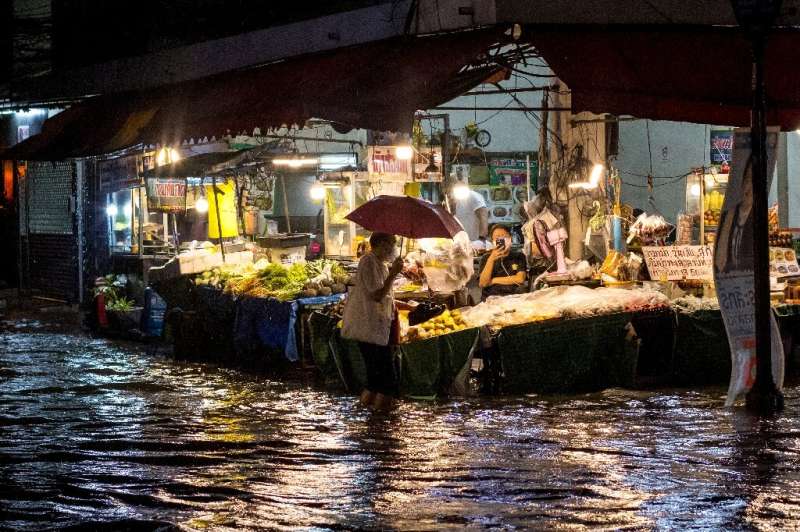
A 20 centimeters increase since 1900 has boosted the destructive wallop of ocean storms made more powerful and wide-ranging by , and is driving  into populous, low-lying agricultural deltas across Asia and Africa.

Up to now,  have underestimated how much ice sheets will add to  because they mostly looked at the one-way impact of rising air temperatures on the ice, and not the complicated interaction between atmosphere, oceans,  and ice shelves.

Using so-called active ice sheet models, scientists from South Korea and the US projected how much ice sheets would raise  by 2150 under three emissions scenarios: swift and deep cuts as called for by the UN's IPCC advisory panel, current climate policies, and a steep increase in carbon pollution.

Looking only at a 2100 horizon is misleading, because oceans will continue to rise for hundreds of years no matter how quickly humanity draws down emissions.

If rising temperatures—up 1.2C above preindustrial levels so far—can be capped at 1.5C, the additional impact of ice sheets will remain very small, they found.

The number of people threatened by sea level rise has been underestimated by tens of millions
The number of people threatened by sea level rise has been underestimated by tens of 
millions.

Doomsday glacier

But under current policies, including national carbon-cutting pledges under the 2015 Paris Agreement, Greenland and Antarctica would add about half-a-meter to the global watermark.

And if emissions increase—from human or natural sources—under a "worst case" scenario, enough ice would melt to lift oceans 1.4 meters.

Perhaps the most striking finding from the study, published this week in Nature Communications, was a red line for runaway ice-sheet disintegration.

"Our model has a threshold between 1.5C and 2C of warming—with 1.8C as a best estimate—for acceleration of ice loss and sea level increase," co-author Fabian Schloesser from the University of Hawaii, told AFP.

Scientists have long known that the West Antarctic and Greenland ice sheets—which together could lift oceans 13 meters—have "tipping points" beyond which complete disintegration is inevitable, whether in centuries or millennia. But pinpointing these temperature trip wires has remained elusive.

A pair of studies this week in Nature, meanwhile, showed that Antarctica's Thwaites "doomsday glacier"—a slab the size of Britain sliding toward the sea—is fracturing in unsuspected ways.

Thwaites is one of the fastest moving glaciers on the continent, and has retreated 14 kilometers since the 1990s. Much of it is below sea level and susceptible to irreversible ice loss.

But exactly what is driving the march to the sea has been unclear for lack of data.

Change in sea levels since 1993 and forecast rise up to 2023
Change in sea levels since 1993 and forecast rise up to 2023.

Misinterpreted data

An international expedition of British and US scientists drilled a hole the depth of two Eiffel towers (600 meters) through the thick tongue of ice Thwaites has pushed out over the Southern Ocean's Amundsen Sea.

Using sensors and an underwater robot, called Icefin, threaded through the hole, they examined the ice shelf's hidden underbelly.

There was less melting than expected in some places, but far more in others.

The stunned scientists discovered up-side-down staircase formations—like an underwater Escher drawing—with accelerated erosion, along with long fissures being forced open by sea water.

"Warm water is getting into the cracks, helping wear down the glacier at its weakest point," said Britney Schmidt, lead author of one of the studies and an associate professor at Cornell University in New York.

A fourth study, published last week in the American Geophysical Union journal Earth's Future, found that rising oceans will destroy farmland, ruin water supplies and uproot millions of people sooner than thought.

"The time available to prepare for increased exposure to flooding may be considerably less than assumed to date," Dutch researchers Ronald Vernimmen and Aljosja Hooijer concluded.

The new analysis shows that a given amount of sea level rise—whether 30 or 300 centimeters—will devastate twice the area projected in most models to date.

Remarkably, a misinterpretation of data is mostly to blame: radar measurements of coastal elevations used until recently, it turned out, often mistook tree canopy and rooftops for ground level, adding meters of elevation that were not in fact there.

Most vulnerable will be tens of millions of people in the coastal areas of Bangladesh, Pakistan, Egypt, Thailand, Nigeria and Vietnam.

Earlier research taking into account more accurate elevation readings found that areas currently home to 300 million people will be vulnerable by mid-century to flooding made worse by climate change, no matter how aggressively emissions are reduced.

Journal information: Nature Communications , Earth's Future

© 2023 AFP

Runaway W. Antarctic ice sheet collapse not 'inevitable': study
Colombia mulls proposal to benefit repentant narcos

Issued on: 16/02/2023 

Bogotá (AFP) – Colombia's government on Thursday said it would submit a bill to parliament offering reduced sentences and other benefits to drug traffickers who quit and compensate victims.

Drug traffickers who cease their activities would see their prison sentences limited to between six and eight years.

It is part of leftist President Gustavo Petro's "total peace" strategy to end more than half a century of armed conflict involving radical left-wing rebels, right-wing paramilitaries, drug traffickers and the security forces.

"These criminal organizations must acknowledge responsibility, tell victims the truth, dismantle criminal apparatus, hand over hostages, recruited children, weapons, inventories of assets, drug trafficking routes, money laundering mechanisms, say who their collaborators are and if this happens then they can submit themselves to justice," legislator Alirio Uribe, who coauthored the bill, told Blu Radio.

The bill was to be submitted later in the day to a government assessment body that reviews criminal policy before an expected debate in Congress at a later date.

Among the other benefits the government is offering to repentant drug traffickers is keeping up to six percent of their ill-gotten gains.

"After their prison sentences they would have an additional period of four years ... a type of conditional release with reparative activities for victims," said Justice Minister Nestor Osuna.

The offer would be open to nonpolitical hierarchical armed groups, but not to those considered political or belligerent.

It would not include, for example, the National Liberation Army (ELN) Marxist guerrillas, with whom the government has restarted peace negotiations that stalled under the government of conservative Ivan Duque.

Petro has blasted Duque's "failed" antidrug trafficking policies, which were far more bellicose, and says he wants to focus on dissuading drug consumption in developed countries.

Colombia is the world's largest producer of cocaine, with the United States its main market.
Discovery of tsetse fly mating behavior may help curb sleeping sickness

Issued on: 16/02/2023 -

Washington (AFP) – Researchers have identified chemicals in tsetse flies that control their mating behavior, a discovery that may well aid the fight against the disease-causing insects in sub-Saharan Africa.

"It could be used in traps to make them more effective in trapping tsetse flies," said John Carlson, a biology professor at Yale University and one of the authors of a study published Thursday in the journal Science.

Trypanosomiasis, also known as sleeping sickness, is caused by parasites transmitted by the tsetse fly. It affects humans and domestic animals.

The disease threatens millions of people in dozens of countries in sub-Saharan Africa.

Animal trypanosomiasis, known as Nagana, kills some three million cattle each year, an annual cost of $1.2 billion, according to a companion article in Science.

It is considered a major cause of rural poverty and the authors warned that the geographic range of the tsetse fly is expected to grow as a result of climate change.

For the study, the researchers focused on pheromones, chemical compounds an animal releases that affect the behavior of others of the same species.

Pheromones allow insects to identify each other in an environment where there are potentially thousands of other species.

The Yale researchers identified volatile sex pheromones that had not previously been isolated in tsetse flies despite more than a century of study.

Pheromones are currently used to control a wide variety of other insect pests such as moths.

Pantry moths, for example, can be caught using sticky traps baited with a plastic disc soaked with an attractive pheromone.

'The flies stop moving'


For the study, the researchers soaked tsetse flies in liquid and then used a gas chromatograph-mass spectrometer to identify specific chemicals.


A child looks away as a health worker draws blood in a screening for African trypanosomiasis, also known as sleeping sickness, in a village in Ivory Coast © ISSOUF SANOGO / AFP/File

One of them, methyl palmitoleate (MPO), acted as an aphrodisiac, attracting male tsetse flies.

In tests, male tsetse flies were attracted to decoys -- knots in yarn doused with MPO -- and, unusually, to females of another tsetse fly species.

Olfactory neurons on the antennae of the flies were found to increase their firing rates in response to MPO.

"Not only is MPO an attractant, but it causes tsetse flies to freeze -- the flies stop moving," Carlson said.

Current traps for tsetse flies use animal odors but MPO tends to last longer and could "enhance the effectiveness of traps," he said.

Carlson said field tests using MPO were getting underway in Kenya.

The type of pheromone identified in the study may not be effective against all types of tsetse flies, however.

The study focused on the species Glossina morsitans, a major vector of the disease in cattle, not on Glossina fuscipes, which causes the most human cases of the disease.

But Carlson said he was optimistic that the research methods used could lead to identifying pheromones from other tsetse species.

© 2023 AFP
'Abandoned': Turkish town awaits help 11 days after quake

"There is no state. We are all volunteers," potato peeler Seal Yuves said.

Issued on: 16/02/2023 

Samandag (Turkey) (AFP) – Dozens of arms frantically reach for heaters and blankets handed out by a private donor, illustrating the desperation and rage gripping swathes of Turkey 11 days after its disastrous quake.

Many in the Syrian border region town of Samandag listened to their relatives and friends slowly die under the rubble as they waited for rescuers who came too late.

And those who survived the February 6 disaster have been living on the streets, freezing when the winter temperatures plunge after dark.

Hasan Irmak saw five family members -- including his six-year-old daughter Belinda -- buried under his flattened house.

"She was alive for two days," the 57-year-old said of his daughter.

"I was talking to her in the ruins. Then she lost all her energy. On the third day, she was dead. Help arrived on the fourth."

President Recep Tayyip Erdogan has pushed back hard against accusations that his government floundered in its response to Turkey's deadliest natural disaster of modern times.

The 7.8-magnitude tremor and its aftershocks have claimed the lives of more than 36,000 people in southeastern Turkey and nearly 3,700 in Syria.

Survival

Erdogan has admitted to some initial "shortcomings" that he blamed on stormy weather and quake-damaged airports and roads.

But he has also argued that he has now mobilised the full force of the state to help millions of victims who were left either homeless or displaced.

Samandag's much bigger neighbour Antakya -- an ancient city of nearly 500,000 people that was almost completely destroyed -- is starting to receive its first shipments of government aid.

Survivors in quake-hit Samandag have been relying on private donations instead of state help © BULENT KILIC / AFP

But the people of 40,000-strong Samandag have been fending for themselves and accepting handouts from private campaign drives.

Hasan survived, but since the first pre-dawn tremor he feels he is not really living.

"We have no water, no toilets, no medicine, no doctors. I have been wearing the same clothes for eleven days," he said.

He buried his relatives without anyone's help. Some of the survivors have been living in a small metal cabin that Hasan built himself.

"I have 25 liras left ($1.35) for my family," Hasan said. "The government said they would help us financially. But nothing came."

'Third-class citizen'


Semir Ayranci's house in Samandag survived seemingly unscathed.

But the government is barring people across quake-stricken regions from moving back into surviving buildings until proper assessments are made.

This has forced Ayranci and his 23 relatives to move into a tent on an adjacent plot of land. They eat whatever well-wishers ferry in by truck.

Ayranci bitterly compares himself to a "third-class citizen".

"All these distributions are private initiatives. We have been abandoned by the state," he said.

Yet this sense of solitude has prompted many to pull together and start helping each other out any way they can.

The February 6 tremor has become Turkey's deadliest natural disaster of modern times © Ozan KOSE / AFP

One baker used an appeal on social media to secure huge supplies of flour. He is now working hard to provide free bread.

A steamroller was levelling ground before installing mobile homes and tents provided by a generous donor.

And four women were peeling potatoes for a neighbourhood soup kitchen.

"There is no state. We are all volunteers," potato peeler Seal Yuves said.

"Eleven days have already passed," said the 44-year-old. "It's terrible."

© 2023 AFP