Monday, April 17, 2023

The Nord Stream blasts cover story is crumbling

Cockamamie yarns like the one involving the yacht suggest not nefarious cunning but simple incompetence

By BRADLEY K. MARTIN
APRIL 7, 2023
ASIA TIMES
The 50-foot charter yacht Andromeda. Photo: Twitter / Bellingcat

Reports that nongovernmental pro-Ukrainians were behind the Nordstream gas pipeline explosions last year appear to be losing traction, as illustrated by a new Reuters report quoting skeptical remarks by a Swedish official.

As originally put forth on March 7 by the New York Times (quoting unnamed US officials with access to intelligence) and by a consortium of German media (quoting unnamed police sources), the theory held that the otherwise unidentified culprits had carried out the Baltic Sea operation from a rented 50-foot charter sailing yacht named Andromeda.

Some analysts (including me) found the tale highly improbable from the start and suggested – or, in the case of investigative reporter Seymour Hersh, flat-out asserted – that it was a cover story concocted by spooks to counter Hersh’s February 8 report, based on the Pulitzer Prize winner’s own anonymous sourcing, that US divers working for the CIA did the deed.

This week, Washington Post reporters revisited the yacht tale, apparently trying to keep it afloat even as they acknowledged the story’s holes. One big hole: The reporters learned that the perps would have needed more of a base than a single sailing yacht for their operations at sea:

US and European officials said they still don’t know for sure who is behind the underwater attack. But several said they shared German skepticism that a crew of six people on one sailboat laid the hundreds of pounds of explosives that disabled Nord Stream 1 and part of Nord Stream 2, a newer set of pipelines that wasn’t yet delivering gas to customers.

Experts noted that while it was theoretically possible to place the explosives on the pipeline by hand, even skilled divers would be challenged submerging more than 200 feet to the seabed and slowly rising to the surface to allow time for their bodies to decompress.

Such an operation would have taken multiple dives, exposing the Andromeda to detection from nearby ships. The mission would have been easier to hide and pull off using remotely piloted underwater vehicles or small submarines, said diving and salvage experts who have worked in the area of the explosion, which features rough seas and heavy shipping traffic
.
Another view of Andromeda, the yacht implicated in one theory about who blew up the Nord Stream pipelines. Photo: Spiegel

But in the course of their article, the Post reporters, at least to this reader’s eye, reinforced doubts about the veracity of the yacht yarn to a far greater extent than they straightened it out into a believable report. Take these details that the article offers relating to the yacht:

The German investigation has determined that traces of “military-grade” explosives found on a table inside the boat’s cabin match the batch of explosives used on the pipeline. Several officials doubted that skilled saboteurs would leave such glaring evidence of their guilt behind. They wonder if the explosive traces — collected months after the rented boat was returned to its owners — were meant to falsely lead investigators to the Andromeda as the vessel used in the attack.

“The question is whether the story with the sailboat is something to distract or only part of the picture,” said one person with knowledge of the investigation.

Still others allow that the bombers may simply have been sloppy. “It doesn’t all fit,” a senior European security official said of the fragments of evidence. “But people can make mistakes.”

‘International game of Clue’

But the most puzzling part of the Post story – and clearly the reporters themselves found this truly odd – is that, as the writers put it, “the Nord Stream mystery has turned into an international game of Clue,” but with reluctant players. The Post report goes on:

For all the intrigue around who bombed the pipeline, some Western officials are not so eager to find out.

At gatherings of European and NATO policymakers, officials have settled into a rhythm, said one senior European diplomat: “Don’t talk about Nord Stream.” Leaders see little benefit from digging too deeply and finding an uncomfortable answer, the diplomat said, echoing sentiments of several peers in other countries who said they would rather not have to deal with the possibility that Ukraine or allies were involved.

Even if there were a clear culprit, it would not likely stop the provision of arms to Ukraine, diminish the level of anger with Russia or alter the strategy of the war, these officials argued. The attack happened months ago and allies have continued to commit more and heavier weapons to the fight, which faces a pivotal period in the next few months.

Since no country is yet ruled out from having carried out the attack, officials said they were loath to share suspicions that could accidentally anger a friendly government that might have had a hand in bombing Nord Stream.

‘The Nord Stream mystery has turned into an international game of Clue,’ says the Washington Post article. Photo: Hasbro

What’s oddest of all about the piece, though, is that at no point does it single out one particular “friendly government” that has been publicly accused in Seymour Hersh’s report of bombing Nord Stream: the United States. Without pointing explicitly to that subtext, the writers say:

In the absence of concrete clues, an awkward silence has prevailed.

“It’s like a corpse at a family gathering,” the European diplomat said, reaching for a grim analogy. Everyone can see there’s a body lying there, but pretends things are normal.

“It’s better not to know.”

Hersh chimes in again


Hersh would add that this “better not to know” mindset affects quite a few Western news media organizations, including the Post. “No American officials were quoted, even anonymously, by the Post,” he notes in a new April 5 article of his own.

“The Biden administration has become a Nord Stream-free reporting zone,” he writes. “Chalk one up for the various CIA officials who have been supplying phony stories to the media here and abroad in what has been a successful effort to keep the world focused on any possible suspects outside of what has emerged as the most logical one – the president of the United States.”

Hersh writes that the author of one of the German reports that were published the same day as the New York Times report is Holger Stark of Die Zeit, “an experienced journalist whom I have known since he worked in Washington a decade or so ago.”

Stark, Hersh says, “told me he had excellent sources in the German federal police and learned what he did from those links, and not from any intelligence agency, German or American. I believed him.” But Hersh had trouble with the story those sources told to Stark.

Stark told him that officials in Germany, Sweden and Denmark had decided shortly after the September 26, 2o22, pipeline bombings “to send teams to the site to recover the one mine that has not gone off. He said they were too late; an American ship had sped to the site within a day or two and recovered the mine and other materials. I asked him why he thought the Americans had been so quick to get to the site and he answered, with a wave of his hand, ‘You know what Americans are like. Always wanting to be first.'”

Says Hersh:

There was another very obvious explanation.

The trick of a good propaganda operation is to provide the targets – in this case the Western media – with what they want to hear. One intelligence expert put it to me more succinctly: “When you do an operation like the pipelines, you need to plan a counter-op – a red herring that has a whiff of reality. And it must be as detailed as possible to be believed.”

“People today have forgotten that there is such a thing as a parody,” the expert said…. “The CIA’s goal in the pipeline case was to produce a parody that was so good that the press would believe it. But where to start? Cannot have the pipelines destroyed by a bomb from an airplane or sailors on a rubber boat.

“But why not a sailboat? Any serious student of the event would know that you cannot anchor a sailboat in waters that are 260 feet deep” – the depth at which the four pipelines were destroyed – “but the story was not aimed at him but at the press who would not know a parody when presented with one.”

Seymour Hersh in a file photo. Image: Screengrab / Youtube

The journalist’s job

Hersh in his original exposé made clear that what he thought Biden had been up to was to deprive Vladimir Putin of the power, through the Russian gas supply to Germany via Nord Stream, to pressure Berlin into abandoning Ukraine in the war that had begun there. Hersh has acknowledged he opposed NATO expansion into the former Soviet Union and he is not known to be a fan of allied efforts to help Ukraine fight the war.

Unlike Hersh but like many journalists working for Western media, I personally favor US and allied support for Ukraine. That personal support extends to covert operations. If Biden did what Hersh says the president did, I personally would hope he gets away with it. I’d hate to see the always anti-Biden and increasingly anti-Ukraine Republicans in the US House of Representatives schedule a hearing in hopes it would affect the 2024 election.

But, as a journalist, I don’t go along with helping the Biden administration by pretending not to see what is obvious. The duty to hold the words and deeds of government to tight scrutiny takes priority over my personal preferences.

As a friend of mine who is one of Hersh’s fellow Pulitzer laureates reminded me today in an email, none of us should want to risk “following in the grand tradition of Judith Miller.”

Miller, in case you’re too young to recall, was a New York Times reporter who loved the crazy stories that the George W Bush administration put out about Saddam Hussein’s supposed weapons of mass destruction and fed them to her readers until it was too late and the disastrous Iraq War that the neocons had sought was well underway.

Hersh quotes his expert’s view that “parody” is just the thing to fool the press. To me, however, cockamamie stories like the one involving the yacht suggest not nefarious cunning but simple incompetence. Get your act together, I’d advise the Biden people.

Bradley K Martin is a veteran foreign correspondent and an associate editor at Asia Times.

Why the Media Don’t Want to Know the Truth About the Nord Stream Blasts

First, journalists lapped up Russian culpability. Now they peddle a preposterous James Bond-style story. Anything to ignore the US role

 Posted on

No one but the terminally naïve should be surprised that security services lie – and that they are all but certain to cover their tracks when they carry out operations that either violate domestic or international law or that would be near-universally rejected by their own populations.

Which is reason enough why anyone following the fallout from explosions last September that ripped holes in three of the four Nord Stream pipelines in the Baltic Sea supplying Russian gas to Europe should be wary of accepting anything Western agencies have to say on the matter.

In fact, the only thing that Western publics should trust is the consensus among “investigators” that the three simultaneous blasts deep underwater on the pipelines – a fourth charge apparently failed to detonate – were sabotage, not some freak coincidental accident.

Someone blew up the Nord Stream pipelines, creating an untold environmental catastrophe as the pipes leaked huge quantities of methane, a supremely active global-warming gas. It was an act of unrivaled industrial and environmental terrorism.

If Washington had been able to pin the explosions on Russia, as it initially hoped, it would have done so with full vigor. There is nothing Western states would like more than to intensify world fury against Moscow, especially in the context of NATO’s express efforts to “weaken” Russia through a proxy war waged in Ukraine.

But, after the claim made the rounds of front pages for a week or two, the story of Russia destroying its own pipelines was quietly shelved. That was partly because it seemed too difficult to maintain a narrative in which Moscow chose to destroy a critical part of its own energy infrastructure.

Not only did the explosions cause Russia great financial harm – the country’s gas and oil revenues regularly financed nearly half of its annual budget – but the blasts removed Moscow’s chief influence over Germany, which had been until then heavily dependent on Russian gas. The initial media story required the Western public to believe that President Vladimir Putin willingly shot himself in the foot, losing his only leverage over European resolve to impose economic sanctions on his country.

But even more than the complete lack of a Russian motive, Western states knew they would be unable to build a plausible forensic case against Moscow for the Nord Stream blasts.

Instead, with no chance to milk the explosions for propaganda value, official Western interest in explaining what had happened to the Nord Stream pipelines wilted, despite the enormity of the event. That was reflected for months in an almost complete absence of media coverage.

When the matter was raised, it was to argue that separate investigations by Sweden, Germany and Denmark were all drawing a blank. Sweden even refused to share any of its findings with Germany and Denmark, arguing that to do so would harm its “national security.”

No one, again including the Western media, raised an eyebrow or showed a flicker of interest in what might be really going on behind the scenes. Western states and their compliant corporate media seemed quite ready to settle for the conclusion that this was a mystery cocooned in an enigma.

Isolated and friendless

It might have stayed that way forever, except that in February, a journalist – one of the most acclaimed investigative reporters of the past half-century – produced an account that finally demystified the explosions. Drawing on at least one anonymous, highly placed informant, Seymour Hersh pointed the finger for the explosions directly at the US administration and President Joe Biden himself.

Hersh’s detailed retelling of the planning and execution of the Nord Stream blasts had the advantage – at least for those interested in getting to the truth of what took place – that his account fitted the known circumstantial evidence.

Key Washington figures, from President Biden to Secretary of State Anthony Blinken and his senior neoconservative official Victoria Nuland – a stalwart of the murky US, anti-Russia meddling in Ukraine over the past decade – had either called for the destruction of the Nord Stream pipelines or celebrated the blasts shortly after they took place.

If anyone had a motive for blowing up the Russian pipelines – and a self-declared one at that – it was the Biden administration. They opposed the Nord Stream 1 and 2 projects from the outset – and for exactly the same reason that Moscow so richly prized them.

In particular, the second pair of pipelines, Nord Stream 2, which was completed in September 2021, would double the amount of cheap Russian gas available to Germany and Western Europe. The only obstacle in its path was the hesitancy of German regulators. They delayed approval in November 2021.

Nord Stream meant major European countries, most especially Germany, would be completely dependent for the bulk of their energy supplies on Russia. That deeply conflicted with US interests. For two decades, Washington had been expanding NATO as an anti-Moscow military alliance embracing ever more of Europe, to the point of butting up aggressively against Russia’s borders.

The Ukrainian government’s covert efforts to become a NATO member – thereby destroying a long-standing mutual and fragile nuclear deterrence between Washington and Moscow – were among the stated reasons why Russia invaded its neighbor in February last year.

Washington wanted Moscow isolated and friendless in Europe. The goal was to turn Russia into Enemy No. 2 – after China – not leave Europeans looking to Moscow for energy salvation.

The Nord Stream explosions achieved precisely that outcome. They severed the main reason European states had for cozying up to Moscow. Instead, the US started shipping its expensive liquified natural gas across the Atlantic to Europe, both forcing Europeans to become more energy dependent on Washington and, at the same time, fleecing them for the privilege.

But even if Hersh’s story fitted the circumstantial evidence, could his account stand up to further scrutiny?

Peculiarly incurious

This is where the real story begins. Because one might have assumed that Western states would be queuing up to investigate the facts Hersh laid bare, if only to see if they stacked up or to find a more plausible alternative account of what happened.

Dennis Kucinich, a former chair of a US Congressional investigative subcommittee on government oversight, has noted that it is simply astonishing no one in Congress has been pushing to use its powers to subpoena senior American officials, such as the secretary of the Navy, to test Hersh’s version of events. As Kucinich observes, such subpoenas could be issued under Congress’s Article One, Section 8, Clause 18, providing “constitutional powers to gather information, including to inquire on the administrative conduct of office.”

Similarly, and even more extraordinarily, when a vote was called by Russia at the United Nations Security Council late last month to set up an independent international commission to investigate the blasts, the proposal was roundly rejected.

If adopted, the UN Secretary-General himself would have appointed expert investigators and aided their work with a large secretariat.

Three Security Council members, Russia, China and Brazil, voted in favor of the commission. The other 12 – the US and its allies or small states it could easily pressure – abstained, the safest way to quietly foil the creation of such an investigative commission.

Excuses for rejecting an independent commission failed to pass the sniff test. The claim was that it would interfere with the existing investigations of Denmark, Sweden and Germany. And yet all three have demonstrated that they are in no hurry to reach a conclusion, arguing that they may need years to carry out their work. As previously noted, they have indicated great reluctance to cooperate. And last week, Sweden once again stated that it may never get to the bottom of the events in the Baltic Sea.

As one European diplomat reportedly observed of meetings between NATO policymakers, the motto is: “Don’t talk about Nord Stream.” The diplomat added: “It’s like a corpse at a family gathering. It’s better not to know.”

It may not be so surprising that Western states are devoted to ignorance about who carried out a major act of international terrorism in blowing up the Nord Stream pipelines, considering that the most likely culprit is the world’s only superpower and the one state that can make their lives a misery.

But what should be more peculiar is that Western media have shown precisely no interest in getting to the truth of the matter either. They have remained completely incurious to an event of enormous international significance and consequence.

It is not only that Hersh’s account has been ignored by the Western press as if it did not even exist. It is that none of the media appear to have made any effort to follow up with their own investigations to test his account for plausibility.

‘Act of war’

Hersh’s investigation is filled with details that could be checked ­– and verified or rebutted – if anyone wished to do so.

He set out a lengthy planning stage that began in the second half of 2021. He names the unit responsible for the attack on the pipeline: the US Navy’s Diving and Salvage Center, based in Panama City, Florida. And he explains why it was chosen for the task over the US Special Operations Command: because any covert operation by the former would not need to be reported to Congress.

In December 2021, according to his highly placed informant, National Security Adviser Jake Sullivan convened a task force of senior administration and Pentagon officials at the request of Biden himself. They agreed that the explosions must not be traceable back to Washington; otherwise, as the source noted: “It’s an act of war.”

The CIA brought in the Norwegians, stalwarts of NATO and strongly hostile to Russia, to carry out the logistics of where and how to attack the pipelines. Oslo had its own additional commercial interests in play, as the blasts would make Germany more dependent on Norwegian gas, as well as American supplies, to make up the shortfall from Nord Stream.

By March last year, shortly after Russia’s invasion of Ukraine, the precise site for the attack had been selected: in the Baltic’s shallow waters off Denmark’s Bornholm Island, where the sea floor was only 260 feet below the surface, the four pipelines were close together and there were no strong tidal currents.

A small number of Swedish and Danish officials were given a general briefing about unusual diving activities to avoid the danger that their navies might raise the alarm.

The Norwegians also helped develop a way to disguise the US explosive charges so that, after they were laid, they would not be detected by Russian surveillance in the area.

Next, the US found the ideal cover. For more than two decades, Washington has sponsored an annual NATO naval exercise in the Baltic every June. The US arranged that the 2022 event, Baltops 22, would take place close to Bornholm Island, allowing the divers to plant the charges unnoticed.

The explosives would be detonated through the use of a sonar buoy dropped by plane at the time of President Biden’s choosing. Complex arrangements had to be taken to make sure the explosives would not be accidentally triggered by passing ships, underwater drilling, seismic events or sea creatures.

Three months later, on September 26, the sonar buoy was dropped by a Norwegian plane, and a few hours later three of the four pipelines were put out of commission.

Disinformation campaign

The Western media’s response to Hersh’s account has perhaps been the most revealing aspect of the entire saga.

It is not just that the establishment media have been so uniformly and remarkably reticent to dig deeper into making sense of this momentous crime – beyond making predictable, unevidenced accusations against Russia. It is that they have so obviously sought to dismiss Hersh’s account before making even cursory efforts to confirm or deny its specifics.

The knee-jerk pretext has been that Hersh has only one anonymous source for his claims. Hersh himself has noted that, as with other of his famous investigations, he cannot always refer to additional sources he uses to confirm details because those sources impose a condition of invisibility for agreeing to speak to him.

That should hardly be surprising when informants are drawn from a small, select group of Washington insiders and are at great risk of being identified – at great personal cost to themselves, given the US administration’s proven track record of persecuting whistleblowers.

But the fact that this was indeed just a pretext from the establishment media becomes much clearer when we consider that those same journalists dismissive of Hersh’s account happily gave prominence to an alternative, highly implausible, semi-official version of events.

In what looked suspiciously like a coordinated publication in early March, The New York Times and Germany’s Die Zeit newspapers printed separate accounts promising to solve “one of the central mysteries of the war in Ukraine.” The Times headline asked a question it implied it was about to answer: “Who Blew Up the Nord Stream Pipelines?”

Instead, both papers offered an account of the Nord Stream attack that lacked detail, and any detail that was supplied was completely implausible. This new version of events was vaguely attributed to anonymous American and German intelligence sources – the very actors, in Hersh’s account, responsible both for carrying out and covering up the Nord Stream blasts.

In fact, the story had all the hallmarks of a disinformation campaign to distract from Hersh’s investigation. It threw the establishment media a bone: the chief purpose was to lift any pressure from journalists to pursue Hersh’s leads. Now they could scurry around, looking like they were doing their job as a “free press” by chasing a complete red herring supplied by U.S. intelligence agencies.

Which is why the story was widely reported, notably far more widely than Hersh’s much more credible account.

So what did the New York Times’ account claim? That a mysterious group of six people had hired a 50 foot yacht and sailed off to Bornholm Island, where they had carried out a James Bond-style mission to blow up the pipelines. Those involved, it was suggested, were a group of “pro-Ukrainian saboteurs”– with no apparent ties to President Volodymyr Zelenskiy – who were keen to seek revenge on Russia for its invasion. They used fake passports.

The Times further muddied the waters, reporting sources that claimed some 45 “ghost ships” had passed close to the site of the explosion when their transponders were not working.

The crucial point was that the story shifted attention away from the sole plausible possibility, the one underscored by Hersh’s source: that only a state actor could have carried out the attack on the Nord Stream pipelines. The highly sophisticated, extremely difficult operation needed to be concealed from other states, including Russia that were closely surveilling the area.

Now the establishment media was heading off on a completely different tangent. They were looking not at states – and most especially not the one with the biggest motive, the greatest capability and the proven opportunity.

Instead, they had an excuse to play at being reporters, visiting Danish yachting communities to ask if anyone remembered the implicated yacht, the Andromeda, or suspicious characters aboard it, and trying to track down the Polish company that hired the sailing boat. The media had the story they preferred: one that Hollywood would have created, of a crack team of Jason Bournes giving Moscow a good slapping and then disappearing into the night.

Welcome mystery

A month on, the media discussion is still exclusively about the mysterious yacht crew, though – after reaching a series of dead-ends in a story that was only ever meant to have dead-ends – establishment journalists are asking a few tentative questions. Though, let us note, most determinedly not questions about any possible US involvement in the Nord Stream sabotage.

Britain’s Guardian newspaper ran a story last week in which a German “security expert” wondered whether a group of six sailors was really capable of carrying out a highly complex operation to blow up the Nord Stream pipelines. That is something that might have occurred to a less credulous newspaper a month earlier when the Guardian simply regurgitated the Times’ disinformation story.

But despite the security expert’s skepticism, the Guardian is still not eager to get to the bottom of the story. It conveniently concludes that the “investigation” conducted by the Swedish public prosecutor, Mats Ljungqvist, will be unlikely ever to “yield a conclusive answer.”

Or as Ljungqvist observes: “Our hope is to be able to confirm who has committed this crime, but it should be noted that it likely will be difficult given the circumstances.”

Hersh’s account continues to be ignored by the Guardian – beyond a dismissive reference to several “theories” and “speculation” other than the laughable yacht story. The Guardian does not name Hersh in its report or the fact that his highly placed source fingered the US for the Nord Stream sabotage. Instead, it notes simply that one theory – Hersh’s – has been “zeroing on a NATO Baltops 22 wargame two months before” the attack.

It’s all still a mystery for the Guardian – and a very welcome one by the tenor of its reports.

The Washington Post has been performing a similar service for the Biden administration on the other side of the Atlantic. A month on, it is using the yacht story to widen the enigma rather than narrow it down.

The paper reports that unnamed “law enforcement officials” now believe the Andromeda yacht was not the only vessel involved, adding: “The boat may have been a decoy, put to sea to distract from the true perpetrators, who remain at large, according to officials with knowledge of an investigation led by Germany’s attorney general.”

The Washington Post’s uncritical reporting surely proves a boon to Western “investigators.” It continues to build an ever more elaborate mystery, or “international whodunnit,” as the paper gleefully describes it. Its report argues that unnamed officials “wonder if the explosive traces – collected months after the rented boat was returned to its owners – were meant to falsely lead investigators to the Andromeda as the vessel used in the attack.”

The paper then quotes someone with “knowledge of the investigation”: “The question is whether the story with the sailboat is something to distract or only part of the picture.”

How does the paper respond? By ignoring that very warning and dutifully distracting itself across much of its own report by puzzling whether Poland might have been involved too in the blasts. Remember, a mysterious Polish company hired that red-herring yacht.

Poland, notes the paper, had a motive because it had long warned that the Nord Stream pipelines would make Europe more energy dependent on Russia. Exactly the same motive, we might note – though, of course, the Washington Post refuses to do so – that the Biden administration demonstrably had.

The paper does inadvertently offer one clue as to where the mystery yacht story most likely originated. The Washington Post quotes a German security official saying that Berlin “first became interested in the [Andromeda] vessel after the country’s domestic intelligence agency received a ‘very concrete tip’ from a Western intelligence service that the boat may have been involved in the sabotage.”

The German official “declined to name the country that shared the information” – information that helpfully draws attention away from any US involvement in the pipeline blasts and redirects it to a group of untraceable, rogue Ukraine sympathizers.

The Washington Post concludes that Western leaders “would rather not have to deal with the possibility that Ukraine or allies were involved.” And, it seems the Western media – our supposed watchdogs on power – feel exactly the same way.

‘Parody’ intelligence

In a follow-up story last week, Hersh revealed that Holger Stark, the journalist behind Die Zeit’s piece on the mystery yacht and someone Hersh knew when they worked together in Washington, had imparted to him an interesting additional piece of information divulged by his country’s intelligence services.

Hersh reports: “Officials in Germany, Sweden, and Denmark had decided shortly after the pipeline bombings to send teams to the site to recover the one mine that has not gone off. [Holger] said they were too late; an American ship had sped to the site within a day or two and recovered the mine and other materials.”

Holger, Hersh says, was entirely uninterested in Washington’s haste and determination to have exclusive access to this critical piece of evidence: “He answered, with a wave of his hand, ‘You know what Americans are like. Always wanting to be first.’” Hersh points out: “There was another very obvious explanation.”

Hersh also spoke with an intelligence expert about the plausibility of the mystery yacht story being advanced by the New York Times and Die Zeit. He described it as a “parody” of intelligence that only fooled the media because it was exactly the kind of story they wanted to hear. He noted some of the most glaring flaws in the account:

‘Any serious student of the event would know that you cannot anchor a sailboat in waters that are 260 feet deep’ – the depth at which the four pipelines were destroyed – ‘but the story was not aimed at him but at the press who would not know a parody when presented with one.’

Further:

‘You cannot just walk off the street with a fake passport and lease a boat. You either need to accept a captain who was supplied by the leasing agent or owner of the yacht, or have a captain who comes with a certificate of competency as mandated by maritime law. Anyone who’s ever chartered a yacht would know that.’ Similar proof of expertise and competence for deep sea diving involving the use of a specialized mix of gases would be required by the divers and the doctor.

And:

‘How does a 49-foot sailboat find the pipelines in the Baltic Sea? The pipelines are not that big and they are not on the charts that come with the lease. Maybe the thought was to put the two divers into the water’– not very easy to do so from a small yacht – ‘and let the divers look for it. How long can a diver stay down in their suits? Maybe fifteen minutes. Which means it would take the diver four years to search one square mile.’

The truth is that the Western press has zero interest in determining who blew up the Nord Stream pipelines because, just like Western diplomats and politicians, media corporations don’t want to know the truth if it cannot be weaponized against an official enemy state.

The Western media are not there to help the public monitor the centers of power, keep our governments honest and transparent, or bring to book those who commit state crimes. They are there to keep us ignorant and willing accomplices when such crimes are seen as advancing on the global stage the interests of Western elites – including the very transnational corporations that run our media.

Which is precisely why the Nord Stream blasts took place. The Biden administration knew not only that its allies would be too fearful to expose its unprecedented act of industrial and environmental terrorism but that the media would dutifully line up behind their national governments in turning a blind eye.

The very ease with which Washington has been able to carry out an atrocity – one that has caused a surge in the cost of living for Europeans, leaving them cold and out of pocket during the winter, and added considerably to existing pressures that have been gradually de-industrializing Europe’s economies – will embolden the US to act in equally rogue ways in the future.

In the context of a Ukraine war in which there is the constant threat of a resort to nuclear weapons, where that could ultimately lead should be only too obvious.

All my posts are freely accessible, but my journalism is possible only because of the support of readers. If you liked this article or any of the others, please consider sharing it with friends and making a donation to support my work. You can do so by becoming a paid Substack subscriber, or donate via Paypal or my bank account, or alternatively set up a monthly direct debit mandate with GoCardless. A complete archive of my writings is available on my website. I’m on Twitter and Facebook.

Jonathan Cook won the Martha Gellhorn Special Prize for Journalism. His latest books are Israel and the Clash of Civilizations: Iraq, Iran and the Plan to Remake the Middle East (Pluto Press) and Disappearing Palestine: Israel’s Experiments in Human Despair (Zed Books). His website is www.jonathan-cook.net.


No, BlackRock is not leading a Marxist assault on capitalism

World’s biggest funds manager accused of advancing ‘corporate socialism’ via support for ESG in wild new US culture war twist
THE CONVERSATION
APRIL 6, 2023
AsiaTimes


Five years ago it would have been unimaginable, but today there is a global movement convinced the world’s largest corporations are engaging in stealth warfare to transform liberal democracies into neo-communist dictatorships.

At the heart of this corporate-led Marxist revolution, apparently, is the trend towards businesses not just focusing on profit maximization but taking into account environmental, social and governance responsibilities (called ESG for short).

According to ESG opponents, this is putting democracy on a downhill road to socialism – or worse.

Purportedly central to this sinister plan is United States company BlackRock and its chief executive, Larry Fink. BlackRock is the world’s biggest funds manager, overseeing more than US$10 trillion in investments on behalf of clients such as superannuation funds. Fink is paid more than US$30 million a year, and his wealth is estimated to be more than US$1 billion.

You might think this would make Fink a very unlikely champion of destroying capitalism. But due to his support for ESG – particularly for businesses taking action on climate change – he’s been accused of advancing a form of “corporate socialism”, with ESG criticized as “socialism in sheep’s clothing.”

All the way to the president


Concerns about the “woke” politics of ESG don’t just live in the dark recesses of the internet. In the US it has become a mainstream fixation. Anti-ESG opinions abound in the pages of The Wall Street Journal and on the infotainment network Fox News. It is a hot battlefield in the culture wars.

In 2020, the Trump administration proposed a rule requiring pension funds to put “economic interests” ahead of “non-pecuniary” concerns – in other words, to force them to ignore issues of long-term social and environmental sustainability and focus on short-term profits.

The Biden administration reversed this plan. But last month the US Congress passed a bill to reverse that reversal, with support from two Democrats in the Senate. Biden then used his presidential power to veto the bill – the first veto of his presidency.

In all likelihood, ESG will be a major campaign issue in the 2024 presidential election. The speaker of the Republican-majority House of Representatives, Kevin McCarthy, has accused Biden of wanting “Wall Street to use your hard-earned money to fund a far-left political agenda.”

Republican presidential contender and Florida governor Ron DeSantis has also been railing hard against the “woke ESG financial scam.”

Florida governor Ron DeSantis is down on ESG. 
Photo: AFP / Chandan Khanna

A short history of stakeholder capitalism

What’s notable about all these emotive denunciations of ESG is that they demonstrate little understanding of how capitalism works.

This point was made by Fink in his 2022 annual letter to the chief executives of the companies in which BlackRock has invested clients’ money.

In today’s globally interconnected world, a company must create value for and be valued by its full range of stakeholders in order to deliver long-term value for its shareholders. It is through effective stakeholder capitalism that capital is efficiently allocated, companies achieve durable profitability, and value is created and sustained over the long-term. Make no mistake, the fair pursuit of profit is still what animates markets; and long-term profitability is the measure by which markets will ultimately determine your company’s success.

The idea that business owners have responsibilities to wider society is not new. It dates back at least to the 17th century when the modern corporate form began to emerge through innovations such as joint-stock ownership and the legal privilege of limited liability.

The origins of the corporate social responsibility and ethical investment movements can also be traced back hundreds of years – generally to groups and individuals motivated by religious values – and have been mainstream business ideas for decades.

Why? Because paying attention to social and environmental sustainability, ESG advocates argue, produces better long-term investment returns. If it didn’t, businesses wouldn’t be interested.

This is not to say the application of ESG principles isn’t above criticism – for going too far, or not going far enough – being mere window-dressing for the status quo.

But such arguments are over the best way to do capitalism. It’s all about as far from interest in a neo-Marxist insurgency as can be imagined. Debating the best way to produce shareholder value has nothing to do with wanting a “revolutionary dictatorship of the proletariat” and to see private property abolished – key features of Marxism.

Capitalism is changing, that is certain. But it is doing so in a way that has accepted, and is willing to commercially exploit, changing public sentiment concerning climate and change social inequalities.

This is what businesses that make money do. They listen to customers, and other stakeholders – their workers, suppliers, the communities in which they operate, and the governments that regulate them. They plan for the future. They mitigate future risks.
Impoverishing democracy

So what explains this fantastical rhetoric about ESG being the road to Marxist tyranny? In my view, it shows just how much the intellectual foundations of conservatism and liberalism have been debased in a media marketplace that favors reactionary emotionalism over tempered thought.

Economic conservatism (rooted in the belief in free markets, globalization and small government) has become disconnected from social and political conservatism (especially as related to climate activism, social justice and diversity and inclusion).

All of this is a fatal distraction from the broader political and economic problems we face both locally and globally. It pushes serious discussions – such as what to do about economic inequality, political polarization and declining social capital – into the background.

BlackRock Chair and CEO Laurence Fink attends a session at the World Economic Forum annual meeting in Davos, on January 23, 2020. Photo: AFP / Fabrice Coffrini

There are biting criticisms to be made about ESG that don’t make the headlines. You don’t often hear business-friendly ESG supporters campaigning for increases to the minimum wage, progressive taxation, worker solidarity or the need to curb the runaway train of executive compensation.

Climate and social justice are pressing issues, to be sure. But they shouldn’t push fair economic distribution and shared prosperity off the agenda.

Ironically, the bogus labeling of ESG as a Marxist plot also helps do this. It serves the interests of the very elites populist pundits and politicians claim they oppose. It works against the interests of the working-class people they claim they care about. That is not socialism.


Carl Rhodes, Professor of Organization Studies, University of Technology Sydney

This article is republished from The Conversation under a Creative Commons license. Read the original article.


Pentagon fake news about Chinese fast breeder reactors

Assistant Secretary of Defense John Plumb knew better when characterizing Russia-China reactor cooperation as a nuclear weapon threat
AsiaTimes
APRIL 3, 2023
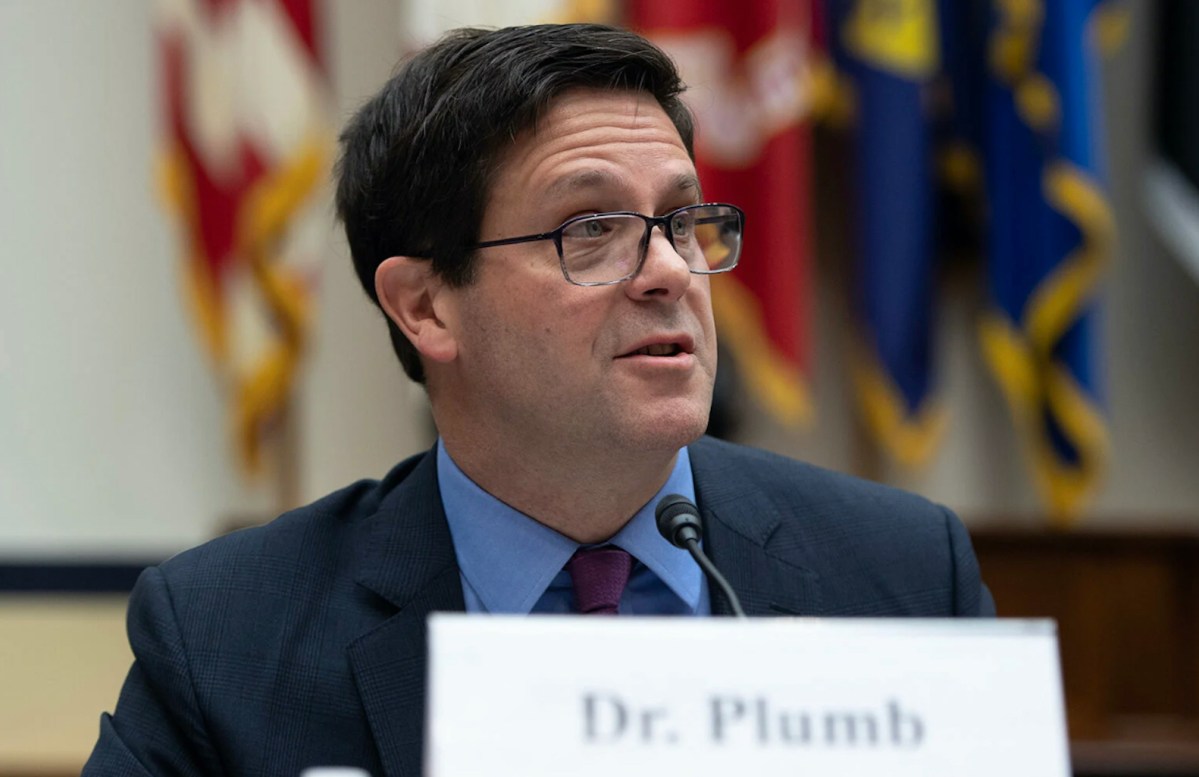
Assistant Secretary of Defense John Plumb testifies before the House Armed Services Committee in Washington, DC, March 30, 2023. Photo: DOD / EJ Hersom

The US Department of Defense and numerous private commentators allege that Russian-Chinese cooperation on fast breeder reactors will provide plutonium for large numbers of Chinese nuclear weapons. Assistant Secretary of Defense John Plumb told Congressional hearings on March 8:

“It’s very troubling to see Russia and China cooperating on this. They may have talking points around it, but there’s no getting around the fact that breeder reactors are plutonium, and plutonium is for weapons. So I think the [Defense] Department is concerned. And of course, it matches our concerns about China’s increased expansion of its nuclear forces as well, because you need more plutonium for more weapons.”

The Pentagon knows better than this. Anyone conversant with fast breeder reactor technology is aware that the type of plutonium that can be produced in such reactors is much less suitable for nuclear weapons than the plutonium produced in other reactor types, whose design and construction China has long mastered.

It is therefore nonsensical to charge that the main goal of the Chinese fast breeder program is weapons-related. Rather, the motivation for the program is consistent with that of other nations that have pursued fast breeder reactor designs, including greater efficiency in the utilization of nuclear fuel, reduction in the amount and toxicity of nuclear waste and greater independence from outside fuel supplies.

Here are the details, point by point. They speak for themselves:


1.) Although fast breeder reactors have been around since the 1950s, practically the entirety of the plutonium employed in nuclear weapons in the world so far has been produced in dedicated military facilities by reactors of a completely different type – graphite-moderated or heavy-water-moderated reactors. These specialized military plutonium-production reactors operate with “slow” neutrons as opposed to the “fast”, high-energy neutrons involved in fast breeder reactors. (The graphite or heavy water is used to slow down – “moderate” – the neutrons produced in fission reactions, thereby increasing the probability of their absorption by other nuclei.)

In the US, for example, the plutonium used for thousands of nuclear weapons was supplied by graphite-moderated reactors at the Hanford facility and heavy-water-moderated reactors at the Savannah River facility. There are good technical and other reasons why other reactor types – all of which produce plutonium to a greater or lesser extent – have not been used in weapons production.

2.) China is quite familiar with the technology of military plutonium-production reactors, which it has used since the early days of its nuclear weapons program. If it so desired, China would have no difficulty whatsoever to rapidly expand its capacity to supply plutonium for nuclear weapons using dedicated graphite, or heavy-water-moderated plutonium-production reactors, which (relatively speaking) are far simpler, cheaper and faster to build and operate than the fast breeder reactors projected for China’s civilian nuclear power program. In case China would decide to produce thousands of nuclear weapons, it will not need help from Russia or anyone else, nor would it need breeder reactors.

3.) In fact, fast breeder reactors of the sort China is building are very poorly suited as potential sources of plutonium for nuclear weapons. The Pentagon and US Congress-circulated scare stories emphasize that large fast breeder reactors produce large amounts of plutonium. That is true, but plutonium produced in fast breeders cannot be used for nuclear weapons without cumbersome and costly processing. The plutonium generated in the relevant fission reactions is a mixture of the isotopes Pu-239 and Pu-240.

The core of the Russian Fast Breeder Reactor on June 27, 2017 in Zarechny, Svedlovsk Oblast, Russia. Image: Getty

Because of its specific properties, the presence of more than a tiny amount of Pu-240 renders the material unsuitable (or at least highly disadvantageous) for use in militarily viable nuclear weapons. As Pu-240 accumulates increasingly during operation, it would be necessary to remove fuel elements from the reactor prematurely after a short time – a procedure which would be totally contrary to the design and operation of fast breeder reactors such as those in China’s program, which are built to achieve a high “burn-up” of fuel.

Theoretically, this procedure is not absolutely impossible, but such a practice would be exorbitantly costly compared to a dedicated facility based on graphite- or heavy-water-moderated reactor technology.

4.) For these and other reasons, and given China’s well-established option to use dedicated military plutonium-producing facilities, it would be irrational for China – or any other nation – to utilize fast breeder reactors as the basis for a strategically-relevant expansion of weapons plutonium production.

5.) Russia, presently the world’s leader in fast breeder reactor technology and strategic partner for China’s fast breeder reactor program, has been operating large fast breeder reactors for many decades. But there is no evidence that Russia (or the former Soviet Union) ever used these reactors for military plutonium production. Ironically, since the end of the Cold War, Russia has used its fast breeder reactors to “burn up” plutonium from nuclear weapons, in the context of weapons reduction agreements with the US.

6.) All in all, there is no reason to doubt that the fast breeder reactor program in China has goals other than those that motivated fast breeder reactor development around the world. These include, most notably, achieving a “closed” fuel cycle, increasing by a factor of 100 the amount of energy that can be extracted from uranium, and creating a basis for fission reactors to potentially supply the world’s energy needs for hundreds or even thousands of years. At the same time, the fast breeders can provide an effective means for “burning up” waste products from nuclear power plants.

7.) The disinformation about China’s fast breeders offered by the Pentagon and others misses the key point: China and Russia are poised to dominate the world’s entire nuclear power sector, while the US and other Western countries have for decades been downsizing and even dismantling their nuclear industries.

China is currently pursuing by far the world’s largest nuclear power program, including the most innovative reactor types. Russia, the world’s leader in fast breeder reactors and a number of other key areas of nuclear technology, is today by far the world’s largest exporter of nuclear power plants and has a nearly dominant position in many global nuclear supply chains.

Russia’s state nuclear corporation Rosatom is currently involved in the construction nuclear power plants in China. Photo: AFP / Sputnik / Rosatom.

Together, China and Russia are set to capture the vast emerging market for nuclear power in developing countries – a circumstance of great strategic importance. Russia’s nuclear exports are booming, and China already has plans to build and finance approximately 30 nuclear reactors in Asia, the Middle East and Africa as part of its Belt and Road Initiative.

This is only the beginning and that is the real cause for panic in Washington. The scaremongering about fast breeders and nuclear weapons is clearly intended to prepare the way for severe sanctions designed to cripple Russia-China nuclear cooperation efforts, particularly of the Russian nuclear company Rosatom and Chinese companies cooperating with it.

But Russian and Chinese commitment to the technology is firm, and sanctions are highly unlikely to derail the project.

US, UK and German tanks not built for Ukraine war

Abrams, Challengers and Leopard tanks are all likely to go up in smoke with their crews on Ukraine’s battlefields

By STEPHEN BRYEN
APRIL 2, 2023
AsiaTimes
M1 Abrams, a third-generation American main battle tanks, are seen in Poland in September 2022. Photo: Artur Widak / Anadolu Agency via Getty Images


German, British and American main battle tanks either already have arrived in Ukraine or will soon be on their way. But these tanks have some well-known weaknesses and the Russians are likely ready for them. Worse still, none of them have active defense systems, a critically important way of protecting tanks and tank crews from modern antitank weapons.

The German-made tanks are known as Leopards. Two different series of Leopard tanks are being sent to Ukraine, older Leopard-1 A-5s and Leopard 2 A-4 and A-6 tanks. The Leopard 2 series is regarded as one of the best-designed main battle tanks, comparing favorably to the US M1 Abrams, the Russian T-90 and the Israeli Merkav

Polish Leopard tanks arrive in Ukraine. Image: Substack

The US is refurbishing Abrams M-1 tanks for Ukraine. They should be arriving in the next two months, perhaps even sooner. The British have sent the first Challenger 2 tanks to Ukraine. This behemoth weighs 69 tons, too heavy for many bridges in Ukraine and not suited to function on heavily mudded secondary roads.

None of the tanks being supplied are equipped with reactive armor. Instead, they rely on the built-in tank armor known as NERA (non-energetic reactive armor). The earliest form of NERA was known as Chobham armor because it was developed at the British Tank Research Center in Chobham, Surrey.

This type of armor combines steel plates with a non-steel material between two armor steel plates, sometimes with multiple levels and materials. The composite armor is designed to thwart shaped charge ammunition (like that found in HEAT tank ammunition) and against ammunition that uses a penetrator rod to essentially burn through armor.

These penetrator rods can be made out of hardened steel, tungsten (wolfram) or depleted uranium. Known as Armor Piercing Fin Stabilized Discarding Sabot (APFSDS) rounds, British and US ammunition (M829A4) use depleted uranium for penetrator rods. The penetrators, sometimes called Darts, are 99% depleted uranium combined with other metals, together known as Stabilloy.

By contrast, German APFSDS ammunition uses tungsten penetrators because depleted uranium ammunition is banned in the EU. All the main guns for these European and American tanks are sized at 120mm with smooth bore barrels, originally designed by Rheinmetall in Germany. Russian tanks typically have a 125mm smoothbore main gun, entirely of Russian design.

A destroyed Abrams Tank in Iraq 2003. Image: Substack


Russia has both depleted uranium and tungsten dart ammunition in its inventory for its main battle tanks. These rounds have been produced for decades in different versions, such as differences in the length of APFSDS penetrators. Seemingly the Russians are not using depleted uranium ammunition in the Ukraine war.

In 1977 the Russians managed to steal the plans for Chobham armor and adapted it for Russian tanks. However, no Russian tank depends on this type of NERA armor for protection. Instead, the Russians put appliques of reactive (explosive, energetic) armor on the outside body of the tanks, typically on the front, on the turret and sides of the tank.

Russian reactive armor has evolved from a type known as Kontakt 1 to Kontakt 5. The Russians are now introducing a brand new type of reactive armor called Reklit which is designed to deal almost exclusively with APFSDS threats.


The basic idea of reactive, explosive armor is to explode when an incoming round strikes the tank. The explosion either redirects the actual incoming round, or damages it, making it ineffective.

The better forms of explosive reactive armor can either break or bend a penetrator, protecting the tank. Reactive armor has to be designed so that when it explodes it does not cause injury or death to nearby infantry or to other vehicles. (A similar consideration applies to hard-kill active defense systems – see below.)

The British, Germans and, especially the US long thought that their main battle tanks, designed in the 1970s and 1980s were good against most threats and did not require reactive (explosive) armor.

However, Iraq and Syria changed all that, as many Abrams tanks and Leopard tanks (especially those belonging to the Turkish army) were destroyed by Russian anti-tank weapons fired by ISIS irregulars.

If US and German armor could be knocked out with older ammunition using explosively formed penetrators (in the US best known as shaped charge weapons) and not DART ammunition, it was easy to see that Western tanks were at risk. The Russians immediately recognized the vulnerability of Leopard tanks to Russian antitank weapons.

Remains of a Turkish Leopard 2 A4 tank after the Battle of Al Bab. Image: Substack

Starting in 2017 the US army designed what it called Angled Tiles, a type of reactive armor designed to deflect an incoming threat, either upwards or downwards (depending on how the tiles are configured on installation). By 2019 the US Army started installing Angled Tiles on US Abrams tanks deployed in Europe, admitting that America’s top tank, despite its super secret armor, was deficient in protection.

This is especially significant since the newest US Abrams main battle tanks have a unique layered armor system that is said to include depleted uranium. The US decided not to provide this tank version with depleted uranium-enhanced armor to Ukraine fearing the Russians might copy it, but it is the most advanced version getting Layered Tiles. Ukraine is not getting layered tiles either.

Meanwhile, in Ukraine, the recently arriving Leopard tanks are being modified by the addition of external reactive armor. Lacking their own sources for reactive armor, the Ukrainians are pulling modules off of damaged or destroyed Russian tanks. So far at least, the modified Leopard 2 tanks are being fitted with Kontakt 1 reactive armor, at least a few generations behind the latest protective reactive armor systems.

Russian Kontakt 1 added to Leopard Tanks in Ukraine —Note also the steel caging (upper right) added to trip rocket propelled grenades fired at the tank turret). 
Image: Substack

The haste with which Ukraine is plastering its “new” Western tanks with reactive armor tells us something else: these new tanks are not much better than what they had before. And it tells us, furthermore, that even better ones held back by the Pentagon don’t cut it.

An Active Defense System is a system that destroys incoming mortars, rockets and shells before they hit a tank. The system works by detecting the incoming threat and neutralizing it by firing an explosively formed projectile.


An Active Defense System is at its best against antitank weapons and mortars. It is less capable against tank-fired ammunition because these rounds travel at supersonic (nearly Mach 3) speeds.

Thus proper tank defenses need to have top-quality armor, reactive armor and Active Defense Systems. Tanks with all three capabilities can potentially survive against even a well-equipped and heavily armed adversary.

There are a number of Active Defense Systems around, and some newer ones under development apparently will use lasers instead of explosively formed projectiles.

The Russians claim to have one or more active defense systems (one of them is called Arena), but not a single Russian tank in the Ukraine war is equipped with Active Defense. None of the tanks being delivered by Germany, the UK and the US are fitted with Active Defense.

The best of the currently-deployed systems is the Israeli Trophy (Rafael) and a newer type made in Israel called Iron First (Israel Military Industries). Trophy has been proven in combat and is fitted to Merkava tanks.

Part of the Trophy Active Defense System on a Merkava Tank. Image: Substack


Some 100 or so units have been sold to the Pentagon for the Abrams main battle tank, but that’s a drop in the bucket. Some Bradley Infantry Fighting Vehicles are being equipped with Iron Fist, but not those supplied to Ukraine.

Just as US forces have paltry air defenses because they refused to buy Israel’s Iron Dome air defense system, the same is true for US tanks, where only a small number of systems were purchased for trials. The Pentagon has long been rightly accused of suffering from the Not Invented Here (NIH) syndrome.

Other Abrams tanks have been fitted with a so-called Soft-Kill Active Defense System that is supposed to jam the electronics of a threat. Since kinetic weapons fired by tanks or artillery guns don’t use much in the way of electronics, soft kills offer no help.

Soft kill may be effective against troop-operated antitank weapons. It is unlikely any soft kill system will be on the Abrams tanks delivered to Ukraine.

Unfortunately, we won’t see how properly equipped Western tanks might perform in the Ukraine war. And it is increasingly likely that plenty of the main battle tanks from Europe and the United States will go up in smoke, along with their crews.


This article first appeared on Stephen Bryen’s Substack page and is republished with kind permission of the author. Read the original here.
A new femininity is starting to emerge in China

A blend of traditional Chinese culture, modern aesthetics & global influences promises to create a unique identity

By QINGYUE SUN
APRIL 11, 2023
AsiaTimes
One illustration of the fusion of traditional and modern beauty practices in 'nationalist femininity' is the adoption of the Peking Opera’s makeup techniques, which are characterized by ceramic white skin, red lips and finely arched eyebrows. Photo: Pinterest

Over the course of the last century, Western beauty ideals – thinness, light skin, large breasts, large eyes, a small nose and high cheekbones – have seeped into countries and cultures around the world.

But cracks are starting to emerge in these hegemonic beauty standards.

In my work as a social media scholar, I started to notice significant changes in beauty standards on Chinese social media over the past few years.

China’s economic success has enabled it to emerge as a major player in the global beauty market, and the country’s own beauty industry is starting to redefine the concept of feminine beauty.

From ‘iron women’ to Western idealization

Around the world, the beauty industry has long been, as feminist scholar Meeta Jha writes, a site of “ongoing struggles for economic development and mobility, modernity, social prestige, and power.”

As early as the 1920s, Chinese calendar posters began featuring Westernized women as symbols of “Shanghai modernity.”

However, after the Chinese Communist Party took power in 1949, Mao Zedong rejected Western beauty ideals as “bourgeois vanity.” His regime aimed to eliminate gender differences by promoting a more masculine-looking female image, such as “iron women” who drove tractors and operated welding machines.

But this started to shift in the 1980s after China’s Open Door Policy went into effect.

During this period, the “meinv jingji,” or Chinese beauty economy, emerged. Completely subverting the previous communist beauty ideology, it legitimized beauty consumption through capitalist enterprises.

This shift led to an obsession with mimicking Western features, such as whiter skin, higher-bridged noses and double eyelids, which is also known as “Asian blepharoplasty,” a surgical procedure that produces a crease in the eyelid, resulting in a larger, more symmetrical eye shape.

Split femininity


In recent years, however, a unique beauty culture has emerged on Chinese social media. To me, the different iterations represent the tensions and contradictions of various cultural forces.

One look that’s become immensely popular is what I call “split femininity.” I use the word “split” because this look oscillates between hypersexuality and infantilization.

In split femininity, qualities such as purity and innocence coexist with sultry, erotic imagery. There’s even a Chinese term for this seeming contradiction – “chun yu,” or “purity and desire.” Another related term, “ke tian ke yan,” metaphorically links beauty to tastes, such as sweetness and saltiness.

Together, these terms – and their accompanying looks – imply a flexible femininity that can switch between dominant and submissive, sexy and cute.
A blogger named ‘MissPiggy’ showcases makeup that reflects ‘chun yu,’ or ‘purity and desire.’ 
Qingyue Sun

Split femininity is often customized for particular occasions, such as dates. Another popular makeup style under the split femininity umbrella is called “xian nv luo lei,” which translates into “the fairy wept, and the man knelt.” This particular look seeks to capture and celebrate feminine vulnerability. Many of its promoters say it’s the best look for women who are arguing with men.

In essence, split femininity fuses a form of passive femininity that’s redolent of China’s traditional patriarchal values with the commodification of female sexuality.
Globalized femininity

Another beauty trend, “globalized femininity,” centers on transnational, cross-cultural beauty themes.

Chinese beauty influencers pull from the looks of international celebrities, historical periods and popular media coverage to craft diverse forms of femininity that span cultural boundaries.

For example, Thai beauty norms often showcase bold eyebrows and warm skin tones, whereas Western beauty ideals generally emphasize a sexualized, provocative look with dramatic facial contours. Chinese beauty bloggers will combine these various influences to craft new models of femininity.
A Chinese influencer displays looks inspired by Thai, Western and Korean femininity. Qingyue Sun

Korean culture has also influenced many beauty trends that are currently in vogue, with K-pop female idols serving as a significant source of inspiration. Jennie Kim, a member of the K-pop group Blackpink, has become known for her edgy streetwear, coupled with a soft and feminine facial appearance. Her unique style has inspired the emergence of the “baby fierce” look.

Influencers Ruby and YCC post two ‘baby fierce’ looks inspired by K-pop star Jennie Kim. Qingyue Sun

The rise of globalized femininity might appear to indicate a shift away from Western-centric beauty ideals. But it is important to recognize that many of these global sources of inspiration have already been Westernized or are a product of Western beauty assimilation.

In China, the trend of globalized femininity can simply be seen as a re-imagination of established Westernized beauty standards adapted to a Chinese context.
Nationalist femininity

Nationalist femininity, referred to as “China beauty,” has also become increasingly popular on Chinese social media.

This form of femininity appeals to national pride by integrating Chinese aesthetics and modernity through inspiration from traditional Chinese culture, tropes and imagery. Classic Chinese myths such as “A Hundred Birds Paying Homage to The Phoenix” and Chinese literature like the novel “Journey to the West” inspire extravagant looks imbued with symbolism.

One illustration of the fusion of traditional and modern beauty practices is the adoption of the Peking Opera’s makeup techniques, which are characterized by ceramic white skin, red lips and finely arched eyebrows.

The influencer YCC shows off two examples of ‘China beauty.’ 
Qingyue Sun

Nationalist beauty trends have become a means for China’s homegrown brands to expand their market share and reverse the negative connotations of “Made in China.”

While Western capitalism and consumerism have long driven the global beauty industry, the evolution of Chinese beauty culture is not simply a history of assimilation or suppression.

Instead, it is a complex process that involves compromise, integration and resistance against the dominance of Western beauty ideals. The emergence of nationalist femininity, the popularity of split femininity and the trend of globalized femininity are all manifestations of this dynamic nature.

As contemporary Chinese beauty culture encompasses a blending of traditional Chinese culture, modern aesthetics and global influences, it promises to create a unique identity that is distinctively Chinese.

Qingyue Sun is a PhD candidate in communication, culture and media at Drexel University.
Rich or poor? China’s ‘developing’ status faces fire

US legislators seek to designate China a ‘developed’ nation and thus strip away its various trade, finance and emissions privileges
AsiaTimes
Should China still be considered a 'developing' nation? Legislators in the US don't think so. 
Image: Xinhua

China is weighing the risk of losing trade benefits and carbon emission exemptions after the United States House of Representatives passed a bill that calls for revoking “developing country” status of what is now the world’s second-largest economy.

The bipartisan bill, titled “The People’s Republic of China Is Not a Developing Country Act,” was passed by a unanimous vote of 415-0 under a fast-track process on Monday (March 27). It will need approval from the Senate and the US president before it becomes law.

Chinese commentators warned that if the act is passed, as seems likely, China will face higher tariffs, rising production costs, more obligations to cut greenhouse gas emissions and a significant reduction in international preferential loans – all of which would ultimately lead to job losses in China.


The impetus behind the bill goes back to February 2020, when then-US president Donald Trump said the US would treat 25 countries, including China, India and South Africa, as developed nations to eliminate the preferential trade treatment they receive in countervailing duty investigations.


Earlier this week, while US lawmakers advanced the current bipartisan legislation, bill co-sponsor Representative Young Kim pointed out that China – which overtook Japan as the world’s second-largest economy in 2010 – now accounts for 18.7% of the global economy.

She said China had been taking out low-interest loans from international organizations while at the same time spending trillions on infrastructure projects in other countries as part of its Belt and Road Initiative. She described the BRI as a “debt-trap diplomacy scam.”

The Chinese foreign ministry has not yet commented on the latest punitive bill but responded to the accusations of causing “debt traps” in other countries.

Mao Ning, a foreign ministry spokesperson, said on March 30 that China has been helping other developing nations reduce their debts. She said these countries’ debt problems were fueled more by the US Federal Reserve’s interest rate hikes last year.

Currently, China is considered to be a “developing country” by organizations including the United Nations, although there are no clear definitions of the terms “developing” and “developed.”

\Security guards walk past a billboard for the Belt and Road Forum for International Cooperation in Beijing on May 13, 2017. Photo: AFP / Wang Zhao

One Chinese writer on Weibo said in a recent article that China will take a serious blow if the “PRC Is Not a Developing Country Act” takes effect.

China now enjoys trade-remedy and anti-dumping exemptions from the World Trade Organization (WTO), financial aid from the World Bank, technical and financial support from international organizations, lower tariffs for many of its exports, agricultural support from the UN’s Food and Agriculture Organization (FAO), scientific research funding from developed countries and additional time before it is required to reach the world’s intellectual property protection standards due to its developing nation status, he notes.

“As a developing country, China can get international support to tackle environmental and climate change challenges and receive technologies and funding that promote sustainable development,” he writes, noting that the UN Development Program (UNDP) and the World Health Organization (WHO) have both initiated a series of social and economic development projects in the country that could be in jeopardy with a switch in designation from developing to developed.

He blames some “patriotic” internet influencers for having overblown China’s economic and technological achievements, which have now become ammunition for US politicians to target China’s privileges in the international order.

“If China is classified as a developed country, it will no longer be able to enjoy low tariffs, and its exports will decline,” a Guangdong-based columnist who writes under a “Blockbuster” pseudonym said.

“As foreign countries will impose stricter technology export rules on China, Chinese technology will not be able to obtain the technologies and parts they need.”

The writer also notes China won’t be able to apply for low-cost loans from multilateral development banks, including even the Beijing-based Asian Infrastructure Investment Bank (AIIB), if it is designated a developed nation.

Asian Infrastructure Investment Bank’s Beijing Headquarters. Photo: CGTN

A Chongqing-based writer says it is possible that China will also lose its most favored nation (MFN) status, which grants Chinese exporters preferential tariff treatment. He says a shift from developing to developed status will specifically erode China’s exports of machines and electronic goods and cause higher fuel and mineral import costs.

Other commentators note China would face more international pressure to cut its carbon emissions if it is categorized as a developed nation. Due to its developing status, China now enjoys more flexibility in deciding the pace of its carbon emission reduction.

China surpassed the US to become the world’s largest CO2 emitter in 2005. In 2021, China’s carbon emissions hit a record high of 13,078 million tons, which far outpaced the US’s 5,289 million tons and the European Union’s 3,438 million tons, according to the EU’s Joint Research Center.

The US has vowed to halve its 2005 greenhouse gas emission level by 2030. China is currently targeting for its CO2 emissions to peak by 2030 and achieve net zero by 2060.

Chinese state media, for its part, say China should not be over-worried as the US’s call to designate China as a developed nation will not likely be accepted by most international organizations.

The Beijing Daily said in an article on March 30 that China is definitely not a developed country as its GDP per capita was only US$14,000 last year, compared with Luxembourg’s $127,000, the United States’ $75,000 and Japan’s $34,000.

GDP at purchasing power parity is considered by some a better tool than nominal GDP to compare different economies as it takes into account the relative cost of local goods, services and inflation rates of a given country, rather than using international market exchange rates.

China’s GDP (PPP) per capita was significantly higher at about US$21,000 last year, according to the International Monetary Fund.

Customers shop for fruits at a supermarket in Handan city, north China’s Hebei province, January 17, 2019. Photo: Imaginechina via AFP / Hao Qunying

The Beijing Daily notes China ranks No 85 in the world in terms of the UN Development Program’s Human Development Index, an indicator of a country’s education level, longevity and living standards.

“When has China become a wealthy nation? The US has no say in it,” the state-owned newspaper says. “When our social and economic development reaches that level, we will generously bear the responsibilities and obligations that we should bear.”

The state mouthpiece added that if the US achieves its goal to slow the Chinese economy by labeling it a developed country, Americans will also suffer from higher inflation caused by more expensive Chinese goods.

Follow Jeff Pao on Twitter at @jeffpao
MARCH 31, 2023

Rich-poor gap worsening in India

While a small section of India’s populace enjoys top privileges, for the bottom 50% sustainability of life is still a challenge
AsiaTimes
APRIL 11, 2023
India still is home to the world’s highest number of poor people
Photo: Wikimedia Commons / Varun Chatterji

The deliberation and discourse on India’s inequality have been mostly concentrated on two key points: First, all highlights are on the top-1% “billionaire class” and its exponential growth over the period; second, on those surviving below poverty line. However, the most important question resides in the space occupied in between: What are the inequality dynamics, and how severe is this inequality trap?

Growing inequality is one of the biggest concerns, as a recent report says that in India, 5% own more than 60% of the country’s wealth. Data from the Forbes Rich List confirm this trend of concentration of wealth at the very top of the income distribution in India.

The net worth of Indian billionaires increased substantially, from 2% of GDP in 2000 to 20% in 2020. The concentration of assets in few people’s hands implies that the growth process is not inclusive.

At US$719 billion, India’s 142 billionaires are now worth more than the poorest 555 million Indians – more than half a billion people.

India’s billionaires saw their combined fortunes more than double during the Covid-19 pandemic and the number of Indian billionaires shot up by almost 40% since 2020 (data used here are from the Forbes billionaires list released every March). Ironically, while rich people were getting richer, the income of 84% of Indian households declined in 2021.

While a small section of India’s populace enjoys top privileges, for the bottom 50% sustainability of life is still a challenge. This is due to a variety of factors, including but not limited to loss of job opportunities, an erratic unorganized sector, rising poverty and inflation.

Between 2017 and 2022, the overall labor participation rate dropped from 46% to 40%. Among women, the data are even starker. About 21 million disappeared from the workforce, leaving only 9% of the eligible population employed or looking for positions.

Now, more than half of the 900 million Indians of legal working age – roughly the population of the US and Russia combined – don’t want a job, as most of them are not finding suitable jobs, matching to their education and skill.

More proof of growing inequality in India is surfacing from government income-tax data. The number of middle-income taxpayers in India has declined dramatically after 2018-19. It fell 17% in following years, from 49.8 million to 41.1 million. In the same period, the number of high-income taxpayers rose 15%.

India still is home to the world’s highest number of poor people, at 228.9 million. This poverty is hopelessly entrenched, more so because in an era of unbridled food and fuel inflation and the gravest health crisis in a century, the poor are even more vulnerable to rising food and energy prices and to catastrophic health expenditures.

The National Crime Records Bureau (NCRB) reports that, on an average, 115 daily wage workers died by suicide every day in 2021.
Lessons from abroad

Rising inequality is linked to slower economic growth. Given that the five Nordic countries – Denmark, Finland, Iceland, Norway and Sweden – are among the most equal in the world on a variety of criteria, it makes sense to look to them for guidance on how to create a more equal society.

Nordic countries have attained high levels of welfare and equality. This is due to strong focus on social solidarity, taxation and higher spending on education and health care. Unlike most other nations, these countries offer free higher education to their citizens.

Evidence suggests that expenditure on health care, education, and social safety reduces inequality. For example, if a government invests in free and high-quality public services, poor people would not have to spend on them, allowing them to save money.

Income transfers to the poorest segment of society are the most direct way to keep inequality in check and reduce poverty. These taxes, if used to fund public services, can further reduce inequality. Providing tax benefits to companies that share more of the profits with their employees can also help in mitigating the disparity.

In other words, when income inequality is low, people’s position in income distribution is not so dependent on their circumstances at birth. Alternatively, in countries where income inequality is high, people’s position in the economic ladder is largely predetermined by their circumstances at birth.

People starting in disadvantaged positions are trapped in those positions. This means that someone born in the bottom economic class may have a slim chance of moving up to a better economic situation than their parents. This means that they are affected by more severe inequality traps, their inequalities in opportunities are reproduced over time and across generations.

In societies with low equality of opportunity, talented individuals may not reach their full potential because they are constrained by circumstances rather than by their lack of effort. Rural and urban linkages are also required to correct the structural wrongs in the system.

There is inequality in access to education and skill development across genders, scheduled caste/scheduled tribe populations and the minority communities, which needs to be addressed.

The current trend of rising inequality in India, if not checked by the right policy measures, could exacerbate the existing poverty situation to the worst level.