Monday, May 08, 2023

Could Argentina Replicate Brazil’s Offshore Oil Boom?

  • A ruling in January of this year by the Federal Court of Appeals in Mar del Plata has given a major boost to Argentina’s offshore oil and gas industry.

  • The court dismissed a lawsuit against an offshore oil and gas exploration project, clearing the way for the project while setting strict environmental protection conditions.

  • While Argentina is best known in oil circles for its shale industry, there is now a real chance for the country to replicate Brazil’s offshore oil boom.

In January this year, the Federal Court of Appeals in Mar del Plata dismissed a lawsuit brought forward by several environmentalist organizations and the mayor of the coastal resort city against an offshore oil and gas exploration project.

The court set strict environmental protection conditions for the companies involved in the exploration works—YPF, Shell, and Equinor—and stipulated that permanent observers are appointed for the project to make sure these conditions are met. With this ruling, the court basically gave what looks like the final push for Argentina's offshore oil industry.

Up until recently, the South American country has been best known in oil industry circles for its massive Vaca Muerta shale formation. It is certainly an important part of the Argentine government's plans for future export revenues, with its estimated 16 billion barrels of oil and 308 trillion cubic feet of natural gas. But Vaca Muerta is not the only one.

"We celebrate this great news for the country. It is estimated that this offshore project could reach a production volume of 200,000 barrels per day, 35% of Argentina's current production. Undoubtedly, a before and after for the development and growth of our country," said the Argentine energy minister, Flavia Royon, following the court of appeals' ruling in favor of the Mar del Plata project.

Equinor is set to begin drilling in the CAN 100 block, some 300 km off the Argentine coast, later this year, and if it encounters hydrocarbons, the project, dubbed Argerich, will proceed to the next stage, where the reserves tapped will be assessed.

It's not the only offshore oil and gas project in this new South American hopeful. Earlier this month, the media reported that the energy ministry was organizing a public consultation on an offshore natural gas project near the coast of Tierra del Fuego.

The $700-million project dubbed Fenix is being led by a consortium including French TotalEnergies, German Wintershall Dea, and BP's subsidiary Pan American Energy. Production of natural gas is scheduled to begin in 2025, and peak output is seen at 10 million cubic meters daily over a period of 15 years.

The Fenix project should help reverse a decline in Argentine natural gas production, along with expected production boosts in the Vaca Muerta.

That's not all, either. Earlier this year, the Argentine authorities extended an exploration drilling license held by Norway's Equinor and Argentine YPF by one year. The license is for an offshore area known as CAN 102 in the deep waters off the Buenos Aires coast.

Equinor, by the way, had quite an ambitious drilling program offshore Argentina, but it has run into court injunctions courtesy of drilling opponents even as Argentina grapples with what is now a chronic economic crisis and could certainly do with additional export revenues.

According to YPF, the Argentine state oil and gas company, the country has reserves of some 31 billion barrels of oil equivalent off its coast. That's even more than Vaca Muerta's total reserves, which translate into some 29 billion barrels of oil equivalent. Together, Argentina's waters and the shale formation make for an impressive set of oil and gas resources—most of them untapped.

As for whether these offshore reserves would end up being exploited, with Argentina repeating Brazil's offshore boom, that remains to be seen. The fact that supermajors are investing in offshore drilling in Argentina suggests they are not banking on peak oil and gas demand. On the contrary, they seem to be banking on the continued relevance of both oil and gas despite the energy transition push governments in the West are swearing by these days.

By Charles Kennedy for Oilprice.com

Norway’s Surprise Natural Gas Nationalization Plan Even Broader Than Expected

Norway’s plan to nationalize natural gas assets includes more than just Gassled’s natural gas pipelines, new information revealed in a letter from the Norwegian energy minister showed on Friday.

The surprise move to nationalize the country’s gas assets will also include other assets—including the Nyhamna processing plant.

Last Friday, Norway’s oil and energy minister said it would nationalize its natural gas pipelines within the next five years when existing concessions are set to expire. But now, a new letter to licensees seen by Reuters on Friday said that that plan also includes “other central parts of the Norwegian gas infrastructure that are currently owned by Nyhamna and Plarled, as well as Vestprosess DA.”

Norway’s gas pipeline network encompasses 5,600 miles of pipelines, most of which are owned by Gassled.

The letter to all licensees, which include Shell, ConocoPhillips, and Equinor, said that it had a goal to “complete state ownership of Norwegian gas infrastructure.”

Norway became Germany’s single-largest natural gas supplier last year, overtaking Russia, with Germany’s gas imports dropping by 12.3%. Norway provided Germany—Europe’s largest economy—with 33% of all of the gas it imported in 2022, while Russia’s share of the German gas market fell to 22% last year, the Germany Federal Network Agency Bundesnetzagentur said in early January.

Norway’s oil and gas ministry said last Friday that it was notifying licensees to let them know that the country wants to “make use of the right of repatriation at the end of the license period,” adding that it “wants complete state ownership of the central parts of the Norwegian gas transport system.”

Norway exported more than 120 billion cubic meters of gas last year, mainly via its pipelines, making it Europe’s largest gas supplier.

By Julianne Geiger for Oilprice.com


Just How Advanced Are Today’s Autonomous Vehicles?

  • While autonomous vehicles are frequently in the headlines, the industry is one that is largely misunderstood by the public. 

  • There are six different levels of autonomous vehicles, from level 0 to level 5, and experts believe developers are still decades away from reaching that final level.
  • Currently, some companies are trialing level 3 and even level 4 cars, but to get from trials to the commercial release of these vehicles is no mean feat.

By now, most people have a basic idea of the concept of autonomous driving that goes beyond what was depicted in old sci-fi movies. But few understand the multiple different autonomous vehicle (AV) levels and how they can be used. With cities around the world now beginning to test out AVs on their roads, it is important we understand what kind of technology they’re using and what impact that could have on drivers and pedestrians. 

What most people have in mind when they think of AVs is the driver having no input and the car being run entirely by a machine. However, this is not currently the case. There are six levels of autonomous vehicles, from zero to five, which include no driving automation, driver assistance, partial driving automation, conditional driving automation, high driving automation, and full driving automation. And the Society of Automotive Engineers (SAE) International determines the level of autonomy of a vehicle. 

A level zero vehicle with no driving automation does not have any automation features, meaning the driver must always take full control of the vehicle. Although the vehicle is still equipped with warning signals and emergency safety actions to warn the driver of any issues. The driver must both drive manually and be aware of any warning and safety issues. Technologies that fall under this type of vehicle include ABS, ESP, cruise control, blind spot warning, automatic emergency braking, frontal collision warning and land departure warning. 

A level one vehicle with driver assistance has a system that assists breaking, accelerating, and steering, while the driver still has the overall responsibility for these actions. Systems such as these include electronic adaptive speed regulators and adaptive cruise control, as well as lane keeping assistance and lane centering assistance. This offers a higher level of support to the driver than level zero systems, although the driver still manages the driving responsibility. 

A level two vehicle with partial driving automation is one of the most common forms of automation currently available. These vehicles have advanced driving assistance systems (ADAS), which provide continual assistance for braking, accelerating, and steering. The driver must still be attentive, but they have the option of giving the system control of combined longitudinal and lateral functions.

At level three, a vehicle with conditional driving automation, the automation options are more advanced. There are not many level-three options on the market yet. In this case, the driver has the option of allowing the system to take over driving responsibilities. The system can carry out all driving functions, but the driver must be in the driver’s seat to take control if required or requested. 

A level four system, with high driving automation, acts much in the same way as level three but the equipment can intervene in the case of a malfunction without having to involve the driver. Although the driver can still take manual control of the vehicle. This type of vehicle is currently only permitted to be used in certain city centers with low speed limits. There is the potential for this technology to be used for ride-sharing services in the future. 

And finally, a level five vehicle, with full driving automation, has the highest level of automation system. It requires no human intervention and drivers cannot intervene in the case of an emergency. These vehicles do not have manual controls such as pedals or a steering wheel. This means the car passenger cannot act as a driver and can, instead, completely ignore driving activities. 

There have been increasing concerns over the safety of AVs in recent months, as some failures in the testing phase have come to light. Despite only recently beginning trials with level three and four vehicles, many are skeptical use of these semi-automated vehicles. For example, General Motors announced this month that it would be recalling the automated driving software in 300 vehicles after a driverless vehicle crashed with a bus in San Francisco. This was caused by a software error in a Cruise AV, meaning it did not accurately predict the movement of the articulated bus. The crash caused moderate damage but no injuries. 

Seattle also approved permitting to test self-driving vehicles in November last year, with companies such as Amazon expected to carry out trials in the city. Companies will be required to share information with the city including their test driver training programs, any collisions, and proof of insurance. Ford’s driverless startup Argo AI and Volkswagen began to test AVs in 2022 in Miami, Florida, and Austin, Texas. These vehicles had no one in the driver’s seat but did have someone in the passenger seat who could pull the car over and stop in the case of an emergency. 

Level five automation is something that many car manufacturers are ultimately aiming for, with billions of dollars of funding going into research and development. But experts believe it could take decades to get to this point. In addition, it will be much easier to roll out self-driving cars in cities and countries with strict road laws that are adhered to, rather than in more chaotic environments. Places where jaywalking is illegal, and therefore few pedestrians walk into the street at non-designated crossings, will help autonomous systems to better predict hazards and respond accordingly than places where there are no such rules and pedestrian actions are less predictable. 

While AVs have come a long way in recent years, there is still a long way to go. Companies worldwide are just entering the trial phases of self-driving cars in several major cities but are a long way off from the commercial release of these vehicles. But with billions going into research and development, we can expect several more innovations in AV technology in the coming decades. 

By Felicity Bradstock for Oilprice.com


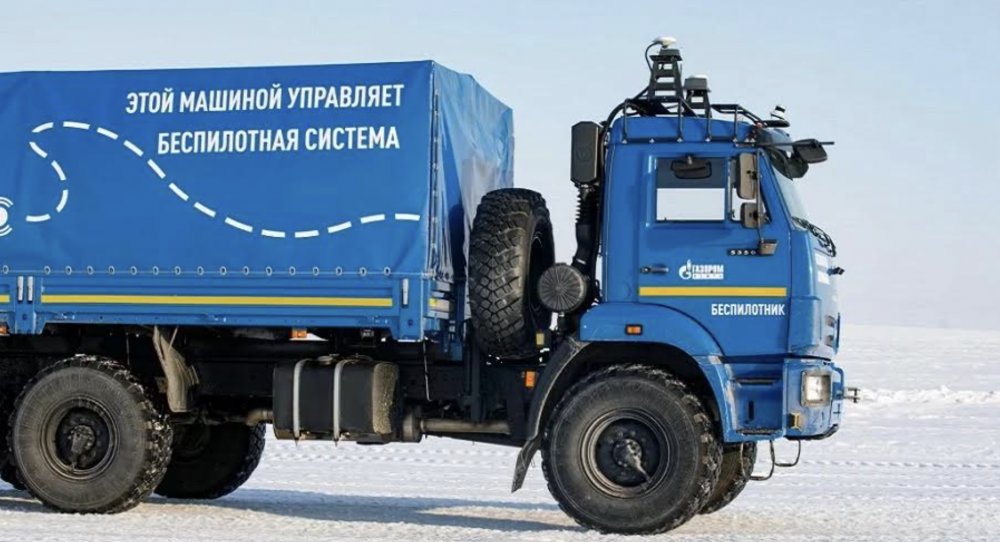
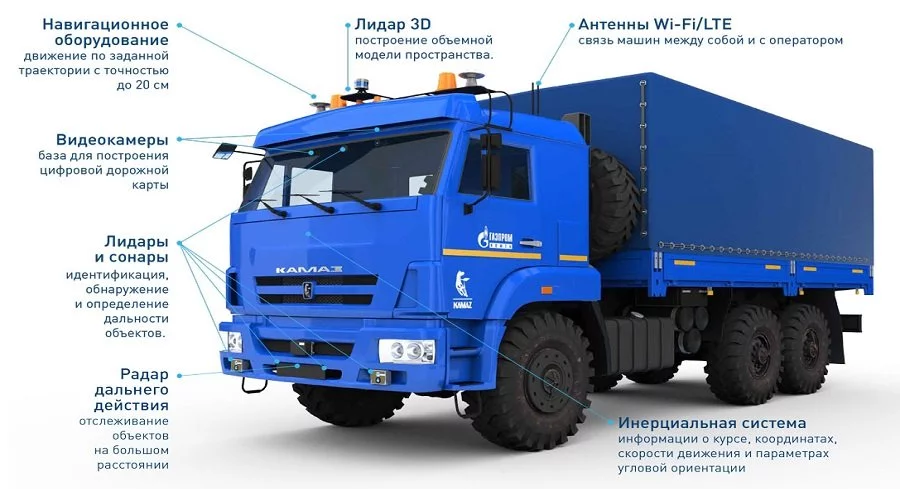
Censors for auto-piloting on the roof. Photo: Gazprom

Russian Gazprom Neft launches driverless trucks in the Arctic

The new technology is supposed to help to avoid truck driver shortages, increase road safety and efficiency, experts say.
May 08, 2023


Russian oil and gas company Gazprom reported it has begun to use self-driving cars to deliver cargos in the Arctic tundra across the 140 km route at Gydan peninsula. 

The route connects the Vostochno-Messoyakhskoye oilfield with the Tazovsky settlement.

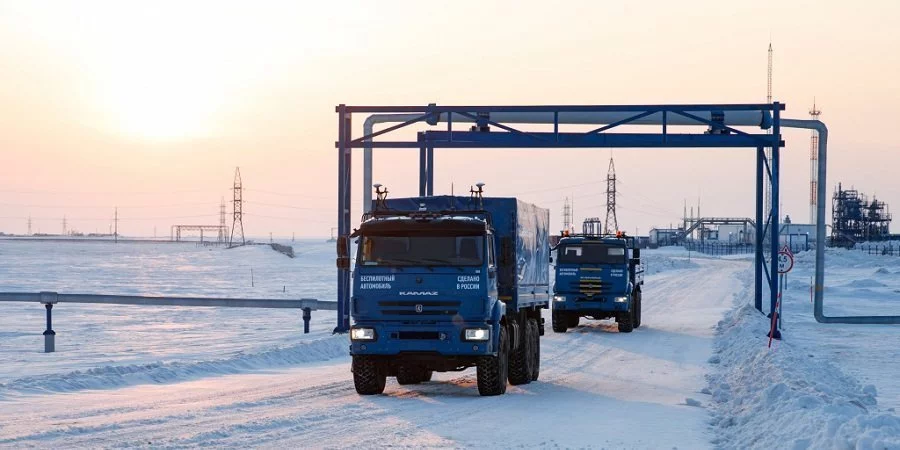
The driverless truck. Photo by: Gazprom 

“The use of driverless vehicles will increase the efficiency of the logistics of the company’s northern fields and increase the volume of supplies of the necessary equipment and materials,” Gazprom Neft reported.

According to Gazprom, the driverless trucks, that are produced by the Russian Kamaz, are equipped with a satellite navigation system and could detect an obstacle within 200 meters on its way. 

The driverless truck. Photo by: Gazprom 


The trucks are also capable of differentiating a moving object from a stable one and create a digital route.

ICYMI

Solving The Biggest Problem With Wind Energy

  • Scientists came up with a process to disassemble the epoxy composite of wind turbine blades.

  • The process can contribute to establishing a potential circular economy in the wind turbine, aerospace, automotive and space industries.

  • Wind turbine blades mostly end up at waste landfills when they are decommissioned, because they are extremely difficult to break down

Danish researchers at Aarhus University have developed a chemical process that can disassemble the epoxy composite of wind turbine blades – and simultaneously extract intact glass fibers as well as one of the epoxy resin’s original building blocks in a high-quality. The recovered materials could potentially be used in the production of new blades.

The research paper has been published in the leading scientific journal Nature, and Aarhus University, together with the Danish Technological Institute, has filed a patent application for the process.

The new chemical process is not limited to wind turbine blades but works on many different so-called fiber-reinforced epoxy composites, including some materials that are reinforced with especially costly carbon fibers.

Thus, the process can contribute to establishing a potential circular economy in the wind turbine, aerospace, automotive and space industries, where these reinforced composites, due to their lightweight and long durability, are used for load-bearing structures.

Wind

After six days of catalysis in the laboratory, a piece of a wind turbine blade was dissolved into intact glass fibers and bisphenol A, which can be used in the production of new blades – in addition to a fraction of various oligomers, which cannot be recycled. The metal piece was cast into the wing as part of the wind turbine’s lightning protection. Image Credit: Alexander Ahrens, Aarhus University. Click the press release link for the largest view.

Being designed to last, the durability of the blades poses an environmental challenge. Wind turbine blades mostly end up at waste landfills when they are decommissioned, because they are extremely difficult to break down.

If no solution is found, we will have accumulated 43 million metric tons of wind turbine blade waste globally by 2050.

The newly discovered process is a proof-of-concept of a recycling strategy that can be applied to the vast majority of both existing wind turbine blades and those presently in production, as well as other epoxy-based materials.

Specifically, the researchers have shown that by using a ruthenium-based catalyst and the solvents isopropanol and toluene, they can separate the epoxy matrix and release one of the epoxy polymer’s original building blocks, bisphenol A (BPA), and fully intact glass fibers in a single process.

However, the method is not immediately scalable yet, as the catalytic system is not efficient enough for industrial implementation – and ruthenium is a rare and expensive metal. Therefore, the scientists from Aarhus University are continuing their work on improving this methodology.

Troels Skrydstrup, a professor at the Department of Chemistry and the Interdisciplinary Nanoscience Center (iNANO) at Aarhus University and one of the lead authors of the study commented, “Nevertheless, we see it as a significant breakthrough for the development of durable technologies that can create a circular economy for epoxy-based materials. This is the first publication of a chemical process that can selectively disassemble an epoxy composite and isolate one of the most important building blocks of the epoxy polymer as well as the glass or carbon fibers without damaging the latter in the process.”

The research is supported by the CETEC project (Circular Economy for Thermosets Epoxy Composites), which is a partnership between Vestas, Olin Corporation, the Danish Technological Institute and Aarhus University.

***

This is interesting news. While not economical by a description not explained, there is a known way now to answer the bedeviling problem of what to do with the blades that aren’t useable.

There’s going to be a catalyst hunt to replace the ruthenium and there might need to be quite an engineering effort. Toluene isn’t something we should allow to simply evaporate into the atmosphere. They’re going to need robotic handlers in a gas-tight facility and very likely a way to reliquify the toluene and other chemicals.

But it can and should be done. A facility is just going to need big treatment tanks and the process will be far more expensive than anyone thought. There are a lot of blades now and its likely a huge number are going to be built.

By Brian Westenhaus via Newenergyandfuel.com