Monday, May 08, 2023

New Barents Sea study points to how global sea level will continue to rise
"It demonstrates the potential enormity of the problems society may face over the coming centuries" 
 UiT scientists on the new data from the Barents Sea.
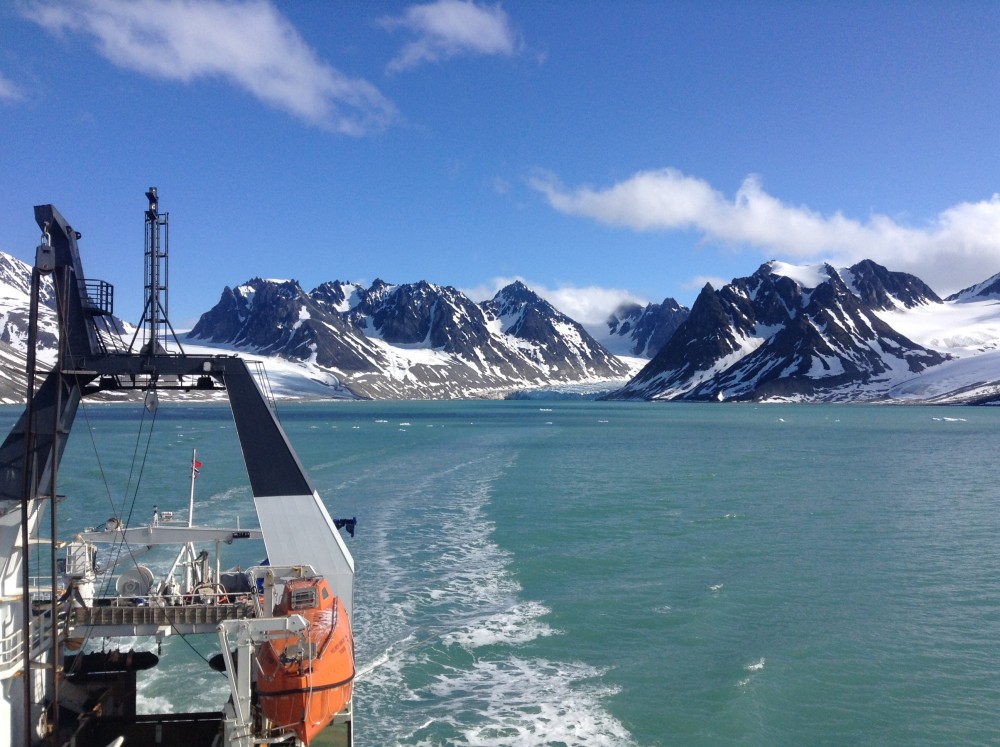
Научно-исследовательское судно «Хелмер Ханссен» у северо-западного побережья Шпицбергена. Фото: Келвин Шеклтон

BARENTS OBSERVER
April 20, 2023

A recently published study from geologists at UiT The Arctic University of Norway has provided new insight into what was happening beneath the Barents Sea ice sheet around 15,000 years ago. The data gathered will help to better understand the processes occurring under present-day climate change.

What was discovered?

According to a global consensus of scientists it is virtually certain that global sea level will continue to rise over the 21st century. For the 900 million people (1 in 10 globally) living in coastal zones around the world now, including in coastal mega-cities, this danger is particularly acute.

“Unravelling the glacial changes that occurred in the marine setting of the Barents Sea during the warming at the end of the last ice age is important as it gives us a unique long-term perspective into how ice sheets in Greenland and Antarctica today could respond in the future.” UiT researcher Dr Henry Patton says to The Barents Observer.

For the first time, this research which has been conducted over the last 5 years, has put some numbers on how fast this former ice sheet in the Barents Sea retreated

“Like the present-day ice sheets, this Barents Sea ice sheet was immense, reaching up to 3 km thick in places, but we are starting to think that the whole system collapsed very quickly, raising global sea level by many metres in just a few centuries,” says Patton.
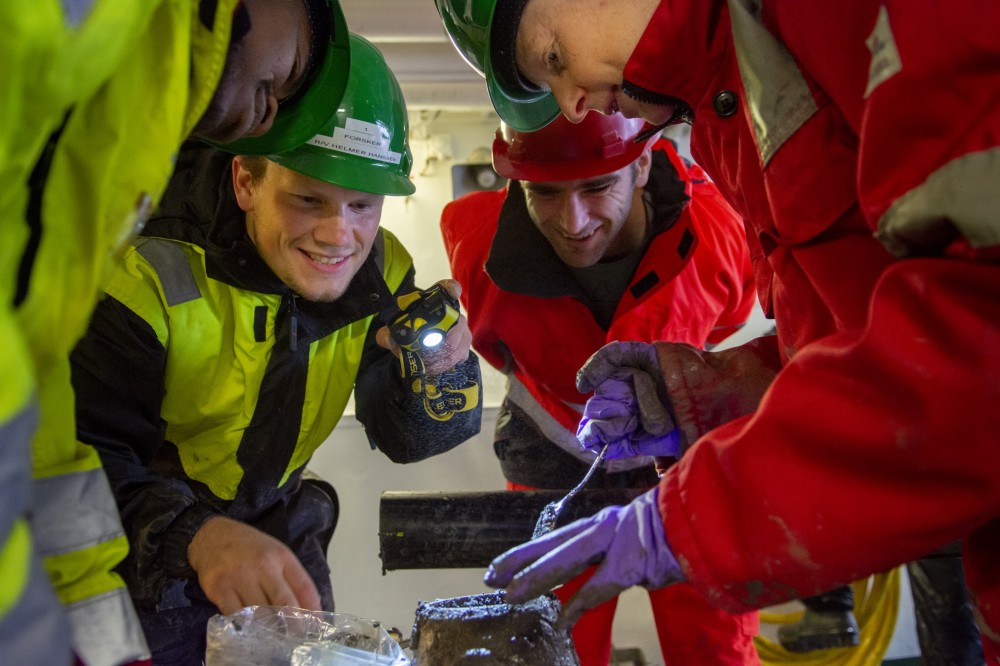
UiT team examining glacial sediments obtained in a core taken from the Barents Sea floor. The sediments are collected within a plastic liner roughly 10 cm wide (shown in the background). By examining the nature of these seafloor sediments more closely we can learn more about the type of environment they were deposited in. 
Photo: Mauro Pau, 2021

Newly discovered seafloor deposits have provided new information on how fast this vast ice sheet was shrinking through the central Barents Sea 15,000 years ago. The data the team found shows the ice sheet was retreating between 580 and 1600 m per year on average, for at least 91 years. At this pace, most of the ice sheet is likely to have disappeared from across the entire Barents Sea within 1000 years, raising global sea level by around 6 m in the process.

This geological data shows that the continuous, fast retreat of ice sheets over many decades, and possibly centuries, is not unprecedented under a rapidly changing climate. Chronological data constraining this ice-sheet collapse has previously been a long-standing knowledge gap.
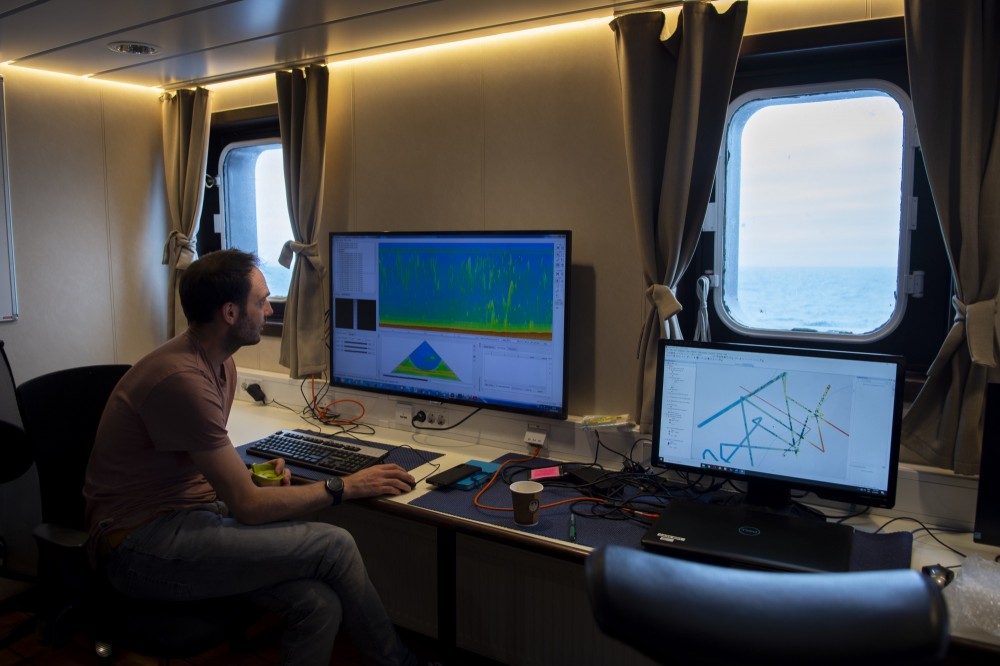
Dr Henry Patton examining newly collected multibeam echosounder data in the instrument room onboard Helmer Hanssen. Photo by Mauro Pau, 2021.

“If our numbers are correct this collapse event would have contributed to an extraordinarily fast pace of sea level rise, - Dr Patton says - and it demonstrates the potential enormity of the problems society may face over the coming centuries if the current ice sheets continue to destabilise”.

Yet, he added, pinning down these future quantities of melt over the coming decades and centuries is not straightforward as the feedbacks that operate between the oceans, climate and ice are highly nonlinear.

How was it done?

To uncover information about the glacial past published in this study, the UiT team has been surveying and mapping the Barents Sea area from research vessels since 2020. Sometimes scientists would stay on the research ship for up to three weeks. The team in their research also incorporated open data collected by the Norwegian Hydrographic Service through the MAREANO programme.
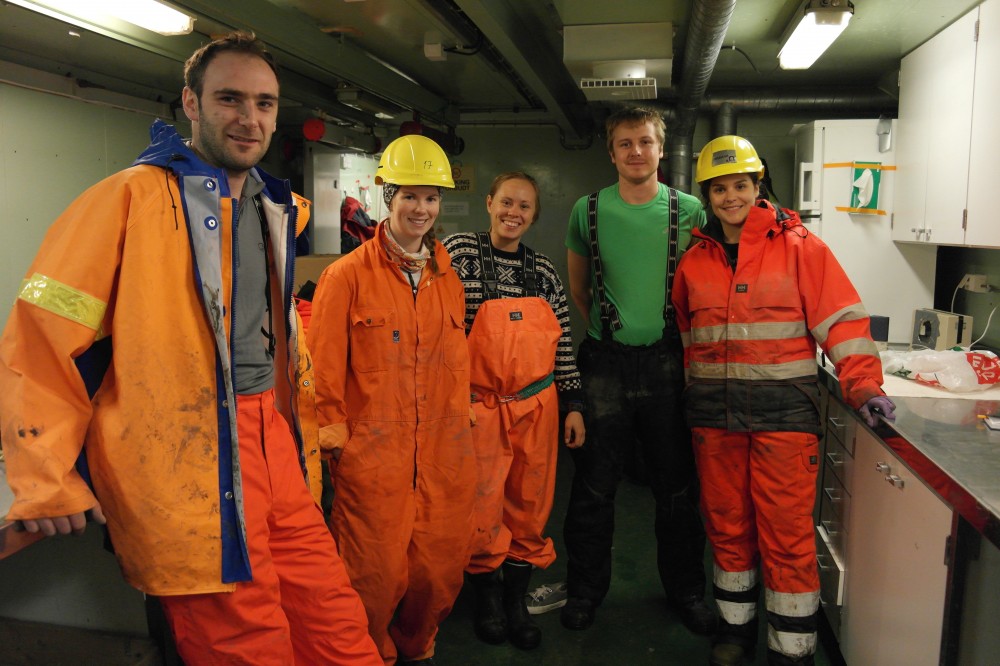


Scientists Calvin Shackleton and Henry Patton with other team members in the ‘wet lab’ onboard Helmer Hanssen in 2015, waiting for a sediment core to be retrieved 300 metres below from the Barents Sea floor. When the team works on the ship deck it’s important for them to wear clothes that are visible and warm.

By piecing together these high-resolution snapshots surveyed from the Barents Sea floor - like in a jigsaw puzzle - a clearer picture of the glacial history of this region can emerge. The mapping included in this UiT study comes from a very remote region in the central Barents Sea, near the Norwegian - Russian border. Scientists believe this region hosted some of the last remnants of the last ice sheet before it finally melted away.Here you can use a map demonstrating an interactive reconstruction of the Eurasian ice sheet during the last ice age

Such observational data are vital for guiding numerical simulations that try to reconstruct the behaviour of the old ice sheets. Lead researcher of the study, Dr Calvin Shackleton from the Norwegian Polar Institute in Tromsø, points out that satellite data, which has been used to monitor the present-day ice sheets over the last 40 years, are unable to observe the processes happening underneath the ice sheet. This makes the geological data left behind by these older ice sheets like in the Barents Sea such a valuable archive to investigate.

“The detection of traces of water at the interface between the ice sheet and seafloor is of importance as the water acts as a lubrication, allowing the ice above to flow faster and thus more quickly transfer its mass to the more climate-sensitive regions at lower elevations.”
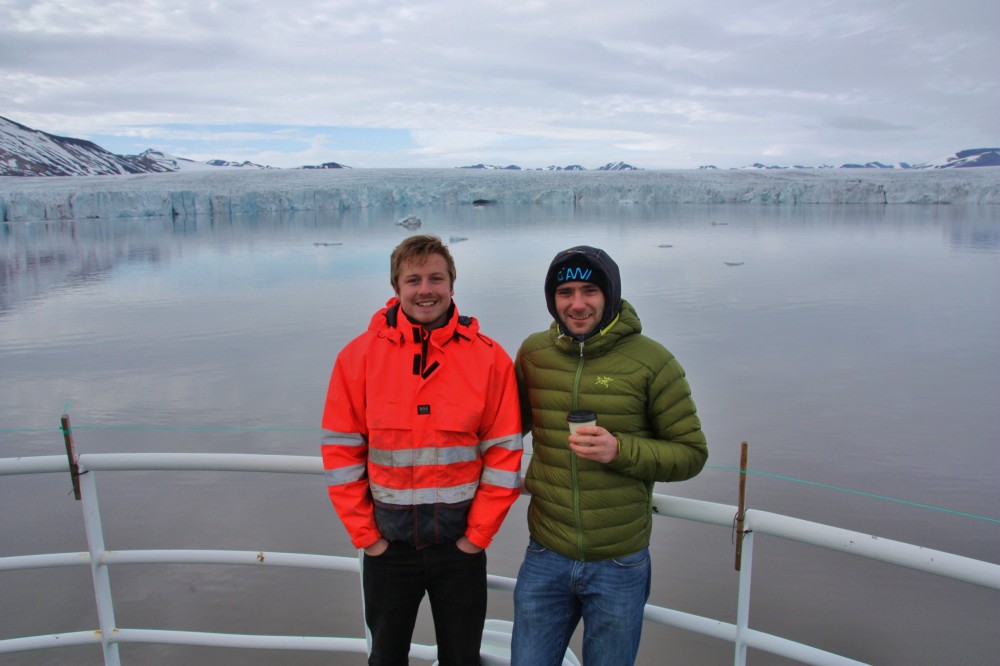
From left to right: scientists Calvin Shackleton and Henry Patton onboard Helmer Hanssen with a glacial fjord in Svalbard in the background.
 Photo by Mariana Esteves
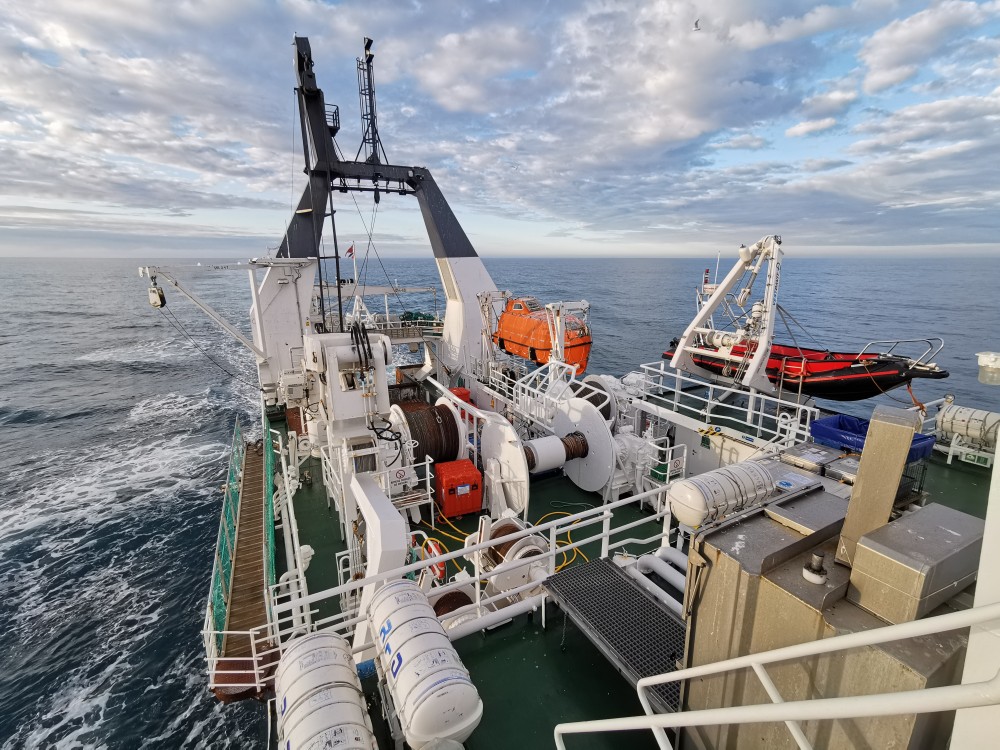
Research ship Helmer Hanssen acquiring data in the Barents Sea in 2020. 
Photo by Henry Patton.

Why is this important?

Continued sea level rise is one of the most concerning processes occurring around the planet now. There have been multiple statements at the highest political levels about an existential threat not only for big cities from London to Shanghai, but also for many small island nations.

Earlier this year the UN Secretary-General António Guterres pointed out in a statement: “For the hundreds of millions of people living in small island developing States and other low-lying coastal areas around the world, sea-level rise is a torrent of trouble….The impact of rising seas is already creating new sources of instability and conflict” he said.

According to Dr Patton, quantifying this sea level rise and being able to adapt to its impacts are key aspects driving the need to better understand the science behind present-day climate change. Specifically, as he says, it’s now visible from how water carved the seafloor and deposited sediments that meltwater was abundant beneath the Barents Sea ice sheet, and thus able to regulate how the ice above flowed as it collapsed. Some of this water, researchers think, was fed from the ice-sheet surface, showing that this Arctic ice sheet was increasingly susceptible to melting as temperatures in the atmosphere rose.
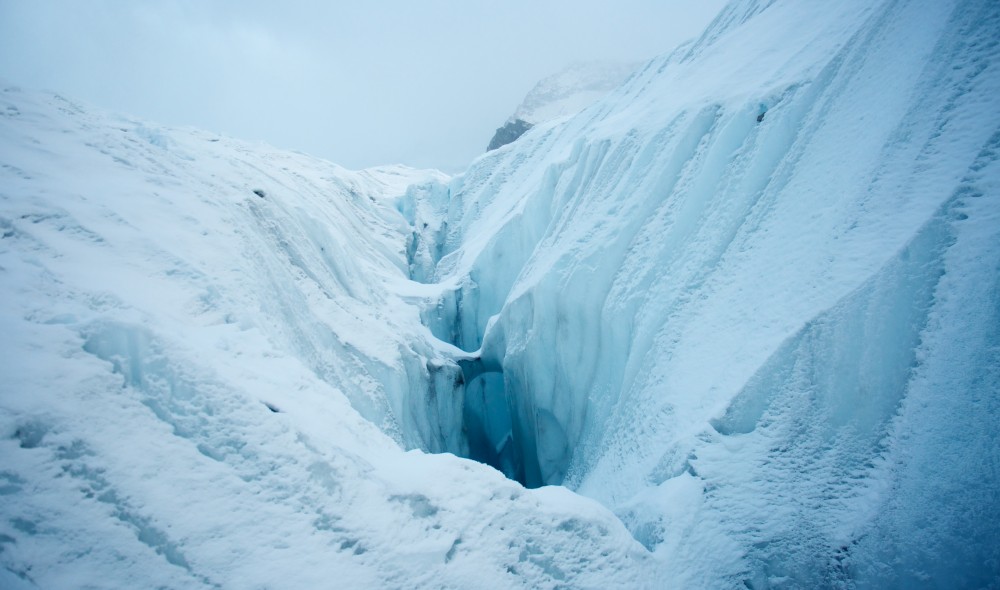
A contemporary glacier in the Swiss Alps. Photo by Henry Patton.

Another recent study has similarly mapped glacial landforms in the Norwegian Sea, showing how fast the last ice sheet over Scandinavia retreated back into Norway at around the same time the Barents Sea ice sheet was also collapsing. The rates they found are exceptionally higher, at 55 to 610 m per day (in comparison to the 580 to 1600 m per year from UiT), and faster than anything ever observed today or in the last ice age. These very fast rates, however, were likely only ever sustained over a period of days to months.

Nevertheless, both studies highlight the profound speed by which ice sheets can quickly destabilise and lose mass, and provide a strong warning on the importance of better understanding the nature of contemporary climate change and its impact on society. People need to know what dangers to face in the future. But, as scientists say, the research is still ongoing:

“The Barents Sea is a very large place and the mapping of this glacial imprint left behind on the Barents Sea floor is still far from complete”, says Dr Patton.
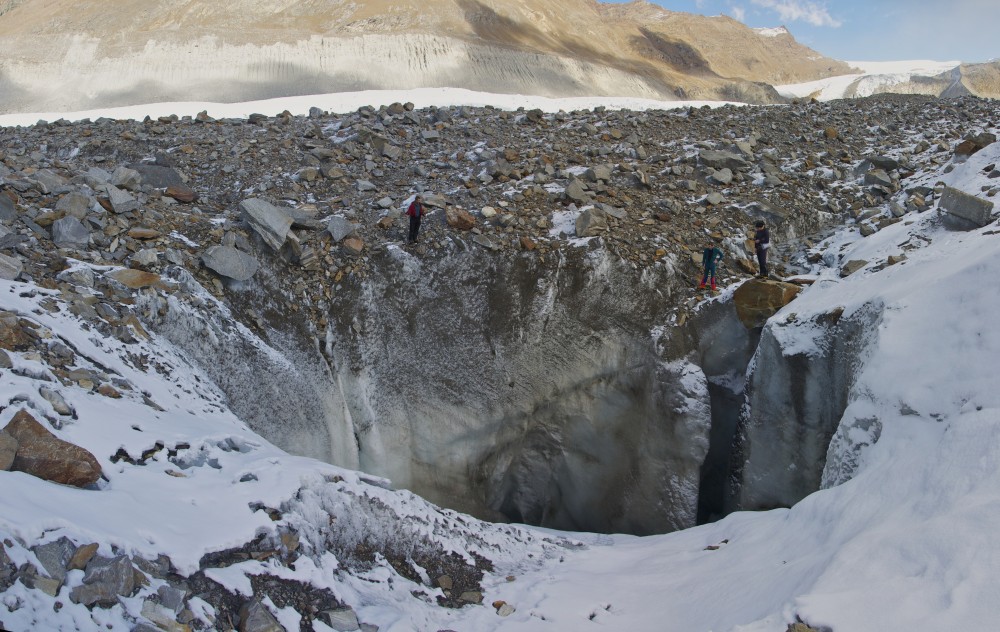

The massive hole in the ice in today’s Switzerland, Gornergletscher in the Alps - that’s the way how water that melts on the surface can be transported underneath the ice to lubricate it, same as it happened in the past. 
Photo by Henry Patton
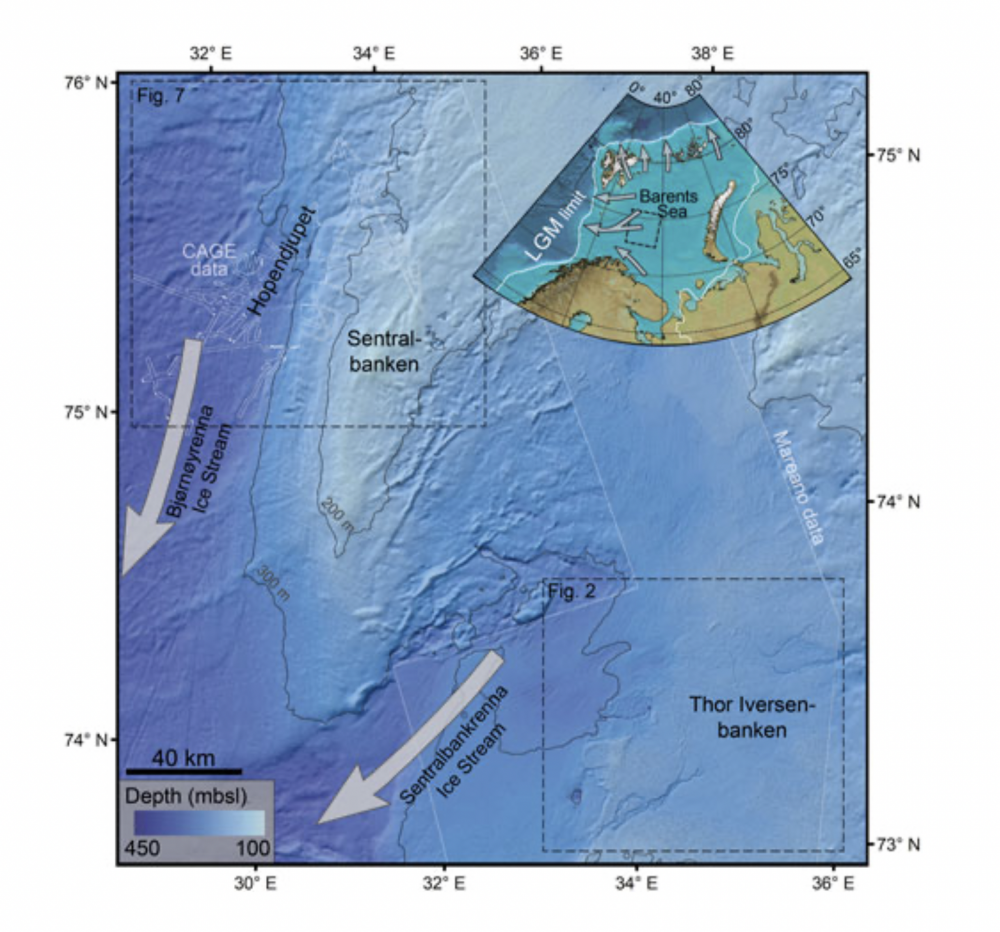
The geographical area of the conducted research on the border between Norway and Russia.
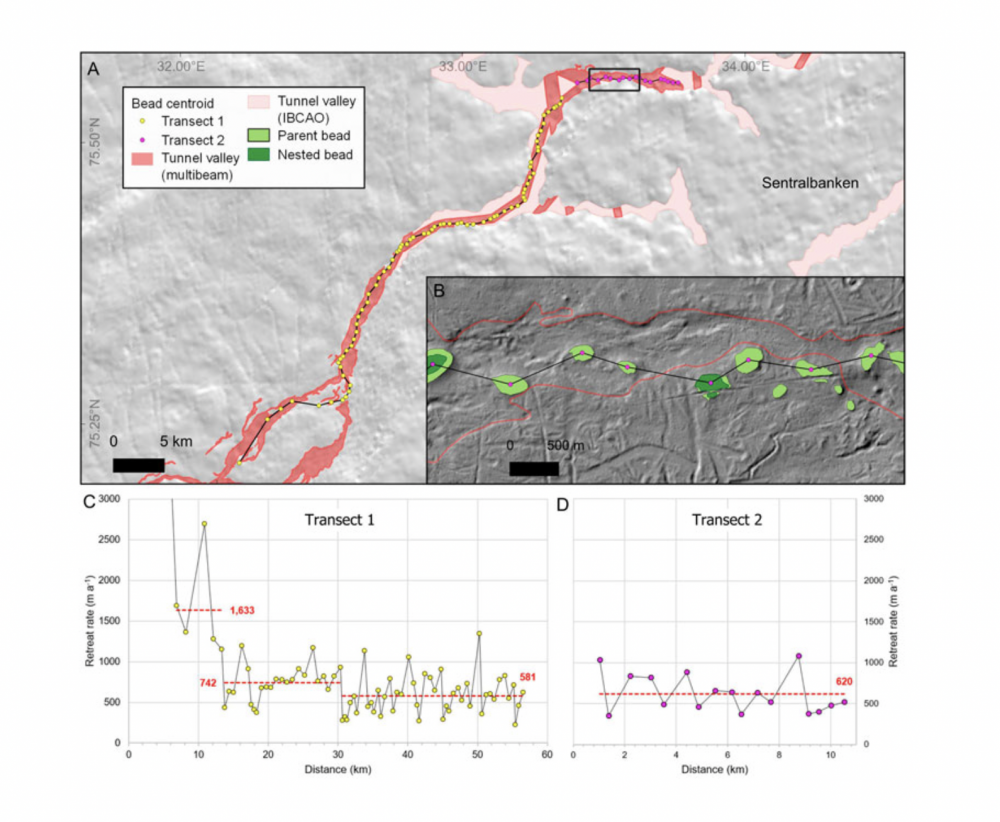
The red line outlines a channel where water used to flow beneath the ice sheets. The green areas are sediment piles deposited by this water, and give indication of how fast the ice margin retreated.

 

Norway outlines major wind power development in Arctic waters

A government appointed expert group draws up 20 offshore areas suitable for wind power development. Four of them are in the Barents Sea, and one is located along the maritime border to Russia.

April 27, 2023


Norwegian authorities are increasingly under pressure to build new capacities for production of renewable power. In March this year, two areas in the North Sea were presented as sites for wind farms. Now, another 18 acreages are identified.

According to the expert group headed by the country’s Water Resources and Energy Directorate (NVE), there are suitable areas for wind power farms all along the Norwegian coast, from the southernmost waters in the North Sea to the far northern parts of the Barents Sea.

Among the four areas in the Barents Sea is the block Nordavind A (“North Wind A”) located at 71° North and covering an area of about 2,500 square km. It is situated about 50 km north of the mainland and was part of the waters delineated Norway and Russia in the 2010 land mark border deal.

The Norwegian oil industry long saw this as a highly prospective area, but exploration drilling gave no major discoveries, and the companies subsequently decided to abandon the area.

According to Norway’s Petroleum Directorate, it is important that new offshore wind farms are not built in areas of major relevance for the oil industry.

“For us, it is crucial that potential values from petroleum and CO2 [storage] are not lost as a consequence of wind power development,” says Kjersti Dahle from the Directorate.

“Some of the proposed areas appear challenging with regard the petroleum,” she admits.

Norwegian authorities intend to build as much as 30 GW of new capacity, which will mean almost a doubling of the country’s existing electricity generation.

All proposed wind power blocks are now to be subject to further studies before decisions on opening and development are taken. Tenders are unlikely to be held before 2025, the expert group informs.

On the same day as the authorities announced the new blocks, oil company Vår Energi informed that it had entered into cooperation with wind power developers Odfjell Oceanwind and Source Galileo about a pilot project on floating offshore wind at its Goliat oil field. Currently, the oil production installations are powered by electricity from the mainland.

The project is named GoliatVind and aims at using the 75 MW power cable to help increase the level of renewable power production in the Finnmark region, the company informs.


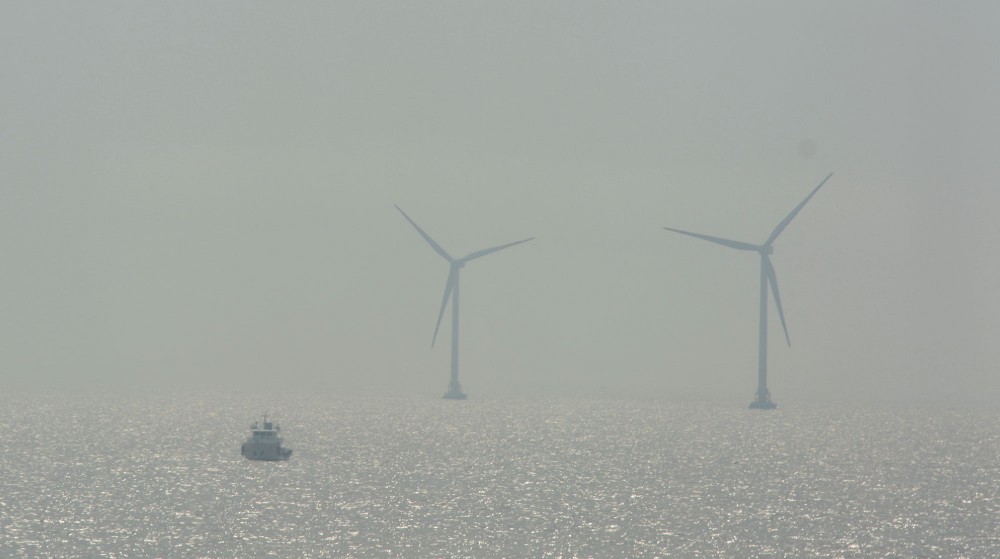
Offshore wind power in the horizon. Photo: Atle Staalesen

IAEA assesses regulatory preparedness for Fukushima water release

05 May 2023


An International Atomic Energy Agency (IAEA) task force reviewing the safety of Japan's plan to discharge treated water from the damaged Fukushima Daiichi nuclear power plant into the sea has released its fifth report. The report is focused on Japan's domestic regulatory review of the water release.

Water storage tanks at the Fukushima Daiichi plant site (Image: Tepco)

It covers the observations of the task force mission to Tokyo from 16 to 20 January 2023 to assess Japan's Nuclear Regulation Authority (NRA) activities related to the planned discharge.

At the Fukushima Daiichi site, contaminated water - in part used to cool melted nuclear fuel - is treated by the ALPS system, which removes most of the radioactive contamination, with the exception of tritium. This treated water is currently stored in about 1000 tanks on site. The total tank storage capacity amounts to about 1.37 million cubic metres and all the tanks are expected to reach full capacity in late 2023 or early 2024.

Japan announced in April 2021 it planned to discharge treated water stored at the Fukushima Daiichi plant into the sea over a period of about 30 years, and asked the IAEA to review its plans against IAEA safety standards.

In its latest report, the task force noted a number of key outcomes from the latest mission, including that the NRA agreed to require Tokyo Electric Power Company (Tepco) to review optimisation of protection for the discharge of ALPS treated water based on operational experience and associated monitoring following the start of the discharges. The NRA further agreed to establish a framework for revisiting discharge limits, operating limits, and conditions to reflect the optimisation of protection, "in a similar manner, if needed".

The task force also acknowledged that the NRA has conducted a review to determine that sufficient evidence exists that the source term contains all the radiologically significant radionuclides and that it does not exclude, in the assessment, any radionuclides that could be significant contributors to the dose to the public or to flora and fauna.

It found that the NRA's approach to enforce controls on the occupational exposure of Tepco employees is sufficient for compliance with international safety standards.

The task force also acknowledged that the NRA has focused on involving the public in the regulatory review process. The task force will continue to review how public consultations and the involvement of interested parties are handled by the NRA as the regulatory process continues.

"The task force has seen that the NRA serves as the independent regulatory body within Japan and holds the responsibility for assessing the safety of the proposed discharge of ALPS treated water," said Gustavo Caruso, director of the IAEA's Department of Nuclear Safety and Security, and chair of the task force. "However, we will continue to review how the NRA conducts its regulatory process leading up to, and after, the proposed discharges of treated water".

The task force's safety review continues. The IAEA said one more report will be issued on independent sampling and analysis aspects, before the final comprehensive report detailing the collected findings and conclusions of the task force is issued.

Japan intends to start discharging the ALPS-treated water in 2023, pending Tepco's completion of necessary domestic regulatory actions.

Researched and written by World Nuclear News

NUKE NEWZ

Fuelling to begin as first refurbished Bruce unit prepares for restart

08 May 2023


Bruce Power has reached the major milestone of "substantial completion" of the construction phase of Major Component Replacement portion of refurbishment of Bruce unit 6 and will now begin refuelling work as the focus moves on to returning the plant to service later this year.

Bruce 6's turbines should be spinning again by the end of the year (Image: Bruce Power)

Unit 6 is the first of six Candu reactors at the site in Ontario to undergo refurbishment in a privately funded investment that will extend the life of the site through 2064. The unit was taken offline for the refurbishment in January 2020 - just as the COVID-19 pandemic was beginning. The impacts and uncertainty of the pandemic presented a "major hurdle" to Bruce Power and its construction partners, the company said, but the substantial completion of the construction phase has been completed on time and on budget.

The construction phase of the unit 6 MCR, completed with execution partner Shoreline Power Group as well as tradespeople from the Ontario Building Trades, included the removal and replacement of 960 fee­der tubes, 480 fuel channels, and 480 calandria tubes. Steam generator work was completed earlier this year by SGRT, a joint venture of Aecon and Framatome and United Engineers & Constructors partnership SGT.

Refuelling the unit with 5760 fuel bundles will begin this month, and other lead-out activities and regulatory inspections will now be completed with the goal of grid reconnection in the fourth quarter of this year.

The MCR of a second Bruce reactor formally began in March, when unit 3 was removed from service for defuelling and other preparatory works prior to the start of construction activity, which will begin with major component disassembly later this quarter. Each successive outage over the next decade will build on the successes and innovations of the Unit 6 MCR, the company said.

"The unit 6 MCR outage wasn't without its challenges for Bruce Power and our construction and supply chain partners," Bruce Power President and CEO Mike Rencheck said. "I am proud of how we all worked together, especially during the COVID-19 pandemic, to finish construction building activities, and set ourselves up for success in our subsequent MCRs. We learned a lot, and new innovations will be implemented on future MCRs making them faster and less expensive."

The refurbishment of Bruce units 3-8 is scheduled to be fully completed by 2033 (units 1 and 2 at the site have already been refurbished). The MCR project and Bruce Power's Life-Extension Program will extend the operational life of each reactor by 30 to 35 years, helping to mitigate predicted increases in greenhouse gas emissions from the electricity grid, the company said. The work is also being coordinated with the Project 2030 programme, which aims to leverage innovation and new efficient technology to increase site capacity to over 7000 MWe of net peak output in the early 2030s, once all units have completed their MCRs.

The work is expected to generate billions of dollars of economic benefits throughout the province of Ontario as well as directly and indirectly supporting 22,000 jobs per year.

"Nuclear energy is crucial to powering our growing province and thriving economy and the completion of construction on Bruce Power's Unit 6 Major Component Replacement Project is a critical step as we ensure the province can meet the demand for clean, low-cost electricity," said Ontario Minster of Energy Todd Smith.

Researched and written by World Nuclear News

India Weighs Lifting Ban  On Foreign Investment In Nuclear Power

In a bid to boost clean energy generation, India is weighing lifting a ban on foreign investment in its nuclear energy industry, Reuters reported on Friday, quoting government sources.

India has an Atomic Energy Act in place since 1962, under which the government develops, builds, and runs nuclear power stations. Indian private companies are allowed to take part in nuclear energy development as “junior partners” to government entities.

“The 1962 Atomic Energy Act prohibits private control of nuclear power generation, and 2016 amendments allowing public sector joint ventures do not extend to private sector companies, nor allow direct foreign investment in nuclear power, apart from the supply chain,” the World Nuclear Association says.

Now a panel set up by the government is recommending overturning the ban on foreign investment and giving a greater role to local private companies, according to Reuters’ sources. 

Nuclear power generation currently accounts for around 3% of India’s generation mix, which is dominated by coal at 72%, according to the World Nuclear Association.  

Last month, Jitendra Singh, Minister of State for Science and Technology, said that India would have 9% of its electricity coming from nuclear power generation by 2047, with nuclear generation capacity set to triple by 2031.

India’s Department of Atomic Energy aims to have 20 gigawatts (GW) of nuclear power capacity by 2030, which would make the country the world’s third-largest producer of electricity from nuclear energy after the United States and France, Indian media quoted the minister as saying.  

Boosting nuclear power capacity and generation could help India reach a 2070 net-zero target, the minister added.

Yet, India will see its power generation from coal increase in the coming year as authorities plan to have coal-fired units maximize electricity production from imported coal to meet rising demand. India’s coal minister said at the end of 2022 that the country has no intention of ditching coal from its energy mix any time soon. Addressing a parliamentary committee, Coal Minister Pralhad Joshi said that coal would continue to play an important role in India until at least 2040, referring to the fuel as an affordable energy source for which demand has yet to peak in India.    

By Charles Kennedy for Oilprice.com


Support For Nuclear Energy In The U.S. Is At A 10-Year High

  • A new Gallup poll shows that support for nuclear energy in the United States is at a 10-year high, with support from both Democrats and Republicans increasing.

  • The growing support in the U.S. is part of a broader global trend as energy security becomes increasingly important, it also tracks the historical correlation between oil prices and support for nuclear energy.

  • The United States may be the world’s largest nuclear energy producer, but its nuclear industry has been in decline and public support will be critical if it is to recover.

A brand new Gallup poll shows that support for nuclear energy in the United States is at a 10-year high. This finding is in keeping with what is proving to be a global groundswell in support of the oft-maligned, always contentious form of energy production. As pressure ramps up globally for the rapid expansion of reliable and low-emissions energy, the myriad benefits of nuclear power are becoming less and less overshadowed by its obvious and sometimes terrifying drawbacks. 

For several generations now, nuclear disasters such as Fukushima, Three Mile Island, and Chernobyl have dominated the conception of nuclear power in the public consciousness. As a result, few people have historically been in support of developing a new nuclear power project in their backyard, or even their country. But those hesitations are starting to recede as the benefits of a proven, zero-emissions energy technology start to tip the scales. Plus, we now have access to an increasingly big evidence base showing that nuclear meltdowns are actually extremely rare. In fact, it has been calculated that on the whole nuclear energy actually saves lives by preventing millions of deaths that would otherwise be caused by air pollution from burning fossil fuels. 

According to Gallup, however, the real reason that support for nuclear energy has waxed and waned in the United States is directly tied to oil prices. “Throughout the course of Gallup’s trend,” the report states, “Americans have generally been more amenable to the use of nuclear energy as one of the ways to provide electricity for the U.S. when oil prices have been high and less open to it when oil prices are low.” 

Nuclear


Nuclear

Interestingly, the higher level of support for nuclear energy amongst Republicans comes at a time when the ruling Democratic party is also pushing a nuclear energy agenda, an unusual source of common ground that could bode well for bi-partisan support of nuclear energy development. At present, the United States still holds the distinction of being the world’s single biggest producer of nuclear energy. However, the industry has been in decline for decades, and the country’s nuclear fleet is getting concerningly long in the tooth. If the United States wants to reclaim its status as a leader in new nuclear energy development, it has a lot of work to do. 

The tie-in between oil prices and support for nuclear energy means that public opinion will likely continue to fluctuate over the next decade. However, other factors influencing support for nuclear energy seem to be on a direct upward trend. The private sector, and especially Silicon Valley is throwing its full weight behind the endorsement of increasing the amount of nuclear power in the U.S. energy mix. Incentives from the Biden administration’s Inflation Reduction Act will also influence investments now that will have impacts on the industry for years to come. The Act provides a production tax credit for existing reactors, incentivizes advanced nuclear deployment, and provides funding for advanced assaying of low-enriched uranium to help build up domestic supply chains for the essential nuclear fission fuel source. 

By Haley Zaremba for Oilprice.com

Doosan starts forging components for NuScale SMR

05 May 2023


South Korea's Doosan Enerbility has begun the forging production process for the first module that will be deployed as part of a NuScale VOYGR-6 small modular reactor (SMR) power plant for the Carbon Free Power Project (CFPP) in the USA.

Forging of parts for the NuScale SMR under way at a Doosan facility (Image: NuScale)

Announcing the milestone on social media, NuScale Power said: "The first pours of molten steel represent a significant breakthrough into the manufacturing phase for NuScale, Doosan and the SMR industry".

NuScale placed its first upper reactor pressure vessel (RPV) long-lead material production order with Doosan Enerbility at the end of 2022.

Doosan Enerbility - under its former name of Doosan Heavy Industries & Construction - in 2019 signed a business collaboration agreement with NuScale for the supply of NuScale Power Modules and other equipment. Together with Korean financial investors, the company has made an equity investment of nearly USD104 million in NuScale Power.

In preparation for the long-lead materials order, the two companies initiated an effort in April 2022 to complete the manufacturing for the forging dies for the upper RPV. The order placed in December builds on this, and includes heavy forgings, steam generator tubes, and weld material for six upper RPVs. The total estimated weight of the materials for six upper RPVs is more than 2000 tonnes, NuScale said.

The CFPP is to be built at the US Department of Energy's Idaho National Laboratory site near Idaho Falls and will use six of NuScale's 77 MWe power modules to generate 462 MWe of electricity. The plant could begin operations as soon as 2029, and Utah Associated Municipal Power Systems, a political subdivision of the state of Utah, is working to submit an application for a construction and operation licence to the US Nuclear Regulatory Commission in January 2024.

Researched and written by World Nuclear News

INB signs contracts relating to fuel supplies at NT2E

05 May 2023


Indústrias Nucleares do Brasil (INB) signed four contracts and two agreements covering various aspects of nuclear fuel supplies with Westinghouse, The Institute of Energy and Nuclear Research and Rosatom.

NT2E runs for three days in Rio de Janeiro (Image: INB)

The signings took place at the Nuclear Trade and Technology Exchange business and technology fair (NT2E), promoted by the Brazilian Association for the Development of Nuclear Activities.

The three contracts signed with US firm Westinghouse cover the supply of metallic components and gadolinium rods for Angra 1 reloads and to develop a project for the "protective grid" component of the fuel element, as well as INB supplying specialised staff to move fuel in the USA.

The agreements with the institute are for a partnership in research and development of studies and technologies relating to the production of the fuel element.

The contract signed with Rosatom subsidiary Tenex is for the acquisition of natural uranium hexafluoride (UF6). It follows a tender won last year for the supply of 330 metric tonnes of UF6 to Brazil.

Rosatom Deputy Director General Kirill Komarov said: "Last year, we won an international tender and signed a contract to provide uranium enrichment services. Another contract on naturally-occurring uranium supplies was signed today in Rio de Janeiro. We continue to develop cooperation with INB."

NT2E, which ends on Friday, is described as the largest business and technology event fin Brazil for the national and international nuclear sector.

Researched and written by World Nuclear News

Orano signs partnership agreement with government of Niger

05 May 2023


The general agreement covers the Imouraren project, the continued operation of the Somaïr mine, the remediation of the Cominak mine, and Orano's social commitment in Niger.

The agreement was signed in Naimey by Maes and Yacouba (pictured) and Niger's Minister of Finance Ahmat Jidoud (Image: Orano)

The agreement reflects the parties' efforts to reinforce a strong, sustainable relationship, and combines Niger's desire to maximise the economic and financial outcomes of its operating mines, preserve Somaïr's economic sustainability, and limit the socio-economic impact of the closure of Cominak in 2021, Orano said.

The agreement confirms that Orano "will pursue the search for future options" for mining the Imouraren deposit, for which a roadmap has been drawn up with an investment budget of EUR85 million (USD94 million) to demonstrate the technical, environmental, and economic applicability of using in-situ leach (ISL) methods, in which uranium is recovered from an ore body by dissolving it and pumping it to the surface. "This method would enable improving the project’s economic balance, making it less risky for all actors while reducing its environmental footprint very significantly, Orano said.

The Imouraren SA joint venture has already announced plans to begin a pilot programme to investigate using ISL at the project in Niger next year, with a view to making an investment decision in 2028 if feasibility is confirmed. However, according to Africanews, Minister of Mines Ousseini Hadizatou Yacouba said the partners were looking roughly at "a horizon of 10 years" before the start of mining.

The agreement also means that Somaïr, which has been in operation since 1971, will be able to continue operating until 2040, 11 years beyond its currently expected closure, Ousseini said.

As part of the agreement, Orano has committed to invest EUR40 million in social projects, to be implemented by 2030. These will focus on three areas: improving skills; education opportunities for girls; and economic development in the area of energy.

Orano CEO Nicolas Maes said the agreement "confirms the major role of Niger in the global uranium industry" and "renews and sets out future directions" for Orano's industrial and social commitment in Niger. "It is also a testament to our responsible approach, both in the quality of the work to rehabilitate the Cominak site and in the ambitious plan for the Imouraren deposit," he said.

Somaïr (Société des Mines de l’Aïr) is 63.4% owned by Orano and 36.66% owned by the State of Niger through Sopamin (Société du Patrimoine des Mines du Niger). The open-pit mine near Arlit has a production capacity of 2000-2500 tU per year. It produced 1996 tU in 2021. Cominak (Compagnie Minière d’Akouta), 59% owned by Orano, 31% by Sopamin (Niger) and 10% by Spanish company Enusa, produced more than 75,000 tU during 47 years of mining. Production ceased in March 2021 following depletion of the mine's resources, and is now undergoing remediation.

Imouraren SA is 66.65% owned by Orano and 33.35% by Sopamin and the State of Niger. Orano was awarded an operating permit to mine the deposit in 2009, but development of the project was suspended in 2015 pending more favourable market conditions.

Researched and written by World Nuclear News

Preparatory construction begins for Pallas research reactor

05 May 2023


Work has begun to build the foundations for the Pallas research reactor in Petten, the Netherlands, which will replace the existing High Flux Reactor (HFR). However, the Dutch government has yet to make a final decision on constructing the reactor.

Work starts on the foundation for the Pallas reactor (Image: Pallas)

The Foundation Preparation Pallas-reactor applied in June 2022 to the Authority for Nuclear Safety and Radiation Protection (ANVS) for a permit to construct and operate the Pallas reactor. ANV granted a construction licence in mid-February this year.

To create the construction pit, a hole of about 50 metres by 50 metres and 21 metres deep will be dug in several phases. To do this, 1.5-metre-wide trenches are being dug into which concrete is then poured to create the so-called "diaphragm walls". The diaphragm walls are anchored with 380 bored piles placed within them, after which the soil is excavated and concrete is poured to keep the empty tank in place and later to form part of the foundation for the reactor.

This work is being carried out by Belgian construction firm BESIX, which was awarded a contract in November 2022.

The Foundation Preparation Pallas-reactor has now announced that the first concrete has been poured in the creation of the diaphragm walls.

"We are taking another major step towards building the new Pallas reactor," said Programme Director Peter Dijk. "Now that all the necessary permits are in force, we can continue with the realisation of the cofferdam in which the Pallas reactor will be built".

The work is expected to be completed by the end of 2024 and the cofferdam will be ready for the next phase, the actual construction of the reactor.

Although funding has been allocated in the coming years for the construction of the reactor, the Dutch government has yet to make a final decision on its construction.

Minister of Health, Welfare and Sport Ernst Kuipers has instructed the Pallas foundation not to take any irreversible steps, but to continue with the preparations for the project in the meantime to avoid unnecessary delays.

"This means that preparations for the realisation of the construction pit will continue pending a final financing decision from the Dutch government and approval for state aid from the European Commission," the Foundation Preparation Pallas-reactor noted.

Researched and written by World Nuclear New