Friday, July 28, 2023

Dangerous fungus is becoming more prevalent. Scientists believe climate change could be to blame


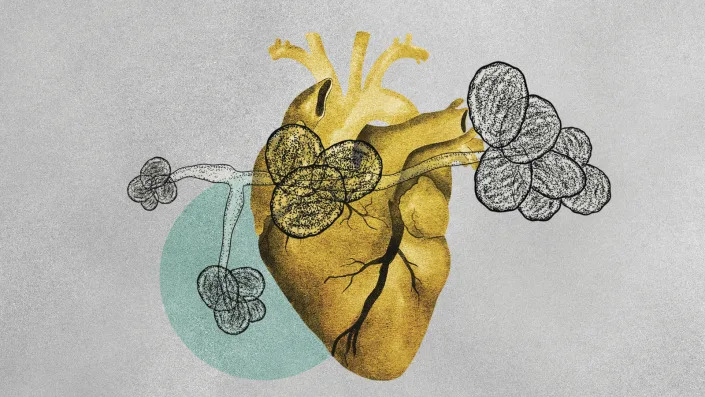
Illustration about the rise of a dangerous fungus called Candida auris.
(Illustration/Amelia Bates, Grist via AP) 

CAMILLE FASSETT
Thu, July 27, 2023 

SEATTLE (AP) — In 2016, hospitals in New York state identified a rare and dangerous fungal infection never before found in the United States. Research laboratories quickly mobilized to review historical specimens and found the fungus had been present in the country since at least 2013.

In the years since, New York City has emerged as ground zero for Candida auris infections. And until 2021, the state recorded the most confirmed cases in the country year after year, even as the illness has spread to other places, according to Centers for Disease Control and Prevention (CDC) data analyzed by The Associated Press.

Candida auris is a globally emerging public health threat that can cause severe illness, including bloodstream, wound and respiratory infections. Its mortality rate has been estimated at 30% to 60%, and it's a particular risk in healthcare settings for people already with serious medical problems.

Last year, the most cases were found in Nevada and California, but the fungus was identified clinically in patients in 29 states. New York state remains a major hotspot.

A prominent theory for the sudden explosion of Candida auris, which was not found in humans anywhere until 2009, is climate change.

___

EDITOR’S NOTE: This story is part of a collaboration between The Associated Press and Grist exploring the intersection of climate change and infectious diseases.

___

Humans and other mammals have warmer body temperatures than most fungal pathogens can tolerate, so have historically been protected from most infections. However, rising temperatures can allow fungi to develop tolerance to warmer environments, and over time humans may lose resistance. Some researchers think this is what is already happening with Candida auris.

The pathogen emerged spontaneously 14 years ago on three continents, in Venezuela, India, and South Africa. Fungal disease expert Arturo Casadevall, a microbiologist, immunologist and professor at Johns Hopkins University, said this was puzzling, because the climates in these places are quite different.

“We have tremendous protection against environmental fungi because of our temperature. However, if the world is getting warmer and the fungi begin to adapt to higher temperatures as well, some ... are going to reach what I call the temperature barrier,” Casadevall said, referring to the way mammals’ warm body temperatures historically protected them.

When Candida auris was first spreading, said Meghan Marie Lyman, a CDC medical epidemiologist for the mycotic diseases branch, the cases were linked to people who had traveled to the U.S. from other places. Now, most cases are acquired locally — generally spreading among patients in healthcare settings.

In the U.S., there were 2,377 confirmed clinical cases diagnosed last year — an increase of over 1,200% since 2017. But Candida auris is becoming a global problem. In Europe, a survey last year found case numbers nearly doubled from 2020 to 2021.

“The number of cases has increased, but also the geographic distribution has increased,” Lyman said. She noted that while screenings and surveillance have improved, the skyrocketing case numbers do reflect a true increase.

In March, a CDC press release noted the seriousness of the problem, citing the pathogen's resistance to traditional antifungal treatments and the alarming rate of its spread. Public health agencies are focused primarily on strategies to urgently mitigate transmission in healthcare settings.

“It’s kind of an active fire they’re trying to put out,” Lyman said.

Dr. Luis Ostrosky, a professor of infectious diseases at McGovern Medical School at UTHealth Houston, thinks Candida auris is “kind of our nightmare scenario.”

“It’s a potentially multi-drug resistant pathogen with the ability to spread very efficiently in healthcare settings,” he said. "We’ve never had a pathogen like this in the fungal infection area.”

It is nearly always resistant to the most common class of antifungal medication, and is sometimes also resistant to another medication primarily used for severe catheter fungal infections in hospitals.

“I’ve encountered cases where I’m sitting down with the family and telling them we have nothing that works for this infection your loved one has,” Ostrosky said.

Ostrotsky has treated about 10 patients with the fungal infection but has consulted on many more. He said he has seen it spread through an entire ICU in two weeks.

Researchers, academics, and public health groups are discussing and investigating theories that explain the emergence of Candida auris. Ostrosky said that climate change is the most widely accepted one.

The CDC's Lyman said it’s possible the fungus was always among the microorganisms that live in the human body, but because it wasn’t causing infection, no one investigated until it recently started causing health problems. She also said there are reports of the fungus in the natural environment — including soil and wetlands — but environmental sampling has been limited, and it’s unclear whether those discoveries are downstream effects from humans.

“There are also a lot of questions about there being increased contact with humans and intrusion of humans into nature, and there have been a lot of changes in the environment, and the use of fungi in agriculture," she said. "These things may have allowed Candida auris to escape into a new environment or broaden its niche.”

Wherever and however it originated, the fungus poses a significant threat to human health, researchers say. Immunocompromised patients in hospitals are most at risk, but so are people in long-term care centers and nursing homes, which generally have less access to diagnostics and infection control experts.

Candida auris is not only challenging to treat, but also difficult to diagnose. It is quite rare and many clinicians are not aware it exists.

Common symptoms of infection include sepsis, fever, and low blood pressure, which all can have many causes. The fungus is diagnosed with a blood test. Blood is placed in a nutrient-rich medium to allow any infectious organism to grow and become more detectable.

But Ostrosky notes this misses about half the cases. “Our gold standard is a little bit better than flipping a coin," he said, adding there is a newer technology that improves bloodstream detection but it’s expensive and not widely available in hospitals.

Beyond the increase in cases, popular culture has helped increase awareness of fungal infections. A popular HBO series, “The Last of Us,” is a drama about the survivors of a fungal outbreak. A fungal infection that can transform humans into zombies is a work of fiction, but addressing climate change, which is altering the kinds of diseases seriously threatening human health, is a real world challenge.

“I think the way to think about how global warming is putting selection pressure on microbes is to think about how many more really hot days we are experiencing,” said Casadevall of Johns Hopkins. “Each day at (100 degrees Fahrenheit, or 37.7 degrees Celsius) provides a selection event for all microbes affected — and the more days when high temperatures are experienced, the greater probability that some will adapt and survive.”

“We’ve been flying under the radar for decades in mycology because fungal infections didn’t used to be frequently seen,” said Ostrosky of UTHealth Houston.

____

Associated Press climate and environmental coverage receives support from several private foundations. See more about AP’s climate initiative here. The AP is solely responsible for all content.
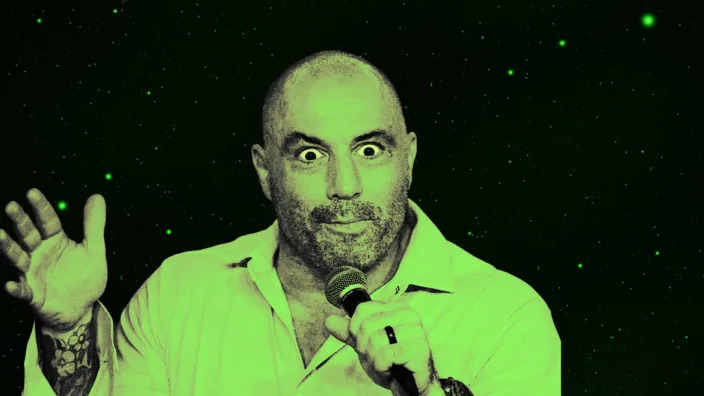
Joe Rogan Boosted a Bad Space Study. It’s Scientists Who Are Paying the Price.

David Axe
The Daily Beast.
Tue, July 25, 2023 

Photo Illustration by Kelly Caminero / The Daily Beast / Getty

Not content to push homophobia, transphobia and fat-shaming, make light of sexual assault, and undermine the public’s confidence in vaccines, uber-popular radio host Joe Rogan is now doing his best to dismantle astronomy, too.

On July 16, Rogan tweeted to his 11 million followers a link to a press release from the University of Ottawa promoting recent research from Rajendra Gupta, one of the school’s adjunct physics professors.


Flouting decades of work by hundreds of the world’s best astronomers and physicists, Gupta invented a new formula, blended it with data from NASA’s James Webb Space Telescope and concluded the universe is 26.7 billions years old.

That’s nearly twice as old as the universe’s actual age—13.7 billion years, a figure scientists spent decades calculating.

Virtually none of Gupta’s peers agree with him, but that didn’t bother Rogan. Nor did it trouble Elon Musk, the billionaire owner of Twitter, who replied to Rogan’s tweet. In addition to Rogan’s signal-boost, USA Today has highlighted Gupta’s old-universe notion, as has Popular Mechanics. A dubious notion from a minor player in the space sciences has gone mainstream.


Gupta is wrong. But he’s just the right kind of wrong that appeals to self-proclaimed “free-thinkers” such as Rogan and Musk. With an assist from some mainstream media, the two libertarians are, wittingly or unwittingly, chipping away at one of the last bastions of pure science—the space sciences. Which is especially ironic considering that Musk also owns a rocket company.

The populist embrace of Gupta’s fringe idea could have dangerous implications. “Misinformed voices who lack credentials can drown out the educated voices who have spent their lives studying a subject,” Allison Kirkpatrick, a University of Kansas astronomer, told The Daily Beast.

Gupta’s main mistake was to revive a discredited theory about light. Space scientists agree that light tends to change color across time and space. Since the universe is expanding, light—in order to keep up—tends to stretch out as it radiates. Over billions upon billions of miles and millions of years, this stretching-out changes the light’s wavelength and makes it more red.

Hundreds of Doctors Demand Spotify Stop ‘Menace’ Joe Rogan From Pushing Anti-Vax Misinfo

This so-called “redshift” is extremely useful to Earthbound astronomers gazing out at the inky depths of the cosmos. Exactly how red a star, or a galaxy full of stars, appears to be can tell us how far away it is, and—as the universe is expanding—how old it is.

Since everything in the universe started out in the same spot, and then burst outward with the Big Bang, the oldest and reddest observable objects should be close to the overall age of the universe. At the same time, this age should align with the gradual decay of the background radiation from the Big Bang.

Match up these and other observations, as many scientists have done many times, and you get roughly the same age for the universe: 13.7 billion years.

But Gupta was unhappy with the number, as he fixated on new data about some very old galaxies that are only now becoming observable thanks to the $10-billion James Webb Space Telescope, which launched on Christmas Day in 2021.

NASA’s Webb Telescope Cracks a 40-Year-Old Space Mystery

Some of the oldest observable galaxies seem to have developed weirdly quickly in the first few hundreds of millions of years after the Big Bang. “The well-accepted standard model of the universe is in tension with the JWST data,” Gupta told The Daily Beast.

So Gupta tried something new. He mixed into his calculations the defunct “tired light” model, which assumes the universe isn’t expanding—and that any redshift we observe comes from light literally wearing out and stretching out over time. He then applied tired light to an expanding universe.

The result is a description of a very old universe. One that’s expanding and is filled with light that slows down all on its own across space and time. The implication for astronomers, if Gupta’s model actually worked, is that those ancient and faraway galaxies wouldn’t be 13.7 billion years old. They’d be 26.7 billion years old.

Those extra 13 billion years would have given the oldest galaxies—the ones that recently became visible through the JWST—ample time to evolve. “The hybrid model is found to be compliant with the JWST observations,” Gupta said.

It’s all very tidy. But only if you ignore a lot of other data, including the observable decay in the cosmic background radiation from the beginning of the universe.

Also, the tired-light model should make faraway galaxies lose focus from our point of view here on Earth. “Distant galaxies would appear blurred if tired light were correct, but they do not,” Brian Keating, an astrophysicist at the University of California, San Diego, told The Daily Beast.

The bottom line is that Gupta’s theory doesn’t work. Yes, we still have a lot to learn about the oldest galaxies and how they seemingly formed so quickly. No, those mysteries do not fundamentally rewrite overlapping models that have aligned in recent decades to tell us that the universe is 13.7 billion years old.

The Universe’s Oldest Galaxies Hold Its Biggest Secrets

In the sciences, it’s OK to be wrong—as long as you work in good faith, submit your data and findings to your peers, accept their scrutiny, correct your mistakes and move forward with a better understanding while others publish rebuttals of your original work. This is peer review, writ large, and it’s essential.

The problem is the media, which can short-circuit the slow process of peer review—and tempt unscrupulous or impatient academics to do the same. “Media outlets seek compelling and attention-grabbing stories, while academic institutions and researchers strive for visibility and recognition for their work,” Keating explained. “As a result, there can be a temptation for both parties to exaggerate findings, oversimplify complex research or present preliminary results as definitive conclusions.”

For his part, Gupta said he’s “not worried.” “My theory is in the open for people to test and criticize.” But the qualified critics of Gupta’s work don’t have nearly the reach that the populist boosters do. Combined, Rogan and Musk can instantly reach tens of millions of attentive followers. In this case, they may have seeded in millions of minds the incorrect notion that the universe is twice as old as it actually is.

To be fair, the age of the universe doesn’t have much direct bearing on how most of us live our lives. But science in general does have a direct bearing on our lives—and science says the universe is 13.7 billion years old, not 26.7 billion years.

“If we can't convince people to trust science about things that have very little impact on their lives,” Kirkpatrick asked, “how can we convince them to trust scientists on the most important questions facing humanity?” The safety and effectiveness of vaccines, for instance. Or the urgency of climate change.

“Astronomers used to be one of the most trusted scientific professions because we don't have any obvious agendas,” Kirkpatrick said. “We are not being paid by corporations. But now we're being questioned on things like the age of the universe.”

Whistleblower tells Congress the US is concealing 'multi-decade' program that captures UFOs


WASHINGTON (AP) — The U.S. is concealing a longstanding program that retrieves and reverse engineers unidentified flying objects, a former Air Force intelligence officer testified Wednesday to Congress. The Pentagon has denied his claims.

Retired Maj. David Grusch's highly anticipated testimony before a House Oversight subcommittee was Congress' latest foray into the world of UAPs — or “unidentified aerial phenomena," which is the official term the U.S. government uses instead of UFOs. While the study of mysterious aircraft or objects often evokes talk of aliens and “little green men,” Democrats and Republicans in recent years have pushed for more research as a national security matter due to concerns that sightings observed by pilots may be tied to U.S. adversaries.

Grusch said he was asked in 2019 by the head of a government task force on UAPs to identify all highly classified programs relating to the task force's mission. At the time, Grusch was detailed to the National Reconnaissance Office, the agency that operates U.S. spy satellites.

“I was informed in the course of my official duties of a multi-decade UAP crash retrieval and reverse engineering program to which I was denied access,” he said.

Asked whether the U.S. government had information about extraterrestrial life, Grusch said the U.S. likely has been aware of “non-human” activity since the 1930s.

The Pentagon has denied Grusch's claims of a coverup. In a statement, Defense Department spokeswoman Sue Gough said investigators have not discovered “any verifiable information to substantiate claims that any programs regarding the possession or reverse-engineering of extraterrestrial materials have existed in the past or exist currently.” The statement did not address UFOs that are not suspected of being extraterrestrial objects.


Related video: UFO hearing: Military pilots, intelligence whistleblower to testify | Banfield (News Nation)   Duration 6:00   View on Watch

Daily MailUFO whistleblower admits US government is in possession of UFOs
5:19

Fox BusinessUFO whistleblower reveals disturbing details during House Oversight Committee hearing
2:22

PA MediaUS concealing programme to retrieve UFOs, says ex-intelligence officer
1:15


Grusch says he became a government whistleblower after his discovery and has faced retaliation for coming forward. He declined to be more specific about the retaliatory tactics, citing an ongoing investigation.

“It was very brutal and very unfortunate, some of the tactics they used to hurt me both professionally and personally,” he said.

Rep. Glenn Grothman, R-Wis., chaired the panel's hearing and joked to a packed audience, “Welcome to the most exciting subcommittee in Congress this week.”

There was bipartisan interest in Grusch’s claims and a more sober tone than other recent hearings featuring whistleblowers celebrated by Republicans and criticized by Democrats. Lawmakers in both parties asked Grusch about his study of UFOs and the consequences he faced and how they could find out more about the government’s UAP programs.

“I take it that you’re arguing what we need is real transparency and reporting systems so we can get some clarity on what’s going on out there,” said Rep. Jamie Raskin, D-Md.

Some lawmakers criticized the Pentagon for not providing more details in a classified briefing or releasing images that could be shown to the public. In previous hearings, Pentagon officials showed a video taken from an F-18 military plane that showed an image of one balloon-like shape.

Pentagon officials in December said they had received “several hundreds” of new reports since launching a renewed effort to investigate reports of UFOs.

At that point, “we have not seen anything, and we’re still very early on, that would lead us to believe that any of the objects that we have seen are of alien origin,” said Ronald Moultrie, the undersecretary of defense for intelligence and security. “Any unauthorized system in our airspace we deem as a threat to safety.”

Nomaan Merchant, The Associated Press


Whistleblowers Unveil Details of 'Incredible' UFO Experiences

Congress held a hearing on UFOs featuring testimony from pilots and whistleblowers who encountered them firsthand.

IAN KRIETZBERG
JUL 26, 2023 

Perhaps the greatest conspiracy theory of them all -- the one concerning an extra-terrestrial presence on Earth -- was re-ignited in June when Air Force veteran David Grusch filed a whistleblower complaint alleging that the U.S. government possesses craft of non-human origin.

Grusch, alongside two other whistleblowers -- former Navy pilot Ryan Graves and former Navy commander David Fravor -- testified before a Congressional hearing on UFOs, referred to as UAPs, July 26.

DON'T MISS: See: Pentagon Releases Formerly Classified Clip of UFO Over Middle East

UAPs, Graves said, present a potential risk to national security. He claimed that the government has more information and awareness of these unidentified objects than they let on, and urged transparency in conversations surrounding UAPs.

"I have experience of UAPs firsthand. As we convene here, UAPs are in our air space, but they are grossly underreported," Graves said. "These sightings are not rare or isolated, they are routine. These encounters became so frequent that aircrew would discuss the risk of UAP as part of their regular pre-flight briefs."

"If everyone could see the sensory and video data I witnessed," Graves added, "our national conversation would change."

Both Graves and Fravor discussed specific situations in which they encountered these objects. Both men said that the objects represent a technology that no Earth-bound science can match; humans, they said, could not survive the g-forces of these vehicles.

"Not for the acceleration rates we observed."

Fravor discussed a scenario in which he encountered one of these such objects, saying that the UAP was "perfectly white and smooth." It had neither windows nor seams.

"The object had been observed coming down from over 80,000 feet, rapidly descending to 20,000 feet, hanging out for hours and then going straight back up," Fravor said. "Above 80,000 feet is space."

As Fravor and his pilots drew closer to the object, it vanished; it moved a distance of around 60 miles in the span of a minute.

"We have nothing that can stop in midair and go the other direction. I think it's far beyond the material science that we currently possess," Fravor said. "We have nothing close to it. It was amazing to see. I told my buddy I wanted to fly it. It's an incredible technology."

Graves reported an object that was floating, completely stationary, in the midst of category four hurricane winds, which run between 130 and 150 mph.

"These same objects," he said, "would then accelerate to supersonic speeds, 1.1, 1.2 Mach, and they would do so in very erratic behaviors that I don't have an explanation for."

Since renewing its efforts to investigate reports of UFOs in December, the Pentagon has clocked hundreds of reports. As of April, about half of its 650 reports were categorized as being worthy of investigation.

The Anomaly Resolution Office released a Department of Defense video of a UFO captured by a U.S. drone at a Senate hearing in April. The analyst who testified at the hearing, Dr. Sean Kirkpatrick, said that the video was "readily explainable."

"In our research, AARO has found no credible evidence thus far of extraterrestrial activity, off-world technology, or objects that defy the known laws of physics."

Former Intelligence Guy Tells Congress the Government Is Reverse-Engineering Alien Relics


Victor Tangermann
Wed, July 26, 2023 

The House Oversight Committee is holding a hearing about highly controversial claims that the US government is secretly hiding evidence of extraterrestrial life, and could even be working to reverse-engineer the otherworldly relics.

Air Force veteran and former member of the National Geospatial-Intelligence Agency David Grusch renewed his allegations that the government has not only recovered alien spacecraft over recent decades, but has actively sought to keep the information from leaking to the public.

If that all sounds insane, you're not wrong. And it's worth keeping in mind that Grusch has produced exactly zero evidence to back up his outrageous claims.

The big question? Whether today's hearing will manage to shed any light on the situation.

Congressman Tim Burchett, co-lead of the investigation into UAPs, said that "this is an issue of government transparency. We can’t trust a government that does not trust its people."

"We’re not bringing little green men or flying saucers into the hearing," he added. "Sorry to disappoint about half y’all. We’re just going to get to the facts. We’re going to uncover the cover-up."

Still, Grusch's opening statements did seem to allude to some of those things.

"I was informed, in the course of my official duties, of a multi-decade UAP crash retrieval and reverse engineering program," he wrote, adding that "I made the decision based on the data I collected, to report this information to my superiors and multiple Inspectors General, and in effect become a whistleblower."

"It is my hope that the revelations we unearth through investigations of the Non-Human Reverse Engineering Programs I have reported will act as an ontological (earth-shattering) shock, a catalyst for a global reassessment of our priorities," he concluded. "As we move forward on this path, we might be poised to enable extraordinary technological progress in a future where our civilization surpasses the current state-of-the-art in propulsion, material science, energy production and storage."

Today's hearing also included a rehashing of existing reports of UFO sightings that have made headlines ever since The New York Times published a report back in 2017 that first uncovered a "shadowy" Defense Department UFO program that had been operating for years.

"We were primarily seeing dark grey or black cubes inside of a clear sphere," retired navy pilot Ryan Graves, the first witness to appear alongside Grusch, told lawmakers during today's hearing.

"That was primarily what was being reported when were able to gain a visual tally of these objects," he added. "That occurred over eight years."

The hearing's third witness, former navy commander David Fravor, who famously filmed a "Tic Tac"-shaped object back in 2004, described the object as being " far superior to anything that we had at the time, have today or looking to develop in the next ten years."

"All four of us saw a white 'Tic-Tac' object with a longitudinal axis pointing north-south, and moving very abruptly over the water, like a ping-pong ball," he recalled during his opening statements.

Some Congress members, unsurprisingly, balked at Grusch's previous allegations that the government had recovered "non-human" spacecraft.

North Carolina representative Virginia Foxx pointed to All-domain Anomaly Resolution Office director Sean Kirkpatrick, who told Congress back in April that the office "found no credible evidence thus far of extraterrestrial activity, off-world technology, or objects that defy the known laws of physics."

Other onlookers pointed out that members of Congress clearly didn't do their homework before attending today's hearing.

"Not a great sign that [representative Glenn Grothman] launches the UFO Hearings by mentioning reading Frank Edwards' book 'Flying Saucers — Serious Business,'" journalist Garrett Graff tweeted, "which is one of the least reputable books on the subject of the last 75 years."

Graff also called today's opening statements not "compelling (or even particularly smart)," arguing that "these members haven't really done their research to understand the history of UFOs and the US government."

In short, extraordinary claims call for extraordinary evidence. If the government has alien artifacts, let's see them.

More on UFOs: Scientist: No, We Didn't Just Find an Alien Spacecraft on the Bottom of the Ocean

The Mysterious Dark Money Group Connecting Trump, Christie, and DeSantis

Story by Roger Sollenberger •
The Daily Beast

Photo Illustration by Luis G. Rendon/The Daily Beast/Getty


In the early stages of the 2024 race, no other candidate—not even Donald Trump—has pushed the bounds of campaign finance laws as much as Ron DeSantis.

But the DeSantis campaign’s finances have suffered despite those hard-charging efforts. Or, perhaps, because of the people behind them.

Immediately after DeSantis officially declared his inevitable candidacy, he was challenging fundraising laws. That’s when his state-level PAC pledged to transfer more than $80 million to a pro-DeSantis super PAC, just weeks after DeSantis officially cut ties with the old group—a move Florida lawmakers changed the rules to accommodate and which quickly drew a federal complaint.

But Florida campaign finance statements show even closer ties between these three groups than previously reported—and they go to the top of the DeSantis operation.

Even with all the PAC money, the DeSantis campaign has been marred by financial trouble. Extravagant spending and an overreliance on large-dollar donors—71 percent of his total fundraising has come from people donating more than $2,000—prompted the campaign to cut more than a third of its staff earlier this week. And one person who has taken a lot of the blame for DeSantis’ questionable financial footing is a largely unknown figure with undeniable experience in the shadowy GOP circles of dark money: Generra Peck.

But in the months leading up to DeSantis’ pro forma campaign announcement, his top advisers, including Peck, were busy raising money in the background.

Brendan Fischer, deputy director of government watchdog Documented, told The Daily Beast that Peck’s involvement with that high-dollar fundraising is “further evidence that there is little distinction” between the groups backing DeSantis, which are not allowed to coordinate with each other.

“It is another example of how DeSantis has been circumventing the federal campaign finance rules designed to prevent corruption and protect voters’ right to know,” Fischer said.

Peck, a widely respected Republican strategist who prefers to operate in the wings, is DeSantis’ 2024 campaign manager, having quietly steered him to victory in 2022. But before she took the top job, she helmed a battery of low-profile conservative advocacy groups—where the funding is largely untraceable and the spending is exceedingly difficult to unravel, often by design.

Peck’s present, however, is distinctly different from her past. A presidential operation tasked with taking down the most powerful force in the Republican Party has to reckon with far more public scrutiny than Peck has dealt with previously. And the transparency demanded of federal campaigns is entirely different from the occult financials of the comparatively obscure dark money groups and consulting firms where she cut her political teeth.

Peck’s approach, and the complications she faces today, are captured in the story of one of those groups—a dark money nonprofit that Chris Christie started to support then-President Trump, but which in hindsight looks more like an incubator for a future DeSantis presidency.

“Right Direction America” was created in late 2019 to fight back against Democratic attempts to impeach Trump.

“I was tired of sitting around and waiting for someone else to do it,” Christie said at the time, promising seven-figure ad buys to combat impeachment.

He would leave the group a year later, long after the Senate had acquitted Trump of those impeachment charges. But RDA was far from finished.


Kevin Wurm/Reuters© Provided by The Daily Beast

In retrospect, RDA had strong ties to DeSantis from the beginning. Aside from Peck and Christie, one of the key forces behind the group was veteran GOP operative Phil Cox—a trusted DeSantis adviser and top deputy for his super PAC. The group also featured Catherine Chestnut Linkul, another senior DeSantis 2022 aide and the former director of Casey DeSantis’ Office of the First Lady.

The DeSantis campaign and Peck did not respond to detailed questions for this article.

But after Trump was acquitted and Christie was gone, the group assumed what seems like its true purpose all along: a nozzle to spray anonymous cash to a broad range of conservative groups, issues, and politicians.

RDA’s filings don’t appear in IRS searches, nor in any other public database that compiles those records. The Daily Beast previously obtained the group’s 2020 filing, which shows it doled out $700,000 in grants. Those funds went to two other secretive entities, both of which, like RDA, are classified as 501(c)(4) “dark money” groups—and both of which are directly tied to Peck.

When one of those groups, “Building a Better America,” emptied its coffers in 2021—the year Peck moved to Tallahassee to take over DeSantis’ 2022 campaign—the group poured almost all of its bank account into reforming a federal environmental policy of deep interest to DeSantis: a Florida mining project. BBA didn’t similarly explain the nature of any of its $2.1 million in grants on its previous year’s tax filing.

RDA—whose board also has ties to the GOP’s biggest megadonor, Dick Uihlein—took in three donations in 2020, for a total $2.12 million, the filing shows. All three were anonymous, with the largest being $2 million.

While Christie promised to spend big money fighting Trump’s impeachment, RDA dropped only about $35,000 on ads toward that endeavor, according to the Facebook advertising database. The group returned to the political fold that August with a contribution more than twice that amount to a super PAC backing the unsuccessful congressional campaign of a Christie ally.

A few months later, Christie dropped out of RDA. The reason is unclear, and Christie declined The Daily Beast’s request for comment.

His departure, however, came weeks before the most curious event in RDA’s curious life: a $100,000 gift in early 2021 from the campaign belonging to Rep. Matt Gaetz, for a time one of DeSantis’ closest allies.

The donation was double the amount of the Gaetz campaign’s second-largest contribution ever, and $22,000 more than its combined political gifts to DeSantis.

The campaign cut the $100,000 check when the congressman was on particularly shaky ground, and the Gaetz campaign’s explanation appears to defy belief, The Daily Beast previously reported. The contribution came about half a year after the Justice Department opened its investigation into whether the Florida congressman paid for sex with a 17-year-old girl, and weeks after Trump returned to civilian life at Mar-a-Lago, denying Gaetz the blanket pardon he had reportedly sought.

But there’s unsurprisingly scant publicly available information about RDA’s activities after Christie left. The group’s website was taken down sometime after The Daily Beast reached out for comment for this article; it was archived as recently as March 21.

RDA’s publicly available financial data is almost exclusively accessible through Federal Election Filings, which show a $250,000 injection from former Arkansas Gov. Mike Huckabee. One year later, a super PAC called “Right Direction Women”—whose branding is strikingly similar to that of RDA’s now defunct website—made a similar donation to yet another nonprofit, called “Right Direction Women Maryland.”

RDA Women’s lineup is also studded with close associates of Peck and her former consulting firm, P2 Public Affairs. The super PAC supports conservative women running for office, notably Iowa Gov. Kim Reynolds, who is now the central pillar supporting DeSantis’ primary efforts in that critical state.

But the force behind them all appears to be Peck. While the strategist rarely engages the media—who seem to have rarely engaged with her before she took over the 2022 DeSantis campaign—she took a major step into public life in September 2021, when DeSantis tapped her to run his upcoming re-election effort.

While Peck has long been close with both Ron and Casey DeSantis, her hiring was reportedly the work of yet another ghost from Right Direction’s past: Cox, who first took a shine to Peck while they worked together on former Virginia Gov. Bob McDonnell’s 2009 campaign.

Over the next decade-plus, Peck took on increasingly senior roles in the GOP national apparatus, building political bridges through the Republican Governors Association, where Cox served as a top official and which Christie chaired. (As if it’s not complicated enough, that organization also has its own “RGA Right Direction” PAC.)

However, Florida state filings don’t show 2022 DeSantis campaign payments to Peck personally or a number of known entities associated with her. They do, however, reveal $1.7 million going to Cox’s Ascent Media from the Republican Party of Florida, with that company clocking another roughly $207,000 directly from the DeSantis campaign.

Then, just two days after DeSantis won, Ascent Media was listed as one of a slate of firms forming a brand new consulting mega-conglomerate, GP3 Partners, LLC. The consortium features a number of DeSantis-world operatives, and its name—GP3—is shared by Peck’s personal firm, GP3 Strategies, LLC. Peck’s own name, however, was characteristically absent from the conglomerate’s press release, as was any mention of GP3 Strategies.

This January, DeSantis, Peck, and Cox began ramping up his predicted presidential bid in earnest. And the money began moving, too.

Early that month, Cox’s firm kicked about $562,000 back to the Florida GOP, state filings show, with the DeSantis 2022 campaign paying the company roughly $591,000 weeks later.

Notably, over the next five months Ascent Media hauled in another $151,500 from the Friends of DeSantis PAC—the group at the center of the disputed $82 million transfer. That PAC also sent $95,500 to Peck’s GP3 Strategies via a series of monthly installments beginning the last day of February.

Between March 1 and April 30, as DeSantis’ not-so-subtle shadow campaign carried him around the country and abroad, that PAC raised a staggering $3.8 million. Then, on May 5, DeSantis declared in a state filing that he would no longer fundraise through the group. That same day, the PAC, which paid GP3 Strategies its last installment the previous day, cut Ascent Media its final check. It rebranded 10 days later as “Empower Parents PAC.”

The contours of that fundraising effort are at the center of Campaign Legal Center’s federal complaint. The complaint, filed May 31, alleges that the PAC illegally coordinated with DeSantis to raise money in amounts exponentially higher than his campaign would have been able to.

Undeterred, the PAC made good on its $82 million promise the next month, announcing the unprecedented transfer to the pro-DeSantis super PAC “Never Back Down.” That group, of course, features Cox as a top official, alongside Jeff Roe, a longtime Republican campaign veteran who reportedly had his eyes set on the campaign manager slot—only to take a backseat to Peck.

Today, however, Peck’s cover has been blown. GOP insiders and megadonors have increasingly expressed frustration with the campaign’s flagging performance and runaway spending, and they’re hungry for a scalp.

According to multiple recent reports, they’ve set their sights on Peck, whose limited campaign experience has, through no fault of her own, made her vulnerable to those attacks.

When the campaign cut about a third of its workforce earlier this week—more than three dozen jobs—Peck took considerable heat.

A statement attributed to Peck said the layoffs were the result of a “top-to-bottom review,” but it’s unclear how effective the move will be. The campaign spent about $630,000 on payroll over its first six weeks, FEC records show, about 8 percent of its total expenses.

Fittingly enough, Peck’s own compensation with the campaign is its own mystery. Federal Election Commission filings show only about $10,000 going to her on the DeSantis campaign payroll over the campaign’s first six weeks. She received just the fifth-largest single payroll payment, and her total stands at about $5,000 less than the governor’s longtime communications guru, Christina Pushaw.

While it may seem like Peck is just doing the job on the cheap, she actually appears to have scored a hefty payday in the weeks before the campaign launched. Between late February and early May, Peck saw nearly $100,000 in combined regular payments from a high-rolling DeSantis state PAC, paid through her personal consulting firm, GP3 Strategies, LLC.

The Daily Beast.

RIP

B.C. musician recalls collaboration with 'timeless' Sinead O'Connor, spanning 8,000km

 The Canadian Press


British Columbia musician Rhys Fulber doesn't remember every recording session in a career stretching back to the 1980s, but a day in the studio in 2001 sticks in his mind. 

He recalled the privilege of working with the "transcendent" Sinead O'Connor. They were connected over more than 8,000 kilometres, he in Los Angeles and she in Dublin, as she recorded vocals for a track on Fulber's debut solo album.

"You hear them through the speakers, you're using the talkback microphone to communicate, so it's a recording session, but they're just not anywhere near you, they're somewhere on the other side of the world, so just hearing her demeanour, a very soft-spoken, very sweet-sounding person," Fulber said.

O'Connor, the Irish singer-songwriter who became a superstar in her mid-20s, with hits including “Nothing Compares 2 U,” died Wednesday at the age of 56.

In 2001, Fulber, who now lives in Gibsons, B.C., had been working with respected producer Rick Nowels and big-name songwriter Billy Steinberg as he hashed out solo material under the name Conjure One. 

Steinberg had a tune he wanted Fulber's unique take on after a version by a Belgian group didn't do it justice.

"So I kind of did my version of the song and then they had said, we'd like to get like, you know, a really special singer for the song, and they came back to me and said 'what about Sinead O'Connor?'" Fulber said. 

"And I'm like, wow, yeah, great, and they made it happen and next thing I know we're sitting in the studio."

O'Connor was a continent and an ocean away. Remote work might be the norm these days, but in 2001, recording studios had their own cutting-edge system connecting distant musicians.

"That was my brief experience with this timeless, special, transcendent artist."

Fulber said the electronic song made a splash in eastern Europe and Russia, with several remixes over the years including one released just last year. 

"A good vocal is forever, you know? It's like any great piece of art is forever," he said. "And her voice and everything she sang on is forever, and to be part of something like that is not something I take for granted."

News of O'Connor's death hit Fulber with a wave a sadness, the singer only a few years older than him.

O'Connor was found unresponsive in a home in southeast London and pronounced dead at the scene, police said. They did not say how she died but said her death was not considered suspicious.

She was public about her mental illness, saying that she was diagnosed with bipolar disorder.

The volatile and emotional nature of the music business takes a toll on many artists, Fulber said. 

"It's a hard world to navigate emotionally sometimes and I'm pretty sure she had some struggles," he said. 

Fulber, who is still releasing music under his own name, looks back on that time in his career fondly, getting to play in the big leagues with major names before the shift from physical album sales to online streaming. 

He said he may lament that era being over, but he feels lucky to have had the opportunity to work with people including O'Connor, even briefly. 

"It's always special artists that die too soon," he said. "It's always people that had more to offer that are gone too soon. It's always a sad, sad day." 

— With files from The Associated Press

This report by The Canadian Press was first published July 27, 2023. 

Darryl Greer, The Canadian Press


SEE

https://plawiuk.blogspot.com/2023/07/rip-sinead-oconnors-voice-was-ireland.html

Conservation group releases its wards from caribou maternity pens

Story by The Canadian Press • Yesterday

Village of Nakusp[1]
Nakusp is located in British Columbia
Nakusp
Nakusp
Location of Nakusp in British Columbia
Coordinates: 50°14′36″N 117°48′1″W

group working to restore a near-extinct caribou herd near Nakusp has released its second group of animals born and raised in protective custody.

But this year’s cohort, released on Friday, July 21, won’t be doing a lot to help increase the Central Selkirk Caribou herd numbers in the long term.

Fourteen animals were captured in late March by an operation sponsored by the Arrow Lakes Caribou Society (ALCS), and taken to the fenced maternity pen the group has built above the Nakusp Hot Springs. Eight of the 10 cows in the group turned out to be pregnant. Those gave birth to eight healthy calves – but there were seven males and only one female. So while that’s a roughly 35% increase in overall herd numbers, the paucity of females won’t help grow the herd in the future.

“We were hopeful for more females,” says ALCS communications specialist Skye Cunningham. “But regardless, it’s good to have them in the census.”

Cunningham says the large numbers makes planning next year’s capture a bit of a challenge, as yearlings are usually brought along with their mothers to the pen. Biologists will spend the next few months debating the pen’s capacity and how many animals the organization can provide care and shelter for.

Officials built the maternity pen two years ago with hopes that providing a safe space for the cows to give birth, and raising them on a high-quality diet for several months, will give them a better chance of survival. 

The animals were monitored by maternity pen shepherds from a specialty-built observation blind during their four-month stay at the six-hectare, heavily wooded facility. Shepherds have included various stakeholder groups, including some ʔaq'am First Nations community members from the Cranbrook area.

The Central Selkirk caribou herd is critically endangered, with fewer than 30 animals remaining. One female – the last surviving member of the Revelstoke-area Columbia South herd – was also captured and taken to the site. 

Officials will monitor the progress and survival of this year’s cohort using tracking collars and other monitoring techniques.

John Boivin, Local Journalism Initiative Reporter, Valley Voice

Canada says it is disappointed by US decision to maintain lumber duties

Story by Reuters • Yesterday
 
A worker unloads logs at the Murray Brothers Lumber Company in Madawaska

OTTAWA (Reuters) - Canada is "very disappointed" by the latest U.S. decision to maintain duties on exports of Canadian softwood lumber and wants Washington to engage in meaningful talks to settle the matter, Trade Minister Mary Ng said in a statement on Thursday.

The U.S. Commerce Department ruled earlier in the day that most Canadian softwood lumber would be subject to a 7.99% tax.

The two countries have been arguing for decades about the exports, which U.S. producers say are unfairly subsidized.

(Reporting by David Ljunggren; Editing by Chris Reese)