Saturday, August 26, 2023

MANITOBA

MPI workers could strike Monday if no settlement reached this weekend: MGEU

Workers rejected latest offer earlier this week

Approximately 1,700 unionized employees at Manitoba Public Insurance could be on strike starting Monday morning after voting to reject the Crown corporation's latest offer. (Jaison Empson/CBC)

Unionized workers at Manitoba Public Insurance (MPI) will walk off the job on Monday morning if no settlement is reached this weekend, their union says.

The strike would begin at 7:30 a.m. on Aug. 28, affecting approximately 1,700 workers represented by the Manitoba Government and General Employees' Union (MGEU), a union news release says, adding both parties will continue bargaining over the weekend. 

The strike notice comes after unionized workers rejected the employer's latest offer earlier this week. 

The Crown corporation says the four-year proposal includes wage increases of up to 17 per cent for some employees. It includes annual general wage increases of two per cent, a one per cent market adjustment on wages for about 75 per cent of union members, and a 3.5 per cent wage pump for employees when they reach the top of their pay grades, MPI said.

The offer also includes a proposal to go directly to arbitration on the issue of general wage increases, Ward Keith, MPI chairperson, said in an interview Friday. 

Whatever offer the arbitrator comes up with would not be lower than MPI's last proposal, so those increases could be higher depending on what the arbitrator decides, he said. 

"So from MPI's perspective, there's really no risk whatsoever, no downside to the MGEU proceeding with voluntary arbitration," he said.

Wage increases misleading: union 

But MGEU said the 17 per cent figure is misleading as it only applies to about half of unionized workers. 

"If the offer on the table is really 17 per cent, our bargaining committee would already be taking it out to the members for a vote," MGEU president Kyle Ross said at a Friday afternoon news conference.

"The truth is that half of the members would only receive an increase of eight or nine per cent over four years. That is not a fair deal for our members and they don't like it."

Ross said the union is committed to bargaining up to the last minute through the weekend to avoid a strike. 

"We'll bargain right up until the deadline at midnight on Sunday if we can avoid this. That's our goal, that's always our goal." 

However, Keith said that at this point, MPI is not willing to return to the bargaining table on the issue of wage increases "because MPI has already offered an off-ramp to deal with that issue that is a fair and unbiased process" through arbitration.

Voluntary arbitration 

When asked why MGEU does not want to go into voluntary arbitration, as MPI has proposed, the union said it prefers to have a contract negotiated by both sides, as opposed to one imposed by an arbitrator.

"A negotiated contract is endorsed by both the union and the employer, and most importantly, all members get to vote on it. Members have no vote when a contract is settled by arbitration," Ross stated in a written response to CBC News late Friday afternoon.

"It is also important to note that a negotiated contract can be voted on and implemented very quickly, while arbitration usually takes more than a year to resolve. After working a year under an expired contract, MGEU members shouldn't have to wait that long."

Contingency plans

Contingency plans are in place in the event of a strike, MPI said in a news release Friday. 

Customer enquiries will be redirected to insurance brokers partnered with MPI, while MPI's contact centre will remain open for reporting personal injury, non-driveable collision and total-theft claims, MPI said. 

All other claims will be directed to MPI-accredited repair shops for vehicle estimates and repairs. 

Driver tests and adjuster appointments will have to be rescheduled. 

Essential services such as income replacement payments for personal injury claimants won't be interrupted. 

The unionized MPI employees work at locations in Winnipeg, Portage la Prairie, Brandon, Dauphin, Thompson, The Pas, Arborg, Beausejour, Selkirk, Steinbach and Winkler. Their last contract expired in September 2022 and negotiations have been ongoing since then.

What the ascent of hydrogen as a renewable resource means for platinum demand


Henry Lazenby | August 25, 2023 | 

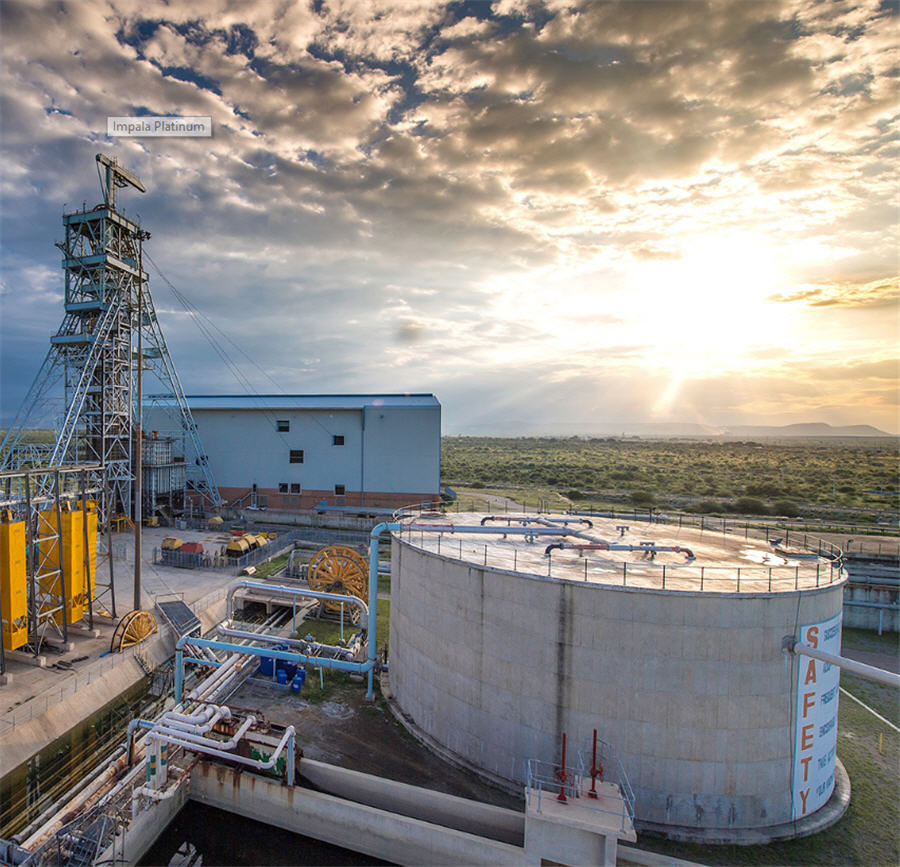
Image courtesy of Impala Platinum Holdings Ltd.

The emerging global hydrogen supply chain is essentially “made of platinum,” declares Bank of America Global Research commodities strategist Michael Widmer, coauthor of the bank’s Global Metals Weekly report.


If proton exchange membrane electrolyzers (PEMs) become the dominant method for hydrogen production by 2030, grabbing about 70% of the market, it would result in an additional 778,000 oz. of metal demand. However, in an accelerated scenario aiming for net zero emissions, this demand could catapult to 2.4 million ounces.

PEM electrolysis works on the principle of using electricity to break down water into hydrogen and oxygen gases.

The bank’s data contrasts the World Platinum Investment Council’s May data, which forecasts total supply for 2023 to be 236,000 oz. lower than forecasted earlier this year at 7.2 million oz, down 1% over 2022.

Historically, hydrogen production mainly depended on nickel-containing alkaline water electrolyzers (AELs). There has been a marked shift towards adopting platinum-intensive PEMs in recent years. PEMs currently constitute 32% of all electrolysis installations worldwide.

While AELs and PEMs have dominated the market, other technologies like an anion exchange and solid oxide membranes have not yet reached commercial scale.

According to Widmer, current projections indicate that global electrolysis capacity could double annually, potentially hitting 205 gigawatts by 2030. This is a profound increase from the under-1 GW mark recorded in 2022.

Regarding electrolyzer production, China is a dominant player, holding a 55% market share, with Europe and the U.S. collectively comprising 40% of global manufacturing capacity.

Europe has been proactive in its approach to green technologies. Germany, for instance, has revised its domestic electrolysis capacity target for 2030 to 10 GW, up from the initial 5 GW. Additionally, Europe is investing heavily in infrastructure, planning to establish a hydrogen pipeline network of approximately 33,000 km by 2030, which is expected to expand to 58,000 km by 2040.

When discussing the transportation sector, the spotlight remains on platinum-intensive PEM fuel cells, the only commercially viable technology for fuel cell vehicles.

According to BofA, even with lower penetration rates, FCEVs are projected to contribute significantly to platinum demand, potentially hitting 140,000 oz. by 2030.


Rio Tinto starts lithium exploration on Midland’s James Bay projects in Québec

Staff Writer | August 25, 2023 | 

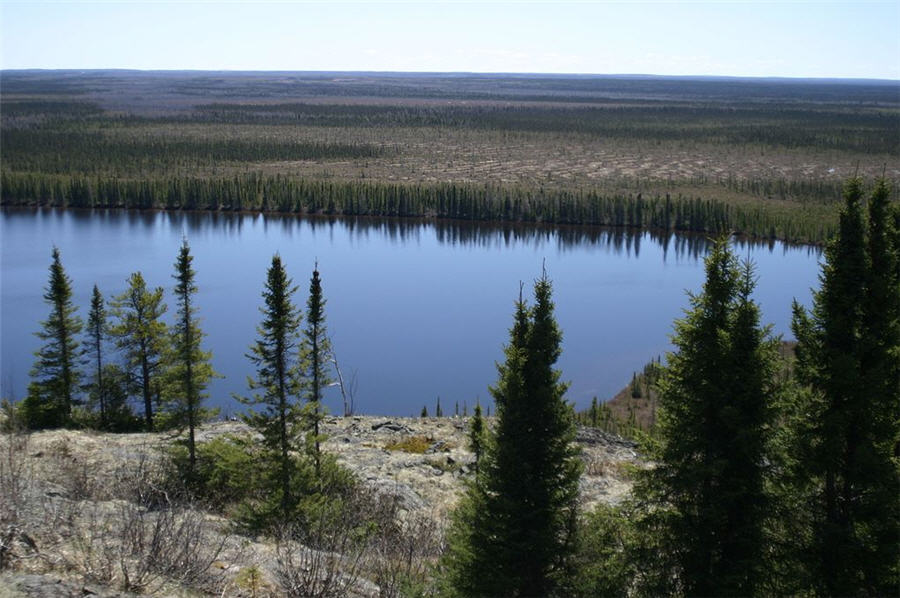
James Bay region, Quebec – Image courtesy of Wikimedia Commons

Rio Tinto Exploration Canada has started a lithium exploration programme on Midland Exploration’s (CVE: MD) Mythril area and Galinée projects in the Eeyou Itschee James Bay region of Québec.


The region is currently experiencing a rush of exploration targeting lithium pegmatites.

The Mythril Regional projects are located approximately 12 to 50 kilometers of lithium pegmatites discovered at Patriot Battery Metals’ Corvette project. An initial calculation of Patriot’s CV5 spodumene pegmatite resources yields inferred resources of 109.2 million tonnes at 1.42% Li2O.

Mythril consist of 730 mining claims covering 370.1 square kilometers.

The Galinée project is located approximately 4 kilometers east of the lithium pegmatites discovered at Adina and reported by Winsome Resources. The project consists of 54 mining claims covering 27.7 square kilometers.

According to Midland Exploration, aligned with the Galinée project, lithium mineralization continues to be intersected by Winsome on the Adina project with up to 1.37% Li2O on 61.2 meters from 8.9 meters.

Shares of Midland Exploration rose 5.3% by midday in Toronto. The company has a market capitalization of C$41 million ($30 million).
CRIMINAL CAPITALI$M
Another metals trader says it has been hit by nickel fraud

Bloomberg News | August 24, 2023 

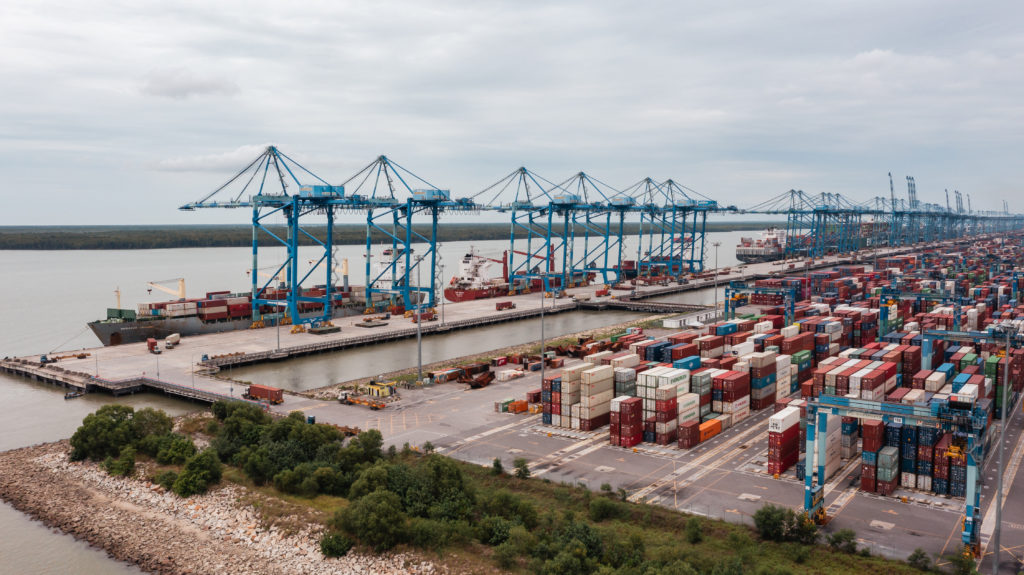
Cranes at the port Klang near Kuala Lumpur. Stock Image.

Another trading house has been stung after buying a cargo supposedly containing nickel that turned out to be full of near-worthless rubble.


The latest example, detailed in lawsuits in London and Singapore, is separate from the $600 million alleged fraud against Trafigura Group that shocked the trading industry earlier this year, but it involves several of the same companies.

The revelation that the problem of non-existent nickel is more widespread will be another blow to confidence in the scandal-prone metals trading industry. The Trafigura case has spawned several lawsuits, while in March the London Metal Exchange discovered that 54 tons of “nickel” held at a warehouse in Rotterdam and owned by JPMorgan Chase & Co. was actually just bags of stones.

It also casts more light on the business links between several different companies that Trafigura alleges were connected to businessman Prateek Gupta and perpetrated a massive fraud against it.

In the new case, US trading house Kataman Metals LLC alleges it paid $3.3 million for nickel from New Alloys Trading Pte. only to discover when it opened the containers that there was no nickel inside.

New Alloys is among the companies that Trafigura claims was part of the alleged Gupta fraud. New Alloys isn’t owned by Gupta, and the Kataman claim against New Alloys makes no mention of him.

Still, the trade appears to be part of a broader set of transactions involving several companies linked to Gupta, and Gupta himself got involved in negotiations over them, according to Kataman’s separate London lawsuit.

Moreover, many of the details of what is alleged to have happened in the Kataman and Trafigura cases are similar, and the two companies’ trades appear to have unraveled at almost exactly the same time.

Nickel deals go bad

Missouri-headquartered Kataman is a mid-sized US-focused commodity trading house best known for its role in the aluminum market. But in August 2022, according to Kataman’s filings in a Singapore lawsuit, it entered into an agreement to buy 167 tons of LME-branded nickel for $3.3 million from New Alloys.

The nickel was supposed to travel on a simple route — from Singapore to the Dubai port of Jebel Ali that month. Instead, unbeknown to Kataman, the containers ended up sitting on a dock in Port Klang, Malaysia until the following March.

In the meantime communication between the parties deteriorated. The bills of lading — crucial shipping documents that ascribe ownership of a particular cargo — were lost in transit to Kataman from its bank, JPMorgan Chase & Co.

When Kataman tried to have the documents re-issued, representatives of New Alloys and its freight forwarding agent Techies Logistics Pte. delayed that process, the legal filings allege. By mid-January New Alloys and Techies had stopped responding to emails and WhatsApp messages altogether, according to Kataman’s lawsuit.

In March, having finally located the containers — still in Port Klang — Kataman representatives, accompanied by inspections experts and lawyers broke them open, only to find they did not contain any nickel.

“Each of the 7 shipping containers contained 16 or 17 jumbo bags containing waste steel briquettes which were virtually worthless,” the claim at Singapore’s Supreme Court states. A laboratory analysis of the material did not find any nickel present.

Kataman’s lawyers claim that New Alloys and Techies “by unlawful means conspired and combined together to defraud the Claimant and to conceal such fraud and the proceeds of such fraud from the Claimant.”

Kataman and Techies did not respond to requests for comment made by email and phone. Techies filed a response in the Singapore case, saying that its role had been limited to organizing storage and shipping for New Alloys, and that it had never vouched for the cargo’s contents. Manoj Menon, the director of New Alloys, has previously denied all allegations of fraud in response to the Trafigura case.

A representative from New Alloys said it had not been served legal documents so would reserve its comments regarding the nickel cargo. It did say that the company had “only a general business relationship” with Prateek Gupta and that it had been doing business with Kataman Metals since November 2020.

Kataman’s account shares some similarities with Trafigura’s case. Trafigura also found “non-compliant materials ranging from steel products to iron products,” in containers that should have held nickel, the trading house has said in its legal filings.

Techies was also involved as a shipping agent in a cargo of nickel that’s at the center of a legal dispute connected to the Trafigura case.

Gupta link

The nickel trade appears to be part of a broader set of trades between Kataman and several companies, at least one of them directly connected to Gupta.

In a separate London lawsuit, Kataman explains that it struck deals with TMT Metals (UK) Ltd. and Mine Craft Ltd. whereby they would pay a hefty rate of interest to Kataman for it to buy and then re-sell cargoes of nickel and tin.

TMT would nominate a supplier for the nickel and tin, which Kataman would then buy, and later re-sell it to TMT or Mine Craft plus interest paid monthly at a rate of 8.5% over Libor.

Both TMT and Mine Craft are named as defendants in Trafigura’s case against Gupta; Trafigura alleges that both are controlled by Gupta, who denies he controls Mine Craft.

The nominated suppliers are not named in Kataman’s London lawsuit, and the filings do not make any reference to the Singapore lawsuit. But it appears that New Alloys was nominated by TMT as the supplier of the nickel — and so that the nickel that is the subject of the Singapore lawsuit is the same metal that was supposed to be sold on to TMT. The dates and the amount of the payment referenced in the two lawsuits are the same.

While TMT initially made some interest payments in November 2022, according to Kataman’s London lawsuit, it failed to make further payments. Kataman executive vice president David Kramer corresponded with Gupta personally on the matter in November and December, according to Kataman’s suit, to little avail.

That was the same time as Trafigura’s relationship with Gupta was coming unstuck. After growing increasingly concerned in October and November 2022, Trafigura finally carried out an inspection of cargoes in Rotterdam in December 2022 — only to discover they contained no nickel.

Gupta has claimed that Trafigura was aware he was selling it materials other than nickel. A person close to him said that TMT has challenged the Kataman case and is arguing that the UK is not the proper jurisdiction for it.

(By Archie Hunter, Alfred Cang and Jonathan Browning, with assistance from Jack Farchy)

Congo wants ERG copper, cobalt assets in bid to regain control

Bloomberg News | August 24, 2023 |

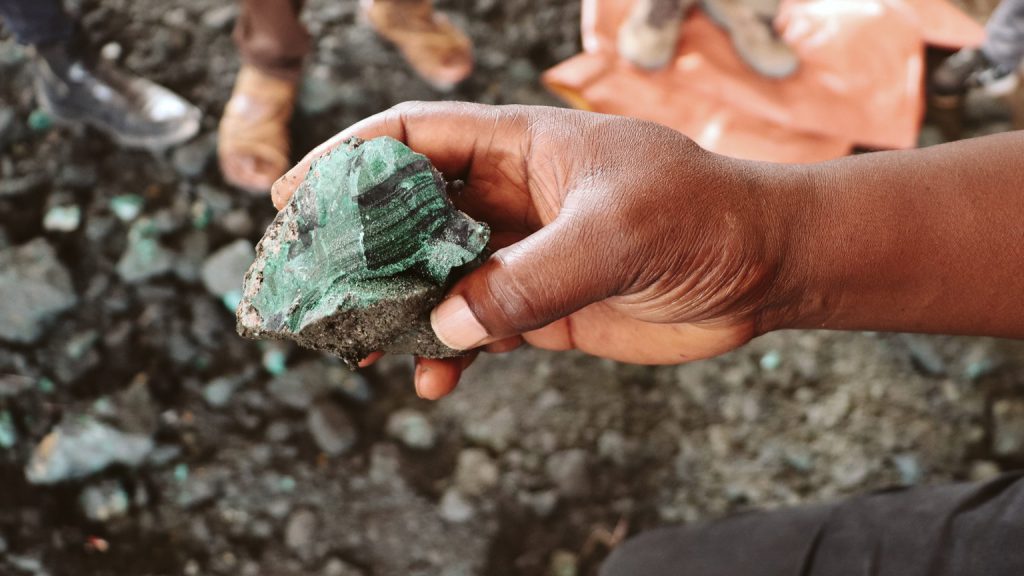
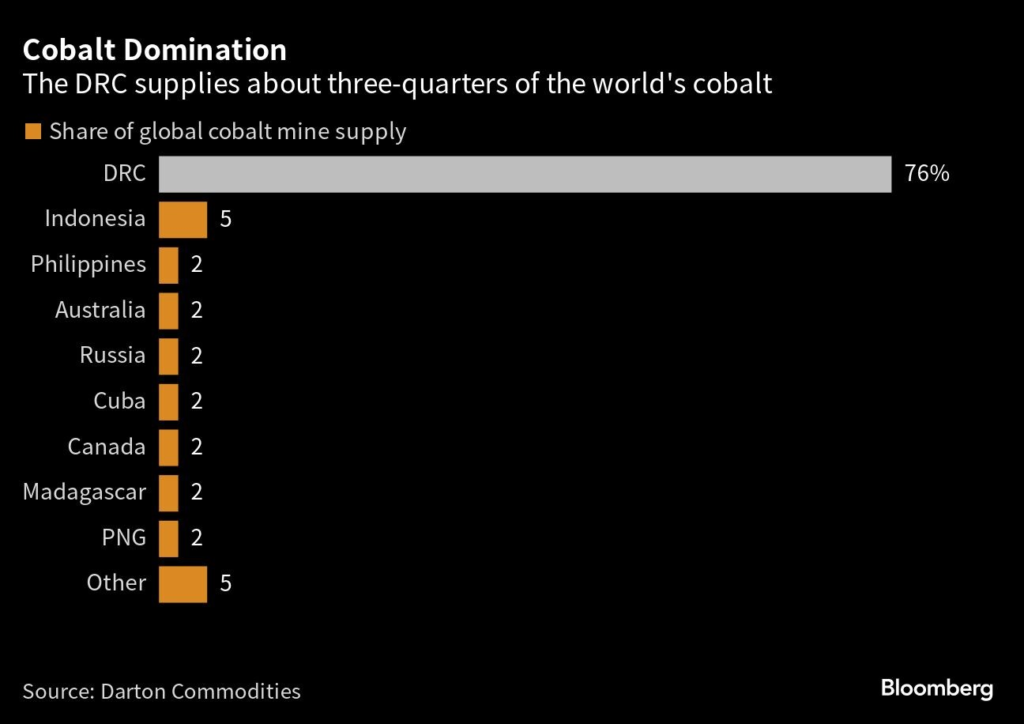
More than three-quarters of the world’s cobalt comes from Congo. Credit: The Impact Facility

The Democratic Republic of Congo wants to buy back some of the country’s prized copper and cobalt deposits, as the government tries to gain more control of crucial green metals.


The assets are some of those owned by Eurasian Resources Group, a Kazakh-backed miner and major cobalt producer with dozens of DRC mining and exploration permits. The government and state-owned miner Gecamines say ERG has been too slow to develop them — and Gecamines in June told ERG it wants to take some over, according to a July letter seen by Bloomberg that was sent by the office of Congolese President Felix Tshisekedi to ERG’s shareholders.


The offer didn’t include ERG’s key Metalkol copper and cobalt tailings project or its Frontier copper mine, and no price was mentioned in the letter.

It’s the latest attempt by the DRC and Gecamines to regain control of vast deposits of minerals used in things like electric-vehicle batteries. Despite supplying about 75% of the world’s cobalt and being a major copper producer, most DRC mines are foreign-owned. Relations between the state and miners have also been strained by issues over environmental damage and a lack of local investment.

ERG didn’t confirm that Gecamines had made an offer to buy its assets or whether it’s interested in selling any. Talks “are ongoing between ERG and representatives or certain of its affiliates in the DRC, with the objective of maintaining mutually beneficial partnerships,” it said in a statement this month.

Gecamines executives and President Tshisekedi’s office declined to comment. Congo’s mining ministry didn’t respond to multiple messages requesting comment.

Gecamines has already tried to take control of one of ERG’s undeveloped copper and cobalt assets. In a February letter seen by Bloomberg, it told ERG’s Africo Resources DRC Sarl subsidiary that it was cancelling its undeveloped Swanmines joint venture and demanded the return of the permit for the Kalukundi concession due to a lack of development.

ERG’s Africo is fighting that decision at the International Chamber of Commerce’s arbitration court.

ERG declined to comment on the case, but said it values its relationship with Gecamines and other key stakeholders in the DRC.

“ERG is of the view that any issue can be overcome and settled through open and transparent dialogue,” it said.


Closely held ERG is registered in Luxembourg and is 60% controlled by its founders, Alexander Machkevitch, Patokh Chodiev, and the heirs of late founder Alijan Ibragimov. The Kazakhstan government owns the remaining 40%.

ERG’s DRC interests also include 18 permits near the Zambia border and control of a lease on multiple tailings dumps that may hold more than 2.5 million tons of copper and almost 230,000 tons of cobalt.

Many of the nation’s mining deals were struck more than a decade ago when it was struggling to secure financing after years of war. Now, the state is pushing for better terms.

For example, this year Gecamines reached an agreement with China’s CMOC Group Ltd. after a long-running spat over mining royalties that halted exports from the Tenke Fungurume copper and cobalt mines. The government is also in talks with China about renegotiating a $6.2 billion minerals-for-infrastructure deal.

The government is starting to enforce laws requiring companies to implement community development plans and curb environmental damage too. Operations at ERG’s Boss Mining — which Gecamines owns a stake in — were suspended in May for at least three months over environmental concerns.
Mining investment

In the July letter sent to ERG’s shareholders that mentioned Gecamines’s June offer to buy assets, President Tshisekedi’s office said the company failed to make “billions” of promised investments last year.

ERG said in its annual report that it renegotiated, amended or terminated more than $1 billion in credit lines with Russian banks last year in the wake of sanctions on Moscow over the war in Ukraine. It told Bloomberg it plans to invest $2 billion in the DRC within the next two years.

The miner this month also agreed to a community development plan for its Comide copper and cobalt project, which has been on care and maintenance. Work to prepare for future operations should begin by year-end, it said.

(By Michael J. Kavanagh)

Chile vows flexibility to lure investment into lithium riches

Bloomberg News | August 24, 2023
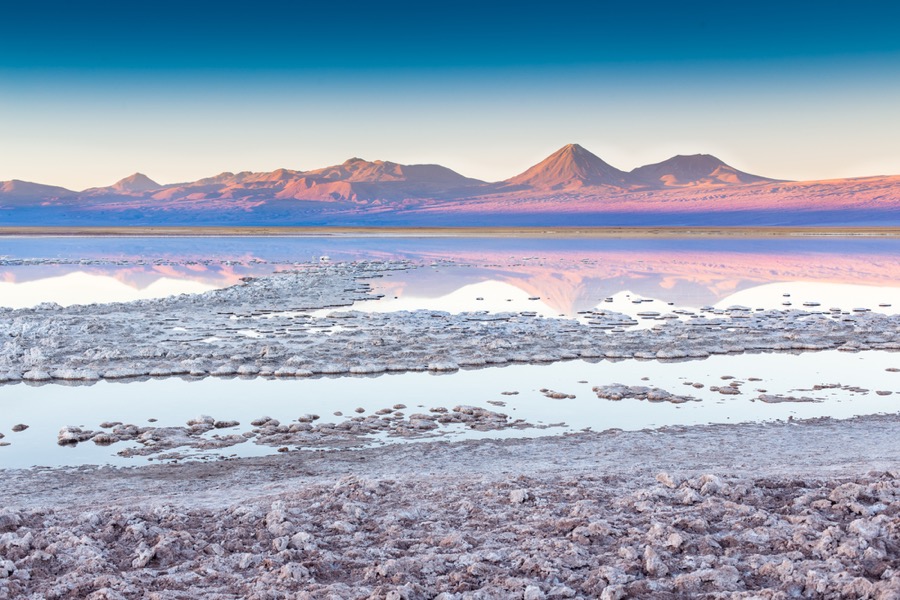
Chile holds half of the world’s most “economically extractable” reserves of lithium. (Image of the Andes Mountains reflected in a salt lake near San Pedro de Atacama, Chile, by Samuel Cohen | Shutterstock.)

Chile’s left-leaning government vowed to take a pragmatic approach to opening up new areas for lithium mining as it looks to lure investment under its public-private-participation model.


Authorities understand that “the numbers should make sense” for the private sector, Economy Minister Nicolas Grau said Thursday on a call with more than 400 lithium industry representatives from 30 countries.

Work to identify new extraction areas is well advanced as would-be bidders jostle to tap the world’s biggest reserves of the metal that’s a key component in electric-vehicle batteries. Under President Gabriel Boric’s new public-private model, the state will take a controlling stake in operations considered strategically significant, while allowing private firms to retain control of projects in non-strategic areas.

The government will be flexible when defining those categories, Grau said, acknowledging that some salt flats are too small for the state to have a major role.

“Our strategy is flexible, such that we can attract the private sector to participate,” he said.

His comments may ease lingering concerns that the new approach is a quasi-nationalization.

Read More: More than 50 firms want in on new lithium-mining model in Chile

The government has three categories of contracts. In the Salar de Atacama, the only salt flat currently being exploited, state copper behemoth Codelco is negotiating a new arrangement with SQM. Separately, Codelco and another state firm, Enami, will receive contracts in about five salt flats, for which they’ll have to find private partners. Then other groups of smaller salt flats will be open for tender to the private sector in mid 2024.

The government is “close” to specifying which salt flats will be protected and which will be available for exploitation, Grau said. Authorities will restrict lithium exploration and production on 30% of the surface area of salt flats in the country’s northern desert. That will still leave more than 10 open for development under new contracts, he said on the call.

The minister sees a “high” probability that Chile will issue at least one new contract in the next 12 months, with the government hopeful of having five new projects underway by 2025.

The government is looking to increase production after Chile saw its share of the global market decline, while shifting to more sustainable extraction methods.

It’s also looking to encourage downstream investments. Companies able to add value will have an advantage under the new model, the minister said. New contracts will also offer something similar to the current requirement to offer 25% of production for local use at preferential prices, he said.

(By James Attwood)

Chilean lawmakers to launch Codelco probe amid extended copper slide

Reuters | August 24, 2023 |

Chuquicamata mine, Chile. Credit: Codelco.

Mining projects run by Chile’s state-owned copper producer Codelco will be investigated by a congressional committee, lawmakers in the lower house announced, amid a prolonged fall in production of the key industrial metal.


The motion to launch the investigation was approved unanimously late on Wednesday, aiming to review the administration and regulation of Codelco, the world’s largest copper miner.

The probe will focus in particular on project delays and planning, as well as Codelco’s corporate structure, according to a congressional statement.

The membership of the investigative committee has not yet been determined, and participating lawmakers will have two months to produce a report with its findings.

(By Fabian Andres Cambero)


Fortescue expects initial license for Brazil green hydrogen project by September

Reuters | August 23, 2023 | 

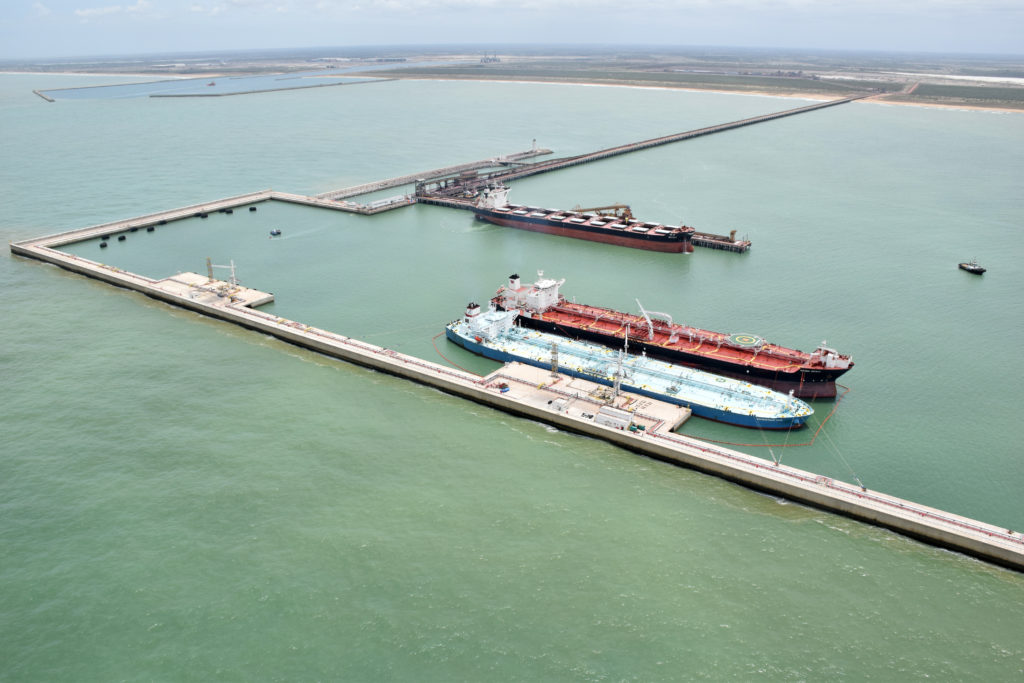
Port of Açu, where Fortescue is developing a green hydrogen plant. Credit: Wikipedia

Australian mining and energy firm Fortescue expects to receive a preliminary license to install a green hydrogen plant in Brazil by September, an executive said, marking an important step forward in a still-fledgling market in Latin America.


Discussions regarding the approval of Fortescue’s preliminary license are scheduled for next month, following the delivery of environmental impact studies, Agustin Pichot, the firm’s Latin America head, said in an interview.

The plant, to be built in a port city in the northeast of the country, has a projected production capacity of 900,000 tons of green ammonia, which is meant to be exported and then converted to hydrogen in consumer countries.

Fortescue already has some early agreements with potential buyers, and is targeting more in Asian countries like Singapore, Japan and South Korea, Pichot said.

(By Leticia Fucuchima and Kylie Madry; Editing by David Evans)

Australia sees strong demand for critical minerals over next 40 years
Reuters | August 23, 2023 | 


Australia’s economy is well-placed to benefit from strong demand for critical minerals with the global appetite expected to rise by 350% by 2040, official forecasts showed on Wednesday, as many big economies rush to hit net zero emission targets by 2050.


Australia supplies around half of the world’s lithium and has vast reserves of the nickel, zinc and bauxite required for the production of clean energy technology in electric vehicles and batteries. It has the potential for more undiscovered minerals, with around 80% of the land mass largely under-explored.

The government’s “Intergenerational Report 2023” will forecast the global demand for lithium is projected to increase sharply through 2063, significantly expanding Australia’s potential export market, according to excerpts of the report reviewed by Reuters.

Export volumes of spodumene concentrate, a type of lithium ore, are projected to double over the next five years from 2022.

Ahead of the report’s formal release on Thursday, Treasurer Jim Chalmers called critical minerals Australia’s “big chance and big opportunity” to broaden its industrial base.

“We have just what the world needs, just when the world needs it,” Chalmers said in a statement.

But miner BHP, after reporting full-year results on Tuesday, said Australia could face significant challenges in developing its critical minerals industry in coming years and needed to focus on its fiscal settings and productivity.

Australia has reaped natural advantages in its deposits of iron ore and coal, key drivers of the country’s prosperity, which are largely found in large, shallow deposits and can be easily transported to end markets, the company said.

That is not the same for copper, lithium, nickel and rare earths, which are found in smaller deposits, at increasingly deeper levels, and require more costly processing.

“For investments in critical minerals, Australia really has to focus on its competitiveness relative to other jurisdictions, both on fiscal terms and on productivity,” BHP CEO Mike Henry said on Tuesday.

($1 = 1.5511 Australian dollars)

(By Renju Jose in Sydney and Melanie Burton; Editing by Christian Schmollinger)
Miners hope to keep ‘gold shining’ in Mali despite ownership law

Reuters | August 23, 2023 | 7:49 am Top Companies Africa Gold

Fekola gold mine. (Image courtesy of B2Gold.)

Some of Mali’s top gold producers said a new law to allow the military-led government to increase its ownership of mines should not apply to existing operations, but analysts said it was likely to deter future investment.


In line with a rise in resource nationalism across the world, spurred on by strong commodity prices, the code adopted by Mali’s Parliament – would allow the state and local investors to take stakes as high as 35% in mining projects compared with 20% now.

It will become effective once signed by President Assimi Goita, although it is unclear when that will be.

Mining companies operating in Mali said producing mines would be safeguarded by previous conventions, which could allow them to seek international arbitration if necessary.

The world’s second largest gold miner Barrick said its CEO Mark Bristow has personally engaged with the current leadership over their proposed law.

“We are optimistic that, as in the past, we will find a mutually acceptable way to keep gold shining for Mali,” a spokesperson told Reuters, saying Barrick has had “constructive relationship with successive governments”.

Gold mining accounts for 9% of Mali’s gross domestic product and half of state revenues.

Lassana Guindo, the ministry of mines’ technical adviser told Reuters Mali wants to maintain its attractiveness, stability and respects commitments to investors, although he declined to say when the law would come into force and whether it would only impact new projects.

“We will have to wait for its promulgation and the implementing decrees, especially the implementing decrees. There are things that are still in progress,” he said.

Until now gold mines, concentrated in the south of Mali and around the capital, away from the more unstable north of the country, have been largely shielded from instability and volatile tax regimes that have deterred investment in much of West Africa.

Vancouver-based B2Gold Corp, which is expanding output at its flagship Fekola mine in Mali, said the operation is unlikely to be materially impacted by the law change during its lifespan.

“An existing mining project like Fekola Mine with a convention in compliance with the mining in place at the time the convention was entered into should not be impacted by the new mining code,” B2Gold told Reuters.

Another operator Hummingbird Resources said investors would be monitoring developments.

“It would ultimately need to be factored into any future investment decision for potential projects that fall under the jurisdiction of this new mining law,” a Hummingbird spokesperson told Reuters.

Analysts predicted investment would shrink as miners anticipated the new law could herald deeper change.

“It will likely discourage existing operators from developing new projects, deter foreign miners from investing in Mali,” Mucahid Durmaz, senior Africa analyst at Verisk Maplecroft, said.

“There is a risk the new mining law is the thin end of the wedge. Miners will be concerned about the potential for further demands down the line, such as re-negotiating existing contracts.”

(By Felix Njini; Editing by Barbara Lewis)
Indonesia’s nickel prices surge amid probe into mining approvals

Reuters | August 23, 2023 |

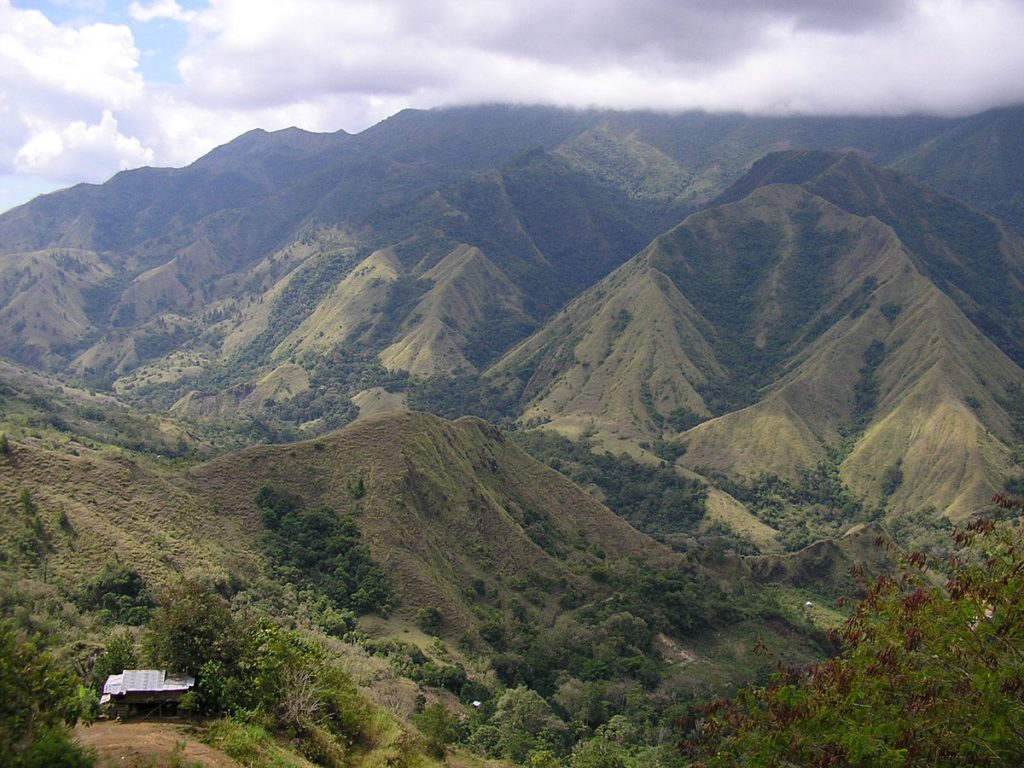
South Sulawesi, Indonesia. Credit: Wikimedia Commons

Prices of nickel ore in top global producer Indonesia have surged about 10% in recent weeks, say local buyers, after an investigation into mining quotas disrupted production of the metal used in stainless steel and batteries.


Indonesia’s Attorney General Office (AGO) in June launched a probe into illegal mining, leading to the arrest of a top government official earlier this month and the suspension of operations at a key mining site owned by state miner Aneka Tambang (Antam).

Jakarta has also halted issuing new mining quotas for nickel miners, according to a manager at an Indonesia-based smelter and a report by Chinese consultancy Mysteel.

The Energy and Mineral Resources Ministry did not respond to Reuters requests for confirmation.

Dozens of nickel smelters in the country are now rushing to stock up on ore, pushing up prices of the material, according to a smelter manager, a nickel trader and Mysteel.

“Smelters are scrambling for ore, with fears of not enough supply especially after big buyers lifted prices,” said the manager at a Chinese-owned smelter who declined to be identified as he is not authorized to speak to media.

“Many smelters don’t have much nickel ore stocks, and if the situation continues, we might see some stop production,” he added.

Some smelters are raising offers for ore by as much as 15%, said a Chinese trader which buys nickel pig iron from Indonesia.

The suspension of new mining quota could reduce ore supply in the country by 30% during the August-December period, said MySteel.

Antam is keeping its 2023 production target at 11.3 million metric tons of wet ore, the company’s corporate secretary Syarief Faizal Alkadrie told Reuters, despite the suspension of operations at its Mandiodo block.

Indonesia produced 1.61 million metric tons of nickel ore in 2022, half of the world’s total, data from World Bureau of Metal Statistics showed.

Most of the ore is smelted into nickel pig iron, which is partly consumed locally to make stainless steel and partly exported to China for further processing.

The higher cost of ore has pushed up nickel pig iron prices to 1,175 yuan ($161.22) per nickel unit on Wednesday, up 10% from a month earlier and the highest since March, according to MySteel.

Export prices stood at $139 per nickel unit, the highest in more than two months, it said.

China, the world’s top nickel consumer, imported 4.29 million tons of nickel pig iron in the first seven months this year, with 93% of shipments from Indonesia, Chinese customs data showed.

Prices of nickel pig iron in China’s eastern Jiangsu province reached 1,165 yuan per nickel unit on Wednesday, up 10% from a month earlier and the highest since March, according to Mysteel.

The situation in Indonesia is also pushing up nickel ore prices in the Philippines, according to Dante Bravo, the president of Global Ferronickel Holdings Inc, one of the country’s biggest nickel ore producers.

($1 = 7.2883 Chinese yuan renminbi)

(By Siyi Liu, Fransiska Nangoy, Enrico dela Cruz and Beijing newsroom; Editing by Dominique Patton and Devika Syamnath)