Saturday, August 26, 2023

“Thank You, Big Oil” Campaign Targets Fossil Fuel Companies

Fossil Free Media has created a campaign that uses billboards to drive home the message that burning fossil fuels leads to global heating.


Courtesy of Thank You Big Oil.com

CLIMATE CHANGE
BySteve Hanley
CLEAN TECHNICA
Published18 hours ago

This week, drivers traveling on highways in Phoenix, Austin, and Fresno will see prominent billboards displaying a map of record-breaking temperatures that have been recorded across the US this summer. Fresno drivers will be reminded of a 109°F day in their city while those in Phoenix will see 117°F plastered over their hometown on the map, accompanied by the words, “Brought to you by Big Oil” and ThankYouBigOil.com.

The billboards are part of the Stop the Oil Profiteering campaign initiated by Fossil Free Media, a group that seeks to educate the public about the role fossil fuel companies have played in making 2023 the hottest year on record. At this very moment, nearly a third of all Americans are set to experience record high temperatures all across the country.

“The fossil fuel industry has known for decades that their products are fueling climate change and extreme weather, yet they have failed to act,” says the Fossil Free Media website. “Instead, major oil and gas companies continue to invest billions into new projects that lock in decades more fossil fuel extraction while our communities take the heat… literally.”

Jamie Henn, director of the organization, said on social media that the public “needs to understand that this summer’s brutal heatwave was brought to you by Big Oil.” Henn is a US climate activist who is the founder and director of Fossil Free Media, a nonprofit media lab that supports the movement to end fossil fuels. Fossil Free Media is the home of Clean Creatives, a campaign pressuring public relations and advertising companies to quit working with fossil fuel companies.


Fossil Fuel & Heat

Republicans don’t believe human activity is responsible for the massive heat waves that have swept across North America, Europe, and China this year. They think sunspots are the cause or maybe Democrats running child pornography rings out of the back of pizza restaurants. Many believe the massive forest fires that swept across much of North America this summer were deliberately set by socialist activists with boxes of kitchen matches at the ready. They always demand, “Where’s the proof?”

Here it is. A study released in July by World Weather Attribution found that extreme heat in North America, Europe, and China in July 2023 was made much more likely by climate change. Among its findings are these:In all the regions a heatwave of the same likelihood as the one observed today would have been significantly cooler in a world without climate change. Similar to previous studies we found that the heatwaves defined above are 2.5°C warmer in Southern Europe, 2°C warmer in North America and about 1°C in China in today’s climate than they would have been if it was not for human induced climate change.
Unless the world rapidly stops burning fossil fuels, these events will become even more common and the world will experience heatwaves that are even hotter and longer-lasting. A heatwave like the recent ones would occur every 2-5 years in a world that is 2°C warmer than the pre-industrial climate.

“The result of this attribution study is not surprising. The world hasn’t stopped burning fossil fuels, the climate continues to warm, and heatwaves continue to become more extreme. It is that simple,” said Friederike Otto, a co-author of the study and a senior lecturer in climate science at the Grantham Institute for Climate Change and the Environment at Imperial College London.
Fossil Fuel Subsidies Top $1 Trillion

Here’s the thing, people. Not only is the Earth getting hotter, the rate of increase is exponential, not linear. We are in that part of the “hockey stick” chart made famous — or infamous — by Al Gore in his movie An Inconvenient Truth. We aren’t talking about an existential climate crisis happening in two or three hundred years anymore. We are talking about most humans being unable to survive on Earth in a few decades.

And yet, governments continue to subsidize fossil fuel companies. According to the International Institute For Sustainable Development, the amount of public money flowing into coal, oil, and gas in 20 of the world’s biggest economies reached a record $1.4 trillion in 2022, even though world leaders agreed to phase out “inefficient” fossil fuel subsidies at the COP26 climate summit in Glasgow two years ago.

The report comes ahead of a meeting of G20 countries in Delhi next month that could set the tone for the COP28 conference in the United Arab Emirates this November. “It is crucial that leaders put fossil fuel subsidies on the agenda” Tara Laan, a senior associate at IISD and lead author of the study, told The Guardian. “These figures are a stark reminder of the massive amounts of public money G20 governments continue to pour into fossil fuels, despite the increasingly devastating impacts of climate change.”

The report found G20 governments last year provided fossil fuels $1 trillion in subsidies, $322 billion in investments by state owned enterprises, and $50 billion in loans from public finance institutions. The total amount was more than double what was provided in 2019, the authors found, even though the fossil fuel industry reported historically high profits in 2022, thanks in large measure to disruptions in the marketplace created by the invasion of Ukraine.

In June, a report from the World Bank found that “by underpricing fossil fuels, governments not only incentivize overuse, but also perpetuate inefficient polluting technologies and entrench inequality.” Richard Damania, chief economist of a sustainability group at the World Bank and lead author of the report, said, “By re-purposing wasteful subsidies, we can free up significant sums that could instead be used to address some of the planet’s most pressing challenge. Governments should prioritize reforms that build public acceptance, protect the most vulnerable, and show how the money is being spent to meaningfully improve people’s lives.”

The IISD is calling on the world leaders who assemble at the upcoming G20 conference to end fossil fuel subsidies in rich countries by 2025 and in the rest of the world by 2030. “With fossil fuel companies gaining record profits amid the energy crisis last year, there is little incentive for them to change their business models in line with what’s needed to limit global warming,” said Laan. “But governments have the power to push them in the right direction.”

The Takeaway


Our political leaders know how to dramatically reduce pollution from burning fossil fuels — put an appropriate price on carbon and methane emissions. Allowing polluters to avoid paying for the damage they do invites abuse of the environment. “But it’s too expensive!” people cry. To which we say, “How much is a sustainable worth to you?”

Back when I was young and foolish and rode motorcycles, I asked a friend for advice on which helmet to buy. I was trying to keep the cost down. “How much is your head worth?” he asked me. That was an excellent way of clarifying things for me. I wound up spending more than I wanted to and never once regretted it.

Making good choices is easy. Making good choices that go against your economic interest is hard. If we change the economic equation to put a higher value on a planet that can support human life as we know it, making good climate choices would become infinitely easier. We can start by eliminating those subsidies to fossil fuel companies.
Mandatory disclosure would reveal corporate carbon damages

Accurate reporting is critical for markets and climate policies

The US Securities and Exchange Commission recently proposed a rule that would mandate that public companies report their greenhouse gas (GHG) emissions. This follows similar efforts in the European Union (EU) and United Kingdom. One rationale is that disclosure will provide information on material risks to investors, making it evident which firms are most exposed to future climate policies. In addition, some believe that reporting will galvanize pressure from companies’ key stakeholders (e.g., customers and employees), leading them to voluntarily reduce their emissions. This reasoning is in line with evidence for financial markets (1) and disclosure mandates that form the third wave of environmental policy, which follows a wave of direct regulation and a wave of market-based approaches (2). But what might such disclosure reveal? We provide a first-cut preview of what we might learn about the climate damages caused by each company’s GHG emissions by drawing on one of the largest global datasets, which covers roughly 15,000 public companies.

Here, we introduce “corporate carbon damages” as a measure of the total costs to society associated with corporate emissions. For each firm, it is calculated as the product of their carbon dioxide (CO2)–equivalent direct emissions and the social cost of carbon (SCC)—the monetary value of the damages associated with the release of an additional metric ton of CO2. To account for differences in firm size and to facilitate across-firm comparisons, we then divide this product by the respective firm’s operating profit or sales. With existing datasets, it is not possible to determine who bears the costs or to divide responsibility for these damages between firms and consumers (3). We nevertheless refer to them as corporate carbon damages because the emissions come from firm activities. The core finding is that average corporate carbon damages are large, but they vary greatly across firms within an industry, across industries, and across countries.

We argue that widespread mandatory disclosure is critical for confronting the climate challenge for several reasons. Perhaps most importantly, reliable measurement of GHG emissions is the foundation of any meaningful policy to restrict emissions. Additionally, knowledge of the heterogeneity in corporate carbon damages is critical to tackling the distributional and related political economy considerations that frequently cause climate policies to founder. Finally, making heterogeneity in corporate emissions transparent can facilitate across-firm benchmarking by various stakeholders, which could become an important force that drives continued reductions in corporate emissions.

Corporate carbon damages based on operating income and revenue

Gray horizontal bars indicate ranges from the 10th to 90th percentiles. When computing carbon damages scaled by operating income, only firms for which operating income is positive are used. Observations of the scaled carbon damages are truncated if they are below the first or above the 99th percentile.

GRAPHIC: D. AN-PHAM/SCIENCE

Data and Methods

Our analysis is based on a global sample of reported and estimated corporate GHG emissions provided by Trucost [see supplementary materials (SM) and (4)]. We focus on data from 2019 because it is the most recent year that was unaffected by the COVID-19 pandemic; however, we also report results for 2021 that are qualitatively similar (table S2). Our focus is on scope 1 emissions, which are the direct emissions from sources that are owned or controlled by the respective company. This focus avoids issues of double counting that could otherwise arise [e.g., when using indirect emissions from purchased electricity (scope 2) or upstream production inputs and downstream use (scope 3)]. In principle, scope 1 emissions of all companies should add up to the corporate sector’s total emissions. Moreover, if all firms globally reported their scope 1 emissions, all corporate emissions would be accounted for, including those from firms that “outsource” to other countries; indeed, outsourcing across country borders provides another rationale for conducting our analysis at the global level.

A weakness of an exclusive focus on scope 1 emissions is that it involves some arbitrariness in assigning carbon damages to firms, industries, and countries. For example, a steel producer that burns fossil fuels on-site would be rated as producing much higher damages than one that draws electricity from the grid with the same total associated CO2 emissions. Similarly, a firm (or country) can reduce its scope 1 emissions by “outsourcing” the emissions-intensive part of its business (or economy) by spinning it off into a separate company (or by regulating emissions domestically so that emissions move to another country). Acknowledging these weaknesses, we use scope 1 emissions to avoid double counting, which is critical if the goal is to compute firm-level carbon damages. We show that the results of our analysis are qualitatively unchanged when we account for differences in power supply and use the sum of scope 1 and 2 emissions instead (tables S9 to S11).

Corporate carbon damages by industry

Carbon damages are shown for a social cost of carbon of $190 per ton of CO2-equivalent emissions. Gray horizontal bars indicate ranges from the 10th to 90th percentiles. The number of firms (N) in each industry group are in parentheses. Graphs are truncated at 150%. In the global (US) sample, the values of the 90th percentile for energy; food, beverage, and tobacco; materials; transportation; and utilities are 383% (234%); 160%; 567% (178%); 358% (201%); and 675% (342%), respectively.


GRAPHIC: D. AN-PHAM/SCIENCE

Our study provides and analyzes estimates of corporate carbon damages for 14,879 publicly traded firms across the globe. Our sample accounts for more than 80% of global market capitalization of public companies. We calculate each company’s carbon damages as the product of its tons of scope 1 emissions and the SCC. We use three different estimates for the SCC to account for the uncertainties in estimating climate damages. Most of our analyses use $190 per ton of CO2-equivalent emissions (tCO2e), which was introduced by the US Environmental Protection Agency in November 2022, but we also report results for a lower value ($51 per tCO2e) that was used by the Obama administration and a higher value ($250 per tCO2e) that reflects that the $190 per tCO2e value does not include areas (e.g., migration and conflict) for which it is generally expected that there will be meaningful climate damages (5).

We then normalize the corporate carbon damages to provide a sense of their magnitude at the firm level. One way to scale it is to use output or revenue, akin to what economists do when they compute the labor and capital shares as production inputs. Another way to normalize carbon damages is to express them as a fraction of firms’ operating profits, which are, on average, about 17% of firms’ revenues; this expresses carbon damages relative to a measure of the value firms create with their products and services for their shareholders.

The idea of monetizing firms’ environmental impacts has been around for at least a decade. We can broadly group approaches into three categories: (i) conceptual proposals that extend the income statement by line items reflecting the monetized value of corporate impacts; (ii) studies that suggest or analyze accounting methods for GHG emissions; and (iii) empirical analyses of monetized corporate environmental impacts or carbon taxes. Our analysis of carbon damages differs from related approaches because of its large global sample of firms from many industries, the values for SCC, and its conceptual underpinnings, such as our focus on scope 1 emissions to avoid double counting. (We further discuss related approaches and provide an overview in the SM and table S1.)

It is conceptually important to underscore that our approach to expressing carbon damages as a fraction of operating profits provides neither the percentage by which profits would decline if carbon emissions were taxed at the SCC (6) nor a measure of the implicit subsidy to firms’ profits due to insufficient carbon regulation globally (7). The impact of a carbon tax (set at the SCC) on profits would differ from corporate carbon damages because the tax’s incidence would be divided between firms, customers, and workers. The exact split would depend on several factors, including the elasticities of supply and demand for firms’ products, which vary greatly across and within industry and country (3). Also, carbon damages are not equivalent to and exceed the implicit carbon subsidy of corporate activities because firms pay for emissions in some regimes (e.g., the EU Emissions Trading System) and, in addition, face nonprice emissions regulation in many parts of the world. Although the explicit or implicit carbon prices to firms from these regulations are generally much lower than the SCC, one would need to measure the per-ton cost of carbon regulation (price and nonprice) that firms’ emissions face globally to compute subsidies. The data necessary to do such calculations are not available.

Thus, our analysis is a “first cut” of the corporate carbon damages that is based on one of the largest emissions datasets that is presently available. It serves as a preview for what would be revealed with global mandatory reporting. We underscore, however, that the resulting estimates must be interpreted cautiously. Of the firms in our sample for which GHG emissions data were available, only 31% of them directly reported their emissions (fig. S1). This reflects that in almost all parts of the world, reporting is, at present, still voluntary, lacks independent verification, and/or faces no penalties for underreporting; together, these features raise important questions about the reliability of emissions data that we cannot answer. The emissions for the remaining 69% of the sample firms are estimated by Trucost using a model that relies on mostly voluntary emissions reports from a wide array of data sources to determine sector-specific emission intensities, the company’s business sectors, and its revenue share by sectors (see SM). The results are qualitatively unchanged when using a subset of emissions data that is reported as third-party verified or when using an alternative data provider with less coverage (table S14).


Results
In presenting the results, we focus on the global sample and additionally highlight the subsample of US companies. Aside from being the largest economy and home to a large set of publicly traded firms, the United States plays a special role because of its current regulatory debate over mandatory climate reporting. We also focus on the damage estimates when the SCC is $190 per tCO2e. (Estimates using other SCC values are provided in the SM.)

Three main findings emerge from our analysis. First, average corporate carbon damages are large, but they vary greatly across firms. For the global sample, they equal roughly 44% of firms’ operating profits and 3.1% of their revenues. For US firms, average damages are 18.5% of profits and 2% of revenues (see the first figure and tables S3 and S4). When we calculate corporate carbon damages as a weighted average to account for firm size differences, using operating profits as weights, the global and the US averages are 34.2 and 15.6% of profits, respectively (fig. S2).

Second, there is substantial variation across firms, as well as across and within industries. The means far exceed the medians because there are firms with outsized carbon damages (see the first figure). But it is important to recognize that there are firms on both ends of the spectrum. In the global sample, the 10th percentile of carbon damages is equal to only 0.1% of corporate profits, whereas it is 85.8% for the 90th percentile (table S3).

Next, the largest carbon damages occur in the energy-intensive industries (i.e., utilities, materials, energy, transportation, and food, beverage, and tobacco), for which the industry average of the damages is well above the mean of the global sample (see the second figure and fig. S3). It is noteworthy that the top-four industries account for 89% of the total global corporate carbon damages. Importantly, however, there is substantial heterogeneity within industry. For example, globally (in the United States) corporate carbon damages as a share of profits in the energy sector are 382.9% (233.7%) for the 90th-percentile firm and just 4.5% (4.5%) for the 10th-percentile firm in this sector (tables S5 and S6).

This heterogeneity within the same industry suggests that peer benchmarking has the potential to induce meaningful reductions in corporate carbon damages (table S13). To illustrate this potential, we compute the amount by which firms’ total emissions would decline, if all firms with carbon damages above their industry’s median were to reduce their carbon damages to their respective industry median. For our sample, total emissions would decrease by more than 70%, with either the operating profit or the revenue normalization. Although this is just one example, it makes clear that benchmarking firms against their peers in terms of carbon damages has high potential for reducing corporate emissions (more details in table S12).

Third, the variation in carbon damages across countries is substantial (fig. S4 and tables S7 and S8). Countries with high unadjusted average damages are Russia (129.6%), Indonesia (89.6%), and India (78.8%). The average unadjusted damages for France, the United States, and the United Kingdom are 29.5, 25.7, and 21.7%, respectively (see column 2a of the table). The unadjusted rankings accord roughly with conventional wisdom about differences in climate regulatory stringency (see column 2b of the table). They also reflect carbon production, rather than consumption; so, for example, the climate damages from high–carbon intensity products (e.g., steel bars) that are imported into the United States are assigned to the exporter, rather than to the United States.

The country rankings are influenced by differences in industrial composition (see column 2b of the table), so the country rankings after adjustment for these differences are reported (see column 3 of the table). This normalization changes the country ranking. For instance, Brazil has relatively many firms in carbon-intensive sectors, such as transportation and utilities, and thus moves down from 9th to 16th place when we account for its industrial composition. Conversely, South Korea has relatively many firms in less–carbon intensive industries, such as semiconductors, and hence rises from 7th place to being the country with the highest average industry-adjusted corporate carbon damages.

Conclusion
The core finding from our analysis is that corporate carbon damages are, on average, large but highly skewed, with median damages being much smaller. Moreover, these damages are heterogeneous across industries as well as within industries and countries. It is important to bear in mind that these findings are largely derived from voluntary reporting with no penalties for misreporting or even from estimated emissions. This is not a small caveat and underscores the need for mandatory and verified emissions reporting.

Mandatory disclosure can aid in decreasing GHG emissions in at least three important ways. First, it is not possible to have meaningful policies that aim to restrict GHG emissions without reliable measurement and credible data. This is true for both market-based policies (e.g., taxes on GHG emissions and cap-and-trade markets) and for command-and-control policies, which also require credible data to determine whether the policy is achieving its intended goals.

Second, mandatory disclosure would help financial markets to discipline GHG emissions by pricing existing and expected future environmental policies. Such disclosure and the subsequent pricing would also give firms incentives to think strategically about their GHG emissions. Supporting this view, a considerable body of research suggests that financial disclosure mandates have improved market pricing of risks, capital allocation, and firms’ financial operations (1, 8, 9), and indeed they are the bedrock of capital markets.

Third, recent studies show that disclosure mandates can incentivize firms to reign in environmental externalities, such as GHG emissions, even in the absence of environmental policy [e.g., (10, 11)]. Targeted transparency has been used successfully in other policy areas (12). Thus, there is an empirical basis for the view that mandatory disclosure could pressure firms to reduce their GHG emissions. At the same time, we note that this “channel” relies on the nonfinancial preferences of key stakeholders (e.g., employees, customers, and perhaps even shareholders), which expands firms’ social responsibility beyond profit maximization.


Carbon emissions, such as from this coal-fired power plant in Pennsylvania, USA, are released into the atmosphere, leading to global climate damages.

PHOTO: ROBERT NICKELSBERG/GETTY IMAGES

A potentially dispositive weakness in firms’ claims to achieve “net zero” and other promises about future GHG emissions reductions is the availability of reliable data regarding whether firms are living up to their promises or engaging in “greenwashing” that does not produce real emissions reductions. Mandatory disclosure would provide a way to hold firms accountable for their promises by providing annual assessments of their own and their competitors’ progress. Such benchmarking against previous years’ emissions or peer firms’ emissions could unlock continued emissions reductions (10). However, to be successful, emissions disclosures have to be credible, and the regime should ideally cover all but the smallest private and public firms.

We believe that Supreme Court Justice Louis Brandeis’s famous 1913 prescription that “sunlight is the best disinfectant” for “social and industrial diseases” still has merit more than a century later in confronting the climate challenge, a problem that society was unaware of at that time. Revealing corporate carbon damages would start a public dialogue about the contribution of corporate activities to the climate problem, which in turn could spur policies and unleash market forces. Put plainly, it is difficult to imagine a successful approach to the climate challenge that does not have widespread mandatory disclosure as its foundation.

Acknowledgments
The authors thank K. Ito, C. Knittel, C. Wolfram, and T. Sellhorn for comments. M.G. acknowledges research funding from the University of Chicago Energy Policy Institute (EPIC). C.L. acknowledges research funding from the Rustandy Center and the Booth School of Business of the University of Chicago. P.B. acknowledges research funding from the German Research Foundation (DFG) under the TRR 266 program (“Accounting for transparency”) and financial support from the Julius Paul Stiegler Memorial Foundation, Landesgraduiertenförderung Baden-Württemberg, and the German Academic Exchange Service (DAAD). M.G. is a cofounder of Climate Vault, a registered nonprofit 501(c)(3) organization, and chairman of the board for the for-profit company Climate Vault Solutions. M.G. owns a diversified portfolio that includes companies in the paper’s underlying dataset. C.L. and P.B. have no competing interests. Raw data were obtained from Trucost and S&P Capital IQ Pro by license agreements for noncommercial use. More details about the analyses are provided in the supplementary materials and in (13).


Carbon emissions found to cost the world's economies 4 times as much as they did 10 years ago

Carbon emissions cost the world's economies four times as much as they did 10 years ago—new research
Credit: Peggychoucair from Pixabay

Every ton of carbon is four times more damaging to the world now than it was 10 years ago, according to a recently published study from the University of Sussex Business School.

The findings, published in Nature Climate Change, are based on an extensive analysis spanning four decades of research.

The "social cost of carbon" is the cost that economies face from the release of carbon into the atmosphere. The cost can be calculated by carbon's effect on:  and welfare, , sea level rise leading to property damage and destruction, desertification, changes in , and declines in labor productivity.

The research, which analyzed over 5,900 estimates from 207 papers published before 2022, used innovative statistical methods such as meta-analysis, and found that, whereas twenty years ago economists tended to advocate a modest carbon tax, they now need to argue for a much more stringent climate policy. This is primarily because the assessment of climate change and its impacts have become much more pessimistic over time.

Professor Richard Tol, professor of economics at the University of Sussex Business School, said, "The implications of these findings for climate policy, are significant. The central estimate is that the social cost of carbon becomes 2.2% larger every year. We have found that every ton of carbon is four times as damaging now as it was 10 years ago.

"The study underscores the need to intensify efforts to reduce  and reassess the appropriate carbon price.

"There is often a gap between the announced emissions targets and the policies supposed to achieve the targets. Besides raising the social cost of carbon, the recommended carbon price, policy makers should focus on raising the actual price of carbon.

"Therefore, this paper justifies a major strengthening of  than the one that we have in Europe and North America, and calls for other countries, particularly China and India to up their climate game."

There are, as the researchers point out, a number of different  of the social cost of carbon, and these vary because of different assumptions about future emissions. However, on average, these predictions have become much more pessimistic as the reality of climate change sets in. For example, climate impacts are unpredictable, and the impacts of moving from 1.5°C to 2°C are much greater than an increase from 0.5°C to 1°C. This has, as the study suggests, increased the cost of carbon significantly as the impact on everything from agriculture to health, sets in.

More information: Richard S. J. Tol, Social cost of carbon estimates have increased over time, Nature Climate Change (2023). DOI: 10.1038/s41558-023-01680-x

Milton Friedman's Alma Mater Exposes Huge Cost of Emissions

A study published by academics at the University of Chicago has found that corporate emissions are undermining prosperity.

Article content

(Bloomberg) — A study published by academics at the University of Chicago has found that corporate emissions are undermining prosperity.

The damage caused when publicly traded companies emit greenhouse gases is equivalent — on average — to about 44% of operating profits, according to an analysis by Michael Greenstone and Christian Leuz of the University of Chicago, and Patricia Breuer of the University of Mannheim. 

Advertisement 2

The remedy is to impose mandatory disclosure requirements that would reveal to financial markets just how much is at stake, the authors wrote. Their conclusion comes as the US Securities and Exchange Commission struggles to push through its climate disclosure rule, in the face of intense corporate lobbying against the measure. 

Read More: Gensler ‘Welcomes’ Input from Congress, Public on Climate Rules

“In too many parts of the world, it is free to emit the greenhouse gases that are causing climate change that is now becoming disruptive,” Greenstone, the Milton Friedman Distinguished Service Professor in Economics and director of the Energy Policy Institute at the University of Chicago, said in an email. 

“Disclosure is inexpensive and has the potential to help set off reductions in greenhouse gas emissions that benefit us all,” he said.

The fact that such a message should come from the University of Chicago, where Friedman nurtured a generation of libertarian economists whose views would collectively be known as the Chicago School, shows how far the debate around climate regulations has come. 

“Disclosure of emissions data is vital to holding firms accountable for their emissions,” Leuz, who’s the Charles F. Pohl Distinguished Service Professor of Accounting and Finance at the University of Chicago’s Booth School of Business, said in a statement.

The report comes as the damage wrought by climate change dominates news headlines, with wildfires, floods and other weather extremes terrorizing populations and habitats across the globe. 

At the same time, direct and indirect subsidies for fossil fuels hit a record $7 trillion last year, or more than 7% of global gross domestic product, according to a fresh analysis the International Monetary Fund. Failure to price in the environmental damage caused by fossil fuels accounts for 60% of that figure, the IMF estimates.

Demand for Crude Oil Is Under Pressure

The authors cautioned that the figures in the University of Chicago study don’t show by how much profits would decline if emissions were taxed. Nor do they reflect implicit subsidies from inadequate carbon regulation. Instead, their research highlights the cost of emissions using a ratio that markets understand.

Advertisement 4

Article content

The study looked at reported and estimated Scope 1 emissions — the narrowest measure — generated in 2019 by almost 15,000 publicly traded companies, representing roughly 80% of the global market. 

To price the damage caused by the emissions, the authors multiplied companies’ CO2 footprint by a unit called the social cost of carbon (SCC). Estimated at $190 per ton of CO2 equivalent by the US Environmental Protection Agency, SCC is defined as “the monetary value of the damages associated with the release of an additional ton of CO2.” 

The authors found considerable variations across countries. In the US, unadjusted average carbon damage as a percentage of corporate profits was about 26%, compared with roughly 130% in Russia.

“Bringing transparency to the damages from firms’ emissions could galvanize pressure from stakeholders and help inform policy and markets,” said Breuer of the Collaborative Research Center TRR 266 Accounting for Transparency, who recently completed her PhD at the Graduate School of Economic and Social Sciences at University of Mannheim. 

Advertisement \

Article content

“But importantly, it would also allow firms and their shareholders and customers to see how they stack up against competitors and think more strategically about their emissions and the toll they are having,” she said.

Not surprisingly, there were also differences across sectors, with utilities, energy, materials and transportation accounting for 89% of global carbon damage. Within a given industry, emissions could be slashed by as much as 70% if the worst polluters were to step up efforts to address their footprints, the study’s authors said.

The research was based on emissions data provided by S&P Global Trucost, which compiles publicly available information and estimates emissions for companies that don’t disclose data. 

“It is important to note that most of the reporting in the dataset is voluntary and done without penalties for inaccuracies,” Greenstone said. “One of the great benefits of mandatory disclosure is that it can vastly increase the credibility of reported emissions.”

Sustainability has lost its meaning as the nuclear lobby triumphs


By Thomas Stuart Kirkland and Christiana Mauro, Freelance reporters
Published on 25/08/2023 
The opinions expressed in this article are those of the author and do not represent in any way the editorial position of Euronews.

Listening to the 14 EU countries-strong Nuclear Alliance that lobbied for nuclear power's green label and now wants to see it treated the same as other renewables means everything is allowed, Thomas Stuart Kirkland and Christiana Mauro write.

The European Commission, under the presidency of Ursula von der Leyen, has officially declared climate policy as its number one priority.

But the end of August, in the European General Court in Luxembourg, marks the conclusion of the first phase of one of three lawsuits against the European Commission targeting a key piece of European Green Deal legislation.

These lawsuits were brought not by opponents of climate mitigation policy, but by those, including Austria and a number of environmental groups, who wish to rescue the legislation from what they see as its being fatally compromised.

The pleading in the cases is aimed at revoking the Complementary Climate Delegated Act (CCDA), in force since this January.

This supplements the Taxonomy Regulation, a list of economic activities considered sustainable and thus eligible for green investment, to include, astonishingly, natural gas and nuclear power.

What has led to this situation, in which the EU executive, ostensibly dedicated to achieving its "Fit by 55" plan to substantially reduce greenhouse emissions by 2030, finds itself challenged on its showpiece Green Legislation by one of its own member states?

The answer readily supplied by critics is that it is an appropriate response to one of the most conspicuous triumphs of greenwashing foisted on the public.

The inclusion of gas and nuclear, they say, violates the entire purpose of the Taxonomy Regulation.
The media dropped the ball

This hijacking of the EU’s key instrument of green policy has been openly accomplished through a campaign of misinformation conducted by the nuclear lobby.

In March 2021, seven nuclear member states sent a letter to the European Commission demanding the inclusion of nuclear energy in the taxonomy.

The intervention got some attention from news media at the time, but it was not of a critical kind.

When a team of independent journalists took the letter’s statements apart it found that of the 25 factual claims in the letter, 20 were either fictitious or misleading.

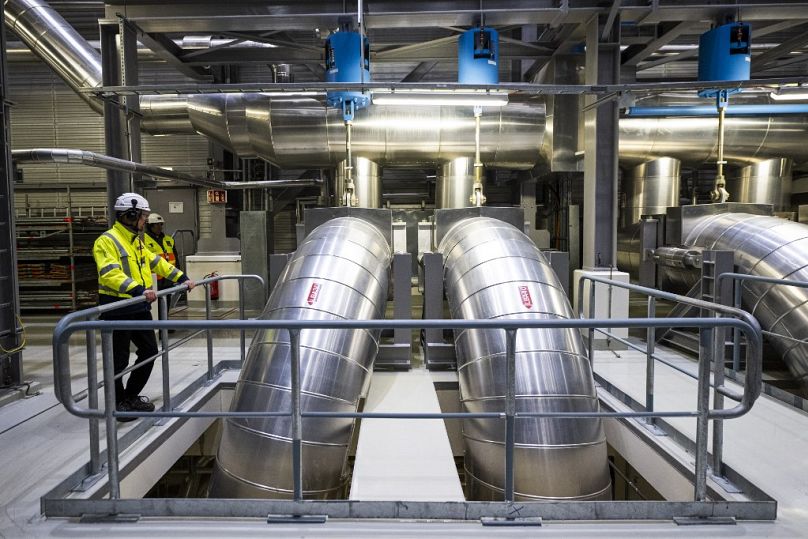
A worker stands at the turbine room linked to the OL3, the latest among three reactors at the nuclear power plant on the island of Eurajoki, May 2023
JONATHAN NACKSTRAND/AFP or licensors

Workaday mainstream journalists with tight deadlines to meet certainly haven’t always been keen to delve into all the nooks and crannies of a complicated story or take the responsibility to come down trenchantly on one side of an issue.

But something more insidious has emerged in recent decades: a paralysis in the face of debate, a willingness to report the scientific controversy and to present both sides in a “fair and balanced” way which gives equal time to the consensus of experts and the hype of hucksters.
Nuclear power: More important for global politics than energy
Bulgaria & Romania's plans for two new Danube hydropower plants raise environmental, nuclear fears

Like retired journalist Jay Rosen said, "You don’t get a lot of complaints if you just write down what everyone says and leave it at that."

But this serves the purposes of disinformation, which is not to convince, but to confuse and demoralise. Ultimately, it disables any organised effort to change things.
The Nuclear Seven's claims are, in fact, dubious

When a team of independent journalists took the letter’s statements apart it found that of the 25 factual claims in the letter, 20 were either fictitious or misleading, including the usual dubious assertions about nuclear’s “valuable contribution” to climate neutrality.

However, the conclusions of the crowd-sourced investigation did not find a publisher among the European outlets and went largely unnoticed.

The letter by the Nuclear Seven -- France, Poland, Hungary, Czechia, Romania, Slovakia and Slovenia -- was bolstered ten days later by the release of a draft report by the European Commission’s Joint Research Centre (JRC).

The extent of the influence of the Nuclear Seven and the JRC report on the ultimate decision to formally label nuclear as sustainable is unclear, but likely decisive.
French President Emmanuel Macron speaks during the presentation of "France 2030" investment plan at the Elysee Palace in Paris
Ludovic Marin/AP

It had been assigned to determine whether nuclear power met the criteria for inclusion in the taxonomy, specifically, the Do No Significant Harm principle. This, in spite of the trifling fact that the JRC was established under the Euratom Treaty and is still tasked with conducting nuclear research under the aegis, and with the funding, of Euratom.

The report concluded that there was no “science-based evidence” that nuclear could do more harm to the environment than other activities in the taxonomy.

Environmental groups sue EU for labelling gas and nuclear as 'green' investments

To no one’s surprise; but to considerable criticism from experts, including one of Germany’s nuclear regulatory authorities, and from the European Commission’s own Scientific Committee on Health, Environment and Emerging Risks, both of whom pointed out that the report’s conclusions were not supported by the report’s own findings.

Others noted that the JRC mandate neglected many critical taxonomy elements. In spite of these severe strictures, when the final JRC report was published a few months later it contained no revisions.
Nuclear lobby's swagger

The extent of the influence of the Nuclear Seven and the JRC report on the ultimate decision to formally label nuclear as sustainable is unclear, but likely decisive.

And buoyed up by this, the EU’s successful nuclear lobby has been conducting itself with noticeable swagger.

From the seven signatories of the 2021 letter, the Nuclear Alliance, as it is now known, has expanded to 14 EU countries with the addition, in February, of Bulgaria, Croatia, Finland and the Netherlands, followed by Belgium, Estonia and Sweden, with Italy as an observer.

As a crowning irony, the Nuclear Alliance is led by France, whose own national law ... excludes atomic energy from being classified as a green investment.
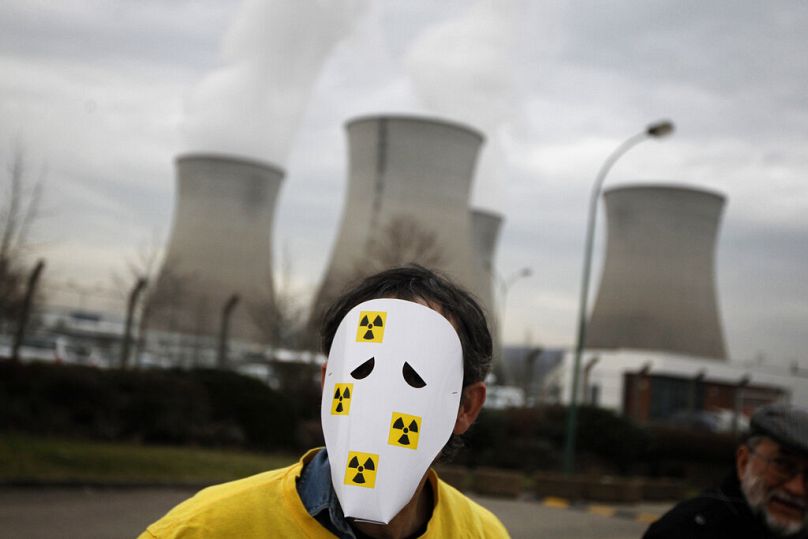
A masked protester demonstrating for the halt of the production of nuclear energy in front of Bugey's nuclear plant in Saint-Vulbas, near Lyon, March 2011
Laurent Cipriani/AP2011

Now representing a majority in the EU, the Alliance has been emboldened to demand, at their fourth meeting in Spain on 11 July, that nuclear energy should be treated equally with renewables when it comes to EU funding and the promotion of joint projects.
Macron calls for nuclear 'renaissance' to end the France's reliance on fossil fuels
Finland’s new nuclear reactor: What does it mean for climate goals and energy security?

Under their banner of “tech neutrality” -- an echo from the 2021 letter -- the Alliance has already successfully lobbied for the acceptance of nuclear-produced "pink hydrogen” as "green hydrogen” and managed to wring important concessions in the revision of the Renewable Energy Directive, which would almost double the share renewable in the EU’s overall energy consumption by 2030.

These concessions allow for a greater role of nuclear power in meeting these targets.
Everything goes as sustainability loses its essence

As a crowning irony, the Nuclear Alliance is led by France, whose own national law -- a 2015 decree on the "Energy and Ecological Transition for Climate" label -- excludes atomic energy from being classified as a green investment.

In “Diversion from urgent climate action”, WISE’s nuclear expert Jan Haverkamp makes the case that vigorous nuclear industry lobbying in Brussels has had a “direct influence on the speed with which urgent climate action is taken”, slowing down the adoption of renewable energy sources, which is a boon for the fossil fuel industry.

Sustainability having lost its meaning, everything is allowed. And so, living in the Upside Down, we are witness to the triumph of the nuclear lobby.

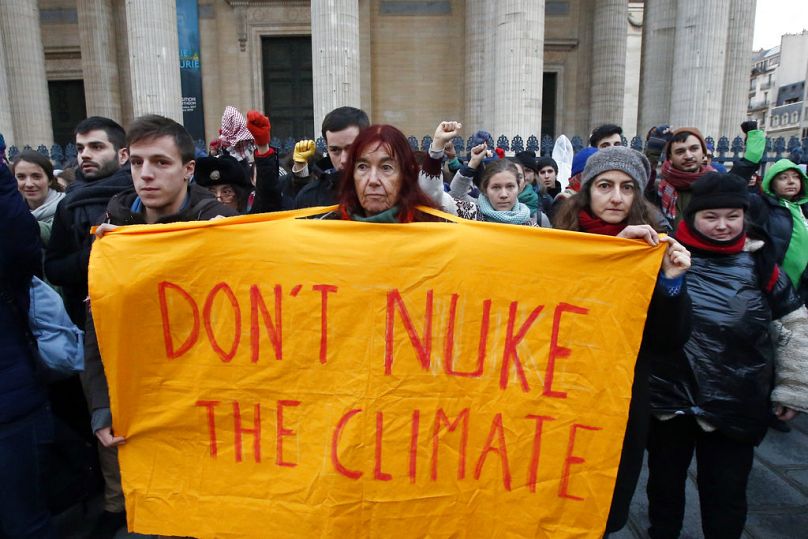
Environmental activists display a banner as they protest at Pantheon monument in support of the Paris climate accord, in Paris
AP Photo/Michel Euler

Sustainability having lost its meaning, everything is allowed.

And so, living in the Upside Down, we are witness to the triumph of the nuclear lobby.

In the post-CCDA landscape, the nuclear zombies have acquired a new green sheen as they shamble and shuffle pointlessly, consuming all the oxygen in the climate policy conversation until they ultimately expire in obscene cost overruns and non-delivery of their boastfully promised but illusory results.

Thomas Stuart Kirkland and Christiana Mauro are freelance reporters covering Eastern Europe.

Opinion: As big burns become the new normal, we need new forest management policies

Opinion: Canada’s climate strategy must account for forest sector carbon emissions and include an ecological approach to forest management

Article content

In wake of the most recent wildfire disasters, including the devastation the island of Maui and parts of B.C. continue to experience, it is high time to reflect on an ecological approach to forest management.

In the summer of 1910, a combination of drought, frequent lightning, high winds and poor forest management led to a mega-fire of three million hectares stretching across Pacific Northwest forests. Called the Big Burn, this event forever changed the way western scientists understood forests, and a new science, fire ecology, rose from the ashes.

Advertisement 2

Herbert Stoddard, one of North America’s earliest fire ecologists, focused his research on the pine savannahs of his childhood. He observed wildlife and ecosystems flourished wherever small, traditional controlled burns were maintained. As an early scientist who acknowledged First Nations’ cultural use of fire, and connected resilience from fires with ecological diversity, he argued management required a deep understanding of the unique histories of every forest.

At his research station in Georgia, Stoddard established a long-lasting experiment that today tells a 70-year-old story of a fire-adapted forest without catastrophic fires. If Canadian forest managers had only applied a similar approach adapted for each unique forest, current wildfires might be far less extensive and severe than we see today.

Future forest management policy must include honest carbon accounting.

The United Nations defines forest carbon accounting as measuring the storage of carbon in forests to guide land-use planning in order to reduce carbon emissions. In 1997, UN Secretary-General Kofi Annan said, “The world needs more (carbon) sinks and less emissions.” He put the world on alert that poor forest practices had created a climate double jeopardy in carbon budgets: forest carbon sinks were lost and vast carbon stores released with every clearcut.

Fast forwarding to the big burns of the last decade, scientists have a deeper understanding of forest dynamics and climate change. Today, they know so much more, including the potential for long-term storage of carbon in old and primary forests, which includes the generally ignored stores in forest floors and soils.

Nobel Prize winner William Moomaw has consistently argued the same accounting rigour must be applied to clearcut logging as to burning coal. In a climate context, the present matters most, and the notion that forest harvesting is carbon neutral is irrelevant because it takes hundreds of years for neutrality to occur.

Nowhere is that argument clearer than in B.C., where government data shows forest sector emissions generated in the last decade are greater than all industry sectors combinedThe province has taken that information one step further, stating in two recent government reports that B.C. must change forest management practices so they support prioritizing ecosystem health and resilience over timber.

For many years those forest sector emissions were never made public. Climate experts first argued forest carbon would be transferred to harvested wood products and so stay out of the atmosphere. The reality is, however, the average lifespan of wood products is only 25 years, and accurate carbon accounting demonstrates forests do a massively better job of storing carbon than harvested wood products.

Advertisement 4

Article content

Today’s policy solutions to manage future landscapes for fire need to:

• Ban clearcutting and plantation-style forestry;

• Manage every forest type uniquely, based on cultural, ecological and disturbance histories;

• Prioritize ecosystem health over timber production, e.g., abandon the “free to grow” policy that poisons hardwoods with the herbicide glyphosate for unrealistic timber projections. For decades, glyphosate has been used in forestry and agriculture to suppress native plants in the name of enhancing crop growth. Even as it was first being applied in B.C. in the 1980s, however, studies clearly showed that dousing forest plantations with glyphosate did not improve the growth of trees. In fact, it killed deciduous trees and plants essential in slowing the spread of wildfire and maintaining forest health. In later years, multiple studies have revealed it is toxic and causes genetic changes in plants, amphibians, birds and humans and can kill certain insects and soil organisms essential for ecological balance;

• Steward old growth, primary forests, and other ecosystems that provide diversity, resilience and carbon storage;

Advertisement 5

Article content

• Account for carbon emissions from logging;

• Set targets for reducing emissions from logging.

The economic solutions arising from accurate accounting put a price on carbon in the forest sector to:

• Incentivize better forest management;

• Disincentivize carbon polluters;

• Remove subsidies with perverse outcomes like logging live trees for pellet exports;

• Provide the full cost accounting of the forest industry to the public;

• Calculate the savings if we work with, not against, nature and rural communities.

Finally, industry has to be in support of these policy changes. Throughout history, priority has been placed on finding opportunities to log the last valuable trees in existence. Arguments have ranged from salvaging logging during the beetle kill period that allowed harvesting of green wood, to recycling “waste” for pellets and claiming young trees as climate “heroes” while ignoring the larger role of mature forests in storing carbon. Today, logging in protected areas continues under the rhetoric of “reducing fire risk.”

The only solution to this new wildfire reality is changing our perspective on forest sector carbon emissions and that starts with putting ecologically driven forest management policies into practice.

Dr. Briony Penn and Dr. Rachel Holt are advisers to Mother Tree Network, an extension of the UBC Faculty of Forestry’s long-standing research study the Mother Tree Project.