Saturday, August 26, 2023

COACHING IS ABUSE 

Spain's World Cup winners refuse to play until Rubiales leaves federation

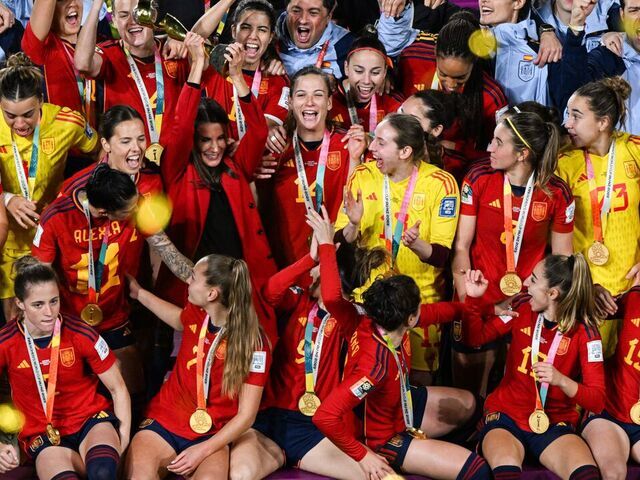
SAEED KHAN / AFP / Getty

The 2023 Women's World Cup winners and other notable figures in Spanish football won't represent their country again until disgraced federation president Luis Rubiales steps down.

Rubiales offered a spirited refusal to resign during Friday's emergency meeting of Spain's football federation. The 46-year-old faces widespread calls to leave his post after planting an unsolicited kiss on star player Jenni Hermoso when Spain players celebrated their World Cup final win over England on Aug. 20.

Hours after Rubiales' vow to "fight" to remain in his position, footballers' union FUTPRO released a statement featuring over 80 signatures from female players, including the full squad that competed at the World Cup. The statement asks for "real changes, both sporting and structural, that help the national team to continue growing in order to continue this great success to later generations," according to a translation by DAZN's Alex Ibaceta.

"After everything that happened during the World Cup award ceremony, we want to state that every player that has signed this statement will not go back to the national team under the current leaders."

The statement also includes a brief response from Hermoso following Rubiales' claims that she lifted him and brought him "close to her body" before accepting the football chief's request for a kiss. She denied this version of events before offering greater detail on the incident and subsequent fallout in a personal statement released on X (formerly Twitter). In the larger statement, she claimed the federation pressured her to justify Rubiales' actions in a "testimony that had little or nothing to do with my feelings."

"It is not up to me to evaluate communication and integrity practices," she added, "but I am sure that as the world champion, we as a team do not deserve such a manipulative, hostile, and controlling culture."

Hermoso stressed that the "manipulative culture" affecting the Spain women's team was generated by Rubiales.

The attacker, 33, also described her feelings after the kiss, saying, "I felt vulnerable and a victim of an impulse-driven, sexist, out-of-place act without any consent on my part."

FIFA opened disciplinary proceedings against Rubiales on Thursday over the kiss. Spain's secretary of sport Victor Francos said the government will "initiate proceedings" for him to explain his actions before Spain's administrative court, describing the scandal as "the Me Too of Spanish football."

Although Rubiales defended his kiss and described the pressure to for him to depart as federation president as an attempt "to publicly assassinate me," he did apologize Friday for grabbing his crotch with Spain's Queen Letizia and her 16-year-old daughter Princess Sofia standing nearby.

"I want to say sorry for the deeds that happened in a moment of euphoria, I grabbed that part of my body and did so looking at (the Spain women's team head coach) Jorge Vilda," he said about his celebrations after the World Cup triumph.

"Of course I have to apologize, to the Queen ... and to everyone else who has felt offended."

Vilda, who was among those who applauded Rubiales' address at Friday's federation meeting, is also under scrutiny for appearing to touch the chest area of a female member of his coaching staff during the World Cup final. The controversy follows his refusal to step down in September 2022 after 15 international players staged a mutiny, declaring Vilda's methods and group management had negatively impacted their "emotional state" and their "health," according to The Guardian's Sid Lowe.

Only three of those 15 players - Ona Batlle, Aitana Bonmati, and Mariona Caldentey - returned to the Spain squad for this summer's victorious World Cup campaign.

Amid row over leadership, Spain's football federation threatens legal action against female players


More than 80 of Spain’s top players said they refuse to play under current management in wake of refusal by federation president refusal to step down

Alyssa McMurtry |26.08.2023
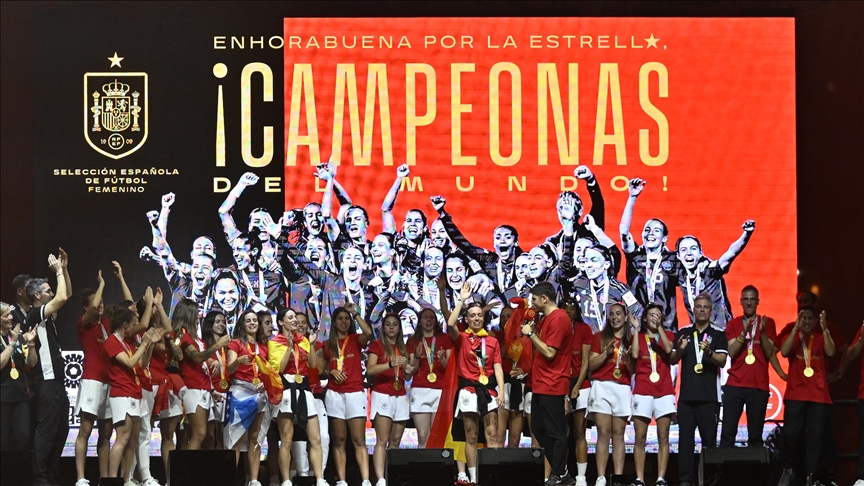

OVIEDO, Spain

What started as a shining victory for Spain’s women’s team in the World Cup has turned into a bitter clash, with Spain’s football federation now threatening legal action against female players.

On Friday, 81 top female players, including the current national team, released a statement through the union Futpro saying they refuse to play for Spain under the current leadership.

The move came after a bombshell speech by the federation’s president, Luis Rubiales. Instead of resigning for kissing player Jennifer Hermoso, as was expected, Rubiales painted himself as a victim of a witch hunt, complained of the “scourge” of “false feminism,” insisted the kiss was mutual, and shouted repeatedly that he would not quit.

Responding to the female players' strike, the federation said that “playing for the national team is an obligation for any member of the federation if they are called upon to do so,” accusing the female players of lying about what happened and threatening legal action.

On Friday night, Hermoso broke her silence, saying Rubiales’ version of the post-World Cup victory kiss was “categorically false and part of the manipulative culture that he himself has generated.”

“I felt vulnerable and a victim of an impulse-driven, sexist, out-of-place act without any consent on my part. Simply put I was not respected,” she wrote, adding that she, her family and teammates had been pressured by the federation to justify Rubiales’ actions.

“As the World Cup Champion, we as a team do not deserve such a manipulative, hostile, and controlling culture,” she added.

At the same time, the federation released photos showing a celebratory hug between Hermoso and Rubiales, calling it “conclusive evidence” that the federation head “did not lie,” insinuating that the player instead instigated the kiss with her boss.

Although Rubiales refuses to quit, Spain’s government has filed a complaint with the Spanish Sports Council to have him suspended, but the legal move is not guaranteed to work.

“As far as we can do anything about it, these are Rubiales’ last hours,” Spain’s Sports Minister Miquel Iceta told El Pais on Saturday, expressing concern that the federation is damaging Spain’s reputation.

Iceta said this is a “Me Too” moment for Spanish football, referring to the worldwide movement against sexual abuse, harassment, and rape that made headlines starting in 2017.

“This has become a test of our collective capacity and the structures of sport to embrace equality between men and women… sometimes an accident provokes a reaction that ends up strengthening the values we want to defend,” he added.

The federation could also be hit financially. Some of the body's main sponsors, including Spanish companies Iberia, Iberdrola, and Renfre, have criticized the federation's position and called for measures to "preserve the dignity" of players.

Jenni Hermoso says 'in no moment' was kiss with Spanish soccer president consensual

Spain players say they will not play any more games until Luis Rubiales steps down

A man in a black polo stands with his hands behind his back.
Spanish soccer president Luis Rubiales, centre, had a disciplinary case against him opened by FIFA on Thursday after he kissed a player on the lips without her consent during the team's victory celebration at the Women's World Cup. (Pierre-Philippe Marcou/AFP via Getty Images)

Less than a week after winning the Women's World Cup, Spain's national team players announced Friday that they will not play any more games unless the president of the country's soccer federation steps down for kissing player Jenni Hermoso on the lips after their victory.

Luis Rubiales, who was also chastised for grabbing his crotch after Spain's 1-0 victory over England on Sunday, remained defiant despite immense pressure to resign. The kiss marred the title celebrations in Sydney, Australia, on Sunday, and criticism has steadily mounted.

Hermoso issued a statement Friday strongly rebuking Rubiales' characterization of the kiss as consensual, saying that 'in no moment' did she consent to the kiss, while the 46-year-old federation president cast himself as the victim at an emergency meeting of the federation in Madrid.

"I won't resign," he declared four times in quick succession, to applause from the overwhelmingly male audience.

Several Spanish news media outlets reported on Thursday that Rubiales would step down. Instead, he said on Friday that he is the victim of a witch hunt by "false feminists."

While Rubiales held his ground, federation vice president Rafael del Amo, who had been in charge of women's soccer, announced that he was resigning, followed by at least two other federation members. Del Amo had urged Rubiales to also resign.

Among those applauding Rubiales were women's national team coach Jorge Vilda and men's national team coach Luis de la Fuente. Until Friday's assembly, he had received no public support in Spain, with political parties from both the left and the right speaking out against him.

WATCH | Spain women's soccer team won't play until Rubiales resigns:

Spain's Women's World Cup champion soccer team say they won't play until the head of the country's soccer federation steps down after he non-consensually kissed player Jenni Hermoso.

Rubiales' version

In his speech to the assembly, Rubiales said Hermoso "lifted me up" in a celebratory gesture and he asked her for "a little kiss?" and she "said yes."

The televised broadcast of the medals ceremony didn't show the first moments when Rubiales congratulated Hermoso. But it does show that his feet were on the ground before he held her face and kissed her.

Hermoso contradicted Rubiales' version in two statements, one issued through her FUTRPO players union and a second published on social media.

She said that she did not consent to the kiss or try to pick up the president, and that there was no conversation like the one described by Rubiales.

"I won't tolerate anyone doubting my word and even less someone putting words in my mouth," she said.

In a second statement, Hermoso said the kiss "left me in a state of shock."

"I believe that no person in any workplace should be the victim of this type of nonconsensual behaviour," she added.

Hermoso also accused the federation of pressuring her and her family to speak out in Rubiales' defence. The federation previously denied a report that it forced her to make a statement downplaying the kiss shortly after it happened.

After a full day of accusations and counteraccusations between Hermoso and Rubiales, the federation issued a statement early Saturday saying that its president did not lie and that he and the organization would take legal action against Hermoso and her union. The statement included photos that it said show Hermoso lifting Rubiales off the ground during the medals ceremony.

'This is unacceptable'

The FUTPRO statement signed by Hermoso, her 22 teammates, and more than 50 other Spanish players said they would no longer play for Spain "if the present leadership remains in charge."

Rubiales said he would defend his honour in court against politicians, including two ministers, who called his kiss an act of sexual violence. One of them was acting Deputy Prime Minister Yolanda Diaz, who urged the government to take "urgent measures."

"Impunity for macho actions is over," Diaz said. "Rubiales cannot continue in office."

Alexia Putellas, Hermoso's teammate and a two-time Ballon d'Or winner as the best player in the world, posted a message of support on X, formerly known as Twitter.

"This is unacceptable," the Barcelona player wrote. "I'm with you, my teammate, Jenni Hermoso."

WATCH | Spain captures Women's World Cup title:

Spain took home its first Women’s World Cup trophy with a 1-0 win over England that came despite major off-field disputes that saw 15 players walk away from the team last year.

Other teammates quickly followed, along with players from abroad.

"I'm disgusted by the public actions of Luis Rubiales," U.S. soccer star Alex Morgan said on X. She added that winning a World Cup "should be one of the best moments in these players' lives but instead it's overshadowed by assault, misogyny, and failures by the Spanish federation."

The president of Spain's women's league, Beatriz Alvarez, told Spanish state broadcaster RTVE that she was not surprised because Rubiales' "ego is above his dignity."

"What surprises and scandalizes me are his words," Alvarez said. "Every time he speaks he shows what kind of person he really is."

Spain's government plans to file lawsuit

Spain's government planned to file a lawsuit Friday alleging that Rubiales violated the country's sports laws, according to Victor Francos, secretary of state for sports and head of Spain's Higher Council for Sports. If Spain's Administrative Court for Sports agrees to hear the suit, the council will suspend Rubiales temporarily pending the court's ruling, Francos said.

If found guilty by the court for committing sexist acts, Rubiales could be ruled unfit to hold office. Francos said he would ask the court to move its regular Thursday meeting up to Monday.

Around 100 people, mostly women, gathered Friday night in front of the Spanish soccer federation's headquarters in Madrid to call for Rubiales' resignation, many waving red cards used by soccer referees to expel players from games.

"What has to happen now is his resignation and the resignation of everyone who applauded him," said 39-year-old protester Alma Dona. "The federation needs to be reformed and women's football should have more support."

Spanish soccer club Barcelona, which provided nine players for Spain's team, said Rubiales' behavior "was completely inappropriate." Real Madrid said it supported the government's decision to try to suspend Rubiales. Sevilla called for his resignation. Athletic Bilbao said it was renouncing its seat on the federation's board and backed the government's decisions. Osasuna slammed Rubiales, calling him "rude and sexist." Espanyol, Valencia, and Celta Vigo also issued statements against Rubiales, as did Spanish league president Javier Tebas.

FIFA gives no timetable for ruling

FIFA, the governing body of soccer, opened a disciplinary case against Rubiales on Thursday. Disciplinary judges can impose sanctions on individuals ranging from warnings and fines to suspensions from the sport. FIFA gave no timetable for the ruling.

The Netherlands-based FIFPRO player's union, which had already demanded action against Rubiales, reiterated its position after his assembly speech.

The only relevant institution to remain silent has been European soccer body UEFA, for which Rubiales is a vice president. FIFPRO urged UEFA to open its own disciplinary case.

Rubiales, who led the Spanish players union for eight years before taking over as federation president in 2018, is currently heading the UEFA-backed bid to host the men's World Cup in 2030. Spain is bidding with neighbouring Portugal and Morocco, and also possibly Ukraine.

Rubiales made 339,000 euros ($365,000 US) in 2021 after taxes, for presiding over the federation with a budget of 382 million euros ($412 million). The federation runs Spain's men's and women's national soccer teams and its semi-professional and amateur soccer leagues. It also organizes the referees for La Liga. The government maintains some oversight of the entity but it cannot name or remove its executives.

Shortly before the kiss, Rubiales grabbed his crotch in a victory gesture, with Queen Letizia of Spain and 16-year old Princess Sofia standing nearby.

He offered an apology for that, saying it was in a moment of "euphoria" and directed toward Vilda on the field.

The first members of the elite in Spanish men's soccer spoke out against Rubiales on Thursday, when it looked like he was bowing out. Their words of reproach continued to trickle in after Rubiales' diatribe on Friday.

"What an embarrassment," former Spain goalkeeper Iker Casillas said on X. "We should have spent the last five days talking about our women players, about the joy they gave us all! About how proud we are that they gave us a title that we didn't have in women's soccer, instead..."

Real Betis forward Borja Iglesias, who has occasionally been called up for Spain's national team, said he would not play for his country again "until things change."

President of Guyana demands slavery reparations ahead of apology from plantation owner descendants
Guyana's President Mohamed Irfaan Ali arrives for the South American Summit at Itamaraty palace in Brasilia, Brazil, Tuesday, May 30, 2023. Irfaan Ali has on Thursday, Aug 24, 2023, lashed out at the descendants of European slave traders and said those who profited from the cruel, trans-Atlantic slave trade should offer to pay reparations to today’s generations.
 (AP Photo/Gustavo Moreno, File)

Bert Wilkinson
The Associated Press
Published Aug. 24, 2023

GEORGETOWN, GUYANA -

Guyana president Irfaan Ali on Thursday lashed out at the descendants of European slave traders, saying those who profited from the cruel, trans-Atlantic slave trade should offer to pay reparations to today's generations.
The information you need to know, sent directly to you: Download the CTV News App

The leader of the South American country also proposed that those involved in the slave trade be posthumously charged for crimes against humanity.

Ali spoke ahead of Friday's planned formal apology in Guyana by the descendants of Scottish 19th-century sugar and coffee plantation owner John Gladstone, saying the apology should also include issues of compensation and reparative justice.

The president said that while he welcomed plans by the family to acknowledge what he called the sins of the past, it also implies "an acknowledgement of the cruel nature of African enslavement and indentureship in Guyana and an act of contrition that paves the way for justice. The Gladstone family has admitted that it benefited from African enslavement and indentureship on the Demerara and other plantations owned by its patriarch, John Gladstone."

Gladstone was the father of 19th-century British Prime Minister William Ewart Gladstone and received more than 100,000 pounds in compensation for hundreds of slaves.

The Gladstone family could not be immediately reached for comment.

Six members of the family are scheduled to arrive in the English-speaking nation later Thursday to participate in a brief ceremony at the University of Guyana on Friday, where they will formally apologize for the role John Gladstone played in what was then British Guiana.

Traveling with them is supposed to be former BBC journalist Laura Trevelyan, whose family earlier this year apologized to slave descendants in Grenada because her ancestors owned hundreds of slaves in that eastern Caribbean island.

Absentee plantation owner Gladstone, who owned more than 2,500 slaves in Guyana and Jamaica, never set foot in Guyana or in the neighboring West Indian islands, but was in charge when the renowned 1823 slave rebellion erupted on his plantation at Success Village on Guyana's east coast, about seven miles from the capital of Georgetown.

Historical records show that hundreds of revolting slaves were killed and their heads chopped off and lined on poles all the way to the capital as a reminder to others nursing similar ambitions as colonizers snuffed the two-day rebellion.

Making his case for reparations, Ali noted that demands by members of a Caribbean trade bloc for reparation payments have intensified. He argued that "reparations (are) a commitment to righting historical wrongs. The trans-Atlantic slave trade and African enslavement were an affront to humanity itself. The heinousness of this crime against humanity demands that we seek to right these wrongs"

Caricom nations, including Guyana, already have hired a British law firm to examine their case for financial compensation from Britain and other European nations. The trade bloc has said it was advised that its case is strong and should be pursued.

"The descendants of John Gladstone must now also outline their plan of action in line with the Caricom plan for reparatory justice for slavery and indentureship," Ali said.

The plan includes a formal apology and investment of billions in education, health, infrastructure and cultural revitalization to ensure that "future generations are unshackled from the chains of history."

A handful of nations have apologized for their role in slavery, including the Netherlands.

Glc.yale.edu

https://glc.yale.edu/sites/default/files/pdf/capatlism_and_slavery.pdf

Capitalism. &. Slavery. Eric Williams. NORTH C ... spective the relationship between early capitalism as exemplified by Great Britain, and the Negro slave ...


Gladstone heirs to apologise for both  slavery, indentureship – UG, Reparations Committee


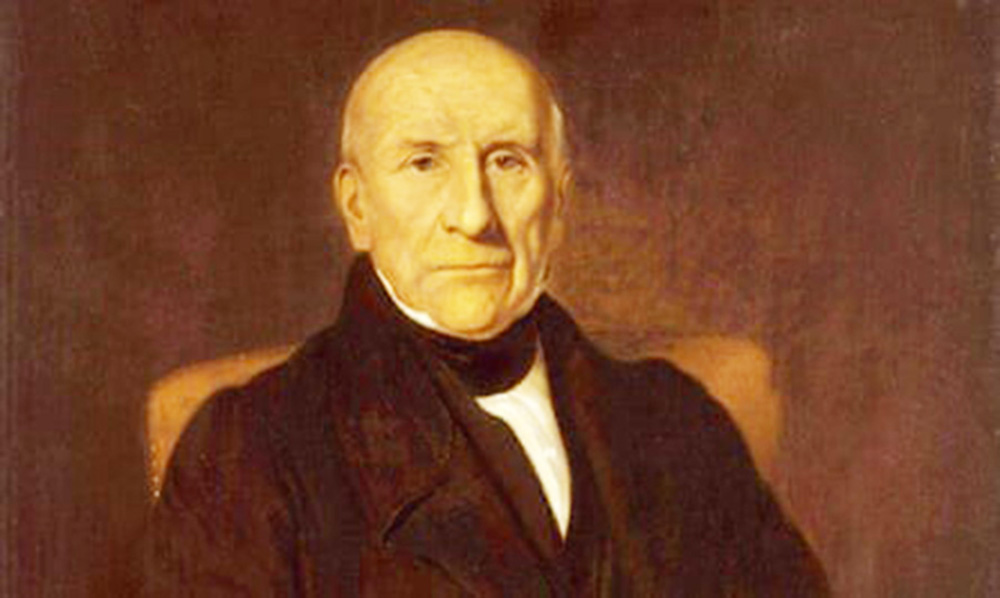
John Gladstone (Photograph: Alamy)
By Stabroek News August 25, 2023

The University of Guyana and the Guyana Reparations Committee yesterday clarified that the apology they helped negotiate with the heirs of slave owner John Gladstone includes slavery and indentureship since he was integrally involved in both.

In an earlier release, the University had indicated that Gladstone owned plantations and managed several others not owned by him. Quamina and his son John, who led the 1823 uprisings, which are being commemorated this month were enslaved on Gladstone plantations amongst thousands of others. The university itself is founded on plantation lands upon which part of the uprising occurred, the UG release said.


Gladstone family urged to pay slavery reparations to Jamaica

  • PublishedShare
IMAGE SOURCE,UNIVERSITY OF GUYANA
Image caption,
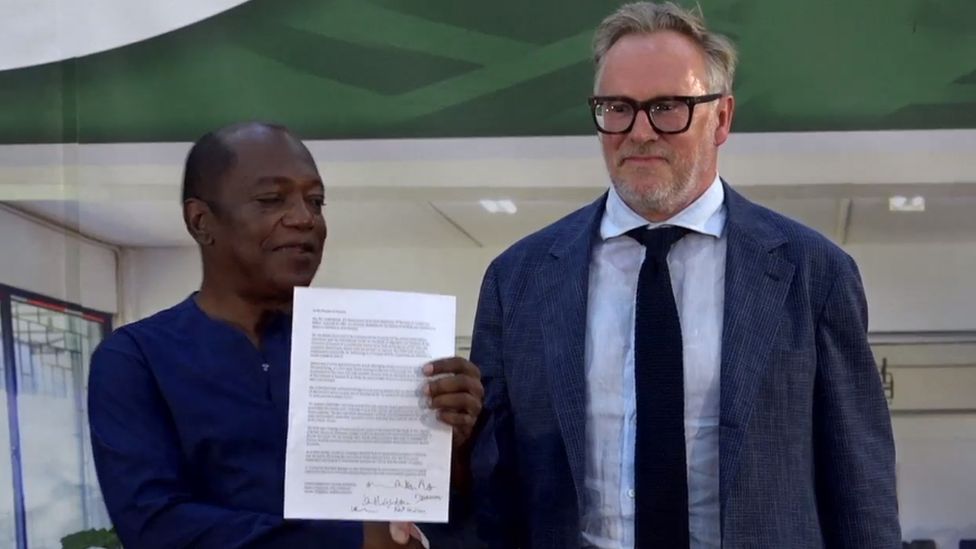
Charlie Gladstone read an apology to the people of Guyana on behalf of his family

The descendants of former Prime Minister William Gladstone are facing calls to pay reparations to Jamaica for an ancestor's role in slavery.

The Gladstone family apologised for its slaveholding past in Guyana and pledged to fund research into slavery and other projects at a ceremony on Friday.

But the family has been accused of failing to acknowledge the case for paying slavery reparations in Jamaica.

The family told the BBC: "At the moment we are solely focused on Guyana."

"There is a huge amount to do here [in Guyana]," the Gladstones said.

John Gladstone - the father of William Gladstone, one of the UK's most revered prime ministers - was one of the largest slave owners in the British West Indies.

The University of London's (UCL) Legacies of British Slavery database shows John Gladstone owned or held mortgages over 2,508 enslaved Africans in Guyana and Jamaica in the 19th Century.

He was paid more than £100,000 in compensation after the British Parliament passed a law to abolish slavery in most British colonies in 1833, receiving £15,052 for 806 enslaved people in Jamaica.

Reading the family's apology to Guyana, Charlie Gladstone, the great-great-grandson of William Gladstone, condemned slavery as "a crime against humanity" and acknowledged "slavery's continuing impact on the daily lives of many".

He said the family supported a 10-point reparations plan proposed by Caribbean nations.

But there was no mention of John Gladstone's slave ownership in Jamaica at the ceremony in Guyana on Friday, nor in the family's statement announcing their intention to apologise and make donations last week.

John Gladstone owned "significant properties" in Jamaica, said Verene Shepherd, director of the Centre for Reparation Research at the University of the West Indies.

She said the Gladstone family "must come to the scene of the crime and apologise to the people who live in those neighbourhoods".

The Jamaican academic and professor of social history urged the Gladstone family to "commit to reparations, as they're doing in Guyana".

Reparations are broadly recognised as compensation given for something that was deemed wrong or unfair, and can take many forms.

Last week, the Gladstones said they would aim to donate £100,000 to the University of Guyana's International Institute for Migration and Diaspora Studies, which was launched on Friday.

In Guyana, the family also pledged funding "to assist various projects in Guyana" and UCL's Centre for the Study of the Legacies of British Slavery for five years.

Prof Shepherd said: "Now that we realise that we've been ignored, I think Jamaica should make an approach."

The BBC has been told that Jamaica's National Council on Reparations is discussing the Gladstone case and considering what action to take.

The council has not had any contact with the Gladstone family to date.

Reparations approach

John Gladstone was a Scottish merchant who made a fortune from his ownership of sugar plantations and enslaved workers in the decade before abolition.

His prominent involvement in the industry shaped the political career and legacy of his son, William Gladstone, whose attitude towards slavery changed over his life.

In his first speech to Parliament, the Liberal prime minister defended the rights of plantation owners, but later branded slavery the "foulest crime" in history.

IMAGE SOURCE,HULTON ARCHIVE/GETTY IMAGES
Image caption,
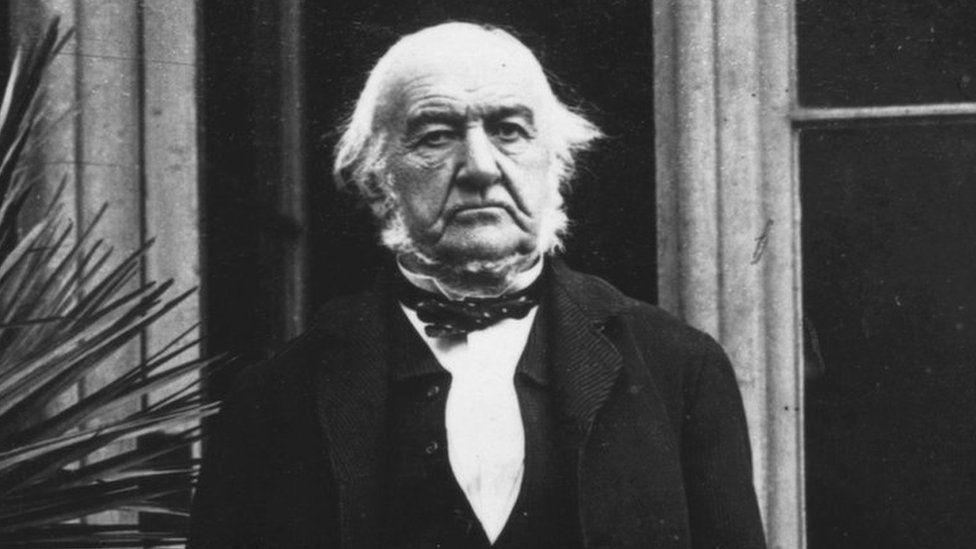
William Gladstone was Liberal prime minister on four occasions in the 19th Century

The Gladstones are the latest British descendants of slave owners to attempt to atone for the actions of their ancestors in recent years.

The family's historic link to slavery came into sharper focus during the Black Lives Matter protests in 2020.

Since then, some members of the family have joined the Heirs of Slavery, a group of British people whose families profited from the transatlantic slave trade and want to make amends.

Other members include former BBC journalist Laura Trevelyan and her family, who apologised to Grenada and promised £100,000 in reparations in February this year.

In an interview with the BBC earlier this week, United Nations Judge Patrick Robinson said he had "some scepticism about these families".

He said the reparations paid should be based on the number of slaves John Gladstone owned and the extent to which the family benefited from this economically.

He said he would be willing to ask for a calculation from the Brattle Group, an economic consulting firm that produced a report on the reparations states owe for their involvement in slavery.

"If it's not to be seen as a tokenistic exercise, if it is to be taken seriously, they must ascertain the reparations that are owed," Mr Robinson said.

The Brattle Group Report, which was co-authored by Mr Robinson, said the UK should pay $24tn (£18.8tn) for its slavery involvement in 14 countries.

The Gladstones should undertake a similar calculation to "demonstrate how much is really owed", said Robert Beckford, professor of climate and social justice at the University of Winchester.

The professor said that rather than giving money to a university for further research, he would have "preferred them to talk to community organisers or reparations groups, to explore what is the best way forward".

Although he welcomed the Gladstone apology in Guyana, he said the failure to acknowledge Jamaica hinted at "an unwillingness to face up to the full brutal, bestial horror of chattel slavery" in the country.


Q&A: Maui wildfires ‘an acceleration of injustices’ long felt on island

Al Jazeera speaks to Kaniela Ing, director of Green New Deal Network, about devastating Hawaii blazes and what’s next.

Protesters demand more government relief in the aftermath of devastating wildfires on Maui, August 21, 2023 
[File: Jae C Hong/AP Photo]
By Brian Osgood
Published On 25 Aug 2023

A massive wildfire driven by hurricane winds scorched communities across Hawaii’s Maui island this month, destroying homes and sending residents fleeing for their lives.

The fast-moving flames killed at least 114 people and consumed the historic community of Lahaina, home to about 13,000 residents and once the capital of the former Hawaiian kingdom.

Hundreds of people remain unaccounted for as crews continue to search through the devastation, and officials have said the death toll is expected to rise.

As Lahaina continues to reel from the deadliest wildfire in more than a century in the United States, the incident has reinvigorated a longstanding debate over climate change, the role tourism plays in Hawaii’s economy and the legacy of colonialism on the island.

Al Jazeera speaks to Kaniela Ing, a seventh-generation Native Hawaiian from Maui and the national director of the Green New Deal Network climate justice group, about the effect of the wildfires and what comes next.

Al Jazeera: Where does the toll of the wildfire currently stand?

Kaniela Ing: The scene is still quite apocalyptic. There [are] dozens of cadaver dogs sniffing through the rubble in search of our loved ones, utility workers digging up piles of electrical lines, thousands of historic buildings flattened.

There’s remarkable displays of unity, but the aftermath remains macabre.

Al Jazeera: Are people in Lahaina getting the help they need from the authorities?

Ing: Hawaii is over 2,000 miles [3,200km] from the closest mainland state, so it takes some time.

For those first few days, we had no choice but to mobilise support ourselves. Now [there’s more] direct assistance — $700 immediately went out to families right when the [emergency] declaration was signed — there’s around 20,000 hot meals being served everyday.

Less people [are] in shelters sleeping on cots and floors as people are moving into hotels and Airbnbs that are subsidised by the government.

But there’s also deeply rooted mistrust of a government that tends to only show up when there’s ribbon cuttings for hotels.

Al Jazeera: Unfortunately, a lot of people have come to associate Lahaina with these apocalyptic scenes, but it’s a place with a long history. Can you talk about its importance historically?

Ing: Lahaina was our original capital, it was the heart of the Hawaiian Kingdom. King Kamehameha’s palace stood at the centre, watching over the shoreline. It was a lush wetland.

It also told a history of colonialism and capitalism. You could walk from one end of the main street to the other through the annals of colonial history, from kingdom days, to sugar and pineapple [industries], to tourism.

Al Jazeera: Do you see a connection between today’s climate crisis and the legacy of colonialism in Hawaii?

Ing: The fire is tragic, but it’s really an acceleration of injustices that local people, especially Kanaka Maoli [Native Hawaiians], have experienced for generations.

One factor is climate change: Drier vegetation, low humidity, high winds, those are all functions of climate change.

Second, there was the diversion of water from Lahaina by sugar barons at the turn of the 20th century and the introduction of dry grass. The third is the negligence and mismanagement of Hawaiian Electric, our utility on the island.

Without any of those factors, the fire wouldn’t have been as deadly as it was. And those are all connected to the legacy of colonialism in Hawaii.

Al Jazeera: A debate that has been supercharged by the wildfires is whether Hawaii exists for tourists or for the people who live there. Can you walk us through that discussion?

Ing: It feels like every few months there’s another symbol of how Hawaii’s economy is catered towards those who think of Hawaii as their playground, rather than the people who live and work there.

Recently, there was a drought on Maui and people were being fined $500 for watering their lawn. At the same time, hotels have full pools and waterslides.

It was so obvious how the government caters to these multinational corporations and the tourism industry. Right now, our economy consists primarily of tourism and real estate.

Both industries are unsustainable in that they rely on enjoyment of the natural beauty of our islands, but also the development and destruction of them.

There’s a lot of talk about diversifying our economy by politicians, but actions speak differently. We’ve created this permanent underclass. It’s a modern version of the plantation economy.

Al Jazeera: Are you worried that model could be imposed on Lahaina as the town rebuilds?

Ing: Unless the people of Lahaina and everyone in Hawaii rise up and demand immediate relief, a just recovery, and community-centred rebuilding, then we should expect nothing to change.

But this is an inflection point. The fire has left a power vacuum in a sense that it’s not immediately clear who’s going to be in charge of rebuilding, and while we’re grieving and healing, unfortunately, there’s already land grabbers and disaster capitalists circling the carnage like vultures.

There’s an opportunity to transform our economy, our land use, our political influence, and we really need to seize that opportunity. I’m really hoping for this recovery to set an example of what justice can look like and how we can centre the people most impacted in the process.

Al Jazeera: For people asking what they can do to help, what would you point them towards?

Ing: Well, don’t come to Maui yet. We need hotel rooms across the island right now. There might be a time where there could be boots on the ground support, but not now.

We need the federal government to provide aid to small businesses and workers directly like they did during COVID, so we don’t face this impossible choice of our shops needing revenue and our survivors needing places to stay.

So far, a lot of these grassroots funds have raised a lot of money. But we know that rebuilding will cost at least $6bn, and that kind of money isn’t going to come from grassroots donors or philanthropy, it’s going to come from government.

We also set up mauirecoveryfund.org. It’s a collaboration between the most rooted funds, with an eye on the long run.


This interview has been edited for length and clarity.

SOURCE: AL JAZEERA

How much money do shipping CEOs make? Here’s their 2022 pay info

How much do ocean shipping executives make per year? The answer depends on whether you’re talking about professional CEOs or shipowners who are the final decision-maker behind the scenes, whether they are the CEOs or not.

Earnings in the latter category are from ownership, not salaries. That’s how the big shipping fortunes are made. German shipowner Klaus-Michael Kuehn ranked 39th on Forbes’ “Richest in 2023” list, with total estimated net worth of $39.1 billion. MSC owner Gianluigi Aponte was 43rd, with $31.2 billion. Israel’s Idan Ofer was at No. 127 ($14 billion). Shipping tycoon John Fredriksen was No. 130 ($13.7 billion)

Compensation data on professional CEOs is disclosed by some, but not all, listed shipping companies.

Disclosures on the prior year’s CEO compensation are usually filed by late spring, in connection with annual general meetings (AGMs). This year, there was a straggler — Zim (NYSE: ZIM) — which just filed its compensation disclosure Tuesday for an AGM in October.

The total compensation of the top 11 ocean shipping CEOs whose figures were disclosed averaged $4.7 million in 2022, up 19% from 2021, with an average of 50% paid in cash and 50% in stock. In all cases, the companies these CEOs ran were highly profitable last year.

Shipping CEO compensation ranking

Gary Vogel, Eagle Bulk (NYSE: EGLE). 2022 compensation: $7.004 million. Composition: 73% stock, 27% cash. Change vs. 2021: plus 78%. Eagle Bulk is an owner of midsize dry bulk carriers. Vogel was in the middle of the compensation pack in 2021 but has shot to the top due to much higher stock awards. Eagle Bulk reported net income of $248 million in 2022 compared to $185 million in 2021. Net income in the first half of this year was $21 million.

David Grzebinski, Kirby Corporation (NYSE: KEX). 2022 compensation: $6.168 million. Composition: 64% cash, 36% stock. Change vs. 2021: plus 6%. Kirby is the largest owner of inland tank barges in the U.S. It also operates coastal tank barges and runs a non-shipping division that provides engine and equipment distribution and services. Kirby reported net income of $122 million in 2022 compared to a net loss of $247 million in 2021. In the first half of this year, it posted net income of $98 million.

Soren Skou, AP Moller-Maersk. 2022 compensation: 43.605 million Danish kroner ($6.162 million). Composition: 71% cash, 29% stock and options. Change vs. 2021: minus 7%. Maersk is the world’s second-largest container line operator. Skou retired at the end of 2022, after presiding over the most profitable year in Maersk’s history. The company reported net income of $29.3 billion in 2022 versus $17.9 billion in 2021. Under its current CEO, Vincent Clerc, Maersk has posted net income of $3.8 billion in the first half of 2023.

Matt Cox, Matson (NYSE: MATX). 2022 compensation: $6.028 million. Composition: 45% cash, 55% stock. Change vs. 2021: plus 1%. Matson is a niche container line with Jones Act service as well as Asia-West Coast premium service. It is the 28th-largest carrier in the world with only a 0.2% share of global capacity, according to Alphaliner. But it has punched above its weight on the earnings front: Matson had record net income of $1.06 billion in 2022 compared to $927 million in 2021. Net income was $115 million in the first six months of 2023.

Eli Glickman, Zim. 2022 compensation: $6.005 million. Composition 43% cash, 57% stock. Change versus 2021: minus 39%. Glickman’s compensation package in 2021 — at $9.9 million — far exceeded the pay packages of CEOs of much larger companies, putting him at the top of that year’s compensation ranking. However, most of that was in stock, calculated based on the stock prices at the time. Zim’s stock price has fallen far from its lofty boom-era peaks, bringing Glickman’s compensation back in line with other carrier CEOs. Zim, the world’s 10th-largest ocean carrier, reported net income of $4.629 billion in 2022, just below the record $4.649 billion in 2021. The carrier has posted a net loss of $271 million for the first half of 2023.

Lois Zabrocky, International Seaways (NYSE: INSW). 2022 compensation: $5.409 million. Composition: 45% cash, 65% stock. Change versus 2021: plus 78%. International Seaways owns a fleet of crude and product tankers. Zabrocky’s compensation surged year on year as a result of stock awards. The company posted net income of $388 million in 2022 versus a net loss of $134 million the year before. The positive earnings momentum has continued this year. International Seaways posted net income of $326 million for the first half.

John Wobensmith, Genco Shipping & Trading (NYSE: GNK). 2022 compensation: $4.95 million. Composition: 36% cash, 64% stock. Change versus 2021: plus 89%. Genco owns a fleet of larger and mid-sized dry bulk carriers. Wobensmith’s compensation was much higher in 2022 than the year before due to stock awards. Genco posted net income of $159.3 million in 2022 compared to $182 million in 2021, with net income of $14 million in the first half of 2023.

Rolf Habben Jansen, Hapag-Lloyd. 2022 compensation: 2.994 million euros ($3.155 million). Composition: 65% cash, 35% stock. Change versus 2021: plus 2%. Hapag-Loyd is the fifth-largest container line operator in the world. It posted record net income of $17.96 billion in 2022 compared to $10.75 billion in 2021. First-half 2023 profits were $3.13 billion.

John Hadjipateras, Dorian LPG (NYSE: LPG). 2022 compensation: $2.585 million. Composition: 60% cash, 40% stock. Change versus 2021: plus 10%. Dorian LPG operates a fleet of very large gas carriers that transport propane and butane, primarily from the U.S. and Middle East to Asia. Dorian’s fiscal year runs through March. It posted net income in its latest fiscal year of $172 million versus $72 million the year before.

Sam Norton, Overseas Shipholding Group (NYSE: OSG). 2022 compensation: $2.732 million. Composition: 55% cash, 45% stock. Change versus 2021: plus 2%. OSG operates a fleet of product tankers, crude carriers and tug barges, primarily in the Jones Act sector. Net income was $27 million in 2022 versus a net loss of $46 million the year before. First-half 2023 net income was $24 million.

Jacob Meldgaard, Torm (NASDAQ: TRMD). 2022 compensation: $2.234 million. Stock versus cash composition was undisclosed. Change versus 2021: minus 8%. Torm owns a fleet of long-range and medium-range product tankers. It posted net income of $563 million in 2022 compared to a net loss of $42 million in 2021. First-half 2023 net income was $339 million.

Other executive compensation disclosures

Many U.S.-listed commodity shipping owners are so-called “foreign private issuers” and do not have to report individual compensation. Rather, they report aggregate compensation for management teams.

Most of the foreign private issuers reported total team compensation in the range of $2 million to $3 million for 2022, although there were two big outliers: mixed-fleet owner Navios Partners (NYSE: NMM) and product-carrier owner Scorpio Tankers (NYSE: STNG).

Scorpio Tankers’ compensation to its executive team totaled $46.44 million in 2022, comprising 70% in salaries and 30% in stock. The team’s compensation more than doubled versus $22.96 million the prior year, with salary compensation increasing six-fold and share-based compensation down 21%.

Combined compensation for Navios Partners’ executive team was even higher, at $50.2 million in 2022, up 74% year on year.
Source: Freight Waves by Greg Miller, https://www.freightwaves.com/news/how-much-do-shipping-ceos-make-heres-their-2022-pay-info