Wednesday, February 21, 2024


The Next Billionaire Thing: Hunting Humans?


 FEBRUARY 21, 2024
Facebook

Sam Pizzigati writes on inequality for the Institute for Policy Studies. His latest book: The Case for a Maximum Wage (Polity). Among his other books on maldistributed income and wealth: The Rich Don’t Always Win: The Forgotten Triumph over Plutocracy that Created the American Middle Class, 1900-1970  (Seven Stories Press). 

China’s coal boom slows as top mining hubs focus on renewable energy

China's four biggest coal hubs, accounting for over 80% of output, have eschewed the ambitious targets that characterised previous years. 

AFP
FEB 21, 2024,


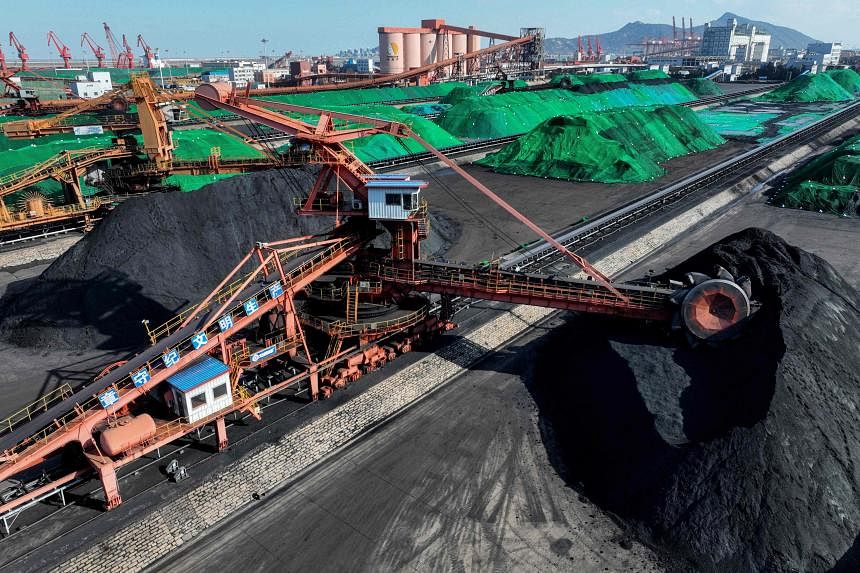
BEIJING – China’s coal boom is slowing as top mining regions limit growth and steer investment to the clean energy that will replace the dirtiest fossil fuel.

Seven straight years of rising output, including a 10 per cent surge in 2022 after nationwide power outages crippled industry, have produced a glut of coal. That kept prices low. But record production, which reached 4.7 billion tonnes in 2023, has incurred other costs, from increased fatalities among miners to poor financial performance at mining companies.

At the same time, China is running up against a deadline to peak coal consumption by 2025 to meet its climate goals. It means output growth could slow to 1.4 per cent in 2024, Guosheng Securities said in a note, which would be the weakest since 2017.


The four biggest coal hubs, accounting for over 80 per cent of output, have eschewed the ambitious targets that characterised previous years, according to annual plans released by local governments.

Instead, much of their efforts are on supporting China’s explosive growth in renewables. The reports will set the tone for discussions at Beijing’s annual legislative meeting in early March, where energy security is likely to be a focus.

Shanxi province, the top coal miner, has cut its annual growth target to 57 million tonnes, from over 100 million tonnes in 2023. Notably, it plans to deploy solar panels on vast swathes of land now too polluted from mining to grow crops or build houses, according to its report.

Inner Mongolia, the second-biggest producer, did not set a target for coal output, but said it would fund 300 billion yuan (S$56 billion) in clean energy expansions.

The plan is to take its capacity to generate renewable power above thermal for the first time. The authorities also vowed to accelerate the construction of four desert mega bases as a part of China’s grand strategy to triple clean power by 2030.

The third-biggest miner, Shaanxi province, said it plans only a marginal increase in coal production, while cutting coal burning to improve air pollution. It will also support the 100-gigawatt expansion of China’s biggest solar panel maker, Longi Green Energy Technology Company.

The Xinjiang region, which has been a prime contributor to China’s coal output growth, said it will slow its expansion to 9 per cent, from 2023’s 11 per cent increase, while pledging to keep pushing on renewables and hydrogen. BLOOMBERG

Big US investors prop up the nuclear weapons industry


A new report finds that investments have increased in the last year, with some also profiting from more government spending


Nuclear weapons aren’t just a threat to human survival, they’re a multi-billion-dollar business supported by some of the biggest institutional investors in the U.S. according to new data released today by the International Campaign to Abolish Nuclear Weapons (ICAN) and PAX, the largest peace organization in the Netherlands.

For the third year in a row, globally, the number of investors in nuclear weapons producers has fallen but the overall amount invested in these companies has increased, largely thanks to some of the biggest investment banks and funds in the U.S.

“As for the U.S., while there is, like past years, indeed a dominance, and total financing from U.S.-based institutions has increased, the total number of U.S. investors has dropped for the third year in a row (similar to our global findings), and we hope to see this number will continue to fall in the coming years,” Alejandar Munoz, the report’s primary author, told Responsible Statecraft.

In 2023, the top 10 share and bondholders of nuclear weapons producing companies are all American firms. The firms — Vanguard, Capital Group, State Street, BlackRock, Wellington Management, Fidelity Investments, Newport Group, Geode Capital Holdings, Bank of America and Morgan Stanley — held $327 billion in investments in nuclear weapons producing companies in 2023, an $18 billion increase from 2022.

These companies are also profiting from the enormous government contracts they receive for developing and modernizing nuclear weapons.

“All nuclear-armed states are currently modernizing their nuclear weapon systems,” says the annual “Don’t Bank on the Bomb” report from PAX and ICAN. “In 2022, the nine nuclear-armed states together spent $82.9 billion on their nuclear weapons arsenals, an increase of $2.5 billion compared to the previous year, and with the United States spending more than all other nuclear powers combined.”

American weapons companies are some of the biggest recipients of contracts for nuclear weapons. Northrop Grumman and General Dynamics are “the biggest nuclear weapons profiteers,” according to the report. Combined, the two American weapons manufacturers have outstanding nuclear weapons related contracts with a combined potential value of at least $44.9 billion.

Those enormous government contracts for nuclear weapons, alongside contracts for conventional weapons, have helped make nuclear weapons producers an attractive investment for American investment banks and funds.

“Altogether, 287 financial institutions were identified for having substantial financing or investment relations with 24 companies involved in nuclear weapon production,” says the report. “$477 billion was held in bonds and shares, and $343 billion was provided in loans and underwriting.”

The report notes that while the total amount invested in nuclear weapons has increased, the number of investors has fallen and trends toward firms in countries with nuclear weapons.

ICAN and PAX suggest that concentration may be a result of prohibitions on nuclear weapons development for signatories to the Treaty on the Prohibition of Nuclear Weapons (TPNW), a 93 signatory treaty committing to the ultimate goal of the total elimination of nuclear weapons. The report says:

The TPNW comprehensively prohibits the development, manufacturing, testing, possession, use and threat of use of nuclear weapons, as well as assistance with those acts. For companies that build the key components needed to maintain and expand countries’ nuclear arsenals, access to private funding is crucial. As such, the banks, pension funds, asset managers and other financiers that continue to invest in or grant credit to these companies allow for the production of inhumane and indiscriminate weapons to proceed. By divesting from their business relationships with these companies, financial institutions can reduce available capital for nuclear weapon related activities and thereby be instrumental in supporting the fulfilment of the TPNW’s objectives.

Susi Snyder, managing director of the Don’t Bank on the Bomb Project, told Responsible Statecraft that even U.S. banks, like Pittsburgh based PNC Bank, are facing shareholder pressure to divest from nuclear weapons and that the tide may be shifting as shareholders in U.S. companies grow increasingly sensitive to investments in nuclear weapons.

“For three years shareholder resolutions have been put forward at PNC bank raising concerns that their investments in nuclear weapon producers are a violation of the Treaty on the Prohibition of Nuclear Weapons (TPNW), and that they are not in line with the bank's overall human rights policy guidelines,” she said.

UPDATED

‘It is time Julian Assange was brought home,’ reiterates Australian premier

Anthony Albanese's statement comes as 2-day hearing to contest Wikileaks founder's extradition to US began on Tuesday

Islam Uddin |21.02.2024 - 


ANKARA

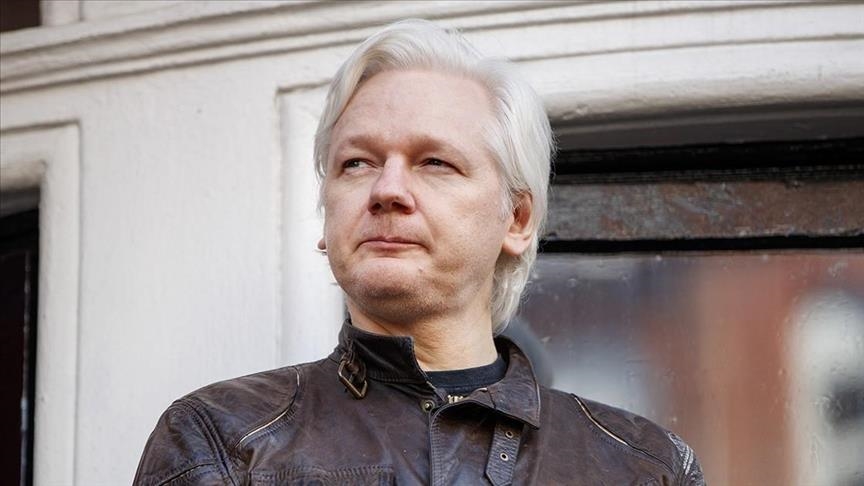
Australian Prime Minister Anthony Albanese on Wednesday said it was time that Wikileaks founder Julian Assange was brought home amid his extradition attempts to the US.

Reacting to his possible extradition, Albanese said he had raised this issue at the "highest levels" with the US and UK.

"I have put the view very clearly, privately, as I have publicly, that enough is enough. It's time Julian Assange was brought home. I've engaged with his legal team on a regular basis as well, on a strategy to try to get through this and come out the other side in Mr. Assange's interest," he told ABC Radio during an interview.

Albanese's statement came amid an ongoing two-day hearing of Assange, which could be his last chance to contest his extradition from Britain to the US.

The Australian prime minister said his government engaged with both countries diplomatically and is working to achieve an outcome rather than create a headline.

"It's a legal process in another country. So, that is why, both with the US and the UK, we have to engage diplomatically. We certainly have done so," he said.

Last week, the Australian parliament also passed a resolution calling for Assange, who is an Australian citizen, to be allowed to return to his home country.

Assange, who has been detained in a UK prison since 2019, faces extradition over allegations of leaking classified military documents in 2010-2011.

The UK High Court, in a pivotal 2021 ruling, decreed that Assange should be extradited, dismissing assertions over his fragile mental state and the risks he might face in a US correctional facility.

Following suit, the Supreme Court in 2022 upheld the decision, while then-Home Secretary Priti Patel affirmed the extradition order, intensifying the legal battle.

In his latest bid for a reprieve, Assange is seeking authorization to scrutinize Patel's determination and challenge the initial 2021 court verdict.

Should this recourse falter, Assange would exhaust all available avenues for appeal within the UK legal system, thus triggering the extradition process.

Assange targeted by US and Trump over his WikiLeaks exposures, lawyer says

21 February 2024 - 
BY SAM TOBIN AND MICHAEL HOLDEN
WikiLeaks founder Julian Assange's supporters demonstrate against U.S. extradition in front of the British Consulate in Barcelona, Spain February 20, 2024.
Image: REUTERS/Nacho Doce

WikiLeaks founder Julian Assange was targeted by the US over his exposure of state-level crimes, and Donald Trump had requested options on how to deal with him, his lawyers said on Tuesday as they battle to stop his extradition from Britain.

US prosecutors are seeking to put Assange, 52, on trial on 18 counts relating to WikiLeaks' high-profile release of vast troves of confidential US military records and diplomatic cables.

They argue the leaks imperilled the lives of their agents and there is no excuse for his criminality. Assange's supporters hail him as an anti-establishment hero and a journalist, who is being persecuted for exposing US wrongdoing.

At the start of what could be his last chance to stop his extradition from Britain to the US at London's High Court, Assange's lawyers and wife said the case was politically motivated and an attack on all journalists.

Stella Assange likened his case to that of Alexei Navalny, the Russian opposition activist who died in prison on Friday while serving a three-decade sentence.

“Julian is a political prisoner and his life is at risk. What happened to Navalny can happen to Julian,” she told reporters outside court where a large crowd called for his release. Assange himself was not in court nor watching remotely because he was unwell.

The Australian's legal battles began in 2010, and he subsequently spent seven years holed up in Ecuador's embassy in London before he was dragged out and jailed in 2019 for breaching bail conditions.

He has been held in a maximum-security jail in London ever since, even getting married there, while Britain finally approved his extradition to the US in 2022.

His legal team is trying to overturn that approval at a two-day hearing. Their argument is that previous judges failed to address their case that the extradition was politically-motivated and a deliberate attempt to punish and silence him for exposing US “state-level crimes”.

“Mr Assange is being prosecuted for engaging in ordinary journalistic practices of obtaining and publishing classified information which is true and of public interest,” Edward Fitzgerald, Assange's lead lawyer, told the court.

He said, if convicted, Assange could be given a sentence as long as 175 years, but likely to be at least 30 to 40 years.

His colleague Mark Summers said there was evidence there had been a “truly breathtaking plan” to kidnap or murder Assange while he was in the Ecuadorean embassy, and former US President Trump had asked for “detailed options” to kill him.

In 2021, Yahoo News reported CIA officials had drawn up options for Trump's administration for dealing with Assange while he was in the London embassy.

“Senior CIA officials requested plans, the president himself requested on being provided with options on how to do it and sketches were even drawn up,” the lawyer said on Tuesday.

US SAYS CASE MISREPRESENTED

In their written submissions, lawyers for the US said their case against him was “consistently and repeatedly misrepresented” by Assange's legal team.

They said he was not being prosecuted for publication of the leaked materials, but for aiding and conspiring with former US Army intelligence analyst Chelsea Manning to unlawfully obtain them, then disclosing names of sources and “putting those individuals at grave risk of harm”.

If Assange wins this case, a full appeal hearing will be held to again consider his challenge. If he loses, his only remaining option would be at the European Court of Human Rights (ECHR) and Stella Assange said his lawyers would apply to the European judges for an emergency injunction if necessary.

WikiLeaks first came to prominence in 2010 when it published a US military video showing a 2007 attack by Apache helicopters in Baghdad that killed a dozen people, including two Reuters news staff.

It then released thousands of secret classified files and diplomatic cables that laid bare often highly critical US appraisals of world leaders from Russian President Vladimir Putin to members of the Saudi royal family.

Assange's supporters include Amnesty International, media groups and politicians including Prime Minister Anthony Albanese, who last week voted in favour of a motion calling for his return to Australia.

Reuters