Wednesday, February 21, 2024

What Happens When Killer Robots Start Communicating with Each Other?

 
 FEBRUARY 21, 2024
Facebook

Photo by Thierry K

Yes, it’s already time to be worried — very worried. As the wars in Ukraine and Gaza have shown, the earliest drone equivalents of “killer robots” have made it onto the battlefield and proved to be devastating weapons. But at least they remain largely under human control. Imagine, for a moment, a world of war in which those aerial drones (or their ground and sea equivalents) controlled us, rather than vice-versa. Then we would be on a destructively different planet in a fashion that might seem almost unimaginable today. Sadly, though, it’s anything but unimaginable, given the work on artificial intelligence (AI) and robot weaponry that the major powers have already begun. Now, let me take you into that arcane world and try to envision what the future of warfare might mean for the rest of us.

By combining AI with advanced robotics, the U.S. military and those of other advanced powers are already hard at work creating an array of self-guided “autonomous” weapons systems — combat drones that can employ lethal force independently of any human officers meant to command them. Called “killer robots” by critics, such devices include a variety of uncrewed or “unmanned” planes, tanks, ships, and submarines capable of autonomous operation. The U.S. Air Force, for example, is developing its “collaborative combat aircraft,” an unmanned aerial vehicle (UAV) intended to join piloted aircraft on high-risk missions. The Army is similarly testing a variety of autonomous unmanned ground vehicles (UGVs), while the Navy is experimenting with both unmanned surface vessels (USVs) and unmanned undersea vessels (UUVs, or drone submarines). China, Russia, Australia, and Israel are also working on such weaponry for the battlefields of the future.

The imminent appearance of those killing machines has generated concern and controversy globally, with some countries already seeking a total ban on them and others, including the U.S., planning to authorize their use only under human-supervised conditions. In Geneva, a group of states has even sought to prohibit the deployment and use of fully autonomous weapons, citing a 1980 U.N. treaty, the Convention on Certain Conventional Weapons, that aims to curb or outlaw non-nuclear munitions believed to be especially harmful to civilians. Meanwhile, in New York, the U.N. General Assembly held its first discussion of autonomous weapons last October and is planning a full-scale review of the topic this coming fall.

For the most part, debate over the battlefield use of such devices hinges on whether they will be empowered to take human lives without human oversight. Many religious and civil society organizations argue that such systems will be unable to distinguish between combatants and civilians on the battlefield and so should be banned in order to protect noncombatants from death or injury, as is required by international humanitarian law. American officials, on the other hand, contend that such weaponry can be designed to operate perfectly well within legal constraints.

However, neither side in this debate has addressed the most potentially unnerving aspect of using them in battle: the likelihood that, sooner or later, they’ll be able to communicate with each other without human intervention and, being “intelligent,” will be able to come up with their own unscripted tactics for defeating an enemy — or something else entirely. Such computer-driven groupthink, labeled “emergent behavior” by computer scientists, opens up a host of dangers not yet being considered by officials in Geneva, Washington, or at the U.N.

For the time being, most of the autonomous weaponry being developed by the American military will be unmanned (or, as they sometimes say, “uninhabited”) versions of existing combat platforms and will be designed to operate in conjunction with their crewed counterparts. While they might also have some capacity to communicate with each other, they’ll be part of a “networked” combat team whose mission will be dictated and overseen by human commanders. The Collaborative Combat Aircraft, for instance, is expected to serve as a “loyal wingman” for the manned F-35 stealth fighter, while conducting high-risk missions in contested airspace. The Army and Navy have largely followed a similar trajectory in their approach to the development of autonomous weaponry.

The Appeal of Robot “Swarms”

However, some American strategists have championed an alternative approach to the use of autonomous weapons on future battlefields in which they would serve not as junior colleagues in human-led teams but as coequal members of self-directed robot swarms. Such formations would consist of scores or even hundreds of AI-enabled UAVs, USVs, or UGVs — all able to communicate with one another, share data on changing battlefield conditions, and collectively alter their combat tactics as the group-mind deems necessary.

“Emerging robotic technologies will allow tomorrow’s forces to fight as a swarm, with greater mass, coordination, intelligence and speed than today’s networked forces,” predicted Paul Scharre, an early enthusiast of the concept, in a 2014 report for the Center for a New American Security (CNAS). “Networked, cooperative autonomous systems,” he wrote then, “will be capable of true swarming — cooperative behavior among distributed elements that gives rise to a coherent, intelligent whole.”

As Scharre made clear in his prophetic report, any full realization of the swarm concept would require the development of advanced algorithms that would enable autonomous combat systems to communicate with each other and “vote” on preferred modes of attack. This, he noted, would involve creating software capable of mimicking ants, bees, wolves, and other creatures that exhibit “swarm” behavior in nature. As Scharre put it, “Just like wolves in a pack present their enemy with an ever-shifting blur of threats from all directions, uninhabited vehicles that can coordinate maneuver and attack could be significantly more effective than uncoordinated systems operating en masse.”

In 2014, however, the technology needed to make such machine behavior possible was still in its infancy. To address that critical deficiency, the Department of Defense proceeded to fund research in the AI and robotics field, even as it also acquired such technology from private firms like Google and Microsoft. A key figure in that drive was Robert Work, a former colleague of Paul Scharre’s at CNAS and an early enthusiast of swarm warfare. Work served from 2014 to 2017 as deputy secretary of defense, a position that enabled him to steer ever-increasing sums of money to the development of high-tech weaponry, especially unmanned and autonomous systems.

From Mosaic to Replicator

Much of this effort was delegated to the Defense Advanced Research Projects Agency (DARPA), the Pentagon’s in-house high-tech research organization. As part of a drive to develop AI for such collaborative swarm operations, DARPA initiated its “Mosaic” program, a series of projects intended to perfect the algorithms and other technologies needed to coordinate the activities of manned and unmanned combat systems in future high-intensity combat with Russia and/or China.

“Applying the great flexibility of the mosaic concept to warfare,” explained Dan Patt, deputy director of DARPA’s Strategic Technology Office, “lower-cost, less complex systems may be linked together in a vast number of ways to create desired, interwoven effects tailored to any scenario. The individual parts of a mosaic are attritable [dispensable], but together are invaluable for how they contribute to the whole.”

This concept of warfare apparently undergirds the new “Replicator” strategy announced by Deputy Secretary of Defense Kathleen Hicks just last summer. “Replicator is meant to help us overcome [China’s] biggest advantage, which is mass. More ships. More missiles. More people,” she told arms industry officials last August. By deploying thousands of autonomous UAVs, USVs, UUVs, and UGVs, she suggested, the U.S. military would be able to outwit, outmaneuver, and overpower China’s military, the People’s Liberation Army (PLA). “To stay ahead, we’re going to create a new state of the art… We’ll counter the PLA’s mass with mass of our own, but ours will be harder to plan for, harder to hit, harder to beat.”

To obtain both the hardware and software needed to implement such an ambitious program, the Department of Defense is now seeking proposals from traditional defense contractors like Boeing and Raytheon as well as AI startups like Anduril and Shield AI. While large-scale devices like the Air Force’s Collaborative Combat Aircraft and the Navy’s Orca Extra-Large UUV may be included in this drive, the emphasis is on the rapid production of smaller, less complex systems like AeroVironment’s Switchblade attack drone, now used by Ukrainian troops to take out Russian tanks and armored vehicles behind enemy lines.

At the same time, the Pentagon is already calling on tech startups to develop the necessary software to facilitate communication and coordination among such disparate robotic units and their associated manned platforms. To facilitate this, the Air Force asked Congress for $50 million in its fiscal year 2024 budget to underwrite what it ominously enough calls Project VENOM, or “Viper Experimentation and Next-generation Operations Model.” Under VENOM, the Air Force will convert existing fighter aircraft into AI-governed UAVs and use them to test advanced autonomous software in multi-drone operations. The Army and Navy are testing similar systems.

When Swarms Choose Their Own Path

In other words, it’s only a matter of time before the U.S. military (and presumably China’s, Russia’s, and perhaps those of a few other powers) will be able to deploy swarms of autonomous weapons systems equipped with algorithms that allow them to communicate with each other and jointly choose novel, unpredictable combat maneuvers while in motion. Any participating robotic member of such swarms would be given a mission objective (“seek out and destroy all enemy radars and anti-aircraft missile batteries located within these [specified] geographical coordinates”) but not be given precise instructions on how to do so. That would allow them to select their own battle tactics in consultation with one another. If the limited test data we have is anything to go by, this could mean employing highly unconventional tactics never conceived for (and impossible to replicate by) human pilots and commanders.

The propensity for such interconnected AI systems to engage in novel, unplanned outcomes is what computer experts call “emergent behavior.” As ScienceDirect, a digest of scientific journals, explains it, “An emergent behavior can be described as a process whereby larger patterns arise through interactions among smaller or simpler entities that themselves do not exhibit such properties.” In military terms, this means that a swarm of autonomous weapons might jointly elect to adopt combat tactics none of the individual devices were programmed to perform — possibly achieving astounding results on the battlefield, but also conceivably engaging in escalatory acts unintended and unforeseen by their human commanders, including the destruction of critical civilian infrastructure or communications facilities used for nuclear as well as conventional operations.

At this point, of course, it’s almost impossible to predict what an alien group-mind might choose to do if armed with multiple weapons and cut off from human oversight. Supposedly, such systems would be outfitted with failsafe mechanisms requiring that they return to base if communications with their human supervisors were lost, whether due to enemy jamming or for any other reason. Who knows, however, how such thinking machines would function in demanding real-world conditions or if, in fact, the group-mind would prove capable of overriding such directives and striking out on its own.

What then? Might they choose to keep fighting beyond their preprogrammed limits, provoking unintended escalation — even, conceivably, of a nuclear kind? Or would they choose to stop their attacks on enemy forces and instead interfere with the operations of friendly ones, perhaps firing on and devastating them (as Skynet does in the classic science fiction Terminator movie series)? Or might they engage in behaviors that, for better or infinitely worse, are entirely beyond our imagination?

Top U.S. military and diplomatic officials insist that AI can indeed be used without incurring such future risks and that this country will only employ devices that incorporate thoroughly adequate safeguards against any future dangerous misbehavior. That is, in fact, the essential point made in the “Political Declaration on Responsible Military Use of Artificial Intelligence and Autonomy” issued by the State Department in February 2023. Many prominent security and technology officials are, however, all too aware of the potential risks of emergent behavior in future robotic weaponry and continue to issue warnings against the rapid utilization of AI in warfare.

Of particular note is the final report that the National Security Commission on Artificial Intelligence issued in February 2021. Co-chaired by Robert Work (back at CNAS after his stint at the Pentagon) and Eric Schmidt, former CEO of Google, the commission recommended the rapid utilization of AI by the U.S. military to ensure victory in any future conflict with China and/or Russia. However, it also voiced concern about the potential dangers of robot-saturated battlefields.

“The unchecked global use of such systems potentially risks unintended conflict escalation and crisis instability,” the report noted. This could occur for a number of reasons, including “because of challenging and untested complexities of interaction between AI-enabled and autonomous weapon systems [that is, emergent behaviors] on the battlefield.” Given that danger, it concluded, “countries must take actions which focus on reducing risks associated with AI-enabled and autonomous weapon systems.”

When the leading advocates of autonomous weaponry tell us to be concerned about the unintended dangers posed by their use in battle, the rest of us should be worried indeed. Even if we lack the mathematical skills to understand emergent behavior in AI, it should be obvious that humanity could face a significant risk to its existence, should killing machines acquire the ability to think on their own. Perhaps they would surprise everyone and decide to take on the role of international peacekeepers, but given that they’re being designed to fight and kill, it’s far more probable that they might simply choose to carry out those instructions in an independent and extreme fashion.

If so, there could be no one around to put an R.I.P. on humanity’s gravestone.

This column is distributed by TomDispatch.

LA REVUE GAUCHE - Left Comment: Search results for KILLER ROBOTS 

LA REVUE GAUCHE - Left Comment: Search results for GOTHIC CAPITALISM 

DR Congo: Fighting threatens stability of entire region, envoy warns

20 February 2024


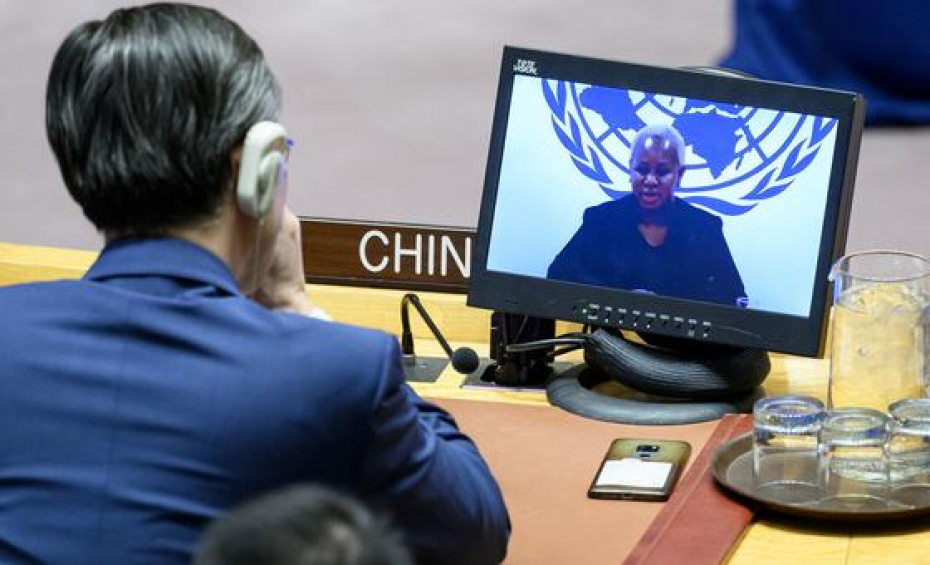
In the Democratic Republic of the Congo (DRC), fighting between the M23 armed group and national forces has further compounded the dire humanitarian situation in the east, the head of the UN Mission in the country, MONUSCO, said on Tuesday.

Briefing the Security CouncilOpens in new window in New York, UN Special Representative Bintou Keita urged ambassadors to do all they can to prevent the fighting in North Kivu province from spreading beyond the border.

“It is crucial to underscore the risk of an expansion of the conflict on a regional scale if the diplomatic efforts that are underway that seek to appease tensions and find sustainable political solutions to the current conflict fail,” she said, speaking from the capital, Kinshasa.
‘Deeply worrisome’

The situation in the eastern DRC is among the most complex, prolonged and protracted crises in the world, lasting some three decades. The latest violence is occurring against a backdrop of the eventual drawdown of MONUSCOOpens in new window this year, and at a time when historic flooding is affecting some two million people.

Hostilities have escalated dramatically since the expiration of a ceasefire in December, leading to a “deeply worrisome situation” around the town of Sake and the provincial capital, Goma.

Fighting has intensified in several areas in recent weeks, and the M23 has expanded further south, sparking more displacement towards Goma and neighbouring South Kivu province.
Goma: Scenes of desperation

Ms. Keita said conditions are desperate in the severely overcrowded displacement sites in and around Goma.

“More than 400,000 displaced persons have now sought refuge in the city, including 65,000 in the past two weeks, triggering a dramatic increase in cases of cholera due to a lack of safe drinking water, adequate hygiene, and sanitation.”

Sake currently remains under the control of the Congolese army, known as the FARDC, with support from MONUSCO.

However, “restricted access to M23-controlled territories is isolating Goma from inland territories and disrupting food production, supply chains,” she said. Prices of basic commodities are rising, increasing the risk of public unrest.
Violations and abuses

The redeployment of Congolese troops to the front with M23 has exacerbated the security vacuum in other territories in North Kivu and drawn in new combatants, notably from South Kivu, the Council heard.

Groups including the Allied Defense Forces (ADF) are increasingly committing human rights violations and abuses such as summary executions, abductions, property appropriation, extortion and conflict-related sexual violence.

Ms. Keita expressed deep concern over serious violations committed in areas under M23 control, where human rights defenders, journalists and other civil society representatives are being targeted. At least 150 people have been killed since November, 77 in January alone.
Misinformation campaigns

Meanwhile, MONUSCO continues to confront mis and disinformation surrounding its role in the ongoing clashes, mainly through online campaigns carried out by accounts mostly located outside of the DRC.

“This has resulted in hostile acts against UN peacekeepers and restrictions of movement by local armed groups and government soldiers,” Ms. Keita said.

Violent protests against the UN and the diplomatic community erupted in Kinshasa on 10 February, “fueled by a perception of the international community’s inaction and inefficiency over the situation in the eastern DRC.”

UN entities and MONUSCO were targeted in 11 incidents and 32 staff members had to either be extracted or rescued by peacekeepers. Two UN vehicles were burnt and eight were severely damaged by stoning.
Appeal to ambassadors

Ms. Keita commended ongoing diplomatic efforts by Angola to stop the fighting, and reaffirmed MONUSCO’s commitment to support regional peace processes.

“I also appeal strongly to the Security Council to use its influence to support regional peace initiatives that are underway to ensure that all parties respect international law, their commitments, and work constructively to put an end to the current crisis,” she said.

Alarm rising across the east

The UN envoy also voiced concern over the security situation in other areas of North Kivu, Ituri and South Kivu provinces.

She said there has been a significant escalation of violence in Djugu territory in Ituri, where MONUSCO continues to ensure the protection of more than 100,000 people displaced last week due to deadly fighting between the Zaïre and CODECO factions.

The ADF continues to kill and kidnap civilians in both Ituri and North Kivu. The group has also started to attack military targets after nearly a year of avoiding direct clashes with the security forces, and at time when a joint operation by the Ugandan and Congolese armies has been suspended.

Clashes have also broken out between Twirwaneho militia and Mai-Mai groups in South Kivu, where MONUSCO is preparing to withdraw within the coming months.

Ms. Keita concluded her remarks by expressing gratitude to countries that have provided uniformed personnel to the mission, whose service is far from over.

Boeing accuses big oil companies of inaction on sustainable aviation fuel

Major crude suppliers 'need to lean in harder' and crank up production, Boeing’s head of sustainability for the Asia-Pacific region says at the Singapore Airshow


Global supply of sustainable aviation fuel meets barely 1 per cent of the aviation industry’s requirements. 


Bloomberg
Feb 20, 2024

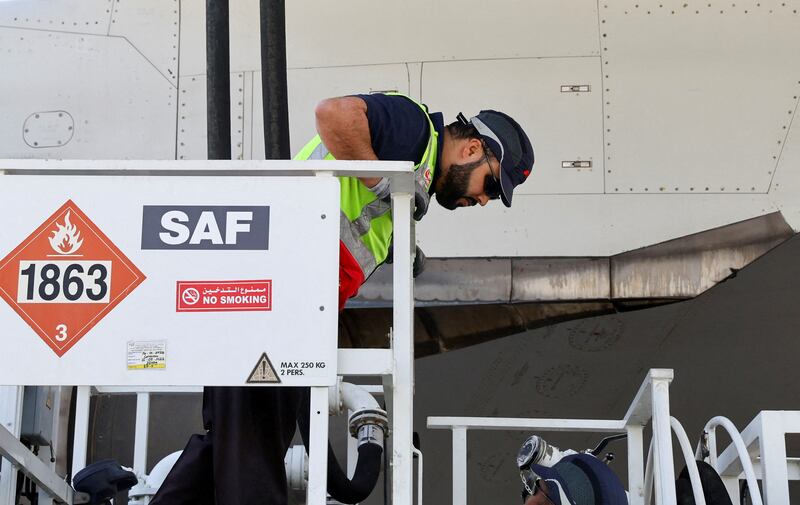
US plane maker Boeing accused the world’s biggest oil companies of doing too little to produce sustainable jet fuel as frustration inside the aviation industry grows about the lack of supply.

Sustainable aviation fuel, made from waste oils and agricultural feedstock, can cut carbon emissions from air travel by as much as 80 per cent, according to the airline sector.

An enormous ramp-up in production is essential to give the industry a chance of reaching its target of carbon neutrality by 2050.

Global supply of SAF, as the sustainable fuel is commonly called, meets barely 1 per cent of the aviation industry’s requirements.

Major oil producers “need to lean in harder” and boost production, Robert Boyd, Boeing’s head of sustainability for the Asia-Pacific region, said at the Singapore Airshow on Tuesday.

First Emirates flight powered by sustainable aviation fuel


Smaller and less-established green fuel producers such as Neste Oyj and SkyNRG BV are doing a better job of building out a SAF industry than well-resourced companies such as Exxon Mobil, said Mr Boyd.

“I don’t think they’re doing enough,” he said of the traditional energy sector.

The inadequate flow of SAF has been a major talking point at the air show. Lifting supply is also essential to making SAF more affordable for airlines.

Conventional jet fuel is already one of the biggest costs for airlines, but SAF can be three to five times more expensive.

Aviation’s transition to net zero will require an investment of as much as $5 trillion through 2050, much of it needed to increase sustainable fuel production, according to the International Air Transport Association.

Iata chief Willie Walsh on Monday implored oil producers to make more low-emissions aviation fuel.

READ MORE

Emirates expands Neste partnership for supply of sustainable aviation fuel

Every drop that’s made will be bought, even at the current high price, Mr Walsh said. Speaking at an aviation summit in Singapore, he described the airline industry’s struggle to decarbonise as an “existential issue”.

At the same event, Exxon’s vice president for Asia-Pacific fuels, Ong Shwu Hoon, said the company was focused on making more low-emissions fuel for the transport industry, including aviation.

The SAF supply chain requires more investment, she said. Exxon, she added, is learning to deal with the agricultural companies involved in the new process.

Still, Haldane Dodd, executive director of the Air Transport Action Group, a Switzerland-based non-profit working with the aviation industry to map out a path to net zero, maintains the energy industry isn’t doing enough.

Major oil producers are capable of doing much more to support SAF production, Mr Dodd said at the airshow.

“If anybody has the capital, the expertise, the intelligence and the human resources to deliver this product, it’s them,” he said.

Updated: February 21, 2024
The life and martyrdom of Malcolm X

Malcolm X was assassinated at the age of 39 on 21 February 1965 while addressing the Organisation of Afro-American Unity at the Audubon Ballroom in New York, and his legacy continues to profoundly shape young minds on matters of education, liberation, and social justice.


February 21, 2024 
by Omar Ahmed


February marks the start of Black History Month, an annual celebration in the US which is also observed at various times in other Anglosphere countries as a tribute to the contributions, achievements and challenges of the African diaspora. One prominent figure stands out each year, forever linked with this event. Not only is he remembered for his enduring revolutionary impact on the African-American community and the Global South, but also because it was in this very month that Malcolm X met his tragic end.

On 21 February, 1965, at the Audubon Ballroom in Harlem, New York, Malcolm X (known latterly in his life as El-Hajj Malik El-Shabazz) was assassinated while addressing the Organisation of Afro-American Unity (OAAU). His assailants included members of the group in which Malcolm had previously risen through the ranks: the Nation of Islam (NOI). At the time of his death, he was just 39 years old.

In the build up to his killing, El-Shabazz knew he was a marked man, owing to constant surveillance from the FBI and local authorities in addition to threats from the NOI after his fallout with their leader, Elijah Muhammad, and his eventual embracing of Sunni Islam.

In The Autobiography of Malcolm X, written with author Alex Hayley, El-Shabazz said that, “It has always been my belief that I, too, will die by violence.” The book opened with one of his earliest childhood memories: fleeing with his family after the white supremacist Ku Klux Klan (KKK) burnt his house down, having killed his father, an outspoken Baptist preacher, influenced by the teachings of pan-Africanist Marcus Garvey.

Although he grew up in Lansing, Michigan, El-Shabazz was born Malcolm Little on 19 May 1925, in Omaha, Nebraska. Interestingly, this was the year before the precursor to Black History Month began; Negro History Week was established by African-American scholar and educator Carter G Woodson.

After his father’s murder, his mother’s mental health deteriorated, and this led young Malcolm and his siblings to go into foster care. He would later become involved in Boston’s criminal underworld before becoming more entrenched in that lifestyle in the “Black mecca” of new York City’s Harlem. He was eventually arrested and imprisoned.

Although he was once nicknamed “Satan” for his irreligious views, once in prison Malcolm underwent a transformative journey. Despite being illiterate, he used his time to educate himself, opening his mind to knowledge and discovering a sense of belonging within the NOI after his eldest brother Wilfred recruited him into the group.

“I’d put prison second to college as the best place for a man to go if he needs to do some thinking,” he recalled of his life behind bars. “If he’s motivated, in prison he can change his life.”

OPINION: ‘Truth, no matter what’: Why watering down Palestinian reality is a crime

Ascending through the organisation as a minister and the group’s national spokesman, Malcolm X, as he became known, oversaw a surge in NOI membership through the 1950s and into the 1960s, arguably eclipsing Elijah Muhammad in popularity and prominence. With his fiery sermons and oratory he was described as “the angriest black man in America” and held an uncompromising revolutionary stance. This inspired numerous young African-Americans to adopt a more assertive, bolder attitude in standing up for their rights.

His message resonated with notions of black masculinity and appealed to those who began to see Islam as more conducive to their aspirations and solidifying their sense of identity, contrasting it with a Christianity they perceived as having failed and pacified them.


Nobody can give you freedom. Nobody can give you equality or justice or anything. If you’re a man, you take it.

Malcolm’s approach stood in stark contrast to the non-violent civil rights movement led by Dr Martin Luther King, who he once said was spearheading “the only revolution in which the goal is loving your enemy.” For Malcolm X, all revolutions — real revolutions — involved “bloodshed”. It goes without saying that, between the two civil rights leaders, the mainstream establishment favoured King over Malcolm. The former was perceived as more acceptable, whereas the latter was viewed as a formidable threat; someone to be feared. Nevertheless, irrespective of their methods, both were assassinated, with credible suspicions pointing towards state involvement.

In 1964, Malcolm announced his split from the NOI, after some internal disputes and scandals involving Elijah Muhammad, before undertaking a tour of the Middle East, Africa and Europe, visiting many Muslim countries in the process. He performed the Islamic pilgrimage, the Hajj, to the holy city of Makkah. Thereafter he was called El-Hajj Malik El-Shabazz.

The unifying experience of the Hajj saw his beliefs change yet again upon joining the mainstream of the Islamic faith. He witnessed “pilgrims of all colours from all parts of this earth displaying a spirit of unity and brotherhood like I’ve never seen before.” His departure from the NOI also split the organisation, with many following El-Shabazz into mainstream Islam, including none other than Elijah Muhammad’s son, Warith Deen Mohammed. The most famous African-American Muslim, if not one of the most famous people of the modern age, legendary boxer Muhammad Ali, severed ties with El-Shabazz while still a member of the NOI, a decision Ali later came to regret when he too entered mainstream Islam, without the opportunity for reconciliation.

OPINION: Gandhi was India’s ‘Father of the Nation’ who opposed Zionism in ‘Arab’ Palestine

While on his travels it also became clear that Malcolm moderated some of his views and beliefs, including the segregation of blacks and whites in the US and Black Nationalism. Instead, he embraced internationalism. It was around this time that El-Shabazz became increasingly vocal in his opposition to Zionism and the “illogical” occupation of Arab Palestine. It is also worth mentioning that he visited Gaza in Palestine, namely the Khan Yunis refugee camp, which is currently being attacked by the Israeli occupation forces as part of the genocidal war being waged on the Palestinians in the coastal territory.

Writing in the Egyptian Gazette in 1964, El-Shabazz stated: “Did the Zionists have the legal or moral right to invade Arab Palestine, uproot its Arab citizens from their homes and seize all Arab property for themselves just based on the ‘religious’ claim that their forefathers lived there thousands of years ago? Only a thousand years ago the Moors lived in Spain. Would this give the Moors of today the legal and moral right to invade the Iberian Peninsula, drive out its Spanish citizens, and then set up a new Moroccan nation… where Spain used to be, as the European Zionists have done to our Arab brothers and sisters in Palestine?”


In short, the Zionist argument to justify Israel’s present occupation of Arab Palestine has no intelligent or legal basis in history… not even in their own religion.

Not long after his return to America, El-Shabazz’s mission to unite oppressed people globally and spread the message of Islam in the US was ended abruptly by his assassination. Many, including El-Shabazz himself, believed that such an inevitability would likely involve the FBI, given his knowledge of the capabilities and limitations of the Nation of Islam, the movement in which he had played a crucial role in developing.

Even today, the exact circumstances surrounding his death are a mystery, especially following last year’s exoneration of two of the three men convicted of killing the civil rights icon. A 2020 Netflix documentary Who Killed Malcolm X? alleged that one of the assassins was William Bradley, also known as Al-Mustafa Shabazz, who lived in Newark, New Jersey, and that he got away from the scene of the crime, despite his involvement being an “open secret” in the local community for many years. The alleged killer died two years before the filmmaker got the chance to interview him. Allegations linking the US government to the assassination persist to this day.

Last year, on the 58th anniversary of Malik El-Shabazz’s martyrdom, one of his daughters, Ilyasah Shabazz, announced that she intended to sue the FBI, the CIA, New York City Police Department (NYPD) and other agencies in a wrongful death lawsuit. The various government agencies are accused of fraudulently concealing evidence that they “conspired to and executed their plan to assassinate Malcolm X.”

Malik El-Shabazz’s legacy continues to have a profound impact on shaping young minds around themes such as education, liberation and social justice. With the current global focus on the injustice and tyranny being inflicted on the Palestinian people, such ideas are as pertinent as ever and will be a reminder that the Palestinian revolution and liberation can be achieved “by any means necessary,” including armed struggle. In this context, one Malcolm X quote certainly stands the test of time: “You can’t separate peace from freedom because no one can be at peace unless he has his freedom.”

READ: Malcolm X’s daughter to sue CIA, FBI and other agencies over his assassination

The views expressed in this article belong to the author and do not necessarily reflect the editorial policy of Middle East Monitor.

Unless otherwise stated in the article above, this work by Middle East Monitor is licensed under a Creative Commons Attribution-NonCommercial-ShareAlike 4.0 International License. If the image(s) bear our credit, this license also applies to them. What does that mean?