Thursday, March 14, 2024

UK  
RAMADAN

Man City's Etihad Stadium hosts open iftar event overlooking the pitch

Hundreds gathered at the Premier League stadium to break their fast


Nicky Harley
London
Mar 14, 2024


Manchester City's Etihad Stadium has hosted hundreds of people for an open iftar for worshippers to break their fast.

Attendees filled the suites overlooking the pitch to enjoy an iftar together.

The event was organised by the Ramadan Tent Project which hosts Open iftar gatherings across Britain.

The Etihad is one of several football stadiums chosen to host the events this Ramadan, others include Brentford's Gtech Community Stadium, Blackburn's Ewood Park, AFC Wimbledon's Cherry Red Records Stadium and West Brom's The Hawthorns.

READ MORE
Dubai non-profit sets goal of giving half a million free iftar meals to labourers

Events are also being held at the Tate Modern, Windsor Castle, Principality Stadium, Cardiff, V & A Dundee, King’s Cross train station, the British Library and Battersea Power Station.

Omar Salha, Founder and chief executive of Ramadan Tent Project, said all events are open to people of all faith backgrounds.

“For over a decade Ramadan Tent Project has connected and convened over a million people from all backgrounds through its annual Ramadan Festival and flagship initiative Open iftar,” he said.

“This year’s theme, ‘Heritage: Past, Present and Future’, aims to fulfil a deep understanding and appreciation of our shared cultural heritage in Britain.

“The month of Ramadan is an embodiment of the rich Islamic culture, tradition and heritage that is observed by millions across the globe as a journey of self-reflection, spiritual sustenance, and mindfulness.


“We are delighted to mark this blessed month and present our Ramadan Festival and series of landmark Open iftar events highlighting the remarkable contributions and legacy the Muslim world has made to British culture and way of life across the centuries, underpinning the interconnectedness of our societies and communities.”

Since 2013, Open iftar has connected more than a million people across the country at some of Britain’s most iconic cultural spaces, from the Royal Albert Hall, Wembley Stadium to Trafalgar Square.

Tufail Hussain, Director of Islamic Relief UK, is part of the project.

“We are once again delighted to be joining hands with the Ramadan Tent Project this year,” he said.


“Coming together with the local community and sharing a meal after a day of fasting will be very special. The open iftar is welcome to everyone and will take place at iconic venues. A diverse community coming together and strengthening relationships is the true spirit of the holy month.

“Islamic Relief is known for its work across the world but over the last few years has been reaching out more to families in the UK, especially with the cost-of-living crisis. A strong community working together and looking out for its neighbours is crucial, especially for those who are struggling to put food on the table.”
JUST SAY NO!
Pak airline asks pilots, crew to not keep Ramzan fast on duty days

ByHT News Desk
Mar 14, 2024

The corporate safety management and aircrew medical centre endorsed the decision advising PIA's pilots and cabin crew members against fasting while on duty.

The Pakistan International Airlines (PIA), in its recent directive, asked its pilots and flight attendants to refrain from fasting during on-flight duty days throughout the holy month of Ramzan. The decision is based on medical advice which suggests that fasting could lead to dehydration, lethargy, and sleep-related issues for individuals. The corporate safety management and aircrew medical centre have endorsed this recommendation, advising PIA's pilots and cabin crew members against fasting while on duty.

Pakistan International Airlines (PIA) passenger plane(REUTERS)

“The PIA’s top management, based on these recommendations, has issued compliance orders to the pilots and cabin crew personnel with immediate effect… The recommendations have specifically stated that when a person is fasting, he faces dehydration and issues of laziness and sleep,” an official of the airline has said.
Hindustan Times - your fastest source for breaking news! Read now.

A probe conducted by the aircraft investigation board, which recently concluded its investigation into the crash of a PIA Airbus flight near Karachi airport attributed the incident to human errors.

The board identified the lack of sound judgment by the two pilots during the landing as the primary cause of the tragic crash, resulting in the loss of 101 lives, including 99 passengers onboard the flight. Remarkably, two passengers survived the ordeal. The report also attributed responsibility to the PIA and the civil aviation authority for lacking clear protocols regarding whether pilots should fast during Ramadan while on duty. In its directives, PIA management clarified that any pilot or crew member observing a fast would be prohibited from boarding the flight.

Pakistan's newly appointed Prime Minister, Shehbaz Sharif, recently authorized the privatization of the country's struggling national airline, PIA, before June 15.

As per the Express Tribune newspaper, in 2022, PIA ranked as the third-largest loss-making public sector entity in the country, necessitating Pakistani ₹11.5 billion per month solely for debt servicing.

(With inputs from PTI)

Pakistan registers strong protest against implementation of India’s ‘controversial’ citizenship law
Published March 14, 2024 

Pakistan on Thursday registered a strong protest against the implementation of India’s controversial Citizenship Amendment Act (CAA), according to a report from state-run Radio Pakistan.

On March 11, India had announced rules to implement a 2019 citizenship law that critics call anti-Muslim. The Modi government had not crafted implementation rules for the law after protests and sectarian violence broke out within weeks of the law’s enactment in December 2019. Scores were killed and hundreds injured during days of clashes.

The CAA grants Indian nationality to Hindus, Parsis, Sikhs, Buddhists, Jains and Christians who fled to Hindu-majority India from Muslim-majority Afghanistan, Bangladesh and Pakistan before December 31, 2014.

It is designed so that non-Muslims caught in the National Registry of Citizens dragnet would be able to use the CAA route to regain citizenship, leaving the Muslims out.

After the Modi-led government implemented the legislation just days before a general election was announced, protests broke out in the eastern state of Assam and the southern state of Tamil Nadu late on Monday evening but there were no reports of damage or any clashes with security forces.

The US government and the United Nations a day ago also expressed concerns about the contentious religion-based citizenship law in India, with the UN calling the legislation “fundamentally discriminatory in nature”.

In her weekly press briefing today, Foreign Office (FO) Spokesperson Mumtaz Zahra Baloch termed the Indian parliament’s legislation “evidently discriminatory in nature as they differentiate amongst the people based on their faith”.

She said the regulation and laws were premised on a “false assumption” that minorities are being persecuted in Muslim countries of the region and the “facade of India being a safe haven for them”.

The FO spokesperson pointed out that the rising wave of Hindutva under the BJP government led to rapid political, economic and social victimisation of Muslims and other minorities in India.

She said the discriminatory steps further exposed the “sinister agenda of transforming India into Hindu Rashtra”. Baloch advised the Indian authorities to also “stop pre-choreographed targeting and systematic marginalisation of minorities”.

The FO spokesperson highlighted that a few days ago, a group of UN special rapporteurs had urged corrective actions to protect human rights and attacks against minorities in the run-up to India’s national elections.

Baloch urged India to take action to protect its minorities, especially Muslims who, she said, were in a very difficult situation because of the “rising Hindutva”.
Condemns Modi govt actions in occupied Kashmir

The spokesperson went on to strongly condemn the Indian decision to declare the Kashmir National Front in Indian Occupied Kashmir (IOK) as “illegal”.

“With this, a total of nine Kashmiri political parties have been outlawed in the IOK,” she said, adding that these oppressive measures reflected a vicious intent by India to stifle dissent and freedom of expression in the IOK in complete disregard of international laws.

Baloch asserted that India should immediately lift curbs on the banned Kashmiri political parties, release all political prisoners and forthwith implement the UN Security Council resolutions.

Concerns over the sufferings of Palestinians

The FO spokesperson also voiced concerns over the ongoing atrocities against the Palestinians by Israel.

She urged the UN Security Council to fulfil its responsibilities to bring an end to the suffering of Palestinians.
World's Largest Drone Maker Expands in US Amid Rights Abuse Allegations


March 14, 2024 
By Kasim Kashgar
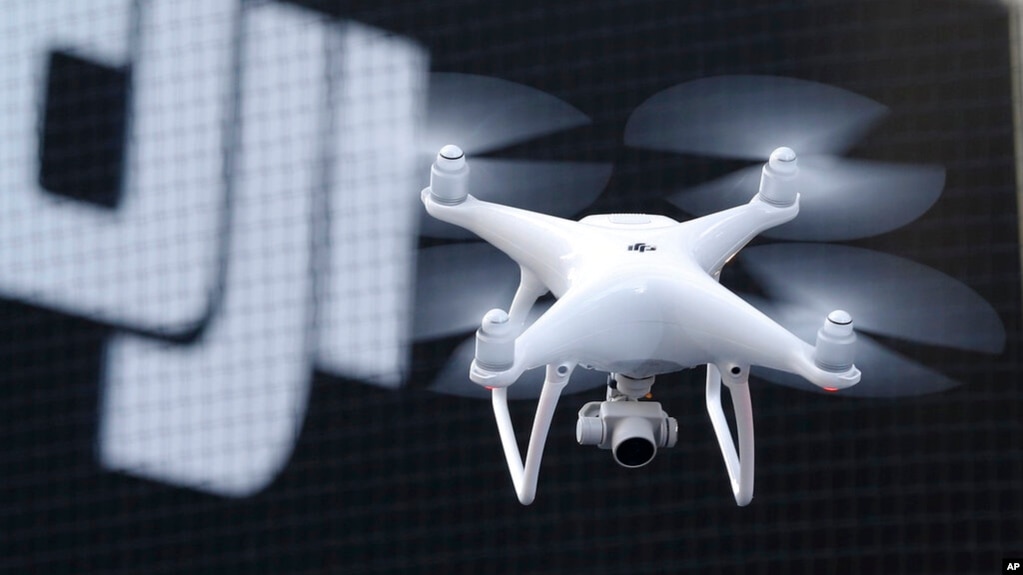
A Phantom 4, developed by Chinese consumer drone maker DJI, is pictured during a demonstration flight in Tokyo, March 3, 2016.

WASHINGTON —

Chinese drone maker DJI is expanding in the U.S. with its first flagship store in New York City amid allegations of links to human rights abuses and ties to China’s military.

DJI’s “first concept” North American store on New York’s Fifth Avenue welcomes customers into a futuristic, minimalist space to shop. The company describes itself on its website as “the world's leader in civil drones and creative camera technology.”

"We continue to see growing consumer demand throughout North America as we expand our consumer product portfolio," said Christina Zhang, senior director of corporate strategy at DJI.

Headquartered in Shenzhen, China, the company was founded in 2006. DJI, also known as Da Jiang Innovations, has become the world’s largest drone maker, having achieved global dominance in less than 20 years. The company now supplies 70% of the world's consumer drones and nearly 80% of U.S. consumer drones.

Abuse allegations

On March 5, the day of DJI’s official store opening in New York, the Uyghur Human Rights Project (UHRP), a Washington research and advocacy group, released a report titled Surveillance Tech Series: DJI’s Links to Human Rights Abuses in East Turkistan.

The report accuses DJI of being involved in mass surveillance and rights violations against Uyghur, Kazakh, Kyrgyz and other Muslim communities in China's Xinjiang Uyghur Autonomous Region, which the group calls East Turkistan.

“DJI is directly involved in mass surveillance schemes in East Turkistan and has supplied public security agencies with tools to surveil and target Uyghurs, Kazakh, and Kyrgyz people,” the UHRP report said. “Xinjiang public security departments entered into seven procurement orders with DJI that were worth nearly US$300,000 between 2019 and 2022.”

The report stated that DJI sells drones to Xinjiang’s paramilitary organization, the Xinjiang Production and Construction Corps, which the U.S. government sanctioned because of its “connection with serious rights abuses against ethnic minorities” in Xinjiang.

“Other documents show tenders worth US$47,000 for DJI drones for the Xinjiang Production and Construction Corps,” the UHRP report stated.

 A staff member from DJI Technology Co. demonstrates the Phantom 2 Vision+ drone inside his office in Shenzhen, Guangdong province, China, Dec. 15, 2014.

The report also said that a DJI drone captured footage of dozens of individuals, seemingly Uyghur prisoners, blindfolded and shackled at a train station in southern Xinjiang. The video, first released on YouTube in 2019, garnered widespread media attention.

“It’s unethical to support a company that knowingly engages in egregious rights violations,” Nuzigum Setiwaldi, the report’s author, told Voice of America.

The U.S. and several Western parliaments have accused China of genocide in Xinjiang, targeting Uyghurs and other predominantly Muslim populations. The U.N. human rights office released a report saying the human rights violations in Xinjiang may amount to crimes against humanity. China criticized Western nations for spreading "lies" about human rights in Xinjiang and Tibet.

A spokesperson from DJI told VOA the company has not engaged in any activities, including sales distribution and product development, that violate or abuse human rights.

“Like other manufacturers, we do not have control over how our products are used as they are available off the shelf,” wrote a DJI spokesperson in an email response. “However, we have demonstrated – through years of investments in product safety and security initiatives – that our products are developed for peaceful and civilian use only.”

Chinese military company or not?

In 2022, The Washington Post reported that DJI obscured ties to Chinese government funding.

In the same year, the U.S. Department of Defense classified DJI as a "Chinese military company." As of January, DJI remains on the list of such companies operating in the United States. The department said it maintains companies on the list to counter China's Military-Civil Fusion strategy, which supports the modernization of the Chinese army.

Reuters reported that former U.S. Attorney General Loretta Lynch, who ran the U.S. Justice Department from 2015 to 2017 and is now with the Paul, Weiss, Rifkind, Wharton & Garrison law firm, wrote a letter to the Defense Department last July on behalf of DJI, urging the removal of her client from the Pentagon's Chinese military companies list.

In her letter, Lynch cited the importance and urgency of such a move because of the wide use of and dependence on DJI products by a variety of U.S. stakeholders.

The Cybersecurity and Infrastructure Security Agency (CISA) warned in January that Chinese-made drones posed “significant risk” to U.S. national security and critical infrastructure.

“[T]he PRC’s 2017 National Intelligence Law compels Chinese companies to cooperate with state intelligence services, including providing access to data collected within China and around the world,” CISA said in its cybersecurity guidance on Chinese manufactured drones or unmanned aircraft systems (UAS).

However, DJI’s spokesperson told VOA that DJI “is not a Chinese military company.”

According to DJI, the company remains one of the few drone companies that clearly “denounce and actively discourage” the use of drones in combat.

“We do not pursue business opportunities for combat use or operations. Our distributors, resellers and other business partners globally have also committed to following this policy when they sell and use our products,” DJI spokesperson said.
HAITI: A RESPITE


Royal Caribbean Suspends Stops in Haiti as Precaution Due to Civil Unrest

Labadee Haiti
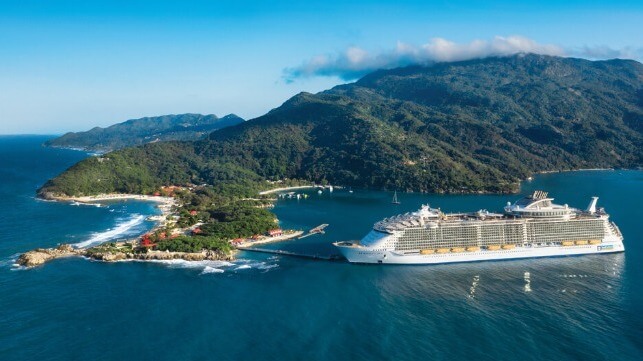
Royal Caribbean operates a private destination on the north coast of Haiti (Royal Caribbean International)

PUBLISHED MAR 14, 2024 5:18 PM BY THE MARITIME EXECUTIVE


Royal Caribbean International is suspending stops at its private destination in Haiti saying that it is a precautionary step in response to the recent escalation of violence in the Caribbean nation. It is the only cruise line to call in Haiti but took the action after the country’s embattled prime minister agreed to step down and the United States and United Nations called for all their citizens and aid workers to immediately leave the country.

Haiti has been plagued with years of violence and lawlessness with parts of the major cities controlled by gangs. The situation however flared up in recent weeks including efforts by the gangs to storm the facilities at Port-au-Prince and the country’s main airport.

Royal Caribbean limits its calls to a private port called Labadee on the north coast of the country. It is located more than 100 miles north of Port-au-Prince. The cruise line acquired rights to approximately 200 acres in 1986 and created a private enclave behind a security fence for passengers from its cruise ships. Royal Caribbean’s premium brand Celebrity Cruises also makes some calls at Labadee.

It started as a beach destination with a popular BBQ. Over the years, Royal Caribbean however has transformed its private destinations into amusement parks and revenue generators. Today it features everything from a zip line and coaster ride to villas that rent by the day. A small number of Haitians are employed at the enclave which is protected by private security, but it is largely isolated from the country.

“Due to the evolving situation in Haiti, and in an abundance of caution, we're temporarily suspending our visits to Labadee for our entire fleet,” the company said in a written statement. On social media CEO Michael Bayley’s account said it was for the next seven days.

Earlier in the week Royal Caribbean began canceling shore excursions which include water rides and fishing trips as well as issuing a general safety warning. Passengers are now being told that their cruises will either replace the private destination with a day at sea, extended stops in other ports such as Falmouth on Jamacia, or some cases add new destinations such as Grand Turk, a port in the Turks and Caicos normally a port primarily used for Carnival Corporation’s ships.

Royal Caribbean has had to suspend stops at Labadee in the past due to weather-related issues or unrest in the country. They have been criticized for continuing calls at the country in periods such as after the devastating earthquake but responded by saying they were carrying relief supplies to the island.


HAITI CRISIS

Kenya confirms security mission to Haiti as transitional administration plans collapse

Kenya's President William Ruto has reportedly confirmed to US Secretary of State Antony Blinken that plans to send a security mission to Haiti are going ahead, as moves to create a transitional presidential council in Port-au-Prince appear to have collapsed.


Issued on: 14/03/2024 - 
Pedestrians take cover during clashes between police and gang members in Port-au-Prince, Haiti, Friday, 1 March, 2024.

 (AP Photo/Odelyn Joseph) 


Secretary of State Blinken said Wednesday that President Ruto confirmed plans to send a Kenyan-led security mission to Haiti and expected progress in the coming days on a transitional council, although any moves towards finding political consensus in Porte-au-Prince appear to have failed.

Kenya has offered to lead a security mission – largely funded by the United States and Canada – to violence-ravaged Haiti but said the mission was on hold after Haitian Prime Minister Ariel Henry resigned on Monday in a deal pushed by Caribbean leaders and the United States.UN warns of increasing gang violence in Haiti amid calls for Kenya-led peace mission

Confirming an account by Ruto, Blinken said he spoke to the Kenyan leader by telephone and discussed a transitional council that was being formed to name a new prime minister ahead of elections.

Ruto "confirmed Kenya's preparedness to lead that mission just as soon as this new council is stood up – which we believe will happen in the next couple of days – and an interim president is elected," Blinken said.

Blinken acknowledged the challenges ahead for Haiti, where public order has broken down and armed gangs control most of the capital.

No agreement on transition plan


However, the proposal to install new leadership in Haiti appeared to be crumbling by Wednesday evening, as some political parties rejected the plan to create a presidential council that would manage the transition.

The plan entails the creation of a panel that would be responsible for selecting an interim prime minister and a council of ministers that would attempt to chart a new path for the country that has been overrun by criminal gangs.

The violence has closed schools and businesses and disrupted daily life across the Caribbean nation, leaving dozens dead.Africa-led mission to Haiti 'urgently needed', according to the UN

Jean Charles Moïse, an ex-senator and presidential candidate who has teamed up with former rebel leader Guy Philippe, held a news conference Wednesday to announce his rejection of the proposed council backed by the international community.

Moïse has insisted that a three-person presidential council he recently created with Philippe and a Haitian judge should be implemented.

His ally, Philippe, who helped lead a successful revolt in 2004 against former President Jean-Bertrand Aristide and was recently released from a United States prison after pleading guilty to money laundering, said no Haitian should accept any proposal from the international community.

Philippe accused the international community of being complicit with Haiti's elite and corrupt politicians and urged Haitians to take to the streets.

Other high-profile Haitian politicians also declined to participate in the proposed transitional council.

Haitian PM in exile


Caribbean leaders who announced the plan for the transitional council have not yet responded to the impasse.

The transition proposal emerged late Monday, following a meeting involving Caribbean leaders, US Secretary of State Blinken and others who are searching for a solution to halt Haiti’s violence.

Hours after the meeting, Henry announced Tuesday that he would resign once the council was in place, saying that his government "cannot remain insensitive to this situation.”

Henry remains locked out of Haiti because gang attacks have shuttered the country’s airports.

He is currently in Puerto Rico.

Florida Prepares for Wave of Marite Migration From Haiti

Haitian migrants in a sailboat
File image courtesy USCG

PUBLISHED MAR 13, 2024 3:32 PM BY THE MARITIME EXECUTIVE


As Haiti's beleaguered security forces fight to keep criminal gangs from taking over the country, the state of Florida is taking measures to prepare for a potential wave of maritime migration. Haitian nationals regularly try to make the dangerous crossing to Florida, and thousands are intercepted by the Coast Guard every year - but the surge in violence and hunger in Haiti is widely expected to boost the rate of the exodus. 

Florida Governor Ron Desantis announced Wednesday that he has dispatched another 250 state personnel to protect South Florida from maritime migrants. The force is made up of members of law enforcement, disaster response agencies and Florida's State Guard.  

"No state has done more to supplement the (under-resourced) U.S. Coast Guard’s interdiction efforts; we cannot have illegal aliens coming to Florida," said DeSantis in a statement. 

Once intercepted by Florida officials, though, it is unclear whether the migrants will be deported back to Haiti. The security situation is so severe that human rights groups have called for a temporary ban on repatriation. 

In testimony before the House Armed Services committee, a top Pentagon official acknowledged that more migrants could be on the way. 

"At the moment, we have not yet seen large numbers, what we would characterize as maritime mass migration," said Rebecca Zimmerman, Acting Principal Deputy Assistant Secretary of Defense for Homeland Defense and Hemispheric Affairs. "We are alert to that possibility . . .  that the driving conditions in Haiti could very well press more people. We recently approved some additional assistance we could provide to the Coast Guard." 

In addition to headline-grabbing levels of violence, Haiti faces a silent threat: hunger. Its main seaport has been shuttered by the threat of gang attacks, and shelves are running empty in the nation's markets. The UN World Food Programme (WFP) warned Tuesday that Haiti is approaching crisis levels of hunger, and that the violence is grinding aid operations to a halt. Even the WFP's prepositioned stocks in Port-au-Prince are unreachable due to fighting. 

“We need to ensure security comes back to the country. We need the port to reopen and stocks to be replenished," WFP country director Jean-Martin Bauer said. 

Philippine seafarers who survived Houthi Red Sea attack arrive home

Tue, March 12, 2024 


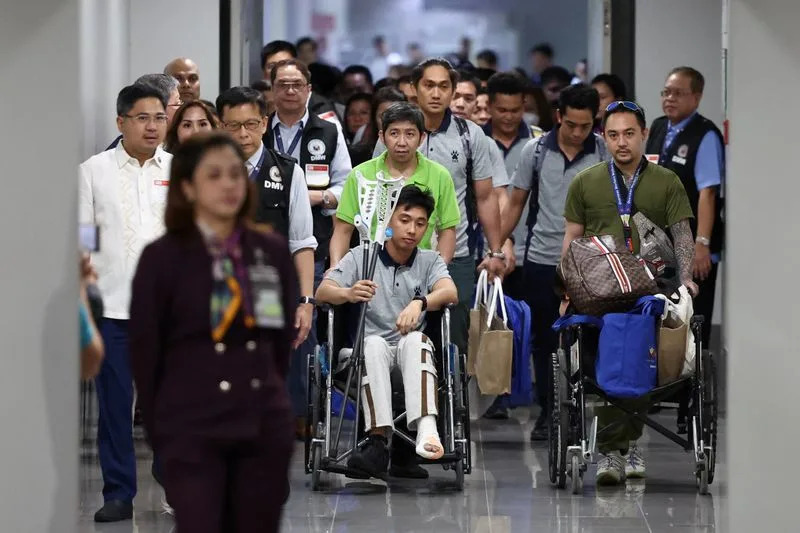
Filipino seafarers who survived the deadly Houthi attack on the commercial ship True Confidence arrive at Manila International Airport


By Jay Ereno and Eloisa Lopez

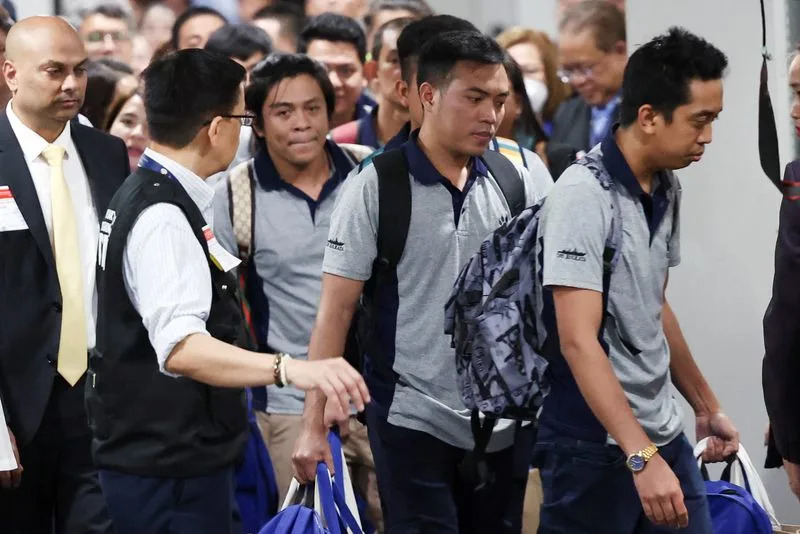
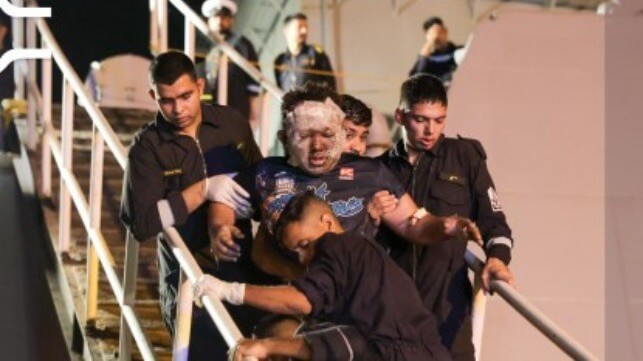
MANILA (Reuters) - Eleven Filipino seafarers arrived in the Philippines on Tuesday nearly a week after they survived a Houthi missile attack off Yemen.

They were crew members of the Barbados-flagged, Greek operated merchant ship True Confidence which the Houthis attacked last week, killing three sailors, including two Filipinos. The migrant workers' ministry said in a statement the 11 survivors received government help on arriving in Manila.


Mark Anthony Dagohoy, a crew member on True Confidence, said it was difficult to recall what they went through, but he was thankful for the military personnel who rescued them.

"We just want to be with our family," Dagohoy told a press conference.

Officials said two other Filipinos who sustained major injuries were recovering in a Djibouti hospital. Once cleared medically, they will be flown back to Manila.

The Houthis have been attacking ships in the Red Sea since November in what they say is a campaign in solidarity with Palestinians in the ongoing war in Gaza.

The attacks have disrupted global shipping, raising costs as companies have been forced to re-route to longer and more expensive journeys around South Africa.

Foreign affairs undersecretary Eduardo de Vega said on Tuesday the Philippine government has also reached a deal with the International Transport Workers Federation for Filipino seafarers to have the right to refuse deployments in high-risk areas.

The Philippines is a major source of seafarers for the global maritime sector. They are among millions of overseas Filipinos sending home more than $2.5 billion each month, boosting consumer spending which drives growth in the domestic economy.

(Reporting by Eloisa Lopez and Jay Ereno, Editing by Ed Osmond)\

11 Survivors of Houthi Missile Attac Return Home, Two Remain in Hospital

An injured survivor from the True Confidence arrives in Djibouti for treatment (Port of Djibouti)

PUBLISHED MAR 12, 2024 6:00 PM BY THE MARITIME EXECUTIVE


The surviving crewmembers of the bulker True Confidence have begun to return to the Philippines, and 11 of them arrived in Manila on Tuesday. 

With financial assistance from the Philippine government, the survivors flew home from the port city of Djibouti, arriving to find a press conference and a formal welcoming committee. Two other survivors who were badly injured in the attack are still in Djibouti, receiving hospital treatment, and will be repatriated once they recover. All of the survivors have received about $1,000 in cash aid from officials at the nearest Philippine embassy (Cairo). 

One of the survivors had to have a leg amputated, according to ISWAN - an injury that usually rules out a return to the seafaring life.

The bodies of three deceased crewmembers remain aboard the damaged ship, and recovery of the remains will have to wait until the vessel is towed to the coast for salvage, according to the Philippines' Department of Migrant Workers. A salvage tug has been chartered for the task, and the job carries unusual risks: a French frigate had to defend the salvors from a renewed Houthi drone attack last weekend.

17 Filipino seafarers from the hijacked car carrier Galaxy Leader remain in Houthi custody, and while they are alive and safe, the Philippine government's monthslong attempt to negotiate their release has been unsuccessful. “The Houthis are consistent in their statement that it would need an end to the war in Gaza before they will release the ship or seafarers,” Philippine migration official Eduardo Jose de Vega agency said at a briefing Tuesday. 

Because of the ongoing safety risk from Houthi attacks, seafarers' union Nautilus has called on shipowners to reconsider whether they have an essential need to navigate through the Red Sea, or whether they could take the long way around the Cape of Good Hope instead. Traffic on the Red Sea-Suez route has fallen by roughly half since December, according to the Suez Canal Authority and the IMF PortWatch program, but roughly 30 ships a day still continue to transit the high-risk zone off Yemen. 


Hundreds rescued from love scam centre in the Philippines

Virma Simonette & Kelly Ng
BBC
 - in Manila and Singapore
Thu, March 14, 2024 


Hundreds of people have been rescued from a scam centre in the Philippines that made them pose as lovers online.

Police said they raided the centre on Thursday and rescued 383 Filipinos, 202 Chinese and 73 other foreign nationals.

The centre, which is about 100km north of Manila, was masquerading as an online gambling firm, they said.

South East Asia has become a hub for scam centres where the scammers themselves are often entrapped and forced into criminal activity.

Young and tech-savvy victims are often lured into running these illegal operations, which ranges from money laundering and crypto fraud to so-called love scams. The latter are also known as "pig butchering" scams, named after the farming practice of fattening pigs before slaughtering them.

These typically start with the scammer adopting a fake identity to gain their victim's affection and trust - and then using the illusion of a romantic or intimate relationship to manipulate or steal from the victim. This often happens by persuading them to invest in fake schemes or businesses.

Lured and trapped into scam slavery in South East Asia

The Chinese mafia's downfall in a lawless casino town

Thursday's raid near Manila was sparked by a tip-off from a Vietnamese man who managed to flee the scam centre last month, police said.

The man, who in his 30s, arrived in the Philippines in January this year, after being offered what he was told would be a chef's job, said Winston Casio, spokesman for the presidential commission against organised crime.

But the man soon realised that he, like hundreds of others, had fallen prey to human traffickers running love and cryptocurrency scams.

Those trapped in the Bamban centre were forced to send "sweet nothings" to their victims, many of whom were Chinese, Mr Casio said - they would check in on their recipients with questions about their day and if and what they had eaten for their last meal. They would also send photos of themselves to cultivate the relationship.

Mr Casio said those running the scam centres trapped "good looking men and women to lure [victims]".

On 28 February, the Vietnamese man escaped the facility by climbing up a wall, crossing a river, and seeking refuge at a farm. The farm owner then reported it to the police.

There were signs of torture on the man, including scars and marks from electrocution, said Mr Casio, whose team visited the man early this month.

Mr Casio added that several others have tried to escape but were always caught.

Police also seized three shotguns, a 9mm pistol, two .38 calibre revolvers, and 42 rounds of live ammunition from the centre.

Authorities are still in the initial stages of the investigation as most of those rescued from Thursday's raid are still "shaken", he said.

In May last year, Philippine authorities rescued more than 1,000 people who were held captive and forced to run online scams inside a freeport zone in Clark, a city also north of Manila - in what remains its biggest bust to date.

A UN report last August estimated that hundreds of thousands of people from around the world have been trafficked to Southeast Asia to run online scams.

The BBC has previously spoken to people who have fallen victim to these criminal networks.

Many have said they travelled to South East Asian countries such as Cambodia and Myanmar in response to job ads and promises of perks. They are trapped once they arrive, and threatened if they refuse to participate in the scams. Escapees and survivors have alleged torture and inhuman treatment.

Governments across Asia, from Indonesia to Taiwan, have expressed alarm at the rise in these scam centres. Foreign embassies in countries like Cambodia and Thailand, for example, have issued warnings to their citizens to beware of being lured into scam centres.

China issued public rewards for warlords who were running scam centres across the border in Myanmar - these centres were run by Chinese mafia families and targeted Chinese nationals. Many of those arrested have been handed over to China in recent months.

Silsilah: for 30 years Christians and Muslims alongside prisoners in Zamboanga

by Santosh Digal
03/14/2024, 14.20
PHILIPPINES
   
The movement for interreligious dialogue founded in Mindanao by Fr Sebastiano D'Ambra, a PIME missionary, is also active in offering prisoners training courses for when they regain their freedom. But because of the slow pace of the Philippine justice system, many remain in prison longer than they should. "I pray that during this Lenten period they can be released," said Giljohn G. Rojas, coordinator in Zamboanga prison.


Manila (AsiaNews) - For 30 years the Silsilah Dialogue Movement has been bringing hope, compassion and love to the inmates of the Zamboanga City prison in the province of Zamboanga del Sur, in the southern Philippines.

The activity in favor of prisoners is one of the faces of this initiative for interreligious dialogue in Mindanao: founded by the PIME missionary Fr. Sebastiano D'Ambra in 1984, Silsilah (which means "chain") sees Christians and Muslims working together in many areas of social life.

“We continue to carry out our mission by inviting other Silsilah members from different cities to pay attention to this specific mission,” said Giljohn G. Rojas, staff member and new prison ministry coordinator at Zamboanga Prison. "We collected the testimonies of people deprived of their liberty who shared with us how they were transformed and how, thanks to the project carried out by Silsilah, their time in prison was reduced", he said.

Silsilah works with institutions, police and volunteers providing training courses to reduce prisoners' sentences and prepare them for reintegration when they return to freedom. “In the first few days of visiting the prison, I was eager to talk or interact with the prisoners.

In addition to being uncomfortable at the time, I felt conflicted, anxious, fearful, and ashamed. Little by little, those apprehensions disappeared and gave way to mutual trust,” said Rojas, who, trying to show solidarity with the prisoners, began “wearing colors similar to those of the prisoners' uniforms.”

The coordinator of the movement in Zamboanga underlined the importance of treating prisoners with love and respect: “They are our brothers and children loved by God, even if not impeccable. They need God's mercy and our compassion, just as each of us is imperfect. With all our flaws, we are loved. Each of us is loved,” Rojas said.

Some cases are more harrowing than others, such as that of a man sentenced to eight years, but who, due to the length of the judicial process, has been in prison for much longer: "I have not been able to look this prisoner in the eyes, who continues to feeling like he wasn't allowed to live his life, even after serving more than double his allotted time. He's getting older, and I've been thinking about what chances he would have of surviving outside prison walls if he were released. I believe that he was denied not only freedom, but much more."

Many cases are still pending or proceeding too slowly. Many prisoners cling to the hope that one day they will return to society, but they do not know whether they will be accepted or have the opportunity to work or study again.

Or simply whether they will be given a second chance because of their past. “Now I understand why Jesus specifically mentioned visiting incarcerated people as a work of mercy: because it is a gesture towards him,” Rojas continued. “Even though they have committed crimes, they are more than just criminals. They are human beings, made in the image and likeness of God."

"I pray that in this period of Lent they can leave prison", continued the coordinator. "We often close ourselves off to avoid needing people and also that people need us. Because of our conceit and self-interest, we confine ourselves. And so we also end up imprisoned in this prison of our own creation. I pray that we can be free to love those who are loved by God, who are the most neglected by our society.”
Philippines says US will address concerns over garment exports held up on suspicion of forced labor

JIM GOMEZ
Tue, March 12, 2024

U.S. Commerce Secretary Gina Raimondo, center, smiles as she meets U.S. and Philippine business groups at Makati city, Philippines on Tuesday March 12, 2024. The United States is constantly assessing the need to expand export controls to stop China from acquiring advanced computer chips and manufacturing equipment that could be used to boost its military, Raimondo said Monday.
 (AP Photo/Aaron Favila)

MANILA, Philippines (AP) — The U.S. commerce secretary has committed to address concerns by the Philippines after American authorities held up shipments of garments on suspicion that cotton was produced by forced labor in China’s Xinjiang region, Philippine officials said Tuesday.

Philippine Trade Secretary Alfredo Pascual raised the issue in a meeting Monday with U.S. Commerce Secretary Gina Raimondo, who was leading a U.S. business delegation in Manila to further expand trade and investment in America’s oldest treaty ally in Asia.

“Secretary Raimondo has committed to assist us on this issue,” Philippine Trade Undersecretary Ceferino Rodolfo told The Associated Press, without elaborating. “We are working collaboratively with the U.S. side.”

U.S. officials did not comment immediately.

The Philippine Trade Department said the issue involved “detained apparel exports” in the U.S. but did not elaborate.

A Philippine trade official told the AP that several shipments of apparel to the U.S. by just one Philippines-based company since November had not been released by the U.S. Customs and Border Protection due to suspicion cotton produced by Xinjiang’s predominantly Muslim Uyghurs were used in the exported apparels.

The official spoke on condition of anonymity because of a lack of authority to discuss the matter publicly. The Philippines is concerned such issues could tarnish the image of its apparel exports to the U.S., one of Manila’s largest export markets.

In 2021, President Joe Biden signed a bill into law to block imports from Xinjiang and other areas in China unless businesses can prove the items were made without forced labor. The law requires U.S. government agencies to expand their monitoring of the use of forced labor by China’s ethnic minorities.

The U.S. cites raw cotton, gloves, tomato products, silicon and viscose, fishing gear and components in solar energy as among goods alleged to have been produced using forced labor in Xinjiang, a resource-rich mining region that is important for agricultural production and has a booming industrial sector.

The 2021 law was among attempts by the U.S to get tough with China over its alleged systemic and widespread abuse of ethnic and religious minorities in its western region, especially the Uyghurs.

China has denied any abuses and says the steps it has taken are necessary to combat terrorism and a separatist movement.

The Philippines respects the U.S. law against forced Chinese labor and would abide by it, but wanted the apparel exporter to be allowed to meet U.S. customs authorities soon so it can prove its claim that it did not use cotton sourced from Xinjiang for their apparels. Such exports could be released in the U.S. rapidly if there were no concerns, according to the Philippine trade official.

Raimondo said in a news conference in Manila on Monday that 22 American companies, whose delegations joined her trip, plan to invest more than $1 billion in the Philippines. The U.S. investment would include training large number of Filipinos to attain high-tech skills that could help them land high-paying jobs, she said.


Philippines gets $5 billion in investment pledges from German, US companies


Updated Wed, March 13, 2024

Trading information for KKR & Co is displayed on a screen on the floor of the NYSE in New York

By Neil Jerome Morales

MANILA (Reuters) -The Philippines secured about $5 billion worth of investment pledges from German and American firms this week in sectors such as healthcare and energy, potentially big wins for the country as it competes with others in the region for foreign capital.

President Ferdinand Marcos Jr, who is on a three-day working visit in Germany, secured $4 billion worth of investment pledges from German companies, the trade ministry said on Wednesday, on the heels of over $1 billion in commitments from American firms.

U.S. Commerce Secretary Gina Raimondo concluded a two-day trade mission to the Philippines on Tuesday with executives from 22 companies including United Airlines, Alphabet's Google, Visa, and Microsoft.

The Philippines has long struggled to lure foreign money because of issues like red tape, weak infrastructure and policy uncertainty, and has lost business to other Southeast nations that offer better tax breaks and lower operational costs.

Private equity firm KKR & Co will invest $400 million in telecoms tower operations and expansion in the Philippines, the U.S. Department of Commerce said on Wednesday.

Ally Power, a startup, announced a $400 million deal with power utility Manila Electric Co to build a hydrogen and electric refueling station.

Microsoft is working with the Philippine central bank and the ministries of budget and trade to identify how its AI products can help boost productivity, the commerce department said.

In Germany, the Philippines signed eight investment pacts covering solar cell manufacturing, modification of automotives, and production of military-grade armoured personnel carriers.

Other agreements include potential development of a hospital training centre, an innovation hub and digital healthcare partnership, and farmland rehabilitation.

The Philippines attracted $12 billion of foreign direct investments in 2022, trailing Vietnam's $15.7 billion and Indonesia's $21.1 billion, Association of Southeast Asian Nations website data shows.

($1 = 55.2330 Philippine pesos)

(Reporting by Neil Jerome Morales; Editing by Jacqueline Wong, Stephen Coates and Bernadette Baum)
Montenegro rocked by 5.4 magnitude earthquake


By Euronews with AP
Published on 14/03/2024 - 

No reports of casualties so far from unusual seismic activity in the western Balkans.

An earthquake of 5.4 magnitude rattled Montenegro and its neighbouring countries early Thursday, resulting in some structural damage but no reported casualties.

According to the US Geological Survey, the moderately strong earthquake struck an uninhabited border region between Montenegro and Bosnia-Herzegovina.


Milena Tomanović, speaking on behalf of Montenegro's Institute for Hydrology and Seismology, told reporters that the initial strong quake was followed by 30 smaller aftershocks.

Authorities in Montenegro reported cracks in some buildings and landslides blocking certain roads as a result of the earthquake.

The seismic activity was felt as far as Belgrade, the capital of Serbia. In Bileca, a town in southeastern Bosnia, schools were closed as a precautionary measure, and officials were evaluating potential damage in the area.

Veselin Vujovic, head of civil protection in the town, said the situation was calm.

"We have been assessing the situation since early morning," he said. "Fortunately, we have not identified any significant damage thus far."


MONTENEGRO NASA SATTELITE PHOTO


Indian farmers rally in New Delhi demanding higher crop prices

The rally comes a month after police wielding tear gas and water cannons halted a farmers’ march outside New Delhi

Pramod Thomas
14 March, 2024
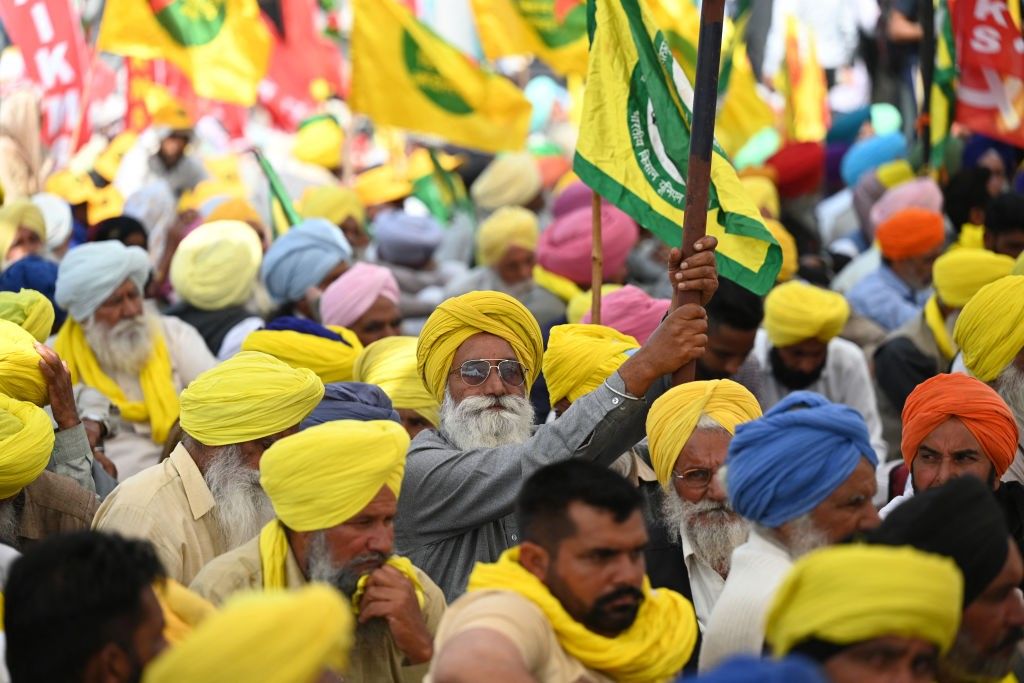
Farmers take part in a sit-in protest demanding minimum crop prices, loan waivers and an investigation into the death of a farmer during the farmers’ protest “Delhi Chalo” or “March to Delhi”, at Ram Lila ground in New Delhi on March 14, 2024. 
(Photo by SAJJAD HUSSAIN/AFP via Getty Images)

By: Pramod Thomas

THOUSANDS of farmers rode buses and trains from across India to gather on Thursday (14) at a rally in the capital, New Delhi, pressing a demand for higher guaranteed prices for their crops, as they faced down police barricades and tough security.

The rally, days before general elections are expected to be called in an exercise that will see prime minister Narendra Modi seek a rare third term, comes a month after police wielding tear gas and water cannons halted a farmers’ march outside New Delhi.

“Through this meeting, we want to show government authorities that we are not too far from reaching our goals,” Darshan Pal, of a farmers’ group, the Samyukta Kisan Morcha (SKM), told news agency ANI.

“We can surround Delhi whenever we want.”

There was no immediate comment from the government or Modi’s Bharatiya Janata Party (BJP) but they have said in the past they are committed to the welfare and prosperity of farmers, who form an influential voting bloc.

Groups of farmers listened to their leaders’ speeches while intermittently chanting slogans against Modi and his government, which had stopped the Feb. 13 March at a spot about 200 km (125 miles) from New Delhi, at which the farmers camped.

Police threw up barricades, tightened security, and warned of traffic congestion in preparation for Thursday’s rally at the capital’s Ramlila Maidan, a popular site for gatherings.

Farmers from states such as Maharashtra in the west and Odisha in the east were undeterred by the high turnout of police and paramilitary.

“This is a one-day event meant to serve as a reminder to Modi government of their unfulfilled promises,” said Narendra Singh, a farmer from the northern state of Haryana.

Farmers say the Modi government had committed in 2021 to set up a panel to find ways of ensuring support prices for all produce but had been going slow on it.

They also want the government to honour a promise to double their incomes and act against a federal minister whose son was arrested during similar protests in 2021 after being accused of running over and killing four protesters.

“Our main demand is a legally guaranteed minimum support price,” said 39-year-old Utpal Biswas, from the eastern state of West Bengal. “Today’s protest is supposed to last for a day but we will see how it progresses.”

With the elections due by May, allowing the farmers to gather in the capital, even though under strict conditions meant to ensure public order, is seen as a concession from the government which has blocked them outside the city in the past.

“Today is an important day because the government has finally come under pressure from farmers and farmer groups,” Jairam Ramesh, a spokesperson of the main opposition Congress party, told ANI.

“In the end, they have got permission for a gathering (in Delhi).”

Farmers say at least one protester has died in clashes with police over the last month and dozens more have been injured.

Modi suffered his biggest political defeat two years ago, when a similar year-long protest forced him to repeal some farm reforms.

(Reuters)
Biden opposes Nippon Steel takeover of US Steel


By AFP
March 14, 2024


US President Joe Biden speaks during a campaign event in Milwaukee, Wisconsin - Copyright GETTY IMAGES NORTH AMERICA/AFP/File SPENCER PLATT
Danny KEMP

President Joe Biden said Thursday he is against the proposed sale of US Steel to Japan’s Nippon Steel, as election year considerations appeared to outweigh the risk of angering key ally Japan.

Biden’s intervention in the planned $14.1 billion acquisition comes less than a month before he hosts Japan’s Prime Minister Fumio Kishida for a state visit to the White House aimed at boosting ties and countering China.

But Biden’s eye is apparently on November’s US presidential election against Donald Trump, with lawmakers from both sides having joined unions in opposing the sale of a American manufacturing icon to a foreign owner.

“It is important that we maintain strong American steel companies powered by American steel workers. I told our steel workers I have their backs, and I meant it,” Biden said in a statement.

“US Steel has been an iconic American steel company for more than a century, and it is vital for it to remain an American steel company that is domestically owned and operated.”

But Biden did not explicitly say he would block the deal, which has been under a US federal review of how it affects national security interests since it was announced in December.

US Steel shares were down 5.3 percent in pre-market trading following the Biden statement.

In a joint statement, Nippon Steel and US Steel said they believed the deal should still go through, saying it reflected the “close alliance between Japan and the United States”.

“We welcome the administration’s scrutiny of the transaction, as an objective and comprehensive review of this transaction will demonstrate that it strengthens US jobs, competition, and economic and national security,” they said.

“We will continue to advocate for this deal, and we are confident that fair and thoughtful evaluation will result in its approval.”

– ‘Horrible’ –

But the proposed sale has become an election-year football in the United States.

US Steel is based in Pittsburgh in the key battleground state of Pennsylvania, which Biden won in the 2020 election and will fight with Trump for again in November.

Trump said in February that he would block the “horrible” deal if he wins a second term in the White House.

“I would block it instantaneously. Absolutely,” he said.

It also goes to the heart of Biden’s election manifesto pledge to rebuild American manufacturing, with concerns that a foreign takeover could send the wrong signal to the electorate.

Biden has been wooing US unions ahead of the election as he competes with Trump for vital working class voters.

Unions have reacted with fury to the proposed deal, despite the combined company’s vow to honor contract agreements between US Steel and the United Steelworkers (USW) union.

In December the USW ripped the proposed deal as reflective of a “greedy, shortsighted attitude” of US Steel, which dates to 1901, and questioned the ability of Nippon to honor contracts.

At the time the transaction also drew bipartisan howls on Capitol Hill, with Pennsylvania Democratic Senator John Fetterman calling the deal “absolutely outrageous.”

Trump-allied Ohio Senator JD Vance and two other Republicans asked Treasury Secretary Janet Yellen to block the deal, calling domestic steel production “vital to US national security.”

The White House said at the time that the deal should be closely investigated, warning that it could have national security implications.

The firms in December asked the Committee on Foreign Investment in the United States (CFIUS) — an interagency body established to review foreign takeovers of US firms — to evaluate the deal.