Thursday, March 14, 2024


Sweden's First Task in NATO: Defend Key Island on Baltic's Sea Lanes
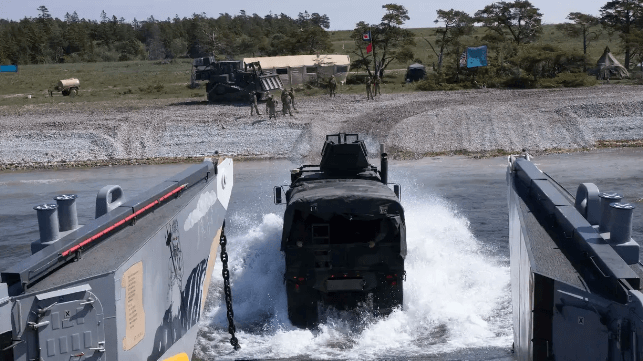
U.S. Marines go ashore in an exercise on the island of Gotland, 2023 (U.S. Navy)

PUBLISHED MAR 13, 2024 8:03 PM BY THE MARITIME EXECUTIVE


The government of Sweden is looking at ways to reinforce the garrison on Gotland, the strategically-located island in the center of the Baltic Sea. Gotland is critical for the control of the sea lanes in the region, and it gives Sweden - and its new NATO allies - a profound advantage in securing the waters and the airspace off Poland, Latvia, Lithuania and Estonia. In Europe's current security environment, holding and defending Gotland is more important than ever for the Swedish government.

Sweden applied to join NATO last year in the wake of the Russian invasion of Ukraine, ending two centuries of neutrality. It secured the final vote of approval to join the alliance last week, and strengthening the defense of Gotland is the first order of business. It "is one obvious thing to be discussed with our new NATO allies," Swedish Prime Minister Ulf Kristersson told the Financial Times this week. 

"Everything to do with the Baltic Sea is such an obvious candidate," Kristersson added. "That goes in terms of presence on Gotland, but also in terms of surveillance, in terms of submarine capabilities."

As recently as the 1990s, the garrison on Gotland numbered some 25,000 soldiers, but the numbers were drawn down to zero in the years that followed as relations with post-Soviet Russia improved. The Swedish government decided to redeploy a small regimental unit to the island in 2016-18, and it allocated further resources in 2022-23. 

Gotland is just as important to NATO as it is to Sweden. If Russia ever decides to re-absorb Latvia, Lithuania and Estonia, as it did in the Soviet era, Western war planners believe that Gotland would be an early target. Capturing the island would give Russia an "unsinkable aircraft carrier" large enough to base anti-ship and anti-aircraft missile systems. This would complicate sea and air access for NATO forces and interfere with efforts to reinforce the Baltic states. 

"I do not think there is any island anywhere that is more important," said Gen. Ben Hodges, then-commander of U.S. Army Forces Europe, in a visit to the garrison in 2017. 

Sweden may be able to call on U.S. capabilities to build up Gotland's defenses. Under a recently-inked cooperation agreement, the U.S. military has usage and access rights to more than a dozen base sites around Sweden, including two areas near the port of Visby, Gotland.


 

King Tides Reveal Shipwreck From Age of Sail in Ipswich

Historic wreck
Courtesy of The Trustees

PUBLISHED MAR 13, 2024 9:44 PM BY THE MARITIME EXECUTIVE


A large and previously-unseen hull section from the lost schooner Ada K. Damon has appeared on Crane Beach, the long private shoreline of the Crane Estate in Ipswich, Massachusetts. 

"The rising tide lifts all boats, or at least that’s how the old saying goes," wrote the site's nonprofit administrator, The Trustees, in a social media announcement. "In the case of the Ada K. Damon, it’s quite the opposite, as we saw the effects of the highest King Tide we’ve seen in a long time this past weekend."

High waters and strong winds appear to have washed away the sand over the hull section, exposing it for archaeologists and beachgoers to examine. 

Ada K. Damon was a wooden-hulled schooner built in 1875. Late in life, she was sold and repurposed for use in hauling sand from Plum Island, just to the north of Crane Beach. During her first voyage in this trade, she was caught in the severe "Great Christmas Snowstorm" of 1909, which wrecked multiple ships up and down the New England coastline. She dragged anchor and was stranded on the beach, where she was immovably trapped. 

The ship's frame has disappeared into the sand and reappeared again over the years, washed by time and tide. In 2020, it broke up in a storm, and the pieces were scattered up and down the beach. The recently-unearthed section, however, has not been seen since at least the 1920s. 

“Portions of the ship that had been buried for 100 years now were visible, so there was an opportunity there to learn from the site things that we hadn’t known before,” state underwater archaeology board director David Robinson told Boston.com.

The Crane Estate is a unique institution - a private reserve the size of a state park with miles of prime beachfront. Multiple vessels wrecked on its shores during the Age of Sail, including the Ada K. Damon, the Edward S. Elveth, the brig Falconer and the schooner Lucy M. Collins, according to Historic Ipswich. 


60-Plus Migrants Perish in Central Mediterranean After Engine Failure

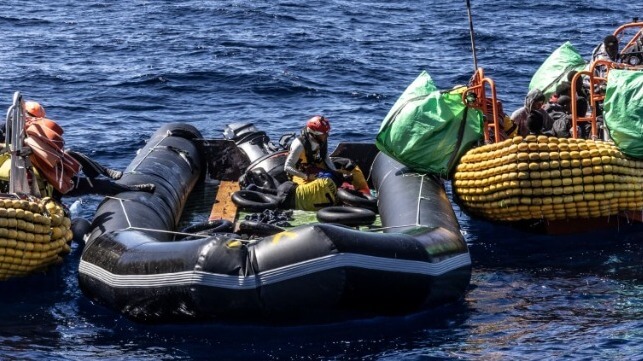
Migrant dinghy rescue
Courtesy SOS Mediterranee

PUBLISHED MAR 14, 2024 3:22 PM BY THE MARITIME EXECUTIVE


At least 60 maritime migrants have died after going adrift in the Central Mediterranean, according to aid group SOS Mediterranee. 

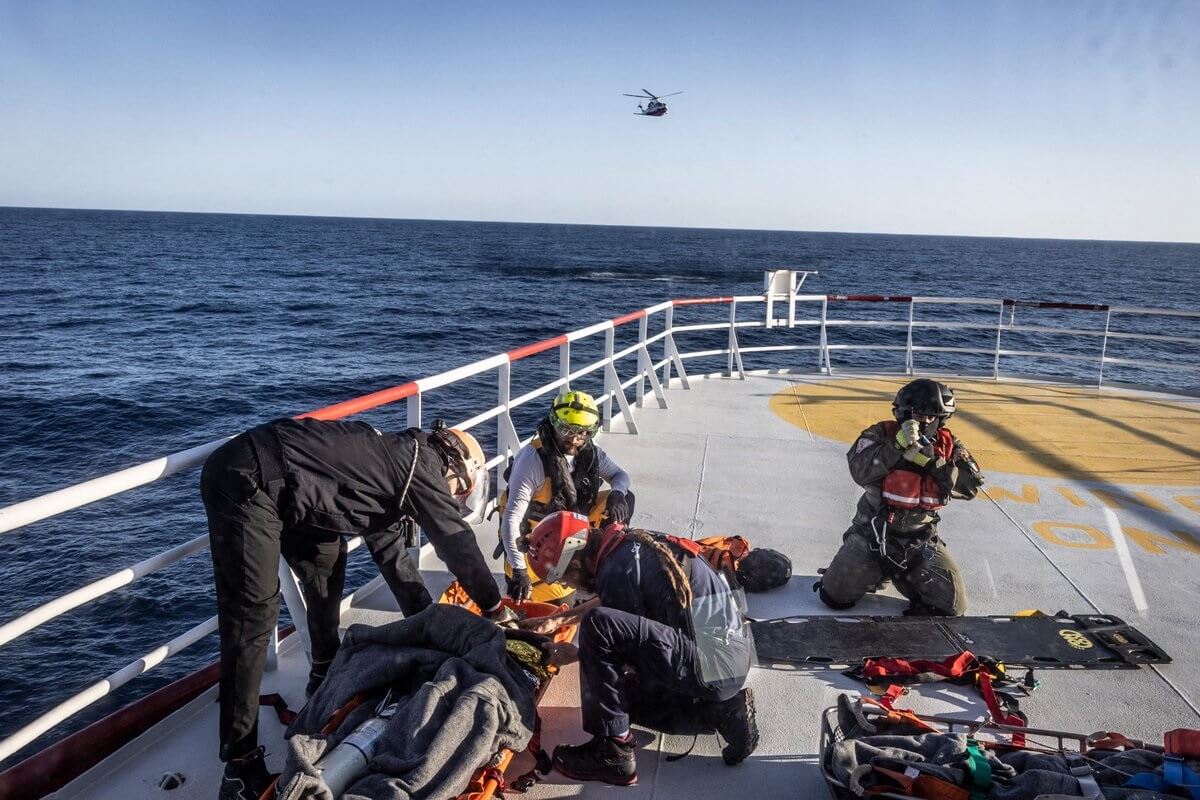
The NGO reports that it rescued 25 survivors from a rubber raft on Wednesday, with assistance from the Italian coast guard. Two additional migrants were unconscious in the raft and were medevaced, but died after their rescue. 

The group had departed Zawiya, Libya the week before. Three days into their voyage, their raft's engine broke down, and their boat drifted for days without food or water. About 60 died, including one woman and one child. All the survivors were men from Subsaharan Africa. 

Two unconscious survivors were medevaced to Sicily by helicopter, but they did not recover (SOS Mediterranee

"We are deeply troubled by news of a shipwreck in the Central Med," said the UN's migration agency in a statement. "Urgent action is needed to strengthen maritime patrols and prevent further tragedies." 

SOS Mediterranee noted that at the time of the rescue , its lawyers were in court in Brindisi, Italy, where the authoritiees arrested their rescue ship in February. Italy's government opposes NGO migrant rescue operations and has taken steps to block them, to include vessel detentions and fines. Three rescue vessels are currently blocked from operating, and SOS Mediterranee questions whether these measures are consistent with Italy's constitution and with international maritime law. 

Search of Lost Thai Navy Frigate Ends Without Finding Missing Crew

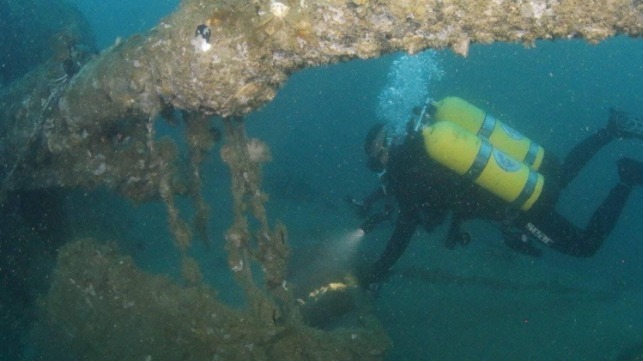
Dive search HMS Sukhothai
Courtesy Royal Thai Navy

PUBLISHED MAR 12, 2024 10:49 PM BY THE MARITIME EXECUTIVE


A partial salvage operation on the wreck of the Royal Thai Navy frigate Sukhothai has concluded, without recovering the remains of five missing crewmembers. 

On the night of December 18, 2022, the Sukhothai was about 20 miles off Bang Saphan, Thailand when it encountered a storm. As the vessel rolled in the waves, seawater entered a side exhaust pipe, causing a blackout. The vessel gradually succumbed to progressive flooding, and at 0012 hours the next morning, Sukhothai capsized and sank.

76 survivors and 24 deceased crewmembers were recovered, and five remain missing. Last month, in partnership with the U.S. Navy, the Royal Thai Navy launched a two-week dive operation to search the wreck for the remains of the last five crewmembers. All accessible compartments were thoroughly checked, the service said, without results. 

While the missing sailors remain lost at sea, the dive teams also deactivated the Sukhothai's weapons systems. The ship's Harpoon missile and torpedo control systems are now safe from misuse. A small number of items from the wreck were recovered for remembrance purposes, including the ship's bell, a statue of the Buddha, and the nameplate of the ship's commander. 

A U.S. Navy dive and salvage team assisted the project with equipment and the use of the U.S.-chartered dive support vessel Ocean Valor. The operation took place alongside a joint U.S.-Thai military exercise, Cobra Gold 2024.

"This salvage will hopefully bring some comfort and closure to the families of all the brave sailors and marines who were lost," said U.S. Ambassador to Thailand Robert Godec in a statement.

Top Insurer Subsidizes Use of AI Navigation-Safety Tool

Orca AI
Courtesy Orca AI

PUBLISHED MAR 12, 2024 7:21 PM BY THE MARITIME EXECUTIVE


After successful testing, insurer NorthStandard has decided to subsidize the use of AI-driven collision avoidance aboard its customers' ships. Under a new program, it will help pay for installation and use of Orca AI's navigational safety tech. 

Orca AI's performance numbers point to the rationale behind the decision. In 2023, the 267 vessels that use its system saw a 33 percent reduction in close encounters in open water and a 40 percent drop in crossing events. These reductions appear to show that ships with its system spend less time in situations that involve risk of collision. 

“The Orca AI platform is already used by leading shipping companies worldwide and we believe it will quickly deliver safety and operational benefits to those of our members who choose to deploy it,” said NorthStandard Global Head of Loss Prevention Colin Gillespie.

The Orca AI system includes a bridge-mounted camera pod, an interactive interface for the bridge crew, and a performance-tracking suite for shoreside management. The onboard tools provide real-time alerts for crewmembers, and the performance dashboard and high-res video from the camera pod give shoreside managers an unprecedented level of visibility into operations at sea. All this can be used for safety management and continuous improvement. 

"We've created a safety score with about 30 parameters, which is transparent to the user, and then they can understand where they need to improve. So combining all of those things, North saw a huge potential," says Orca AI founder Yarden Gross. "Eventually, where we want to take this conversation is insurance premium reduction - but we have to prove it first."

Beyond collision avoidance and safety, Orca AI helps shipdsowners reduce fuel consumption and distance sailed, the company says. Sharp maneuvers result in speed reduction and course deviation, and getting back on track increases fuel burn. Ships that can stay out of harm's way by taking early action use less fuel, and Orca AI estimates that its installed fleet saved about 170,000 tonnes of CO2 last year. 


ILA Contract Talks Need Biden’s “Immediate Engagement” Says Apparel Group

container port
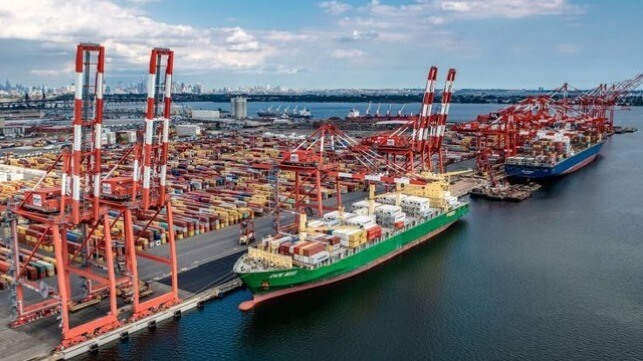
The contract covering ports from Maine to Texas is due to expire in just over six months (NY/NJ file photo)

PUBLISHED MAR 13, 2024 3:09 PM BY THE MARITIME EXECUTIVE


The trade group representing the U.S. apparel, footwear, and accessories industry is calling for “immediate engagement” by the Biden Administration in the contract negotiations for East Coast and Gulf Coast dockworkers. The group cites the administration’s involvement with the West Coast dockworkers and rail workers contracts saying “A disruption is preventable with immediate engagement from the Biden Administration.”

In a letter sent to President Biden on March 12, American Apparel & Footwear Association President and CEO Stephen Lamar warns, “Any work slowdown or stoppage leading up to or after expiration of the contract would have a devastating impact on American consumers, American workers, and the U.S. economy.” 

Concerns are growing because according to the group negotiations which began a year ago stalled after only a few weeks of talks. Reports have indicated that union leadership was anxious for the locals to settle their individual contract issues, giving them a deadline of this spring, so that negotiations on the master contract could proceed ahead of the September 30, 2024, contract expiration.

At stake is the master contract with the United States Maritime Alliance that covers some 45,000 dockworkers across 36 U.S. ports from Maine to Texas. The International Longshoremen’s Association membership covers all the major U.S. East Coast seaports and container terminals. 

The group highlights that the vast majority of apparel and footwear products as imported into the U.S. They report in 2023, just over half the products in the $92 billion a year industry move through East and Gulf Coast ports. 

“A coast-wide strike would increase the price of goods, damage the reliability of East Coast ports, and spark a new round of inflation in the U.S. economy,” writes Lamar in the letter to President Biden.

Compounding the complexity of the contract negotiations is the upcoming presidential election. Analysts speaking at the Capital Link Forum in New York on Monday speculated that that union would not strike just weeks before what is likely to be a hotly contested election that will be won or lost by a very narrow margin.


US Unions File Trade Complaint Accusing China of Unfair Shipbuilding Policy

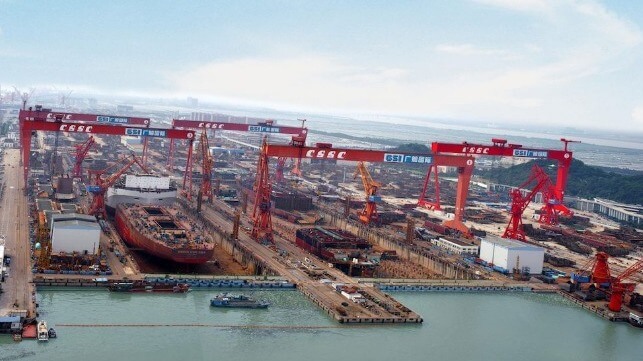
Chinese shipbuilding
The complaint targets steel and other steps taken to build up China's shipbuilding industry (CSSC)

PUBLISHED MAR 12, 2024 6:21 PM BY THE MARITIME EXECUTIVE


A wide-reaching coalition of American labor unions, supported by U.S. Senators, today filed a formal complaint against China targeting its shipbuilding industry and the policies of the Chinese government in steel and other sectors that have supported the growth of the industry. In addition to blaming China for the decades-long decline in the American shipbuilding industry, the complaint also reaches into everything from China’s port development around the world, to its logistics network, and the logistics software LOGINK, calling for fees for Chinese-built ships and a U.S. Shipbuilding Revitalization Fund.

The 137-page complaint along with hundreds of supporting documents, was filed today under Section 302 of the U.S. Trade Act of 1974. The Act allows the United States to respond to “unreasonable or discriminatory foreign government practices that burden or restrict U.S. commerce.” The effort is being led by the union for U.S. steelworkers (UWS), along with machinists (IAM), shipbuilders (IBB), electrical workers (IBEW), and the AFL-CIO’s Maritime Trade Department.

The groups are accusing China of “unreasonable and discriminatory acts, policies, and practices” to dominate the maritime, logistics, and shipbuilding sectors. They highlight the plans of China’s Central Government to build up the shipbuilding industry over the past 20 years saying they have taken actions to seize market share, suppress prices, and create a worldwide network of ports and logistics infrastructure.

The petition shows that China has “funneled hundreds of billions of dollars and adopted numerous supporting policies,” to support shipbuilding and the maritime sector. They said the actions include loans from state-owned banks, equity infusions, provisioning steel at below-market prices, tax preferences, and tens of billions of dollars in loans to support construction of thousands of vessels in China for foreign export. They also highlight that China has become a leader in ship financing and leasing.

Among the practices the petition calls unfair are mandates that Chinese companies must purchase and use Chinese-built companies. They also said the government has directed mergers and disapproved alliances with foreign companies.

The unions cite the decline of the U.S. shipbuilding industry from its post-World War II peak to its current position as the 19th in global rankings. They also cite that the U.S. has fewer than 80 commercial ships in international service while the Maritime Security Program is now using ships built in China.

Under U.S. law, the formal complaint goes to the U.S. Trade Representative, Ambassador Katherine Tai. She has 45 days to determine whether to initiate an investigation. Tai issued a statement acknowledging receipt of the complaint, saying, “I look forward to reviewing this petition in detail.” 

She commented in a written statement, “We have seen the PRC create dependencies and vulnerabilities in multiple sectors, like steel, aluminum, solar, batteries, and critical minerals, harming American workers and businesses and creating real risks for our supply chains.”

The unions point out that a single commercial ship can require approximately 13,000 tons of structural steel, 60,000 gallons of paint, 130 miles of electrical cable, and many other products made by their members. In the petition, they call for actions from the Biden administration including a port fee on Chinese-built ships that dock in the U.S. as well as a fund to help the U.S. shipbuilding industry. The port fee is proposed recognizing that most Chinese-built ships used in international commerce are never imported into the U.S. in the sense of being owned by U.S. companies.

Senators Tammy Baldwin of Wisconsin and Bob Casey of Pennsylvania joined with the unions. According to their statement, China now has the capability to build over 1,000 ocean-going vessels each year while the U.S. produces fewer than 10.

There is no recognition in the complaint that U.S. shipbuilding has been in decline far longer than China was a competitor. They do not address the cost and supply issues nor acknowledge the requirement to build American if the vessel will be in the U.S. coastal trade.


Bulker Anchors off Somalia as Pirates are Reported on the Prowl for Targets

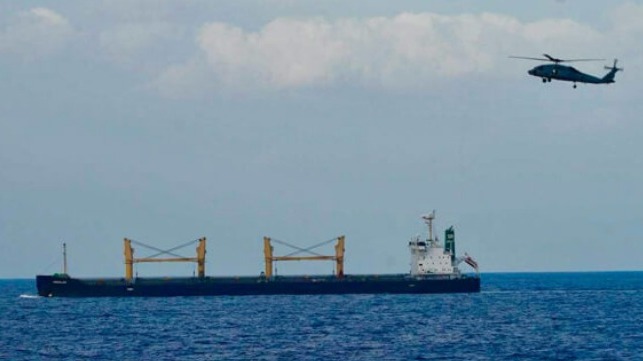
hijacked bulker
Hijacked bulker Abdullah being shadowed by EU forces (EUNAVFOR)

PUBLISHED MAR 14, 2024 3:12 PM BY THE MARITIME EXECUTIVE


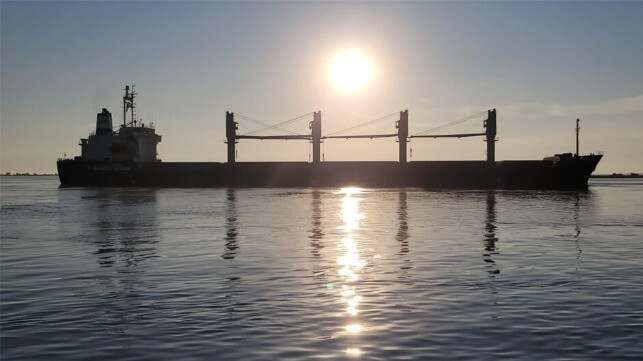
The hijacked Bangladeshi bulker Abdullah anchored off Somalia on Thursday morning after unconfirmed reports of a possible failed rescue mission. At the same time, multiple security agencies are cautioning that they believe the pirate groups are prowling the waters for more vessels including possibly using the Navibulgar bulker Ruen they seized in December 2023.

With the monsoon season over and emboldened by their recent successes, several pirate groups are thought to now be hunting other targets. The security operation Maritime Security Centre - Horn of Africa (MSCHoA) and EUNAVFOR Atalanta are speculating that as many as five groups are active from three camps in Somalia spread out between the north, center, and south coast. They warn that the pirates are likely operating from mother boats scouting targets in favorable sea conditions for boarding.

The Abdallah was reported anchored near the Habyo port and Garacad along the central Somali coast. Government officials are saying that no contact has been established directly with the pirates but they are working with the international agencies. EUNAVFOR reports it is in contact with both Bangladesh and Somalia while the shipping company is also involving a UK-based insurance company to act as a go-between. 

Atalanta confirmed the vessel’s arrival off Somalia saying that their air and sea resources were tracking the vessel for more than 24 hours. They said that visual information shows at least 12 confirmed alleged pirates aboard the vessel. They are saying they may be from the same camp that also seized the Ruen in December.

While the EU operation is only acknowledging monitoring the bulker, the Daily Observer newspaper and others in Bangladesh are saying there were reports of shots fired late on Wednesday. The unconfirmed report speculates that a rescue attempt was underway before the vessel reached Somalia saying that an unidentified navy vessel approached the Abdullah. The pirates reportedly opened fire or possibly exchanged fire with the navy vessel which withdrew. It is possible that it was the monitoring operation and the pirates became spooked, but the newspaper says the pirates again threatened the lives of the crew telling them they would be killed if rescuers attempted to board the vessel.

MSCHoA and EUNAVFOR are saying that the danger zone has been extended north of Eyl up to a distance of 1,000 nautical miles.

While the Abdullah anchored, the Ruen departed and for the past 24 hours was reported heading east. The security operations are speculating it could be used as a mother ship for additional attacks. They are also citing that six dhows were hijacked in January. Further, an unidentified Iranian fishing dhow captured by the pirates is working in the region with EUNAVFOR warning it “is expected to make multiple attempts until it finds a ship to board.”

While the situation remains fluid with heightened warnings going out to all shipping, recriminations are mounting in Bangladesh over the incident. The newspapers are citing reports from Ambrey and others that the Abdullah appeared not to have taken precautions, such as razor wire or water hoses, while they are citing SK Shipping’s lack of security guards aboard the vessel.

Parent company Kabir Group and government officials are being quoted as saying that hundreds of vessels have been taken and returned peacefully. They said they were working to make contact with the pirates to negotiate the release of the crew.


Pirates Want $5M and Threaten to Kill Crew as Bulker is Taken to Somalia

bulker
Unconfirmed reports are the Abdullah will reach Somalia on Thursday morning (file photo)

PUBLISHED MAR 13, 2024 1:19 PM BY THE MARITIME EXECUTIVE


The pirates that boarded the Bangladesh-owned bulker Abdullah (58,000 dwt) have reportedly threatened the lives of the crewmembers if their ransom demands are not met. Government officials cautioned however that they have not yet been able to make contact with the boarders and expected that the ship would first be taken to a safe area before communication would be established. 

Several government officials speaking with the local media said everything was being done at all levels of government and through international partners including India for the safe return of the crewmembers. They said however they did not have any information about the media reports that family members were told the lives of the crew are being threatened.

Media reports are saying the Abdullah’s Chief Officer messaged family reporting the pirates said, “If the ransom is not paid, the crew will be shot dead one by one.”

Unconfirmed media reports from family members also said the pirates had told the crew they wanted $5 million from the government for the release of the ship. Reports are now saying that there are believed to be 22 pirates aboard the vessel with crewmembers telling family members the pirates have “heavy arms and ammunition.”

Crewmembers were able to communicate with families before reporting that the pirates were confiscating mobile phones. They said that the crew had been rounded up and were being locked in a room with their phones taken. Officials from the company however said they had been able to make brief contact on Wednesday morning a day after the vessel was taken and that the crew was safe and physically unharmed. There are 23 Bangladeshi crewmembers aboard.

The Bangladesh Merchant Marine Officers Association told local media that through the use of international resources they had been able to locate the ship approximately 170 nautical miles east of Somalia although the pirates disabled the AIS signal and other systems that would permit tracking the ship. Initially, the ship was making just 5 knots but later Wednesday they reported it has increased speed to between 11 and 14 knots. The Abdullah appears bound for Garakad, Somalia, the same general area where the bulker Ruen was taken after it was seized in December 2023.

Based on current data, they are estimating the ship will arrive in Somalia on Thursday morning. The ship had been traveling from Mozambique with 58,000 tonnes of coal bound for the UAE. Officials of SR Shipping Line, a division of KSRM Group (Kabir Steel and Rerolling Mill) said they were in close coordination with the government. They had notified the international authorities after they heard from the ship’s officers midday on Tuesday that the ship was being boarded. 

So far, the only communications the government said are through second parties. It was noted that another Bangladeshi vessel, the Jahan Moni, was taken in December 2010. The crew was recovered they said unharmed after 100 days.

The EU operation which for the past 15 years has been monitoring maritime security in the western Indian Ocean, EUNAVFOR Atalanta reports one of the vessels in its force is currently shadowing the bulker. Command for the operation said they are taking the lead and have been in contact with both Bangladeshi and Somali authorities. They are also coordinating with partners including the Indian Navy, which was successful in disrupting two previous attempted hijackings in 2024. They acknowledged the vessel is sailing toward the Somali coast and that "the action is ongoing."


New York Completes First Utility-Scale Offshore Wind Farm in the U.S.

offshore wind farm
The U.S.'s first large offshore wind farm has completed construction (Orsted)

PUBLISHED MAR 14, 2024 4:08 PM BY THE MARITIME EXECUTIVE


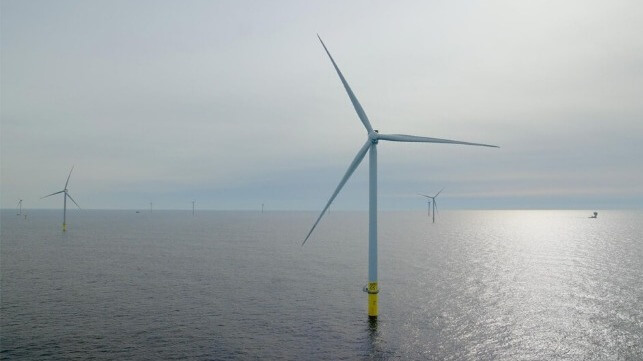
Elected officials in New York State joined with industry leaders and Ørsted and its partners to mark the completed construction of South Fork Wind. The 132 MW project is considered to be the United States’ first commercial-scale offshore wind farm. The offshore work was completed in approximately nine months with 12 turbines and is being hailed as a symbol of what is going to be coming to the U.S. clean energy industry.

“We’re thrilled to celebrate the completion of the South Fork project,” said U.S. Secretary of the Interior Deb Haaland. “Today is further proof that America’s clean energy transition is not a dream for a distant future – it’s happening right here and now.”

With all 12 of South Fork Wind’s turbines installed, the wind farm is delivering power to the local Long Island electric grid while commissioning is in its final stage. At full capacity, the wind farm, which is located roughly 35 miles off the coast of Montauk at the eastern tip of Long Island will generate enough renewable energy to power approximately 70,000 homes and will eliminate up to six million tons of carbon emissions over the 20-year life of the project.?

First approved by the Long Island Power Authority (LIPA) Board of Trustees in 2017, South Fork Wind began construction in February 2022, beginning with the onshore export cable system that links the project to the Long Island electric grid. The wind farm reached its “steel in the water” in June 2023 with the installation of the project’s first monopile foundation, and its final turbine was installed in February.?

The project was supported from Ørsted and Eversource’s fabrication hub at ProvPort, in Rhode Island. Its crew vessels and crew change helicopter are based out of Quonset Point, Rhode Island, helping to establish the wind port and support facilities for the industry.

The project was less impacted by the pressures that emerged in the industry as it was already underway and had lined up the supply chain. However, one of the two partners, Eversource has already agreed to sell its stake in the project to private investors. Eversource Energy, the operator of New England’s largest energy delivery system, reported that it decided to exit the offshore wind sector to focus on its operations as a regulated transmission builder and operator. In addition to South Fork, it invested in the planned Revolution Wind site that will power Connecticut and Rhode Island. 

Eversource has agreed to sell all its offshore wind portfolio to Global Infrastructure Partners, which in turn is being acquired by BlackRock, one of the world’s largest private asset managers. The deal demonstrates the growing interest from the private investment sector for wind power assets and Eversource expects to realize $1.1 billion of cash proceeds for the deal.

Onshore the U.S. has developed a wind energy portfolio but only Block Island Wind completed in 2016 has been built so far offshore. It was a small project consisting of five turbines and 30 MW capacity. South Fork becomes the largest offshore wind project completed in the U.S. but Avangrid and Copenhagen Infrastructure Partners have construction underway on the larger 806 MW Vineyard Wind, which began generating its first power at the beginning of the year.

The U.S. offshore wind sector is now moving into the construction phase. Several projects, including Dominion’s wind farm off the coast of Virginia, are due to begin construction this year. The Bureau of Ocean Energy Management also highlights that it is moving forward with the review process for more projects toward the U.S. goal of 30 GW of offshore energy by 2030.


Empire Wind is First Wind Farm to Get FERC Approval for NYC Interconnect

Empire Wind offshore wind farm
Empire Wind 1 continues to reach milestones as it moves toward its financial investment decision by mid-2024 (Equinor)

PUBLISHED MAR 13, 2024 8:01 PM BY THE MARITIME EXECUTIVE


Equinor reports that its proposed New York wind project Empire Wind has become the first offshore wind farm to gain Federal Energy Regulatory Commission (FERC) approval to connect directly to the New York City transmission system. It is the latest in a series of milestones to move the project toward construction and delivering first power by 2026.

The company is calling it a key step that marks the culmination of a years-long process. They were working with New York Independent System Operator (NYISO) engineers for the planning of power transmission grids and Con Edison, New York’s power company. 

FERC’s approval allows the Empire Wind 1 offshore wind project to connect through the Sunset Park Onshore Substation at South Brooklyn Marine Terminal into the New York City electrical grid. The connection will be at Con Edison’s Gowanus substation making it possible to deliver 810 megawatts of power from offshore into the city’s power supply.

It is the latest step to get the project back on track. Equinor recently acquired full ownership of the project splitting its joint venture with BP and successfully rebid the project in New York’s fourth offshore wind solicitation. Last year, the company moved to abandon the previous power purchase agreement which they said was no longer economic due to increased costs and which threatened to derail the project. Announced as a provision winner on February 29, they now need to reach a new power purchase agreement which is expected to be executed in the second quarter of this year.


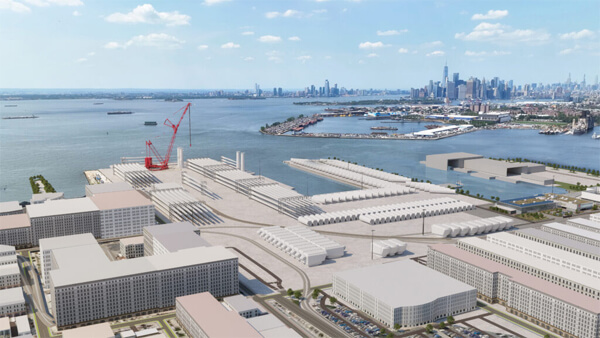
The connection will be at the South Brooklyn Marine Terminal which will become the wind port for the project (Equinor)


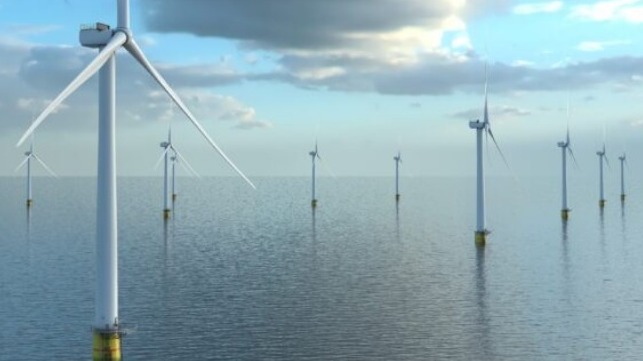
Empire Wind will be located 15 to 30 miles southeast of Long Island and spans 80,000 acres. It will be built in an area with water depths between approximately 75 and 135 feet. The project is split into two phases, Empire 1 which is nearing its final investment decision in mid-2024, which would provide 810 MW, and an earlier stage proposal for Empire Wind 2 which would provide an additional 1,260 MW.

They acquired the lease for the site in 2017 and with the FERC approval now have most of its permitting completed. The Bureau of Ocean Energy Management (BOEM) approved the Construction and Operations Plan last month and New York issued the environmental compliance certificate in December 2023.

Equinor reports it will use project financing, with the financial close anticipated by the end of 2024. They are also planning to bring in a new partner who would share the costs and exposure of the project.

A key element of the plan also calls for the redevelopment of the South Brooklyn Marine Terminal, a 73-arce site. They are calling it the largest dedicated port facility for offshore wind which will support the staging and assembly of the wind turbine components. They also plan to use it as the homeport for the first plug-in hybrid Service Operations Vessel (SOV) to support the operations and maintenance of the wind farm.


Denying Same-Sex Marriage Unconstitutional,  Japanese High Court Says

March 14, 2024 
By Associated Press
Activists carry a banner in support of same-sex marriage as supporters wave rainbow flags, in Tokyo, Japan, March 14, 2024.

A Japanese high court ruled Thursday that denying same-sex marriage is unconstitutional and called for urgent government action to address the lack of any law allowing for such unions. Plaintiffs and the LGBTQ+ community in Japan cheered it as a landmark decision that gives them hope for change toward equality.

The court does not have the power to overturn the current marriage law, which has been interpreted to restrict marriage as between a man and a woman. Government offices may continue to deny marriage status to same-sex couples unless the existing law is revised to include LGBTQ+ couples or a new law is enacted that allows for other types of unions.

The Sapporo High Court ruling said that not allowing same-sex couples to marry and enjoy the same benefits as straight couples violates their fundamental right to equality and freedom of marriage. The case was brought by three same-sex couples who appealed three years ago after a lower court recognized the unconstitutionality of excluding same-sex couples from marriage equality but dismissed compensation claims for their suffering.

A lower court issued a similar ruling earlier Thursday, becoming the sixth district court to do so. But the Tokyo District Court ruling was only a partial victory for Japan's LGBTQ+ community calling for equal marriage rights, as it doesn't change or overturn the current civil union law that the government says defines marriage as between a man and a woman.

Five previous court decisions in various cities said Japan's policy of denying same-sex marriage is either unconstitutional or nearly so. However, unlike the Sapporo ruling Friday, none of the district-level courts clearly deemed the Japanese government's existing policy to reject same-sex couples unconstitutional.

Sapporo High Court Judge Kiyofumi Saito said the constitutional freedom of marriage is about partnership between two human beings, and the right to marry should equally protect couples of different and same sexes. With their exclusion, same-sex couples have experienced significant disadvantages, suffering or loss of identity, the judge said.

"Disallowing marriage to same-sex couples is a discrimination that lacks rationality," the ruling said. But allowing same-sex marriage creates no disadvantage or harm to anyone, it said.

A plaintiff, Eri Nakaya, said the traditional definition of marriage repeatedly made her feel that same-sex couples are treated as if they do not exist.

"The ruling clearly stated that same-sex couples have the same right as others and deserve to live in this country, and reminded me it's okay just to be me," she said.

Japan is the only member of the Group of Seven nations that still excludes same-sex couples from the right to legally marry and receive spousal benefits.

Support for marriage equality has grown among the Japanese public in recent years, but the governing Liberal Democratic Party, known for its conservative family values and reluctance to promote gender equality and sexual diversity, remains opposed to the campaign.

Chief Cabinet Secretary Yoshimasa Hayashi told reporters that the government planned to closely watch the public opinion and parliamentary debate, as well as pending court cases because "an introduction of same-sex marriage closely affects family values of the people."

In the Tokyo ruling, the court said that the right to marry, have a family and enjoy advantages marriage brings — such as tax deductions and social security benefits — are guaranteed for everyone, and that lack of the legal right to same-sex couples deprives them of their basic right.

The Tokyo ruling also acknowledged the right for anyone to live based on their sexuality and sexual identity, and that traditional family values and marriage are changing, and equality of same-sex marriage is increasingly accepted in international and corporate communities. The court said the government's lack of effort to implement legal marriage equality is not unconstitutional, but expressed hope for the parliament to enact a law for same-sex marriage.

Marriage equality is now recognized in dozens of countries, not only in Western countries like Greece and the United States but also in Asia, with Nepal allowing same-sex marriage registration starting in 2023. according to the Marriage for All Japan, a civil group supporting the lawsuits.

The eight Tokyo plaintiffs said they are frustrated by Japan's slow change. A lawyer, Makiko Terahara, said they planned to appeal Thursday's decision to a high court.

While Japan's conservative government has been criticized as stonewalling diversity, recent surveys show a majority of Japanese back legalizing same-sex marriage. Support among the business community has rapidly increased.

Tokyo enacted an LGBTQ+ awareness promotion law in June that critics said was watered down. The Supreme Court separately ruled that Japan's law requiring compulsory sterilization surgery for transgender people to officially change their gender is unconstitutional.