Monday, April 01, 2024

New beetle species discovered at Orapa diamond mine in Botswana

Staff Writer | March 31, 2024 | 

Paleothius mckayi, the new beetle species found in Botswana. 
(Image by Wits University).

A new beetle species, the Paleothius mckayi, has been discovered at Debswana’s Orapa diamond mine in Botswana, the world’s largest diamond mine by area. With this finding, the geographical and temporal boundaries of our understanding of these ancient creatures have been extended.


The specimen is part of the staphylinid rove beetles, dating back to the Cretaceous period, around 90 million years ago.

In a paper published in the Journal of Entomological Science, the Wits University researchers behind the discovery explain that this is the first recorded fossil of a staphylinid rove beetle in Africa and notably, in the Southern Hemisphere.

This region of Botswana, known for its rich deposits of the Cretaceous age, has become a pivotal site for understanding the biodiversity of the past, revealing a world where these beetles roamed alongside dinosaurs.

Paleothius mckayi has been named in honour of Ian James McKay, a notable figure in the field of paleoentomology, who significantly contributed to the training of the article’s lead author Sandiso Mnguni.

This species, unearthed from deposits that accumulate in lake environments, showcases a symmetrical and elongated body, an elongated head, and notably long antennae. Its sharp, scissor-like mouthparts suggest a predatory lifestyle, actively hunting prey within the leaf litter surrounding a crater lake that once existed in this region.

Rove beetles, in general, are recognized for their highly mobile lifestyle and versatile habitat preferences, ranging from soil and leaf litter to water margins and even animal nests. The staphylinid group exemplifies this adaptability, with species found in different environments worldwide.

These beetles are critical in controlling pest populations, breaking down organic matter, and contributing to nutrient cycling within their ecosystems.

According to the researchers, until now, similar fossils have been found in diverse locations such as China, Russia, Myanmar, and England, but the addition of Botswana to this list highlights the Orapa diamond mine as a crucial Cretaceous deposit in Africa with a rich biota, encompassing various groups of plants and insects.

Punctuated evolution


The discovery also emphasizes that these types of beetles were not just present but thriving alongside dinosaurs, and they have mostly stayed the same over millions of years. This idea, that some creatures evolve very slowly, supports what scientists call “punctuated evolution”—the notion that evolution can happen in bursts following long periods of little change.

Moreover, this beetle shares some family traits with another group of beetles, suggesting these groups have been related since the Jurassic period, even longer ago.


The process of describing a new species from such fossils demands hours of detailed morphological analyses under both polarized and unpolarized light, allowing researchers to observe and interpret the specimen’s features meticulously. This work often requires repeated examinations to identify unique characteristics that justify the classification of a new species.

“The more you look at the specimen, the better you’ll get at understanding it. You might notice details you missed before, which helps you describe it better,” Mnguni said in a media statement. “There are more fossil rove beetles that will be described from the same deposit by the same authors in the near future, and there are also many fossil insects belonging to other groups that await description. This promise of future research highlights the untapped potential of the Orapa deposits in enriching our understanding of Cretaceous ecosystems and the evolutionary trajectories of insect life on earth.”


Russia’s Nornickel: Some EU clients refuse to buy products made of Russian metal

Reuters | March 30, 2024 |

Anton Berlin, Nornickel’s vice president for sales. (Image by Nornickel).

Russia’s Nornickel, the world’s largest palladium producer and a major producer of high-grade nickel, said on Friday that some clients in the European Union had refused to buy products made with Russian metals.


Although Nornickel itself and its metals are not a target of Western sanctions some consumers are voluntarily shunning deals for its metals and of products made from Russian raw materials, said Anton Berlin, vice president for sales.

Nornickel’s Finnish Harjavalta plant, which produces battery materials in Europe for electric vehicles, was affected, he added as an example of the rejection of products made from Russian materials.

CEO Vladimir Potanin said last year that sanctions had constrained Nornickel’s development due to “voluntary self-sanctions” imposed by some clients and foreign suppliers of equipment and technologies, though Western governments have refrained from targeting Nornickel directly in response to the conflict in Ukraine.

Berlin also said on Friday that many banks had refused to accept and transfer money for Russian products. Nornickel continues to face challenges in dealing with ports, ships and insurance companies.

“We are reconfiguring our sales system… In such circumstances, the main goal is to sell all we produce”, he said.

After February 2022, Nornickel changed its sales geography, shifting its focus to Asia, whose share in the company’s revenue exceeded 50% last year for the first time in its history.

China has become the Nornickel’s largest sales market, Berlin said.

This year, the company expects nickel output will drop to 184,000-194,000 tons, and palladium output is seen at 2.296-2.451 million troy ounces, lower than a year earlier, Nornickel reported in January.

Berlin also said that Nornickel would seek to integrate into the value chain so that “we cannot be taken out of the global economy”.

“For nickel, the first priority is to integrate into the battery sector”, he said.

Nornickel also seeks new uses for palladium, Berlin said.

Nornickel is performing “wide fundamental research together with Russian and foreign scientists” to replace the eventual loss of autocatalysts with new demand, its head of product development told Reuters last year.

(Reporting by Anastasia Lyrchikova; editing by Guy Faulconbridge).


Fugro Partly Converts a Survey Vessel to Run on Methanol

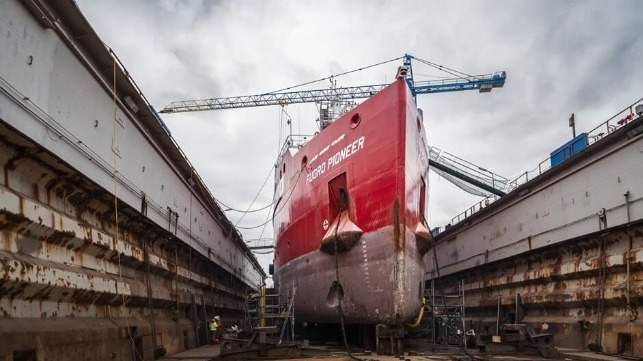
Courtesy Fugro
Courtesy Fugro

PUBLISHED MAR 31, 2024 11:36 PM BY THE MARITIME EXECUTIVE


Dutch multinational Fugro plans to partly convert one of its geophysical survey vessels to run on methanol, a low-carbon fuel that is expected to play a central role in decarbonizing the shipping industry.

The company announced that Fugro Pioneer is ready to be equipped with methanol engines after converting related components on board. The vessel, which is currently in dry dock, underwent critical adjustments that will allow two of its four original engines to be replaced by methanol engines.

The decision to replace just two of the engines is designed to ensure that the survey vessel can still offer services in regions where green methanol is not yet available. Fugro said that the delivery and installation of the methanol-capable engines will happen in the second half of the year.  

Built in 2014 by Damen Shipyards Galati, the 170-foot vessel uses diesel-electric propulsion. The compact survey ship is designed for light geotechnical work, environmental baseline surveys, monitoring and inspection and moon pool deployments. The vessel has mainly been deployed in conducting geoscience surveys for wind farm development.

Conversion of the vessel to run on the low-carbon fuel is part of the Methanol as Energy Step Towards Emission-free Dutch Shipping project, which is being funded by the Netherlands Enterprise Agency (RVO) with a sum of $27 million.

“The methanol conversion of the Fugro Pioneer is not only a pivotal move in diminishing our vessel emissions as part of our Net Zero 2035 journey, but it also stimulates the green methanol market. We will continue to invest in innovative solutions that not only help our clients, but also support us in reaching our company objectives,” said Barbara Geelen, CFO at Fugro.

The company said that there is an increased focus on sustainability in tenders for the offshore market, and vendors that embrace green methanol as a fuel can help wind farm developers and O&G clients reach their decarbonization objectives. 


Low-Cost Batteries for Inland Waterway Propulsion

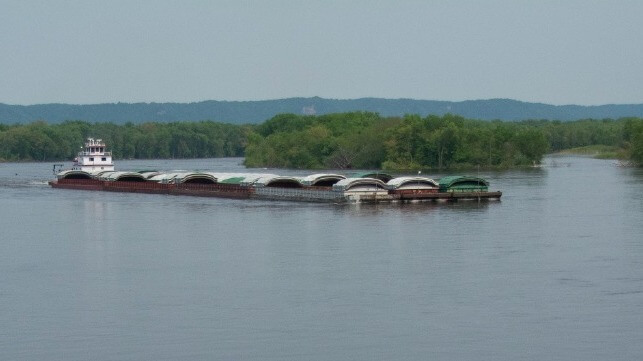
Barge tow on Mississippi
USCG file image

PUBLISHED MAR 31, 2024 10:03 PM BY HARRY VALENTINE


The development of battery electric maritime propulsion has involved using lithium battery technology that incurs high cost per kilowatt hour. An alternative liquid metal battery technology that incurs much lower cost per kilowatt-hour offers competitive application for short-distance propulsion along inland waterways.

Introduction

Efforts and initiatives aimed at reducing carbon emissions have prompted the maritime sector to develop battery-powered vessels for ferry and tugboat service. While the present cost of lithium battery technologies is currently around $400 per kilowatt-hour ($/kW-hr), future costs are expected to decline to $250 to $300/kW-hr between 2030 and 2035. A competing liquid metal battery technology developed by MIT for stationary application incurred a prototype limited-production cost of $180/kW-hr. Full scale production versions of the liquid metal battery are expected to drop to below $35/kW-hr between 2030 and 2035, with both stationary and mobile applications.

The liquid metal battery is housed in a container that measures eight feet wide by 10 feet long and 10 feet tall, with storage capacity of 1,000 kilowatt-hours that can be delivered at up to a steady 250 kW over four hours. The container weighs up to 60,000 pounds. Repeated deep cycle discharge of small-scale versions of the liquid metal battery technology has revealed minimal fade over 20,000 full-depth cycles, with the battery having withstood 100,000 deep drain cycles. The battery combines low initial cost combined with extended usable service life.

On the Water

The coupling of standard size barges into trains (tows) provides possible application for short distance propulsion using liquid metal battery technology. While it is possible to install liquid metal battery containers into the construction of a tug, it is also possible for standard-size barges built to 195 feet length by 35 feet width to carry the weight of multiple liquid metal battery containers that each weigh 60,000 pounds. An empty barge typically weighs 280,000 pounds and with water density at 62.4 pounds were cubic foot, would cause the barge to displace 8 inches depth of water.

The combination of barge weight plus that of 40 battery containers (40 x 60,000 = 2.4 million pounds) spread in an array on the barge would displace water to a depth of 6 feet 4 inches. An array of 48 battery modules on the barge would displace water to a depth of 7 feet 5 inches, while an array of 52 battery modules would displace 8 feet of water depth which is the typical navigation depth of barges that operate along American inland waterways. The barge would require a cover for reasons of weather protection and water that could splash into the container area.

Onboard Energy Storage

Each battery container would hold 1,000 kW-hour of electrical energy. A barge carrying 40 battery containers would offer 40,000 kW-hour of energy, or up to 10,000 kW (13,400 horsepower) over four hours duration.   

Some of the largest tows along the Mississippi River have involved barges coupled 9 lengthwise by up to 7 abreast for total of 63 barges, pushed by a tug of 10,000 horsepower (7,460 kW). If the last row of barges were battery barges offering 280,000 kW-hour to 364,000 kW-hour of energy, a battery tug could push the tow for between 35 hours and 45 hours. The less powerful tugs on the inland waterway develop 3,500 Hp (2,610 kW) to 4,200 Hp (3,200 kW), allowing a battery barge converted to a tug to push a tow of barges for 12 to 14 hours.

Deeper Waterways

Battery electric tugs built to 40 feet wide by 220 feet long could push barges of containers from the Port of Newark to a container terminal at the Port of New York. A new container terminal is being built east of Montreal, on the south side of the Lower St. Lawrence River. There may be scope for battery electric tugs to each push a barge laden with containers between Port of Montreal’s new terminal and a container terminal on the south side of the island of Montreal. Battery electric tugs could shuttle barges of containers between terminals at Port of Singapore and nearby Malaysia.

The St. Lawrence River and Seaway allows a navigation depth of over 20 feet. A vessel weighing 360,000 pounds and built to the dimensions of a Mississippi standard barge could carry 72 battery containers, displace water to a depth of 11 feet and hold 72,000 kW-hour of energy. It could carry 144 battery containers on 2 levels and displace water to a depth of just over 21 feet while holding 144,000 kW-hour of energy.  

Future Power Generation

Political efforts to convert the commercial transportation sector toward greater use of electrical propulsion would require construction of multiple new power stations in several nations, with nuclear conversion being the prime candidate. Development of new power stations requires massive investment over the period of at least a decade and longer. Progress is slow and steady in the area of energy conversion using tidal currents and ocean waves. While the cost of solar power and wind power conversion has been declining, there is emphasis on making newer versions of both technologies more recyclable.

Conclusions

Unlike electric road transportation vehicles that require expensive lithium-ion battery technology to travel for multiple hours, electrically powered large-scale maritime transportation vehicles may use large grid-scale batteries that offer up to 20,000 full-depth discharges that when in full-scale production, incur a cost of around 1/10th per kilowatt hour of lithium-ion battery technology. Some lithium iron phosphate batteries can deliver up to 3,000 full-depth discharges. Lithium-ion batteries are best being rarely fully depleted and can achieve 1,500 cycles when repeatedly discharged from 100% down to 20%, or up to 3,000 cycles when repeatedly discharged from 100% down to 50%.

In tug barge operation along inland waterways, the battery barges would be coupled at the back of the main tow and sail in the hydraulic shadow of the barges coupled immediately ahead, thereby reducing parasitic hydraulic drag. As batteries approach depletion, the battery barges might be exchanged at prearranged locations for barges carrying fully recharged batteries. In battery electric maritime operation, the liquid metal battery, the iron air battery, the aluminum air battery and large-scale lithium-ion batteries would each occupy distinctive market niches within the electrically powered maritime sector.

The opinions expressed herein are the author's and not necessarily those of The Maritime Executive.


Ocean Mapping is the Next Front in Battle for Influence in Indian Ocean

China is now offering itself as an alternative provider of hydrographic services to many countries.

Chinese research ship

PUBLISHED MAR 31, 2024 4:23 PM BY THE LOWY INTERPRETER


[By David Brewster]

Hydrography, the mapping of bodies of water and surrounding coastal details, is the new front in the battle for influence in the Indian Ocean. There is growing competition among India, China and others to chart international waters as well as the exclusive economic zones of countries around the region. Smaller nations are pushing back, wanting to build their own sovereign capabilities and control over information about their maritime domain. Australia can play a useful role in finding ways to build local capabilities and ameliorate this new source of strategic competition.

More than just crucial for the safely at sea of commercial and private boats and ships, hydrographic data is also essential for naval operations, including surface vessels and submarines, as well as emerging commercial activities such as seabed mining.

It’s said that humanity knows more about the surface of the Moon than the ocean floor. This is particularly the case in the Indian Ocean, which is among the least charted oceans in the world. During the search for the missing Malaysian Airlines MH370 in 2014 it became evident that we had little idea of what the ocean floor looked like. Indeed, many countries in the region still often use colonial-era charts from the 19th century.

Hydrography is now assuming a geopolitical focus with major powers competing to provide hydrographic services to countries with few capabilities or little expertise in this area. This is used to demonstrate regional leadership and, more importantly, gain access to data vital for military purposes such as submarine operations. Underlying this are important issues of sovereignty. Who should own or control information about the sea, particularly in areas of national jurisdiction?

India has long sought to position itself as a regional provider of hydrographic services. It has a fleet of about seven hydrographic vessels and has conducted approximately 100 foreign hydrographic surveys, including in Maldives, Mauritius, Kenya, Tanzania, Myanmar, Sri Lanka and Seychelles just in the last few years. India also builds local capabilities, including training for around 800 foreign nationals from countries throughout the Indian Ocean, Asia and Africa.

Accepting hydrographic assistance makes a lot of sense for many countries in the region that may have large exclusive economic zones with little idea of what is down there. But what was once considered to be uncontroversial is now much more fraught.

China is now offering itself as an alternative provider of hydrographic services to many countries. Chinese agencies operate more than 30 oceanographic surveillance and research vessels, many of which also have electronic surveillance capabilities.

But while Chinese offers of assistance can be tempting for many, letting them map areas of national jurisdiction has become highly controversial. India, in particular, has significant concerns about China’s research activities in the Indian Ocean, particularly near the Bay of Bengal where India’s nuclear submarine fleet is based.

These issues have come to a head in Sri Lanka. The presence of Chinese research vessels in Sri Lankan waters, most recently the Shi Yan 6 in October 2023, drew loud protests from New Delhi. Shortly after, Sri Lanka announced an effective 12-month moratorium on research by all foreign research vessels while it worked out what to do about the issue. The Sri Lankan government later moved to cancel an agreement between a Chinese institute and a local university under which China gained easy access to Sri Lanka’s waters, and its hydrographic data. The government also created a new agency under the Ministry of Defence to supervise hydrographic research.

Controversy was reignited after a German research vessel was allowed to dock in Colombo for replenishment last week.

Hydrographic information is not only a security issue but also an economic one. Through regaining control over its hydrographic data, the Sri Lankan government hopes to make considerable profits from providing electronic charts to the hundreds of ships that pass Sri Lankan waters every day. To achieve this, Sri Lanka needs to develop its sovereign hydrographic capabilities. The United States and Australia are considering what assistance can be provided.

Similar controversies are unfolding in nearby Maldives, an island state with a tiny population but a huge maritime jurisdiction. In December last year, the newly elected Maldives government announced that it would not renew an agreement with India under which India was undertaking hydrographic surveys of Maldives waters. This has created a vacuum in Maldives hydrographic needs.

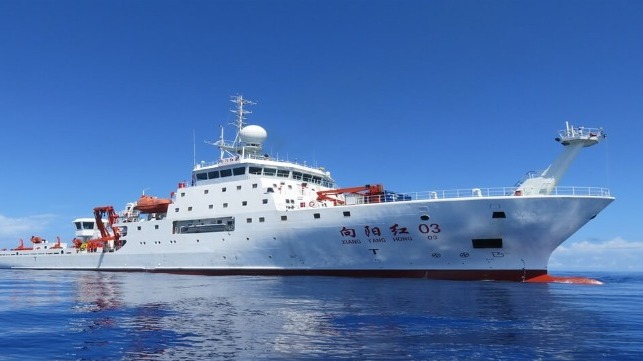
In February, the Chinese research vessel Xiang Yang Hong 03 docked in Maldives’ capital after undertaking three weeks of hydrographic surveys just outside the exclusive economic zones of Maldives, Sri Lanka and India. (From the location of the survey it’s probable that its main purpose was for future People's Liberation Army Navy submarine and anti-submarine operations.) Days later, Maldives signed a defence cooperation agreement with China. Its terms haven’t been disclosed but is understood to involve the supply of riot control equipment. Following this agreement, Beijing is pushing hard to expand its security role in the country, which, among other things, will be to allow Chinese vessels to map Maldives waters and possibly even establish a marine research station in the country’s north.

United States, Britain and Australia are now scrambling to find ways to help build Maldives’ sovereign national hydrographic capabilities. Maldives may be well advised to follow Sri Lanka’s example by declaring a moratorium on visits by all foreign research vessels to give it time to build a level of national capabilities to the extent possible. In time, Maldives may also need to find ways of bringing in outside assistance in a way that mitigates sovereignty concerns, for example, through working with coalitions of international partners.

These developments in Sri Lanka and the Maldives are the first steps in what is likely to become a wider regional struggle over ownership and control of critical hydrographic information.  

Dr. David Brewster is with the National Security College at the Australian National University, where he specializes in South Asian and Indian Ocean strategic affairs. He is also a Distinguished Research Fellow with the Australia India Institute. 

This article appears courtesy of The Lowy Interpreter and may be found in its original form here

The opinions expressed herein are the author's and not necessarily those of The Maritime Executive.


Chinese Oil Refiners May be Unwittingly Paying for Houthi Attacks

Houthi forces depend heavily on Iranian support, and Iran finances its foreign military operations with oil sales to China

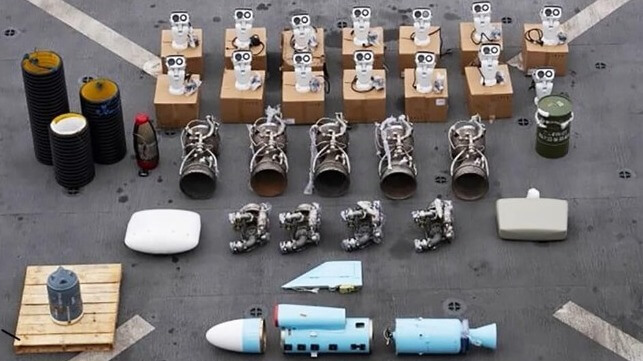
Without knowing it, China's oil refiners may be paying for the Iranian parts that make the Houthi anti-ship campaign run, like this consignment of rocket engines, warheads guidance devices and other key components (U.S. Navy)

PUBLISHED MAR 31, 2024 8:37 PM BY THE MARITIME EXECUTIVE


Over the weekend, Yemen's Houthi rebels continued to launch drone attacks on vessels in the Red Sea. U.S. forces shot down two unmanned aerial vehicles on Saturday morning, one on shore as it prepared to take off and another over the Red Sea, according to U.S. Central Command. 

The Houthi movement has pledged to keep up its attacks until fighting in Gaza comes to an end, and it remains a costly menace to shipping. The group has sunk one ship and damaged another, without appearing to differentiate between nationality of vessels. Earlier this month, Houthi fighters repeatedly targeted a tanker owned by a firm with a Hong Kong address, appearing to violate a pledge not to attack Chinese ships. Given the seemingly indiscriminate threat of attack, almost all east-west container traffic has abandoned the Red Sea-Suez route, and tanker and ro/ro traffic has partially diverted as well. 

Though the disruption would appear to harm Chinese business interests on the China-Europe trade lane, Beijing has not joined any of the ongoing maritime security operations in the Red Sea. China also appears to be indirectly financing the Houthis' campaign of maritime attacks, multiple analysts told Politico, whenever its independent refiners buy another cargo of oil from Iran.

China's small "teapot refiners" buy about 80-90 percent of all Iranian oil exports, and they turn the discount oil into competitively-priced gas and diesel for the Asian market. Since Iranian petroleum is sanctioned by the United States, the sale and transport take place with a degree of subterfuge. The oil cargoes are typically transshipped in a third country and imported as though the oil originated somewhere else. (China's imports of "Malaysian" oil routinely exceed Malaysia's national oil production.)

Some of these Iranian cargoes are sold under an allotment program for the Islamic Revolutionary Guard Corps-Quds Force, the U.S.-designated terrorist organization that is responsible for Iran's covert action programs. Much of the Quds Force's oil proceeds go towards training and equipping Iranian proxies - including the Houthis. U.S. Navy forces have repeatedly intercepted shipments of Iranian missile components to Yemen, and Western analysts believe that the Houthis' anti-ship capabilities depend heavily on Iranian technology. 

"The first country hurt by [Red Sea disruption] is China itself,” one official told Politico. “I’m not sure they’re aware they’re cutting off the branch they're sitting on.”


17 Injured in Danube River Cruise Accident

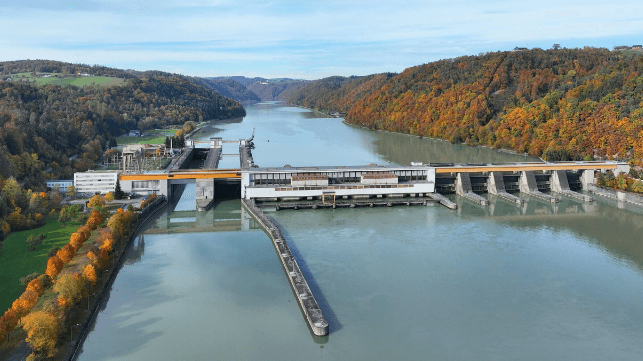
Aschach power station and locks (C. Stadler / CC BY SA 4.0)

PUBLISHED MAR 31, 2024 9:01 PM BY THE MARITIME EXECUTIVE


On Friday, a Bulgarian-flagged river cruise ship hit a lock wall at the hydroelectric power plant in Aschach, Austria, injuring 17 people. 

The vessel was under way on a Danube cruise to Linz, Austria, with 142 people on board. During a transit of the locks at Aschach, it lost ability to maneuver due to a reported electronic system failure, and its starboard bow and port quarter both hit the lock walls. The officer on watch was able to immediately regain control by "pressing the emergency switch, whereupon the electronics started again," the federal police said in a statement. 

The officer brought the ship alongside the quay wall and called for assistance. Multiple first response agencies came to the scene, including the police, fire departments and Austria's water police. 11 people sustained slight injuries and were taken for medical care. Six others with minor injuries declined assistance.

The ship and the lock wall were both scraped, but there was no serious structural damage. Austrian maritime inspectors determined that "the electronics worked again after the emergency switch was reset," and the vessel was allowed to continue on its voyage to Linz.


Indonesia Suspends Some Live Imports After Deaths on Carrier from Australia

animal livestock carrier
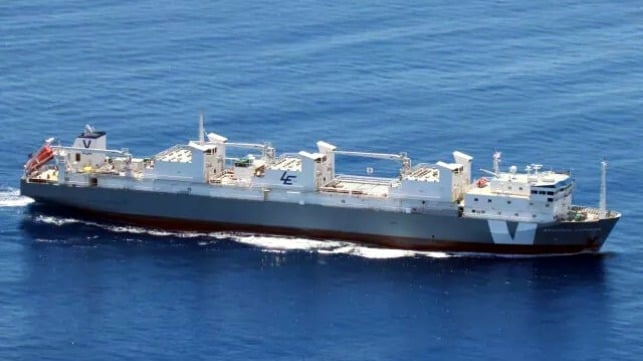
Brahram Express is fueling the debate in Australia after news of a large number of animal deaths on its recent voyage (Vroom file photo)

PUBLISHED MAR 29, 2024 8:49 PM BY THE MARITIME EXECUTIVE


The controversy over live animal export is continuing to grow in Australia after news of a larger-than-normal number of animal deaths aboard one of the vessels sailing from the country. While the authorities are continuing to investigate the possibility of disease, animal rights groups which have long called for the end of the trade have increased their efforts citing the latest case of the Brahman Express.

The vessel which runs between Australia and Indonesia departed on Darwin on March 14 and by the time it reached Indonesia 10 days later it was reporting according to the Australian Department of Agriculture, Fisheries and Forestry (DAFF)  an “incident involving cattle deaths.” The DAFF did not confirm the number of actual deaths but media reports are saying that it was believed to be more than 100 cattle on a vessel with a capacity of around 4,500 feeder cattle or 2,200 heavier-weight cattle. Built in 2002, the 5,600 dwt Brahman Express is one of a few relatively new, purpose-built vessels in the trade.

Even before the vessel returns to Australia, which is expected next Monday, Apil 1, according to its AIS signal, the controversy is growing. DAFF confirmed two days after the vessel departed Indonesia it received confirmation from the Indonesian authorities that the export of live cattle from a particular (unnamed) Australian supplier was being temporarily suspended, pending further investigations to determine the cause of the deaths.

It comes as a blow to the industry as Australia is Indonesia's biggest supplier of live cattle shipping around 400,000 animals worth around $400 million to the country annually. In February, Indonesia issued permits to import around 650,000 head of Australian cattle this year.

Even before news of this incident began to go public, the Australian government was pushing forward with a plan to phase out live exports. On March 25, just one day before the first public announcement by DAFF regarding the current issue with the Brahman Express, Parliament debated a motion on live sheep exports that was tabled in response to the governments’ plans.

The Australian Livestock Exporters’ Council (ALEC) is publicly criticizing lawmakers for supporting the ban saying they are using “tired and factually incorrect arguments” considering the industry has reformed and is growing.

“In 2023 volumes were 30 percent higher than 2022, all while this policy has hung over the industry’s head,” said ALEC in a statement. “We have also sent approximately 40,000 sheep to the Kingdom of Saudi Arabia in 2024, a market that only reopened this year.”

ALEC added that the argument that chilled or boxed meat will replace live animal exports is also a fallacy considering that many of Australia’s international trading partners already take chilled meat but remain the largest markets for live animals. Data shows that Australia’s live sheep export industry employs more than 3,500 people in Western Australia and is worth $85 million (US$55.5 million) in direct payments to producers with an assumed multiplier effect close to $300 million (US$196 million).

DAFF reports as the debate continues that it is working with Indonesian officials to provide assurance about the circumstances leading to the deaths and that it will provide a report upon the conclusion of investigations.

Precautionary testing undertaken by the Australian Centre for Disease Preparedness, DAFF reports have had negative results for exotic diseases, including Lumpy Skin Disease and Foot and Mouth. The department continues to investigate the cause of the livestock moralities, reporting that clinical signs present in the cattle are consistent with botulism. They explained that botulism in cattle is most often caused by the animals eating a toxin produced by bacteria in contaminated feed. It is not a contagious or exotic disease and is not a risk to the Australian herd or human health.


Canada's Coast Guard Begins Historic Fleet Recapitalization

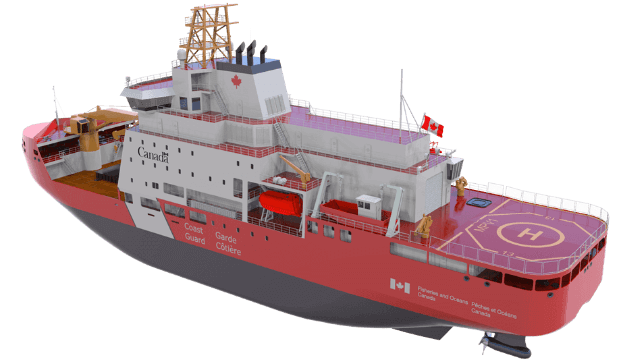
The future Canadian Coast Guard MPV (Seaspan)

PUBLISHED MAR 31, 2024 3:11 AM BY THE MARITIME EXECUTIVE


After years of planning, the building of modern vessels for the Canadian Coast Guard (CCG) is finally set to commence following the award of multi-million contracts to Canadian shipyards.

The Canadian federal government announced that Seaspan Shipyards will construct the first six multi-purpose vessels (MPV) while Chantier Davie will undertake initial works related to the construction of new Program Icebreakers for the CCG.

For the MPVs, Seaspan will receive C$490 million to immediately commence works on two of the vessels that are touted to be highly versatile icebreaking ships designed with multi-mission capabilities. The shipyard was awarded the construction engineering and long lead items contracts following the completion of the vessel’s basic design review late last year.

The MPVs will be Polar Class 4 vessels, allowing them to carry out multiple missions including icebreaking in moderate ice conditions and assisting in search and rescue, environmental response, emergency towing, and maintaining aids to navigation.

The new fleet of MPVs will replace the existing fleet of high endurance multi-tasked vessels and medium endurance multi-tasked vessels. Construction of the vessels is part of the Canadian government’s plans to renew the CCG fleet under a C$15.7 billion investment unveiled in 2019. The government is targeting 16 MPVs in total.

The MPVs are expected to form the backbone of the modern CCG fleet and are part of the wider National Shipbuilding Strategy (NSS). Delivery of the first vessel is slated for 2030, with deliveries continuing until the mid-2040s.

“The MPV project will help ensure that members of the CCG have versatile vessels to complete essential missions in Canada’s oceans and waterways,” said Jean-Yves Duclos, Minister of Public Services and Procurement.

With a displacement of 8,500 tons, the MPVs will be 99.9 meters long and 20.3 meters wide, and able to accommodate up to 50 personnel. Their area of operation will include Canada’s eastern and western seaboards, the country’s Exclusive Economic Zone, Gulf of St. Lawrence, the St. Lawrence River, the Great Lakes and the western and lower Arctic.

On its part, Chantier Davie has secured a C$19.6-million contract to begin work to develop the initial design for the Program Icebreakers. The intended six vessels will replace the aging CCG’s medium icebreakers that have become extremely expensive to maintain.


A Remedy for Ship Accidents: Tug Escorts

AP images Francis Scott Key Bridge
AP Images

PUBLISHED MAR 30, 2024 1:21 PM BY TONY MUNOZ


When the M/V Dali had an allision with Baltimore's Francis Scott Key Bridge at eight knots, the 116,000-deadweight-tonne ship hit with explosive force. This tragedy left six bridge workers dead, an economically-essential port closed, and the entire maritime sector under scrutiny.

Commercial shipping transports over 80 percent of the world's trade, valued at $14 trillion. The global fleet is estimated at 120,000 vessels, of which five percent are container vessels.

After the Exxon Valdez accident in 1989 in Alaska’s Prince William Sound, the Oil Pollution Act of 1990 was enacted. This act mandated tug escorts for laden tankers in Alaska, and soon after that, the states of Washington and California required tanker escorts in their waterways.

As the San Francisco Bay Area stakeholders met, there were serious concerns about tankers transiting the bay’s extreme tidal environment and eight bridges. But the remedy was easy: all tankers would require tugboat escorts of two or more boats based on deadweight tonnage. The only debate was whether twin-screws or tractor tugs met the OPA90 mandate of “best achievable technology.

Recently, ships have stuck bridges in China and Argentina, and the industry is again reminded of the freighter ramming the Tampa Bay Skyway Bridge in 1980, killing 35 people as trucks, cars, and a Greyhound bus fell 150 feet into the bay.

The heroic efforts of two marine pilots on the M/V Dali, who made a mayday call and dropped the ship’s anchor, will not be soon forgotten. But had they been able to radio their tug escort to maneuver the ship’s course, this maritime catastrophe would not have occurred.

Tony Munoz is the publisher and editor-in-chief of The Maritime Executive. 

The opinions expressed herein are the author's and not necessarily those of The Maritime Executive.