Monday, April 01, 2024

The young Israelis who are risking prison time rather than fighting for the IDF in Gaza

By Middle East correspondent Allyson Horn and Orly Halpern in Ramat Gan, Israel

The state of Israel requires every citizen over the age of 18 to serve in the military, but Sofia is objecting on moral grounds. (ABC News: Haidarr Jones )

Eighteen-year-old Sofia Orr is about to be sent to jail for refusing to fight in the Israel-Gaza war.

The teen is standing outside Israel's military enlistment office near Tel Aviv, with her enlistment order in one hand, and a backpack with some clothes in the other.

Sofia doesn't know how long she'll be imprisoned for, but the thought of betraying her morals scares her more than the thought of a prison cell.

"It's a scary thing, I'm nervous," she says.

"But I also think that it's a very powerful thing — it's the power of saying no, of standing by my values and fighting for that voice of peace and a voice of love.

"I'm doing it, at the end of the day, as an act of love for people, all people, who live from the river to the sea."

Sofia is what's known as a refusenik – a person who refuses to serve in the Israeli military.

The state of Israel requires every citizen over the age of 18 to serve in the military for a minimum of 24 months for women, and 32 months for men.

Religious women, married secular women, Palestinian citizens of Israel and people deemed medically or mentally unfit are exempt from compulsory service.

But everything changed on October 7 last year when Hamas-led militants stormed across the border, killing hundreds of civilians and taking 253 hostages back into Gaza.
'Violence only leads to more violence'


After the Hamas-led attacks, the Israeli Defense Forces (IDF) summoned 360,000 reservists soldiers to join the country's fight.

Thousands of young Israelis living overseas rushed home for reserve duty in such great numbers the national carrier El Al put on extra flights to deal with the influx.

Israel mobilised 360,000 reservists after the country's south was attacked by Hamas-led militants on October 7. (ABC News: Haidarr Jones)

And while some others have refused to join the fight, the IDF hasn't revealed the number of objectors since October 7.

Sofia's objections are purely moral and she will be deemed a contentious refuser.

"I decided to refuse before the war because of [Israel's military] occupation … in the West Bank," she says.

"That was enough reason for me to say that this will never lead to any solution and we have to work on a real solution, which will be peace, equal rights [for] everyone who lives here."

Sofia says the war made her decision even more important to her.

"Violence only leads to more violence. And I can't stand for that," she says.


Sofia Orr says she's a refusenik because she doesn't believe violence will solve anything. (ABC News: Haidarr Jones )

"And I have to raise a voice against it, both for myself to make that stand, and … [for] young people in Israel, to show them that this is an option."

As Sofia waits to enter the enlistment office, she is flanked by a small group of anti-war protesters, who chant slogans of encouragement.

"We don't shoot, we don't massacre, we refuse to be murderers," they yell.

"There is no difference between blood — we are all humans".
'How can you come out against the state?'


Before the war, refuseniks in Israel were stigmatised, but Sofia says the decision is now seen as a national betrayal.

"I've been called a traitor, I've been called a self-hating Jew, saying I should be raped or killed," she says.

"And I've been called … naive or ungrateful."

Young men and women in Israeli military uniforms gather to watch the small crowd of anti-war demonstrators, some of them sneering at the objectors and others laughing in amusement
.

Some IDF soldiers watch as protesters demonstrate outside Israel's military enlistment office near Tel Aviv. (ABC News: Haidarr Jones)

One young Israeli woman, Almaz, shouts from a nearby bus stop that Sofia's behaviour is "contemptuous".

"I think this is horrible, especially considering we are going through a war right now," Almaz says.

"I was a combat soldier who has done reserve duty since October 7. How can you come out against the state?

"There's nothing sadder than that, to see people who go out and their people and try to justify pacifists or not enlisting into the army, especially in these difficult hours we are in. It's just sad."


Almaz believes the behaviour of refuseniks is "contemptuous". (ABC News: Haidarr Jones)

But Sofia says she sees the situation differently.

"The IDF is escalating the situation and not solving it, and only making sure that more people get killed in this cycle of violence," she says.

"I want the best for everyone and I'm doing it for the security of everyone and I'm doing it as an act of solidarity."
Ariel has been shunned by his family


Ariel Davidod is another refusenik. He objects to Israel's occupation of the Palestinian territories and serving in the military has been a long-held view.
Ariel says he has been shunned by some of his family because he is a refusenik. (ABC News: Haidarr Jones )

But when he was called up for enlistment on October 10 he was proud to refuse.

He received an exemption without having to go to jail – but he doesn't know why.

"I was ready to serve my sentence in jail for not cooperating with the war," he says.

"From the beginning of the war, I realised that there is no way of serving in the army. Even through the worst trauma the Israeli people have experienced, violence won't be the solution.

"We won't be able to bring back our lost ones by killing and murdering other innocent children in Gaza."

Ariel says his decision has been met with hostility from strangers, and he's been shunned by his family.

"My family is really right wing — it is tough," he says.

"Many connections have been cut, and I don't speak to many members of my family.

"It is tough on holidays. But I'm willing to lose some of those privileges because I see how important what I'm struggling for is."
Sofia learns her fate before a military judge


Back at the enlistment office, Sofia enters the building to learn her fate, while her crowd of supporters shout "I love Sofia".


Sofia's dad, who supports her decision to refuse conscription, gives her a hug before she goes into the building. (ABC News: Haidarr Jones)

Once inside, she is taken before a military judge who sentences her to 20 days in prison.

When she finishes her prison term, the IDF can order her to present for military duty again.

If she refuses, she'll likely face another jail sentence.

But Sofia is prepared and says she won't stop resisting the Israeli law.

"I want to advance this peace, to show that this change is possible and it's important to work for it," she says.

"And for this, it's important to me to come here and refuse, in solidarity and with empathy that is not limited by any nationality.

"It's not a situation of us against them, where someone can beat someone else."
Israeli airstrike destroys Iranian consulate building in Syria, killing six including senior military commander

1 April 2024, 
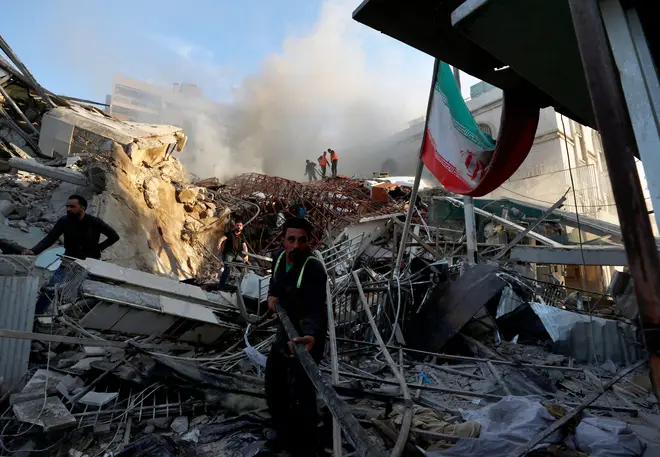
Emergency services work at a destroyed building hit by an air strike in Damascus, Syria, Monday. Picture: Alamy


By Christian Oliver

An Israeli airstrike has destroyed the Iranian consulate in Damascus, killing at least six including a senior military commander, Syrian state media said Monday.

The strike killed Iran's Islamic Revolutionary Guards commander Brig-Gen Mohammad Reza Zahedi, according to Iran state media.

Zahdi previously led the Iranian elite Quds Force in Lebanon and Syria until 2016.

There was no official confirmation from Iran.

Syrian foreign minister Faisal Mekdad told the media after meeting Iran's ambassador, Hossein Akbari, that "several" people were killed, without offering further information.

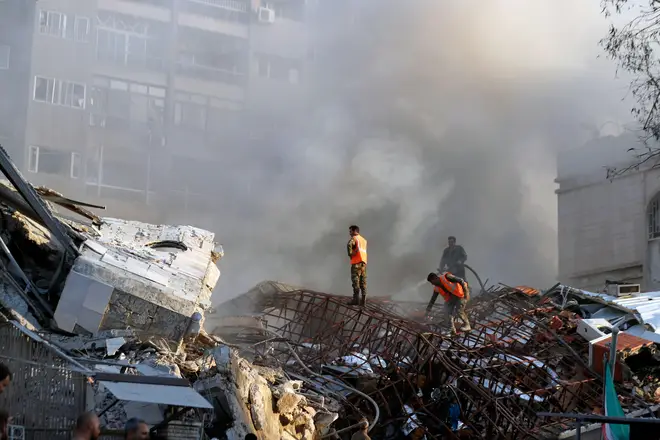
Emergency services work at a destroyed building hit by an air strike in Damascus, Syria, Monday
Emergency services work at a destroyed building hit by an air strike in Damascus, Syria, Monday. Picture: Alamy

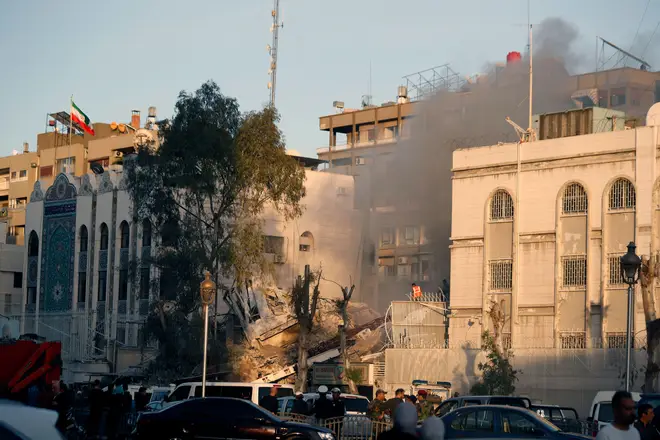
Iranian state television said the Iranian ambassador's residence was in the consular building, which stood next to the embassy.

State news agency Sana, citing an unnamed military source, said the building in the tightly guarded neighbourhood of Mazzeh, was levelled. Emergency crews were searching for bodies under the rubble.

The Britain-based opposition war monitor the Syrian Observatory for Human Rights said the strike killed at least six people. The Israeli military did not comment. Israel has carried out hundreds of strikes on targets inside government-controlled parts of Syria in recent years.

Such airstrikes have escalated in recent months against the backdrop of Israel's war against Hamas in the Gaza Strip and ongoing clashes between Israel's military and Hezbollah on the Lebanon-Israel border.

Though it rarely acknowledges its actions in Syria, Israel has said it targets bases of Iran-allied militant groups such as Lebanon's

Hezbollah, which has sent thousands of fighters to support Syrian President Bashar Assad's forces.

Emergency services work at a destroyed building hit by an air strike in Damascus, Syria, Monday
Emergency services work at a destroyed building hit by an air strike in Damascus, Syria, Monday. Picture: Alamy

It comes after the IDF said it had withdrawn from the main hospital in Gaza after two weeks, with Palestine residents saying it has been left in "total destruction".

Israel said that its troops had left the al-Shifa hospital after a raid to kill Palestinian militants, and seize weapons and intelligence documents.

The IDF added that it had carried out its operations "while preventing harm to civilians, patients and medical teams".

Hundreds of people came back to the hospital and the surrounding area after the withdrawal early on Monday.

A resident who had come back to the area said Israeli troops had left "total destruction" when they departed.

Another resident, Yahia Abu Auf, said there were still patients, medical workers and displaced people sheltering inside the medical compound.

He said several patients had been taken to the nearby Ahli Hospital, and that army bulldozers had ploughed over a makeshift cemetery inside the hospital compound.

"The situation is indescribable," he said.

"The occupation destroyed all sense of life here."Israel has accused Hamas of using hospitals for military purposes and has raided several medical facilities.

Syria condemns 'Israeli aggression' on Iran’s consulate in Damascus


5 to 7 people killed in attack on Iran’s consulate in Damascus, according to Iranian ambassador to Syria

Ahmed Asmar |01.04.2024 -
Syrian regime's Foreign Minister Faisal Mekdad


ANKARA

Syria condemned what it described as a "fascist Israeli aggression" targeting the Iranian Consulate in the capital Damascus on Monday.

Foreign Minister Faisal Mekdad, in a phone call with his Iranian counterpart Hossein Amir-Abdollahian, reiterated Syria's support to Iran following the attack, the state news agency SANA reported.

“Syria stands by Iran against assaults that reflect Israel’s state of hysteria as a result of its miserable failure in its war against the Palestinian people in Gaza,” said Mekdad, according to SANA.

Amir Abdollahian, for his part, underlined the position of both Iran and Syria “in standing together in the face of the Israeli brutality that crossed all limits".

Early Monday, General Mohammed Reza Zahedi, a senior commander of the IRGC's Quds Force in Syria and Lebanon, was killed in a strike that destroyed the Iranian consulate building next to the Iranian Embassy, the state-run IRNA news agency reported.

General Zahedi was a veteran IRGC commander who previously commanded the IRGC's ground force and air force and also served as the deputy commander of the IRGC's military operations.

There are also unconfirmed reports about the killing of General Rahimi, who served as General Zahedi's deputy, and Gen. Hossein Amirullah, head of the IRGC general staff in Syria and Lebanon.

The missile strike reportedly targeted a building that served as the Iranian Embassy's consular affairs department as well as the residence of the Iranian ambassador.

Iranian Ambassador in Damascus Hossein Akbari said the building was attacked with F-35 warplanes and six missiles, killing several Iranian military undersecretaries. He put the death toll from the attack at between five to seven people.

Akbari said the attack is against all international conventions and will see a "decisive response."

The attack came amid heightened tensions in the region in the wake of the Israeli onslaught on the Gaza Strip, which has killed more than 32,800 Palestinians and spawned the worst humanitarian crisis.


US State Department voices support for free press after Israel's Al Jazeera closure law

'We've not always agreed with all of Al Jazeera's coverage, but it's a media organization that we engage with,' says spokesman

Rabia İclal Turan |01.04.2024 - 


WASHINGTON

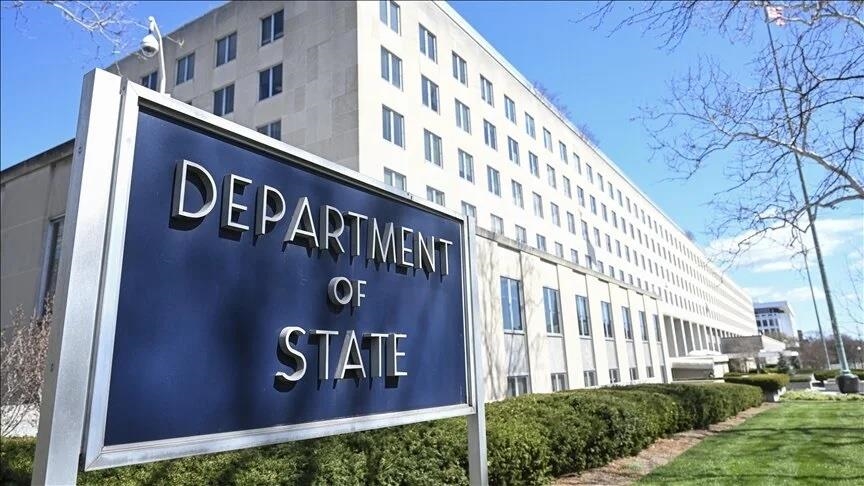
The US State Department on Monday expressed support for free press after Israel’s Knesset passed legislation that allows the closure of Al Jazeera channel.

"We support the independent, free press anywhere in the world. And we think the work that the independent free press does is important everywhere in the world," said Spokesman Matthew Miller during his press briefing.

"And much of what we know about what has happened in Gaza is because of reporters who are there doing their jobs, including reporters from Al Jazeera," he added.

"We think it's well known that we've not always agreed with all of Al Jazeera's coverage, but it's a media organization that we engage with," he said. "What we will continue to make clear is that we support the work that the free press does".

Israel’s Knesset on Monday passed legislation allowing the closure of the Al Jazeera television.

Under the bill, the communications minister will be empowered to shut down foreign networks operating in Israel and confiscate their equipment if the defense minister identifies that their broadcast poses “an actual harm to the state’s security.”

Following the passage of the law, Israeli Communications Minister Shlomo Karhi vowed that the Qatari-funded Al Jazeera channel would be closed down “in the coming days.”

Early Monday, Israeli Prime Minister Benjamin Netanyahu vowed to “immediately act to close Al Jazeera” following the bill's passage in the Knesset.

Israeli parliament passes law paving way for Al Jazeera closure


Published: 01 Apr 2024 -
The Peninsula

Doha, Qatar: Israeli Prime Minister Benjamin Netanyahu has promised to “act immediately to stop” Al Jazeera’s operations in the country after the Israeli parliament approved a law that grants senior ministers powers to shut down foreign news networks deemed a security risk, according to Al Jazeera.

“Al Jazeera harmed Israel’s security, actively participated in the October 7 massacre, and incited against Israeli soldiers,” Netanyahu wrote on X, on Monday. “I intend to act immediately in accordance with the new law to stop the channel’s activity,” he said.

Meanwhile Al Jazeera in a statement said, in an escalating move, Israeli Prime Minister Benjamin Netanyahu launched a frantic campaign against Al Jazeera, accusing it of harming Israel’s security, actively participating in the October 7 attack, and inciting against Israeli soldiers. Al Jazeera Media Network condemns these statements and sees as nothing but a dangerous ludicrous lie.

Netanyahu could not find any justifications to offer the world for his ongoing attacks on Al Jazeera and Press Freedom except to present new lies and inflammatory slanders against the Network and the rights of its employees.

Al Jazeera holds the Israeli Prime Minister responsible for the safety of its staff and Network premises around the world, following his incitement and this false accusation in a disgraceful manner.

The network stresses that this latest measure comes as part of a series of systematic Israeli attacks to silence Al Jazeera, including the assassination of its correspondent Shireen Abu Akleh, the killing of its journalists Samer AbuDaqqa and Hamza AlDahdouh, the bombing of its office in Gaza, the deliberate targeting of a number of Al Jazeera journalists and their family members, and the arrest and intimidation of its correspondents in the field.

Al Jazeera reiterates that such slanderous accusations will not deter us from continuing our bold and professional coverage, and reserves the right to pursue every legal step.

Netanyahu vows to ban Al Jazeera after Israel passes law


Legislation allows the news channel's offices in Israel to be closed


Protesters hold signs and flags calling for Israeli Prime Minister
Benjamin Netanyahu's to be removed at a demonstration in Jerusalem,
April 1, 2024. Reuters


The National
Apr 01, 2024
Live updates: Follow the latest news on Israel-Gaza

The Israeli parliament passed a bill on Monday that gives ministers the authority to ban Al Jazeera from broadcasting in the country, a move which Prime Minister Benjamin Netanyahu vowed to put into effect.

The law, which passed by 70 votes to 10, allows the government to shut down foreign channels and gives senior ministers the power to close the offices of foreign broadcasters in Israel.

Mr Netanyahu had said he would take “immediate action” to shut down Al Jazeera in Israel once the law passes.

Mr Netanyahu's Likud party said he asked “to make sure that the law to close Al Jazeera will be approved this evening” in Israel's parliament, the Knesset.

“The terrorist channel Al Jazeera will no longer broadcast from Israel. I intend to act immediately in accordance with the new law to stop the channel's activities,” Mr Netanyahu said in a post on X after the law was passed.

The bill, which allows officials to ban foreign media that is deemed to be harmful to national security, had already passed its first parliamentary hurdle last month.

White House press secretary Karine Jean-Pierre called the move "concerning".

"We believe in the freedom of the press, it is critical. It is critically important and the United States supports the critically important work of journalists around the world,” she told reporters.

The US State Department spokesman Matthew Miller said the Biden administration has "not always agreed with" Al Jazeera's coverage, but highlighted its vital work in Gaza.

“Much of what we know about what has happened in Gaza is because of reporters who are there doing their jobs, including reporters from Al Jazeera," Mr Miller said.

Israel had claimed in January that an Al Jazeera staff journalist and a freelancer killed in an air strike in Gaza were “terror operatives”.

The following month it said another journalist for the channel, wounded in a separate strike, was a “deputy company commander” with Hamas.

Al Jazeera has fiercely denied the accusations and accused Israel of systematically targeting Al Jazeera employees in the besieged enclave where Israeli forces have been fighting Hamas since October.

Al Jazeera cameraman Samer Abu was killed in an Israeli strike on Gaza in December. The attack also wounded the channel's bureau chief in the enclave, Wael Al Dahdouh, whose wife and two children were killed in an Israeli strike in October.

His son Hamza Dahdouh, who was also an Al Jazeera journalist, was killed in another strike in January.

Since the war began, 90 Palestinian journalists have been killed and 16 more have been arrested, according to the Committee to Protect Journalists. More than 32,800 people, mostly women and children, have been killed in almost six months of war, according to the Gaza Ministry of Health.

- With reporting from agencies

Knesset approves bill to shut down 
Al Jazeera in Israel

New law approved in second and third reading stipulates Communications Minister could act against foreign media channels in Israel should they be found to harm the country; White House spokeswoman criticizes bill

Moran Azulay|
YNET


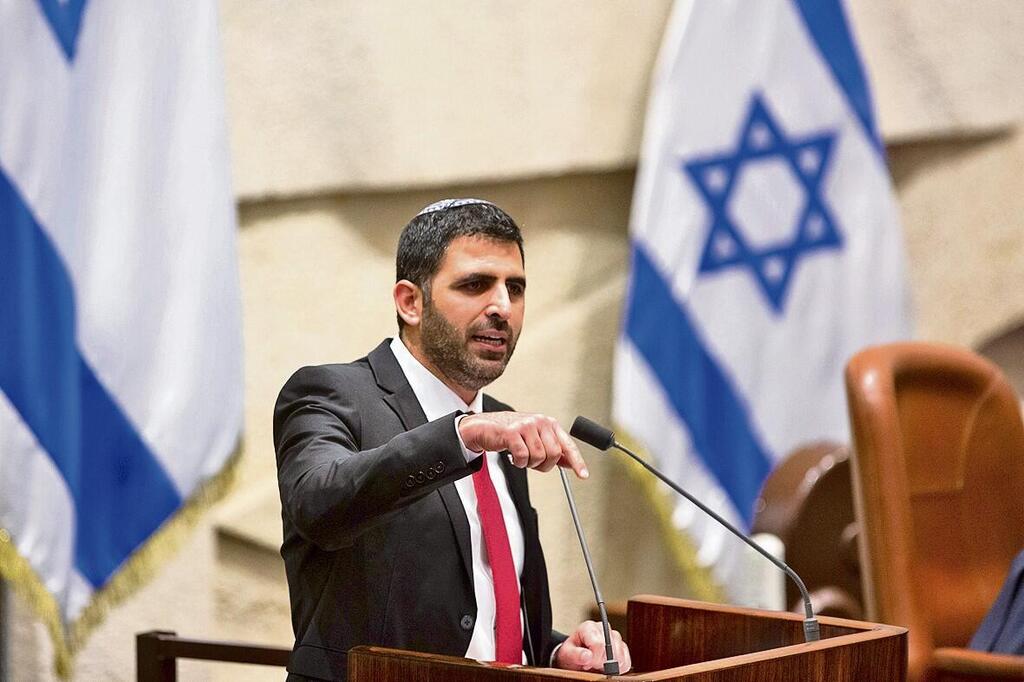
The Knesset approved Communications Minister Shlomo Karhi’s bill ordering Qatari news network Al Jazeera to cease its operations in the country in a final reading on Monday. "Hamas mouthpieces won’t have any freedom of expression in Israel. Al Jazeera will be shut down in the coming days,” Karhi said in a statement.


The law promoted by Karhi and Prime Minister Benjamin Netanyahu to shut down foreign channels (including Al Jazeera, Al Mayadeen, and others), was approved by the Knesset Plenum in second and third readings.

The law stipulates the Communications Minister could act to shut down foreign media channels in the country should the prime minister find it is harming Israel after reviewing at least one security assessment on the issue and conditioned by the approval of the government or security cabinet.

Actions will be approved by orders signed by the Communications Minister, and will include: closing down the channel's offices in the country, confiscating broadcasting equipment, preventing channel reporters from broadcasting, removing the channel from cable and satellite providers in the country, blocking its websites in the country, and more.

"We have approved a quick and efficient tool to act against those who use the freedom of the press to harm Israel's security and IDF soldiers and incite terrorism during wartime," Karhi said in a statement following the law’s approval.


שלמה קרעי
(צילום: אלכס קולומויסקי)

Prime Minister Netanyahu addressed the law on social media, writing on his X account: "Al Jazeera has harmed Israel's security, actively participated in the October 7 massacre, and incited violence against IDF soldiers. The time has come to remove Hamas' mouthpiece from our country. The terrorist channel Al Jazeera will no longer broadcast from Israel.

 I intend to act immediately in accordance with the new law to stop the channel's activities.”

Despite Netanyahu’s praise, other members of his Likud party criticized the bill’s wordings. "The bill as presented by the Communications Minister is both ineffective and damaging," Likud MK Amit Halevi told Ynet. "It’s absurd that our coalition will vote in favor of such a bill. It primarily reflects an extreme lack of judgment aimed at gaining popularity."

According to Halevi, the approved law in its current form isn’t effective. "The overwhelming majority of Al Jazeera viewers in Israel’s Arab sector watch it via satellite dishes or the internet, not Israeli broadcasters. The agency’s internet servers and offices will reopen in Ramallah if shut down in Israel.”

White House Press Secretary Karine Jean-Pierre criticized the law in a statement, saying, “We believe in the freedom of the press. It is critical. It is critically important, and the United States supports the critically important work of journalists around the world, and that includes those who are reporting in the conflict in Gaza."

“So, we believe that work is important. The freedom of the press is important. And if those reports are true, it is concerning to us," she added.

CRYPTO CRIMINAL CAPITALI$M

British Columbia steps up probe of gold, Rolexes in Patryn (Dhanani) crypto case

Provincial officials in Canada are trying to force the surviving co-founder of defunct crypto exchange QuadrigaCX to explain how he came by a cash hoard, 45 gold bars and jewelry including a diamond-studded Rolex.

The Director of Civil Forfeiture in British Columbia on Wednesday sought a court order to compel Michael Patryn to detail how the seized assets — including $250,200 in cash — were acquired.

An official probe in 2020 concluded that the exchange’s collapse was the result of fraud by its other founder Gerry Cotten, who died unexpectedly in 2018 at age 30 while on honeymoon in India. The investigation said evidence indicated Patryn ceased to be associated with QuadrigaCX after 2016, before most client funds were deposited with the exchange and then lost.

Wednesday’s filing cites chat records obtained by investigators between Cotten and Patryn from 2014 and 2015, in which they appear to discuss stealing customer funds and staging Patryn’s public exit from the exchange while remaining involved privately. Patryn, who was once known as Omar Dhanani, changed his name twice following past criminal charges, Bloomberg News reported in 2019.

'Appropriating funds'

The chat records show the two men “were discussing appropriating funds from Quadriga as early as 2014,” according to the filing.

In an earlier filing, a lawyer for Patryn in October said the cash hoard, watches and jewelry aren’t linked to unlawful activity. The lawyer declined to comment about the latest court application, which will be heard by a judge on April 30.

The Royal Canadian Mounted Police seized the assets from a Canadian Imperial Bank of Commerce safety deposit box in Vancouver in June 2021, after the trading platform’s collapse. A civil forfeiture claim was filed by British Columbia in the province’s Supreme Court in 2023.

The latest step by the Director of Civil Forfeiture is only the third such unexplained wealth order application in British Columbia, which implemented the power last year to tackle money laundering and organized crime.

If Patryn is unable to show the assets in question were legitimately acquired, the case could ultimately lead to him forfeiting them. The order’s proceeds are earmarked for donations to crime victims and crime prevention services, according to a statement from the province’s Solicitor General Mike Farnworth.

The QuadrigaCX scandal sparked global interest, including a 2022 Netflix documentary called Trust No One: The Hunt for the Crypto King. 


Alberta premier says she's hearing Edmonton is in rocky financial patch, offers help

Alberta Premier Danielle Smith says her government won’t intervene but — if asked — would help the City of Edmonton navigate a reported rocky patch of financial and staffing dysfunction.

“No one has stepped in. No one has intervened. No one is doing an audit," Smith told reporters in Edmonton Wednesday at an unrelated news conference.

"No one is taking any extraordinary measures, but if they need our help, we're ready and on standby to help."

Smith added that while “It’s Edmonton’s story to tell about where they find themselves, we have had a number of reports that do have us concerned.”

She said there are reported money problems on top of a raft of senior city executives — including the city manager — leaving.

“That is a sign that has us concerned about stability,” said Smith.

“As I understand it, there was a pretty involved meeting at the council a number of days ago that talked about the financial challenges the city is facing.

“There are a number of people who were at that meeting and a number of them started calling us, and so that’s how we heard about it.”

Alberta municipalities are not allowed by provincial law to run deficits.

Edmonton Mayor Amarjeet Sohi’s office said in a statement, "The City of Edmonton is in compliance with our guiding legislation in all aspects of our operation, including with our financial policies, which are well within the legislated limits. 

Sohi added, “We have a collaborative working relationship with Premier Smith and cabinet and we will continue to advocate on behalf of Edmontonians for the stable and equitable funding we need.”

It's rare, but not unheard of, for the province to intervene in municipal affairs.

Last year, the province fired the mayor and half the councillors in the city of Chestermere, just east of Calgary, saying they failed to act on demands to fix their dysfunctional government. 

Smith said the government won't be intervening in Medicine Hat, where the council voted unanimously last week to severely curtail the duties and pay of Mayor Linnsie Clark.

Clark was sanctioned for breaking the city’s code of conduct by failing to treat the city manager with courtesy and respect. 

Asked why Edmonton is under scrutiny but not Medicine Hat, Smith said they are two different situations, with the main differences being finances.

"What I understand about Medicine Hat is they're very healthy from a financial point of view," she said.

"They have their own gas company, they operate their own power company, (and) they've got a massive fund for some of their surplus revenues," she said.

"I think the nature of the challenges in Medicine Hat are quite different than what we're hearing about the challenges in Edmonton."

She said disputes among councillors require a more delicate touch.

“We don’t intervene just because there are personality conflicts in a council. Otherwise we’d be intervening on a lot of councils," she said.

“We have to identify if the level of infighting is causing a major exodus of senior staff.

“We haven’t observed that in Medicine Hat.”

In Medicine Hat, Clark spoke to reporters Wednesday for the first time since her demotion, announcing she plans to go to court to get a judicial review to overturn council’s decision.

The other sanctions on Clark include a letter of reprimand and request for apology, and the suspension of Clark’s presiding duties under the Municipal Government Act. 

Clark will also no longer be the official spokesperson for council.

In addition, she may no longer attend meetings of the administration committee, is prohibited from entering the administration area of city hall, and outside of council meetings may not have any direct contact with city staff other than the city manager.

The interactions with the city manager are only allowed via email where all members of council are copied, and any in-person meetings must be done with another council member present.

This report by The Canadian Press was first published March 27, 2024.


Higgs champions NB shale gas development as a better climate plan than carbon pricing

New Brunswick's alternative to the federal carbon price would be to eventually ship liquid natural gas to Europe as an alternative to coal, Premier Blaine Higgs told a House of Commons committee Thursday. 

Higgs, appearing virtually before the House operations committee, said there is a business case for the plan, despite Prime Minister Justin Trudeau's misgivings about the viability of shipping LNG out of Atlantic Canada.

There is, however, just one problem.

"We don't have a gas supply currently," Higgs said. "And that is the issue."

Higgs is one of three premiers who were invited to voice their opposition to the carbon price at the Conservative-chaired committee after they were turned away by the Liberal-controlled finance committee.

Saskatchewan Premier Scott Moe appeared Wednesday, and Higgs and Alberta Premier Danielle Smith spoke back to back Thursday. They are among seven premiers who recently called on Trudeau to cancel the carbon price increase planned for April 1, arguing it costs people too much. 

Smith called the carbon price "immoral," "reckless" and "inhumane," accusing the Liberals of freezing out Canadians by making natural gas unaffordable. After April 1, the carbon price will end up being more than twice the base cost of natural gas itself, she claimed. 

The Liberals, for their part, say those arguments ignore the government's carbon rebates, which are designed to offset the cost of the carbon price for most families. 

The Conservatives and Liberals disagree about the impact of those rebates, though they both both cite the same recent report by the parliamentary budget officer. 

That report found that the rebates do indeed exceed the direct carbon price costs being borne by most families — but not once the carbon price's impact on jobs and wages is taken into account. 

The Liberals dismiss the latter, arguing there would be an even greater economic cost to ignoring the climate crisis.

Trudeau this week wrote to those premiers inviting them to suggest alternatives to the federal carbon price that would achieve the same results. Higgs told the committee Thursday he had one.

Canadian natural gas shipped to replace dirtier coal in power plants overseas will be more impactful to global emissions than the carbon price will be, he said. Coal produces more emissions when burned than natural gas.

"So my plea here is across party lines to say let's think bigger," Higgs said. 

"Let's look at Canada as a solution to world environmental impact and changes and reductions, as opposed to us being exactly focused on our internal affordability and the costs every day of living."

Higgs has long championed the development of shale gas in New Brunswick. The carbon price is barely going to make a dent in world emissions as long as China continues to build coal plants, he argues. 

He said Canada's emissions are a drop in the bucket of global emissions and that shipping cleaner fuels overseas to replace coal would be a more effective strategy.

"In Canada we're thinking in a bubble," said Higgs. "I propose to make a difference worldwide."

A Spanish company last year walked away from a proposal to build a natural gas export terminal in Saint John, citing the high costs of shipping gas, which would have to be sent by pipelines from Western Canada. 

Former Liberal Premier Brian Gallant legislated a moratorium on hydraulic fracking in New Brunswick in 2014. That decision came after violent anti-fracking protests rocked New Brunswick in 2013.

Fracking is a process that pumps large volumes of water and chemicals underground to break apart layers of rock and release pockets of gas trapped inside.

Smith was also pushed by Liberal MPs about her province's decision to increase the provincial gas tax from nine cents to 13 cents a litre, restoring the previous excise tax amount that the province slashed when gas prices were high. 

Smith said the provincial gas tax is less than the carbon price — on April 1 the price will add another 3.3 cents per litre of gasoline for a total impact of 17.6 cents per litre. 

The province's tax builds roads, she added. The carbon price does not.

Ontario Liberal MP Irek Kusmierczyk noted Smith recently attended an "axe the tax" rally with Conservative Leader Pierre Poilievre. Kusmierczyk asked her whether she intends to axe her own gas tax too.

That tax, Kusmierczyk pointed out, does not include a rebate.

This report by The Canadian Press was first published March 28, 2024.


Trudeau promises low-cost loans to expand child care spaces

Prime Minister Justin Trudeau said his government will set aside $1 billion to provide low-cost loans for expanding and renovating child care spaces.

It’s the latest in a series of pre-budget announcements largely aimed at voters aged 40 and under, as Trudeau attempts to address cost-of-living concerns and turn around his sagging poll numbers.

Trudeau’s government launched a national child care program in 2021, pledging $30 billion over five years, but it’s been criticized by some providers and provincial governments for insufficient funding and long waitlists.

“Not enough families have access to affordable child care spaces – so we’re building more,” Trudeau’s office said in a news release.

It said the upcoming budget, set for April 16, will include a new child care expansion loan program with $1 billion in low-cost loans and $60 million in non-repayable grants. The goal is for providers “to build new spaces and renovate their existing child care centers.”

The budget will also provide student loan forgiveness for child care workers who work in rural areas, and an additional $10 million over two years to train more workers in the sector.

The release said every province and territory in Canada is on track to lower average child care fees to $10 per day. Before the national plan, daily fees could top $90 per day in large Canadian cities.

Trudeau and Finance Minister Chrystia Freeland are expected to make pre-budget announcements nearly every day ahead of the budget, with housing a major focus. On Thursday, they revealed a package of measures meant to give renters more rights.

 CANADA

Cautious optimism for federal plan to let rent 

count toward credit scores

The federal government's commitment to have rent payments counted toward credit scores is being welcomed by companies that already offer the service, while renter advocates have raised concerns. 

The plan to make the practice more widespread is encouraging, said Andrew Graham, chief executive of Borrowell.

"We've been saying for a couple of years now, how important it is for consumers to be able to report rental payments to build up their credit history, so I was pleased to see the government taking some action."

Prime Minister Justin Trudeau said Wednesday that there's something fundamentally unfair about paying $2,000 a month for rent, while those paying the same amount toward a mortgage earn equity in their home and build their credit score.

He said the government wants landlords, banks and credit bureaus to make sure rental history is taken into account on credit scores, giving young first-time buyers a better chance at getting a mortgage, with a lower interest rate.


Equifax Canada chief executive Sue Hutchison said the credit agency, which has already been working to include rent payments, was excited to hear about the government's announcement.

"We look forward to working with the governments, the banks and other lenders to ensure this important evolution in the credit infrastructure in Canada is implemented responsibly," she said in a statement. 

Graham said open banking, which will allow consumers to safely share their banking data to third party financial players like Borrowell, is crucial to the success of the program.

“What we've been telling the government and, and frankly, anyone who will listen, is that what we really need is open banking.”

Zac Killam, CEO of FrontLobby, which has been offering rent reporting to credit bureaus since 2018, said he supports any efforts to raise awareness of the benefits.

"The level of awareness is very low, it's not well understood ... particularly for the portion of the population who it benefits the most."

More than three million adults in Canada don't have a credit score, estimated Equifax in a 2022 report, while a further seven million have only limited data that the credit agency says could limit their ability to access credit products.

FrontLobby relies on both the renter and landlord verifying payments, so isn't reliant on an open banking model. A study it conducted with Equifax found that rent payments were the only source of credit score for almost half of users of the service.  

"They're able to reflect all their years of on-time payments on their credit report, which can have obviously tremendously big benefit to their credit report," said Killam.

Reporting rental income, however, only helps a credit score if it’s regularly paid on time. With the sharp rising cost of rents, and overall living costs, many are under strain and may not benefit, cautioned Elizabeth Mulholland, chief executive of charity Prosper Canada.

"It's a double-edged sword."


She said it’s important people have control over whether they want the data to be shared with credit bureaus.

“If you just blanket build it in, that could be problematic for a lot of low income people and vulnerable people," said Mulholland.

"You don't want to set those people further behind. And those challenges go right up the income scale well into the middle class."

She also said the program should be done in the context of open banking, where there are structures in place to protect both the data, and how it's used. 

Landlords enticing tenants to sign on with the promise of improving their credit score is concerning, said Douglas Kwan, director of advocacy and legal services at Advocacy Centre for Tenants Ontario.

As it stands, landlords generally have to proceed to the provincial tribunal to hear disputes and seek a remedy. A reporting system would allow them to further pressure tenants, who may be withholding rent over disputes, with the threat of damaging their credit score. 

"Their bargaining powers is so much stronger than tenants already, and so when you add the these private reporting mechanisms that are run by the landlord ... it's not only problematic, it's dangerous," said Kwan. 

Landlords can already have unpaid rent go toward a credit score by having the debt go to collections, said Killam. He also noted that reporting to credit bureaus through FrontLobby would only take effect if rent is more than 30 days late, not just a few days behind. 

Borrowell doesn't rely on landlord involvement, something Graham said is important because lots of small landlords don't have the capacity to participate. Killam however raised concerns on how the credit agencies will actually verify where e-transfer payments are going. 

It's not yet clear on how the government plan will look in practice, with more details expected in the upcoming budget. 

The government has said it plans to amend the Canadian Mortgage Charter and call on landlords, banks, credit bureaus, and fintech companies to make sure that rental history is taken into account in credit scores. 

The Canadian Bankers Association said in a statement that it works collaboratively with government to explore new ways to serve Canadians and will assess the impact of the new policy as details are revealed.

A TransUnion Canada spokesperson said the agency is "already in the process of assessing rental data to support consumers building their credit profiles and to provide potential lenders with the best, most accurate view of the consumer’s creditworthiness."

The agency encourages governments to work with the credit reporting industry to evaluate the impact of rental data and how reporting it to companies like TransUnion should be done, the spokesperson said in an email. 

This report by The Canadian Press was first published March 28, 2024

This is a corrected story. A previous version had the wrong day of the week for Trudeau's announcement.


4 Ontario school boards sue Facebook, Instagram, SnapChat and TikTok

Four of Ontario's largest school boards are suing the parent companies of Facebook, Instagram, Snapchat and TikTok, alleging the social media platforms are disrupting student learning, contributing to a mental health crisis and leaving educators to manage the fallout. 

The Toronto District School Board, the Peel District School Board, the Toronto Catholic District School Board and the Ottawa-Carleton District School Board filed four separate but similar cases in Ontario's Superior Court of Justice on Wednesday. 

The lawsuits claim the social media platforms are negligently designed for compulsive use and have rewired the way children think, behave and learn, leaving teachers and schools to deal with the consequences.

Students are experiencing an attention, learning, and mental health crisis, the suits claim, because of prolific and compulsive use of social media products. 

"The fallout of compulsive use of social media amongst students is causing massive strains on the four school boards' finite resources, including additional needs for in-school mental health programming and personnel, increased IT costs, and additional administrative resources," the school boards wrote in a news release Thursday. 

"The goal of the litigation is to provide school boards with the resources needed to support student programming and services, and to respond to the school-based problems social media giants have caused."

The boards are seeking damages in excess of $4 billion for disruption to student learning and the education system.

The allegations in the lawsuits filed in Ontario Superior Court have not been proven.

Meta Platforms Inc. owns Facebook and Instagram, while Snap Inc. owns Snapchat, and ByteDance Ltd. owns TikTok.

When asked for comment on the lawsuits, a spokeswoman for Snap Inc. said Snapchat helps its users stay connected with their friends. 

"Snapchat opens directly to a camera — rather than a feed of content — and has no traditional public likes or comments," Tonya Johnson said. "While we will always have more work to do, we feel good about the role Snapchat plays in helping close friends feel connected, happy and prepared as they face the many challenges of adolescence."

The other social media companies did not respond immediately to requests for comment. 

Hundreds of school boards in the United States, along with some states, have launched similar lawsuits against social media companies.

The four Ontario boards, in their statements of claim, allege the online platforms have deliberately sought to draw in students and prolong their use of social media, knowing school boards would have to deal with the effects on youth and their mental health.

They allege the social media companies have acted in a "high-handed, reckless, malicious, and reprehensible manner without due regard for the well-being of the student population and the education system," which they say warrants punitive damages.

The boards allege the platforms facilitate child sexual abuse and harassment, "intentionally amplify and push harmful content to maximize engagement" and refuse to remove harmful content such as threats unless compelled by law enforcement.

The boards list a series of measures they say they have had to take in response to growing social media use among students, including pouring increased resources into investigating cyberbullying and online sexual exploitation of students, developing policies and programs to educate students on social media harms, and investigating and responding to threats made against schools, staff or students on social media.

Threats of bombs, shootings and death are growing more common, "facilitated by anonymous usernames," the boards allege, causing school closures and putting an increased burden on administrators, teachers and IT experts. The boards say they have had to shift resources to "proactively monitoring social media" for such threats and have had to urgently respond to threats after hours.

Students are also increasingly struggling to vet information and spot misinformation on social media, pushing teachers to spend "disproportionate" amounts or time and resources to help students counter misinformation and prevent them from adopting the "harmful, prejudicial, or discriminatory ideologies that they are constantly exposed to on social media," the boards allege.

In order to educate students and parents about the potential dangers of social media, boards have hired speakers, organized presentations, and curated other resources, they say.

The boards say they are also using up resources responding to spikes in vandalism and other risky behaviour encouraged by viral social media challenges.

"Students may slap the teacher’s butt or trash the school bathroom and then post this misconduct to social media. Students may engage in reckless behaviour for views, likes, and comments, such as scaling school buildings," the documents allege.

The boards say they are "dealing with a marked and unanticipated spike in this type of student misconduct fuelled by social media."

There is also a rise in conflicts as teachers try to limit the use of phones and social media, which results in "decreased instructional time," the boards allege.

Ontario Premier Doug Ford suggested school boards should "put all their resources into the kids" rather than legal fees for "this other nonsense that they're looking to fight in court."

The school boards said, however, that they will not incur any costs for the lawsuits unless they are successful.

An email sent by the TDSB to staff, which was seen by The Canadian Press, said any money awarded through the lawsuit would be "allocated to meet the needs of our students (e.g. additional staff, technological safeguards, programming and training, etc.)."

With files from Maan Alhmidi

This report by The Canadian Press was first published March 28, 2024.