Thursday, December 26, 2024


A Note on Trade and Inequality


 December 25, 2024
Facebook

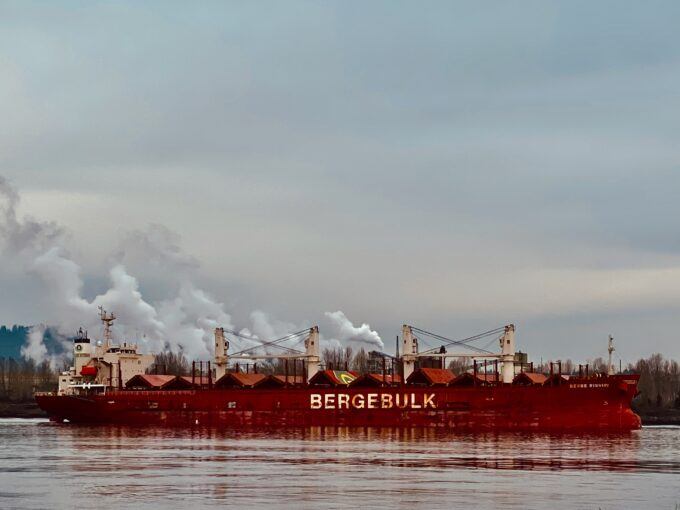
Trans-oceanic cargo ship on the Columbia River. Photo: Jeffrey St. Clair.

Oren Cass, the head economist of Compass, had a column in the New York Times this week touting Donald Trump’s proposed tariffs. The gist of the piece is that “free trade” has not worked out as economists’ textbooks promised and we should look to take a different path.

As someone who was very critical of the major trade deals of the last three decades, I would say that they did work out very much as the economists’ textbooks promised. But they were also not “free trade” and imposing high tariffs will not help us going forward.

First, the economists’ textbooks did not promise that everyone would benefit from opening trade. They show that there would be a redistribution from some types of workers to other types of workers and/or capital. There is a famous article, co-authored by the first American Nobel Prize winner Paul Samuelson, that laid out this theoretical argument more than 80 years ago.

Economists pushing NAFTA, China’s entry into in the WTO, and other recent trade deals always waved off the logic of the Stolper-Samuelson model, or alternatively promised government policies to offset the distributional impact of trade openings. As a practical matter, the policies (mostly trade-adjustment assistance) were one or two orders of magnitude too small for the job.

We saw millions of workers displaced in manufacturing, as our trade deficit ballooned from 1997 to 2007. Communities across the industrial heartland were devastated as the factories that supported them downsized or shut altogether. We can have lengthy debates about the motives of working-class people who switched from Democrats to Trump voters, but the fact that Democratic presidents pushed trade policies that destroyed millions of good paying jobs for non-college educated workers is not really in dispute.

While it is important to recognize the damage caused by trade deals of the last three decades, it is also essential to recognize that these were not “free trade” deals even though this is what their proponents like to claim. These deals did little or nothing to free up trade in highly paid professional services, like the services of physicians or dentists. As a result, while our manufacturing workers get paid less than their counterparts in Western Europe, our physicians get paid more than twice as much as doctors in countries like Germany and Canada.

The trade deals were all about lowering barriers to trade in manufactured goods, with the predictable effect of lost jobs and lower wages for manufacturing workers. But when it came to discussions of lowering the barriers to foreign doctors and foreign-trained professionals working in the U.S., most of the “free-traders” would suddenly get really dumb, as though they didn’t understand the concept of free trade.

And to be clear, the economics textbooks tell us the same thing about free trade in professional services as they say about free trade in cars and shoes. If we paid our doctors the same as doctors in West Europe it would knock more than $100 billion a year ($1,000 per family) off our national health care bill. But we don’t have free trade in physicians’ services.

But it gets worse. Even as we were lowering barriers to trade in manufactured goods, we were increasing barriers to trade in intellectual products in the form of longer and stronger patent and copyright protections. These protections are government-granted monopolies, 180 degrees opposite of free trade. Yet somehow every major “free trade” deal for the last four decades included provisions making these monopolies longer and stronger both in our trading partners and in the United States.

The effect of longer and stronger patent and copyright protection is to redistribute income from the rest of us to those in a position to benefit from them. Bill Gates would probably still be working for a living if the government didn’t threaten to arrest people who copied Microsoft software without his permission.

And to be clear, there is an enormous amount of money at stake. The higher prices from patent and copyright monopolies almost certainly cost us more than $1 trillion a year. They cost us more than $500 billion ($4,000 per family) in the case pharmaceutical alone.

Patent and copyright monopolies do serve a purpose. They provide an incentive for innovation and creative work. But they are not the only way to provide this incentive. For example, we support more than $50 billion a year in biomedical research through the National Institutes of Health and other government agencies.

Most importantly for this argument is the recognition that patent and copyright monopolies are government policies that should be treated as such. We can argue whether they are the best policy, but they are certainly not free trade, and it is a lie to call them free trade.

Tariffs and the Trump Route Forward

Getting the free trade story right is important for what we think is the best route going forward. The fact that reducing trade barriers in manufacturing was bad for non-college educated workers doesn’t mean that raising those barriers now will be good news for these workers.

The wage premium that manufacturing workers had enjoyed in years past had largely disappeared. This means that if we get back jobs in the auto industry or textile industry, there is little reason to think these jobs will pay better than alternative jobs in warehouses or health care. High tariffs just mean that all workers will be paying higher prices for a wide range of goods in order to shift a relatively small number of other workers into not especially good-paying jobs in manufacturing.

The reason manufacturing jobs were good paying jobs was because these jobs were far more likely to be union jobs than other private sector jobs. In 1980 more than 30 percent of manufacturing jobs were unionized, compared to 15 percent for the rest of the private sector. Today, the gap is just 8.0 percent compared to 6.0 percent.

That’s still a difference, but not one that has much impact. If we got back another 1 million manufacturing jobs as a result of tariffs, a very big lift, it would translate into roughly 20,000 more union workers. That’s a pretty small drop in the bucket in a labor force of more than 160 million.

If we want to reverse the rise in inequality of the last four decades, we should make use of those economics textbooks rather than ignoring them, as Mr. Cass advocates. We should do everything possible to have freer trade in highly paid professional services, exposing our most highly paid workers to the same sort of competition, both domestically and internationally, that our factory workers have long faced.

And we should look to shorten and weaken the patent and copyright monopolies that have shifted so much income upward and made items like prescription drugs incredibly expensive. In the absence of patent monopolies, drugs would almost always be cheap, patent monopolies make them expensive. We also need to pursue other mechanisms for supporting innovation and creative work.

This is the conversation that we need to have and one that unfortunately will not take place in the pages of the New York Times or other leading media outlets. In fact, the econ textbooks have much to teach us if we actually pay attention to what they say and don’t use them selectively to push a class agenda.

This first appeared on Dean Baker’s Beat the Press blog.

Dean Baker is the senior economist at the Center for Economic and Policy Research in Washington, DC. 

The Future of Our Food is Not in Vast Factory Farms


 December 25, 2024
Facebook
A comic strip of a personDescription automatically generated

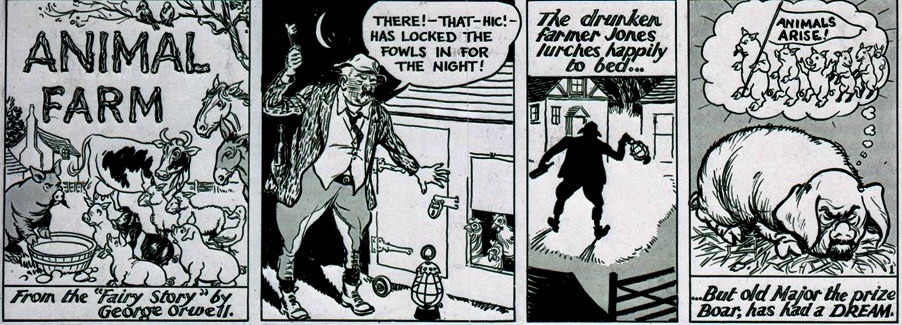
Comic strip mocking George Orwell’s Animal Farm. UK Foreign Office copy of the comic strip by Norman Pett. UK National Archives, 1950. Wikipedia Commons.

Prologue

Quite by accident, a neighbor said to me that the New York Times had a lengthy opinion piece in support of animal farms, which represent the worst form of modern agriculture. I checked it out and the neighbor was right. The New York Times had more than one opinion piece parroting the anxieties of agricultural scientists and advertisements and misleading rhetoric of agribusiness. The editor of the effort, Eliza Barclay, is confident that the future of our food may rest “in vast, sustainably managed factory farms [relying on] water… pumped across the country, from the Great Lakes to California.”

Dante’s inferno

This science fiction fantasy shocked me. I have been reading the New York Times, on and off, for many years. Its reporters write well and, in some instances, cover controversial and conventional politics and international affairs, though in the case of the wars in Ukraine and Israel, the Times follows strictly the script of the State Department.

But reading eloquent articles in support of the so-called “green revolution,” pesticides, synthetic fertilizers, giant automated harvester machines and “taking care” of millions of cattle in order to add some more pounds of meat on their bodies on the eve of their slaughter, was too much. David Wallace-Wells, one of the opinion writers for the New York Times, started the discussion with an extensive article exploring the vulnerabilities of agriculture at a time climate chaos is changing everything, including conventional farming. He says that the alternative farming ways like no-till (climate-friendly regenerative practices) is losing its appeal. And vegetarianism is apparently a fad among the rich, while meat-eating has been expanding in a dramatic and unconscionable rate in both America and Europe.

Certainly, these are troubling trends as meat eating is responsible for the largest amounts of greenhouse gases coming out of agriculture. About half of the land on the planet is for growing food. And three-quarters of that land produces feed for livestock.

Some of the concerns raised by Wallace-Wells are legitimate, though he repeated agribusiness myths like that of the miraculous impact of the green revolution in Asia. In posing the problems of a farming “system” embraced by climate chaos and abuse / overuse of drinking water worldwide, he said nothing of what could reduce the looming dangers of fossil-fuel agriculture caught in the tectonic plates of billionaire control and addiction to hazardous pesticides and gigantic machines. Meat eating must be dramatically reduced as much as population must decline — dramatically. No woman should have more than one child.

World leaders and scientists must finally become adults in the room. Stop wars. They are climate fuses. Phaseout at lease 50 percent of fossil fuels by 2030. Split large estates to small organic farms, which use neither pesticides, nor synthetic or sludge fertilizers, radiation, and genetic engineering. Join ancient knowledge of growing food with the latest insights from the science of agroecology. We cannot keep saying we must double food production because we expect an additional billion or two of humans – by 2050.

The dismal picture Wallace-Wells painted becomes the background for the ideas and arguments in support of a thoroughly discredited, corrupt and violent slaughterhouse / animal farm for the climate-ridden agriculture of skyscrapers of the future. Expanding animal farms horizontally or vertically is wrong and immoral. These animal factories separate farmers and non-farmers from nature. They justify the manipulation and the dumping of the sacred Earth and her sacred animals in their shredding machine. It’s as if we cannot learn from our past errors. We keep disregarding millennial agrarian traditions and civilizations, much less science, ecology and a livable future. Xenophon, student of Socrates and general and historian, mirrored Homer in arguing that small-scale farming made the Greeks food secure and champions of freedom, democracy, science, craftsmanship, piety for the gods, and civilization.[1]

A group of animals grazing on a road Description automatically generated

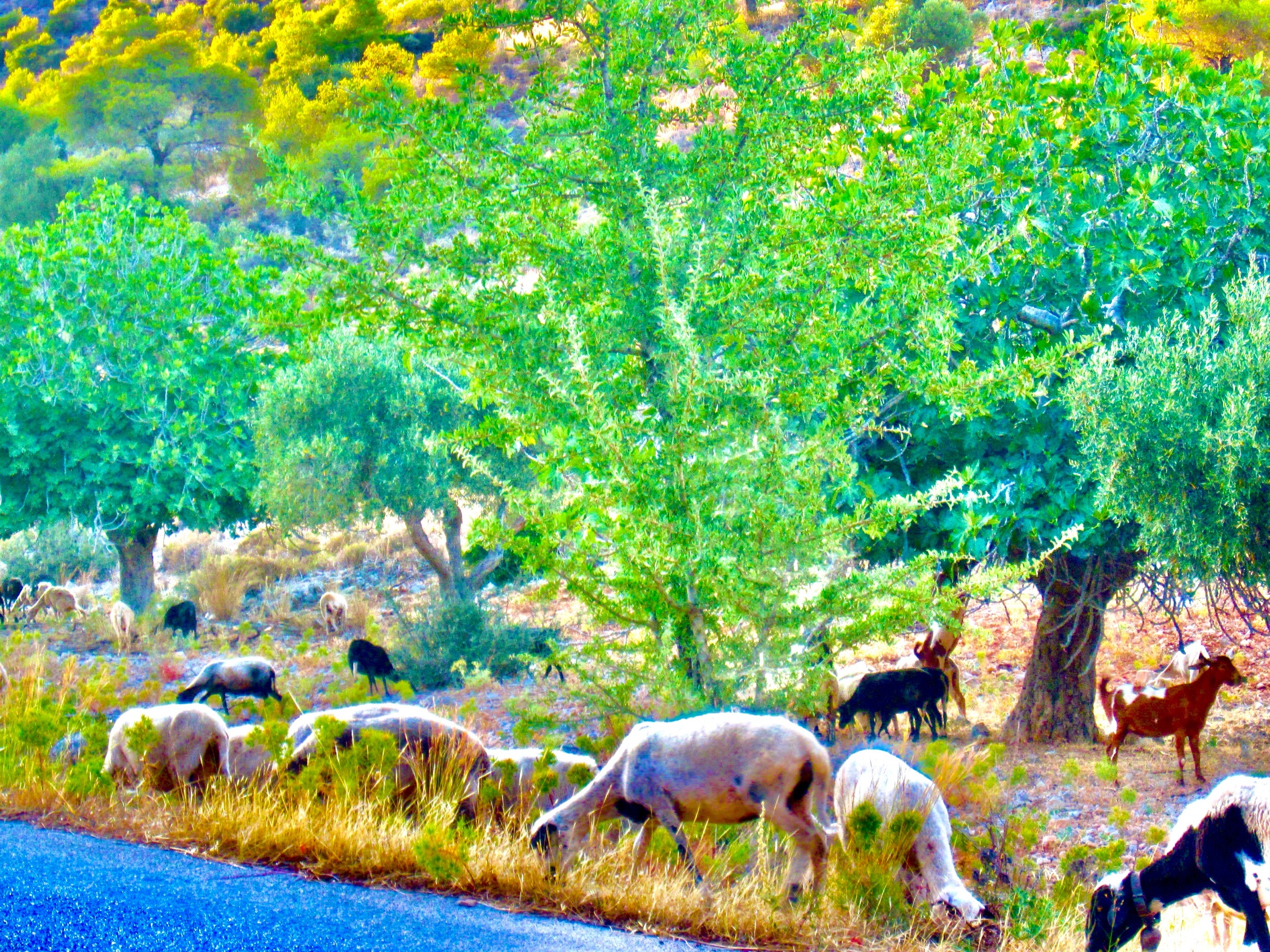
Sheep, island of Aegina. Photo: Evaggelos Vallianatos

Which is better, the small or the large farm?

We cannot ignore Xenophon. Small farms are civilization. Vast factory farms are alien to civilization. They are large factories of disease, mechanized inhumanity and gargantuan violence. Vast industrial farms do not produce more food per acre than tiny family farms. They give birth instead to local and global hunger.

Miguel Altieri, Professor Emeritus of agroecology at the University of California, Berkeley, is very concerned about the dominance of industrial agriculture. “This crisis,” he says, “threatens the livelihoods of over a billion hungry people, [it] is the direct result of the dominating industrial farming model, which is dangerously dependent on fossil fuels and has also become the largest source of human impact on the biosphere. Ninety-one per cent of the 1.5 billion hectares of cropland are under annual crops worldwide, mostly monocultures of wheat, rice, maize, cotton, and soybeans highly dependent on inputs of chemical fertilizers and pesticides and huge amounts of irrigation water, and which increasingly advance at the expense of forests and other natural vegetation. In this [twenty-first] century, one of the main ecological dilemmas arising from the environmental homogenization of agricultural systems is an increased vulnerability of crops to climate change. Subsidized grain monocultures convey temporary economic advantages to a few large-scale farmers, but in the long term they do not represent an ecological optimum. Rather, the drastic narrowing of cultivated plant diversity has put the world’s food production in greater peril. The social and environmental impacts of local crop shortfalls resulting from such uniformity can be considerable in an era of climatic extremes as crop losses often mean ongoing ecological degradation, poverty, hunger and even famine.”

Altieri also argues that small family farms are more productive than large industrial farms. “In overall output, the diversified [small] farm,” he says, “produces much more food, even if measured in dollars. In the USA data shows that the smallest 2-hectare farms produced $15,104 per hectare and netted about $2,902 per acre. The largest farms, averaging 15,581 hectares, yielded $249 per hectare and netted about $52 per hectare. Not only do small-medium-sized farms exhibit higher yields than conventional farmers but do so with much lower negative impact on the environment. Small farms are ‘multi-functional’– more productive, more efficient, and contribute more to economic development than do large farms. Communities surrounded by populous small farms have healthier economies than do communities surrounded by depopulated large, mechanized farms. One recent study on the impact of small farms on local economies found that small producers create 10% more permanent jobs, a 20% larger increase in retail sales, and a 37% larger increase in local per capita income. Small farmers also take better care of natural resources, including reducing soil erosion and conserving biodiversity.”

In addition, small organic family farms cool the climate. They have been sequestering greenhouse gases into the soil.

I have also documented these advantages of small farms in my works. I learned from my long experience at the US Environmental Protection Agency. Small is beautiful. Small farms in a village or near towns grow wholesome food, which becomes human and environmental health, supporting honeybees and biodiversity, wildlife, democracy and a cooler planet.

In contrast, large farms, and especially vast animal factories, produce unhealthy food contaminated for the most part by neurotoxic and carcinogenic pesticides and antibiotics. The medical and ecological costs of this food are high, harming both humans and nature. Chemicals and machines threaten the integrity of the natural world and the philosophical and political health of democratic societies. What is a growing boy and girl supposed to think of themselves and their parents seeing the elders building the infrastructure of factory death, which includes billions of animals and the periodic spread of deadly pandemics?

Weaponized farming

So, the New York Times has weaponized agriculture for probably similar reasons it favors America’s funding of the horrendous war in Ukraine and Israel’s wars against Palestine-Lebanon-Syria. Israel is having America fight its wars — in order to fulfill a fictional delusion, recreating Israel on the basis of the sayings of a seventh century BCE Biblical author. Yet astonishingly, this doesn’t bother the Times or the Biden administration.

The planetary emperor

Jeffrey Sachs of Columbia University explains America’s obsession with war like a symptom of megalomania and delusion of global hegemony. He is right. I have reached a similar conclusion. Greek history is very instructive about things political and philosophical. What the Athenian rural oligarchs did in the sixth century BCE – selling into slavery Athenian peasants who could not repay their debt, still speaks to us. But, fortunately, the rest of the Athenian powerful invited Solon to solve the crisis. Solon was a former ruler and a patriot. He knew the billionaires of his age. He made slavery illegal and set the foundations of democracy. But in addition to the insights that inspire me from Greek history, I have been observing America for several decades. Regrettably, America follows closely the career of imperial Rome and England, especially in agriculture. Four of my books[2] document the rise of the large farms and their ecological and political deleterious effects in America and the world.

Sachs has spent his life watching carefully US finance policy makers and especially the dramatic domestic and global impact of the Military-Industrial Complex, the trillions of dollars the US has been spending for having or thinking and willing to believe in a total strategic dominance over the planet by encircling the Earth with more than 750 military bases. However, the costs of this imaginary planetary control are very high. The US government and the billionaires behind the throne and the “lawmakers” in Washington, DC, have done very little to stop, much less correct, the degradation of the country’s infrastructure. I rode a bullet train, not in America, but in China. There are no protections for those who avoid driving a car. I ride my bike and twice cars almost killed me. American oligarchs have also failed miserably to stop and reverse the growing inequality between the few and the many. Senator Bernie Sanders speaks of the billionaire class. Sachs said that 10 Americans have over a trillion dollars.

It’s this reality, hubris of global hegemony and its unfathomable costs, that threaten America. The construction of a sandcastle of planetary control as well as the real control and management of the US economy by a handful of billionaires explains the tilt of the New York Times in embracing vast animal farms as the new mode of agriculture. Mega factory farms, however, have never strived to feed the world. The “green revolution” was no more than a campaign to grab land from small farmers and sell pesticides and fertilizers and agricultural machines. It did not feed people who did not have the money to buy food. In fact, the number of hungry people is increasing in the world. In 2023, about 757 million people were hungry.

The billionaire owners of large factory farms, exactly like the dark age feudal landlords of England and France, use slaughterhouses to control the food people eat. They also buy most of the best land. They hide these political goals. And media and newspapers like the New York Times help them cover up those secrets.

NOTES

1. Xenophon, Oeconomicus 5.6-14, 17-20; 6.1, 12. 

2. (1) Fear in the Countryside (1976); (2) Harvest of Devastation (1994); (3) This Land is Their Land (2006); (4) Poison Spring (2014). 

Evaggelos Vallianatos, Ph.D., studied history and biology at the University of Illinois; earned his Ph.D. in Greek and European history at the University of Wisconsin; did postdoctoral studies in the history of science at Harvard. He worked on Capitol Hill and the US EPA; taught at several universities and authored several books, including The Antikythera Mechanism: The Story Behind the Genius of the Greek Computer and its Demise. He is the author of Earth on Fire: Brewing Plagues and Climate Chaos in Our Backyards, forthcoming by World Scientific, Spring 2025.

- - - - 

Famine, Affluence, and Morality. Peter Singer. Philosophy and Public Affairs, vol. 1, no. 1 (Spring 1972), pp. 229-243 [revised edition]. As I write this, in ...


* In TOM REGAN & PETER SINGER (eds.), Animal Rights and Human Obligations. New Jersey: Prentice-Hall, 1989, pp. 148-. 162. Page 2. men are; dogs, on the other ...

That's an important step forward, and a sign that over the next forty years we may see even bigger changes in the ways we treat animals. Peter Singer. February ...

In Practical Ethics, Peter Singer argues that ethics is not "an ideal system which is all very noble in theory but no good in practice." 1 Singer identifies ..

Beasts of. Burden. Capitalism · Animals. Communism as on ent ons. s a een ree. Page 2. Beasts of Burden: Capitalism - Animals -. Communism. Published October ...

Nov 18, 2005 ... Beasts of Burden forces to rethink the whole "primitivist" debate. ... Gilles Dauvé- Letter on animal liberation.pdf (316.85 KB). primitivism ..


How to deal with narcissists at home and at work


In new paper, expert says to be aware of the signs


Ohio State University


The best way to deal with narcissistic people in your personal life may be the hardest advice to take, according to an expert who has studied narcissism for more than 20 years.


The best course of action is to identify narcissistic people early on and get them out of your life, said Amy Brunell, professor of psychology at The Ohio State University’s Mansfield campus.


Brunell said that is often difficult because narcissists can be charming and likable early in a relationship. But there are usually subtle signs that you should not ignore.


“If you’re in a new relationship and you’re getting the vibe that this person is narcissistic, the best thing you can do is get out,” Brunell said. “It is hard to do when they flatter you and pay so much attention to you.”


In an invited article published recently in the journal Cambridge Elements, Brunell discusses what scientists have learned about how to understand and cope with narcissists in personal and workplace relationships.


While researchers have identified different types of narcissism, all of them have the core characteristics of entitlement, self-centeredness and a lack of empathy for others, Brunell said.


The most recognizable type to most people might be agentic grandiose narcissism, which is characterized by high self-esteem, extraversion, arrogance and dominance. This type is the one that can sweep people off their feet at first.


“People are surprised when I say this, but when I meet someone who is very charming and outgoing, I am on alert,” she said.


“There are people who are charming and likable who are not narcissists, for sure. But from my experience studying narcissists, I think it is wise to be aware and protect yourself.”


Even early on, there may be signs of narcissism, such as a lack of empathy, a need for constant attention and admiration, taking advantage of others and expectations of special favors without reciprocation.


One thing to be on the lookout for, Brunell said, is what has been called “love bombing,” which often takes the form of excessive flattery, gift-buying and overwhelming attention early in a relationship.


While this may seem wonderful at the beginning, it doesn’t last.  Love bombing is a manipulative tactic that narcissists use to control a romantic partner.


“It’s great until it isn’t, and often then it seems too far into a relationship to break it off. That’s why it is best to look for these signs early,” she said.


For those already in long-term relationships with narcissistic people, there has been new research in recent years which may offer some hope. One study, for instance, found that people who were asked to take someone else’s perspective in a situation were more empathetic – even those who were narcissistic.


Another study found that when narcissists recalled a time “when they showed concern, love or acceptance for another person,” their narcissism declined over time.


“These lines of research and others like them show promise and suggest that narcissists don’t lack the ability to change their ways for the better,” she said.


“But it remains unknown how long such positive effects last or how it works outside the laboratory. These offer some hope, but we just don’t know yet whether these tactics will work in the real world.”


People also are likely to run into narcissists at work, which can be particularly problematic if they are your bosses or supervisors.


Narcissistic bosses are often aggressive and bullying, take credit from their employees and dominate resources that are needed by others to do their jobs, she said.


Brunell said it is often best to work through formal processes provided by your employer to deal with a narcissistic boss. Employee assistance programs and human resource offices can help. Of course, that may not work in every organization.


Narcissistic leaders often succeed because of their charm and aggressiveness in getting things done. Even if they wear out their welcome at one company, their success can often help them land another job.


But what employees can do is to make sure they have clear boundaries in their relationships with narcissistic leaders.


“If you have an appointment, go in, get what you need and get out. Do what you need to manage the situation without any extra engagement,” she said.


And, just like in personal relationships, it is often best to get out: simply transfer within the company or leave the job if that is possible, Brunell noted.


While there has been a lot of research on narcissists, Brunell said there is still a lack of solid information on how to deal with them.


“People encounter narcissists all the time. But we need more research on best practices for interacting with them day-to-day,” she said.


“There’s a lot of good practical advice, but we don’t know how well it works yet.”