Tuesday, February 25, 2025


New manzanita species discovered, already at risk

Famously twisted shrub mainly grows in California

Peer-Reviewed Publication

University of California - Riverside

Young flowers 

image: 

Young A. Nipumu flowers. 

view more 

Credit: Abbo et al., 2025/PhytoKeys

A new species of manzanita — a native California shrub famous for its twisted branches and wildfire resilience — has been discovered on the central coast, but its survival is already threatened by urban development that could destroy much of its fragile population.

The discovery is detailed in a new study published in PhytoKeys, where researchers used genetic analysis to confirm the plant as a distinct species. Named Arctostaphylos nipumu to honor the Nipomo Mesa where it was discovered and its indigenous heritage, the species stands out for its shaggy gray bark — unlike the iconic red bark found on most California manzanitas.

Manzanitas are a signature part of California’s natural landscapes, celebrated for their twisting branches, smooth red bark, and remarkable adaptability to fire-prone environments. With more than 60 species native to the state, they play a crucial role in local ecosystems, providing food and shelter for wildlife. Historically, it has also been central to the lives of Indigenous tribes, who used its berries for food, its leaves for medicine, and its wood for tools and firewood.

Beyond California’s borders, only a few species exist, making the state a global center for manzanita diversity. The addition of A. nipumu deepens this rich botanical legacy.

“We weren’t expecting to find a new species in such a developed area,” said UC Riverside plant biologist and study coauthor Amy Litt. “But as we examined the plants, we realized the Nipomo Mesa plants were quite distinct. We were subsequently able to show that they not only look different but are genetically unique.”

Like many manzanitas, A. nipumu relies on fire to trigger seed germination, but it lacks a protective burl that allows some species to resprout after wildfires. The lack of burl also means it is not certain that the plants would survive attempts to move them to a new location.

With fewer than 700 individuals — possibly as few as 300 — remaining in the wild, A. nipumu is highly vulnerable. Its fragmented habitat now faces a major threat from the Dana Reserve Project, a recently approved housing development. According to maps included in the study, the project could impact up to half of the manzanita’s remaining population.

Researchers have shared their findings with local officials to highlight the potential ecological implications of the project. “Our goal is to inform ongoing conversations about conservation,” said plant geneticist and paper co-author Bill Waycott, with the California Native Plant Society.

Environmental groups, including the California Native Plant Society, say the discovery of A. nipumu has further underscored the ecological significance of the Nipomo Mesa.

This situation highlights broader challenges in habitat restoration. Replanting native species often relies on nursery stock that lacks the genetic diversity of wild populations, making them more vulnerable to disease and environmental stress. “When you propagate from just a few individuals, you have a limited pool of genetic diversity and potentially less variation in natural plant defenses,” said Tito Abbo, study coauthor and graduate student in the Litt laboratory.

As urban expansion continues, scientists warn that once habitats like the Nipomo Mesa are lost, they are difficult — if not impossible — to fully restore. “This manzanita isn’t just a plant,” Abbo said. “It’s part of what makes this ecosystem unique. Losing it would mean erasing a piece of California’s natural history and heritage.”

With legal battles ongoing and construction plans advancing, the future of A. nipumu remains uncertain. But its formal recognition offers a crucial first step toward its protection. “We need to learn how to live with this species and many others in urban environments that interface with nature,” Waycott said.


Giant ice bulldozers: How ancient glaciers helped life evolve


Curtin University
Glacier 

image: 

Ancient glaciers reshaped Earth’s surface and paved the way for complex life.

view more 

Credit: Chris Kirkland


New Curtin University research has revealed how massive ancient glaciers acted like giant bulldozers, reshaping Earth’s surface and paving the way for complex life to flourish.

By chemically analysing crystals in ancient rocks, the researchers discovered that as glaciers carved through the landscape, they scraped deep into the Earth’s crust, releasing key minerals that altered ocean chemistry.

This process had a profound impact on our planet’s composition, creating conditions that allowed complex life to evolve.

Lead author Professor Chris Kirkland from the Timescales of Mineral Systems Group within Curtin’s Frontier Institute for Geoscience Solutions said the study provides valuable insights into how Earth’s natural systems are deeply interconnected.

“When these giant ice sheets melted, they triggered enormous floods that flushed minerals and their chemicals, including uranium, into the oceans,” Professor Kirkland said.

“This influx of elements changed ocean chemistry, at a time when more complex life was starting to evolve.

“This study highlights how Earth’s land, oceans, atmosphere and climate are intimately connected- where even ancient glacial activity set off chemical chain reactions that reshaped the planet.”

Professor Kirkland said the study also offered a new perspective on modern climate change, showing how past shifts in Earth’s climate triggered large-scale environmental transformations.

“This research is a stark reminder that while Earth itself will endure, the conditions that make it habitable can change dramatically,” Professor Kirkland said.

“These ancient climate shifts demonstrate that environmental changes, whether natural or human-driven, have profound and lasting impacts.

“Understanding these past events can help us better predict how today’s climate changes might reshape our world.”

The research was conducted in collaboration with the University of Portsmouth and St. Francis Xavier University, Canada.

The full study, titled ‘The Neoproterozoic Glacial Broom,’ will be published in Geology (DOI: 10.1130/G52887.1).

We’ve told this story for 2,500 years


Lisa Tomasetti/Opera Australia

February 19, 2025


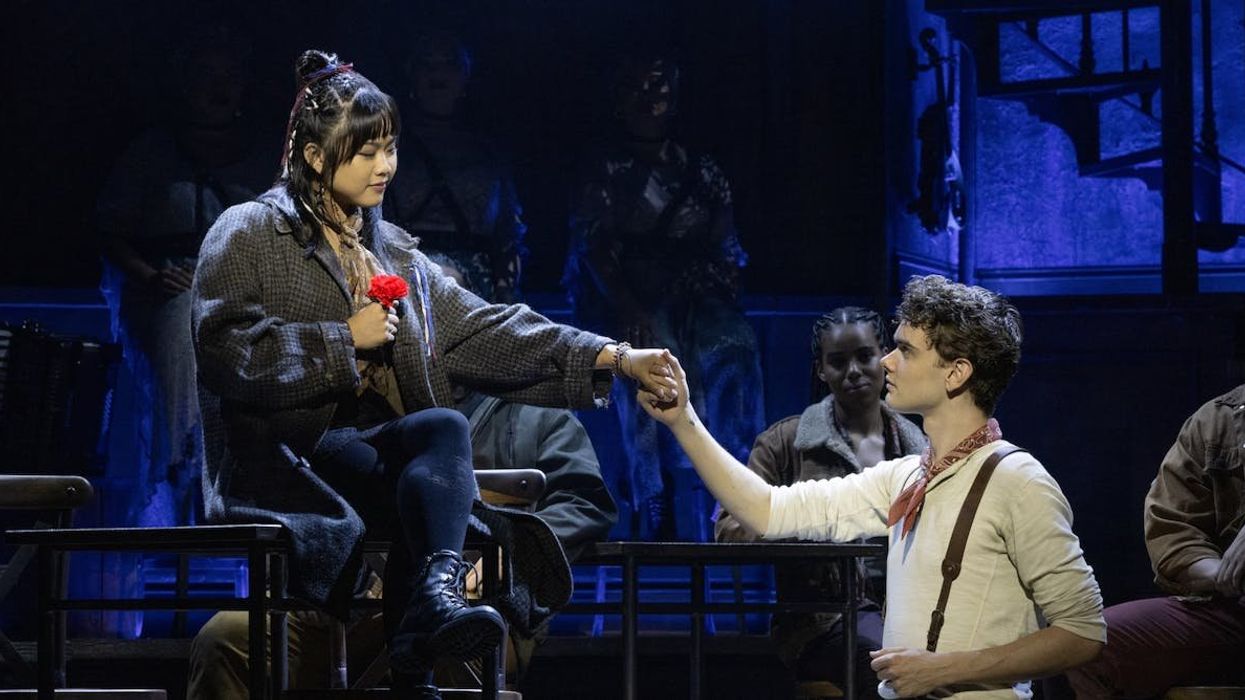
“It’s an old song”, Hermes (Christine Anu) sings at the opening of Hadestown, but “we’re gonna sing it again and again”.

Based on a myth first told in Greece over 2,500 years ago, Hadestown is a modern retelling of the story of lovers Orpheus and Eurydice.

In ancient Greece, Orpheus was considered the greatest of all musicians, due to his divine heritage. His musical ability makes Orpheus uniquely well suited as the lead for a musical.

In the myth and the musical, Orpheus descends into the Underworld to retrieve his wife, Eurydice, after her untimely death. Moved by his powerful song, the king and queen of the Underworld, Hades and Persephone, allow Orpheus to leave their realm with Eurydice.

One condition: Orpheus must not look back at his wife until they have fully emerged from the underworld.
It’s a tale of a love from long ago

The story of Orpheus and Eurydice is one of the most retold myths from antiquity, likely due to its narrative focus on love, loss, and the human condition.

The ancient story of Orpheus and Eurydice is best known from Ovid’s Metamorphoses and Virgil’s Georgics. While Ovid places Orpheus in a world governed by unpredictable gods, Virgil’s focus on natural order means that the tragic events feel predetermined.
Jean-Baptiste-Camille Corot, Orpheus Leading Eurydice from the Underworld, 1861.
The Museum of Fine Arts, Houston

There are numerous other ancient versions, including a mention in Plato’s Symposium, where the philosopher (somewhat unfairly) suggests the musician lacked commitment to his lover.

During the Middle Ages, Eurydice was paralleled with biblical Eve. Eurydice and Eve were both figures known to have unfortunate encounters with snakes, and both were viewed as vulnerable to sin (in Eurydice’s case, being carried away by Hades).

Orpheus was sometimes seen as a Christ-like figure, with his descent to hell compared to Christ’s journey to save souls. Indeed, Orpheus is referenced by his fellow traveller to Hell, Dante, in his Inferno
.
Jean Raoux, Orpheus and Eurydice, about 1709.Getty Museum

The lovers’ story inspired artists such as Rubens and Titian, and many operas, such as L’Orfeo by Monteverdi (1607). Indeed, operas featuring Orpheus are sufficiently numerous to have their own Wikipedia page.

The love story of Orpheus and Eurydice recently featured in the Netflix series Kaos (2024). The story is referenced in video games Don’t Look Back (2009) and Hades (2020).

Orpheus’ desperate journey to reconnect with his lost love holds continued relevance, thousands of years after its first telling.
Our lady of the underground

In the musical, the story of Orpheus and Eurydice is paralleled with the story of Hades and Persephone.

In ancient myth, the union of Hades and Persephone in the Underworld was said to cause the changing of the seasons.

Evelyn De Morgan, Demeter Mourning for Persephone,1906.
Wikimedia Commons

Persephone’s divine mother, Demeter, goddess of the harvest and fertility, was so devastated by her daughter’s abduction by Hades that no plants would grow.

Zeus offered the solution: Persephone would spend half the year below ground and half above.

When Persephone was with Hades, the world would enter winter. The new life connected with the coming of spring signalled Demeter’s joy at the return of her beloved daughter.
Way down Hadestown

The musical, written by Anaïs Mitchell, is largely faithful to the broad arc of the ancient story of Orpheus and Eurydice. A notable exception is seen in the death of Eurydice. In the ancient myth, this is often attributed to snakebite; in the musical she chooses to descend to the Underworld due to economic desperation.

Having Eurydice choose to sign her life over to Hades arguably lends her a limited amount of agency, although she almost immediately regrets her decision.

The choice to give Eurydice a more distinctive voice is reminiscent of the works of Victorian poets Edward Dowden and Robert Browning, as well as later poems by Margaret Atwood and Carol Ann Duffy.

While in the ancient myth, Eurydice’s speech is limited to her whispered farewell, these poets all give us an insight into Eurydice’s thoughts and feelings. The musical continues this tradition of giving agency, hopes and opinions.

The story of Orpheus and Eurydice is paralleled in the musical with the story of Hades and Persephone.
Lisa Tomasetti/Opera Australia

The dangers posed by unpredictable seasons, seen in the ancient myth of Hades and Persephone, is used in the musical to reflect modern concerns over climate change and environmental decline.

Rising seas and poor harvests threaten the lives of those inhabiting the industrialised world of Hadestown.

Orpheus attempts to bring a dystopian world “back in tune” through restoring environmental harmony, bringing a hopeful note to the tragic story.
Anu is a reassuring presence as the narrator and Orpheus’ confidant, the god Hermes.
Lisa Tomasetti/Opera Australia


Nothing changes

In this Australian restaging of the hit Broadway production, Noah Mullins rises to the significant challenge of portraying Orpheus, the greatest of all musicians. Abigail Adriano’s raw portrayal of Eurydice’s confinement in the underworld is genuinely moving.

Anu is a reassuring presence as the narrator and Orpheus’ confidant, the god Hermes. Adrian Tamburini’s powerful bass-baritone adds to the authority of Hades, and Elenoa Rokobaro gives a dazzling performance as Persephone. The chorus and mostly on-stage band are excellent.

The story of Orpheus and Eurydice has been told for thousands of years.
Lisa Tomasetti/Opera Australia

At its heart, the myth of Orpheus and Eurydice confronts one of the defining challenges of mortality: the reality that death can separate us from those we love and value most.

In retelling the myth, Hadestown offers timely meditations on the power of creativity and human connection, bringing this ancient love story alive again for modern audiences.

Hadestown is in Sydney until April 26, then touring to Melbourne.

Louise Pryke, Honorary Research Associate, Department of Classics and Ancient History, University of Sydney

This article is republished from The Conversation under a Creative Commons license. Read the original article.
Julianne Moore’s children’s book about redheads is under ‘review’. What’s happening with book bans under Trump?


Julianne Moore and her children’s book are being ‘reviewed’. Other classics are now off-limits to children in Idaho libraries. Joe Cavaretta/AAP
February 19, 2025

Actor Julianne Moore’s picture book, Freckleface Strawberry, was recently removed for “compliance review” from schools serving the families of US military and civilian defense personnel.

The review, conducted by the US Department of Defense, is designed to ensure the books in its schools don’t contravene President Trump’s two executive orders regarding “gender ideology” and “racial indoctrination”, reported CNN.

As part of the week-long review, in which access to all library books was denied, Moore’s book about a redheaded girl who learns to accept her freckles was flagged alongside others as “potentially related to gender ideology or discriminatory equity ideology topics”.

While books are challenged much more often than they are successfully banned, last year 10,000 books were banned from public schools across America: almost triple the amount in 2023.

The Pentagon has issued a list of books, or chapters from books, to be immediately pulled from Department of Defense schools. It includes course material on gender and sexuality for high-school students and a lesson for fifth graders about how immigration affects the US.

Moore, whose father was a Vietnam veteran, and who grew up attending a Department of Defense School, has expressed her “great shock”. She drew attention to her book’s removal in an Instagram post.

Trump’s direct ban on “teaching ‘gender ideology’ and ‘critical race theory’ in the classroom” marks a new front in the censorship battles. If picture books about redheaded girls with freckles can be removed (even temporarily) for being problematically “ideological”, where will these book bans take the US – now and in the future?

The Trump presidency, with its new language of censorship, has just begun.
Publishers file joint lawsuit against book banning

Earlier this month, the so-called “Big Five” publishing houses – Penguin Random House, Hachette Book Group, HarperCollins, Macmillan Publishers and Simon & Schuster – filed a joint lawsuit challenging the banning of books in US schools and public libraries.
The Bluest Eye is one of the books under-18s cannot access in Idaho libraries.

Their suit challenges Idaho’s House Bill 710, which became law on July 1 2024. It requires libraries to move materials considered harmful to children to an area for adults only, and forbids anyone under 18 from accessing library books with “sexual content”.

(The Big Five are joined by Sourcebooks, the Authors Guild and the Donnelly Public Library District, as well as several authors, a teacher, two students and two parents.)

Nihar Malaviya, chief executive officer of Penguin Random House, called the Idaho bill “blatantly discriminatory, broad and vague”.

Classics like Margaret Atwood’s The Handmaid’s Tale, Maya Angelou’s I Know Why the Caged Bird Sings, Kurt Vonnegut’s Slaughterhouse Five, and Toni Morrison’s The Bluest Eye are among the “harmful” books being banned under the bill.
Historic publisher lawsuits

Malaviya said the Idaho lawsuit is “the third historic lawsuit” Penguin Random House has “initiated against book banning in just over a year”.

It follows a 2023 lawsuit by Penguin Random House and PEN America (as well as five authors and two parents) against a Florida school board and district. PEN America called it a “first-of-its-kind challenge to unlawful censorship”.

This earlier lawsuit argued the removal or restriction of books about “race, racism and LGBTQ identities”, and those by non-white and/or LGBTQ authors, violated the US constitution’s First Amendment (protecting free speech) and the Equal Protection clause of the 14th Amendment.

The case is ongoing, though late last year a federal judge urged the Florida County to settle: as of September, it had spent over US$440,000 (and counting) of taxpayer money on attorney fees.
Banning ‘any act’ of homosexuality

Under “Obscene materials” in Section 1 of the Idaho bill, “sexual conduct” is defined as:
any act of masturbation, homosexuality, sexual intercourse, or physical contact with a person’s clothed or unclothed genitals, pubic area, buttocks or, if such person be a female, the breast.


Unlike masturbation, intercourse, and groin-touching, “homosexuality” refers to sexual orientation. Just as being heterosexual is an orientation – not a sex act – so is homosexuality.

Its inclusion speaks volumes about the sexualisation of the LGBTQIA+ community, and how queerness is misrepresented as “inherently sexual and predatory”.

In Utah in 2022, the Alpine School District pulled 52 books from their library shelves: 21 of them contained queer characters or themes. Schools were accused of stocking “pornography” in their libraries.

“When you look at what actually gets challenged in school, some of it has sex in it and some of it just has queer people,” responded Richard Price, a political scientist studying the history of queer censorship.

When “homosexuality” is forbidden, as in the Ohio bill, it forbids the very existence of LGBTQIA+ people themselves. It means being gay is, in and of itself, “obscene”.
Book bans can increase exposure to harm

The American Library Association acknowledges book challenges are often made “to protect others, frequently children, from difficult ideas and information” – but concludes book bans are still harmful.

Book challenges – the “attempt to remove or restrict materials” – are most often made by parents. Others who challenge the collections of libraries or schools include political and religious groups, library administrations and schools.

Book bans inhibit children and teenagers from “critical thinking in a safe, supportive environment”, shows a report from the National Library of Medicine. This makes young people more likely to seek information from “unmonitored, unsafe sources, without the support of trusted adults”.

In essence, book bans actually increase the risk of children’s exposure to the “unsuitable” topics the bans are trying to protect them from.

While book bans at a community level are usually misinformed, rather than malicious, those implemented by government policy are “tools that politicians use to control a political narrative” and dictate “whose history, identities, and voices matter”, says The Center for American Progress.
Book bans are not new – but nor is resistance

In 213 BCE, Chinese emperor Qin Shi Huang burned books to “consolidate power” and keep education “under governmental control”. The Nazis infamously burned books to promote their political agenda against Jews and “un-German” political and artistic expression.

The Nationalist government of South Africa used a 1957 inquiry into “undesirable publications” as an “excuse” to “destroy books and pamphlets critical of its policies”, for over two decades.

In other words, book bans are nothing new. But neither is resistance to the political control of knowledge.

In the words of Helen Keller, whose own books were burned by the Nazi regime:
History has taught you nothing if you think you can kill ideas. Tyrants have tried to do that often before, and the ideas have risen up in their might and destroyed them.


Sarah Mokrzycki, Sessional Academic, Children's Literature and Creative Writing, Victoria University

This article is republished from The Conversation under a Creative Commons license. Read the original article.
What if a sitting president became dangerously unstable? This 1965 novel provides some clues


President Donald Trump after signing a proclamation declaring February 9 ‘Gulf of America Day’. Ben Curtis/AAP

February 23, 2025

The Gridiron Club is one of the oldest, most exclusive journalistic organizations in Washington, D.C. Much like the White House Correspondents’ Association, this secretive, members-only group hosts an annual dinner where writers and politicians exchange playful barbs and raise their glasses in a spirit of conviviality. Tradition dictates the sitting president attends, making it a key fixture in Washington’s social and political calendar.

A fictitious account of this annual dinner features at the start of Fletcher Knebel’s 1965 novel, Night of Camp David, which is back in the cultural spotlight (again). Fiction has an uncanny way of anticipating reality, and this bestselling political thriller – about a US president spiralling into paranoia and delusion – feels eerily relevant in the era of Trump 2.0.

Everything appears to be normal as Knebel’s story gets underway. President Mark Hollenbach, a charismatic Democrat who fought in the Korean War, has just stepped up to the microphone at the Gridiron club. Before him sit “the elite of America’s delicately interwoven political-industrial society, the men who ran the political parties and the big corporations”.

Having taken a few lighthearted potshots at the press, Hollenbach sets his sights on his political rivals. After a brief pause to take a sip of water, he quips that the Republican party’s
capacity for solemnity constantly mystifies me. Perhaps the clue lies in what they say to one another. I’ve given the matter a great deal of thought, and I think I’ve hit on a way to find out.

Hollenbach, who is up for reelection, suggests the FBI be empowered to maintain an automatic tap on all telephones in the country. With a standing wiretap, “we Democrats could learn what mysterious substance provides the glue for Republicanism, what indeed it is they say to one another that makes them so gloomy”.

The audience erupts in laughter, assuming Hollenbach is joshing. But he’s deadly serious. He admits this to the novel’s central protagonist, Jim MacVeagh, an ambitious young senator from Iowa, when he later invites him for a nightcap at Camp David, the secluded presidential retreat nestled in the Maryland mountains.
It would have to be done carefully, with great legal restraints and protection, naturally. But no respectable citizen would have a thing to fear. It’s the hoodlums, the punks, the syndicate killers, and the dope peddlers we’re after. Automatic wiretapping, aided by computers to store the telephone calls, would drive them all out of business.


MacVeagh can hardly believe what he’s hearing. He tries to reason with the president, warning the vaguely Nixonesque scheme, “could be an awful weapon for evil in the wrong hands. Who knows what type of man may succeed you?”

These appeals fall on deaf ears. Dismissing MacVeagh’s objections with a wave of his hand, Hollenbach shifts the conversation to a topic he considers more pressing: his choice for a vice-presidential running mate.

With a sly grin, Hollenbach dangles a tantalising carrot before MacVeagh, suggesting he might be the ideal person for the job. Flattered but unsure, MacVeagh demurs. He is soon summoned back for another meeting, where it becomes alarmingly clear something is deeply amiss with the president, who rants about nefarious journalists and insists there’s “some kind of conspiracy afoot to discredit me in the eyes of the country.”

These petty grievances are only a prelude to his grander ambitions. With feverish intensity, Hollenbach unveils his vision to make America great again. He speaks of forging
the mightiest core of power the world has ever known. Not just an alliance, but a union – a real union, political, economic, social – of the great free nations of the world.


At first, MacVeagh is unsure what he’s talking about. However, it turns out Hollenbach is referring to a takeover of America’s northern neighbour:
The mineral riches under her soil are incredible in their immensity […] Believe me, Jim, Canada will be the seat of power in the next century and, properly exploited and conserved, her riches can go on for a thousand years.


Hollenback argues America also needs to take control of Sweden, Denmark, Norway and Finland – by force if necessary. These predominantly white countries “will bring us the character and discipline we so sadly lack.”

MacVeagh is stunned by the president’s alarmingly erratic behaviour, messianic posturing and white supremacist rhetoric. He decides he has to act. Yet how does one move against the most powerful man in the world without being branded a traitor? As MacVeagh struggles to find allies in Washington, the reader begins to wonder: will anyone believe him before it is too late?
A climate of dread

While Night of Camp David clearly resonates in the here and now – especially in its prefiguration of some of Donald Trump’s more outlandish foreign policy pronouncements such as wanting to annex Greenland – the book is also very much a product of its time.

The political and socio-cultural climate in the 1960s was marked by a deep sense of suspicion. Cold War anxieties, panic regarding perceived subversion from within, and high-profile political assassinations were on the minds of many.

Historian Richard Hofstader captured the zeitgeist in his influential 1964 essay The Paranoid Style in American Politics. In it, he suggests American political life had long been susceptible to modes of conspiratorial thinking and exaggerated fears about internal enemies.

Arriving a few months after Hofstader’s study, Knebel’s novel plays directly into this mindset, presenting an all too plausible scenario in which the greatest threat to the foundations of American democracy comes not from a shadowy external adversary, but from the seat of highest office itself.

This climate of dread and distrust permeated 1960s popular culture, as seen in films like The Manchurian Candidate, where a decorated war veteran is unknowingly brainwashed into becoming a sleeper assassin, and Seven Days in May (adapted from a 1962 novel Knebel coauthored with Charles W. Bailey II), which follows a Pentagon insider who uncovers a right-wing military coup against the leader of the free world.

Elsewhere, Stanley Kubrick’s Dr. Strangelove satirised the terrifying possibility of nuclear destruction, with the deranged figure of General Ripper embodying the fear of unstable leaders wielding absolute power. The 1963 assassination of John F. Kennedy, meanwhile, fuelled intense anxieties about the process of presidential succession.

Set against this tumultuous backdrop, Night of Camp David posed several germane and decidedly unsettling questions: what if a sitting president became dangerously unstable? And more urgently, what could be done about it?

Knebel’s novel was, in fact, published just two years before the ratification of the 25th Amendment, which clarifies procedures for removing a president deemed unable to discharge the powers and duties of the office. It was enacted as a direct response to the political chaos following in the immediate wake of the Kennedy assassination.
Different eras

Knebel, who died by suicide in 1993, was, in the words of JFK, “Washington’s most widely read and widely plagiarized” commentator. Whether read as a relic of the Cold War or as an urgent warning, his novel still has much to say about the fragility of our democratic institutions and the dangers of unchecked authority.

By the same token, the contrast between Knebel’s fictional president and Trump highlights a key difference between their respective historical and political eras.

In Night of Camp David, the president ultimately makes a decision that shows him to be weirdly scrupulous and patriotic, despite his hunger for a new world order. One simply can’t imagine such a scenario under Trump.

Hollenbach, for all of his delusions and grandiosity, still sees himself as acting in the nation’s best interest – however warped or dangerous his vision may be. Trump, on the other hand, operates with ruthless, transactional logic, focused above all on his power and survival.

Even as some of Trump’s proclamations on international affairs – whether renaming the Gulf of Mexico or quoting Napoleon to justify his purging of the government – veer into the realm of the bizarre, his approach is less about untrammelled paranoia and more about calculated dominance.

When it comes to Trump, the concern is less psychological instability than a remorseless, calculated reshaping of institutions to serve his own ends.

In this sense, Night of Camp David – the narrative of which might strike the contemporary reader as somewhat tame – may feel oddly quaint and old-fashioned.

Its cast of characters, irrespective of party and persuasion, are ultimately driven by duty to the nation, where’s today’s political landscape in the United States is increasingly defined by ideological entrenchment and loyalty tests.

Knebel imagines a president’s instability as a crisis to be resolved; with the second coming of Trump, instability has itself become a governing principle.

Alexander Howard, Senior Lecturer, Discipline of English and Writing, University of Sydney

This article is republished from The Conversation under a Creative Commons license. Read the original article.


Amish Trump supporters? The Amish and the religion factor in Republican politics


Photo by Randy Fath on Unsplash
February 23, 2025

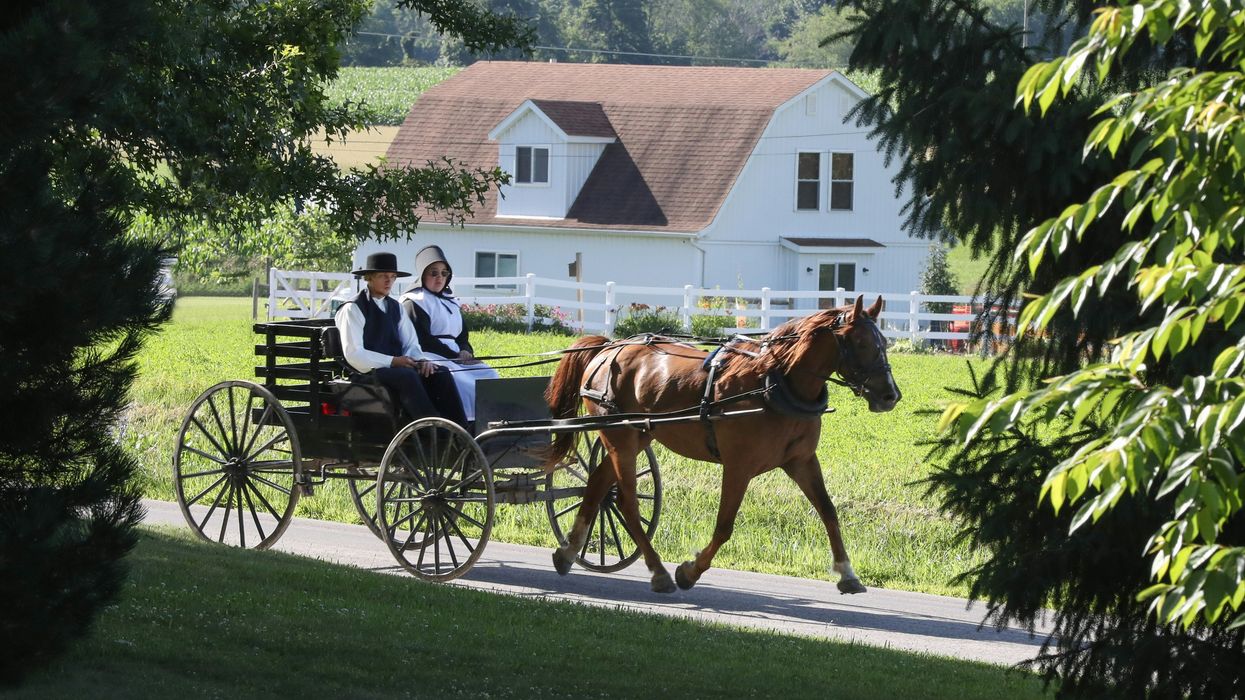
On November 5, 2024, as millions of Americans headed to the polls, billionaire Elon Musk posted a video on his social media platform X depicting a caravan of Amish individuals travelling via horse and buggy to vote for Donald Trump. The following day, in response to a post expressing gratitude to the Amish for their contribution to Trump’s victory, Musk wrote: “The Amish may very well save America! Thank goodness for them. And let’s keep the government out of their lives.” Musk’s tweets underscore the growing prominence of religion in US politics and the Republican party’s efforts to integrate the Amish into its electorate.

The Amish and their vote in US history

The Amish are a Protestant religious community rooted in early European Anabaptist movements. They accept technological advancements selectively, adhering to a distinct way of life marked by simple living, plain dress and a focus on community, distinguishing between what strengthens their social bonds and what might compromise their spiritual path. The Amish are a tiny minority in the US: in 2022, there were approximately 373,620 individuals in a population of around 330 million–slightly more than one in 1,000 Americans. They are predominantly concentrated in the election swing states of Pennsylvania and Ohio, which partly explains Republicans’ interest in courting their support.

Traditionally, the Amish mainly abstain from voting unless they feel compelled to protect their religious freedoms, preserve their way of life or address critical moral issues. Historically, such instances of electoral participation have occurred only three times.

The first instance dates back to the 1896 presidential election, when the Republican nominee, William McKinley, campaigned on a platform centred on industrial corporate interests. These interests diverged significantly from those of the Amish, who aligned instead with Democrat William Bryan’s policies advocating for small farmers and the defense of rural America.

Amish political engagement resurfaced during the 1960 presidential election, which featured Republican Richard Nixon vs Democrat John F. Kennedy. The Amish viewed Kennedy as an ally of the Catholic church, an institution they viewed as intolerant. Consequently, they supported Nixon, a Quaker, whom they saw as a defender of a Protestant America.

The most recent instances of notable Amish participation occurred amid the presidential election campaigns of Republican George W. Bush in 2000 and 2004. This phenomenon, dubbed “Bush Fever,” saw unprecedented Amish voter turnout. In 2000, 1,342 out of 2,134 registered Amish voters in Lancaster County, Pennsylvania–which has one of the largest Amish communities in the US–cast ballots, achieving a turnout rate of 63%. By 2004, Amish voter registration had increased by 169%, with 21% of eligible adults being registered. This mobilization was spearheaded by Chet Beiler, the son of Amish parents who left the community when he was three. Leveraging his heritage and fluency in Pennsylvania German, a traditional language spoken in many Amish communities, Beiler developed a voter registration strategy targeting the Amish to support Bush’s re-election campaign.

The religious factor in US politics

To understand the Republican party’s interest in the Amish, one must examine the increasing centrality of religion in US politics. This phenomenon persists despite a growing number of Americans identifying as non-religious or less religious.

In the US political context, religion extends beyond faith to encompass cultural identity and social cohesion. Scholars often describe this phenomenon as “Christianism,” a form of nationalism that is bound together by a belonging to Christianity and that emerges, as a form of reaction, within the culture wars. Consequently, a political platform emphasizing Christian principles and rural values has the potential to galvanize segments of the electorate. This dynamic is exemplified by Musk’s tweets about the Amish. Within some parts of the Republican electorate, the Amish are perceived as “guardians of lost values,” embodying a vision of an untainted rural America defined by traditional family structures and an agrarian work ethic. This narrative has been further amplified by Amish PAC, a political action committee established in Virginia in 2016 to rally support for Trump through religiously framed identity politics that advocate for traditional values and oppose abortion rights.

The influence of religion within the Republican party is further underscored by the ascendancy of the Christian right, a political movement that emerged in the late 1970s. Though not a monolithic entity, it is composed of individuals–primarily evangelical Christians–seeking to shape US politics based on a conservative interpretation of biblical principles and societal values.

Legislation and the Amish

Some Republicans have advocated for legislation favourable to the Amish, such as former US representative Bob Gibbs, who won election in the Amish-dominated congressional district of Holmes County, Ohio. In December 2021, Gibbs introduced legislation to allow people with specific religious beliefs such as the Amish, who view photography as a form of idolatry, to be exempt from a requirement of possessing identification documents featuring their photographs “to purchase a firearm from a federally licensed firearms dealer.” In the same month, Gibbs also proposed another bill to benefit the Amish, which would have allowed them to opt out of social security and Medicare wage deductions if they were employed by non-Amish-owned companies.

Earlier in 2021, the conservative-majority Supreme Court resolved a longstanding dispute between the Amish of Lenawee County, Michigan and local authorities, ruling in favour of the Amish. The issue at the heart of the case concerned wastewater management. Following their religious principles, the Amish typically avoid using modern inventions such as septic systems, and the Amish in Lenawee County used a management method considered noncompliant by health officials. This case followed similar ones involving other Amish communities in Ohio, Minnesota and Pennsylvania. Legal disputes such as these could be leading the Amish to form a more positive view of the Republican party and Trump, both for their advocacy of “less government” and for positioning themselves as defenders of religious freedom.

The Amish and the 2024 presidential election

According to the online news source Anabaptist World, media reports suggested that the 2024 presidential election saw a surge in voter registrations among the Amish in Pennsylvania, allegedly contributing to Trump’s victory in the state. The alleged surge was reportedly driven by a reaction to federal legal actions against an Amish farmer accused of selling raw dairy products across state lines, which resulted in cases of Escherichia (E.) coli.

However, official data from Lancaster County–where the principal Amish settlement in Pennsylvania is located–challenge claims of a massive Amish turnout. The increase in Trump’s vote share in the state, from 48.84% in 2020 to 50.37% in 2024, primarily occurred in urban and suburban areas. For example, by the time the Associated Press declared that Trump had won Pennsylvania, his vote share in Philadelphia had improved by three percentage points. Key suburban counties such as Bucks, Monroe and Northampton, which former president Joe Biden won in 2020, had swung in his favour. And the Republican had also performed better in the Philadelphia-area suburbs of Delaware and Chester counties. These regions, with few Amish residents, experienced substantial shifts, while districts with larger Amish populations saw only modest gains for Trump.

While the Amish did not become a significant component of Trump’s electoral coalition, voters in some Amish communities may have grown more sympathetic to his candidacy. More importantly, members of the religious group serve as a potent symbol of mobilization and propaganda for the Republican party amid the intensifying polarization of US politics.

Daniele Curci, PhD Candidate in International and American History, University of Florence

This article is republished from The Conversation under a Creative Commons license. Read the original article.