Wednesday, April 02, 2025

'Not gonna happen!' Analysis exposes 'idiotic' fallacy of Trump’s tariff tax scheme


Donald Trump in Reading, Pennsylvania on October 09, 2024 
(Chip Somodevilla/Shutterstock.com)
April 02, 2025
ALTERNET
President Donald Trump is acknowledging that his steep new tariffs will bring some economic pain in the United States, but he insists that short-term discomfort will be followed by a period of major prosperity and a renaissance in U.S. manufacturing.

Trump is also claiming that money from tariffs will replace any federal revenue lost because of tax cuts for the United States' wealthiest Americans. And he is describing Wednesday, April 2 — the day his new tariffs are scheduled to take effect — as "Liberation Day."

But The New Republic's Timonthy Noah, in a biting article published on April 2, lays out some major flaws in Trump's arguments on tariffs and taxes.

READ MORE: Chances of a recession hiked to 35 percent as Trump's 'Liberation Day' tariffs loom

"I'm starting to believe April 2 really will be Liberation Day," Noah argues. "But instead of liberating us from foreign imports, it will liberate us from any lingering illusion that Trump's tariffs are about anything more than eliminating the progressive income tax."

The math in Trump's claims, according to Noah, doesn't add up.

"News accounts about President Donald Trump's tariffs routinely mention that raising revenue is one of Trump's stated goals," Noah explains. "But they hurry quickly past this because it's totally idiotic to think tariffs could ever replace the income tax, even partially, as a meaningful source of federal revenue. And they’re right: This idea is really, really stupid!"

Noah adds, "Where the press goes wrong is in not plumbing the depths of Trump's commitment to this stupid idea. How stupid? Well, the Internal Revenue Service last year collected $2.96 trillion from income taxes on individual and corporate income, and the United States imported $3.3 trillion in foreign goods. You'll note these numbers are pretty close. To replace all income-tax revenue, you'd have to impose a tariff of nearly 100 percent on all foreign imports. Not gonna happen!"

Timothy Noah's full article for The New Republic is available at this link.


'A large revenue heist': WSJ bashes Trump’s 'ideological fixation on tariffs'
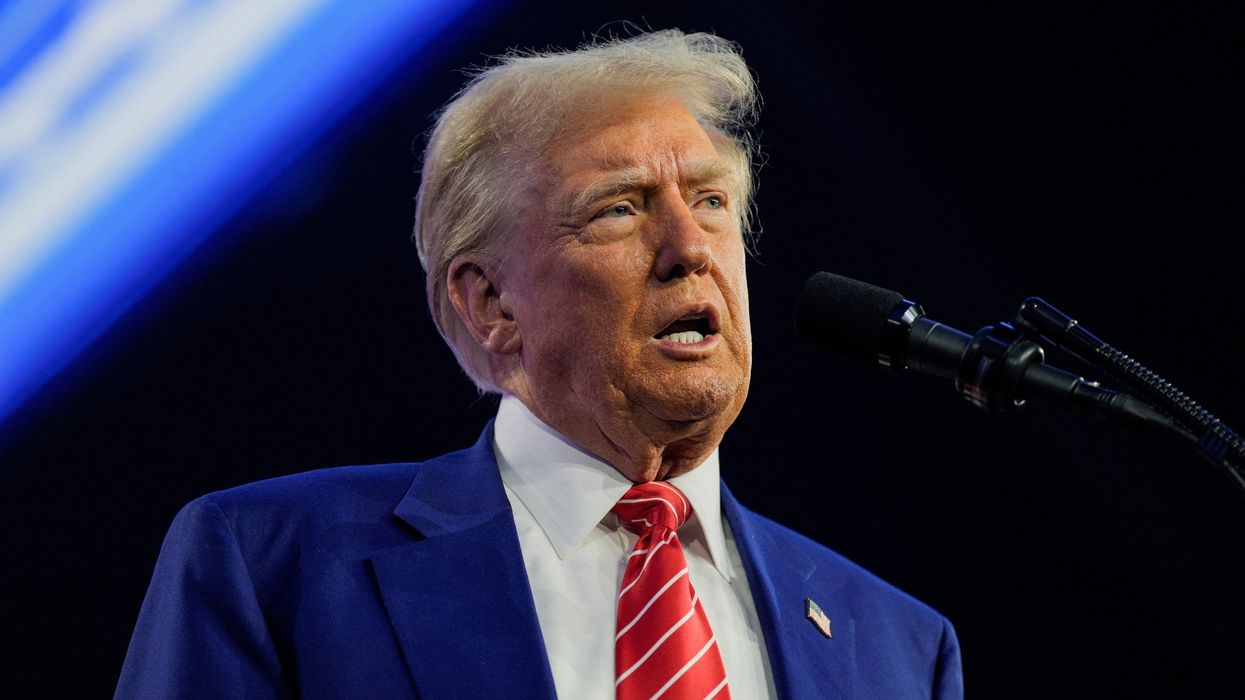

Donald Trump speaks at Turning Point USA's AmericaFest in Phoenix, Arizona, U.S., December 22, 2024. REUTERS/Cheney Orr/File Photo

April 01, 2025
 ALTERNET

Calling out the Trump administration over its attempts to present the planned tariff increase as “tax cuts,” the Wall Street Journal termed these tariffs “a large revenue heist.”

“In the real economic world, a tariff is a tax,” the newspaper wrote in its Tuesday editorial.

The editorial was a response to President Donald Trump’s chief trade adviser Peter Navarro who on Sunday told Fox News tariffs will raise about $600 billion a year and “about $6 trillion over a 10-year period” but that this is a tax cut.

Navarro called Trump's tariffs proposal "the biggest tax cut in American history for the middle class, for the blue collar.”

In a sharp rebuke to Navarro’s claims, the WSJ noted the $600 billion figure “would be one of the largest in U.S. history.”

“By any definition that is a tax increase,” the newspaper said.

“The President’s ideological fixation on tariffs is crowding out rational judgments about the consequences. Americans are being told to accept the pain of higher prices, a slower economy, and shrinking 401(k) balances in the name of Mr. Trump’s project to transform the American economy into what he imagines it was like in the McKinley era of the 1890s,” it added.

The president is set to introduce a series of tariffs on Wednesday on imports that he claims will free the United States from dependence on foreign products, frequently referring to April 2 as "Liberation Day.” But there are still many uncertainties regarding the implementation of Trump’s tariffs.

Trump indicated these tariffs will be "reciprocal," meaning they will match the duties imposed by other countries on American goods.


On Monday, White House press secretary Karoline Leavitt said Trump is expected to reveal his plans for reciprocal tariffs affecting nearly all U.S. trading partners on Wednesday. The specifics, however, will be determined by the president himself, per Leavitt.

Trump is radically altering the long-established rules of global trade. The "reciprocal" tariffs he is anticipated to announce on Wednesday could disrupt international businesses and create tension with both America's allies and rivals.

Since the 1960s, tariffs, or import taxes, have been a result of negotiations among numerous nations. Trump is aiming to take control of this process.

Trump argues that unfair competition from abroad has harmed American manufacturers and ravaged factory towns in the Midwest. In his first term, he imposed tariffs on foreign steel, aluminum, washing machines, solar panels and nearly all imports from China.

But critics say such tariffs hurt the American economy instead of helping it.


‘Tariff man’: Trump’s long history with trade wars


By AFP
March 31, 2025


Donald Trump has insisted on the benefits of tariffs for decades - Copyright AFP ROBERTO SCHMIDT

Donald Trump loves few things more than talking about his affinity for tariffs, but it’s nothing new: he’s been saying the same thing for decades.

“To me, the most beautiful word in the dictionary is ‘tariff,'” Trump repeatedly said on the campaign trail for the 2024 election.

He has since joked that it is now his fourth favorite word, after love, God and family — but his commitment to them remains as strong as ever.

The 78-year-old Republican has promised a “Liberation Day” for America on Wednesday when he announces sweeping “reciprocal” tariffs targeting any country that has import levies against US goods.

The sudden trade war has sent leading world economies scrambling — yet anyone surprised by the onslaught has not been listening to Trump himself.

Other policies have come and gone, especially on hot-button issues such as abortion, but Trump’s belief that America is being ripped off by the world has remained one of his core values.

So has his innate conviction that tariffs are the solution, despite arguments by opponents and many economists that US consumers will suffer when importers pass on increased prices.


– ‘Ripping off’ –


“I am a Tariff Man,” Trump declared in a social media post back in 2018 during his first presidential term.

In fact, Trump has been saying as much since the 1980s.

His main target then was Japan, as Trump — best known in those days as a brash property dealer and tabloid fixture — discussed getting into politics in an interview with CNN’s Larry King.

“A lot of people are tired of watching other countries ripping off the United States,” Trump said in 1987, using rhetoric that has changed little in the intervening 38 years.

“Behind our backs, they laugh at us because of our own stupidity.”

In a separate interview with chat show host Oprah Winfrey, he raged: “We let Japan come in and dump everything right into our markets.”

By the 1990s and early 2000s, China entered his crosshairs, and Beijing remains one of his top tariff targets, along with Canada, Mexico and the European Union.

In his successful 2016 election campaign, Trump stepped up the rhetoric, saying: “We can’t continue to allow China to rape our country.”


– ‘Very rich’ –


During his second term, Trump has also started citing a historical precedent going back more than a century — President William McKinley.

McKinley’s passion for both territorial expansion and economic protectionism during his time in office from 1897 to 1901 could have been the model for Trump’s “Make America Great Again” policies.

“President McKinley made our country very rich through tariffs and through talent — he was a natural businessman,” Trump said in his inauguration speech in January.

Trump’s promises of a “Golden Age” harkens back to the so-called “Gilded Age” that culminated with McKinley’s presidency, a time when America’s population and economy exploded — along with the power of oligarchs.

In addition to deploying tariffs, McKinley presided over a period of territorial adventurism for the United States, including the Spanish-American war and the purchases of Guam, Puerto Rico and the Philippines.

Such moves echo Trump’s own designs for Greenland, Panama and Canada.

The two also share the unwanted similarity of being struck by an assassin’s bullet — although Trump survived the attempt on his life at an election rally last July, while McKinley was killed by an anarchist in 1901.
Tariff-battered U.S. farmers are getting exactly what they deserve: ex-GOP insider

DAVID FRUM EX-PAT CANADIAN

April 2, 2025
RAW STORY


Farmer walking in corn field. (Photo credit: Zoran Zeremski / Shutterstock)

David Frum, a former speechwriter for President George W. Bush, believes that American farmers are getting exactly what they deserve if they find themselves getting hurt by President Donald Trump's trade wars

Writing in The Atlantic, Frum breaks down all the ways that Trump's tariffs will hurt American farmers, who overwhelmingly voted for him in the 2024 election.

"Farm costs will rise," Frum explains. "Farm incomes will drop. Under Trump’s tariffs, farmers will pay more for fertilizer. They will pay more for farm equipment. They will pay more for the fuel to ship their products to market. When foreign countries retaliate, raising their own tariff barriers, American farmers will lose export markets. Their domestic sales will come under pressure too, because tariffs will shrink Americans’ disposable incomes: Consumers will have to cut back everywhere, including at the grocery store."

ALSO READ: 'Honestly shocked': Wisconsin Republicans reel as voters reject Elon Musk

Despite the hardships that farmers will endure, Frum argues that they are not deserving of sympathy or financial relief, especially given that "farmers can better afford to pay the price of Trump’s tariffs than many other tariff victims," as they "can already obtain federal insurance against depressed prices for their products."

Additionally, Frum writes that everyone is going to suffer from Trump's tariffs and farmers shouldn't get more special exemptions.

"If a farm family voted for Trump, believing that his policies were good, it seems strange that they would then demand that they, and only they, should be spared the full consequences of those policies," he writes. "Tariffs are the dish that rural America ordered for everyone. Now the dish has arrived at the table. For some reason, they do not want to partake themselves or pay their share of the bill. That’s not how it should work. What you serve to others you should eat yourself. And if rural America cannot choke down its portion, why must other Americans stomach theirs?"
'Just plain dumb': Trump ridiculed after latest anti-Canada rant

David Badash,
 The New Civil Rights Movement
April 2, 2025 

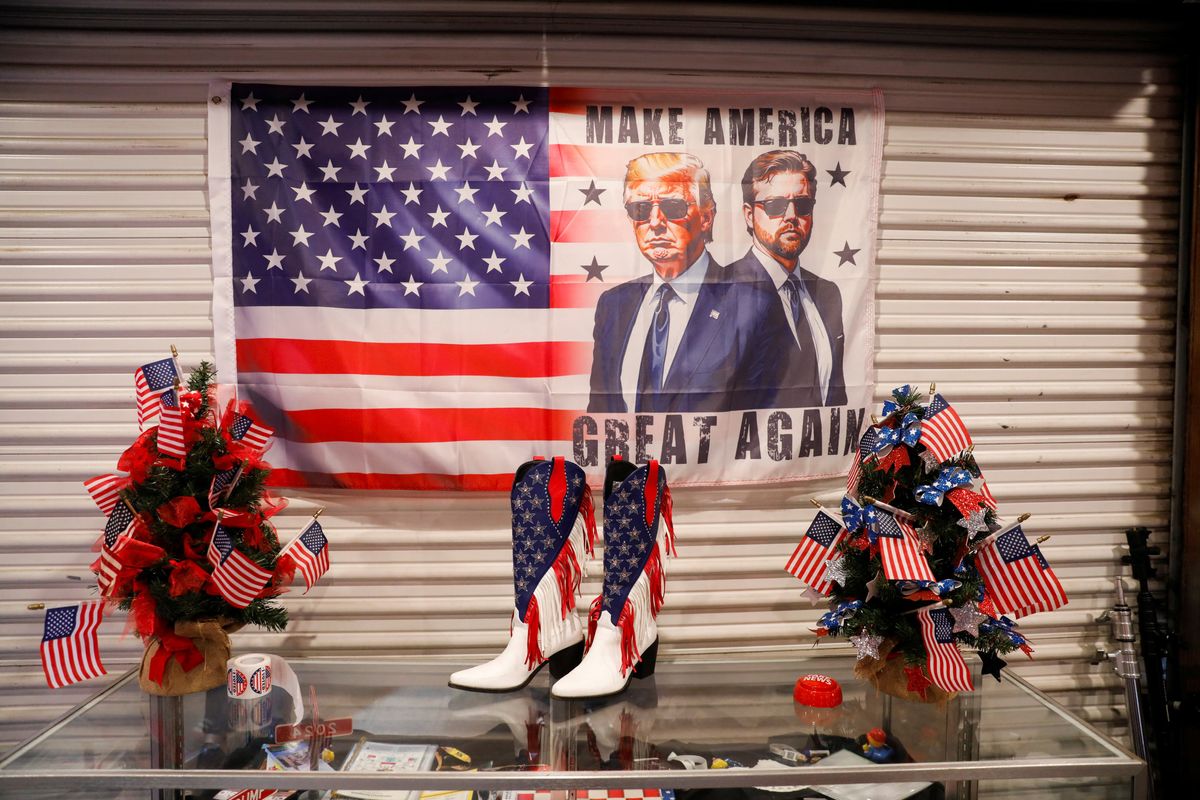
A U.S flag with an image of U.S. President Donald Trump and U.S. Vice President JD Vance, is placed at a venue for a watch party for Randy Fine, Republican nominee for 2025 Florida's 6th congressional district special election, as Florida holds a special election for a U.S. House of Representatives seat vacated by National Security Adviser Michael Waltz, in Ormond Beach, Florida, U.S. April 1, 2025. REUTERS/Octavio Jones

In a late-night tirade against top Senate Republicans, President Donald Trump—repeating a claim he made earlier in the week—insisted that smuggled fentanyl can be subjected to tariffs, drawing widespread ridicule, including from conservatives. He offered no explanation for how such a policy would work, nor did he clarify whether traffickers are expected to declare illegal drugs at the border.

Just before 1 AM, the President blasted former Senate Republican Leader Mitch McConnell and his fellow Kentucky Senator Rand Paul, along with Alaska’s Lisa Murkowski and Maine’s Susan Collins, for supporting legislation that would remove the tariffs the President is imposing on the nation of Canada, one of America’s largest and oldest allies and trading partners. The Constitution grants Congress, not the President, the power over tariffs.

Trump urged them to “get on the Republican bandwagon, for a change, and fight the Democrats wild and flagrant push to not penalize Canada for the sale, into our Country, of large amounts of Fentanyl, by Tariffing the value of this horrible and deadly drug in order to make it more costly to distribute and buy.”

The President has offered different reasons at different times over the past few months to explain why he is imposing tariffs on Canada. Fentanyl from Canada represents an infinitesimal amount of the drug that comes into the U.S.—most of which is smuggled in by American citizens.

Trump continued his rant, baselessly blaming the four Republicans for “allowing Fentanyl to pour into our Country unchecked, and without penalty.”


“What is wrong with them, other than suffering from Trump Derangement Syndrome, commonly known as TDS?” he asked, before declaring they are “extremely difficult to deal with and, unbelievably disloyal to hardworking Majority Leader John Thune, and the Republican Party itself.”

Economic historian Phil Magness observed, “If this panic-tweet is true, it appears that the GOP has the 4 votes needed for the Senate resolution rescinding Trump’s unconstitutional tariff decree against Canada.” He added: “Trump appears to believe that his tariff is actually taxing illegal fentanyl sales.”

Just one day earlier, Trump had also suggested that illegal fentanyl being smuggled in from Canada can be tariffed.

“Senator Tim Kaine, who ran against me with Crooked Hillary in 2016, is trying to halt our critical Tariffs on deadly Fentanyl coming in from Canada,” Trump wrote.

Responding to Wednesday’s post-midnight tirade, critics of various political stripes, mocked the President.

Jonah Goldberg, the conservative journalist and author of the book “Liberal Fascism,” wrote: “Wait. Does Trump think we can tariff the ‘sale’ of fentanyl into America from those Canadian drug cartels?”

Attorney George Conway, responding to Goldberg, remarked, “Trump really is just plain … dumb.”

U.S. Rep. Sean Casten (D-IL) also mocked Trump.

“I’m withholding my judgement on this bill until I see whether the sales & use tax exemptions allow fentanyl precursors to evade this tariff,” Casten wrote, before adding: “(I’m joking of course. It takes a very dumb man to think drug traffickers are filing import paperwork & tax forms at the border.)”Economist Max Gulker, a senior policy research analyst at the libertarian Reason Foundation, took a more textbook approach. Since President Trump at times has claimed he is placing tariffs on goods to motivate manufacturers to return to the U.S., Gulker wrote: “Wait are these strategic tariffs or are we trying to reshore fentanyl labs?”


Undocumented migrants turn to Whatsapp to stay ahead of US raids


Rosario's only lifeline is a community group on the messaging app that provides news about immigration raids in Washington neighborhoods - Copyright AFP/File Brendan Smialowski


By AFP
March 31, 2025

Anuj CHOPRA

Fearing a US immigration raid will separate her from her children, an undocumented Honduran immigrant hunkers down in her Washington home, anxiously scouring a WhatsApp group for real-time updates on nearby sweeps.

Rosario, a 35-year-old mother of two, practically lives in hiding in the face of US President Donald Trump’s sweeping campaign to arrest and deport millions of undocumented immigrants since his return to the White House in January.

Her only lifeline is a community group on the messaging app that provides news about immigration raids in Washington neighborhoods — often mixed with unverified or false information.

“You stay informed and stay a little more alert thanks to the group,” Rosario told AFP in her studio apartment, festooned with birthday balloons, stuffed toys, and a wall hanging made from corn husk.

“That way, you get rid of fear a little bit — but fear always persists,” said the part-time dishwasher, who crossed into the United States in 2021 after an arduous journey from her home country.

Rosario, who refused to disclose her real name, peered through her window blinds for any lurking agents from ICE — the Immigration and Customs Enforcement department, which has been deployed to carry out the Trump administration’s promise to target undocumented immigrants.

“Alert: ICE activity was reported at a business center on (Mount) Pleasant around noon,” a message flashed in the group, adding that six masked agents were spotted in the Washington neighborhood and one person was detained.

It was not possible for Rosario to ascertain whether the tip was real or fake.

Still, she remained confident the community group, fed by other immigrants and advocates, provided reliable information — crucial for determining her limited movements to work and to purchase groceries.

– ‘Scary climate’ –

Rosario also puzzled over another morsel of unverified information in the group that had not appeared in the mainstream media: that an undocumented female immigrant was detained by ICE at a school in the Bethesda neighborhood.

Immigration sweeps on educational institutions are rare, but the Trump administration has said it no longer considers sensitive locations such as schools, churches, and hospitals off-limits to agents. The policy has been legally challenged by religious organizations.

Such uncertainty and fear have spawned a flurry of rumors about suspected immigration raids and movements of ICE agents that ricochet across messaging apps and online platforms, leaving immigrant communities on edge.

In February, AFP’s fact-checkers debunked a viral online video that claimed to show an undocumented Colombian woman being expelled from the United States. In reality, it was a fictionalized clip posted in 2023 by an American YouTuber.

Last month, another online video purportedly showed undocumented immigrants being arrested from a US barbershop. AFP found the video staged, with the uniforms worn by the supposed immigration officials appearing inauthentic.

“In the current scary climate, it is hard to know what’s true, what’s inaccurate,” the director of an immigration advocacy group in Washington told AFP, requesting anonymity.

The heightened fears among immigrant communities, he added, have made it harder to “decipher fact from fiction.”

– ‘Fear grabs you’ –

Despite an uptick in immigration arrests, authorities appear to be struggling to meet Trump’s mass deportation goals.

The number of deportation flights since Trump took office on January 20 has been roughly the same as those in the final months of President Joe Biden’s administration, US media reported, citing data collected by an immigration rights advocate.

That has done little to allay fears among the country’s estimated 14 million undocumented immigrants.

Those concerns are aggravated by the government’s shock-and-awe tactics of publicizing raids in major cities and footage of shackled migrants being loaded onto deportation flights.

Amid a lack of reliable information and fears of stepped-up raids, many undocumented immigrants have gone underground, with some even withdrawing their children from school, advocacy groups say.

Many also remain vulnerable to exploitation by their employers.

Elizabeth, an undocumented immigrant and mother of five, avoids the messaging groups filled with unverified information, choosing instead to stay vigilant and aware of her surroundings.

“If you don’t know what is happening, fear grabs you,” she told AFP, declining to share her real name and country of origin.

“Fear is a product of misinformation.”


El Salvador’s Bukele flaunts ‘iron fist’ alliance with Trump


By AFP
April 2, 2025


Both Nayib Bukele and Donald Trump have enthusiastically shared pictures of prisoners shackled, shorn and manhandled while simultaneously highlighting and rejecting objections from judges and opponents
 - Copyright EL SALVADOR'S PRESIDENCY PRESS OFFICE/AFP Handout

El Salvador’s pugilistic president has become a key partner for US President Donald Trump’s in-your-face campaign to deport migrants, with both men hoping to reap the political benefits.

Through a rollout of slickly produced videos featuring chained and tattooed men roughly escorted off planes, Nayib Bukele has won the US president’s attention and admiration.

“Thank you President Bukele, of El Salvador, for taking the criminals that were so stupidly allowed, by the Crooked Joe Biden Administration, to enter our country, and giving them such a wonderful place to live!” Trump posted on Monday on his TruthSocial platform.

His comments were accompanied by the latest video posted by Bukele featuring heavily staged, militaristic and confrontational clips of migrants arriving in the Central American nation.

Trump’s appreciation was quickly reciprocated: “Grateful for your words, President Trump. Onward together!” Bukele posted.

To cement the relationship, the pair will meet at the White House this month, with Bukele promising to bring “several cans of Diet Coke” for his famously soda-thirsty host.

But behind the hardman camaraderie lies raw politics.

For Bukele, accepting hundreds of deportees from the United States “consolidates his image as the leader who transformed security in El Salvador” said Migration Policy Institute analyst Diego Chaves-Gonzalez.


– Gang crackdown –


Since coming to power in 2019, Bukele has subdued his once gang-plagued nation of about six million people.

Dispensing with warrants and due process, he jailed almost two percent of the population and brought the murder rate down from more than 6,500 a year to just 114, according to official figures.

Security remains central to the “iron fist” political brand that makes Bukele one of the most popular politicians on the planet — with a domestic approval rating hovering above 85 percent.

Welcoming Trump deportees to El Salvador’s mega jail CECOT has not just made Bukele a friend in the White House, but also allowed the 43-year-old president to put the signature 40,000-prisoner jail on full display.

The sprawling facility’s austere concrete walls and army of masked guards have featured prominently in videos produced by Bukele’s government.

Trump’s Homeland Security Secretary Kristi Noem even visited CECOT, posing in front of a cell overflowing with seemingly dead-eyed and heavily tattooed men.


– ‘Propaganda’ –


Both Bukele and Trump have enthusiastically shared pictures of prisoners shackled, shorn and manhandled while simultaneously highlighting and rejecting objections from judges and opponents.

In that sense, Trump appears to be echoing Bukele’s political imagery to appeal to his own base of US voters.

“It is a sign that Trump is interested in ‘iron fist’ propaganda and disobeying judicial rulings,” said Salvadoran political analyst Napoleon Campos.

That heavy-handed approach has its risks. The White House was forced into an embarrassing admission on Tuesday that an “administrative error” had seen a Salvadoran man living in the United States under protected legal status swept up in the hurried deportation process and sent to Bukele’s prison.

Even so, a recent CBS poll showed 53 percent of voters, and an overwhelming majority of Republicans, approve of Trump’s handling of immigration — a higher approval rating than he receives on the economy.

Aside from political benefits for both men, there is a potential security and economic boon for Bukele.

His government received six million dollars for taking deportees, a fee that Bukele described as “a very low fee for them, but a high one for us.”

He also received more than 20 allegedly high-ranking members of El Salvador’s most notorious gang MS-13, who were being held in the United States.

Bukele claimed that would help “finalize intelligence gathering and go after the last remnants of MS-13, including its former and new members, money, weapons, drugs, hideouts, collaborators, and sponsors.”

And there is the promise of US investment in El Salvador, a country which still has a per capita income comparable to Iraq or war-ravaged Ukraine.

When he heads to the White House this month, Bukele will be hoping for more than warm words and a few cans of Diet Coke as payback for his support.

US robbers who touted crime on Instagram jailed


By AFP
March 31, 2025


A man involved in a Beverly Hills robbery in 2022 posted larget amounts of cash on his Instagram page days later -- adding the text 'Robbery Gang' to the post
 - Copyright AFP 

Yasin AKGUL

Bumbling robbers who left behind a cell phone during a $2.6 million heist and later boasted on Instagram about being part of a criminal gang have been jailed in California, authorities said Monday.

The three men used sledgehammers and crowbars to target an upscale jewelery store in Beverly Hills, making off with a huge haul of necklaces, bracelets and watches in the 2022 raid.

The daylight robbery — which happened in full view of staff and customers — began when Ladell Tharpe, 39, and his two accomplices careered up to the store in a convoy of vehicles, one of which had been stolen days earlier.

The US Department of Justice said during the terrifying attack, a cell phone fell out of a sweatpants pocket worn by one of the robbers — identified as 33-year-old Jimmy Lee Vernon — handing investigators a ready clue.

But the probe was also given a boost by Tharpe’s brazenness.

“Two days after the heist, Tharpe posted images of large amounts of cash on his Instagram with the text ‘Robbery Gang,'” federal prosecutors said.

Vernon and Deshon Bell, 22, admitted one count of robbery in relation to the heist when they appeared in court in February last year.

Bell was jailed for a year, while Vernon was sent to prison for six years and eight months.

Tharpe was sentenced Monday to serve seven years in federal prison, after earlier admitting robbery.

“Brazen criminal action that directly targets our small businesses in Los Angeles County will not be tolerated,” said Acting United States Attorney Joseph McNally.

“The consequences for such action are severe and penalized accordingly.”
US regulators tell 23andMe to protect genetic data

By AFP
March 31, 2025


Anne Wojcicki stepped down as chief executive of 23andMe to pursue a purchase of the genetic testing firm, which filed for reorganization in bankruptcy court in the United States - Copyright AFP Yasin AKGUL

The US Federal Trade Commission (FTC) on Monday warned genetic testing firm 23andMe to honor its promise to protect people’s personal information as it navigates bankruptcy.

The pioneering US company, which sells a mail-back saliva test to determine ancestry or certain health-related genetic traits for less than $200, filed for bankruptcy this month and is looking for a buyer two years after hackers gained access to millions of profiles.

“Any bankruptcy-related sale or transfer involving 23andMe users’ personal information and biological samples will be subject to the representations the company has made to users about both privacy and data security,” FTC Chairman Andrew Ferguson said in a letter to the company’s bankruptcy trustees.

Ferguson noted that 23andMe assures users that the company does not share their personal information with third parties, including police, without user permission or valid court orders.

The FTC has powers to protect consumers from unfair, deceptive, or fraudulent business practices and investigate suspected violations.

The bankruptcy announcement on March 23 prompted warnings for 23andMe customers to ask the company to delete their data to safeguard privacy.

At its height a few years ago, the DNA testing craze saw millions of consumers rushing to discover their ancestry and health information, with tests from 23andMe becoming popular holiday gifts.

The Silicon Valley-based company, which went public in 2021, claims 15 million customers and has seen its sales decline in recent months as the testing craze faded and the company suffered a data breach.

Faced with the difficulties, 23andMe announced the dismissal of 40 percent of its staff in November, about 200 people. It also suspended its research programs.

23andMe has agreed to pay approximately $37.5 million to settle claims related to the 2023 data breach.

The hacking incident saw 6.9 million accounts affected, of which 5.5 million contained information on genetic matches.

Using customers’ old passwords, the hackers compromised data that included names, sex, birth year, location, photos, health information, and genetic ancestry results.
Political support leading to increasing fallout for crypto


By AFP
March 31, 2025


The Bitcoin cryptocurrency has had a rocky ride since launching in 2008, and support from world leaders such as US President Donald Trump could do it more harm than good - Copyright AFP Nicolas TUCAT


Lucie LEQUIER

Support for cryptocurrencies from US President Donald Trump or Argentine leader Javier Milei has seen investors lose billions of dollars and is damaging a sector struggling for credibility, researchers told AFP.

“The entire crypto industry is being tarnished,” said Claire Balva, strategy director for fintech company Deblock.

Argentine prosecutors are reportedly examining whether Milei engaged in fraud or criminal association, or was in breach of his duties, when he praised the $LIBRA cryptocurrency on social media in February.

The token’s value soared from just a few cents to almost $5 and then crashed. Milei deleted his blessing hours later.

He denies all allegations made against him.

“I did not promote it,” Milei told broadcaster TN in February, adding it “is a problem between private parties because the State does not play a role here”.

“I acted in good faith,” he said.

The price collapsed after a handful of early investors decided to sell at a huge profit, causing colossal losses for the majority of those who purchased $LIBRA.

It also dragged down prices of other cryptocurrencies, including bitcoin.

Hayden Davis, who helped launch $LIBRA, said he had been inspired by the initial success of Trump’s memecoin, $TRUMP, that marked the president’s inauguration.

Having reportedly made Trump at least $350 million, according to the Financial Times, about 810,000 buyers went on to lose more than $2 billion combined, stated crypto data group Chainalysis.

A memecoin is a cryptocurrency that rides on the popularity of a viral personality or phenomenon on the internet and is often seen as a purely speculative asset.


– Relying on trust –


Once a fierce critic of cryptocurrencies, Trump has become a fervent defender.

He is offering multiple products linked to digital currencies, notably through his World Liberty Financial exchange, increasing accusations of a conflict of interest.

On paper, his support for crypto projects could boost the sector’s legitimacy.

“But at the same time, it can backfire,” said Larisa Yarovaya, director of the Centre for Digital Finance at Southampton Business School.

“Any conflicts that will emerge from it… any hackers, speculative attacks, any problems in relation to these specific coins or these specific projects” can prove counterproductive, she told AFP.

There is scepticism also over the launch in February of the memecoin $CAR by the Central African Republic.

“The domain name had been reserved only a few days before” launch, noted Balva, which “shows that there was too little preparation”.

The Central African Republic was the second country to adopt bitcoin as legal tender, after El Salvador in 2021, which has since reversed course owing to a lack of local popularity.

A precursor to other cryptocurrencies, bitcoin was launched in 2008 as a way to free transactions from traditional financial institutions, notably banks.

Cryptocurrencies are based on blockchain technology, which publicly records transactions between people holding and exchanging them.

In the absence of a centralised authority, the system relies on “trust” in the people “who are endorsing these products”, said Maximilian Brichta, a doctoral student of communication at the University of Southern California.


– Rigged game –


Many traders will use automated programmes to buy a new token as early as possible in the hope of reselling it for maximum profit.

Milei defended himself by likening losses endured by buyers of $LIBRA to someone entering a casino and knowing they may not win.

However with crypto, it is argued by some that the “game” is rigged from the outset.

To avoid price manipulation, “when launching a cryptocurrency, best practice dictates that the first investors… hold a very small share of the offering” and are prevented from selling for “several years”, said Balva.

Except that at the launch of $LIBRA, “more than 80 percent” of the available tokens were in the hands of “a handful of large holders (who) controlled all the liquidity and could liquidate it all at any time”, she added.

According to Balva, this was “either monumental recklessness or outright fraud”.
Swedish journalist jailed in Turkey kept ‘isolated’: employer

By AFP
April 1, 2025


Turkey is gripped by its biggest street demonstrations in 12 years, and authorities have cracked down on protesters and journalists - Copyright AFP SAUL LOEB

A Swedish journalist arrested on arrival in Turkey and detained on terrorism charges is being kept away from other prisoners but is otherwise in “good spirits”, his employer said Tuesday.

Joakim Medin is “well fed, he can exercise” but is being held “isolated” at Siliviri prison, according to his lawyer who met with him, the newspaper he works for, Dagens ETC, said in an article.

It published a photo taken by the lawyer of a piece of paper on which Medin had written: “Journalism is not a crime, in any country.”

Medin was arrested last Thursday when he arrived in Turkey to cover massive street protests sparked by the detention and jailing of Istanbul’s opposition mayor Ekrem Imamoglu — the main political rival to President Recep Tayyip Erdogan.

The demonstrations, the biggest to grip the country in 12 years, have been met with a crackdown by authorities, who have arrested journalists and deported a BBC reporter.

The authorities have accused Medin of being a member of a terrorist organisation and “insulting the president” — charges rejected as “absurd” by his newspaper.

Medin’s wife, Sofie Axelsson, told AFP on Sunday that the charges levelled at him are “false”.


– ‘Police used Google Translate’ –


Dagens ETC said Tuesday that, though Medin was not put together with other detainees, he “can still speak to other prisoners through the bars” and he had access to a garden for walks.

It added: “He has no books to read, but he will get them.”

The newspaper’s chief editor Andreas Gustavsson said in the article that, according to the lawyer, “there is not much that can be said at this stage about the legal proceedings” against Medin.

“I believe they were over within minutes when he was brought before the prosecutor. There are still many things to work out. But there is a legal team working on his behalf,” the editor said.

A Turkish rights group, MLSA, said its lawyer who spoke with Medin said the reporter had no lawyer nor interpreter with him when he was officially questioned.

“The police used Google Translate” and an officer signed a document in place of Medin, who did not understand it and refused to sign it, MLSA said.

The reporter also denied a Turkish accusation that he took part in a January 2023 demonstration in Stockholm by the Kurdistan Workers’ Party (PKK), MLSA said.

When he appeared in court via video link on Friday to be formally arraigned, the hearing “lasted three minutes”, the rights group said.

The PKK has led a decades-long insurgency against the Turkish state and been designated by Turkey as a banned terrorist group.

Swedish Prime Minister Ulf Kristersson said Tuesday that he was closely following the reporter’s case, though he had not yet had contact with Erdogan to discuss the matter.

“For now, it’s the foreign ministry that is handling the issue,” Kristersson said.

Foreign Minister Maria Malmer Stenergard said Sunday that she would discuss the case with her Turkish counterpart on the sidelines of a NATO meeting taking place on Thursday and Friday.
China probes for key target weak spots with ‘paralysing’ Taiwan drills


By AFP
April 2, 2025


The seas around the self-ruled island have this week swarmed with Chinese warships in what Beijing has dubbed its "Strait Thunder" exercises
 - Copyright AFP Hector RETAMAL

Oliver Hotham and Sam Davies, with Joy Chiang in Taipei

China’s military drills around Taiwan this week aim to send a clear message to the island’s leadership, analysts say — in the event of war, Beijing can cut them off from the outside world and grind them into submission.

And while previous drills have sought to test Taipei’s response times to Chinese incursion, Beijing says this week’s exercises are focused on its ability to strike key targets such as ports and energy facilities on the island.

“Taiwan is vulnerable from an energy point of view and China is playing up that vulnerability,” Dylan Loh at Singapore’s Nanyang Technological University told AFP.

The air and sea around the self-ruled island have swarmed with Chinese jets and warships in what Beijing has dubbed its “Strait Thunder” exercises — punishment, it said, for the separatist designs of Taiwan’s “parasite” leader Lai Ching-te.

The drills are located in the middle and southern parts of the Taiwan strait — a vital artery for global shipping.

The island also imports nearly all of its energy supply and relies heavily on food imports, meaning in the event of a war, a blockade could paralyse the island — a fact Beijing is keen to press.

“Taiwan’s depth is shallow and has no buffer zone. Taiwan is also short of resources,” Major General Meng Xiangqing, professor at the PLA National Defence University, told state broadcaster CCTV.

“If Taiwan loses its sea supply lines, then the island’s resources will quickly be depleted, social order will fall into chaos, and people’s livelihoods will be affected,” he said.

“In the end, it will be the regular people of the island who suffer.”


– ‘Blockade’ –


One Taipei-based analyst said Beijing’s drills were shifting focus, from practising ways to prevent foreign forces coming to Taiwan’s aid in the event of a war, to asserting full control over the waters around the island.

“The containment and control drills are designed to test the ability to restrict supply routes to Taiwan and deter foreign commercial vessels from docking,” said Su Tzu-yun, a military expert at Taipei’s Institute for National Defense and Security Research.

“The message to international shipping is that all destinations are open — as long as they’re not Taiwan,” he added.

While Tuesday’s exercises were focused on offensive operations against the island, Lin Ying-yu, a military expert and assistant professor at Tamkang University, said Wednesday’s “centre on practising a blockade of Taiwan”.

Such a tactic echoes techniques used in the invasion of Ukraine by Russia, which has since February 2022 also launched thousands of strikes against energy infrastructure — to debilitating effect.

A graphic shared by the military made the objective clear: declaring “paralysing strikes” were being prepared and showing missiles raining down on the island’s southern port city of Kaohsiung.

Taiwan’s leaders, it warned, were “heading for a dead end”.

Another touted the army’s skills in “controlling energy channels, cutting off supply arteries,” — and showed graphics of explosions on targets on the island’s east, west and south.


– ‘Deadly surprise attack’ –


The drills are driven by growing fears in Beijing that its long-awaited unification with Taipei is further away than ever.

Bonny Lin, Director of the China Power Project at the Center for Strategic & International Studies in Washington, told AFP there was “an assessment in Beijing that China needs to do more to step up the process for unification with Taiwan”.

That included, she said, “punishing Taiwan for any perceived provocative activities and more firmly countering potential foreign intervention to assist Taiwan”.

Beijing is also seeking to highlight just how unpredictable it can be in attacking the island.

“The opponent won’t know which card we will play, including when we’ll play it,” Fu Zhengnan, an expert at the Chinese military’s Academy of Military Science, told CCTV.

“The PLA is becoming more and more like an unpredictable magician,” he said.

This week’s drills come just days after US defence chief Pete Hegseth vowed the United States would ensure “deterrence” across the Taiwan Strait in the face of China’s “aggressive and coercive” actions.

Wen-Ti Sung, a nonresident fellow at the Atlantic Council’s Global China Hub, said “Straight Thunder” was testing that claim.

“China wants to impose stress test after stress test and create an opportunity where the Trump administration will have to respond,” he said.

The Taiwan Strait: crucial waterway and military flashpoint


By AFP
April 1, 2025


This frame grab from video taken on March 31, 2025 and released by the Taiwan Defence Ministry on April 1, 2025 shows Chinese military vessels in waters off Taiwan 
- Copyright TAIWAN DEFENCE MINISTRY/AFP Handout

China has launched some of its biggest military drills around Taiwan in months, in what it said was a “warning” to separatist forces on the island.

Here, AFP looks at the Taiwan Strait, a critical waterway and growing military flashpoint:

– Where is the Taiwan Strait? –

The strait separates the eastern Chinese province of Fujian from the main island of Taiwan, home to around 23 million people.

At its narrowest point, just 130 kilometres (about 80 miles) of windswept water separates the two major landmasses, and several outlying Taiwanese islands — including Kinmen and Matsu — lie just a few kilometres from the Chinese coastline.

China and Taiwan have been governed separately since Mao Zedong’s communist army won a civil war and sent the opposition nationalist forces fleeing across the strait in 1949.

Beijing has maintained ever since that the island is part of its territory, and has not ruled out using force to bring it under control.

– Why is it important? –

The strait is a critical artery for global shipping through which a huge volume of trade passes every day.

Around $2.45 trillion of goods — more than a fifth of global maritime trade — transited the strait in 2022, according to the Center for Strategic and International Studies, a Washington-based think tank.

Taiwan plays an outsized role in the global economy thanks to producing over 90 percent of the world’s most advanced computing chips, used in everything from smartphones to cutting-edge military equipment.

Analysts say a Chinese invasion would deal a catastrophic blow to these supply chains.

More minor disruptions, such as a blockade of the island, would cause costly shipping cancellations and diversions that would impact worldwide consumers.

“In the event of a long conflict over Taiwan, financial markets would tank, trade would shrivel, and supply chains would freeze, plunging the global economy into a tailspin,” Robert A. Manning, a China expert at Washington’s Stimson Center, wrote last year.

A report by the Rhodium Group estimated that a blockade of the island could cost firms dependent on Taiwan’s chips $1.6 trillion in revenue annually.

An invasion would also endanger Taiwan’s way of life, embodied by its democratic freedoms and boisterous elections.

It would also risk a wider conflict because the United States, while not recognising Taiwan diplomatically, has an agreement to help the island defend itself.

– What do we know about the drills? –

China announced the drills early on Tuesday morning, describing them as a “stern warning and forceful deterrent” against alleged separatist forces on the island.

Beijing said the exercises — which unlike previous iterations do not have a formal name — “focus on sea-air combat-readiness patrols, joint seizure of comprehensive superiority” as well as “assault on maritime and ground targets”.

They also, crucially, practice a “blockade of key areas and sea lanes to test the joint operation capabilities of the troops” in the event of war.

Taiwan dispatched its own aircraft and ships, and deployed land-based missile systems, in response to the exercises and accused Beijing of being the world’s “biggest troublemaker”.

– Has this happened before? –

China has ramped up pressure on Taiwan in recent years and has staged four large-scale military exercises around the island since 2022.

In October, Chinese forces deployed fighter jets, bombers and warships in areas to the north, south and east of Taiwan, and simulated a rocket strike in drills called “Joint Sword-2024B”.

The manoeuvres came after Taiwanese President Lai Ching-te gave a speech on Taiwan’s national day that Beijing viewed as a provocative move towards independence.

Beijing launched other drills — “Joint Sword-2024A” — in May following Lai’s inauguration, and encircled Taiwan in April 2023 after his predecessor Tsai Ing-wen met with then-US House Speaker Kevin McCarthy.

Taipei military expert Su Tzu-yun told AFP that Tuesday’s drills appeared to be of similar size to the “Joint Sword” exercises in May and October.

Taiwan in February also said China had staged a combat drill with aircraft and warships in “live-fire exercises” about 40 nautical miles (74 kilometres) off the island’s south. China dismissed the accusations as “hype”.

Several major crises flared across the strait in preceding decades, most recently in 1995 to 1996 when China conducted missile tests around Taiwan.
UK vows £20 million to boost drone and ‘flying taxi’ services

WHILE APPLYING AUSTERITY ON IT'S CITIZENS

By AFP
April 1, 2025


Copyright POOL/AFP/File Steven HIRSCH

The UK government said Tuesday it had pledged £20 million ($25.8 million) to help commercial drone services and “flying taxis” take off in Britain.

The drone delivery market has landed in several countries including the United States, allowing customers to have online shopping dropped at their doors by fleets of flying robots.

There have been several pilot schemes in the UK too — from island postal services to rapid blood sample transport — but commercial drone deliveries have been slower to get off the ground.

Earlier this year Amazon, one of the big companies dominating the field in the United States, said it had chosen a town in northern England for its first UK drone parcel deliveries — though it is still not clear when the scheme in Darlington could start.

Announcing the UK government funding on Tuesday, the transport ministry said the money would help kickstart new technologies and streamline regulations, in a move it said would benefit companies but could also see drones used by firefighters and paramedics.

The ministry added the UK’s Civil Aviation Authority would receive £16.5 million from 2025-26 to work on regulations for drones and electric air taxis — vehicles which resemble a cross between a drone and a small plane, and can take off like helicopters.

The regulations “could see air taxis in use from 2028,” the transport ministry claimed, adding a further £5 million would be used “to support industry to turn these new technologies into profitable business that benefits communities”.

Critics have argued the government should focus its attention elsewhere, and have raised concerns about the use of drones and aerial surveillance by the authorities.

Unions are also worried about the risk to jobs, while earlier this year the UK’s prison watchdog warned gangs were using drones to deliver drugs and drop weapons to inmates inside jails.

Welcoming the new funding, Technology Secretary Peter Kyle said a “regulatory system that keeps pace” was needed for new technologies to succeed.

“This is regulation that will unlock a raft of new commercial and public service opportunities for the use of drones,” he said.

He said drones would have to transmit their location to reduce the risk of crashes and the “highest safety standards” would be maintained.

Aviation minister Mike Kane said he wanted “the UK to have the most advanced aviation technology ecosystem in the world.”

“That means creating a nimble regulatory environment and a culture of innovation, so everyone can benefit from cutting-edge transport,” he said.

The UK has so far seen the deployment of an army of flightless shopping delivery robots in Milton Keynes, post delivered by drone on the Scottish isles of Orkney, and blood samples sent through the skies by a London hospital for urgent testing.