Wednesday, April 02, 2025

California Ethnic Studies Bill Aims to Censor Palestine-Related Education

The proposed legislation is the newest front in a yearslong attack on ethnic studies in California.
April 2, 2025
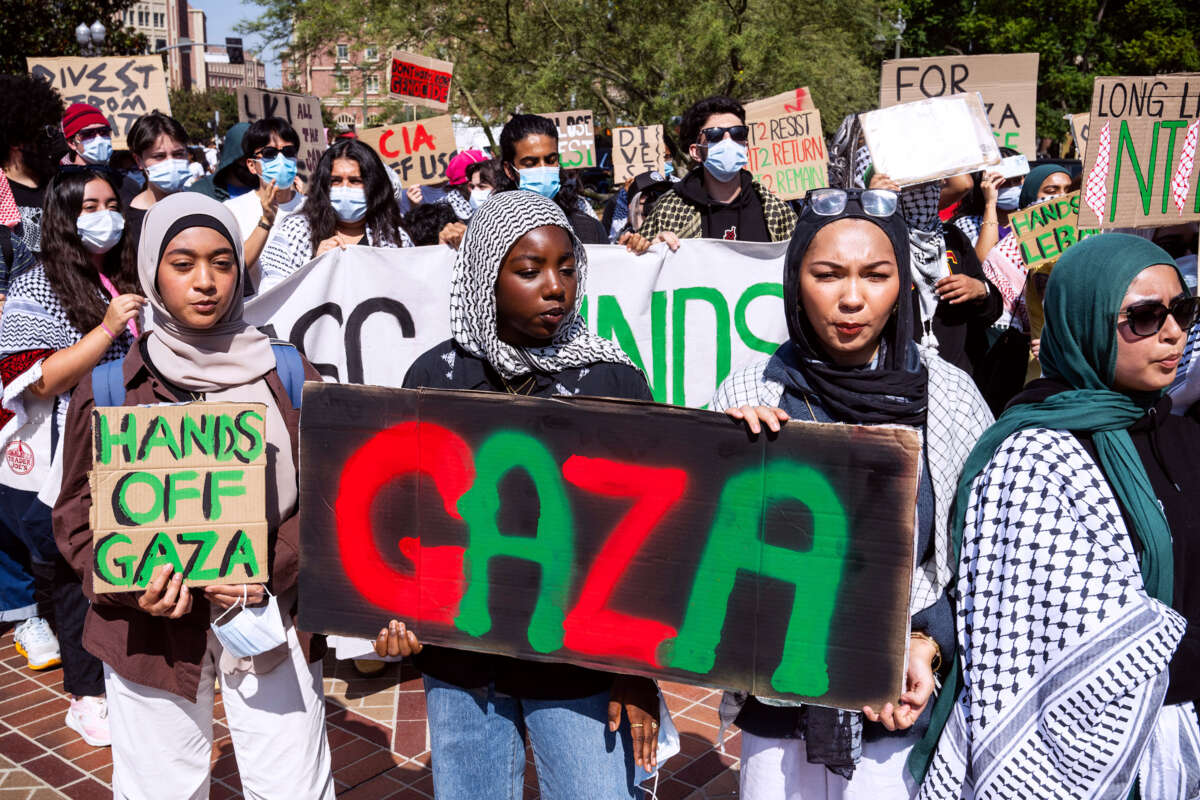
University of Southern California students walk out of class in support of Palestinians and the Boycott, Divestment, Sanctions movement on October 7, 2024, in Los Angeles, California.
Sarah Reingewirtz, Los Angeles Daily News / SCNG

Anew bill proposed in the California legislature threatens to undermine the rollout of ethnic studies classes in the state’s high schools. Assembly Bill (AB) 1468 is the latest installment in a series of legislation backed by pro-Israel organizations seeking to intervene in ethnic studies classrooms and silence Palestine-related speech in California schools.

“This latest bill is part of a continued effort by the [California] Legislative Jewish Caucus to impose ideological constraints upon ethnic studies as a field to disallow the critical teaching of Palestine within K-12 education in California,” Christine Hong, a professor of critical race and ethnic studies at the University of California (UC) Santa Cruz and co-chair of the UC Ethnic Studies Faculty Council (UCESFC) told Truthout.

The California Legislative Jewish Caucus is a pro-Israel group of lawmakers comprising over 16 percent of the State Assembly and 12.5 percent of the State Senate, enough to exercise leverage as a bloc of votes on the floor. Caucus members Sen. Josh Becker and Assemblymembers Dawn Addis and Rick Chavez Zbur introduced AB 1468 in February 2025.

While AB 1468’s authors are Democrats who have condemned the Trump administration’s attacks on public education, Lara Kiswani, executive director of the Arab Resource and Organizing Center (AROC), said the proposed bill would have similar effects as efforts in Republican-controlled states and on the federal level seeking to whitewash K-12 and college curricula and turn back the clock on civil rights progress.

“The Democrats and others who are championing these bills may not explicitly say themselves or even identify as part of the far right MAGA agenda, but it’s indisputable that what they are doing is in alignment with the broader attack on public education and the attack on anti-racist education, in particular,” Kiswani told Truthout.

CA Educators Are Resisting Anti-Palestine Bills Pushing “Academic Police State”
Activists say the bills will make public education more hostile for people already targeted by anti-Palestinian racism. By Marianne Dhenin , Truthout August 20, 2024


AB 1468’s lead sponsor is the Jewish Public Affairs Committee of California (JPAC), one pillar of whose policy framework is to “maintain a strong California-Israel relationship,” including through “combat[ing] campaigns to delegitimize and demonize Israel.” JPAC lists the Anti-Defamation League and other Zionist organizations among its members.

Last year, members of the California Legislative Jewish Caucus proposed a raft of bills meant to stifle Palestine-related speech in public schools and on college campuses. Among those was AB 2918, a predecessor to AB 1468. When a diverse coalition of educators and advocates mounted a pressure campaign and succeeded in having it shelved, sponsors vowed to reintroduce it this year. “AB 1468 is AB 2918, but on steroids,” Guadalupe Cardona, a high school educator and member of the Liberated Ethnic Studies Model Curriculum Consortium, told Truthout.

The new bill would require all ethnic studies curricula, instruction and instructional materials to undergo public hearings, be vetted by the state, and be posted on the Department of Education’s website. AB 1468 also outlines standards according to which ethnic studies materials should be reviewed, including mandating that instruction focus on “domestic experience and stories” and not cover “abstract ideological theories, causes, or pedagogies.”

In the proposed legislation, “there are so many layers of policing and surveillance that no other academic area has,” Tricia Gallagher-Geurtsen, co-chair of the San Diego Unified School District Ethnic Studies Advisory Committee and a lecturer in critical race and ethnic studies at UC Santa Cruz, told Truthout. “It’s absolutely unprecedented overreach, and it’s an arm of the state trying to censor what our children are learning [and] censor the truth of our students’ realities.”

Under AB 1468, the body responsible for vetting ethnic studies materials would be the California State Board of Education’s Instructional Quality Commission, whose current members include Sen. Ben Allen and Anita Friedman. Friedman is a board trustee of the American Israel Public Affairs Committee and executive director of Jewish Family and Children’s Services, an organization known for its efforts to silence discussions of Palestine and anti-Zionism in schools.

“It’s absolutely unprecedented overreach, and it’s an arm of the state trying to censor what our children are learning [and] censor the truth of our students’ realities.”

The proposed legislation is the newest front in a yearslong attack on ethnic studies in California, which became the first state to mandate an ethnic studies graduation requirement for high school students with AB 101 in 2021. That law requires public high school students to take ethnic studies to graduate, beginning with the class of 2030. Starting this year, all schools must offer the subject.

As a field, ethnic studies emerged from the student and social justice movements of the 1960s. When students of color went on strike at San Francisco State College in 1968, they demanded that the school strengthen its Black Studies Department and establish a School of Ethnic Studies to teach the histories and cultures of groups that had historically been ignored or erased from curricula. The students recognized that erasure as “an integral part of the racism and hatred this country has perpetuated upon nonwhite peoples.”

From the start, the field linked racism in the U.S. to the nation’s acts of colonialism, imperialism and foreign militarism, making it a target of political reactionaries. “This powerful analysis of racism, white supremacy, [and] the consequences of U.S. foreign policy is something that will lead to social justice, social change, and social movements and activism — and that is something that, for many, really makes them quite uncomfortable,” Natalia Deeb-Sossa, a professor of Chicana/o/x studies at UC Davis, told Truthout.

But it has also been a boon to students. Research shows that students who take an ethnic studies class engage more in school and are more likely to graduate and attend college. The classes have also been shown to boost the attendance and academic performance of students at risk of dropping out.

Ashlyn Bautista, a fourth-year undergraduate student at UC San Diego, experienced what she described as the life-changing effects of ethnic studies coursework when she first encountered the subject in college. “Never before did I think that my classrooms could be spaces of liberation and finding myself and reclaiming my own identity,” Bautista told Truthout.

There are four core disciplines within ethnic studies, each corresponding to a racialized group in the U.S.: Black Americans, Indigenous Americans, Chicanx or Latinx Americans, and Asian Americans and Pacific Islanders, which is meant to include Arab Americans. However, the inclusion of Arab American and Palestinian American histories and experiences in California’s ethnic studies curricula has been challenged since before AB 101 was even signed into law. A 2019 draft of the state model curriculum garnered pushback from pro-Israel groups, which claimed its inclusion of Israeli persecution of Palestinians was one-sided and that the mention of the Boycott, Divestment, Sanctions movement was antisemitic. A final revised model curriculum was published in 2021 — scrubbed of any mention of Palestine.

This erasure is problematic not only because Arab American histories and communities are linked to Palestine, but Hong explained, “Settler colonialism is an absolutely key analytic of ethnic studies.” The framework can help students understand the power structures that perpetuate the repression of Indigenous peoples and cultures, including Native Americans.

While the inclusion of Palestine in ethnic studies has garnered pushback from the start, attacks on the field and its educators have ramped up since Israel invaded Gaza in 2023. “Because we have elements in the legislature who want to defend Israel, they are willing to go so far as to censor curriculum for California students and teachers in defense of a foreign country that is currently committing a genocide,” Sean Malloy, a professor of history and critical race and ethnic studies at UC Merced, told Truthout.

According to Gallagher-Geurtsen, the attacks are already chilling speech. “I’ve spoken with high school and middle school teachers who are teaching ethnic studies in San Diego Unified [School District], and they say they’re afraid to teach the truth in their classrooms because of all this pressure from Zionist groups [and] racist, white-supremacist groups,” she told Truthout.

Hong and other UCESFC members have also “been on the receiving end of a pretty much endless barrage of hate mail,” Hong told Truthout. Jennifer Mogannam, a professor of critical race and ethnic studies at UC Santa Cruz, and Dylan Rodríguez, a distinguished professor in the Department of Black Study and the Department of Media and Cultural Studies at UC Riverside, shared anonymous emails they had received, which threatened them or members of their families with harm and included racist slurs and disturbing images. “My experience with the reaction against advocacy for Arab American studies to be included in the ethnic studies curriculum has been nothing short of violent,” Rodríguez said. Mogannam told Truthout she is targeted both as a practitioner of ethnic studies and as a Palestinian American.

Other educators have been subject to doxxing campaigns and even lawsuits, including Cardona, who was a named defendant in a lawsuit filed in 2022 by the Deborah Project on behalf of teachers and parents who accused Cardona and other defendants of using antisemitic content in their classrooms. The case was dismissed in November 2024 in a ruling that criticized the plaintiff’s lack of evidence and unpersuasive arguments.

Whether or not AB 1468 becomes law, Cardona told Truthout that the atmosphere of surveillance and harassment to which it is contributing is already hurting students and the field. “To be constantly bombarded with these negative messages and attacks, it takes a huge toll,” she said, noting that she knows educators who have chosen to stop teaching ethnic studies to protect themselves. She said she has also heard from parents whose children are now afraid to major in ethnic studies in college. “This is having a chilling effect, even on the next generation of classroom educators.”


Whether or not AB 1468 becomes law, the atmosphere of surveillance and harassment to which it is contributing is already hurting students and the field.

Groups including AROC Action, UCESFC, the Coalition for Liberated Ethnic Studies and Jewish Voice for Peace California are anchoring the opposition to AB 1468, building on years of organizing that succeeded in having AB 2918 shelved last year. Still, the group faces an uphill battle. Kiswani, Hong and Cardona each told Truthout that legislators seem unwilling to listen to their perspectives and expertise. “The Zionist perspective on what ethnic studies should be is what keeps getting centered over and over and over again,” Cardona said. “They’re just not listening, and they won’t move even an inch.” Neither Assemblymember Addis nor Assemblymember Zbur responded before deadline to Truthout’s requests for comment.

Nonetheless, Kiswani told Truthout that the coalition remains committed to quashing AB 1468 and seeing ethnic studies implemented without draconian restrictions so it can continue to benefit California students. “Many young people tell us every day, ‘Ethnic studies saved my life. I began to see myself differently, understand my history and my potential as part of my community and social movements,’” Kiswani said. “That’s what ethnic studies offers us, [and] we need that now more than ever.”

Note: A correction has been made to change “California Coalition for Liberated Ethnic Studies” to simply “Coalition for Liberated Ethnic Studies.”


This article is licensed under Creative Commons (CC BY-NC-ND 4.0), and you are free to share and republish under the terms of the license.



Marianne Dhenin is an award-winning journalist and historian. Find their portfolio or contact them at mariannedhenin.com
Israel Bombs UN Clinic, Killing 22, Days After Gaza Medics Found in Mass Grave


Footage circulating in the aftermath of the attack showed a newborn who was decapitated by the bombing.
April 2, 2025

A woman and child mourn next to the bodies of loved ones killed during an Israeli strike that targeted a UN clinic in the Jabalia camp for Palestinian refugees, at the Indonesian Hospital in Beit Lahia in the northern Gaza Strip on April 2, 2025.Omar Al-Qattaa / AFP via Getty Images

Israeli forces bombed a UN clinic in Gaza serving as a shelter for displaced Palestinians on Wednesday, killing at least 22 people just days after officials discovered 15 first responders who had been executed by Israeli soldiers and buried in a mass grave in Gaza.

The military bombed a UN Relief and Works Agency for Palestine Refugees (UNRWA) clinic in Jabalia refugee camp, resulting in a horrific scene, witnesses said and videos of the attack showed. According to the Gaza Government Media Office, the strike killed at least nine children — including a 1-week-old baby.

Footage of the massacre shows a man holding the body of a baby who was decapitated in the attack, reportedly born just weeks ago. The strike ignited a massive fire.

“I was sitting with my family and suddenly a missile targeted us. The dust was all over the place. The martyrs were burned. We found human flesh. We found human bones,” one witness told Al Jazeera. “Innocent women and children were killed. Separated heads and different body parts were everywhere. It is something beyond logic and beyond imagination.”

Other video footage posted by Palestinians online shows a young girl distraught and mourning her father, who had been killed in the attack.

Related Story

Israel’s Genocide Has Killed More Journalists Than WWI and WWII Combined: Report
At least 232 journalists have been killed amid the genocide, a new Costs of War report finds. By Sharon Zhang , Truthout April 1, 2025


“Targeting a medical clinic affiliated with a UN organization constitutes a full-fledged war crime that requires urgent international accountability,” the Gaza Government Media Office said.

As videos of the aftermath of the massacre circulated on social media, the Israeli military claimed that they were targeting Hamas and that the facility acted as a “terrorist command and control center.” Advocates for Palestinian rights said that this is an outright lie, and that the attack deliberately targeted civilians.

“I challenge the army to name the alleged target. In a few hours, they’ll dig up the name of a young man and falsely label him as Hamas,” said Euro-Med Human Rights Monitor Chairman Ramy Abdu. “Wake up, world — Israel is committing a full-scale genocide.”

The Government Media Office noted that Israeli forces have systematically targeted displaced Palestinians, striking at least 228 shelters for civilians amid the genocide. Israeli forces have also repeatedly targeted UNRWA facilities and staff, killing at least 284 UNRWA workers and damaging or destroying UNRWA buildings at least 650 times since October 7, 2023.

The attack comes just two days after the UN reported the discovery of a mass grave holding 15 paramedics in Gaza.

The group was made up of workers for Gaza’s civil defense agency, UNRWA and the Palestinian Red Crescent Society (PRCS). The workers were thought to be missing for days until the grave was found — nearby ambulances and a fire truck that had been destroyed and partially buried by Israeli forces. One PRCS medic is still missing, the group said.

Bashar Murad, PRCS’s health program director, told The Guardian that the bodies were buried in a way that showed that Israeli soldiers executed them with their hands tied.

“What is certain and very clear is that they were shot in the upper parts of their bodies, then gathered in a hole one on top of another, with sand thrown over them and buried,” Murad said.
Bread Lines, Empty Shelves, Bombed Farms — This Is How Starvation Feels in Gaza

In Gaza, many of us have come to fear the forced starvation that Israel is inflicting on us more than its bombs.
April 2, 2025

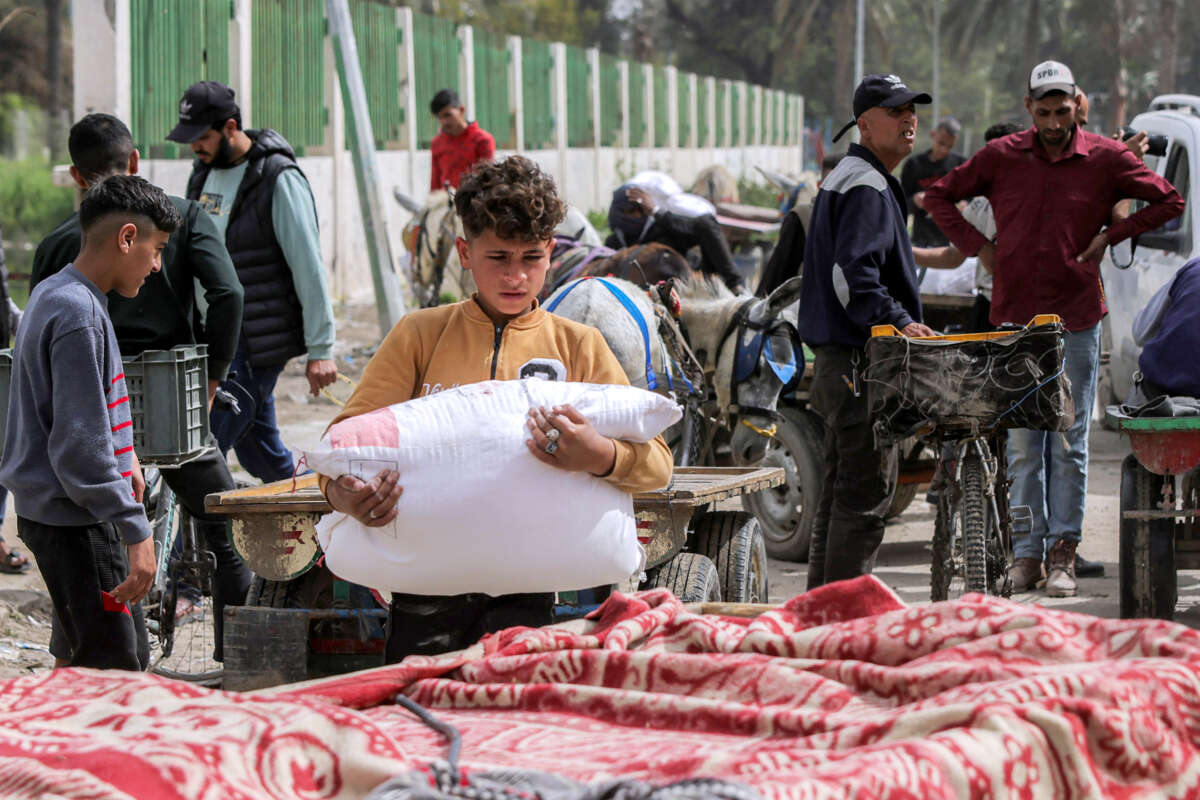
A boy loads a sack of flour provided by the Turkish disaster relief agency AFAD, received from a supply center affiliated with the United Nations Relief and Works Agency for Palestine refugees in al-Tifah neighborhood of Gaza City on April 1, 2025.BASHAR TALEB / AFP via Getty Images


Did you know that Truthout is a nonprofit and independently funded by readers like you? If you value what we do, please support our work with a donation.

Israel resumed its bombing campaign in Gaza in mid-March, putting a definitive end to a ceasefire it had already violated countless times. But even before the deadly airstrikes, those of us in Gaza had already found ourselves once again trapped in an endless cycle of fear and uncertainty due to the suffocating closure of border crossings that prevent goods and humanitarian aid from entering. We know all too well what the end of a ceasefire means: the end of any semblance of life in Gaza. The thought of relentless bombardment, continuous displacement and daily killings becoming our reality once more is unbearable. And even more terrifying is the return of starvation.

After enduring 15 months of extreme hunger starting in December 2023, many of us have come to see starvation as even more brutal than the more explicitly violent horrors of war. The memory of days when we could not find even a single loaf of bread to silence our empty stomachs haunts us. This fear has driven people across Gaza to rush to the markets, desperately trying to buy and store whatever food they can.

My father and I also went out to buy supplies on March 19, 2025, the day after the ceasefire ended. We bought flour, rice and legumes — foods that are both affordable and rich in fiber, helping to keep us full for longer. The markets were packed with panicked shoppers, all fearing this might be the last time they would see food on the shelves. Many essential items had already disappeared, including fruit, eggs, vegetables and chicken. Even during the ceasefire, these foods were available only in small quantities and lasted just a few days, as they spoil quickly without reliable electricity or refrigeration.

Canned food, particularly lunch meat and tuna, is becoming increasingly scarce and expensive, with a single can now costing $10. Though many of us in Gaza have grown weary of relying on canned food, we have no choice but to buy it in small quantities due to its high cost. In a bid to make the best of the situation, we experiment with whatever ingredients we have on hand. We’ve turned canned chicken into makeshift shawarma, burgers and even schnitzel, spicing it heavily in a desperate attempt to recreate the flavors of meals we once treasured — meals we were lucky to enjoy, albeit briefly, during the ceasefire.

As markets continue to empty due to the ongoing blockade, rationing has become a necessity. Breakfast is reduced to a single thyme-stuffed sandwich per person. Lunch consists of a small portion of rice, sometimes accompanied by a simple salad of tomatoes and cucumbers — when they can be found. Some farmers in Beit Hanoun and Beit Lahiya had started to grow these crops again during the ceasefire, but the resumption of Israeli military operations has destroyed much of their farmland, making fresh produce even scarcer.


In Gaza, We Now Ask: Will It Be the Cold, Hunger or Airstrikes That Kill Us?
This week many Palestinians fled their tents amid airstrikes and icy storms, but where will they go? Where is safety?  By Dalia Abu Ramadan , Truthout  March 25, 2025

Sometimes, to make our rice supply last as long as possible, we limit how often we eat it, relying instead on lentil soup or white beans cooked in tomato sauce. We cycle through the same few meals we survived on during the past months of starvation. Dinner is often skipped entirely to conserve food, with whatever little remains given to the children.

However, some families in Gaza can’t even afford food for their children, having lost their jobs due to the war and spent all their savings just trying to survive the past 17 months of war. My neighbor, Abu Mohamed, lost his job as a painter because of the war and used up all his savings on basic necessities — clothes, a tent and blankets — after being forced to evacuate to the south with nothing but a small bag on his back.

He said he relied entirely on humanitarian aid to feed his family, but since the recent closure of border crossings, the amount of aid reaching him has decreased significantly, and he has been struggling to get enough food. “I am living off the food my children can barely get from the few charity kitchens still operating,” he said. “If these kitchens stop working, my children and I will literally have nothing to eat.”

Some bakeries in Gaza had managed to keep producing bread, but only at a limited capacity. Getting bread became a grueling ordeal, with people standing in line for hours, hoping to secure a single bag. Every day at dawn, my brother Mohammed would head to the bakery, trying to be among the first 50 people in line. Sometimes, he waited more than five hours, only to return empty-handed when the bread ran out.

On April 1, the Bakery Owners Association announced that it had run out of flour and fuel, forcing bakeries across Gaza to close. This worsened the already severe food shortage.

The sight of people standing in long lines for bread is heartbreaking. At times, security struggled to keep the crowd in order, and things would quickly spiral out of control. I saw children being pushed and even kicked amid the chaos, crying as they fought to stay on their feet. Some collapsed from exhaustion — either from hours of waiting in the scorching heat or from the overwhelming pressure of the crowd.

For weeks, many people had rationed their remaining flour and firewood, relying on the bakeries for as long as they stayed open. However, on April 1, the Bakery Owners Association announced that it had run out of flour and fuel, forcing bakeries across Gaza to close. This worsened the already severe food shortage, leaving many without even basic food.

Knowing that our stored food won’t last much longer, the fear of having nothing left to eat becomes more real each day. If the border crossings remain closed, we will soon face a complete food shortage. Many are terrified that the next wave of starvation will be far worse than what we’ve already endured.

What makes this situation even more unbearable is that the ceasefire had briefly given us a taste of fresh, nutritious food — something we had been deprived of for so long. We began to believe that life might return to some semblance of normalcy, and that starvation would not return. But now, with Israel resuming the war, we find ourselves back in the same dire circumstances. Our bodies remain weak, still bearing the toll of 17 months of near-constant hunger. The brief reprieve we had during the ceasefire is fading, and with it, our hope for something better.

Access to food is a fundamental human right, yet we in Gaza are being deliberately deprived of it. The Israeli occupation has used starvation as a weapon of war, turning hunger into a tool to strangle life and break the resilience of an already exhausted people. This systematic deprivation is not a mere consequence of war but a deliberate policy aimed at crushing us. The world cannot turn a blind eye to this crime. Urgent action is needed to stop the cruel use of hunger as a means of oppression and to ensure that we have the basic right to survive, and live with dignity.

This article is licensed under Creative Commons (CC BY-NC-ND 4.0), and you are free to share and republish under the terms of the license.


Shahad Ali is an English literature student and writer from Gaza.
The dark side of psychiatry – how it has been used to control societies


Pictorial Press Ltd / Alamy Stock Photo

April 02, 2025


In his new book, No More Normal, psychiatrist Alastair Santhouse recalls an experience from the 1980s when he was a university student in the UK helping deliver supplies to “refuseniks” – Soviet citizens who were denied permission to leave the USSR. These people often faced harsh treatment, losing their jobs and becoming targets of harassment. Some were even diagnosed with a psychiatric condition called “sluggish schizophrenia”.

By the time Santhouse encountered this diagnostic category, sluggish schizophrenia had been kicking around psychiatry in the Soviet Union for some time. It first entered the diagnostic lexicon in the 1930s, coined to describe cases in which adults diagnosed with schizophrenia had displayed no symptoms of the disorder in childhood.

This notion of a symptomless disorder gave it tremendous value to Soviet officials in the 1970s and 80s, who wielded it ruthlessly against those who suddenly suffered from delusions of wanting a better society or hallucinatory desires to emigrate.

But they weren’t the only ones to wield psychiatry to repress and control. “Punitive” or “political” psychiatry has proven to be quite a useful tool in many parts of the world. One well-known case is that of Chinese political activist Wang Wanxing, who marked the third anniversary of the 1989 pro-democracy student protests in Tiananmen Square by unfurling his own pro-democracy banner on that same spot.

He was immediately arrested, jailed, and then diagnosed with “political monomania”: a “condition” characterised by the irrational failure to agree with the state. For treatment, he was confined for 13 years in a psychiatric hospital, part of the Ankang (“peace and health”) network of psychiatric institutions where dissidents like him were forcefully medicated and subjected to “treatments” such as electrified acupuncture.

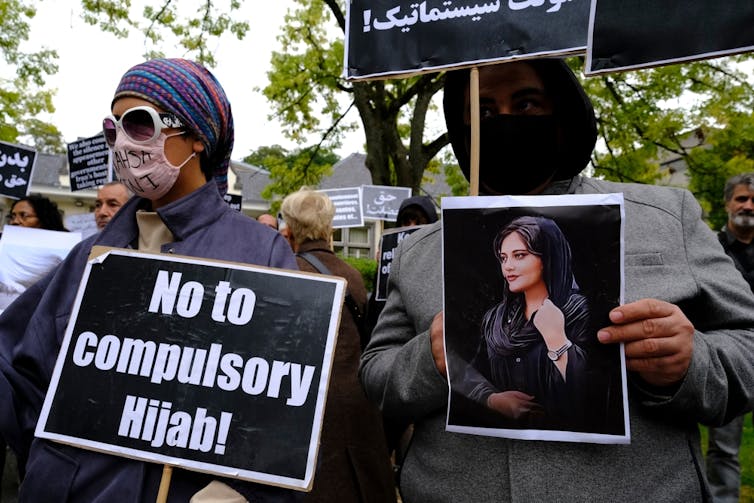
More recent applications of punitive psychiatry pop up periodically in our news feeds and disappear just as quickly. Some women who removed their headscarves or cut their hair as part of anti-government protests in Iran in 2022 were diagnosed with antisocial behaviour, forcefully institutionalised and subjected to “re-education”.


Women in Iran who protested against wearing hijabs were sent for re-education.
Alexandros Michailidis/Shutterstock


In 2024, in Russia, an activist’s choice of T-shirt, bearing the slogan “I am against Putin”, was considered so problematic that it required the summoning of a “psychiatric emergency team”.

As in the Soviet Union, the advantages of punitive psychiatry were not a little Orwellian: diagnosing a citizen with a mental illness made it easier to isolate their ideas, cut them off physically and discourage similar behaviour.
Not just authoritarian regimes

While authoritarian regimes certainly seem to wield it with the most abandon, punitive psychiatry has not been absent in the west. Indeed, at the height of the civil rights movement in the US, black activists protesting generations of racial prejudice and injustice were subjected to much the same diagnostic regime.

One example was the pastor and activist Clennon W. King, Jr. who was arrested and confined to a mental institution in 1958 after he attempted to enrol at the all-white University of Mississippi for a summer course. It was an act so inconceivable that the state of Mississippi thought he must be insane.

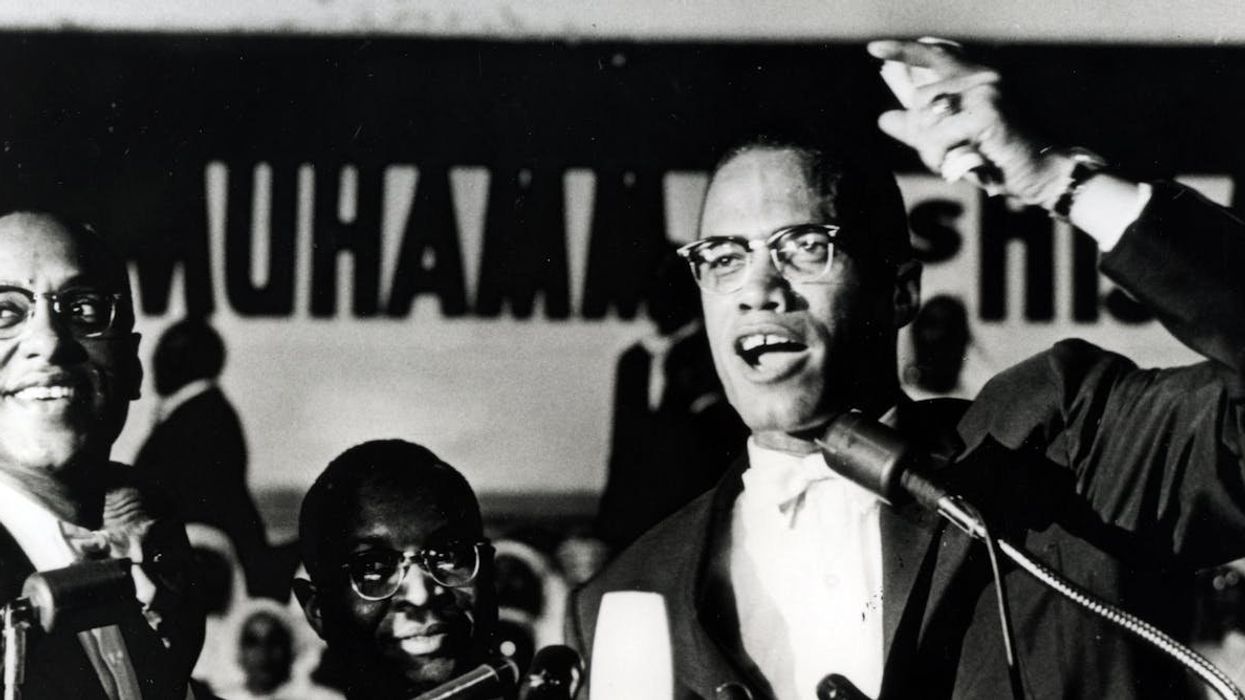
And, according to his FBI record, the militant civil rights leader Malcolm X was a “pre-psychotic paranoid schizophrenic”: a diagnosis made based on his activism and protest speech. As Jonathan Metzl has shown, the descriptors used to “diagnose” Malcolm X were later enshrined in the American Psychiatric Association’s 1968 updated definition of schizophrenia. Dissent in the US was as potentially pathological as dissent anywhere else.

Though each of these cases undoubtedly constitutes a gross misuse of psychiatry, the practice of making distinctions between what constitutes normal and abnormal behaviour is fundamental to the discipline. And, as Metzl’s account of the shifting definition of schizophrenia implies, psychiatric disorders are especially sensitive to social change.

Unlike most physical illnesses, psychiatric illnesses often have few physiological signs. Whereas a broken bone on an X-ray can be declared unambiguously broken, psychiatric problems are diagnosed in terms of constellations of symptoms, written on but not in the body, and recounted by patients in conversation with their therapist, or via a listing of these symptoms on one of the many diagnostic questionnaires that make up the psychiatric diagnostic arsenal.
Psychiatry’s bible

These are then matched to symptom clusters listed in psychiatry’s bible, the Diagnostic and Statistical Manual (DSM). Though in the everyday practice of mental health, there is much more to this process, in theory, the closeness of this match designates the absence or presence of disease.

That psychiatric diagnoses are unusually socially responsive is by and large unavoidable. Our mental health is itself socially specific, so much so that some have argued that something as apparently universal as depression, for example, is actually an illness specific to western or even just anglophone cultures.

Whether that hypothesis is true or not has no bearing on whether depression is in fact real. It only suggests what psychiatry intrinsically acknowledges already: that mental health has a critically significant social component.

As the use of psychiatry for these punitive purposes makes clear, this necessary malleability lends itself to abuse. The radical psychiatrists of the 1970s certainly believed so when they re-examined the very notion of normal, exposing its role in policing society and enforcing categories of exclusion. It’s how homosexuality ended up as a diagnosable psychiatric illness in the 1952 edition of the DSM – a pathology built by and for the norms of the American mainstream.

But it’s a malleability that can also lead to change in the opposite direction, where society – we, you and I – revisit and change these boundaries. Homosexuality was removed from the DSM in 1973, not because of any new scientific information, but because of a targeted gay rights activist campaign and, more indirectly, the slow shift over the intervening decades toward greater social inclusion.

In his book, Santhouse reflects on where we are now in psychiatry, at a time when there is, to quote his clever title, “no more normal”. Though the definition of normal is always in a state of flux, ours is a moment of diagnostic surfeit, in which mental health clinicians have had to cede space to a superabundance of resources that allow us – even encourage us – to diagnose ourselves.

And that makes this an interesting moment: one in which we explicitly see our vision of mental health being remapped onto the shifting politics of identity and inclusion that permeate now. Insofar as this forces us to reckon with the social aspects of our mental health in a more explicit way than we are used to, perhaps this is no bad thing.

Caitjan Gainty, Senior Lecturer in the History of Science, Technology and Medicine, King's College London

This article is republished from The Conversation under a Creative Commons license. Read the original article.

When greedy corporations want a stupid law, they come to Texas


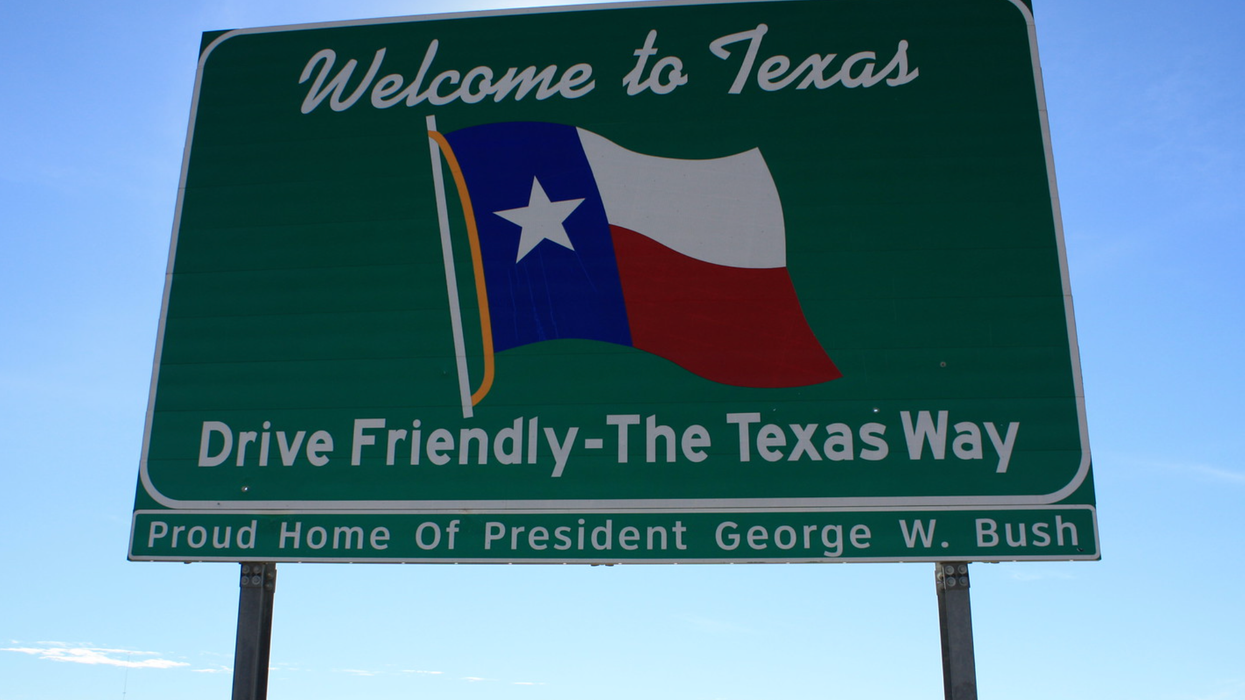
The Welcome To Texas sign, taken from the south (Texas) side of the New Mexico/Texas state line, halfway between Las Cruces (NM) and El Paso (TX).
 (Photo: David Herrera / Creative Commons)
April 01, 2025

Once again, my state's GOP hierarchy is leading the nation in creative ways to increase corporate power over people's rights. This time, lawmakers are rushing to protect corrupt executives from legal challenges by their own shareholders!

Their law would ban rank-and-file owners of corporate giants from suing their CEOs and other top officials for financial malfeasance. In particular, it's a heavy-handed attempt to prohibit shareholders from suing bosses who lavish shareholder funds on extravagant pay and luxury perks for themselves.

But leave it to Lone Star Republicans to make a bad law worse. Indeed, they say they only want to bar suits by "pesky" small investors -- people who own less than 3% of a corporation's stock. But that's a flimflam, since almost no one owns more than 3% of any big corporation. And the few who do are huge Wall Street operators and multibillionaires -- and they're not about to sue a fellow richie for being greedy.

The Texas law would effectively institutionalize a corrupt, closed-loop protection racket, freeing self-serving executives from internal accountability.

Speaking of corruption, who wrote this boondoggle? It's sponsored by Dustin Burrows, the top official of the Texas House, but he doesn't write bills -- he totes bills written by big campaign donors, corporate lobbyists, and right-wing extremists. In this case, he's working for all three.

This is Jim Hightower saying ... Burrows brags that his scam will be a boon for our state because it'll prompt CEOs everywhere to move their corporations here to take advantage of this law. Sure -- corporations are up to no good! Who needs 'em? And if they set a precedent in Texas, I guarantee you they'll be pushing it in your state next.

DO WE HAVE TO LET BRIGHT LIGHTS BLIND US TO STARRY NIGHTS?

Let us embrace the darkness.

Not the political dark ages being pushed on us by today's regressive right-wing forces, but nature's own pure darkness of night. Unfortunately, we Homo sapiens have largely blacked out nature's billions of beacons in the night sky, which have both dazzled and guided Earth's creatures for eons.

Ironically, the tool used to wash out natural light ... is light! In all cities and most towns, the glare of artificial lighting has pulled an impervious curtain across our sky. Especially garish (and entirely useless) is the lighting of corporate skyscrapers throughout the night with blinding spotlights that keep us from seeing the genuinely majestic view beyond.

I was lucky as a child to spend summer evenings on my Aunt Eula's farm, entranced as darkness fell and the celestial show began. But today, most children don't even know it's there. Indeed, 80% of Americans never see the stream of the Milky Way galaxy that is our home -- much less see the spectacular cosmic beams shining from trillions of miles beyond.

This doesn't mean we should just stumble around in the dark. We need light but try a little common sense. One, stop spotlighting buildings. Two, don't point outdoor lighting up at the sky -- shine it down on our streets, parking lots, stadiums, and porches where the illumination is needed. Three, remember that there's an off switch. Even small steps can make a big difference. After all, all we're giving up is bad lighting.

This is Jim Hightower saying ... We can have the light we need and still let nature's sky be the star. The good news is that towns, cities and even countries have begun adopting such sensible lighting policies. To help do this where you live, go to DarkSky International: darksky.org
Trump tariffs threaten Latin American steel industry


By AFP
March 31, 2025


Trabajadores en una fábrica de piezas para motores en Binzhou, China, el 14 de marzo de 2025. - Copyright AFP STR

Mauricio RABUFFETTI

Chile’s largest steel plant shut down last year, yielding to cheaper production in China.

Now, six months later, the tariffs that President Donald Trump has imposed on US imports of the metal threaten the livelihood of 1.4 million workers in Latin America.

As he did during his first term in office from 2017 to 2021, Trump is trying to protect American producers by making steel imports costlier with a 25 percent tariff that kicked in on March 12.

The United States imports 25 million tons of steel each year, and Canada is it main supplier, followed by Brazil and Mexico, each with products tailored to other industries like car manufacturing and construction.

The United States relies on Latin America for specialized steel products, said Ezequiel Tavernelli, head of the Latin American Steel Association, Alacero.

With the world awash steel production overcapacity, and China the main offender, the Trump tariffs will distort the market.

“The only thing they will bring is a flood of steel” that had been headed to the United States and is now rerouted to regions that are less protected and have less ability to defend themselves, like Latin America, said Tavernelli.

To explain the threat he gives these figures: in 2000 China exported less than 100,000 tons of steel a year to Latin America, but today it is more than 14 million tons. The growth is exponential.

Steel production in Latin America has been falling for three years. And the Chinese share of what is consumed is getting bigger and bigger .

And now, due to the Trump tariffs Latin American producers will not only lose market share in the United States but also miss out in some markets of their own region due to Chinese competition.

– When it rains it pours-


The numbers are jarring. China accounts for more than 45 percent of the world’s steel production capacity and produces 140 million tons it does not need.

It dumps this excess cheaply on the international market, says Alacero, which says China produces 23 percent of the world’s excess steel.

“The main problem of our region, and that of the United States, is world steel overcapacity,” Tavernelli told AFP.

And China behaves disloyally, he argued, by selling steel below cost thanks to government subsidies.

In September of last year Chile endured what Tavernelli is talking about. Its Huachipato steelworks, the country’s largest, shut down its blast furnaces for good.

With the smoke that drifted out of its chimneys went nearly 75 years of company history. Chinese steel was 40 percent cheaper and Huachipato simply could not compete.

Alacero argues that regionalization of supply chains — for instance, US steel producers, car makers and construction companies buy Latin American steel — “is the best way to defend against disloyal business by China and countries of Southeast Asia.”

As Brazil’s vice president Geraldo Alckmin, who is also the minister of development and industry, put it, the region’s goal should be to achieve “economic complementarity.”

Brazil and Mexico are negotiating with the United States to try to win exemptions from the US tariffs, and managed to pull this off during Trump’s first term in power.

In the same vein, Mexico’s iron and steel producers association, Canacero, said last month there is a high level of production integration between the US and Mexican steel industries and regional benefits should be the priority in the face of the threat of excess capacity of China and Southeast Asia.

So there is the risk that more long-standing firms like Huachipato will have to shut down, said Tavernelli, who insisted the countries of Latin America have to work together.
In the crosshairs: Trump opens up a new front in the history wars

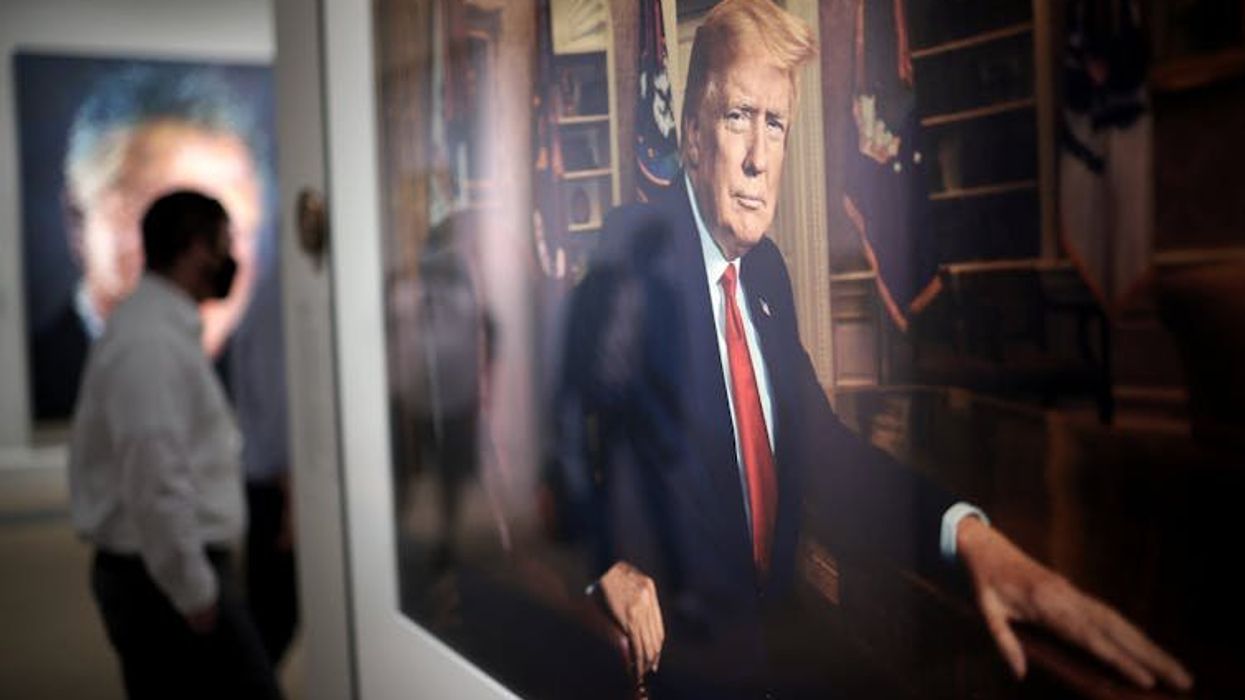
A portrait of President Donald Trump in the ‘America’s Presidents’ exhibition at the Smithsonian Institution’s National Portrait Gallery. Win McNamee/Getty Images

April 02, 2025

I teach history in Connecticut, but I grew up in Oklahoma and Kansas, where my interest in the subject was sparked by visits to local museums.


I fondly remember trips to the Fellow-Reeves Museum in Wichita, Kansas, and the National Cowboy & Western Heritage Museum in Oklahoma City. A 1908 photograph of my great-grandparents picking cotton has been used as a poster by the Oklahoma Historical Society.

This love of learning history continued into my years as a graduate student of history, when I would spend hours at the Smithsonian Institution’s National Air and Space Museum learning about the history of human flight and ballooning. As a professor, I’ve integrated the institution’s exhibits into my history courses.

The Trump administration, however, is not happy with the way the Smithsonian Institution and other U.S. museums are portraying history.

On March 27, 2025, the president issued an executive order, “Restoring Truth and Sanity to American History,” which asserted, “Over the past decade, Americans have witnessed a concerted and widespread effort to rewrite our Nation’s history, replacing objective facts with a distorted narrative driven by ideology rather than truth. Under this historical revision, our Nation’s unparalleled legacy of advancing liberty, individual rights, and human happiness is reconstructed as inherently racist, sexist, oppressive, or otherwise irredeemably flawed.”

Trump singled out a few museums, including the Smithsonian, dedicating a whole section of the order on “saving” the institution from “divisive, race-centered ideology.”

Of course, history is contested. There will always be a variety of views about what should be included and excluded from America’s story. For example, in my own research, I found that Prohibition-era school boards in the 1920s argued over whether it was appropriate for history textbooks to include pictures of soldiers drinking to illustrate the 1791 Whiskey Rebellion.

But most recent debates center on how much attention should be given to the history of the nation’s accomplishments over its darker chapters. The Smithsonian, as a national institution that receives most of its funds from the federal government, has sometimes found itself in the crosshairs.
America’s historical repository

The Smithsonian Institution was founded in 1846 thanks to its namesake, British chemist James Smithson.

Smithson willed his estate to his nephew and stated that if his nephew died without an heir, the money – roughly US$15 million in today’s dollars – would be donated to the U.S. to found “an establishment for the increase and diffusion of knowledge.”

The idea of a national institution dedicated to history, science and learning was contentious from the start

.
An 1816 portrait of British chemist James Smithson.
Heritage Art/Heritage Images via Getty Images


In her book “The Stranger and the Statesman,” historian Nina Burleigh shows how Smithson’s bequest was nearly lost due to battles between competing interests.

Southern plantation owners and western frontiersmen, including President Andrew Jackson, saw the establishment of a national museum as an unnecessary assertion of federal power. They also challenged the very idea of accepting a gift from a non-American and thought that it was beneath the dignity of the government to confer immortality on someone simply because of a large donation.

In the end, a group led by congressman and former president John Quincy Adams ensured Smithson’s vision was realized. Adams felt that the country was failing to live up to its early promise. He thought a national museum was an important way to burnish the ideals of the young republic and educate the public.

Today the Smithsonian runs 14 education and research centers, the National Zoo and 21 museums, including the National Portrait Gallery and the National Museum of African American History and Culture, which was created with bipartisan support during President George W. Bush’s administration.

In the introduction to his book “Smithsonian’s History of America in 101 Objects,” cultural anthropologist Richard Kurin talks about how the institution has also supported hundreds of small and large institutions outside of the nation’s capital.

In 2024, the Smithsonian sent over 2 million artifacts on loan to museums in 52 U.S. states and territories and 33 foreign countries. It also partners with over 200 affiliate museums. YouGov has periodically tracked Americans’ approval of the Smithsonian, which has held steady at roughly 68% approval and 2% disapproval since 2020.
Smithsonian in the crosshairs

Precursors to the Trump administration’s efforts to reshape the Smithsonian took place in the 1990s.

In 1991, the Smithsonian American Art Museum, which was then known as the National Museum of American Art, created an exhibition titled “The West as America, Reinterpreting Images of the Frontier, 1820-1920.” Conservatives complained that the museum portrayed western expansion as a tale of conquest and destruction, rather than one of progress and nation-building. The Wall Street Journal editorialized that the exhibit represented “an entirely hostile ideological assault on the nation’s founding and history.”

The exhibition proved popular: Attendance to the National Museum of American Art was 60% higher than it had been during the same period the year prior. But the debate raised questions about whether public museums were able to express ideas that are critical of the U.S. without risk of censorship.

In 1994, controversy again erupted, this time at the National Air and Space Museum over a forthcoming exhibition centered on the Enola Gay, the plane that dropped the first atomic bomb on Hiroshima 50 years prior.

Should the exhibition explore the loss of Japanese lives? Or emphasize the U.S. war victory?

Veterans groups insisted that the atomic bomb ended the war and saved 1 million American lives, and demanded the removal of photographs of the destruction and a melted Japanese school lunch box from the exhibit. Meanwhile, other activists protested the exhibition by arguing that a symbol of human destruction shouldn’t be commemorated at an institution that’s supposed to celebrate human achievement.


Protesters demonstrate against the opening of the Enola Gay exhibit outside the Smithsonian Institution’s National Air and Space Museum in 1995.
Joyce Naltchayan/AFP via Getty Images

Republicans won the House in 1994 and threatened cuts to the Smithsonian’s budget over the Enola Gay exhibition, compelling curators to walk a tightrope. In the end, the fuselage of the Enola Gay was displayed in the Smithsonian’s National Air and Space Museum. But the exhibit would not tell the full story of the plane’s role in the war from a myriad of perspectives.


Trump enters the fray

In 2019, The New York Times launched the 1619 project, which aimed to reframe the country’s history by placing slavery and its consequences at its very center. The first Trump administration quickly responded by forming its 1776 commission. In January 2021, it produced a report critiquing the 1619 project, claiming that an emphasis on the country’s history of racism and slavery was counterproductive to promoting “patriotic education.”

That same year, Trump pledged to build “a vast outdoor park that will feature the statues of the greatest Americans to ever live,” with 250 statues to mark the 250th anniversary of the Declaration of Independence.

President Joe Biden rescinded the order in 2021. Trump reissued it after retaking the White House, and pointed to figures he’d like to see included, such as Christopher Columbus, George Washington, Betsy Ross, Sitting Bull, Bob Hope, Thurgood Marshall and Whitney Houston.

I don’t think there is anything wrong with honoring Americans, though I think a focus on celebrities and major figures clouds the fascinating histories of ordinary Americans. I also find it troubling that there seems to be such a concerted effort to so forcefully shape the teaching and understanding of history via threats and bullying. Yale historian Jason Stanley has written about how aspiring authoritarian governments seek to control historical narratives and discourage an exploration of the complexities of the past.

Historical scholarship requires an openness to debate and a willingness to embrace new findings and perspectives. It also involves the humility to accept that no one – least of all the government – has a monopoly on the truth.

In his executive order, Trump noted that “Museums in our Nation’s capital should be places where individuals go to learn.” I share that view. Doing so, however, means not dismantling history, but instead complicating the story – in all its messy glory.

The Conversation U.S. receives funding from the Smithsonian Institution.

Jennifer Tucker, Professor of History, Wesleyan University

This article is republished from The Conversation under a Creative Commons license. Read the original article.
Christian Zionism hasn’t always been a conservative evangelical creed


Participants in a ‘United for Israel’ march, led by The Pursuit NW Christian Church, stand on the University of Washington’s campus in May 2024. 
Jason Redmond/AFP via Getty Images

April 02, 2025

During confirmation hearings, Mike Huckabee, President Donald Trump’s nominee as ambassador to Israel, told senators that he would “respect and represent the President,” not his own views. But the Baptist minister’s views on the Middle East – and their religious roots – came through.

“The spiritual connections between your church, mine, many churches in America, Jewish congregations, to the state of Israel is because we ultimately are people of the book,” he said on March 25, 2025, in response to a question from a senator. “We believe the Bible, and therefore that connection is not geopolitical. It is also spiritual.”

Huckabee is one of the GOP’s most prominentChristian Zionists” – a phrase often associated with conservative evangelicals’ support for Israel.

But Christian Zionism is much older than the 1980s alliance between the Republican Party and the religious right. American Christian attitudes toward the idea of a Jewish state have been evolving and changing dramatically since long before Israel’s creation.
Theologians for Israel

Zionism’s modern form emerged in the late 19th century. Its declared aim was to create a Jewish homeland in the region of Palestine, then under control of the Ottoman Empire. This was the land from which Jews were exiled in antiquity.

The “founding father” of the modern movement was Theodore Herzl, an Austro-Hungarian Jewish intellectual and activist who convened the first Zionist Congress in Switzerland in 1897. While most of the 200 attendees were Jews from various parts of the world, there were also prominent Protestant Christian leaders in attendance: church leaders and philanthropists who supported “the restoration of the Jews to their land.” Herzl dubbed these allies “Christian Zionists.”
Most delegates at the first Zionist Congress were Jewish, but the gathering also included Christians.
Universal History Archive/Universal Images Group via Getty Images

Catholic leaders, however, were not among the supporters of a Jewish state. The prospect of a Jewish state in the Christian Holy Land challenged the church’s view of Judaism as a religion whose people were condemned to permanent exile as punishment for rejecting Christ.

Eventually, in the wake of the Holocaust and the establishment of Israel, attitudes shifted. In 1965, reforms at the Vatican II council signaled a radical change for the better in Catholic-Jewish relations.

But it would be three decades until that change was reflected in the Vatican’s diplomatic recognition of the Jewish state.

In contrast, Protestants were more open to Jews’ aspiration to return. In 1917, the British foreign secretary published the Balfour Declaration, announcing government support for “the establishment in Palestine of a national home for the Jewish people.” With the British victory over the Ottoman Empire, the area soon fell under British control in the form of the League of Nations’ Mandate for Palestine.

In the U.S., the idea elicited enthusiasm among conservative Christians who hoped that the Jews’ return to Israel would help hasten the end times, when they believed Christ would return. Within a few years, Congress endorsed the Balfour Declaration.

Pastor W. Fuller Gooch summed up the evangelical reaction to the Balfour Declaration: “Palestine is for the Jews. The most striking ‘Sign of the Times’ is the proposal to give Palestine to the Jews once more. They have long desired the land, though as yet unrepentant of the terrible crime which led to their expulsion.” This “terrible crime” refers to Jews’ rejection of Jesus – one of multiple anti-Jewish tropes in the sermon.
Pivotal moment

Two decades later, prominent American theologian Reinhold Niebuhr declared himself a supporter of political Zionism. Unlike evangelicals, Niebuhr’s support for a Jewish state was based on pragmatic grounds: Considering the dangerous situation in 1930s Europe, he argued, Jews needed a state in order to be safe


.
A 1963 photo of Reinhold Niebuhr, one of the most influential theologians from the U.S.
AP Photo

In the early 1940s, Niebuhr wrote a series of articles titled “Jews After the War” for The Nation magazine. His biographer Richard W. Fox called these articles “an eloquent statement of the Zionist case: The Jews had rights not just as individuals, but as a people, and they deserved not just a homeland, but a homeland in Palestine.”

Thus, in the 1930s and ‘40s, two different types of American Christian Zionism emerged. Some liberal Protestants, while giving qualified support to Zionism, expressed concern for the fate of the Palestinian Arabs. Conservative evangelicals, on the other hand, tended to be more hostile to Arab political aspirations.

In 1947, on the eve of the United Nations’ vote on the partition of Palestine, Niebuhr and six other prominent American intellectuals wrote a long letter to The New York Times, arguing that a Jewish state in the Middle East would serve American interests. “Politically, we would like to see the lands of the Middle East practice democracy as we do here,” they wrote. “Thus far there is only one vanguard of progress and modernization in the Middle East, and that is Jewish Palestine.”

In 1948, the U.S. government, at President Harry Truman’s direction, granted the newly declared state of Israel diplomatic recognition, over the objections of State Department officials.

There were, of course, prominent Americans who objected to recognizing Israel, or to embracing it so strongly. Among them was journalist Dorothy Thompson, who had turned against the Zionist cause after a Jewish militant group bombed Jerusalem’s King David Hotel in 1946. These opponents made the case for supporting emerging Arab nationalism and Palestinian autonomy and asserted that recognizing Israel would deepen America’s entanglement in the unfolding Middle Eastern conflicts.

But by the late 1950s and ‘60s, American criticism of Israel was increasingly muted. Liberal Christians, in particular, viewed it as a beleaguered democratic state and ally.
Rightward shift

Conservative Christian Zionists, meanwhile, continued to often view “love of Israel” through a biblical lens.

In the late '60s, the American journal Christianity Today published an article by editor Nelson Bell, father-in-law of famous evangelist Billy Graham. Jewish control of Jerusalem inspires “renewed faith in the accuracy and validity of the Bible,” Bell wrote.


Rev. Jerry Falwell, on the right, listens as Israeli Prime Minister Benjamin Netanyahu gives a speech to a conservative Christian group in Washington in 1998.William Philpott/AFP via Getty Images

Fifteen years later, televangelist Jerry Falwell told an interviewer that Jewish people have both a theological and historical “right to the land.” He added, “I am personally a Zionist, having gained that perspective from my belief in Old Testament scriptures.”

These Christians, like some Jewish religious Zionists, saw “the hand of God” in Israel’s conquest of East Jerusalem during the Six-Day War of 1967. They considered any territorial compromise with Arab states and the Palestinians to be an act against God.

During the 1980s, as the Republican Party forged alliances with the emerging religious right, Israel would become a core cause for the GOP. Some liberal Jews who supported Israel grew alarmed by these ties and by the rightward shift in Israeli policies toward the Palestinians.

Yet this brand of Christian Zionism is clearly the forerunner to today’s – and holds sway in Washington. Today, 83% of Republicans view Israel favorably, compared with 33% of Democrats. Republicans in Congress are pushing to use the biblical terms “Judea and Samaria” instead of “the West Bank.” Evangelical Christian Zionists continue to call for support of the Israeli right and of settlers in the occupied territories.

And in Huckabee, they see a potential ambassador who shares their views.

In 2009, when Huckabee was considering a presidential campaign, he visited Israel and met with settler leaders. On hearing of Huckabee’s presidential aspirations, a rabbi said, “We hope that under Mike Huckabee’s presidency, he will be like Cyrus and push us to rebuild the Temple and bring the final redemption.” The rabbi was referring to the biblical story of Cyrus, King of Persia, and his proclamation that the exiled Jews be allowed to return to Zion.

Seven decades after the state of Israel’s founding, evangelical Christian Zionism’s influence is greater than ever. This turn to the political right is very far from the mid-20th century Zionism of Truman, Niebuhr and the Democratic Party.

Shalom Goldman, Professor of Religion, Middlebury

This article is republished from The Conversation under a Creative Commons license. Read the original article.

'Downright scary': How Trump is destroying institutions that 'spur US innovation'


Alex Henderson 
April 02, 2025
ALTERNET


Under Mao Tse Tung, the People's Republic of China was a communist dictatorship. And it is still a one-party authoritarian state ruled by the Chinese Communist Party. But post-Mao China replaced old-school Maoism with more of a crony capitalist system long ago, and a great deal of U.S. manufacturing takes place in Mainland China.

In his April 2 column, conservative-leaning New York Times opinion writer Thomas Friedman warns that China is making a point of turning out high-skilled, high-tech workers at a time when the U.S. is discouraging scientific "innovation."


Friedman, who recently visited Shanghai, argues, "It's downright scary to watch this close up. President Trump is focused on what teams American transgender athletes can race on, and China is focused on transforming its factories with AI so it can outrace all our factories. Trump's 'Liberation Day' strategy is to double down on tariffs while gutting our national scientific institutions and work force that spur U.S. innovation. China's liberation strategy is to open more research campuses and double down on AI-driven innovation to be permanently liberated from Trump's tariffs."

Friedman adds, "Beijing's message to America: We're not afraid of you. You aren't who you think you are — and we aren't who you think we are."

The Times columnist laments that Trump's steep new tariffs will do nothing to help U.S. businesses.

"I agreed with Trump regarding his tariffs on China in his first term," Friedman explains. "China was keeping out certain U.S. products and services, and we needed to treat Beijing's tariffs reciprocally. For instance, China dragged its feet for years on letting U.S. credit cards be used in China, waiting until its own payment platforms completely dominated the market and made it a cashless society, where virtually everyone pays for everything with mobile payment apps on their phones…. My problem is with Trump's magical thinking that you just put up walls of protection around an industry, or our whole economy, and — presto! — in short order, U.S. factories will blossom and make those products in America at the same cost with no burden for U.S. consumers."


Friedman adds, "For starters, that view completely misses the fact that virtually every complex product today — from cars to iPhones to mRNA vaccines — is manufactured by giant, complex, global manufacturing ecosystems."

Thomas Friedman's full New York Times column is available at this link (subscription required).
Elon Musk 'being driven visibly insane' by anti-Tesla protests: analysis

AFRIKANER SUPREMACIST


Brad Reed
April 2, 2025
RAW STORY


Tesla CEO Elon Musk has publicly raged in recent weeks about the protests being lodged against his flagship electric car company, and Mother Jones writer Timothy Murphy believes that the demonstrations have been successful beyond their organizers' wildest dreams.

Murphy in particular points to a recent rant from Musk demanding that billionaires whom he baselessly suspects of funding the protests to be arrested.

"This is a bit authoritarian, yes, but just as importantly it is pathetic," Murphy contends. "Suggesting that George Soros and the founder of LinkedIn should be arrested after an old lady shouted at a car is one of the softest moments in recent American history. This is not the gesture of a man who is impervious to protests. It is the response of an oligarch who is being driven visibly insane by them."

ALSO READ: Trump says Elon Musk will be out of the White House 'soon': report

He also thinks that Democrats need to start using Musk's angry ravings about the protests against him.

"Musk’s spiraling is an asset," he writes. "He is both deeply unpopular and out of control; his response to opposition is to descend deeper into the paranoia that got him there."

For evidence of this, Murphy points to the way that Musk injected himself directly into the Wisconsin state Supreme Court race by holding rallies in the state where he handed out $1 million checks in a scheme that many legal experts say likely breaks the state's laws against paying people in exchange for votes.

"Musk made the election a referendum on himself, turnout surged, and the Democrat won in a landslide," he argues.

All of this leads Murphy to conclude that Musk "cannot take the heat" and recommends that his opponents wage psychological war against him.

"He has not just the taste and sensibilities of a boy, but the temperament of one," he writes. "He throws a fit out when things don’t go his way. He wilts. This is someone who can be beat."


'International backlash': Elon Musk’s 'toxic' politics blamed as Tesla suffers worst sales decline ever
April 02, 2025
ALTERNET

Billionaire Tesla/SpaceX/X.com leader Elon Musk is the richest man in the world and a prominent figure in U.S. politics. President Donald Trump chose Musk to head an advisory group called the Department of Government Efficiency (DOGE), which is helping the Trump Administration orchestrate mass layoffs of federal government workers.

But Musk is being reminded that his policies are not universally loved. Musk poured over $20 million into a Wisconsin Supreme Court race, yet the conservative candidate he backed, Judge Brad Schimel, lost to his liberal opponent, Judge Susan Crawford, by roughly 10 percent in an election held on Tuesday, April 1. Anti-Musk protests are taking place in both the U.S. and Europe, and according to CNN, Tesla is suffering its worst sales decline ever.

In an article published on Wednesday, April 2, CNN's Chris Isidore reports, "Tesla sales plunged 13 percent in the first three months of this year, as the company reported the largest drop in deliveries in its history by far, amid backlash against CEO Elon Musk and as growing competition from other automakers' electric vehicles took a large bite out of demand for its EVs. Tesla reported that it delivered 336,681 cars in the quarter, compared to 386,810 in the first three months of last year. The Wednesday data represented the company's worst sales in nearly three years — a drop of 50,000 vehicles from a year ago."

Tesla's declining sales are a major topic on the Musk-owned X.com, formerly Twitter.

Some MAGA Republicans on X are claiming that Tesla's declining sales are no big deal, but other X users see Tesla's problems as the result of an anti-MAGA backlash.

The MeidasTouch Network tweeted, "TESLA SALES IN COLLAPSE Tesla suffered its biggest sales decline in the company's history as sales fell 13% in the first quarter amid massive backlash against Elon Musk. Tesla reported that it delivered 50,000 fewer cars from a year ago, and fell 72,000 cars short of analyst expectations — despite providing incentives such as massive price cuts and zero financing."

Writer Greg Cantwell argued, "Imagine what would have happened to Apple if Steve Jobs decided to spend his days firing middle class workers and pulling social security and Medicare from elderly folks. When your CEO is the avatar of your brand, and the CEO becomes a toxic a------, the brand suffers."

Bloomberg TV observed, "Tesla sales fell 13% in the first quarter, dragged down by international backlash against Elon Musk."

Author Holger Zschaepit wrote, "OUCH! #Tesla sales drop to lowest level since 2022 amid growing anti-Musk backlash. In Q1 2025, the company sold 336,681 vehicles, a 13% decline YoY and the lowest quarterly total since Q2 2022. That figure also came in well below analyst expectations for over 390,000 units sold. (BBG)."

Market strategist Bladimir Ruiz posted, "Tesla’s Q1 2025 slowdown is more than just a number — it's a turning point. Deliveries dropped to 2022 levels, far below expectations, amid rising Musk backlash. Is Tesla's competitive edge fading? The next strategic moves will be critical."

X user Frederick Barwell posted, "Oh dear what a shame (for) Elon to suffer and lose for being an evil selfish liar."

Another X user, Marcos Monzon, tweeted, "Elon is going to lose @Tesla just like he lost Wisconsin."


'Explain that to the American people': Fox host confronts Musk over DOGE conflicts of interest


Image via Screengrab.

Ailia Zehra
April 02, 2025
ALTERNET


Tech billionaire and Department of Government Efficiency (DOGE) head Elon Musk dodged a question Tuesday about his conflicts of interests as a White House advisor who continues to run his businesses while working the federal government.

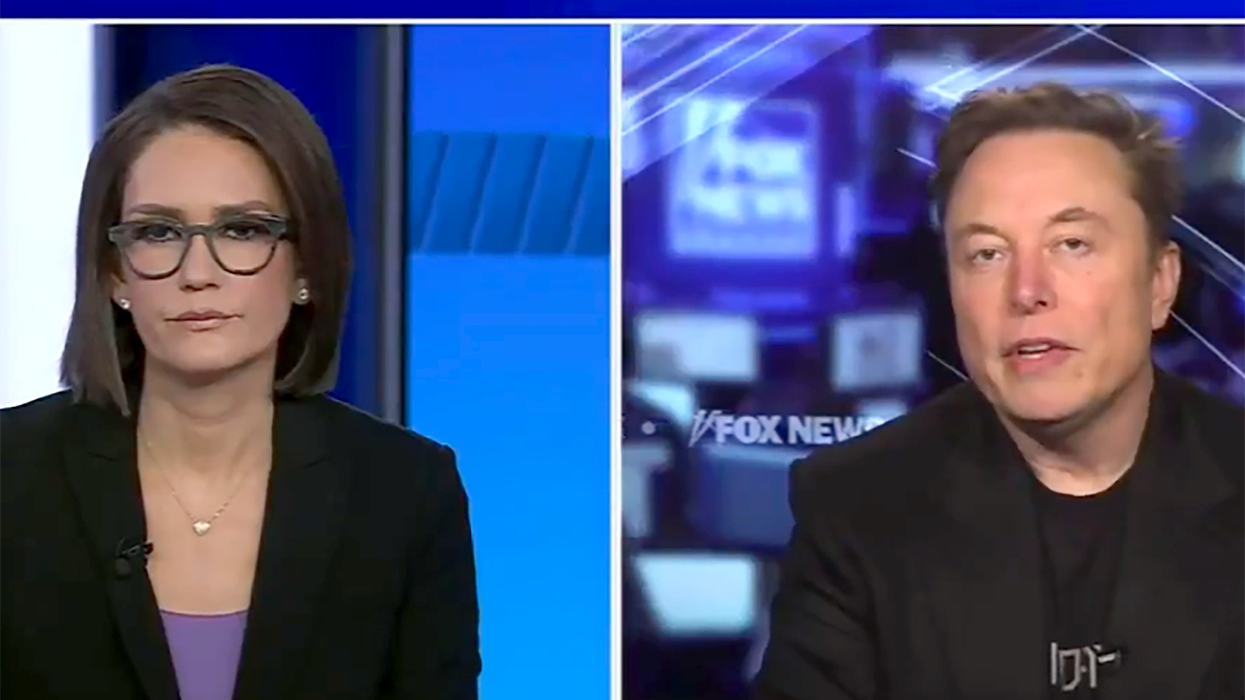
“You’ve been making cuts to a lot of the agencies that have open investigations and regulatory battles with your companies. At the same time, you continue to get billions in government contracts. Tesla gets billions in subsidies. How do you explain that to the American people?” Fox News host Jessica Tarlov asked Musk on her show.

Musk did not directly address the questions, but said DOGE was an “open book.”

READ MORE: 'Warning to the GOP': WSJ sounds alarm over 'MAGA backlash'

“If anyone has a concern about any one of those actions, they can bring that up,” he said.

Still, the DOGE head didn’t seem to have a clear answer to her question.

Amid the Trump administration and DOGE’s efforts to cut the size of the federal government, employees have been terminated from multiple agencies, including the National Labor Relations Board (NLRB), Environmental Protection Agency, Federal Aviation Authority, Securities and Exchange Commission, Food and Drug Administration and U.S. Department of Transportation.

The NLRB has initiated several cases against Musk's businesses, including a claim that SpaceX unlawfully terminated eight workers in 2022 for an open letter their lawyers stated was a protest against Musk's "inappropriate, disparaging, sexually charged comments" on Twitter. These cases are still in progress, and the agency has recorded 14 active unfair labor practice cases against Tesla.

But in February, the NLRB was essentially shut down after President Donald Trump fired one of its board members and left it without the quorum it needs to function.

Since Trump’s inauguration in January, Musk has been wielded significant influence in the new administration.

In January, Trump dismissed the inspector general of the Transportation Department shortly after the National Highway Traffic Safety Administration began investigating accidents associated with a mobile app that allows Tesla drivers to control their cars remotely. Musk is the CEO of Tesla.

Moreover, Michael Whitaker, the FAA administrator, resigned on Inauguration Day after Musk sought his departure. Whitaker had suggested imposing a $600,000 fine on Musk’s aerospace company SpaceX for allegedly failing to adhere to safety regulations.


However, on Monday, Trump indicated the billionaire’s time in government might be coming to a close.

Trump said Musk should remain at the White House as long as he is willing to manage DOGE, but added that he wants to “go back.”

"I think he's been amazing, but I also think he's got a big company to run," Trump told reporters in the Oval Office. "And at some point, he's going to be going back. He wants to."

Watch the video below or at this link.