It’s possible that I shall make an ass of myself. But in that case one can always get out of it with a little dialectic. I have, of course, so worded my proposition as to be right either way (K.Marx, Letter to F.Engels on the Indian Mutiny)
Thursday, April 03, 2025
WWIII
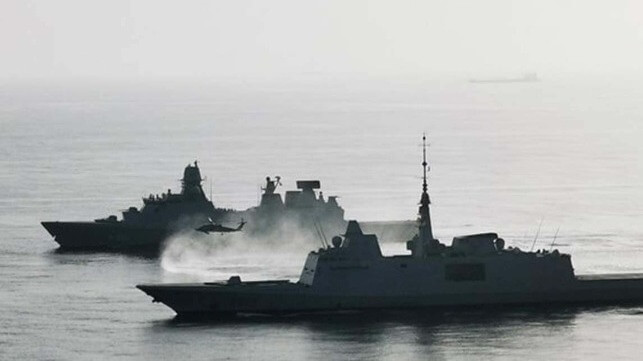
Denmark Makes "Urgent" Plans to Buy Two Dozen Naval Vessels
As the security situation in the Baltic grows more complex, Denmark plans to bulk up its navy with two dozen new vessels and an array of unmanned systems.
"The naval battlefield is characterized by a more complex risk and threat picture than before, rapid technological development and a Russia that has become more willing to escalate its course towards the West. Therefore, with the naval plan, we are initiating several urgent acquisitions that address specific challenges and threats that we face now and in the coming years," said Minister of Defense Troels Lund Poulsen.
The "urgent" track includes acquirting drones, unmanned units and equipment for subsea infrastructure monitoring. The risk of covert attacks on the seabed is real: NATO nations in the Baltic have experienced repeated subsea cable damage from merchant vessel anchor-dragging, some of which is believed to be deliberate. In addition, unidentified suspects blew up three of the four Nord Stream pipelines under the Baltic in 2022, an unprecedented maritime security breach.
The order list includes four multipurpose ships that can be used for maritime surveillance, pollution response and mine laying. Denmark's existing pollution-prevention vessels are nearing end of life, and "it is common sense that the [replacement] vessels can assist with naval military tasks such as maritime surveillance, monitoring of critical underwater infrastructure and mine laying in light of the security policy situation," said Minister of Public Security Torsten Schack Pedersen.
The Danish Navy's Home Guard will also get 21 new vessels for patrol duties. Down the road, the newbuild program includes options for buying a new class of frigates and vessels for open-ocean operation in the Arctic and the North Atlantic.
Given recent tensions over Danish-controlled Greenland, U.S. weapons systems appear unlikely to make the naval procurement list. The chairman of Denmark's parliamentary defense committee said last month that he regretted buying $3 billion worth of American-made F-35 fighters, because the U.S. could potentially shut off the parts supply chain for leverage.
"Buying American weapons is a security risk that we cannot run. We will make enormous investments in air defense, fighter jets, artillery, and other weapons in the coming years, and we must avoid American weapons if at all possible," said Rasmus Jarlov of the Conservative People's Party.
Dredger Pulls 500-Kilo WWII Bomb From the Bottom in Koblenz
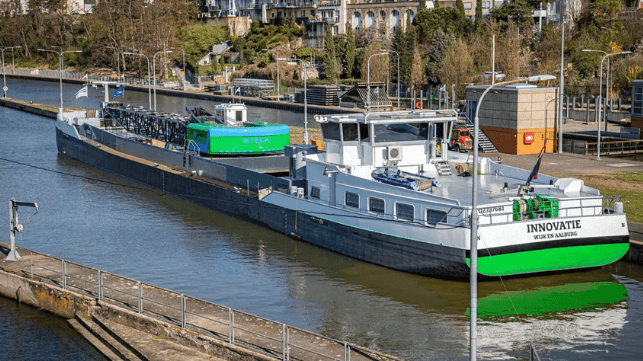
Dredger Innovatie awaiting the defusing operation (City of Koblenz / Andreas Egenolf)
On Tuesday, a dredger working on the Rhine pulled up a large bomb dating back to World War II, prompting an immediate security response.
The dredge Innovatie was working near the Pfaffendorf Bridge in Koblenz when the crew discovered a 500-kilo WWII bomb, which had inadvertently been hauled aboard. The bomb had two intact detonators.
For safety, the dredge was moved to the nearby Koblenz Moselle lock. The bomb can't be safely removed, according to the Rhineland Palatinate EOD squad, so it will have to be defused on board the ship.
Since this is an inherently dangerous operation, the dredger will be moved to a less populated area on the Moselle, on the outskirts of town. 1,000 residents will be evacuated, including staff and students at an elementary school and a daycare. The city of Koblenz said in a statement that it would set up alternate accommodations for those affected by the evacuation order. The defusing is scheduled for Friday, and the area will be cleared out by 0830.
It is the second time that workers have found a large WWII bomb at the Pfaffendorf Bridge construction site. The last one - a 250-kilo U.S. Air Force bomb - was discovered in September, and was relocated to a secure area for a controlled detonation.
During the Second World War, Koblenz was the home of the command post of German Army Group B. Like many German cities, its downtown core was heavily bombed by the U.S. Air Force and Royal Air Force in the latter years of the war.
Bombing damage in downtown Koblenz, 1944. The Pffafendorf Bridge, where the bomb was dredged up, is visible at lower left (RAF)
USAF bombers over Koblenz, 1944 (USAF)
USCG Heavy Icebreaker Polar Star Returns Home After 128-day Deployment
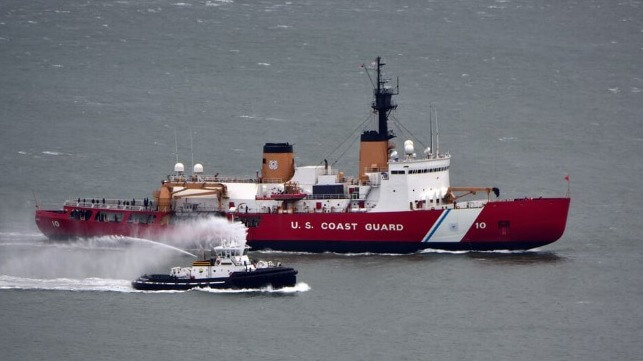
Polar Star arriving back in the U.S. after her 128-day deployment (USCG)
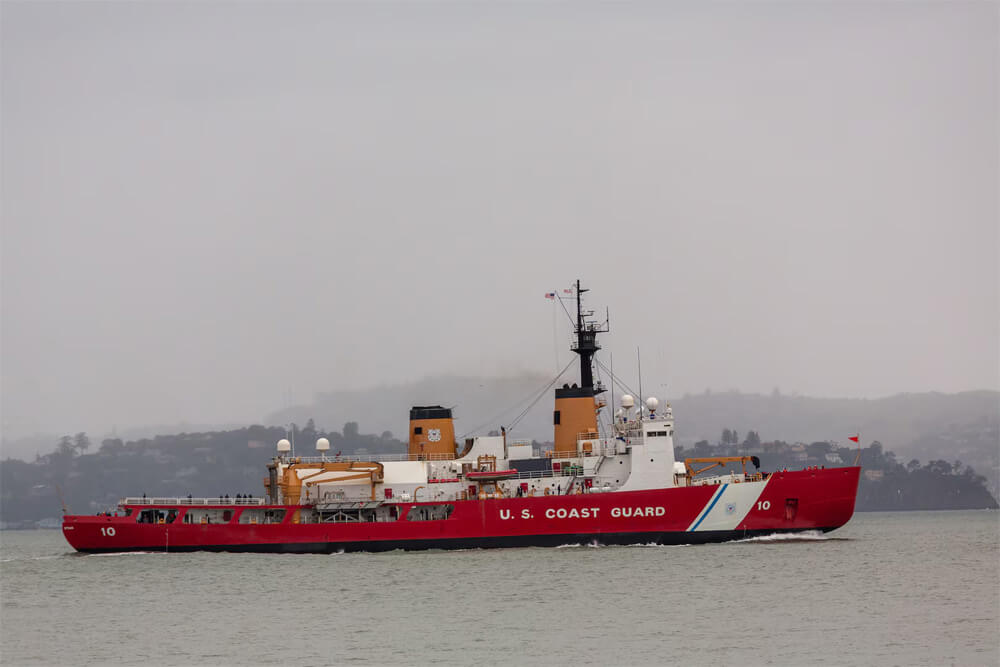
The only heavy icebreaker in the U.S. Coast Guard fleet USCG Polar Star arrived back in San Francisco completing her annual deployment to Antarctica and now she is preparing for the final phase of her ongoing life extension. Commissioned in 1976, the USCG needs to keep her operation until at least 2030 when the much-delayed next-generation heavy icebreaker is anticipated to be delivered.
Polar Star departed Seattle bound for Antarctica on November 22, 2024. She traveled over 25,000 miles through the North Pacific, South Pacific, and Southern Oceans returning to San Francisco on March 30. It was a 128-day deployment to Antarctica in support of Operation Deep Freeze (ODF) 2025, the annual joint military service mission to resupply and maintain the United States Antarctic Stations.
The vessel provides heavy icebreaking capabilities to facilitate sealift, seaport access, bulk fuel supply, and cargo handling for two of three permanent U.S. research stations in Antarctica, with NSF McMurdo Station being the largest. The cutter’s icebreaking capabilities enable the safe delivery of critical supplies to sustain year-round operations and support international partnerships in the harsh Antarctic environment.
In Antarctica, this year the cutter encountered 14 miles of fast ice up to six feet thick. At a length of 399 feet, Polar Star is 13,500 tons and has six diesel and three gas turbine engines producing up to 75,000 hp. This gives her the capability of breaking through ice up to 21 feet (6.4 meters) thick and can steam continuously through 6 feet (1.8 meters) of ice at 3 knots.
The only USCG heavy icebreaker, 49-year-old Polar Star will start the final phase of her life extension program (USCG)
During this year’s deployment, Polar Star created a navigable route and cleared Winter Quarters Bay for two cargo vessels and HMNZS Aotearoa to reach NSF McMurdo Station. While operating in McMurdo Sound, Polar Star, and Aotearoa conducted an at-sea crew exchange to build a shared understanding of each vessel’s unique capabilities in the polar regions.
At the conclusion of vessel operations at McMurdo Station, the cutter departed the Antarctic region on March 3 after 60 days. Polar Star made two logistical stops in Pearl Harbor, Hawaii, and Sydney en route to Antarctica. On its journey back to the United States, Polar Star moored in French Polynesia for a community relations stopover.
“But our work isn’t done," said Capt. Jeff Rasnake, Polar Star’s commanding officer. “As we wrap up ODF 25, we must quickly transition to the first phase of ODF 26 – heavy depot maintenance. There’s no time to waste as we work to ensure Polar Star is ready to roll into her 50th year of service.”
Polar Star will enter the final phase of its five-year Service Life Extension Project which is being conducted at Mare Island Dry Dock in Vallejo, California. It calls for recapitalizing targeted systems, including the cutter’s propulsion, communication, machinery control, and auxiliary systems, and conducting significant maintenance to extend the cutter’s service life. Each phase of the life extension has been coordinated so that operational commitments, like Operation Deep Freeze missions in Antarctica, would still be met.
According to the Coast Guard, “Completing SLEP will significantly mitigate the risk of lost operational days due to unplanned maintenance or system failures by replacing obsolete, unsupportable, or maintenance-intensive equipment.”
Next year’s Operation Deep Freeze will be Polar Star’s 29th and will coincide with 50th anniversary of her commissioning.
StarCruises Relaunches in Asia Three Years After Bankruptcy
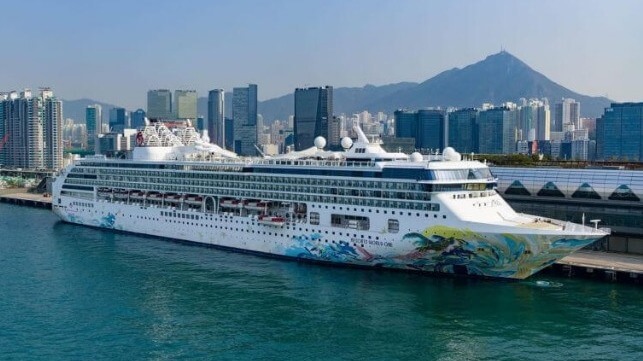
StarCruises relaunches with the former Resorts World One and the newly acquired Star Navigator from P&O (RWC)
Three years after the bankruptcy of Genting Hong Kong which resulted in the collapse of both Star Cruises and Dream Cruises the corporation has relaunched the brands. Earlier this year they announced plans to rebrand away from Resorts World Cruises back to the traditional brand names as part of the future growth strategy for the company.
Star Cruises was launched 30 years ago and became known as one of the pioneers of modern cruising in Asia. The brand went on to build cruise ships at Meyer Werft in Germany and in 2000 acquired the faltering Norwegian Cruise Line which had been one of the pioneers in North America. After rehabilitating Norwegian including the introduction of “freestyle cruising” (cruising without schedules or assigned dining arrangements) the company also launched Dream Cruises in Asia as a premium brand.
The 2022 bankruptcy of the German shipyard owned by the company, MV Werften, caused the collapse of the parent company and its cruise lines. The ships were sold but Genting was able to reestablish the business as Resorts World Cruises with two of its former ships. Last year, the company acquired the 77,400 gross tons built in 1997 by Fincantieri and operates as P&O Cruises Australia’s Pacific Explorer.
Renamed Star Voyager and having completed a $50 million refit, the cruise ship returned to service on March 26 in Singapore and March 29 in Indonesia. The ship will be sailing a circuit between Singapore, Jakarta, Melaka, and Ho Chi Minh City officially relaunching the brand as StarCruises. She is joined by the rechristened Star Navigator (77,300 gross tons), introduced in 1999 as SuperStar Virgo. She resumed sailing in 2023 as Resorts World One and operates seasonally from Singapore and Taiwan.
“We are thrilled and honored to return to our roots with the launch of the revitalized StarCruises and Dream Cruises brands, offering an enhanced cruising experience," said Michael Goh, President of StarCruises and Dream Cruises. “To celebrate this milestone, we are also excited to introduce the Star Voyager, as she embarks on her maiden voyage from Singapore, exploring the wonders of Southeast Asia.”
StarCruises will be positioned as an affordable cruise brand with the two ships. The group says its focus will be on ships with accommodations for approximately 2,000 passengers.
Dream Cruises was also restarted as the premium brand within the group. It will continue to operate the Genting Dream (150,600 gross tons). The ship was built for the company by Meyer Werft and entered service in 2016. It sails year-round from Singapore.
A.P. Moller Holding Reverses Course Offering to Buy Svitzer
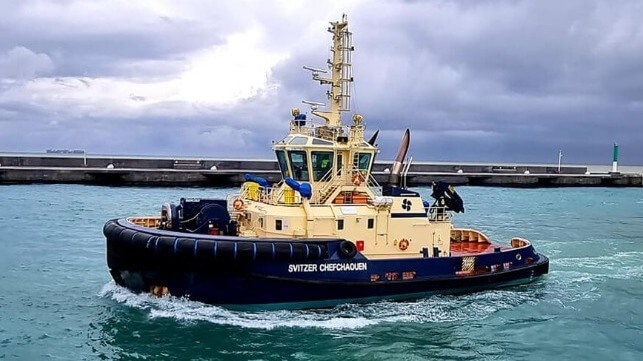
APMH says private ownership would support Svtizer's growth (Svitzer file photo)
Denmark's A.P. Moller Holding (APMH), an investment company and the parent company of the A.P. Moller Group, believes that tug and towing company Svitzer has failed to gain a proper valuation from the investment community. A year after the company was spun off from Maersk, the parent company now wants to take Svitzer private in a deal valued at about 9 billion kroner ($1.3 billion).
Svitzer, which had been part of A.P. Moller-Maersk for 45 years, demerged from the shipping giant last year in a move that was described as a “natural next chapter” for the towage company’s growth journey. Listed on the Copenhagen Stock Exchange, APMH is currently the largest shareholder in Svitzer with a 47 percent stake and it is offering a 31.3 percent premium compared to the three-month volume-weighted average price for the remaining shares, or DKK 285 (approximately $41.25) per share.
APMH says that the listing has done little to create the desired platform for growth that is essential for maintaining Svitzer’s market position in a competitive and fragmented industry undergoing consolidation. If the status quo is maintained, it says this could have detrimental effects in terms of limiting Svitzer’s ability to pursue opportunities in the market.
“Since Svitzer was listed, the company has consistently delivered results above expectations. However, we have not seen this reflected in the valuation of the share, which means that the listing has not offered a foundation from which Svitzer can grow,” said Martin Larsen, APMH's chief finance officer.
He added that Svitzer would be better supported through private ownership and that, with the financial support of APMH, the company would be better positioned to strengthen its market position and capitalize on the opportunities in the market.
Svitzer’s independent directors agreed announcing they supported the cash offer after carefully considering the offer and alternative options for the shareholders. They highlighted the offer is a 42.5 percent premium compared to the opening price on the first day of trading after the spin-off. APMH reports it has already secured support for the offer from other shareholders, meaning it now has control of 61 percent of Svitzer’s share capital. APMH requires approval from 90 percent of Svitzer’s shareholders to complete the transaction and delist Svitzer. They are targeting the beginning of May to complete the transaction.
“We aim to secure Svitzer's market position and growth and are offering an attractive price above the highest historical closing price and well above current trading, reflecting Svitzer’s strong performance,” noted Larsen.
Upon completion of the deal, Svitzer will remain an independent firm with its current management and strategy. Svitzer recorded another solid year in its financial performance last year. Revenues rose by 8.9 percent to 6.3 billion kroner ($911 million) from 5.7 billion kroner ($824.2 million) in 2023. Adjusted earnings before interest, taxes, depreciation, and amortization (EBITDA) increased to 1.8 billion kroner ($260.3 million) from 1.6 billion kroner ($231.4 million).
Svitzer reported today that during the first two months of 2025, its revenues were up 2.6 percent while EBITDA earnings declined by approximately 1 percent. The financial performance it reported was driven mainly by positive development in the Americas operating segment, while harbor towage overall decreased by 4.8 percent. In March, Svitzer reported that it expects revenues in 2025 to grow by around 1-5 percent and that EBITDA earnings would grow by around 0-7 percent compared to 2024. Svitzer was founded in 1833 and serves approximately 2,000 customers in more than 140 ports and 40 terminals across 37 countries and said it expects to invest up to $190 million CAPEX in 2025.
Maersk’s APM Terminals Buys Panama Canal Railway Company
Maersk acquired the Panama Canal Railway Co. (Canadian Pacific Kansas City)
In a first for Maersk’s operations, the group’s terminal company APM reports it acquired the 47-mile-long Panama Canal Railway Company from Canadian Pacific Kansas City and Lanco Group. While it is the first railroad operation in the company, executives highlighted that it is in keeping with Maersk’s intermodal logistics focus.
No price was cited for the railroad which is reported to generate revenues of $77 million and EBITDA earnings of $36 million annually. The railroad was rehabilitated in the early 2000s and reports it has a capacity for trains per day and 500,000 container moves annually while it was targeting expansion to a capacity of 2 million boxes. Reprots indicate it currently moves about 300,000 boxes annually, but its volume was up 20 percent in 2023 - 2024 when the drought reduced ship transits. It also operates passenger service between Colon and Panama City.
“The Panama Canal Railway Company represents an attractive infrastructure investment in the region aligned to our core services of intermodal container movement,” said Keith Svendsen, CEO of APM Terminals.
Maersk had worked with the railroad in 2024 when it began sending containers across the isthmus by rail during the water shortage in the canal. Maersk separated one of its routes having ships exchanging boxes in Panama instead of making the transit. Some large containerships due to draft restrictions were also required to offload boxes for transit by rail during this time.
The railroad dates back to the 1850s and provided a vital cargo route long before the construction of the canal. It passed to the Panama Canal Company when the U.S. built the canal but by the 1970s was in decline. The lack of investment continued into the 1990s when it was reported the railroad was losing $4 million annually.
Kansas City Southern and Mi-Jack Products acquired the rights to the railroad in 1998 and began an $80 revitalization to relaunch the operations. They created a modern railway, but today the company calls it a non-core asset as it focuses on operations in North America after the merger with Canadian Pacific.
The sale of the railway comes as the transaction for control of the terminals at each end of the canal remains in doubt. Today, April 2, was CK Hutchison’s target date for completing the definitive deal with BlackRock and MSC’s TiL group. China confirmed it is reviewing the deal while media reports are indicating Hutchison may be reconsidering the sale after pressure from the Communist Chinese government.
Donald Trump has continued to vow the U.S. will take control of the Panama Canal to remove Chinese influence over the operation. The railroad while separate is a vital part of the overall operation and could play a vital role as an alternate route similar to the efforts in 2024 during the drought.
NYK Doubles LPG Fleet with Takeover of ENEOS Ocean’s Shipping Business
NYK doubles its LPG fleet with 18 carriers coming from ENEOS (ENEOS)
Japan’s NYK Group highlights that it has become one of the largest operators of LPG carriers as part of its growth strategy. The company last year agreed to take over the shipping business from ENEOS and reports it completed the acquisition on schedule, today April 1, for an estimated cost of just over $500 million.
It was a two-stage transaction that first saw ENEOS, a Japanese petroleum company, transfer its LPG carriers, chemical and product tankers, and cargo ships into a newly formed subsidiary ENEOS Ocean. That represented the bulk of its shipping operations but excluded the company’s 12 crude oil tankers which it retains. In the second stage of the transaction, NYK acquired 80 percent ownership of ENEOS Ocean which was rebranded today as NYK Energy Ocean (NEO). ENEOS retains 20 percent ownership.
When the agreement was announced in July 2024, ENEOS cited the “increasing burden of investment driven by the rising cost of vessels, complicated by global environmental regulations.” It highlighted the focus on reducing CO2 emissions as well as the need for a digital transformation to improve both safety and operational efficiency.
“We are convinced that conducting business under a new owner better equipped to devise a growth strategy in the global shipping sector will be optimal,” ENEOS said explaining the reasoning for the sale. NYK has cited its pursuit of growth including a strategy focusing on ESG (Environmental, Social, and Governance). In its energy transportation business, NYK Group reports it will be strengthening its LNG/LPG carrier business as a growth business and is aiming to fulfill its responsibility for stable energy transportation as an infrastructure company.
NEO now operates 47 vessels, including 18 LPG carriers, 18 chemical and product tankers, and 11 cargo ships, all taken over from ENEOS Ocean. Together with the 16 LPG carriers currently operated by NYK, the NYK Group has become one of the world's largest operators of LPG carriers.
The NYK Group is also expanding its operations in LNG carriers. It is part of the expansion with QatarEnergy with a contract for five 174,000 cbm LNG carriers building at China’s Hudong-Zhonghua Shipbuilding with deliveries starting in 2025. The company also struck a new deal with JERA and in December 2024 took delivery on a new LNG carrier it is operating for a subsidiary of Kyushu Electric Power Co.
In its last annual report (March 2024), NYK reported it was operating nearly 200 vessels owned or chartered in its energy group. Over half its fleet of 824 vessels operates in dry bulk.
Kongsberg Maritime Secures Equipment Contract for Offshore Support Vessel
DOF Offshore Service Vessel to be equipped with comprehensive range of Kongsberg Maritime Systems
Kongsberg Maritime is pleased to announce that it has secured a contract to supply an integrated package of equipment for a new Offshore Support Vessel (OSV) being built for ship owner DOF.
The new 110 metre OSV, with a capacity to accommodate 164 people, is designed by MMC Ship Design and constructed at CRIST shipyard in Gdynia, Poland. The vessel will operate offshore Newfoundland, known for its harsh environmental conditions.
It will be equipped with a comprehensive range of Kongsberg Maritime systems, including the DC main switchboard, battery hybrid system, main power generator, thruster induction motor, and distribution transformer.
One of the biggest features is the DC electric system, which offers several compelling advantages over traditional AC systems, including enhanced energy efficiency, reduced space and weight requirements, improved power quality, and better dynamic response. These benefits make DC electrical systems increasingly favoured for modern offshore vessels, particularly those focused on energy efficiency, hybrid propulsion, and advanced operational capabilities.
Kongsberg Maritime’s battery-hybrid propulsion system will comprise two 1MWh battery packs, this advanced system will be complemented by a DC electric system designed to ensure the highest operational efficiency.
With these innovations, the new ship is set to achieve fuel savings of up to 35% compared to similar vessels, marking a significant step forward in sustainable maritime technology.
DOF has also selected a range of Kongsberg Maritime technology to support its offshore operations, for navigation, automation and control systems, as well as the company’s K-Pos Dynamic Positioning system.
The products and services herein described in this press release are not endorsed by The Maritime Executive.
Kongsberg Discovery Takes Innovative Approach to Ocean Business 2025
Kongsberg Discovery: unlocking ocean understanding with innovation at Ocean Business 2025
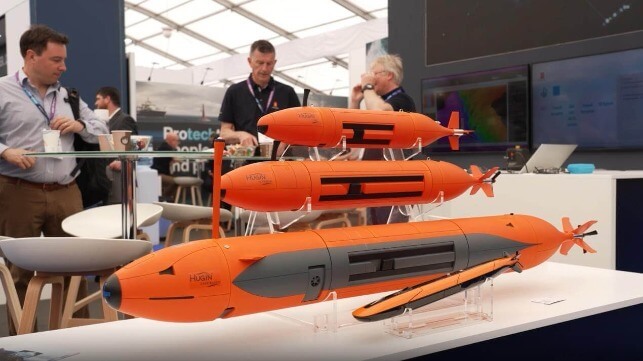
Kongsberg Discovery is gearing up to make a splash at Ocean Business 2025, with high profile product demonstrations, a new digital innovation launch, and a range of domain experts on hand to help stakeholders navigate a future of ocean opportunity.
Get onboard The company, a global leader in advanced underwater robotics and sensor technology, will base itself at booth N1/P2 for the duration of the show, taking place 8-10 April at the National Oceanography Centre, Southampton, UK.
Demonstrations on all three days will showcase the EM2042 Multibeam Echosounder and Seapath 385 GNSS aided inertial navigation system onboard the Fugro FTV Xplorer vessel, in addition to dockside demos with the Flexview multibeam sonar deployed on a ROV for underwater infrastructure inspection and gas seep detection.
Kongsberg Discovery has also teamed up with Saildrone to give delegates an insight into remote deep-water multibeam survey operations, with a real-time demonstration of a Saildrone Surveyor USV fitted with EM304 MKII sensors and software.
Empowering developments Stene Førsund, EVP, Kongsberg Discovery, says it’ll add up to a “memorable three days for us, our partners and anyone that wants to get a taste of next generation ocean technology.”
Førsund continues: “Ocean Business operates as a key hub for the ocean technology community, with a broad range of stakeholders congregating to experience innovation, share knowledge and build partnerships. For us, as an acknowledged leader in the segment, it’s a hugely important arena – both to showcase the potential of our solutions and to collaborate with others looking to empower informed, profitable and sustainable ocean development.
“We’re thrilled to be there in force, with a heavyweight team of in-house experts and some really exciting demonstrations. These will provide not only ‘first-hand’ insights into the ability of our technology, but also how we work hand-in-hand with our partners and customers for optimal results in demanding operations.”
Meeting demands Each demonstration on board the Fugro vessel will last 45 minutes, with participants getting a chance to see the lightweight, robust and powerful EM 2042 in action, in conjunction with the high-precision Seapath 385, developed specifically for demanding hydrographic surveying. The Flexview demonstration, taking place dockside at set times on each day, reveals how the latest compact multibeam sonar technology can be implemented for trusted infrastructure inspection and gas seep detection.
For delegates eager to experience the potential of remote operations, the Saildrone sessions on Wednesday and Thursday will show how Kongsberg Discovery’s deep-water multibeam sensors and software can be deployed to empower efficient, safe and high-quality autonomous surveying.
Connecting with the future “We’re also planning on unveiling a new digital offering at the exhibition,” concludes Førsund. “This is another example of how we constantly innovate to meet market demand and create added value for our global customer base.
“Come along and chat with our expert team and you can find out more about out how we partner with users around the world to capture, process and utilise ocean data, enabling enhanced decision making, safe operations and truly game-changing ocean insights.”
As part of Donald Trump’s vow to stop the “really bad people,” through his campaign of maximum pressure, the U.S. today, April 2, imposed sanctions on Russian businessmen sending aid to the Houthis. Among the activities the U.S. is citing is the stealing of Ukrainian grain from Crimea and shipping it to Yemen and it included the captains of the vessel among the sanctions.
“The Houthis remain reliant on Sa’id al-Jamal and his network to procure critical goods to supply the group’s terrorist war machine,” said Secretary of the Treasury Scott Bessent. “Today’s action underscores our commitment to degrading the Houthis’ ability to threaten the region through their destabilizing activities.”
The Department of the Treasury’s Office of Foreign Assets Control (OFAC) took action against a network of Houthi financial facilitators and procurement operatives working in coordination with Sa’id al-Jamal, a senior Houthi financial official backed by Iran’s Islamic Revolutionary Guard Corps-Qods Force (IRGC-QF). This network OFAC reports has procured tens of millions of dollars worth of commodities from Russia, including weapons and sensitive goods, as well as stolen Ukrainian grain, for onward shipment to Houthi-controlled Yemen.
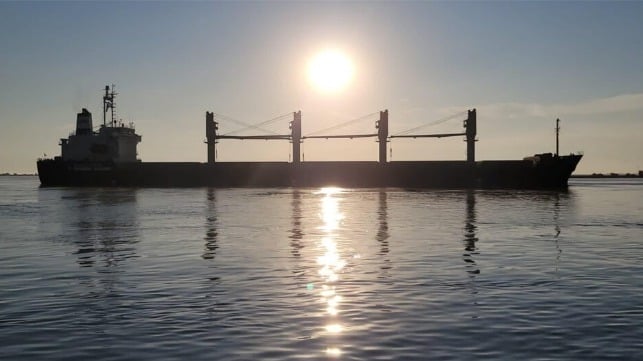
In one effort, the U.S. reports in the summer and fall of 2024 at least two shipments of stolen Ukrainian grain were involved. They report it was loaded in Crimea on board the Russia-flagged AM Theseus, also known as the Zafar, and shipped to Yemen. The vessel which is 37,300 dwt and built in 2015 was acquired in 2023 by Hong Kong-based AM Asia M6 and has switched between flags in Russia and Palau and back to Russia.
The U.S. reports these shipments as well as other support were being orchestrated by Russia-based Afghan businessman Hushang Ghairat (Hushang) and his brother, Russia-based Afghan businessman Sohrab Ghairat (Sohrab) assisting Sa’id al-Jamal with Houthi commercial initiatives in Russia, including arms procurement. Hushang and Sohrab, at Sa’id al-Jamal’s direction, the U.S. says orchestrated the grain shipments.
In addition to the ship manager, the U.S. is also sanctioning Russian national Vyacheslav Vladimirovich Vidanov (Vidanov) who served as the captain of the AM Theseus during some of the 2024 voyages between Crimea and Yemen, and Russian national Yuri Vladimirovich Belyakov (Belyakov) served as the vessel’s captain through the end of 2024.
The vessel was also listed and OFAC has also identified eight digital asset wallets used by the Houthis to transfer funds associated with their activities. Hushang, Sohrab, and Sa’id al-Jamal they report use financial facilitators to conduct financial transactions in support of the Houthis’ trade ventures involving Russia. Turkey-based Iranian money launderer Hassan Jafari (Jafari) has worked with Hushang and Sa’id al-Jamal to launder dollars on behalf of Sa’id al-Jamal’s network, enabling the network’s sanctions evasion schemes. Jafari also arranged payments worth millions of dollars in support of shipments benefiting the Houthis.
The sanctions were announced as U.S. Central Command continues to report attacks on Houthi positions in Yemen. The last attack they highlighted was on March 31 more than two weeks after Trump launched the new campaign.
Crewmembers From Stena Tanker Recount Moment of Boxship Impact
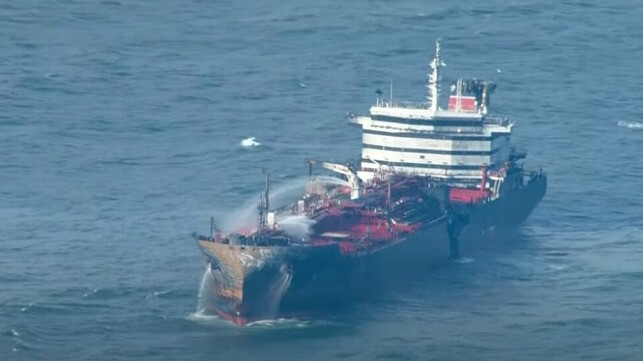
Stena Immaculate after the allision (HM Coastguard)
The Seafarers International Union (SIU) has released a first-hand account from the crew of the product tanker Stena Immaculate, which was hit by a boxship off the UK last month.
On March 10, the Portuguese-flagged feeder Solong was on a routine coastal voyage off Hull, UK, making 16 knots on a steady southbound course. Without slowing or maneuvering, Solong rammed the port side of the anchored product tanker Stena Immaculate, penetrating two tanks.
Stena Immaculate third mate Jeffrey Griffin told SIU that he was working out on deck at the time of the accident.
“All I could see was something big and blue heading toward us. I immediately knew, it’s not going to miss us," Griffin said. "I was front and center when it allided between the seven port and six port cargo tanks. There was a great big loud crunching noise. That was followed by a whole lot of fire."
At first, the crew responded with shock and amazement. Those inside the deckhouse and belowdecks felt the vibration and knew something was wrong.
"It wasn't a huge jolt. I remember looking through the fog and . . . I could faintly see the white outline of the house of the other ship. And then that first fireball happened," recalled OS Benjamin Brown.
The crew ran out hoses and began to lay down foam to suppress the flames on deck. Two officers remained forward on the bow, and the firefighting efforts were successful enough that they could slip past and get back to the deckhouse.
After half an hour of battling the fire, the master instructed the crew to abandon ship. "I won't say we were close to putting out the fire, but we were doing well," Griffin said. "I was about to do a muster when we heard the words, forget the muster, abandon ship.
The crew mustered at the lifeboat, and after the second mate confirmed all were aboard, they gravity-launched into the water and motored off. The bosun noted that there was burning fuel on the water surface during their escape. Despite fumes from the fire and heavy smoke, they were unharmed, and were quickly rescued by nearby good Samaritan vessels.
Griffin said that he was already prepared to ship out again. "I’m a little shaken but I’m ready to go back to work. The fire – it happened. The abandon ship – it happened. We trained for it, we prepared for it, and everybody survived, so we obviously are doing something right," he told SIU.
Stena Immaculate's cargo will be pumped off for safety, and the ship will be towed to Newcastle for a port of refuge. One crewmember of the boxship Solong is missing and presumed dead; the master of the Solong has been arrested on negligent manslaughter charges, and Stena and operator Crowley have sued the Solong's owner for damages.
The owner, a subsidiary of Ernst Russ, is setting up a claims fund in the UK as proceedings begin. The firm has brought a limitation of liability case in UK admiralty court, which would limit the total claims amount to the value of the ship and her cargo.
Chinese Bulker Rescues Solo Rower/Adventurer on Day 115 as Equipment Fails
Konyukhov reached South Africa in 68 days but abandon the rowboat on day 115 (Konyukhow/Facebook)
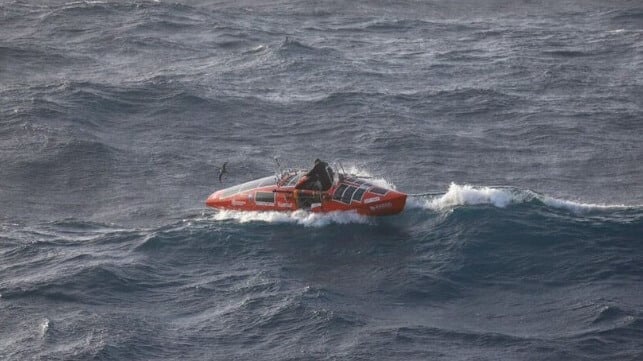
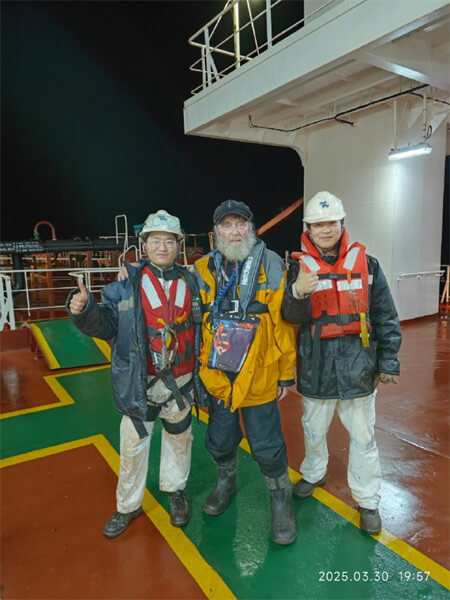
Famed Russian solo rower and adventurer Fedor Kobyakov is safely aboard the Chinese ore carrier Ore Hong Kong (399,214 dwt) after being rescued from the middle of the Indian Ocean. He was 115 days into his latest record-setting adventure when the support team advised that based on damages and equipment malfunctions on the rowboat, he needed to abandon the attempt to cross the Indian Ocean to Australia.
Kobyakov, who holds previous records including crossing the Atlantic Ocean in a rowboat in 46 days and the best 24-hour distance (110 miles), had set out from Patagonia in South America on December 5. He covered approximately 11,000 km (6,835 miles) crossing the South Atlantic in 68 days. He was south of Madagascar and nearing Reunion Island, 5,000 km (3,100 miles) from Australia with the team saying it would have conservatively taken two more months to complete the trip. They also emphasized that he would have reached Australia in winter adding to the difficulties of the journey. At 115 days it was not his longest trip, which is reported at 154 days in the Pacific.
The 73-year-old was reluctant as he had never before abandoned one of his boats. Consulting with his support team he however confirmed the weather conditions had proved extreme with cold and waves up to 40 feet resulting in the vessel experiencing multiple capsizes. His autopilot unit had stopped working, the four onboard wind indicators had failed, and his main desalination unit had failed leaving him on a backup unit.
Konyukhov in February 2025 as he was crossing the South Atlantic to Africa
Working with the National Sea Rescue Institute of South Africa, the team determined the Chinese-owned bulker Ore Hong Kong was 400 miles away from his position and agreed to undertake the rescue. When the vessel approached his position from the AIS signal, they were able to establish radio contact with Kobyakov.
The challenge remained to get him aboard the massive bulk carrier. They maneuvered the vessel close and tried a net. Then they fired a towline and Kobyakov was able to tie it to his rowboat. They pulled his boat under the stern of the dry cargo carrier and dropped a storm ladder meaning he had to climb at least 22 meters (72 feet) in his weather suit and boots. The crew also dropped lines to pull his personal effects and radio equipment on the vessel.
Konyukhov was rescued by Ore Hong Kong (Telegram posting)
Konyukhov reported it was a challenging climb even for a man who twice surmounted Mt. Everest. He got the rhythm and made it safely aboard. He was taken to the infirmary for the first days and now is in a cabin on the vessel. The bulker was sailing from Brazil to China and now Kobyakov has to wait till April 20 till the vessel reaches the port of Qingdao, China. He reports he is being well treated, getting his first nights in a bed with sheets, but the Asian food is spicy.
He was forced to abandon his rowboat. They sealed the vessel’s hatches and left the AIS transmitter going. The support team reports they are tracking the vessel as it drifts eastward toward Australia.

 Bombing damage in downtown Koblenz, 1944. The Pffafendorf Bridge, where the bomb was dredged up, is visible at lower left (RAF)
 USAF bombers over Koblenz, 1944 (USAF)