Thursday, April 03, 2025


Solidcore eyes Gulf financing in post-Russia strategy


Credit: Polymetal International

Kazakh gold miner Solidcore is considering issuing bonds in the Gulf region to finance investment, including in new projects in Kazakhstan estimated to cost up to $350 million, the company’s CEO Vitaly Nesis told Reuters.

Solidcore, formerly Polymetal International, is the second-largest gold miner in Kazakhstan. The company had to sell its Russian assets, which represented 70% of its output, in 2024 after its business there came under US sanctions.

The new company, listed in Kazakhstan and with Oman’s government-owned fund Mercury Investments as its largest shareholder, had to design its five-year investment program from scratch.

“The main strategic outcome of 2024 was the launch of our full-fledged investment program,” Nesis told Reuters. “We are very actively considering the option of issuing exchange-traded bonds in the Gulf countries,” he said.

Noesis said that exchanges, based in UAE and Oman, could be an option for the bond placement, while bank loans and share issuance also remained on the table.

“There is the Muscat Stock Exchange, Dubai, and Abu Dhabi. We are looking at different forms, including classic bonds and sukuk (Islamic bonds). We are actively working with rating agencies, given that this direction as very promising,” Nesis said.

Nesis said the company’s investment in the new Syrymbet tin project is estimated at about $250 million. Solidcore’s Tokhtar gold project in northern Kazakhstan is still at the exploration stage, but is estimated to cost $50-100 million.

The company plans to double output to 1 million ounces of gold equivalent by 2029 and invest more than $1 billion excluding M&A until 2029 with focus on its the Ertis pressure oxidation hub in Kazakhstan.

Record gold prices and sales growth almost doubled Solidcore’s net profit in 2024, but Nesis said the gold rally may not last.

“We believe that the current level of gold prices is unlikely to persist even in the medium term. Therefore, when we plan, we plan conservatively,” Nesis said.

Nesis said that the company looked at potential acquisitions of production assets in Uzbekistan and Oman.

“We are asking our first steps in the M&A arena, preparing the groundwork for the company’s further growth,” Nesis said.

Nesis reiterated that despite the high gold prices the company was not planning to pay any dividends as long as some of its shares were stuck in Russia’s sanctioned National Settlement Depositary (NSD), part of the Moscow Stock Exchange.

(By Gleb Bryanski; Editing by David Evans)


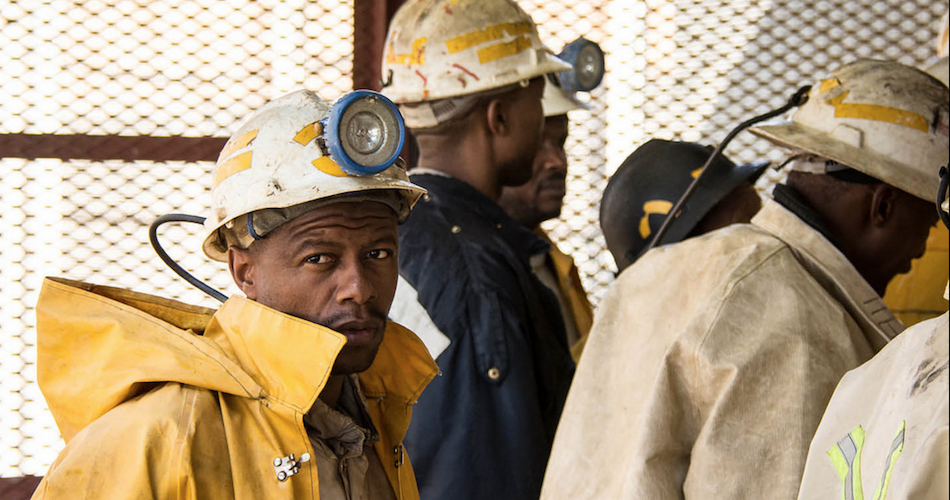
Gold powers South African miners to best month on record

Image courtesy of Sibanye Gold Ltd

The surging gold price has propelled South African mining stocks to their best monthly performance on record, shielding the country’s benchmark index from the mayhem in global markets.

An index of South African mining companies jumped 33% in March, the most in a month since Bloomberg started compiling the data in 1995. That helped the benchmark FTSE/JSE All Share Index post a 3.1% gain for the month, outperforming emerging-market peers and US equities.

Leading the charge have been gold producers, with Harmony Gold Mining Co., the biggest local miner of the metal, and Sibanye Stillwater Ltd. both soaring 48% to make it them the best-performing stocks in the benchmark index. DRDGOLD Ltd. and AngloGold Ashanti Plc were also among the top performers.

Gold miners are back in favor after the metal hit multiple records this year on central-bank buying and haven appeal amid worries about the escalating trade war. And the rally may not be over yet, with Wall Street banks including Goldman Sachs Group Inc. predicting further gains. That could fuel profits for gold miners “well in excess” of previous years, said Lester Davids, an analyst at Unum Capital Ltd.

“Gold miners are known to have fixed costs, meaning that as gold prices rise, their profits can increase exponentially,” Davids said.

The South African benchmark’s advance in March outpaced the 0.4% gain in MSCI Inc.’s index of emerging-market equities. In dollar terms, the South African gauge added almost 5%, compared with a loss of close to 6% for the S&P 500.

Bullion neared $3,150 an ounce on Tuesday, on pace for a fourth day of gains. Traders are on edge as President Trump plans to announce sweeping levies on all of America’s trading partners on Wednesday, raising the risks of retaliatory measures. The metal may rise as high as $3,300 in the coming months, according to Goldman Sachs.

“I remain happy to ride this momentum wave to the upside, with bullion’s salad days unlikely to come to an end any time soon,” said Michael Brown, a senior research strategist at Pepperstone Group Ltd. “The rally isn’t quite indestructible, but the bulls continue to believe in their soul for now.”

South African platinum producers have also thrived, as a slowdown in sales of electric vehicles spurred demand for the commodity, which is used in gasoline-powered engines. The spot price of platinum is up about 10% year to date, powering the shares of producers including Impala Platinum Holdings Ltd., up 43% in March, and Northam Platinum Holdings Ltd., up 35%.

“March has largely been a continuation of some of the year-to-date themes where precious metals and a couple of large-market-cap stocks have led the market higher,” said Peter Takaendesa, head of equities at Mergence Investment Managers Ltd.

The global rotation out of US equities has also benefited South African stocks, according Unum Capital’s Davids.

“The Johannesburg Stock Exchange has been a beneficiary of the flows, with relatively lower valuations being one of the key drivers,” he said. The forward price-earnings ratio for the FTSE/JSE Africa All Share Index is about 15, compared with about 21 for the S&P 500, according to data compiled by Bloomberg.

(By Khuleko Siwele)

CRIMINAL CAPITALI$M

LME fines warehouse that stored fake nickel for 2022 mishap

The London Metal Exchange has fined warehouse operator Access World £60,000 ($77,316) for erroneously loading out nickel from a depot in Rotterdam in 2022, five months before the discovery that some of the metal it was holding for clients was fake.

Staff at Access World loaded out 24 tons of nickel cathodes from the warehouse between Oct. 18 and Nov. 16, 2022, apparently due to human error, the LME said in a notice on Tuesday. The LME said it was only notified of the outflows on March 14, 2023, after the warehouse operator commissioned a third party to carry out an audit of the metal it was storing on behalf of clients.

Soon after — on March 17 — the LME sent shockwaves through the global metals market when it announced that it had discovered that several cargoes underpinning its nickel contracts were in fact bags of stones. Bloomberg later reported that the cargoes were stored in an Access World facility in Rotterdam, and belonged to JPMorgan Chase & Co.

While the metals industry has suffered several-high profile frauds and thefts, the discovery rattled traders who view the LME’s warehousing system as the one place where metal is unquestionably safe. The exchange responded by carrying out a worldwide audit of the nickel underpinning its contracts, and later tightened rules covering handling and inspection of cargoes.

As it announced the fine on Tuesday, the LME said that Access World had been cooperative with the investigation into the incident, and had taken remedial steps to minimize the risk of a recurrence.

Its investigation also examined Access World’s storage controls, and the LME found them to be “at the relevant time, comparable to peers and reasonable.”

A spokesperson for the LME declined to comment on whether there was a connection between the erroneous load-out of metal and the discovery of the bags of stones.

(By Mark Burton)

GreenMet, Tanbreez strike deal for Greenland rare earths amid Trump’s takeover push

Once operational, Tanbreez is set to become a key supplier of rare earth elements, particularly for the defense and tech sector.


Apr 02, 2025 
Neetika Walter
INTERESTING ENGINEERING


Hands holding rare earth elements
iStock Photos


U.S. firm GreenMet On Thursday announced a landmark partnership with Tanbreez, marking a major step in securing reliable supplies of heavy rare earth elements (HREEs) for North American and European markets.

The Tanbreez Project, located in southern Greenland and owned by New York-based Critical Metals Corp, holds one of the world’s largest untapped HREE deposits outside China, with a vast 4.7 billion-tonne mineralized kakortokite unit.

The site also contains gallium, a critical material for high-tech industries, which China restricted exports of last year.

The partnership comes amid heightened geopolitical tensions, as U.S. President Donald Trump continues to advocate for the takeover of Greenland from Denmark as part of his “America First” policy.

The Tanbreez Project, with its mix of high-value HREEs, zirconium, and niobium, has an impressive Preliminary Economic Assessment (PEA) for 2025, projecting a $3.04 billion net present value (NPV).

With nearly 27 percent deposit of heavy rare earths, Tanbreez is uniquely positioned to serve U.S. and European markets, supporting next-generation technologies and defense applications.

“We are thrilled to partner with Tanbreez and Critical Metals Corp to unlock one of the largest rare earth resources outside of China,” GreenMet CEO Drew Horn said.

“As the only shovel ready rare earth project in Greenland, Tanbreez represents a game-changing opportunity for both the Greenlandic economy and the critical minerals supply chain in North America and Europe,” he added.
Strategic and economic importance

Strategically located with deep-water fjord access and close to existing infrastructure, the Tanbreez project ensures efficient material transportation.

With a mining license secured through 2050, it offers long-term operational stability. Its low-radiation profile and geopolitical safety make it a reliable source of critical materials for the Western world.

Once operational, Tanbreez is set to become a key supplier of rare earth elements (REEs), particularly for the defense sector and high-tech industries, strengthening its role in the global rare earth supply chain.

It has set an aim to mine 500,000 metric tons annually of the crimson rare earths-containing mineral eudialyte as soon as 2026.

The collaboration could also provide a fillip to the Greenlandic economy, offering job creation, infrastructure development, and the growth of local industries.


Great geopolitical interest

Greenland, located off Canada’s northeastern coast, has long been strategically important to North American defense.

During World War II, the U.S. occupied the island to prevent it from falling under Nazi control and to safeguard key North Atlantic shipping routes.

Today, Greenland’s vast mineral wealth has made it a focal point of geopolitical interest, particularly as Western nations, including the U.S., seek to reduce reliance on China for critical minerals.

Rare earth elements possess potent magnetic properties, making them indispensable to high-tech sectors—from powering electric vehicles to enabling advanced missile systems.

Dirtiest US coal-fired power plant applies for EPA exemption

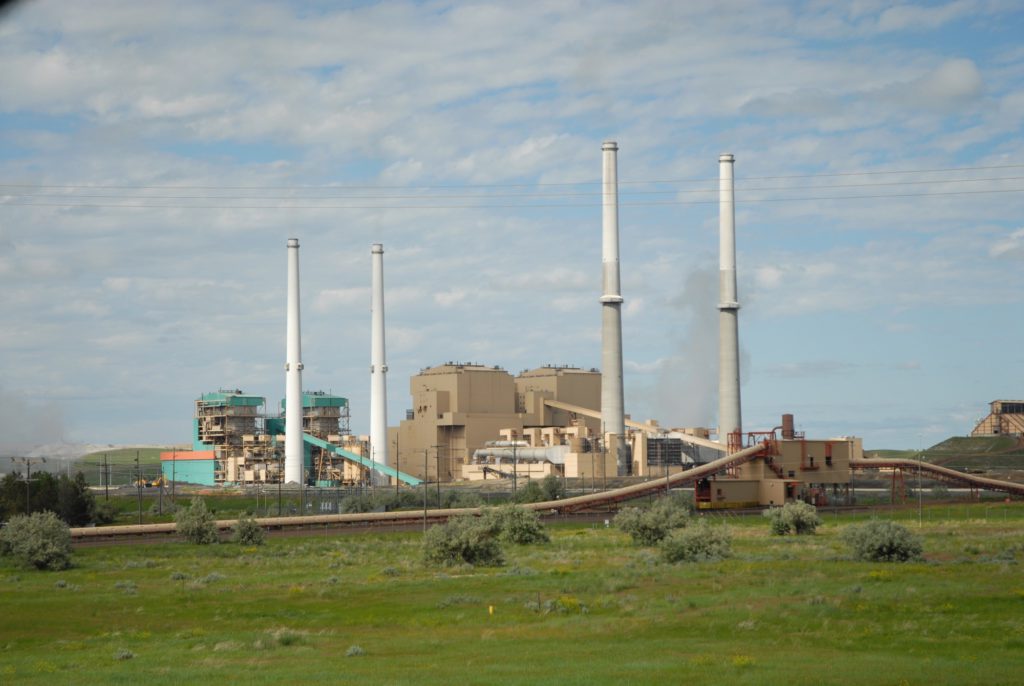
Colstrip power plant, Montana. Image source: The Center for Land Use Interpretation, under Attribution-Noncommercial-Share Alike 4.0 Creative Commons License.

The dirtiest coal-fired power plant in the US is asking Donald Trump for a waiver from pollution mandates, taking up the administration on an offer to email for a chance to get a presidential exemption.

Montana’s Colstrip power plant has applied for a two-year exemption from Environmental Protection Agency standards compelling stringent mercury and air pollution controls. Talen Energy Corp. subsidiary Talen Montana owns the plant along with Northwestern Energy Group Inc., among others.

The plant, located in eastern Montana, has the highest emission rate of fine particulate matter out of any coal-burning plant in the nation, according to EPA data and the non-profit Montana Environmental Information Center.

Talen Montana didn’t immediately respond to requests for comment. The EPA referred questions to the White House.

“We will not get ahead of the president, but we can confirm President Trump’s commitment to unleashing American energy, protecting our national security interests, and ensuring environmental stewardship,” White House spokeswoman Taylor Rogers said in an email.

The aging 1,480-megawatt plant, which has two active-units, is the only coal-fired power plant in the US that hasn’t installed modern pollution controls to limit particulate matter, according to the EPA.

Coal-fired power plants are a major source of air pollutants, including particulate matter that is made up of dust, fly ash and other materials. When inhaled, the finest particles are able to penetrate deep into the lungs and even potentially the bloodstream, exacerbating heart and lung disease, causing asthma attacks and even sometimes leading to premature death.

Trump may allow some power plants, chemical makers and others to bypass a range of regulations under the Clean Air Act using an obscure provision of the Clean Air Act, according to the EPA, which notified companies last week they had set up an email for companies to apply for the exemption.

“The Trump EPA is offering a free pass for the country’s dirtiest power plant to keep polluting the air we breathe,” said Amanda Levin, director of policy analysis at the Natural Resources Defense Council. “Colstrip is the only coal plant in the entire nation that doesn’t have modern pollution controls. It’s long past time for it to clean up its act.”

Colstrip’s effort to obtain a waiver is being backed by Montana Republican Senator Steve Daines and the rest of the state’s congressional delegation, who said limits on air toxics for coal-fired power plants put in place by the Biden administration would require the installation of $500 million in new pollution controls. The delegation said that would make the upgrades both technologically and economically unavailable — a requirement in order to achieve a presidential exemption.

“All of this endangers the economic viability of the plant, which if closed, would undermine the region’s electric grid as there is insufficient time to plan and construct adequate replacement generation,” the lawmakers wrote in a letter to EPA Administrator Lee Zeldin.

(By Ari Natter)


BHP considered separation of iron ore, coal: Reuters

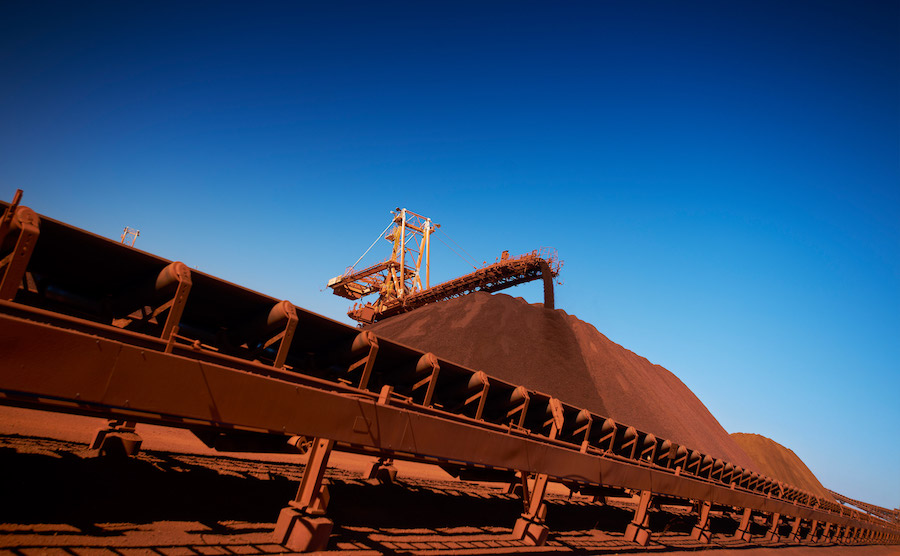
(Image: Western Australia iron ore operations. Image courtesy of BHP)

BHP Group (ASX: BHP), the world’s largest mining company, reportedly mulled spinning off its iron ore and coal businesses as part of its medium-term growth strategy.

According to sources cited by Reuters, the potential separation coincided with BHP’s strategy to become a “greener” miner by placing priority on “future-facing” commodities such as potash and copper. This would mean distancing itself from iron ore and coal, both key raw materials in steelmaking and which have been core to its business for decades.

BHP is currently the world’s third-largest producer of iron ore, operating five mines in the Pilbara region of Western Australia. It is also a major producer of metallurgical coal, with five mines in the Bowen Basin area of Central Queensland.

Divesting its iron ore and coal assets would significantly reduce the group’s presence in Australia, where it is based. The units would most likely be listed in Australia, should BHP chooses to proceed, Reuters sources said.

BHP is currently the world’s third-largest producer of iron ore, operating five mines in the Pilbara region of Western Australia

BHP would still keep its Australian copper assets such as Olympic Dam, host to one of the world’s largest copper deposits, as it continues to push towards becoming a global leader in the red metal’s production. Its copper ambitions were evident in the failed bid to acquire rival Anglo American (LON: AAL) a year ago.

This is not the first time that BHP’s management has brought up the idea of restructuring the business. Chief executive officer Mike Henry and then chief financial officer David Lamont discussed with investors in early 2024 the plan to separate its declining growth businesses towards the end of the decade.

Ultimately, they dropped such plans as BHP still needed the cash generated by the two Australian divisions to fund capital spending at the Escondida copper complex in Chile and its Jansen potash mine in Canada.

The company has also shown that it would not hesitate to spin out businesses, having already done it with South32 (ASX: S32) a decade ago.

BHP’s view was a spin-off of iron ore and coal would generate cash and franking credits that benefit Australian tax-payers, meaning there could be considerable Australian interest in any flotation, one of the Reuters sources said.


An American mine still has millions of tons of copper, if companies can get to it

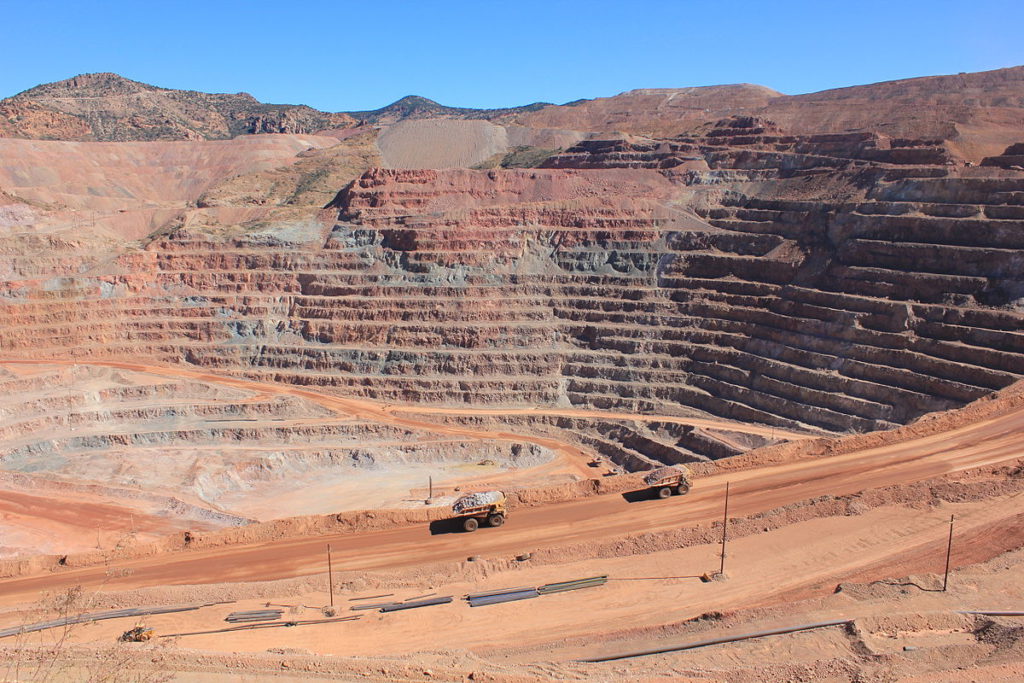
Morenci, the biggest copper mine in the US. Credit: Wikimedia Commons under license CC By 2.0

Carved into a mountain range in Arizona’s Sonoran Desert, where temperatures often reach 118F (48C), a vast mining complex more than a century old is on the front lines of a race to unlock millions of tons of copper.

After 154 years of digging at Morenci, all the easily recoverable copper has been mined. Left behind are towering piles of waste rock that hold nearly 10 million tons of the metal seen as critical to global electrification. It’s a cache that could prove key to President Donald Trump’s ambition to boost US production of critical minerals.

Freeport-McMoRan Inc., which owns Morenci, is trying to develop technology that can burrow within those gigantic waste piles and extract low-grade copper that miners previously saw as too expensive and difficult to process. While the technology is still in its infancy, the US company is betting it can eventually retrieve the material in a way that’s cheaper, faster and greener than traditional mining.

The process, known as sulfide leaching, has been known to copper miners for decades, but the recent push to advance it comes as electrification and artificial intelligence are poised to drive global demand for the metal. BHP, the world’s largest miner, estimates that copper used for data centers will grow sixfold by 2050.

Trump’s focus on domestic copper output — “it’s time for copper to come home,” he declared in February — has revived optimism that operations in states like Arizona will have an advantage over rivals in Latin America, Africa and beyond. Copper prices have soared after Trump ordered the Commerce Department to investigate US imports of the metal, a likely precursor to tariffs that could come within weeks.

Copper futures on New York’s Comex exchange surged last week to a record high as traders priced in the prospect of hefty US import tariffs on the red metal. Such expectations helped fuel a 26% jump in US copper prices this year.

Sulfide leaching could, in some cases, be an alternative to building copper mines from scratch. High costs, slow permitting and local opposition often keep companies from pulling the trigger on major projects. Shareholders increasingly would prefer to see miners hunt for acquisitions or boost payouts to investors than greenlight new complexes.

Morenci is the largest copper mine in North America — about the size of Brooklyn. Between processing facilities and warehouses, lizards and organ-pipe cacti bask in blazing sunlight. The waste piles, each given their own name, are scattered around the site and shaped like giant cones. On a sweltering afternoon in September, a team of engineers, chemists and technicians experimented with heat, air pressure and chemicals to try to separate the copper from the waste.

“For a long time, we just didn’t think it was possible to recover any of this stuff,” said Robert Pollock, Morenci’s site manager, gazing up at a waste pile the size of a Manhattan office building. “But now, all this historical copper – we’re going after it.”

Other major copper producers including BHP Group, Antofagasta Plc and Rio Tinto Group — through its Nuton unit — are pushing to develop sulfide leaching technology as well. Some have outsourced the work to startups like Jetti Resources and Ceibo, which claim to have made strides with their own solutions. Because the geology of copper deposits varies, each company is developing slightly different technology to suit its mines.

The companies are focused on separating copper from a sulfide mineral called chalcopyrite, which is typically considered difficult to process, or “leach.” Jetti’s technology aims to leach those sulfides using little heating or grinding, which has typically driven up the cost of processing chalcopyrite to the point of being prohibitively expensive.

Ceibo, which is backed by BHP and recently partnered with Glencore Plc, uses a process that more quickly oxidizes chalcopyrite ores through electrochemical reactions, resulting in higher recovery rates in a shorter period of time. The startup claims it has recovered over 75% of copper from chalcopyrite through its technology — a significant increase relative to traditional leaching methods.

“For decades, miners have treated calcopyrite mineral to make copper,” said Corby Anderson, a professor at the Colorado School of Mines. “It’s not a magic box where copper’s been locked away. However, these technologies are focused on increasing the recovery of copper from calcopyrite, which isn’t always so easy to do.”

Freeport-McMoRan has used leaching methods at the Morenci mine to unlock lower-grade copper for years, but it’s now experimenting with chemical reagents to process previously inaccessible copper buried even deeper within its waste piles. The Phoenix-headquartered company has so far extracted 100,000 tons of copper using sulfide leaching. It aims to produce 400,000 tons by 2030, enough to wire more than 4.3 million electric vehicles.

“That’s the equivalent of a major copper mine anywhere,” chief executive officer Kathleen Quirk said last year.

The success of sulfide leaching, however, is no guarantee. The companies have struggled to prove their technology can function at scale, and few are willing to take the risk of being the first to invest heavily in the novel process. Behind the scenes, some miners have questioned the feasibility of some of the technology while haggling over ownership terms with partners.

At Escondida, a giant copper mine in Chile owned by BHP, the multinational mining company has been testing multiple technologies as it looks to offset declining copper quality that’s poised to send production sharply lower in the next few years. As part of that plan, BHP estimates it can produce as much as 55,000 tons of copper a year by leaching.

BHP is testing its own technology, as well as those of Nuton and Jetti. Yet each offers vastly different outcomes. Jetti is cheap to install, but only slightly increases recoveries. Nuton, which costs much more, greatly improves recoveries. BHP said it plans to make a final decision sometime after 2027.

Other miners have backed away from some of the technology after struggling to make it work. Freeport-McMoRan, an early investor in Jetti that partnered with the startup at its El Abra mine in Chile, said in an emailed response to questions that it’s no longer using the firm’s technology as it pursues its own.

“It’ll all come down to the economics,” said Anderson, who said he knows of previous efforts to boost copper recoveries through sulfide leaching that, while technically feasible, weren’t financially viable.

Freeport’s leaching push coincides with an ambition at the heart of Trump’s critical-minerals agenda: job creation.

The decline of American mining and mineral processing sent jobs overseas, to countries where the work could be done at far lower cost. For rural communities in the southwest, technological breakthroughs are critical to keeping aging mines alive.

Pollock, Morenci’s site manager, grew up in Clifton, 4 miles (6 kilometers) from Morenci in Arizona. The town was built to house the mine’s workers and their families in the late 1800s, back when mules hauled crates of ore up the mine’s dusty slopes. And like much of the surrounding economy, its prosperity became inextricably linked to the mine.

Today, Morenci is responsible for about 13,000 direct and indirect jobs and more than $1.5 billion in statewide economic benefits, according to Freeport.

“Seeing how the place has changed over the years is really impressive to me,” said Pollock. “Doing this work is how we make sure the mine stays here for the long term.”

(By Jacob Lorinc)


 GLOBALIZATION 

Codelco will send copper concentrate to Adani smelter in India


Photo by Bloomberg

2nd April 2025
By: Bloomberg

Codelco has agreed to supply copper concentrate to Indian billionaire Gautam Adani’s smelter in India, as part of a push by the world’s biggest copper miner to open up new markets.

The Chilean group “agreed to supply concentrates starting this year, which will support the diversification of our customer portfolio,” Codelco said in a website post. Chairperson Maximo Pacheco met with Adani at the smelter in the western Indian state of Gujarat on Tuesday.


The $1.2-billion Kutch operation has had a challenging ramp-up after starting last year, with the global copper market facing its biggest shortfall of concentrate in decades. Glencore and Hudbay Minerals were among its other suppliers, people familiar with the matter said last year.

No other details about Adani’s supply agreement with Codelco were given.


Copper smelters worldwide have faced severe difficulties in getting enough ore, and Adani’s plant was among a wave of new sites that threatened to stretch supplies even further. Smelting fees — the sum received by processors for turning concentrates into refined metal — have plunged below zero and reached a new low last week, according to Fastmarkets data.

Codelco has long flagged India as a major growth market for copper, which is used in pipes and wires, as well as in batteries. Demand is expected to grow rapidly as the nation’s economy modernizes, and Adani Enterprises plans to expand the Gujarat operation to meet that rising consumption.

Codelco’s Pacheco was among Chilean executives visiting India with President Gabriel Boric, who met with Indian Prime Minister Narendra Modi in New Delhi on Tuesday to kick off talks for a trade deal between the two nations.

The Chilean company said it also signed a memorandum of understanding with State-owned Indian mining group Hindustan Copper on cooperation in exploration and processing. 


Korea Zinc agrees 52% cut in fees to turn Teck’s ores into metal

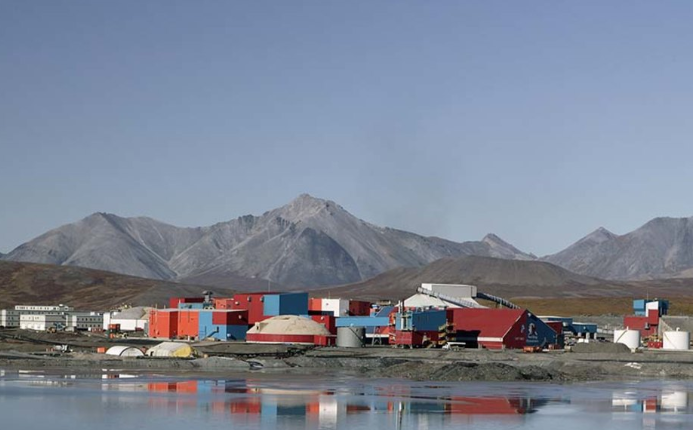
Red Dog mine in Alaska. Credit: Teck Resources

Korea Zinc Co. has accepted a 52% cut in processing fees to turn mined zinc produced by Teck Resources Ltd. into refined metal under a supply deal for this year, according to people familiar with the matter.

The treatment charge that Korea Zinc will receive for smelting semi-processed ores known as concentrates will drop to $80 per ton this year, down from $165 a year ago, said the people, who asked not to be named due to the commercial sensitivity of the matter.

The annual deals for concentrates produced at Teck’s Red Dog mine in Alaska are often used as the benchmark for other deals in the zinc industry. A sharp decline in processing fees could deal a major blow to global zinc smelters, as treatment charges typically account for one-third of their revenues.

The deal follows a collapse in treatment charges in the spot market over recent months, fueled by a worsening mismatch between global smelting capacity and the availability of mined ores. With profits plunging, there are growing expectations that smelters will need to dial back output or suspend production entirely.

Major zinc producer Trafigura Group launched a strategic review of its struggling Nyrstar assets in Australia last week, and called for government support to keep them running. Glencore Plc is also in the process of reviewing its global smelting assets, citing challenging treatment charges in zinc and copper.

Zinc, mainly used in protecting steel from corrosion, is the world’s fourth most-used refined metal, after iron, aluminum and copper.

A spokesperson for Korea Zinc declined to comment. A spokesperson for Teck didn’t reply to a request for comment.

(By Julian Luk)


Vanishing Protectors and Predators of the Saya de Malha

Seagrass
James Michel Foundation / The Outlaw Ocean Project

Published Apr 1, 2025 6:59 PM by Ian Urbina


In November 2022, several scientists in scuba gear dove over the side of a 440-foot research ship, which had been sent to the Saya de Mahla Bank, a vast seagrass meadow in the Indian Ocean between Mauritius and Seychelles, more than 200 miles from land. Their goal that day was to film sharks. When they were not diving, the scientists submerged a remote-controlled submarine to search the sea column. Ranked as one of the largest and most advanced research vessels in the world, the ship had been sent to this remote stretch by the environmental non-profit, Monaco Explorations, to document a seafloor famously lush in seagrass, corals, turtles, dugongs, rays, and other species.

During the three weeks that the research team combed the waters of the Saya de Mahla Bank, they spotted not a single shark.

The likely culprit, according to the scientists, was a fleet of more than 200 fishing ships that has, in recent years, targeted these remote waters, mostly from Taiwan, Sri Lanka, and Thailand. Many of these ships fish for tuna species such as albacore, yellowfin, skipjack, and bigeye, but they are also catching sharks in huge numbers.

Sharks play a critical role in the ecosystem as guardians of the seagrass, hunting populations of turtles and other animals that would mow down all the seagrass if left unchecked. Catching sharks is not easy, nor is it usually inadvertent. In tuna longlining, the ship uses a line made of thick microfilament, with baited hooks attached at intervals. Many tuna longliners directly target sharks by using special steel leads designed not to break when the sharks, bigger and stronger than the tuna, try to yank themselves free.

To avoid wasting space in the ship hold, deckhands usually throw the rest of the shark back into the water after they cut off the fins, which can sell for a hundred times the cost of the rest of the meat. It’s a wasteful process and a slow death, as the sharks, still alive but unable to swim, sink to the seafloor. To offset poverty wages, ship captains typically allow their crew to supplement their income by keeping the fins to sell at port, off books.

In 2015, more than 50 Thai fishing vessels, primarily bottom trawlers, descended on the Saya de Malha Bank to drag their nets over the ocean floor and scoop up brushtooth lizardfish and round scad, much of which was transported back to shore to be ground into fishmeal. At least 30 of these vessels arrived in the Bank after fleeing crackdowns on fishing violations in Indonesia and Papua New Guinea. The Thai fleet routinely targeted sharks in the Saya de Malha Bank, according to an investigation conducted by Greenpeace.

Two survivors of trafficking who worked in the Saya de Malha Bank on two of the vessels—the Kor Navamongkolchai 1 and Kor Navamongkolchai 8—told Greenpeace that up to 50 percent of their catch had been sharks. In 2016, a Thai government report found that 24 vessels returning from Saya de Malha Bank had committed fishing violations, mostly from a lack of valid fishing gear licenses. “The impact of the trawl fishery on seabed ecosystems is likely to have been catastrophic,” reported a 2022 study by the environmental non-profit Monaco Explorations. Since then, the Thai presence in the Saya de Malha Bank has diminished, and in 2024 only two Thai vessels targeted the area.

The Sri Lankans and Taiwanese, however, have continued to fish the Bank intensely. Of the more than 100 Sri Lankan vessels that have fished in the Saya de Malha since January 2022, when the country’s fleet first began broadcasting vessel locations publicly, about half—or roughly 44—used gillnets, according to vessel data from the Indian Ocean Tuna Commission. These gillnetters operate across the Indian Ocean, and a number of the vessels were observed at the Bank by the 2022 Monaco Explorations expedition. Sharks are especially vulnerable to gillnets, which account for 64 percent of shark catches recorded by the Indian Ocean Tuna Commission.

On August 17, 2024, a video was posted to YouTube showing dozens of shark and ray carcasses recently unloaded from vessels in the Sri Lankan port of Beruwala. In the video, a man butchers one shark with a machete, dark blood pooling on the concrete of the harbor as he hacks at the body, removing its fins and hauling entrails from the carcass. Several videos showing similar scenes—hundreds of dead sharks, some without fins, being unloaded from fishing vessels and lined up on Sri Lankan harbors for sale to local exporters—have been uploaded to YouTube over the past two years.

The videos offer a window on the booming trade that has decimated local shark populations. About two-thirds of Sri Lanka’s domestic shark and ray species are listed as threatened by extinction by the International Union for Conservation of Nature. That threat has now moved further afield, to the high seas far from Sri Lankan shores, including to the Saya de Malha, putting yet more pressure on an ecosystem UNESCO has described as “globally unique,” an underwater jewel that, should it disappear, could never be replaced.

Historically, Sri Lankan vessels have targeted sharks in domestic waters. Between 2014 and 2016, for example, 84 percent of reported shark catches came from domestic vessels, according to research into the Sri Lankan shark and ray trade published in 2021. But as domestic populations declined, vessels, among them the fleet of gillnetters, moved to the high seas, leading to a new boom in the fin trade. Sri Lanka’s annual exports of fins quadrupled in the last decade, according to UN Comtrade data, with 110 tons exported in 2023, primarily to Hong Kong, compared to just 28 tons in 2013.

In 2024, tracking data also shows that over 40 of the Sri Lankan vessels did not publicly broadcast their location while in the Bank. This practice is a persistent barrier to ocean conservation, because it masks the true scale of the fleet or hides when these ships plan to engage in illegal behavior. However, these “dark vessels” can be tracked by monitoring the signals from their fishing buoys. Sri Lankan vessels can have up to a dozen fishing buoys, each with its own unique identification signal, Sri Lankan fishing records indicate.

At least one of these “hidden” vessels that fished in the Saya de Malha between March and June 2024, the IMUL-A-0064 KMN, was detained in August 2024 by Sri Lankan authorities with over half a ton of oceanic white-tip shark carcasses aboard, all with their fins removed. Catching oceanic white-tip sharks is prohibited under Sri Lankan law, as is the removal of shark fins at sea. This was not an isolated incident: Sri Lankan authorities have seized illegally harvested shark fins on at least 25 separate occasions since January 2021, according to press releases from the Sri Lankan Coast Guard.

Though Taiwanese law does not allow vessels to engage in shark finning, the practice still takes place. In a sample of 62 Taiwanese vessels fishing on the high seas between 2018 and 2020, half engaged in shark finning, according to the Environmental Justice Foundation, which interviewed former crew on the ships. At least one of the Taiwanese vessels that fishes in the Saya de Malha, the Ho Hsin Hsing No. 601, was penalized in May 2023 for having dried shark fins in its vessel hold. The vessel operator was fined the equivalent of $123,000 and had their fishing license suspended for a month. The ship had last fished in the Saya de Malha between September and October 2022.

But why should anyone care about the disappearance of sharks in the Saya de Malha Bank? Ernest Hemingway once described going bankrupt as something that happens gradually... and then suddenly. The extinction of species is like bankruptcy, and when it finally occurs, there’s no going back. If we keep draining the Bank of one of its most precious resources, a “sudden” reckoning may be soon.

Ian Urbina is the director of The Outlaw Ocean Project, a non-profit journalism organization based in Washington D.C. that produces investigative stories about human rights, environment and labor concerns on the two thirds of the planet covered by water. 

Reporting and writing was contributed additionally by Outlaw Ocean Project staff, including Maya Martin, Joe Galvin, Susan Ryan, and Austin Brush.

The opinions expressed herein are the author's and not necessarily those of The Maritime Executive.

 MARITIME SAFETY

You can’t manage what you don’t measure.”

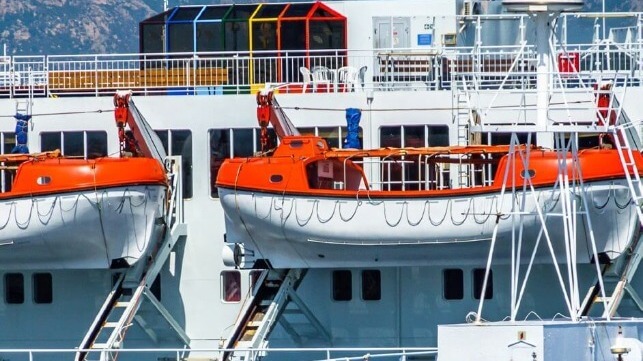
Lifeboats
iStock

Published Apr 2, 2025 7:04 PM by Pat Zeitler


(Article originally published in Jan/Feb 2025 edition.)

Fans of complex management systems tend to live and breathe the analytics of daily operations. With the help of a strong safety management system (SMS) and properly placed sensors, any inquiring manager can learn what their vessel status is with respect to things like metered engine hours, equipment usage rates, conditions of lubricants and seals, hull conditions, onboard inventory, fire suppression systems and so on.

"You can't manage what you don't measure," the quote often attributed to management wizard Peter Drucker, seems to be the philosophical maxim for fleet management – or at least for safety fleet management.

It's not a one-model-fits-all situation. SMSs often focus on different aspects of marine operations. On good days, the analytics of operations and finance are the topics of discussion. On bad days, the topic becomes a spirited discussion of a serious incident that resulted in personal injury or death. It's a scenario made even worse when the victims are those who are allowed to be ignorant of the perils of the maritime world – paying passengers on cruise ships.

EARLY DETECTION

Consilium Safety Group's SMiG system is a next-generation SMS – an integrated alarm system that incorporates fire alarms, gas and vapor detection, sprinklers, lighting, temperature monitoring and general alarms. The recent acquisition of Daspos only enhanced these capabilities.

Martin Steen, Vice President, Americas with Consilium, states, "Two-thirds of all fires on vessels start in the engine room. In most cases, they're triggered by a failure in the fuel system followed by the contact of oil with a high-temperature surface in the engine room." In an age of conventional heavy fuels, alternative fuel technologies and electric power vehicles, specialized methods must be employed for each potential threat.

Steen says, "The detection technology developed by Daspos considerably increases early detection of vapors and oil mist from a wide range of fuels."

Early Detection is Consilium's newest software service. It's not just the software's name, it's also the philosophy behind it. Designed and marketed for the ro/ro industry, the goal is alerting the crew to possible threats based on temperature changes. With heat sensors strategically placed throughout the vessel, the system can recognize thermal differences based on set ambient temperatures in specific spaces.

This is important because the crew can be alerted and investigate potential hazards prior to a fire occurring. With lithium batteries and EV cargos, uncontrollable fires resulting from thermal runaway is a worst case scenario that must be avoided. Systems like Early Detection may well be the best preemptive defense.

Consilium states that, on average, the crew will receive warning from the system four minutes ahead of a fire igniting. In the case of an engine room fire, this valuable time will enable a fire crew to dress out while the engineering team will secure the fuel, ventilation and electric sources. The preemptive notification will have the fire team well-positioned to enter the space ready to face the worst while in all probability a majority of fires will be contained prior to ignition.

In the case of EV fires, the early alert will give fire teams time to react and eliminate the chance of thermal runaway.

FIRE SUITS

Lalizas Lifesaving has developed the next-generation fire suit. With EV thermal runaway in mind, Lalizas designed, manufactured and equipped vessels with the Antipiros Fireman's Suit.

This suit provides a level of thermal protection, penetration-from-water protection and vapor resistance that is fully compliant with upcoming European standards. More than that, it gives fire teams the protection they need if they are to have more than a fighting chance at containing an EV fire. Lalizas is seeing demand increase for these suits, and with good reason. In recent years, car carriers like the Fremantle Highway and Felicity Ace experienced total loss when the fires could not be contained.

In 2018, Lalizas acquired Houston-based Alexander Ryan, forming the subsidiary company, Lalizas/Alexander. The acquisition strengthened its customer service by providing a base of operations in the U.S. "As a trusted partner and consultant, we help maritime companies ensure compliance with regulations and minimize downtime," the company states.

The Houston base is certainly doing its part. In the tradition of Alexander Ryan Marine, life rafts are managed and serviced while new products are being introduced. One such product is the Lalizas Embarkation & Pilot Ladder, which has been approved by Bureau Veritas and manufactured on premises out of the Houston location.

LIFEBOATS & LIFESAVING EQUIPMENT

Fassmer Group, headquartered on the banks of the River Weser in Berne, Germany, is a leader in passenger safety. Since 1850, well before safety management systems were even a thing, Fassmer has been leading the way in critical segments like lifeboats, davits and rescue boats.

Integrating digital lifeboat condition-monitoring is where Fassmer is now driving the industry. Ship operators that choose to partner with Fassmer can, as part of their SMS, have lifeboats with digital displays showing in real time the condition of every meaningful aspect of the vessel from smoke detection to engine sensors as well as davit and vessel-release hooks.

A passenger on a voyage should never be expecting the worst, but if it does happen Viking Life-Saving Equipment provides ferry operators with turnkey safety equipment as well as a Shipowner Agreement whereby Viking assumes responsibility for the management of the equipment. From regulatory compliance to scheduled maintenance, the Shipowner Agreement can be customized to accommodate the specific needs of the vessel operator's fleet.

Viking began in 1960 with a purpose of producing life rafts for fishermen working in the North Sea. Today, their products and services include marine firefighting, marine evacuation systems, life vests, immersion suits as well as the capability to partner with shipowners in the management of their safety systems.

DATABASE ANALYSIS

Neurocraft Data is a Microsoft Founders Hub, AI-driven company that specializes in innovative solutions for process automation and operational efficiency.

To shipowners, this means it can tap into an expansive Microsoft database that transcends industries for incident reporting and risk analysis. With the help of Microsoft-based AI, shipowners can benefit by identifying trends and prioritizing risks pertinent to each individual operator.

"Neurocraft empowers the maritime industry with intelligent systems that prioritize safety, efficiency, and compliance, enabling operators to navigate the future with confidence and precision," the company states.

Realistic and immersive training is one of the best mechanisms to prepare for underway scenarios and keep the crew safe, compliant and efficient. Neurocraft will work with shipowners to develop customized virtual reality training and simulation programs. Along with the training capabilities, it can help optimize operational capacity by integrating real-time data from ship board monitoring into customizable safety dashboards.

DECK PLATE LEVEL

At the end of the day, artificial intelligence is really just a broker of information as are safety management systems. The real management of passenger safety lies at the deck plate level with a diligent crew that is trained on the proper use of the equipment most suitable for the situation.

The opinions expressed herein are the author's and not necessarily those of The Maritime Executive.